Local News & Commentary Since 1890.

Archive for the ‘psychology’ Category

Cycling for a Cause: Support Veterans and Explore Greene County Trails.

In Dayton Ohio News, Education, Health, Local News, psychology, sociology, Uncategorized on June 27, 2025 at 11:07 am

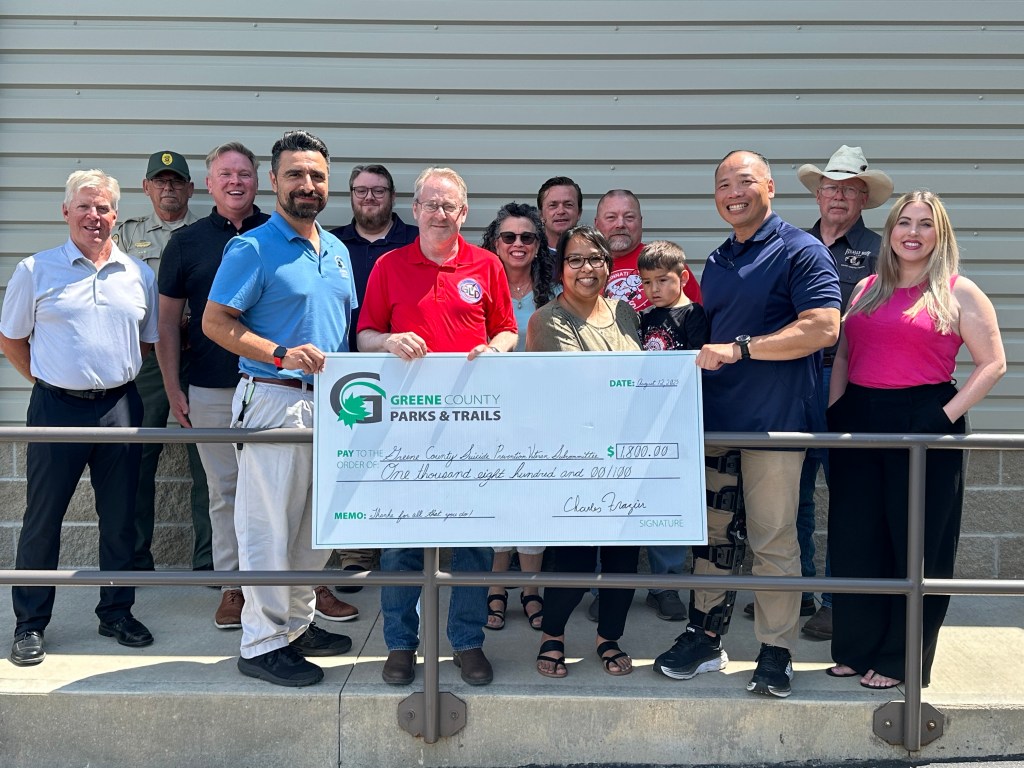
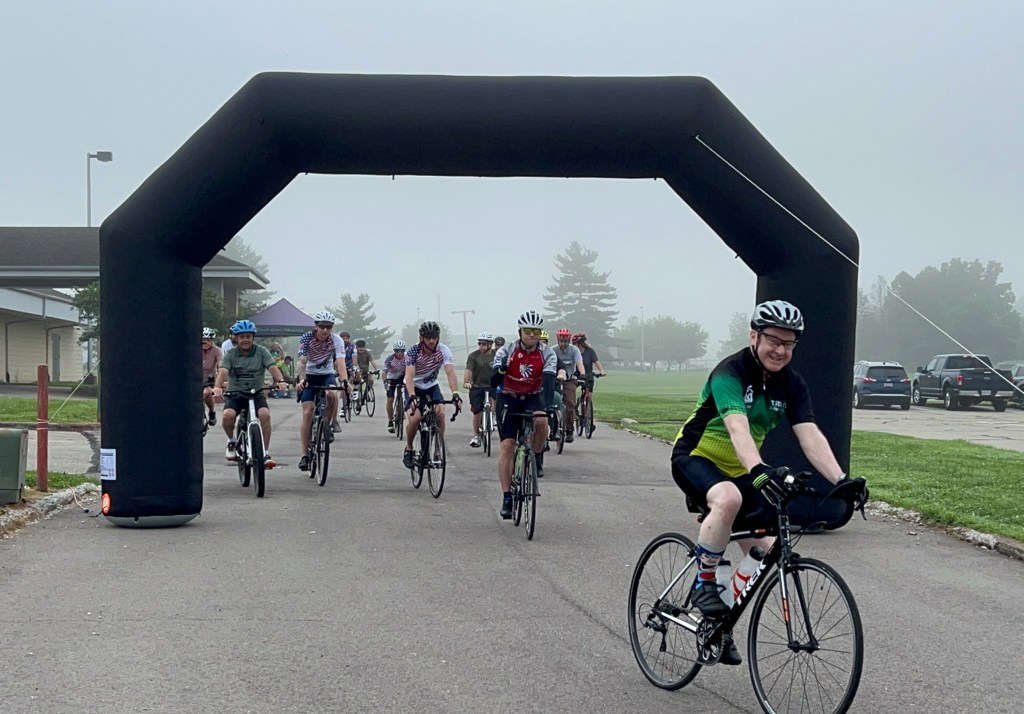
XENIA, Ohio — On any given day, the trails of Greene County provide a scenic escape for cyclists and nature lovers alike. But on Saturday, July 19th, they will play host to a much deeper purpose: supporting the Greene County Suicide Prevention Coalition (GCSPC) Veteran Subcommittee. Registration is $50 per rider and those registered before June 30 will receive a commemorative t-shirt.

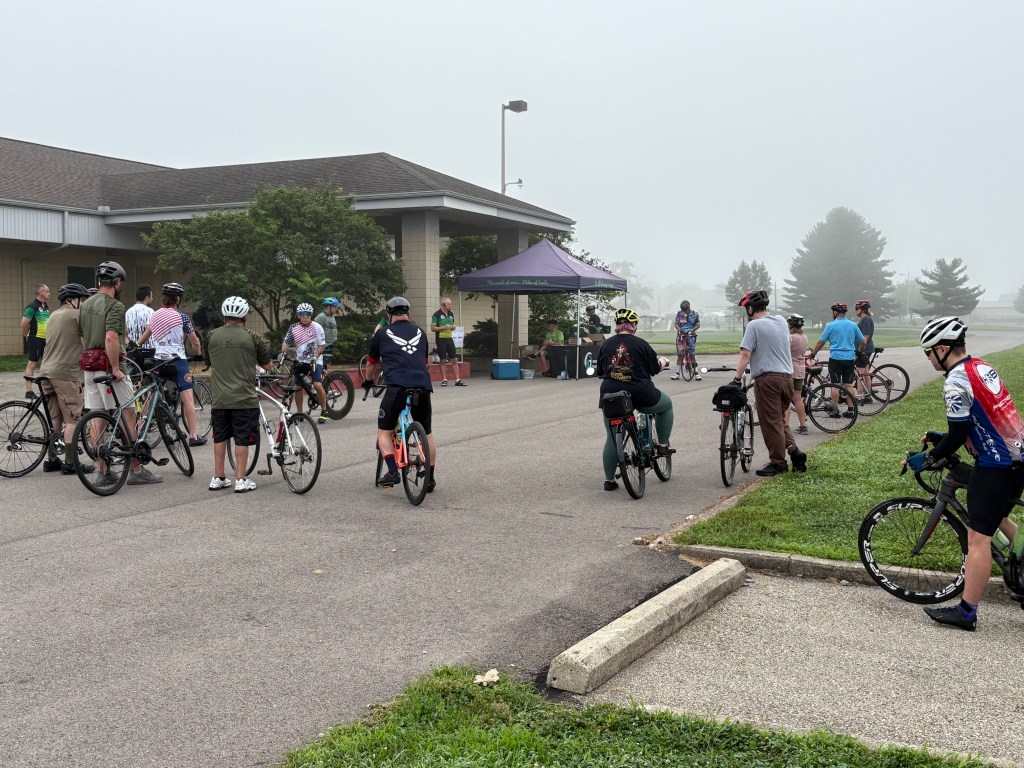
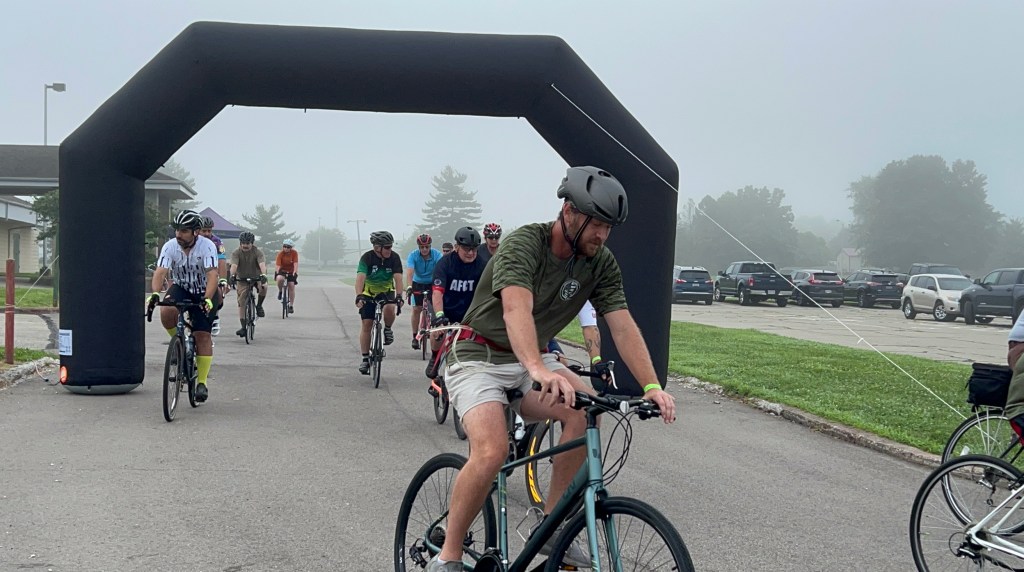
The ride will begin at the Fairgrounds Recreation Center with flexible start times between 8 a.m. and 9 a.m., allowing cyclists to ease into the event at their own pace. The event is made possible by the Greene County Parks and Trails, the volunteer Trail Sentinels, and various sponsors including Rodriguez Financial Strategies, LLC of Beavercreek, and White Allen Auto Group.

According to the GCSPC Facebook page, the non-profit organization is, “A group of dedicated mental health, law enforcement, education and other professionals and volunteers, working to reduce suicide in our community.” The subcommittee focuses on mental health and suicide prevention for veterans, service members, and their families.

“This event is about more than just cycling; it’s about community,” said Gery Deer, a Greene County Trail Sentinel volunteer and event liaison. “Our trails offer connection—both with nature and with each other—and we’re channeling that spirit into something truly impactful for veterans in our area.” Deer’s company, GLD Communications, is also a sponsor of the event.

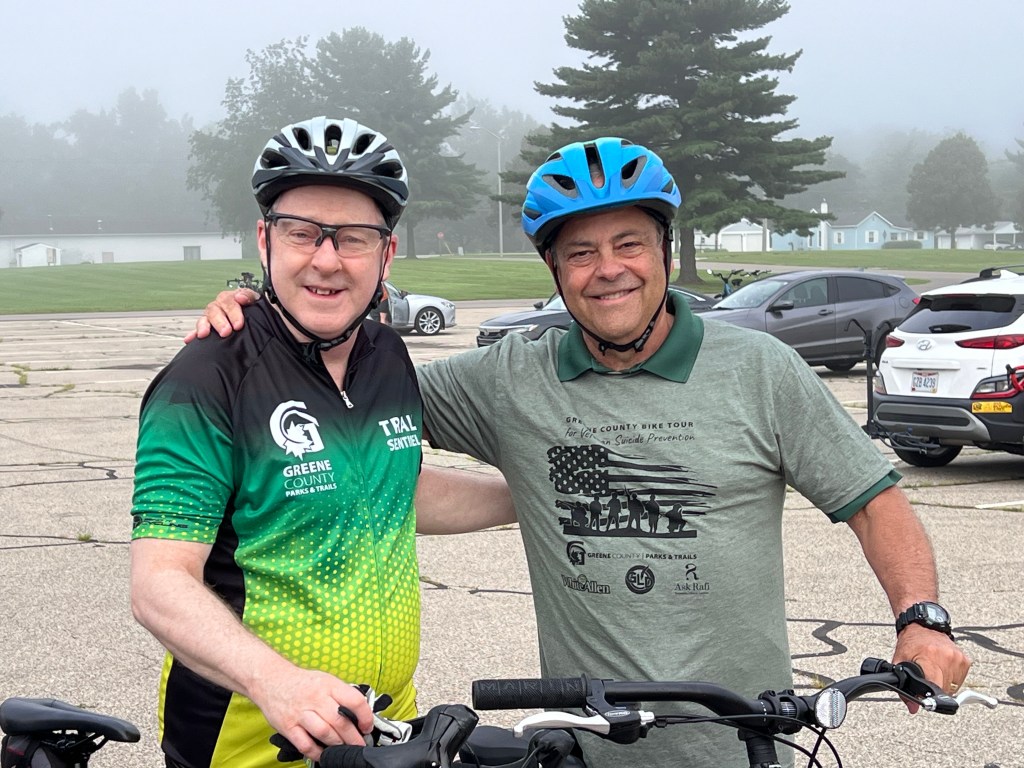
Those who register before June 30 will receive this commemorative t-shirt.

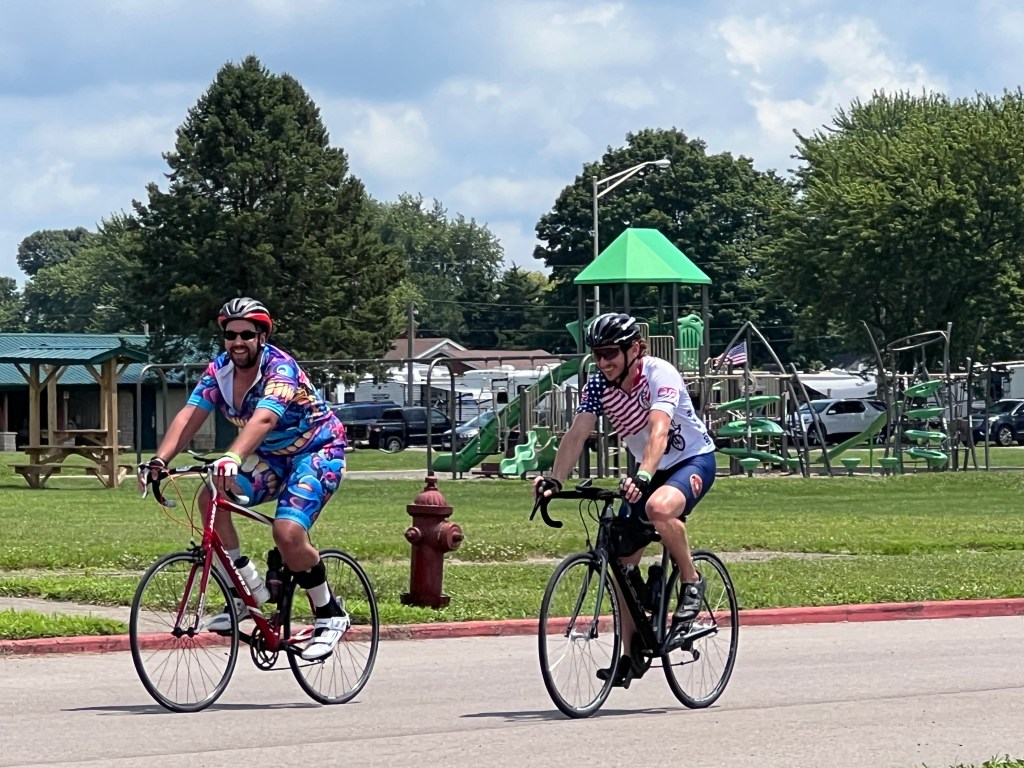
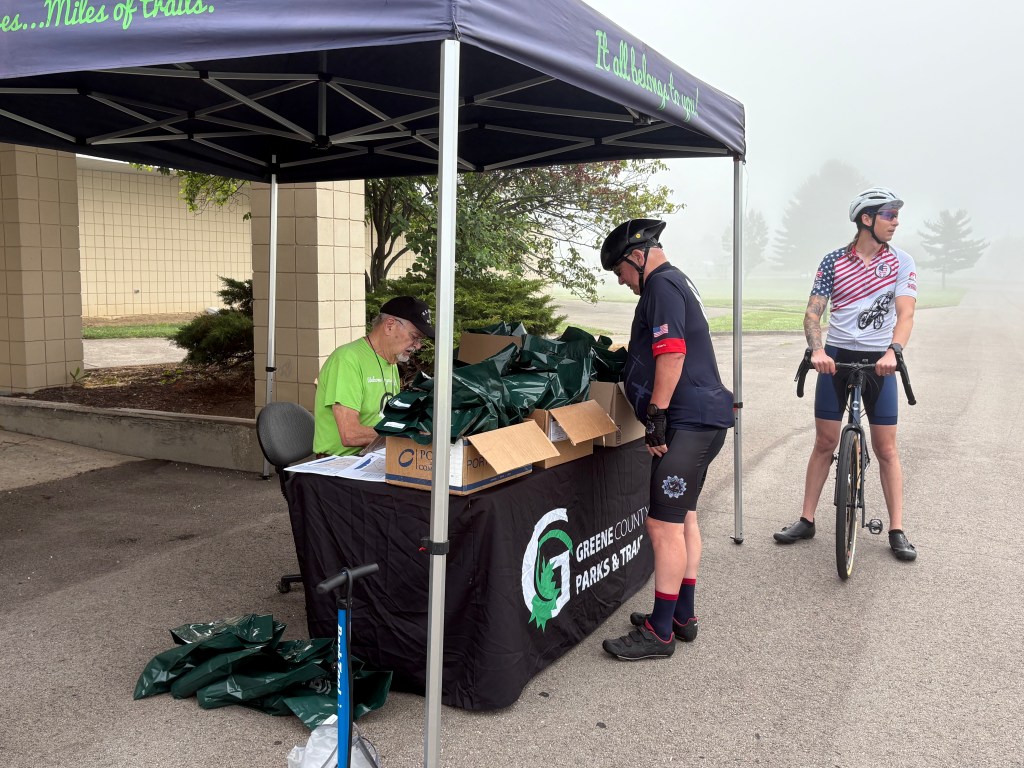
Three planned routes of 10, 30, and 60 miles are available, accommodating cyclists of all skill levels. Along the way, participants will traverse some of the county’s most iconic pathways, including the Creekside Trail, The Little Miami Scenic Trail, Xenia-Jamestown Connector, and the Ohio to Erie Trail. Rest stops stocked with refreshments will be strategically placed to ensure riders remain energized and hydrated, and the ever-dependable Greene County Trail Sentinel volunteers will be on hand throughout the day to assist participants.

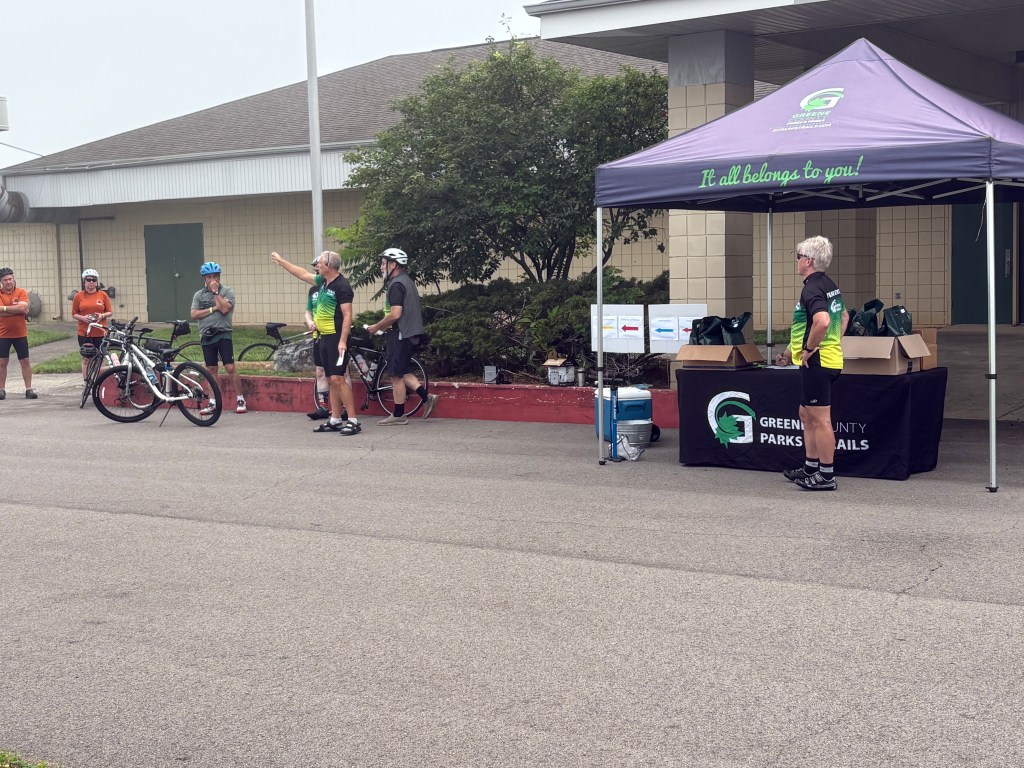
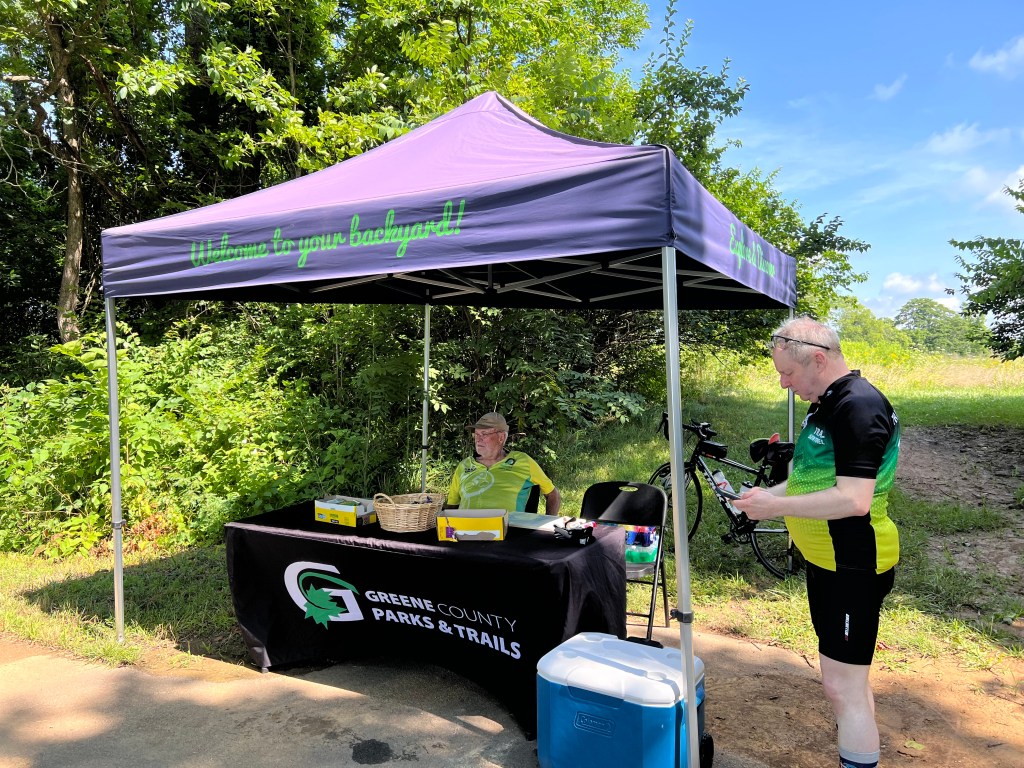
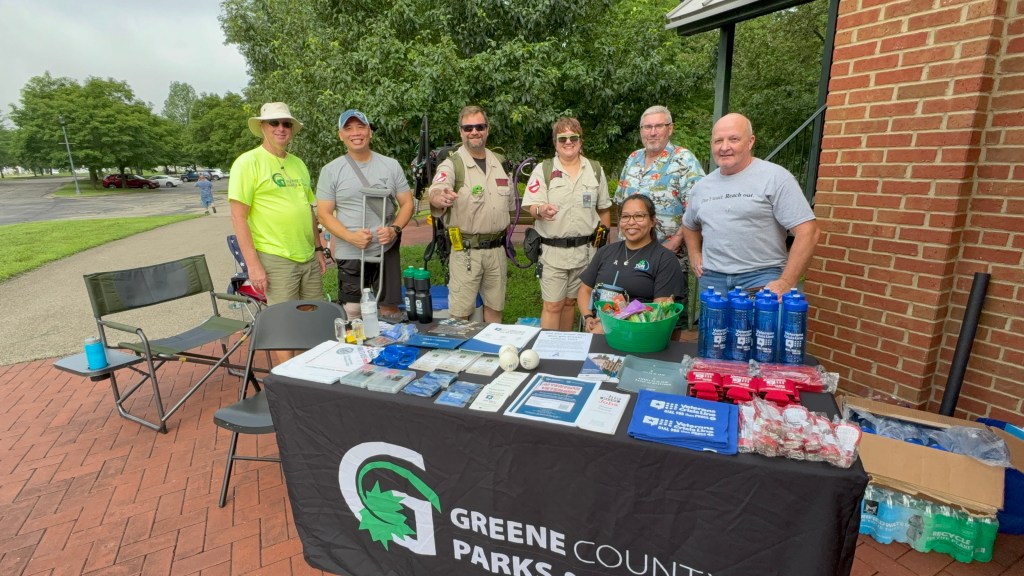
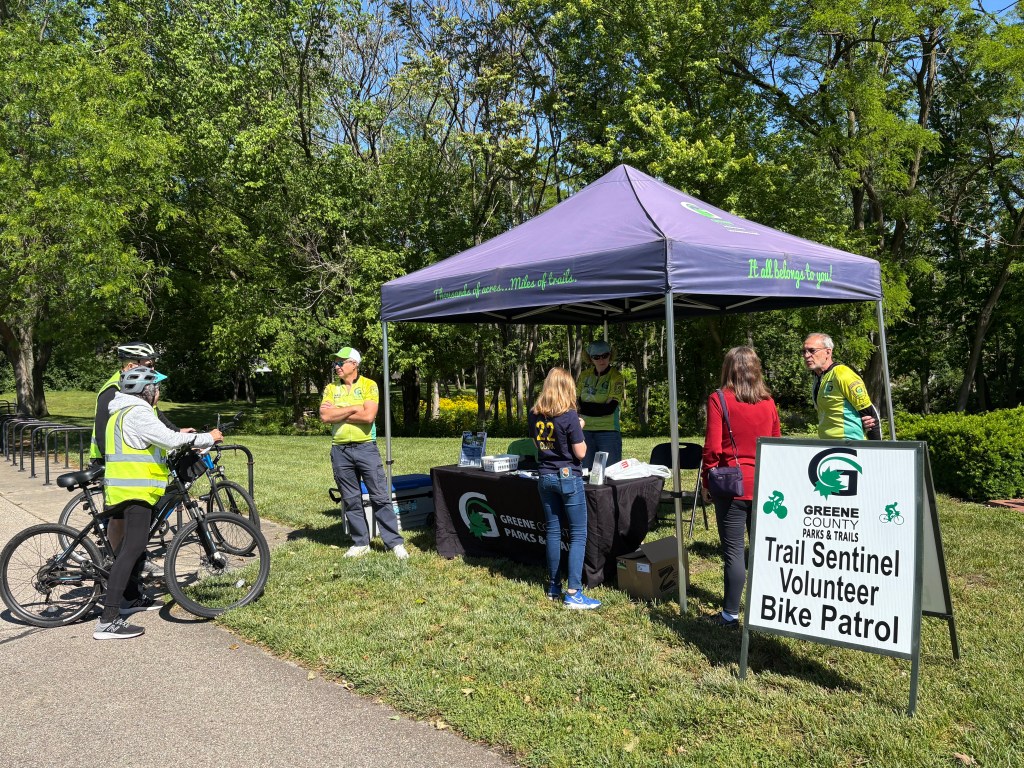
“Our role as Trail Sentinels isn’t just about ensuring safety,” said Deer. “We’re here to make the experience enjoyable and memorable for every rider. Whether someone’s doing the 10-mile route or tackling all 60 miles, we’re committed to helping them have a great day while supporting a critical cause.” In addition to riding the routes to assist riders, the Trail Sentinels will also have a support table under the shelter at Xenia Station, joined also by volunteers from the Greene County Suicide Prevention Coalition Veteran Subcommittee.

Participants and visitors to Xenia Station will have the opportunity to connect with like-minded individuals, share stories, and learn more about the impactful work of the Subcommittee. Funds raised from this event will go directly to supporting programs that provide essential resources for veterans, including mental health services and outreach initiatives.

“This is a chance for people to do something they love—riding bikes—while making a real difference in the lives of our veterans and their families,” Deer added. “At a time when critical services are underfunded and undermanned, this event is proof that even a simple activity like cycling can have a profound impact when it’s done for a cause.”

From seasoned cyclists to those who are simply looking for a meaningful way to spend a day outdoors, this one-day ride offers an unforgettable experience that combines the joy of exploration with the fulfillment of giving back. To register go to, https://www.gcparkstrails.com/event/greene-county-bike-tour-for-veteran-suicide-prevention/  

If you or someone you know is in crisis, please call the 988 suicide and crisis hotline, dial 1 for veteran support.

Absolute Power

In history, Opinion, Politics, psychology, Uncategorized, World News on March 26, 2025 at 1:58 pm

Deer In Headlines II

By Gery Deer

Power, like money, is nothing if you have enough, but everything if you don’t. But what is it? Who has it, and what are those without it supposed to do when faced off by those who do? I’m not sure I’m smart enough to answer any of those questions. If you’ll indulge me, however, I’ll make an attempt to do so and put it into a contemporary context. First, a little history – the kind we should learn from or be doomed to repeat.

It was 1887 England. In a series of letters to Bishop Creighton concerning the issue of writing history about the Inquisition, John Dalberg-Acton, the 1st Baron Acton, or better known as Lord Acton, wrote, “Power tends to corrupt, and absolute power corrupts absolutely.” Most people are familiar with the quote, but few know the preceding passage, which gives it perspective.

“I cannot accept your canon that we are to judge Pope and King unlike other men, with a favourable presumption that they did no wrong,” Acton wrote. “If there is any presumption it is the other way against holders of power, increasing as the power increases. Historic responsibility has to make up for the want of legal responsibility.”

That’s some pretty fancy, but important language. Put more simply, Lord Acton was saying that the same moral standards should apply to everyone, including political and religious leaders. Throughout history, kings and popes were permitted, essentially, to wield their authority unchecked.

America’s Founding Fathers shared the same concern. So much so that when they created a constitution for their new country, coincidentally ratified the same year as Acton’s historic correspondence, it established three separate but equal branches of government to prevent such authoritarian power.

Power is a dangerous thing, especially in the hands of two kinds of people – those who want it, and those who want to keep it from others. The first is driven by greed, the second by fear. Lord Acton was commenting on accountability, something the Constitution ensures by setting equal the Executive, Legislative, and Judicial branches of government. Should some power-hungry tyrant manage to occupy the White House, the other branches would be able to keep him or her in check.

If that individual managed to wield enough control over two of the three branches, the third would be able to mitigate some of the potential danger. But if all three branches were heavily influenced, even manipulated by one individual, then we have a problem. That lands our country in Lord Acton’s absolute power corrupting absolutely territory, and on a much larger scale.

Let’s not forget the second kind of power broker (to borrow a term from one of my favorite authors, Robert A. Caro), the kind who want power out of fear. This individual, or group, is afraid that someone else will gain the power to control them or do things they don’t like.

These people tend to be all-or-nothing types. In other words, if they can’t have it, they don’t want anyone else to because they fear it will weaken their position. Those who are afraid of minority advancement fit this category. 

But what if you’re on the receiving end of all this – the powerless. Powerless people are led to believe, by a government or other authoritative body, that they don’t deserve power. Classism, racism, ageism, and most other “isms” are examples of one group trying to maintain power over another. To quote a great role model of the late 1980s, Ferris Bueller, “Isms, in my opinion, are not good. A person should not believe in an -ism, he should believe in himself.”

When the people lose the power over government, when their elected representatives act in blind service to one policy or individual rather than the best interest of their constituents, when power begins to corrupt absolutely, freedom no longer exists. The trouble is, corrupted power often goes unrecognized until it’s too late.

Corruption dons the cloak of misdirection, intended to fool those who are unwilling to see the danger. Try to remember that power can also be a good thing that benefits all instead of one person or ideology. Unfortunately, that doesn’t make for very good reality television, now does it?

TCN Behavioral Health Hosts Chalk Walk for Recovery

In Children and Family, Dayton Ohio News, Local News, Media, psychology, sociology, Uncategorized on September 19, 2024 at 1:24 pm

Fairborn, Ohio – September 17, 2024 – TCN Behavioral Health Services, Inc. will host a Chalk Walk for Recovery at their 1825 Commerce Center Blvd. office in Fairborn on Friday, September 27 from 4-7pm. The event will take place in TCN’s front parking lot.

The Chalk Walk is an opportunity for community members of all ages to come together to create chalk art and support those in recovery. TCN is providing the chalk and sidewalk space and anyone who would like to create art is invited to participate.

This year’s event will feature local artists and vendors as well as food and refreshments for sale. Water will be made available to participants free of charge, and there will be Recovery Month t-shirts for sale featuring TCN’s winning recovery month slogan: My past will remind me, but it will not define me.

“TCN takes great pride in its commitment to serving our communities. In recognition of September being Addiction and Recovery Awareness Month, TCN will be hosting a Chalk the Walk for Recovery event. We would love for you to come join us for this event!” says TCN Associate CEO Tom Otto.

Founded in 1990, TCN Behavioral Health Services, Inc. is a comprehensive behavioral health agency dedicated to improving lives by providing clinically excellent and accessible behavioral health services.  TCN provides substance use, mental health and psychiatric services for adults and youth in Greene County and beyond.  For more information or to donate to TCN call (937)376-8700 or visit www.tcn.org.

Moral Bankruptcy

In Opinion, psychology, sociology, Uncategorized on July 26, 2024 at 7:43 pm

Deer In Headlines II
By Gery Deer

“How did you go bankrupt?” Bill asked. “Two ways,” Mike said. “Gradually and then suddenly.” Ernest Hemingway’s characters in his 1926 novel, “The Sun Also Rises,” were speaking about money. But I think we go morally bankrupt pretty much the same way. I mean, when did people in our country become so mean to each other, so divisive? Has it always been that way, and I’ve just been too head-down in my own world to notice? Maybe it’s that the only people with a megaphone or resonant rhetoric tend to be the extremists. But the real question is, what is “morality?” That is a complicated question with no definitive answer.

I have always believed that, like so many of life’s perceptions, the idea of morality is in the eye of the beholder. I mean that the concept of decency or morality (and those aren’t the same things) is based on your perspective or what you absorb from those around you. For instance, if you were close to your parents, and they were friendly people who shared what they had, helped their neighbors, and worked hard every day to provide a good life for you, then, odds are, you’ll behave similarly. But it isn’t always so.

If you were not close to your parents or lived in animosity with them for some reason, you might end up the lay-about who steals from the cash register or kicks puppies. But I’m afraid this is slipping into a philosophical discussion of nature vs. nurture, which gets messy. So, let’s move on.

Isn’t it entirely possible that the idealistic concept of morality is simply imaginary, realistically unachievable, and that sometimes people are just bad? My unqualified opinion says yes. But wait, is my position unqualified? I know people, and I can tell when they intentionally cause harm to me or others. I’d say that pretty well qualifies me, or anyone else, to judge bad vs. good. Of course, that opinion remains relative to my point of view. And God knows we all have nasty relatives.

Speaking of God, which I don’t do very much because it’s one of those topics to be avoided at all the dinner parties I don’t go to, like sex and politics. But – when someone says, “God gives us a moral compass.” To that, I will only say this. To which “god” are you referring?

An estimated 700 different creator deities (gods) are worshipped worldwide. If you ask one follower of each, I would imagine they’d all say theirs is the only one. So be it. But, if the wrath of any one of those vengeful, judgmental deities was supposed to persuade people to behave themselves, I think it didn’t work. Think about it, more and bloodier wars have been – and still are – fought over tribal god images than any other reason in the history of mankind. Therefore, any idea of a religiously motivated morality strains credibility.

You alone must decide what morality is for yourself. Look, we all have good and bad in us; one person’s mistake is another person’s malice. A good deed to you might be torture for someone else. Some people think having a woman who displays her bare ankles is immoral, while there are likely people out there for whom any clothing at all would be considered offensive.

The real question is, are there unilateral rights and wrongs (morals)? It’s likely that most people would answer in the affirmative. For example, a vast majority would probably agree that killing is wrong. If you’re steering your morality ship by the Bible’s Ten Commandments, it’s right there in the text: “Thou shalt not kill.” However, it’s often argued by theologians that this is an incorrect translation. Some say the line should be, “Thou shalt not murder,” giving the commandment a very different meaning. Once again, it’s all about interpretation.

As to the original question of whether our society is going morally bankrupt, the interpretative relativity of the facts makes analysis impossible. But, given the constant reports of murder, war, greed, and fanatical extremism in the world gnawing at the very foundation of basic morality, I’d say our account is already in the red.

TCN Behavioral Health Announces Annual School Supply Distribution Events

In Dayton Ohio News, Health, Local News, News Media, psychology, Uncategorized on July 8, 2024 at 10:36 am

TCN Behavioral Health Services, Inc. announces their annual School Supply Drive Distribution Events. TCN annually collects school supplies and donations for the children in their service areas. In 2023 they provided supplies to over 300 children and hope to expand that reach in 2024. The five distribution events listed above will include free pizza and beverages as well as school supplies while supplies last.

“Every year, TCN provides supplies to more than 300 students within our local communities. This helps ensure a successful beginning to the school year for these students, alleviates some of the financial strain on parents and caregivers, and supports educators who frequently contribute their own resources to support classrooms,” says Tasha Jones, TCN’s Executive Administrative Assistant. “This wouldn’t be possible without the dedication of our donors and volunteers.” The five events will be held from 4-6 PM at the following TCN office locations:

Wednesday July 24 – 1825 Commerce Center Blvd, FAIRBORN

Friday July 26th – 1522 E. US Hwy 36, URBANA

Thursday July 25th – 1021 N. Market Street, TROY

Tuesday July 30 – 118 Maple Avenue, BELLEFONTAINE

Wednesday July 31 – 452 W. Market Street, XENIA

TCN accepts donations of school supplies at all locations, or donors can shop the School Supply Drive Amazon Wishlist at https://a.co/i3dO9iF to have supplies shipped directly to TCN for preparation and distribution. The organization also accepts monetary donations at tcn.org or https://tcn.jotform.com/202296368911965 by selecting “school supply drive” in the dropdown menu. Volunteers can sign up to help at their local events here: https://tcn.jotform.com/223056028945962.

Founded in 1990, TCN Behavioral Health Services, Inc. is a comprehensive behavioral health agency dedicated to improving lives by providing clinically excellent and accessible behavioral health services. TCN provides mental health, substance use and psychiatric services for adults and youth in Champaign, Greene, Logan, Miami, and Montgomery counties. For more information or to donate to TCN call (937)376-8700 or visit www.tcn.org.

Social Microcosms

In Opinion, psychology, sociology, television on June 1, 2024 at 9:56 am

Deer In Headlines II

By Gery Deer

Have you ever considered a microcosm? Chances are you haven’t, but we are exposed to them almost every day. Essentially, a microcosm is anything in miniature that represents something bigger. For our purposes, a microcosm is a small group or community whose characteristics represent a larger one.  

We see microcosms everywhere, and we’re usually unaware of them. Some are fictional, existing only in books, movies, television, and theatre. Others are happening around us, whether we’re integrated participants or outside observers. Let’s look at a couple of examples.

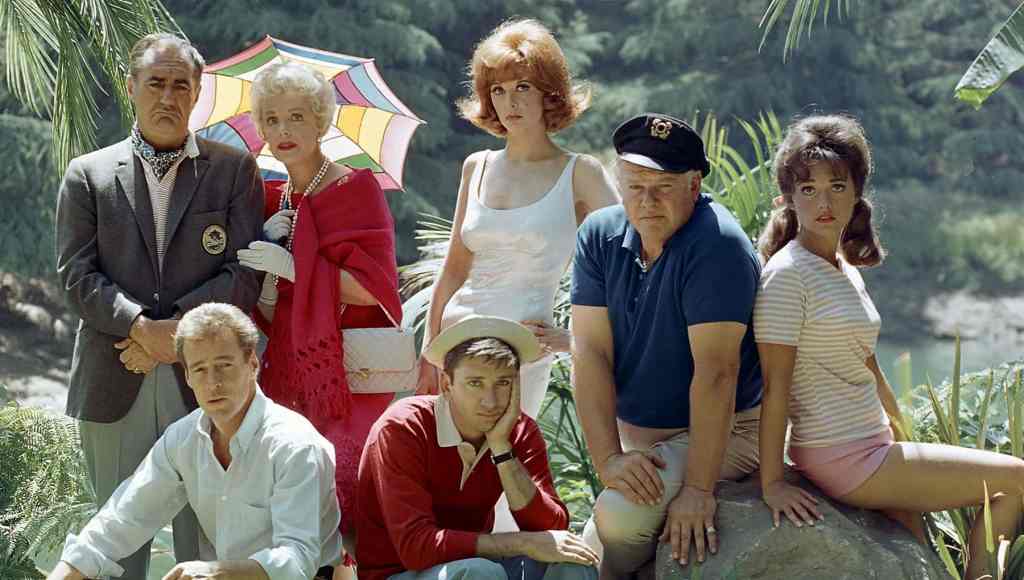
Consider the classic TV show “Gilligan’s Island,” which its creator, Sherwood Schwartz, referred to as a social microcosm. It featured seven characters, each representing a different socioeconomic position. Gilligan and the Skipper embodied the working class, while the Professor symbolized academia.

Mr. and Mrs. Howell (the millionaire and his wife) represented the elite, privileged upper crust. Mary Ann, a girl from the heartland, brought an earthy, grounded perspective, and Ginger, the movie star, added a touch of glamour.

Gilligan’s Island creator Sherwood Schwartz called the slapstick-laden sitcom of the 60s a “social microcosm” because of the socio-economic makeup of the characters.

Shipwrecked on an island in the middle of the Pacific, the writers put these people in absurdly improbable situations where each demonstrated their own inherent characteristics, however unrealistically. That’s where the comedy came from, and it worked.

Of course, to suspend the disbelief and immerse the viewer into the cartoon-like world, the show generally left out more realistic issues in such a situation. Problems like food, water, clothing, and shelter only arose when a comedic lack of some basic survival needs drove the story. But that’s TV. What about in real life? Where do microcosms exist day-to-day?

Recently, I found myself at a family birthday party in a local bowling alley. The guest of honor was turning 18, and a lively group of teenagers had gathered around the scoring console, ready for a game. As the afternoon progressed, the pitcher of soda ran dry, and the pizza had disappeared. Hunger pangs set in. (Kids eat a lot, wow!) With nothing else to do, I volunteered to make a snack bar run, setting the stage for an interesting observation of a real-life microcosm.

It was a Saturday afternoon, and the place was packed. Nearly every lane was occupied. As I walked along the service area at the back wall, past the shoe rental and pro shop, I suddenly noticed how much real life was happening all around me, and it all registered in my mind with sounds.

When I first realized what I was listening to, I literally froze for a moment. A woman nearly collided with me as she hurried along, balancing a pizza, drinks, and bowling shoes. I was so surprised by how I felt at the moment that I was compelled to step out of the foot traffic, close my eyes, and just listen.

Amidst the chaos, I focused on individual sounds. I heard the familiar thud as bowling balls dropped onto the hardwood floors and the dull rumble as each raced down the lane. Finally, the unmistakable crash of the pins as the ball hit them or the disheartening clunk if it dropped into the gutter.

Above pin resets, hand dryers, and clanking ball returns were the sounds of people living life. This was the microcosm of the moment—celebrations, first dates, families, young, old, and everyone in between.

I opened my eyes, looked around, and tried to put sight with sound. More birthday parties, a small child, with a ramp and dad’s help, making her first attempt to roll the ball. Neither she nor her parents will ever forget that day. A couple of lanes down, several older women chatted and crocheted between frames. One of the women working on a large afghan appeared to be winning.

I was standing among people from many different walks and stages of life. They all had one purpose, albeit the motivations were different. Everyone was there to enjoy the game, be with family and friends, and create lasting memories.

Eventually, I had to complete my mission and get the food back to our group before the teenagers ate their own shoes. But I can still hear those sounds and remember all the life that was being lived on that one normal day at the bowling alley.

Gossip Column

In Local News, Opinion, psychology, sociology, Uncategorized on May 18, 2024 at 9:02 am

Deer In Headlines II

By Gery Deer

Gossip. It’s an insidious phenomenon that always hurts people. Usually, gossip is inaccurate and degrades even more as it travels from person to person. Gossip is a destructive game of telephone that usually ends in the victim’s humiliation.

Gossip begins with someone sharing something confidential, saying, “Hey, just between you and me…” and so on. But it’s doubtful the information will remain a secret. The story inevitably spreads like air escaping a leaky tire.

Although there is debate about whether gossip is predominantly negative, nothing good comes from it. One study even suggests that gossipers tend to have a “darker” personality, uncaring about the social consequences of their behavior. Another offers the theory that we’re motivated by a need to bond with others in our social circles, keep ourselves entertained, vent emotions, and establish social status.

Low self-esteem seems to be a common theme among gossipers. They validate themselves by spreading news of others’ misfortunes and by sharing negative stories about people, reinforcing their imaginary superiority. 

All that sounds great academically. But, personally, I think people are just mean sometimes. They want to feel superior, so they start rumors and gossip to gain an upper hand—even if it’s all in imaginary. Ignorance probably plays a role, too. Those who spread gossip often believe the person at the story’s heart will never find out, so no harm done, right? Wrong. Trust me, they always find out.

In the past, gossip proliferated over the backyard fence or around the water cooler at work. However, with the advent of social media, gossip has taken on a new level, broadcasting misinformation to countless recipients at the speed of light. Clickbait is a perfect example of modern gossip-mongering, complete with a compelling story, video, and photos.

At this point, it’s probably important to clarify how I distinguish between gossip and rumor. Official definitions explain gossip as the spread of information that’s essentially true but likely unkind or hurtful. A rumor, on the other hand, is false information passed around without confirmation or conscience. However, I’m not convinced this distinction is always evident in practice. In my opinion, there’s very little difference between gossip and rumor, regardless of what old Mr. Webster says.

Regardless of your definition, one of the most important things to remember is how gossip affects the victim and how that affects the gossiper. In this context, the word “victim” refers to the person who is the subject or target of gossip. Since most of that information is false or intended to harm someone, that person is indisputably a victim. Although spreading gossip is not criminal, when those actions cause harm, there should be more severe consequences.

Victims of gossip can suffer devastating and long-lasting effects. I remember when I was in fifth grade, one of the bullies in my class made up a story about me that spread through our rural school like a bad case of Chicken Pox.

It was a painfully frustrating time for me. I already had to deal with being a 10-year-old adjusting to a strange new school. Simultaneously, however, I had to get good grades and spend every other waking minute defending myself against ridiculous lies.

Sometimes, gossip severely damages someone’s reputation or their livelihood. In such cases, it could be considered slander, and the harmed person may have a right to pursue legal action. The person who started the false information may be liable and must pay financial or other restitution.

We can’t control what others say about us, to whom, when, or how. At a time when misinformation and fake news are the norm, all we can do is abstain from its distribution. Think about it. Would you want someone gossiping about you, your business, coworkers, or your family?. Finally, remember that the best gossip is the kind you keep to yourself. And, if you hear gossip or the rumor mill is churning out something about someone close to you, do what you can to help put an end to it. I’ll close with a quote from the great Hee Haw Honeys song: “We’re not ones to go around repeating gossip. So, you’d better be sure to listen close the first time.”

Our Parents, Ourselves

In Children and Family, Opinion, psychology, Uncategorized on March 1, 2024 at 12:53 pm

Deer In Headlines II
By Gery Deer

They came to the open houses and sat in the freezing cold at Friday night football, watching me high step across the field with the marching band. They scrounged the money for chemistry lab fees and ensured I had a ride to my 4-H meetings. Somehow, no matter how difficult things might have been for them, Mom and Dad were always there for us.

My mother was a force of nature, a five-foot-four powerhouse of the gentlest nature imaginable. She was creative, brilliant, strong, and vulnerable but never mean or judgmental, even if she was mad at you. And if she was mad, you didn’t have to guess.

Gery’s parents, Lois and Gary Sr., around 1996.

Dad was a whole different story. He was resourceful, smart, and could do anything with a truck or tractor. On the outside, he was confident and controlled. But inside, he was conflicted. They’d been together since high school, and he was thoroughly dependent on my mother for his sense of self and family. As Alzheimer’s took her from us, I watched him slip away, too.

Although we had a good relationship, growing up with my parents wasn’t always easy. Raising good parents never is (as my brother likes to say). Sometimes, it was their job to tell me I was wrong, and they never held back. The resistance they met was inborn, however. Generations of stubbornness wound through my genes like a snake through tree branches. We argued, I stomped off, grousing like a teenager does, and then it was forgotten – usually. The irritating part was that most of the time, they were right.

Gery with his brother, Gary Jr. (left) in 1997.

If you have siblings, each experiences the parent in a slightly different light. My brother, 15 years my senior, constantly reminds me of how tough he had it from our father. Dad was strict with him, almost to a suffocating level. Our dad’s mother died when he was just three, and our grandfather left. Since he was raised largely in poverty by an aunt and grandmother, his upbringing was remarkably different from how he raised us. My guess is that he maintained tight control over his firstborn out of fear and inexperience.

As for me, because of our age differences, Dad held more of a grandfatherly position, and my brother did most of the fatherly stuff. He taught me what I needed to be independent and helped ensure Dad didn’t overprotect me. I think it all worked out for the best, even if my brother is still a little bitter. Clearly, even a sibling can take a parental position when there is such a perceived generational difference.

But regardless of the relationship, I think most of us have a singular and somewhat distorted image of our parents. Whether our relationship with them was close, distant, tumultuous, or nonexistent, I believe we can forget that our parents are just people. Like you and me, they have flaws, failings, dreams, regrets, all of it. But we likely still see them only through one kind of lens. What’s worse is that the incomplete picture can become more distorted as they age.

My siblings and I were there as my parents aged became ill, and finally passed away. As I helped to care for them, I learned much more about who they were along the way. Growing up, I never imagined I’d have to take on all you do for your elderly parents. Showers, medical care, managing the finances; there can be so much you never expected. The experience was simultaneously rewarding and painful. We also grow more protective of them as they get older.

But we must keep in mind that, barring dementia or some other kind of mental illness, they’re still the kings and queens of their castles. If they’re dealing with health issues, mobility, whatever, we can and should help and let them be who they are, even if, as adults, we still don’t understand it.

Parents also need to realize that such a myopic view of the individual can go both ways. Our kids are more than we see, just as we are to them. In the end, we are all just trying to take care of each other as best we know how.

The Coffee Shop Roundtable

In Opinion, psychology, Senior Lifestyle, sociology, Uncategorized on February 24, 2024 at 8:19 am

Deer In Headlines II

By Gery Deer

The other day, I was sitting in a coffee shop when I overheard a conversation between four senior gentlemen at the nearby table. Based on their appearance, I guessed they were in their late 70s, active and clear-minded. The cold Ohio winter had them dressed appropriately in jeans, heavy walking shoes, sweaters, down jackets, and winter caps. These men obviously knew each other quite well and shared common interests.

It was not my intention to eavesdrop, but they were talking loudly enough you could pick up their voices from well across the shop. Anyone could see this meeting was a crucial part of their social life. One of them even mentioned how much he enjoyed getting together regularly and noted how much he learned from the others.

In fact, they all seemed to relish the conversation, which covered a wide range of topics from sports to live theater. I found a brief interaction they had about The Phantom of the Opera of particular interest. While some topics, like the state of American politics, sparked more spirited discussion, they remained respectful and considerate towards one another.

The Algonquin Roundtable

At one point, one of them told a detailed story about how he’d been working on the roof of his home. Suddenly, he found himself stranded up there because his ladder had fallen. He called out for his wife, but she apparently didn’t hear, which left him there for some time. Fortunately, all worked out for the best, and through the laughter, his comrades were giving him a good bit of grief about fooling around on a roof “at his age.” I imagined their adult children giving each of them the same speech in a more serious tone, only to be ignored later.

We occupied one corner of the shop for about an hour, though I believe my subjects had been there for a while before I arrived. They’ll never know it, but they gave me back a moment from my childhood.

When I was around 10, Dad occasionally took me for breakfast at the small diner where my mother waitressed (her word). Early each morning, a group of movers and shakers from our tiny farm town arrived, one at a time, and occupied the same corner booth. 

The pack was usually a mix. Among them, you might find some combination of the local banker, a town doctor, the police chief, the undertaker, the barber, or even the mayor. As they drained one pot of Joe after another, they discussed whatever came up, solved all the world’s problems, and, of course, kept those solutions to themselves. If only they’d just told someone how to do it. It was like the small-town equivalent of the Algonquin Roundtable.

That gathering was far more than social, and the booth’s occupants probably weren’t as ancient as they would have appeared to me when I was a boy. But this was a staple for all of them, a necessary gathering of the minds that continued until each of them was too elderly or infirm to attend.

These days, you might see a mix of people, men, and women, even varying ages, who do the same thing – a regular gathering with no other purpose but to share stories, discuss world affairs, or just complain about the weather. Whatever it is, it’s good for the psyche – and your overall health.

There are countless studies on the benefits of socialization as we get older. Strangely enough, many seniors, either due to depression, their living situation, or choice, often prefer isolation. My parents weren’t big socializers, though my mom enjoyed family parties and time with her siblings. Dad, not so much. Their “roundtable” consisted simply of family and a few close friends. I’d say I’m more like Dad, though I hope a little less self-isolating. I’ve never been particularly comfortable in social situations.

However, I have managed to learn how to deal with my own social anxiety. I think I’m better at socializing than I used to be. As a child, I wouldn’t have understood the importance and value of the coffee shop roundtable to those who were there. But as I rocket towards 60, I’m starting to understand and appreciate the importance and necessity of those connections.

Greene County is Unplugging on March 1, 2024. We Hope You Will Too!

In Children and Family, Dayton Ohio News, Health, Media, psychology, Technology, Uncategorized on February 22, 2024 at 11:35 am

GREENE COUNTY, OH —Do you spend a lot of time scrolling through social media, watching short videos, commenting on, or reacting to various posts? Do you have multiple cell phones? Are you documenting every move, event, and emotion on social media platforms and find it hard to get through a meaningful conversation without adding to your story? Are you mindlessly scrolling through YouTube videos, chatting on Discord or other apps? We miss out on the valuable and meaningful moments of our lives as we pass the hours with our faces buried in our smart phones, documenting every move through social media and shielding ourselves from the outside world, where real connections and memories are made.

If you notice these mannerisms in yourself – or your friends & family, the Disconnect to Connect Coalition would like to invite you to commit to the Global Day of Unplugging (GDU) right here in Greene County from sundown on March 1 through sundown on March 2.

We invite you to encourage those around you – your business colleagues, your students, your co-workers, your neighbors, your family, and your friends to take this day and carve out precious time to unplug, relax, reflect, be active, visit the outdoors, and connect with loved ones. We ask that you share a message about Global Day of Unplugging on your marquis sign if available, tell your friends and neighbors, share it in a newsletter, announce it on the radio, or any other way that you can think of to get the message out. Use the hashtag #GreeneCountyUnplugged and share our daily posts from our social media platforms.

We hope you will join us in this effort county-wide on March 1, 2024! Ideas to Unplug:

  • Join up with Greene County Parks and Trails and take a walk in the woods
  • Go on a scavenger hunt
  • Have lunch with a friend you haven’t seen in a long time
  • Ride a bike
  • Bake some cookies
  • Volunteer at the Food Pantry
  • Grab some sidewalk chalk and help your kids get creative
  • Blow and pop some bubbles
  • Create a joke jar
  • Plan an evening out with friends for dinner and/or a comedy club experience
  • Host a game night with cards or board games
  • Host a spa night

Disconnect to Connect (D2C) is a committee made up of professionals from several different county organizations, including Greene County Public Health, the Greene County Educational Service Center, Mental Health and Recovery Board of Clark, Greene and Madison Counties, Greene County Children Services, Greene County Family & Children First, and the Greene County Public Library. The group was developed to tackle the concerns of parents, educators, and community members about the effect of digital devices on the mental health and well-being of our youngest community members.

For more information or questions, please call 937-374-5669 or email lfox@gcph.info