Local News & Commentary Since 1890.

Archive for June, 2026|Monthly archive page

Trebein Road Milling and Paving Wednesday, June 17, 2026

In Local News on June 15, 2026 at 12:14 pm

The Greene County Engineer’s Office announces that John R. Jurgensen Co and Butler Paving, on behalf of Hillside Farms Development, will be milling and paving Trebein Road between Dayton-Xenia Road/Hilltop Road and Stonebury starting Wednesday, June 17, 2026, and lasting 2 days, weather and equipment permitting.

Trebein Road will be under construction from 7 am to 7 pm. Traffic will be maintained using flaggers. Travelers can expect delays, and we encourage you to use alternative routes. 

When traveling through these areas, please slow down and use caution, as there are unmarked no-passing zones. We appreciate your patience and cooperation during the resurfacing process and apologize for any inconvenience.

Note: this was previously scheduled for June 8, 2026, but the contractor had to reschedule it.

Click here for Trebein Rd. Map.

GCPT Trail Sentinels Keep Busy Weekend Pace Supporting Families, Cyclists and the Community

In Local News on June 14, 2026 at 9:35 am

Staff Report

(XENIA) — It was a busy weekend for the Greene County Parks & Trails Trail Sentinels.

From helping children navigate obstacle courses at the Fairground Recreation Center on Friday evening to greeting visitors at the Yellow Springs Street Fair on Saturday, the volunteer group spent much of the weekend serving as ambassadors for Greene County’s parks and trails system.

The Trail Sentinels, a volunteer organization that supports Greene County Parks & Trails through education, safety initiatives and community outreach, were heavily involved in two major public events over the course of the weekend.

The first came Friday, June 12, when Greene County Parks & Trails hosted its annual “Anything on Wheels” event at the Fairground Recreation Center in Xenia.

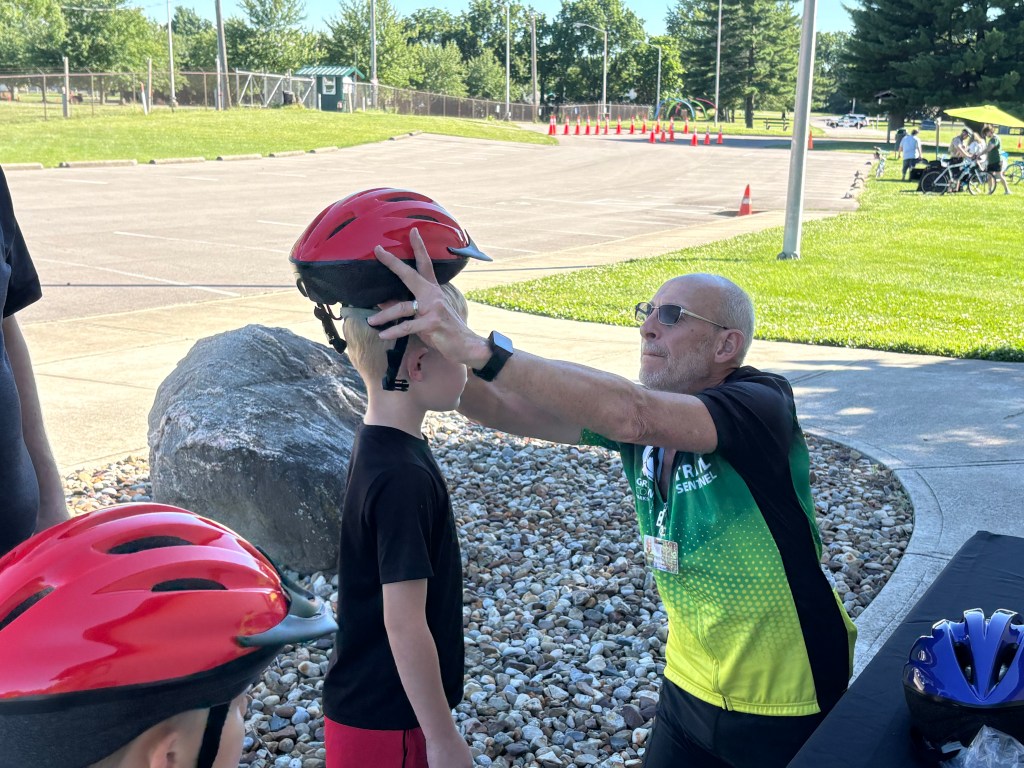
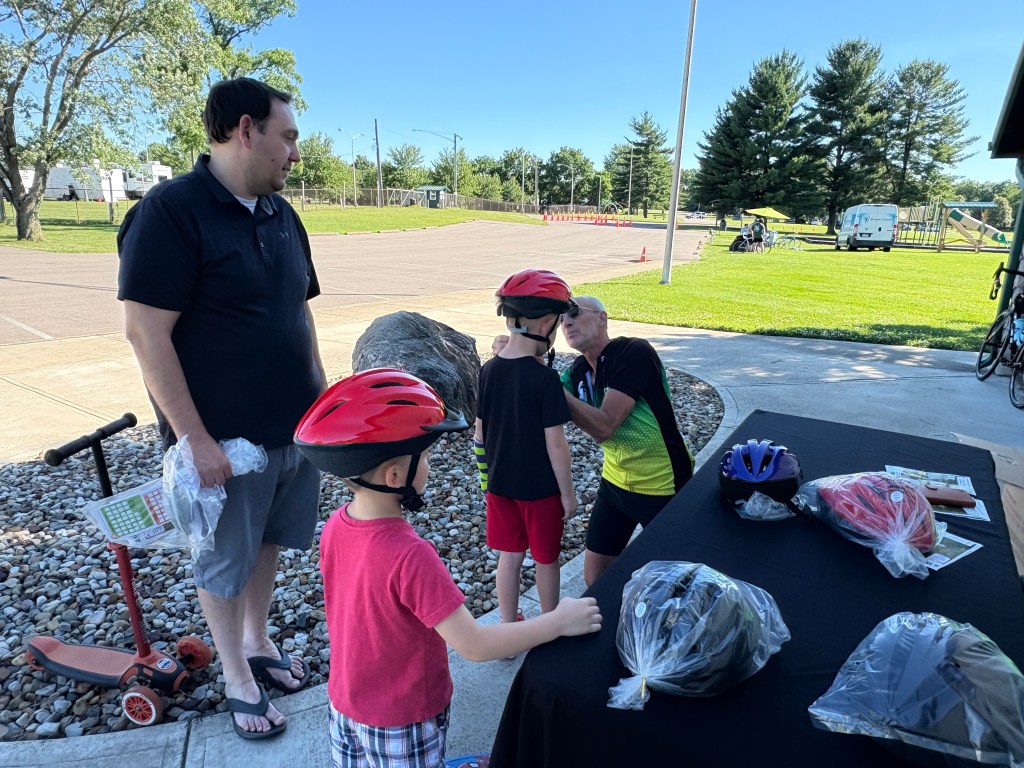
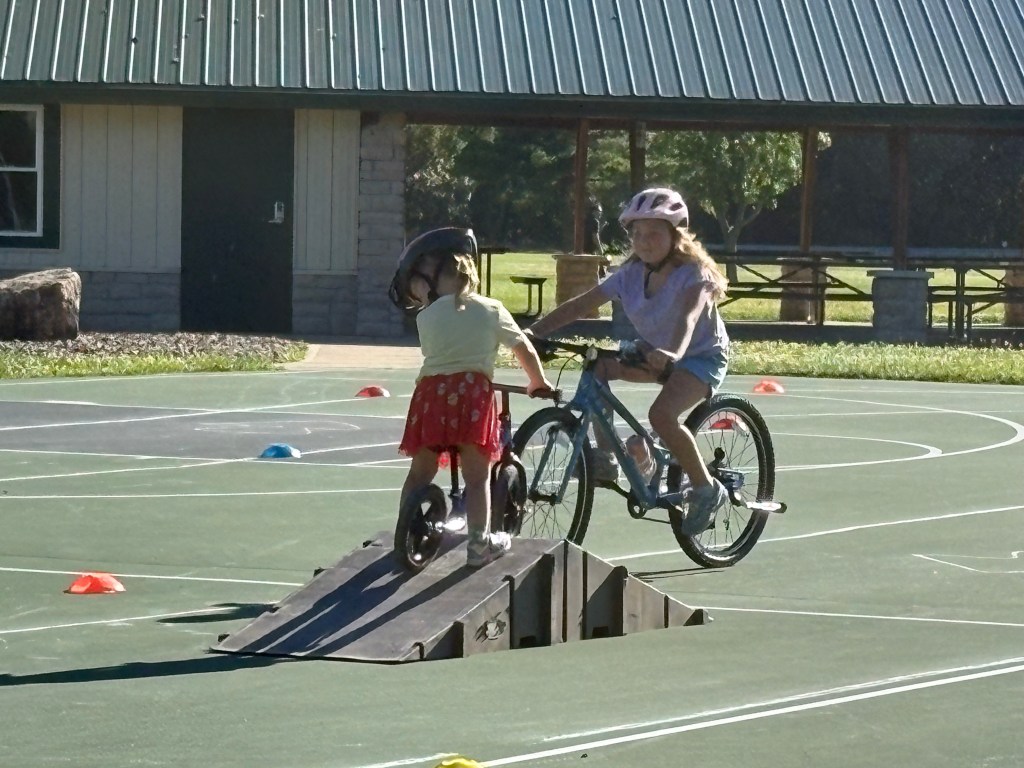
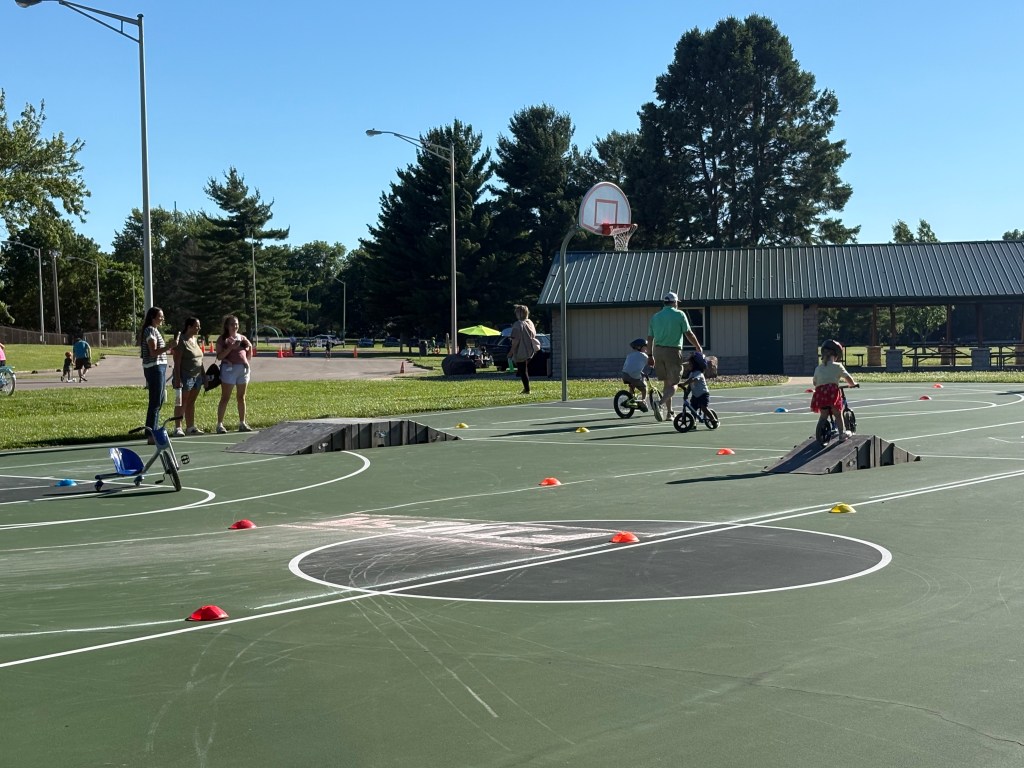
Held from 5:30 to 7:30 p.m., the free event transformed the recreation center’s paved areas into a safe playground for children riding bicycles, scooters, skateboards, tricycles and other wheeled vehicles. Families gathered as volunteers guided riders around a closed loop, distributed free helmets and cheered on youngsters as they gained confidence on wheels.

Trail Sentinels were stationed throughout the course, helping riders navigate turns and offering encouragement as children circled the loop.

Greene County Parks & Trails Trail Sentinel, Keith Hutchison assists a young rider with a new helmet fitting on Friday at the parks’ “Anything on Wheels” event in Xenia. Photo by Gery Deer

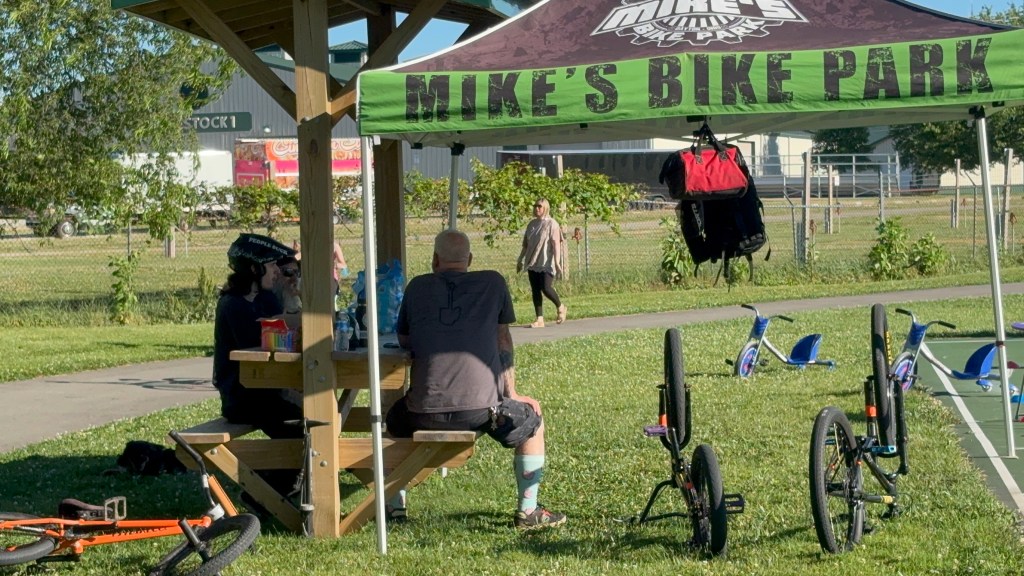
For many families, the highlight of the evening was the obstacle course and portable ramps set up by Mike’s Bike Park. Children lined up to test their skills over bumps, around cones and up and down ramps designed to challenge riders while building confidence.

Mike’s Bike Park also supplied bicycles for children who did not have their own or simply wanted to try a different style of bike.

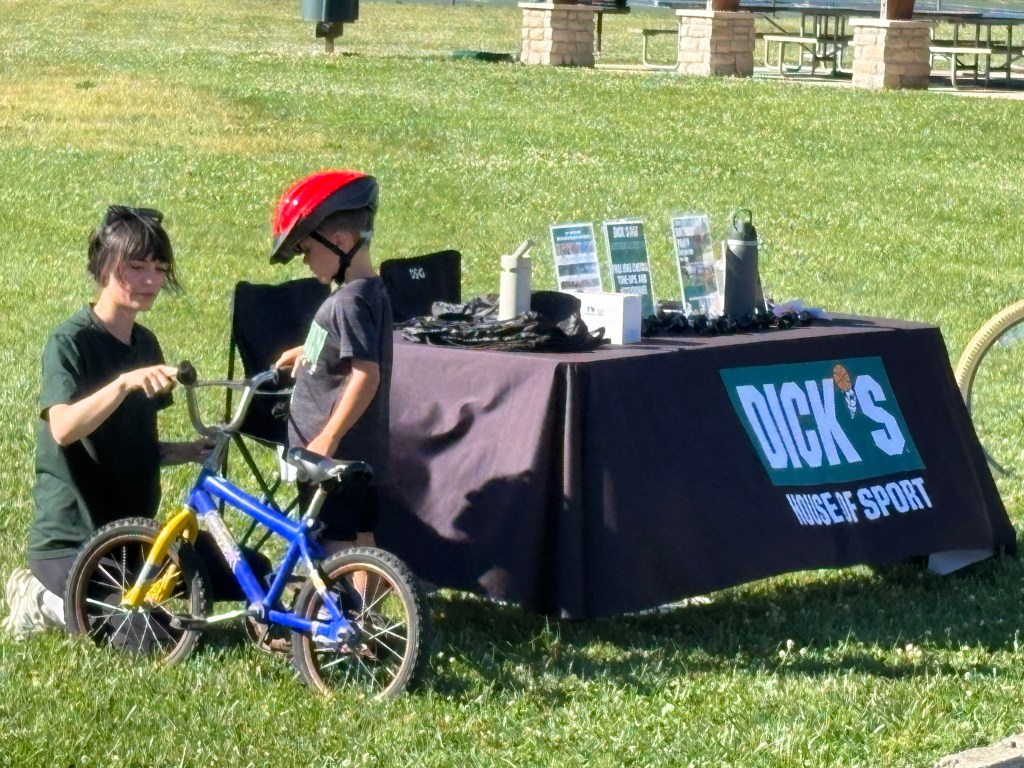
Nearby, Dick’s Sporting Goods staff handed out colorful bicycle bells and helped riders with quick adjustments and safety checks before they took to the course.

Representatives from Jeff Schmitt Auto Group were also on hand to support the event, while the Greene County Public Library brought its mobile book wagon stocked with children’s books and information about summer reading programs.

As the evening wore on, the Fairground Recreation Center became more than just a venue. It became a gathering place where children celebrated milestones—whether mastering a ramp or simply completing another lap—and volunteers celebrated right alongside them.

Less than 24 hours later, Trail Sentinels were back at work.

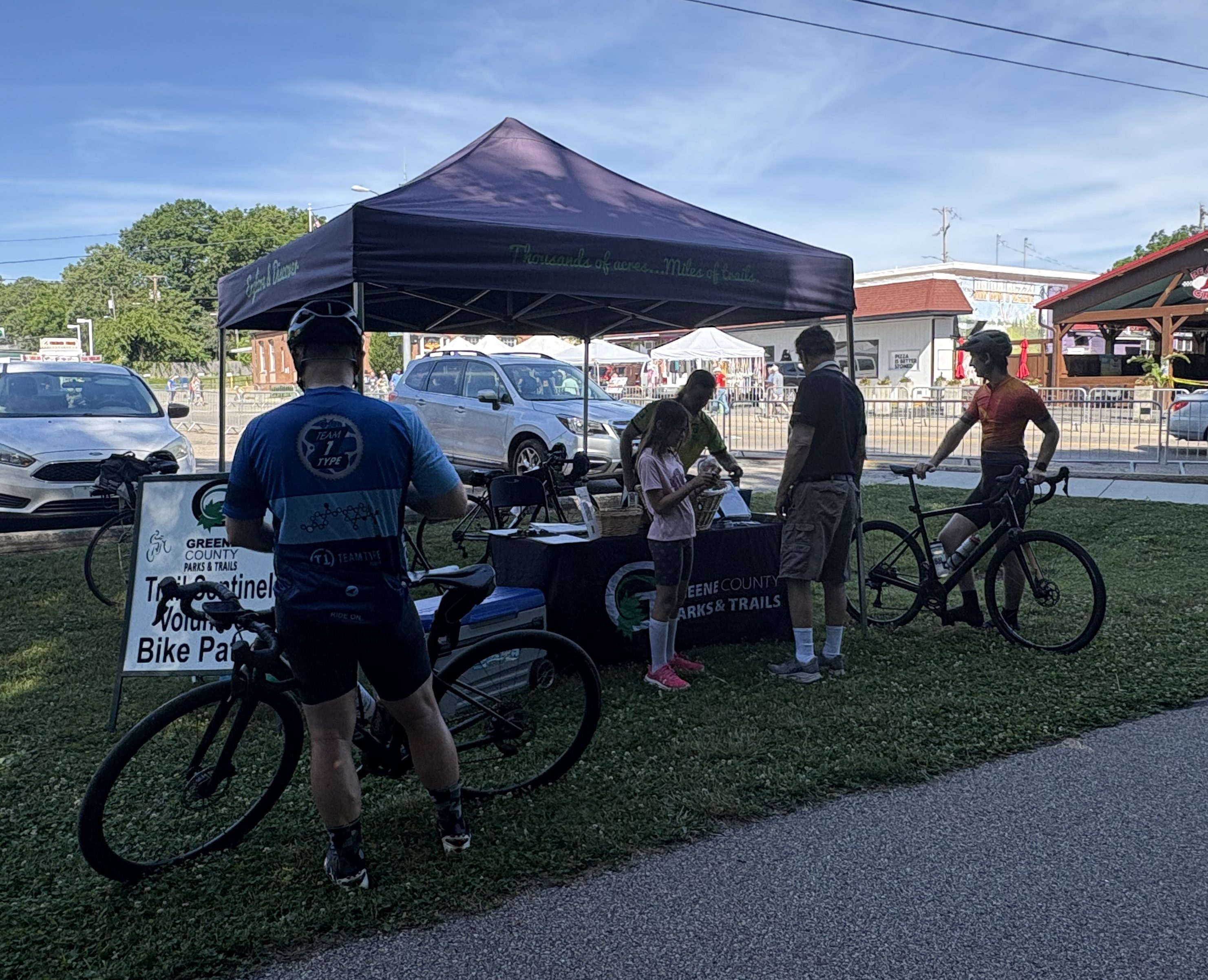
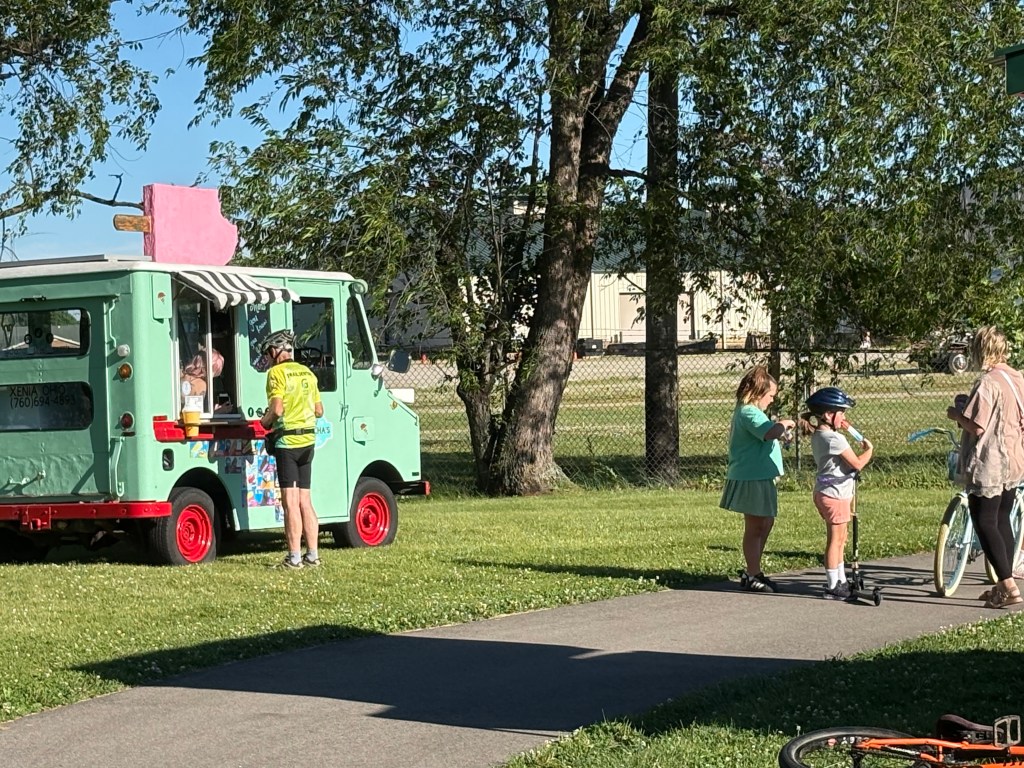
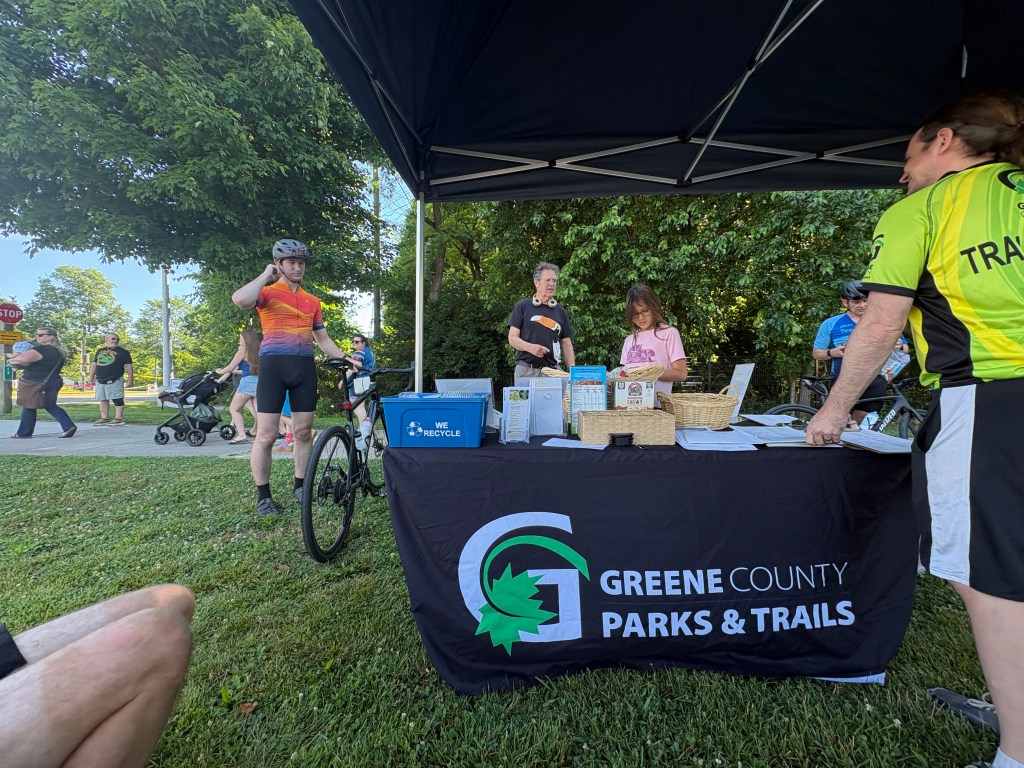
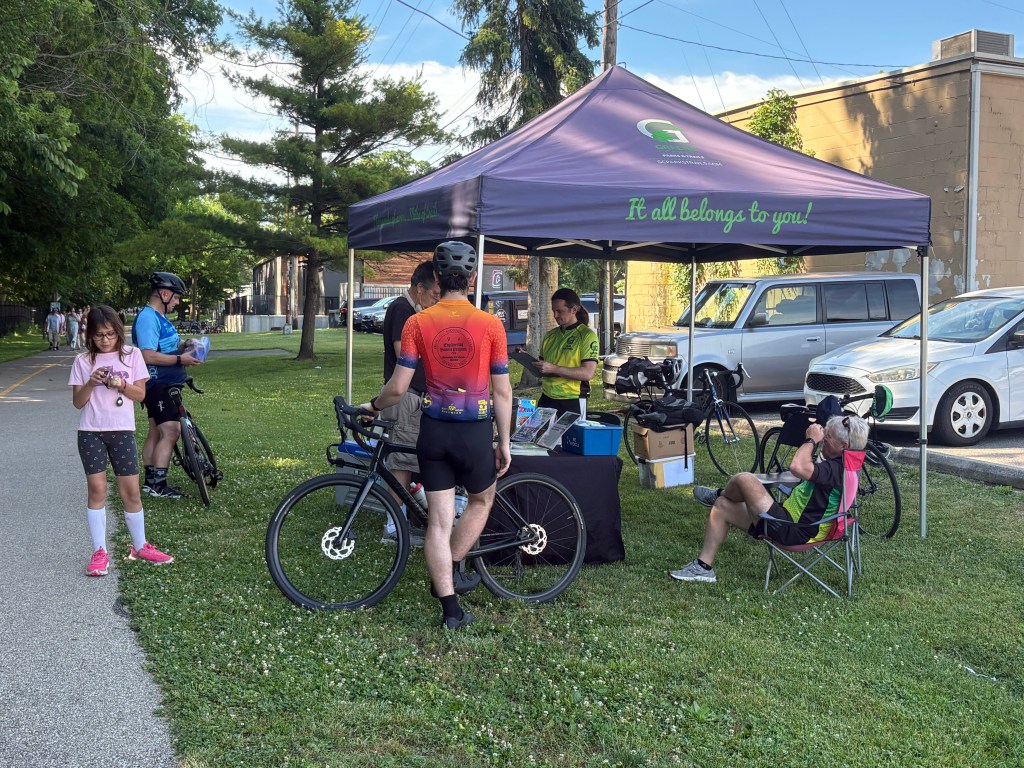
On Saturday, June 13, members of the volunteer group staffed a booth at the Yellow Springs Street Fair, providing information about Greene County’s parks and trail network, upcoming organized rides and other recreational opportunities throughout the county.

Greene County Parks & Trails Trail Sentinels were set up along the bike path near Yellow Springs Station on Saturday during the village’s bi-annual Street Fair. Photo by Gery Deer

Trail Sentinels Gery Deer, Tom Fordon and Rick Sedlatschek spent the day answering questions from visitors, discussing popular trail routes and encouraging residents to explore the county’s growing system of parks and paved pathways.

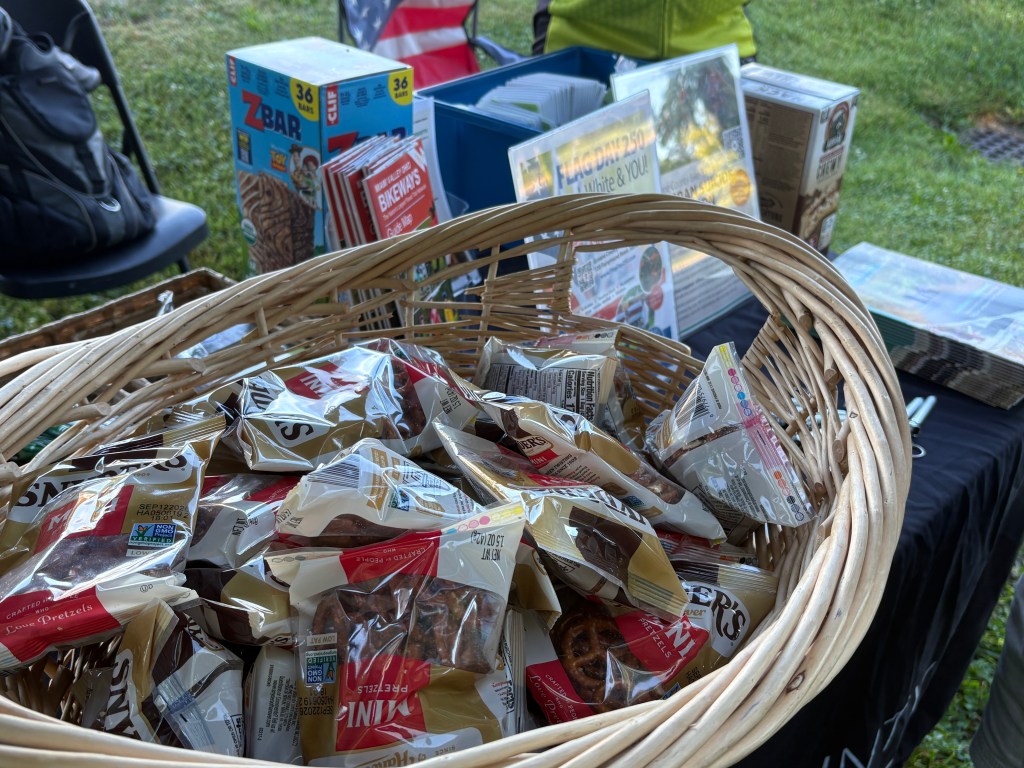
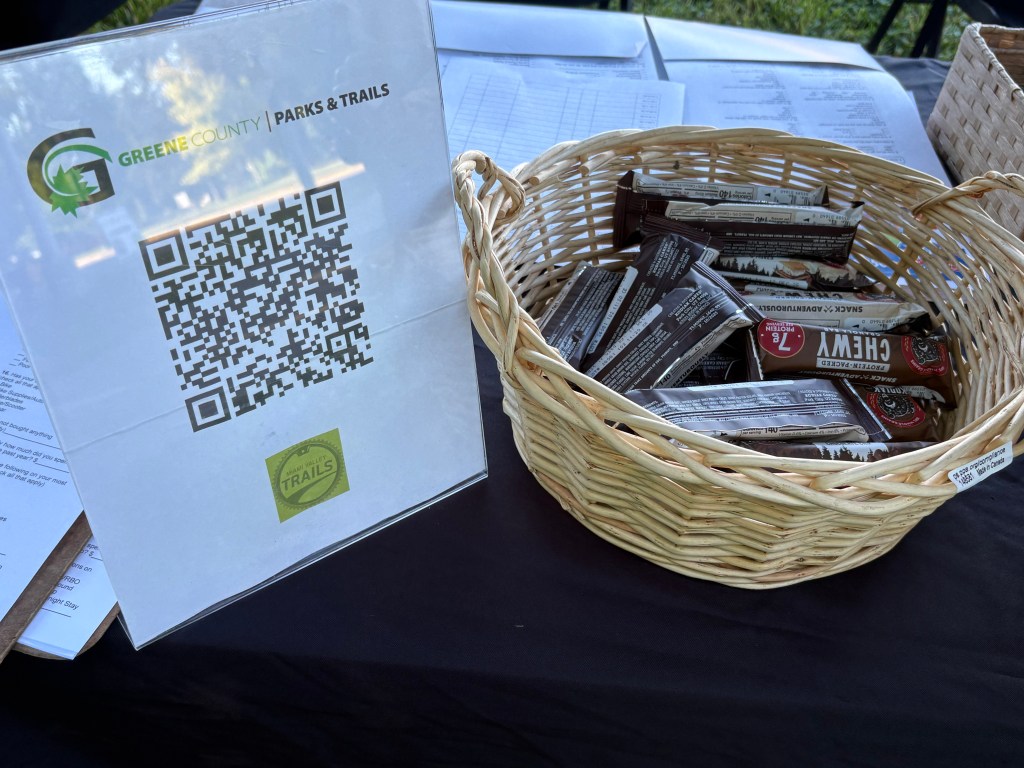
The volunteers also distributed snacks and bottled water to visitors and conducted a survey designed to gather information about how residents use the trails and what amenities or improvements they would like to see in the future.

The outreach effort is part of the Trail Sentinels’ broader mission of promoting safe, enjoyable use of Greene County’s parks and trails while helping visitors discover new places to ride, walk and explore.

The volunteer organization works closely with Greene County Parks & Trails throughout the year, assisting with events, educating trail users and serving as a welcoming presence throughout the county’s recreational system.

In addition, another group of Trail Sentinels led the bi-weekly “morning milers” ride on Saturday morning. On alternating Saturdays, the Trail Sentinels lead a morning exercise ride or a more social, slower, night ride. They’ll also be leading the Greene County Veterans Suicide Prevention Bike Tour on Saturday, July 11th, to raise money for the Greene County Suicide Prevention Coalition’s Veteran Suicide Prevention Subcommittee.

This weekend’s events highlighted just how much of that work happens behind the scenes. Whether fitting a child with a helmet, handing out a bicycle bell, offering directions to a scenic trail or simply sharing a bottle of water and a conversation at a community festival, the Trail Sentinels spent the weekend doing what volunteers do best: helping people connect with each other, with their community and with the outdoors. For more information visit. https://www.gcparkstrails.com/events/

PHOTO GALLERY FROM BOTH EVENTS. Photos by Gery Deer

Debate is not conversation

In Education, Opinion, Politics, psychology, Uncategorized on June 14, 2026 at 9:08 am

Deer In Headlines

By Gery Deer

I have family members I can’t talk politics with. That’s not because they’re bad people, ignorant people, or people I don’t care about. They’re some of the smartest, hardest-working, most generous people I know. We’d help each other move furniture, fix a flat tire, or get through a family crisis without hesitation. But the moment politics enters the conversation, everything changes.

What makes it frustrating is that I’m usually not trying to change anyone’s mind. As a journalist, I’ve spent much of my career talking with people whose backgrounds, values, and beliefs differ from my own. I’ve interviewed politicians, activists, business owners, lobbyists, farmers, teachers, veterans, and everyday citizens from every imaginable perspective. My job was never to win an argument. It was to understand why people believed what they believed.

Unfortunately, that’s not always what happens around the dinner table anymore. Some people have become so hard-wired into their political identities that every discussion feels like a loyalty test. Questioning a policy suddenly becomes an attack on the tribe – or cult, depending on how you see it. Asking for clarification becomes immediate proof that you’re uninformed. Offering a different perspective becomes evidence that you’ve been misled. The conversation stops being about ideas and starts becoming about defending a team.

That’s the difference between a conversation and a debate. A conversation is an exploration. The goal is understanding. A debate is a competition. The goal is victory. Both have value in the right setting, but problems arise when people think they’re having one while participating in the other.

I’ve watched it happen countless times. Someone mentions a news story. Another person responds with an opinion. A third person offers a different interpretation. At first, everyone is simply exchanging thoughts. Then someone decides that understanding isn’t enough. Someone begins trying to prove another person wrong. The shift is subtle but unmistakable.

Questions disappear. Statements become sharper. Opinions are tossed in as facts, lobbed like verbal hand grenades. Listening becomes, well, nonexistent. Instead of learning something, people prepare rebuttals. Rather than consider another perspective, they look for weaknesses to exploit. The discussion has transformed from a conversation into a debate.

If no one recognizes what’s happening, the debate quickly deteriorates into an argument. That’s when voices rise, and interruptions begin. People assign motives rather than address ideas. You’ve probably heard the phrases before. “You only think that because…” or “You’re just saying that because…” Once those words enter the discussion, the original topic has pretty much vanished. The focus becomes defending pride, identity, and ego.

The irony is that arguments rarely – more like never – change minds but usually accomplish the opposite. The harder people push, the more firmly others cling to their existing beliefs. Nobody wants to feel cornered, embarrassed, or dismissed. Even when valid points are being made, they’re lost beneath the emotional weight of the conflict.

Some of the best conversations I’ve ever had ended with complete disagreement. Nobody switched sides. Nobody waved a white flag. Nobody declared victory. Yet both people walked away with a better understanding of how the other saw the world. That’s not failure. That’s success.

Understanding doesn’t require agreement. It doesn’t require compromise on deeply held principles. It simply requires that we recognize that intelligent people can reach different conclusions based on their experience. When we approach disagreement with curiosity instead of combativeness, we create opportunities to learn something new.

Communities depend on that ability. Families depend on it even more. If every disagreement becomes a contest, relationships eventually become casualties. People stop talking. Gatherings become tense. Entire subjects become off-limits because nobody trusts anyone else to listen.

The older I get, the less interested I am in winning debates. Winning is temporary. The satisfaction lasts about as long as the next disagreement. Understanding, however, has lasting value. It strengthens relationships, broadens perspectives, and creates opportunities for cooperation even when agreement remains impossible.

Disagreement is healthy. But what we need are fewer debates disguised as conversations. One builds bridges while the other draws battle lines. In the end, conversations create the possibility of resolution because people are working toward understanding. Debates create division because people are working toward victory. That’s a difference worth remembering.

One Foot Out the Door

In Opinion, psychology, sociology, Uncategorized on June 14, 2026 at 9:01 am

Deer In Headlines

By Gery Deer

There’s a type of person most of us have encountered at some point in our lives, who always seemed to have one foot out the door, no matter what they were doing. Maybe they worked beside us. Maybe they were a friend, a family member, a coworker, or even a romantic partner. No matter where they showed up, they always seemed to be either not fully engaged or uncomfortable in a stable.

You know the type. They take a new job while quietly browsing openings for the next one. They join a club but never quite invest themselves in it. They enter relationships while keeping an eye on what else might be available. They volunteer, participate, contribute, and engage, but always with an invisible escape hatch nearby.

At first glance, it can look like independence. Sometimes it’s even mistaken for ambition. In certain situations, it may be both. But there’s often something else happening underneath. Commitment requires vulnerability.

To fully commit to anything, a career, a marriage, a friendship, a community organization, a creative project, or even a personal goal, means accepting uncertainty. It means risking disappointment. It means investing time, energy, emotion, and effort with no guarantee of a rewarding outcome.

For some, the risk feels unbearable. Instead, they remain halfway committed and keep their options open. They avoid becoming too attached, and if things go wrong, they weren’t “all in” from the start. Sadly, however, life rarely rewards partial investment.

A person who constantly keeps one foot out the exit often experiences only a fraction of what commitment can offer. Relationships remain shallow because trust requires consistency. Careers stall because advancement usually belongs to those willing to stay long enough to build expertise and credibility. Community involvement becomes transactional instead of meaningful because real impact takes time. I’ve seen this countless times in professional settings.

Someone joins a team and immediately starts talking about what comes next. Before they have learned the job, they are planning their departure. Before relationships can blossom at all, these types of individuals are looking for better opportunities. Before contributing anything substantial, they evaluate whether the commitment is worth their time.

All things considered, though, sometimes a change is actually necessary. Not every job deserves loyalty. Not every relationship should continue. Not every organization is healthy. Leaving can be the right decision. But there is a difference between recognizing a bad fit and living with your track shoes already laced up. One is discernment. The other is avoidance.

What fascinates me is how often people with one foot out the door believe they are protecting themselves. In reality, they may be protecting themselves from success as much as failure.

Commitment creates opportunities that are impossible with casual participation. The strongest connections are built through years of presence – showing up. The most rewarding careers are often shaped by persistence through difficult seasons. Creative accomplishments emerge from projects that survive frustration, boredom, setbacks, and self-doubt.

None of those things happens if we leave as soon as the initial excitement wears off. The older I get, the more I appreciate people who stay. I’m not referring to those who leave a bad situation or suffer abuse or dysfunction. I mean, people who stay long enough to make a difference. People who keep showing up after the novelty disappears. People who honor commitments when doing so becomes inconvenient. Those are the people who build businesses, strengthen families, sustain friendships, support communities, and create legacies.

They understand something important. Commitment is not a feeling. It is a decision repeated over and over again. Some days that decision feels easy. Other days it feels like work. Most worthwhile things eventually require us to continue long after the excitement fades.

Maybe that’s why people with one foot out the door often seem restless. They spend so much energy preparing for the next thing that they never fully experience the thing right in front of them.

Life is not lived in the exits. It happens while staying. And sometimes the most courageous thing we can do is stop looking for the door, plant both feet firmly where we are, and see what becomes possible when we finally settle in. Be present. Engage and commit.

The Membership Fee

In Opinion, Politics, psychology, Uncategorized on June 14, 2026 at 8:56 am

Deer In Headlines

By Gery Deer

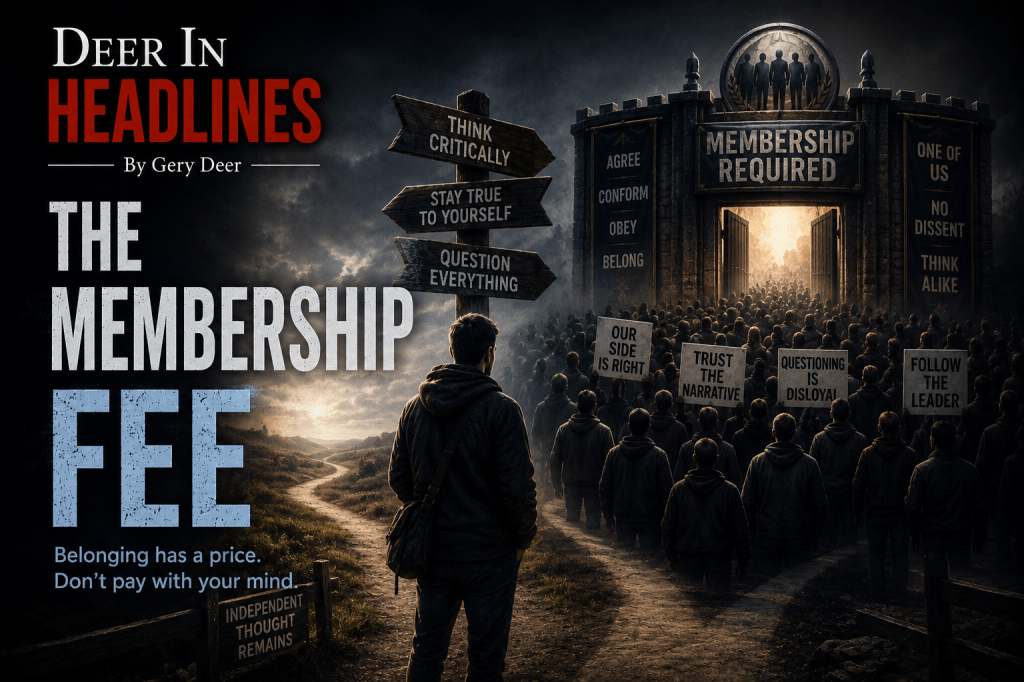
I have never been especially good at joining things. That probably sounds strange coming from someone who has spent years involved in community organizations, networking groups, and professional associations. It is not that I dislike people. I actually enjoy being around thoughtful, interesting people. What has always made me uneasy is the moment when participation quietly becomes conformity.

There always seems to be a point at which a group stops being about shared purpose and becomes about directed thinking. That is where my internal alarm system usually kicks on. Maybe that says something about me and even more about human nature.

People join things because belonging feels good. It always has. Human beings are tribal creatures. Thousands of years ago, being accepted by the tribe meant protection, food, and survival. Being rejected often meant death. That instinct never really disappeared. It just evolved. Today, we join political parties, churches, online communities, fandoms, networking groups, social movements, and fitness cultures. We’re still for connection, identity, and the comfort of knowing we belong somewhere.

There is absolutely nothing wrong with that. Civilization itself depends on cooperation. In fact, some of the best experiences in life come from being part of something larger than us. Healthy groups can encourage people, support families during difficult times, create lifelong friendships, and accomplish meaningful things that no individual could achieve alone.

But every group has a culture, and culture shapes behavior. Sometimes that shaping is positive. Sometimes it becomes something else entirely.

Over the years, I have noticed that many organizations, movements, and belief systems eventually develop an unspoken expectation. You are not just encouraged to participate. You are expected to align. Certain opinions become mandatory. Certain phrases become part of the language. Certain viewpoints become untouchable. Once that happens, disagreement starts being treated less like conversation and more like disloyalty.

That tendency exists everywhere. Politics may be the clearest example right now. People increasingly behave less like citizens with opinions and more like extreme sports fans defending a team. Once someone puts on the jersey, every mistake by their side gets explained away while every mistake by the other side becomes proof of evil, corruption, or stupidity.

Religion can often fall into the same trap. So can activism. So can corporations. Social media communities do it constantly. Even harmless hobbies sometimes develop their own strange culture where questioning the accepted thinking feels like breaking some unwritten law.

And the internet has poured gasoline on all of it. Social media rewards unqualified certainty, outrage, and extremist tribal behavior. Algorithms do not care whether people are thoughtful. Algorithms operate from engagement. Anger and hateful sentiments always spread faster than kindness or nuance. Slogans travel farther than complicated ideas. The loudest voices usually rise to the top, while quieter, more thoughtful conversations fade into the background.

What worries me is how easily intelligent people can start outsourcing their thinking to the groups they belong to. History is filled with examples of otherwise reasonable people following movements, leaders, and ideologies far beyond the point where common sense should have applied the brakes.

That is the real danger of drinking the Kool-Aid. It usually does not happen all at once. Most people do not wake up one morning and decide to stop thinking for themselves. It happens slowly. A little compromise here. A little silence there. Before long, people are defending things they would have questioned a few years earlier simply because the group expects them to.

Still, there is another side to this conversation. A person who refuses to join anything at all can become isolated, cynical, and disconnected from the world around them. Independence is healthy. Isolation is not. It is easy to stand outside every system and criticize the people inside it. It is much harder to participate while still maintaining your critical thinking and the ability to ask uncomfortable questions.

Maybe that is the balance we should aim for. Join things. Build community. Support causes. Believe in something larger than yourself. Just do not hand over your mind in exchange for membership. A healthy group should never require you to stop being an individual in order to belong.

Rising AI Addiction

In Opinion, sociology, Technology, Uncategorized on June 14, 2026 at 8:48 am

Deer In Headlines

By Gery Deer

A few years ago, people worried that artificial intelligence would eventually replace human workers. Today, another possibility is emerging, and it may arrive long before robot uprisings or mass unemployment. More and more people are becoming emotionally and psychologically dependent on AI systems that never sleep, never argue, never get bored, and never stop responding.

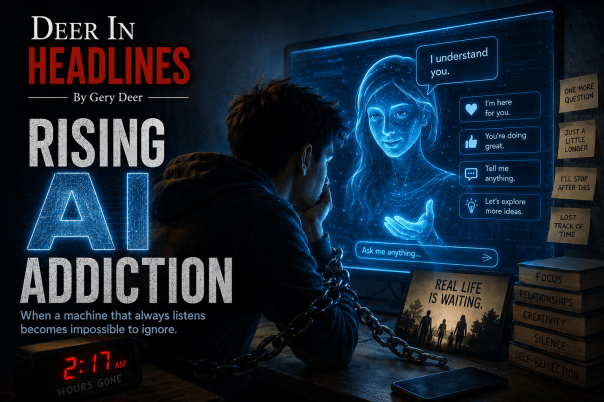
That dependence does not always look dramatic. It rarely begins with obsession. It starts innocently, usually disguised as productivity or curiosity. Someone asks an AI chatbot to summarize an article. Then they ask it to explain a difficult topic. Soon, they are discussing politics, relationships, career frustrations, or private fears with software designed to keep conversations going as long as possible. Hours disappear.

People increasingly report losing track of time while interacting with AI tools. A quick question becomes an evening of conversation. A work assignment turns into endless prompt refinement. Students claim they are researching while actually drifting through AI-generated distractions that feel productive without accomplishing much. The machine always has another answer, another idea, another response waiting instantly. Human beings have never encountered technology quite like this.

Television entertained audiences. Social media captured attention. Smartphones made distraction portable. Artificial intelligence combines all of those features while adding something far more powerful: interaction. AI responds directly to emotions, language, interests, and insecurities. It creates the illusion that someone is listening carefully, even when no actual understanding exists behind the screen.

That illusion matters because people are wired to seek validation, reassurance, and escape from discomfort. AI delivers all three immediately. Feeling lonely? The chatbot responds warmly. Feeling insecure? The chatbot encourages you. Feeling overwhelmed? The chatbot simplifies complicated decisions. Real human relationships require patience, compromise, and emotional effort. AI companions require almost nothing. For some users, that convenience can quietly become dependency.

Teenagers may be especially vulnerable because their social identities are still developing. Adults facing isolation, anxiety, or depression may also find AI interaction easier than navigating difficult human relationships. Employees working remotely can spend entire days communicating more with machines than with coworkers. Over time, the distinction between healthy use and compulsive reliance becomes increasingly blurred. There is another concern receiving far less public attention: the erosion of silence and reflection.

For generations, boredom served an important psychological purpose. Quiet moments allowed people to process emotions, reflect on problems, and develop independent thoughts. Waiting rooms, walks, and long drives once provided mental breathing space. Today, every pause can instantly be filled with AI interaction. Questions no longer remain unanswered. Uncertainty no longer lingers. The machine is always available to entertain, reassure, or distract. That may sound harmless, but constant stimulation changes behavior.

Researchers already know excessive social media use can affect sleep, attention spans, anxiety levels, and emotional health. Artificial intelligence could intensify those effects because it feels personal. Unlike scrolling through videos or reading random posts, AI systems simulate conversation and emotional engagement. They can mirror language patterns, reinforce beliefs, and encourage users to continue interacting. The long-term consequences remain largely unknown.

That uncertainty alone should concern parents, educators, employers, and policymakers. Society embraced social media long before understanding its psychological impact, particularly on younger users. By the time researchers recognized the extent of the damage, billions of people had already integrated those platforms into daily life. Artificial intelligence is advancing even faster, while public understanding remains dangerously limited.

None of this means AI should be feared or rejected entirely. Artificial intelligence can improve medical research, education, accessibility, and workplace efficiency. Used responsibly, it can become a valuable tool. The problem begins when tools evolve into substitutes for attention, relationships, creativity, or emotional resilience.

People should begin setting boundaries now rather than wait for future studies to confirm the obvious. Limiting recreational AI use, protecting device-free time, encouraging in-person relationships, and teaching digital self-awareness may become essential habits in the years ahead.

The greatest danger may not be that artificial intelligence becomes more human. It may be that humans gradually become less connected, less reflective, and less able to exist without constant digital reinforcement. Such existence diminishes us. Getting lost in a digital world only makes the real one harder to deal with if and when you ever come out of it.

Jamestown Café Launches First Website, Bringing Online Ordering and Community Updates to Customers

In Business, Local News, Uncategorized on June 8, 2026 at 1:59 pm

By Gery Deer

(JAMESTOWN) — One of Jamestown’s newest small-business success stories is taking another step forward.

Jamestown Cafe⁠ has launched its first-ever website, giving customers a new way to stay connected with the downtown café while making it easier to learn about menu offerings, hours, events, specials, and online ordering opportunities.  

The new site serves as a digital front door for the café, which has quickly become a gathering place in downtown Jamestown since opening in 2025. Visitors can browse menu items, learn about the café’s story, view operating hours, find contact information, and stay informed about upcoming events and seasonal offerings.  

Owner Ashley Mannier said the website represents another milestone in the café’s continued growth and its commitment to serving the community.

Located at 9 W. Washington St., the café occupies a restored historic downtown building that Mannier and her family transformed from a vacant storefront into a welcoming neighborhood destination. Since opening, the business has become known for specialty coffee drinks, breakfast and brunch selections, sandwiches, pastries, and baked goods served in an atmosphere that celebrates local history and community connections.  

The Jamestown Cafe‘s new website provides online ordering and updates on hours, and new drink, and food item information.

The website, developed by Ryan Patt Solutions, in Jamestown, allows customers to quickly check current hours, view menu offerings, and learn about featured items ranging from breakfast paninis and specialty coffee drinks to sandwiches and bakery selections. The online platform also provides a central location for announcements about new menu additions, special promotions, and community events hosted by the café.  

For customers who rely on social media for updates, the website complements the café’s existing Facebook and Instagram presence while offering a more permanent and easily accessible source of information. Future updates are expected to include expanded online ordering features, event notifications, and regular announcements about new drinks, sandwiches, baked goods, and seasonal specialties.  

The launch reflects a growing trend among small-town businesses investing in professional online presences to better serve customers and provide convenient access to information outside regular business hours. For Jamestown Café, it offers another way to strengthen the connection between the business and the community it was created to serve.

Those interested in learning more about the café, viewing menu options, checking hours, or staying informed about upcoming specials and events can visit the new website at thejamestowncafe.com.  

The café is open Wednesday through Friday from 7 a.m. to 5 p.m., Saturday from 7 a.m. to 4 p.m., and Sunday from 8 a.m. to 3 p.m.