XENIA—Volunteers of the Greene County Parks and Trails Trail Sentinel program were available Saturday, May 24th, from 10 a.m. until 2 p.m. Visitors from as far away as South Carolina stopped by the table for suggestions on food stops and other resources along their ride. One cyclist who visited the table was on a long ride along the Erie to Ohio trail. He was documenting his journey with a YouTube channel.
Trail Sentinels are a volunteer group of experienced cyclists who support and assist on Greene County bike trails. They help with minor repairs, give directions, and contact officials in case of a problem on the trails, such as downed trees or emergencies.
Sentinels ride the trails regularly and will be on hand at the bike hub monthly. They also lead weekly Saturday rides, mornings, and evenings. Complete information available online at https://www.gcparkstrails.com/calendar/
An update from the Dayton Hamvention officials on May 28th reads as follows: The 2025 Hamvention set a new high attendance record with 36,814 attendees. The general chair, Brian Markland, said he felt fabulous about watching large crowds of amateur radio enthusiasts from all over the world enjoying exhibits, forums, and the flea market.
XENIA — Before cell phones or the internet, there was amateur, or “ham,” radio.
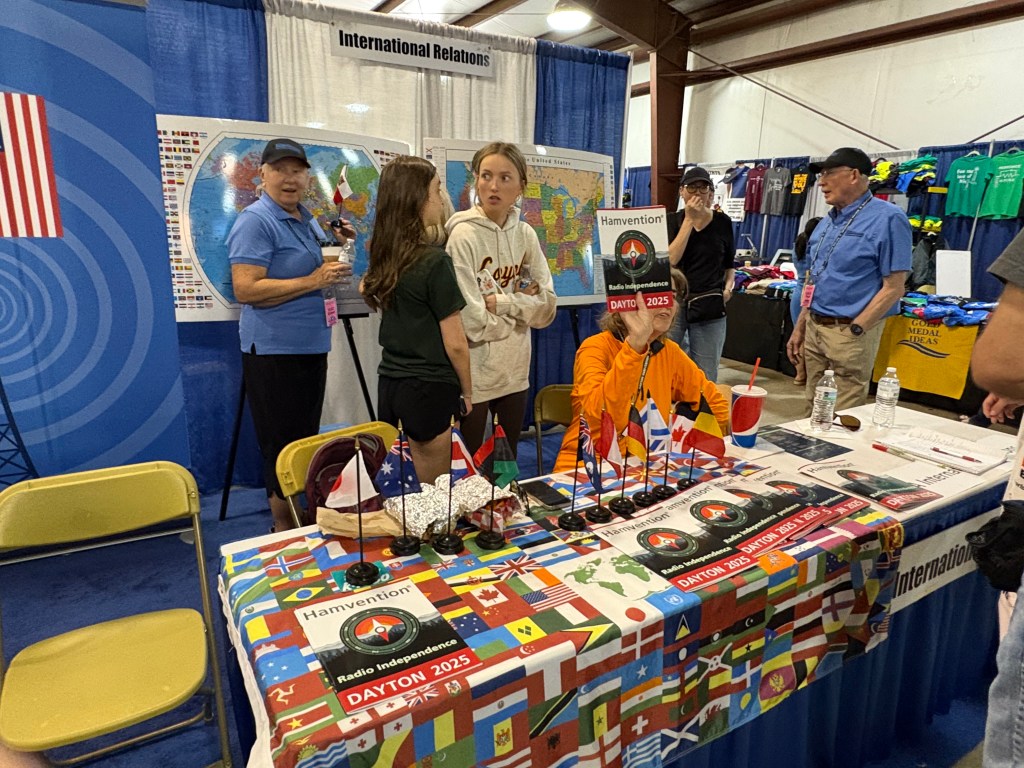
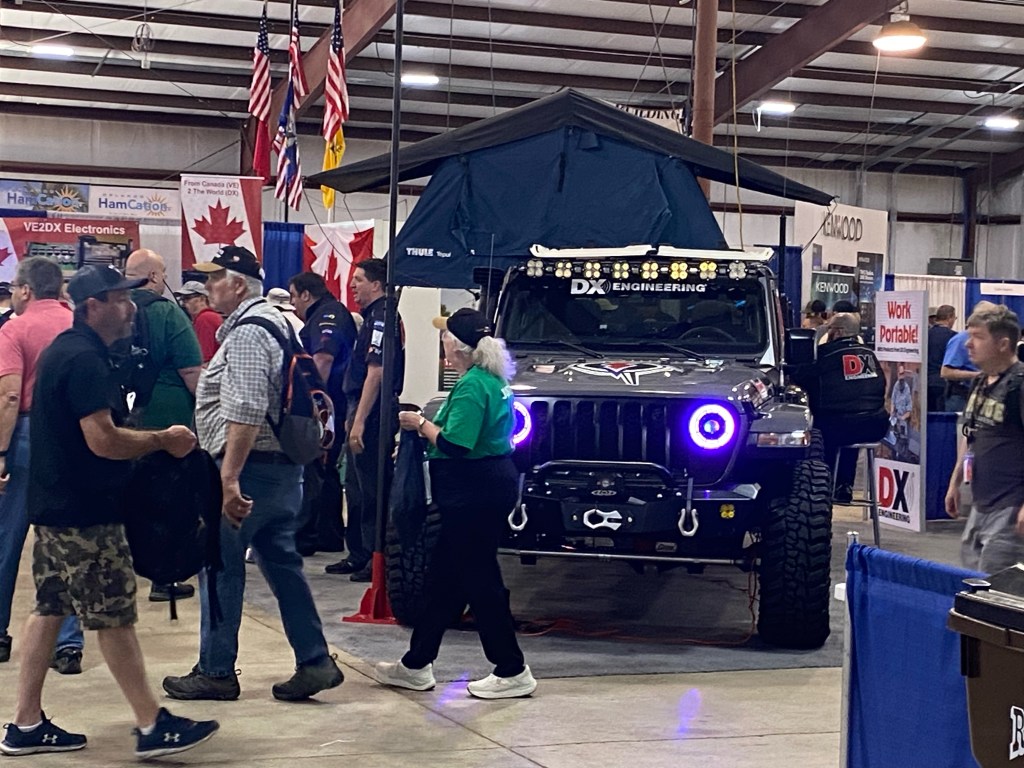
Once a year, thousands of enthusiasts descend on the Greene County Fairground and Expo Center in Xenia for the largest amateur radio convention in the world – Dayton Hamvention. Although final numbers will not be tallied for some time, organizers estimate that this year’s turnout exceeded the 35,000 attendees of 2024.
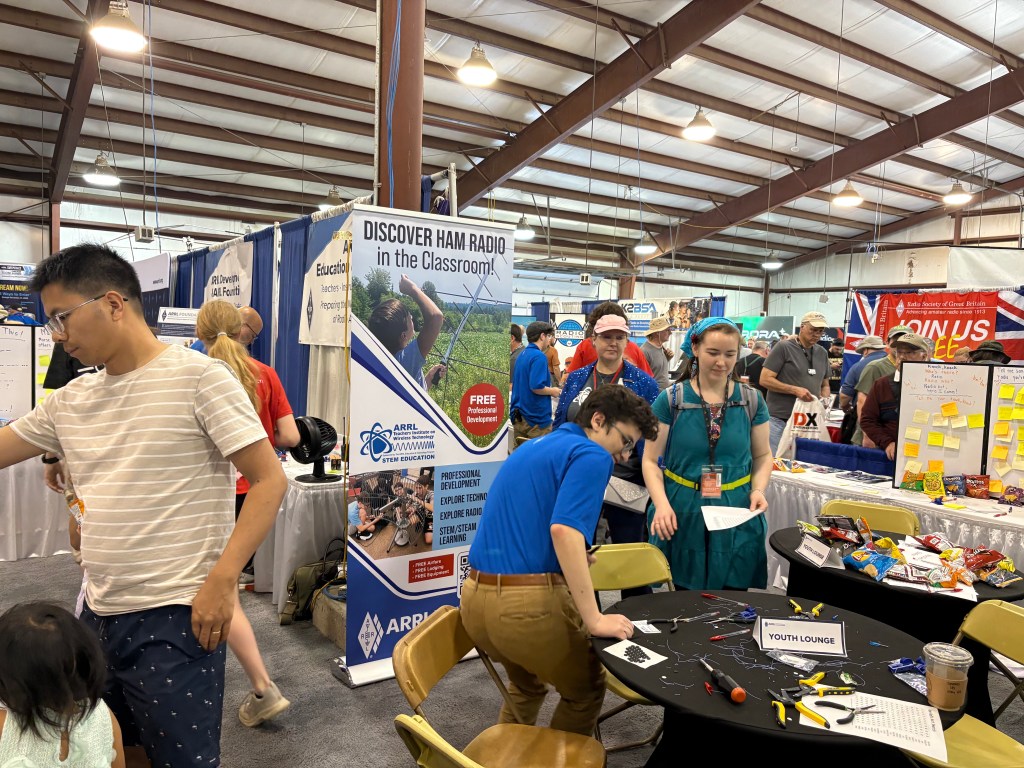
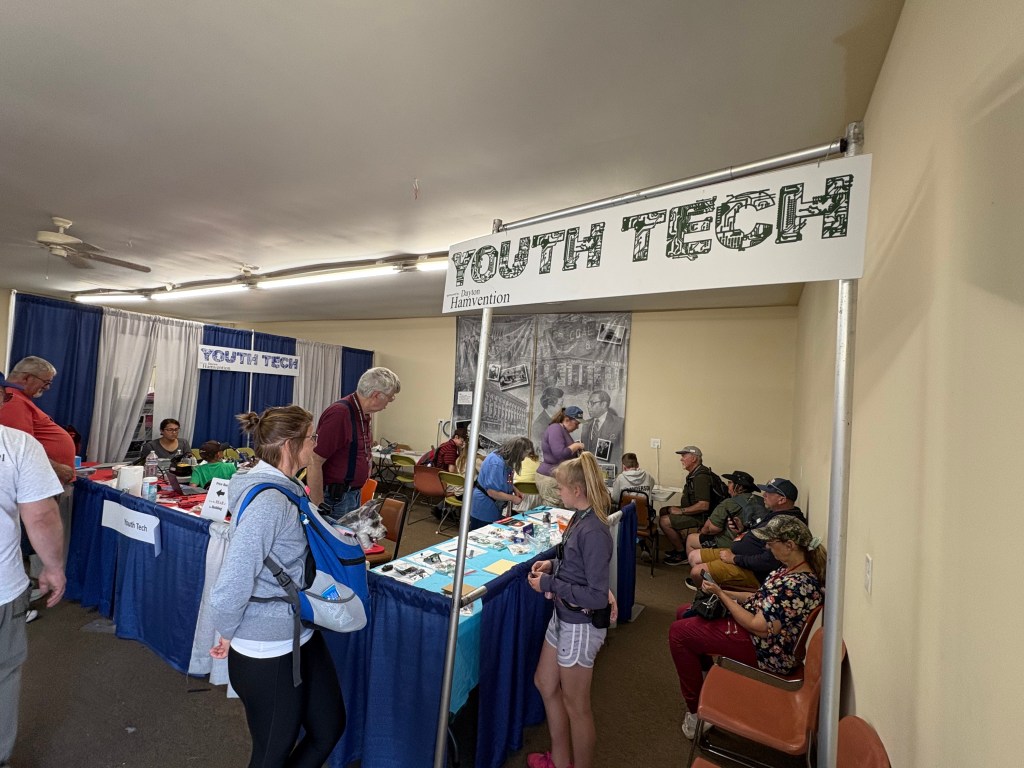
During Dayton Hamvention, participants from as many as 30 countries had the opportunity to see and buy the latest technology, attend educational and informational forums, sit for radio license exams, and take part in youth activities. This year’s event also included groups of young radio enthusiasts, organizations from all over the country made up of young people interested in both the analog and digital nature of amateur radio.
Jim Gifford, call sign N8KET, is the chairman of the media committee for Dayton Hamvention. He shared this year’s theme – Radio Independence – noting that what makes this event so important and impactful to the amateur radio community is the people. One of his favorite moments of this year’s event happened on Friday. “We had 73 students of the Community STEAM Academy (Science Technology Engineering Art and Math) in Xenia here,” he said. “They were really excited to learn how amateur radio relates to science and even space communication.”
With some 800,000 licensed ham radio operators in the United States alone, there is a remarkable sense of community among radio operators, regardless of geography. “It’s so nice for all of us in the local area to be able to come to Hamvention, but then you have to stop and think, this is a big ham fest,” said Glenn Rodgers, WI80, assistant chairman of the event’s media committee. “This is the biggest ham gathering in the world, and we’re so fortunate to be able to come to something like this in this area and it’s an honor to work here.”
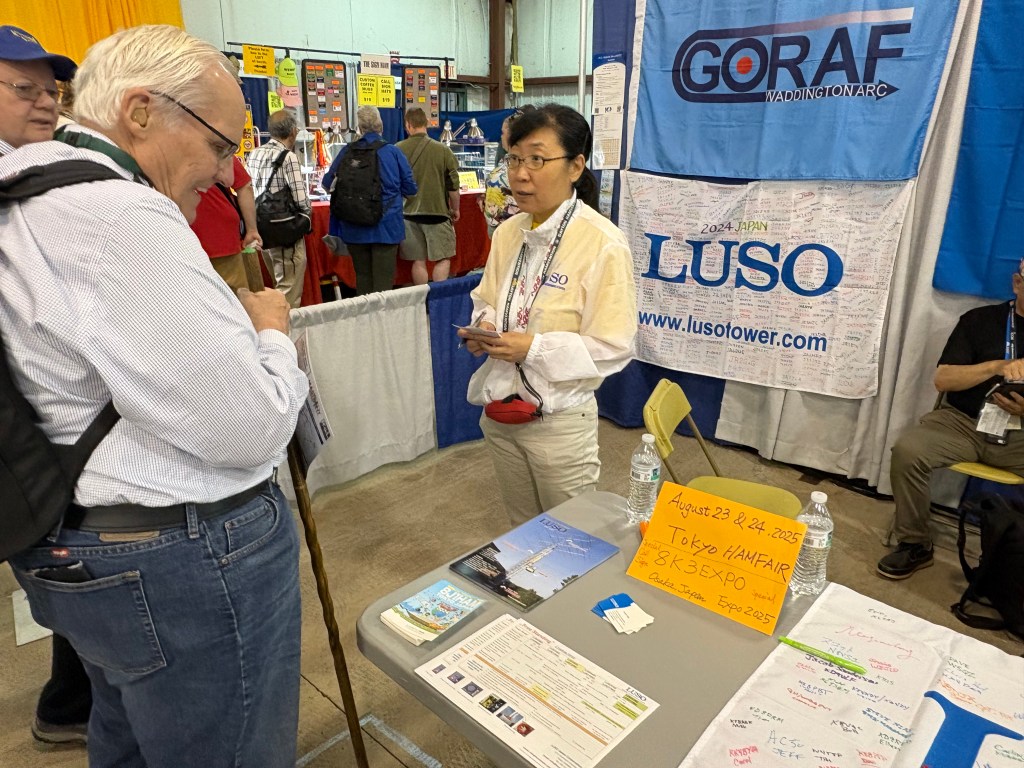
Amateur radio enthusiasts, vendors, and organizations from around the world converged at the Dayton Hamvention. Here’s a promotional booth for Tokyo Hamfair.
With such widespread interest, one might expect the world’s current geopolitical tension would hamper those relationships. According to Gifford, it does not. “We have a multitude of political views here,” he said. “But we’re ham operators, we take care of each other.”
“Because you meet people,” Gifford continued. “We talk to people all over the world. Just the other day, I spoke to somebody from Norway, and somebody from Italy, and it crosses barriers. It really does.”
Most amateur radio enthusiasts are known on the air, and to each other, only by their call sign, an alphanumeric identification given to each license holder by the Federal Communications Commission (FCC).
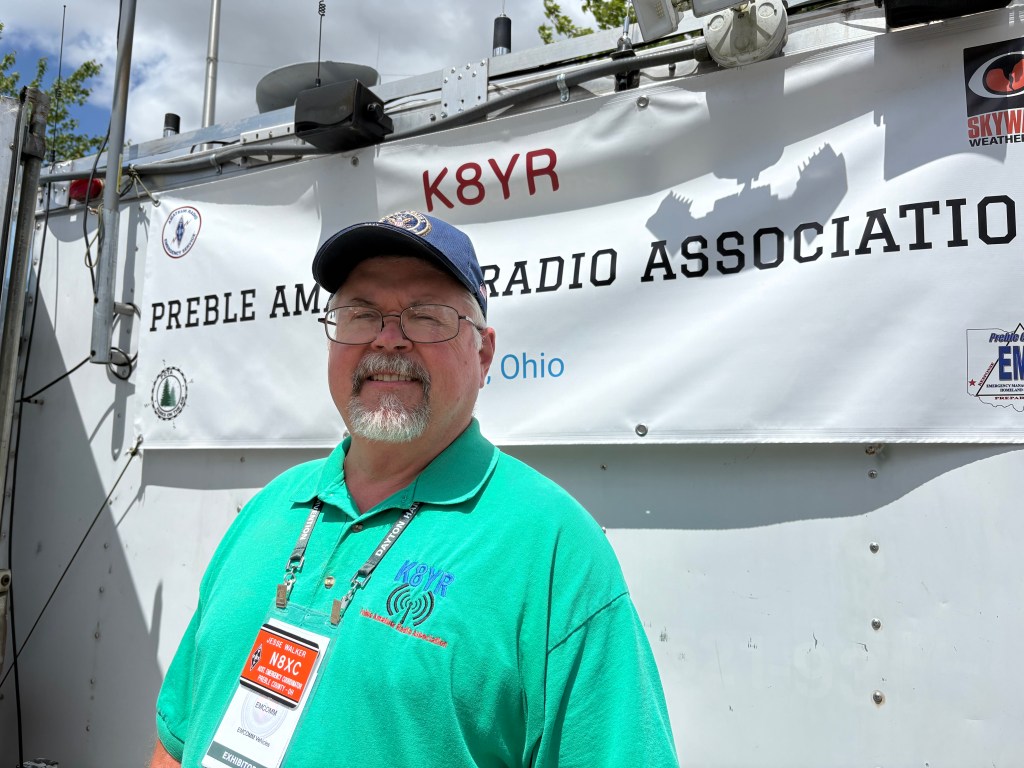
Jesse Walker, N8XC, is U.S. Navy Veteran, and business development manager with Aegis Protective Services in Eaton. He’s been involved in amateur radio since the age of 15. He explained that, although the call signs are assigned, they become part of your identity.
“Many of us only know each other by our call sign,” Walker explained, who is a member of the Preble Amateur Radio Association in Preble County. “Coming here, we get to meet face-to-face often for the first time.”
Both Rodgers and Gifford also noted that, apart from being a hobby for some, ham operators play an important role in the community during emergencies. “Amateur radio groups work as sky spotters during severe weather, they work with and support our area first responders, providing backup communications and volunteers during local emergencies,” Gifford said.
“Essentially, the Preble Amateur Radio Association is involved in public service,” said Jesse Walker. “We work with the Preble County emergency management agency. Our motto in amateur radio emergency service is, ‘when all else fails.’”
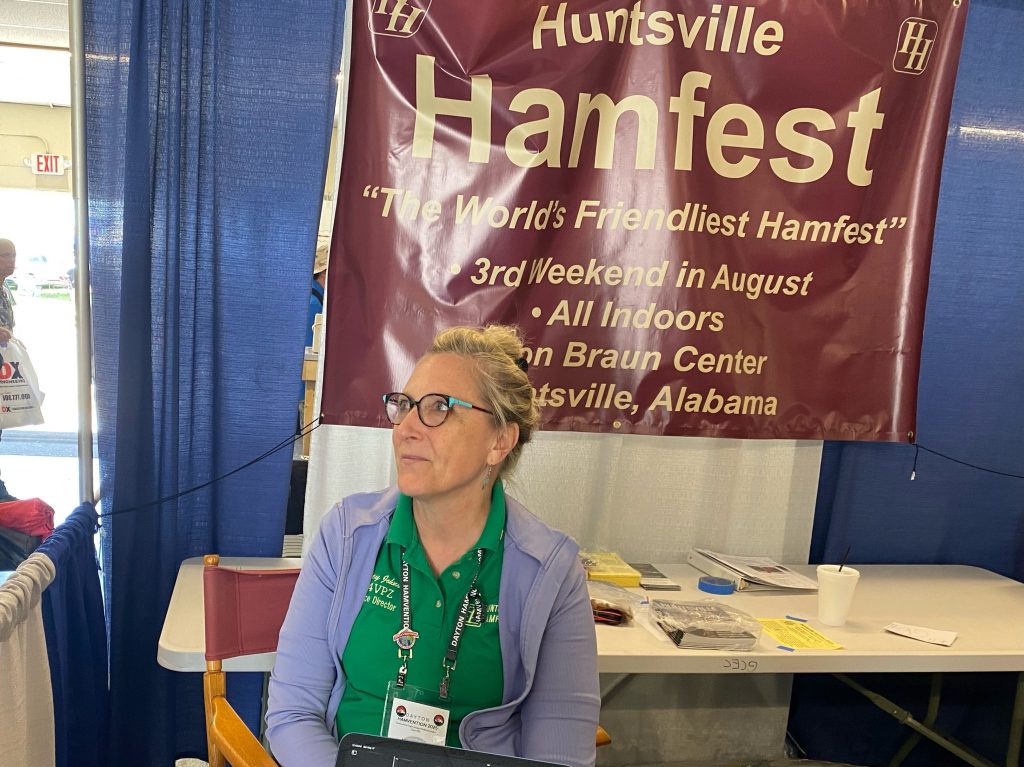
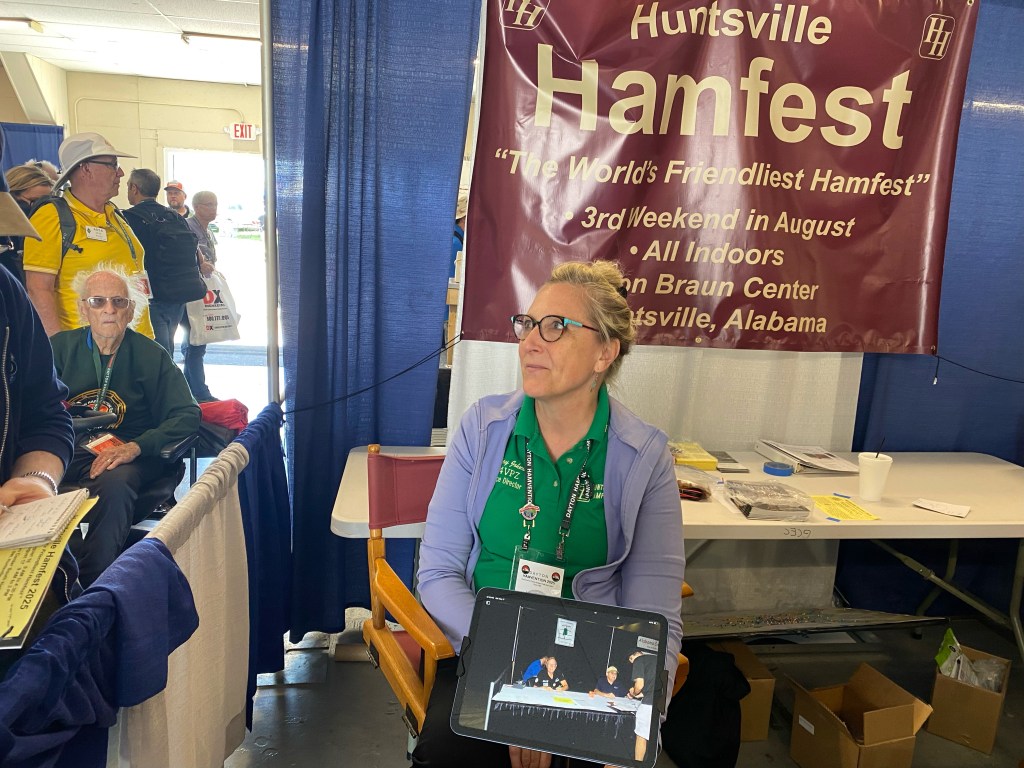
Other amateur radio convention organizers also attend to promote their own events. Huntsville Hamfest, held annually in Huntsville, Alabama, is one such organization. Mark Brown, N4BCD, is the chairperson for the Huntsville Hamfest Association. “Ours is the third largest Ham radio convention in the country, behind Dayton and Orlando, Florida,” Brown said. “We all cooperate and help support each other’s events.”
Mark Brown, N4BCD, and Kelley Johns, W4VPZ, (pictured) provided information about the Huntsville Hamfest in Alabama.
Brown suggested the consistent growth of these events and interest in amateur radio is due in part to younger people learning about its technical diversity. “I think to attract kids, we’ve got to show different aspects of the hobby, like the satellite communications, the youth on the air, and the parks on the air,” he said. “Get youth involved in it. That’s one thing these events do is bring all ages together.”
Planning for next year’s Dayton Hamvention is already underway. For more information visit hamvention.org.
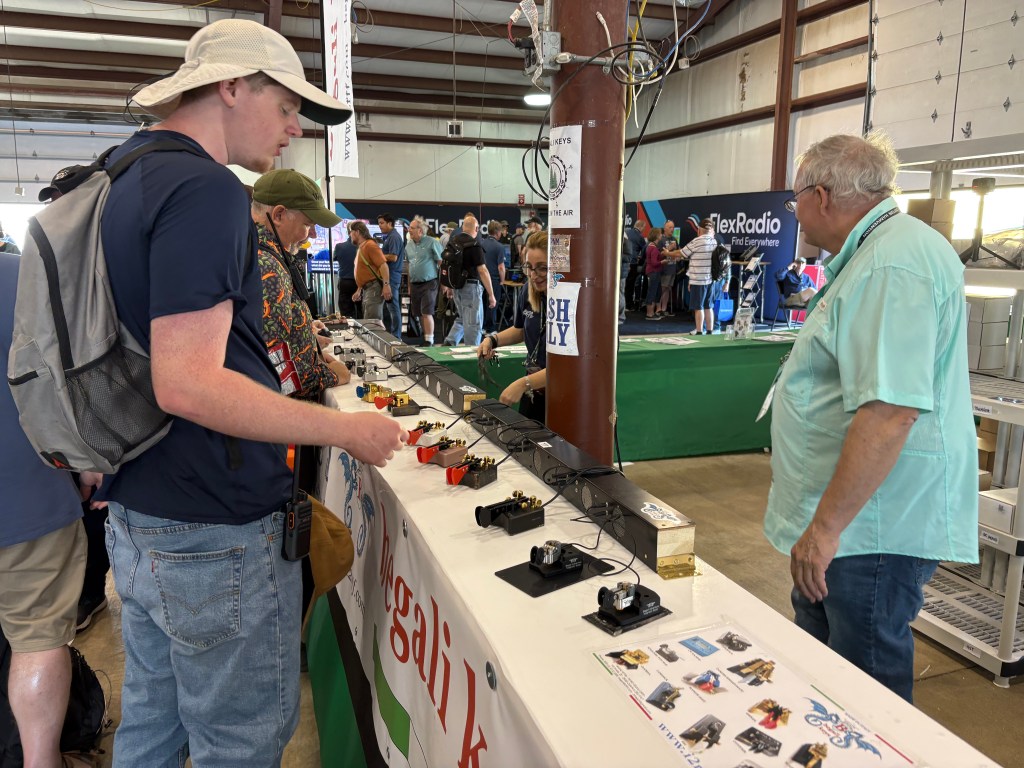
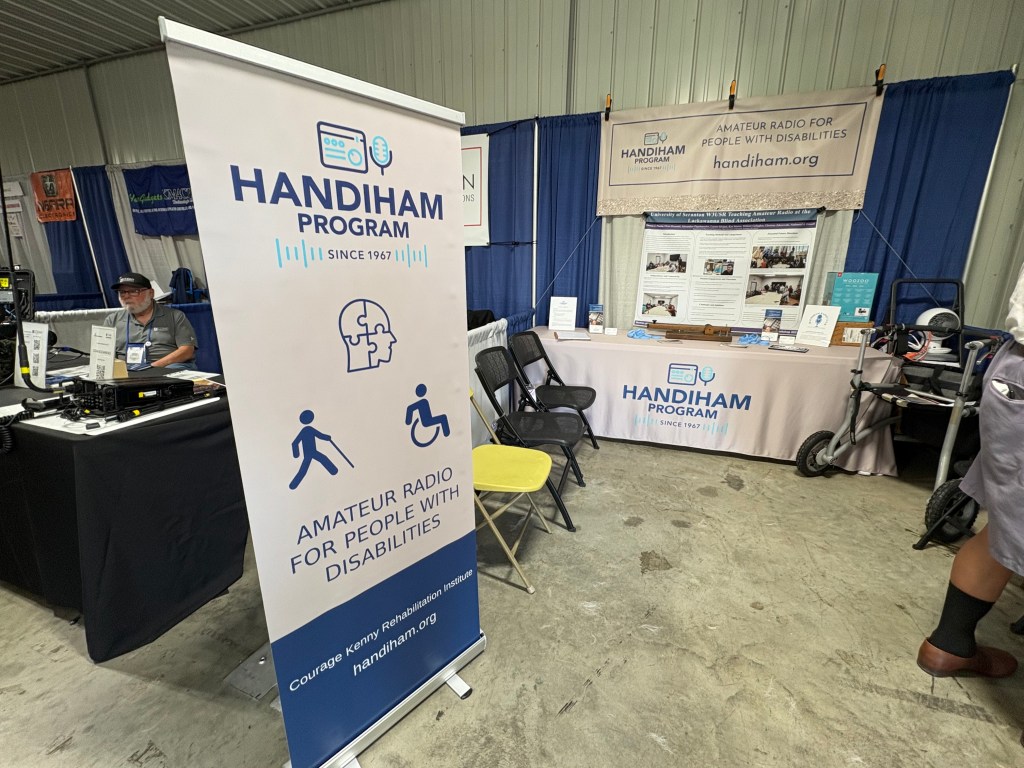
Glenn Rodgers and Jim Gifford, media committeeJesse Walker, N8XC, is U.S. Navy Veteran, and business development manager with Aegis Protective Services in Eaton.Flea market area had booth after booth of high tech and vintage technology.“Handiham” program provides connection for radio enthusiasts of limited physical ability.
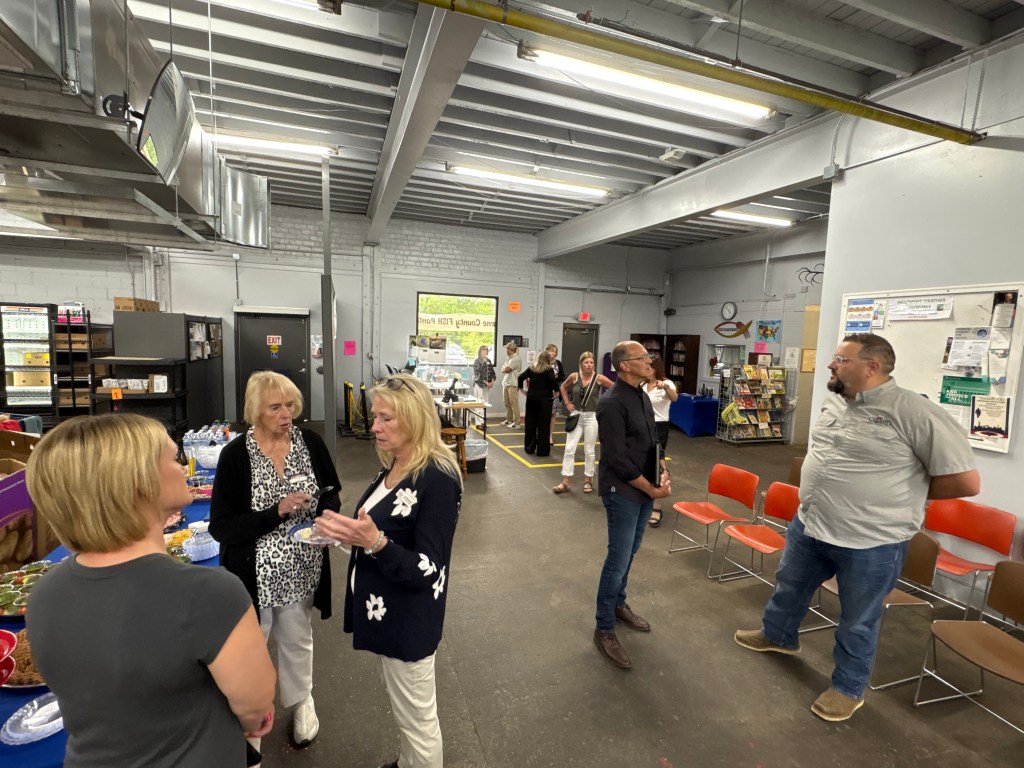
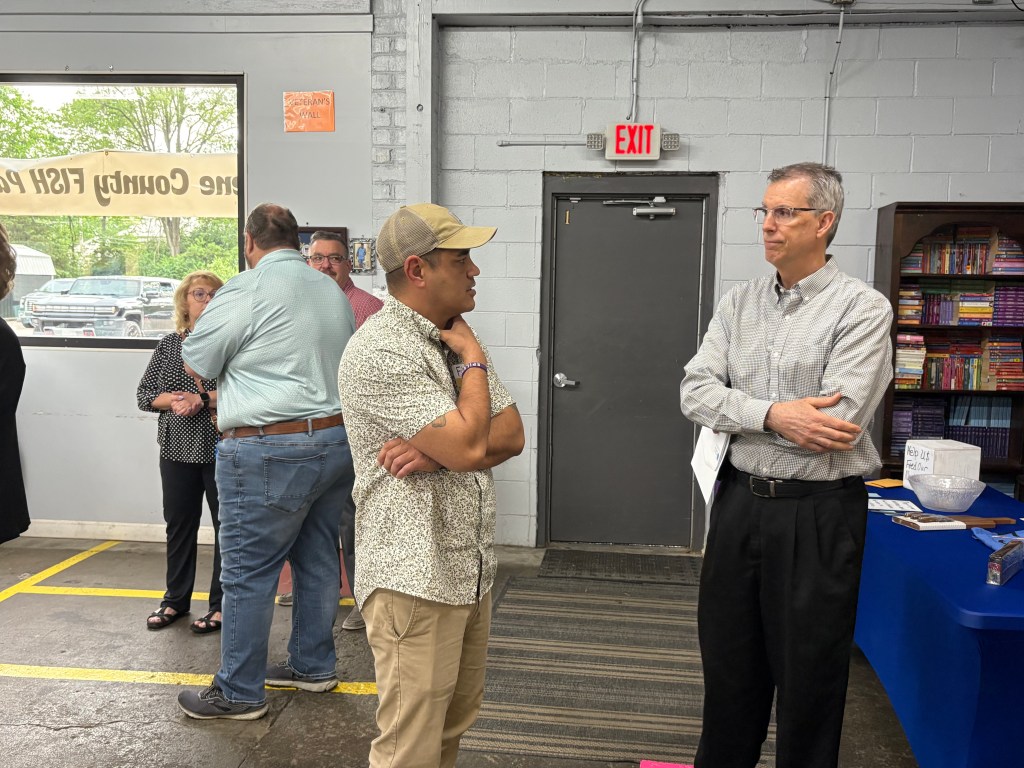
XENIA — The Greene County FISH Pantry hosted the Xenia Area Chamber of Commerce after-hours event Wednesday.
The monthly networking program offered participants an opportunity to learn more about the food pantry’s mission and meet Mike Reeves, the new executive Director and operations manager.
After-Hours visitors were given tours of the pantry facility and its newest addition, a food storage warehouse they call “the barn.”
Each month, the Xenia Area Chamber of Commerce presents the event at different member locations throughout the city. The after-hours event allows other chamber members, residents, and civic leaders to learn more about the host organization and their contributions to the region.
Xenia Area Chamber of Commerce President Donna Saraga opened the event by introducing Reeves and sharing why they chose to have the event at the pantry.
“We know many people have never been in the building or haven’t been for a long time, and we thought it was a great opportunity to learn more about the facility and meet Mike,” Saraga said.
Discussion topics included the continuing need for food security in Greene County through food and monetary contributions from residents and businesses. Members of the board of directors and the executive director provided guests with tours of the facility, including the newly constructed food storage warehouse, recently named in honor of the previous executive director of the pantry, Gail Matson.
Reeves provided some history about the pantry and the facility, then spoke of the people involved with the organization such as their clients and volunteers.
“It absolutely warms your heart to see these people, and the volunteers are what makes this place work,” Reeves said. “I really appreciate everyone coming to see the building and learn more about what we do, and thanks to Donna and the Xenia Chamber for having this here today.”
He also noted that the pantry serves more than 100 clients during each day’s distribution, up to 90 on those days reserved for veterans and active military service families. More information on the Greene County FISH Pantry is available online at http://www. gcfp.org.
The next Xenia Area Chamber of Commerce After Hours will be on June 11, hosted at Toward Independence in Xenia.
For more information about the chamber, visit its website at xacc.org, and for more information on the FISH pantry, visit its website at gcfp.org.
(Editor’s note: This edition also appears in other publications under the title “Checked Out.”)
As a kid, the local branch of the public library was in the old opera house near the center of our small farm town. It was cramped and dimly lit, and the reference desk was under the boarded-up grand staircase, giving it a sort of cubby-hole feel. I spent a good bit of time there. After school, I’d do my homework and wait for my mom to get off work. In the decades before the Internet, our library was the window to the world. But now, that window may be closing.
Ohio public libraries are funded, in part, by the Public Library Fund (PLF), which provides 1.7% of the state’s General Revenue Fund (GRF) as of this writing. However, the Republican-sponsored Ohio House Bill 96, proposed in early April of this year, would cut library funding by more than $100 million across the state. Why?
Governments have historically manipulated populations by controlling education and the media. They ban books that don’t align with their values, use defunding threats to force public and school libraries to cultivate materials for their purposes, and limit access to information. That way, voters remain ignorant, subjugated, out of touch, and pliable.
And before anyone says, “you just hate republicans,” they’re not the only ones to try this. Ohio Governor Ted Strickland, a democrat, proposed the same budget cuts a dozen years ago, and the republicans cried foul. Remember, the liberal left still regularly tries to “rewrite” some books to remove language and ideas they find offensive. So, it has gone both ways. This time, however, the danger is more palpable.
Over the last decade, public libraries have become frequent targets for budget cuts, with some policymakers arguing that digital access negates their necessity. But here’s the truth: libraries remain vital to the well-being of communities, and continued funding by federal and state governments is not just important—it’s essential. Without it, we risk depriving countless individuals of educational opportunities, civic engagement, and economic mobility.
Public libraries provide free access to knowledge for everyone (so long as their contents are not censored), regardless of socioeconomic status. Whether it’s a student researching for school, a small business owner seeking resources, or a job seeker brushing up on interview skills, libraries level the playing field in ways no digital paywall ever could. Eliminate government funding, and these services vanish, disproportionately affecting low-income communities. Instead of fostering informed citizens, we create a deeper knowledge divide, where only those who can afford education can access it.
A democratic society thrives when its citizens are informed, and libraries serve as safe spaces where people can access unbiased, factual information. They offer literacy programs, historical archives, and meeting spaces for community discussions—all of which help create engaged and empowered citizens. Where do people go for credible information when libraries close because of defunding? Unfortunately, they turn to the Internet and social media – the global misinformation machines. That’s a terrifying thought.
Libraries don’t just provide books—many offer essential services that help individuals improve their financial stability. They provide free internet access for job searches, resume-building workshops, business mentorship programs, and resources to help entrepreneurs. Government officials profess at nauseum about supporting small businesses and the workforce. Then they gut library funding and undermine those initiatives directly. If libraries disappear, so do these essential services, making it much harder for people to improve their situations.
Defunding libraries erodes the foundation of an educated, informed, and economically mobile society, which is exactly what this administration hopes to achieve. Without them, misinformation flourishes, the digital divide widens, and people lose access to critical resources for success. Libraries are not relics of the past—they are the lifeblood of communities, supporting everything from literacy to local economies.
So, before cutting another dollar from public libraries, policymakers should ask themselves: Do they really want a future where only the privileged have access to knowledge? Without funding, that’s exactly where we’re headed.
Good people on both sides of the aisle must speak out against this kind of censorship and ignorance. In Ohio, you can contact your state representative or State Representative Matt Huffman, currently Speaker of the Ohio House of Representatives: email rep78@ohiohouse.gov or call 614-466-6344.








 The Jamestown Comet