Local News & Commentary Since 1890.

Archive for the ‘Uncategorized’ Category

Dayton Professionals Invited to Turn Personal Stories into Strategic Brand Assets

In Business, Dayton Ohio News, Education, Uncategorized on April 19, 2026 at 9:42 am

DAYTON — In an era when professional credibility can be drowned out by constant digital noise, a new master class in downtown Dayton aims to help individuals cut through the clutter by refining one powerful tool: their own story.

“Story to Strategy™: Professional Narrative Master Class,” scheduled for Wednesday, Feb. 6, 2026, will bring together executives, creatives and professionals for a two-hour, hands-on session focused on shaping authentic, strategic personal narratives. The class will be held from 11 a.m. to 1 p.m. at the Dayton Arcade, hosted by the Entrepreneurs Center.

Led by award-winning journalist and communications strategist Gery Deer, the workshop emphasizes clarity over self-promotion, guiding participants to better understand how their experiences translate into a credible and effective professional identity.

“In a world saturated with noise, credibility comes from clarity,” Deer said. “This isn’t about teaching people how to promote themselves louder—it’s about helping them define how they show up and why that matters to the people they serve.”

The session is designed as an interactive, immersive experience that draws on journalistic practices such as reporting and editing, as well as modern marketing strategies. Participants will work to identify the “through-line” in their professional journey, refine that narrative into a clear personal brand, and apply those insights to real-world decisions.

Organizers say the course is intentionally accessible, requiring no technical or artificial intelligence skills—just a willingness to engage and reflect. Attendees are encouraged to bring whatever tools they prefer for note-taking, from traditional pen and paper to laptops or tablets.

The $99 registration fee includes lunch, with a buy-one-get-one offer available to encourage collaboration and shared learning.

The February event marks the second installment in the 2026 Master Class Series presented by GLD Communications, a quarterly program aimed at equipping professionals with practical communication and branding tools. Additional sessions are planned for later in the year, including a “21st Century Public Relations Master Class” in August and a “Personal Brand Master Class” in October.

Deer, founder of GLD Communications, brings decades of experience in journalism, marketing and business development. Known for his “Deer in Headlines” newspaper column series, he has led workshops for chambers of commerce, professional associations and community organizations throughout the Midwest.

For attendees, the takeaway is intended to be immediate and actionable—not theoretical.

“A strong narrative can turn a brand into something more human, more relatable,” Deer said. “When people understand your story, they’re more likely to trust you—and that’s where real opportunity begins.”

Registration details and future class announcements are available through GLD Communications’ event listings.

We Need to Stop Warrantless Spying on Americans. Here’s How.

In history, National News, News Media, Opinion, Politics, Uncategorized on April 17, 2026 at 9:38 am

COURTESY: The New York Times – April 17, 2026

A photo of a blurry surveillance camera, in the foreground, against a sharper-focused seascape in the background.
Credit…Grade Solomon

By Mike Lee and Dick Durbin

Mr. Lee and Mr. Durbin are senators.

Add The New York Times on Google 

This article was updated to reflect news developments.

We disagree on many issues. One of us is a longtime Democrat, the other a conservative Republican. But both of us are deeply concerned about warrantless government surveillance of the American people.

In 2008, Congress enacted Section 702 of the Foreign Intelligence Surveillance Act to allow the government to gather vital intelligence about foreign governments, terrorists and spies. The problem is that it has also allowed agencies like the F.B.I. and the National Security Agency to regularly gather and search through the private communications of American citizens without a warrant. That is a clear violation of rights protected by the Constitution.

It’s true that Section 702 doesn’t allow the direct targeting of Americans, but their communications are still often gathered during the warrantless surveillance of foreigners abroad. Once the government has this data, agencies then have the ability to search through it. And they do: Transparency reports reveal that thousands of such searches are performed every year. A federal court previously found that some the F.B.I. had conducted had violated the Fourth Amendment.

Predictably, without a requirement for court approval of these searches, abuses have been rampant. As a recent report from the Brennan Center for Justice highlighted, F.B.I. agents in recent years have searched for the communications of “protesters across the political spectrummembers of Congress; a congressional chief of staff; a state court judgemultiple U.S. government officials, journalists and political commentators; and 19,000 donors to a political campaign.” In a time of extreme partisanship, these abuses have provoked bipartisan outrage.

Congress should have a serious and informed debate on these issues rather than ramming through a reauthorization of Section 702 with minimal reforms yet again, sidelining Americans’ constitutional rights in the process.

That’s why the two of us have proposed the Security and Freedom Enhancement (SAFE) Act, a compromise that would reauthorize the valuable core of this tool while enacting reasonable safeguards to protect the Fourth Amendment rights of all Americans.

The government would still be able to check its databases to uncover connections between targeted foreigners and Americans. But it would have to get court approval in the small number of cases in which these searches have generated results and the government has a proper basis for gaining access to the contents of the communications. Importantly, our warrant requirement also contains robust exceptions for legitimate emergencies, so that we can balance civil liberties with legitimate security needs.

Our bill would also cut off another form of warrantless surveillance: the widespread practice of circumventing the Fourth Amendment by purchasing Americans’ sensitive information from data brokers.

The Department of Justice (including the Drug Enforcement Administration and the F.B.I.), the Department of Homeland Security (including ICE, Customs and Border Patrol and the Secret Service) and the Defense Intelligence Agency have purchased cellphone location information for millions of Americans. Such information is highly sensitive and can reveal intimate details of that person’s life. Even more troubling, artificial intelligence could supercharge such surveillance, allowing the government to harvest and analyze mass quantities of highly personal and sensitive information about Americans without court approval. Our legislation would close these loopholes — again with pragmatic exceptions to accommodate legitimate safety and security needs.

Congress should not take an all-or-nothing approach to reauthorizing Section 702. We have the time and the responsibility to get this right. Members may disagree about what reforms are required — that’s why we have debates and amendments. But simply extending the law without any changes to protect Americans’ privacy should be off the table.

We owe it to the American people to meet this moment and do our jobs to protect both national security and civil liberties. Our bill offers a bipartisan solution to do just that.

Mike Lee, Republican of Utah, and Dick Durbin, Democrat of Illinois, are senators.

The Times is committed to publishing a diversity of letters to the editor. We’d like to hear what you think about this or any of our articles. Here are some tips. And here’s our email: letters@nytimes.com.

Follow the New York Times Opinion section on FacebookInstagramTikTokBlueskyWhatsApp and Threads.

Fear Has Two Voices

In Opinion, psychology, Uncategorized on April 10, 2026 at 7:48 am

Deer In Headlines

By Gery Deer

Fear is a quiet architect of our lives, shaping decisions long ahead of our realization. It whispers in moments that look like opportunity, altering possibility into risk and, eventually, retreat. Sometimes it protects us. Often it simply holds us still. And sometimes it rewrites who we are.

In life, fear shows up early and often, teaching us to avoid the stove after we get burned and to look before we leap. But somewhere along the way, caution evolves into habit, and habit becomes a cage we forget we can open. We replace growth with safety and comfort.

In our careers, fear can wear a suit and speak in reasonable tones. It tells us to stay where we are valued, and not risk failure by reaching for something bigger. It disguises itself as practicality, even as wisdom, while quietly draining ambition. We are stable when it is stagnant.

In relationships, fear is even more subtle, threading through conversations we avoid and truths we soften. It warns us that honesty might cost us connection, so we edit ourselves into safer versions of who we are. Over time, distance grows where closeness might have lived. Silence than vulnerability, and lonelier.

The irony is that not all fear is wrong. Some of it exists to keep us from harm, to remind us of consequences and limits. Healthy fear sharpens awareness and prepares us to act wisely. It is the difference between recklessness and courage.

The problem arises when fear loses ground in reality and begins to expand unchecked. We imagine outcomes that have not and may never happen, yet we respond as if they are inevitable. In doing so, we surrender opportunities before they even arrive. We rehearse failure and prepare for the worst without considering the more positive outcomes.

So how do we live with fear without letting it decide for us? The answer is not to eliminate it but to understand it. Fear is information, not instruction. It signals that something matters, but it does not determine what we must do next.

One way to manage fear is to name it clearly. Are you afraid of failure or embarrassment? Of loss, or of change? When we define the fear, we shrink its power. Vague dread feels overwhelming, but specific concerns can be examined and addressed. Clarity turns shadows into navigable shapes.

Another approach is to take small, deliberate steps. Fear thrives on the magnitude of the leap, so reduce the leap. Make the call. Send the email. Have the conversation. Each action chips away at the story that you cannot move forward. Momentum becomes its own antidote and that progress builds confidence.

It also helps to reframe fear as energy. The quickened pulse, the sharpened focus, the restless thoughts are not just symptoms of anxiety but signs that you are engaged. Channel that energy into preparation and action, rather than rumination and retreat. Such energy, directed forward, becomes drive and doesn’t dread time. Time instead becomes an ally.

Managing is never a one-size-fits-all process. Personality, fortitude, and experience all matter, as does context. Some people need to push themselves harder, while others need permission to pause and assess. The goal is not to become fearless but learn to discern which fears to heed and which to challenge.

There is a duality to fear that we often overlook. It can be a guardrail or a barrier, a warning or a wall. The difference lies in how we interpret and respond to it. Left unchecked, it limits us. Understood and engaged, it can guide us toward more growth choices.

Each of us carries a different relationship with fear. It is shaped by our histories, our successes, and our scars. What paralyzes one person may motivate another. That is why self-awareness is essential. When you understand your patterns, you can begin to rewrite them with intention and patience, easing discomfort.

In the end, fear will always have a voice. The question is whether it gets the final word. When we learn to listen without surrendering and to act with awareness rather than avoidance, we reclaim our agency. Fear becomes not an obstacle but a companion we can walk with and call upon when needed.

Community STEAM Academy Hosts Laughter Lab with comedian John Branyan

In Children and Family, Education, Entertainment, Theatre, Uncategorized on March 12, 2026 at 8:41 am

XENIA — Students at Community STEAM Academy (CSA) will trade textbooks for punchlines later this month as the school hosts a unique event combining education, performance, and fundraising. “Laughter Lab” will give students hands-on experience in comedy writing and performance while raising funds to support the school’s programming.

The program consists of a one-day comedy workshop, followed by an evening showcase featuring nationally touring comedian John Branyan on Thursday, March 26, 2026. The program will culminate in a public performance called “Laughter Lab LIVE” at 6 p.m. at Bethel Community Church in Xenia.

Comedian John Branyan will lead the laughter lab at Community STEAM Academy in Xenia, then showcase the students’ work at a live, public show that evening.

“Our students learn best when they are engaged in authentic experiences, and the Laughter Lab is a great example of that philosophy in action,” said Dr. Jeremy Ervin, founder and chief administrative officer. “Through humor and storytelling, students will practice communication, creativity, and performance—skills that connect directly to our project-based learning model. It’s another example of how CSA approaches education differently by blending creativity, collaboration, and real-world application. It’s a STEAM thing!”

Branyan, known nationally for his clean and family-friendly comedy, has gained widespread recognition for his Shakespeare-style retelling of “The Three Little Pigs,” a routine that has attracted millions of online views. He has also been featured on Dry Bar Comedy and is known for humor that highlights joy and perspective even in life’s challenges.

His approach to comedy, organizers say, makes him an ideal partner for working with students and engaging audiences of all ages. The evening performance is open to the public and family-friendly. Tickets are $25 each, and proceeds from the event will support the school and its programs.

The student workshop will take place earlier in the day at the Community STEAM Academy campus, while the evening showcase will be held at Bethel Community Church, located at 1020 Lower Bellbrook Road in Xenia.

Community STEAM Academy describes its educational approach as intentionally different from traditional teacher-centered classrooms. The tuition-free independent public school currently serves students in grades 4 through 11 and emphasizes project-based learning and personalized education.

The school is Ohio’s only STEAM-designated independent public school and one of just eight independently designated STEM or STEAM schools in the state, according to the academy.

School leaders say events like Laughter Lab demonstrate how creative experiences can help students build confidence, communication skills, and self-expression while connecting their learning to real-world experiences.

For tickets or more information about the event, visit www.communitysteam.com or contact the school at info@communitysteam.com.

Only at this table.

In Opinion, Uncategorized on March 6, 2026 at 11:20 pm

Deer In Headlines

By Gery Deer

It was late evening at a hotel restaurant in Washington, D.C. Most of the restaurant crowd were either deep in their own discussions or had eyes glued to televisions broadcasting college basketball. And there we were. A handful of adults who were born with or a parent of someone with bladder exstrophy, all of us in town as patient advocates preparing to take on Congress. 

We laughed and talked, as burgers, salads and something fried occupied most of the real estate between us. Someone had to move a basket of fries so we could make room for desserts and more drinks.

On the surface, we didn’t look so different from anyone else in the room. Just another group decompressing after a long day. But the conversation? That could have only happened there. Only at this table.

Bladder exstrophy is rare – very rare. So, when you’re born with a condition that requires extensive surgery – or surgeries – and lifelong management, there are very few who can relate. Explaining it often brings sighs of pity, confused expressions, and a host of questions. 

At this table, there was none of that. We didn’t have to define the anatomy. We didn’t have to summarize childhood surgical histories or explain why insurance preauthorization feels less like paperwork and more like gladiator combat. We could start mid-story.

We compared hospital experiences the way other people compare hometowns. We talked about the benefits and challenges of living with something so unusual it was often hard to explain, even to those closest to us.

That shared experience can lead to its own sort of verbal shorthand. It strips away the introductory chapter and drops you straight into the middle of the book. And shared experiences from birth? There’s no need to tiptoe around things, perform bravery or package vulnerability in tidy language. You can be direct. You can be specific. You can be understood.

There was a moment — and I won’t detail it, because some conversations belong only to those who were present — when the tone softened. Someone shared a memory from adolescence, a time when feeling different felt especially sharp. No one rushed to fix it. No one offered a motivational poster response. Instead, there was safety in letting go, in the expression of feelings and thoughts that only others like us could understand.

It manifests as a shared laugh, or a look, or a nod. It’s not dramatic. It doesn’t require a spotlight. It’s a quiet acknowledgment that says, “Yeah, I know.”

Every community has a version of this table. Veterans find it with other veterans. Cancer survivors with survivors. Parents of children with complex needs with others who speak that language fluently. I experience it whenever I talk to those who have cared for elderly parents. Even journalists have our own version — around a busy lunch counter or late dinner table, arguing about headlines.

The table isn’t about exclusivity. It’s about the rare and deeply emotional relief of not having to translate your life for someone else, and timing matters.

We weren’t children navigating surgeries for the first time. We were adults who had built careers, relationships and resilience. We had come to Washington to advocate, to push for better systems. That context shaped the conversation. 

We were recounting the past, but also connecting it to the future. Even more incredible to me was the fact that the congenital flaw that made us the objects of both fascination and ridicule as children was now quite literally our superpower. It was what brought us to Capitol Hill to help others – because we can. 

When we finally stood up, games still flickering on the screens and the crowd still rumbling, I looked at that table and felt the weight of its ordinariness. It was just wood and silverware and a stack of dishes.

But for a couple of hours one evening, amid basketball fans and bar noise, it was something far more. It was a place where five people shared something unique to them – an understanding. No, it was more than that. It was something as rare as the condition that we shared, but as unique as each one of us. But only at this table.

Jamestown Advocate Takes Urological Care Concerns to Capitol Hill

In Business, Environment, Health, Uncategorized on March 6, 2026 at 11:02 pm

JAMESTOWN – Greene County journalist and communications professional Gery Deer joined more than 300 physicians and patient advocates in Washington in February to press federal lawmakers on policies that directly affect access to urological care in Ohio and across the country.

Deer served on one of two Ohio delegations to the 2026 American Urological Association’s Annual Urology Advocacy Summit, held the week of Feb. 22 in Washington, D.C. He represented patients as a member of the Association for the Bladder Exstrophy Community’s Adult Patient Advisory Council.

The summit is designed to bring the voice of the specialty, and the patients it serves, directly to federal lawmakers — creating a bridge between medicine and policy. Over four days, physician and patient advocates receive briefings on pending legislation, reimbursement policy and insurance practices that shape how — and whether — patients can obtain urological treatment.

Here are both AUA Ohio delegations after a meeting at the office of U.S. Senator Jon Husted (R, OH-13). L to R – Urologists, Dr. Michael Bacchus (OSUMC), Dr. Scott Lundy (Cleveland Clinic), Dr. Kyle Kopechek (OSUMC), patient advocate Gery Deer (A-BE-C APAC), Dr. Bradley Gill (Cleveland Clinic), and Dr. Michael Sourial (OSUMC).

For communities in Greene County and the broader Miami Valley, those discussions are not abstract. Federal decisions about Medicare reimbursement, prior authorization and insurance oversight often determine how quickly patients can see specialists, whether recommended procedures are approved and how long physicians can continue offering certain services.

The Association for the Bladder Exstrophy Community is a global organization supporting patients and families affected by bladder exstrophy, a congenital urological condition that occurs in about one in every 50,000 births in the United States and worldwide. Deer, owner and creative director of GLD Communications, is one of eight patient advocates serving on the national council and chairs its communications efforts.

The council was formed three years ago by Kimberly Allen and Thomas Vincent of Seattle, both bladder exstrophy patients who saw gaps in long-term support for adults living with the rare condition. Since its founding, the group has developed an adult patient provider list, hosted physician-led webinars and organized patient-centered focus groups.

Participation in the AUA summit allows the organization to connect directly with urologists from around the country and to collaborate on legislation aimed at improving patient care. For Deer, the policy debate over insurance preauthorization stood out as especially urgent.

“Of all the legislation we were discussing with congressional representatives, insurance preauthorization was most important to me,” Deer said. “Bladder exstrophy presents a unique set of lifelong conditions and symptoms that rarely line up with those established within the narrow and often inaccurate coverage guidelines of insurance providers.”

Prior authorization — the requirement that physicians obtain insurer approval before certain treatments or procedures — has become a flashpoint in specialty care. Supporters say it helps control costs and prevent unnecessary procedures. Critics, including many physicians, argue it can delay care and override clinical judgment.

Deer said that during the summit he was surrounded by more than 300 of the nation’s leading urologists. Of those, only about 10 percent have treated or even met a bladder exstrophy patient, underscoring how specialized and rare the condition is.

At an invitation-only insurance roundtable attended by roughly 60 participants, Deer raised concerns about who ultimately decides what care is appropriate. Speaking as a patient advocate, he asked, “If these highly qualified physicians wouldn’t have the skills needed to treat someone like me, how is it remotely possible that an AI program or part time medical advisor would be capable of deciding what treatments are necessary and appropriate?”

He continued: “Urologists willing to treat a bladder exstrophy patient take on a long-term commitment and should have the final say in what treatments are necessary. Insurance companies, however, often disagree.”

For patients in southwestern Ohio, including those treated at major centers such as Cleveland Clinic, those disagreements can translate into delayed surgeries, postponed follow-up appointments or denied procedures. Physicians must devote additional staff time to appeals and documentation, while patients navigate uncertainty about whether recommended care will be covered.

Preauthorization remains a significant barrier in complex, lifelong conditions, Deer said, and he believes the issue extends far beyond rare diagnoses. Patients with cancer, kidney disease and other urological disorders may also face treatment delays tied to insurer review processes.

On Feb. 24, Deer and fellow members of the Ohio delegation met with congressional offices representing their home districts. The group included Dr. Scott Lundy and Dr. Bradley Gill of Cleveland Clinic, along with Hill guide Mykelle Richburg. They met with representatives of Sens. Bernie Moreno and Jon Husted and Reps. Max Miller and Shontel Brown. The office of Rep. Mike Turner declined a meeting.


Tim Tzimas Named President and CEO of Innovative Sterilization Technologies/ONE TRAY® and Company’s Flagship Product Gets A Second FDA Clearance

In Business, Dayton Ohio News, Economy, Health, Local News, Technology, Uncategorized on February 19, 2026 at 10:05 am

Innovative Sterilization Technologies (IST), headquartered at 7625 Paragon Rd., Suite A in Dayton, has announced the appointment of Tim Tzimas as its new President and Chief Executive Officer, effective January 1, 2026, marking a new chapter for the company as it continues to reshape sterilization efficiency and medical device organization.

Tim Tzimas, new President and Chief Executive Officer of Innovative Sterilization Technologies (IST)

Tzimas brings more than 25 years of leadership experience in the orthopedic, neurosurgical, and medical technology sectors, with a career focused on sales management, operations, and organizational development in regulated healthcare markets.

Most recently, Tzimas served as joint reconstruction sales manager for the New York Metro Branch at Stryker, where he led one of the company’s largest U.S. territories. There, he managed strategic sales, robotic system utilization, and oversaw a team of more than 25 sales, clinical, and operational professionals.

Tzimas steps into IST’s top seat at a time where cases are rapidly transitioning from inpatient to outpatient facilities, causing pressure to do more with less—higher case volumes, tighter margins, and growing regulatory demands. IST’s leadership believes Tzimas’s experience and perspective in the power of consolidating trays, enhancing workflows, and maximizing efficiencies, position the company to meet those challenges head-on while continuing to expand adoption of its flagship ONE TRAY® system.

“Sterilization has long been treated as a necessary behind the scenes function, and in many ways the industry is still operating on outdated assumptions,” Tzimas said. “I want to help IST dispel existing dogma and change the perception in the market about how to best manage surgical instrument sterilization and containment.”

Under Tzimas’ leadership, IST plans to sharpen its focus on helping inpatient and outpatient facilities scale efficiently while maintaining the highest standards of safety and compliance. Wider adoption of ONE TRAY® and EZ-TRAX™ will elevate surgical workflow at facilities challenged by limited space, excessive cost, disconnect in instrument delivery and processing of instrumentation.

“My goal is to help surgical facilities sustain increased volumes and long-term success,” Tzimas said. “When teams are less burdened by unnecessary steps and inefficiencies, they can focus on what matters most—patient care and operational excellence.”

Tzimas sees the opportunity to shift industry language and thinking altogether, with The Total Solution, ONE TRAY®, E-Z TRAX™, and ONE CART ™, not just as another option, but as the standard.

“I want professionals in that space to simply say, ‘Just ONE TRAY® it,’” he added. “That’s when you know you’ve changed the conversation.”

IST officials said Tzimas’ appointment reflects the company’s commitment to innovation, education, and leadership in sterile processing at a time of rapid change. With demand for outpatient procedures continuing to rise, the company expects his vision to guide IST’s next phase of growth while reinforcing its mission to simplify sterilization without compromising quality.

Innovative Sterilization Technologies (IST) announced has also announced that ONE TRAY® sterilization container has received a second clearance from the U.S. Food and Drug Administration (FDA), significantly expanding its use across hospital and surgical facility workflows.

ONE TRAY®’s original clearance in 2006 (IFU K052567*) included sterilization at 270°F (132°C), Exposure Time 4 minutes, Cycle Dry Time Not Required and validated to maintain the sterility of the contents for up to a 48-hour storage period.

ONE TRAY®s NEW additional clearance in 2025 (IFU K250029**) maintains the same validated sterilization parameters – 270°F (132°C), Exposure Time 4 minutes, but with a 365 day event related shelf life/storage period with a 15-minute minimum dry time.

When introduced in 2006, ONE TRAY® represented a new approach to sealed sterilization container technology. Now, according to Barbara Ann Harmer MHA, BSN, RN, Vice President of Clinical Services at IST, the expanded storage window provides facilities with even more operational flexibility.

“The additional storage time gives the surgical department an alternative when unforeseen problems arise in the operating room,” Harmer said. “Those surgical delays often ripple far beyond the OR.”

“When patients arrive for surgery, they’ve already prepared, food and medications withheld, family schedules arranged, anxiety managed,” she said. “If the schedule is seriously disrupted, so are their lives. ONE TRAY® provides two solutions to keep everything on track. If the instrumentation is available, we are the fastest option to maintaining the schedule.”

“With the rising cost of healthcare, everyone is being asked to do more with less,” President and CEO of IST Tim Tzimas said. “The dual FDA clearances improve efficiency across the entire chain of custody in the sterilization process – an increasingly important factor as healthcare systems face mounting costs and staffing pressures. It truly offers a total solution and total flexibility to respond to clinical urgency, optimize inventory, and standardize sterilization processes using a single, reusable sealed container platform.”

IST encourages hospitals and surgical facilities to reach out to Barbara Ann at bharmer@onetray.com or 407-709-7209 for any questions related to the application of the new FDA clearance in their facilities. You can also visit onetray.com/ifucomparison to learn more about each IFU.

* Reference 510k summary- https://www.accessdata.fda.gov/scripts/cdrh/cfdocs/cfpmn/pmn.cfm?ID=K052567

** Reference 510k summary- https://www.accessdata.fda.gov/scripts/cdrh/cfdocs/cfpmn/pmn.cfm?ID=K250029

Victory Project Announces Expansion to Girls Campus, Advancing Mission to Break the Pillars of Poverty

In Local News, sociology, Uncategorized on February 6, 2026 at 12:56 pm

Dayton, OH— Victory Project is proud to announce its expansion to a new Girls Campus in the Twin Towers Neighborhood dedicated to serving young women in Montgomery County. This expansion is made possible through a generous gift from Christian Life Center, whose partnership represents a shared commitment to restoring hope, opportunity, and purpose for young women in the Dayton community. This strategic growth marks a significant milestone in the organization’s mission to combat the “Pillars of Poverty” by mentoring disengaged students through tutoring, faith-based life skills, and workforce development training. Victory Project exists to help students graduate, grow in Christ, and build stable, purpose-filled futures.

Angie Jackson, Senior Program Director
Jessica Watkins, Operation’s Director

The Girls Campus, led by Operations Director Jessica Watkins and Program Director Angie Jackson, will extend Victory Project’s proven model—centered on the 3 E’s: Education, Entrepreneurship, and Enlightenment—to young women who face fundamental barriers to success. Through structured programming, mentorship, and holistic support, Victory Project addresses the root causes of poverty while fostering resilience, responsibility, and long-term stability.

“We are beyond excited to bring the vision of the Girls Division to life in August,” said Watkins. “While we will be serving young women, our mission, philosophy, and core values remain the same. We are undoing hopelessness with Godly purpose, modeling work as the reward, offering love and accountability, and providing a safe and consistent environment.”

The expansion is a key component of the organization’s Victory Over Poverty Capital Campaign, a multi-year effort designed to strengthen operational sustainability, expand program reach, and secure long-term impact across multiple campuses. Funds raised through the campaign will support program development, staffing, facilities, and an endowment to ensure continued services for students and alumni for years to come.

In addition to financial support, Victory Project is actively seeking volunteers to help bring the Girls Campus to life. Volunteers play a vital role in building trusted relationships and modeling the consistency and commitment that are central to Victory Project’s approach. Victory Project invites community members, donors, and prospective volunteers to learn more about the Girls Campus, the Victory Over Poverty Capital Campaign, and ways to get involved by visiting www.victoryproject.org.

“This expansion is an answer to prayer and to the most common question I’ve heard for 17 years: ‘When will Victory Project have a girls program?’ The board and I have full confidence in Jessica’s and Angie’s ability to mirror VP’s culture of success and to live out our faith in action through this new program,” said Monnie Bush, Founder & C.E.O.

Snow Drifts

In Environment, Local News, Opinion, Uncategorized, weather on February 1, 2026 at 1:34 pm

Deer In Headlines

By Gery Deer

I was 10 when the Blizzard of ’78 hit our small farm in southwestern Ohio. Holed up in an 8 by 10-foot room of our tiny farmhouse, with no power and only a small, very 1970s cone-shaped fireplace for heat, the five of us survived because of the experience and fortitude of my parents. 

It was 36 degrees in our kitchen that first morning and, without electricity, we had no water, and no other heat source. Plus, we had to figure out how to mix formula for 14 bottle-fed feeder calves in the barn. The temperature continued to drop, the wind was relentless, and a seven-foot snow drift sealed our back door. 

My father and brother tunneled like gofers from our basement walkout, creating a passable though treacherous path to the barn. Diesel fuel siphoned from a tractor filled nearly every one of our 15 or so antique kerosene lamps. Some provided light while others were placed next to open cabinet doors to warm water pipes. As it turned out, those weren’t the only family antiques that were called into service.

Me, my mother, and my brother’s very pregnant wife, melted snow in large canning pots and used the water to feed the calves – one bottle at a time. It took hours. Oddly, the barn was warmer than you might expect since the walls of stacked hay provided good insulation. Mom also found a way to feed us too. She cobbled together foil packs of vegetables and beef and cooked them in the little fireplace.

On day two, the national guard plowed our quarter mile-long driveway, and my father and brother took one of our farm trucks into the village to get supplies for us and the elderly couple who lived at the orchard across the road. It took them almost eight hours to make the seven-mile round trip. Once they made it back, they didn’t go out again. We had enough challenges at home.

Our electricity was out for almost four days. Over the next year, my father gutted our home’s heating system, replacing the electric oil furnace with a wood-burning version he designed. They also added generators, and a 1905 wood-burning cook stove. They were determined we’d never be so crippled again. 

I still use the lessons I learned during that very cold week and the events that followed. Our electricity was knocked out on a more than regular basis, but we were well prepared for most situations, thanks to my family’s know-how and tenacity. As a different kind of pioneer once said, “Failure is not an option.”

This past week, our small part of the world, as well as most of the Midwest and northeastern United States, experienced a similar winter event. As I prepared our home for the coming snow and cold, I was reminded of every moment during that frigid week on our farm all those years ago. For me, it was like my folks were still here because I could hear their words and see their actions in my mind – the lessons of growing up in a remarkable place with uncommon people. 

Sadly, it seems to me that such self-sufficiency is less common than years gone by. Instead of a calm thoughtful response to something like a snowstorm, people today seem more likely to overreact. Not even those who take preparedness to an extreme level can be ready for everything. But for situations like this, we have more resources, better access to information, and more reliable infrastructure than anything available a half century ago. Still, most people panic, clearing store shelves of bread and milk, while doing little to adequately prepare.  

I’m incredibly fortunate to have grown up at a time and with a family who gave me the knowledge and resourcefulness to look after myself in most situations. Probably like many of those reading this, I take whatever steps I can to manage a situation and try to help others whenever possible. General observers might see my heightened sense of urgency as anxiety, but I’m generally the calm one. Even so, there’s always that thing you didn’t plan on. That’s when improvisation, fueled by experience and common sense, can literally save your life.

Slow Down

In Children and Family, Opinion, Uncategorized on January 27, 2026 at 8:42 am

Deer In Headlines

By Gery Deer

Every day I hear people comment about the exhausting pace of modern life. Most of us have felt that strange acceleration where time seems to pick up speed as birthdays pile on. It’s the moment you’re pulling holiday decorations from the attic and swear you just put them away. Of course you didn’t. A full year passed while you were looking at your phone.

Some of that is age, sure, but some of it is engineered. Modern life has a way of nudging us forward faster than we’re built to move, and the most persistent nudge lives in our pockets. The internet, and especially social media, has turned time into a moving sidewalk that never stops. You can stand still, but you’re still being carried somewhere.

I remember my first cell phone that could send text messages and, if memory serves, receive email. At the time it felt revolutionary. I worked outside an office most days, and suddenly important updates could find me without firing up a laptop. It was convenient, efficient, and undeniably useful. This is usually the part of the story where someone asks, “What could possibly go wrong?”

Then the iPhone arrived and the rock started rolling downhill, with all of us sprinting after it. Today we’re permanently connected. Texts, emails, alerts, pings, buzzes, banners, and badges stack up like unread magazines on a coffee table. Studies now link constant device use to anxiety, high blood pressure, and other ailments. The bigger question is why we tolerate it. The answer is uncomfortable. We asked for it.

The more we demand speed and convenience, the more manufacturers and app developers provide. They’re not just selling phones. They’re selling attention, collecting data, and turning it into a high return product. That data fuels more selling, more targeting, and more noise aimed right back at us. This isn’t a conspiracy theory. It’s the business model, printed in very small type.

The byproduct is a permanent state of urgency. Time no longer feels as it once did. Information arrives in six second micro bites, and our brains are expected to digest it like a full meal. But they can’t. We skim, react, and move on. We mistake motion for understanding and speed for knowledge.

We’re all worried about so much – insane politics, societal division, jobs, kids, and the high cost of – well everything. The pressure never lets up. Instead of slowing down to understand what’s happening, we consume only fragments of information and make decisions about our lives with incomplete – or false – information. We don’t reflect. We react, often loudly, and too quickly.

As technology grows more invasive and we become more dependent on it, our reaction time decreases. Important decisions are made without context, sometimes without consideration. That should worry us. I’m convinced it’s one of many contributors to the unsettled mood of the country right now.

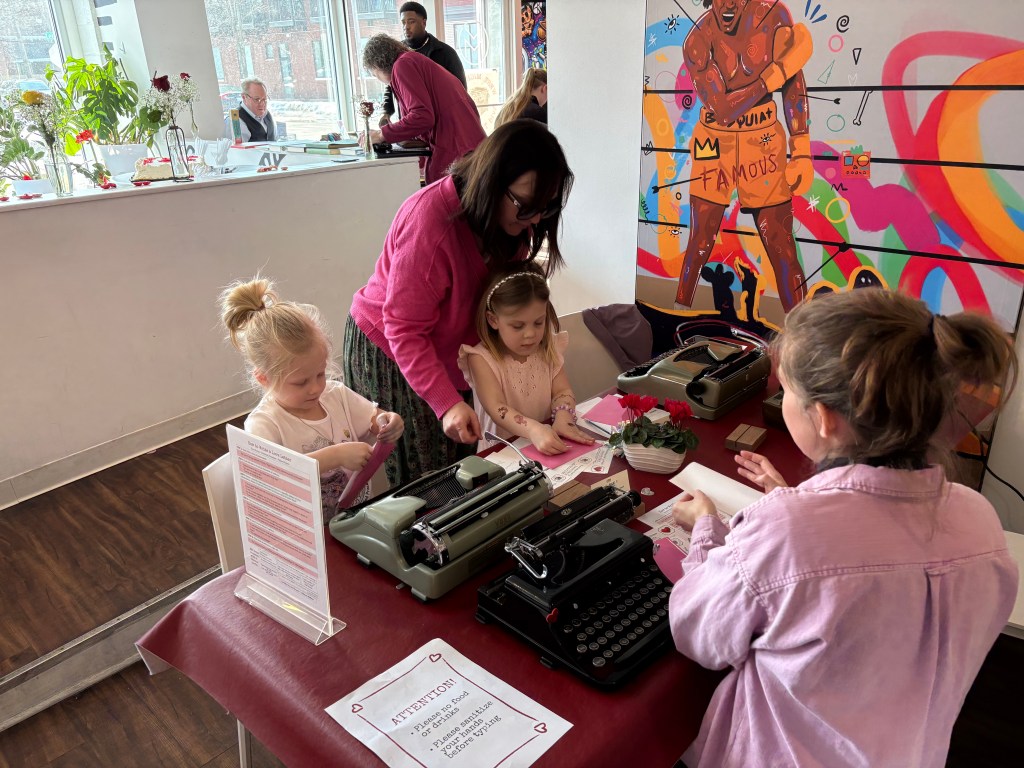
So, what do you do? I wish I had a good answer for you. Personally, I’ve been increasingly drawn to the analog and just setting the phone aside whenever I can. Unfortunately, the demands of my work prevent a complete disconnection from social or other digital media. But I write on a manual typewriter at some point in my workday, listen to vinyl on a turntable in my office, and just try to be aware of it all.

Occasionally, I’ll buy a print newspaper and spend several days reading every article. Cover to cover. It’s my way of appreciating the work the writers put into it while absorbing each story. It might seem a bit excentric, but I get the complete picture – without the anxiety that comes with doomscrolling. Plus, I can put it down, then go back to it whenever I want without feeling like I am missing something.

This isn’t about technology, but our resignation to life at a fever pace. Our techno-crutches are just symptoms of a more pervasive problem. We need to slow down. When everything is urgent, nothing is important. And slowing down isn’t quitting. It’s a choice about when to move, listen, or think. That small choice can quietly change the tone of a day, and sometimes an entire life if you let it.

Gery Deer is the editor and publisher of The Jamestown Comet.com and a regional columnist for several other publications.