Local News & Commentary Since 1890.

Square Kids, Round Desks

In Opinion, Health, Education, Children and Family on February 22, 2026 at 6:11 am

Deer In Headlines

By Gery Deer

For decades, we have told ourselves a comforting story about education. If we standardize it, measure it, test it, rank it, and repeat it often enough, we will somehow produce better students and, by extension, better adults. It sounds reasonable. It feels orderly. It also happens to be deeply flawed.

If the system worked as advertised, we would be surrounded by confident graduates who understand their strengths, know how they learn, and are excited to apply their talents to the world. Instead, many students leave school disengaged, uncertain, and convinced they are “bad at learning,” when the real problem is that learning was never designed with them in mind.

Somewhere along the way, we stopped teaching the A, B, C’s and started teaching to a test. Those tests promise clarity and accountability, but their ability to predict a student’s future success is questionable at best. Believing a standardized exam can forecast a child’s career potential is like believing the tea leaves at the bottom of your cup can tell you who will win the next Super Bowl. The charts look official. The conclusions feel authoritative. The accuracy is another matter entirely.

What these measurements consistently ignore is the single most important factor in learning: individuality. Every student arrives with a unique mix of curiosity, aptitude, temperament, and interest. Some think spatially. Some think musically. Some learn best by doing, failing, and doing again. Others need time, reflection, and quiet focus. These differences are not inconveniences. They are early indicators of where a student might thrive.

This is why education models that emphasize science, technology, engineering, arts, and math point in the right direction. When done well, they recognize that creativity and logic coexist, that problem-solving is rarely linear, and that imagination is not the enemy of rigor. Hands-on experimentation, design challenges, and interdisciplinary projects allow students to see relevance in what they are learning, not just requirements.

Still, even these programs can fall into the same trap if they are forced into rigid pacing guides and uniform assessments. When curiosity is scheduled and creativity is graded into submission, engagement disappears. Students become compliant rather than curious, efficient rather than inventive.

Traditional public school systems were not designed around individual learning styles. They were built for efficiency and uniform outcomes. That made sense in an industrial era that valued standardization. It makes far less sense in a world that rewards adaptability, specialization, and original thinking. We continue asking students to sit still, move together, and absorb information the same way, then wonder why so many tune out.

There are alternatives, and they are no longer fringe ideas. Some learning environments emphasize individualized study plans that allow students to move at their own pace, diving deeper into subjects that capture their interest. Others use project-based education, where students learn math, science, communication, and critical thinking by solving real problems and building tangible outcomes. In these settings, a student’s natural curiosity is not a distraction; it is the engine.

Non-traditional environments often replace rows of desks with collaborative spaces, mentorship with lectures, and progress portfolios with letter grades. Students learn how to manage time, pursue questions, and reflect on their work. They fail safely, revise often, and understand why their learning matters. These experiences mirror the real world far more closely than memorization ever could.

The goal is not to eliminate traditional schools or abandon standards. The goal is to expand the definition of what school can be. Public education should adapt by offering flexible pathways alongside conventional ones, giving families and students real options instead of one-size-fits-all solutions.

When we stop forcing square kids into round desks and start honoring natural gifts, education becomes preparation instead of endurance. That shift does not weaken schools. It strengthens students. And that is the outcome worth measuring.

Adapting these options requires courage, policy support, and a willingness to trust educators and students alike. It means valuing progress over uniformity and recognizing that success can look different without being lesser. When schools evolve to meet students where they are, learning stops being something done to them and becomes something they actively claim as their own. That shift benefits communities, employers, families, and democracy itself long term.
Lincoln Day Dinner

In Dayton Ohio News, Local News, Politics on February 19, 2026 at 10:09 am
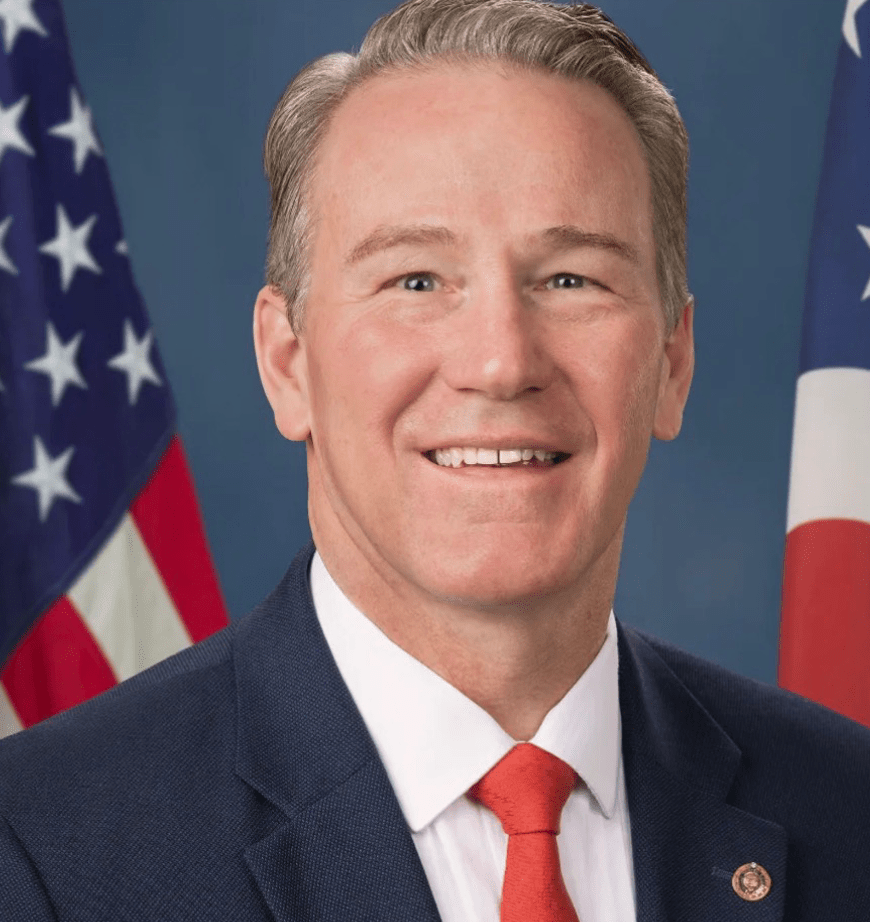
Husted (photo submitted)

Ohio Senator Jon Husted will speak at the Greene County Republican Party Lincoln Day Dinner on Friday, March 6, at the Fairborn DoubleTree by Hilton (2800 Presidential Drive, Fairborn, OH).  Senator Husted was appointed by Governor DeWine to replace then-Senator JD Vance after Vance was elected Vice President.  Senator Husted will be introduced by Congressman Mike Turner from Ohio’s 10th District (Montgomery, Greene, and part of Clark Counties). 

The evening will begin with an opportunity for underwriters and table sponsors to meet with Senator Husted from 4:30 to 5:15pm.  The doors open for general admission at 5:15pm and the program will begin at 6:00pm with opening formalities, guest speaker remarks, and dinner.  

In addition to Senator Husted and Congressman Turner, many elected officials and candidates for state and county offices are expected to attend.  Tickets may be purchased from this site:  https://tinyurl.com/4dy93ha9  For more information, call (937)974-7917.

Information provided by Carolyn Uecker, Lt Col, USAF (Ret)  (937)974-7917

Tim Tzimas Named President and CEO of Innovative Sterilization Technologies/ONE TRAY® and Company’s Flagship Product Gets A Second FDA Clearance

In Business, Dayton Ohio News, Economy, Health, Local News, Technology, Uncategorized on February 19, 2026 at 10:05 am

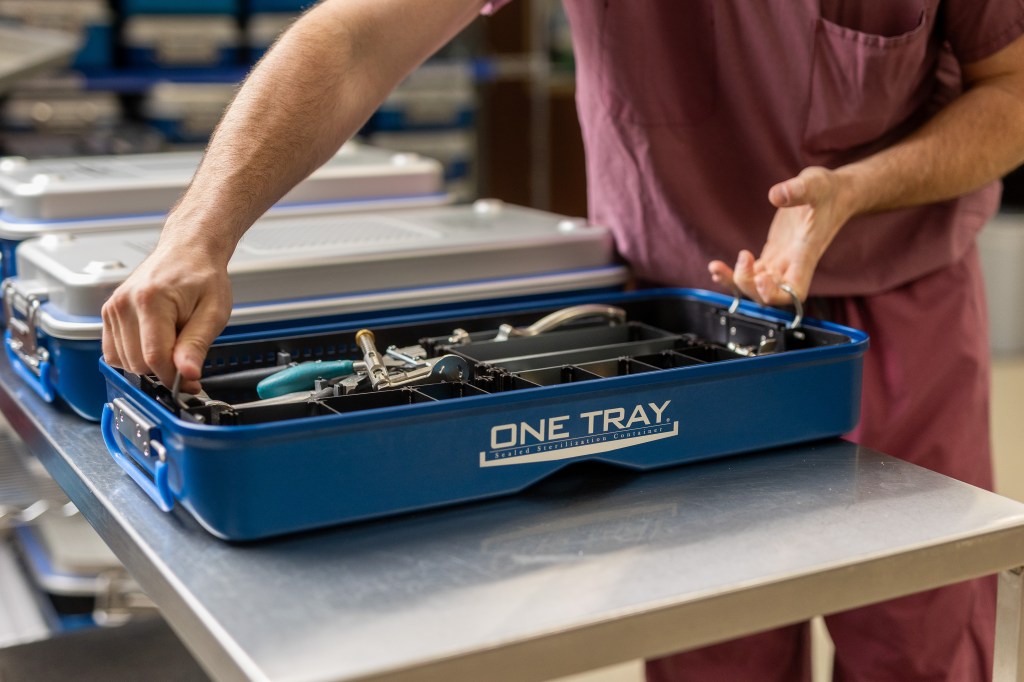
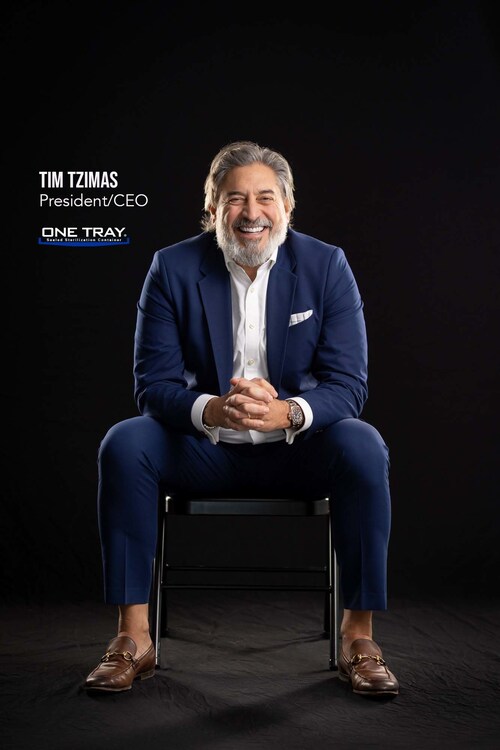
Innovative Sterilization Technologies (IST), headquartered at 7625 Paragon Rd., Suite A in Dayton, has announced the appointment of Tim Tzimas as its new President and Chief Executive Officer, effective January 1, 2026, marking a new chapter for the company as it continues to reshape sterilization efficiency and medical device organization.

Tim Tzimas, new President and Chief Executive Officer of Innovative Sterilization Technologies (IST)

Tzimas brings more than 25 years of leadership experience in the orthopedic, neurosurgical, and medical technology sectors, with a career focused on sales management, operations, and organizational development in regulated healthcare markets.

Most recently, Tzimas served as joint reconstruction sales manager for the New York Metro Branch at Stryker, where he led one of the company’s largest U.S. territories. There, he managed strategic sales, robotic system utilization, and oversaw a team of more than 25 sales, clinical, and operational professionals.

Tzimas steps into IST’s top seat at a time where cases are rapidly transitioning from inpatient to outpatient facilities, causing pressure to do more with less—higher case volumes, tighter margins, and growing regulatory demands. IST’s leadership believes Tzimas’s experience and perspective in the power of consolidating trays, enhancing workflows, and maximizing efficiencies, position the company to meet those challenges head-on while continuing to expand adoption of its flagship ONE TRAY® system.

“Sterilization has long been treated as a necessary behind the scenes function, and in many ways the industry is still operating on outdated assumptions,” Tzimas said. “I want to help IST dispel existing dogma and change the perception in the market about how to best manage surgical instrument sterilization and containment.”

Under Tzimas’ leadership, IST plans to sharpen its focus on helping inpatient and outpatient facilities scale efficiently while maintaining the highest standards of safety and compliance. Wider adoption of ONE TRAY® and EZ-TRAX™ will elevate surgical workflow at facilities challenged by limited space, excessive cost, disconnect in instrument delivery and processing of instrumentation.

“My goal is to help surgical facilities sustain increased volumes and long-term success,” Tzimas said. “When teams are less burdened by unnecessary steps and inefficiencies, they can focus on what matters most—patient care and operational excellence.”

Tzimas sees the opportunity to shift industry language and thinking altogether, with The Total Solution, ONE TRAY®, E-Z TRAX™, and ONE CART ™, not just as another option, but as the standard.

“I want professionals in that space to simply say, ‘Just ONE TRAY® it,’” he added. “That’s when you know you’ve changed the conversation.”

IST officials said Tzimas’ appointment reflects the company’s commitment to innovation, education, and leadership in sterile processing at a time of rapid change. With demand for outpatient procedures continuing to rise, the company expects his vision to guide IST’s next phase of growth while reinforcing its mission to simplify sterilization without compromising quality.

Innovative Sterilization Technologies (IST) announced has also announced that ONE TRAY® sterilization container has received a second clearance from the U.S. Food and Drug Administration (FDA), significantly expanding its use across hospital and surgical facility workflows.

ONE TRAY®’s original clearance in 2006 (IFU K052567*) included sterilization at 270°F (132°C), Exposure Time 4 minutes, Cycle Dry Time Not Required and validated to maintain the sterility of the contents for up to a 48-hour storage period.

ONE TRAY®s NEW additional clearance in 2025 (IFU K250029**) maintains the same validated sterilization parameters – 270°F (132°C), Exposure Time 4 minutes, but with a 365 day event related shelf life/storage period with a 15-minute minimum dry time.

When introduced in 2006, ONE TRAY® represented a new approach to sealed sterilization container technology. Now, according to Barbara Ann Harmer MHA, BSN, RN, Vice President of Clinical Services at IST, the expanded storage window provides facilities with even more operational flexibility.

“The additional storage time gives the surgical department an alternative when unforeseen problems arise in the operating room,” Harmer said. “Those surgical delays often ripple far beyond the OR.”

“When patients arrive for surgery, they’ve already prepared, food and medications withheld, family schedules arranged, anxiety managed,” she said. “If the schedule is seriously disrupted, so are their lives. ONE TRAY® provides two solutions to keep everything on track. If the instrumentation is available, we are the fastest option to maintaining the schedule.”

“With the rising cost of healthcare, everyone is being asked to do more with less,” President and CEO of IST Tim Tzimas said. “The dual FDA clearances improve efficiency across the entire chain of custody in the sterilization process – an increasingly important factor as healthcare systems face mounting costs and staffing pressures. It truly offers a total solution and total flexibility to respond to clinical urgency, optimize inventory, and standardize sterilization processes using a single, reusable sealed container platform.”

IST encourages hospitals and surgical facilities to reach out to Barbara Ann at bharmer@onetray.com or 407-709-7209 for any questions related to the application of the new FDA clearance in their facilities. You can also visit onetray.com/ifucomparison to learn more about each IFU.

* Reference 510k summary- https://www.accessdata.fda.gov/scripts/cdrh/cfdocs/cfpmn/pmn.cfm?ID=K052567

** Reference 510k summary- https://www.accessdata.fda.gov/scripts/cdrh/cfdocs/cfpmn/pmn.cfm?ID=K250029