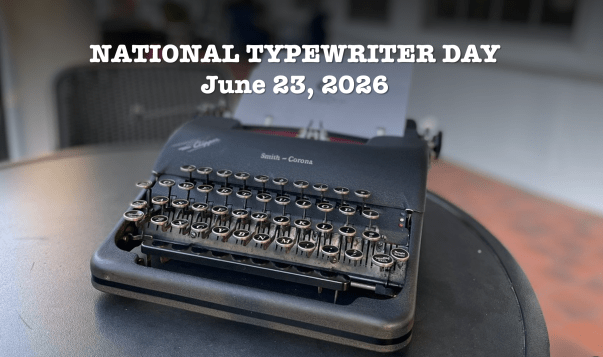
The Greene County Public Library and GLD Communications are teaming up to celebrate National Typewriter Day with two public events later this month at the Xenia Community Library, combining history, writing, and hands-on experiences centered around one of the most influential communication tools ever created.
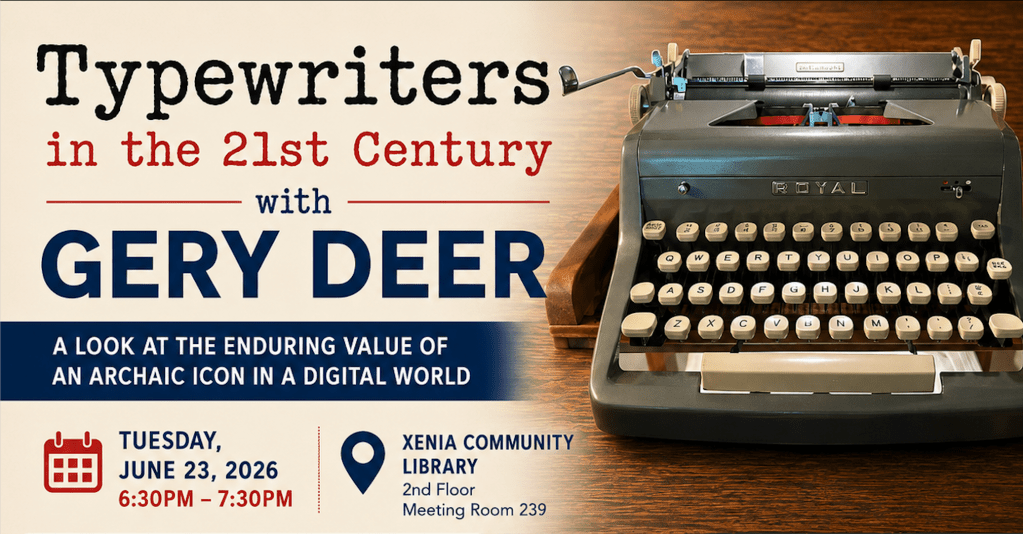
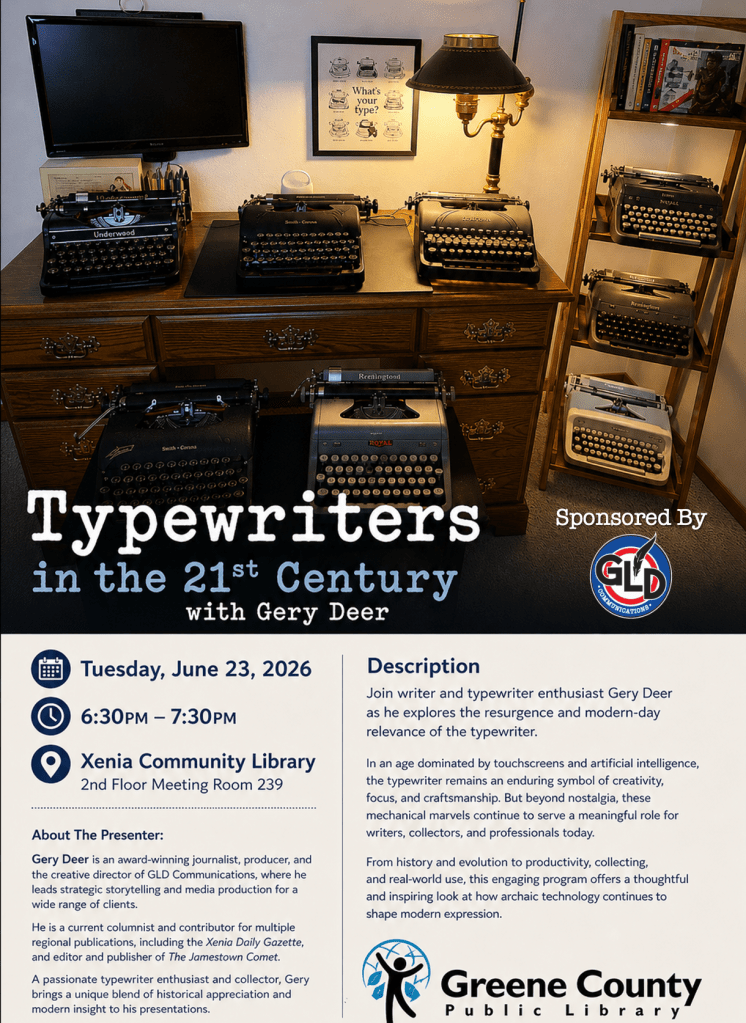
The first event, “Typewriters in the 21st Century,” will take place Tuesday, June 23, at 6:30 p.m. at the library. The presentation will be led by award-winning journalist, author, and typewriter enthusiast Gery Deer of Jamestown-based GLD Communications. According to event organizers, the program will explore the continuing relevance of typewriters in a modern digital world and examine their role in shaping communication, journalism, business, and creative writing.
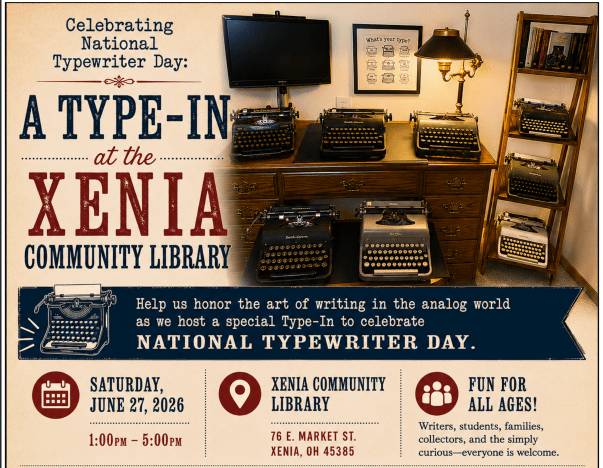
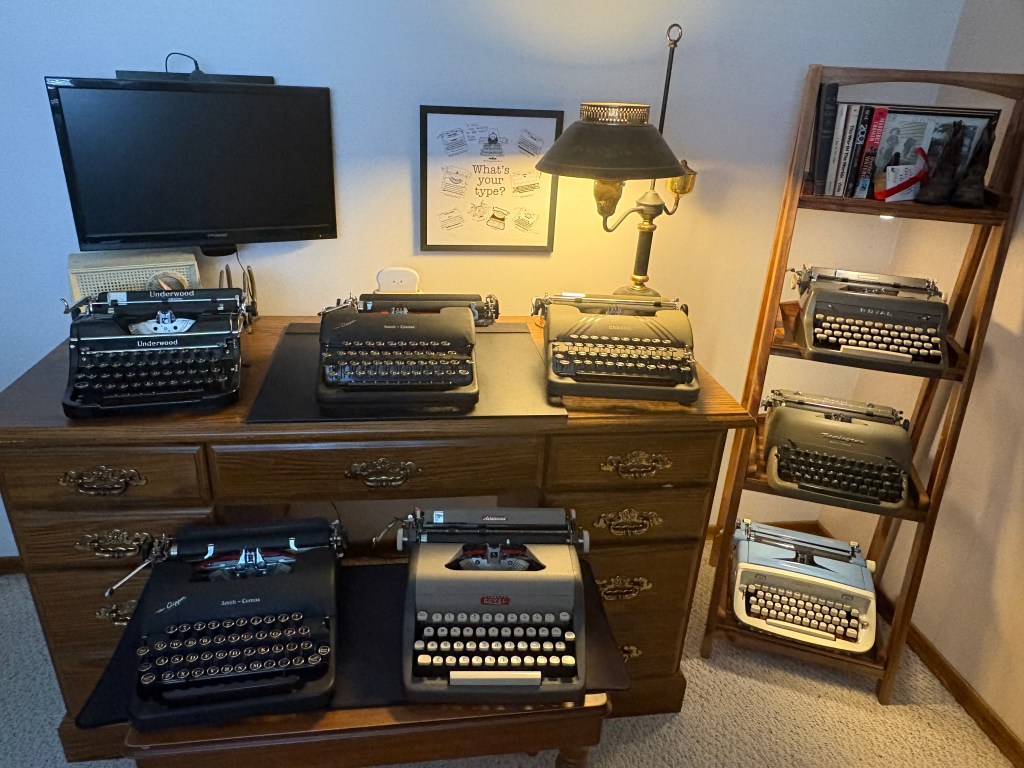
A second event, a public “Type-In,” is scheduled for Saturday, June 27, from 1 p.m. until 5 p.m., giving participants the opportunity to bring their own typewriters or try a variety of machines supplied by collectors and enthusiasts. Organizers say the event is designed to create a relaxed, social atmosphere where visitors can experience writing in a slower, more tactile way while learning about the machines and the culture surrounding them.
Melissa Fasanella, Head Librarian at the Xenia Community Library, believes the “analog lifestyle” has really made a comeback in 2026. “This year our Library started a puzzle exchange, by customer request, that’s been popular for those who want to take a puzzle home or to give new opportunities to others to assemble puzzles they have already put together at home and want to give to us for reuse,” she said.
“We’ve also seen several items that we loan out such as pickleball kits, telescopes, birdwatching kits, etc. circulate well this year so far as individuals and families are rediscovering more ‘unplugged’ hobbies.”
Deer added that the programs are intended to be about more than nostalgia. “With these events, we’re celebrating, not the machine so much, as what it represented and its relevance in the 21st Century,” he said. “The typewriter provided women with an opportunity to join the professional office workplace; it enabled the mass production of important legal documents and correspondence, and much more.”
“The typewriter was the forerunner of most of our modern communication equipment,” Deer said. “We still use the same QWERTY keyboard invented for the first typewriters on virtually every communications device.” He added that many people are rediscovering typewriters as a way to slow down and reconnect with focused creativity.
“And for the writer and general public alike, they’re getting a chance to disconnect and unplug from the digital noise that invades every part of our lives,” Deer said. Also participating in the type-in event will be TB Writers Plus, the only typewriter sales and service company in the region, run by Trevor Brumfield and Becca Brumfield. The business will have some typewriters on hand for attendees to try out, along with information on how to buy one.
National Typewriter Day is observed annually to recognize the invention and cultural impact of the typewriter, a technology widely credited with revolutionizing business communication, journalism, publishing, and office work throughout the late 19th and 20th centuries. While largely replaced by computers decades ago, typewriters have experienced a resurgence among writers, artists, students, and collectors who appreciate their mechanical simplicity and distraction-free writing experience.
The June 23 presentation is free and open to the public, though registration is encouraged through the library’s online event calendar. Organizers said the June 27 Type-In will also be open to the public and welcoming to both longtime enthusiasts and people who have never used a typewriter before.
Typewriters in the 21st Century Free Registration: https://greenelibrary.bibliocommons.com/events/69cac953491b809c6f23e6e0
National Typewriter Day Celebration Type-In Free Registration: https://greenelibrary.bibliocommons.com/events/69cfa70366c3387a9d05ae9b
Additional information and registration details are available through the Greene County Public Library website, www.greenelibrary.info, and the library’s online events calendar.


 The Jamestown Comet