I’ve been a freelance journalist for most of my adult life, going back to my days as a staff writer on a college newspaper. Since then, I’ve been published hundreds of times in everything from weekly newspapers to regional trade magazines. Much of my work consists of feature stories, opinion columns, and a few hard news pieces.
I was trained by an old-school newspaper editor who demonstrated consistent ethics and integrity. I was taught never to take a story to press without three primary sources and on-the-record statements from those directly involved to back up the information.
As the Internet became an easy way for the citizen journalist to publish news and information, credibility and fact gave way to sensationalism and uninformed opinion. Click bait replaced proper headlines. Soon, what was once referred to as “the press,” was suddenly renamed, “the media.” In this reporter’s humble opinion, they are not the same.
Webster’s Dictionary defines media (plural of the word medium) as a means of communication, such as radio, TV, newspapers, social, the internet, and so on. In other words, it refers to the delivery system rather than the content or its source.
For example, social media is a primary source of news for many Americans. Unless the information originates from a reputable news source, the content may have no oversight, no editorial integrity, no fact-checking, nothing.
You may have no idea where the information came from or how it may have changed. Think of it as a game of telephone. The more the word spreads, the less accurate it becomes. To reiterate, the social media platform (or app), such as Facebook, X, or Instagram, is just the vehicle – the medium. Reputable or not, the message originates elsewhere.
“The Press,” on the other hand, is guaranteed by the First Amendment of the U.S. Constitution. Like the three branches of government, it’s literally set up right there in black and white – which is why it’s called the Fourth Estate.
The Press should serve as a watchdog to help hold those in power accountable and provide the public with the information they need to make informed decisions. Trained Press journalists gather facts, verify information, and present it objectively across a variety of media.
A functional and qualified Press works within the realm of fact – not truth (that’s for philosophers). It should present information without bias or commentary (there’s a page for that and you’re looking at it now) and demonstrate integrity in the process.
Before I have people shouting at the screen or tearing up the paper, I agree the problem of misinformation spread by so-called news outlets is in epidemic proportions. Unfortunately, many news agencies have traded integrity for revenue, to say nothing about a complete disregard for journalistic expertise.
Cable news programs often fall into this category. They base their content on current news stories, targeting the biases and interests of a single segment of audience to grow advertising revenue. This is not news – it’s entertainment.
Even worse is when a news outlet censors content to favor the business or political interests of their owners. For example, once a paragon of investigative journalism, “The Washington Post” is rapidly losing credibility because of interference with its newsroom by its owner, Amazon founder Jeff Bezos.
Between social media, so-called citizen journalists, bloggers, and whatever else is out there, unvetted, unqualified, and often false content is cranked at an alarming rate. Their goal is to spread as much click bait as possible and deliver customers to advertisers – it’s all about money. That makes it hard to sift through the noise for qualified, factual news.
In the end, the Press should be rooted in ethics and accuracy. Sadly, many news outlets now prioritize profit, sensationalizing content to stay competitive in digital media. That’s muddied the journalistic waters, making it harder for the public to distinguish between fact and opinion.
My only advice is to check the source and remember that perspective isn’t the same as bias. News should be factual and accurate, not “fair.” There is no such thing as “fair and balanced” news. Fairness suggests compromise, whereas facts stand alone. The standard should be: is it factual, or not?
Imagine it’s 2030, and you sit down at your digital interface to send an email. A wave of your hand over an invisible sensor brings up a holographic menu that floats before you. Just thinking about what you want to say activates an artificial intelligence (AI) chip implanted in your head, and text appears on the holographic page without a single word.
Across town, an artist stands before a digital canvas. Imagination and inspiration spiral through her mind, and she waves her hands like a sorcerer conjuring magical images out of thin air. Colors and patterns appear on the canvas, enhanced by the AI built into the electronic easel. Within moments, a brilliant painting has been created that will sell for thousands in an online gallery.
In the heart of the Midwest, a racetrack grandstand is filled with spectators. They wave banners, cheer, and call out to their favorites as the field speeds around the track. But there are no Dale Earnhardts or Danica Patricks behind the steering wheels of these unbelievably quiet vehicles.
There aren’t even steering wheels. These cars are electric and entirely autonomous. Advanced, self-driving AI technology pilots the cars in fierce, robotic competition. Skilled drivers trained the AI well before the race, but now the cars compete with each other, and millions of dollars in sponsorship and sports betting are on the line.
Sounds crazy, right? Not that long ago, all this would have been the stuff of science fiction, but we’re not as far from it as you might imagine. Although, you don’t have to because the AI is doing the imagining for you. Well, sort of.
Before I get into all that, some full disclosure. As someone with a highly technical education and professional background, I agree AI has some amazing potential. We’re seeing incredible applications in medicine, logistics, customer experience, fraud prevention, and communications. At the same time, technology has once again advanced faster than our wisdom. The fledgling technology is increasingly misused as a means of cost reduction by eliminating the need for creatives.
Human nature to date implores us to find the quickest route to success, and AI offers that very thing – especially to the do-it-yourselfers. Why train and compensate a person when the computer can handle the job without benefits or sick days?
Skill, expertise, creativity, integrity, and inspiration become valueless if the job is handed off to an AI bot. Can artificial intelligence and creativity coexist? That depends on the user. The real question we should ask is how the technology is applied in any given situation.
AI has neither inspiration nor imagination. Contrary to popular opinion, AI can’t “create” anything. It only assembles information from known sources, organizes it based on the required parameters, and then spits it back out in the requested pattern. Everything is driven and interpreted by the user, including the result.
True creativity comes from the person, the human being who holds the pen, the brush, the welding torch, or the race car steering wheel. Unlimited, on-the-fly, daredevilish creativity is inherent to the human condition. For most people, however, it goes unrealized because of circumstance. This fledgling technology may mature to help those people fulfill their creative potential.
Without emotional intelligence or ethical considerations, AI is a potential devil in the dark. The creative world scrambles to adapt to a technology poised to devalue it. But it doesn’t have to be that way. With thoughtful imagination, professional ethics, and a healthy dose of common sense, human creativity can flourish and even take ownership of the technology.
Again, my only issue with the technology is its ethical application. AI’s value is unlimited if used to benefit rather than replace the process. If they haven’t already done so, creative professionals should begin to apply AI tools, but not as a substitute for artistic imagination – it can’t do that anyway. Instead, use these tools to free time from repetitive tasks, analyze online and social media data, facilitate collaborative efforts, and streamline production.
The goal here is not to yield to the buzz but instead benefit from the potential. Deliberate motivation toward applied expertise in artificial intelligence offers another tool for creative augmentation and increased professional value.
Someone asked me a question this week to which I had no response. “Are you doing anything special for the game on Sunday?” Game? Sunday? I had nothing. As it turns out, the Super Bowl is this weekend, and I had no idea. What red-blooded American doesn’t know when the Super Bowl is – or who’s playing? Well, me, for one.
Sports was never a focus in my house when I was growing up, so I never developed an interest. All I remember about football in my teens is how cold it was on Friday nights in high school, sitting in the stands in my marching band uniform and wishing for that last play of the night.
As an adult, I’m just not wired for any of it. I don’t drink, I’m not interested in the game, and the idea of barbecuing sends me into a panic. So, what do people like me do on the day of the “big game?” More than you might imagine. Here are some suggestions if you’re looking for an alternative this Sunday – or any Sunday, for that matter.
First, it would be ideal to get outside and get some exercise ourselves. Unfortunately, at least here in Ohio, the winter weather in February is still subject to change on a momentary basis. That eliminates some outdoor activities unless you’re willing to be a bit on-demand about your plans. You could always hit the YMCA or your favorite gym for a workout or swim.
The great thing about taking an outing on Super Bowl Sunday, provided your goal isn’t a sports bar, is you won’t have to deal with crowds. To me, Sunday afternoons are a great time to slow down, decompress from a busy week, and regroup. You can even start new DIY projects, do some purging and decluttering, or just chill with a book.
If you want to share in the more reclined weekend activities, what about a movie or TV show marathon? I remember one year, I decided I’d do a Mission Impossible film festival. One after the other, I sat through hours of Tom Cruise running… running… and running some more. I made popcorn, ice cream sundaes and burned through a 12-pack of Cherry Coke. I highly recommend Blue Ray or DVD – no buffering, no commercials, just six hours of Cruise’s IMF crew, and don’t forget the snacks.
Your mission, should you choose to accept it, is to find that series of films or TV that you want to just plow through, one after another. Isn’t there some guilty pleasure out there you haven’t seen in a while? Maybe it’s “Downton Abbey,” “Star Trek: The Next Generation,” or lounge around in your scrubs and get a relapse of “ER.” Be aware, though, people might be calling to see if you’re OK when you’re so immersed in all this that you don’t answer text messages. So be sure to come up for air now and again.
Sundays are also perfect for families to spend some time together. When the kids are small, they’re usually pretty agreeable to whatever the family is up to. As they grow up, however, they want less and less to do with us. But, if you’re lucky and your kids’ friends are ensconced in football activities, you may be able to steal some time with them and there are lots of things to do.
Pick a local museum to visit, take a day trip somewhere fun, or spend some time at a local library or independent bookstore. You might even just stay home. What about a board game? Nothing gets families interacting like Monopoly or Scrabble. The point is to spend some time together and reconnect. Oh, and turn off the devices. Go analog for a while and give your brain a break.
For some people, the Super Bowl is about the shared experience of cheering on their favorite team, complaining about the halftime show, and talking about the commercials. Whatever you choose to do this Sunday, football-related or not, enjoy yourself. There’s so much bad going on around us that we all need something positive to share, whether it’s a football game, or a walk in the park.
This is #nationalmentoringmonth and although I’ve had a few people I would agree had a mentoring roll with me, they came and went. But my father and my brother have been my lifelong mentors.
A #mentor isn’t just someone who teaches you something. They show you by example the value of those skills or lessons. They help you shape yourself into the person you want to be.
My father, Gary, Sr., was many things – a mechanic, mason, contractor, heavy equipment operator, truck driver, farmer, and agricultural mechanics teacher. He and my mother, Lois, were the right and wrong of my world. From both of them I leaned my work ethic, the value of patience, integrity and a drive to get where you want to go whatever the obstacles. Even since both have passed, I still hear them in my ear sometimes reminding me who I am and why.
My brother, Gary, Jr., is still a constant influence as well. He’s many things too – an architect, mechanic, #HVAC expert, welder, fabricator, truck driver, adult #education teacher, electrician, and a great deal more. Our age difference (16 years) put him in the position of second father. His goal was always to make sure I was as self-sufficient as possible. I’ve also had the good fortune to have him beside me at some of life’s most treasured and defeating moments.
Thanks to all of them, I am many things as well – mechanic, #electrician, truck driver, #heavy #equipment #operator, and a dozen other things. My education at #school was important but without the #mentorship of my #parents and #brother, life would have been a great deal more challenging – and not in a good way.
Who are your #mentors? If they’re still with us, thank them. Make sure they know how important they have been to the person you are today.
William Shakespeare famously said, “Be not afraid of greatness. Some are born great, some achieve greatness, and some have greatness thrust upon them.” Throughout history, the world has seen its share of remarkable individuals. From humanity’s earliest days to modern society, great people have consistently risen above the rest. But what truly constitutes greatness? What must a person be, do, or say to be considered great? How does greatness translate into goodness?
If you Google the phrase “What is greatness,” the algorithm returns an interesting perspective on the concept. One of the first lines describes it as “a state of exceptional superiority.” Really? Superiority? That’s not a term I would choose. Instead, let me share my own perspective on what constitutes greatness rather than boring you with definitions you can easily find. To me, greatness embodies a strength and consistency of character.
No one is perfect or flawless, and I am certainly no exception. But when determining greatness, surely who they are when no one’s watching – their character – should be considered. Recent political events revealed that good character need no longer be a consideration. Social media feeds bulge displays of the worst aspects of human nature, because people only seem interested in the negative, the distasteful, and the ugly. Consistency of character could hardly apply to people who relish in the misfortunes of others for entertainment’s sake.
When someone aspires to greatness, there is also often an element of narcissism involved. To achieve their goals, these individuals will do whatever is necessary to conceal any evidence of character flaws or inappropriate behavior. Their objective is to convince enough people of their good intentions so that, when anything negative about them comes to light, it won’t matter.
Their sense of greatness becomes secure, at least among those who choose to ignore the truth. Most people shy away from the spotlight of greatness, even when it is deserved, as living up to such a standard is often impossible and exhausting.
Great individuals are always learning. They cannot remain stagnant and continually seek to improve themselves. I can particularly relate to this characteristic. I find it remarkable when I meet people, especially professionals aiming for success, who do not read, engage with new ideas, or seem content with a puzzling level of stagnation. It’s important to remember that the concept of character is entirely subjective. Your definition of good character may differ greatly from mine, and for the same reasons, greatness is also in the eye of the beholder.
There are those who contribute to someone’s so-called success or greatness. True greatness involves taking credit for one’s own accomplishments while also acknowledging the support received along the way. No one achieves anything alone.
Without the contributions of others, we might not even know the names of prominent figures like Steve Jobs, Winston Churchill, or Harriet Tubman, as their journeys were shaped by many who helped them succeed—and who also played a role in their failures. For someone to become a leader, it’s important to remember the must inspire that leadership, not demand or force it.
So where am I going with all this? With all due respect to Mr. Shakespeare, greatness isn’t an innate trait, it can’t be cultivated, nor is it something to aspire to. It’s a label granted by observers. Those who proclaim their own greatness are likely undeserving of such a title.
One might assume that the qualities of greatness are universal, but this is not the case. Some may see a blustery oligarch as great, while others argue that true greatness comes from kindness, authenticity, and faith. It’s all subjective. This reminds me of a line from “Star Wars: The Empire Strikes Back.”
When Luke Skywalker first met Yoda, he said he was looking for a great warrior. The wise little green creature replied, “Wars not make one great.” While delivered by a puppeteer in a 40-year-old space opera, that statement remains profoundly true.
I can’t define greatness for you, and frankly, neither can anyone else. Ultimately, we may already have enough individuals regarded as great in history. Instead, we should each aspire to goodness because there has always been and always will be a shortage of that.
The shocking murder of the UnitedHealthcare CEO, 50-year-old Brian Thompson, has had a ripple effect on public opinion towards health insurance companies. As information continues to unfold about the alleged killer, Luigi Mangione, it’s becoming clear that the man’s motivation was likely related to coverage disputes.
But what does this mean going forward? Has this man’s terrible action awakened scrutiny toward all health insurance companies, or was it the act of one disturbed individual who felt his only recourse was to take matters into his own murderous hands? We may never know the answer to the latter, which begs even more questions.
Is it likely there will be copycat crimes? Is the public’s temperature so high towards these companies that the shooter was merely the first to act on what countless others may have imagined? Many insurers seem to think so and have begun removing senior staff members’ names, bios, and photos from company websites to prevent another such incident.
Since the moment the tragic event was reported, social media buzzed with emotional speculation. Anger, frustration, and, strangely enough, sympathy towards the alleged killer have emerged from many who have felt the sting of corporate healthcare.
Some of the reactions to this man’s horrific death were downright grim. One example of such dark commentary went something like this, “Did he die quickly, or was he waiting to see if his insurance would cover treatment?” Most were worse. Many were unrepeatable.
I would caution anyone who sees this terrible act as some sort of statement against the status quo of health insurance in our country. Nor should you fit the assailant with a white hat or call him Robin Hood. Nothing could be further from the truth. Social banditry aimed at an unimaginable public slaying isn’t going to resolve the health insurance crisis any more than political pundits can.
It’s unlikely that this event will alter the operational procedures of health insurance companies in any way. There’s little argument against the idea that the American healthcare system is beyond disastrous. Sadly, there is simply too much money on the line at the top of these corporations for any real action that might benefit the consumer. If anything, premiums continue to rise while more and more claims are rejected.
Since 2019, average family healthcare policy premiums have increased as much as 24%, with individual coverage not far behind. Even if you can afford coverage, there’s a good chance your claim – regardless of the necessity of treatment – will be denied. A Keiser Family Foundation study reported that health insurance companies denied an average of 17% of claims, with some reaching as high as 49%, even for in-network care. In short, it’s not getting any better, and there are no signs that this incident will move that needle in a positive direction.
There’s also the problem of sympathetic influencers and media whipping up a potentially dangerous movement akin to what we saw at the U.S. Capitol on January 6. This time, instead of political ideology to light the fire of unrest, it’s something more people can relate to. We’ve all had claims denied or medical bills shockingly higher than expected due to “out of network” notices or other corporate nonsense. Human suffering can be a highly motivating reason to take to arms, and now we’ve seen the alleged result of one disturbed individual’s response to it.
Our system is in bad shape, no question, yet this isn’t how to resolve it. In my opinion, we’re aiming at the wrong target (no pun intended). The biggest problem isn’t the insurance companies but the colossal and unregulated healthcare costs they’re meant to mitigate.
Billions of dollars pass through hospital doors daily, and the government allows it. They’ll break up Google or Microsoft over trivial anti-trust issues. But even suggesting that some behemoth healthcare system should have its revenue capped sends Congress into a frenzy.
Why? Money. Millions in donations, lobbying cash, and back-door deals on both sides of the aisle will forever prevent any reduction of the staggeringly high costs we pay for healthcare. Unless that changes, we’re perpetually at the mercy and living the network of the stockholders of these massive insurance conglomerates.
It is entirely possible that I spent too much time in this work writing about my parents. We have all had remarkable people in our lives, and my immediate family just happened to be some of the most extraordinary people in my life. With the holidays just around the corner, I wanted to relate a story that has almost become folklore.
The story begins in the late 1950s, sometime before I came along. My father was a machinist at National Cash Register, NCR, one of the largest employers in Ohio, if not the entire state. He also had what we would call side hustles. He would haul scrap metal to make ends meet, a good business when more efficient options were replacing the old cast-iron coal furnaces. Selling them for scrap was hard work but profitable. He also did concrete work and other odd jobs to help create a stable life for his family. To Dad, it was the kind of life he never had growing up in the foothills of the Appalachian and Southeastern Ohio.
While he was working, my mother raised her children, made a home for them all, and took care of the day-to-day operations of the household. She was one of the hardest working people I ever knew, even back then. But no matter how hard they worked, there were years when there just wasn’t enough money.
Around Christmas time, during a particularly lean year, the prospect of a happy Christmas looked grim. My brother was in Boy Scouts then, and my father was an assistant scoutmaster. Someone within the organization learned of my family’s financial difficulties. Shortly before Christmas, some people arrived at our house with food and gifts for all four. I remember my mother talking about it through tears as if someone had lifted them from a heavy darkness. She was eternally grateful, as was my father.
As the years went on, times got better for my family. Regardless of how little we had at any given time, I remember my parents always doing what they could to help those less fortunate. That brings me to Christmas of 1988.
That particular year, my dad learned of a nearby family that had fallen on hard times. The father had lost his industrial job, and the mother worked part-time while both did their best to raise their three small children. My mother immediately went into action.
Mobilizing the pre-Internet communications network within our family, she reorganized that year’s party into a relief event for the distressed family. With a little investigation and intuitive guesswork, my family collected information on the parents’ needs, clothing sizes, ages, and children’s interests. We even had people trying to find employment for the young father.
Our annual Christmas party, already a real show complete with music, songs, games, and dancing Santa, took on a whole new look. The price of admission was a donation. A list had been distributed informing everyone about what was needed and providing a way to let my mom know who was contributing what. With each person who arrived for the party came more toys, clothes, games, and food items. We even collected some cash.
On Christmas Eve, we loaded everything into a van, Santa riding shotgun, and headed for the family’s house. When we knocked on the door, we were greeted by a tiny three-year-old girl in a yellow onesie, a couple of toes poking out of the worn feet. She squealed away as she soaked in the sight of Santa Claus at her doorstep. To maintain the dignity of these hard-working people, there must be no clue where all this originated. My family were simply asked to deliver it to them.
My parents taught us by example. Kindness at the holidays should be the same throughout the year. Still, there is a gentleness during the Christmas season. We were under no illusions that a few gifts and boxes of mac and cheese would change the lives of this family. But at least, for one special holiday, they were together, safe, and they knew they mattered to someone. Sometimes, that’s enough to see you through the worst of times. Hopefully, we can all remember that year-round.
Author’s Note: A short story is based on my family’s charitable work. It’s called “A Special Place at a Special Time” and is available on Amazon. However, a revised version will be released shortly.
Gallery: The photos include pictures of the farm, the long lane that was decorated each year, Gary Deer Jr. as Santa and some of the later parties. Each one generated food, clothing, and other necessities for a local family. A few times, they were people in our own family – because that’s what you do.
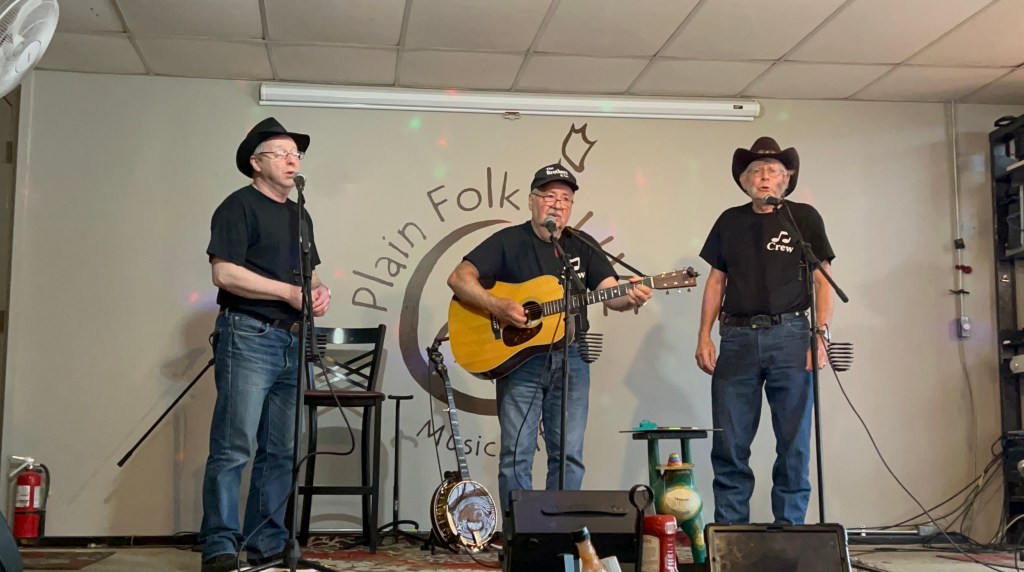
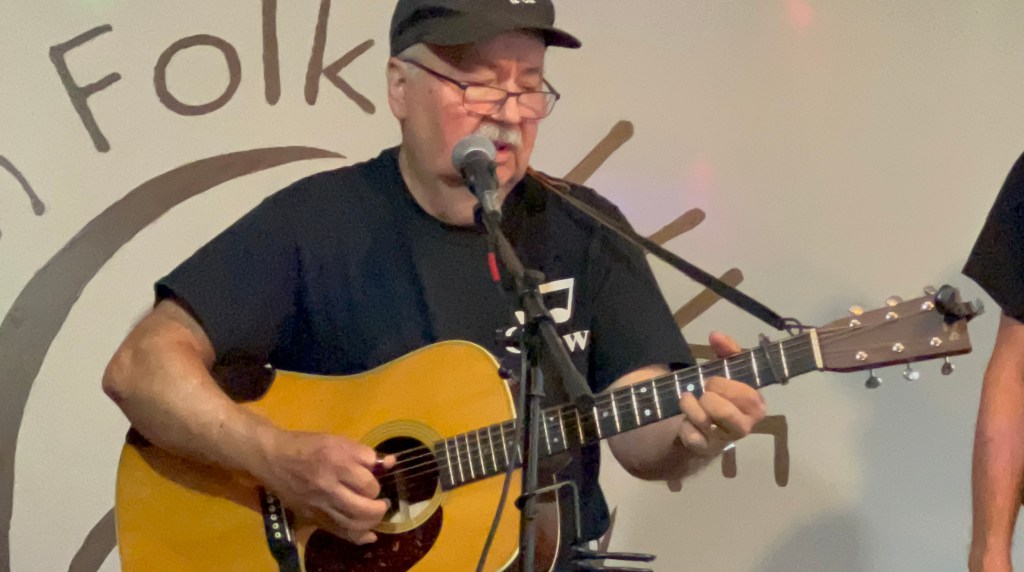
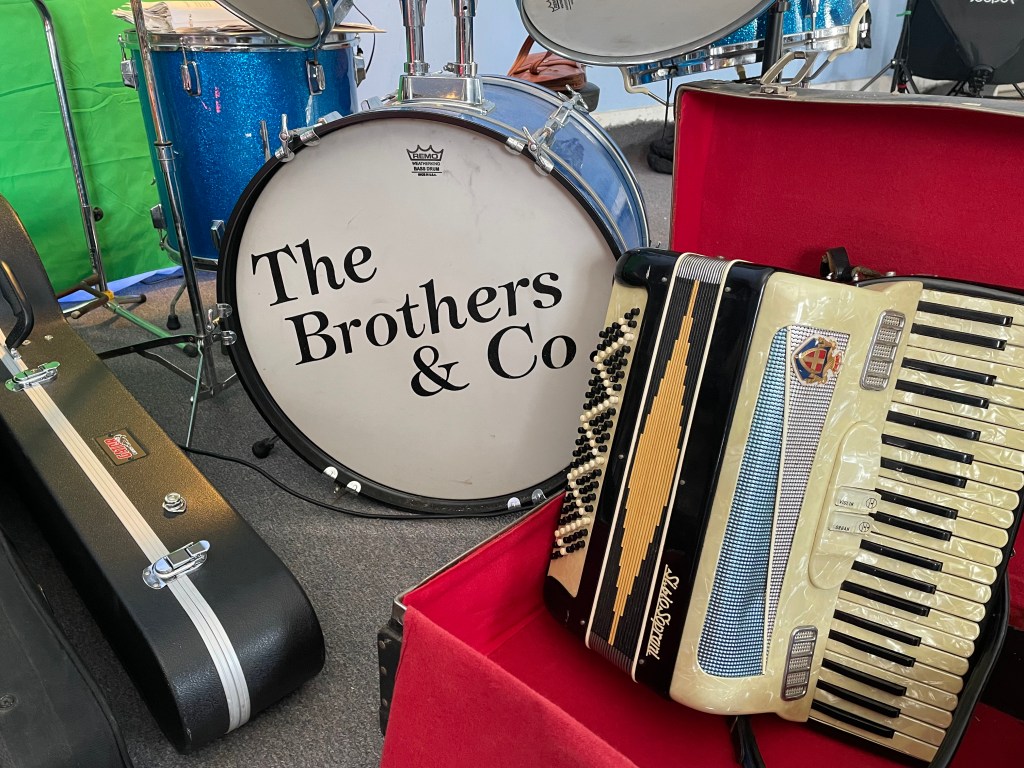
How the front of the farmhouse generally appeared at Christmas. The post that originally held the vegetable stand sign. This was taken in 2014 and is not photoshopped. It’s all real.The fireplace in “The Band Room” at the farm. The room was added because so ma ny people wanted to attend the Christmas parties.This is how the Christmas tree was arranged in our tiny farmhouse basement in the early days.The charitable parties eventually led to the creation of The Brothers & Co., our family’s band. We’ve performed all over the region at festivals, theatres, and even The Schuster Center.
I was a staff writer and later an editor for my college newspaper. During that time, I learned the single, most important lesson from all my years of education. Our administration-appointed supervisor once told me, “Whatever else you learn as you go through your college career,” she said, “learn to write and speak well. If you have that, you’ll be able to do anything.” She was right.
My mother also shared those views, though she had a head start by teaching me to read early. On the other hand, I would depend on my communication skills to pave my way to a multi-faceted career. She was determined to give me every possible advantage, mostly because she didn’t get them.
Literacy is one of the most critical indicators of a strong society. It reduces poverty, bigotry, ignorance, and social and professional inequality. It shouldn’t be limited to the academically gifted. Everyone should have the opportunity to learn effective communication.
Just because you don’t have an interest or aptitude for high academia, that doesn’t mean literacy is less important. I feel fortunate that I had the best of both worlds. I’ve always been an avid reader and writer and a lifelong student of all the sciences. But I also learned to rebuild a car engine, install a new water heater in my house, or change a faulty electrical outlet.
Every one of those tasks requires the ability to learn, understand, follow instructions, and cope with the unexpected. All of my “book learning” occurred while surrounded by some of the best tradespeople in the world. Even better, they were all teachers. One thing that has changed over the years is how literacy is emphasized in our public and private schools.
Do you remember when kids used to get in trouble for reading comic books at school? I will say “we” instead of “they” because I did this too. We put comic books inside large textbooks so we could read during class. From the teacher’s perspective, we seemed engrossed in our educational process. Instead, we were engaged in the exploits of Superman, Batman, or Spider-Man.
Some argued that even reading comic books was good for us because at least we were reading. But it was more than that. Comic books are a good literacy metaphor because they aren’t just about words, grammar, and sentence structure.
For our society to consider itself truly literate, we must understand language, not just the written word but communication. We also need to understand art, storytelling, and critical thinking. In an ironic twist, one way to do all that is by reading comic books. Many of the Batman stories from the 1930s and 40s are loaded with material you only find in today’s best crime novels by authors like Michael Connolly, James Patterson, and David Baldacci.
Unfortunately, some use the comic book analogy to justify spending hours on social media. That’s not the same thing. Reading is calming, focuses our minds, and relaxes our bodies. If anything, social media has dumbed us down and created an entire society nearly paralyzed by anxiety and inferiority. Scrolling doesn’t count as reading.
Still, literacy doesn’t require you to wade through “War and Peace,” “Catcher in the Rye,” or any other long-winded literary work. I supplemented my education by reading everything I could get my hands on. Whatever I had an interest in, I had books about it, encyclopedias, or topic-specific material – there was no internet back then. Now, resources are nearly endless, provided you learn the difference between credible and non-credible sources.
Advanced education isn’t required either. Truth be told, much of what I do for a living was self-taught – thanks to my early introduction to books. Self-education is mainly frowned upon in today’s society. I find it ironic that Benjamin Franklin, Thomas Jefferson, and others who wrote some of the most important documents in history would be unemployable by today’s arbitrary and unfounded standards.
My point is that American culture currently reads at a U.S. 5th-grade level. That’s unfortunate, ridiculous, and easily corrected. We must eliminate the stigmas of functional illiteracy, focus more on reading and writing in our schools, and spend more time with books than cell phones.
Without question, 2024 has been and will continue to be one of American history’s most charged and controversial election years. Among the points of contention is the continued argument regarding the necessity – and validity – of the Electoral College.
Political operatives and pundits alike have been outspoken on the subject from all political viewpoints. There seems to be no consensus because, quite frankly, even some government officials don’t understand its purpose. So, before I give you my thoughts, here’s some non-partisan history.
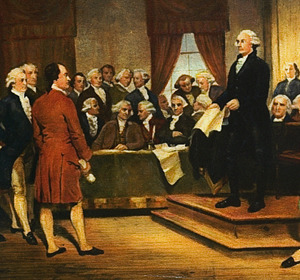
During the first Constitutional Convention of 1787, a significant debate unfolded about the method of electing a president to lead the executive branch of our newly established government. It was a pivotal moment in our history after the decision to have a single individual in the office rather than two or even a triumvirate. Just imagine the complexity of electing three people every four years.
The primary issue was whether a congressional vote should elect a president or do it by popular vote. The latter eventually won out until the smaller states began to weigh in, concerned that those with a larger population would wield more control.
Another lesser-known concern was that the political elite of the time were worried about a mass of uneducated voters swaying the results. Discussions continued for several months until, one day, in a closed-door subcommittee, James Madison laid down the concept for what became known as the Electoral College.
Enacted as a compromise and safeguard, Article II of the U.S. Constitution (later the 12th and 23rd Amendments), as well as the Electoral Count Act (ECA) of 1887) formally established the Electoral College. These laws regulated the voting process and defined the events between Election Day and the Inauguration.
Now, to clear up some misconceptions. Regardless of rhetoric to the contrary, I assure you that the Electoral College is an entirely democratic process. It is not, however, easy to explain. But I’ll try anyway (insert a deep breath here).
In a presidential election year, the political parties hold conventions where they nominate “presidential electors.” That’s simple enough to understand, but hang on. Here’s where it can get… confusing.
When a party’s presidential and vice presidential candidates win the popular vote, that party’s electoral nominees become “Electors.” Each state has the same number of Electors as members of Congress, and each Elector votes for their party’s ticket on separate ballots – one for president and one for vice president. So, your individual vote is still vitally important because the candidates cannot earn Electors without it.
For example, if Richard Nixon and Barry Goldwater (president and vice president, respectively) won the popular vote in California, the Republican nominees from that state would become Electors and cast their votes to the Electoral College. Once all the electoral votes are cast, the candidate who reaches 270 out of a possible 538 wins – and this is only triggered if the candidates win that state’s popular vote in the first place.
In the news, the results sound something like this: Nixon has won California and its 54 electoral votes. Of course, those results still have to be certified. As you might recall, there was a slight hiccup during the 2020 election certification. However, new security measures have been taken to reduce any potential repeat of those terrible events.
Remember, this is just a glance at the process, but I hope it helps. If it’s still puzzling, a good analogy is Major League Baseball’s World Series. Every year, the winner is determined not by which team got the most runs per game but by which won the most games in the series. The Electoral College works the same way.
In my opinion, the Electoral College is the only practical, efficient, and fair way to ensure everyone’s voice is heard because we’re represented just as we are in Congress. The Founders realized that the popular election alone could and would eventually bring chaos.
If we want an election process that stays in constant contention, then eliminate the EC. But if we’re going to have all our citizens represented equally, let the system do what it was designed to do. If you want to make a real difference, make sure you vote.
Deer In Headlines Special Edition – October 14, 1993
It had been a long day for the freshman saxophone player and his high school marching band friends. By now, it was 4:30 in the afternoon, and the day had begun for them nearly eleven hours ago. They’d earned the opportunity to compete in a tri-state marching band competition in Huntington, West Virginia, some 200 miles from home.
The mid-October afternoon had become hot and muggy. Even the seats in the stadium were perspiring. The adventure had begun early that morning with all the spirit of the world’s most excellent universities. The performances were over, and they sat impatiently awaiting the judging results.
This is the view of the real Greeneview High School marching band during their first song of the contest—from the families’ perspective. (Photo by Lois Deer, 10-17-1981)
The bands were divided into three classes based on the size of their home schools. This group’s small, rural high school was in the last division, called class B, at this show. That meant it would be a long, hot wait by the time they went through each division, of each class, of each award. It was nerve-wracking, it was hot, and it was discouraging, but they waited. Patiently – well, sort of.
The university stadium buzzed with nervousness and emotion as the first awards were called. “Fifth place, class AA, goes to…,” A loud cheer bellowed from 100 yards down the bleachers, drowning out the anxious and irritated sigh from the young saxophonist and his group. The noise subsided. The announcer spoke again. “The fourth-place award goes to…” Another excited cheer came from the stands. The little band had worked hard all summer for this. It was one of the best shows they’d ever done, but this performance got off to a shaky start.
Their arrival at the host stadium was almost the exact time they were supposed to go on the field for their practice run, and things were rough. Heat exhaustion cost them one of the flag corps at the start of their competition show. The Astroturf-covered football field, new to most of the marchers, created its own set of problems. These kids were used to trotting through mud and grass. Now, wearing the slick-souled dress shoes, they had to contend with spongy ground and slippery artificial grass.
If that wasn’t enough, one of the trombone players nearly decapitated a field judge with his slide. During his morning pep talk, the director said, “Judges were fair game…” Meaning, if they got in the way, just keep doing what you’re supposed to do. Unfortunately, the aggravated trombonist took the recommendation literally. Somehow, they got through it all, and there they were. Hot. Sticky. Impatient. Every ingredient was added to create a group with a bad attitude, who, by this time, faintly resembled people sitting in a traffic jam.
A lot was riding on this, though. Everyone was here. Parents and family friends had accompanied the band on the four-hour Greyhound bus ride that morning. The busses pulled out of the school lot at 6 a.m., scored by the groans of how you’d expect average high school kids to at that time on a Saturday morning.
Most slept on the ride down. Many brought weekend homework. Others reviewed their music to ensure they remembered that one bad note at the football game the night before. Whatever the case, they made it, and everyone was pumped. And a little scared. Friday night football games were never like this. The tension grew and hovered in the air over the little group just the way that bricks don’t.
The young saxophonist eyed the band’s director. He was down on the track on the opposite side of the field, pacing back and forth in front of the reviewing stand like an expectant father. Another announcement blared from the public address speakers. The director’s curly afro hair and kinky beard glistened in the fall sun with impatient perspiration, giving him more the appearance of a heavy metal rock singer than a high school band director.
Then again, everyone was starting to look like that. The group grew increasingly discouraged with each passing award. The announcer was up to their class now, and the fourth-place award was called. Rats! The saxophonist slumped back against the bleachers with an irritated gasp. So did everyone else.
“There’s no way, ” he thought. “All these huge bands from three states? We can’t possibly have a chance at anything higher than fourth.” That seemed to be the general opinion of the others as well.
Another award. More cheering. None of it from them. Now, the announcer was up to second place, and the morale-broken musicians began standing, a few at once. Each gathered their things to return to the busses and the quiet little farm town. Some had already left the stadium.
“Well, so much for that,” someone said. “This is embarrassing, ” said another, like a line plucked from a Peanuts cartoon. Even their band director dejectedly headed towards his disappointed students. The announcer began to speak again, but no one in the group was listening. It was over. They tried, but the odds were against them, and the game was rigged.
“Second place, class B goes to…” A long pause.
This seemed to be the announcer’s annoying trademark, meant to instill drama. It didn’t work. It was just irritating. When their band took the field for the show, he sounded like he’d been mugged midway through his address. “You may take the field for comp…” Everyone held their breath. “…etition.” Whew!
Suddenly… the words no one expected to hear. No, more than that. They were impossible, improbable, incomprehensible words.
“Second place, class B goes to… Greeneview High School Marching Band from Jamestown, Ohio!”
For a solid breath, someone blinking would have rung like a gong. No one moved. No one spoke. Those shambling out stopped and turned around. There was an oxygen-steeling collective gasp.
A slow, quiet calm settled over the group as their brains processed the words they’d just heard. Suddenly, explosive screams of joy shattered the silence. They cheered, cried, and hugged. In the stadium section where their families were, everyone was on their feet, jumping, crying, and yelling. Even the other schools called cheers of congratulations, and they were equally shocked by the news.
The little band’s director stood in silent shock for a moment, and then it hit him. His eyes were as big as saucers when he turned to face the band from across the field, raising one arm in victory to them as if this little band’s second-place win were Olympic gold. It might just as well have been, but that wouldn’t have meant as much to them.
At the reviewing stand far below, their field commander and flag corps captain proudly marched to the awards table and saluted the presenters. Their vibrant red, white, and Colombian blue uniforms were almost as brilliant as the sun itself as they spun around in a military-like snap to salute the ecstatic audience. The pair accepted the two-and-a-half-foot trophy and rejoined the line of representatives standing at attention in front of them – both in tears.
Back in the stands, the young saxophonist and his friends watched and beamed. This was truly their most honored time together. The young man shaded his eyes as he took a moment to look at these people and tried desperately to soak it all in before it was over. They had no idea what they meant to him. So much of their lives lay before them. But this day… this was a day they’d never forget. “Someday, this is going to make a great story,” he thought.
The bright sunlight brought a tear to his eye. Then again, maybe it wasn’t the sunlight at all. He wiped it away. The thundering applause, congratulations, and excitement continued for what, in reality, was only about a minute or two. But it wrang out for what seemed like a lifetime to… The Little Band That Could.
———
Epilogue
My name’s Gery Deer, and that’s a true story from October 17, 1981. I was the “young saxophonist,” and I was right. I never forget that day, and it did make a great story. The band, Greeneview High School Marching Band of Jamestown, was under the direction of Richard Turner.
Band Director Richard Turner, the contest trophy, and me – Gery Deer in my newly-minted Greeneview school jacket.
I wrote this story after visiting Cooper Stadium in Columbus, Ohio, to see Greeneview perform in another competition show many years later. They competed in the Ohio Music Education Association’s state finals, and it was fascinating how little things changed from one era to the next. It was like reliving that day all over again.
Two of my four nieces were in the band in those days—now three decades ago. The oldest was the band’s field commander, a senior at the time, and a saxophone player like her uncle. The next oldest was a clarinetist and a freshman. They didn’t win their contest but took an honorable mention. Either way, I think they will still reflect on their day, as I do mine, and remember the feeling.
No one could have been prouder of my family and my school except maybe my parents, who were there again to watch their grandchildren as they did their own. And they, too, will remember. They say we can never be kids again. Well, no one could have gotten closer to it than I did that day. But to the “next generation,” I say, “When it seems like us old folks don’t understand, try to remember, we were there too.”