Local News & Commentary Since 1890.

Posts Tagged ‘life’

Festina Lente

In Local News, Opinion, sociology, Uncategorized on January 4, 2026 at 12:56 pm

Deer In Headlines

By Gery Deer

Change in our lives comes in two speeds, and neither of them bothers to ask our permission. It either creeps along like a stubborn snail crossing a sidewalk, or it arrives so fast we wake up wondering who moved the furniture while we were asleep. Slow change is invisible because it’s gradual. Fast change is invisible because it’s overwhelming. It reminds me of the Latin phrase, “Festina Lente,” which means, “make haste, slowly.” Either way, we rarely recognize those significant moments of change until after they’ve happened.

I think our lives are divided into chapters or acts, like a play. Each one is marked by some moment, some Rubicon we didn’t know we were crossing at the time. That moment signals a new direction, usually unexpected and rarely announced with trumpets or a warning label. There’s no narrator to step forward and tell us this is Act Two. Life just keeps going, and we keep improvising.

Some people believe those moments don’t exist at all, that life is simply a continuous stream of overlapping events pushing us forward with little control. Others, like me, are convinced that fate is a convenient myth. Our lives are driven by choices. We make decisions based on circumstance, opportunity, fear, optimism, and experience. Those decisions quietly determine what comes next.

When real change happens, there is a moment when something nudges our lives in a new direction. The frustrating part is that we only notice it in hindsight. One of mine occurred in October of 1987, while reading the classified ads in my college newspaper. I needed a job. Buried among the listings was a small notice that the paper was hiring staff writers.

Less than an hour later, my writing career began. I was an engineering student with no sense that a decision made from necessity and desperation would shape the rest of my working life. I didn’t feel a shift. There was no lightning bolt. I just filled out an application.

Years followed in engineering and technology, but I kept writing. Newspapers. Technical publications. Industry magazines. Software manuals. The transition from a technical career to a creative one didn’t happen overnight. It was painfully slow, full of doubt, subjectivity, and rejection. Writing is a hard business in which to make a name, and I’m still working on it.

Along the way, I changed direction more than once. Demand shifted. Markets changed. The economy had opinions. Some pivots worked. Others failed spectacularly. I adjusted, recalibrated, and kept moving forward, sometimes confidently, other times reluctantly.

Nearly forty years later, that moment sitting in front of the bookstore with a newspaper folded open on my lap was clearly a dividing line. At the time, it was just another Tuesday.

As we settle into a new year, consider what might need to change in your life. Or what changed in the past year without notice. Professionally. Personally. Emotionally. We like to believe we’ll recognize those moments when they arrive, that we’ll feel enlightened or prepared. We won’t. Change doesn’t work that way, no matter how many self-help books promise otherwise.

So what do we do? We do the best we can with what we know at the time. We pay attention. We stay flexible. We understand that most change happens in tiny, almost imperceptible increments, except when it doesn’t. Perspective is everything. Our reality is defined by how we see ourselves, our surroundings, and the people around us.

If there’s comfort in that, it’s this: you don’t have to have it all figured out. Recognizing change comes later. Coping with it comes from patience, adaptability, and a willingness to pivot when necessary. Life will change, slowly or suddenly. Our job is simply to keep showing up, learning as we go, and trusting that today’s ordinary moment may someday reveal itself as the one that changed everything.

Change asks us to breathe, to pause, and to remember that discomfort often signals growth – however difficult. When things accelerate, ground yourself. When they crawl, stay patient. Talk to others. Write things down. Measure progress over months, not days. Most of all, give yourself time. You are not late. You are living inside the process, not observing it from the end.

Happy Expectations

In Local News, Opinion, Uncategorized on October 24, 2025 at 7:41 am

Deer In Headlines II

By Gery Deer

Happiness, expectations, and acceptance. If I’ve learned anything in my nearly six decades of riding this blue spinning ball of water and mud around the cosmos, it’s that everything boils down to those three things.

First, there’s the idea of happiness – which has always escaped me. If you believe all the self-help books, lifestyle gurus, and advertising agencies, happiness is all about meeting needs or wants by a combination of philosophical and material means. Makes it seem pretty easy, doesn’t it? Well, we all know that’s nonsense.

It might sound cliché, but happiness isn’t something you can buy in a store or conjure up simply by deciding today that you’re going to be content. Although there is evidence to show that you can be happier by managing your thoughts, which then alters your feelings, resulting in whatever state of mind you’re trying to achieve. Yeah, that doesn’t sound convoluted at all,l does it?

Happiness is not something anyone can tell you how to reach. I have no clue what it means to you; I haven’t even figured out what it means to me. However, I know what it’s not, and sometimes that’s the best first step. Whatever you do, don’t follow someone else’s idea of happiness, nor should you believe that if you don’t reach it, you’re somehow lacking. That’s ridiculous.

If things need to change in your life for you to feel what you believe is happiness, then do it. Sometimes it’s easy; most of the time, it’s hard. Often, things you need to change are highly dependent on the behavior of others.

Which brings me to expectations. That’s a big word with a lot packed into it. We have expectations of ourselves, whether good, bad, or indifferent. But we also know that others have expectations of us. Ironically, those are much harder to manage because often we don’t know what they are.

People always have expectations of us, but most never share them. We walk around in a constant state of confusion, never really knowing if we’re meeting those expectations or not. It could be a partner, a coworker, a boss, a family member, or whoever. But regardless of the origin, you have two choices.

You can either ask someone, point-blank, what they expect of you and respond as you see fit. Or, you can live your best life and not worry about it. I’m always operating in a combination of both of those things. There are some whose expectations we would likely always going to want to know. That’s probably because they may be closer to us than others, or how we behave or respond to something directly affects their lives in some way. So it’s important that they tell us their expectations. Otherwise, there’s no way we could possibly do anything about them.

Of course, there’s always the very real possibility we can’t do anything about these situations anyway. Some people’s expectations can be entirely unrealistic, even the ones we have of ourselves. That brings me to the final concept – acceptance.

Do you know the Serenity Prayer? While I’m not one to hang my hat on prayers to get through my day, the idea of accepting things that you can’t change, over which you have no control. It’s good advice. Now, if only I could follow it at those times.

When my father died, I was forced to accept it. Five years later, I’m still trying to accept that we did everything possible to properly care for him. Ironically, that’s harder to accept than his passing. Sadly, that’s how it works sometimes. Acceptance can often be simultaneously invaluable and fleeting. However, acceptance also needs to include the positives in life.

I regularly temper my acceptance when good things happen. Part of me always assumes something will come along and mess it up. I spend a great deal of time at odds with that dark, pessimistic side of myself. But, slowly, cautiously, I’m learning to “let it land,” and take the win.

The pursuit of happiness, how we handle expectations, and striving toward some level of acceptance are all incredibly challenging. Each affects every aspect of our lives. Inevitably, it’s your choice how to handle them.

Vision Quest

In Opinion, psychology, sociology, Uncategorized on September 12, 2025 at 10:03 am

Deer In Headlines II

By Gery Deer

Somewhere between the motivational posters in your work break room and the TED Talk rabbit hole you fell into online last Tuesday, someone probably told you that you need a “vision” for your life. A grand, sweeping, cinematic plan that guides your every move like you’re the protagonist in a Christopher Nolan film. Lights, camera, confusion.

Now, let’s be honest – most of us are just trying to remember where we left our coffee mug and whether we fed the dog this morning. But a life vision? That sounds exhausting, and at least partially unrealistic.

Don’t misunderstand. I’m not saying you should wander aimlessly through life like a robot vacuum cleaner with a dying battery, bumping your way from wall to wall, down this hallway and that. Any purposeful achievement generally starts with a dream and some kind of plan, even an informal one. To me, that’s just common sense.

But obsessing over the idea of a perfectly curated roadmap for your life might do more harm than good. That’s especially true when we project the obsession onto others—our kids, our coworkers, some unsuspecting barista. And you need to allow for some flexibility so you can recognize opportunity when it comes and act in your best interest – that’s more how I work, I would say.

When someone says you can’t make it without a vision board and a color-coded calendar that looks like NASA designed it, they are probably trying to sell you something. In case you haven’t figured this out on your own, life is messy, unpredictable, and occasionally throws a raccoon through your metaphorical window.

Some of the most successful people I know didn’t start with a vision. They began with a problem, a deep interest in something, or just plain boredom. They stumbled into opportunities, made a few mistakes (okay, a lot of mistakes), and figured things out along the way. Their “vision” was more like a foggy windshield they wiped clean with the sleeve of their hoodie – and that’s okay.

Here’s the thing: having a vision sounds noble, but it can also blind you. When you’re so focused on the end goal, you miss the weird little detours that could lead to something better. You ignore the people around you who might need help, or who might help you.

Instead of the kind of vision you read about in self-help books, maybe what we need is a clearer view—the ability to see what’s happening right now. That way, we notice the opportunities, the needs, the small wins, and then be present enough to pivot when life throws a curveball—or a raccoon.

If you’re in a position to guide others—whether you’re a parent, a manager, or just the guy who always gets asked for directions at the grocery—there’s a temptation to impose your vision on them. You want them to succeed, so you hand them your blueprint. “Here’s how I did it. Follow this, and you’ll be fine.”

Really? People don’t come with identical parts and a universal tool kit. What worked for you might be a disaster for someone else. Your vision might be their nightmare.

Instead of handing out visions like party favors, let’s ask questions. What excites you? What scares you? What do you want to try, even if you might fail? Influence isn’t about shaping someone’s path—it’s about helping them find their own flashlight.

So here’s my alternative vision pitch: wander with purpose. Be curious. Be open. Set goals, sure—but don’t carve them into stone. Scribble them on napkins and be willing to toss them when life hands you a better idea.

Life isn’t a straight line. It’s a squiggly mess of trial and error, happy accidents, and moments of clarity that usually arrive while you’re doing something mundane like folding laundry or eating cold pizza in the middle of the night. So what to do? Ignore all the nonsense out there and do what leads you to the life you want.

While a valuable foundation, vision isn’t an absolute. Flexibility, awareness, and a good sense of humor are you best tools along life’s path. Now – what did I do with that coffee mug?

Go to your room

In Local News on August 15, 2025 at 10:01 am

Deer In Headlines II

By Gery Deer

A child’s bedroom represents much more than four walls, a bed, and a closet door that never quite closes right. Strip away the posters, the overflowing toy box, the rock tumbler they begged for but only used once — and what’s left is something quietly monumental: the first incarnation of personal identity, in its purest form.

To a child — especially one trying to decode their place in the world — their bedroom is personal. A place apart. Not because it’s off-limits to others, but because it feels like the only space in their universe that is truly, unquestionably, theirs. It’s one of the first places over which a young person has reasonably full control.

When I was a kid, my bedrooms weren’t luxurious or particularly large. From the age of 5, when I first got my own room, to about 25, when I left the farm for my first apartment, I had occupied four different rooms – in two houses. The one I had the longest was on the second floor of our small, Cape Cod farmhouse. Unlike the loft at the top of the stairs – which also once served as my bedroom – this one had a real door. Having a door offered independence and solitude — the kind you don’t realize is valuable until adulthood starts chipping away at your time and control like a sculptor with a new block of marble.

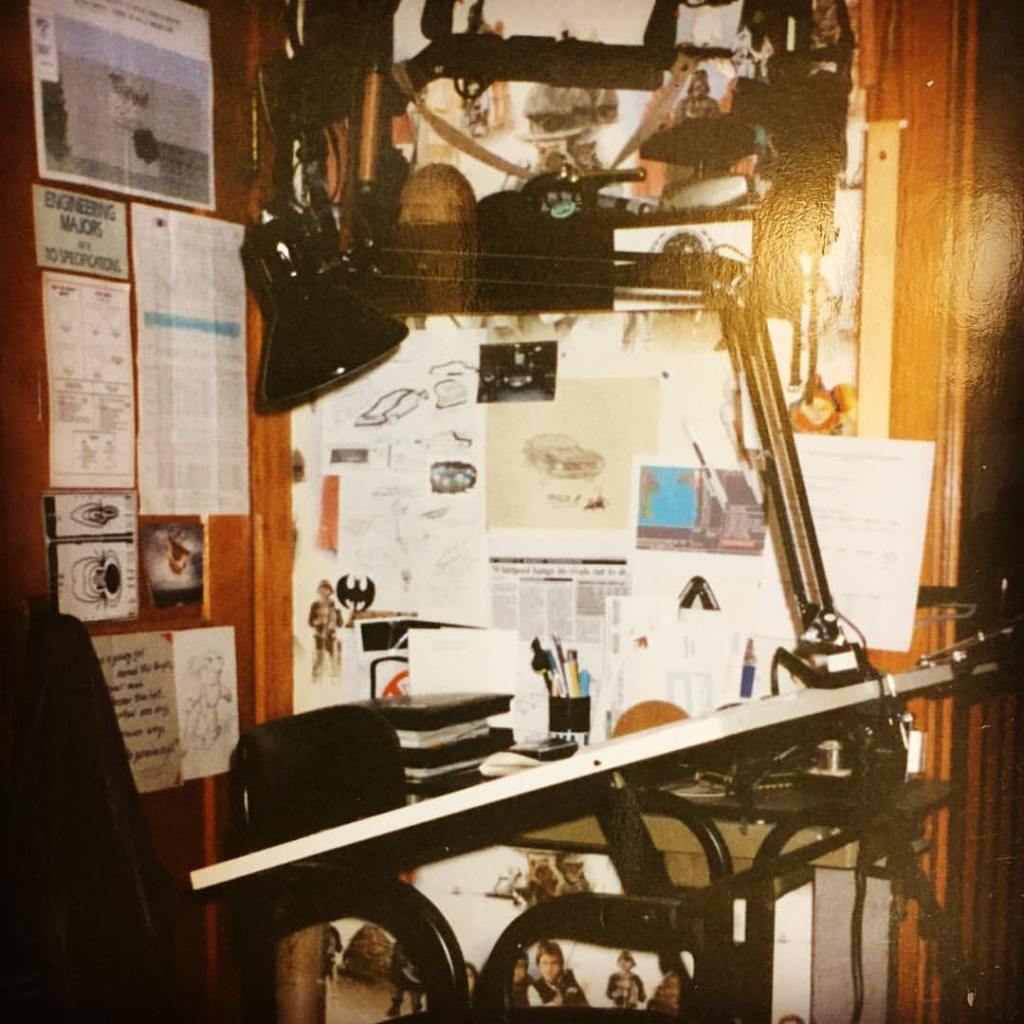
One corner of Gery’s bedroom at the farm in Jamestown, ca. 1988 – drafting table and work area while studying for his engineering degree.

Except for food, my room was outfitted with everything I needed to hole up. There was a pair of hand-me-down twin beds, a tiny black and white TV sitting on a corner step stool, plenty of art supplies and books, and a JC Penney stereo system perched on a wobbly stand. All of these things, and the room itself, helped chisel out the person I’d eventually become. I also had a desk that became far more important that I could have predicted, although somehow my mom knew.

Around 1981, predicting the computers that would eventually occupy so much of my time, my mother insisted on getting me a large, wrap-around desk. The epidemy of 1980s techno-furniture, its wood frame sported a black, slate top, with just one lonely shelf above. It wasn’t fancy, just functional. As it turned out, that old desk, as much as the room it occupied, became my launchpad. My mother seemed to believe in things before me, and now — 43 years later — I’m sitting at that very desk as I type this for you.

Those who were there have said that, in many important ways, my office and personal study echo that childhood haven. I think what they mean is that my work and home offices are more than just organized – they’re curated. Every object has meaning and purpose: typewriters that don’t just tap out words but inspire my writing, photos and nick-nacks that remind me of family and events and highlight why I write, and lots of blue — a color that, for reasons I can’t explain, always made me feel… like me. I think we all need someplace like that, even if we don’t realize it.

In my old room, even if everything outside felt like chaos, even if fitting in at school was like trying to breathe underwater, I could always retreat to a place where I made the rules. Ask any of the nieces I grew up with and they’ll complain, as they did to my mother when we were kids, that I would never let them come up there.

We seriously underestimate how foundational a child’s room can be as they grow up. Like so many other children, my room gave me solace, but it also provided a launchpad from which to craft my life’s narrative — one where my voice mattered. It wasn’t just any room in any farmhouse. It was my room, my Fortress of Solitude – maybe yours was too.

I’ve arranged other spaces in the image of that room but, try as I might, nothing will ever be like that again. Sometimes I would give anything to be back there, with so little responsibility and so much to live for. I’d hear the bustle of my family downstairs and, just once more, my mother calling up the stairs, “Gery, supper’s on.” 

RC and Mr. Goodbar

In Children and Family, Local News, Opinion, psychology, Uncategorized on March 7, 2025 at 7:06 am

Deer In Headlines II

By Gery Deer

When I was 11, my uncle came to visit me during one of my many prolonged stays in the hospital. I had a reasonably significant surgical procedure and was confined to a wheelchair, so he sat in my room and regaled me with tales of life on the outside. He was my mother’s younger brother. His nickname was “Tuff,” though his real name was Gary – one of four in my immediate family. Since our families were close, nicknames were helpful, as you might imagine.

At one point during his visit, Uncle Tuff decided I’d been cooped up for too long and needed to escape for a bit. I wasn’t tethered to any wires or hoses at that point, so we made good our getaway. I’m not sure, but I don’t think I was supposed to leave the floor, and we were trying to be stealthy. I think he had given the nurses the heads-up and cleared it first, but I played along.

After a quick elevator ride, we arrived at a vending area, complete with snack tables and a microwave. He parked me at a table and dug into his pocket for change. A moment later, a Mr. Goodbar candy bar and a bottle of Royal Crown cola appeared in front of me.

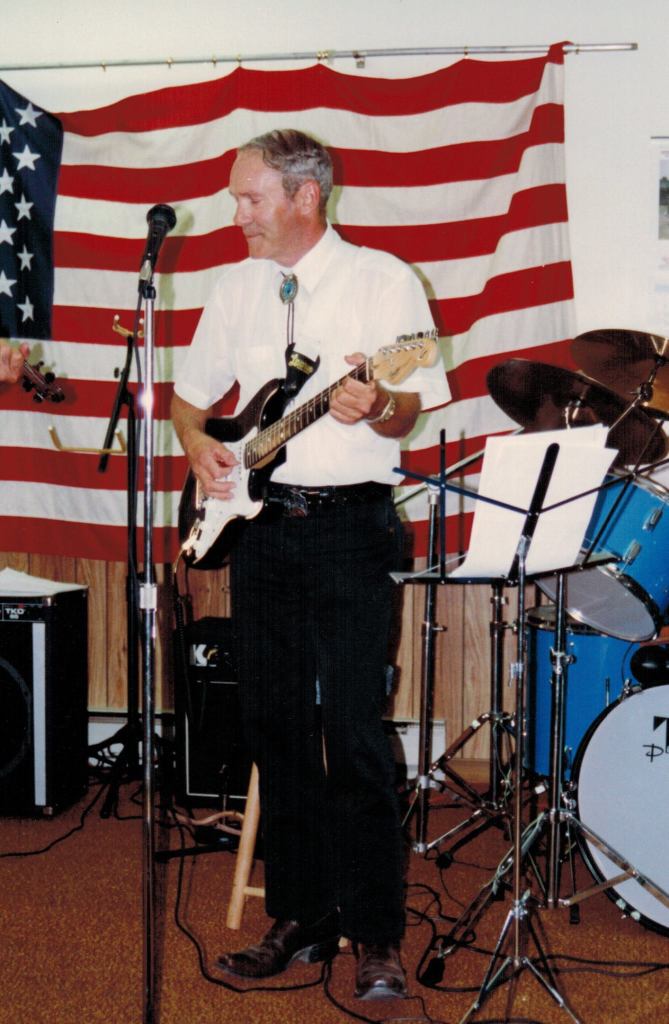
Gary “Tuff” Sutton, Sr., his wife, my Aunt Phyllis, and their two kids, Pam and Gary, Jr. “Butch,” were fixtures in my home. My mother’s youngest sibling, he was the uncle I knew best. He taught me to play the piano, which, like the soda and chocolate, gave me a reprieve from the rigors of the hospital. I’ll forever be grateful.

In case you’re unfamiliar, the Mr. Goodbar is made by Hershey and is little more than your basic chocolate bar, but with peanuts. It’s not fancy, but after a week of hospital food, it was like someone had bestowed on me a feast fit for kings. For the next half hour, we knocked back our RCs and chocolate, and he did his best to take my mind off where I was – he was good at that.

Back in my room, he’d left me with an extra chocolate bar – plain Hershey’s this time – and gave the nurse another bottle of RC to keep cold for me. It was a good day, all things considered.

We lost my Uncle Tuff to lung cancer in 2005. Ironically, another memory associated with that day at the hospital was that he wasn’t allowed to smoke. It was one of the few times I remember seeing him without a smoldering Salem. He was around my life a great deal, and I miss him every day, especially when I sit at a piano – he taught me to play.

But of all the times we had later, playing music with our family band or just sitting around the kitchen table at the farm where I grew up listening to him and my dad tell stories, that one moment at the hospital will always stand out. That was when a little boy, uncertain of his future, forgot for a moment how badly he was feeling, all thanks to his uncle and a candy bar.

I guess the point of all this is that, as children, it’s incredible how things intertwine to create influential memories into adulthood. Then, when we’re grown, we often reflect on those moments, maybe to draw inspiration or clarity. Many events in our formative years leave an indelible imprint on our psyche to help shape our beliefs, behaviors, and aspirations.

Understanding the profound influence of these early experiences offers invaluable insights into how we relate to people and the world as adults. But I wouldn’t dig too deeply. As Sigmund Freud is fabled to have said, “Sometimes a cigar is just a cigar.” In this case, a chocolate bar and a bottle of soda are just a chocolate bar and a bottle of soda.

These moments, whether joyous or traumatic, become the defining chapters of our personal narratives. I don’t really know what long-term effect that single event had on my overall growth as an adult. I know it wasn’t the chocolate that made it special, but rather my uncle’s relationship with me. But, on the rare occasions that I might indulge in a Mr. Goodbar, I still smile and remember.

So, when life’s daily challenges become too much, maybe it would help to think back to one of those moments when a simple kindness, and perhaps a chocolate bar, could bring a smile to your face.

Ednigmatic Greatness

In Opinion, Uncategorized on January 10, 2025 at 4:37 pm

Deer In Headlines II

By Gery Deer

William Shakespeare famously said, “Be not afraid of greatness. Some are born great, some achieve greatness, and some have greatness thrust upon them.” Throughout history, the world has seen its share of remarkable individuals. From humanity’s earliest days to modern society, great people have consistently risen above the rest. But what truly constitutes greatness? What must a person be, do, or say to be considered great? How does greatness translate into goodness?

If you Google the phrase “What is greatness,” the algorithm returns an interesting perspective on the concept. One of the first lines describes it as “a state of exceptional superiority.” Really? Superiority? That’s not a term I would choose. Instead, let me share my own perspective on what constitutes greatness rather than boring you with definitions you can easily find. To me, greatness embodies a strength and consistency of character.

No one is perfect or flawless, and I am certainly no exception. But when determining greatness, surely who they are when no one’s watching – their character – should be considered. Recent political events revealed that good character need no longer be a consideration. Social media feeds bulge displays of the worst aspects of human nature, because people only seem interested in the negative, the distasteful, and the ugly. Consistency of character could hardly apply to people who relish in the misfortunes of others for entertainment’s sake.

When someone aspires to greatness, there is also often an element of narcissism involved. To achieve their goals, these individuals will do whatever is necessary to conceal any evidence of character flaws or inappropriate behavior. Their objective is to convince enough people of their good intentions so that, when anything negative about them comes to light, it won’t matter.

Their sense of greatness becomes secure, at least among those who choose to ignore the truth. Most people shy away from the spotlight of greatness, even when it is deserved, as living up to such a standard is often impossible and exhausting.

Great individuals are always learning. They cannot remain stagnant and continually seek to improve themselves. I can particularly relate to this characteristic. I find it remarkable when I meet people, especially professionals aiming for success, who do not read, engage with new ideas, or seem content with a puzzling level of stagnation. It’s important to remember that the concept of character is entirely subjective. Your definition of good character may differ greatly from mine, and for the same reasons, greatness is also in the eye of the beholder.

There are those who contribute to someone’s so-called success or greatness. True greatness involves taking credit for one’s own accomplishments while also acknowledging the support received along the way. No one achieves anything alone.

Without the contributions of others, we might not even know the names of prominent figures like Steve Jobs, Winston Churchill, or Harriet Tubman, as their journeys were shaped by many who helped them succeed—and who also played a role in their failures. For someone to become a leader, it’s important to remember the must inspire that leadership, not demand or force it.

So where am I going with all this? With all due respect to Mr. Shakespeare, greatness isn’t an innate trait, it can’t be cultivated, nor is it something to aspire to. It’s a label granted by observers. Those who proclaim their own greatness are likely undeserving of such a title.

One might assume that the qualities of greatness are universal, but this is not the case. Some may see a blustery oligarch as great, while others argue that true greatness comes from kindness, authenticity, and faith. It’s all subjective. This reminds me of a line from “Star Wars: The Empire Strikes Back.”

When Luke Skywalker first met Yoda, he said he was looking for a great warrior. The wise little green creature replied, “Wars not make one great.” While delivered by a puppeteer in a 40-year-old space opera, that statement remains profoundly true.

I can’t define greatness for you, and frankly, neither can anyone else. Ultimately, we may already have enough individuals regarded as great in history. Instead, we should each aspire to goodness because there has always been and always will be a shortage of that.

Social Microcosms

In Opinion, psychology, sociology, television on June 1, 2024 at 9:56 am

Deer In Headlines II

By Gery Deer

Have you ever considered a microcosm? Chances are you haven’t, but we are exposed to them almost every day. Essentially, a microcosm is anything in miniature that represents something bigger. For our purposes, a microcosm is a small group or community whose characteristics represent a larger one.  

We see microcosms everywhere, and we’re usually unaware of them. Some are fictional, existing only in books, movies, television, and theatre. Others are happening around us, whether we’re integrated participants or outside observers. Let’s look at a couple of examples.

Consider the classic TV show “Gilligan’s Island,” which its creator, Sherwood Schwartz, referred to as a social microcosm. It featured seven characters, each representing a different socioeconomic position. Gilligan and the Skipper embodied the working class, while the Professor symbolized academia.

Mr. and Mrs. Howell (the millionaire and his wife) represented the elite, privileged upper crust. Mary Ann, a girl from the heartland, brought an earthy, grounded perspective, and Ginger, the movie star, added a touch of glamour.

Gilligan’s Island creator Sherwood Schwartz called the slapstick-laden sitcom of the 60s a “social microcosm” because of the socio-economic makeup of the characters.

Shipwrecked on an island in the middle of the Pacific, the writers put these people in absurdly improbable situations where each demonstrated their own inherent characteristics, however unrealistically. That’s where the comedy came from, and it worked.

Of course, to suspend the disbelief and immerse the viewer into the cartoon-like world, the show generally left out more realistic issues in such a situation. Problems like food, water, clothing, and shelter only arose when a comedic lack of some basic survival needs drove the story. But that’s TV. What about in real life? Where do microcosms exist day-to-day?

Recently, I found myself at a family birthday party in a local bowling alley. The guest of honor was turning 18, and a lively group of teenagers had gathered around the scoring console, ready for a game. As the afternoon progressed, the pitcher of soda ran dry, and the pizza had disappeared. Hunger pangs set in. (Kids eat a lot, wow!) With nothing else to do, I volunteered to make a snack bar run, setting the stage for an interesting observation of a real-life microcosm.

It was a Saturday afternoon, and the place was packed. Nearly every lane was occupied. As I walked along the service area at the back wall, past the shoe rental and pro shop, I suddenly noticed how much real life was happening all around me, and it all registered in my mind with sounds.

When I first realized what I was listening to, I literally froze for a moment. A woman nearly collided with me as she hurried along, balancing a pizza, drinks, and bowling shoes. I was so surprised by how I felt at the moment that I was compelled to step out of the foot traffic, close my eyes, and just listen.

Amidst the chaos, I focused on individual sounds. I heard the familiar thud as bowling balls dropped onto the hardwood floors and the dull rumble as each raced down the lane. Finally, the unmistakable crash of the pins as the ball hit them or the disheartening clunk if it dropped into the gutter.

Above pin resets, hand dryers, and clanking ball returns were the sounds of people living life. This was the microcosm of the moment—celebrations, first dates, families, young, old, and everyone in between.

I opened my eyes, looked around, and tried to put sight with sound. More birthday parties, a small child, with a ramp and dad’s help, making her first attempt to roll the ball. Neither she nor her parents will ever forget that day. A couple of lanes down, several older women chatted and crocheted between frames. One of the women working on a large afghan appeared to be winning.

I was standing among people from many different walks and stages of life. They all had one purpose, albeit the motivations were different. Everyone was there to enjoy the game, be with family and friends, and create lasting memories.

Eventually, I had to complete my mission and get the food back to our group before the teenagers ate their own shoes. But I can still hear those sounds and remember all the life that was being lived on that one normal day at the bowling alley.

Remember, it’s just a game.

In Children and Family, Opinion, sociology, Sports News, Uncategorized on February 24, 2024 at 7:52 am

Deer In Headlines II

By Gery Deer

I’m not much of a sports fan, nor was I ever a competitive athlete in school. I did, however, spend two horrific summers in Little League baseball. I’m still trying to figure out whose bright idea that was because it certainly wasn’t mine. I was, instead, a band nerd. I weathered four years in the freezing cold at Friday night football, cursing every touchdown as I peeled my frozen saxophone reed from my lip before honking out the school fight song.

That said, there is no irony lost in that I ended up a hockey parent. My stepson played from a young age through college and into the minor league pros. In hockey, I always expect a good knock-down-drag-out. What’s the old saying? “I went to a fight, and a hockey game broke out.” Usually, the uproar was confined to the ice.

But when some of the parents got nasty, wow, look out. They can get pretty fired up regardless of the sport. They shout at the kids, the other parents, the officials, everyone. Sometimes, things come to fisticuffs, and that usually involves the cops. Although some of the altercations are between parents and other bystanders, most of that very public anger and frustration is directed at the coaches and officials – and it’s worsening. 

A recent story by USA Today reported the results of a survey by the National Association of Sports Officials (NASO). It showed that 69 percent of men and women from every level of sports said the issue of poor sportsmanship is getting worse. More than 50 percent of them said they have often felt unsafe just doing the job.

As if it’s not hard enough to get people to volunteer for things, I’m told that recruiting officiators for youth sports has become more difficult for this very reason. One man even shared that he was once followed to his car by a parent after a night game and threatened in the parking lot.

In the last decade, confrontations between spectators and officials have become increasingly threatening and violent. In October of 2023, Shaquille Latimore of St. Louis, a coach of 9 and 10-year-olds in youth football, was shot four times by a parent who was angry about his son’s playing time.

As it turns out, some parents see coaches and officials as obstacles to their kids’ athletic careers. Often, parents will make every effort to remove them from that path of high achievement, even if that means violence. Fortunately, Coach Latimore survived. But, seriously, people?

Some of you probably think your kid will be the next superstar, and you don’t want anything to get in their way. But we shouldn’t need police as additional referees on the sidelines, so what gives?

Even if the parents aren’t overtly violent or threatening the safety of the officials, they often still feel the need (or entitlement) to inject themselves into the game. We’ve all had to contend with that obnoxious parent constantly shouting at the players, coaches, and referees. It’s unnerving, and don’t get me started about the poor example it is to the kids.

Most of us want the best for our children regardless of their chosen path. But some parents are just over the top. Fortunately, my stepson finished college, played for the pros for several years, and recently retired from hockey. He does some coaching now, so he must deal with all kinds of parents – the good, the bad, and the ugly.

I can’t imagine how things have deteriorated since I was up there watching his games, so I’m glad to be out of that environment. But, if you’re still hip-deep, here’s what I suggest to improve the experience for yourself and the kids.

Listen (or rather, read) very closely. This is the best advice I can give you. Sit down and shut up. You read that right. Ignore the angry loudmouth across the bleachers, mind your business, and focus on your child’s game. And please, for the love of Mike, let the officials do their jobs, stop swearing at them, and stay out of it. After all (and I realize some of you won’t like hearing this, but) … it’s just a game.

Greene County is Unplugging on March 1, 2024. We Hope You Will Too!

In Children and Family, Dayton Ohio News, Health, Media, psychology, Technology, Uncategorized on February 22, 2024 at 11:35 am

GREENE COUNTY, OH —Do you spend a lot of time scrolling through social media, watching short videos, commenting on, or reacting to various posts? Do you have multiple cell phones? Are you documenting every move, event, and emotion on social media platforms and find it hard to get through a meaningful conversation without adding to your story? Are you mindlessly scrolling through YouTube videos, chatting on Discord or other apps? We miss out on the valuable and meaningful moments of our lives as we pass the hours with our faces buried in our smart phones, documenting every move through social media and shielding ourselves from the outside world, where real connections and memories are made.

If you notice these mannerisms in yourself – or your friends & family, the Disconnect to Connect Coalition would like to invite you to commit to the Global Day of Unplugging (GDU) right here in Greene County from sundown on March 1 through sundown on March 2.

We invite you to encourage those around you – your business colleagues, your students, your co-workers, your neighbors, your family, and your friends to take this day and carve out precious time to unplug, relax, reflect, be active, visit the outdoors, and connect with loved ones. We ask that you share a message about Global Day of Unplugging on your marquis sign if available, tell your friends and neighbors, share it in a newsletter, announce it on the radio, or any other way that you can think of to get the message out. Use the hashtag #GreeneCountyUnplugged and share our daily posts from our social media platforms.

We hope you will join us in this effort county-wide on March 1, 2024! Ideas to Unplug:

  • Join up with Greene County Parks and Trails and take a walk in the woods
  • Go on a scavenger hunt
  • Have lunch with a friend you haven’t seen in a long time
  • Ride a bike
  • Bake some cookies
  • Volunteer at the Food Pantry
  • Grab some sidewalk chalk and help your kids get creative
  • Blow and pop some bubbles
  • Create a joke jar
  • Plan an evening out with friends for dinner and/or a comedy club experience
  • Host a game night with cards or board games
  • Host a spa night

Disconnect to Connect (D2C) is a committee made up of professionals from several different county organizations, including Greene County Public Health, the Greene County Educational Service Center, Mental Health and Recovery Board of Clark, Greene and Madison Counties, Greene County Children Services, Greene County Family & Children First, and the Greene County Public Library. The group was developed to tackle the concerns of parents, educators, and community members about the effect of digital devices on the mental health and well-being of our youngest community members.

For more information or questions, please call 937-374-5669 or email lfox@gcph.info

Life, interrupted.

In Children and Family, Education, Health, Opinion, psychology, Uncategorized on May 19, 2023 at 6:54 am

Deer In Headlines II

By Gery Deer

Author C.S. Lewis said, “The great thing if one can, is to stop regarding all the unpleasant things as interruptions of one’s ‘own,’ or ‘real’ life. The truth is, of course, what one refers to as the interruptions are precisely one’s real life.” There’s more to Lewis’s intent here, but he is essentially referring to the ways we sometimes watch life fly by while worrying about all the things that supposedly interrupt it. 

Not everything that interrupts life is unpleasant, however. Many of what we would call interruptions tend to be what we use as excuses for things we put off or never do at all, whatever the reason.

Everyone has things we say we are going to do, someday. That trip you still haven’t taken, the home project you never quite got back to, or a visit with old friends or family you haven’t seen for a while. Everything’s always later, tomorrow, or next year. But, for some reason, you just never seem to get there and the next thing you know, it’s too late. 

The excuses for why we never accomplish that list of “laters” may vary but include phrases like, “life happens,” or “life gets in the way.” But does it? The fact is life doesn’t just happen in time to interrupt your unrealized dreams. Believe it or not, it’s going on all around you, every day, every minute, continually advancing and devouring your time like PacMan scooting through the maze of life munching on ghosts. Sadly, most of the time, you’re the one who gets in the way.

It might be hard to accept, but we, each one of us, are responsible for most of the obstacles to our own happiness. We make excuses, take detours, and get in our own way, doing, even subconsciously or unknowingly, whatever we can to keep us from our goal. It’s not clear why we practice this unconscious self-sabotage, but it’s pretty common, and it takes a lot of self-awareness to overcome it.

Remember that blaming life or anything else just allows more excuses. Life doesn’t really get in the way at all but, instead, it is the way. Unfortunately, most people are so worried about what they’re not doing they forget to notice. We forget to live and never toward everything that we later say got interrupted by life. I’ve written many times about appreciating life’s moments, but what I’m talking about here is life as a whole.

See, once it’s done, it’s done. If there’s something you want to do, you have just to do it. Drop the excuses, build a plan, and make it happen, interruptions be damned. Sounds easy, doesn’t it? It’s not. It takes work, commitment, and determination. 

It’s true some things may be out of reach financially, or something like taking time off from work to hike through Italy for a month could be a little unrealistic. But this isn’t just about a visit to the Grand Canyon or buying that big new thing that’ll be replaced by another big new thing 20 minutes after you swipe your credit card. Our goal here is to identify what really matters to you and live those things now, so you don’t regret it later.

As old age creeps up on us just the way a racecar on the track doesn’t, our perspectives shift quite a lot. I doubt anyone waits for the final curtain of life’s performance wishing they’d bought that new car or played the most popular video game of the time. No, what makes life worth the effort are people and time with friends and family – chosen or by blood. 

One of the most overused excuses isn’t some interruption in our daily routine, but time itself. The irony is that time is finite, we only have so much, and we often exhaust a great deal of it claiming we didn’t have enough in the first place. 

Time is the one thing in life that is completely under our control since we can choose how we use it. So, if we want to really live, we need to ignore the interruptions and stop making excuses so we can better use what little we have.


Is this your new site? Log in to activate admin features and dismiss this message
Log In