(Editor’s note: This edition also appears in other publications under the title “Checked Out.”)
As a kid, the local branch of the public library was in the old opera house near the center of our small farm town. It was cramped and dimly lit, and the reference desk was under the boarded-up grand staircase, giving it a sort of cubby-hole feel. I spent a good bit of time there. After school, I’d do my homework and wait for my mom to get off work. In the decades before the Internet, our library was the window to the world. But now, that window may be closing.
Ohio public libraries are funded, in part, by the Public Library Fund (PLF), which provides 1.7% of the state’s General Revenue Fund (GRF) as of this writing. However, the Republican-sponsored Ohio House Bill 96, proposed in early April of this year, would cut library funding by more than $100 million across the state. Why?
Governments have historically manipulated populations by controlling education and the media. They ban books that don’t align with their values, use defunding threats to force public and school libraries to cultivate materials for their purposes, and limit access to information. That way, voters remain ignorant, subjugated, out of touch, and pliable.
And before anyone says, “you just hate republicans,” they’re not the only ones to try this. Ohio Governor Ted Strickland, a democrat, proposed the same budget cuts a dozen years ago, and the republicans cried foul. Remember, the liberal left still regularly tries to “rewrite” some books to remove language and ideas they find offensive. So, it has gone both ways. This time, however, the danger is more palpable.
Over the last decade, public libraries have become frequent targets for budget cuts, with some policymakers arguing that digital access negates their necessity. But here’s the truth: libraries remain vital to the well-being of communities, and continued funding by federal and state governments is not just important—it’s essential. Without it, we risk depriving countless individuals of educational opportunities, civic engagement, and economic mobility.
Public libraries provide free access to knowledge for everyone (so long as their contents are not censored), regardless of socioeconomic status. Whether it’s a student researching for school, a small business owner seeking resources, or a job seeker brushing up on interview skills, libraries level the playing field in ways no digital paywall ever could. Eliminate government funding, and these services vanish, disproportionately affecting low-income communities. Instead of fostering informed citizens, we create a deeper knowledge divide, where only those who can afford education can access it.
A democratic society thrives when its citizens are informed, and libraries serve as safe spaces where people can access unbiased, factual information. They offer literacy programs, historical archives, and meeting spaces for community discussions—all of which help create engaged and empowered citizens. Where do people go for credible information when libraries close because of defunding? Unfortunately, they turn to the Internet and social media – the global misinformation machines. That’s a terrifying thought.
Libraries don’t just provide books—many offer essential services that help individuals improve their financial stability. They provide free internet access for job searches, resume-building workshops, business mentorship programs, and resources to help entrepreneurs. Government officials profess at nauseum about supporting small businesses and the workforce. Then they gut library funding and undermine those initiatives directly. If libraries disappear, so do these essential services, making it much harder for people to improve their situations.
Defunding libraries erodes the foundation of an educated, informed, and economically mobile society, which is exactly what this administration hopes to achieve. Without them, misinformation flourishes, the digital divide widens, and people lose access to critical resources for success. Libraries are not relics of the past—they are the lifeblood of communities, supporting everything from literacy to local economies.
So, before cutting another dollar from public libraries, policymakers should ask themselves: Do they really want a future where only the privileged have access to knowledge? Without funding, that’s exactly where we’re headed.
Good people on both sides of the aisle must speak out against this kind of censorship and ignorance. In Ohio, you can contact your state representative or State Representative Matt Huffman, currently Speaker of the Ohio House of Representatives: email rep78@ohiohouse.gov or call 614-466-6344.
I’ve been a freelance journalist for most of my adult life, going back to my days as a staff writer on a college newspaper. Since then, I’ve been published hundreds of times in everything from weekly newspapers to regional trade magazines. Much of my work consists of feature stories, opinion columns, and a few hard news pieces.
I was trained by an old-school newspaper editor who demonstrated consistent ethics and integrity. I was taught never to take a story to press without three primary sources and on-the-record statements from those directly involved to back up the information.
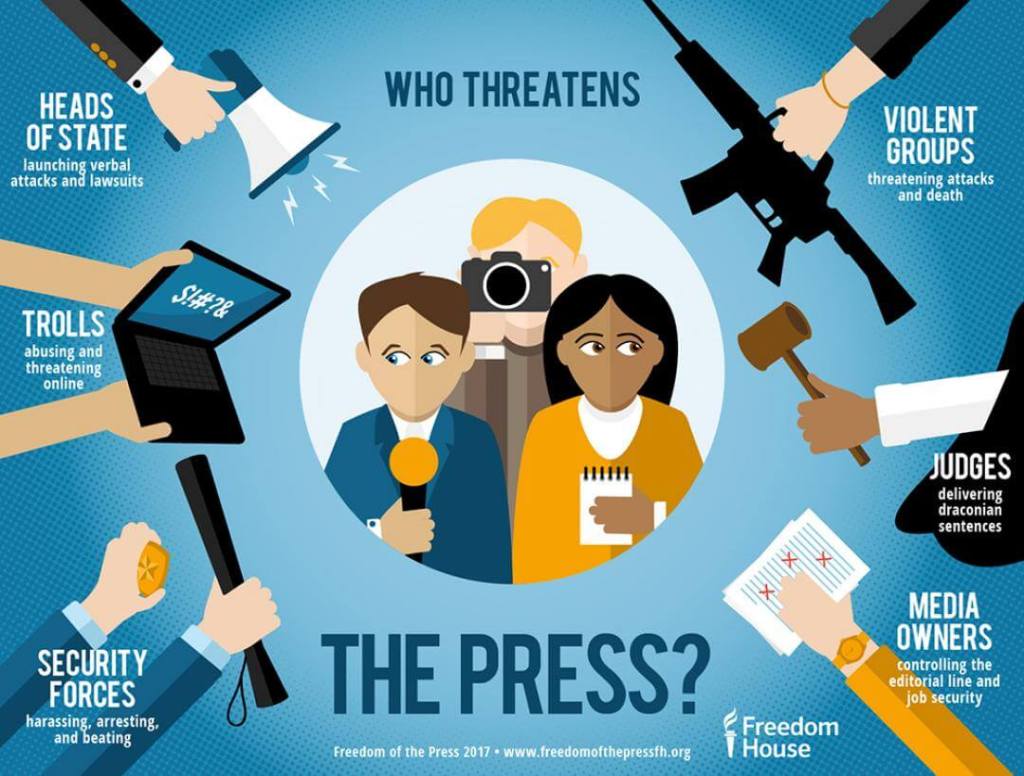
As the Internet became an easy way for the citizen journalist to publish news and information, credibility and fact gave way to sensationalism and uninformed opinion. Click bait replaced proper headlines. Soon, what was once referred to as “the press,” was suddenly renamed, “the media.” In this reporter’s humble opinion, they are not the same.
Webster’s Dictionary defines media (plural of the word medium) as a means of communication, such as radio, TV, newspapers, social, the internet, and so on. In other words, it refers to the delivery system rather than the content or its source.
For example, social media is a primary source of news for many Americans. Unless the information originates from a reputable news source, the content may have no oversight, no editorial integrity, no fact-checking, nothing.
You may have no idea where the information came from or how it may have changed. Think of it as a game of telephone. The more the word spreads, the less accurate it becomes. To reiterate, the social media platform (or app), such as Facebook, X, or Instagram, is just the vehicle – the medium. Reputable or not, the message originates elsewhere.
“The Press,” on the other hand, is guaranteed by the First Amendment of the U.S. Constitution. Like the three branches of government, it’s literally set up right there in black and white – which is why it’s called the Fourth Estate.
The Press should serve as a watchdog to help hold those in power accountable and provide the public with the information they need to make informed decisions. Trained Press journalists gather facts, verify information, and present it objectively across a variety of media.
A functional and qualified Press works within the realm of fact – not truth (that’s for philosophers). It should present information without bias or commentary (there’s a page for that and you’re looking at it now) and demonstrate integrity in the process.
Before I have people shouting at the screen or tearing up the paper, I agree the problem of misinformation spread by so-called news outlets is in epidemic proportions. Unfortunately, many news agencies have traded integrity for revenue, to say nothing about a complete disregard for journalistic expertise.
Cable news programs often fall into this category. They base their content on current news stories, targeting the biases and interests of a single segment of audience to grow advertising revenue. This is not news – it’s entertainment.
Even worse is when a news outlet censors content to favor the business or political interests of their owners. For example, once a paragon of investigative journalism, “The Washington Post” is rapidly losing credibility because of interference with its newsroom by its owner, Amazon founder Jeff Bezos.
Between social media, so-called citizen journalists, bloggers, and whatever else is out there, unvetted, unqualified, and often false content is cranked at an alarming rate. Their goal is to spread as much click bait as possible and deliver customers to advertisers – it’s all about money. That makes it hard to sift through the noise for qualified, factual news.
In the end, the Press should be rooted in ethics and accuracy. Sadly, many news outlets now prioritize profit, sensationalizing content to stay competitive in digital media. That’s muddied the journalistic waters, making it harder for the public to distinguish between fact and opinion.
My only advice is to check the source and remember that perspective isn’t the same as bias. News should be factual and accurate, not “fair.” There is no such thing as “fair and balanced” news. Fairness suggests compromise, whereas facts stand alone. The standard should be: is it factual, or not?
When I was 11, my uncle came to visit me during one of my many prolonged stays in the hospital. I had a reasonably significant surgical procedure and was confined to a wheelchair, so he sat in my room and regaled me with tales of life on the outside. He was my mother’s younger brother. His nickname was “Tuff,” though his real name was Gary – one of four in my immediate family. Since our families were close, nicknames were helpful, as you might imagine.
At one point during his visit, Uncle Tuff decided I’d been cooped up for too long and needed to escape for a bit. I wasn’t tethered to any wires or hoses at that point, so we made good our getaway. I’m not sure, but I don’t think I was supposed to leave the floor, and we were trying to be stealthy. I think he had given the nurses the heads-up and cleared it first, but I played along.
After a quick elevator ride, we arrived at a vending area, complete with snack tables and a microwave. He parked me at a table and dug into his pocket for change. A moment later, a Mr. Goodbar candy bar and a bottle of Royal Crown cola appeared in front of me.
Gary “Tuff” Sutton, Sr., his wife, my Aunt Phyllis, and their two kids, Pam and Gary, Jr. “Butch,” were fixtures in my home. My mother’s youngest sibling, he was the uncle I knew best. He taught me to play the piano, which, like the soda and chocolate, gave me a reprieve from the rigors of the hospital. I’ll forever be grateful.
In case you’re unfamiliar, the Mr. Goodbar is made by Hershey and is little more than your basic chocolate bar, but with peanuts. It’s not fancy, but after a week of hospital food, it was like someone had bestowed on me a feast fit for kings. For the next half hour, we knocked back our RCs and chocolate, and he did his best to take my mind off where I was – he was good at that.
Back in my room, he’d left me with an extra chocolate bar – plain Hershey’s this time – and gave the nurse another bottle of RC to keep cold for me. It was a good day, all things considered.
We lost my Uncle Tuff to lung cancer in 2005. Ironically, another memory associated with that day at the hospital was that he wasn’t allowed to smoke. It was one of the few times I remember seeing him without a smoldering Salem. He was around my life a great deal, and I miss him every day, especially when I sit at a piano – he taught me to play.
But of all the times we had later, playing music with our family band or just sitting around the kitchen table at the farm where I grew up listening to him and my dad tell stories, that one moment at the hospital will always stand out. That was when a little boy, uncertain of his future, forgot for a moment how badly he was feeling, all thanks to his uncle and a candy bar.
I guess the point of all this is that, as children, it’s incredible how things intertwine to create influential memories into adulthood. Then, when we’re grown, we often reflect on those moments, maybe to draw inspiration or clarity. Many events in our formative years leave an indelible imprint on our psyche to help shape our beliefs, behaviors, and aspirations.
Understanding the profound influence of these early experiences offers invaluable insights into how we relate to people and the world as adults. But I wouldn’t dig too deeply. As Sigmund Freud is fabled to have said, “Sometimes a cigar is just a cigar.” In this case, a chocolate bar and a bottle of soda are just a chocolate bar and a bottle of soda.
These moments, whether joyous or traumatic, become the defining chapters of our personal narratives. I don’t really know what long-term effect that single event had on my overall growth as an adult. I know it wasn’t the chocolate that made it special, but rather my uncle’s relationship with me. But, on the rare occasions that I might indulge in a Mr. Goodbar, I still smile and remember.
So, when life’s daily challenges become too much, maybe it would help to think back to one of those moments when a simple kindness, and perhaps a chocolate bar, could bring a smile to your face.
Imagine it’s 2030, and you sit down at your digital interface to send an email. A wave of your hand over an invisible sensor brings up a holographic menu that floats before you. Just thinking about what you want to say activates an artificial intelligence (AI) chip implanted in your head, and text appears on the holographic page without a single word.
Across town, an artist stands before a digital canvas. Imagination and inspiration spiral through her mind, and she waves her hands like a sorcerer conjuring magical images out of thin air. Colors and patterns appear on the canvas, enhanced by the AI built into the electronic easel. Within moments, a brilliant painting has been created that will sell for thousands in an online gallery.
In the heart of the Midwest, a racetrack grandstand is filled with spectators. They wave banners, cheer, and call out to their favorites as the field speeds around the track. But there are no Dale Earnhardts or Danica Patricks behind the steering wheels of these unbelievably quiet vehicles.
There aren’t even steering wheels. These cars are electric and entirely autonomous. Advanced, self-driving AI technology pilots the cars in fierce, robotic competition. Skilled drivers trained the AI well before the race, but now the cars compete with each other, and millions of dollars in sponsorship and sports betting are on the line.
Sounds crazy, right? Not that long ago, all this would have been the stuff of science fiction, but we’re not as far from it as you might imagine. Although, you don’t have to because the AI is doing the imagining for you. Well, sort of.
Before I get into all that, some full disclosure. As someone with a highly technical education and professional background, I agree AI has some amazing potential. We’re seeing incredible applications in medicine, logistics, customer experience, fraud prevention, and communications. At the same time, technology has once again advanced faster than our wisdom. The fledgling technology is increasingly misused as a means of cost reduction by eliminating the need for creatives.
Human nature to date implores us to find the quickest route to success, and AI offers that very thing – especially to the do-it-yourselfers. Why train and compensate a person when the computer can handle the job without benefits or sick days?
Skill, expertise, creativity, integrity, and inspiration become valueless if the job is handed off to an AI bot. Can artificial intelligence and creativity coexist? That depends on the user. The real question we should ask is how the technology is applied in any given situation.
AI has neither inspiration nor imagination. Contrary to popular opinion, AI can’t “create” anything. It only assembles information from known sources, organizes it based on the required parameters, and then spits it back out in the requested pattern. Everything is driven and interpreted by the user, including the result.
True creativity comes from the person, the human being who holds the pen, the brush, the welding torch, or the race car steering wheel. Unlimited, on-the-fly, daredevilish creativity is inherent to the human condition. For most people, however, it goes unrealized because of circumstance. This fledgling technology may mature to help those people fulfill their creative potential.
Without emotional intelligence or ethical considerations, AI is a potential devil in the dark. The creative world scrambles to adapt to a technology poised to devalue it. But it doesn’t have to be that way. With thoughtful imagination, professional ethics, and a healthy dose of common sense, human creativity can flourish and even take ownership of the technology.
Again, my only issue with the technology is its ethical application. AI’s value is unlimited if used to benefit rather than replace the process. If they haven’t already done so, creative professionals should begin to apply AI tools, but not as a substitute for artistic imagination – it can’t do that anyway. Instead, use these tools to free time from repetitive tasks, analyze online and social media data, facilitate collaborative efforts, and streamline production.
The goal here is not to yield to the buzz but instead benefit from the potential. Deliberate motivation toward applied expertise in artificial intelligence offers another tool for creative augmentation and increased professional value.
Someone asked me a question this week to which I had no response. “Are you doing anything special for the game on Sunday?” Game? Sunday? I had nothing. As it turns out, the Super Bowl is this weekend, and I had no idea. What red-blooded American doesn’t know when the Super Bowl is – or who’s playing? Well, me, for one.
Sports was never a focus in my house when I was growing up, so I never developed an interest. All I remember about football in my teens is how cold it was on Friday nights in high school, sitting in the stands in my marching band uniform and wishing for that last play of the night.
As an adult, I’m just not wired for any of it. I don’t drink, I’m not interested in the game, and the idea of barbecuing sends me into a panic. So, what do people like me do on the day of the “big game?” More than you might imagine. Here are some suggestions if you’re looking for an alternative this Sunday – or any Sunday, for that matter.
First, it would be ideal to get outside and get some exercise ourselves. Unfortunately, at least here in Ohio, the winter weather in February is still subject to change on a momentary basis. That eliminates some outdoor activities unless you’re willing to be a bit on-demand about your plans. You could always hit the YMCA or your favorite gym for a workout or swim.
The great thing about taking an outing on Super Bowl Sunday, provided your goal isn’t a sports bar, is you won’t have to deal with crowds. To me, Sunday afternoons are a great time to slow down, decompress from a busy week, and regroup. You can even start new DIY projects, do some purging and decluttering, or just chill with a book.
If you want to share in the more reclined weekend activities, what about a movie or TV show marathon? I remember one year, I decided I’d do a Mission Impossible film festival. One after the other, I sat through hours of Tom Cruise running… running… and running some more. I made popcorn, ice cream sundaes and burned through a 12-pack of Cherry Coke. I highly recommend Blue Ray or DVD – no buffering, no commercials, just six hours of Cruise’s IMF crew, and don’t forget the snacks.
Your mission, should you choose to accept it, is to find that series of films or TV that you want to just plow through, one after another. Isn’t there some guilty pleasure out there you haven’t seen in a while? Maybe it’s “Downton Abbey,” “Star Trek: The Next Generation,” or lounge around in your scrubs and get a relapse of “ER.” Be aware, though, people might be calling to see if you’re OK when you’re so immersed in all this that you don’t answer text messages. So be sure to come up for air now and again.
Sundays are also perfect for families to spend some time together. When the kids are small, they’re usually pretty agreeable to whatever the family is up to. As they grow up, however, they want less and less to do with us. But, if you’re lucky and your kids’ friends are ensconced in football activities, you may be able to steal some time with them and there are lots of things to do.
Pick a local museum to visit, take a day trip somewhere fun, or spend some time at a local library or independent bookstore. You might even just stay home. What about a board game? Nothing gets families interacting like Monopoly or Scrabble. The point is to spend some time together and reconnect. Oh, and turn off the devices. Go analog for a while and give your brain a break.
For some people, the Super Bowl is about the shared experience of cheering on their favorite team, complaining about the halftime show, and talking about the commercials. Whatever you choose to do this Sunday, football-related or not, enjoy yourself. There’s so much bad going on around us that we all need something positive to share, whether it’s a football game, or a walk in the park.
William Shakespeare famously said, “Be not afraid of greatness. Some are born great, some achieve greatness, and some have greatness thrust upon them.” Throughout history, the world has seen its share of remarkable individuals. From humanity’s earliest days to modern society, great people have consistently risen above the rest. But what truly constitutes greatness? What must a person be, do, or say to be considered great? How does greatness translate into goodness?
If you Google the phrase “What is greatness,” the algorithm returns an interesting perspective on the concept. One of the first lines describes it as “a state of exceptional superiority.” Really? Superiority? That’s not a term I would choose. Instead, let me share my own perspective on what constitutes greatness rather than boring you with definitions you can easily find. To me, greatness embodies a strength and consistency of character.
No one is perfect or flawless, and I am certainly no exception. But when determining greatness, surely who they are when no one’s watching – their character – should be considered. Recent political events revealed that good character need no longer be a consideration. Social media feeds bulge displays of the worst aspects of human nature, because people only seem interested in the negative, the distasteful, and the ugly. Consistency of character could hardly apply to people who relish in the misfortunes of others for entertainment’s sake.
When someone aspires to greatness, there is also often an element of narcissism involved. To achieve their goals, these individuals will do whatever is necessary to conceal any evidence of character flaws or inappropriate behavior. Their objective is to convince enough people of their good intentions so that, when anything negative about them comes to light, it won’t matter.
Their sense of greatness becomes secure, at least among those who choose to ignore the truth. Most people shy away from the spotlight of greatness, even when it is deserved, as living up to such a standard is often impossible and exhausting.
Great individuals are always learning. They cannot remain stagnant and continually seek to improve themselves. I can particularly relate to this characteristic. I find it remarkable when I meet people, especially professionals aiming for success, who do not read, engage with new ideas, or seem content with a puzzling level of stagnation. It’s important to remember that the concept of character is entirely subjective. Your definition of good character may differ greatly from mine, and for the same reasons, greatness is also in the eye of the beholder.
There are those who contribute to someone’s so-called success or greatness. True greatness involves taking credit for one’s own accomplishments while also acknowledging the support received along the way. No one achieves anything alone.
Without the contributions of others, we might not even know the names of prominent figures like Steve Jobs, Winston Churchill, or Harriet Tubman, as their journeys were shaped by many who helped them succeed—and who also played a role in their failures. For someone to become a leader, it’s important to remember the must inspire that leadership, not demand or force it.
So where am I going with all this? With all due respect to Mr. Shakespeare, greatness isn’t an innate trait, it can’t be cultivated, nor is it something to aspire to. It’s a label granted by observers. Those who proclaim their own greatness are likely undeserving of such a title.
One might assume that the qualities of greatness are universal, but this is not the case. Some may see a blustery oligarch as great, while others argue that true greatness comes from kindness, authenticity, and faith. It’s all subjective. This reminds me of a line from “Star Wars: The Empire Strikes Back.”
When Luke Skywalker first met Yoda, he said he was looking for a great warrior. The wise little green creature replied, “Wars not make one great.” While delivered by a puppeteer in a 40-year-old space opera, that statement remains profoundly true.
I can’t define greatness for you, and frankly, neither can anyone else. Ultimately, we may already have enough individuals regarded as great in history. Instead, we should each aspire to goodness because there has always been and always will be a shortage of that.
Xenia, Ohio – December 19, 2024 – Gail Matson, Executive Director of the Greene County FISH Pantry, is pleased to announce the appointment of Gery L. Deer to their Board of Directors. Deer brings a wealth of experience and a deep commitment to community service that aligns perfectly with the mission of the Pantry.
Gery L. Deer is the founder and creative director of GLD Communications, a marketing and public relations agency based in Jamestown. He is a contributing writer for the Xenia Daily Gazette and a recognized leader in the Greene County community, known for his extensive work in the fields of communications and community engagement. With a background in journalism and public relations, Deer has been dedicated to advocating for vital social issues and supporting local charitable organizations.
Gery Deer of Jamestown has joined the Greene County FISH Pantry Board of Directors.
“We are thrilled to welcome Gery to our Board of Directors,” said Matson. “His passion and enthusiasm for serving our community and his professional expertise in communication will help us enhance our outreach efforts and better serve our clients.”
As a board member, Deer will work closely with staff and volunteers to set policies, ensure financial health, and promote awareness of the Pantry’s services. His appointment comes at a critical time as the organization adapts to increased demand for food assistance services in the community.
“I’m honored to join the Greene County FISH Pantry Board of Directors,” said Gery L. Deer. “I look forward to collaborating with this talented group and supporting the mission of providing essential resources to those in need. Together, we can positively impact the lives of our neighbors in Greene County.” Deer also serves on the Dayton Area Chamber of Commerce Marketing Committee and is a founding member and communications chair of the Adult Patient Advocacy Council of the international Association of the Bladder Exstrophy Community.
“The Greene County FISH Pantry relies on the support of dedicated individuals and community partners to fulfill its mission,” Deer added. “With the help of our board, our dedicated volunteers, and the community’s financial support, the Pantry will continue making a significant difference in the lives of families in the region.”
To donate or for more information about the Greene County FISH Pantry, please visit our website at www.gcfp.org.
The shocking murder of the UnitedHealthcare CEO, 50-year-old Brian Thompson, has had a ripple effect on public opinion towards health insurance companies. As information continues to unfold about the alleged killer, Luigi Mangione, it’s becoming clear that the man’s motivation was likely related to coverage disputes.
But what does this mean going forward? Has this man’s terrible action awakened scrutiny toward all health insurance companies, or was it the act of one disturbed individual who felt his only recourse was to take matters into his own murderous hands? We may never know the answer to the latter, which begs even more questions.
Is it likely there will be copycat crimes? Is the public’s temperature so high towards these companies that the shooter was merely the first to act on what countless others may have imagined? Many insurers seem to think so and have begun removing senior staff members’ names, bios, and photos from company websites to prevent another such incident.
Since the moment the tragic event was reported, social media buzzed with emotional speculation. Anger, frustration, and, strangely enough, sympathy towards the alleged killer have emerged from many who have felt the sting of corporate healthcare.
Some of the reactions to this man’s horrific death were downright grim. One example of such dark commentary went something like this, “Did he die quickly, or was he waiting to see if his insurance would cover treatment?” Most were worse. Many were unrepeatable.
I would caution anyone who sees this terrible act as some sort of statement against the status quo of health insurance in our country. Nor should you fit the assailant with a white hat or call him Robin Hood. Nothing could be further from the truth. Social banditry aimed at an unimaginable public slaying isn’t going to resolve the health insurance crisis any more than political pundits can.
It’s unlikely that this event will alter the operational procedures of health insurance companies in any way. There’s little argument against the idea that the American healthcare system is beyond disastrous. Sadly, there is simply too much money on the line at the top of these corporations for any real action that might benefit the consumer. If anything, premiums continue to rise while more and more claims are rejected.
Since 2019, average family healthcare policy premiums have increased as much as 24%, with individual coverage not far behind. Even if you can afford coverage, there’s a good chance your claim – regardless of the necessity of treatment – will be denied. A Keiser Family Foundation study reported that health insurance companies denied an average of 17% of claims, with some reaching as high as 49%, even for in-network care. In short, it’s not getting any better, and there are no signs that this incident will move that needle in a positive direction.
There’s also the problem of sympathetic influencers and media whipping up a potentially dangerous movement akin to what we saw at the U.S. Capitol on January 6. This time, instead of political ideology to light the fire of unrest, it’s something more people can relate to. We’ve all had claims denied or medical bills shockingly higher than expected due to “out of network” notices or other corporate nonsense. Human suffering can be a highly motivating reason to take to arms, and now we’ve seen the alleged result of one disturbed individual’s response to it.
Our system is in bad shape, no question, yet this isn’t how to resolve it. In my opinion, we’re aiming at the wrong target (no pun intended). The biggest problem isn’t the insurance companies but the colossal and unregulated healthcare costs they’re meant to mitigate.
Billions of dollars pass through hospital doors daily, and the government allows it. They’ll break up Google or Microsoft over trivial anti-trust issues. But even suggesting that some behemoth healthcare system should have its revenue capped sends Congress into a frenzy.
Why? Money. Millions in donations, lobbying cash, and back-door deals on both sides of the aisle will forever prevent any reduction of the staggeringly high costs we pay for healthcare. Unless that changes, we’re perpetually at the mercy and living the network of the stockholders of these massive insurance conglomerates.
It is entirely possible that I spent too much time in this work writing about my parents. We have all had remarkable people in our lives, and my immediate family just happened to be some of the most extraordinary people in my life. With the holidays just around the corner, I wanted to relate a story that has almost become folklore.
The story begins in the late 1950s, sometime before I came along. My father was a machinist at National Cash Register, NCR, one of the largest employers in Ohio, if not the entire state. He also had what we would call side hustles. He would haul scrap metal to make ends meet, a good business when more efficient options were replacing the old cast-iron coal furnaces. Selling them for scrap was hard work but profitable. He also did concrete work and other odd jobs to help create a stable life for his family. To Dad, it was the kind of life he never had growing up in the foothills of the Appalachian and Southeastern Ohio.
While he was working, my mother raised her children, made a home for them all, and took care of the day-to-day operations of the household. She was one of the hardest working people I ever knew, even back then. But no matter how hard they worked, there were years when there just wasn’t enough money.
Around Christmas time, during a particularly lean year, the prospect of a happy Christmas looked grim. My brother was in Boy Scouts then, and my father was an assistant scoutmaster. Someone within the organization learned of my family’s financial difficulties. Shortly before Christmas, some people arrived at our house with food and gifts for all four. I remember my mother talking about it through tears as if someone had lifted them from a heavy darkness. She was eternally grateful, as was my father.
As the years went on, times got better for my family. Regardless of how little we had at any given time, I remember my parents always doing what they could to help those less fortunate. That brings me to Christmas of 1988.
That particular year, my dad learned of a nearby family that had fallen on hard times. The father had lost his industrial job, and the mother worked part-time while both did their best to raise their three small children. My mother immediately went into action.
Mobilizing the pre-Internet communications network within our family, she reorganized that year’s party into a relief event for the distressed family. With a little investigation and intuitive guesswork, my family collected information on the parents’ needs, clothing sizes, ages, and children’s interests. We even had people trying to find employment for the young father.
Our annual Christmas party, already a real show complete with music, songs, games, and dancing Santa, took on a whole new look. The price of admission was a donation. A list had been distributed informing everyone about what was needed and providing a way to let my mom know who was contributing what. With each person who arrived for the party came more toys, clothes, games, and food items. We even collected some cash.
On Christmas Eve, we loaded everything into a van, Santa riding shotgun, and headed for the family’s house. When we knocked on the door, we were greeted by a tiny three-year-old girl in a yellow onesie, a couple of toes poking out of the worn feet. She squealed away as she soaked in the sight of Santa Claus at her doorstep. To maintain the dignity of these hard-working people, there must be no clue where all this originated. My family were simply asked to deliver it to them.
My parents taught us by example. Kindness at the holidays should be the same throughout the year. Still, there is a gentleness during the Christmas season. We were under no illusions that a few gifts and boxes of mac and cheese would change the lives of this family. But at least, for one special holiday, they were together, safe, and they knew they mattered to someone. Sometimes, that’s enough to see you through the worst of times. Hopefully, we can all remember that year-round.
Author’s Note: A short story is based on my family’s charitable work. It’s called “A Special Place at a Special Time” and is available on Amazon. However, a revised version will be released shortly.
Gallery: The photos include pictures of the farm, the long lane that was decorated each year, Gary Deer Jr. as Santa and some of the later parties. Each one generated food, clothing, and other necessities for a local family. A few times, they were people in our own family – because that’s what you do.
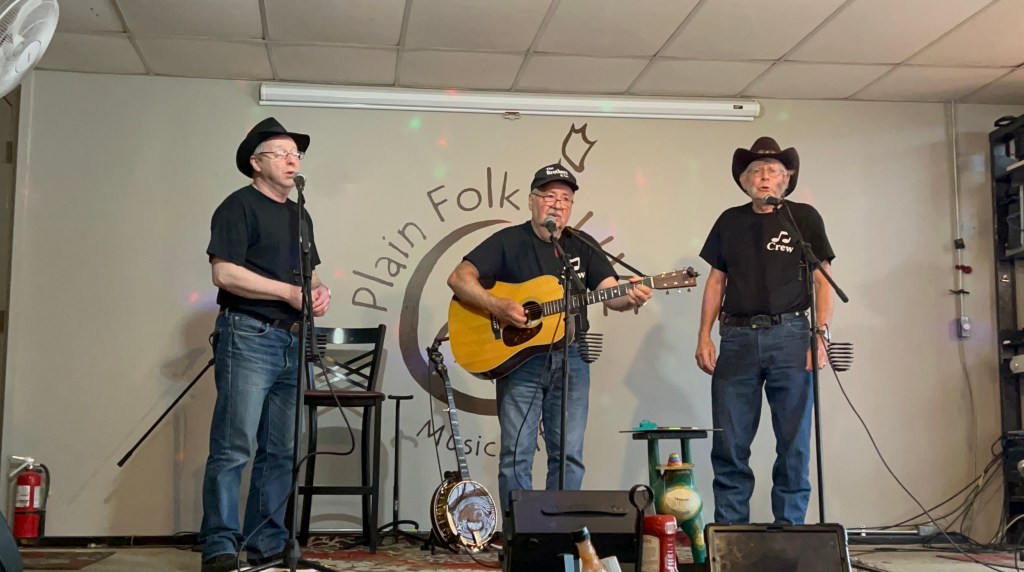
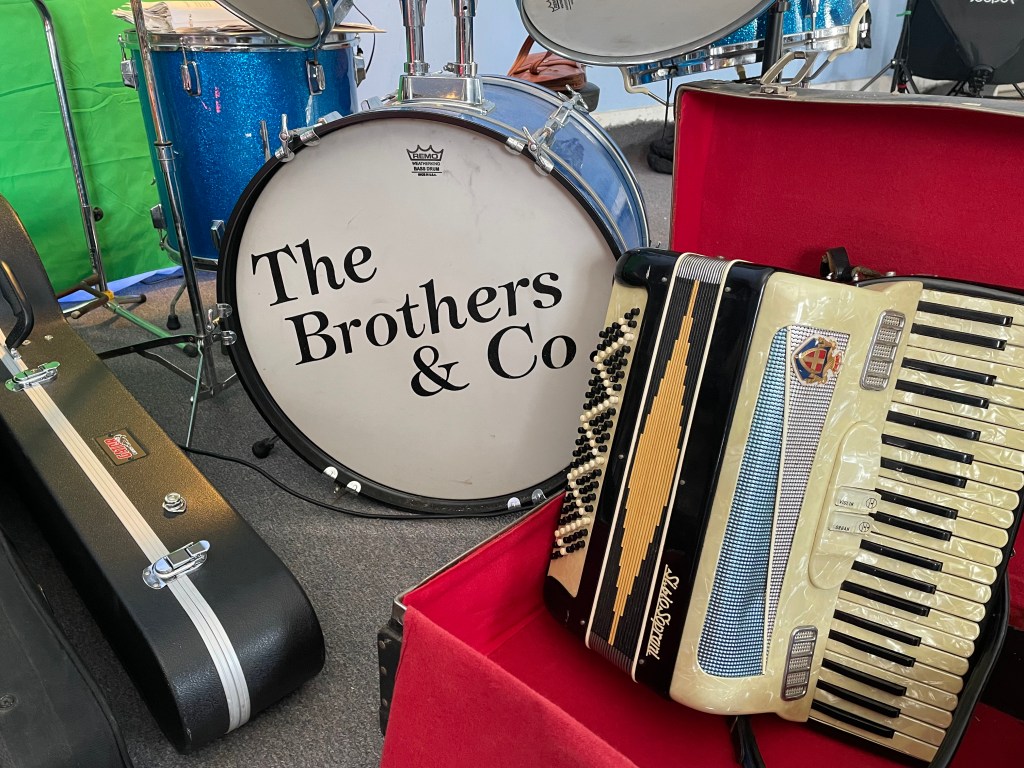
How the front of the farmhouse generally appeared at Christmas. The post that originally held the vegetable stand sign. This was taken in 2014 and is not photoshopped. It’s all real.The fireplace in “The Band Room” at the farm. The room was added because so ma ny people wanted to attend the Christmas parties.This is how the Christmas tree was arranged in our tiny farmhouse basement in the early days.The charitable parties eventually led to the creation of The Brothers & Co., our family’s band. We’ve performed all over the region at festivals, theatres, and even The Schuster Center.
In a once abandoned sewing machine and bicycle factory on the corner of Linden and Davis Avenues, in an old, industrial section of east Dayton, Becca Brumfield carries cooler bags up two flights of stairs with two small children in her wake. At the end of a massive hallway on the top floor, they arrive at a door labeled “TB Writers Plus.” She taps a code into a keypad, an electronic lock opens, and the kids pop through the door ahead of her like prizes from a gumball machine.
They pass workbenches and shelves loaded down with antique typewriters. On an elevated platform at one end of the room, a long glass table is flanked at one end by a floor-to-ceiling shelf of refurbished typewriters for sale.
Becca lays out place settings and dishes up the food. Young Clayton, 6, and Sam, 5, who’d immediately started playing on typewriters and drawing, clamber to the table and plop down to eat. Her husband, Trevor, joins them. One of their employees sits down, too, and now it’s a typical evening at their typewriter shop.
Becca and Trevor Brumfield at TB Writers Plus in Dayton, Ohio.
The Brumfield family started down this path more than a year ago when Trevor bought a typewriter online, repaired it, and started using it. Before long, he lost it to his wife and, as he puts it, “Naturally, had to buy another one.”
“That turned into several more, which became 60, which turned into 100, and that became, I gotta sell some of these,” Trevor laughed. A full-time auto mechanic, it might seem odd for someone just 26 years old to start down such an arcane career path.
Over the last twenty years, typewriters have seen something of a renaissance. Fueled first by internet insecurities and one enthusiast’s declaration of a “Typewriter Insurgency,” writers, artists, business professionals, and college professors continue challenging the digital paradigm. “It’s not a booming industry,” Trevor admitted. “But the interest is there, and business goes in waves.” The industry got a secondary boost from the recent Taylor Swift video, “Fortnight,” which featured the megastar with an old Royal 10.
Taylor Swift’s Royal 10 in ‘Fortnight.’
Swift had them as props, but a few famous people are actual typewriter fans and users. Most notable is Tom Hanks, whose collection and passion for the machines are well known. The exposure has helped Trevor’s shop steadily grow. “I’m not sure exactly how many machines we have serviced in total,” he said, noting the expansion from his home garage last year. But we can typically get through 30-50 machines a month depending on what needs to be done to each.”
At last count, TB Writers Plus has inventoried more than 600 machines. Many are cannibalized for parts, and others are refurbished for sale. Trevor does the bulk of that work but has also trained Becca. An atmosphere of learning and openness permeates the shop. No organized training program exists, and factory training was discontinued years ago. Everyone who works here is an unofficial apprentice.
PART II – HE DOESN’T DO IT ALONE
Three part-time employees, Tyler, Keenan, and Torii, have been learning on the job, guided by Trevor’s experience. Each tackles the intricacies of these incredibly complex machines in their own way.
Tyler Lewis, of Fairborn, began as a technician in November 2023. “I mostly refurbish and repair, taking apart the machines, cleaning them, and putting them back together.” He learned about TB Writers Plus from an article in a local zine. A zine is, in his words, “An underground, independent magazine that people publish usually by using copy machines.”
Tyler should know since he’s the primary writer and publisher of his own zine, appropriately named “Tylerzine.” He was working at the Wright State University college newspaper and pitched his own article idea. “I met Trevor, immediately liked his openness, and ended up hanging out that first day for like six hours,” he said.
He sits at a typewriter loaded with purple ribbon and cranks out a short poem based on a prompt suggested by someone else in the room. Tyler’s passion and personal brand of artistic expression suit the typewriter world. “My entry point has always been the literary aspect of typewriters,” he said. “I am a devout believer in language, so what typewriters represent as a means of expression greatly appeals to me.”
Technician Keenan started as a hobby when Trevor was still working out of his garage back in 2023 but took some time off for school. The 28-year-old Kettering resident came back in May of this year. “I wanted to learn more about how typewriters work, and it was an enjoyable way to spend my time,” he said.
“I enjoy the simplicity of the process compared to modern technology that feels invasive at times,” Keenan explained. “It’s just a simple typewriter on the workbench that needs fixing. Nothing more, nothing less.”
Tori’s B checks out a 1930s era Smith-Corona manual.
At the workbench, technician Torii B, from Bellbrook, hovers over an antique Smith-Corona. She scrutinizes the machine, evaluating any repairs needed before it’s put up for sale. Torii is a 36-year-old marketing and design professional and working mom. Although she has freelance design clients, she left a full-time marketing job last May. She’s applied for permanent positions in her field, but nothing’s been a good fit so far.
About a month ago, a friend told her about an anachronistic typewriter repair shop whose owner sought part-time help. As it happened, she and the friend have a role-playing game involving type-written note cards and the adventures of two fictional journalists. Her interest peaked, she reached out to TB Writers Plus, and before long, she signed on as a part-time tech and general worker.
Her diverse background fits this very mechanically oriented job. “I went to school for visual communications,” Torii said, pausing momentarily. “But, before that, I studied mechanical engineering.”
“I like the physical act of working on the machines,” she explained. “Watching the machines move keeps my mind like a well-oiled machine. Each one is like solving a puzzle.” She points to three small containers, each filled with tiny machine parts, springs, levers, and knobs. Her task is identifying and cataloging them for future repair work. It might seem tedious, but there are no more typewriter parts in production. Every part salvaged is vital to the shop’s operation.
PART III – THE TYPEWRITER COMMUNITY
A team can only function well with good leadership, and this one is no different. Trevor is doing his best to help his crew find their way. “Each works a little differently than their coworkers and has their own skill set,” he said. “Tyler is really good at detail-oriented work. Keenan’s strength is getting a lot of work done quickly. Torii is still finding her place in the shop,” Trevor continued.” She’s helped us with inventory ideas and graphic design and handles other odds and ends around the shop.”
Trevor Brumfield adjusts a 1955 Royal Quiet De Luxe.
Trevor’s interests and skills are well-suited, and he clearly enjoys this work. But what he likes most about the job is the people. “All of our customers treat my shop like a safe haven. I’m not sure why, but people drop their guard when they walk in here,” Trevor explained. “We’ve heard some crazy stories from people; war stories, childhood traumas, business plans, just about anything you can think of.”
“We have customers that will leave work in the middle of the day just to come here to vent because they are having a bad day. Next thing you know, they’ve been here for 3 hours, and their boss is calling.”
Brumfield’s modesty won’t allow for his own kindness and personability as reason enough for people to gravitate to him and his family. “I don’t know what it is about this place that makes people feel so at home, but I don’t think it is just me – or any one person here. But as soon as they walk in, they get this look like they just had a weight removed from their shoulders.”
Customer and typewriter enthusiast, Greg Parker, of Urbana, Ohio, with two of his growing collection.
TB Writers Plus customers are an eclectic mix of artists, collectors, and businesspeople from all over the country. Greg Parker, for example, is from Urbana and has purchased three typewriters from the shop. The 40-year-old, married Army veteran has been collecting typewriters for about ten years. He currently has seven, including two Royals, an Underwood, and an Olympia. He explained his interest in the machines is mainly about the experience.
“I grew up with typewriters and used them when I was young,” he said. “But I really like the aesthetics.” Parker’s not a writer or artist but a welder by trade. “I do some journaling, and I have some memoir stories I’d like to put down on paper someday,” he said. “But I feel like I was born too late, like in another time. I enjoy the mechanics of the machines. The sound and the feel are very different from a computer. When you type something on paper, it’s like you really created it yourself.”
“Type-ins” attract enthusiasts from all over the country for a common purpose. TB Writers Plus has hosted several, including a costumed Halloween event and a 4th of July fireworks type-in.
Creativity and the personal connection with a simpler time is common throughout the typewriter community. For example, on Sunday, October 27th, TB Writers Plus is hosting a costumed “type-in” event, encouraging people to come dressed in the same era as the typewriters they bring. Type-ins are most easily explained as cruise-ins for typewriter enthusiasts. Scattered around the country, these predominantly social events, provide the opportunity for aficionados to talk typewriters, socialize, and even do some typing.
Back at the dinner table, the boys are no longer interested in their meals and require some encouragement. Trevor digs into his food as he and Becca talk about their day. Eventually, they would like TB Writers Plus to be independently sustainable as afull-time career. For now, they, their crew, and, of course, Clayton and Sam, are enjoying the work and the people who share in the simplicity and resurrection of a by-gone era. To learn more, visit www.tbwritersplus.com.
Author’s Note 1:While researching this article, I had the good fortune to meet many of the shop’s customers and supporters. The loyalty they seem to share is remarkable, not just for the typewriter community in general, but for Trevor and his staff in particular. I want to note, for the record, how honored I am that they welcomed me into the circle. It’s truly an amazing community.
Author’s Note 2:While typewriter shops are still operating throughout the U.S., their numbers are dwindling. Trevor Brumfield has been buying out the inventory, tools, and parts in an effort to stay ahead of those closings and keep up with demand.
Author’s Note 3:Update August 2025 – As of this date, TB Writers Plus has expanded its footprint in the Davis-Linden Building. The shop now includes a larger typing and show room, community space, equipment washing room, additional storage and much more. They’ve also seen a change in personnel in the past year.