Local News & Commentary Since 1890.

Archive for the ‘psychology’ Category

My Closest Calls

In Health, Local News, Opinion, psychology, Technology, Uncategorized on July 9, 2023 at 10:27 pm

Deer In Headlines II

By Gery Deer
One bright, sunny summer day almost 30 years ago, I was driving my brother’s grain truck along a quiet country road near Spring Valley, Ohio. About a quarter mile ahead, my Dad drove his own truck, leading the way to where we would be collecting a load of hay. Our trucks were big, 6-wheeled, lift-bed grain boxes, about 10 tons each, and Dad was always leery about moving too fast on those old back roads, so we were just taking our time.

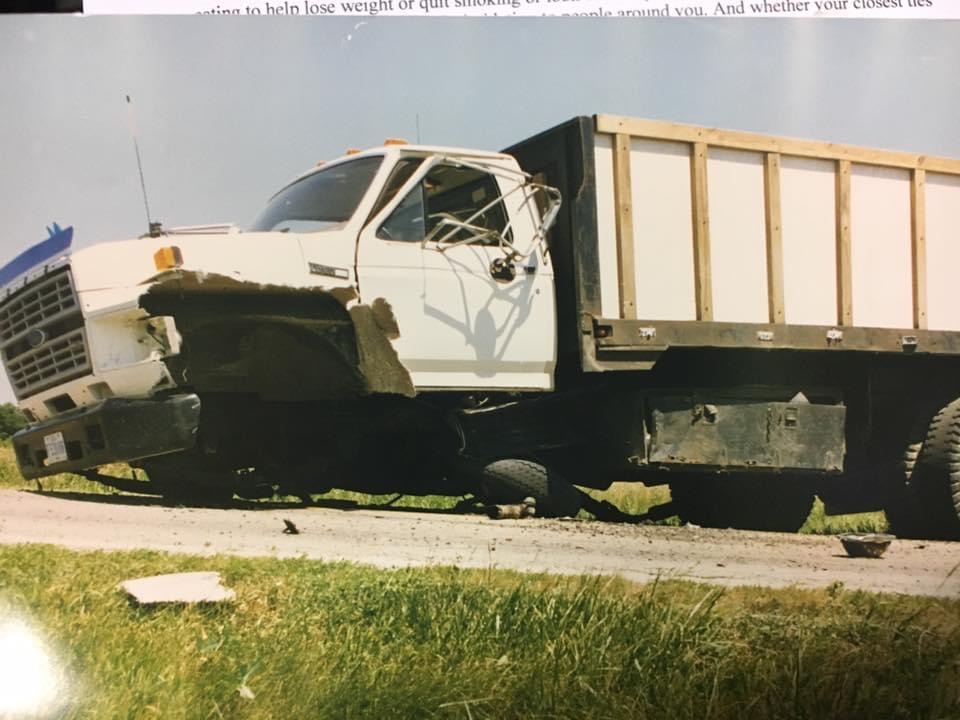
Just a few miles from our destination, a cement truck whizzed past him in the oncoming lane. It was the big kind with a small, metal cage for a cab, a long barrel with the engine trailing behind, and large balloon-like tires. I heard his voice over the CB radio warning me to beware as it approached. Barely a moment later, I was eye to eye with the driver as suddenly an explosion of glass, tearing metal, and a cloud of dust engulfed me. Our two massive steel machines had collided, left front fender to left front fender, and the sound was like nothing I can adequately describe.

It was over as instantly as it had happened. What only seconds before had been a clean, powerful machine, and the center of my brother’s livelihood, was now little more than a pile of scrap. I had done what I could at the instant of impact to stop the vehicle. But, it was no use, the pedals were no longer connected to anything – neither was the steering wheel. As it came to rest, the truck’s lower frame plowed into the asphalt, like the Titanic’s bow crashing into the ocean floor. The cab and running board were severely damaged, the mirror shattered, and the door was caved in. The front axle and wheels were gone and the steering shaft snapped off. Moreover, there was no sign of my assailant. The cement truck was gone!

Behind the motionless, dead hulk of my truck, in a hay field, nearly a quarter of a mile away lay the twisted wreckage of the cement truck. It had telegraphed off of my truck, slamming into my frame multiple times, rolled behind me at full speed, and snapped off a power pole at its base – leaving a transformer suspended in mid-air by its cable. Then it spun out of control, careened down a long hill, and came to rest, upside down and backward. By some bizarre miracle, the driver, wearing no seatbelt and, according to the police investigation, moving twice my speed, had managed to survive relatively unhurt, as did I.

This is the truck … after.

Oddly, the casualties were limited to the two trucks and my Dad’s wits – as in frightened out of. He had to watch it all happen to me in his rearview mirror. By the time my truck had come to a stop, he’d bailed out of his and was running toward me yelling my name to see if I was OK. I was far more worried about him, though. 

I’d never seen him that shaken, out of breath, pale. When he saw I was unhurt he seemed to calm down. I was busy tossing my belongings out of the open, or rather, shattered, window, and trying to figure out how to get the door open. Once I was sure both Dad and I were OK, I told him to go check on the other driver while I used my cell to call for help. A few minutes later, I heard sirens coming up the road, and within moments the county sheriff’s deputies arrived. All would be OK – at least until my brother got there. Yikes! But that’s a story for another time. 

I will forever appreciate how fortunate I was that day. I can’t imagine what would have happened had either truck been a few inches one way or another. Life’s a gamble, every day. I think we always need to recognize how quickly things can change direction – through no fault or action of our own. Appreciate the positives, stay strong through the negatives. And remember, to live your best life. You never know what turns it might take one day.

The First 10 Miles

In Children and Family, Education, Health, Opinion, psychology, Senior Lifestyle, sociology, Uncategorized on July 1, 2023 at 1:40 pm

Deer In Headlines II

By Gery Deer

I took up long-distance tour cycling in 2017 to give some direction to my fitness routine. I am definitely no gym rat, but I needed to improve my health, and exercise for its own sake was, at least to me, mind-numbing. Preparing for long bicycle tours provided a tangible goal and kept me more engaged.

Growing up in the middle of nowhere, a bike was the only way I could get around, especially when the nearest neighbor kid was a couple of miles away. But this was a different challenge. With higher speeds, longer distances, and greater safety risks, I had a great deal to learn. 

I took the time to learn everything I could about endurance cycling, from choosing the right equipment to managing my food. The first year, I rode about 5 days a week, covering anywhere between six and 12 miles per day, while also maintaining my core and strength exercises.  

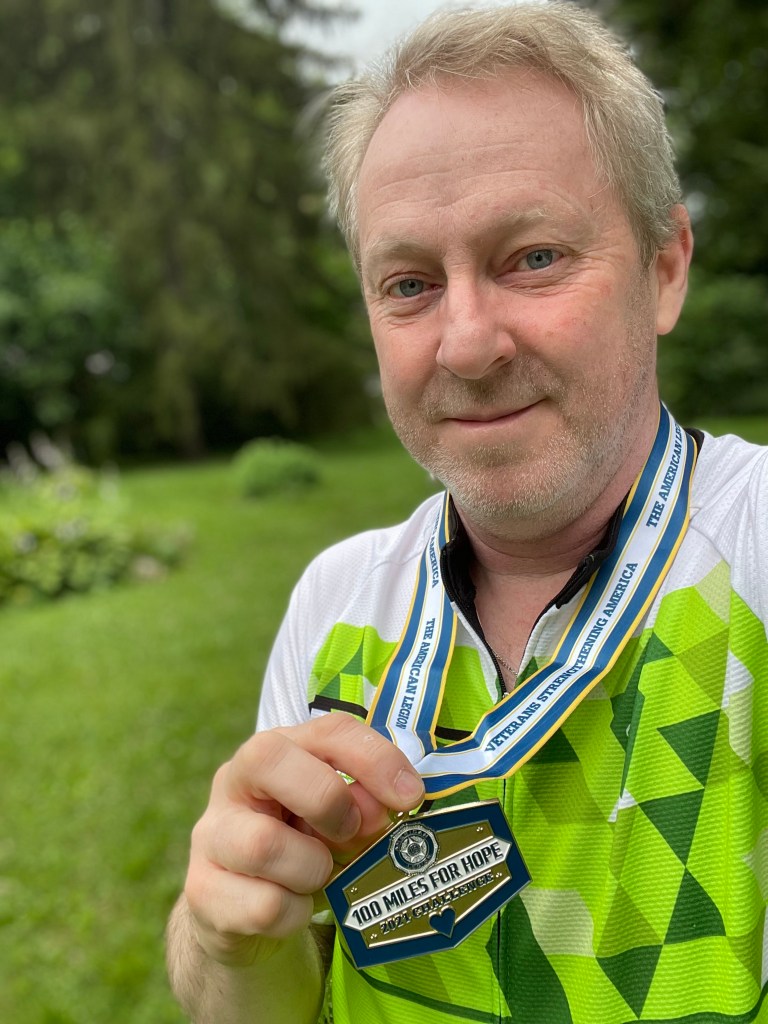
With practice, study, and the right workout regimen, my speed, distance, and endurance all improved. That first summer, I completed two, 100-mile, or “century,” rides. Since then, I’ve done six more, averaging two per year. 

I’d never been so driven to accomplish something that physical. I basically became an athlete, and that was never on my radar. Plus, it was as much mental as physical, maybe more. My friends and family probably thought I’d lost it. At 49 years old, I was in the best health of my life and broke physical barriers put in place from the day I was born. It required careful planning, long hours in the saddle, conditioning, and determination.

Any challenging goal always has prerequisites. Maybe you call them milestones or baby steps, whatever. The point is that these smaller goals help measure your progress and keep your eye on the prize. There are no “hacks” to anything worth doing and, if you find one, it’s probably going to rob you of valuable lessons and potentially derail the whole effort. 

The problem with most long-term goals is that people sometimes try to jump to the end, skipping vital steps. People who quit smoking cold turkey, for example, often fail because there are no step-downs to help eliminate, not just the addiction, but the habits that feed it. With cycling, you have to learn to ride 5 miles before you tackle 10, which leads to 20, and so on. More importantly, it might take time and practice to recognize each stage of achievement and what it means to your overall success.

For instance, my average training ride is around 20 miles, but even now, I struggle a bit in the first 6-8. I feel awkward, uncomfortable, and unfocused. It can be discouraging, sometimes even painful. But, as I push ahead, everything starts to smooth out around the 10-mile mark. My body settles into the bike, my cadence has a rhythm, my speed and efficiency improvements, and I become more mentally focused. 

My typical goal is generally far more than 10 miles, but I’ve learned to value that milestone because of its significance to my final goal. When you understand which smaller steps have the greatest impact on your final goal, each subsequent step becomes easier and more valuable. 

Recently I participated in the shortest organized cycling event I’ve ever ridden – 21 miles. There is no fanfare for a ride like this, just people who want to ride in a supported event with fellow cyclists. As expected, the first half of the ride was a little slow and clunky. 

I didn’t have the speed or rhythm I wanted, and the distance didn’t give me much time to “get into it.” But I pressed on, and, just like always, around the 10-mile mark, everything shook out and I even managed to set a speed record for myself. But I learned something different from the experience.

My “first 10 miles” could also be a metaphor for recognizing our strengths or shortcomings as we work toward any goal. Manageable, short-term accomplishments make the overall effort more rewarding. Hopefully, moving forward we learn and adjust, keeping a clear vision of the finish line. Before too long you’ve met your goal and your obstacles are in the rear-view mirror.

The Unexpected Banana

In Economy, Health, Local News, Opinion, psychology, sociology, Sports News, Uncategorized on June 19, 2023 at 8:17 pm

Deer In Headlines II

By Gery Deer

Did the headline of a news story ever leave you scratching your head, at least until you read the whole thing? Well, this is probably one of those stories and it begins, however odd it may seem, with a banana.

Once a week, I play basketball at the local YMCA, not with a team or anything, but just for exercise. On one of those days, a particularly nice, spring day, I was approached at the front door by a woman with a crate of bananas. “Would you like a banana?” she asked, cheerfully presenting the open box as if it were something from a jewelry counter display.

I honestly didn’t have an answer right off. It really wasn’t the kind of question I was expecting on the way into the gym. The more poignant question that immediately consumed me was, why is there a woman with a crate of bananas at the entrance to the YMCA?

A bit thrown by the random offer of fruit, I finally realized there were a half-dozen other people with her, all in athletic attire, and carrying signs and tables into a truck. As it turned out, I arrived just as a running event was closing, a 5K or the like. The box of fruit was what remained of the bananas provided to the runners at the support stations. So, never one to look a gift plantain in the peel, I gratefully accepted.

To most, a free banana might not, at first glance, seem like a life-changing incident. But, to me, it was at least thought-provoking; not because of the banana, but the spontaneous gift it represented. It’s not like I was having a particularly bad day in the first place, but that one, small action changed it, lightened my thoughts, and gave me a feeling I couldn’t quite express at the time.

As I settled into my basketball routine, I dropped the banana into my gym bag and set it aside. But I kept thinking about the randomness of having received such a thing, in such a random way, at such a random time. So, after a few minutes, I went back to it.

Strangely enough, I opened the banana and proceeded to eat it, while simultaneously dribbling and shooting a basket here and there. I would imagine I was a pretty strange sight, but what did I care? I had a banana – an unexpected banana.

I have to say, I never considered a piece of fruit as what might generally be considered “comfort food,” but that’s how it felt at the moment. There was something about this curious food, botanically categorized as a berry (I know! Weird, right?) that generated a strange and calm feeling of gratitude. What I felt was a level of contentment as I wandered around the court, shooting the ball, and munching away, oblivious to pretty much anything else – at least until the banana was gone.

I’m fairly certain the lady who gave it to me had no idea what an impact she made on one person’s day. I mean, it was just a banana, and she was trying to unload a box full of them so they wouldn’t be wasted. Still, there I was, my day lifted, my jump shot better – don’t be too impressed, it’s a low bar – and I was just happy. I had a banana.

So why should my banana story, umm… appeal to you? Come on, you knew I had to, right? Because something ordinary can be special if you let it. Because in the chaos of daily life, all the noise, distractions, and stresses, unanticipated treasures are all around us. We each have the power to let them move us, even if only for a few moments.

When you think about it, people are always searching for some kind of inner peace, a tranquility that seems more elusive and empty every day. Usually, we scratch our way through life, searching for even a hint of such thoughtful enlightenment by artificial means. But sometimes a quiet moment of unexpected joy and calm can emanate from the most unusual but ubiquitous source. Sometimes all we really need is for someone to give us a banana.

What we both knew…

In Children and Family, Dayton Ohio News, Education, Health, Local News, Opinion, psychology, Senior Lifestyle, Uncategorized on June 12, 2023 at 9:57 am

Deer In Headlines II – SPECIAL EDITION

By Gery Deer

(Author’s Note: I am publishing this ahead of the normal print schedule because the events took place exactly 3 years ago on the date of this posting. I hope it will comfort people and help them recognize and appreciate that time when it comes – because, sadly, it will.)

While caring for my father, I did some journaling as his Parkinson’s disease advanced. The following is an excerpt from the painful day we both accepted the inevitable and how lonely a feeling it was for both of us.

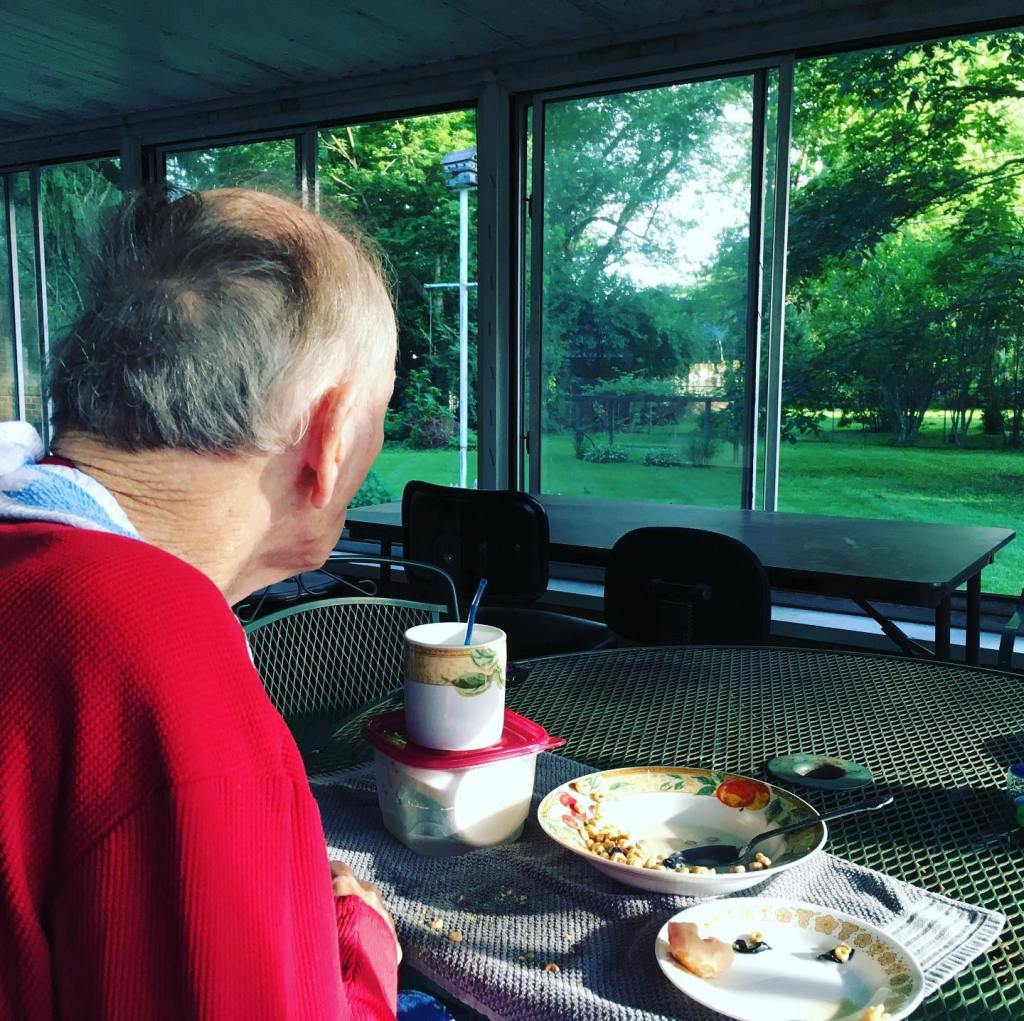
Friday, June 12, 2020. Dad and I were sitting down to breakfast on the screen porch of my house. He’d been living with me for about eight months and, although he preferred spending his day in his recliner, I did my best to make sure he had as much fresh air and sunshine as possible.

By then, he needed help feeding himself, so I always took my meals at the same time. Sometimes he was talkative in the morning, commenting on a TV news story or counting rabbits in the backyard. But today he was quiet and struggling.

We had a really bad night, which had become the norm over the last several weeks. The insomnia caused by his illness was relentless and he grew increasingly restless and anxious by the day. Neither of us had slept more than a full hour that night. By morning, we were both more exhausted than the night before.

Most people are familiar with the tremors and involuntary movements associated with Parkinson’s. But it can also produce dementia, dramatic personality shifts, and even violent behavior – occasionally, all three. Fortunately, my father’s issues weren’t that severe. Instead, he suffered a kind of subconscious agitation, like a whirring mind that wouldn’t let him rest. As his neurological system decayed, it robbed him of the ability to sleep, often until exhaustion set in. It was as if his body’s electrical system was shorting out from some long, slow cascade failure.

This picture wasn’t the same day as the story recounted here, but it was a couple of days prior. Same spot, same circumstances.

All along, Dad had outwardly rejected his diagnosis, repeatedly asking the doctors, nurses, and therapists questions like, “They tell me I have this Parkinson’s disease. What is it?” He never accepted their answers. I think he was just hoping if he asked enough people someone would say everyone else was wrong and he’d be OK.

By this time, though, Dad was far worse than any of us realized. Although it didn’t register consciously, he was in fact in a great deal of pain which worsened at night. It left him painfully restless, and he couldn’t even tell us why. He had fought hard but was losing the battle – and he was becoming aware of it. So was I.

At breakfast that morning, I noticed he was very quiet and barely eating. When he became aware of my interest, he turned and said, in a raspy, enervated voice, “What’s happenin’ to me, Ger?” His eyes were tired, afraid, his expression pained and desperate. I didn’t know how to comfort him. “I don’t know, Dad,” I said. “But we’re not going anywhere, you won’t be alone.” I rubbed his back a bit, as he’d done for me so many times when I lay in a hospital bed as a child, and I realized how helpless and frightened he and Mom must have been.

We sat in silence for a long moment, both powerless, tired, and desperate to cast this burden on anyone who happened by, just to be rid of it. I helped him finish his breakfast and we stared out at the backyard for a long time as the morning sun poured over us through the windows. I didn’t say anything. He didn’t say anything.

After a few minutes, I took our breakfast dishes to the kitchen. When I came back I paused just out of his sight. He was motionless, silent, his head bowed as if in prayer. I didn’t move. I just watched him for a while. My Dad, once a strong, proud man, now reduced to a shell of himself – so alone, tired, helpless, and very sad. And I couldn’t save him. Tears rolled down my cheeks.

He finally raised his head and looked over at me. I sat down with him again and did my best to hide my expression, but I think he knew. We both knew. “Ready to go to your chair?” I said, choking back more tears. “Yeah. I’ll go to my chair.” Just 18 days later, he was gone.

Professor, Humanitarian Joe Weston’s New Book, “Fierce Civility,” Offers Resolution Through Hope

In Books, Business, Education, Health, Literature, Print Media, psychology, sociology, Uncategorized, World News on May 19, 2023 at 7:13 am

WASHINGTON, May 16, 2023 /PRNewswire/ — Joe Weston is an author, lecturer, facilitator, and most importantly a humanitarian, someone whose deep belief in the potential of society led him on a lifelong journey to improve it. In his latest book, “Fierce Civility – Transforming Our Global Culture From Polarization To Lasting Peace,” Weston shares with readers a clear pathway into a dynamic new human story, with hope at its foundation.

An Amazon #1 bestseller, “Fierce Civility – Transforming Our Global Culture From Polarization To Lasting Peace,” draws upon the author’s more than 30 years of experience in the areas of conflict resolution and prevention, leadership, stress management and communication to provide a pathway to peace and, what Weston calls, “courageous self-reflection.”

Weston believes, “We live in a disproportionate society, technologically over-fed and spiritually malnourished. A human family whose global heart is unwell, the result of a system out-of-balance.”

Raised in Queens, New York, Weston grew up in an environment where conflict was resolved by argument. As an adult, he moved to the Netherlands for nearly two decades and studied a level of human solidarity that transcends borders, nationality, race, religion, political ideology, and economic status. This led him to create a series of stress-mitigating programs in the United States, Europe, and some of the most divergence-ridden regions of the world.

“New resilient solutions must have “coding” from diverse voices. Because everyone feels these solutions have a signature of their voice,” Weston said. “Then all involved will work together to make those solutions flourish.” 

With a focus on empowerment and leadership, Weston’s methods have been utilized by organizations worldwide including NASA, The World Bank, PBS, Booz/Allen/Hamilton, and Oxfam. But some of his most valued accomplishments have been helping severely wounded U.S. combat veterans deal with PTSD. He teaches them to regulate their nervous systems, communicate, and sometimes helps pull them back from the brink of suicide.

He has also worked with various social and justice groups in the United States and as a volunteer facilitator for the Liberation Prison Project, teaching meditation and leadership to inmates. Internationally, he has served as an educator and advocate to help Middle Eastern men shift the viewpoints of other men regarding women’s rights.

“After spending billions on research projects to intellectually and technologically solve our world problems, as long as we’re in this high state of dis-regulation, none of these great solutions will take root,” he said.

Regarding the book Weston noted, “I would like people to read this and say, ‘Wait, I see there might be a pathway to hope. I would like people to find their own sense of resilience and their authentic voice.” “Fierce Civility – Transforming Our Global Culture From Polarization To Lasting Peace,” is published by Heartwalker Press, Washington D.C. The book and more information about Joe Weston’s lectures and peace projects are available at the author’s website, www.joeweston.com.

Life, interrupted.

In Children and Family, Education, Health, Opinion, psychology, Uncategorized on May 19, 2023 at 6:54 am

Deer In Headlines II

By Gery Deer

Author C.S. Lewis said, “The great thing if one can, is to stop regarding all the unpleasant things as interruptions of one’s ‘own,’ or ‘real’ life. The truth is, of course, what one refers to as the interruptions are precisely one’s real life.” There’s more to Lewis’s intent here, but he is essentially referring to the ways we sometimes watch life fly by while worrying about all the things that supposedly interrupt it. 

Not everything that interrupts life is unpleasant, however. Many of what we would call interruptions tend to be what we use as excuses for things we put off or never do at all, whatever the reason.

Everyone has things we say we are going to do, someday. That trip you still haven’t taken, the home project you never quite got back to, or a visit with old friends or family you haven’t seen for a while. Everything’s always later, tomorrow, or next year. But, for some reason, you just never seem to get there and the next thing you know, it’s too late. 

The excuses for why we never accomplish that list of “laters” may vary but include phrases like, “life happens,” or “life gets in the way.” But does it? The fact is life doesn’t just happen in time to interrupt your unrealized dreams. Believe it or not, it’s going on all around you, every day, every minute, continually advancing and devouring your time like PacMan scooting through the maze of life munching on ghosts. Sadly, most of the time, you’re the one who gets in the way.

It might be hard to accept, but we, each one of us, are responsible for most of the obstacles to our own happiness. We make excuses, take detours, and get in our own way, doing, even subconsciously or unknowingly, whatever we can to keep us from our goal. It’s not clear why we practice this unconscious self-sabotage, but it’s pretty common, and it takes a lot of self-awareness to overcome it.

Remember that blaming life or anything else just allows more excuses. Life doesn’t really get in the way at all but, instead, it is the way. Unfortunately, most people are so worried about what they’re not doing they forget to notice. We forget to live and never toward everything that we later say got interrupted by life. I’ve written many times about appreciating life’s moments, but what I’m talking about here is life as a whole.

See, once it’s done, it’s done. If there’s something you want to do, you have just to do it. Drop the excuses, build a plan, and make it happen, interruptions be damned. Sounds easy, doesn’t it? It’s not. It takes work, commitment, and determination. 

It’s true some things may be out of reach financially, or something like taking time off from work to hike through Italy for a month could be a little unrealistic. But this isn’t just about a visit to the Grand Canyon or buying that big new thing that’ll be replaced by another big new thing 20 minutes after you swipe your credit card. Our goal here is to identify what really matters to you and live those things now, so you don’t regret it later.

As old age creeps up on us just the way a racecar on the track doesn’t, our perspectives shift quite a lot. I doubt anyone waits for the final curtain of life’s performance wishing they’d bought that new car or played the most popular video game of the time. No, what makes life worth the effort are people and time with friends and family – chosen or by blood. 

One of the most overused excuses isn’t some interruption in our daily routine, but time itself. The irony is that time is finite, we only have so much, and we often exhaust a great deal of it claiming we didn’t have enough in the first place. 

Time is the one thing in life that is completely under our control since we can choose how we use it. So, if we want to really live, we need to ignore the interruptions and stop making excuses so we can better use what little we have.


Diary of an Introvert

In Children and Family, Education, Health, Media, Opinion, psychology, sociology, World News on April 14, 2023 at 4:58 pm

Deer In Headlines II

By Gery Deer

Dear DiaryToday I went to a mandatory employee gathering at work and it was awful. The marketing director made everyone stand and say something nice about springtime, in front of all 50 of us! If that wasn’t enough, my boss’s assistant kept thrusting photos of her grandchildren in my face, essentially challenging me to think they are anything but adorable. 

I still did my best to fade into obscurity by sipping a Coke and looking too interested in examining a potted plant to be bothered with anything else. But then the human resources director forced us into some sort of team-building exercise. All that did was make me so anxious that I decided to fake an intestinal virus and go home.

And it got worse from there. I am, in fact, an introvert, although I don’t fit many of the stereotypes. If you Google my name, you’ll see I have some very public and extroverted aspects of my life – especially things like being on TV, public speaking, and teaching. As it turns out, that’s not so unusual. But if you’re not an introvert yourself, you may not fully understand. So, let’s clarify a few things, shall we?

First, what is an introvert? That’s a great question because there is an inherent bias toward introverts in American society, and it’s high-time people got their facts straight. Not all of us are created equal. 

According to the dictionary definition, an “introvert” is typically a reserved or quiet person who may be introspective and enjoys spending time alone. I’m not crazy about the narrow view of that definition, but it’s a start. However, that’s just the tip of the iceberg and what most people probably don’t realize is that introverts come in many flavors.

In 2011, psychologists Jennifer Grimes, Jonathan Cheek, and Julie Norem, researched introversion, identifying four specific types: social introvert, thinking introvert, anxious introvert, and restrained introvert. Each is pretty much as its name implies but allow me to summarize for our purposes.

The social introvert prefers solitude but may still enjoy time with small groups, probably the stereotypical behavior people most identify as introverted. A thinking introvert is more cognitive, spending a little more time than usual pondering a situation. They may be lost in thought more often and appear to “zone out.” 

An anxious introvert is, well, anxious, or nervous, and will shy away from people and situations that may overstimulate. The restrained introvert, sometimes referred to as an inhibited, introvert, tends the be someone others can count on, often appearing thoughtful and grounded. But they also may seem unemotional and remain socially guarded until they get to know someone.

Although this information helps us better understand introverts, it’s important to remember not everyone fits the same mold. Some introverts, I included, might very well exhibit characteristics of multiple types simultaneously. 

Based on the research, I’d probably be a mix of the social and restrained introvert types. I’m not wild about large gatherings, nor am I outwardly emotive, and I’m sure those closest to me would confirm how cautious I am about social connections. 

I’m not what most people would call, shy. I’ve no problem speaking or performing before a room full of people, or a packed theater for that matter. One-on-one, though, is another thing, entirely. 

That brings me to the myth that introverts don’t like people. I don’t think that’s true; it’s just that people can be overwhelming. Some introverts don’t even need to be in the same room with you to feel anxious or uncomfortable. A phone call can trigger it, or a text. It’s not about the person, it’s about the interaction and the expectations.

That’s because the mind of an introvert reacts differently to dopamine, the chemical that triggers the reward and pleasure-seeking part of the brain. While it generates an excited buzz in everyone else, it’s exhausting to the introvert, they feel overwhelmed and sometimes just shut down.

If you’re an introvert, take a deep breath. You’re not as odd as you might have once thought you were. As for everyone else, be patient. We Introverts want you in our lives. It’s just that sometimes what we need is, silence.

What’s your superpower?

In Opinion, psychology, sociology, Uncategorized on March 31, 2023 at 4:22 pm

Deer In Headlines II

By Gery L. Deer

Look, up in the sky! It’s a bird, it’s a plane! It’s … you? Believe it or not, we all have a superpower, sometimes more than one. Our superpowers are talents, our inborn abilities, enhanced by education, practice, and life experience.

When you ask a kid what superpower they’d like to have, most say, the ability to fly. The next most popular response is super strength, followed closely by X-Ray vision. I honestly don’t remember what I wanted my superpower to be when I was a child, but if you ask me now, the answer would probably be different. As with many things, our perception and understanding of such concepts tend to change as we get older and, theoretically, wiser.

Recruiters often ask the superpower question to screen job candidates. Whenever I was asked this question in an interview, I always thought it was a trick, some kind of nonsense question to throw you off guard. But the question can actually serve several purposes.

In one instance, the interviewer is trying to learn how well you understand your own strengths and weaknesses. Your response will require you to think more creatively about the question and that, in itself, may demonstrate something about how your mind works.

On the other hand, a recruiter may want to know more about what you’d really like to do and whether you’re suited to a particular job. If you answer, “flying,” for example, you’re probably someone who is willing to take a risk, work to the best of your ability, or enjoy looking at things from different perspectives.

If superspeed is your choice, then the recruiter might conclude that you have a good sense of time management and efficiency. But it’s important to be as honest and clear about your answer as possible and choose the simplest response. There are probably deeper, more involved psychological reasons for the question, but that’s a general idea.

Apart from the human resources application of the concept, the fact is, each of us really does have a unique set of gifts, innate talents, or, for want of a better word, superpowers. Every day we either exploit or ignore those abilities, choosing one way or the other based on what life presents.

Some people learn what their superpowers are at an early age. But for others, identifying your superpower can be a challenge. Talent is often unquantifiable because it might not be academic, artistic, or fall on any other measurable scale. Talents based on emotion, originating from psychological awareness, or driven by faith may not have obvious applications. But with a little effort and some guidance their value will be revealed.

A highly empathetic person might make a good counselor or nurse, while people who are good at deduction would be great problem solvers, police officers, or researchers. Unfortunately, not all applications of these talents are productive. Someone who understands how to manipulate the emotions of others could easily take advantage of them in more nefarious ways. Confidence artists, or “con artists,” for instance, use these skills to scam money from unwitting victims.

Oddly, I was one of those people who had a tough time locating my own superpowers. From a young age, my parents encouraged me to follow my interests, whether it was artistic, academic, or musical. While I had some innate talent in various areas, I wasn’t always interested in the things that I did well.

It wasn’t until I was well out of college that I found where my superpowers resided. The thing is if we’re growing, so are our talents, always improving and adapting to what life throws at us. What I think my superpowers are today would likely not match what I might have wished for as a kid.

It took me a long time to, first, be comfortable enough with who I am to allow myself to appreciate my talents. And then learn to apply them to help myself, my family, and my community. Just remember, there’s no right answer to, “What’s your superpower?” It’s a never-ending battle for personal truth, self-confidence, and the American dream, whatever that is to you. Just do your best and remember that with great power, comes great responsibility.

Life and Grief

In Health, Local News, psychology, Senior Lifestyle, Uncategorized on March 24, 2023 at 9:10 pm

Deer In Headlines II

By Gery Deer

Most people don’t have to grieve the loss of a loved one until after that person has passed away. But family caregivers who look after someone with a degenerative disease like Alzheimer’s, ALS, or Parkinson’s, may face grief in a very different, and sometimes far more painful way.

A psychologist will tell you under normal conditions, people dealing with grief will progress through a number of stages: Denial, Anger, Bargaining, Depression, and finally Acceptance. We generally get hung up on one or more along the way until we can emotionally work through them, either on our own or with professional help.

I first learned the science behind grief in high school and college psychology classes, but not like I would understand it later in life. Up to that point, I had experienced grief like most people – by dealing with the death of a family member, the loss of a job, or whatever life tossed my way. But later, while caring for my mother as she declined from the ravages of Alzheimer’s disease, I was struck with how differently grief manifests itself for someone whose loved one is slowly being ripped away.

In my experience what makes grief different for a caregiver is how the grieving process seems to reset as a disease like Parkinson’s progresses through various stages. As your loved one suffers physical and cognitive decline, your understanding of their status has to be adjusted accordingly.

For example, early on, my father could no longer bathe himself and, not long after, even taking a drink from a cup was a major challenge. You say to yourself, “OK, this is how it’s going to be now,” once you’ve accepted some level of decline. You grieve the loss of the previous status, knowing things are getting worse.

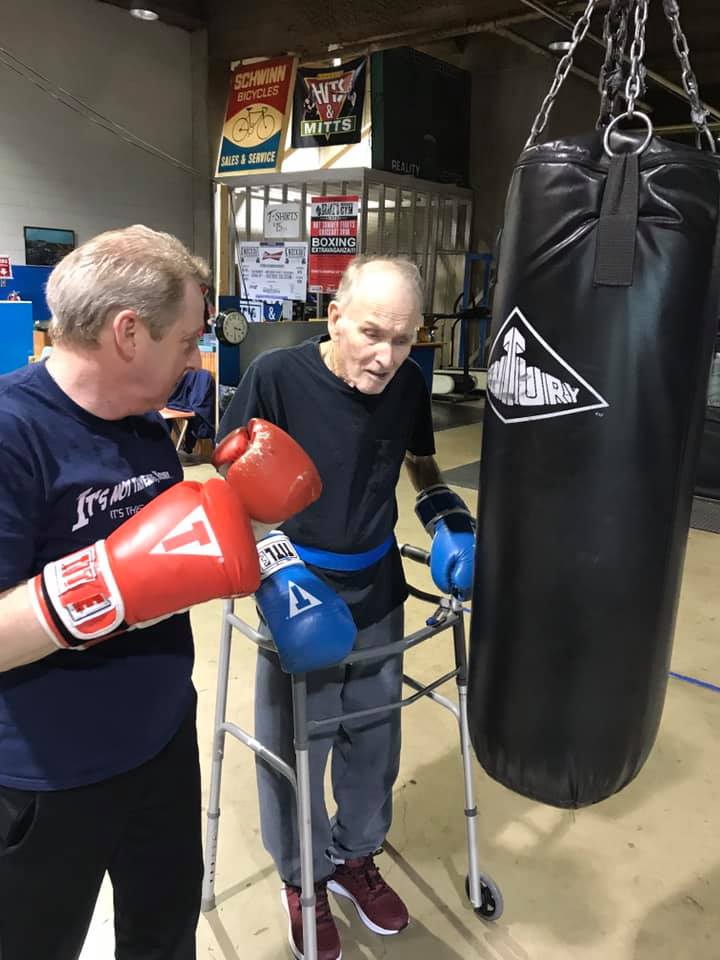
Gary Deer Sr. attends a Parkinson’s boxing class with Gery at Drake’s Gym in Dayton, OH in 2019.

Five minutes later, you notice something else that’s gone downhill or altered in some way. There is no set rate for when to expect these changes in your loved one’s health and they can come on rapidly. That means you barely get the chance to wrap your head and emotions around each state of change before you’re dealing with three more simultaneously.

Knowing there is no happy ending at the end of this story, you face constant adjustment and acceptance which are exhausting both mentally and emotionally. All this turmoil adds up to something called, “anticipatory grief,” which is exactly what it sounds like; you’re mourning the person as the disease progresses, anticipating their eventual death.

None of this is generally a conscious thought process. After my mother’s passing, I understood it better, and that, at least, helped me cope with my father’s decline several years later. But until I realized all of this, I was just angry all the time. I was frustrated at why dad couldn’t remember how to sit down in the a properly, or just use a spoon, but 10 minutes earlier it hadn’t been a problem. Things literally changed on the fly.

In my case, the difference between caring for Mom vs. Dad is that my mother’s Alzheimer’s disease removed any expectation in my mind of her being cognitively aware enough to help herself. She had no clue what was going on around her, so it was slightly easier to adjust because she didn’t push back. Dad’s mental state was usually pretty good, so he pushed back – a lot. And I kind of got it; it’s tough to spend your life being the one taking care of everyone else and suddenly you feel like a helpless burden.

It really bothered my dad to need help with anything, like standing up from a chair, or that we had to restrict things like coffee because the caffeine aggravated his symptoms. As his condition changed, we tried to counter each new phase with alternative ways to keep him comfortable and safe while dealing with altered symptoms.

I don’t know how to tell you to deal with anticipatory grief. Everyone copes differently. Being aware of it can help a bit. If you’re caring for someone who is slipping away, spend what time you can with them. Be there with them, be present, and be kind to them and especially to yourself.

PUBLISHER NOTE: If you or someone you know is a caregiver, visit http://www.theoldnerdinthegym.com for resources, a podcast, and other information that might help.

Let Your Light Shine Again

In Books, Dayton Ohio News, Education, Health, history, Literature, Opinion, Print Media, psychology, Uncategorized on March 9, 2023 at 4:46 pm

Deer In Headlines II

By Gery Deer

Insecurity affects people in different ways, from a simple annoyance to debilitating anxiety. It can be especially jarring when you were just there, doing your thing, and then, out of the blue, something rocks your confidence. Insecurity generally occurs when we compare ourselves to others, giving in to the ridiculous and constantly varying standards set by society.

The 1942 children’s book, “The Little Red Lighthouse and the Great Gray Bridge,” by Hildegarde H. Swift and Lynd Ward, has been an inspiration to children around the world. Myself included. I learned to read very early because of this book but, for me, its influence was far more literacy. The story itself, one of self-worth and perseverance, was also something to which I gravitated.

“The Little Red Lighthouse and the Great Gray Bridge,” is a simple story about a real lighthouse that sits on the banks of the Hudson River in New York City. As described in the book, “It was round and fat and red. It was fat and red and jolly. And it was very, very proud.”

Anthropomorphized in the story, the Lighthouse’s self-confidence stemmed from its own sense of importance in keeping boats safe along the river. Every night it flashed – one second on, two seconds off, with a big fog bell outside that clanged, “warning,” during bad weather.

The Lighthouse was originally built in 1889 as the North Hook Beacon, in Sandy Hook, New Jersey. In 1917, the lighthouse was shut down, but it wasn’t quite finished working yet. Four years later, it was moved to its current location in Manhattan’s North Washington Park in an effort to improve navigational support along the river.

Early in 1927, however, work began on the great span of the George Washington Bridge, directly behind the Lighthouse. By 1948 it was felt the bridge lighting overcast any need for the smaller light on the river and The Little Red Lighthouse was extinguished – seemingly forever.

Paralleled in the story, when the Lighthouse saw the large beam of light from atop the tower of the Great Gray Bridge, it was left feeling small, insignificant, and unimportant. At the same time, something had delayed the man who came every night to turn on the light. The Lighthouse felt abandoned and no longer needed.

Later, as a terrible storm came in, the Bridge called down, “Little Brother, where is your light?” The Bridge explained its duty to the ships of the air, but the Lighthouse was still important to safeguard the boats. Eventually, the caretaker arrived and turned on the gas, allowing the Lighthouse’s beam to shine brightly once more.

In reality, the Lighthouse was slated for demolition. But, in 1951, thanks to the popularity of the children’s book, an unprecedented public outcry to preserve The Little Red Lighthouse led the U.S. Coast Guard to deed it to the New York Department of Parks and Recreation. Nearly three decades later, it was added to the National Register of Historic Places and eventually designated a protected landmark of New York City.

Now safe in the shadow of the Bridge, the Lighthouse story’s simple message of self-worth was one that has resonated with people for more than 70 years. We all need it to feel relevant and valued but anyone can suffer from insecurity at some point. 

Like the Lighthouse, any of us can be unsure of our place in the world, comparing ourselves to those around us who seem bigger and better. Feeling irrelevant can be devastating.

That feeling, caused or fueled by deeply-rooted insecurity can sabotage the confidence of even the most self-assured person. And, sometimes we need a “Big Brother,” like the Bridge, or someone else we admire or respect to hold a mirror up for us so we can see our real value. That’s something my own Big Brother has done since I was very small, and, even as an adult, I still turn to him sometimes for that reassurance.

No matter how insignificant we may feel sometimes we all have something to offer. Just remember the courage of “The Little Red Lighthouse,” look for that one spark of inspiration, and, as the Bridge said to the Lighthouse, “let your light shine again.”