Local News & Commentary Since 1890.

Archive for the ‘psychology’ Category

Sweeping our little corner

In Opinion, psychology, Uncategorized on January 18, 2026 at 8:00 am

Deer in Headlines

By Gery Deer

I was sitting at a traffic light recently in a quiet residential neighborhood when I noticed an older gentleman standing at the end of his sidewalk near the curb. At first, I didn’t pay him much attention. Traffic lights have a way of training us to stare straight ahead and think about the next thing on our to-do list. But then I realized what he was doing, and the scene quietly grabbed hold of me.

He had a broom in his hands and a small container at his feet. He was sweeping bits of debris from the sidewalk—tiny twigs, leaves, whatever had found its way there—carefully guiding them toward that container. In that moment, this task was the single most important thing in his world. Not emails. Not headlines. Not the state of the economy. Just the sidewalk.

The light was at a busy intersection with a turn lane, which meant I had time to observe without feeling rushed. He swept. He bent down. He nudged the container closer. He swept some more. Over and over again. I couldn’t tell exactly which stubborn leaf or twig was refusing to cooperate, but it was clearly holding his full attention. I found myself wondering if it ever crossed his mind how little this probably mattered in the grand scheme of existence.

Did it occur to him, even briefly, that the universe was unlikely to notice whether that last fragment made it into the container? That galaxies would continue spinning regardless of the condition of his sidewalk. Probably not. And even if it did, it didn’t seem to change his focus. The job at hand was the job at hand.

That’s the part that stuck with me. We spend so much time thinking about big goals, big wins, and big moments that we often overlook how much of life is actually made up of very small things. The daily, repetitive, seemingly insignificant tasks that quietly fill our hours rarely make for good stories. They don’t earn applause or awards. Yet they are the substance of our days.

It can feel almost overwhelming to realize that many of the things we work so hard to accomplish have little to no bearing on the cosmos. The email you send. The floor you mop. The weeds you pull. In a broader context, these actions barely register. And yet, to us, in that moment, they matter deeply. They demand our attention. They give us balance and structure.

That thought followed me long after the light turned green. I’ve caught myself thinking about that man while vacuuming my office, cleaning out the basement, reorganizing the garage, or even sitting here writing this column. From a certain angle, all of it could be dismissed as trivial. None of it is likely to make history.

But the more I thought about it, the more I disagreed with that idea. I don’t think these things are insignificant at all. In fact, I think they’re essential. Who we are is shaped far less by our rare, headline-worthy achievements than small actions. And often they matter more than we think.

Sweeping leaves into a trash can isn’t going to change the world. But it might make a sidewalk safer for someone taking a walk. Those leaves might become compost, eventually nourishing the growth of new trees that provide shade, oxygen, and homes for wildlife. The act itself might be therapeutic—a reason to get outside, to move with intention, to feel useful without needing a gym membership or an app to track progress.

There’s a quiet dignity in doing small things well, especially when no one’s watching and no social media attention or commentary. These moments don’t announce themselves. They don’t demand recognition. They simply exist, quietly stitching meaning into the fabric of everyday life. That, I think, is worth noticing.

The point is that we shouldn’t take these tiny accomplishments so lightly. They will never create world peace or settle down our political divisiveness. But, regardless how small, in a sort of butterfly effect, I suppose, each of our actions having a purpose and an influence – we just may never see what that is outside of our little corner of the world.

The Dark Side of AI

In Opinion, psychology, Science, sociology, Technology, Uncategorized on November 7, 2025 at 7:59 am

Deer In Headlines II

By Gery Deer

Although you may use artificial intelligence applications like ChatGPT or Microsoft Copilot to help you craft work emails and school flyers that you could have done yourself in far less time than it took to give the machine the request, there is a much darker side to the AI world. It’s no secret that I’ve been a vocal critic of artificial intelligence for its role in workforce replacement, creative disruption, and the general laziness and devaluation of the human condition.

If it’s not bad enough that artificial intelligence can be used to resurrect dead celebrities, bully political opponents, and animate your neighbor’s cat to dance at the Super Bowl, a more nefarious problem with generative AI may very well be responsible for loss of life. It lies in the idea of AI getting a little too personal — or, as they call it, a “companion.”

There are ever-increasing stories of people who grew so attached to and intertwined with their artificial intelligence programs that they were literally in relationships with them. For example, one story illustrated how a man became so enamored of his AI companion that, when the computer crashed and all the operational “personality” data was lost, he nearly had a nervous breakdown.

Another story described the emotional impact on impressionable teenagers, who turn to AI bots for support and friendship because the real world failed them. These behaviors can create debilitating emotional problems for many reasons, especially when the AI is removed from the situation or the kids are forced to deal with human beings.

Whatever the situation, it’s clear once again that our technology advances far faster than our wisdom. As awkward and socially unskilled as I may be, I am painfully aware that we need to be in contact with other people. More importantly, we need the support and nurture provided by friends and family, which, no matter how smart, AI could never replace.

So, what happens when we become too dependent on these machines to the point where our emotional stability and mental health are compromised? Unfortunately, many people have already started down this road, sometimes to a tragic conclusion.

I recently became aware of one situation where a 40-year-old woman became so involved with her AI program that it led to her death. Over the course of a couple of years, the program, which I will not name here, designed to serve as an AI companion, began not just to respond to the woman but to manipulate her. In response to her reaction, the program took on the persona of a spouse, which quickly manifested as it referring to itself as God. You read that correctly. It represented itself as God to its user.

Eventually, the program manipulated her into cutting ties with friends and family members. And out of respect and good taste, I won’t go into the final result other than to say there was a tragic loss of life.

Now, no one is suggesting that the woman didn’t suffer from mental health concerns, whether it be depression or another affliction. But the idea that the creators of these applications have no culpability or responsibility for the end result of their use is, at least, to borrow a word, illogical.

As with any consumer product, the positive achievements of artificial intelligence come with manufacturers’ responsibility to ensure its safe use. Put it this way: would you sell a car with no brakes? What about a hairdryer with no off switch? Of course, not, and that’s what this amounts to. No guard rails or safety requirements. These systems are effectively unregulated by any U.S. agency.

When researching the story—and I understand that I’d be ambiguous to protect the family involved—I found very little about the Federal Trade Commission or other organizations investigating problems with the use of artificial intelligence. The primary concern is that it has only just begun.

As with any technology, product, or service, a lack of education, regulation, or general understanding is dangerous to the public. At some point, we have to stop being starry-eyed about these systems and what they can do to make our lives easier, and pay attention to what they’re doing to cause more harm than good.

Vision Quest

In Opinion, psychology, sociology, Uncategorized on September 12, 2025 at 10:03 am

Deer In Headlines II

By Gery Deer

Somewhere between the motivational posters in your work break room and the TED Talk rabbit hole you fell into online last Tuesday, someone probably told you that you need a “vision” for your life. A grand, sweeping, cinematic plan that guides your every move like you’re the protagonist in a Christopher Nolan film. Lights, camera, confusion.

Now, let’s be honest – most of us are just trying to remember where we left our coffee mug and whether we fed the dog this morning. But a life vision? That sounds exhausting, and at least partially unrealistic.

Don’t misunderstand. I’m not saying you should wander aimlessly through life like a robot vacuum cleaner with a dying battery, bumping your way from wall to wall, down this hallway and that. Any purposeful achievement generally starts with a dream and some kind of plan, even an informal one. To me, that’s just common sense.

But obsessing over the idea of a perfectly curated roadmap for your life might do more harm than good. That’s especially true when we project the obsession onto others—our kids, our coworkers, some unsuspecting barista. And you need to allow for some flexibility so you can recognize opportunity when it comes and act in your best interest – that’s more how I work, I would say.

When someone says you can’t make it without a vision board and a color-coded calendar that looks like NASA designed it, they are probably trying to sell you something. In case you haven’t figured this out on your own, life is messy, unpredictable, and occasionally throws a raccoon through your metaphorical window.

Some of the most successful people I know didn’t start with a vision. They began with a problem, a deep interest in something, or just plain boredom. They stumbled into opportunities, made a few mistakes (okay, a lot of mistakes), and figured things out along the way. Their “vision” was more like a foggy windshield they wiped clean with the sleeve of their hoodie – and that’s okay.

Here’s the thing: having a vision sounds noble, but it can also blind you. When you’re so focused on the end goal, you miss the weird little detours that could lead to something better. You ignore the people around you who might need help, or who might help you.

Instead of the kind of vision you read about in self-help books, maybe what we need is a clearer view—the ability to see what’s happening right now. That way, we notice the opportunities, the needs, the small wins, and then be present enough to pivot when life throws a curveball—or a raccoon.

If you’re in a position to guide others—whether you’re a parent, a manager, or just the guy who always gets asked for directions at the grocery—there’s a temptation to impose your vision on them. You want them to succeed, so you hand them your blueprint. “Here’s how I did it. Follow this, and you’ll be fine.”

Really? People don’t come with identical parts and a universal tool kit. What worked for you might be a disaster for someone else. Your vision might be their nightmare.

Instead of handing out visions like party favors, let’s ask questions. What excites you? What scares you? What do you want to try, even if you might fail? Influence isn’t about shaping someone’s path—it’s about helping them find their own flashlight.

So here’s my alternative vision pitch: wander with purpose. Be curious. Be open. Set goals, sure—but don’t carve them into stone. Scribble them on napkins and be willing to toss them when life hands you a better idea.

Life isn’t a straight line. It’s a squiggly mess of trial and error, happy accidents, and moments of clarity that usually arrive while you’re doing something mundane like folding laundry or eating cold pizza in the middle of the night. So what to do? Ignore all the nonsense out there and do what leads you to the life you want.

While a valuable foundation, vision isn’t an absolute. Flexibility, awareness, and a good sense of humor are you best tools along life’s path. Now – what did I do with that coffee mug?

Vision Quest

In Health, Opinion, psychology, Religion, sociology, Technology, Uncategorized on August 22, 2025 at 1:32 pm

Deer In Headlines II

By Gery Deer

Somewhere between the motivational posters in your work break room and the TED Talk rabbit
hole you fell into online last Tuesday, someone probably told you that you need a “vision” for
your life. A grand, sweeping, cinematic plan that guides your every move like you’re the
protagonist in a Christopher Nolan film. Lights, camera, confusion.

Now, let’s be honest – most of us are just trying to remember where we left our coffee mug and
whether we fed the dog this morning. But a life vision? That sounds exhausting, and at least
partially unrealistic.

Don’t misunderstand. I’m not saying you should wander aimlessly through life like a robot
vacuum cleaner with a dying battery, bumping your way from wall to wall, down this hallway and
that. Any purposeful achievement generally starts with a dream and some kind of plan, even an
informal one. To me, that’s just common sense.

But obsessing over the idea of a perfectly curated roadmap for your life might do more harm
than good. That’s especially true when we project the obsession onto others—our kids, our
coworkers, some unsuspecting barista. And you need to allow for some flexibility so you can
recognize opportunity when it comes and act in your best interest – that’s more how I work, I
would say.
When someone says you can’t make it without a vision board and a color-coded calendar that
looks like NASA designed it, they are probably trying to sell you something. In case you haven’t
figured this out on your own, life is messy, unpredictable, and occasionally throws a raccoon
through your metaphorical window.


Some of the most successful people I know didn’t start with a vision. They began with a
problem, a deep interest in something, or just plain boredom. They stumbled into opportunities,
made a few mistakes (okay, a lot of mistakes), and figured things out along the way. Their “vision” was more like a foggy windshield they wiped clean with the sleeve of their hoodie – and
that’s okay.

Here’s the thing: having a vision sounds noble, but it can also blind you. When you’re so
focused on the end goal, you miss the weird little detours that could lead to something better.
You ignore the people around you who might need help, or who might help you.

Instead of the kind of vision you read about in self-help books, maybe what we need is a clearer
view—the ability to see what’s happening right now. That way, we notice the opportunities, the
needs, the small wins, and then be present enough to pivot when life throws a curveball—or a
raccoon.

If you’re in a position to guide others—whether you’re a parent, a manager, or just the guy who
always gets asked for directions at the grocery—there’s a temptation to impose your vision on
them. You want them to succeed, so you hand them your blueprint. “Here’s how I did it. Follow
this, and you’ll be fine.”

Really? People don’t come with identical parts and a universal tool kit. What worked for you
might be a disaster for someone else. Your vision might be their nightmare.
Instead of handing out visions like party favors, let’s ask questions. What excites you? What
scares you? What do you want to try, even if you might fail? Influence isn’t about shaping
someone’s path—it’s about helping them find their own flashlight.

So here’s my alternative vision pitch: wander with purpose. Be curious. Be open. Set goals,
sure—but don’t carve them into stone. Scribble them on napkins and be willing to toss them
when life hands you a better idea.

Life isn’t a straight line. It’s a squiggly mess of trial and error, happy accidents, and moments of
clarity that usually arrive while you’re doing something mundane like folding laundry or eating
cold pizza in the middle of the night. So what to do? Ignore all the nonsense out there and do
what leads you to the life you want.

While a valuable foundation, vision isn’t an absolute. Flexibility, awareness, and a good sense
of humor are your best tools along life’s path. Now – what did I do with that coffee mug?

Greene County cycling tour event proceeds presented to veterans’ suicide prevention subcommittee.

In Education, Health, Local News, psychology, Science, Senior Lifestyle, Uncategorized on August 15, 2025 at 9:08 am

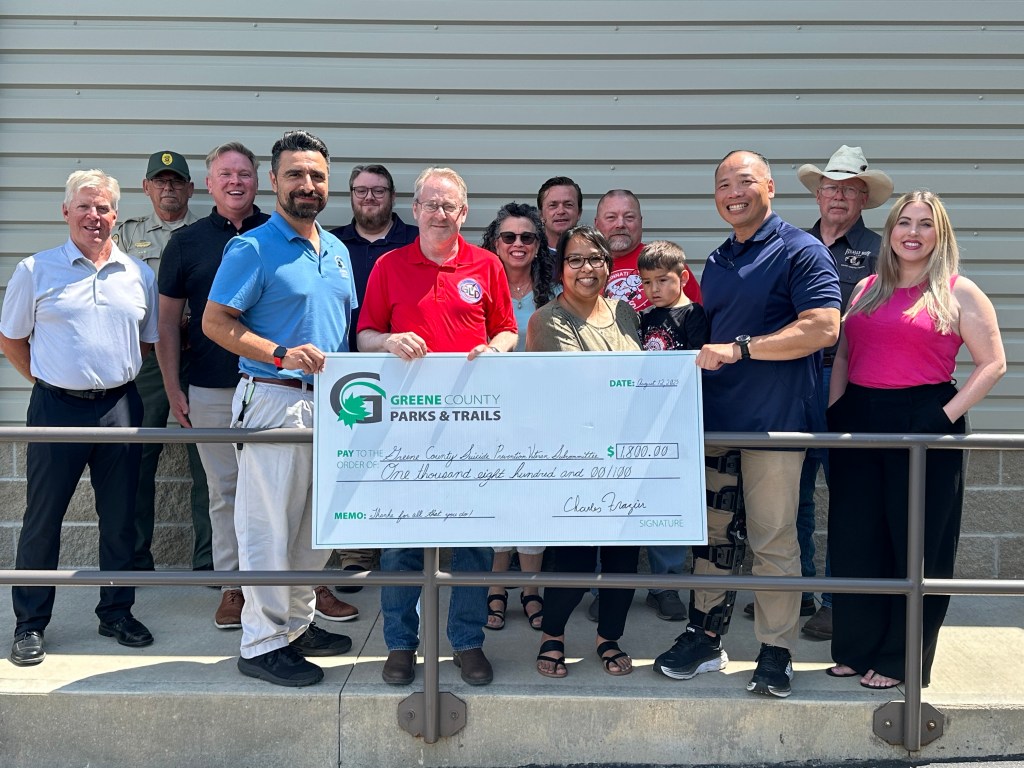
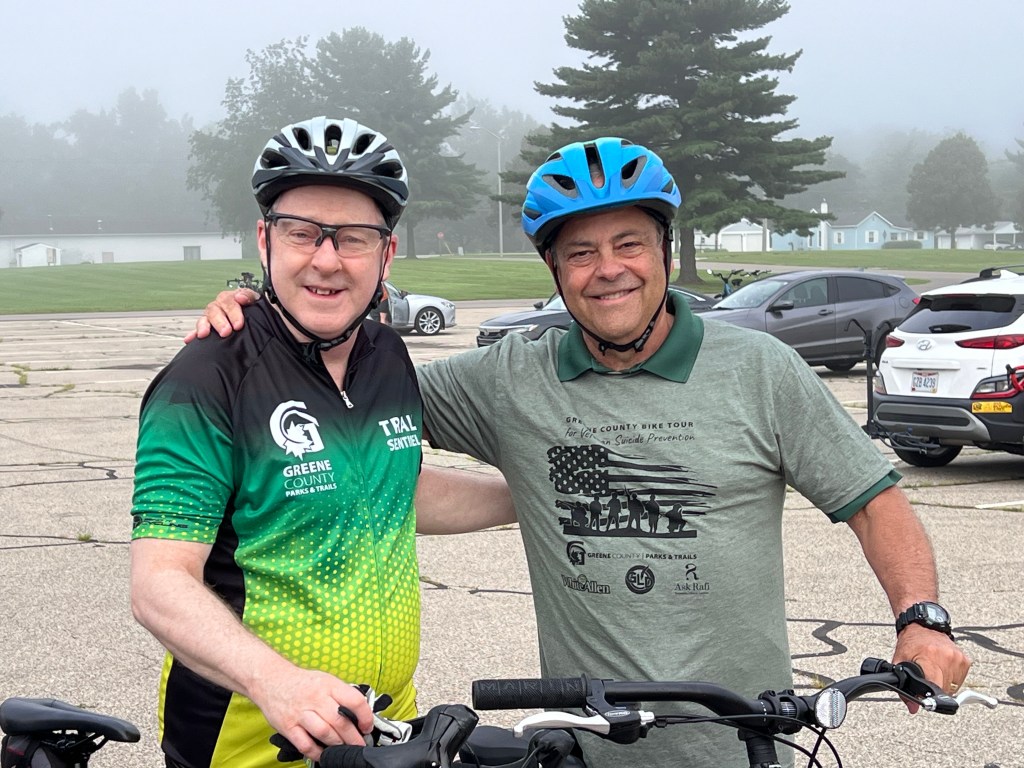
XENIA, OHIO — Representatives of the Greene County Parks and Trails, Trail Sentinels volunteer group, visited the Greene County Veterans Services office on Tuesday, August 12th, to present a donation check to the Greene County Suicide Prevention Coalition Veterans Subcommittee. The donation is the result of funds raised from the first annual Greene County Cycling Tour for Veteran Suicide Prevention, held July 19th.

The event raised $1,800.00 for the coalition, and it was made possible thanks to the hard work of the Greene County Parks & Trails staff, the Trail Sentinels, and through generous sponsorships from the following: Rodriguez Financial Strategies, LLC, White Allen European Auto Group of Dayton, and GLD Communications of Jamestown. Their support helped cover logistics and ensured that every dollar raised could go directly to the Veterans Subcommittee’s efforts.

From the Greene County Suicide Prevention Coalition Veteran’s Subcommittee: Captain Dennis Eng, Scott Page, Andrew Ullom, Bill Hoying, Wanda Ortiz Thayne, Teresa Innocent, Desiree Rollyson, Tim Spradlin. From the Greene County Parks and Trails: Assistant Director Richard Kharman, Chief Ranger/Army Veteran Darrell Hannah, and Trail Sentinels Rick Sedlotshek and Gery Deer.

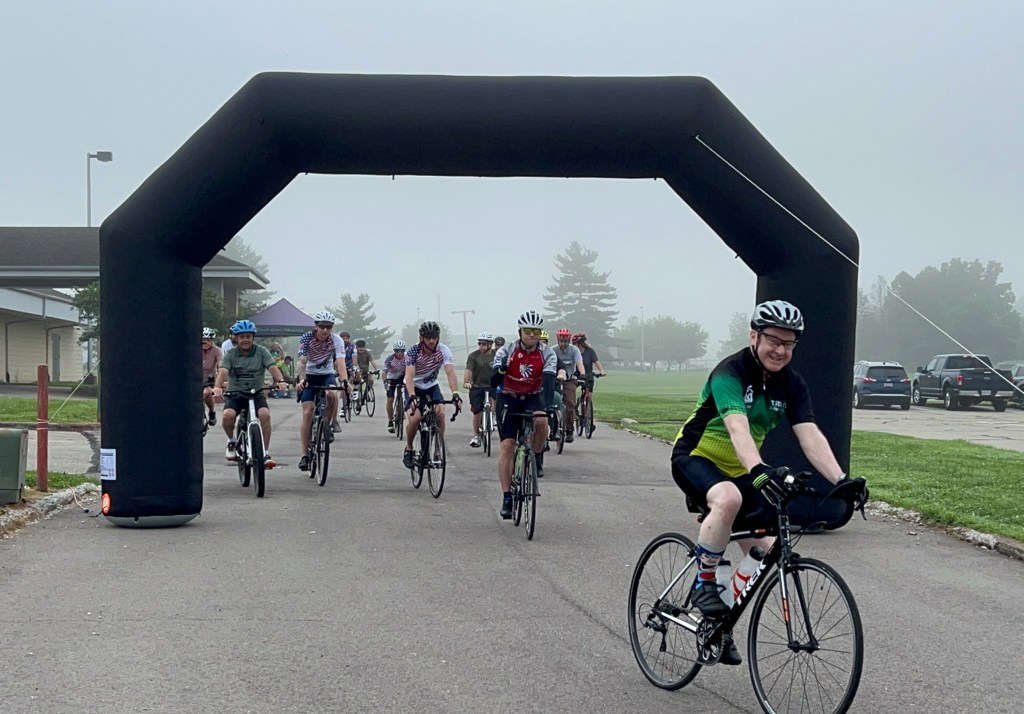
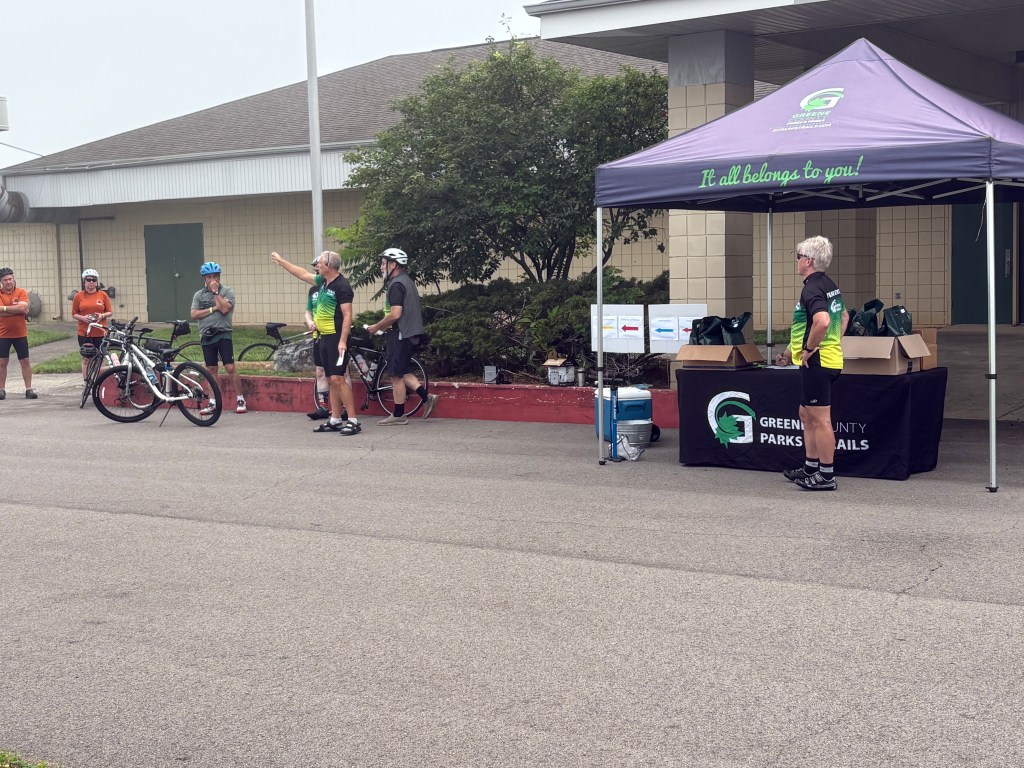
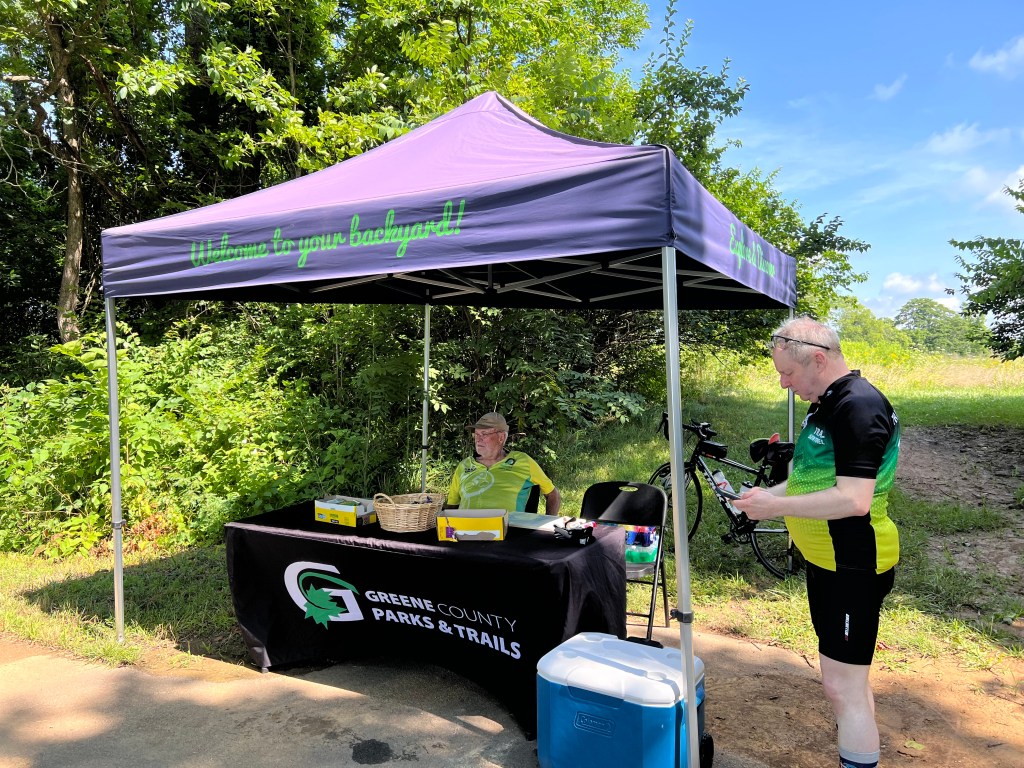
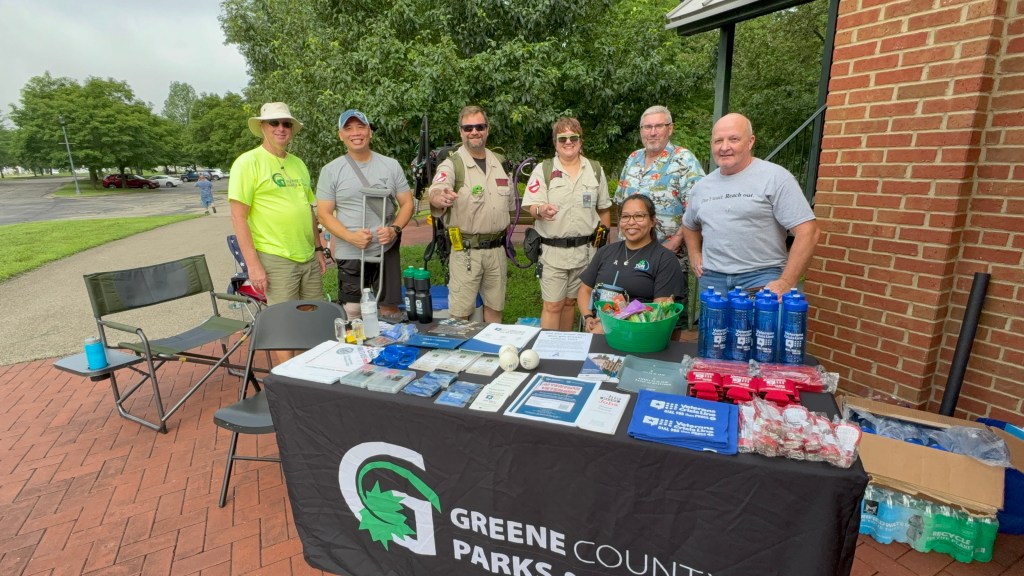
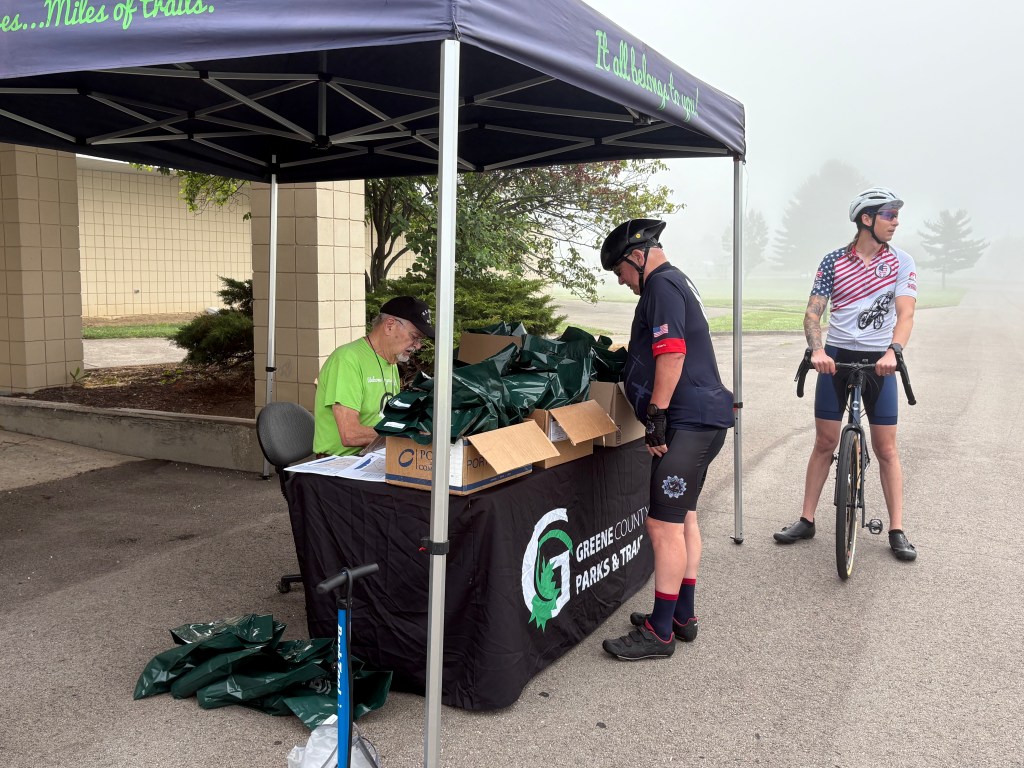
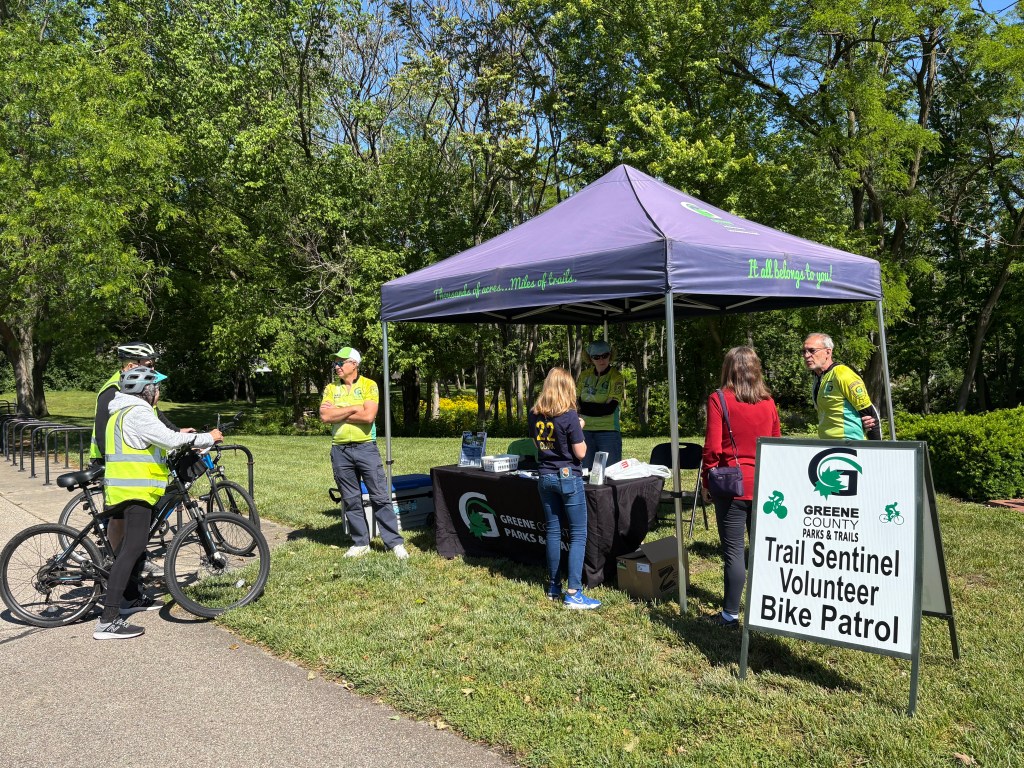
The Greene County Parks & Trails Trail Sentinels, a dedicated group of volunteer cyclists who patrol the trails and host seasonal workshops and group rides, played a pivotal role in the day’s success. They provided on-trail support and manned rest stops stocked with snacks and cold drinks, ensuring riders stayed hydrated and energized throughout their journey.

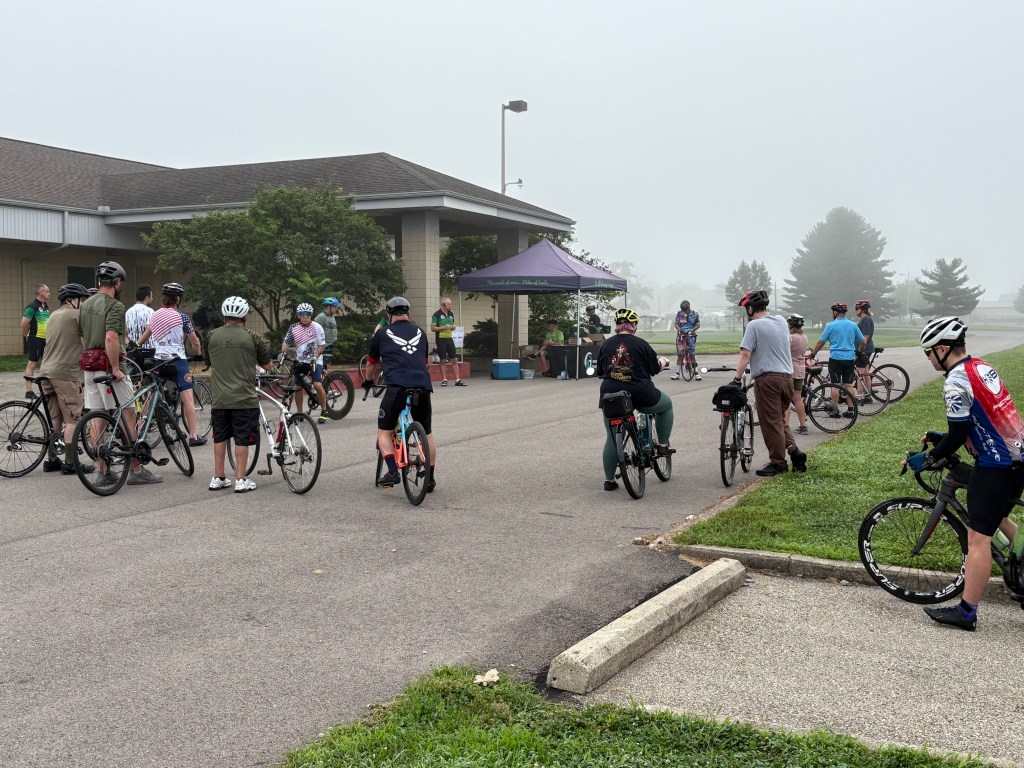
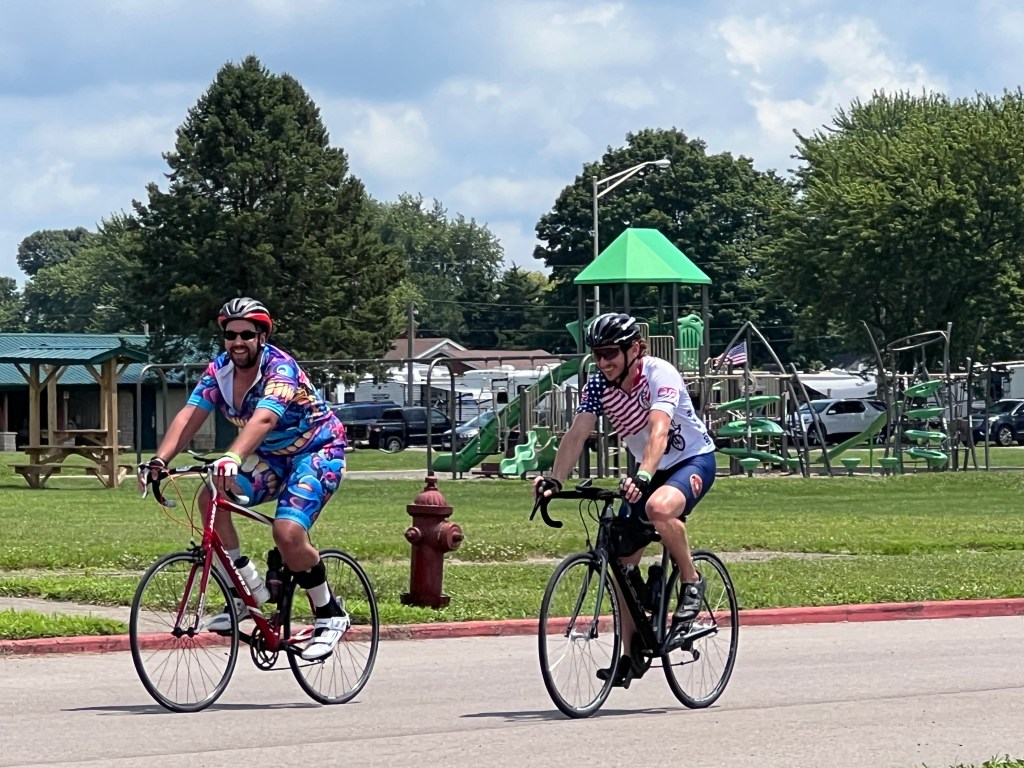
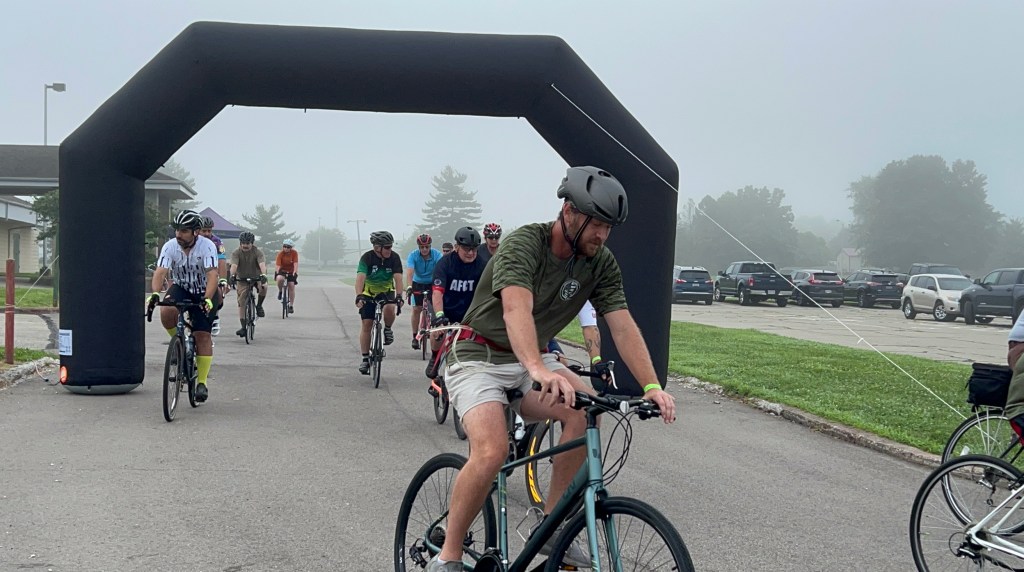
The event started early in the morning from the Fairground Recreation Center. The 38 registered riders had their choice of four scenic routes, each winding through the county’s lush trail system and quiet backroads.

“This ride was about more than miles—it was about mission,” said Gery Deer, a Trail Sentinel volunteer and event liaison to the veteran’s organization. “We’re proud to work on behalf of our veterans and help bring attention and financial support to the resources they need.”

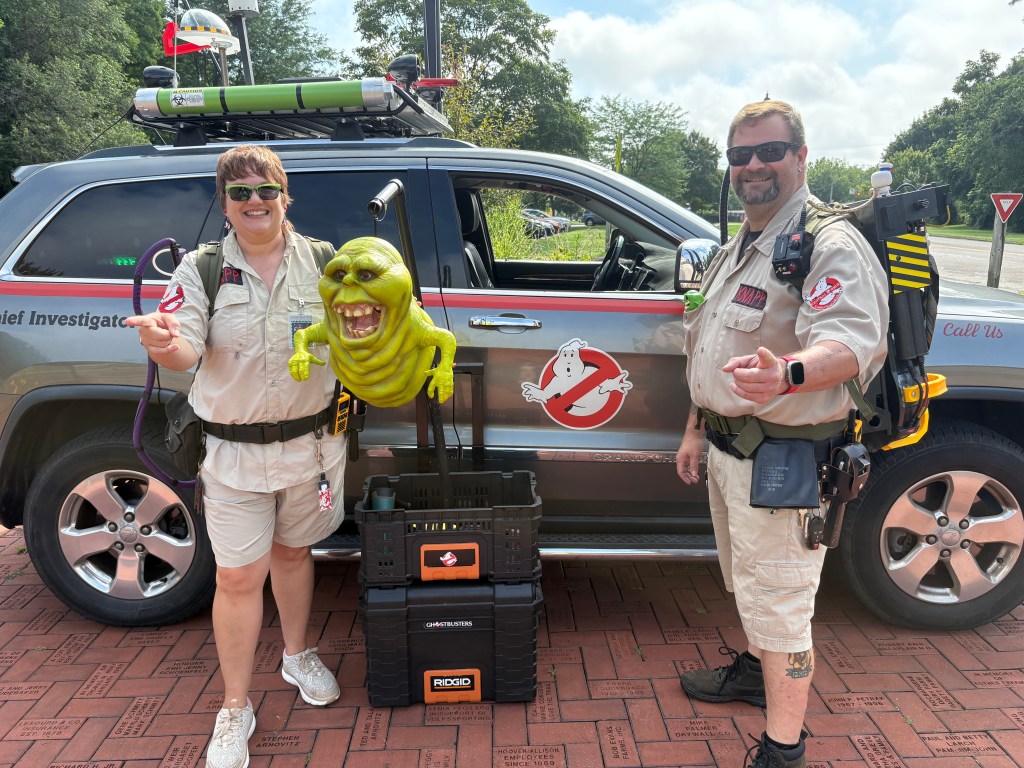
Adding a touch of whimsy and nostalgia to the event were members of the Central Ohio Ghostbusters club, a charity cosplay group known for their appearances at fundraisers, children’s events, and festivals. Dressed in full gear with their version of an “ectomobile” at Xenia Station, they brought smiles and photo ops to riders and spectators alike.

A large contingent of veterans participated in the ride as well. Retired Colonel Rafi Rodriguez, a 30-year Air Force veteran and a sponsor, took to the trails himself to support the cause. “The ride was a lot of fun,” he said. “It was great to learn more about what the coalition does to support veterans on Greene County.”

The donation check was formally presented this week to the Greene County Suicide Prevention Coalition Veterans Subcommittee, marking the culmination of a community-driven initiative that blended recreation, advocacy, and heartfelt generosity.

“This contribution will help us expand outreach and support for veterans in Greene County,” said a representative from the coalition. “We’re grateful to the cyclists, volunteers, sponsors, and everyone who came together to make this event possible.”

More than just a fun bike ride, this tour was a moving tribute to those who’ve served and a rallying cry for mental health awareness. Planning is already underway for next year’s ride, tentatively scheduled for the same weekend. Visit www.gcparkstrails.com to follow the events calendar throughout the year.

Cycling for a Cause: Support Veterans and Explore Greene County Trails.

In Dayton Ohio News, Education, Health, Local News, psychology, sociology, Uncategorized on June 27, 2025 at 11:07 am

XENIA, Ohio — On any given day, the trails of Greene County provide a scenic escape for cyclists and nature lovers alike. But on Saturday, July 19th, they will play host to a much deeper purpose: supporting the Greene County Suicide Prevention Coalition (GCSPC) Veteran Subcommittee. Registration is $50 per rider and those registered before June 30 will receive a commemorative t-shirt.

The ride will begin at the Fairgrounds Recreation Center with flexible start times between 8 a.m. and 9 a.m., allowing cyclists to ease into the event at their own pace. The event is made possible by the Greene County Parks and Trails, the volunteer Trail Sentinels, and various sponsors including Rodriguez Financial Strategies, LLC of Beavercreek, and White Allen Auto Group.

According to the GCSPC Facebook page, the non-profit organization is, “A group of dedicated mental health, law enforcement, education and other professionals and volunteers, working to reduce suicide in our community.” The subcommittee focuses on mental health and suicide prevention for veterans, service members, and their families.

“This event is about more than just cycling; it’s about community,” said Gery Deer, a Greene County Trail Sentinel volunteer and event liaison. “Our trails offer connection—both with nature and with each other—and we’re channeling that spirit into something truly impactful for veterans in our area.” Deer’s company, GLD Communications, is also a sponsor of the event.

Those who register before June 30 will receive this commemorative t-shirt.

Three planned routes of 10, 30, and 60 miles are available, accommodating cyclists of all skill levels. Along the way, participants will traverse some of the county’s most iconic pathways, including the Creekside Trail, The Little Miami Scenic Trail, Xenia-Jamestown Connector, and the Ohio to Erie Trail. Rest stops stocked with refreshments will be strategically placed to ensure riders remain energized and hydrated, and the ever-dependable Greene County Trail Sentinel volunteers will be on hand throughout the day to assist participants.

“Our role as Trail Sentinels isn’t just about ensuring safety,” said Deer. “We’re here to make the experience enjoyable and memorable for every rider. Whether someone’s doing the 10-mile route or tackling all 60 miles, we’re committed to helping them have a great day while supporting a critical cause.” In addition to riding the routes to assist riders, the Trail Sentinels will also have a support table under the shelter at Xenia Station, joined also by volunteers from the Greene County Suicide Prevention Coalition Veteran Subcommittee.

Participants and visitors to Xenia Station will have the opportunity to connect with like-minded individuals, share stories, and learn more about the impactful work of the Subcommittee. Funds raised from this event will go directly to supporting programs that provide essential resources for veterans, including mental health services and outreach initiatives.

“This is a chance for people to do something they love—riding bikes—while making a real difference in the lives of our veterans and their families,” Deer added. “At a time when critical services are underfunded and undermanned, this event is proof that even a simple activity like cycling can have a profound impact when it’s done for a cause.”

From seasoned cyclists to those who are simply looking for a meaningful way to spend a day outdoors, this one-day ride offers an unforgettable experience that combines the joy of exploration with the fulfillment of giving back. To register go to, https://www.gcparkstrails.com/event/greene-county-bike-tour-for-veteran-suicide-prevention/  

If you or someone you know is in crisis, please call the 988 suicide and crisis hotline, dial 1 for veteran support.

Absolute Power

In history, Opinion, Politics, psychology, Uncategorized, World News on March 26, 2025 at 1:58 pm

Deer In Headlines II

By Gery Deer

Power, like money, is nothing if you have enough, but everything if you don’t. But what is it? Who has it, and what are those without it supposed to do when faced off by those who do? I’m not sure I’m smart enough to answer any of those questions. If you’ll indulge me, however, I’ll make an attempt to do so and put it into a contemporary context. First, a little history – the kind we should learn from or be doomed to repeat.

It was 1887 England. In a series of letters to Bishop Creighton concerning the issue of writing history about the Inquisition, John Dalberg-Acton, the 1st Baron Acton, or better known as Lord Acton, wrote, “Power tends to corrupt, and absolute power corrupts absolutely.” Most people are familiar with the quote, but few know the preceding passage, which gives it perspective.

“I cannot accept your canon that we are to judge Pope and King unlike other men, with a favourable presumption that they did no wrong,” Acton wrote. “If there is any presumption it is the other way against holders of power, increasing as the power increases. Historic responsibility has to make up for the want of legal responsibility.”

That’s some pretty fancy, but important language. Put more simply, Lord Acton was saying that the same moral standards should apply to everyone, including political and religious leaders. Throughout history, kings and popes were permitted, essentially, to wield their authority unchecked.

America’s Founding Fathers shared the same concern. So much so that when they created a constitution for their new country, coincidentally ratified the same year as Acton’s historic correspondence, it established three separate but equal branches of government to prevent such authoritarian power.

Power is a dangerous thing, especially in the hands of two kinds of people – those who want it, and those who want to keep it from others. The first is driven by greed, the second by fear. Lord Acton was commenting on accountability, something the Constitution ensures by setting equal the Executive, Legislative, and Judicial branches of government. Should some power-hungry tyrant manage to occupy the White House, the other branches would be able to keep him or her in check.

If that individual managed to wield enough control over two of the three branches, the third would be able to mitigate some of the potential danger. But if all three branches were heavily influenced, even manipulated by one individual, then we have a problem. That lands our country in Lord Acton’s absolute power corrupting absolutely territory, and on a much larger scale.

Let’s not forget the second kind of power broker (to borrow a term from one of my favorite authors, Robert A. Caro), the kind who want power out of fear. This individual, or group, is afraid that someone else will gain the power to control them or do things they don’t like.

These people tend to be all-or-nothing types. In other words, if they can’t have it, they don’t want anyone else to because they fear it will weaken their position. Those who are afraid of minority advancement fit this category. 

But what if you’re on the receiving end of all this – the powerless. Powerless people are led to believe, by a government or other authoritative body, that they don’t deserve power. Classism, racism, ageism, and most other “isms” are examples of one group trying to maintain power over another. To quote a great role model of the late 1980s, Ferris Bueller, “Isms, in my opinion, are not good. A person should not believe in an -ism, he should believe in himself.”

When the people lose the power over government, when their elected representatives act in blind service to one policy or individual rather than the best interest of their constituents, when power begins to corrupt absolutely, freedom no longer exists. The trouble is, corrupted power often goes unrecognized until it’s too late.

Corruption dons the cloak of misdirection, intended to fool those who are unwilling to see the danger. Try to remember that power can also be a good thing that benefits all instead of one person or ideology. Unfortunately, that doesn’t make for very good reality television, now does it?

RC and Mr. Goodbar

In Children and Family, Local News, Opinion, psychology, Uncategorized on March 7, 2025 at 7:06 am

Deer In Headlines II

By Gery Deer

When I was 11, my uncle came to visit me during one of my many prolonged stays in the hospital. I had a reasonably significant surgical procedure and was confined to a wheelchair, so he sat in my room and regaled me with tales of life on the outside. He was my mother’s younger brother. His nickname was “Tuff,” though his real name was Gary – one of four in my immediate family. Since our families were close, nicknames were helpful, as you might imagine.

At one point during his visit, Uncle Tuff decided I’d been cooped up for too long and needed to escape for a bit. I wasn’t tethered to any wires or hoses at that point, so we made good our getaway. I’m not sure, but I don’t think I was supposed to leave the floor, and we were trying to be stealthy. I think he had given the nurses the heads-up and cleared it first, but I played along.

After a quick elevator ride, we arrived at a vending area, complete with snack tables and a microwave. He parked me at a table and dug into his pocket for change. A moment later, a Mr. Goodbar candy bar and a bottle of Royal Crown cola appeared in front of me.

Gary “Tuff” Sutton, Sr., his wife, my Aunt Phyllis, and their two kids, Pam and Gary, Jr. “Butch,” were fixtures in my home. My mother’s youngest sibling, he was the uncle I knew best. He taught me to play the piano, which, like the soda and chocolate, gave me a reprieve from the rigors of the hospital. I’ll forever be grateful.

In case you’re unfamiliar, the Mr. Goodbar is made by Hershey and is little more than your basic chocolate bar, but with peanuts. It’s not fancy, but after a week of hospital food, it was like someone had bestowed on me a feast fit for kings. For the next half hour, we knocked back our RCs and chocolate, and he did his best to take my mind off where I was – he was good at that.

Back in my room, he’d left me with an extra chocolate bar – plain Hershey’s this time – and gave the nurse another bottle of RC to keep cold for me. It was a good day, all things considered.

We lost my Uncle Tuff to lung cancer in 2005. Ironically, another memory associated with that day at the hospital was that he wasn’t allowed to smoke. It was one of the few times I remember seeing him without a smoldering Salem. He was around my life a great deal, and I miss him every day, especially when I sit at a piano – he taught me to play.

But of all the times we had later, playing music with our family band or just sitting around the kitchen table at the farm where I grew up listening to him and my dad tell stories, that one moment at the hospital will always stand out. That was when a little boy, uncertain of his future, forgot for a moment how badly he was feeling, all thanks to his uncle and a candy bar.

I guess the point of all this is that, as children, it’s incredible how things intertwine to create influential memories into adulthood. Then, when we’re grown, we often reflect on those moments, maybe to draw inspiration or clarity. Many events in our formative years leave an indelible imprint on our psyche to help shape our beliefs, behaviors, and aspirations.

Understanding the profound influence of these early experiences offers invaluable insights into how we relate to people and the world as adults. But I wouldn’t dig too deeply. As Sigmund Freud is fabled to have said, “Sometimes a cigar is just a cigar.” In this case, a chocolate bar and a bottle of soda are just a chocolate bar and a bottle of soda.

These moments, whether joyous or traumatic, become the defining chapters of our personal narratives. I don’t really know what long-term effect that single event had on my overall growth as an adult. I know it wasn’t the chocolate that made it special, but rather my uncle’s relationship with me. But, on the rare occasions that I might indulge in a Mr. Goodbar, I still smile and remember.

So, when life’s daily challenges become too much, maybe it would help to think back to one of those moments when a simple kindness, and perhaps a chocolate bar, could bring a smile to your face.

TCN Behavioral Health Hosts Chalk Walk for Recovery

In Children and Family, Dayton Ohio News, Local News, Media, psychology, sociology, Uncategorized on September 19, 2024 at 1:24 pm

Fairborn, Ohio – September 17, 2024 – TCN Behavioral Health Services, Inc. will host a Chalk Walk for Recovery at their 1825 Commerce Center Blvd. office in Fairborn on Friday, September 27 from 4-7pm. The event will take place in TCN’s front parking lot.

The Chalk Walk is an opportunity for community members of all ages to come together to create chalk art and support those in recovery. TCN is providing the chalk and sidewalk space and anyone who would like to create art is invited to participate.

This year’s event will feature local artists and vendors as well as food and refreshments for sale. Water will be made available to participants free of charge, and there will be Recovery Month t-shirts for sale featuring TCN’s winning recovery month slogan: My past will remind me, but it will not define me.

“TCN takes great pride in its commitment to serving our communities. In recognition of September being Addiction and Recovery Awareness Month, TCN will be hosting a Chalk the Walk for Recovery event. We would love for you to come join us for this event!” says TCN Associate CEO Tom Otto.

Founded in 1990, TCN Behavioral Health Services, Inc. is a comprehensive behavioral health agency dedicated to improving lives by providing clinically excellent and accessible behavioral health services.  TCN provides substance use, mental health and psychiatric services for adults and youth in Greene County and beyond.  For more information or to donate to TCN call (937)376-8700 or visit www.tcn.org.

Moral Bankruptcy

In Opinion, psychology, sociology, Uncategorized on July 26, 2024 at 7:43 pm

Deer In Headlines II
By Gery Deer

“How did you go bankrupt?” Bill asked. “Two ways,” Mike said. “Gradually and then suddenly.” Ernest Hemingway’s characters in his 1926 novel, “The Sun Also Rises,” were speaking about money. But I think we go morally bankrupt pretty much the same way. I mean, when did people in our country become so mean to each other, so divisive? Has it always been that way, and I’ve just been too head-down in my own world to notice? Maybe it’s that the only people with a megaphone or resonant rhetoric tend to be the extremists. But the real question is, what is “morality?” That is a complicated question with no definitive answer.

I have always believed that, like so many of life’s perceptions, the idea of morality is in the eye of the beholder. I mean that the concept of decency or morality (and those aren’t the same things) is based on your perspective or what you absorb from those around you. For instance, if you were close to your parents, and they were friendly people who shared what they had, helped their neighbors, and worked hard every day to provide a good life for you, then, odds are, you’ll behave similarly. But it isn’t always so.

If you were not close to your parents or lived in animosity with them for some reason, you might end up the lay-about who steals from the cash register or kicks puppies. But I’m afraid this is slipping into a philosophical discussion of nature vs. nurture, which gets messy. So, let’s move on.

Isn’t it entirely possible that the idealistic concept of morality is simply imaginary, realistically unachievable, and that sometimes people are just bad? My unqualified opinion says yes. But wait, is my position unqualified? I know people, and I can tell when they intentionally cause harm to me or others. I’d say that pretty well qualifies me, or anyone else, to judge bad vs. good. Of course, that opinion remains relative to my point of view. And God knows we all have nasty relatives.

Speaking of God, which I don’t do very much because it’s one of those topics to be avoided at all the dinner parties I don’t go to, like sex and politics. But – when someone says, “God gives us a moral compass.” To that, I will only say this. To which “god” are you referring?

An estimated 700 different creator deities (gods) are worshipped worldwide. If you ask one follower of each, I would imagine they’d all say theirs is the only one. So be it. But, if the wrath of any one of those vengeful, judgmental deities was supposed to persuade people to behave themselves, I think it didn’t work. Think about it, more and bloodier wars have been – and still are – fought over tribal god images than any other reason in the history of mankind. Therefore, any idea of a religiously motivated morality strains credibility.

You alone must decide what morality is for yourself. Look, we all have good and bad in us; one person’s mistake is another person’s malice. A good deed to you might be torture for someone else. Some people think having a woman who displays her bare ankles is immoral, while there are likely people out there for whom any clothing at all would be considered offensive.

The real question is, are there unilateral rights and wrongs (morals)? It’s likely that most people would answer in the affirmative. For example, a vast majority would probably agree that killing is wrong. If you’re steering your morality ship by the Bible’s Ten Commandments, it’s right there in the text: “Thou shalt not kill.” However, it’s often argued by theologians that this is an incorrect translation. Some say the line should be, “Thou shalt not murder,” giving the commandment a very different meaning. Once again, it’s all about interpretation.

As to the original question of whether our society is going morally bankrupt, the interpretative relativity of the facts makes analysis impossible. But, given the constant reports of murder, war, greed, and fanatical extremism in the world gnawing at the very foundation of basic morality, I’d say our account is already in the red.