Jamestown, OH – In a move that will delight grammarians, confuse absolutely no one, and mildly disappoint fans of Roman numerals everywhere, writer Gery Deer’s long-running column, Deer In Headlines II is officially dropping the “II.”
As it was when it first hit newsprint in 2008, from this point forward, the column will simply be known as Deer In Headlines.
No sequel. No reboot. No director’s cut.
Just Gery Deer and his outlook on the world.
The change quietly debuted with the first edition of January 2026, though longtime readers may have noticed immediately—because readers always notice. Especially when something changes that didn’t really need changing, but made sense anyway.
The original column ran from 2008 – 2018 under the name, “Deer In Headlines.” When Deer restarted the series in 2023, the “II” was added as a nod to the way movie sequels were numbered in the 1980s. However, the designation was never meant to suggest a second act so much as a return engagement. When Deer In Headlines reappeared after a five-year hiatus, the numeral was added to signal both its comeback and a slightly evolved identity—new angles, broader themes, and a tone that reflected the times as much as the writer.
But time, as it often does, flattened the distinction. “My column resonates with readers of all backgrounds and interests,” Deer explained. “It might make you happy, or sad. It can anger you or motivate you. Whatever the response, I’ve done my job and it’s time to keep the brand more cohesive—one or two, it’s all Deer In Headlines.”
And that, in true Deer In Headlines fashion, is the point.
The column has never been about numbering systems. It’s been about observation—sometimes sharp, sometimes sentimental, often inconvenient, and occasionally uncomfortable. It’s a space where headlines become excuses to talk about people, priorities, contradictions, and the quiet moments between the noise.
Over the years, Deer In Headlines has grown into more than a weekly column. It is the lead feature of the online news outlet TheJamestownComet.com, and appears every Friday in the print and digital editions of the Xenia Daily Gazette and Fairborn Daily Herald, as well as the weekly Beavercreek News Current.
The name also anchors the Deer In Headlines podcast, where many of the column’s themes are expanded, unpacked, and occasionally challenged. The podcast often explores the origins of a column, the thinking behind it, and the conversations it sparks—available on most major streaming platforms, including iHeartMedia and Amazon Music.
Dropping the “II” isn’t an ending. It’s not even a beginning.
It’s simply a reminder that whether the headline makes you nod in agreement, shake your head in disbelief, or pause longer than you expected— it’s all still Deer In Headlines.
The Xenia Daily Gazette is inviting local writers and storytellers to take part in its first annual Holiday Short Story Contest, which is going on now. Sponsored by McIlvaine Realtors, the contest encourages community members to put their holiday reflections into words under this year’s theme: “What the holidays mean to me.”
The inaugural contest is open to anyone age 12 and older, and entries may be up to 800 words in length. Stories should be sent as attachments or pasted into the email body to editor@xeniagazette.com by December 15, 2025. All entries must include the writer’s name, address, phone number, and email address.
The winner will receive a $50 VISA gift card, courtesy of McIlvaine Realtors, and their work will be published in both the Xenia Daily Gazette and the Fairborn Daily Herald during Christmas week, giving the author a special spotlight during the holiday season.
To help select the winning story, the Gazette has brought in a familiar local voice: Gery Deer, longtime contributing journalist, columnist, and author of the Gazette’s “Deer In Headlines” series, who will serve as one of the judges. Deer is participating courtesy of GLD Communications in Jamestown, which has supported Reading Is Fundamental (RIF) for the last three years through its national literacy initiative.
Deer said the contest offers the community an exceptional opportunity to reflect on what makes the season meaningful. “This is the time of year when family means the most, memories become stories told to new generations, and sharing seems to be at the heart of the season,” he said. “We hope people will share their stories with us and maybe even inspire others to write something as well.”
The Gazette hopes the new contest will become a cherished annual tradition, welcoming writers of all skill levels—from students and first-time storytellers to seasoned creatives looking for a festive way to express themselves.
Entries will be judged on originality, clarity, and how well they capture the holiday theme. While participation is open beyond Greene County, organizers are especially hopeful for strong involvement from area schools, families, and aspiring writers eager to share what the holidays mean to them.
McIlvaine Realtors, known for their long-standing support of community programs, expressed enthusiasm about sponsoring the first-ever contest and encouraging a new generation of local storytellers.
Happiness, expectations, and acceptance. If I’ve learned anything in my nearly six decades of riding this blue spinning ball of water and mud around the cosmos, it’s that everything boils down to those three things.
First, there’s the idea of happiness – which has always escaped me. If you believe all the self-help books, lifestyle gurus, and advertising agencies, happiness is all about meeting needs or wants by a combination of philosophical and material means. Makes it seem pretty easy, doesn’t it? Well, we all know that’s nonsense.
It might sound cliché, but happiness isn’t something you can buy in a store or conjure up simply by deciding today that you’re going to be content. Although there is evidence to show that you can be happier by managing your thoughts, which then alters your feelings, resulting in whatever state of mind you’re trying to achieve. Yeah, that doesn’t sound convoluted at all,l does it?
Happiness is not something anyone can tell you how to reach. I have no clue what it means to you; I haven’t even figured out what it means to me. However, I know what it’s not, and sometimes that’s the best first step. Whatever you do, don’t follow someone else’s idea of happiness, nor should you believe that if you don’t reach it, you’re somehow lacking. That’s ridiculous.
If things need to change in your life for you to feel what you believe is happiness, then do it. Sometimes it’s easy; most of the time, it’s hard. Often, things you need to change are highly dependent on the behavior of others.
Which brings me to expectations. That’s a big word with a lot packed into it. We have expectations of ourselves, whether good, bad, or indifferent. But we also know that others have expectations of us. Ironically, those are much harder to manage because often we don’t know what they are.
People always have expectations of us, but most never share them. We walk around in a constant state of confusion, never really knowing if we’re meeting those expectations or not. It could be a partner, a coworker, a boss, a family member, or whoever. But regardless of the origin, you have two choices.
You can either ask someone, point-blank, what they expect of you and respond as you see fit. Or, you can live your best life and not worry about it. I’m always operating in a combination of both of those things. There are some whose expectations we would likely always going to want to know. That’s probably because they may be closer to us than others, or how we behave or respond to something directly affects their lives in some way. So it’s important that they tell us their expectations. Otherwise, there’s no way we could possibly do anything about them.
Of course, there’s always the very real possibility we can’t do anything about these situations anyway. Some people’s expectations can be entirely unrealistic, even the ones we have of ourselves. That brings me to the final concept – acceptance.
Do you know the Serenity Prayer? While I’m not one to hang my hat on prayers to get through my day, the idea of accepting things that you can’t change, over which you have no control. It’s good advice. Now, if only I could follow it at those times.
When my father died, I was forced to accept it. Five years later, I’m still trying to accept that we did everything possible to properly care for him. Ironically, that’s harder to accept than his passing. Sadly, that’s how it works sometimes. Acceptance can often be simultaneously invaluable and fleeting. However, acceptance also needs to include the positives in life.
I regularly temper my acceptance when good things happen. Part of me always assumes something will come along and mess it up. I spend a great deal of time at odds with that dark, pessimistic side of myself. But, slowly, cautiously, I’m learning to “let it land,” and take the win.
The pursuit of happiness, how we handle expectations, and striving toward some level of acceptance are all incredibly challenging. Each affects every aspect of our lives. Inevitably, it’s your choice how to handle them.
Somewhere between the motivational posters in your work break room and the TED Talk rabbit hole you fell into online last Tuesday, someone probably told you that you need a “vision” for your life. A grand, sweeping, cinematic plan that guides your every move like you’re the protagonist in a Christopher Nolan film. Lights, camera, confusion.
Now, let’s be honest – most of us are just trying to remember where we left our coffee mug and whether we fed the dog this morning. But a life vision? That sounds exhausting, and at least partially unrealistic.
Don’t misunderstand. I’m not saying you should wander aimlessly through life like a robot vacuum cleaner with a dying battery, bumping your way from wall to wall, down this hallway and that. Any purposeful achievement generally starts with a dream and some kind of plan, even an informal one. To me, that’s just common sense.
But obsessing over the idea of a perfectly curated roadmap for your life might do more harm than good. That’s especially true when we project the obsession onto others—our kids, our coworkers, some unsuspecting barista. And you need to allow for some flexibility so you can recognize opportunity when it comes and act in your best interest – that’s more how I work, I would say.
When someone says you can’t make it without a vision board and a color-coded calendar that looks like NASA designed it, they are probably trying to sell you something. In case you haven’t figured this out on your own, life is messy, unpredictable, and occasionally throws a raccoon through your metaphorical window.
Some of the most successful people I know didn’t start with a vision. They began with a problem, a deep interest in something, or just plain boredom. They stumbled into opportunities, made a few mistakes (okay, a lot of mistakes), and figured things out along the way. Their “vision” was more like a foggy windshield they wiped clean with the sleeve of their hoodie – and that’s okay.
Here’s the thing: having a vision sounds noble, but it can also blind you. When you’re so focused on the end goal, you miss the weird little detours that could lead to something better. You ignore the people around you who might need help, or who might help you.
Instead of the kind of vision you read about in self-help books, maybe what we need is a clearer view—the ability to see what’s happening right now. That way, we notice the opportunities, the needs, the small wins, and then be present enough to pivot when life throws a curveball—or a raccoon.
If you’re in a position to guide others—whether you’re a parent, a manager, or just the guy who always gets asked for directions at the grocery—there’s a temptation to impose your vision on them. You want them to succeed, so you hand them your blueprint. “Here’s how I did it. Follow this, and you’ll be fine.”
Really? People don’t come with identical parts and a universal tool kit. What worked for you might be a disaster for someone else. Your vision might be their nightmare.
Instead of handing out visions like party favors, let’s ask questions. What excites you? What scares you? What do you want to try, even if you might fail? Influence isn’t about shaping someone’s path—it’s about helping them find their own flashlight.
So here’s my alternative vision pitch: wander with purpose. Be curious. Be open. Set goals, sure—but don’t carve them into stone. Scribble them on napkins and be willing to toss them when life hands you a better idea.
Life isn’t a straight line. It’s a squiggly mess of trial and error, happy accidents, and moments of clarity that usually arrive while you’re doing something mundane like folding laundry or eating cold pizza in the middle of the night. So what to do? Ignore all the nonsense out there and do what leads you to the life you want.
While a valuable foundation, vision isn’t an absolute. Flexibility, awareness, and a good sense of humor are you best tools along life’s path. Now – what did I do with that coffee mug?
When I was a kid, we had an in-ground pool in our backyard. About the size of a two-car garage, my father, a skilled concrete worker and mason, built it himself. As spring gave way to summer, my dad would uncover, clean, and fill the pool for the season.
It was one of my favorite times of the year. The weather was still reasonably cool for early summer, and I was fascinated by the huge tanker truck that carried the water to our house. I grew up around trucks and other heavy equipment, so you’d think I would have little interest in such a thing. But when you’re five, everything is much bigger than life, and we didn’t have a water truck.
My brother and sister were pushing me around our pool in a plastic boat around 1969, a couple of years before the ham sandwich incident.
Although I could swim, my parents never learned. I always thought that was strange since my dad grew up on the banks of the Ohio River. So, unless my older brother or sister was in the pool too, I had to watch through the chain-link fence.
One particularly memorable pool opening day, when I was about 4 years old, the water truck arrived around lunchtime. I peered eagerly through the screen door. Mom stuck half of a boiled ham sandwich in my hand, told me to be patient, and she would take me outside when I’d finished my lunch.
I have an oddly specific memory of Mom commenting that this was the last of that particular lunch meat and not to waste it. I’m not sure why that stuck with me, but, at the time, it seemed pretty important.
At some point, I promised to finish the sandwich if she let me go outside, which did the trick. After all, Dad was out there, and I could stay by the fence. My case effectively pleaded, and the judge’s decision rendered, I happily toddled outside with my ham sandwich.
I think Dad was distracted. He chatted away with the water truck driver about whatever it is that truck drivers talk about when they’re waiting for gravity to do all their work for them. I adjusted the straw hat mom plopped onto my head on the way out the door, and clutched my sandwich as I stealthily made my way inside the enclosure and around to the opposite side of the pool.
I know – I wasn’t supposed to be there – and I knew it then too. But I was a handful back then and didn’t always do what I was supposed to do. Finally, I was near the filter vent – a favorite spot for me to sit and dangle my feet in the water.
This was the pool my father built for us – the fence I mentioned in the story has yet to be added. This is just after the construction was completed.
I tried my best to disappear behind a deck chair when Mom called for Dad to make sure I ate my sandwich. He relayed the orders, noticed where I was standing, but seemed unconcerned. I took a big bite of the sandwich, crept over to the edge, and peered into the water. A moment later – kerplop! There I was, like a fishing bobber, headfirst and feet sticking out of the shallow part of the pool. I can still recall the feeling of being swallowed by water.
As quickly as it happened, I was yanked out of the pool by my foot, now missing its sandal. My father was taken over by fear but never missed a beat. Worried I’d taken a lung full of water on the way in, he put me over his knee, face down, and started thumping on my back. “Spit,” he repeatedly shouted at me as the heel of his hand rapped on my back. I shook my head in defiance. “No.” After a minute or so, I complied. Out of my mouth spewed a wad of half-masticated ham and bread that hit the cement with a splat.
When I fell in, I had a mouthful of food, and I held my breath, which kept the water outside, where it belonged. Upon my rescue, I was reluctant to spit it out because I was afraid I’d get into trouble for wasting it. That ham sandwich and my father’s quick action saved my life. The moral? Do what your mom tells you – and hold onto your ham sandwich.
“How did you go bankrupt?” Bill asked. “Two ways,” Mike said. “Gradually and then suddenly.” Ernest Hemingway’s characters in his 1926 novel, “The Sun Also Rises,” were speaking about money. But I think we go morally bankrupt pretty much the same way. I mean, when did people in our country become so mean to each other, so divisive? Has it always been that way, and I’ve just been too head-down in my own world to notice? Maybe it’s that the only people with a megaphone or resonant rhetoric tend to be the extremists. But the real question is, what is “morality?” That is a complicated question with no definitive answer.
I have always believed that, like so many of life’s perceptions, the idea of morality is in the eye of the beholder. I mean that the concept of decency or morality (and those aren’t the same things) is based on your perspective or what you absorb from those around you. For instance, if you were close to your parents, and they were friendly people who shared what they had, helped their neighbors, and worked hard every day to provide a good life for you, then, odds are, you’ll behave similarly. But it isn’t always so.
If you were not close to your parents or lived in animosity with them for some reason, you might end up the lay-about who steals from the cash register or kicks puppies. But I’m afraid this is slipping into a philosophical discussion of nature vs. nurture, which gets messy. So, let’s move on.
Isn’t it entirely possible that the idealistic concept of morality is simply imaginary, realistically unachievable, and that sometimes people are just bad? My unqualified opinion says yes. But wait, is my position unqualified? I know people, and I can tell when they intentionally cause harm to me or others. I’d say that pretty well qualifies me, or anyone else, to judge bad vs. good. Of course, that opinion remains relative to my point of view. And God knows we all have nasty relatives.
Speaking of God, which I don’t do very much because it’s one of those topics to be avoided at all the dinner parties I don’t go to, like sex and politics. But – when someone says, “God gives us a moral compass.” To that, I will only say this. To which “god” are you referring?
An estimated 700 different creator deities (gods) are worshipped worldwide. If you ask one follower of each, I would imagine they’d all say theirs is the only one. So be it. But, if the wrath of any one of those vengeful, judgmental deities was supposed to persuade people to behave themselves, I think it didn’t work. Think about it, more and bloodier wars have been – and still are – fought over tribal god images than any other reason in the history of mankind. Therefore, any idea of a religiously motivated morality strains credibility.
You alone must decide what morality is for yourself. Look, we all have good and bad in us; one person’s mistake is another person’s malice. A good deed to you might be torture for someone else. Some people think having a woman who displays her bare ankles is immoral, while there are likely people out there for whom any clothing at all would be considered offensive.
The real question is, are there unilateral rights and wrongs (morals)? It’s likely that most people would answer in the affirmative. For example, a vast majority would probably agree that killing is wrong. If you’re steering your morality ship by the Bible’s Ten Commandments, it’s right there in the text: “Thou shalt not kill.” However, it’s often argued by theologians that this is an incorrect translation. Some say the line should be, “Thou shalt not murder,” giving the commandment a very different meaning. Once again, it’s all about interpretation.
As to the original question of whether our society is going morally bankrupt, the interpretative relativity of the facts makes analysis impossible. But, given the constant reports of murder, war, greed, and fanatical extremism in the world gnawing at the very foundation of basic morality, I’d say our account is already in the red.
We are in a new Cold War with Russia. Simply put, Russian President Vladimir Putin is a totalitarian dictator pretending to run a democracy. He believes he is “the chosen one” who can rebuild the Soviet Union to its former glory, and the invasion of Ukraine is the vanguard. But why? What is fueling this resurgence of communist values and acceptance of totalitarian rule by the Russian people? More importantly, what’s that to do with us?
Keep in mind there was never anything glorious about the Soviet Union. It was a political mess. Contrary to pop mythology, it didn’t collapse because of President Ronald Reagan’s “Tear Down This Wall” speech in Berlin. The U.S.S.R. fell apart because it was top-heavy. Political infighting, corruption, defections, and KGB activity, constantly threatened to tear it apart. The country was finally brought to its knees by the weight of a stagnant economy maintaining an unnecessary Cold War superiority, an overextended military, and a laundry list of failed Soviet policies.
The disintegrating infrastructure threw the government into turmoil. President Mikhail Gorbachev worked to rebuild his country with a free market economy, reduced military spending, and open democracy. It was a good idea on paper, but generations of Russian people had known only “the party” and had little understanding of individual prosperity or free enterprise.
The Unholy Alliance – Russian President Vladimir Putin, right, and North Korea’s leader Kim Jong Un shake hands during their meeting in Vladivostok, Russia, Thursday, April 25, 2019. (AP Photo/Alexander Zemlianichenko, Pool, File)
Instead of comfort and security, social upheaval, increased crime, and economic crises threw the country into disarray. History has taught us that when people suffer, all it takes to move the needle toward dictatorship is one man saying the right things at the right time. In 1930s Germany, Adolph Hitler promised a new world for his country under a common rule that would ensure jobs and prosperity. You know what happened next. Although his motivation may not be as sinister as Hitler’s, in Russia, Putin’s just getting started.
Over the last several years, Putin has been spreading familiar, Soviet-era rhetoric—I can save you, Russia will be prosperous again, America is evil, and so on. The people listened and re-elected him for two consecutive, six-year terms. He even signed a law allowing him to run twice more in his lifetime. Since his KGB-era government squashes any potential challenger, he could remain dictator, oops, sorry, “president,” until 2036. But he’ll likely update that law again and stay until his death.
As the war between Ukraine and Russia continues and Putin attempts to rally communist allies in Southeast Asia, it’s clear he has no intention of slowing down. One example is his recent meeting with North Korean “President” Kim Jong Un. In this reporter’s opinion, Vladimir Putin intends to fully reconstruct the U.S.S.R. to how it was in his youth—a world power. But this time, he wants it to be “the” world power. His actions indicate that he sees the current U.S. political system as tumultuous and plans to take advantage of that distraction while he hopes for a Trump revival.
From my observations, Putin sees Donald Trump as a kindred spirit with the same self-aggrandizing, power-hungry appetite. But he also views him as weak, self-serving, inexperienced, and unfocused, with no genuine personal convictions. He says whatever pleases his followers. That’s not Putin’s method of operation.
Make no mistake, Putin’s a narcissist of majestic proportions. But somewhere in there, he genuinely believes he’s saving his beloved motherland from ruin. If he can rebuild the U.S.S.R. while the American people and their allies are distracted by a haywire presidential election and the war in Gaza, America will be too weak to stop him.
My point is that we should be worried—very worried. Putin will continue his advancements. If we don’t end political divisiveness, begin to work together for the common good, and develop a solid geopolitical policy on Russia before Putin’s plans move forward, this revived Cold War could get hot rapidly.
I don’t like to write about politics, and I promised I wouldn’t do it much in this column. But this is important. We must stop the Jerry Springer-like sideshow that’s playing out in Washington and take this year’s election more seriously. The security of our world, the future of our democracy, and the safety of our country depend on it.
(Editor’s Note: This is an extended edition of the June 19, 2024 print edition of Deer In Headlines II. Throughout the piece you’ll find links to IMDB pages and YouTube videos which give you more information and even let you watch episodes of the shows mentioned. One link is a full documentary of the events surrounding a 1984 episode of the show, “Press Your Luck.” I hope you enjoy it.)
See if any of these titles spin your wheel: “To Tell the Truth,” “Truth or Consequences,” “Press Your Luck,” “Password,” “Card Sharks,” “The $64,000 Question,” “Who Wants to Be a Millionaire,” “$100,000 Pyramid,” “What’s My Line.” – the list goes on. Welcome to the world of television gameshows, a uniquely American invention that has endured long past the time any survey might have said it would.
Television game shows hit the air almost the moment picture tubes began to glow in households nationwide. The genre may change over the years, and some are downright ridiculous. But whatever you think of them, these programs continue to be a popular influencer of American culture.
According to broadcast historians, the first game show was a radio quiz show called “Brooklyn Eagle Quiz on Current Events.” It debuted in 1923 on WNYC, New York, but eventually achieved national broadcast status, setting the stage for all that would follow.
Game shows are categorized by how the contestants play. Quiz shows, like “Who Wants to Be A Millionaire,” rely on a question-and-answer trivia format. Panel shows, like “Match Game,” use groups of celebrities to move the game along. Activity-oriented programs, such as the more recent “Total Wipeout,” require contestants to do something physical. Reality game shows and talent contests, like “Survivor” and “American Idol,” are relatively new formats. However, it could be argued that shows like “The Gong Show” and possibly Ed McMahon’s “Star Search” were Simon Cowell’s inspiration for programs like “Britain’s Got Talent” and “Idol.”
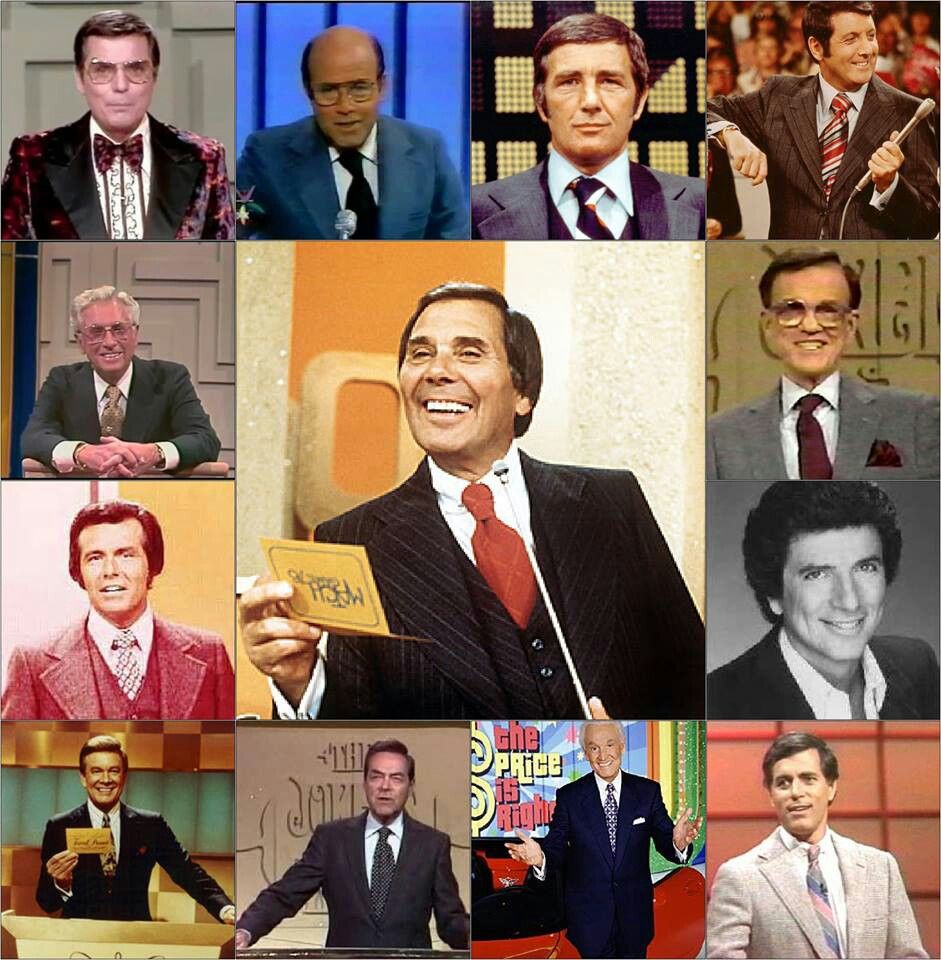
From the 1960s through the 80s, producers of these programs were prolific and turned their hosts into stars. The list includes such performers as Gene Rayburn (Match Game), Monty Hall (Let’s Make A Deal), Allen Ludden (Password), Gary Moore (To Tell the Truth), Chuck Woolery (Wheel of Fortune/Love Connection),Tom Kennedy (Name That Tune), the late Alex Trebek of “Jeopardy!” fame, and many others. As “Wheel of Fortune” host Pat Sajak takes his final spin in June 2024, Ryan Seacrest joins the ranks with other more recent additions like Steve Harvey (Family Feud), Howie Mandell (Deal or No Deal), Keke Palmer (Password, 2022), and Jane Lynch (The Weakest Link, US).
A “host” of hosts … Peter Marshall, Joe Garigiola, Richard Dawson, Monte Hall, Allen Ludden, Gene Rayburn, Bill Cullen, Bob Eubanks, Burt Convey, Wink Martindale, Jack Barry, Bob Barker, and Peter Tomarken.
Many shows started at local TV stations and grew in popularity until they became network products. Although most began at the network level, produced either in New York or Los Angeles, there were a few locals. Around 1975, the Dayton, Ohio edition of “Bowling for Dollars,” a sort of franchised show package that any station could license, was hosted weeknights by long-time radio personality, David G. McFarland. Most local stations chose the cheaper option, however, which was simply to air pre-produced programs like “Wheel of Fortune,” saving thousands on production costs.
At the network level, a staggering amount of money was generated by advertising, and show producers wielded a great deal of power over daytime television. Mark Goodson and Bill Todman produced such long-running shows as “The Price is Right” and “Match Game.” Their programs still generate ratings and money, even the reruns. Chuck Barris helmed “The Newlywed Game” and several others. Talk show host and producer Merv Griffin is responsible for two of the most popular shows still in production: “Jeopardy!” and “Wheel of Fortune.”
“Beat the Clock” started on the radio in 1948 and continued on television in various formats through 1980. Mark Goodson and Bill Todman produced the network TV versions.
Virtually every network scrambled to fill morning daytime slots with gameshows, from card games to shopping sprees. Every type of game or activity was being turned into a gameshow. Even PBS had a game show at one point called “Think Twice,” starring Monteria Ivey. Needless to say, it didn’t last very long.
Like other media, game shows have had their share of scandals over the years. The one with the farthest-reaching repercussions was the 1950s quiz show, “Twenty-One.” Advertisers and producers colluded to provide breakout contestants with quiz answers to keep them in the game longer and drive drama and viewership. Once discovered, convened hearings to determine how the scandal would affect future programs. Eventually, legislation was passed to limit advertisers’ influence over the outcome of these contests.
When he finally became a contestant on the show, Larsen focused on one particular pattern with every spin and timed his hit of the buzzer to stop the board at just the right moment. Through 40 spins, he avoided the prize-stealing “Whammy,” racked up his cash, and went home. The incident was not exactly scandalous, but it was certainly embarrassing for the network.
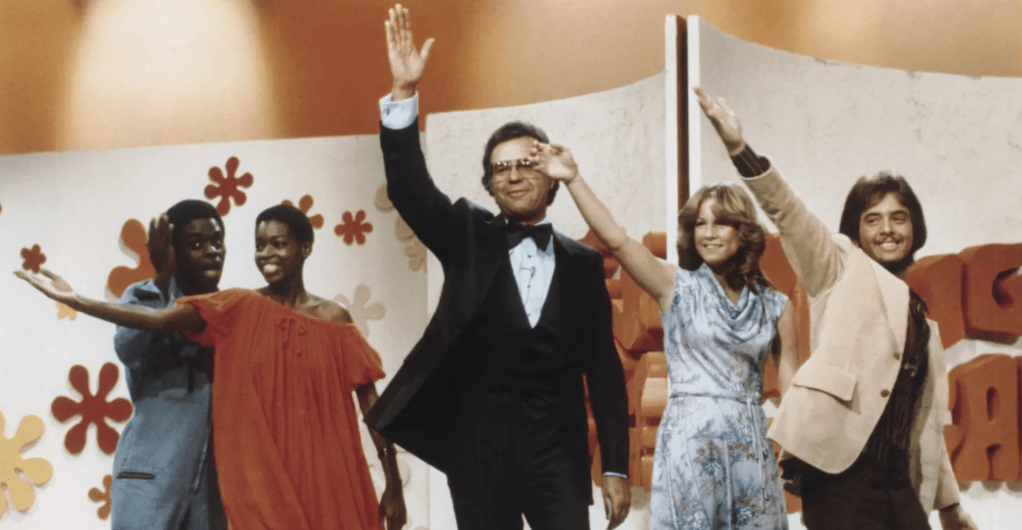
Photo: Jim Lange (center) on ‘The Dating Game’. EVERETT COLLECTION. The Dating Game (1965–1973, 1978–1980, 1986–1989, 1996–1999, 2021)
“Press Your Luck” has seen at least one reboot over the years, but after that incident, the gameboard’s electronics were greatly modified. As for Larsen, he lost a good bit of his money to a home robbery and bad financial decisions. Sadly, he died of cancer just 15 years later at the young age of 49.
Today, three long-running game shows still rule the airwaves: “Jeopardy!,” “The Price is Right,” and “Wheel of Fortune.” “Wheel” and “Jeopardy!” are syndicated programs airing at different times in local markets. However, “The Price is Right” remains a network behemoth that still anchors the CBS daytime lineup.
With its famous phrase, “Come on down,” inviting audience members to Contestants’ Row, “The Price is Right” is the longest-running game show on television. It debuted in 1956 but was revamped some years later. Prior to that, the program was hosted by the venerable “dean of game show hosts,” Bill Cullen. Don Pardo, later of “Jeopardy” and “Saturday Night Live” fame, was one of his announcers.
In 1972, CBS debuted a new, more modern version of the program. The network eventually broke convention by expanding from the typical 30-minute format to a full hour, capitalizing on the show’s wild popularity. They also tapped popular “Truth or Consequences” host Bob Barker to become master of ceremonies. The success of the new format led to a syndicated evening version hosted by Dennis James, also one of the earliest game show hosts.
Today, “Price” is the longest-running television game show at more than 9,000 episodes and Barker spent the last 35 years of his career holding the mic. Upon Barker’s retirement, comedian Drew Carey stepped in during the 2007 season, again giving it a fresh look and attracting a younger demographic.
As Ryan Seacrest assumes the role of spin-maestro on “Wheel of Fortune,” the rest of the show will stay pretty much the same. Vanna White will stay on, although her purpose seems superfluous at this point given the electronic nature of the puzzle board’s letters. She is apparently still needed to tap on a digital screen while someone in the control room pushes a button to reveal the letter.
Game shows generally offer a glimpse of ordinary people in an extraordinary, albeit artificial, situation. Behind door number three, each contestant can hope for a new car, and Monty Hall (and now Wayne Brady) always has a smile and a cash prize for finding that one random object in their pocket.
Those not lucky enough to appear on stage or failed to beat the clock, the buzzer, or whatever received the “home version” of the game they were on.
Some game shows, like Hall’s “Let’s Make A Deal,” are pure silliness, while others offer contestants the unrealistic promise of fulfilling their dreams (at least financially). But modern talent and reality gameshows, like “American Idol,” “Survivor,” and CBS’s “Big Brother,” dangle fame and fortune before their contestants, luring viewers in with contrived drama and fake infighting.
I know what I’m talking about, here. I was a compensated performer on NBC’s “America’s Got Talent” (AGT) in 2006. I met many of the contestants and witnessed their hope and agony as they struggled to meet sometimes impossible demands of producers. The show is crushing to those who compete, some of whom are seasoned, talented performers hoping for a break.
These programs never reveal to the audience the manipulation that goes on behind the scenes as producers subject the performers to the scrutiny of unqualified, B-list celebrity judges. Easy money? Hardly. Quiz shows can be fun and quick entertainment for contestant and viewer. But contests like AGT are arduous, dejecting, sometimes even humiliating for the contestants.
Sadly, it’s unlikely this particular form of gameshow is going away anytime soon. Talent and reality gameshows rake in millions of dollars in ad revenue for every episode, each artificially sweetened and chock full of “unscripted” flavor.
Fear not—the old-school gameshow format is making a resurgence. Thanks to connected TV, you can stream hundreds of these daytime diversions from nearly every decade since their inception. Amazon Prime even includes a channel called Buzzr, a gameshow buff’s paradise that runs them all day, all the time. (Buzzr is owned by Fremantle, the successor owner of the Mark Goodson-Bill Todman game show library.)
Like any other television programming, gameshows must be taken for what they are – mindless diversion. They were never meant to be Shakespeare or Ibsen. As children they often helped pass sick days home from school or gave our mothers something to do while ironing. However you experience them, they’re here to stay. So, until next time, this is Gery Deer saying, “Help control the pet population. Have your pet spayed or neutered. Goodbye, everybody.” (Special thanks to Bob Barker.)
It’s truly remarkable how we can develop such deep emotional bonds with family heirlooms. Whether it’s an antique jewelry box, a wax candle mold, or even a small piece of roof tile from a 19th-century courthouse, these objects hold a special place in our hearts as cherished remnants of days gone by.
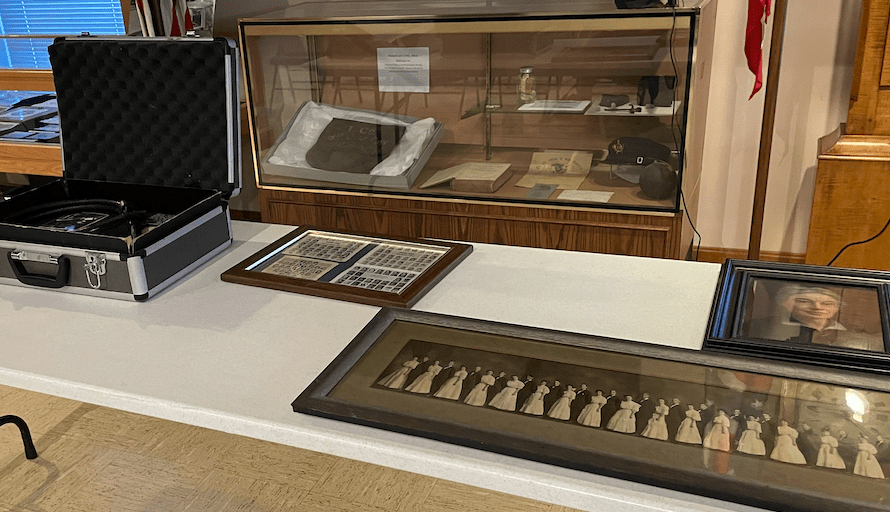
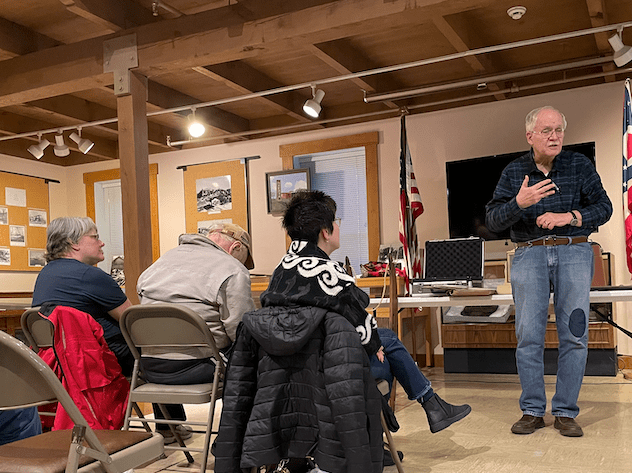
I recently attended an event promoted as a kind of show-and-tell at the local historical society. Visitors were encouraged to bring an item that had some significance to them, the history of the community, or their family, and share the story behind each piece.
Upon my arrival, I was greeted by a sight that stirred a sense of nostalgia. The organizers had proudly arranged the evening’s offerings on tables at the front of the room. Soon, a representative of the organization initiated the event, and one by one, each presenter stepped forward, their faces beaming with pride as they shared the personal significance of their cherished items.
It was like watching a live edition of The Antiques Roadshow minus the frequent condescension of the hosts. You know, “I’m sorry, but this frog statue lamp with a clock in its belly isn’t worth squat.” I always hated that. Anyway, I doubt any of the artifacts would have been for sale. You’d likely have to pry each one out of its owner’s cold, dead hands.
Even more impressive than the reverence with which each person spoke about their property was the variety of items they brought. One man brought a wooden dynamite crate, which was once used to carry explosives for stump removal at his grandparents’ farm. Another showed off his own grade school pictures, some 65 years old.
Others exhibited familial artifacts ranging from a military bayonet to a small jewelry box, which we learned was the owner’s only connection with her great-grandmother. Though very plain to the eye, it was priceless and beautiful to her, and perspective is everything.
When it originated with the speaker, like the school photos, the speaker relayed a personal account of the object’s significance. If, on the other hand, the possession once belonged to a loved one or close friend, the connection is very different. Things left behind by those before us can be deeply meaningful. Heirlooms strengthen our memory of someone and remind us of the relationship.
You’re unlikely to forget a departed parent, spouse, or sibling. But seeing and touching something that belonged to them reaffirms that connection tactilely and creates an emotional response, good and bad.
As I absorbed each story, a profound realization dawned on me. The pride, honor, or reverence—whatever you may call it—was not about the possessions. It was about the people in the stories, whether they were related or not to the speaker. After all, what is human society without stories? Stories shared between family and tribal members are how we preserve our history. And physical remnants of that history, like these family heirlooms, make the stories more tangible, more real.
And it doesn’t have to be about people who have passed on. For those in the room who had attended the same school, the antique class photos had a more profound, more personal association. Someone who’d been a student at the same school as several of the audience, but a half-century earlier, bound two generations, brought together because someone shared a story about a picture.
Finally, there’s something to be said for legacy. I think we all want to be remembered. I sincerely hope to leave behind more than a half-used pencil and a broken typewriter. But if so, I also hope someone will come up with a compelling and meaningful story about them. I think the ancestors of those who shared family items would be very proud of their legacy.
My parents left behind a treasure trove of memories, from books and dolls to trucks and tractors. Among these, I hold dear my father’s wristwatch. He personally handed it to me, sharing the story of its origin. When I gaze upon it, I am transported back to that moment. It’s not about the watch itself, but the emotional bond it represents, the moments he spent with me that hold the true value.
Gossip. It’s an insidious phenomenon that always hurts people. Usually, gossip is inaccurate and degrades even more as it travels from person to person. Gossip is a destructive game of telephone that usually ends in the victim’s humiliation.
Gossip begins with someone sharing something confidential, saying, “Hey, just between you and me…” and so on. But it’s doubtful the information will remain a secret. The story inevitably spreads like air escaping a leaky tire.
Although there is debate about whether gossip is predominantly negative, nothing good comes from it. One study even suggests that gossipers tend to have a “darker” personality, uncaring about the social consequences of their behavior. Another offers the theory that we’re motivated by a need to bond with others in our social circles, keep ourselves entertained, vent emotions, and establish social status.
Low self-esteem seems to be a common theme among gossipers. They validate themselves by spreading news of others’ misfortunes and by sharing negative stories about people, reinforcing their imaginary superiority.
All that sounds great academically. But, personally, I think people are just mean sometimes. They want to feel superior, so they start rumors and gossip to gain an upper hand—even if it’s all in imaginary. Ignorance probably plays a role, too. Those who spread gossip often believe the person at the story’s heart will never find out, so no harm done, right? Wrong. Trust me, they always find out.
In the past, gossip proliferated over the backyard fence or around the water cooler at work. However, with the advent of social media, gossip has taken on a new level, broadcasting misinformation to countless recipients at the speed of light. Clickbait is a perfect example of modern gossip-mongering, complete with a compelling story, video, and photos.
At this point, it’s probably important to clarify how I distinguish between gossip and rumor. Official definitions explain gossip as the spread of information that’s essentially true but likely unkind or hurtful. A rumor, on the other hand, is false information passed around without confirmation or conscience. However, I’m not convinced this distinction is always evident in practice. In my opinion, there’s very little difference between gossip and rumor, regardless of what old Mr. Webster says.
Regardless of your definition, one of the most important things to remember is how gossip affects the victim and how that affects the gossiper. In this context, the word “victim” refers to the person who is the subject or target of gossip. Since most of that information is false or intended to harm someone, that person is indisputably a victim. Although spreading gossip is not criminal, when those actions cause harm, there should be more severe consequences.
Victims of gossip can suffer devastating and long-lasting effects. I remember when I was in fifth grade, one of the bullies in my class made up a story about me that spread through our rural school like a bad case of Chicken Pox.
It was a painfully frustrating time for me. I already had to deal with being a 10-year-old adjusting to a strange new school. Simultaneously, however, I had to get good grades and spend every other waking minute defending myself against ridiculous lies.
Sometimes, gossip severely damages someone’s reputation or their livelihood. In such cases, it could be considered slander, and the harmed person may have a right to pursue legal action. The person who started the false information may be liable and must pay financial or other restitution.
We can’t control what others say about us, to whom, when, or how. At a time when misinformation and fake news are the norm, all we can do is abstain from its distribution. Think about it. Would you want someone gossiping about you, your business, coworkers, or your family?. Finally, remember that the best gossip is the kind you keep to yourself. And, if you hear gossip or the rumor mill is churning out something about someone close to you, do what you can to help put an end to it. I’ll close with a quote from the great Hee Haw Honeys song: “We’re not ones to go around repeating gossip. So, you’d better be sure to listen close the first time.”











 The Jamestown Comet