“How did you go bankrupt?” Bill asked. “Two ways,” Mike said. “Gradually and then suddenly.” Ernest Hemingway’s characters in his 1926 novel, “The Sun Also Rises,” were speaking about money. But I think we go morally bankrupt pretty much the same way. I mean, when did people in our country become so mean to each other, so divisive? Has it always been that way, and I’ve just been too head-down in my own world to notice? Maybe it’s that the only people with a megaphone or resonant rhetoric tend to be the extremists. But the real question is, what is “morality?” That is a complicated question with no definitive answer.
I have always believed that, like so many of life’s perceptions, the idea of morality is in the eye of the beholder. I mean that the concept of decency or morality (and those aren’t the same things) is based on your perspective or what you absorb from those around you. For instance, if you were close to your parents, and they were friendly people who shared what they had, helped their neighbors, and worked hard every day to provide a good life for you, then, odds are, you’ll behave similarly. But it isn’t always so.
If you were not close to your parents or lived in animosity with them for some reason, you might end up the lay-about who steals from the cash register or kicks puppies. But I’m afraid this is slipping into a philosophical discussion of nature vs. nurture, which gets messy. So, let’s move on.
Isn’t it entirely possible that the idealistic concept of morality is simply imaginary, realistically unachievable, and that sometimes people are just bad? My unqualified opinion says yes. But wait, is my position unqualified? I know people, and I can tell when they intentionally cause harm to me or others. I’d say that pretty well qualifies me, or anyone else, to judge bad vs. good. Of course, that opinion remains relative to my point of view. And God knows we all have nasty relatives.
Speaking of God, which I don’t do very much because it’s one of those topics to be avoided at all the dinner parties I don’t go to, like sex and politics. But – when someone says, “God gives us a moral compass.” To that, I will only say this. To which “god” are you referring?
An estimated 700 different creator deities (gods) are worshipped worldwide. If you ask one follower of each, I would imagine they’d all say theirs is the only one. So be it. But, if the wrath of any one of those vengeful, judgmental deities was supposed to persuade people to behave themselves, I think it didn’t work. Think about it, more and bloodier wars have been – and still are – fought over tribal god images than any other reason in the history of mankind. Therefore, any idea of a religiously motivated morality strains credibility.
You alone must decide what morality is for yourself. Look, we all have good and bad in us; one person’s mistake is another person’s malice. A good deed to you might be torture for someone else. Some people think having a woman who displays her bare ankles is immoral, while there are likely people out there for whom any clothing at all would be considered offensive.
The real question is, are there unilateral rights and wrongs (morals)? It’s likely that most people would answer in the affirmative. For example, a vast majority would probably agree that killing is wrong. If you’re steering your morality ship by the Bible’s Ten Commandments, it’s right there in the text: “Thou shalt not kill.” However, it’s often argued by theologians that this is an incorrect translation. Some say the line should be, “Thou shalt not murder,” giving the commandment a very different meaning. Once again, it’s all about interpretation.
As to the original question of whether our society is going morally bankrupt, the interpretative relativity of the facts makes analysis impossible. But, given the constant reports of murder, war, greed, and fanatical extremism in the world gnawing at the very foundation of basic morality, I’d say our account is already in the red.
We are in a new Cold War with Russia. Simply put, Russian President Vladimir Putin is a totalitarian dictator pretending to run a democracy. He believes he is “the chosen one” who can rebuild the Soviet Union to its former glory, and the invasion of Ukraine is the vanguard. But why? What is fueling this resurgence of communist values and acceptance of totalitarian rule by the Russian people? More importantly, what’s that to do with us?
Keep in mind there was never anything glorious about the Soviet Union. It was a political mess. Contrary to pop mythology, it didn’t collapse because of President Ronald Reagan’s “Tear Down This Wall” speech in Berlin. The U.S.S.R. fell apart because it was top-heavy. Political infighting, corruption, defections, and KGB activity, constantly threatened to tear it apart. The country was finally brought to its knees by the weight of a stagnant economy maintaining an unnecessary Cold War superiority, an overextended military, and a laundry list of failed Soviet policies.
The disintegrating infrastructure threw the government into turmoil. President Mikhail Gorbachev worked to rebuild his country with a free market economy, reduced military spending, and open democracy. It was a good idea on paper, but generations of Russian people had known only “the party” and had little understanding of individual prosperity or free enterprise.
The Unholy Alliance – Russian President Vladimir Putin, right, and North Korea’s leader Kim Jong Un shake hands during their meeting in Vladivostok, Russia, Thursday, April 25, 2019. (AP Photo/Alexander Zemlianichenko, Pool, File)
Instead of comfort and security, social upheaval, increased crime, and economic crises threw the country into disarray. History has taught us that when people suffer, all it takes to move the needle toward dictatorship is one man saying the right things at the right time. In 1930s Germany, Adolph Hitler promised a new world for his country under a common rule that would ensure jobs and prosperity. You know what happened next. Although his motivation may not be as sinister as Hitler’s, in Russia, Putin’s just getting started.
Over the last several years, Putin has been spreading familiar, Soviet-era rhetoric—I can save you, Russia will be prosperous again, America is evil, and so on. The people listened and re-elected him for two consecutive, six-year terms. He even signed a law allowing him to run twice more in his lifetime. Since his KGB-era government squashes any potential challenger, he could remain dictator, oops, sorry, “president,” until 2036. But he’ll likely update that law again and stay until his death.
As the war between Ukraine and Russia continues and Putin attempts to rally communist allies in Southeast Asia, it’s clear he has no intention of slowing down. One example is his recent meeting with North Korean “President” Kim Jong Un. In this reporter’s opinion, Vladimir Putin intends to fully reconstruct the U.S.S.R. to how it was in his youth—a world power. But this time, he wants it to be “the” world power. His actions indicate that he sees the current U.S. political system as tumultuous and plans to take advantage of that distraction while he hopes for a Trump revival.
From my observations, Putin sees Donald Trump as a kindred spirit with the same self-aggrandizing, power-hungry appetite. But he also views him as weak, self-serving, inexperienced, and unfocused, with no genuine personal convictions. He says whatever pleases his followers. That’s not Putin’s method of operation.
Make no mistake, Putin’s a narcissist of majestic proportions. But somewhere in there, he genuinely believes he’s saving his beloved motherland from ruin. If he can rebuild the U.S.S.R. while the American people and their allies are distracted by a haywire presidential election and the war in Gaza, America will be too weak to stop him.
My point is that we should be worried—very worried. Putin will continue his advancements. If we don’t end political divisiveness, begin to work together for the common good, and develop a solid geopolitical policy on Russia before Putin’s plans move forward, this revived Cold War could get hot rapidly.
I don’t like to write about politics, and I promised I wouldn’t do it much in this column. But this is important. We must stop the Jerry Springer-like sideshow that’s playing out in Washington and take this year’s election more seriously. The security of our world, the future of our democracy, and the safety of our country depend on it.
(Editor’s Note: This is an extended edition of the June 19, 2024 print edition of Deer In Headlines II. Throughout the piece you’ll find links to IMDB pages and YouTube videos which give you more information and even let you watch episodes of the shows mentioned. One link is a full documentary of the events surrounding a 1984 episode of the show, “Press Your Luck.” I hope you enjoy it.)
See if any of these titles spin your wheel: “To Tell the Truth,” “Truth or Consequences,” “Press Your Luck,” “Password,” “Card Sharks,” “The $64,000 Question,” “Who Wants to Be a Millionaire,” “$100,000 Pyramid,” “What’s My Line.” – the list goes on. Welcome to the world of television gameshows, a uniquely American invention that has endured long past the time any survey might have said it would.
Television game shows hit the air almost the moment picture tubes began to glow in households nationwide. The genre may change over the years, and some are downright ridiculous. But whatever you think of them, these programs continue to be a popular influencer of American culture.
According to broadcast historians, the first game show was a radio quiz show called “Brooklyn Eagle Quiz on Current Events.” It debuted in 1923 on WNYC, New York, but eventually achieved national broadcast status, setting the stage for all that would follow.
Game shows are categorized by how the contestants play. Quiz shows, like “Who Wants to Be A Millionaire,” rely on a question-and-answer trivia format. Panel shows, like “Match Game,” use groups of celebrities to move the game along. Activity-oriented programs, such as the more recent “Total Wipeout,” require contestants to do something physical. Reality game shows and talent contests, like “Survivor” and “American Idol,” are relatively new formats. However, it could be argued that shows like “The Gong Show” and possibly Ed McMahon’s “Star Search” were Simon Cowell’s inspiration for programs like “Britain’s Got Talent” and “Idol.”
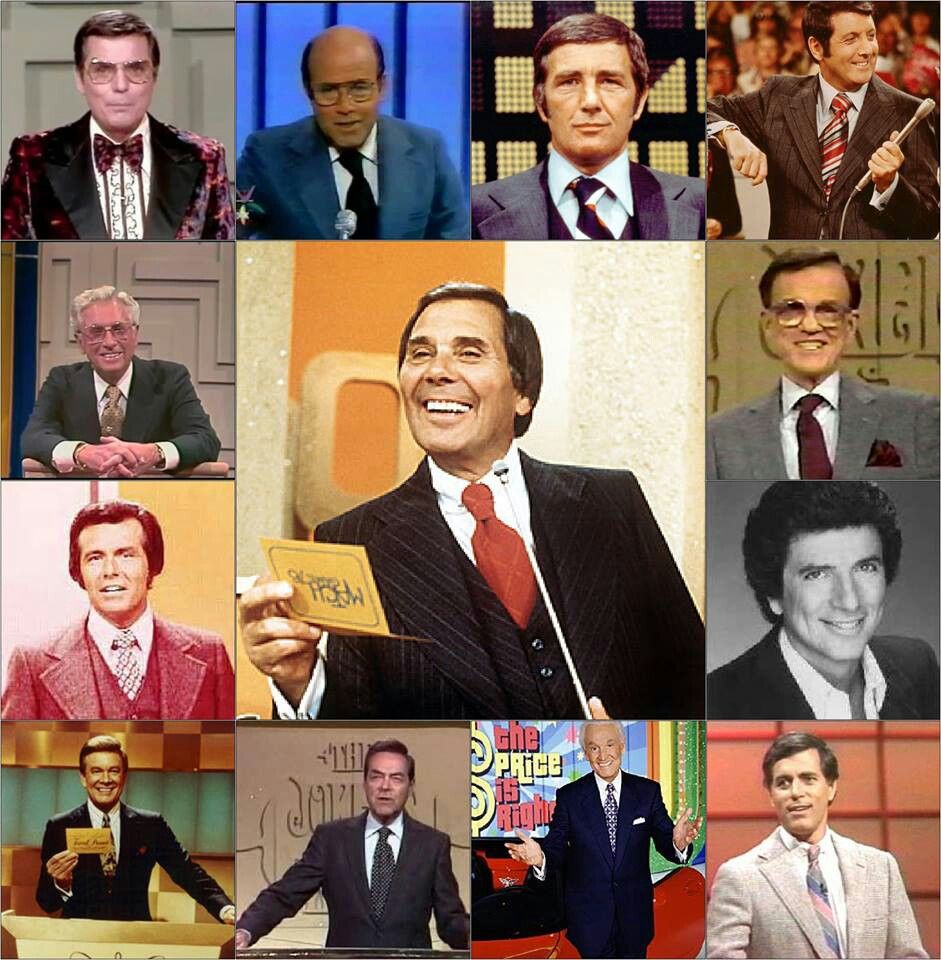
From the 1960s through the 80s, producers of these programs were prolific and turned their hosts into stars. The list includes such performers as Gene Rayburn (Match Game), Monty Hall (Let’s Make A Deal), Allen Ludden (Password), Gary Moore (To Tell the Truth), Chuck Woolery (Wheel of Fortune/Love Connection),Tom Kennedy (Name That Tune), the late Alex Trebek of “Jeopardy!” fame, and many others. As “Wheel of Fortune” host Pat Sajak takes his final spin in June 2024, Ryan Seacrest joins the ranks with other more recent additions like Steve Harvey (Family Feud), Howie Mandell (Deal or No Deal), Keke Palmer (Password, 2022), and Jane Lynch (The Weakest Link, US).
A “host” of hosts … Peter Marshall, Joe Garigiola, Richard Dawson, Monte Hall, Allen Ludden, Gene Rayburn, Bill Cullen, Bob Eubanks, Burt Convey, Wink Martindale, Jack Barry, Bob Barker, and Peter Tomarken.
Many shows started at local TV stations and grew in popularity until they became network products. Although most began at the network level, produced either in New York or Los Angeles, there were a few locals. Around 1975, the Dayton, Ohio edition of “Bowling for Dollars,” a sort of franchised show package that any station could license, was hosted weeknights by long-time radio personality, David G. McFarland. Most local stations chose the cheaper option, however, which was simply to air pre-produced programs like “Wheel of Fortune,” saving thousands on production costs.
At the network level, a staggering amount of money was generated by advertising, and show producers wielded a great deal of power over daytime television. Mark Goodson and Bill Todman produced such long-running shows as “The Price is Right” and “Match Game.” Their programs still generate ratings and money, even the reruns. Chuck Barris helmed “The Newlywed Game” and several others. Talk show host and producer Merv Griffin is responsible for two of the most popular shows still in production: “Jeopardy!” and “Wheel of Fortune.”
“Beat the Clock” started on the radio in 1948 and continued on television in various formats through 1980. Mark Goodson and Bill Todman produced the network TV versions.
Virtually every network scrambled to fill morning daytime slots with gameshows, from card games to shopping sprees. Every type of game or activity was being turned into a gameshow. Even PBS had a game show at one point called “Think Twice,” starring Monteria Ivey. Needless to say, it didn’t last very long.
Like other media, game shows have had their share of scandals over the years. The one with the farthest-reaching repercussions was the 1950s quiz show, “Twenty-One.” Advertisers and producers colluded to provide breakout contestants with quiz answers to keep them in the game longer and drive drama and viewership. Once discovered, convened hearings to determine how the scandal would affect future programs. Eventually, legislation was passed to limit advertisers’ influence over the outcome of these contests.
When he finally became a contestant on the show, Larsen focused on one particular pattern with every spin and timed his hit of the buzzer to stop the board at just the right moment. Through 40 spins, he avoided the prize-stealing “Whammy,” racked up his cash, and went home. The incident was not exactly scandalous, but it was certainly embarrassing for the network.
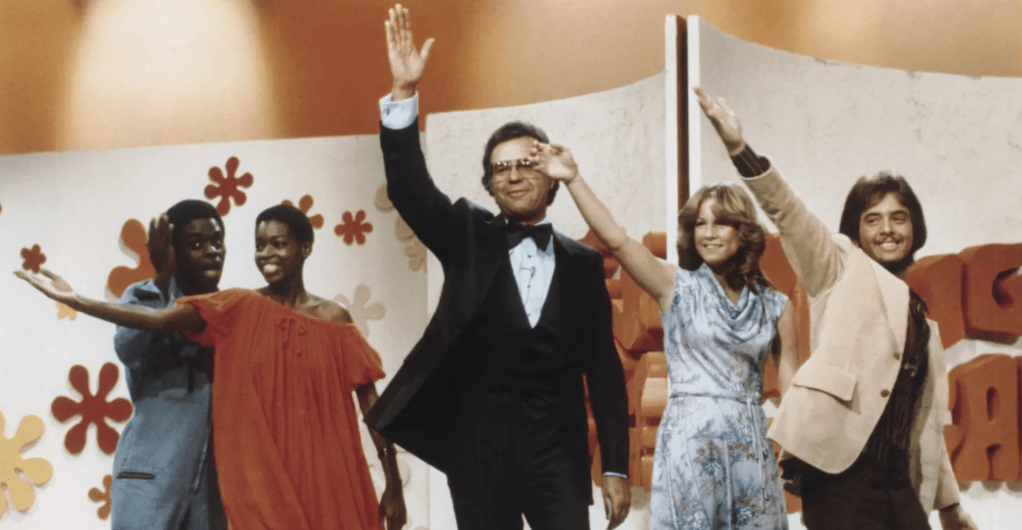
Photo: Jim Lange (center) on ‘The Dating Game’. EVERETT COLLECTION. The Dating Game (1965–1973, 1978–1980, 1986–1989, 1996–1999, 2021)
“Press Your Luck” has seen at least one reboot over the years, but after that incident, the gameboard’s electronics were greatly modified. As for Larsen, he lost a good bit of his money to a home robbery and bad financial decisions. Sadly, he died of cancer just 15 years later at the young age of 49.
Today, three long-running game shows still rule the airwaves: “Jeopardy!,” “The Price is Right,” and “Wheel of Fortune.” “Wheel” and “Jeopardy!” are syndicated programs airing at different times in local markets. However, “The Price is Right” remains a network behemoth that still anchors the CBS daytime lineup.
With its famous phrase, “Come on down,” inviting audience members to Contestants’ Row, “The Price is Right” is the longest-running game show on television. It debuted in 1956 but was revamped some years later. Prior to that, the program was hosted by the venerable “dean of game show hosts,” Bill Cullen. Don Pardo, later of “Jeopardy” and “Saturday Night Live” fame, was one of his announcers.
In 1972, CBS debuted a new, more modern version of the program. The network eventually broke convention by expanding from the typical 30-minute format to a full hour, capitalizing on the show’s wild popularity. They also tapped popular “Truth or Consequences” host Bob Barker to become master of ceremonies. The success of the new format led to a syndicated evening version hosted by Dennis James, also one of the earliest game show hosts.
Today, “Price” is the longest-running television game show at more than 9,000 episodes and Barker spent the last 35 years of his career holding the mic. Upon Barker’s retirement, comedian Drew Carey stepped in during the 2007 season, again giving it a fresh look and attracting a younger demographic.
As Ryan Seacrest assumes the role of spin-maestro on “Wheel of Fortune,” the rest of the show will stay pretty much the same. Vanna White will stay on, although her purpose seems superfluous at this point given the electronic nature of the puzzle board’s letters. She is apparently still needed to tap on a digital screen while someone in the control room pushes a button to reveal the letter.
Game shows generally offer a glimpse of ordinary people in an extraordinary, albeit artificial, situation. Behind door number three, each contestant can hope for a new car, and Monty Hall (and now Wayne Brady) always has a smile and a cash prize for finding that one random object in their pocket.
Those not lucky enough to appear on stage or failed to beat the clock, the buzzer, or whatever received the “home version” of the game they were on.
Some game shows, like Hall’s “Let’s Make A Deal,” are pure silliness, while others offer contestants the unrealistic promise of fulfilling their dreams (at least financially). But modern talent and reality gameshows, like “American Idol,” “Survivor,” and CBS’s “Big Brother,” dangle fame and fortune before their contestants, luring viewers in with contrived drama and fake infighting.
I know what I’m talking about, here. I was a compensated performer on NBC’s “America’s Got Talent” (AGT) in 2006. I met many of the contestants and witnessed their hope and agony as they struggled to meet sometimes impossible demands of producers. The show is crushing to those who compete, some of whom are seasoned, talented performers hoping for a break.
These programs never reveal to the audience the manipulation that goes on behind the scenes as producers subject the performers to the scrutiny of unqualified, B-list celebrity judges. Easy money? Hardly. Quiz shows can be fun and quick entertainment for contestant and viewer. But contests like AGT are arduous, dejecting, sometimes even humiliating for the contestants.
Sadly, it’s unlikely this particular form of gameshow is going away anytime soon. Talent and reality gameshows rake in millions of dollars in ad revenue for every episode, each artificially sweetened and chock full of “unscripted” flavor.
Fear not—the old-school gameshow format is making a resurgence. Thanks to connected TV, you can stream hundreds of these daytime diversions from nearly every decade since their inception. Amazon Prime even includes a channel called Buzzr, a gameshow buff’s paradise that runs them all day, all the time. (Buzzr is owned by Fremantle, the successor owner of the Mark Goodson-Bill Todman game show library.)
Like any other television programming, gameshows must be taken for what they are – mindless diversion. They were never meant to be Shakespeare or Ibsen. As children they often helped pass sick days home from school or gave our mothers something to do while ironing. However you experience them, they’re here to stay. So, until next time, this is Gery Deer saying, “Help control the pet population. Have your pet spayed or neutered. Goodbye, everybody.” (Special thanks to Bob Barker.)
It’s truly remarkable how we can develop such deep emotional bonds with family heirlooms. Whether it’s an antique jewelry box, a wax candle mold, or even a small piece of roof tile from a 19th-century courthouse, these objects hold a special place in our hearts as cherished remnants of days gone by.
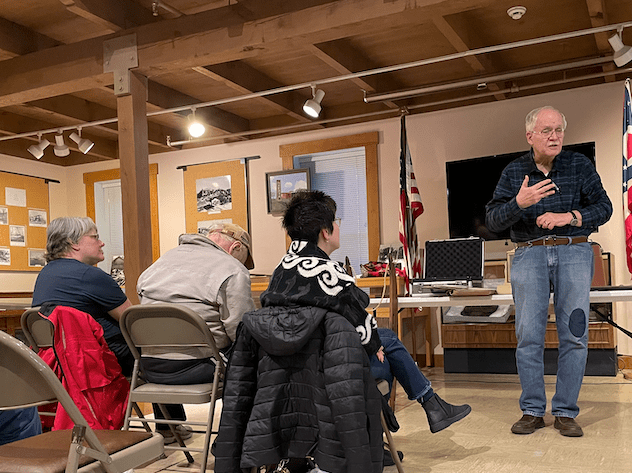
I recently attended an event promoted as a kind of show-and-tell at the local historical society. Visitors were encouraged to bring an item that had some significance to them, the history of the community, or their family, and share the story behind each piece.
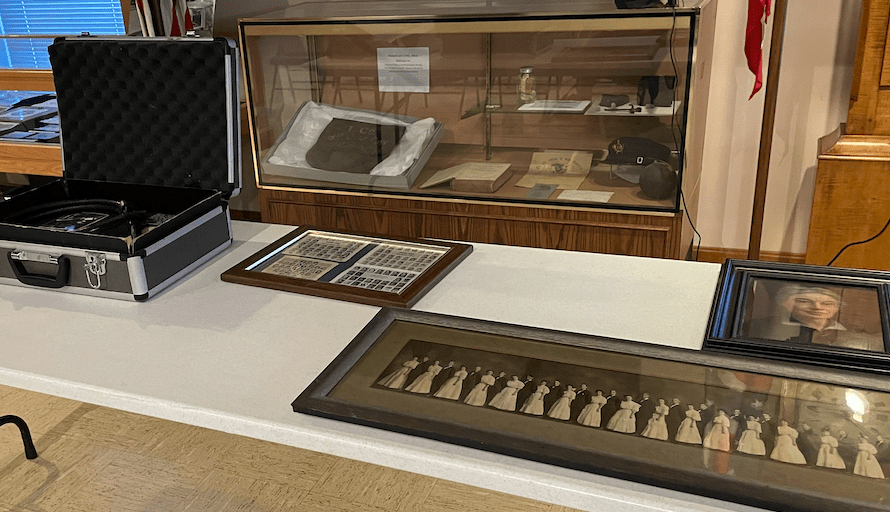
Upon my arrival, I was greeted by a sight that stirred a sense of nostalgia. The organizers had proudly arranged the evening’s offerings on tables at the front of the room. Soon, a representative of the organization initiated the event, and one by one, each presenter stepped forward, their faces beaming with pride as they shared the personal significance of their cherished items.
It was like watching a live edition of The Antiques Roadshow minus the frequent condescension of the hosts. You know, “I’m sorry, but this frog statue lamp with a clock in its belly isn’t worth squat.” I always hated that. Anyway, I doubt any of the artifacts would have been for sale. You’d likely have to pry each one out of its owner’s cold, dead hands.
Even more impressive than the reverence with which each person spoke about their property was the variety of items they brought. One man brought a wooden dynamite crate, which was once used to carry explosives for stump removal at his grandparents’ farm. Another showed off his own grade school pictures, some 65 years old.
Others exhibited familial artifacts ranging from a military bayonet to a small jewelry box, which we learned was the owner’s only connection with her great-grandmother. Though very plain to the eye, it was priceless and beautiful to her, and perspective is everything.
When it originated with the speaker, like the school photos, the speaker relayed a personal account of the object’s significance. If, on the other hand, the possession once belonged to a loved one or close friend, the connection is very different. Things left behind by those before us can be deeply meaningful. Heirlooms strengthen our memory of someone and remind us of the relationship.
You’re unlikely to forget a departed parent, spouse, or sibling. But seeing and touching something that belonged to them reaffirms that connection tactilely and creates an emotional response, good and bad.
As I absorbed each story, a profound realization dawned on me. The pride, honor, or reverence—whatever you may call it—was not about the possessions. It was about the people in the stories, whether they were related or not to the speaker. After all, what is human society without stories? Stories shared between family and tribal members are how we preserve our history. And physical remnants of that history, like these family heirlooms, make the stories more tangible, more real.
And it doesn’t have to be about people who have passed on. For those in the room who had attended the same school, the antique class photos had a more profound, more personal association. Someone who’d been a student at the same school as several of the audience, but a half-century earlier, bound two generations, brought together because someone shared a story about a picture.
Finally, there’s something to be said for legacy. I think we all want to be remembered. I sincerely hope to leave behind more than a half-used pencil and a broken typewriter. But if so, I also hope someone will come up with a compelling and meaningful story about them. I think the ancestors of those who shared family items would be very proud of their legacy.
My parents left behind a treasure trove of memories, from books and dolls to trucks and tractors. Among these, I hold dear my father’s wristwatch. He personally handed it to me, sharing the story of its origin. When I gaze upon it, I am transported back to that moment. It’s not about the watch itself, but the emotional bond it represents, the moments he spent with me that hold the true value.
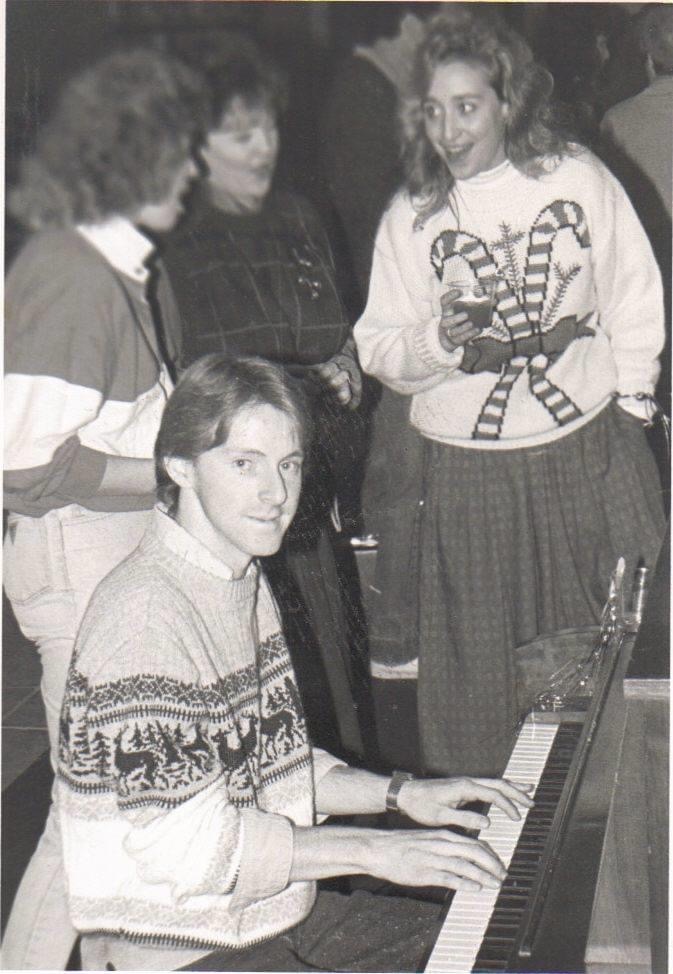
“It’s nine o’clock on a Saturday. The regular crowd shuffles in.” Those are the first lines of Billy Joel’s “Piano Man,” a song that always transports me back to my college days. To help pay for school, I was the pianist at a small Italian restaurant. Even in the 80s, it was old-fashioned, with one large room outlined by raised booths along the walls and a few floor tables in the middle. The decor was, what’s the word, beige. Yep, a lot of beige. Or was it brown? It’s tough to be sure because the lighting was pretty low.
Every Friday and Saturday evening, for about three hours, I performed all instrumentals on a small studio upright. I was like a live Muzak machine without the lyrics. I. Did. Not. Sing. Period. No one would have wanted to hear that. You might as well go outside and toss an alley cat into an upright trash can for that cacophony.
I had a repertoire of about 250 pieces, mostly pop and oldies, but I tossed in the occasional classical number just to show off. A quiet tinkling of “Fur Elise” goes particularly well with linguini, and the leg of lamb begged delivery of Bach’s “Sheep May Safely Graze.” I can’t read music, so everything was by ear. I memorized each song pretty much the first time it fell from my ear to my hands. Regulars would often bring a tape of some song they wanted me to play, and I’d learn it before their next visit.
“Piano Man” Gery Deer, performing for a holiday event at Sinclair Community College in 1988.
Once in a while, I’d break out the occasional show tune. On slower nights, I’d rearrange some old TV show theme song into a long, drawn-out ballad. You should hear my dramatic rendition of “Gilligan’s Island” at half speed with Liberace-esque flourishes. People would ask if it was some rare piece by Rubinstein or Mozart. I’d reply, “Oh, no. It’s an original by Schwartz (Sherwood, that is – go look it up).
Playing in a restaurant isn’t all tickling the ivories and clever combinations of sets. It’s more about the people. Unlike a “piano bar” or dueling pianos show, restaurant performances are more atmosphere than anything else. Still, although I got paid for my hours on the bench, my livelihood really depended on tips.
Depending on the traffic, my available talent that evening, and the generosity of the customers, I could have a forty-dollar or four-hundred-dollar night. The latter required some people skills. I was unable to respond with more than a smile or nod when someone tipped me while I was playing. So, I’d take a break at my first opportunity and walk over to their table to thank them.
Here’s a secret about restaurant or bar piano players. We are always watching you. No, I didn’t care what you ordered. I never gave a thought to how stingy you were about tipping the waitstaff after spending a ridiculous amount on too many bottles of cheap wine. Nor did it matter to me that your date’s dress was so short your wife would certainly have disapproved.
No, I was studying my audience’s reaction. It was gratifying when people clearly enjoyed my work and that it added to their evening experience. If a table was paying particular attention to one kind of music, I’d adjust my set list accordingly. More often than not, a request or early tip came from one of those parties, generally the lady of the table. I think the guys were embarrassed to come up to me. I have no idea why.
During my three years there, I also learned a great deal about human behavior. Restaurants only provide a two-dimensional view of human interaction, but it’s alive with celebrations, sadness, gluttony, and togetherness.
I was very young then, so I also learned a lot about myself, particularly that I was more introverted than I’d ever realized. I’d like to think my music always improved someone’s day and that it still does. At least, I hope so.
If a street or restaurant musician ever makes your day just a little brighter, please take time to tell them so and drop a few bucks in their jar. You’ll make their day and yours, too.
Have you ever considered a microcosm? Chances are you haven’t, but we are exposed to them almost every day. Essentially, a microcosm is anything in miniature that represents something bigger. For our purposes, a microcosm is a small group or community whose characteristics represent a larger one.
We see microcosms everywhere, and we’re usually unaware of them. Some are fictional, existing only in books, movies, television, and theatre. Others are happening around us, whether we’re integrated participants or outside observers. Let’s look at a couple of examples.
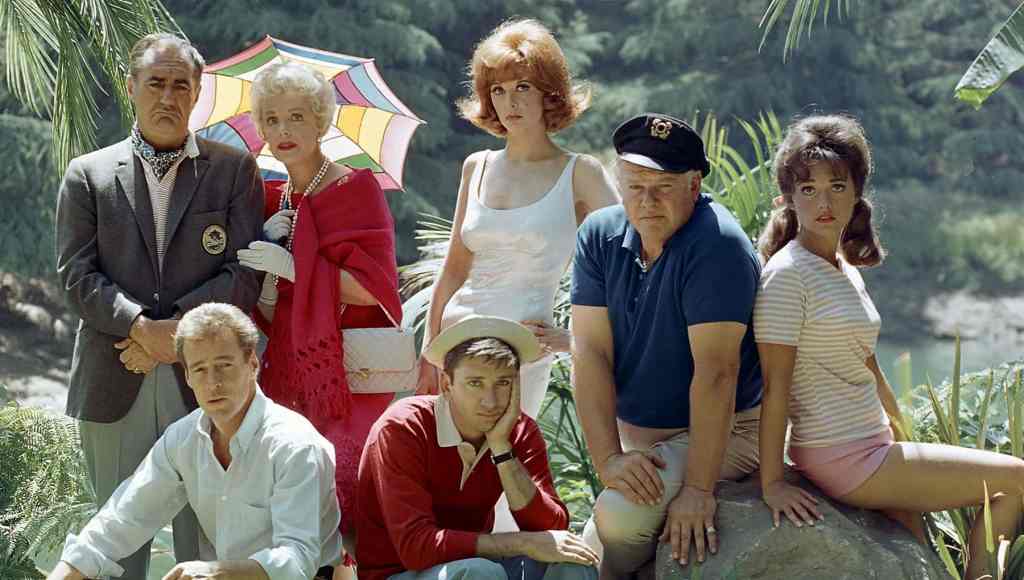
Consider the classic TV show “Gilligan’s Island,” which its creator, Sherwood Schwartz, referred to as a social microcosm. It featured seven characters, each representing a different socioeconomic position. Gilligan and the Skipper embodied the working class, while the Professor symbolized academia.
Mr. and Mrs. Howell (the millionaire and his wife) represented the elite, privileged upper crust. Mary Ann, a girl from the heartland, brought an earthy, grounded perspective, and Ginger, the movie star, added a touch of glamour.
Gilligan’s Island creator Sherwood Schwartz called the slapstick-laden sitcom of the 60s a “social microcosm” because of the socio-economic makeup of the characters.
Shipwrecked on an island in the middle of the Pacific, the writers put these people in absurdly improbable situations where each demonstrated their own inherent characteristics, however unrealistically. That’s where the comedy came from, and it worked.
Of course, to suspend the disbelief and immerse the viewer into the cartoon-like world, the show generally left out more realistic issues in such a situation. Problems like food, water, clothing, and shelter only arose when a comedic lack of some basic survival needs drove the story. But that’s TV. What about in real life? Where do microcosms exist day-to-day?
Recently, I found myself at a family birthday party in a local bowling alley. The guest of honor was turning 18, and a lively group of teenagers had gathered around the scoring console, ready for a game. As the afternoon progressed, the pitcher of soda ran dry, and the pizza had disappeared. Hunger pangs set in. (Kids eat a lot, wow!) With nothing else to do, I volunteered to make a snack bar run, setting the stage for an interesting observation of a real-life microcosm.
It was a Saturday afternoon, and the place was packed. Nearly every lane was occupied. As I walked along the service area at the back wall, past the shoe rental and pro shop, I suddenly noticed how much real life was happening all around me, and it all registered in my mind with sounds.
When I first realized what I was listening to, I literally froze for a moment. A woman nearly collided with me as she hurried along, balancing a pizza, drinks, and bowling shoes. I was so surprised by how I felt at the moment that I was compelled to step out of the foot traffic, close my eyes, and just listen.
Amidst the chaos, I focused on individual sounds. I heard the familiar thud as bowling balls dropped onto the hardwood floors and the dull rumble as each raced down the lane. Finally, the unmistakable crash of the pins as the ball hit them or the disheartening clunk if it dropped into the gutter.
Above pin resets, hand dryers, and clanking ball returns were the sounds of people living life. This was the microcosm of the moment—celebrations, first dates, families, young, old, and everyone in between.
I opened my eyes, looked around, and tried to put sight with sound. More birthday parties, a small child, with a ramp and dad’s help, making her first attempt to roll the ball. Neither she nor her parents will ever forget that day. A couple of lanes down, several older women chatted and crocheted between frames. One of the women working on a large afghan appeared to be winning.
I was standing among people from many different walks and stages of life. They all had one purpose, albeit the motivations were different. Everyone was there to enjoy the game, be with family and friends, and create lasting memories.
Eventually, I had to complete my mission and get the food back to our group before the teenagers ate their own shoes. But I can still hear those sounds and remember all the life that was being lived on that one normal day at the bowling alley.
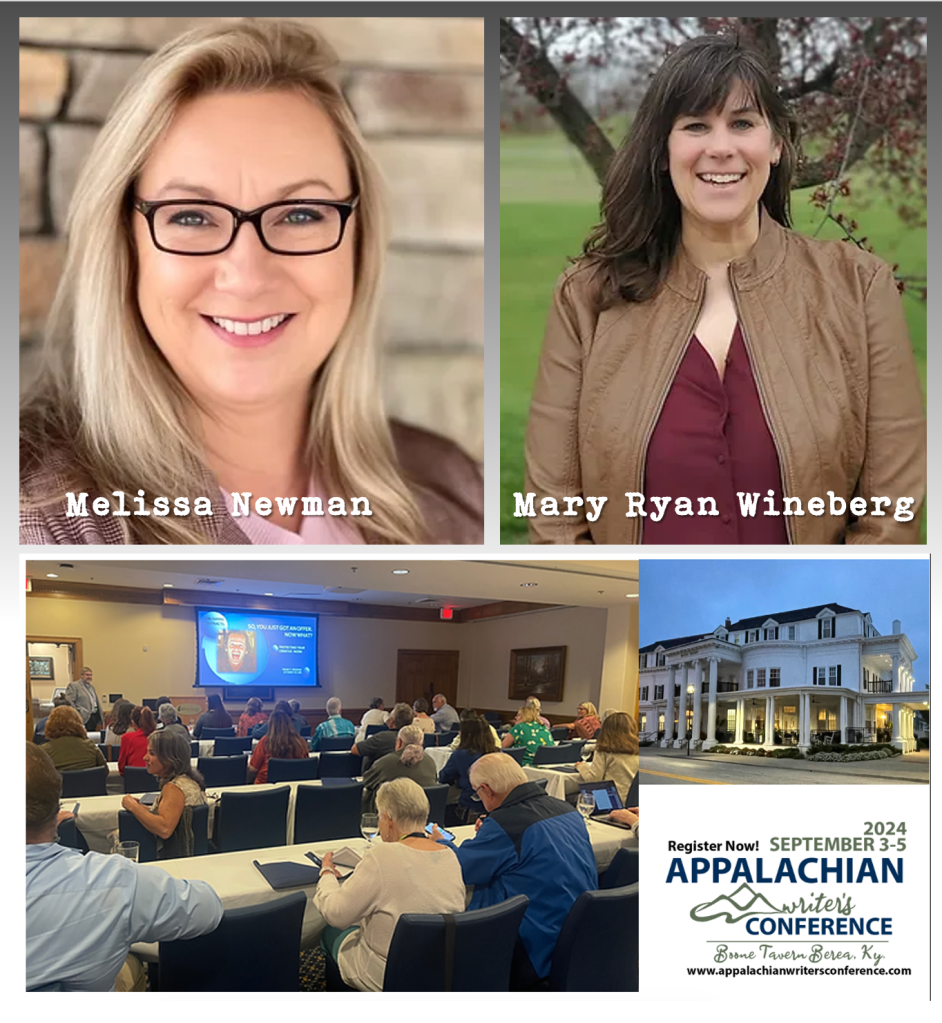
In this episode, Deer In Headlines Podcast host, Gery Deer, speaks with organizers of the Appalachian Writers Conference, slated for September 3rd through the 5th, 2024, in Berea, Kentucky. Set at the historic Boone Tavern, this year’s conference explores genre writing with programs by award-winning authors of mystery, crime, romance, dystopian, and fantasy novels.
Founded by Melissa Newman, Ed.D., President and CEO of Martin Sisters Publishing, the Appalachian Writers Conference (AWC) offers beginning and intermediate writers the opportunity to sharpen their skills and learn new techniques from a skill-diverse, experienced faculty. The conference also features professional business presentations on topics such as building the author brand, public relations, dissecting contracts, and libel protection.
“I strongly believe that everyone has a story, and most people have more than one,” Newman explained. “The tools and skills are waiting in the gap between these stories and becoming a published author. That’s what we offer at the AWC annual conference, getting writers what they need to step into building a successful career as an author.”
Many of last year’s award-winning faculty will return for the 2024 conference, including epic fantasy/romance author Summer Hanford, fiction novelist Sherry Robinson, and political history editor and journalist Dr. Pam Parry. Cannes Film Festival Finalist screenwriter Mark Daniels returns as well. Frank K. Newman, J.D., President and CEO of the law firm Cole, Cole, Anderson & Newman, PSC, will be back to share insights into publishing and media contracts.
New faces on the faculty team include Susan Furlong, who will present sessions on character development and choosing a crime genre. Among her many accomplishments is, “Shattered Justice,” the New York Times Best Crime Novel of the Year. Her new love-inspired thriller, “Lethal Wilderness Trap,” is set for a 2025 release is now available for pre-order from Harlequin.
Gery Deer, founder of the public relations media agency GLD Communications, is another new addition. Author of the Pulitzer-nominated op-ed series “Deer In Headlines,” Deer will lead sessions on author brand building, PR, and marketing.
In addition to class presentations, faculty will be on hand at lunch for the “Ask Me Anything” panels. The AWC experts will answer questions and discuss writing and publishing topics in a conversational setting.
New this year, Martin Sisters Publishing and the Appalachian Writers Conference present the Appy Inkwell Awards 2024. From now until July 1st, writers can submit the first 2,500 words of a full-length book manuscript in fiction, non-fiction, or memoir categories.
“We want to give writers a chance to have their work recognized,” said Appy Inkwell Awards Coordinator, writer, and English Literature instructor Mary Ryan Wineberg. “We may even discover some new literary talent.” The entry fee is $25, and prizes include:
First Prize: Publishing contract with Martin Sisters Publishing and free 2024 Appalachian Writers Conference registration.
Second Prize: Free Registration to the 2024 Appalachian Writers Conference and a $50 gift certificate to the Taleless Dog Bookstore in Berea.
Third Prize: Free Registration to the to the 2024 Appalachian Writers Conference
Gossip. It’s an insidious phenomenon that always hurts people. Usually, gossip is inaccurate and degrades even more as it travels from person to person. Gossip is a destructive game of telephone that usually ends in the victim’s humiliation.
Gossip begins with someone sharing something confidential, saying, “Hey, just between you and me…” and so on. But it’s doubtful the information will remain a secret. The story inevitably spreads like air escaping a leaky tire.
Although there is debate about whether gossip is predominantly negative, nothing good comes from it. One study even suggests that gossipers tend to have a “darker” personality, uncaring about the social consequences of their behavior. Another offers the theory that we’re motivated by a need to bond with others in our social circles, keep ourselves entertained, vent emotions, and establish social status.
Low self-esteem seems to be a common theme among gossipers. They validate themselves by spreading news of others’ misfortunes and by sharing negative stories about people, reinforcing their imaginary superiority.
All that sounds great academically. But, personally, I think people are just mean sometimes. They want to feel superior, so they start rumors and gossip to gain an upper hand—even if it’s all in imaginary. Ignorance probably plays a role, too. Those who spread gossip often believe the person at the story’s heart will never find out, so no harm done, right? Wrong. Trust me, they always find out.
In the past, gossip proliferated over the backyard fence or around the water cooler at work. However, with the advent of social media, gossip has taken on a new level, broadcasting misinformation to countless recipients at the speed of light. Clickbait is a perfect example of modern gossip-mongering, complete with a compelling story, video, and photos.
At this point, it’s probably important to clarify how I distinguish between gossip and rumor. Official definitions explain gossip as the spread of information that’s essentially true but likely unkind or hurtful. A rumor, on the other hand, is false information passed around without confirmation or conscience. However, I’m not convinced this distinction is always evident in practice. In my opinion, there’s very little difference between gossip and rumor, regardless of what old Mr. Webster says.
Regardless of your definition, one of the most important things to remember is how gossip affects the victim and how that affects the gossiper. In this context, the word “victim” refers to the person who is the subject or target of gossip. Since most of that information is false or intended to harm someone, that person is indisputably a victim. Although spreading gossip is not criminal, when those actions cause harm, there should be more severe consequences.
Victims of gossip can suffer devastating and long-lasting effects. I remember when I was in fifth grade, one of the bullies in my class made up a story about me that spread through our rural school like a bad case of Chicken Pox.
It was a painfully frustrating time for me. I already had to deal with being a 10-year-old adjusting to a strange new school. Simultaneously, however, I had to get good grades and spend every other waking minute defending myself against ridiculous lies.
Sometimes, gossip severely damages someone’s reputation or their livelihood. In such cases, it could be considered slander, and the harmed person may have a right to pursue legal action. The person who started the false information may be liable and must pay financial or other restitution.
We can’t control what others say about us, to whom, when, or how. At a time when misinformation and fake news are the norm, all we can do is abstain from its distribution. Think about it. Would you want someone gossiping about you, your business, coworkers, or your family?. Finally, remember that the best gossip is the kind you keep to yourself. And, if you hear gossip or the rumor mill is churning out something about someone close to you, do what you can to help put an end to it. I’ll close with a quote from the great Hee Haw Honeys song: “We’re not ones to go around repeating gossip. So, you’d better be sure to listen close the first time.”
I hate thunderstorms. Some people find them relaxing, even romantic. Not me. Storms like that wind me into a sort of controlled anxiety. Growing up in the shadow of the 1974 Xenia Tornado, a thunderstorm always set me on alert, scanning the skies like Chicken Little, certain something terrible would swoop down and obliterate my world.
When I was a little kid, I put together an emergency kit and hid it under the basement stairway. It had a thermos of water, dehydrated ice cream (that gross, Neapolitan NASA museum stuff), a flashlight, matches, candles, and cans of soup. I know it seems silly now, but give me a break. I was like ten, and I thought I was being prepared.
I was always taught that knowledge was my best defense against fear. Over time, I educated myself about the meteorology surrounding tornados and the storms that spawned them. As I got older, the fear dissipated, eventually replaced by scientific understanding and respect. I wasn’t scared anymore. I even went on a couple of storm chases. But one rainy spring day, that newly minted resolve would be tested up close.
It was the spring of 1988, and I was a commuting college student. One afternoon, I’d just arrived home after class, and my parents were making a bedding delivery in the truck. I popped in a video and settled in with some takeout before starting my homework.
The weather had been threatening since mid-morning, and the afternoon brought even darker skies. Our house sat in the center of 25 acres, back a long lane, so it was very quiet there. I was sitting next to the open window in my bedroom, engaged in my movie when a massive clap of thunder and lightning nearly knocked me out of my chair. The power went out.
I went downstairs and out the back door to look at the sky. An ominous wall of clouds was closing in from the southwest. I hurried around the house and behind our barn, where I could see the livestock. Usually, when a storm approached, the cattle meandered down the hillside into the valley behind our house. That’s just where they were. Smart creatures.
Back at the house, I paused on the front porch step as the wind kicked up. Another bone-rattling clap of thunder boomed, and brilliant lightning illuminated the dark sky. That’s when I saw it. Rainwater ran into my eyes as I stood there motionless in the downpour. A small tornado spun down out of the sky like a crooked finger reaching for the ground.
It touched down, moved along the edge of our hayfield, and whipped up dirt, grass, and other debris as it intensified. Moving parallel to my position, the funnel picked up speed, crashed into one of my dad’s grain trucks, and shattered its old wooden sideboards into kindling.
I probably should have run to the basement, but I couldn’t move. Unconsciously, I fought my basic instinct and didn’t move. I wanted to see it. I needed to see it. I never imagined I would be so close and never felt threatened. It was oddly quiet. There was no freight train sound, as most people usually report; it was probably too small.
My ears popped as it passed, however. The funnel continued another quarter-mile, still moving along the field. It was as if a hidden puppeteer controlled it. The thing slipped across the road, narrowly missed a house, and blew apart a small horse barn. As quickly as it had appeared, it was gone, dissolved into the air. All was quiet.
I’m not sure how smart it was to stand there. I knew the tornado, however small, was dangerously unpredictable and could have changed course and come right at me. But sometimes, we just must face our fears and meet them head-on. I was never again afraid.
Since that day back on the farm, I’ve been close to at least three other tornadoes. I still do my best to be prepared. When shopping for my first house, I had only one deal-breaking requirement—a basement. I also have a little more in my emergency kit these days than a can of Campbell’s.
Spring has finally settled over the Ohio Valley, and summer will be here before you know it. I’ve already heard people talking about summer travel and vacation plans. I don’t really travel much anymore. When I was a kid, though, we always had a camping trailer or motor home, so early in my life, we took a road trip every summer.
I remember visiting historic places like Gettysburg, Washington D.C., and Kitty Hawk, North Carolina. Once, when I was about four years old, we went to South Dakota and explored the Black Hills in a blue 1959 Cadillac, pulling a bulky travel trailer behind. I even met Fred Flintstone at the “Bedrock City” campground, where we stayed in Custer. I will always remember that. I guess they always wanted me to learn something about America wherever we went but keep it fun.
No matter how much you travel, even if the same destinations call you back again and again, there is always that one trip that holds the most significance in your memory. It could be because of a special occasion or the first time visiting a place that became a lifelong favorite. Whatever the reason, that one memorable trip can stick with you. The one that comes to my mind most often was in the summer of 1989. I had just graduated from college. I was 22, and though I didn’t know it then, it would be the last trip our entire family would take together.
Two campers and a motorhome carried the lot of us to Kentucky: my parents, my brother and sister, their spouses, and four grandkids. We were headed to the state park named after the song by Stephen Foster, “My Old Kentucky Home.” The park is nestled amongst the rolling hills of Bardstown, known as the “Bourbon Capital of the World” because of its many distilleries.
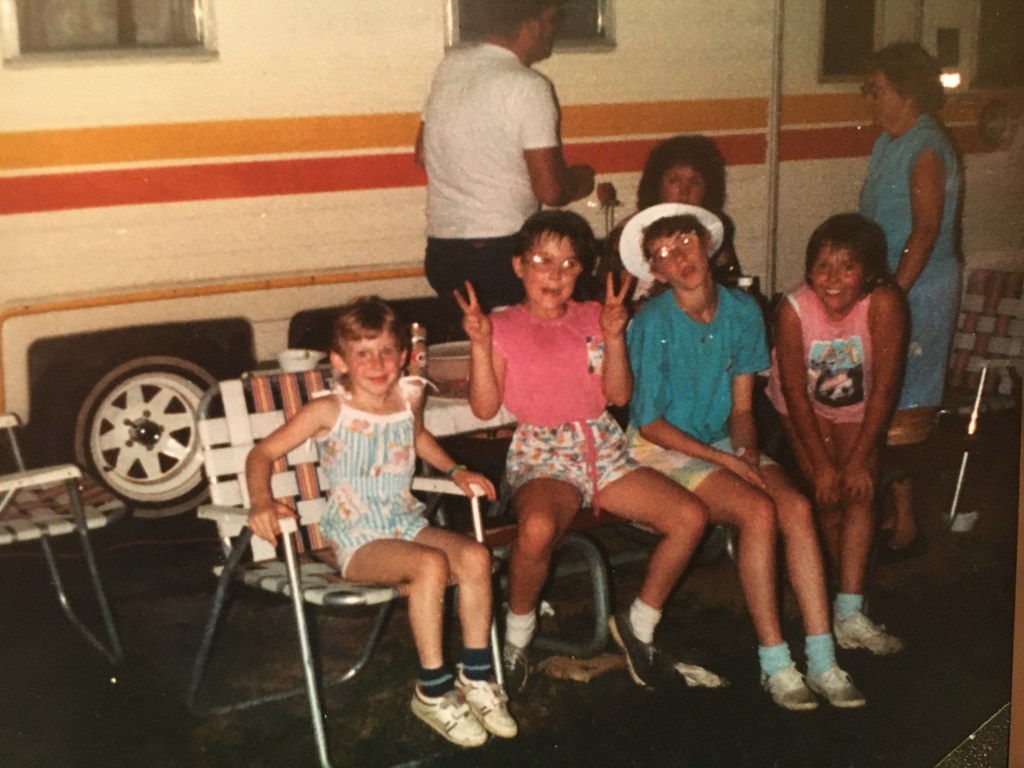
This is a photo from the Kentucky trip mentioned in this piece. In the foreground, GERY’s four nieces. In Back, his parents and sister-in-law.
Why Bardstown? Well, the history is remarkable, and the area is quite scenic, but that was only part of it. The truth is, Mom loved musicals. She took every opportunity to watch them on TV or go to a nearby dinner theatre to see live productions of shows like Oklahoma or Annie Get Your Gun. We would get all dressed up, pile everyone into one of Dad’s classic limousines (yep, you read that right), and immerse ourselves in musical dinner theatre. It wasn’t Broadway. In fact, sometimes it was terrible. Mom loved it, and I kind of did too.
As it happened, my mother learned about a long-running outdoor musical that performed in Bardstown during the summer. “The Stephen Foster Story” showcased the songwriter’s life and work with an ensemble cast and set much of the action at his cousin’s Bardstown home, Federal Hill. That’s all it took. What seemed like moments later, the Deer crew was packed up and caravanning to Kentucky. However, at least one of us was, let’s just say, not as excited to go.
I’d just been unceremoniously dismissed from a long-term relationship and an emotional wreck. I spent most of my summer free time holed up in my bedroom, dumping my feelings into my old typewriter and blasting movie scores on my stereo.
Although I didn’t want to go, I will forever be grateful that Mom convinced me otherwise. I wrote, explored the historical sites of The Bluegrass State, healed, and got to know my family again after several years head-down in my schoolbooks. I may have grown up a little too.
It’s funny; the things I remember most about that trip are, in this order, my brother wearing Western boots on a skateboard, my nieces getting along nearly the whole time, and how happy my mother seemed to be because we were all in one place for a change. We can never recreate experiences like that. They’re once in a lifetime. But at least I have that one precious experience safely tucked away in my memory. Whenever I need a reminder of what my family once was, I go back there with them in my mind. I close my eyes and I can hear the music and see Mom’s smile again. I guess, in a way, it was my Old Kentucky Home too.
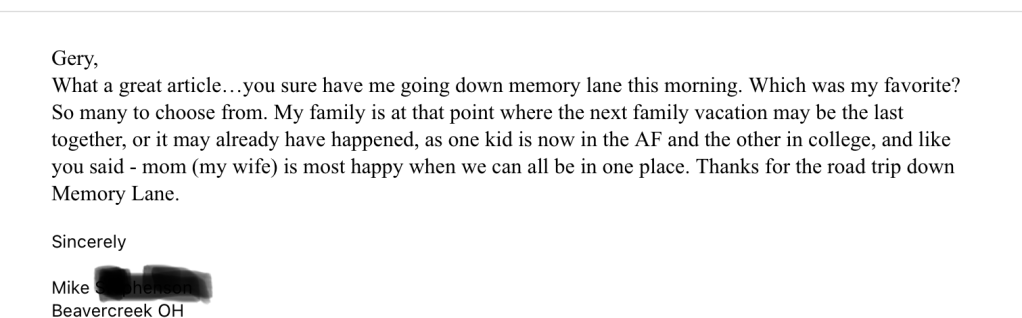
This was a lovely comment about this story sent after it was published in print. Thank you!





 The Jamestown Comet