Local News & Commentary Since 1890.

Archive for the ‘Education’ Category

Long-arm quilting services now available at Crafters Lodge in Sugarcreek Plaza

In Business, crafts, Education, Entertainment, Senior Lifestyle, Technology, Uncategorized on July 15, 2014 at 9:05 am

By Gery L. Deer

IMG_7258 Sugarcreek Twp. – A homemade quilt can be a treasured and very personal family heirloom. From the earliest American settlers, the craft of quilting has been passed down from one generation to the next, each adding a new creative style to the process. Once the top of a quilt is completed, it must be stitched to the back with batting in between – a detailed and painstaking process if done by hand. Fortunately, Crafters Lodge in Sugarcreek Township now offers long-arm quilting services and certification classes for those who wish to learn to do the work personally.

A long arm quilting machine is an industrial sewing machine similar to those used in the mattress industry.  It moves along a track or rails and sews the three parts of a quilt together. “We have the American Professional Quilting Systems (APQS) Millennium or Millie as it’s also known,” says Crafters Lodge co-owner, JoBeth Bryant. “The Millennium is the top of the line long arm quilting machine.”

JoBeth Bryant of Crafters Lodge demonstrates the Long Arm Quilting Machine nicknamed, "Millie"

JoBeth Bryant of Crafters Lodge demonstrates the Long Arm Quilting Machine nicknamed, “Millie”

Bryant says the store currently has two certified long-arm operators on staff and walk-ins are welcome. “When you bring your quilt top to us it will be measured and checked for any issues that may affect the quilting process.  Then you can choose the type of quilting you want done and the thread color.”A fifty-percent deposit and signed contract are required at time of drop-off.  Customers can also choose any additional services they may want, such as binding, a hanging sleeve, or a label.

To make the process go as smoothly as possible, Bryant notes that customers should properly prepare the work. “Make sure the backing is square, backing must be at least six inches wider than the top,” she says.  “There are some materials, particularly generic brands from chain stores, which may not be suitable for batting, and they must be clean and odor-free. Check with us for details on acceptable batting and backing materials, both are available in our store.”

Certification classes are also available for those who wish to learn to use the long arm machine and handle the IMG_7254quilting job personally.  Students are given expert instruction on how to load a quilt, threading the machine, wind and load bobbins, access the various features, use of the pantograph, and how to create basic “meander” quilting pattern.

Crafters Lodge is located at 6056 Wilmington Pike, just behind Fazoli’s in the Sugarcreek Plaza in Sugarcreek Township. Regular store hours are Tuesday through Saturday 11:00 am to 8:00pm, Sunday noon to 6:00 pm and closed on Monday. For more information and a schedule of classes, visit the store’s website, http://www.crafterslodge.com or call (937) 470-2649.

Ignorance: A leading cause of illness in America

In Children and Family, Education, Health, Opinion, Science, Uncategorized on July 14, 2014 at 6:00 pm

DIH LOGOAhead of heart disease and cancer, could ignorance be one of the leading causes of serious illness in the United States? It seems as though, regardless of the facts related to disease prevention, there are literally millions of people who simply choose to take no notice.

First, a definition of the word, “ignorance” as it is used here, so as not to intentionally offend anyone. Ignorance refers mainly to a lack of understanding, education or information. Most of the time, the deficiency of knowledge is unintentional, resulting from inexperience or an educational history lacking in a specific area. However, ignorance can also result from a choice, a conscious decision to disregard certain information, in this case regarding health.

Excessive alcohol consumption, for example, is the fourth leading preventable cause of death in the United States, according to the Centers for Disease Control and Prevention (CDC).  From 2006-2010, the agency reports, excessive alcohol use resulted in, “approximately 88,000 deaths and 2.5 million years of potential life lost annually during that period, costing an estimated $223.5 billion.”

The CDC also reports that nearly 20 percent of Americans smoke, that’s around 43 million people. With nearly one in five deaths now caused by smoking-related illness, why would anyone consciously choose to continue such a disgusting and polluting habit? Denial of the necessity of childhood vaccines may also contribute to preventable disease contraction.

Parents who refuse to vaccinate their children expose them, and those around them, to potentially life-altering illness ranging from measles to polio (poliomyelitis). Because of polio’s recurrence in several African countries, in May of 2014 the World Health Organization declared the resurging polio threat an international emergency stating that it is, “one of the world’s most serious vaccine preventable diseases.” Many experts fear that, if unchecked, it could be brought to the United States and make a devastating comeback due to a fall in newborn vaccinations.

Food is another contributing problem to preventable illness in the United States. Well-educated, intelligent people commonly turn a blind eye to the facts related to diabetes, obesity and cholesterol-related heart disease. More often, Americans tend to choose potato chips and soda pop over a fresh apple or glass of unsweetened fruit juice.

poor choicesIt is one thing when people don’t know about these issues, but it’s quite another if they simply refuse to pay attention or take action. Billions of dollars is spent every year caring for those who may never have become so ill had they taken some basic, precautionary steps.

Of course, regular contradictions between those giving advice on better health and their own behavior also inhibit the effectiveness of patient education. Many healthcare workers are just as guilty as the general public; perhaps even more so because they should, by profession, know better. Why should a patient listen to the recommendations of their healthcare provider if he or she ignores the same information?

How many nurses, doctors and staff are readily seen smoking outside a hospital or other healthcare facility? Logically, it’s hard to grasp how people can work daily around people suffering from diseases that might have either been prevented or mitigated and not take that knowledge to heart for their own health.

In some cases, moderation can help reduce a person’s risks; eating less fat, cutting back on sugar, and limited indulgence in junk food will certainly make a difference. But there is no safe amount of smoking or recreational drug use. It’s all deadly, one cigarette or 50, the body just wasn’t meant to have to process that kind of toxic material day in and day out.

The bottom line is that any reduction in positive health will compromise the body’s ability to fight off disease. When people become ill, they can no longer work, contribute to society or provide for their families. Quality of life suffers for the individual and all of those around them. Ignorance of facts and undisputed medical advice can take a terrible toll on a person – and everyone around them.


Gery L. Deer is an independent columnist and business writer based in Jamestown, Ohio. More at http://www.gerydeer.com.

Remember this July 4th: Buzzed Driving is Drunk Driving

In Children and Family, Education, Health, Holiday, National News, Uncategorized on July 1, 2014 at 7:02 pm

bottlekeysXenia – The Fourth of July is a favorite American holiday filled with fun, food, fireworks, friends and family. But celebrating can quickly turn to tragedy when people choose to drive after drinking. The Greene County Safe Communities Coalition is urging everyone to plan ahead this Independence Day. Designate a sober driver ahead of time.

“The Fourth of July festivities can be so much fun,” said Laurie Fox, Safe Communities Coordinator. “People make plans for the partying, but too many drivers don’t plan ahead to get home safely.” In all 50 States and the District of Columbia, it is illegal to drive with a blood alcohol concentration (BAC) of .08 grams per deciliter (g/dL) or higher. Even if you’ve had a couple of drinks, you shouldn’t drive. “We’ve seen that too many drivers around Greene County think that it’s OK to drive ‘buzzed.’ The truth is you don’t have to be completely wasted to get arrested for drunk driving. Remember: Buzzed Driving is Drunk Driving.”

Statistics from the National Highway Traffic Safety Administration (NHTSA) paint a grim picture of the effect drunk driving has on America. NHTSA reports that there were 10,322 fatalities involving drunk driving in 2012, accounting for 31 percent of the total motor vehicle traffic deaths for that year. That equals about one alcohol-impaired-driving death every 51 minutes.

Drunk driving fatalities are high year-round, but they typically spike during holidays like the Fourth of July. During the Independence Day holiday in 2012 (which ran from 6 p.m. July 3 to 5:59 p.m. July 5), 179 people were killed in motor vehicle crashes, and of these, 78 (44%) died in crashes involving at least one driver or motorcycle operator with a BAC of .08 or higher. Unfortunately 2012 wasn’t a fluke; from 2008-2012, among all crash fatalities around the Fourth of July, 40 percent—on average—involved drunk
drivers.

Certain drivers are more likely than others to drive drunk. Younger drivers (ages 18 to 34) are consistently over represented in fatal alcohol-impaired-driving crashes. In 2012, almost half (46%) of the young drivers killed in crashes had a BAC of .08 or higher.

Compared to car and truck drivers, motorcycle operators are also over represented in the disturbing statistics from NHTSA: in 2012 fatal crashes, 27 percent of motorcycle operators were impaired.

Nighttime (6pm to 5:59am) driving is particularly dangerous because of drunk drivers—and the July 4th holiday is no exception. During the July 4th holiday period in 2012, the rate of alcohol impairment among drivers involved in fatal crashes was almost 2.5 times higher at night than during the day.

“Here’s what we want people to understand,” said Fox. “Alcohol not only impairs your ability to drive, it impairs your judgment about whether you can or should drive. Sure, you may think you’re ‘fine’, but you’re not. The best thing to keep in mind is simply: Buzzed Driving is Drunk Driving.” Prevent drunk driving by only driving completely sober.

Follow these simple tips for a safe Fourth of July:

• Plan a safe way home before the fun begins;
• Before drinking, designate a sober driver;
• If you’re impaired, use a taxi, call a sober friend or family member, or use public transportation so you are sure to get home safely;
• If you see a drunk driver on the road, don’t hesitate to contact local law enforcement; and
• Remember, Buzzed Driving is Drunk Driving. If you know people who are about to drive or ride while impaired, take their keys and help them make other arrangements to get to where they are going safely.

The Greene County Combined Health District is a Safe Communities grantee of the Ohio Department of Public Safety Ohio State Highway Patrol-Traffic Safety Division. To contact Greene County Safe Communities, please call 937-374-5669 or email lfox@gcchd.org. More information on avoiding impaired driving can be found at www.trafficsafetymarketing.gov.

Improving American language skills: Reading and writing are fundamental

In Books, Children and Family, Education, Literature, Local News, Opinion, Technology, Uncategorized on June 30, 2014 at 3:53 pm

dih-logo-SENext to the United States Constitution, the Declaration of Independence may be the single most important document ever created in the history of America. It established our country’s formal separation from England and set in motion more than two centuries of global influence and an example of how a free republic can succeed.

But what would have happened if the men who founded our country lacked the basic language skills to create that first, all-important document? How would these men have properly and so effectively communicated the displeasure and intent of an entire people without such a firm grasp on the English language, not merely to speak it but to put it down in a document to be revered for centuries to come? In short, they couldn’t have.

On this 238th anniversary of the signing of the Declaration of Independence, we need to remember that it’s author had but two years of formal, college education. In those days, a man wishing to become a lawyer apprenticed under other attorneys, reading the law and learning to interpret and apply it for the good of the people for whom it was put in place. Jefferson eventually became a lawyer but not by obtaining any degree we might understand today.

Likewise, Benjamin Franklin went to school briefly but, because of financial issues, he had to stop to help support his family by going to work with his father. He furthered his own education, however, through reading and self-study, a practice that is, sadly, frowned upon today. Both of these men demonstrated the vast important of language and writing, and how the written word can change history. Some people, though, struggle with language skills or never learn to read at all.

One of my favorite books from childhood was called, “The Little Old Man Who Could Not Read,” by Irma Black. The book chronicles the story of a little, old toy maker who, despite his amazing craftsmanship for pleasing children, never learned to read. One day, his wife went to visit a sick friend and left him alone for what must have been the first time. He was forced to do the grocery shopping on his own, which turned out to be a very frustrating endeavor. Upon arriving home, he sadly discovered that what he thought was a spaghetti box turned out to be wax paper and the can of sauce, coffee instead. It was very disheartening. But it motivated him to learn and he did. The book was written many years before the technology age, but imagine what he would have to deal with today if he couldn’t read at all? It would be nearly debilitating in modern American culture.

little_old_manI have always been a writer, even back into childhood, but most of my language skills came from audio books and those children’s books that came with a 33 rpm record. I found later that I had been dealing with a learning disability that hindered my ability to retain what I had read. Over the years, I adjusted and coped, but was not diagnosed until my mid-30s. Today, I have new ways of dealing with the problem and read as much as I can. I learned to defy my disability because I wanted to read.

There’s no question that Jefferson and Franklin were above-average men, but we all have the ability to move past our limitations, just as Franklin taught himself what he needed to know and just as I worked past my reading issues. For those who want to improve their language skills across the board, here are a few tips and they work for pretty much all ages.

First, try to write as much by hand as possible. Using paper and pen will slow you down a bit and force you to think before you write. People were better writers in the old days because it took time to get thought to page. Today, technology has us whizzing through sentences without a thought to grammar and word usage.

Next, although it’s fallen out of favor with the public school set, use cursive writing as much as you can. As with the first point, handwriting something makes you think and use the right language. It even gives you the chance to look up a word before you use it.

Try to learn a new word every day. Vocabulary is the key to better language skills. Take the time to look up words you hear throughout your normal day. But if you don’t hear any that grab your attention, pick up a hard-bound dictionary, open it up, close your eyes, and point to a word on the page.  That’s your word for the day. One of those “word of the day” desk calendars is a great resource too. Of course, you need to put the word into use whenever possible to make it stick.

Read, read, read, read. And, did I mention, read? Newspapers, well-written blogs, congressional briefs, comic books, it doesn’t matter what you read, just make sure you read a lot. If you’re trying to improve your language skills, however, the more advanced the reading the better. It’s ok if it takes time, look up words you don’t know and charge ahead.

Finally, don’t write like you text. In fact, don’t text how you text, either. The wave of “texting shorthand” is maddening to those of us with good grammar and language skills. Use full words and sentences – even in texts. It’ll make a big difference in how you communicate in email and in other written documents as well. Take your time and say it right.

So this Fourth of July weekend, go out and enjoy the picnics and fireworks.  But remember, when you hear the words to the national anthem or the preamble to the constitution, think about the meaning of each word and be grateful that those guys were diligent enough to get every one of them right. Our very freedom depended on it.

Cause and effect of drug advertisements

In Business, Education, Health, National News, Opinion, television, Uncategorized on June 26, 2014 at 10:37 am

DIH LOGOAccording to a 2008 study by the peer-reviewed medical journal, PLOS Medicine, pharmaceutical companies spend nearly twice as much on marketing than research. In a review of the study, the consumer advocacy website, Consumerist.com, indicates, “Drug companies pour $57.5 billion into marketing, dwarfing the comparably paltry $31.5 billion devoted to research.”

Pharmaceutical manufacturers have rigid guidelines for promoting their products, but the question lingers: should non-over-the-counter drugs be promoted to the general public at all? The short answer is, probably not. The longer answer is more complex. Since, as a rule, Deer In Headlines deals with “fact,” not “truth,” here are some facts about drug advertising. Incidentally, if it is truth you’re interested in, check out a philosophy column (thanks Dr. Jones).

The official website of the United States Food and Drug Administration states, “Prescription drug advertisements can provide useful information for consumers to work with their health care providers to make wise decisions about treatment.” Leading the pack of heavily-marketed drugs are prescription sleep aids, blood thinners, anti-depressants and erectile dysfunction remedies. Most of the television ads for these medications appear during the day, carefully targeting certain markets.

What the general public fails to realize, however, is that these ads are intended to plant an idea in the head of the consumer who, in all their medical wisdom, will take the information to a doctor and insist on a prescription. Mission accomplished; more drugs are sold and the company’s stock goes up a quarter of a point, not to mention the fact there is one more person who simply can’t live without the latest pill. Perhaps a better understanding of how these ads are structured might help.

pillsThe FDA’s Office of Prescription Drug Promotion classifies medication advertisements into three categories: Product Claims, Reminders, and Help-Seeking ads.  The product claim ad names the drug, the treated condition and lists the benefits and risks. A reminder ad shows the name of the drug, but not its use. Finally, the help-seeking advertisement is directed at people with a particular condition for which they are trying to find a remedy. There is, however, no guideline for how much money a drug company can spend on advertising and some consumer advocates argue that it’s wrong for them to be able to spend more on marketing than research.

The fact is that it’s really hard to say exactly how much any one drug company spends on research vs. marketing because reported advertising expenditures are mixed in with the accounting category which also includes other figures, such as executive salaries. Research money is usually accounted for in a separate line item (R&D), even though it technically could be in the same classification with general operation costs.

Another fact is that everyone is a medical expert – yes that’s sarcasm. From the neighbor with every ailment more painful than the last or the relative who insists his doctor is an idiot but goes back every time his prescription runs out, self-diagnosis and treatment are a real epidemic in America.

There is also the concern that these advertisements actually plant the idea of a particular illness in the mind of the viewer who then heads to the doctor with a new problem, and a new prescription demand. Studies show that about 40-percent of all doctor visits are with the intention of getting a prescription. Since people keep going back, it’s safe to assume there are plenty of doctors obliging, and that needs to change as well.

Prescription medication should be marketed to the experts who will be prescribing it to the patient. Drug companies already spend billions on advertising and on-site sales representatives who offer samples and various other motivators to get the doctors to push their products for various ailments. The patient has no business self-prescribing and doctors need to be more responsible.


Gery L. Deer is an independent columnist and business writer based in Jamestown, Ohio. Side effects of reading Deer In Headlines include a more open mind, alternative points of view and a better understanding of the world around you. No prescription necessary.


Too much rides on a credit score

In Business, Economy, Education, Jobs, National News, Opinion, Uncategorized on June 16, 2014 at 11:33 am

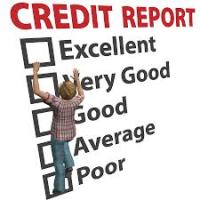
DIH LOGOFor all the important numbers in the life of the average American, the credit score seems to wield the most power. It’s hard to imagine how three little digits could determine how an individual will live his or her life, regardless of the circumstances that created it and with the average person having virtually no understanding of what it is or how it’s calculated.

Credit scores determine how much a consumer will have to pay for credit (as interest rates), insurance, and other necessities. For many years, the credit score was a value hidden from the consumer because Fair Isaac and Company, the firm which created the process, decided it would just be too confusing to the general public. (Of course, that’s the usual excuse offered up by big business and government agencies trying to dupe the general public.)

That’s little comfort, however, to those who have been held hostage by the credit reporting companies for decades. Almost since inception, credit data has been full of inaccuracies and misinformation, a problem to which consumers have had little (practical) recourse other than the slow, usually pointless, process required to amend a report.

As of 2012, the Consumer Financial Protection Bureau was charged with the oversight of personal credit rating companies. With countless rule changes over the years, the Fair Credit Reporting Act finally forced at least some restrictions on the credit rating companies. The FCRA is the legislation that required companies like TransUnion, Experian and Equifax to provide free credit report, limit outside access to personal credit files, initiate identity theft protections and other consumer defense measures. Click here for a downloadable version of the Fair Credit Reporting Act is available.

creditoneRegardless of the current legislation, however, credit monitoring and reporting services still have entirely too much power and control over the general lives of consumers. A credit report (and score) whether accurate or not, can limit access to vital, day-to-day needs like transportation and employment.

Considering how much inaccuracy can exist or the irrelevancy of the information to the situation, it’s bewildering how it is legal for employers to reject applicants based on a credit score. In another example, how is it permitted that credit score can determine whether someone should be provided with car insurance, particularly when coverage is mandated by the government?

Whatever more ignorant people choose to believe a low credit score doesn’t always mean a person is unwilling to pay their bills or is inept at handling money. Sometimes circumstances change, as with the predatory lending practices that contributed to the housing market crash of 2008.

Likewise, although there is a higher risk in lending to people with a sorted credit history, almost no one takes into account how the score got so tarnished. On the heels of the worst recession in U.S. history, the credit rating process seems almost backwards to the average consumer.

If you can afford a higher rate and larger payment, you get a lower one, and vice versa. A person may be in desperate need of a car or renters insurance but, because of a lower credit score, they are charged significantly higher rates and payments. Wouldn’t it make more sense to offer those people lower rates and payments, making it more likely they can pay on time and help shore up the economy in the process?

The consumer should always keep in mind that the credit reporting organizations are private sector businesses, not government agencies. They are not affiliated with the Federal Trade Commission in any way nor any other government office. Credit scores are big business for those companies that calculate and report them.

In the first quarter of 2014, TransUnion, one of the three largest firms, reported earnings just over $303 million. That’s just for one credit reporting company over three months! So, with billions of dollars in revenue at stake, there is little to no motivation for limiting the power of these companies. It’s a sure bet that lobbyists for the credit reporting companies are well-entrenched in Washington, greasing all of the appropriate palms to make sure that the “have nots” never catch up to the 1-percent.


The Jamestown Comet.com editor / publisher Gery L. Deer is an independent columnist and business contributor to WDTN-TV2’s Living Dayton program. More at http://www.gerydeer.com.


Crafters Lodge to host two-day t-shirt quilt workshop

In Business, Children and Family, Education, Entertainment, Health, Holiday, Local News, Senior Lifestyle, Uncategorized on April 16, 2014 at 1:20 pm

CLLOGOSugarcreek Twp., OH – Nearly every event a student attends as he or she goes through school is commemorated by a t-shirt. Crafters Lodge in Sugarcreek Township, is providing a two-day course on transforming those keepsake tees into a cherished family heirloom – the t-shirt quilt.

On Sunday April 27th and Sunday May 4th, Crafters Lodge, located at 6056 Wilmington Pike, just behind Fazoli’s, will host a t-shirt quilting class. The two-day class will provide complete instruction, from start to finish, for a fee of $35 for both days, not including materials. Participants must purchase their own supplies and costs vary based on the materials chosen.

A t-shirt quilt is made up of the artwork from cherished t-shirts commemorating everything from a student’s first day of school or high school prom to concerts and extracurricular events. The artwork is cut from the fronts and backs of the shirts and sewn together to make a quilt. Jo Beth Bryant is co-owner of Crafters Lodge.

“Registered students should stop by the store at least two or three days prior to the first class for instruction on how to prep the T-shirts,” Bryant says. “Having the shirts prepped prior to class will allow the student to begin the layout and design process sooner and thus finish the quilt in a shorter amount of time.”

Teaching the upcoming class is life-long needleworker, Wendy Crawford. A veteran of 4-H and Girl Scout sewing competitions, Crawford started making baby quilts while in junior high school.  She turned to hand quilting after inheriting a quilter’s estate and is now a certified Gammill (Long Arm) operator with more than 350 quilts under her belt. Today, she enjoys sharing her knowledge with the local community after an absence from teaching.

Crafters Lodge opened in September of 2013 and offers high-end supplies and expertise to the serious crafter. In addition to the t-shirt quilting course, the store also offers classes in fiber arts (knitting, weaving, tatting, etc.), tole painting, stained glass and more.

Registration for the t-shirt quilting class is limited and participants are required to bring their own sewing machines. Crafters Lodge is open Tuesday through Saturday 11:00 am to 8:00pm, Sunday noon to 6:00 pm and closed on Monday. For more information and a schedule of classes, visit the store’s website, http://www.crafterslodge.com or call (937) 470-2649.


Campaign educates drivers about distracted driving

In Children and Family, Education, Environment, Health, Local News, Technology, Uncategorized on April 2, 2014 at 7:19 pm

DDXENIA, OH – In an effort to make our roads safer, the Greene County Safe Communities Coalition announced today that it has joined the “One Text or Call Could Wreck It All” campaign to stop distracted driving.  April is National Distracted Driving Awareness Month and the Coalition has pledged its support to help spread the message that distracted drivers are not only a danger to themselves, but everyone else on the road.

“We all know that talking on our cell phones while driving is distracting, but that doesn’t stop most people from continuing to do it,” said Laurie Fox, Safe Communities Coordinator.  “This effort is intended to educate our community about the dangers of cell phone use and other distractions while driving.  We hope that once people see the statistics and realize the danger involved, they will change their driving habits to help protect themselves, their families, and others on the road.”

In 2012, 3,328 people were killed in crashes involving a distracted driver and an estimated additional 421,000 were injured in motor vehicle crashes involving a distracted driver. That same year, eleven percent of fatal crashes were reported as distraction-affected crashes.

While anything that takes your eyes off the road, hands off the wheel, or mind off the task of driving is a hazard, there is heightened concern about the risks of texting while driving because it combines all three types of distraction – visual, manual and cognitive.

The national distracted driving effort focuses on ways to change the behavior of drivers through legislation, enforcement, public awareness and education – the same activities that have curbed drunk driving and increased seat belt use.

“Every driver in Greene County has a role in this effort,” said Fox.  “However, we especially want to reach out to parents with teen drivers because we know that statistically, the under-20 age group had the highest proportion of distracted drivers involved in fatal crashes.”

The Coalition’s goal is simple – save lives by getting drivers to remember that “One Text or Call Could Wreck It All.”  All drivers are encouraged to put down the phone and arrive alive.

For more information about distracted driving, please visit www.distraction.gov, or you can contact Laurie Fox at 937-374-5669 or lfox@gcchd.org.  

Alas, the plight of the plastic shopping bag

In Business, Economy, Education, Environment, Health, history, National News, Opinion, Politics, Science, Uncategorized on March 31, 2014 at 8:42 am

Deer In Headlines
By Gery L. Deer
The Jamestown Comet Editor

bag_blowingTake a look around outside after a storm and you’ll see them, clinging to the lathe of a garden fence like barnacles to a ship’s hull – those sad, indigent, plastic shopping bags. They’re everywhere, bouncing along the roadside, hung up in the branches of your backyard tree, even melted and tangled around the undercarriage of your car. Once revered for their strength and amazingly useful handles, these marvels of modern shopping are now the scourge of environmental political correctness.

With humble beginnings in 1950s Sweden, the modern plastic shopping bag was the creation of engineer Sten Gustaf Thulin who developed the simple, one-piece bag for Celloplast, the company which patented the design in 1965. Popularity of the product grew rapidly, for a time even knocking paper bags into relative obscurity.

Never again would husbands need worry about earning a night in the doghouse after losing a gallon of milk to the pavement when it crashed through the bottom of a wet paper sack. But, it was that set of wonderfully brilliant handles that really endeared the bags to shoppers. Since the dawn of time, mothers everywhere have struggled on shopping trips to juggle groceries and family.

With plastic bags, Mom now had the ability to carry half a dozen fully loaded bags on her arms while clutching Junior in one hand and the dog’s leash in the other. Her world now under complete control, at least for one brief moment, thanks to a simple pair of parallel holes in a plastic tube. Once the groceries were put away, she could even re-use them to line the bathroom wastebasket with a water-proof bag that fit both the can and her household budget.

PBThere was no doubt the plastic shopping bag was truly a miracle of modern commerce. By 1982, most major grocery chains, including Kroger, began replacing paper shopping bags with plastic citing cost savings and customer preference. Sadly, however, as with most other success stories, rival jealousy led to ridicule and scrutiny, mostly from operatives of the paper bag industry determined to unseat the plastic bag from its world-wide fame.

By the 1990s, world ecologists became increasingly vocal about plastic’s potentially destructive effects on the environment. Soon, the plastic shopping bag became an innocent by-stander, caught up in the ever increasing fight between good and evil, liberal and conservative, environmentalist and capitalist – or whoever was paying the most lobbyists. More than ever, environmental groups were touting the need for more extensive use of recyclable materials in consumer goods.

Almost overnight, the plastic shopping bag became the poster child for everything wrong with the environment as pundits heatedly debated their recyclability on cable news and in fiercely negative op-eds.  As usual, the critics had it all wrong because plastic shopping bags were every bit as recyclable as their paper counterparts, but were, in a way, victims of their own success.

As it turned out, the very innovations that made plastic shopping bags so powerful in the supermarket were like Kryptonite to the sorting machines used in recycling. When put through, they bound up the machinery and left it jammed and inert, and the cost to overcome that problem outweighed the benefits.

For years, rumors of a plastic bag uprising have permeated the media, suggesting that millions of these poor, trodden-down bags were massing a resistance in landfills all over America. There, they waited silently, collectively preparing to strike back against their opposition by refusing to decompose, even over thousands of years.

Sadly, an empty threat, since the structure of a landfill is meant to keep the refuse dry and stable, limiting degradation. Nothing is intended to fully decompose; not paper, not food, not plastic … nothing. In fact, newspapers buried in the 1960s have recently been exhumed intact and readable.

Perhaps one day, the full truth of their story will be exposed and plastic shopping bags will regain their once proud position at the end of the checkout. But for now, these bags exist as second-class totes, drifting like tumbleweeds on the wind, dancing their lament of a time when they were kings of the market.
Deer In Headlines is available for syndication. Contact GLD Enterprises Commercial Writing – http://www.gldenterprises.net.

It takes a maverick to make a difference

In Education, National News, Opinion, Politics, psychology, Religion, Science, sociology, State News, Uncategorized, World News on March 24, 2014 at 7:59 am

DIH LOGOAccording to one definition, a maverick is, “an unorthodox or independent-minded person.” But a maverick is also someone who chooses not to give in to the pressures of society, breaking ranks, not for personal gain, but in an effort to improve conditions or expand knowledge for everyone.

In the 16th Century, the now revered scientist Galileo Galilei would certainly have fit the definition of maverick. At a time when the church kept tight control over the public’s understanding of the world around them, Galileo’s challenge that the earth was not actually the center of the universe but instead part of a solar system with our sun at its center was controversial.

Of course he was eventually proven right, but standing against such a powerful entity as the Catholic Church sent Galileo to be tried for heresy. There are countless cases like this throughout history, most related to individuals who chose to challenge long-standing beliefs in politics or religion.

Today, as in Galileo’s time, society is taught and expected, from an early age, to keep quiet; never to upset the status quo for fear of retribution. Those willing to stand up and be heard shape the most change in the world, but often pay a high price for their contribution to progress. Much of what society deems acceptable is dependent on one’s position and the sphere of influence there encompassed.

whatsrightFor example, it is unacceptable in many religious groups for a married couple to divorce. They are expected to remain together indefinitely for the good of the church, their families and so on, regardless of the situation, even in cases of physical abuse. It stands to reason, therefore, that the first few individuals who challenged these rules were certainly dealt with harshly. Fortunately, over time, this type of censure has eased somewhat, at least publically.

On the whole, it is difficult to greatly influence public perception and alter the behavior of a society or to get people to remove the blinders of ideology and accept the possibility that there are other ways of thinking. Ignorance, prejudice and misunderstanding usually lead to fear and resistance.

It should also be made clear that religious groups are certainly not alone in such ridiculously judgmental behavior. Anyone who challenges established norms can find themselves on the receiving end of some pretty unpleasant retribution, particularly in the workplace.

Often employees are never to question authority or decisions made by their superiors, otherwise face reprisal. But what does one do when superiors are actually breaking the law? In 1989, Congress passed the Whistleblower Protection Act. The law is designed to shield workers against retaliatory personnel action – meaning, essentially, it keeps them from being fired – for “blowing the whistle” on illegal activities perpetrated by their employers.

Unfortunately, there is no such protection for the everyday person who simply wants to do the right thing. From Moses and Lady Godiva to Rosa Parks and Martin Luther King, taking a stand to alter deeply engrained social beliefs has never been a task for the weak-hearted.

Most people are discouraged by how much retribution might be taken out on them for going against the grain. Sometimes, however, just standing up for the little things can help to affect larger changes. Making a difference in the boardroom, at school or even in the hallowed halls of church might ruffle some feathers, but if the purpose is worthwhile, it would be wrong not to do something.

So, what about those by-standers who agree with the maverick but are afraid to stand with her? If only one other person supported the cause then another would as well, then another, and another. That’s how revolutions are started in the face of resistance. So the next time you see an injustice being done and you have the opportunity to act, what will it be: Maverick or conformist?  Ω

Gery L. Deer is an independent columnist and business contributor to the WDTN-TV2 program, “Living Dayton.” More at www.gerydeer.com.