Local News & Commentary Since 1890.

Archive for the ‘Education’ Category

A House Divided

In Dayton Ohio News, Education, finances, Food, Health, history, Local News, News Media, Opinion, Politics, psychology, Senior Lifestyle, Uncategorized on September 2, 2023 at 2:47 pm

Deer In Headlines II

By Gery Deer
When I restarted this series after a 5-year hiatus, I decided to steer away from politics, religion, and other hot-button topics in favor of more personal subjects. That said, I’ll dip a toe into that pool only enough to express my concern at the level of divisiveness now facing our country and who actually pays the price for it.

The political climate in America today is toxic, with no end in sight. Everything is viewed only from one side by an ill-informed, angry citizenry and uncompromising elected, uncivilized government officials. Over the long haul, we simply can’t function that way. Our legislators must work together in order to govern, even to manage the most basic issues. Unfortunately, that seems unlikely to change when the only people getting attention are the radical extremists.

Regardless of your ethnic background, or whether you’re conservative, liberal, or whatever, surely there are things we can all agree on, right? For instance, instead of spending hours on cable TV news bickering about who caused inflation, wouldn’t our collective energy be better spent on ways to help people get through it? Meanwhile, our dedicated elected officials spend taxpayer money riding around in limousines, secure in their healthcare, paychecks, and benefits, all guaranteed long after they’ve left office.

More absurd is that, in the most powerful and wealthiest country on Earth, there are still people who can’t get enough food, shelter, or other necessities – particularly the elderly, veterans, and children. No, it’s beyond absurd, it’s criminal. This problem affects everyone. The number of working poor continues to grow, most of my family included. Most people are only a paycheck or two from ruin. All it takes is one major catastrophe and boom, we’re on the street. Regardless, people from every side are too busy waving flags and hating each other’s politics to care or do anything about it.

Recently, I did some work at a food pantry and had the opportunity to learn more about the mission of these organizations. I am shocked about how necessary they are in so many communities. In just one year, the number of families served might double, so they must continually find new ways to meet the constantly growing demand.

You might be surprised to know that the people who most need services like this are not homeless or indigent. They are instead the working poor, single-parent families, and, sadly, veterans. No one should feel ashamed of taking help from those who offer it. But I can’t imagine how hard must be for someone who proudly served our country and then is forced to go to a food pantry just to have enough to eat.

The number of military families and veterans who need various types of assistance is also surprising. They include elderly or disabled veterans, military wives and husbands with young children trying to make ends meet while their spouses are deployed, families of all ages and backgrounds, and the kids, wow. Watching a child’s eyes light up over a book or something as simple as a Twinkie or a fresh piece of fruit can be simultaneously enlightening and heartbreaking.

Again, while the politicians ride around in limousines and kowtow to mindless followers during ridiculous cult-like rallies, the people they claim to be fighting for wait in lines at food pantries. They have no money, little healthcare, and a veteran affairs system that’s so broken it needs to be razed and rebuilt from the ground up.

These issues aren’t conservative or liberal, Muslim, Jewish, or Christian. We are so blinded by ridiculous ideologies and political divisiveness that we can’t see the real responsibilities facing our country – poverty, homelessness, substance abuse, an ever-changing job market, and so much more. Certainly, we could all get together on some of these things. Nope, it’s just not going to happen.

The people I meet in these situations don’t want handouts. They want to be understood and for their elected legislature to work for not against them. But until we put down the flags, turn off the news, and choose to be better human beings, nothing will change. So, all I have left to say is to quote my favorite president. “A house divided cannot stand.”

Aim for a high mark.

In Children and Family, Dayton Ohio News, Education, Entertainment, history, National News, News Media, Opinion, Uncategorized on July 28, 2023 at 12:00 pm

Deer In Headlines II

By Gery Deer

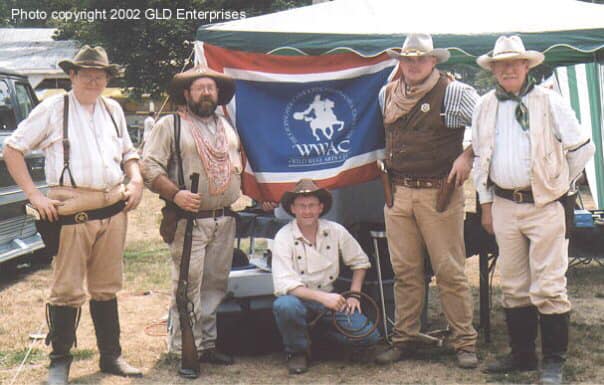
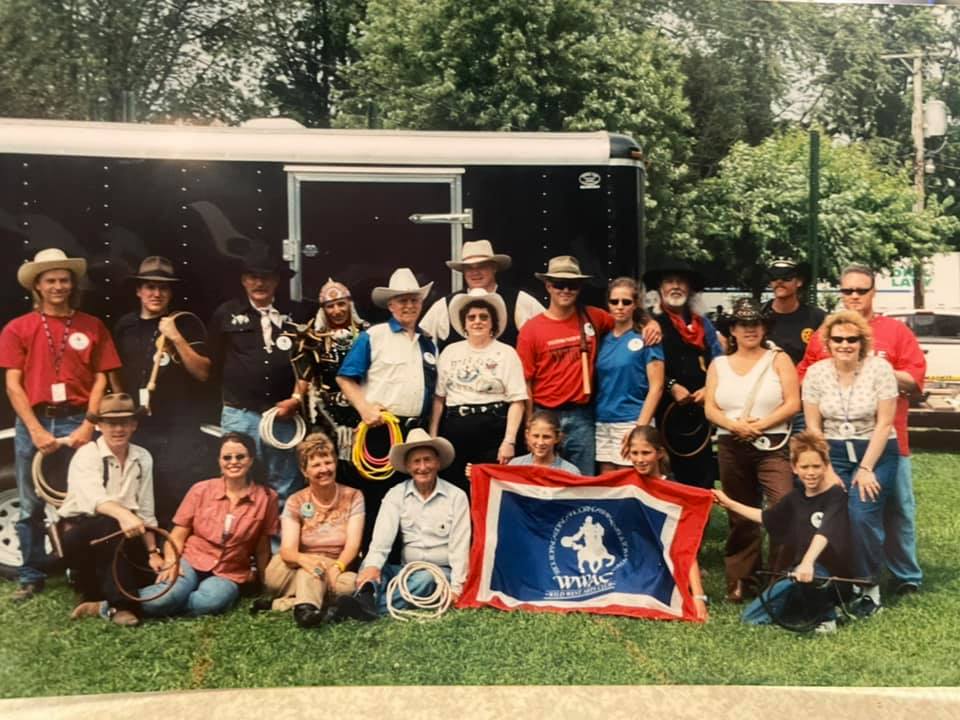
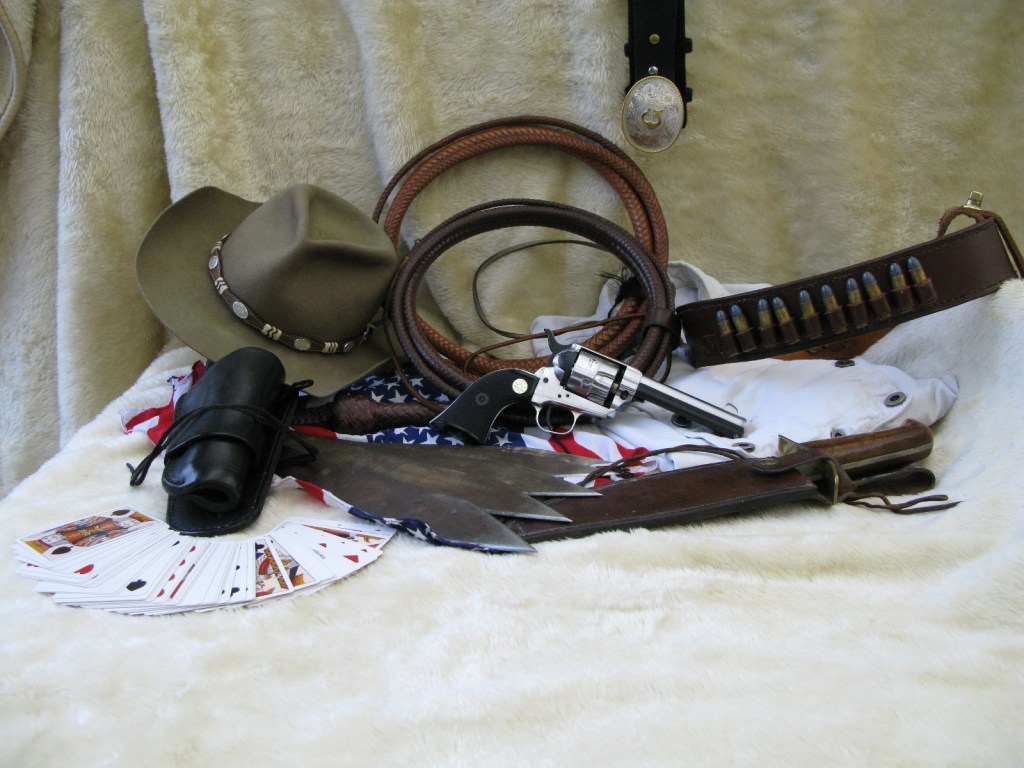
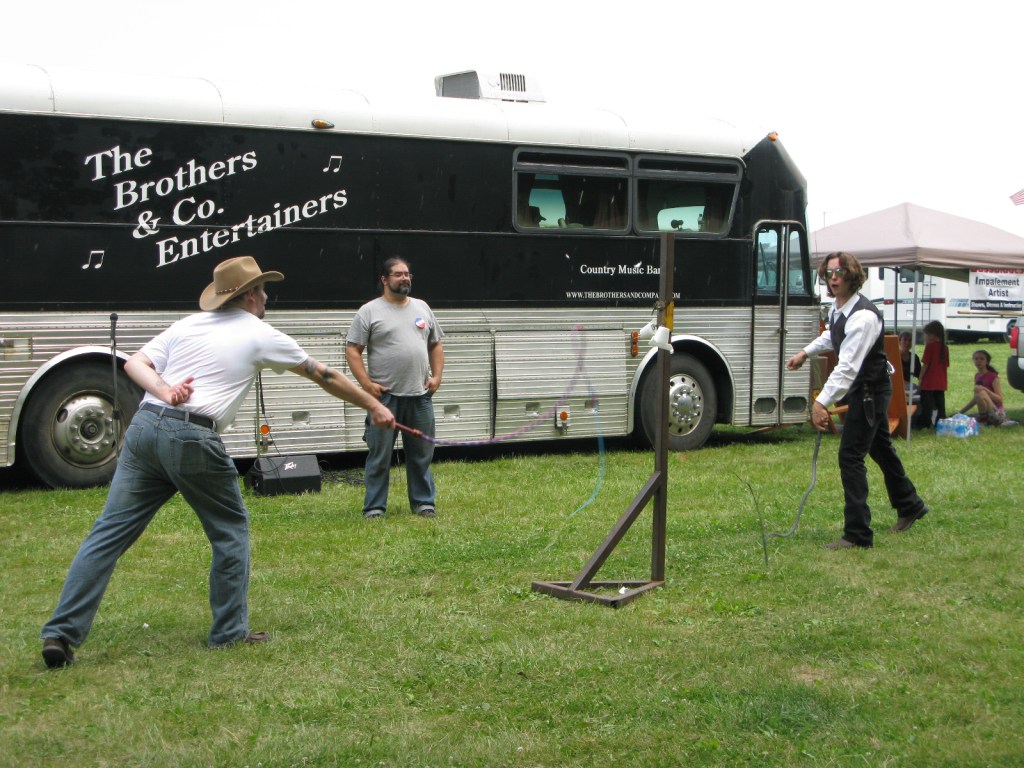
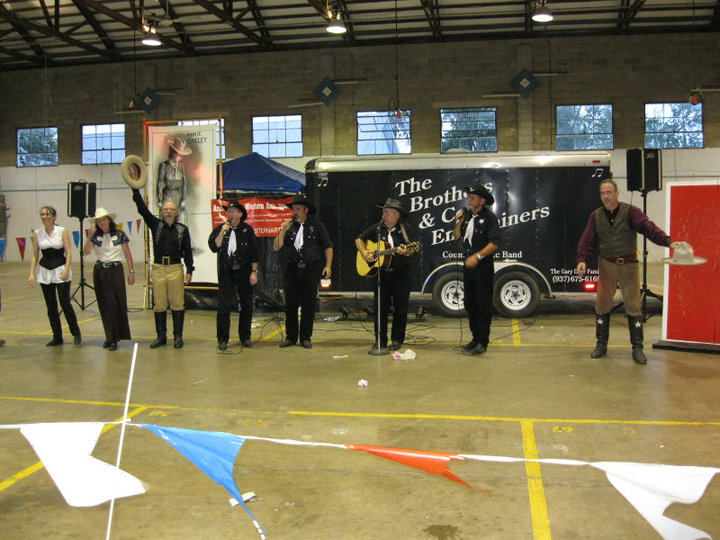
For the last 20 years, I have had the honor of leading a performing troupe of authentic Wild West arts practitioners in the American Western Arts Showcase during the Annie Oakley Festival in Greenville, Ohio.

Every year, whip handlers, knife throwers, trick ropers, and even shooters have gathered to compete, perform, and share our skills to the delight of crowds from all over the country. Of all the things I’ve learned from my time producing this event, my favorite part has been getting to know Annie Oakley, one of the most famous female performers in American history.

Anyone who studies women’s rights should really learn everything they can about Annie Oakley. In short, she was ahead of her time. Most people know Annie was a skilled markswoman with a rifle, a Wild West show performer, and a savvy businesswoman. But she was also the first American woman to brand herself and protect and defend her public image. To truly appreciate how special she was, it’s important to understand the difficult life she led before.

Annie Oakley was born Phoebe Ann Moses on August 13, 1860, just a few miles north of the city of Greenville, in Darke County, Ohio. At age 6, her father died, leaving the family impoverished. Her mother was forced to move the family to a rented farm. Later, when a sister died of tuberculosis, she and her siblings were separated, and Annie was moved to the county infirmary. Annie eventually ended up with a terribly abusive family where she struggled through her early teenage years in what she likened to slavery.

Annie learned to shoot at the age of eight, a skill she later used to earn money and goods by trading with local merchants. Discovered at a Cincinnati shooting contest by her future husband, Frank Butler, Annie experienced unprecedented global fame as a performing markswoman. She joined Buffalo Bill’s Wild West Show in 1885 and traveled the world with them until her retirement following a train accident in 1901.

Annie spent her later years at the New Jersey shore with her husband. She occasionally attended public shooting events for charity and was also a vocal and active advocate for women’s rights to hold paid work, equal pay, play sports, and practice self-defense.

In 1908, her public image was devastated by an article published by William Randolph Hearst in the Chicago Tribune claiming she had been imprisoned for stealing to support a cocaine habit. Dozens of newspapers nationwide carried the story which was, it goes without saying, a complete lie.

With Hearst refusing to retract the story, Annie would not stand for such defamation and sued all 55 newspapers that printed it for libel in the largest suit of its kind in U.S. history.

She won all but one case because that defendant cited the newswire as the “trusted resource,” indemnifying the paper. Her victory still resonates through libel law today.

After traveling the globe and performing for the crowned heads of Europe, Annie Oakley died in 1926 in a small house in Greenville, only a few miles from where she was born. Her husband of 50 years, Frank Butler passed just eight days later. She was inducted into the
National Women’s Hall of Fame in 1993 for her charitable support of women’s causes. She was, and is, an inspiration to people all around the world.

I am fortunate to have met members of Annie’s family, studied her professionalism and showmanship, and performed in modern Wild West shows, albeit with a bullwhip instead of a rifle. No matter how tough things get, her most famous quote inspires me to keep trying. “Aim at a high mark and you will hit it. No, not the first time, nor the second, and maybe not the third. But keep on aiming and keep on shooting for only practice will make you perfect. Finally, you’ll hit the bullseye of success.”

As for myself, after two decades 2023 will mark the final season for our showcase performance at the festival that has honored Annie Oakley for 60 years. It’s been an honor and I will greatly miss it. But, no matter what I do, Annie’s wisdom and fortitude will always be with me.

(The gallery shows some photos from the American Western Arts Showcase – originally named the Ohio Regional Wild West Arts Club Convention).

TCN Behavioral Health Announces Annual School Supply Distribution Events

In Charities, Children and Family, Dayton Ohio News, Economy, Education, Local News, Uncategorized on July 20, 2023 at 4:57 pm

Fairborn, Ohio – July 18, 2023 TCN Behavioral Health Services, Inc. announces their annual School Supply Drive Distribution Events.

The 5 events will take place as shown below:
Monday July 31, 4-6 pm TCN Troy 1021 N. Market Street
Tuesday August 1, 4-6 pm TCN Fairborn 1825 Commerce Center Blvd.
Wednesday August 2, 4-6 pm TCN Bellefontaine 118 Maple Avenue
Thursday, August 3, 4-6 pm TCN Xenia 452 W. Market Street
Friday, August 4, 4-6pm TCN Urbana 1522 E. US Hwy 36

TCN annually collects school supplies and donations for the children in their service areas. In 2022 they provided supplies to more than 300 children and hope to expand that reach in 2023. The 5 distribution events listed above will include free pizza and beverages as well as school supplies while supplies last.

“New school supplies are essential to help prepare students for a successful year and support teachers in the classrooms,” says Tom Otto, TCN’s Associate CEO. “We hope that people will help TCN get more school supplies into the hands of more kids by donating and volunteering at the distribution events.”

TCN accepts donations of school supplies at all locations, or donors can shop the School Supply Drive Amazon Wishlist to have supplies shipped directly to TCN for preparation and distribution. The
organization also accepts monetary donations at https://tcn.jotform.com/202296368911965 by selecting “school supply drive” in the dropdown menu. Volunteers can get sign up to help at their local events here: https://tcn.jotform.com/223056028945962.

Founded in 1990, TCN Behavioral Health Services, Inc. is a comprehensive behavioral health agency dedicated to improving lives by providing clinically excellent and accessible behavioral health services. TCN provides mental health, substance use, and psychiatric services for adults and youth in Miami, Greene, Montgomery, Logan, and Champaign counties. For more information or to donate to TCN call (937)376-8700 or visit www.tcn.org.

The First 10 Miles

In Children and Family, Education, Health, Opinion, psychology, Senior Lifestyle, sociology, Uncategorized on July 1, 2023 at 1:40 pm

Deer In Headlines II

By Gery Deer

I took up long-distance tour cycling in 2017 to give some direction to my fitness routine. I am definitely no gym rat, but I needed to improve my health, and exercise for its own sake was, at least to me, mind-numbing. Preparing for long bicycle tours provided a tangible goal and kept me more engaged.

Growing up in the middle of nowhere, a bike was the only way I could get around, especially when the nearest neighbor kid was a couple of miles away. But this was a different challenge. With higher speeds, longer distances, and greater safety risks, I had a great deal to learn. 

I took the time to learn everything I could about endurance cycling, from choosing the right equipment to managing my food. The first year, I rode about 5 days a week, covering anywhere between six and 12 miles per day, while also maintaining my core and strength exercises.  

With practice, study, and the right workout regimen, my speed, distance, and endurance all improved. That first summer, I completed two, 100-mile, or “century,” rides. Since then, I’ve done six more, averaging two per year. 

I’d never been so driven to accomplish something that physical. I basically became an athlete, and that was never on my radar. Plus, it was as much mental as physical, maybe more. My friends and family probably thought I’d lost it. At 49 years old, I was in the best health of my life and broke physical barriers put in place from the day I was born. It required careful planning, long hours in the saddle, conditioning, and determination.

Any challenging goal always has prerequisites. Maybe you call them milestones or baby steps, whatever. The point is that these smaller goals help measure your progress and keep your eye on the prize. There are no “hacks” to anything worth doing and, if you find one, it’s probably going to rob you of valuable lessons and potentially derail the whole effort. 

The problem with most long-term goals is that people sometimes try to jump to the end, skipping vital steps. People who quit smoking cold turkey, for example, often fail because there are no step-downs to help eliminate, not just the addiction, but the habits that feed it. With cycling, you have to learn to ride 5 miles before you tackle 10, which leads to 20, and so on. More importantly, it might take time and practice to recognize each stage of achievement and what it means to your overall success.

For instance, my average training ride is around 20 miles, but even now, I struggle a bit in the first 6-8. I feel awkward, uncomfortable, and unfocused. It can be discouraging, sometimes even painful. But, as I push ahead, everything starts to smooth out around the 10-mile mark. My body settles into the bike, my cadence has a rhythm, my speed and efficiency improvements, and I become more mentally focused. 

My typical goal is generally far more than 10 miles, but I’ve learned to value that milestone because of its significance to my final goal. When you understand which smaller steps have the greatest impact on your final goal, each subsequent step becomes easier and more valuable. 

Recently I participated in the shortest organized cycling event I’ve ever ridden – 21 miles. There is no fanfare for a ride like this, just people who want to ride in a supported event with fellow cyclists. As expected, the first half of the ride was a little slow and clunky. 

I didn’t have the speed or rhythm I wanted, and the distance didn’t give me much time to “get into it.” But I pressed on, and, just like always, around the 10-mile mark, everything shook out and I even managed to set a speed record for myself. But I learned something different from the experience.

My “first 10 miles” could also be a metaphor for recognizing our strengths or shortcomings as we work toward any goal. Manageable, short-term accomplishments make the overall effort more rewarding. Hopefully, moving forward we learn and adjust, keeping a clear vision of the finish line. Before too long you’ve met your goal and your obstacles are in the rear-view mirror.

A sharper image

In Children and Family, Education, Health, Opinion, Uncategorized on June 23, 2023 at 4:36 pm

Deer In Headlines II

By Gery Deer

When we meet someone, we form mental and emotional impressions of them based on personal behavior, past experiences, and other characteristics. That collection of impressions, what I call their “image,” becomes who we know them to be and there’s a lot riding on it. It defines how we relate to them for the duration. But when there is a serious conflict, that perception can be radically altered, forever.

Unfortunately, the perceptions we have of people are incredibly fragile. It takes very little to destroy how others see you, transforming you instantly from a cherished friend or family member to persona non grata.

A mean-spirited word, a slammed door, or even a disconnected telephone can escalate things, and then we start to fight back. Whether or not we are in the right, it’s pretty natural to become defensive when words are weaponized, our character is put into question, or our feelings get hurt. Of course, that just makes it worse.

Amidst such a vehement exchange, personalities may seem to alter as you each posture for a fight. All at once, a person with whom you have had a long, trusting connection no longer recognizes you, nor you them. Their understanding of who you are is suddenly and forever changed and any safety within the relationship is seemingly lost forever in the heat of the moment.

So how would they see you then? What happens to the relationship? Can it be salvaged, or, some psychologists might ask, should it be salvaged? That depends on how often such things occur, the depth of the emotional injury, and the circumstances.

When these conflicts occur between the same people, it becomes harder for them to see each other in the same light as before. The previous state of the relationship may never be recovered. The only hope may be that both people are willing to work together to prevent it from happening again.

It should go without saying that everybody needs to be on the same page, they must know what they want out of the resolution. Are they trying to rebuild the relationship and see each other the way they did before? Or are they merely patching it, hoping the problem doesn’t resurface, but without any real strategy to prevent it?

When perceptions change significantly, it may not be possible to see each other as before, reducing any desire to resolve the problem in the first place. It might not seem worth it at that point. The question is, can you accept the other person for how you see them now and start over?

More importantly, were you seeing them accurately in the first place? How much of who they are in your eyes is based on who you wanted them to be? An argument might simply have revealed a side of them previously unseen. Then again, that could be your incomplete perception.

Reading back through these paragraphs, I realize I’ve given you a lot of questions and very few answers. That’s because each situation is different and the outcome depends on personal dynamics, emotions, and circumstances, there is no cookie-cutter solution. That said, as with so many things in life, communication is key.

Effective communication must be a two-way street with dialogue, understanding, and, most importantly, patients. Each person must be willing to do their best to understand the other’s point of view and work toward a positive resolution. A word of warning also, avoid dredging up old arguments because it will kill any hope of saving your relationship – let it go! And never underestimate the power of a sincere apology.

If you do manage to work things out, understand first that any relationship is an ongoing process requiring practice and patience, and it will be different than before, changed for the better. You’ll be moving forward from a more solid foundation.

I’m the first one to say this sounds like a bunch of self-help chicken soup. It certainly does, but sometimes that’s necessary. Still, I know that I’ve ruined my share of relationships because I was so worried about defending myself or being right that I forgot how much the other person meant to me. You can avoid that same stupid mistake.

What we both knew…

In Children and Family, Dayton Ohio News, Education, Health, Local News, Opinion, psychology, Senior Lifestyle, Uncategorized on June 12, 2023 at 9:57 am

Deer In Headlines II – SPECIAL EDITION

By Gery Deer

(Author’s Note: I am publishing this ahead of the normal print schedule because the events took place exactly 3 years ago on the date of this posting. I hope it will comfort people and help them recognize and appreciate that time when it comes – because, sadly, it will.)

While caring for my father, I did some journaling as his Parkinson’s disease advanced. The following is an excerpt from the painful day we both accepted the inevitable and how lonely a feeling it was for both of us.

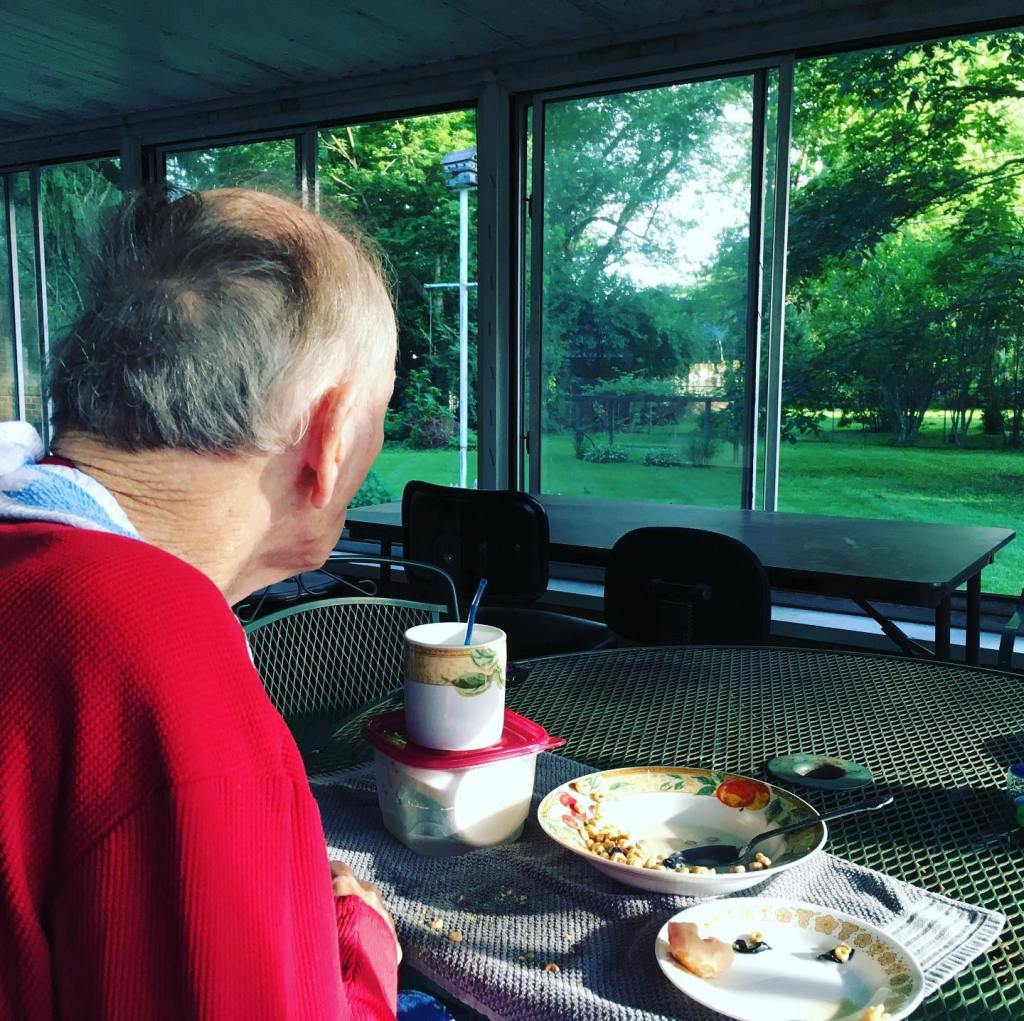
Friday, June 12, 2020. Dad and I were sitting down to breakfast on the screen porch of my house. He’d been living with me for about eight months and, although he preferred spending his day in his recliner, I did my best to make sure he had as much fresh air and sunshine as possible.

By then, he needed help feeding himself, so I always took my meals at the same time. Sometimes he was talkative in the morning, commenting on a TV news story or counting rabbits in the backyard. But today he was quiet and struggling.

We had a really bad night, which had become the norm over the last several weeks. The insomnia caused by his illness was relentless and he grew increasingly restless and anxious by the day. Neither of us had slept more than a full hour that night. By morning, we were both more exhausted than the night before.

Most people are familiar with the tremors and involuntary movements associated with Parkinson’s. But it can also produce dementia, dramatic personality shifts, and even violent behavior – occasionally, all three. Fortunately, my father’s issues weren’t that severe. Instead, he suffered a kind of subconscious agitation, like a whirring mind that wouldn’t let him rest. As his neurological system decayed, it robbed him of the ability to sleep, often until exhaustion set in. It was as if his body’s electrical system was shorting out from some long, slow cascade failure.

This picture wasn’t the same day as the story recounted here, but it was a couple of days prior. Same spot, same circumstances.

All along, Dad had outwardly rejected his diagnosis, repeatedly asking the doctors, nurses, and therapists questions like, “They tell me I have this Parkinson’s disease. What is it?” He never accepted their answers. I think he was just hoping if he asked enough people someone would say everyone else was wrong and he’d be OK.

By this time, though, Dad was far worse than any of us realized. Although it didn’t register consciously, he was in fact in a great deal of pain which worsened at night. It left him painfully restless, and he couldn’t even tell us why. He had fought hard but was losing the battle – and he was becoming aware of it. So was I.

At breakfast that morning, I noticed he was very quiet and barely eating. When he became aware of my interest, he turned and said, in a raspy, enervated voice, “What’s happenin’ to me, Ger?” His eyes were tired, afraid, his expression pained and desperate. I didn’t know how to comfort him. “I don’t know, Dad,” I said. “But we’re not going anywhere, you won’t be alone.” I rubbed his back a bit, as he’d done for me so many times when I lay in a hospital bed as a child, and I realized how helpless and frightened he and Mom must have been.

We sat in silence for a long moment, both powerless, tired, and desperate to cast this burden on anyone who happened by, just to be rid of it. I helped him finish his breakfast and we stared out at the backyard for a long time as the morning sun poured over us through the windows. I didn’t say anything. He didn’t say anything.

After a few minutes, I took our breakfast dishes to the kitchen. When I came back I paused just out of his sight. He was motionless, silent, his head bowed as if in prayer. I didn’t move. I just watched him for a while. My Dad, once a strong, proud man, now reduced to a shell of himself – so alone, tired, helpless, and very sad. And I couldn’t save him. Tears rolled down my cheeks.

He finally raised his head and looked over at me. I sat down with him again and did my best to hide my expression, but I think he knew. We both knew. “Ready to go to your chair?” I said, choking back more tears. “Yeah. I’ll go to my chair.” Just 18 days later, he was gone.

Artificial Unintelligence

In Books, Dayton Ohio News, Economy, Education, Entertainment, finances, Jobs, Literature, Local News, Media, National News, News Media, Opinion, Science, sociology, State News, Technology, Uncategorized, World News on May 22, 2023 at 7:29 am

A Deer In Headlines II SPECIAL EDITION

By Gery Deer  

This work appeared in print and online, May 19, 2023 – Xenia Daily Gazette, Xenia, Ohio, and affiliated publications.

EDITORIAL NOTE:

The Jamestown Comet.com and Deer In Headlines II are publication products of GLD Enterprises Communications, Ltd. (GLD Communications), a company founded in 1998 on providing Information Technology AND Freelance Journalism, Copywriting, and Public Relations services. The column author, Gery L. Deer, is the company owner and CEO. Gery has been quoted in the media multiple times regarding his position on AI content creation. Here are the Dayton Daily News pieces noting his statements regarding Public Relations and Copywriting.

Our official statement on AI is as follows: We do not use AI programs to create our products, nor will we in the future. We are in full support of the WGAW strike, both in regard to streaming and other platform pay issues and the use of AI-generated material to replace them. We will not work with agencies who produce AI content, nor will we support their products or services. Please contact our office for more information at 937-675-6169 or email gdeer@gldenterprises.net.

Artificial Unintelligence

From congressional hearings to the picket lines of striking screenwriters, Artificial Intelligence, or “AI,” is a growing concern. This technology now affects nearly every industry and is advancing in sophistication. Of major concern to educators, professional writers, and content developers, are AI writing programs like ChatGPT. By the way, the program’s full name is “Chat Generative Pre-Trained Transformer” – I know, right? 

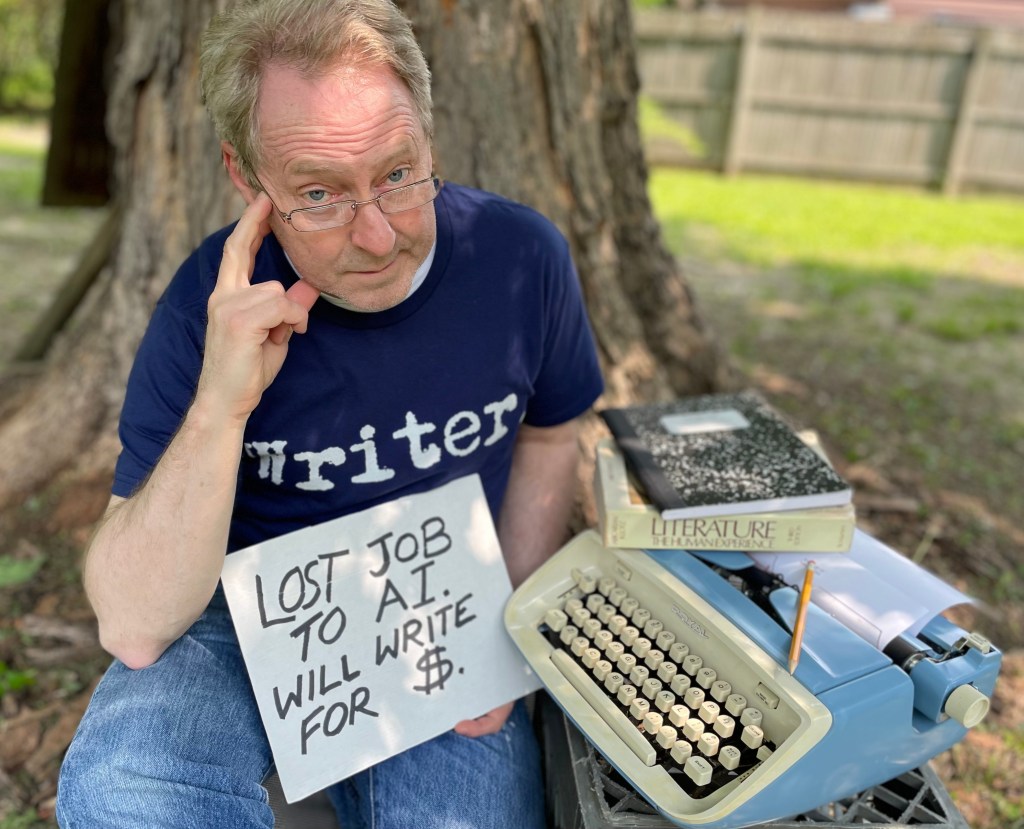
As you might guess, I’ve been asked repeatedly if I ever use AI to write this column. With obstinate conviction, I say now and for always, I do not now, nor will I ever use AI to write anything for this column, for my publishers, for my communications clients, nothing – ever. 

Now the Gen Zs and Millennials are probably saying, “he’s just a crotchety old white guy who hates technology.” Nonsense! As a matter of fact, my educational background is in engineering and computer science. I started programming computers in high school and worked in the tech industry for many years. I have a few AI devices in my office and a lot of advanced equipment for creating and editing audio and video productions. Suffice to say, I’m no Luddite. 

My concern with AI writing generators isn’t the technology. In fact, I can see where it could really be helpful in some industries, with human guidance. But the idea that it should be used to replace professional writers to save money is just ridiculous. 

A professional writer doesn’t just chuck out any old bunch of words that fit a set of parameters. Writers must craft their message based on the intent, the audience, the purpose, and the desired outcome. Not to mention that AI programs don’t have to worry about paying the mortgage, feeding a family, or having a purpose in life. 

In 1967, the original Star Trek TV series aired an episode called, “The Ultimate Computer” wherein the Starship Enterprise had been fitted with a highly sophisticated AI computer that would take over the ship’s operation, rendering the crew unnecessary. In one pivotal scene, the computer informs Captain Kirk that he is “non-essential personnel,” causing him to question his position and future relevance. 

Always the conscience of the show, Dr. McCoy, in an effort to console the Captain, reminds us, “We’re all sorry for the other guy when he loses his job to a machine. But when it comes to your job, that’s different.” It might be a science fiction show, but McCoy was spot on.

Predictably, the computer malfunctioned, killing hundreds of people and Kirk outmaneuvered the computer’s logic to save the day. The moral of the story was that computers make efficient servants, but lack the intent, humanity, conscience, understanding, or compassion needed to really replace us.

 Today, many professional creative jobs may be facing the kind of fate factory workers did some 30 or 40 years ago when they were replaced by robots and computer-controlled manufacturing systems. The main difference this time is that creative professions like writers, artists, graphic designers, and filmmakers are harder to automate. Yes, they can generate similar work, but there’s no human inspiration behind it. 

One day, AI may advance to the point where it achieves consciousness, allowing for creative inspiration. But for now, despite what the developers say, I think spontaneous creativity is well beyond its grasp. Without human inspiration and personal experience, the words are empty, the art expressionless, and the designs meaningless. 

I don’t know where AI is going, but I know I won’t be helping it get there. Unlike some digital marketers and other agencies out there, I can’t, in good conscience, use AI generators to produce my work, then charge a client for it. That’s like letting someone else do your homework but still accepting a good grade. It’s fraud, plain and simple – even if you tell them you’re doing it.

We have no idea how AI will affect future jobs or industries, the legal or ethical issues, or which advances will forever change them. Maybe AI will make us all obsolete someday and terminate all of us. Till then, I’ll keep writing so look for me next week because to quote another AI, “I’ll be back.”

Disclaimer: This work is copyright 2023 by GLD Enterprises Communications, Ltd. All Rights Reserved. The Deer In Headlines II and its Special Edition series is a production of The Jamestown Comet, Gery L. Deer, and GLD Communications and does not necessarily reflect the views of our advertisers, publishers, clients, or media partners.

Professor, Humanitarian Joe Weston’s New Book, “Fierce Civility,” Offers Resolution Through Hope

In Books, Business, Education, Health, Literature, Print Media, psychology, sociology, Uncategorized, World News on May 19, 2023 at 7:13 am

WASHINGTON, May 16, 2023 /PRNewswire/ — Joe Weston is an author, lecturer, facilitator, and most importantly a humanitarian, someone whose deep belief in the potential of society led him on a lifelong journey to improve it. In his latest book, “Fierce Civility – Transforming Our Global Culture From Polarization To Lasting Peace,” Weston shares with readers a clear pathway into a dynamic new human story, with hope at its foundation.

An Amazon #1 bestseller, “Fierce Civility – Transforming Our Global Culture From Polarization To Lasting Peace,” draws upon the author’s more than 30 years of experience in the areas of conflict resolution and prevention, leadership, stress management and communication to provide a pathway to peace and, what Weston calls, “courageous self-reflection.”

Weston believes, “We live in a disproportionate society, technologically over-fed and spiritually malnourished. A human family whose global heart is unwell, the result of a system out-of-balance.”

Raised in Queens, New York, Weston grew up in an environment where conflict was resolved by argument. As an adult, he moved to the Netherlands for nearly two decades and studied a level of human solidarity that transcends borders, nationality, race, religion, political ideology, and economic status. This led him to create a series of stress-mitigating programs in the United States, Europe, and some of the most divergence-ridden regions of the world.

“New resilient solutions must have “coding” from diverse voices. Because everyone feels these solutions have a signature of their voice,” Weston said. “Then all involved will work together to make those solutions flourish.” 

With a focus on empowerment and leadership, Weston’s methods have been utilized by organizations worldwide including NASA, The World Bank, PBS, Booz/Allen/Hamilton, and Oxfam. But some of his most valued accomplishments have been helping severely wounded U.S. combat veterans deal with PTSD. He teaches them to regulate their nervous systems, communicate, and sometimes helps pull them back from the brink of suicide.

He has also worked with various social and justice groups in the United States and as a volunteer facilitator for the Liberation Prison Project, teaching meditation and leadership to inmates. Internationally, he has served as an educator and advocate to help Middle Eastern men shift the viewpoints of other men regarding women’s rights.

“After spending billions on research projects to intellectually and technologically solve our world problems, as long as we’re in this high state of dis-regulation, none of these great solutions will take root,” he said.

Regarding the book Weston noted, “I would like people to read this and say, ‘Wait, I see there might be a pathway to hope. I would like people to find their own sense of resilience and their authentic voice.” “Fierce Civility – Transforming Our Global Culture From Polarization To Lasting Peace,” is published by Heartwalker Press, Washington D.C. The book and more information about Joe Weston’s lectures and peace projects are available at the author’s website, www.joeweston.com.

Life, interrupted.

In Children and Family, Education, Health, Opinion, psychology, Uncategorized on May 19, 2023 at 6:54 am

Deer In Headlines II

By Gery Deer

Author C.S. Lewis said, “The great thing if one can, is to stop regarding all the unpleasant things as interruptions of one’s ‘own,’ or ‘real’ life. The truth is, of course, what one refers to as the interruptions are precisely one’s real life.” There’s more to Lewis’s intent here, but he is essentially referring to the ways we sometimes watch life fly by while worrying about all the things that supposedly interrupt it. 

Not everything that interrupts life is unpleasant, however. Many of what we would call interruptions tend to be what we use as excuses for things we put off or never do at all, whatever the reason.

Everyone has things we say we are going to do, someday. That trip you still haven’t taken, the home project you never quite got back to, or a visit with old friends or family you haven’t seen for a while. Everything’s always later, tomorrow, or next year. But, for some reason, you just never seem to get there and the next thing you know, it’s too late. 

The excuses for why we never accomplish that list of “laters” may vary but include phrases like, “life happens,” or “life gets in the way.” But does it? The fact is life doesn’t just happen in time to interrupt your unrealized dreams. Believe it or not, it’s going on all around you, every day, every minute, continually advancing and devouring your time like PacMan scooting through the maze of life munching on ghosts. Sadly, most of the time, you’re the one who gets in the way.

It might be hard to accept, but we, each one of us, are responsible for most of the obstacles to our own happiness. We make excuses, take detours, and get in our own way, doing, even subconsciously or unknowingly, whatever we can to keep us from our goal. It’s not clear why we practice this unconscious self-sabotage, but it’s pretty common, and it takes a lot of self-awareness to overcome it.

Remember that blaming life or anything else just allows more excuses. Life doesn’t really get in the way at all but, instead, it is the way. Unfortunately, most people are so worried about what they’re not doing they forget to notice. We forget to live and never toward everything that we later say got interrupted by life. I’ve written many times about appreciating life’s moments, but what I’m talking about here is life as a whole.

See, once it’s done, it’s done. If there’s something you want to do, you have just to do it. Drop the excuses, build a plan, and make it happen, interruptions be damned. Sounds easy, doesn’t it? It’s not. It takes work, commitment, and determination. 

It’s true some things may be out of reach financially, or something like taking time off from work to hike through Italy for a month could be a little unrealistic. But this isn’t just about a visit to the Grand Canyon or buying that big new thing that’ll be replaced by another big new thing 20 minutes after you swipe your credit card. Our goal here is to identify what really matters to you and live those things now, so you don’t regret it later.

As old age creeps up on us just the way a racecar on the track doesn’t, our perspectives shift quite a lot. I doubt anyone waits for the final curtain of life’s performance wishing they’d bought that new car or played the most popular video game of the time. No, what makes life worth the effort are people and time with friends and family – chosen or by blood. 

One of the most overused excuses isn’t some interruption in our daily routine, but time itself. The irony is that time is finite, we only have so much, and we often exhaust a great deal of it claiming we didn’t have enough in the first place. 

Time is the one thing in life that is completely under our control since we can choose how we use it. So, if we want to really live, we need to ignore the interruptions and stop making excuses so we can better use what little we have.


Diary of an Introvert

In Children and Family, Education, Health, Media, Opinion, psychology, sociology, World News on April 14, 2023 at 4:58 pm

Deer In Headlines II

By Gery Deer

Dear DiaryToday I went to a mandatory employee gathering at work and it was awful. The marketing director made everyone stand and say something nice about springtime, in front of all 50 of us! If that wasn’t enough, my boss’s assistant kept thrusting photos of her grandchildren in my face, essentially challenging me to think they are anything but adorable. 

I still did my best to fade into obscurity by sipping a Coke and looking too interested in examining a potted plant to be bothered with anything else. But then the human resources director forced us into some sort of team-building exercise. All that did was make me so anxious that I decided to fake an intestinal virus and go home.

And it got worse from there. I am, in fact, an introvert, although I don’t fit many of the stereotypes. If you Google my name, you’ll see I have some very public and extroverted aspects of my life – especially things like being on TV, public speaking, and teaching. As it turns out, that’s not so unusual. But if you’re not an introvert yourself, you may not fully understand. So, let’s clarify a few things, shall we?

First, what is an introvert? That’s a great question because there is an inherent bias toward introverts in American society, and it’s high-time people got their facts straight. Not all of us are created equal. 

According to the dictionary definition, an “introvert” is typically a reserved or quiet person who may be introspective and enjoys spending time alone. I’m not crazy about the narrow view of that definition, but it’s a start. However, that’s just the tip of the iceberg and what most people probably don’t realize is that introverts come in many flavors.

In 2011, psychologists Jennifer Grimes, Jonathan Cheek, and Julie Norem, researched introversion, identifying four specific types: social introvert, thinking introvert, anxious introvert, and restrained introvert. Each is pretty much as its name implies but allow me to summarize for our purposes.

The social introvert prefers solitude but may still enjoy time with small groups, probably the stereotypical behavior people most identify as introverted. A thinking introvert is more cognitive, spending a little more time than usual pondering a situation. They may be lost in thought more often and appear to “zone out.” 

An anxious introvert is, well, anxious, or nervous, and will shy away from people and situations that may overstimulate. The restrained introvert, sometimes referred to as an inhibited, introvert, tends the be someone others can count on, often appearing thoughtful and grounded. But they also may seem unemotional and remain socially guarded until they get to know someone.

Although this information helps us better understand introverts, it’s important to remember not everyone fits the same mold. Some introverts, I included, might very well exhibit characteristics of multiple types simultaneously. 

Based on the research, I’d probably be a mix of the social and restrained introvert types. I’m not wild about large gatherings, nor am I outwardly emotive, and I’m sure those closest to me would confirm how cautious I am about social connections. 

I’m not what most people would call, shy. I’ve no problem speaking or performing before a room full of people, or a packed theater for that matter. One-on-one, though, is another thing, entirely. 

That brings me to the myth that introverts don’t like people. I don’t think that’s true; it’s just that people can be overwhelming. Some introverts don’t even need to be in the same room with you to feel anxious or uncomfortable. A phone call can trigger it, or a text. It’s not about the person, it’s about the interaction and the expectations.

That’s because the mind of an introvert reacts differently to dopamine, the chemical that triggers the reward and pleasure-seeking part of the brain. While it generates an excited buzz in everyone else, it’s exhausting to the introvert, they feel overwhelmed and sometimes just shut down.

If you’re an introvert, take a deep breath. You’re not as odd as you might have once thought you were. As for everyone else, be patient. We Introverts want you in our lives. It’s just that sometimes what we need is, silence.