When I was 11, my uncle came to visit me during one of my many prolonged stays in the hospital. I had a reasonably significant surgical procedure and was confined to a wheelchair, so he sat in my room and regaled me with tales of life on the outside. He was my mother’s younger brother. His nickname was “Tuff,” though his real name was Gary – one of four in my immediate family. Since our families were close, nicknames were helpful, as you might imagine.
At one point during his visit, Uncle Tuff decided I’d been cooped up for too long and needed to escape for a bit. I wasn’t tethered to any wires or hoses at that point, so we made good our getaway. I’m not sure, but I don’t think I was supposed to leave the floor, and we were trying to be stealthy. I think he had given the nurses the heads-up and cleared it first, but I played along.
After a quick elevator ride, we arrived at a vending area, complete with snack tables and a microwave. He parked me at a table and dug into his pocket for change. A moment later, a Mr. Goodbar candy bar and a bottle of Royal Crown cola appeared in front of me.
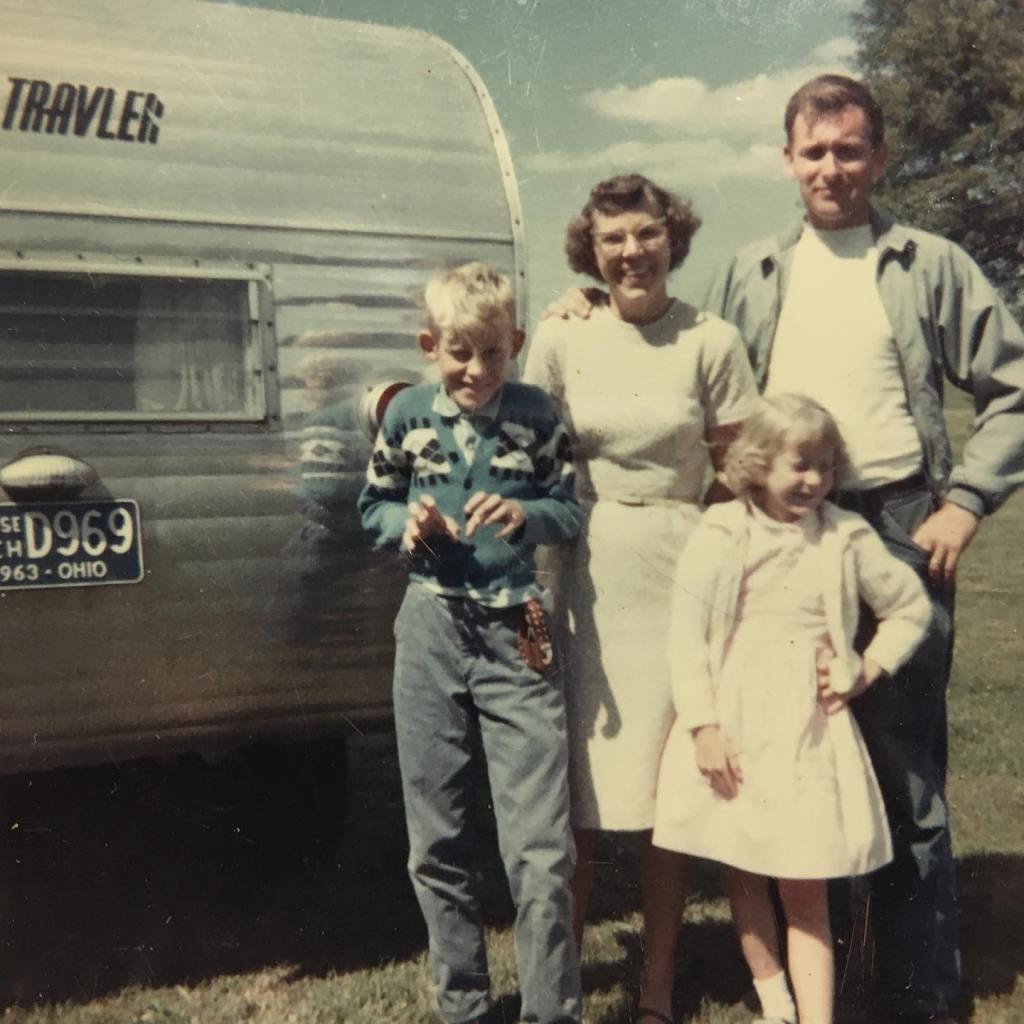
Gary “Tuff” Sutton, Sr., his wife, my Aunt Phyllis, and their two kids, Pam and Gary, Jr. “Butch,” were fixtures in my home. My mother’s youngest sibling, he was the uncle I knew best. He taught me to play the piano, which, like the soda and chocolate, gave me a reprieve from the rigors of the hospital. I’ll forever be grateful.
In case you’re unfamiliar, the Mr. Goodbar is made by Hershey and is little more than your basic chocolate bar, but with peanuts. It’s not fancy, but after a week of hospital food, it was like someone had bestowed on me a feast fit for kings. For the next half hour, we knocked back our RCs and chocolate, and he did his best to take my mind off where I was – he was good at that.
Back in my room, he’d left me with an extra chocolate bar – plain Hershey’s this time – and gave the nurse another bottle of RC to keep cold for me. It was a good day, all things considered.
We lost my Uncle Tuff to lung cancer in 2005. Ironically, another memory associated with that day at the hospital was that he wasn’t allowed to smoke. It was one of the few times I remember seeing him without a smoldering Salem. He was around my life a great deal, and I miss him every day, especially when I sit at a piano – he taught me to play.
But of all the times we had later, playing music with our family band or just sitting around the kitchen table at the farm where I grew up listening to him and my dad tell stories, that one moment at the hospital will always stand out. That was when a little boy, uncertain of his future, forgot for a moment how badly he was feeling, all thanks to his uncle and a candy bar.
I guess the point of all this is that, as children, it’s incredible how things intertwine to create influential memories into adulthood. Then, when we’re grown, we often reflect on those moments, maybe to draw inspiration or clarity. Many events in our formative years leave an indelible imprint on our psyche to help shape our beliefs, behaviors, and aspirations.
Understanding the profound influence of these early experiences offers invaluable insights into how we relate to people and the world as adults. But I wouldn’t dig too deeply. As Sigmund Freud is fabled to have said, “Sometimes a cigar is just a cigar.” In this case, a chocolate bar and a bottle of soda are just a chocolate bar and a bottle of soda.
These moments, whether joyous or traumatic, become the defining chapters of our personal narratives. I don’t really know what long-term effect that single event had on my overall growth as an adult. I know it wasn’t the chocolate that made it special, but rather my uncle’s relationship with me. But, on the rare occasions that I might indulge in a Mr. Goodbar, I still smile and remember.
So, when life’s daily challenges become too much, maybe it would help to think back to one of those moments when a simple kindness, and perhaps a chocolate bar, could bring a smile to your face.
Someone asked me a question this week to which I had no response. “Are you doing anything special for the game on Sunday?” Game? Sunday? I had nothing. As it turns out, the Super Bowl is this weekend, and I had no idea. What red-blooded American doesn’t know when the Super Bowl is – or who’s playing? Well, me, for one.
Sports was never a focus in my house when I was growing up, so I never developed an interest. All I remember about football in my teens is how cold it was on Friday nights in high school, sitting in the stands in my marching band uniform and wishing for that last play of the night.
As an adult, I’m just not wired for any of it. I don’t drink, I’m not interested in the game, and the idea of barbecuing sends me into a panic. So, what do people like me do on the day of the “big game?” More than you might imagine. Here are some suggestions if you’re looking for an alternative this Sunday – or any Sunday, for that matter.
First, it would be ideal to get outside and get some exercise ourselves. Unfortunately, at least here in Ohio, the winter weather in February is still subject to change on a momentary basis. That eliminates some outdoor activities unless you’re willing to be a bit on-demand about your plans. You could always hit the YMCA or your favorite gym for a workout or swim.
The great thing about taking an outing on Super Bowl Sunday, provided your goal isn’t a sports bar, is you won’t have to deal with crowds. To me, Sunday afternoons are a great time to slow down, decompress from a busy week, and regroup. You can even start new DIY projects, do some purging and decluttering, or just chill with a book.
If you want to share in the more reclined weekend activities, what about a movie or TV show marathon? I remember one year, I decided I’d do a Mission Impossible film festival. One after the other, I sat through hours of Tom Cruise running… running… and running some more. I made popcorn, ice cream sundaes and burned through a 12-pack of Cherry Coke. I highly recommend Blue Ray or DVD – no buffering, no commercials, just six hours of Cruise’s IMF crew, and don’t forget the snacks.
Your mission, should you choose to accept it, is to find that series of films or TV that you want to just plow through, one after another. Isn’t there some guilty pleasure out there you haven’t seen in a while? Maybe it’s “Downton Abbey,” “Star Trek: The Next Generation,” or lounge around in your scrubs and get a relapse of “ER.” Be aware, though, people might be calling to see if you’re OK when you’re so immersed in all this that you don’t answer text messages. So be sure to come up for air now and again.
Sundays are also perfect for families to spend some time together. When the kids are small, they’re usually pretty agreeable to whatever the family is up to. As they grow up, however, they want less and less to do with us. But, if you’re lucky and your kids’ friends are ensconced in football activities, you may be able to steal some time with them and there are lots of things to do.
Pick a local museum to visit, take a day trip somewhere fun, or spend some time at a local library or independent bookstore. You might even just stay home. What about a board game? Nothing gets families interacting like Monopoly or Scrabble. The point is to spend some time together and reconnect. Oh, and turn off the devices. Go analog for a while and give your brain a break.
For some people, the Super Bowl is about the shared experience of cheering on their favorite team, complaining about the halftime show, and talking about the commercials. Whatever you choose to do this Sunday, football-related or not, enjoy yourself. There’s so much bad going on around us that we all need something positive to share, whether it’s a football game, or a walk in the park.
This is #nationalmentoringmonth and although I’ve had a few people I would agree had a mentoring roll with me, they came and went. But my father and my brother have been my lifelong mentors.
A #mentor isn’t just someone who teaches you something. They show you by example the value of those skills or lessons. They help you shape yourself into the person you want to be.
My father, Gary, Sr., was many things – a mechanic, mason, contractor, heavy equipment operator, truck driver, farmer, and agricultural mechanics teacher. He and my mother, Lois, were the right and wrong of my world. From both of them I leaned my work ethic, the value of patience, integrity and a drive to get where you want to go whatever the obstacles. Even since both have passed, I still hear them in my ear sometimes reminding me who I am and why.
My brother, Gary, Jr., is still a constant influence as well. He’s many things too – an architect, mechanic, #HVAC expert, welder, fabricator, truck driver, adult #education teacher, electrician, and a great deal more. Our age difference (16 years) put him in the position of second father. His goal was always to make sure I was as self-sufficient as possible. I’ve also had the good fortune to have him beside me at some of life’s most treasured and defeating moments.
Thanks to all of them, I am many things as well – mechanic, #electrician, truck driver, #heavy #equipment #operator, and a dozen other things. My education at #school was important but without the #mentorship of my #parents and #brother, life would have been a great deal more challenging – and not in a good way.
Who are your #mentors? If they’re still with us, thank them. Make sure they know how important they have been to the person you are today.
It is entirely possible that I spent too much time in this work writing about my parents. We have all had remarkable people in our lives, and my immediate family just happened to be some of the most extraordinary people in my life. With the holidays just around the corner, I wanted to relate a story that has almost become folklore.
The story begins in the late 1950s, sometime before I came along. My father was a machinist at National Cash Register, NCR, one of the largest employers in Ohio, if not the entire state. He also had what we would call side hustles. He would haul scrap metal to make ends meet, a good business when more efficient options were replacing the old cast-iron coal furnaces. Selling them for scrap was hard work but profitable. He also did concrete work and other odd jobs to help create a stable life for his family. To Dad, it was the kind of life he never had growing up in the foothills of the Appalachian and Southeastern Ohio.
While he was working, my mother raised her children, made a home for them all, and took care of the day-to-day operations of the household. She was one of the hardest working people I ever knew, even back then. But no matter how hard they worked, there were years when there just wasn’t enough money.
Around Christmas time, during a particularly lean year, the prospect of a happy Christmas looked grim. My brother was in Boy Scouts then, and my father was an assistant scoutmaster. Someone within the organization learned of my family’s financial difficulties. Shortly before Christmas, some people arrived at our house with food and gifts for all four. I remember my mother talking about it through tears as if someone had lifted them from a heavy darkness. She was eternally grateful, as was my father.
As the years went on, times got better for my family. Regardless of how little we had at any given time, I remember my parents always doing what they could to help those less fortunate. That brings me to Christmas of 1988.
That particular year, my dad learned of a nearby family that had fallen on hard times. The father had lost his industrial job, and the mother worked part-time while both did their best to raise their three small children. My mother immediately went into action.
Mobilizing the pre-Internet communications network within our family, she reorganized that year’s party into a relief event for the distressed family. With a little investigation and intuitive guesswork, my family collected information on the parents’ needs, clothing sizes, ages, and children’s interests. We even had people trying to find employment for the young father.
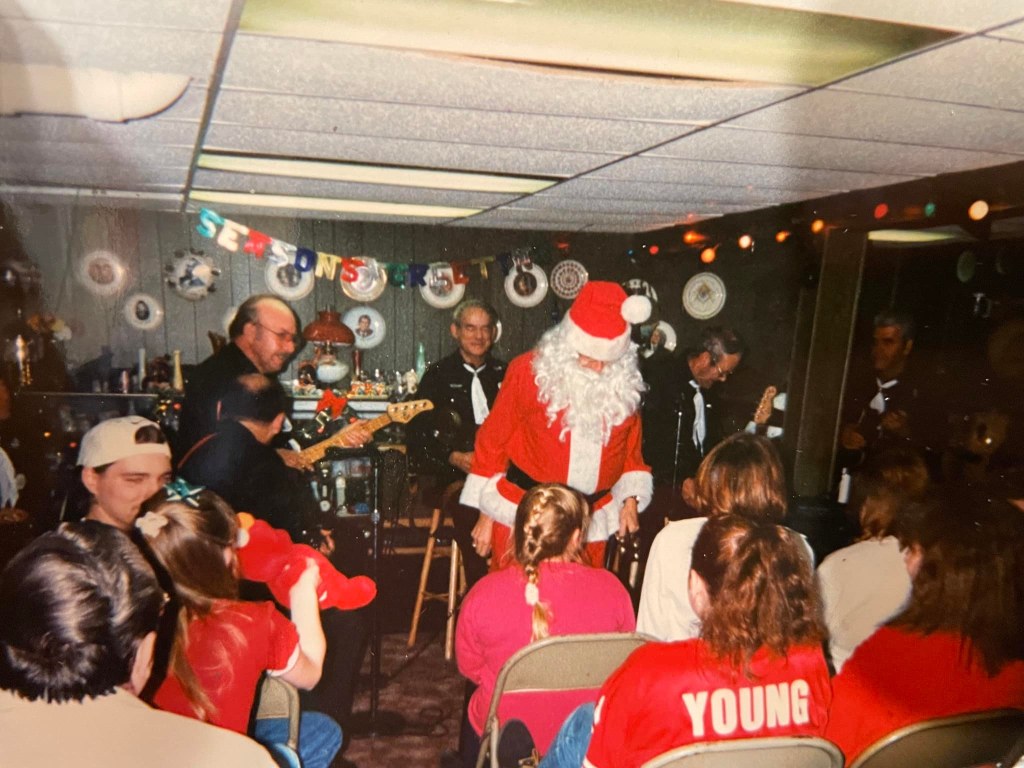
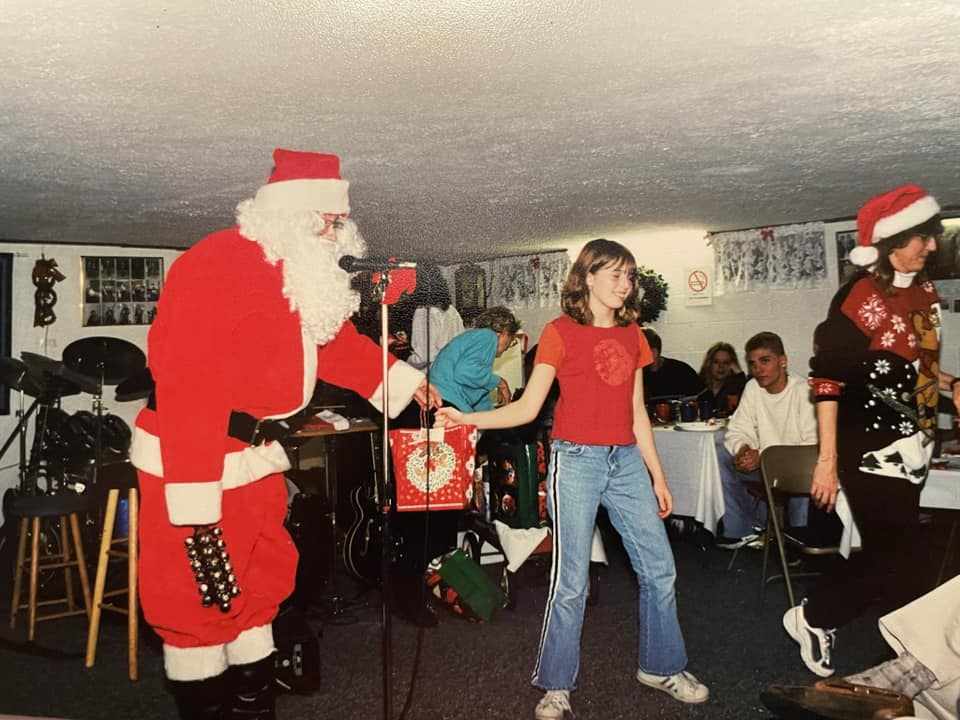
Our annual Christmas party, already a real show complete with music, songs, games, and dancing Santa, took on a whole new look. The price of admission was a donation. A list had been distributed informing everyone about what was needed and providing a way to let my mom know who was contributing what. With each person who arrived for the party came more toys, clothes, games, and food items. We even collected some cash.
On Christmas Eve, we loaded everything into a van, Santa riding shotgun, and headed for the family’s house. When we knocked on the door, we were greeted by a tiny three-year-old girl in a yellow onesie, a couple of toes poking out of the worn feet. She squealed away as she soaked in the sight of Santa Claus at her doorstep. To maintain the dignity of these hard-working people, there must be no clue where all this originated. My family were simply asked to deliver it to them.
My parents taught us by example. Kindness at the holidays should be the same throughout the year. Still, there is a gentleness during the Christmas season. We were under no illusions that a few gifts and boxes of mac and cheese would change the lives of this family. But at least, for one special holiday, they were together, safe, and they knew they mattered to someone. Sometimes, that’s enough to see you through the worst of times. Hopefully, we can all remember that year-round.
Author’s Note: A short story is based on my family’s charitable work. It’s called “A Special Place at a Special Time” and is available on Amazon. However, a revised version will be released shortly.
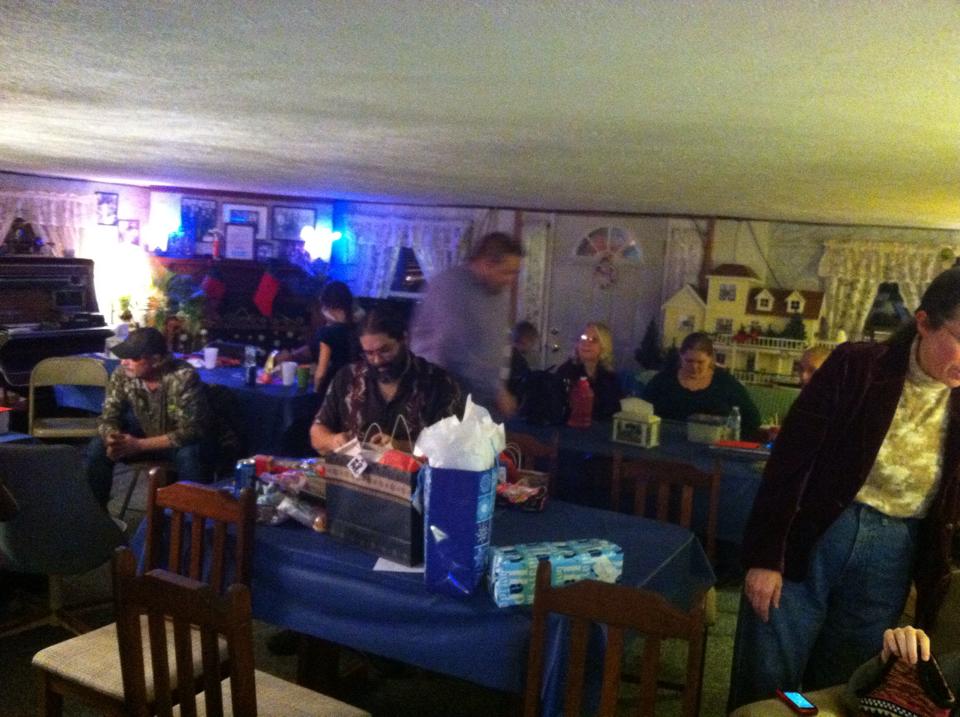
Gallery: The photos include pictures of the farm, the long lane that was decorated each year, Gary Deer Jr. as Santa and some of the later parties. Each one generated food, clothing, and other necessities for a local family. A few times, they were people in our own family – because that’s what you do.
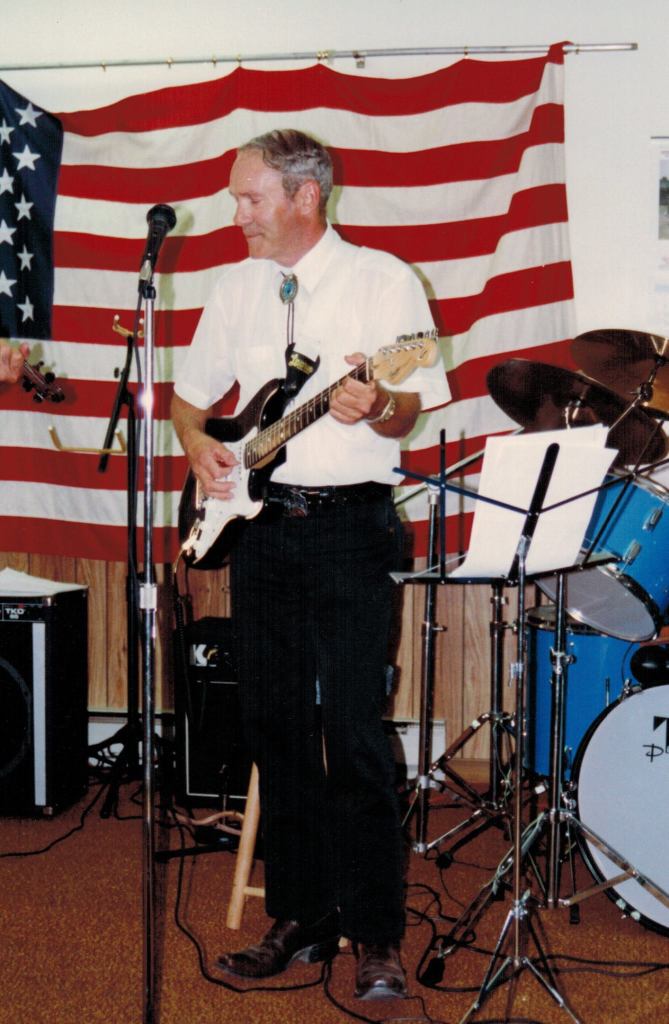
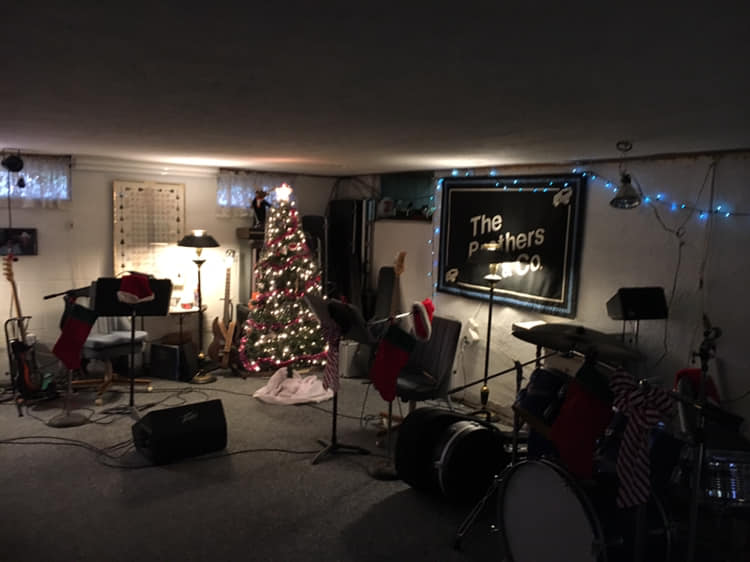
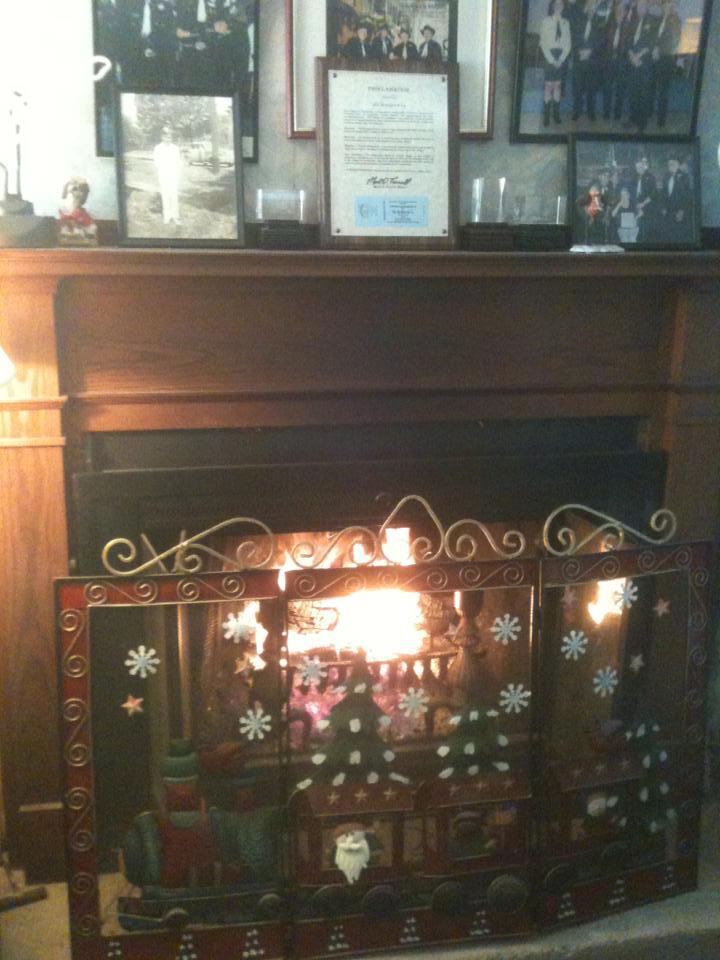
How the front of the farmhouse generally appeared at Christmas. The post that originally held the vegetable stand sign. This was taken in 2014 and is not photoshopped. It’s all real.The fireplace in “The Band Room” at the farm. The room was added because so ma ny people wanted to attend the Christmas parties.This is how the Christmas tree was arranged in our tiny farmhouse basement in the early days.The charitable parties eventually led to the creation of The Brothers & Co., our family’s band. We’ve performed all over the region at festivals, theatres, and even The Schuster Center.
Deer In Headlines Special Edition – October 14, 1993
It had been a long day for the freshman saxophone player and his high school marching band friends. By now, it was 4:30 in the afternoon, and the day had begun for them nearly eleven hours ago. They’d earned the opportunity to compete in a tri-state marching band competition in Huntington, West Virginia, some 200 miles from home.
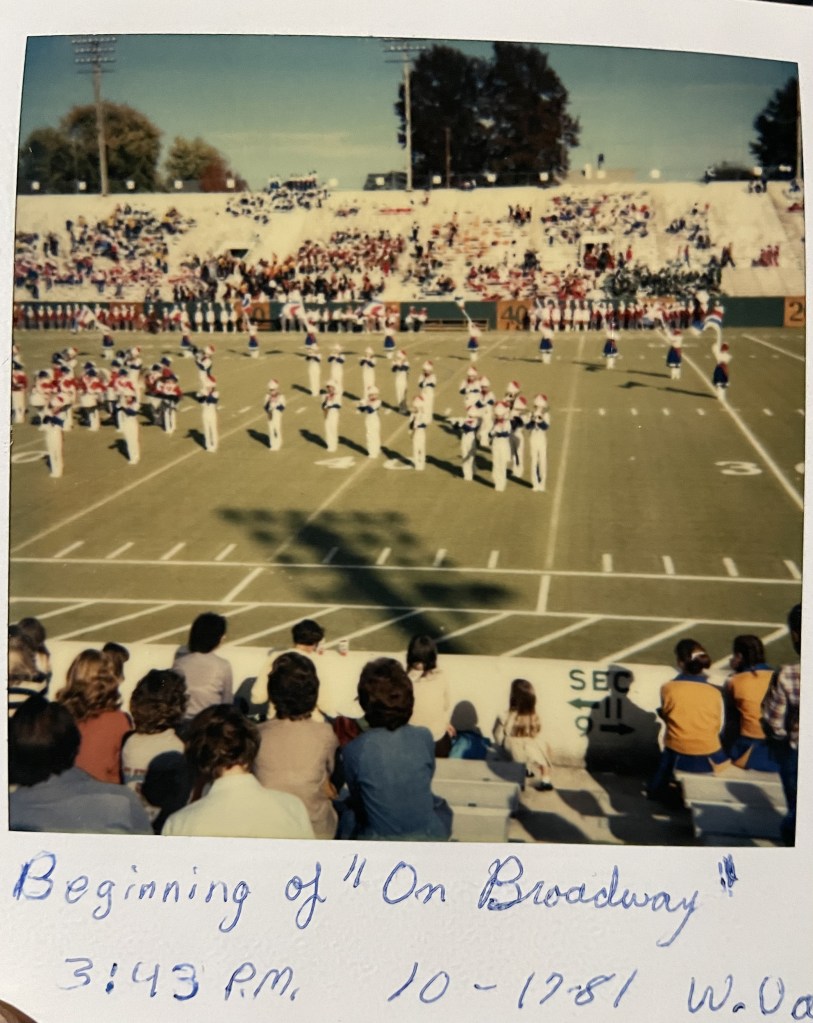
The mid-October afternoon had become hot and muggy. Even the seats in the stadium were perspiring. The adventure had begun early that morning with all the spirit of the world’s most excellent universities. The performances were over, and they sat impatiently awaiting the judging results.
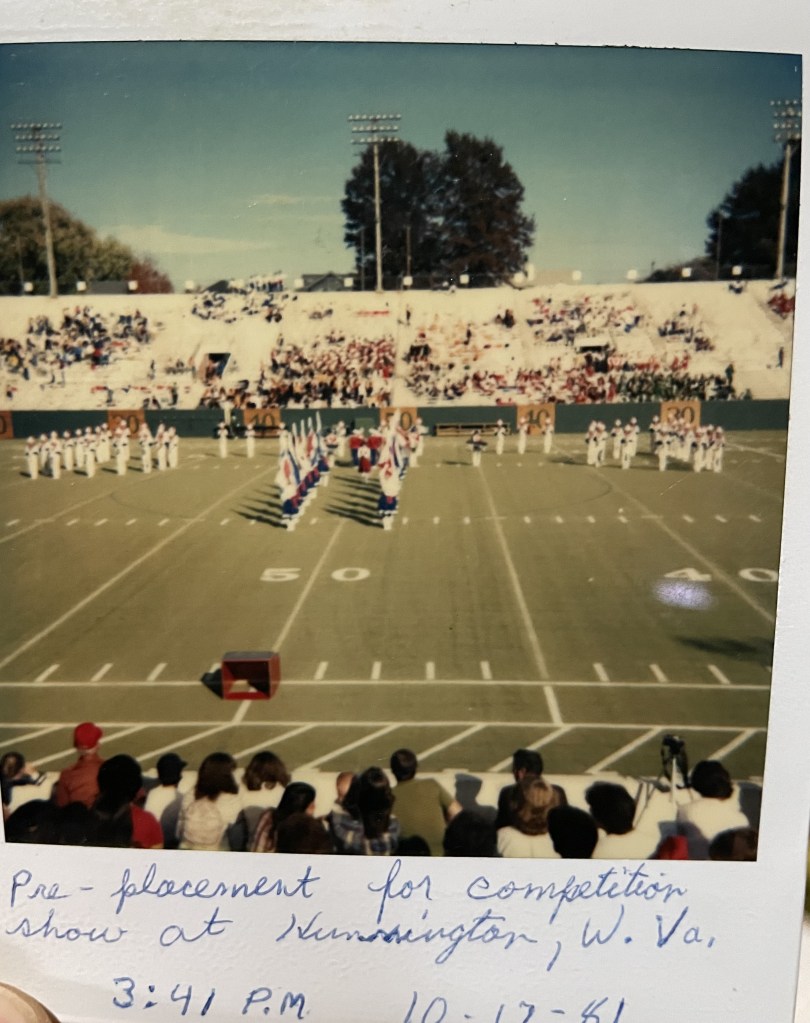
This is the view of the real Greeneview High School marching band during their first song of the contest—from the families’ perspective. (Photo by Lois Deer, 10-17-1981)
The bands were divided into three classes based on the size of their home schools. This group’s small, rural high school was in the last division, called class B, at this show. That meant it would be a long, hot wait by the time they went through each division, of each class, of each award. It was nerve-wracking, it was hot, and it was discouraging, but they waited. Patiently – well, sort of.
The university stadium buzzed with nervousness and emotion as the first awards were called. “Fifth place, class AA, goes to…,” A loud cheer bellowed from 100 yards down the bleachers, drowning out the anxious and irritated sigh from the young saxophonist and his group. The noise subsided. The announcer spoke again. “The fourth-place award goes to…” Another excited cheer came from the stands. The little band had worked hard all summer for this. It was one of the best shows they’d ever done, but this performance got off to a shaky start.
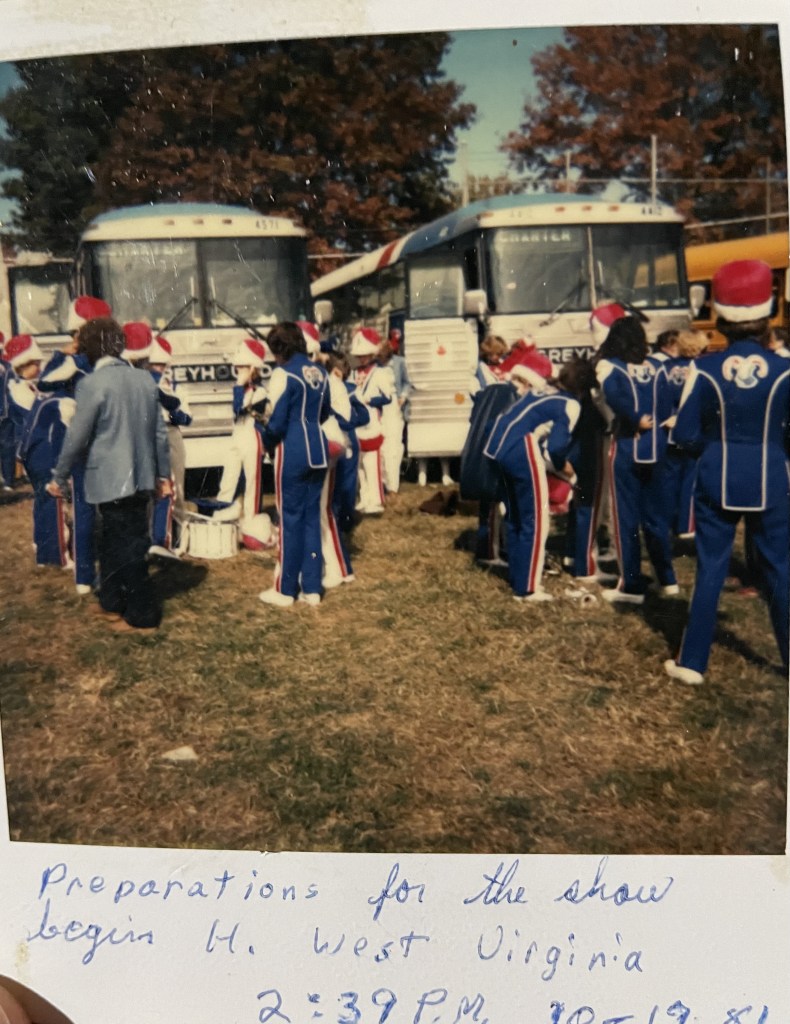
Their arrival at the host stadium was almost the exact time they were supposed to go on the field for their practice run, and things were rough. Heat exhaustion cost them one of the flag corps at the start of their competition show. The Astroturf-covered football field, new to most of the marchers, created its own set of problems. These kids were used to trotting through mud and grass. Now, wearing the slick-souled dress shoes, they had to contend with spongy ground and slippery artificial grass.
If that wasn’t enough, one of the trombone players nearly decapitated a field judge with his slide. During his morning pep talk, the director said, “Judges were fair game…” Meaning, if they got in the way, just keep doing what you’re supposed to do. Unfortunately, the aggravated trombonist took the recommendation literally. Somehow, they got through it all, and there they were. Hot. Sticky. Impatient. Every ingredient was added to create a group with a bad attitude, who, by this time, faintly resembled people sitting in a traffic jam.
A lot was riding on this, though. Everyone was here. Parents and family friends had accompanied the band on the four-hour Greyhound bus ride that morning. The busses pulled out of the school lot at 6 a.m., scored by the groans of how you’d expect average high school kids to at that time on a Saturday morning.
Most slept on the ride down. Many brought weekend homework. Others reviewed their music to ensure they remembered that one bad note at the football game the night before. Whatever the case, they made it, and everyone was pumped. And a little scared. Friday night football games were never like this. The tension grew and hovered in the air over the little group just the way that bricks don’t.
The young saxophonist eyed the band’s director. He was down on the track on the opposite side of the field, pacing back and forth in front of the reviewing stand like an expectant father. Another announcement blared from the public address speakers. The director’s curly afro hair and kinky beard glistened in the fall sun with impatient perspiration, giving him more the appearance of a heavy metal rock singer than a high school band director.
Then again, everyone was starting to look like that. The group grew increasingly discouraged with each passing award. The announcer was up to their class now, and the fourth-place award was called. Rats! The saxophonist slumped back against the bleachers with an irritated gasp. So did everyone else.
“There’s no way, ” he thought. “All these huge bands from three states? We can’t possibly have a chance at anything higher than fourth.” That seemed to be the general opinion of the others as well.
Another award. More cheering. None of it from them. Now, the announcer was up to second place, and the morale-broken musicians began standing, a few at once. Each gathered their things to return to the busses and the quiet little farm town. Some had already left the stadium.
“Well, so much for that,” someone said. “This is embarrassing, ” said another, like a line plucked from a Peanuts cartoon. Even their band director dejectedly headed towards his disappointed students. The announcer began to speak again, but no one in the group was listening. It was over. They tried, but the odds were against them, and the game was rigged.
“Second place, class B goes to…” A long pause.
This seemed to be the announcer’s annoying trademark, meant to instill drama. It didn’t work. It was just irritating. When their band took the field for the show, he sounded like he’d been mugged midway through his address. “You may take the field for comp…” Everyone held their breath. “…etition.” Whew!
Suddenly… the words no one expected to hear. No, more than that. They were impossible, improbable, incomprehensible words.
“Second place, class B goes to… Greeneview High School Marching Band from Jamestown, Ohio!”
For a solid breath, someone blinking would have rung like a gong. No one moved. No one spoke. Those shambling out stopped and turned around. There was an oxygen-steeling collective gasp.
A slow, quiet calm settled over the group as their brains processed the words they’d just heard. Suddenly, explosive screams of joy shattered the silence. They cheered, cried, and hugged. In the stadium section where their families were, everyone was on their feet, jumping, crying, and yelling. Even the other schools called cheers of congratulations, and they were equally shocked by the news.
The little band’s director stood in silent shock for a moment, and then it hit him. His eyes were as big as saucers when he turned to face the band from across the field, raising one arm in victory to them as if this little band’s second-place win were Olympic gold. It might just as well have been, but that wouldn’t have meant as much to them.
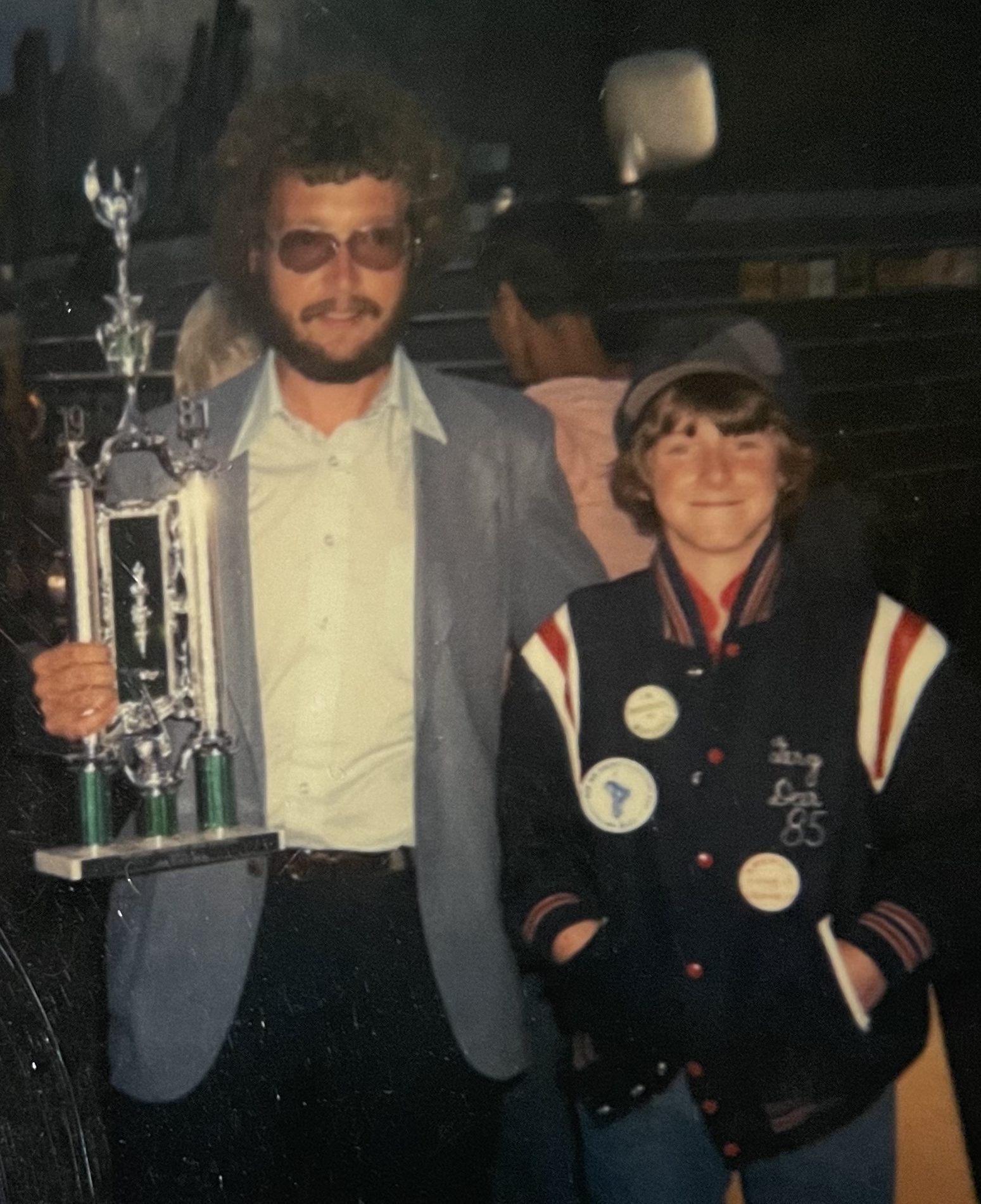
At the reviewing stand far below, their field commander and flag corps captain proudly marched to the awards table and saluted the presenters. Their vibrant red, white, and Colombian blue uniforms were almost as brilliant as the sun itself as they spun around in a military-like snap to salute the ecstatic audience. The pair accepted the two-and-a-half-foot trophy and rejoined the line of representatives standing at attention in front of them – both in tears.
Back in the stands, the young saxophonist and his friends watched and beamed. This was truly their most honored time together. The young man shaded his eyes as he took a moment to look at these people and tried desperately to soak it all in before it was over. They had no idea what they meant to him. So much of their lives lay before them. But this day… this was a day they’d never forget. “Someday, this is going to make a great story,” he thought.
The bright sunlight brought a tear to his eye. Then again, maybe it wasn’t the sunlight at all. He wiped it away. The thundering applause, congratulations, and excitement continued for what, in reality, was only about a minute or two. But it wrang out for what seemed like a lifetime to… The Little Band That Could.
———
Epilogue
My name’s Gery Deer, and that’s a true story from October 17, 1981. I was the “young saxophonist,” and I was right. I never forget that day, and it did make a great story. The band, Greeneview High School Marching Band of Jamestown, was under the direction of Richard Turner.
Band Director Richard Turner, the contest trophy, and me – Gery Deer in my newly-minted Greeneview school jacket.
I wrote this story after visiting Cooper Stadium in Columbus, Ohio, to see Greeneview perform in another competition show many years later. They competed in the Ohio Music Education Association’s state finals, and it was fascinating how little things changed from one era to the next. It was like reliving that day all over again.
Two of my four nieces were in the band in those days—now three decades ago. The oldest was the band’s field commander, a senior at the time, and a saxophone player like her uncle. The next oldest was a clarinetist and a freshman. They didn’t win their contest but took an honorable mention. Either way, I think they will still reflect on their day, as I do mine, and remember the feeling.
No one could have been prouder of my family and my school except maybe my parents, who were there again to watch their grandchildren as they did their own. And they, too, will remember. They say we can never be kids again. Well, no one could have gotten closer to it than I did that day. But to the “next generation,” I say, “When it seems like us old folks don’t understand, try to remember, we were there too.”
I just finished reading Friends star Matthew Perry’s autobiography, “Friends, Lovers, and the Big Terrible Thing.” As you may know, Perry died by drowning in 2023 after injecting ketamine. This dissociative anesthetic has become one of the injection hallucinogens of choice. He was only 53 years old.
In his book, released very shortly before his death, Perry detailed his life as what he calls an “unaccompanied minor,” the term given to children who fly commercially without an adult. He started drinking at the age of 14. At one point in his life, he was taking more than 50 oxycontin pills every day – still not achieving the high craved by his addiction-raddled brain.
Perry called addiction “the big terrible thing,” and it quite literally controlled his life. He had it all at one point – a million bucks a week on America’s number-one TV show, movies, and fame. But Perry suffered from terrible depression, fear, and insecurity. Pills were the only way he could feel, well, as he says it, nothing.
The National Institute of Drug Abuse defines addiction as a chronic, relapsing disorder characterized by compulsive drug seeking and use despite adverse consequences. It causes functional changes to the circuits of the brain responsible for self-control, reward, and stress, lasting long after the addict has stopped drug use.
Late ‘Friends’ star Matthew Perry struggled with addiction throughout his life.
I may seem out of depth on this topic to those who know me. I’ve been very, very lucky. My father’s side of the family is a tapestry of alcoholism. But, when my grandmother died, Dad was only three years old, and his alcoholic father left. A religious grandmother and strict aunt raised him, so he didn’t follow in his father’s footsteps. My mother wanted nothing to do with any of it either. So, growing up, I wasn’t exposed to any controlled substances because they weren’t in our home.
As I got older and went to college, then out into the business world, drinking and other drug use are far more prevalent. But I think somewhere down the line, I must have adopted an attitude of, “What do I need that for?” Even in my fraternity days, I was the non-drinker taking keys and getting people home safely. But I could have easily ended up on the pill side of things.
Many people with a substance use disorder start because of prescribed medications due to an injury or surgery. I think I’ve been lucky there, too, given the staggering number of surgeries I had as a child and young adult. I don’t think I ever got past the first two doses of any pain med, and even those were half-strength. I couldn’t handle the “out of control” feeling that euphoric high addicts live their lives trying to get. It was frightening. However, the problem for far too many people is that once they start, regardless of the reason, that may be the ball game.
Far too many people think addiction is about willpower or self-confidence. That’s ridiculous. According to the Cleveland Clinic, the disease of drug addiction may be woven into your DNA. They note that about half of your susceptibility to developing a substance use disorder (SUD) can be hereditary. That makes a person more prone to use alcohol, tobacco products, or drugs such as cocaine, heroin, and opioids. All it might take to put you on the road to addiction is that first high. From there, that’s your life.
As the lovable and hilarious Chandler Bing, Matthew Perry will forever live in our hearts. Sitting on a couch in a New York coffee shop with his five “friends,” he made millions cry laughing. Could he be any funnier? (If you know, you know.) But his passing shocked a generation, and the most painful part is that as sick as he was, it could have been prevented.
As of the time of this writing, five people, including two doctors, have been charged for supplying the drugs that led to Matthew Perry’s death. Hopefully, prosecutors can shut down the supply and save some lives. At least that would be something to give meaning to Perry’s death because, to those of us who admired him, that was the big terrible thing.
Last night, I dreamt I was in front of a door with a sign. I pushed and pushed on that door, and I pushed, and I pushed. Then, I finally noticed that the sign, positioned over some keypad, read, “Please enter your password.”
From what I remember—it was a fuzzy dream at best—I tapped in something on the keypad. That was instantly answered by a blinding, flashing light and a horrendous honking noise. I tried another code. Same result. Then, a third, no change. The honking continued.
Suddenly, a sign lit up in front of me. “Please use two-step verification,” it glowed. I woke up. The horrible honking sound was my phone alarm. The irony is that I had to punch in a password to make it stop.
Passwords. They help keep your information secure. Still, they remain a constant source of frustration whether you’re trying to download coupons, make a simple phone call, or get access to your hard-earned money trapped behind the screen of an ATM.
Digital security measures can create an endless and unbreakable barrier to some of the simplest aspects of day-to-day living. And then what happens? Someone in Brazil hacks your bank account and charges a parasailing to your credit card. Seriously?
If all of that isn’t enough to make you throw your cell phone at the wall, now we have artificial intelligence demanding some cybernetic confab before allowing even the most innocuous transaction. It’s even more frustrating if you happen to be part of the older generation, including mine, who were suddenly and unabashedly confronted with these technologies.
I remember the days when, to withdraw some money from the bank, all you had to do was walk into your local bank, show a picture ID, give them your account number, and sign a piece of paper. That might sound complicated, but the whole process took less than a minute. If there was a problem, you were standing in front of a person who could solve it. You didn’t have to spend two hours proving who you were to some AI bot to withdraw 10 bucks. I know I sound like some grumpy old Luddite. I am, instead, quite a technically skilled person and even I concede that it’s become ridiculous.
Recent surveys indicate that the average person reuses the same password more than 14 times across all their digital accounts. So, it’s no surprise that, believe it or not, all that mucking around with passwords, usernames, and account verification can result in a potentially serious health issue known as password fatigue.
This phenomenon occurs when functionality and security conflict directly with the user’s perspective. We develop frustration, stress, and exhaustion from having to reset, remember, or otherwise manage an onslaught of passwords and other account security information.
How could we not experience stress from all of this? Sometimes, you just want to unlock your mobile phone but can’t manage to properly punch in the correct numbers. It locks. You wait the required time. Try again and again. Finally, it works. Your pulse and blood pressure have skyrocketed, your shoulders tense, and a simple phone call has become a project.
You’ll hate this advice, especially after all you’ve read here. But there are only a few ways to stay safe, or as secure as possible, in our cyber-consumed world. First, you can go entirely analog and off-grid. It’s not impossible, but it’s tough – especially when banking or handling healthcare issues. The other option is to minimize your stress by keeping a written – pen and paper – password log.
But you must be diligent. Since the best advice for cyber safety is to change your passwords often and make them increasingly complicated, you need to write them down and date-stamp them with every change. It would also benefit you to designate someone you trust to access your accounts in the unfortunate instance of your incapacity or death.
It might seem challenging, but with a little pre-planning and diligence, you can reduce your password fatigue moving forward. And with that, although I’m a bit sleep deprived, I will try to get some more work done. Fortunately, no password is required on a typewriter.
“How did you go bankrupt?” Bill asked. “Two ways,” Mike said. “Gradually and then suddenly.” Ernest Hemingway’s characters in his 1926 novel, “The Sun Also Rises,” were speaking about money. But I think we go morally bankrupt pretty much the same way. I mean, when did people in our country become so mean to each other, so divisive? Has it always been that way, and I’ve just been too head-down in my own world to notice? Maybe it’s that the only people with a megaphone or resonant rhetoric tend to be the extremists. But the real question is, what is “morality?” That is a complicated question with no definitive answer.
I have always believed that, like so many of life’s perceptions, the idea of morality is in the eye of the beholder. I mean that the concept of decency or morality (and those aren’t the same things) is based on your perspective or what you absorb from those around you. For instance, if you were close to your parents, and they were friendly people who shared what they had, helped their neighbors, and worked hard every day to provide a good life for you, then, odds are, you’ll behave similarly. But it isn’t always so.
If you were not close to your parents or lived in animosity with them for some reason, you might end up the lay-about who steals from the cash register or kicks puppies. But I’m afraid this is slipping into a philosophical discussion of nature vs. nurture, which gets messy. So, let’s move on.
Isn’t it entirely possible that the idealistic concept of morality is simply imaginary, realistically unachievable, and that sometimes people are just bad? My unqualified opinion says yes. But wait, is my position unqualified? I know people, and I can tell when they intentionally cause harm to me or others. I’d say that pretty well qualifies me, or anyone else, to judge bad vs. good. Of course, that opinion remains relative to my point of view. And God knows we all have nasty relatives.
Speaking of God, which I don’t do very much because it’s one of those topics to be avoided at all the dinner parties I don’t go to, like sex and politics. But – when someone says, “God gives us a moral compass.” To that, I will only say this. To which “god” are you referring?
An estimated 700 different creator deities (gods) are worshipped worldwide. If you ask one follower of each, I would imagine they’d all say theirs is the only one. So be it. But, if the wrath of any one of those vengeful, judgmental deities was supposed to persuade people to behave themselves, I think it didn’t work. Think about it, more and bloodier wars have been – and still are – fought over tribal god images than any other reason in the history of mankind. Therefore, any idea of a religiously motivated morality strains credibility.
You alone must decide what morality is for yourself. Look, we all have good and bad in us; one person’s mistake is another person’s malice. A good deed to you might be torture for someone else. Some people think having a woman who displays her bare ankles is immoral, while there are likely people out there for whom any clothing at all would be considered offensive.
The real question is, are there unilateral rights and wrongs (morals)? It’s likely that most people would answer in the affirmative. For example, a vast majority would probably agree that killing is wrong. If you’re steering your morality ship by the Bible’s Ten Commandments, it’s right there in the text: “Thou shalt not kill.” However, it’s often argued by theologians that this is an incorrect translation. Some say the line should be, “Thou shalt not murder,” giving the commandment a very different meaning. Once again, it’s all about interpretation.
As to the original question of whether our society is going morally bankrupt, the interpretative relativity of the facts makes analysis impossible. But, given the constant reports of murder, war, greed, and fanatical extremism in the world gnawing at the very foundation of basic morality, I’d say our account is already in the red.
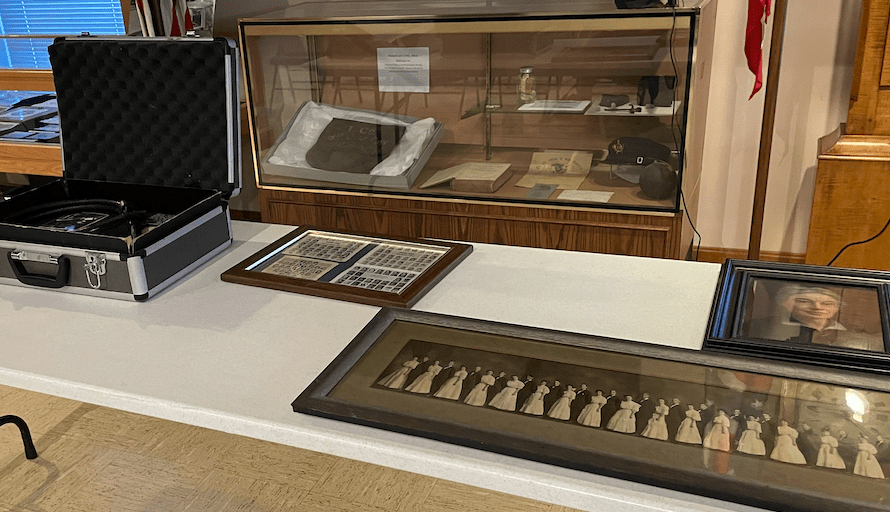
It’s truly remarkable how we can develop such deep emotional bonds with family heirlooms. Whether it’s an antique jewelry box, a wax candle mold, or even a small piece of roof tile from a 19th-century courthouse, these objects hold a special place in our hearts as cherished remnants of days gone by.
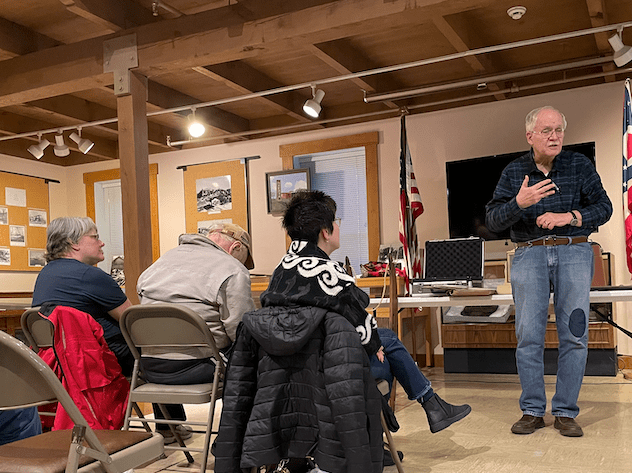
I recently attended an event promoted as a kind of show-and-tell at the local historical society. Visitors were encouraged to bring an item that had some significance to them, the history of the community, or their family, and share the story behind each piece.
Upon my arrival, I was greeted by a sight that stirred a sense of nostalgia. The organizers had proudly arranged the evening’s offerings on tables at the front of the room. Soon, a representative of the organization initiated the event, and one by one, each presenter stepped forward, their faces beaming with pride as they shared the personal significance of their cherished items.
It was like watching a live edition of The Antiques Roadshow minus the frequent condescension of the hosts. You know, “I’m sorry, but this frog statue lamp with a clock in its belly isn’t worth squat.” I always hated that. Anyway, I doubt any of the artifacts would have been for sale. You’d likely have to pry each one out of its owner’s cold, dead hands.
Even more impressive than the reverence with which each person spoke about their property was the variety of items they brought. One man brought a wooden dynamite crate, which was once used to carry explosives for stump removal at his grandparents’ farm. Another showed off his own grade school pictures, some 65 years old.
Others exhibited familial artifacts ranging from a military bayonet to a small jewelry box, which we learned was the owner’s only connection with her great-grandmother. Though very plain to the eye, it was priceless and beautiful to her, and perspective is everything.
When it originated with the speaker, like the school photos, the speaker relayed a personal account of the object’s significance. If, on the other hand, the possession once belonged to a loved one or close friend, the connection is very different. Things left behind by those before us can be deeply meaningful. Heirlooms strengthen our memory of someone and remind us of the relationship.
You’re unlikely to forget a departed parent, spouse, or sibling. But seeing and touching something that belonged to them reaffirms that connection tactilely and creates an emotional response, good and bad.
As I absorbed each story, a profound realization dawned on me. The pride, honor, or reverence—whatever you may call it—was not about the possessions. It was about the people in the stories, whether they were related or not to the speaker. After all, what is human society without stories? Stories shared between family and tribal members are how we preserve our history. And physical remnants of that history, like these family heirlooms, make the stories more tangible, more real.
And it doesn’t have to be about people who have passed on. For those in the room who had attended the same school, the antique class photos had a more profound, more personal association. Someone who’d been a student at the same school as several of the audience, but a half-century earlier, bound two generations, brought together because someone shared a story about a picture.
Finally, there’s something to be said for legacy. I think we all want to be remembered. I sincerely hope to leave behind more than a half-used pencil and a broken typewriter. But if so, I also hope someone will come up with a compelling and meaningful story about them. I think the ancestors of those who shared family items would be very proud of their legacy.
My parents left behind a treasure trove of memories, from books and dolls to trucks and tractors. Among these, I hold dear my father’s wristwatch. He personally handed it to me, sharing the story of its origin. When I gaze upon it, I am transported back to that moment. It’s not about the watch itself, but the emotional bond it represents, the moments he spent with me that hold the true value.
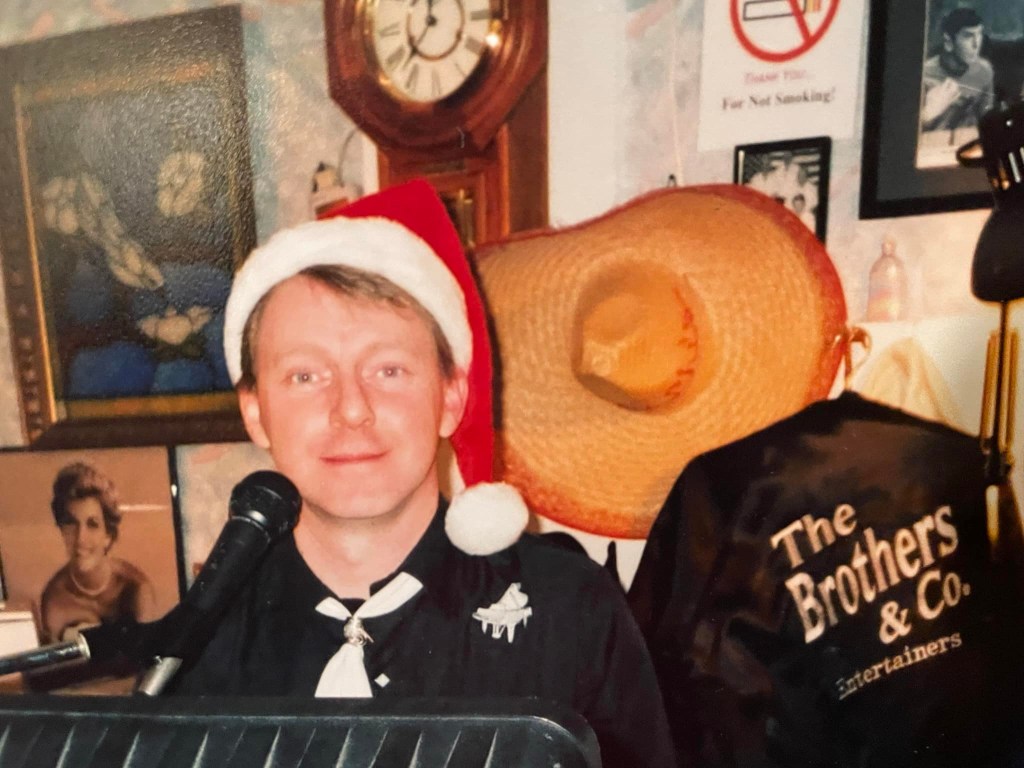
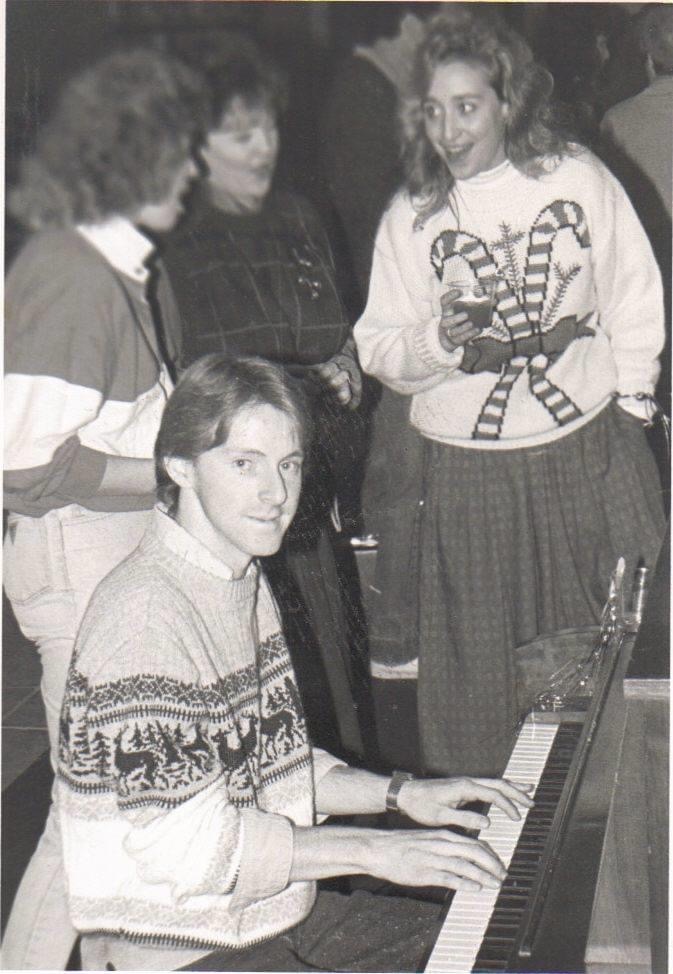
“It’s nine o’clock on a Saturday. The regular crowd shuffles in.” Those are the first lines of Billy Joel’s “Piano Man,” a song that always transports me back to my college days. To help pay for school, I was the pianist at a small Italian restaurant. Even in the 80s, it was old-fashioned, with one large room outlined by raised booths along the walls and a few floor tables in the middle. The decor was, what’s the word, beige. Yep, a lot of beige. Or was it brown? It’s tough to be sure because the lighting was pretty low.
Every Friday and Saturday evening, for about three hours, I performed all instrumentals on a small studio upright. I was like a live Muzak machine without the lyrics. I. Did. Not. Sing. Period. No one would have wanted to hear that. You might as well go outside and toss an alley cat into an upright trash can for that cacophony.
I had a repertoire of about 250 pieces, mostly pop and oldies, but I tossed in the occasional classical number just to show off. A quiet tinkling of “Fur Elise” goes particularly well with linguini, and the leg of lamb begged delivery of Bach’s “Sheep May Safely Graze.” I can’t read music, so everything was by ear. I memorized each song pretty much the first time it fell from my ear to my hands. Regulars would often bring a tape of some song they wanted me to play, and I’d learn it before their next visit.
“Piano Man” Gery Deer, performing for a holiday event at Sinclair Community College in 1988.
Once in a while, I’d break out the occasional show tune. On slower nights, I’d rearrange some old TV show theme song into a long, drawn-out ballad. You should hear my dramatic rendition of “Gilligan’s Island” at half speed with Liberace-esque flourishes. People would ask if it was some rare piece by Rubinstein or Mozart. I’d reply, “Oh, no. It’s an original by Schwartz (Sherwood, that is – go look it up).
Playing in a restaurant isn’t all tickling the ivories and clever combinations of sets. It’s more about the people. Unlike a “piano bar” or dueling pianos show, restaurant performances are more atmosphere than anything else. Still, although I got paid for my hours on the bench, my livelihood really depended on tips.
Depending on the traffic, my available talent that evening, and the generosity of the customers, I could have a forty-dollar or four-hundred-dollar night. The latter required some people skills. I was unable to respond with more than a smile or nod when someone tipped me while I was playing. So, I’d take a break at my first opportunity and walk over to their table to thank them.
Here’s a secret about restaurant or bar piano players. We are always watching you. No, I didn’t care what you ordered. I never gave a thought to how stingy you were about tipping the waitstaff after spending a ridiculous amount on too many bottles of cheap wine. Nor did it matter to me that your date’s dress was so short your wife would certainly have disapproved.
No, I was studying my audience’s reaction. It was gratifying when people clearly enjoyed my work and that it added to their evening experience. If a table was paying particular attention to one kind of music, I’d adjust my set list accordingly. More often than not, a request or early tip came from one of those parties, generally the lady of the table. I think the guys were embarrassed to come up to me. I have no idea why.
During my three years there, I also learned a great deal about human behavior. Restaurants only provide a two-dimensional view of human interaction, but it’s alive with celebrations, sadness, gluttony, and togetherness.
I was very young then, so I also learned a lot about myself, particularly that I was more introverted than I’d ever realized. I’d like to think my music always improved someone’s day and that it still does. At least, I hope so.
If a street or restaurant musician ever makes your day just a little brighter, please take time to tell them so and drop a few bucks in their jar. You’ll make their day and yours, too.
















 The Jamestown Comet