Local News & Commentary Since 1890.

Posts Tagged ‘Jamestown’

Flawed democracy

In Opinion, Uncategorized on July 8, 2025 at 11:31 am

Deer In Headlines II

By Gery Deer

Two hundred and forty-nine years ago, 56 delegates of the Second Continental Congress, after long sessions of debate, and at great risk to their own safety and freedom, made the decision to formally declare revolution against the English government. The official vote came on July 2, 1776, although the war began more than a year earlier. It was the birth of a new nation that would forever change the world.

Today, some view modern America as being at odds with its idealistic founding. But put aside your political divisiveness for the next couple of minutes and consider what it really means to be an American.

As Americans, I believe we’ve grown complacent and with little appreciation for the sacrifice and intent of the men who signed the Declaration of Independence. Ask the average American what America stands for and most might answer, “freedom.” Unfortunately, the freedoms and rights set up in the constitution have, since day one, been in constant jeopardy. And for some, they haven’t existed at all.

No, freedom wouldn’t be my answer to such an inquiry. If I were asked what our country is all about, my reply would be, “change.” In fact, I would go so far as to say, “beautifully flawed change.” Let me explain.

If you’re one of those who believes that the United States has always been star-spangled awesome (thank you Aaron Sorkin), I’m sorry to have to disappoint you. We’ve generally been anything but.

As a relative teenager in the family of the sovereign nations of the world, we are a mess. From the witch hunts of the 1600s, to one of the bloodiest civil wars in history, to the frightening Japanese internment camps of World War II, to a dozen other black marks on our report card, we have yet to fully live up to the ideals of our Founding Fathers. Moreover, we never will – it’s impossible.

Our republic is made up of and governed by people flawed, self—absorbed, arrogant, human beings. We have and will continue to screw up over and over again. Albethey terrible sometimes, all these foul ups are also necessary – provided we learn from our mistakes. Change invites… no, demands failure, and we’ve had our share. But without change, we become stagnant, with little or no advancement as a society or a nation.

Most people resist change, especially when neither the process nor results are to their benefit. But our constitution begins boldly with, “We the people,” not, “We, some of the people.” To be positively effective, to progress our nation to something better, change must benefit all, not just a select few. It should improve conditions for each and every citizen but also protect the visitors to our shores. Otherwise, change merely serves to divide our country rather than unite it.

With all our flaws, however, the country usually rights itself one way or another. The correction may be incomplete or imperfect, but we usually get back on track. Unfortunately, such adjustments sometimes result in pain for some, and prosperity for others, generally in staggering disproportion.

Neither a sense of being an American, nor a patriot, is about flags, slogans, or parades. To me, a good American is a good citizen, someone who acts from a sense of duty and compassion, rather than a need for power. Good Americans remember the intent of those who sacrificed much to give us the right to resist oppression and injustice, to be free to worship, or not, as we choose, and that the survival of our democracy is more important than any individual or political agenda.

The second paragraph of the Declaration of Independence reads, partly, “We hold these truths to be self-evident, that all men are created equal, that they are endowed by their creator with certain inalienable rights…” “Men,” here refers to mankind and includes everyone – male, female, black, white, gay, straight, religious, or secular. Everyone.

What is America all about? It’s about the beautifully flawed change that allows for improvement, provided we always learn from the past and act in consideration of the future. Remember, our children’s, children’s, children will judge our generation accordingly. Have a safe and happy Independence Day.

Cycling for a Cause: Support Veterans and Explore Greene County Trails.

In Dayton Ohio News, Education, Health, Local News, psychology, sociology, Uncategorized on June 27, 2025 at 11:07 am

XENIA, Ohio — On any given day, the trails of Greene County provide a scenic escape for cyclists and nature lovers alike. But on Saturday, July 19th, they will play host to a much deeper purpose: supporting the Greene County Suicide Prevention Coalition (GCSPC) Veteran Subcommittee. Registration is $50 per rider and those registered before June 30 will receive a commemorative t-shirt.

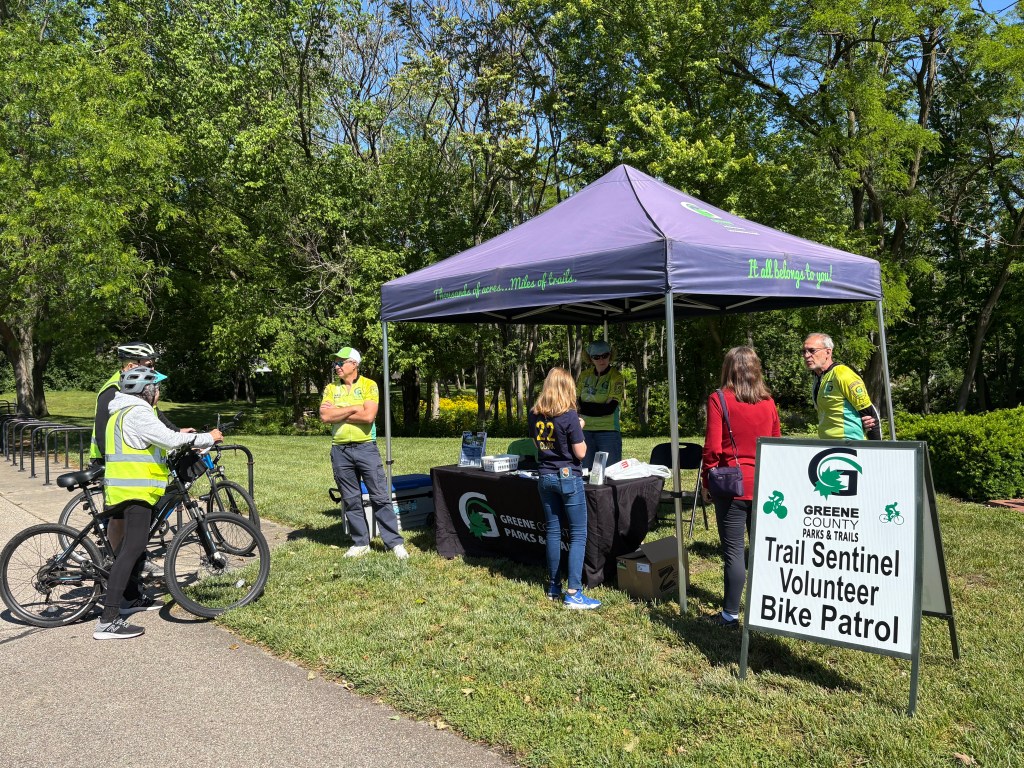
The ride will begin at the Fairgrounds Recreation Center with flexible start times between 8 a.m. and 9 a.m., allowing cyclists to ease into the event at their own pace. The event is made possible by the Greene County Parks and Trails, the volunteer Trail Sentinels, and various sponsors including Rodriguez Financial Strategies, LLC of Beavercreek, and White Allen Auto Group.

According to the GCSPC Facebook page, the non-profit organization is, “A group of dedicated mental health, law enforcement, education and other professionals and volunteers, working to reduce suicide in our community.” The subcommittee focuses on mental health and suicide prevention for veterans, service members, and their families.

“This event is about more than just cycling; it’s about community,” said Gery Deer, a Greene County Trail Sentinel volunteer and event liaison. “Our trails offer connection—both with nature and with each other—and we’re channeling that spirit into something truly impactful for veterans in our area.” Deer’s company, GLD Communications, is also a sponsor of the event.

Those who register before June 30 will receive this commemorative t-shirt.

Three planned routes of 10, 30, and 60 miles are available, accommodating cyclists of all skill levels. Along the way, participants will traverse some of the county’s most iconic pathways, including the Creekside Trail, The Little Miami Scenic Trail, Xenia-Jamestown Connector, and the Ohio to Erie Trail. Rest stops stocked with refreshments will be strategically placed to ensure riders remain energized and hydrated, and the ever-dependable Greene County Trail Sentinel volunteers will be on hand throughout the day to assist participants.

“Our role as Trail Sentinels isn’t just about ensuring safety,” said Deer. “We’re here to make the experience enjoyable and memorable for every rider. Whether someone’s doing the 10-mile route or tackling all 60 miles, we’re committed to helping them have a great day while supporting a critical cause.” In addition to riding the routes to assist riders, the Trail Sentinels will also have a support table under the shelter at Xenia Station, joined also by volunteers from the Greene County Suicide Prevention Coalition Veteran Subcommittee.

Participants and visitors to Xenia Station will have the opportunity to connect with like-minded individuals, share stories, and learn more about the impactful work of the Subcommittee. Funds raised from this event will go directly to supporting programs that provide essential resources for veterans, including mental health services and outreach initiatives.

“This is a chance for people to do something they love—riding bikes—while making a real difference in the lives of our veterans and their families,” Deer added. “At a time when critical services are underfunded and undermanned, this event is proof that even a simple activity like cycling can have a profound impact when it’s done for a cause.”

From seasoned cyclists to those who are simply looking for a meaningful way to spend a day outdoors, this one-day ride offers an unforgettable experience that combines the joy of exploration with the fulfillment of giving back. To register go to, https://www.gcparkstrails.com/event/greene-county-bike-tour-for-veteran-suicide-prevention/  

If you or someone you know is in crisis, please call the 988 suicide and crisis hotline, dial 1 for veteran support.

Radio Waves

In Dayton Ohio News, history, Opinion, Technology, Uncategorized on June 16, 2025 at 8:29 am

Deer In Headlines II

By Gery Deer

A long time ago, in a glowing box, far, far away, radio was the primary means by which most Americans received their news and entertainment. Frontline news from overseas wars, sketch comedy shows, and soap operas – all of it started on the radio. Growing up, I spent hours listening to the radio, everything from music and radio plays to late-night talk shows and Casey Kasem’s American Top 40 countdown.

Nearly all of these are gone now, but if you listen closely, you can still hear it—the crackle of an AM signal, the smooth transition of an FM dial, and the hair-raising tones of the emergency broadcast system. Well, OK, that one’s not so nostalgic. But is such a long-running, analog medium still relevant in a digital era of podcasts, streaming services, and algorithm-driven playlists?

Despite predictions of its demise, radio lives. According to Nielsen’s Q3 2023 Total Audience Report, radio remains the most popular media in America, reaching 84% of the population aged 18 and above. That’s right—more people tune in to traditional radio than watch television or scroll endlessly through social media.

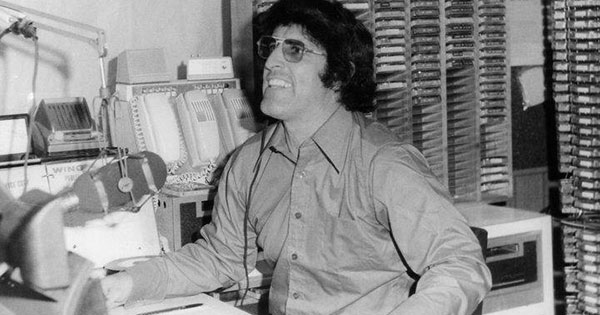
Dayton, Ohio, radio personality Steve Kirk ruled the Miami Valley airwaves for decades. Is there a need for this kind of talent in the 21st Century?

Radio is still around because, for the most part, stations and owners have adapted, shifting to digital platforms, streaming services, and podcasts. For example, this column’s podcast counterpart is featured on iHeartRadio, which operates more than 850 stations nationwide.

Additionally, over-the-air broadcasting remains a popular option, particularly in cars. Every week, approximately 92% of Americans listen to the radio—roughly 272 million people—proving that radio remains the dominant medium for commuting.

Local radio ad revenue, however, isn’t what it once was. In 2025, sales are expected to reach only around $2.4 billion—a sharp contrast to the nearly $22 billion radio generated just 20 years ago. Radio stations have had to rethink their business models due to stiff competition from digital platforms. Some have survived and prospered by embracing digital, while others struggle to keep the lights on.

Cumulus and Townsquare Media recently shut down twenty radio stations. Many of these were AM stations that had lost their audience decades ago, unable to compete with the convenience of streaming. While this thinning of the herd might seem like bad news, some argue it’s a necessary evolution—fewer stations mean less competition for ad dollars, potentially stabilizing the industry.

That said, AM remains profitable, thanks in part to FCC deregulation by Presidents Reagan and Clinton, and conservative talk programming has become its cash cow. Unlike the early 1980s, when call-in talk shows were relatively new, less restrictive laws eventually allowed companies to own and operate nearly unlimited radio stations.

Suddenly, extreme political hosts like Rush Limbaugh, who held the daytime ad money, reached millions over a network of AM stations. More entertainment-focused programs, such as Sally Jessy Raphael’s call-in show, also thrived, ruling the airwaves at night.

Then there’s traditional radio’s subscription-based cousin – satellite. Since its inception, satellite radio has been marketed as the premium alternative—no static, initially with no commercials, and a seemingly infinite selection of niche stations.

Satellite radio carved out a loyal audience, particularly among drivers who want uninterrupted entertainment on long commutes. SiriusXM, the dominant player in the satellite radio market, boasts over 34 million subscribers. While that’s a fraction of traditional radio’s reach, it’s still significant, proving that people are willing to pay for curated content.

Satellite radio offers exclusive content—think Howard Stern and live sports. However, it faces stiff competition from podcasts, which offer similar content for free. Streaming services like Spotify and Apple Music offer listeners more control over their audio experience, making it harder for satellite radio to justify its subscription fees.

Even with these checkmarks in radio’s “cons” column, in my opinion, there are still plenty of pros, so long as the medium continues to evolve. “Because that’s how we’ve always done it” isn’t a phrase anyone working in radio wants to hear from management these days.

Whether it’s delivering local news, playing your favorite tunes, or keeping you company on a long drive, radio is still a faithful companion for whatever you’re doing. If you don’t believe me, turn on your car stereo. Chances are, you’ll find something worth listening to.

Open Mic Night

In Environment, Health, Local News, Opinion, Uncategorized on June 9, 2025 at 8:22 am

Deer In Headlines II

By Gery Deer

It takes a special kind of bravery to step onto a stage, armed with nothing but your talent and a willingness to bare your soul to strangers. Open mic nights embody this raw courage, where artists of all kinds—musicians, poets, comedians—challenge themselves not only to be heard but to connect. To say they are anything less than extraordinary would be missing the heart of the matter entirely.

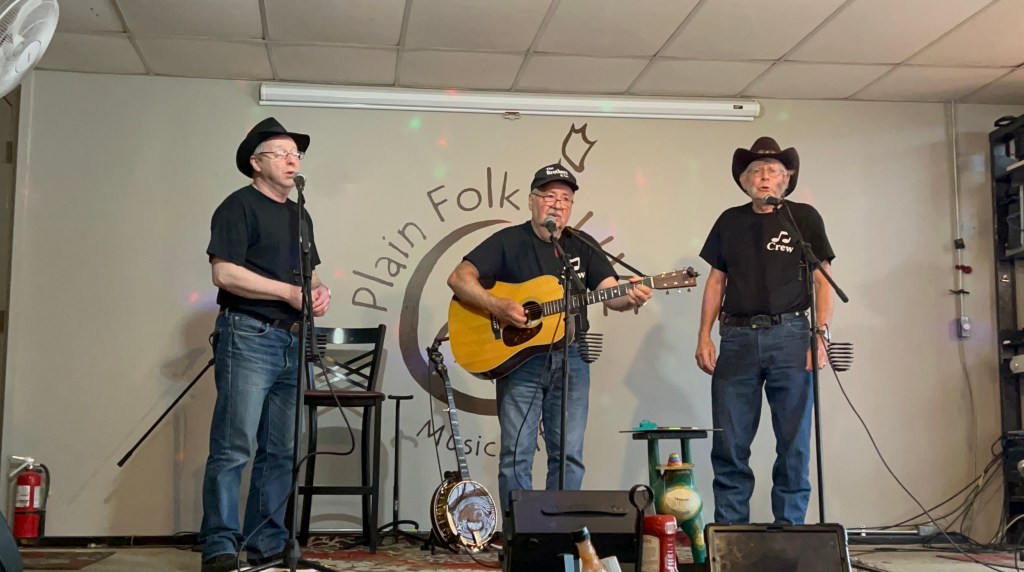
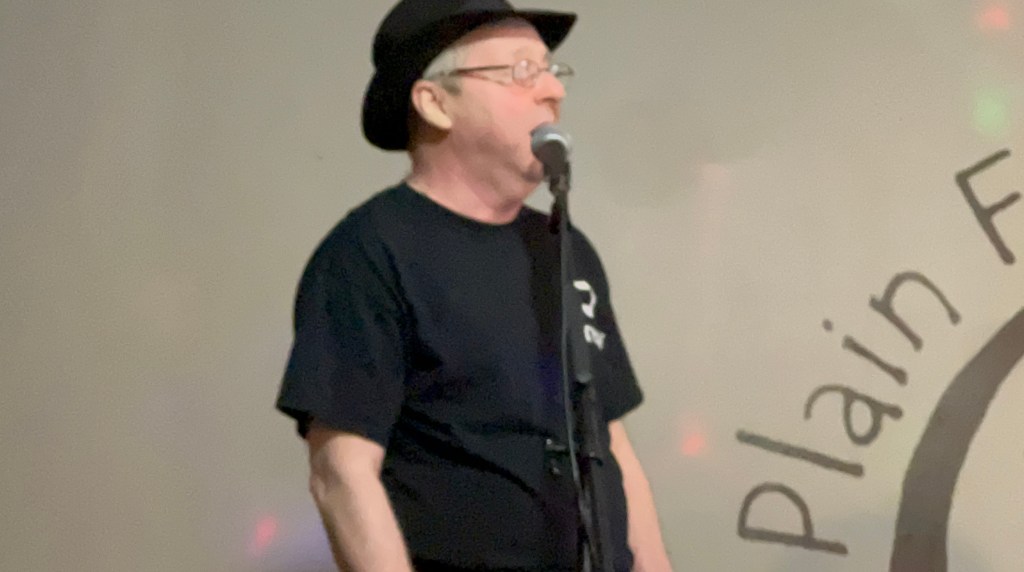
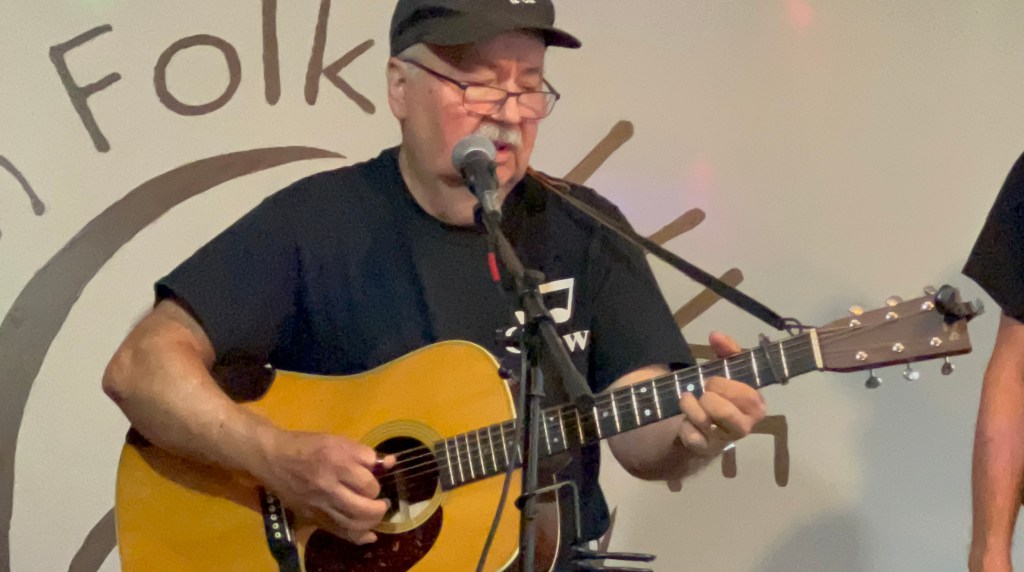
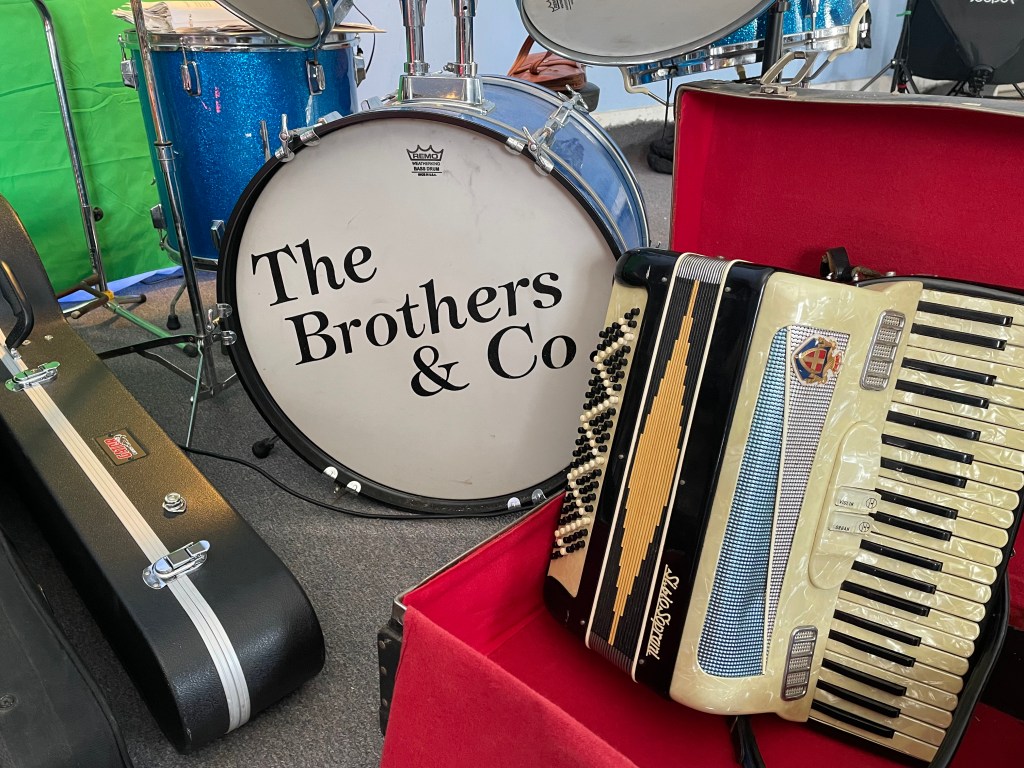
As I write this, I’m sitting with my brother and cousin after just stepping off the stage at Plain Folk Café in Pleasant Plain, Ohio. My family group, The Brothers & Co., which now consists of my older brother and our cousin, has been performing together for over 30 years. We’ve played at casinos, festivals, theaters, just about everywhere – as professional entertainment.  But I’d never experienced an open mic event until my cousin invited us to go as a group. He was a regular here, receiving a very “Cheers” like welcome from fellow performers when we arrived.

Every Thursday night since 2012, performers and patrons alike enjoy good food and entertainment, and the stage isn’t just a platform; it’s a crucible where artistry takes shape. The sign-in sheet, held aloft by a sombrero-wearing ceramic frog, sets the tone: quirky, welcoming, and uniquely communal. Each participant scribbles their name with a mix of anticipation and trepidation, knowing they’re stepping into an unfiltered arena. Some are regulars, others are first-timers, all are committed.

The pull of an open mic is multifaceted. For some, it’s a chance to test new material, an incubator for ideas that might someday grow into greatness. Writers spend hours pouring their souls into words; musicians craft melodies that echo with personal truths. They arrive not knowing whether their work will elicit applause, laughter, or silence—but they come anyway, driven by the need to express and improve.

Then there’s the process itself—learning not just to perfect the art, but to perform it before a living, breathing audience. Open mic performers are incredibly brave, hoping their work connects with even one person in the crowd. That’s where the beauty lies: that vulnerability becomes their strength. It’s almost a superpower, one which, for all my professional experience, can’t comprehend.

Gary Deer Jr and Gery Deer, two of the trio, The Brothers & Co., watch other performers on stage at Plain Folk Cafe.

The first time I was on stage, I was in first grade, doing a ventriloquist act in my elementary school talent show. I had studied the art for a year or so, and my mom thought I might like to show people. I agreed, and the next thing I knew, I was smack in the spotlight of the ultimate open mic set — me, a ventriloquist dummy, 250 schoolmates, teachers, and parents.

One joke, a laugh; another, some applause, and, at the end, I won first prize for my grade. That moment led to a lifetime of performing in front of audiences, from lecturing and emcee work to appearances at hometown festivals and on national TV. Yet, with all that, I can’t fathom getting up there alone, week after week, in front of a cafe full of patrons and performers. It requires a very different kind of courage.

Open mic nights strip away the barriers between artist and audience. Whether it’s a musician pouring their soul into an original ballad or a comic braving the silence between punchlines, the essence of their art is laid bare. Every strum of a guitar or carefully penned word reveals hours of effort, doubt, and hope. It’s humanity, distilled.

Most importantly, these evenings foster connection. In the glow of the stage lights, an unspoken camaraderie develops among performers and listeners alike. The applause isn’t just polite acknowledgment; it’s a collective celebration of effort and heart. That shared experience is what makes open mic nights so much more than casual entertainment—they’re gatherings where creativity finds its voice and its audience.

If you’ve never been to an open mic event, I urge you to go, not as a critic, but as a witness to the raw courage and artistry on display. You may not love every performance, but you will leave with a renewed appreciation for the grit it takes to share oneself so openly, and for all the creative souls who fearlessly challenge themselves week after week.

********

To learn more about The Brothers & Co. Entertainers or Plain Folk Cafe, visit them on Facebook at:

https://www.facebook.com/TheBrothersandCo

https://www.facebook.com/plainfolklive

Absolute Power

In history, Opinion, Politics, psychology, Uncategorized, World News on March 26, 2025 at 1:58 pm

Deer In Headlines II

By Gery Deer

Power, like money, is nothing if you have enough, but everything if you don’t. But what is it? Who has it, and what are those without it supposed to do when faced off by those who do? I’m not sure I’m smart enough to answer any of those questions. If you’ll indulge me, however, I’ll make an attempt to do so and put it into a contemporary context. First, a little history – the kind we should learn from or be doomed to repeat.

It was 1887 England. In a series of letters to Bishop Creighton concerning the issue of writing history about the Inquisition, John Dalberg-Acton, the 1st Baron Acton, or better known as Lord Acton, wrote, “Power tends to corrupt, and absolute power corrupts absolutely.” Most people are familiar with the quote, but few know the preceding passage, which gives it perspective.

“I cannot accept your canon that we are to judge Pope and King unlike other men, with a favourable presumption that they did no wrong,” Acton wrote. “If there is any presumption it is the other way against holders of power, increasing as the power increases. Historic responsibility has to make up for the want of legal responsibility.”

That’s some pretty fancy, but important language. Put more simply, Lord Acton was saying that the same moral standards should apply to everyone, including political and religious leaders. Throughout history, kings and popes were permitted, essentially, to wield their authority unchecked.

America’s Founding Fathers shared the same concern. So much so that when they created a constitution for their new country, coincidentally ratified the same year as Acton’s historic correspondence, it established three separate but equal branches of government to prevent such authoritarian power.

Power is a dangerous thing, especially in the hands of two kinds of people – those who want it, and those who want to keep it from others. The first is driven by greed, the second by fear. Lord Acton was commenting on accountability, something the Constitution ensures by setting equal the Executive, Legislative, and Judicial branches of government. Should some power-hungry tyrant manage to occupy the White House, the other branches would be able to keep him or her in check.

If that individual managed to wield enough control over two of the three branches, the third would be able to mitigate some of the potential danger. But if all three branches were heavily influenced, even manipulated by one individual, then we have a problem. That lands our country in Lord Acton’s absolute power corrupting absolutely territory, and on a much larger scale.

Let’s not forget the second kind of power broker (to borrow a term from one of my favorite authors, Robert A. Caro), the kind who want power out of fear. This individual, or group, is afraid that someone else will gain the power to control them or do things they don’t like.

These people tend to be all-or-nothing types. In other words, if they can’t have it, they don’t want anyone else to because they fear it will weaken their position. Those who are afraid of minority advancement fit this category. 

But what if you’re on the receiving end of all this – the powerless. Powerless people are led to believe, by a government or other authoritative body, that they don’t deserve power. Classism, racism, ageism, and most other “isms” are examples of one group trying to maintain power over another. To quote a great role model of the late 1980s, Ferris Bueller, “Isms, in my opinion, are not good. A person should not believe in an -ism, he should believe in himself.”

When the people lose the power over government, when their elected representatives act in blind service to one policy or individual rather than the best interest of their constituents, when power begins to corrupt absolutely, freedom no longer exists. The trouble is, corrupted power often goes unrecognized until it’s too late.

Corruption dons the cloak of misdirection, intended to fool those who are unwilling to see the danger. Try to remember that power can also be a good thing that benefits all instead of one person or ideology. Unfortunately, that doesn’t make for very good reality television, now does it?

RC and Mr. Goodbar

In Children and Family, Local News, Opinion, psychology, Uncategorized on March 7, 2025 at 7:06 am

Deer In Headlines II

By Gery Deer

When I was 11, my uncle came to visit me during one of my many prolonged stays in the hospital. I had a reasonably significant surgical procedure and was confined to a wheelchair, so he sat in my room and regaled me with tales of life on the outside. He was my mother’s younger brother. His nickname was “Tuff,” though his real name was Gary – one of four in my immediate family. Since our families were close, nicknames were helpful, as you might imagine.

At one point during his visit, Uncle Tuff decided I’d been cooped up for too long and needed to escape for a bit. I wasn’t tethered to any wires or hoses at that point, so we made good our getaway. I’m not sure, but I don’t think I was supposed to leave the floor, and we were trying to be stealthy. I think he had given the nurses the heads-up and cleared it first, but I played along.

After a quick elevator ride, we arrived at a vending area, complete with snack tables and a microwave. He parked me at a table and dug into his pocket for change. A moment later, a Mr. Goodbar candy bar and a bottle of Royal Crown cola appeared in front of me.

Gary “Tuff” Sutton, Sr., his wife, my Aunt Phyllis, and their two kids, Pam and Gary, Jr. “Butch,” were fixtures in my home. My mother’s youngest sibling, he was the uncle I knew best. He taught me to play the piano, which, like the soda and chocolate, gave me a reprieve from the rigors of the hospital. I’ll forever be grateful.

In case you’re unfamiliar, the Mr. Goodbar is made by Hershey and is little more than your basic chocolate bar, but with peanuts. It’s not fancy, but after a week of hospital food, it was like someone had bestowed on me a feast fit for kings. For the next half hour, we knocked back our RCs and chocolate, and he did his best to take my mind off where I was – he was good at that.

Back in my room, he’d left me with an extra chocolate bar – plain Hershey’s this time – and gave the nurse another bottle of RC to keep cold for me. It was a good day, all things considered.

We lost my Uncle Tuff to lung cancer in 2005. Ironically, another memory associated with that day at the hospital was that he wasn’t allowed to smoke. It was one of the few times I remember seeing him without a smoldering Salem. He was around my life a great deal, and I miss him every day, especially when I sit at a piano – he taught me to play.

But of all the times we had later, playing music with our family band or just sitting around the kitchen table at the farm where I grew up listening to him and my dad tell stories, that one moment at the hospital will always stand out. That was when a little boy, uncertain of his future, forgot for a moment how badly he was feeling, all thanks to his uncle and a candy bar.

I guess the point of all this is that, as children, it’s incredible how things intertwine to create influential memories into adulthood. Then, when we’re grown, we often reflect on those moments, maybe to draw inspiration or clarity. Many events in our formative years leave an indelible imprint on our psyche to help shape our beliefs, behaviors, and aspirations.

Understanding the profound influence of these early experiences offers invaluable insights into how we relate to people and the world as adults. But I wouldn’t dig too deeply. As Sigmund Freud is fabled to have said, “Sometimes a cigar is just a cigar.” In this case, a chocolate bar and a bottle of soda are just a chocolate bar and a bottle of soda.

These moments, whether joyous or traumatic, become the defining chapters of our personal narratives. I don’t really know what long-term effect that single event had on my overall growth as an adult. I know it wasn’t the chocolate that made it special, but rather my uncle’s relationship with me. But, on the rare occasions that I might indulge in a Mr. Goodbar, I still smile and remember.

So, when life’s daily challenges become too much, maybe it would help to think back to one of those moments when a simple kindness, and perhaps a chocolate bar, could bring a smile to your face.

Game Day Avant-Garde

In Opinion, Uncategorized on February 8, 2025 at 2:10 pm

Deer In Headlines II

By Gery Deer

Someone asked me a question this week to which I had no response. “Are you doing anything special for the game on Sunday?” Game? Sunday? I had nothing. As it turns out, the Super Bowl is this weekend, and I had no idea. What red-blooded American doesn’t know when the Super Bowl is – or who’s playing? Well, me, for one.

Sports was never a focus in my house when I was growing up, so I never developed an interest. All I remember about football in my teens is how cold it was on Friday nights in high school, sitting in the stands in my marching band uniform and wishing for that last play of the night.

As an adult, I’m just not wired for any of it. I don’t drink, I’m not interested in the game, and the idea of barbecuing sends me into a panic. So, what do people like me do on the day of the “big game?” More than you might imagine. Here are some suggestions if you’re looking for an alternative this Sunday – or any Sunday, for that matter.

First, it would be ideal to get outside and get some exercise ourselves. Unfortunately, at least here in Ohio, the winter weather in February is still subject to change on a momentary basis. That eliminates some outdoor activities unless you’re willing to be a bit on-demand about your plans. You could always hit the YMCA or your favorite gym for a workout or swim.

The great thing about taking an outing on Super Bowl Sunday, provided your goal isn’t a sports bar, is you won’t have to deal with crowds. To me, Sunday afternoons are a great time to slow down, decompress from a busy week, and regroup. You can even start new DIY projects, do some purging and decluttering, or just chill with a book.

If you want to share in the more reclined weekend activities, what about a movie or TV show marathon? I remember one year, I decided I’d do a Mission Impossible film festival. One after the other, I sat through hours of Tom Cruise running… running… and running some more. I made popcorn, ice cream sundaes and burned through a 12-pack of Cherry Coke. I highly recommend Blue Ray or DVD – no buffering, no commercials, just six hours of Cruise’s IMF crew, and don’t forget the snacks.

Your mission, should you choose to accept it, is to find that series of films or TV that you want to just plow through, one after another. Isn’t there some guilty pleasure out there you haven’t seen in a while? Maybe it’s “Downton Abbey,” “Star Trek: The Next Generation,” or lounge around in your scrubs and get a relapse of “ER.” Be aware, though, people might be calling to see if you’re OK when you’re so immersed in all this that you don’t answer text messages. So be sure to come up for air now and again.

Sundays are also perfect for families to spend some time together. When the kids are small, they’re usually pretty agreeable to whatever the family is up to. As they grow up, however, they want less and less to do with us. But, if you’re lucky and your kids’ friends are ensconced in football activities, you may be able to steal some time with them and there are lots of things to do.

Pick a local museum to visit, take a day trip somewhere fun, or spend some time at a local library or independent bookstore. You might even just stay home. What about a board game? Nothing gets families interacting like Monopoly or Scrabble. The point is to spend some time together and reconnect. Oh, and turn off the devices. Go analog for a while and give your brain a break.

For some people, the Super Bowl is about the shared experience of cheering on their favorite team, complaining about the halftime show, and talking about the commercials. Whatever you choose to do this Sunday, football-related or not, enjoy yourself. There’s so much bad going on around us that we all need something positive to share, whether it’s a football game, or a walk in the park.

National Mentoring Day reminds us of those who got us where we are.

In Local News, Opinion, Uncategorized on January 30, 2025 at 10:47 pm

Deer In Headlines Supplemental

By Gery Deer

This is #nationalmentoringmonth and although I’ve had a few people I would agree had a mentoring roll with me, they came and went. But my father and my brother have been my lifelong mentors.

A #mentor isn’t just someone who teaches you something. They show you by example the value of those skills or lessons. They help you shape yourself into the person you want to be.

My father, Gary, Sr., was many things – a mechanic, mason, contractor, heavy equipment operator, truck driver, farmer, and agricultural mechanics teacher. He and my mother, Lois, were the right and wrong of my world. From both of them I leaned my work ethic, the value of patience, integrity and a drive to get where you want to go whatever the obstacles. Even since both have passed, I still hear them in my ear sometimes reminding me who I am and why.

My brother, Gary, Jr., is still a constant influence as well. He’s many things too – an architect, mechanic, #HVAC expert, welder, fabricator, truck driver, adult #education teacher, electrician, and a great deal more. Our age difference (16 years) put him in the position of second father. His goal was always to make sure I was as self-sufficient as possible. I’ve also had the good fortune to have him beside me at some of life’s most treasured and defeating moments.

Thanks to all of them, I am many things as well – mechanic, #electrician, truck driver, #heavy #equipment #operator, and a dozen other things. My education at #school was important but without the #mentorship of my #parents and #brother, life would have been a great deal more challenging – and not in a good way.

Who are your #mentors? If they’re still with us, thank them. Make sure they know how important they have been to the person you are today.

One Special Holiday

In Charities, Children and Family, Local News, Opinion on December 9, 2024 at 11:50 am

Deer In Headlines II

By Gery Deer

It is entirely possible that I spent too much time in this work writing about my parents. We have all had remarkable people in our lives, and my immediate family just happened to be some of the most extraordinary people in my life. With the holidays just around the corner, I wanted to relate a story that has almost become folklore.

The story begins in the late 1950s, sometime before I came along. My father was a machinist at National Cash Register, NCR, one of the largest employers in Ohio, if not the entire state. He also had what we would call side hustles. He would haul scrap metal to make ends meet, a good business when more efficient options were replacing the old cast-iron coal furnaces. Selling them for scrap was hard work but profitable. He also did concrete work and other odd jobs to help create a stable life for his family. To Dad, it was the kind of life he never had growing up in the foothills of the Appalachian and Southeastern Ohio.

While he was working, my mother raised her children, made a home for them all, and took care of the day-to-day operations of the household. She was one of the hardest working people I ever knew, even back then. But no matter how hard they worked, there were years when there just wasn’t enough money.

Around Christmas time, during a particularly lean year, the prospect of a happy Christmas looked grim. My brother was in Boy Scouts then, and my father was an assistant scoutmaster. Someone within the organization learned of my family’s financial difficulties. Shortly before Christmas, some people arrived at our house with food and gifts for all four. I remember my mother talking about it through tears as if someone had lifted them from a heavy darkness. She was eternally grateful, as was my father.

As the years went on, times got better for my family. Regardless of how little we had at any given time, I remember my parents always doing what they could to help those less fortunate. That brings me to Christmas of 1988.

That particular year, my dad learned of a nearby family that had fallen on hard times. The father had lost his industrial job, and the mother worked part-time while both did their best to raise their three small children. My mother immediately went into action.

Mobilizing the pre-Internet communications network within our family, she reorganized that year’s party into a relief event for the distressed family. With a little investigation and intuitive guesswork, my family collected information on the parents’ needs, clothing sizes, ages, and children’s interests. We even had people trying to find employment for the young father.

Our annual Christmas party, already a real show complete with music, songs, games, and dancing Santa, took on a whole new look. The price of admission was a donation. A list had been distributed informing everyone about what was needed and providing a way to let my mom know who was contributing what. With each person who arrived for the party came more toys, clothes, games, and food items. We even collected some cash.

On Christmas Eve, we loaded everything into a van, Santa riding shotgun, and headed for the family’s house. When we knocked on the door, we were greeted by a tiny three-year-old girl in a yellow onesie, a couple of toes poking out of the worn feet. She squealed away as she soaked in the sight of Santa Claus at her doorstep. To maintain the dignity of these hard-working people, there must be no clue where all this originated. My family were simply asked to deliver it to them.

My parents taught us by example. Kindness at the holidays should be the same throughout the year. Still, there is a gentleness during the Christmas season. We were under no illusions that a few gifts and boxes of mac and cheese would change the lives of this family. But at least, for one special holiday, they were together, safe, and they knew they mattered to someone. Sometimes, that’s enough to see you through the worst of times. Hopefully, we can all remember that year-round.

Author’s Note: A short story is based on my family’s charitable work. It’s called “A Special Place at a Special Time” and is available on Amazon. However, a revised version will be released shortly.

Gallery: The photos include pictures of the farm, the long lane that was decorated each year, Gary Deer Jr. as Santa and some of the later parties. Each one generated food, clothing, and other necessities for a local family. A few times, they were people in our own family – because that’s what you do.

The Little Band That Could

In history, Local News, Opinion, Uncategorized on October 12, 2024 at 12:07 pm

By Gery Deer

Deer In Headlines Special Edition October 14, 1993

It had been a long day for the freshman saxophone player and his high school marching band friends. By now, it was 4:30 in the afternoon, and the day had begun for them nearly eleven hours ago.  They’d earned the opportunity to compete in a tri-state marching band competition in Huntington, West Virginia, some 200 miles from home.

The mid-October afternoon had become hot and muggy. Even the seats in the stadium were perspiring. The adventure had begun early that morning with all the spirit of the world’s most excellent universities. The performances were over, and they sat impatiently awaiting the judging results.

This is the view of the real Greeneview High School marching band during their first song of the contest—from the families’ perspective. (Photo by Lois Deer, 10-17-1981)

The bands were divided into three classes based on the size of their home schools. This group’s small, rural high school was in the last division, called class B, at this show. That meant it would be a long, hot wait by the time they went through each division, of each class, of each award. It was nerve-wracking, it was hot, and it was discouraging, but they waited. Patiently – well, sort of.

The university stadium buzzed with nervousness and emotion as the first awards were called. “Fifth place, class AA, goes to…,” A loud cheer bellowed from 100 yards down the bleachers, drowning out the anxious and irritated sigh from the young saxophonist and his group. The noise subsided. The announcer spoke again. “The fourth-place award goes to…” Another excited cheer came from the stands. The little band had worked hard all summer for this. It was one of the best shows they’d ever done, but this performance got off to a shaky start.

Their arrival at the host stadium was almost the exact time they were supposed to go on the field for their practice run, and things were rough. Heat exhaustion cost them one of the flag corps at the start of their competition show. The Astroturf-covered football field, new to most of the marchers, created its own set of problems. These kids were used to trotting through mud and grass. Now, wearing the slick-souled dress shoes, they had to contend with spongy ground and slippery artificial grass.

If that wasn’t enough, one of the trombone players nearly decapitated a field judge with his slide. During his morning pep talk, the director said, “Judges were fair game…” Meaning, if they got in the way, just keep doing what you’re supposed to do. Unfortunately, the aggravated trombonist took the recommendation literally. Somehow, they got through it all, and there they were. Hot. Sticky. Impatient. Every ingredient was added to create a group with a bad attitude, who, by this time, faintly resembled people sitting in a traffic jam.

A lot was riding on this, though. Everyone was here. Parents and family friends had accompanied the band on the four-hour Greyhound bus ride that morning. The busses pulled out of the school lot at 6 a.m., scored by the groans of how you’d expect average high school kids to at that time on a Saturday morning.

Most slept on the ride down. Many brought weekend homework. Others reviewed their music to ensure they remembered that one bad note at the football game the night before. Whatever the case, they made it, and everyone was pumped. And a little scared. Friday night football games were never like this. The tension grew and hovered in the air over the little group just the way that bricks don’t.

The young saxophonist eyed the band’s director. He was down on the track on the opposite side of the field, pacing back and forth in front of the reviewing stand like an expectant father. Another announcement blared from the public address speakers. The director’s curly afro hair and kinky beard glistened in the fall sun with impatient perspiration, giving him more the appearance of a heavy metal rock singer than a high school band director.

Then again, everyone was starting to look like that. The group grew increasingly discouraged with each passing award. The announcer was up to their class now, and the fourth-place award was called. Rats! The saxophonist slumped back against the bleachers with an irritated gasp. So did everyone else.

“There’s no way, ” he thought. “All these huge bands from three states? We can’t possibly have a chance at anything higher than fourth.” That seemed to be the general opinion of the others as well.

Another award. More cheering. None of it from them. Now, the announcer was up to second place, and the morale-broken musicians began standing, a few at once. Each gathered their things to return to the busses and the quiet little farm town. Some had already left the stadium.

“Well, so much for that,” someone said. “This is embarrassing, ” said another, like a line plucked from a Peanuts cartoon. Even their band director dejectedly headed towards his disappointed students. The announcer began to speak again, but no one in the group was listening. It was over. They tried, but the odds were against them, and the game was rigged.

“Second place, class B goes to…” A long pause.

This seemed to be the announcer’s annoying trademark, meant to instill drama. It didn’t work. It was just irritating. When their band took the field for the show, he sounded like he’d been mugged midway through his address. “You may take the field for comp…” Everyone held their breath. “…etition.” Whew!

Suddenly… the words no one expected to hear. No, more than that. They were impossible, improbable, incomprehensible words.

“Second place, class B goes to… Greeneview High School Marching Band from Jamestown, Ohio!”

For a solid breath, someone blinking would have rung like a gong. No one moved. No one spoke. Those shambling out stopped and turned around. There was an oxygen-steeling collective gasp.

A slow, quiet calm settled over the group as their brains processed the words they’d just heard. Suddenly, explosive screams of joy shattered the silence. They cheered, cried, and hugged. In the stadium section where their families were, everyone was on their feet, jumping, crying, and yelling. Even the other schools called cheers of congratulations, and they were equally shocked by the news.

The little band’s director stood in silent shock for a moment, and then it hit him. His eyes were as big as saucers when he turned to face the band from across the field, raising one arm in victory to them as if this little band’s second-place win were Olympic gold. It might just as well have been, but that wouldn’t have meant as much to them.

At the reviewing stand far below, their field commander and flag corps captain proudly marched to the awards table and saluted the presenters. Their vibrant red, white, and Colombian blue uniforms were almost as brilliant as the sun itself as they spun around in a military-like snap to salute the ecstatic audience. The pair accepted the two-and-a-half-foot trophy and rejoined the line of representatives standing at attention in front of them – both in tears.

Back in the stands, the young saxophonist and his friends watched and beamed. This was truly their most honored time together. The young man shaded his eyes as he took a moment to look at these people and tried desperately to soak it all in before it was over. They had no idea what they meant to him. So much of their lives lay before them. But this day… this was a day they’d never forget. “Someday, this is going to make a great story,” he thought.

The bright sunlight brought a tear to his eye. Then again, maybe it wasn’t the sunlight at all. He wiped it away. The thundering applause, congratulations, and excitement continued for what, in reality, was only about a minute or two. But it wrang out for what seemed like a lifetime to… The Little Band That Could.

———

Epilogue

My name’s Gery Deer, and that’s a true story from October 17, 1981. I was the “young saxophonist,” and I was right. I never forget that day, and it did make a great story. The band, Greeneview High School Marching Band of Jamestown, was under the direction of Richard Turner.

Band Director Richard Turner, the contest trophy, and me – Gery Deer in my newly-minted Greeneview school jacket.

I wrote this story after visiting Cooper Stadium in Columbus, Ohio, to see Greeneview perform in another competition show many years later. They competed in the Ohio Music Education Association’s state finals, and it was fascinating how little things changed from one era to the next. It was like reliving that day all over again.

Two of my four nieces were in the band in those days—now three decades ago. The oldest was the band’s field commander, a senior at the time, and a saxophone player like her uncle. The next oldest was a clarinetist and a freshman. They didn’t win their contest but took an honorable mention. Either way, I think they will still reflect on their day, as I do mine, and remember the feeling.

No one could have been prouder of my family and my school except maybe my parents, who were there again to watch their grandchildren as they did their own. And they, too, will remember. They say we can never be kids again. Well, no one could have gotten closer to it than I did that day. But to the “next generation,” I say, “When it seems like us old folks don’t understand, try to remember, we were there too.”

Here are some pictures of that day in 1981…

Is this your new site? Log in to activate admin features and dismiss this message
Log In