Local News & Commentary Since 1890.

Posts Tagged ‘Gery L. Deer’

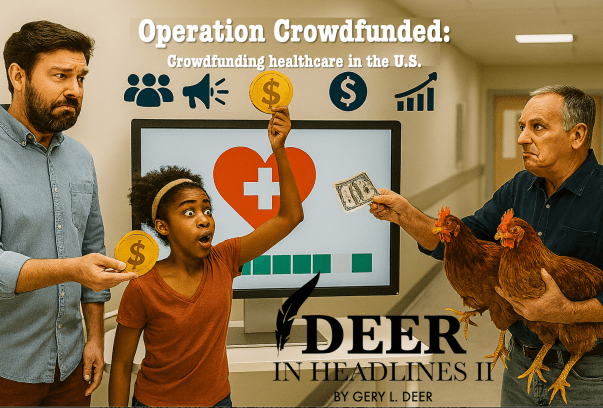
Operation Crowdfunded

In Health, Opinion, Politics, Uncategorized on September 23, 2025 at 2:58 pm

Deer In Headlines II

By Gery Deer

The United States of America: the land of innovation and opportunity, where billionaires launch rockets for sport and algorithms decide your mortgage rate. So, it shouldn’t surprise anyone that Americans now turn to crowdfunding to pay for basic healthcare. Not as a quirky side hustle, mind you, but as a legitimate strategy for survival.

This year, roughly 1.8 million Americans will be diagnosed with cancer. The average cost of treatment? A cool $183 billion. That’s not per person, of course—just the collective tab. But when you break it down, individual patients often face six-figure bills, even with insurance. Meanwhile, nearly 70% of seniors will require long-term care, either at home or in a facility. And with government assistance programs shrinking faster than a hospital gown in the dryer, many are left to fend for themselves. Each year, more and more are turning to crowdfunding.

According to statistics published by Astute Analytica, Americans raise more than $3 billion annually through platforms like GoFundMe, GiveSendGo, and others—most of it for medical expenses. While that might seem a heartwarming testament to community spirit, it’s simultaneously a tragic commentary on our national priorities.

When you live in the “richest” country on Earth and someone in a white coat says the words, “You have cancer,” but your best hope for affording chemotherapy is a well-written plea and a viral social media post, something’s gone horribly awry.

Let’s compare this to the more “official” solution: Health Savings Accounts (HSAs), tax-advantaged accounts tied to high-deductible insurance plans. In theory, they help you save for medical expenses. But their nature pretty much excludes the people who actually need the money.

HSAs require disposable income to fund. Plus, they’re capped at a few thousand dollars per year. That’s great if you’re buying allergy meds or paying for a routine checkup. But without some serious money tucked away, you could still be in trouble if you need something like an appendectomy, for example, which averages around $13,000.

Crowdfunding, on the other hand, offers flexibility. You don’t need to qualify for a high-deductible plan. You don’t need to navigate IRS rules. You just need a compelling story, a few sympathetic friends, and the ability to market your misfortune.

Imagine a future where every citizen maintains a personal healthcare fund online. You could even petition the IRS to classify seniors and disabled individuals as not-for-profit entities. That way, when a billionaire donates to your cancer treatment, they get a tax write-off. It’s a win-win. You get a shot at survival, and they get to feel philanthropic without disrupting their yacht schedule.

Of course, this would also stimulate the tech economy. Crowdfunding platforms would flourish, transaction fees would soar, and a new generation of entrepreneurs would emerge to optimize the monetization of the already bloated medical crises. But there are challenges – big ones.

If everyone’s running a campaign, how do you stand out? Do you offer donor perks? “Contribute $100 and receive a personalized thank-you video from my hospital bed.” Do you hire a public relations firm to promote your gallbladder surgery? “Compassion competition” can become fierce. Those without strong social networks or digital savvy would likely struggle to raise anything at all.

With so many medical coverage decisions being made in the board room rather than at the bedside, this model has its appeal. It’s more transparent than insurance billing, more immediate than government aid, and more democratic than corporate healthcare.

Some say healthcare should be a right, not a raffle – I tend to agree. It’s absurd that anyone should have to beg for insulin or auction off their belongings to afford a colonoscopy. But in a country where tax breaks for billionaires are considered sacred and universal healthcare is viewed as some kind of socialist takeover, absurdity might just be the most realistic and successful option.

So sure, let’s embrace the irony of a system where survival depends on storytelling and digital advertising prowess and crowdfund our medical care. We will just have to hope that, someday, we’ll look back on this era not as a failure of policy, but as a resourceful bureaucratic bypass—when Americans took their health into their own hands, one donation at a time.

Vision Quest

In Opinion, psychology, sociology, Uncategorized on September 12, 2025 at 10:03 am

Deer In Headlines II

By Gery Deer

Somewhere between the motivational posters in your work break room and the TED Talk rabbit hole you fell into online last Tuesday, someone probably told you that you need a “vision” for your life. A grand, sweeping, cinematic plan that guides your every move like you’re the protagonist in a Christopher Nolan film. Lights, camera, confusion.

Now, let’s be honest – most of us are just trying to remember where we left our coffee mug and whether we fed the dog this morning. But a life vision? That sounds exhausting, and at least partially unrealistic.

Don’t misunderstand. I’m not saying you should wander aimlessly through life like a robot vacuum cleaner with a dying battery, bumping your way from wall to wall, down this hallway and that. Any purposeful achievement generally starts with a dream and some kind of plan, even an informal one. To me, that’s just common sense.

But obsessing over the idea of a perfectly curated roadmap for your life might do more harm than good. That’s especially true when we project the obsession onto others—our kids, our coworkers, some unsuspecting barista. And you need to allow for some flexibility so you can recognize opportunity when it comes and act in your best interest – that’s more how I work, I would say.
When someone says you can’t make it without a vision board and a color-coded calendar that looks like NASA designed it, they are probably trying to sell you something. In case you haven’t figured this out on your own, life is messy, unpredictable, and occasionally throws a raccoon through your metaphorical window.

Some of the most successful people I know didn’t start with a vision. They began with a problem, a deep interest in something, or just plain boredom. They stumbled into opportunities, made a few mistakes (okay, a lot of mistakes), and figured things out along the way. Their “vision” was more like a foggy windshield they wiped clean with the sleeve of their hoodie – and that’s okay.

Here’s the thing: having a vision sounds noble, but it can also blind you. When you’re so focused on the end goal, you miss the weird little detours that could lead to something better. You ignore the people around you who might need help, or who might help you.

Instead of the kind of vision you read about in self-help books, maybe what we need is a clearer view—the ability to see what’s happening right now. That way, we notice the opportunities, the needs, the small wins, and then be present enough to pivot when life throws a curveball—or a raccoon.

If you’re in a position to guide others—whether you’re a parent, a manager, or just the guy who always gets asked for directions at the grocery—there’s a temptation to impose your vision on them. You want them to succeed, so you hand them your blueprint. “Here’s how I did it. Follow this, and you’ll be fine.”

Really? People don’t come with identical parts and a universal tool kit. What worked for you might be a disaster for someone else. Your vision might be their nightmare.

Instead of handing out visions like party favors, let’s ask questions. What excites you? What scares you? What do you want to try, even if you might fail? Influence isn’t about shaping someone’s path—it’s about helping them find their own flashlight.

So here’s my alternative vision pitch: wander with purpose. Be curious. Be open. Set goals, sure—but don’t carve them into stone. Scribble them on napkins and be willing to toss them when life hands you a better idea.

Life isn’t a straight line. It’s a squiggly mess of trial and error, happy accidents, and moments of clarity that usually arrive while you’re doing something mundane like folding laundry or eating cold pizza in the middle of the night. So what to do? Ignore all the nonsense out there and do what leads you to the life you want.

While a valuable foundation, vision isn’t an absolute. Flexibility, awareness, and a good sense of humor are you best tools along life’s path. Now – what did I do with that coffee mug?

The Hero Sandwich

In Opinion, Uncategorized on August 25, 2025 at 7:06 am

Deer In Headlines II

By Gery Deer

When I was a kid, we had an in-ground pool in our backyard. About the size of a two-car garage, my father, a skilled concrete worker and mason, built it himself. As spring gave way to summer, my dad would uncover, clean, and fill the pool for the season.

It was one of my favorite times of the year. The weather was still reasonably cool for early summer, and I was fascinated by the huge tanker truck that carried the water to our house. I grew up around trucks and other heavy equipment, so you’d think I would have little interest in such a thing. But when you’re five, everything is much bigger than life, and we didn’t have a water truck.

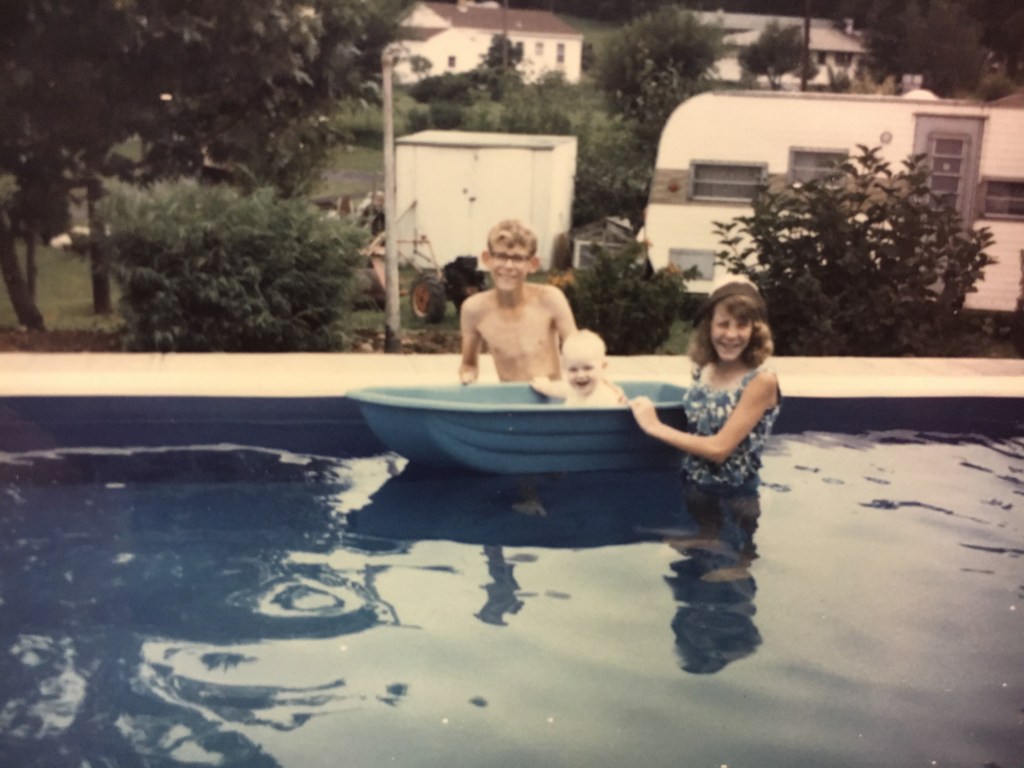
My brother and sister were pushing me around our pool in a plastic boat around 1969, a couple of years before the ham sandwich incident.

Although I could swim, my parents never learned. I always thought that was strange since my dad grew up on the banks of the Ohio River. So, unless my older brother or sister was in the pool too, I had to watch through the chain-link fence.

One particularly memorable pool opening day, when I was about 4 years old, the water truck arrived around lunchtime. I peered eagerly through the screen door. Mom stuck half of a boiled ham sandwich in my hand, told me to be patient, and she would take me outside when I’d finished my lunch.

I have an oddly specific memory of Mom commenting that this was the last of that particular lunch meat and not to waste it. I’m not sure why that stuck with me, but, at the time, it seemed pretty important.

At some point, I promised to finish the sandwich if she let me go outside, which did the trick. After all, Dad was out there, and I could stay by the fence. My case effectively pleaded, and the judge’s decision rendered, I happily toddled outside with my ham sandwich.

I think Dad was distracted. He chatted away with the water truck driver about whatever it is that truck drivers talk about when they’re waiting for gravity to do all their work for them. I adjusted the straw hat mom plopped onto my head on the way out the door, and clutched my sandwich as I stealthily made my way inside the enclosure and around to the opposite side of the pool.

I know – I wasn’t supposed to be there – and I knew it then too. But I was a handful back then and didn’t always do what I was supposed to do. Finally, I was near the filter vent – a favorite spot for me to sit and dangle my feet in the water.

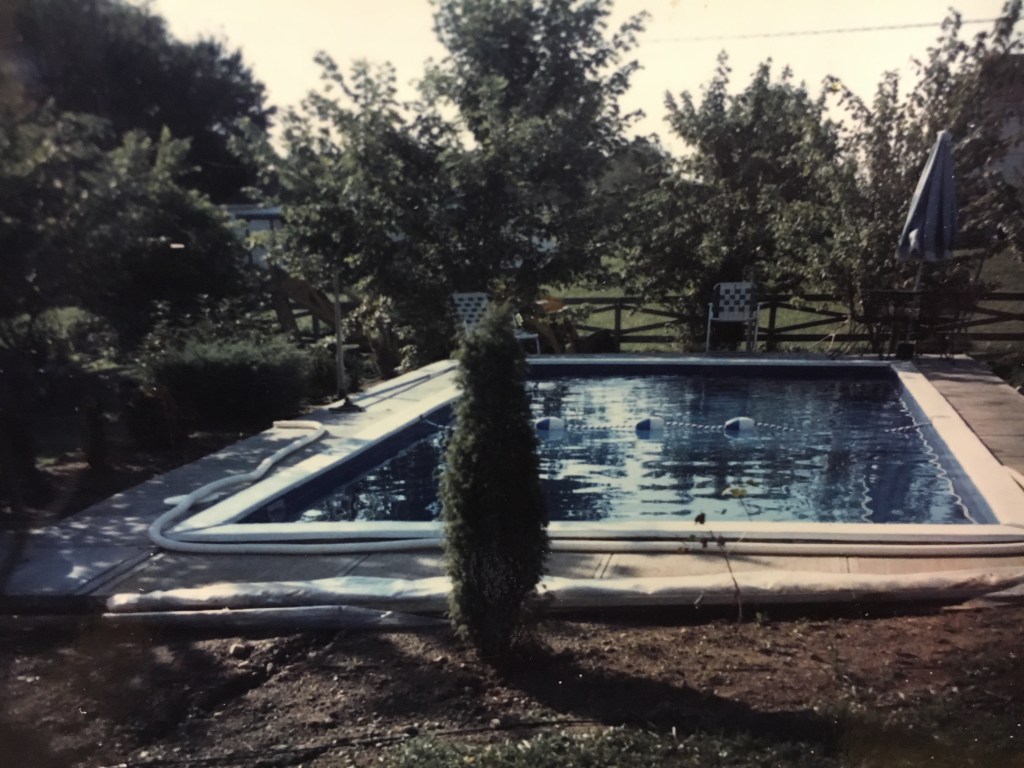
This was the pool my father built for us – the fence I mentioned in the story has yet to be added. This is just after the construction was completed.

I tried my best to disappear behind a deck chair when Mom called for Dad to make sure I ate my sandwich. He relayed the orders, noticed where I was standing, but seemed unconcerned. I took a big bite of the sandwich, crept over to the edge, and peered into the water. A moment later – kerplop! There I was, like a fishing bobber, headfirst and feet sticking out of the shallow part of the pool. I can still recall the feeling of being swallowed by water.


As quickly as it happened, I was yanked out of the pool by my foot, now missing its sandal. My father was taken over by fear but never missed a beat. Worried I’d taken a lung full of water on the way in, he put me over his knee, face down, and started thumping on my back. “Spit,” he repeatedly shouted at me as the heel of his hand rapped on my back. I shook my head in defiance. “No.” After a minute or so, I complied. Out of my mouth spewed a wad of half-masticated ham and bread that hit the cement with a splat.

When I fell in, I had a mouthful of food, and I held my breath, which kept the water outside, where it belonged. Upon my rescue, I was reluctant to spit it out because I was afraid I’d get into trouble for wasting it. That ham sandwich and my father’s quick action saved my life. The moral? Do what your mom tells you – and hold onto your ham sandwich.

Vision Quest

In Health, Opinion, psychology, Religion, sociology, Technology, Uncategorized on August 22, 2025 at 1:32 pm

Deer In Headlines II

By Gery Deer

Somewhere between the motivational posters in your work break room and the TED Talk rabbit
hole you fell into online last Tuesday, someone probably told you that you need a “vision” for
your life. A grand, sweeping, cinematic plan that guides your every move like you’re the
protagonist in a Christopher Nolan film. Lights, camera, confusion.

Now, let’s be honest – most of us are just trying to remember where we left our coffee mug and
whether we fed the dog this morning. But a life vision? That sounds exhausting, and at least
partially unrealistic.

Don’t misunderstand. I’m not saying you should wander aimlessly through life like a robot
vacuum cleaner with a dying battery, bumping your way from wall to wall, down this hallway and
that. Any purposeful achievement generally starts with a dream and some kind of plan, even an
informal one. To me, that’s just common sense.

But obsessing over the idea of a perfectly curated roadmap for your life might do more harm
than good. That’s especially true when we project the obsession onto others—our kids, our
coworkers, some unsuspecting barista. And you need to allow for some flexibility so you can
recognize opportunity when it comes and act in your best interest – that’s more how I work, I
would say.
When someone says you can’t make it without a vision board and a color-coded calendar that
looks like NASA designed it, they are probably trying to sell you something. In case you haven’t
figured this out on your own, life is messy, unpredictable, and occasionally throws a raccoon
through your metaphorical window.


Some of the most successful people I know didn’t start with a vision. They began with a
problem, a deep interest in something, or just plain boredom. They stumbled into opportunities,
made a few mistakes (okay, a lot of mistakes), and figured things out along the way. Their “vision” was more like a foggy windshield they wiped clean with the sleeve of their hoodie – and
that’s okay.

Here’s the thing: having a vision sounds noble, but it can also blind you. When you’re so
focused on the end goal, you miss the weird little detours that could lead to something better.
You ignore the people around you who might need help, or who might help you.

Instead of the kind of vision you read about in self-help books, maybe what we need is a clearer
view—the ability to see what’s happening right now. That way, we notice the opportunities, the
needs, the small wins, and then be present enough to pivot when life throws a curveball—or a
raccoon.

If you’re in a position to guide others—whether you’re a parent, a manager, or just the guy who
always gets asked for directions at the grocery—there’s a temptation to impose your vision on
them. You want them to succeed, so you hand them your blueprint. “Here’s how I did it. Follow
this, and you’ll be fine.”

Really? People don’t come with identical parts and a universal tool kit. What worked for you
might be a disaster for someone else. Your vision might be their nightmare.
Instead of handing out visions like party favors, let’s ask questions. What excites you? What
scares you? What do you want to try, even if you might fail? Influence isn’t about shaping
someone’s path—it’s about helping them find their own flashlight.

So here’s my alternative vision pitch: wander with purpose. Be curious. Be open. Set goals,
sure—but don’t carve them into stone. Scribble them on napkins and be willing to toss them
when life hands you a better idea.

Life isn’t a straight line. It’s a squiggly mess of trial and error, happy accidents, and moments of
clarity that usually arrive while you’re doing something mundane like folding laundry or eating
cold pizza in the middle of the night. So what to do? Ignore all the nonsense out there and do
what leads you to the life you want.

While a valuable foundation, vision isn’t an absolute. Flexibility, awareness, and a good sense
of humor are your best tools along life’s path. Now – what did I do with that coffee mug?

Go to your room

In Local News on August 15, 2025 at 10:01 am

Deer In Headlines II

By Gery Deer

A child’s bedroom represents much more than four walls, a bed, and a closet door that never quite closes right. Strip away the posters, the overflowing toy box, the rock tumbler they begged for but only used once — and what’s left is something quietly monumental: the first incarnation of personal identity, in its purest form.

To a child — especially one trying to decode their place in the world — their bedroom is personal. A place apart. Not because it’s off-limits to others, but because it feels like the only space in their universe that is truly, unquestionably, theirs. It’s one of the first places over which a young person has reasonably full control.

When I was a kid, my bedrooms weren’t luxurious or particularly large. From the age of 5, when I first got my own room, to about 25, when I left the farm for my first apartment, I had occupied four different rooms – in two houses. The one I had the longest was on the second floor of our small, Cape Cod farmhouse. Unlike the loft at the top of the stairs – which also once served as my bedroom – this one had a real door. Having a door offered independence and solitude — the kind you don’t realize is valuable until adulthood starts chipping away at your time and control like a sculptor with a new block of marble.

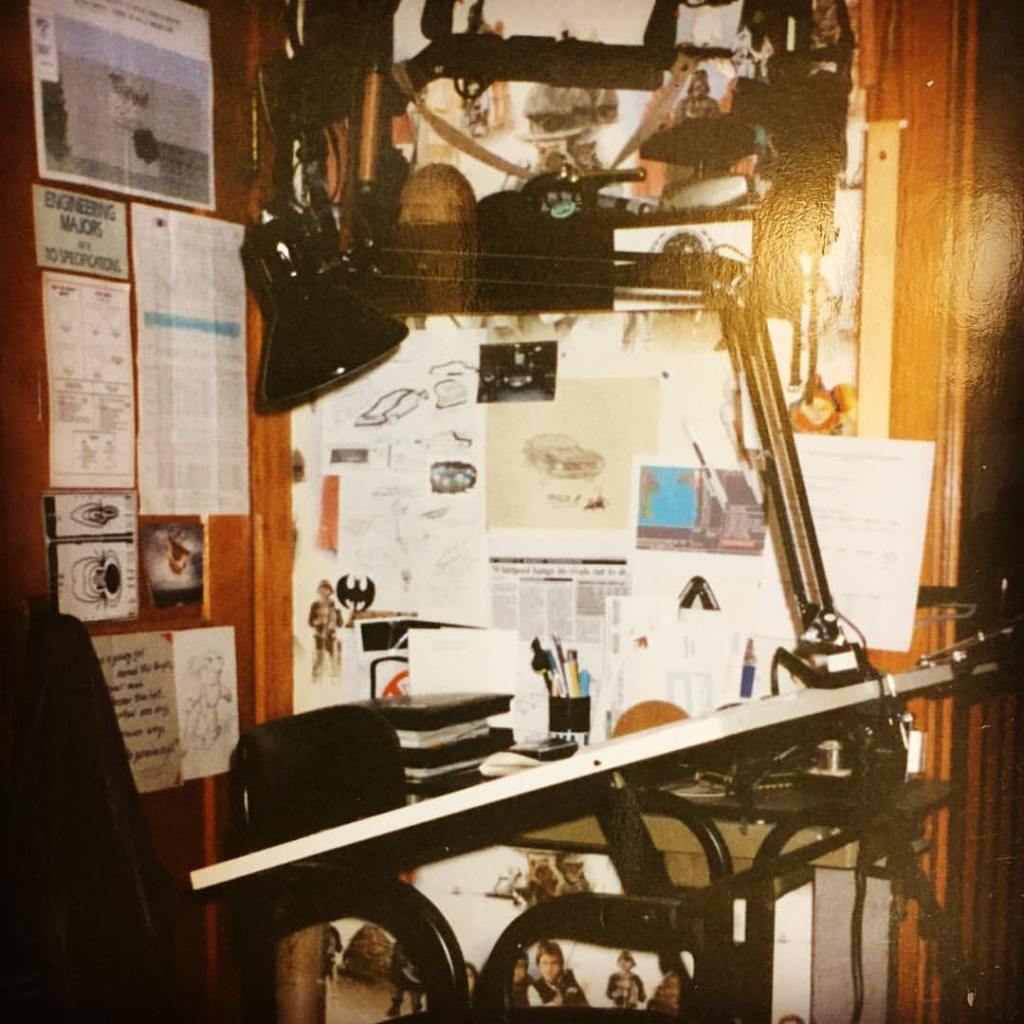
One corner of Gery’s bedroom at the farm in Jamestown, ca. 1988 – drafting table and work area while studying for his engineering degree.

Except for food, my room was outfitted with everything I needed to hole up. There was a pair of hand-me-down twin beds, a tiny black and white TV sitting on a corner step stool, plenty of art supplies and books, and a JC Penney stereo system perched on a wobbly stand. All of these things, and the room itself, helped chisel out the person I’d eventually become. I also had a desk that became far more important that I could have predicted, although somehow my mom knew.

Around 1981, predicting the computers that would eventually occupy so much of my time, my mother insisted on getting me a large, wrap-around desk. The epidemy of 1980s techno-furniture, its wood frame sported a black, slate top, with just one lonely shelf above. It wasn’t fancy, just functional. As it turned out, that old desk, as much as the room it occupied, became my launchpad. My mother seemed to believe in things before me, and now — 43 years later — I’m sitting at that very desk as I type this for you.

Those who were there have said that, in many important ways, my office and personal study echo that childhood haven. I think what they mean is that my work and home offices are more than just organized – they’re curated. Every object has meaning and purpose: typewriters that don’t just tap out words but inspire my writing, photos and nick-nacks that remind me of family and events and highlight why I write, and lots of blue — a color that, for reasons I can’t explain, always made me feel… like me. I think we all need someplace like that, even if we don’t realize it.

In my old room, even if everything outside felt like chaos, even if fitting in at school was like trying to breathe underwater, I could always retreat to a place where I made the rules. Ask any of the nieces I grew up with and they’ll complain, as they did to my mother when we were kids, that I would never let them come up there.

We seriously underestimate how foundational a child’s room can be as they grow up. Like so many other children, my room gave me solace, but it also provided a launchpad from which to craft my life’s narrative — one where my voice mattered. It wasn’t just any room in any farmhouse. It was my room, my Fortress of Solitude – maybe yours was too.

I’ve arranged other spaces in the image of that room but, try as I might, nothing will ever be like that again. Sometimes I would give anything to be back there, with so little responsibility and so much to live for. I’d hear the bustle of my family downstairs and, just once more, my mother calling up the stairs, “Gery, supper’s on.” 

Greene County cycling tour event proceeds presented to veterans’ suicide prevention subcommittee.

In Education, Health, Local News, psychology, Science, Senior Lifestyle, Uncategorized on August 15, 2025 at 9:08 am

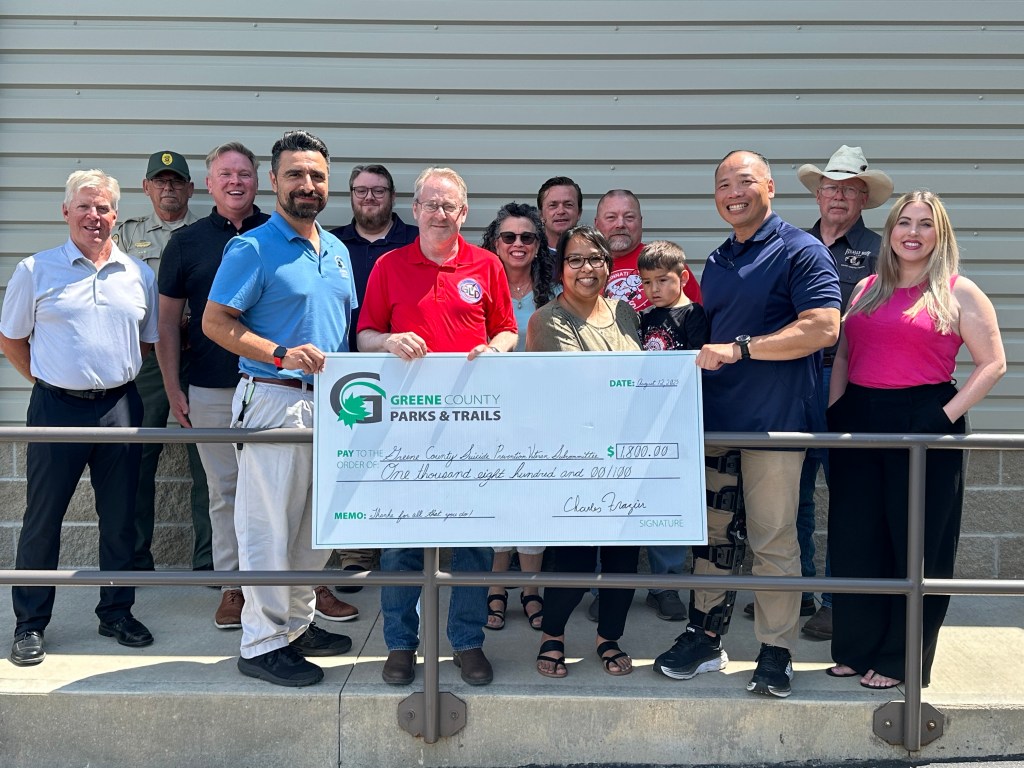
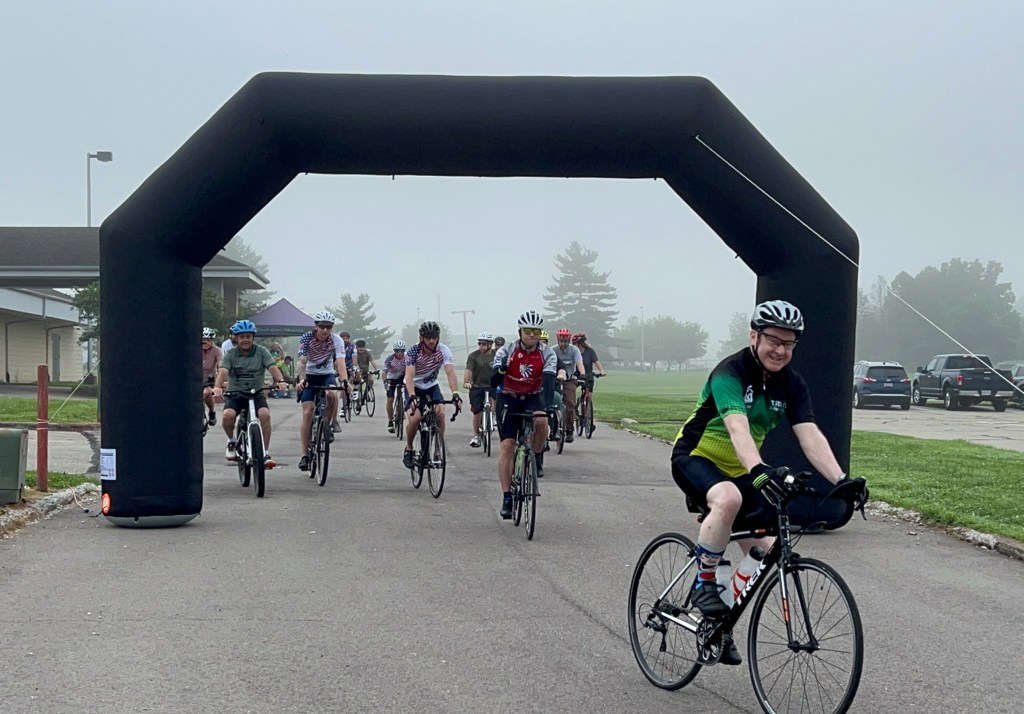
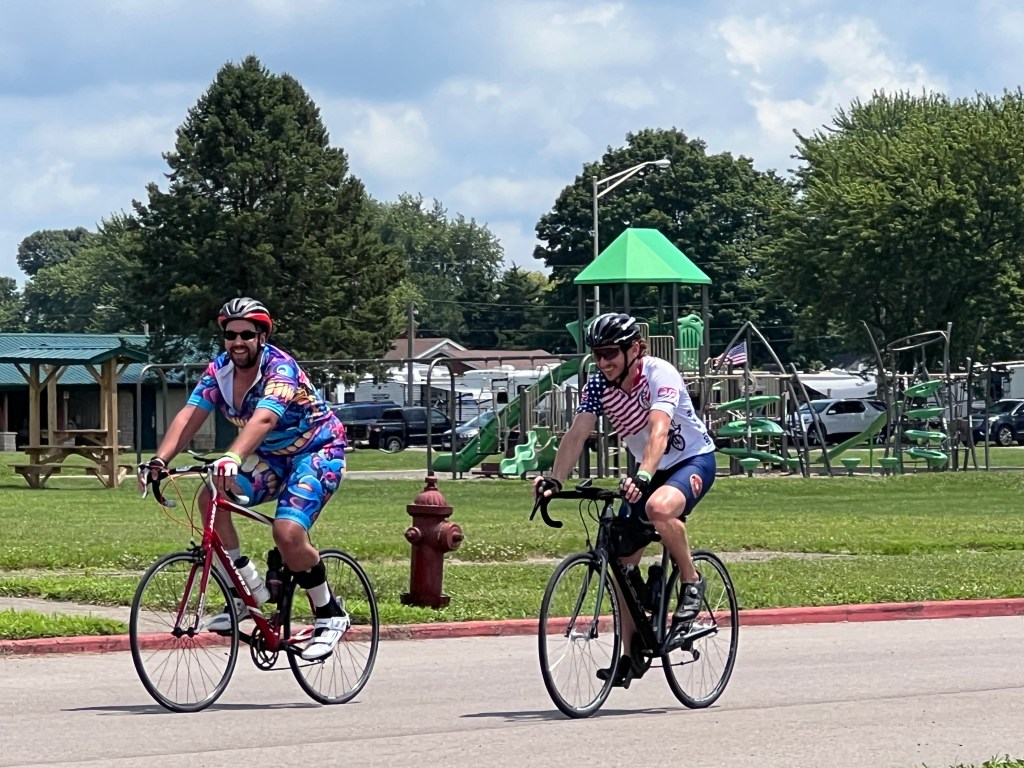
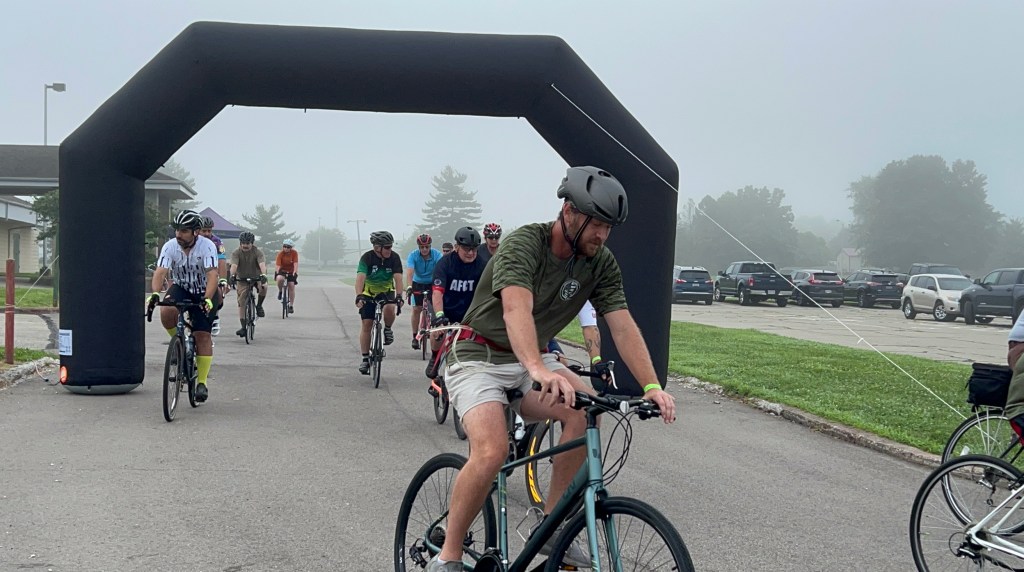
XENIA, OHIO — Representatives of the Greene County Parks and Trails, Trail Sentinels volunteer group, visited the Greene County Veterans Services office on Tuesday, August 12th, to present a donation check to the Greene County Suicide Prevention Coalition Veterans Subcommittee. The donation is the result of funds raised from the first annual Greene County Cycling Tour for Veteran Suicide Prevention, held July 19th.

The event raised $1,800.00 for the coalition, and it was made possible thanks to the hard work of the Greene County Parks & Trails staff, the Trail Sentinels, and through generous sponsorships from the following: Rodriguez Financial Strategies, LLC, White Allen European Auto Group of Dayton, and GLD Communications of Jamestown. Their support helped cover logistics and ensured that every dollar raised could go directly to the Veterans Subcommittee’s efforts.

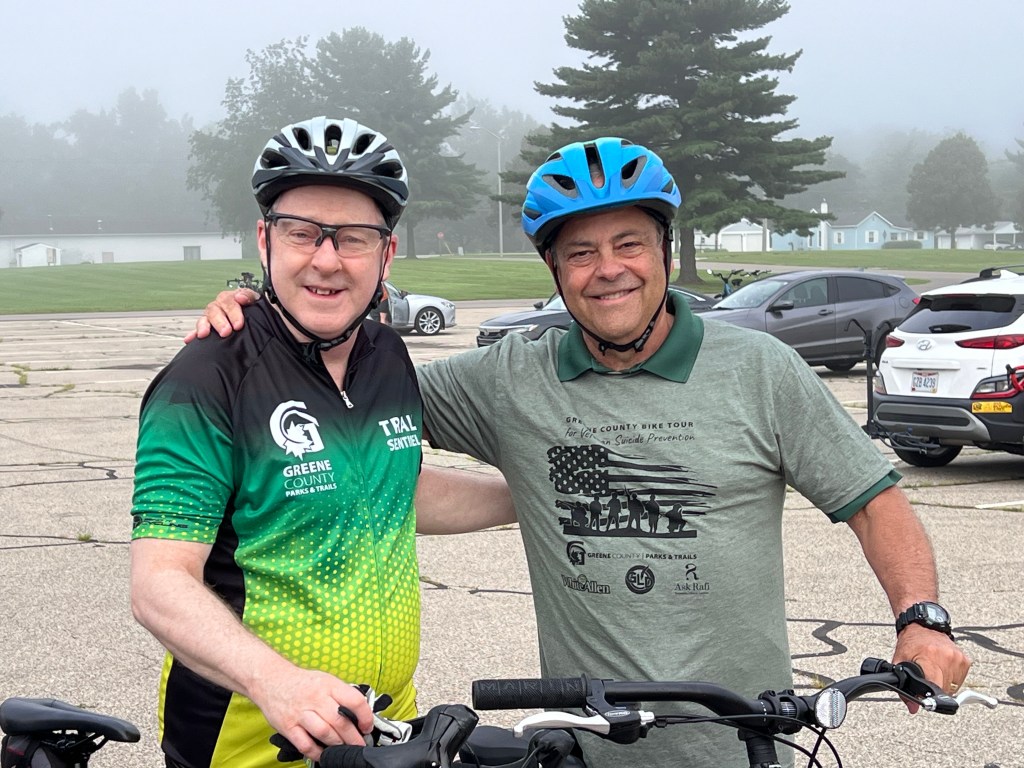
From the Greene County Suicide Prevention Coalition Veteran’s Subcommittee: Captain Dennis Eng, Scott Page, Andrew Ullom, Bill Hoying, Wanda Ortiz Thayne, Teresa Innocent, Desiree Rollyson, Tim Spradlin. From the Greene County Parks and Trails: Assistant Director Richard Kharman, Chief Ranger/Army Veteran Darrell Hannah, and Trail Sentinels Rick Sedlotshek and Gery Deer.

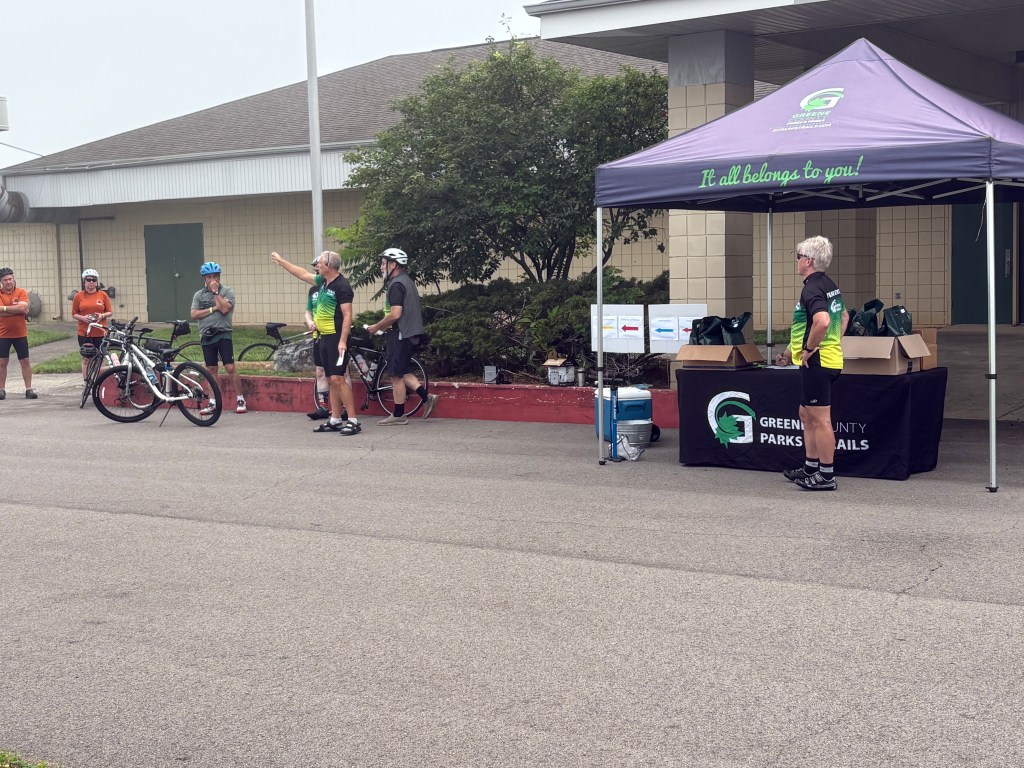
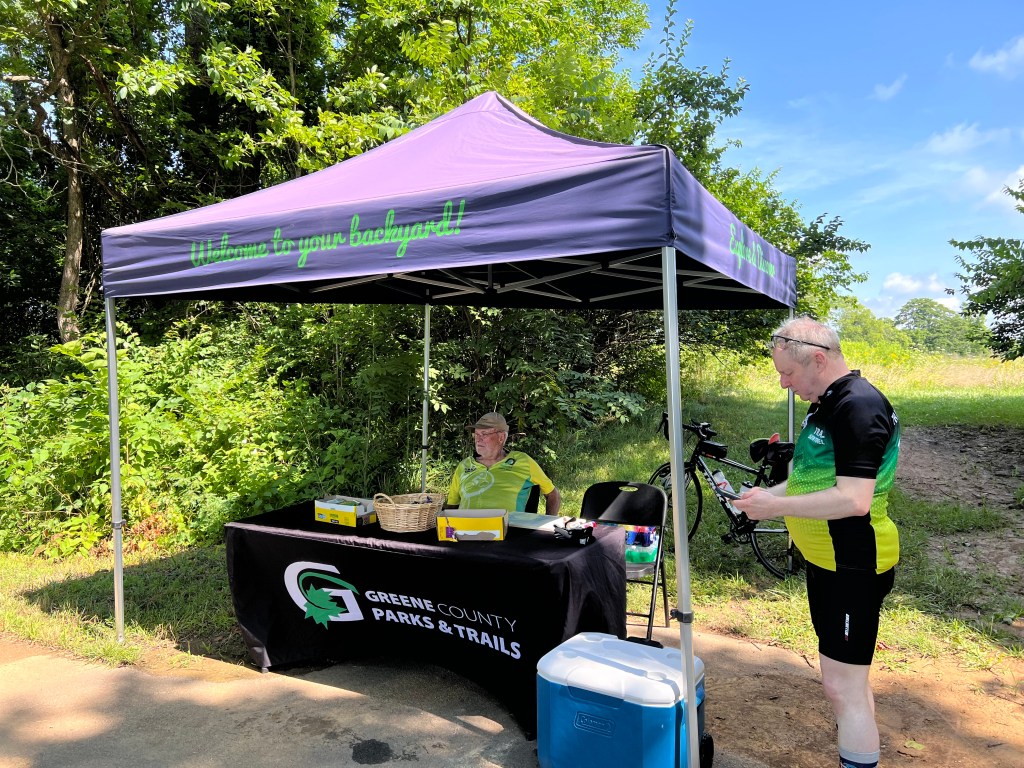
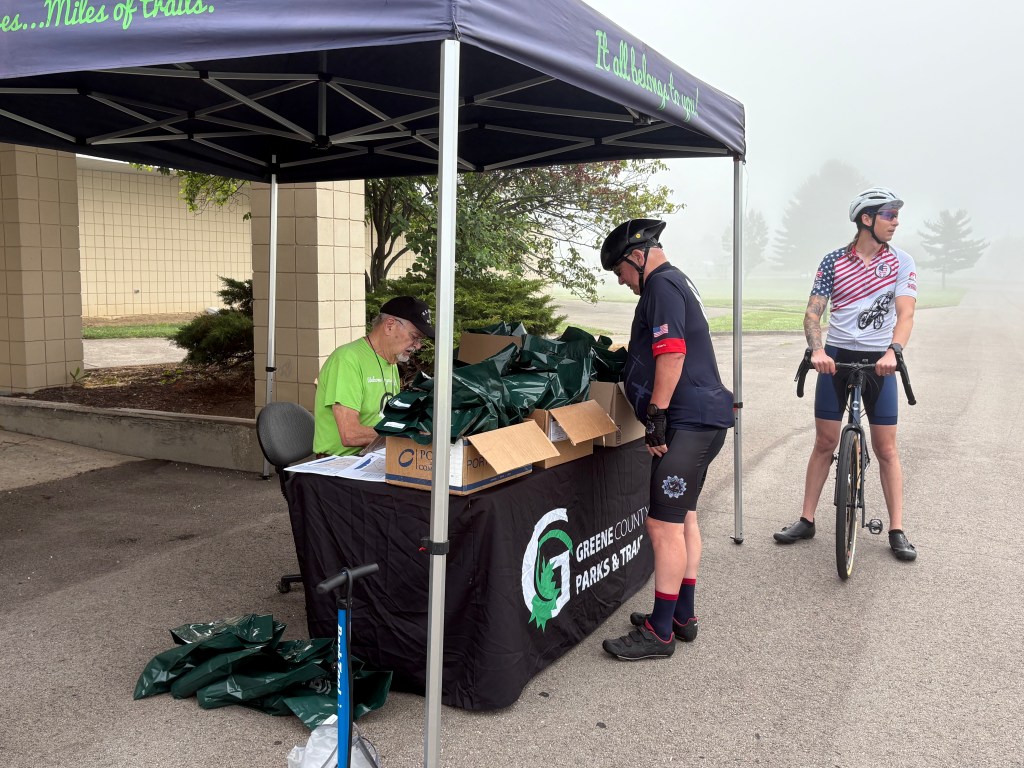
The Greene County Parks & Trails Trail Sentinels, a dedicated group of volunteer cyclists who patrol the trails and host seasonal workshops and group rides, played a pivotal role in the day’s success. They provided on-trail support and manned rest stops stocked with snacks and cold drinks, ensuring riders stayed hydrated and energized throughout their journey.

The event started early in the morning from the Fairground Recreation Center. The 38 registered riders had their choice of four scenic routes, each winding through the county’s lush trail system and quiet backroads.

“This ride was about more than miles—it was about mission,” said Gery Deer, a Trail Sentinel volunteer and event liaison to the veteran’s organization. “We’re proud to work on behalf of our veterans and help bring attention and financial support to the resources they need.”

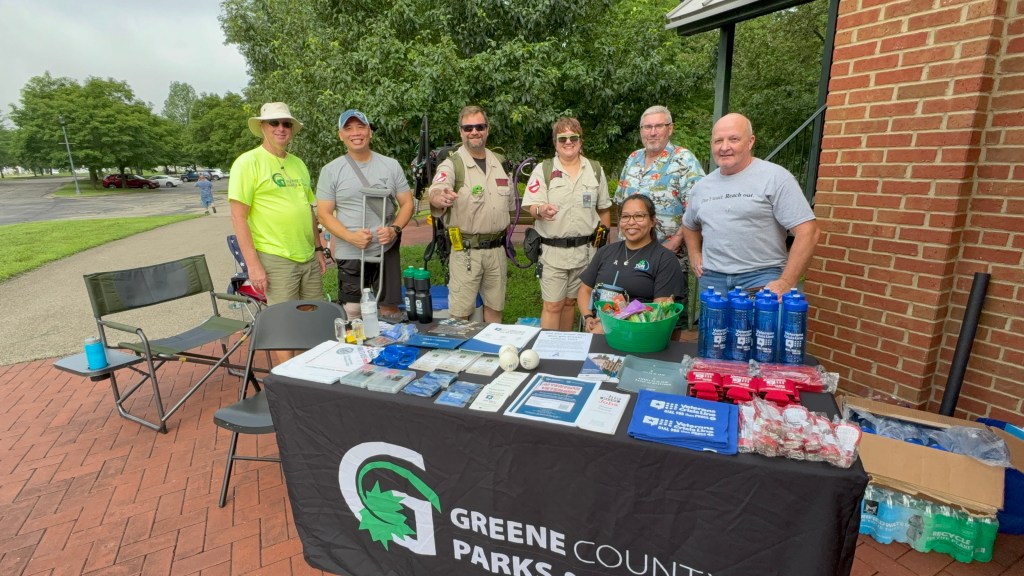
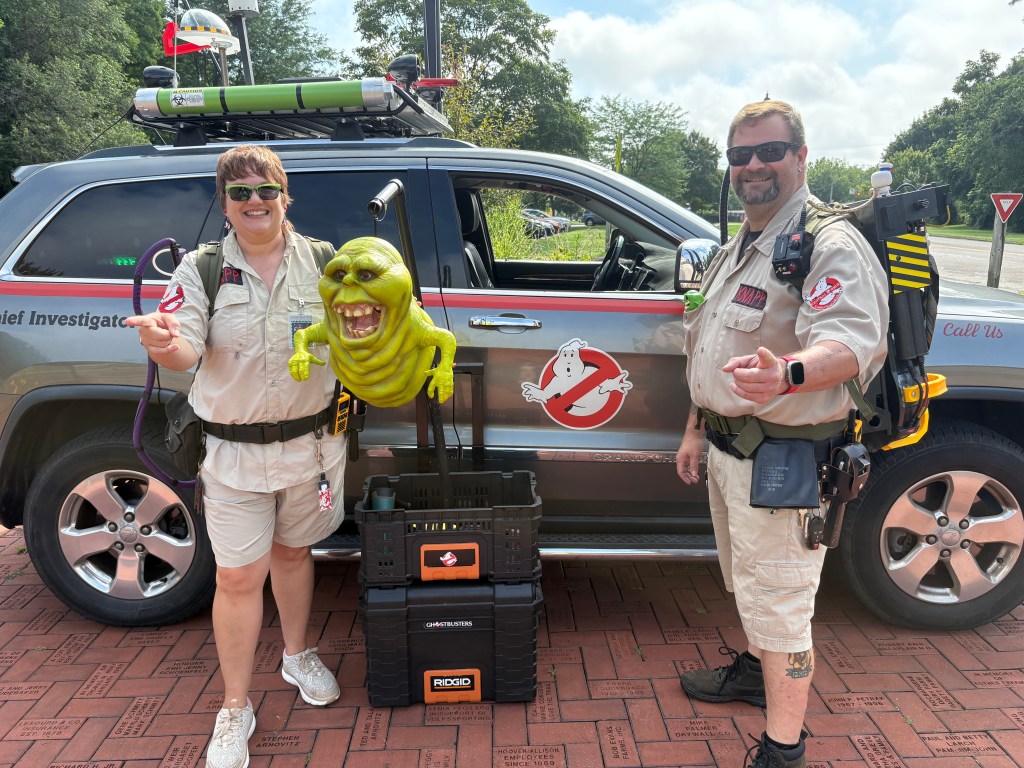
Adding a touch of whimsy and nostalgia to the event were members of the Central Ohio Ghostbusters club, a charity cosplay group known for their appearances at fundraisers, children’s events, and festivals. Dressed in full gear with their version of an “ectomobile” at Xenia Station, they brought smiles and photo ops to riders and spectators alike.

A large contingent of veterans participated in the ride as well. Retired Colonel Rafi Rodriguez, a 30-year Air Force veteran and a sponsor, took to the trails himself to support the cause. “The ride was a lot of fun,” he said. “It was great to learn more about what the coalition does to support veterans on Greene County.”

The donation check was formally presented this week to the Greene County Suicide Prevention Coalition Veterans Subcommittee, marking the culmination of a community-driven initiative that blended recreation, advocacy, and heartfelt generosity.

“This contribution will help us expand outreach and support for veterans in Greene County,” said a representative from the coalition. “We’re grateful to the cyclists, volunteers, sponsors, and everyone who came together to make this event possible.”

More than just a fun bike ride, this tour was a moving tribute to those who’ve served and a rallying cry for mental health awareness. Planning is already underway for next year’s ride, tentatively scheduled for the same weekend. Visit www.gcparkstrails.com to follow the events calendar throughout the year.

Flawed democracy

In Opinion, Uncategorized on July 8, 2025 at 11:31 am

Deer In Headlines II

By Gery Deer

Two hundred and forty-nine years ago, 56 delegates of the Second Continental Congress, after long sessions of debate, and at great risk to their own safety and freedom, made the decision to formally declare revolution against the English government. The official vote came on July 2, 1776, although the war began more than a year earlier. It was the birth of a new nation that would forever change the world.

Today, some view modern America as being at odds with its idealistic founding. But put aside your political divisiveness for the next couple of minutes and consider what it really means to be an American.

As Americans, I believe we’ve grown complacent and with little appreciation for the sacrifice and intent of the men who signed the Declaration of Independence. Ask the average American what America stands for and most might answer, “freedom.” Unfortunately, the freedoms and rights set up in the constitution have, since day one, been in constant jeopardy. And for some, they haven’t existed at all.

No, freedom wouldn’t be my answer to such an inquiry. If I were asked what our country is all about, my reply would be, “change.” In fact, I would go so far as to say, “beautifully flawed change.” Let me explain.

If you’re one of those who believes that the United States has always been star-spangled awesome (thank you Aaron Sorkin), I’m sorry to have to disappoint you. We’ve generally been anything but.

As a relative teenager in the family of the sovereign nations of the world, we are a mess. From the witch hunts of the 1600s, to one of the bloodiest civil wars in history, to the frightening Japanese internment camps of World War II, to a dozen other black marks on our report card, we have yet to fully live up to the ideals of our Founding Fathers. Moreover, we never will – it’s impossible.

Our republic is made up of and governed by people flawed, self—absorbed, arrogant, human beings. We have and will continue to screw up over and over again. Albethey terrible sometimes, all these foul ups are also necessary – provided we learn from our mistakes. Change invites… no, demands failure, and we’ve had our share. But without change, we become stagnant, with little or no advancement as a society or a nation.

Most people resist change, especially when neither the process nor results are to their benefit. But our constitution begins boldly with, “We the people,” not, “We, some of the people.” To be positively effective, to progress our nation to something better, change must benefit all, not just a select few. It should improve conditions for each and every citizen but also protect the visitors to our shores. Otherwise, change merely serves to divide our country rather than unite it.

With all our flaws, however, the country usually rights itself one way or another. The correction may be incomplete or imperfect, but we usually get back on track. Unfortunately, such adjustments sometimes result in pain for some, and prosperity for others, generally in staggering disproportion.

Neither a sense of being an American, nor a patriot, is about flags, slogans, or parades. To me, a good American is a good citizen, someone who acts from a sense of duty and compassion, rather than a need for power. Good Americans remember the intent of those who sacrificed much to give us the right to resist oppression and injustice, to be free to worship, or not, as we choose, and that the survival of our democracy is more important than any individual or political agenda.

The second paragraph of the Declaration of Independence reads, partly, “We hold these truths to be self-evident, that all men are created equal, that they are endowed by their creator with certain inalienable rights…” “Men,” here refers to mankind and includes everyone – male, female, black, white, gay, straight, religious, or secular. Everyone.

What is America all about? It’s about the beautifully flawed change that allows for improvement, provided we always learn from the past and act in consideration of the future. Remember, our children’s, children’s, children will judge our generation accordingly. Have a safe and happy Independence Day.

Corruption fears the press

In history, National News, News Media, Opinion, Politics, Uncategorized on June 22, 2025 at 10:47 am

Deer In Headlines II

By Gery Deer

It’s one thing to feel your job is in danger—industries evolve, businesses close, and livelihoods shift. It’s another thing to fear that your work and profession could be criminalized. For those of us in the press, in my opinion, that moment has arrived.

Not long ago, journalists were considered the fourth estate, so-called because the press was seen as the fourth, unofficial, branch of government – the public’s eyes and ears, so to speak. A free press is a necessary check on power, the watchdogs of democracy. Today, Trump and company would rather call any of us who dare question them troublemakers, agitators—enemies of the people. And now, with the Supreme Court’s recent decision to uphold the White House’s ban on the Associated Press (AP), we stand on the edge of something far more dangerous than a bruised ego or a contentious press conference.

The justification? National security – as always. A vague, malleable excuse that’s nearly impossible to challenge or verify. Too convenient to ignore, too broad to oppose. It sets a precedent with sharp teeth. If AP can be barred, who’s next? The Washington PostReuters, or maybe any reporter who dares ask uncomfortable questions?

When a government moves to silence journalism, it isn’t just about limiting press access—it’s about controlling the public’s perception of facts. A free press must do more than inform; it should hold power accountable on behalf of the citizenry. That accountability is inconvenient, even infuriating, for those who prefer not to be held accountable for their actions.

We don’t have to delve deeply into history to see what happens when dissenting voices are silenced. Totalitarian regimes have long understood the value of controlling the narrative. In Nazi Germany, Joseph Goebbels, the minister of propaganda, ensured that only state-approved messaging reached the public. In Stalinist Russia, independent journalism became synonymous with treason. And now, in a supposed beacon of freedom, we find ourselves edging toward a similar state.

Perhaps some believe these measures are justified—that journalism has gone too far and biased reporting warrants a firm correction. Some might even argue that disinformation (a great deal of which originates with the White House) has muddied the waters so thoroughly that restricting the press helps protect the public from chaos. The question we must ask ourselves is not whether we like the press—it’s whether we need it. And if those in charge are willing to erase dissent under the guise of security, we may not have much time left to answer.

The implications go well beyond a single news outlet losing access or presidential attempts to discredit them. If a major institution like the Associated Press can be barred from the White House, and with Supreme Court approval, every journalist in America faces the same risk.

What happens when smaller, independent outlets push too hard? What happens when investigative reporters publicize facts surrounding corruption at the highest levels? This is how truth becomes dictated rather than discovered. This is how governments rewrite history while the present unfolds in silence.

The press has never been perfect—it has biases, it makes mistakes, and yes, sometimes it gets the story wrong. But journalism, at its core, is a profession based on the pursuit of facts. A reporter’s job is not to flatter or cater to power, but to question, to dig, to expose injustice and demand answers.

Our democracy was built on the idea that those in power answer to the people, not the other way around. That principle is maintained through open discourse, through transparency, through a press that is free to ask uncomfortable questions and uncover uncomfortable truths. Of course, that’s not how Trump sees it. He doesn’t answer to you or me – only to his donors.

Still, the president can boot them out of the West Wing, but he can’t stop them from reporting – yet. If we allow this moment to pass unchallenged, accepting that barring journalists is just another policy decision, we lose the foundation of informed democracy set in place under the First Amendment of the United States Constitution. Once the press is muzzled, once silence replaces scrutiny, and propaganda overshadows fact, there’s no telling what comes next.

Supplemental Information:

(Courtesy https://www.carnegielibrary.org/the-first-amendment-and-censorship/)

The First Amendment Defined

The First Amendment to the U.S. Constitution protects what are commonly known as The Five Freedoms: freedom of religion, freedom of the press, freedom of speech, freedom of assembly, and freedom of petition. The amendment is one of the first ten amendments to the Constitution, known as the Bill of Rights, which was adopted in 1791. 

The First Amendment Reads:

“Congress shall make no law respecting an establishment of religion, or prohibiting the free exercise thereof; or abridging the freedom of speech, or of the press; or the right of the people peaceably to assemble, and to petition the Government for a redress of grievances.” (Source: National Archives

This amendment gives Americans the right to express themselves verbally and through publication without government interference. It also prevents the government from establishing a “state” religion and from favoring one religion over others. And finally, it protects Americans’ rights to gather in groups for social, economic, political, or religious purposes; sign petitions; and even file a lawsuit against the government. (Source: History.com)

Radio Waves

In Dayton Ohio News, history, Opinion, Technology, Uncategorized on June 16, 2025 at 8:29 am

Deer In Headlines II

By Gery Deer

A long time ago, in a glowing box, far, far away, radio was the primary means by which most Americans received their news and entertainment. Frontline news from overseas wars, sketch comedy shows, and soap operas – all of it started on the radio. Growing up, I spent hours listening to the radio, everything from music and radio plays to late-night talk shows and Casey Kasem’s American Top 40 countdown.

Nearly all of these are gone now, but if you listen closely, you can still hear it—the crackle of an AM signal, the smooth transition of an FM dial, and the hair-raising tones of the emergency broadcast system. Well, OK, that one’s not so nostalgic. But is such a long-running, analog medium still relevant in a digital era of podcasts, streaming services, and algorithm-driven playlists?

Despite predictions of its demise, radio lives. According to Nielsen’s Q3 2023 Total Audience Report, radio remains the most popular media in America, reaching 84% of the population aged 18 and above. That’s right—more people tune in to traditional radio than watch television or scroll endlessly through social media.

Dayton, Ohio, radio personality Steve Kirk ruled the Miami Valley airwaves for decades. Is there a need for this kind of talent in the 21st Century?

Radio is still around because, for the most part, stations and owners have adapted, shifting to digital platforms, streaming services, and podcasts. For example, this column’s podcast counterpart is featured on iHeartRadio, which operates more than 850 stations nationwide.

Additionally, over-the-air broadcasting remains a popular option, particularly in cars. Every week, approximately 92% of Americans listen to the radio—roughly 272 million people—proving that radio remains the dominant medium for commuting.

Local radio ad revenue, however, isn’t what it once was. In 2025, sales are expected to reach only around $2.4 billion—a sharp contrast to the nearly $22 billion radio generated just 20 years ago. Radio stations have had to rethink their business models due to stiff competition from digital platforms. Some have survived and prospered by embracing digital, while others struggle to keep the lights on.

Cumulus and Townsquare Media recently shut down twenty radio stations. Many of these were AM stations that had lost their audience decades ago, unable to compete with the convenience of streaming. While this thinning of the herd might seem like bad news, some argue it’s a necessary evolution—fewer stations mean less competition for ad dollars, potentially stabilizing the industry.

That said, AM remains profitable, thanks in part to FCC deregulation by Presidents Reagan and Clinton, and conservative talk programming has become its cash cow. Unlike the early 1980s, when call-in talk shows were relatively new, less restrictive laws eventually allowed companies to own and operate nearly unlimited radio stations.

Suddenly, extreme political hosts like Rush Limbaugh, who held the daytime ad money, reached millions over a network of AM stations. More entertainment-focused programs, such as Sally Jessy Raphael’s call-in show, also thrived, ruling the airwaves at night.

Then there’s traditional radio’s subscription-based cousin – satellite. Since its inception, satellite radio has been marketed as the premium alternative—no static, initially with no commercials, and a seemingly infinite selection of niche stations.

Satellite radio carved out a loyal audience, particularly among drivers who want uninterrupted entertainment on long commutes. SiriusXM, the dominant player in the satellite radio market, boasts over 34 million subscribers. While that’s a fraction of traditional radio’s reach, it’s still significant, proving that people are willing to pay for curated content.

Satellite radio offers exclusive content—think Howard Stern and live sports. However, it faces stiff competition from podcasts, which offer similar content for free. Streaming services like Spotify and Apple Music offer listeners more control over their audio experience, making it harder for satellite radio to justify its subscription fees.

Even with these checkmarks in radio’s “cons” column, in my opinion, there are still plenty of pros, so long as the medium continues to evolve. “Because that’s how we’ve always done it” isn’t a phrase anyone working in radio wants to hear from management these days.

Whether it’s delivering local news, playing your favorite tunes, or keeping you company on a long drive, radio is still a faithful companion for whatever you’re doing. If you don’t believe me, turn on your car stereo. Chances are, you’ll find something worth listening to.

Open Mic Night

In Environment, Health, Local News, Opinion, Uncategorized on June 9, 2025 at 8:22 am

Deer In Headlines II

By Gery Deer

It takes a special kind of bravery to step onto a stage, armed with nothing but your talent and a willingness to bare your soul to strangers. Open mic nights embody this raw courage, where artists of all kinds—musicians, poets, comedians—challenge themselves not only to be heard but to connect. To say they are anything less than extraordinary would be missing the heart of the matter entirely.

As I write this, I’m sitting with my brother and cousin after just stepping off the stage at Plain Folk Café in Pleasant Plain, Ohio. My family group, The Brothers & Co., which now consists of my older brother and our cousin, has been performing together for over 30 years. We’ve played at casinos, festivals, theaters, just about everywhere – as professional entertainment.  But I’d never experienced an open mic event until my cousin invited us to go as a group. He was a regular here, receiving a very “Cheers” like welcome from fellow performers when we arrived.

Every Thursday night since 2012, performers and patrons alike enjoy good food and entertainment, and the stage isn’t just a platform; it’s a crucible where artistry takes shape. The sign-in sheet, held aloft by a sombrero-wearing ceramic frog, sets the tone: quirky, welcoming, and uniquely communal. Each participant scribbles their name with a mix of anticipation and trepidation, knowing they’re stepping into an unfiltered arena. Some are regulars, others are first-timers, all are committed.

The pull of an open mic is multifaceted. For some, it’s a chance to test new material, an incubator for ideas that might someday grow into greatness. Writers spend hours pouring their souls into words; musicians craft melodies that echo with personal truths. They arrive not knowing whether their work will elicit applause, laughter, or silence—but they come anyway, driven by the need to express and improve.

Then there’s the process itself—learning not just to perfect the art, but to perform it before a living, breathing audience. Open mic performers are incredibly brave, hoping their work connects with even one person in the crowd. That’s where the beauty lies: that vulnerability becomes their strength. It’s almost a superpower, one which, for all my professional experience, can’t comprehend.

Gary Deer Jr and Gery Deer, two of the trio, The Brothers & Co., watch other performers on stage at Plain Folk Cafe.

The first time I was on stage, I was in first grade, doing a ventriloquist act in my elementary school talent show. I had studied the art for a year or so, and my mom thought I might like to show people. I agreed, and the next thing I knew, I was smack in the spotlight of the ultimate open mic set — me, a ventriloquist dummy, 250 schoolmates, teachers, and parents.

One joke, a laugh; another, some applause, and, at the end, I won first prize for my grade. That moment led to a lifetime of performing in front of audiences, from lecturing and emcee work to appearances at hometown festivals and on national TV. Yet, with all that, I can’t fathom getting up there alone, week after week, in front of a cafe full of patrons and performers. It requires a very different kind of courage.

Open mic nights strip away the barriers between artist and audience. Whether it’s a musician pouring their soul into an original ballad or a comic braving the silence between punchlines, the essence of their art is laid bare. Every strum of a guitar or carefully penned word reveals hours of effort, doubt, and hope. It’s humanity, distilled.

Most importantly, these evenings foster connection. In the glow of the stage lights, an unspoken camaraderie develops among performers and listeners alike. The applause isn’t just polite acknowledgment; it’s a collective celebration of effort and heart. That shared experience is what makes open mic nights so much more than casual entertainment—they’re gatherings where creativity finds its voice and its audience.

If you’ve never been to an open mic event, I urge you to go, not as a critic, but as a witness to the raw courage and artistry on display. You may not love every performance, but you will leave with a renewed appreciation for the grit it takes to share oneself so openly, and for all the creative souls who fearlessly challenge themselves week after week.

********

To learn more about The Brothers & Co. Entertainers or Plain Folk Cafe, visit them on Facebook at:

https://www.facebook.com/TheBrothersandCo

https://www.facebook.com/plainfolklive

Is this your new site? Log in to activate admin features and dismiss this message
Log In