Local News & Commentary Since 1890.

Archive for the ‘Uncategorized’ Category

The top 9 grilling mistakes and how to fix them

In Children and Family, Food, Health, Holiday, Uncategorized on May 23, 2025 at 7:42 am

Courtesy Associated Press

By  ELIZABETH KARMEL

A man grills hamburgers and hot dogs in Arlington, Va., July 4, 2012. (AP Photo/Alex Brandon, File)

1 of 4 |  

A man grills hamburgers and hot dogs in Arlington, Va., July 4, 2012. (AP Photo/Alex Brandon, File)

Hamburgers are tended to on a grill in Washington, Aug. 4, 2011. (AP Photo/Carolyn Kaster, File)

2 of 4 |  

Hamburgers are tended to on a grill in Washington, Aug. 4, 2011. (AP Photo/Carolyn Kaster, File)

Hot dogs cook on a grill in New York's Times Square, June 10, 2008. (AP Photo/Mark Lennihan, File)

3 of 4 |  

Hot dogs cook on a grill in New York’s Times Square, June 10, 2008. (AP Photo/Mark Lennihan, File)

Steaks cook on a grill in New York, Nov. 27, 2018. (AP Photo/Mary Altaffer, File)

4 of 4 |  

Steaks cook on a grill in New York, Nov. 27, 2018. (AP Photo/Mary Altaffer, File)

Updated 9:54 AM EDT, May 20, 2025

I love to grill, and barbecue, and I have devoted my career to outdoor cooking for more than two decades. In that time, I’ve seen a lot of mistakes, and people tend to make them over and over. So I put together a list of the biggest grilling don’ts and how to avoid them. Print this list and refer to it the next time you get ready to grill!

Never oil the grill

Many people oil the cooking grates — big blunder! Follow my mantra: “Oil the food, not the grates!” If you brush oil on hot cooking grates (and a lit grill), you run the risk of a big flare-up. The oil that you have brushed on will instantly burn, leaving a sticky residue that will “glue” your food to the grates, making it stick, break apart and dry out_like dehydrating food. If you oil the food, it will stay juicy and promote caramelization_those great grill marks! And help to prevent “stickage.”

Don’t put food on a cold grill

Always preheat a gas grill with all burners on high, or wait until charcoal briquettes are covered with a white-gray ash. Preheating also burns off residue and makes it easier to clean the grill. Contrary to popular belief, you don’t ever need to cook on a grill that is hotter than 550 F. The hotter the grill, the more likely you will burn the outside of the food before the inside is cooked.

Clean that dirty grill

An outdoor grill is like a cast-iron skillet. It gets better and better the more you use it, but you do need to clean it every time you use it. Clean the grill grates twice every cookout with a stiff, metal-bristle grill cleaning brush — before and after you cook. If you do this, it will never be a big job to clean your grill. If you don’t have a grill cleaning brush, crumble a ball of heavy-duty aluminum foil and hold it in a pair of 12-inch locking chef tongs to use to clean the grill.

Know the difference between direct and indirect heat

The most frequent mistake is to choose the wrong cooking method. To be a good griller, you must know the difference between direct, indirect or combo grilling and when to use them. Direct grilling means that the food is set directly over the heat source — similar to broiling in your oven. Indirect grilling means the heat is on either side of the food and the burners are turned off under the food — similar to roasting and baking in your oven. Combo grilling means that you sear the food over direct heat (i.e., to sear a tenderloin, or large steak) before moving it to indirect heat to finish the cooking process. Remember this general rule of thumb: If the food takes less than 20 minutes to cook, use the DIRECT METHOD. If the food takes more than 20 minutes to cook, use the INDIRECT METHOD.

The right way to deal with flare-ups

Never use a water bottle to extinguish a flare-up. Spraying water on a hot fire can produce steam vapors which may cause severe burns. The water can also crack the porcelain-enamel finish, resulting in damage to your grill. Fire loves oxygen, so cook with the lid down and don’t peek. Repeatedly lifting the lid to “peek” and check the food while it’s cooking lengthens cooking time. If you have a full-on fire, turn all the burners off, remove the food and extinguish the flames with kosher salt or baking soda. In a worst-case scenario, use a fire extinguisher, but know that it will ruin your grill.

Avoid frequent flipping

If you are cooking food by the direct method (hamburgers, hot dogs, boneless chicken breasts, small steaks, vegetables, etc.), flip only once halfway through the cooking time. All protein will stick to the grates as soon as it makes contact with the hot grill grates. As it cooks, it will naturally release itself, and that is when you can turn it over with a pair of tongs. Just remember to oil the food, not the grates!

Dodge cross-contamination

One of the most common mistakes backyard cooks make is using the same tongs for raw and cooked foods. This creates cross-contamination and can result in food-borne illness. It’s easy to fix this problem. I have been color-coding my 12-inch locking chef tongs with red and green duct tape for as long as I have been grilling. The different colors help me to remember which pair of tongs I used for raw food (red), like chicken, and which are safe to use for the cooked food (green). And remember to use a separate clean platter for your cooked food, too.

Don’t sauce too soon

If I had a dime for every time I saw someone pour thick sweet barbecue sauce on bone-in-chicken pieces or a whole rack of ribs while they were raw, I would be a very wealthy griller! All barbecue sauces have a lot of sugar in them and sugar burns quickly, almost always burning the outside of the food before the inside cooks. Generally I only brush food with sauce during the final 10-15 minutes of cooking time. With ribs that cook 2-3 hours, I will brush with a diluted sauce (1/2 beer and 1/2 sauce) for the final 30 minutes of cooking time.

Resist testing for doneness by cutting

Cutting your food to test for doneness is another common way people bungle their food. When you cut any protein, you are letting the precious juices escape, and if the food is under-cooked, the area where it was cut will be over-cooked when you put it back on the grill. Use an instant-read meat thermometer to test for doneness, and always let your food rest for at least 5 minutes before cutting into it.

___

EDITOR’S NOTE: Elizabeth Karmel is grilling, barbecue and Southern foods expert, a media personality and the author of four cookbooks, including “ Steak and Cake .”

Exploring Radio Independence at Dayton Hamvention 2025

In Dayton Ohio News, Local News, National News, News Media, Technology, Uncategorized, World News on May 20, 2025 at 4:12 pm

By Gery Deer

Courtesy Xenia Daily Gazette

Editor’s Note:

An update from the Dayton Hamvention officials on May 28th reads as follows: The 2025 Hamvention set a new high attendance record with 36,814 attendees. The general chair, Brian Markland, said he felt fabulous about watching large crowds of amateur radio enthusiasts from all over the world enjoying exhibits, forums, and the flea market. 

XENIA — Before cell phones or the internet, there was amateur, or “ham,” radio.

Once a year, thousands of enthusiasts descend on the Greene County Fairground and Expo Center in Xenia for the largest amateur radio convention in the world – Dayton Hamvention. Although final numbers will not be tallied for some time, organizers estimate that this year’s turnout exceeded the 35,000 attendees of 2024.

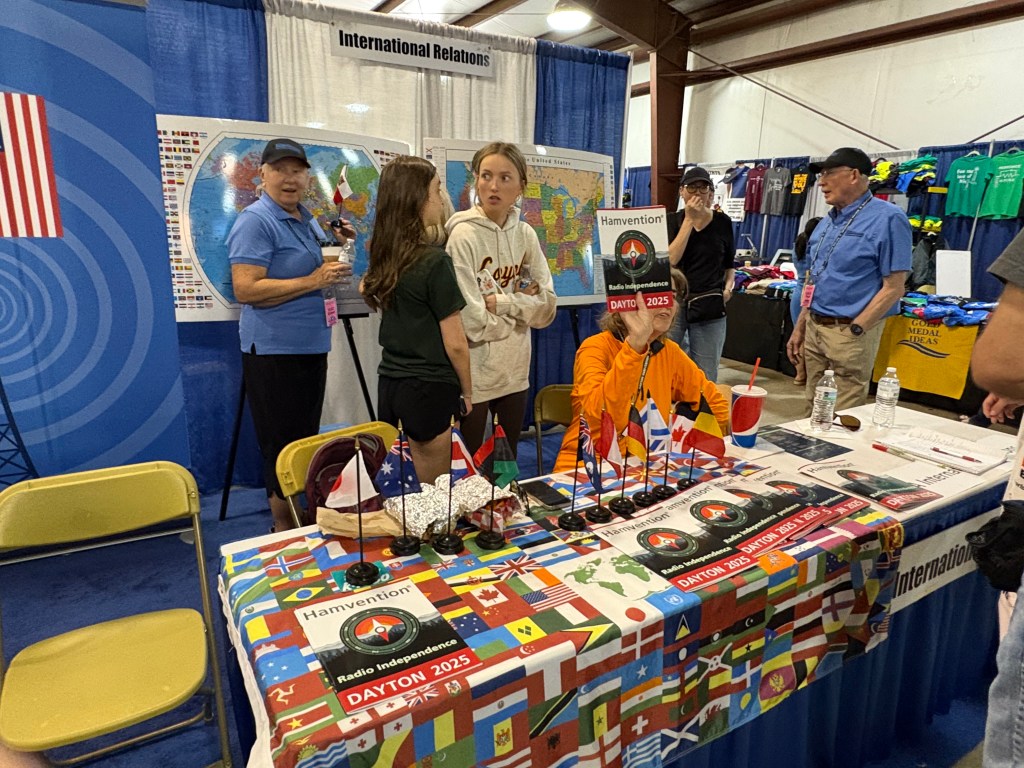
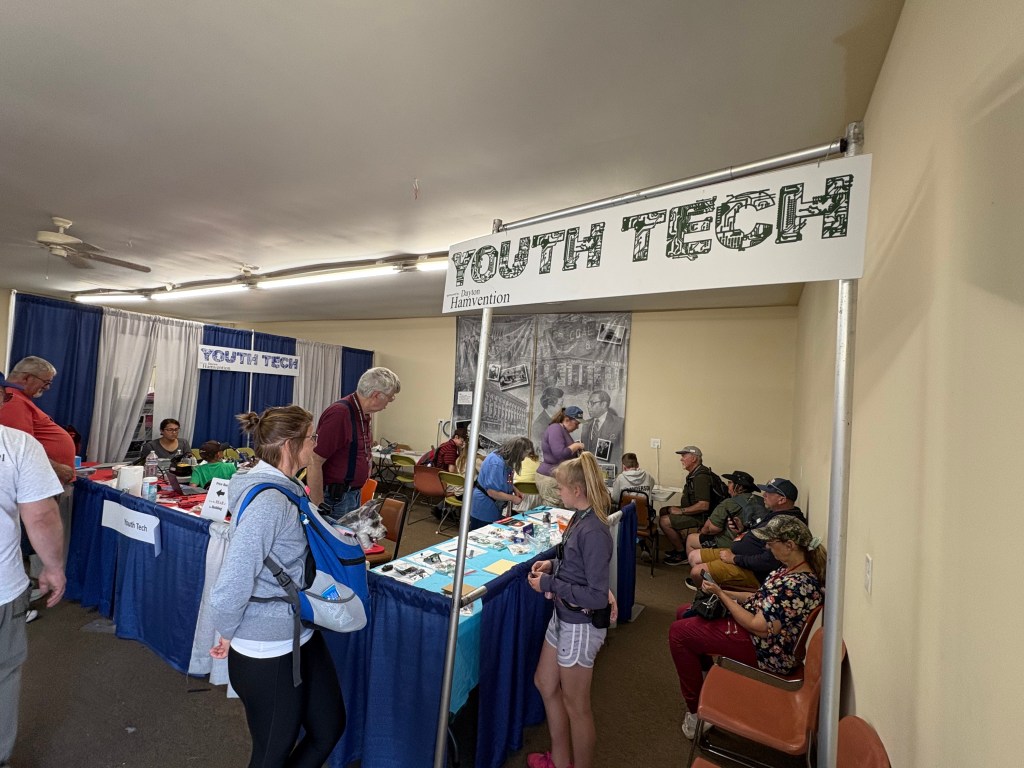
During Dayton Hamvention, participants from as many as 30 countries had the opportunity to see and buy the latest technology, attend educational and informational forums, sit for radio license exams, and take part in youth activities. This year’s event also included groups of young radio enthusiasts, organizations from all over the country made up of young people interested in both the analog and digital nature of amateur radio.

Jim Gifford, call sign N8KET, is the chairman of the media committee for Dayton Hamvention. He shared this year’s theme – Radio Independence – noting that what makes this event so important and impactful to the amateur radio community is the people. One of his favorite moments of this year’s event happened on Friday. “We had 73 students of the Community STEAM Academy (Science Technology Engineering Art and Math) in Xenia here,” he said. “They were really excited to learn how amateur radio relates to science and even space communication.”

With some 800,000 licensed ham radio operators in the United States alone, there is a remarkable sense of community among radio operators, regardless of geography. “It’s so nice for all of us in the local area to be able to come to Hamvention, but then you have to stop and think, this is a big ham fest,” said Glenn Rodgers, WI80, assistant chairman of the event’s media committee. “This is the biggest ham gathering in the world, and we’re so fortunate to be able to come to something like this in this area and it’s an honor to work here.”

Amateur radio enthusiasts, vendors, and organizations from around the world converged at the Dayton Hamvention. Here’s a promotional booth for Tokyo Hamfair.

With such widespread interest, one might expect the world’s current geopolitical tension would hamper those relationships. According to Gifford, it does not. “We have a multitude of political views here,” he said. “But we’re ham operators, we take care of each other.”

“Because you meet people,” Gifford continued. “We talk to people all over the world. Just the other day, I spoke to somebody from Norway, and somebody from Italy, and it crosses barriers. It really does.”

Most amateur radio enthusiasts are known on the air, and to each other, only by their call sign, an alphanumeric identification given to each license holder by the Federal Communications Commission (FCC).

Jesse Walker, N8XC, is U.S. Navy Veteran, and business development manager with Aegis Protective Services in Eaton. He’s been involved in amateur radio since the age of 15. He explained that, although the call signs are assigned, they become part of your identity.

“Many of us only know each other by our call sign,” Walker explained, who is a member of the Preble Amateur Radio Association in Preble County. “Coming here, we get to meet face-to-face often for the first time.”

Both Rodgers and Gifford also noted that, apart from being a hobby for some, ham operators play an important role in the community during emergencies. “Amateur radio groups work as sky spotters during severe weather, they work with and support our area first responders, providing backup communications and volunteers during local emergencies,” Gifford said.

“Essentially, the Preble Amateur Radio Association is involved in public service,” said Jesse Walker. “We work with the Preble County emergency management agency. Our motto in amateur radio emergency service is, ‘when all else fails.’”

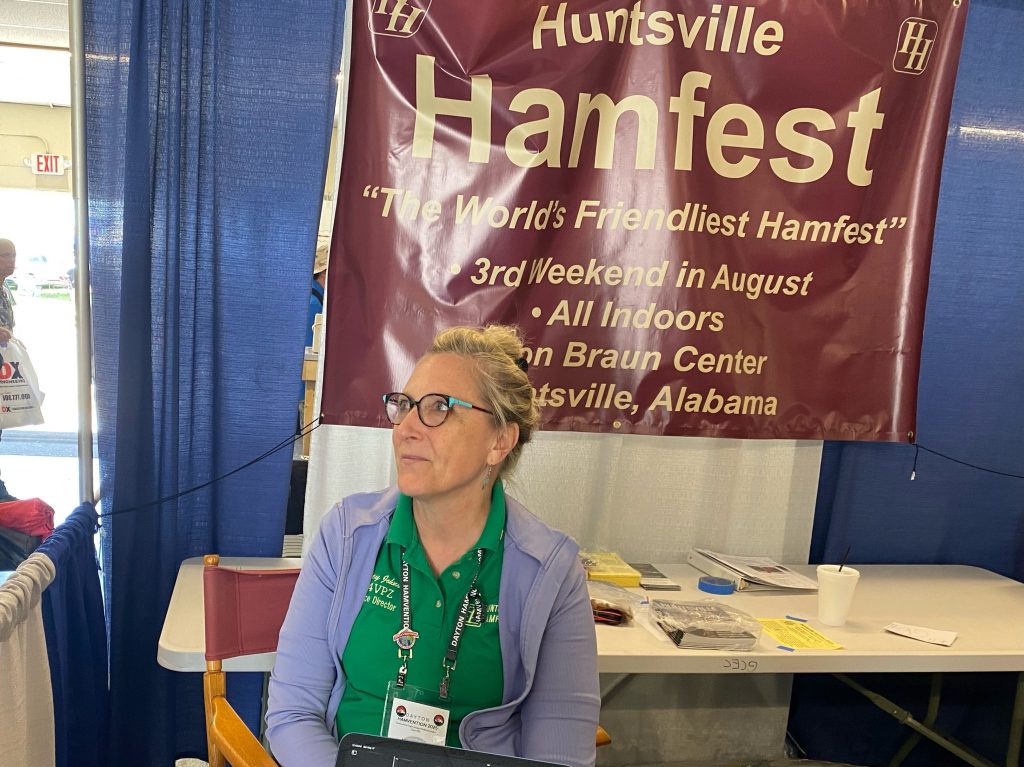
Other amateur radio convention organizers also attend to promote their own events. Huntsville Hamfest, held annually in Huntsville, Alabama, is one such organization. Mark Brown, N4BCD, is the chairperson for the Huntsville Hamfest Association. “Ours is the third largest Ham radio convention in the country, behind Dayton and Orlando, Florida,” Brown said. “We all cooperate and help support each other’s events.”

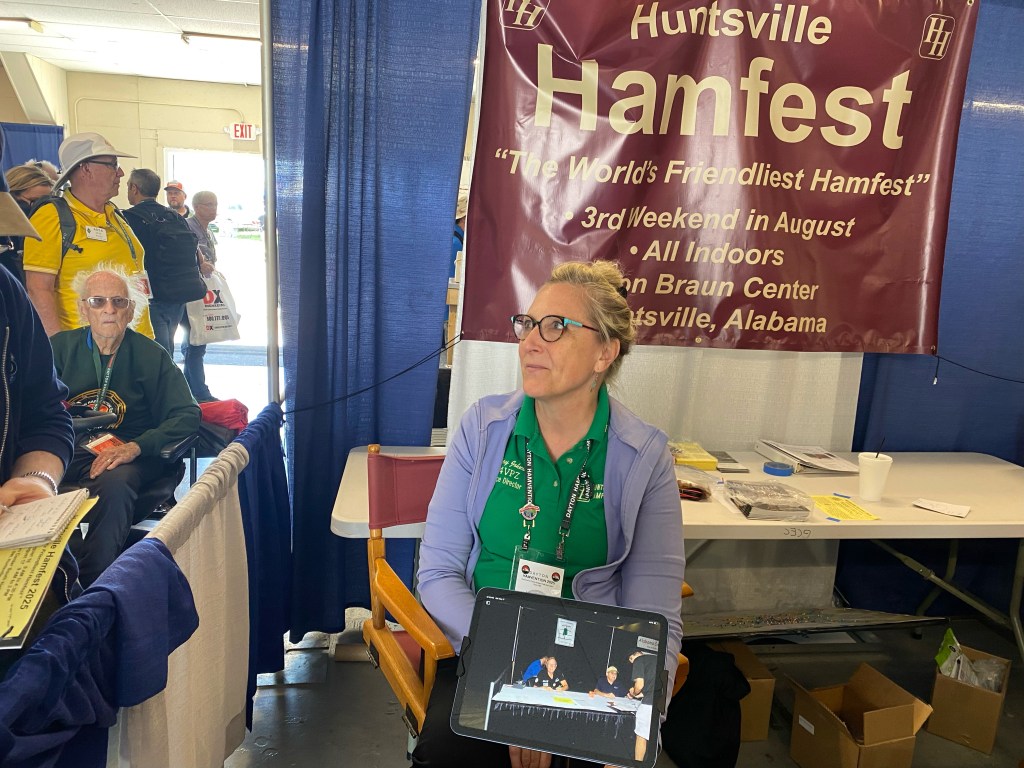
Mark Brown, N4BCD, and Kelley Johns, W4VPZ, (pictured) provided information about the Huntsville Hamfest in Alabama.

Brown suggested the consistent growth of these events and interest in amateur radio is due in part to younger people learning about its technical diversity. “I think to attract kids, we’ve got to show different aspects of the hobby, like the satellite communications, the youth on the air, and the parks on the air,” he said. “Get youth involved in it. That’s one thing these events do is bring all ages together.”

Planning for next year’s Dayton Hamvention is already underway. For more information visit hamvention.org.

Chamber event sheds light on food insecurity

In Local News, Uncategorized on May 16, 2025 at 8:29 am

By Gery Deer

Courtesy Xenia Daily Gazette / Greene County News

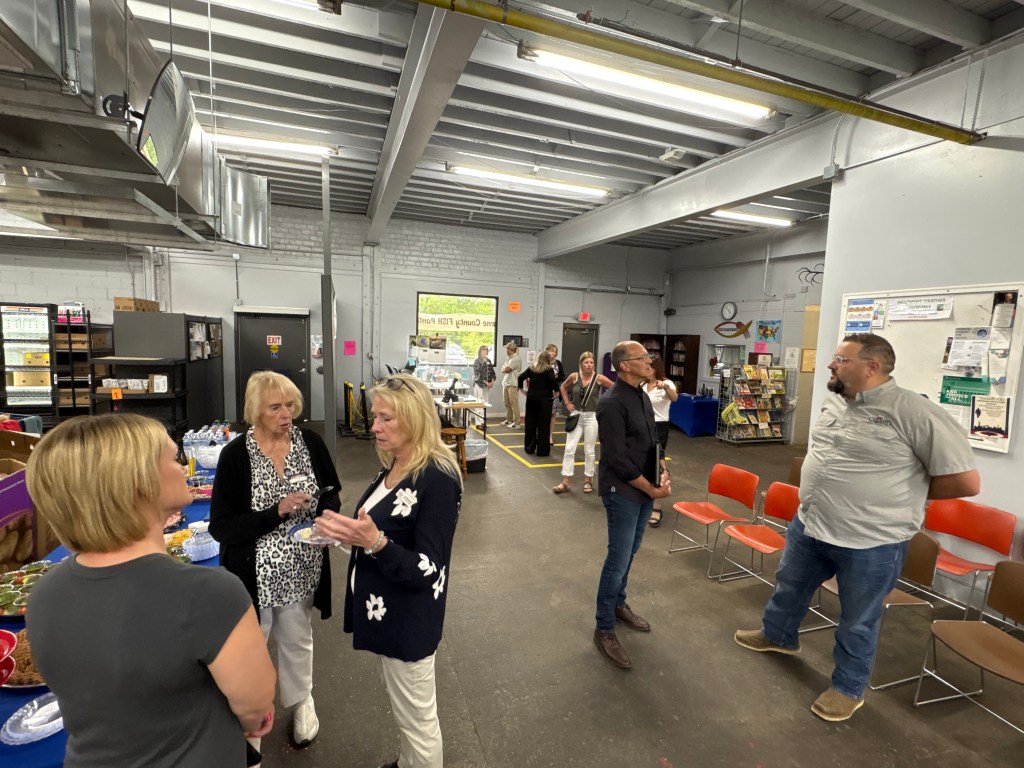
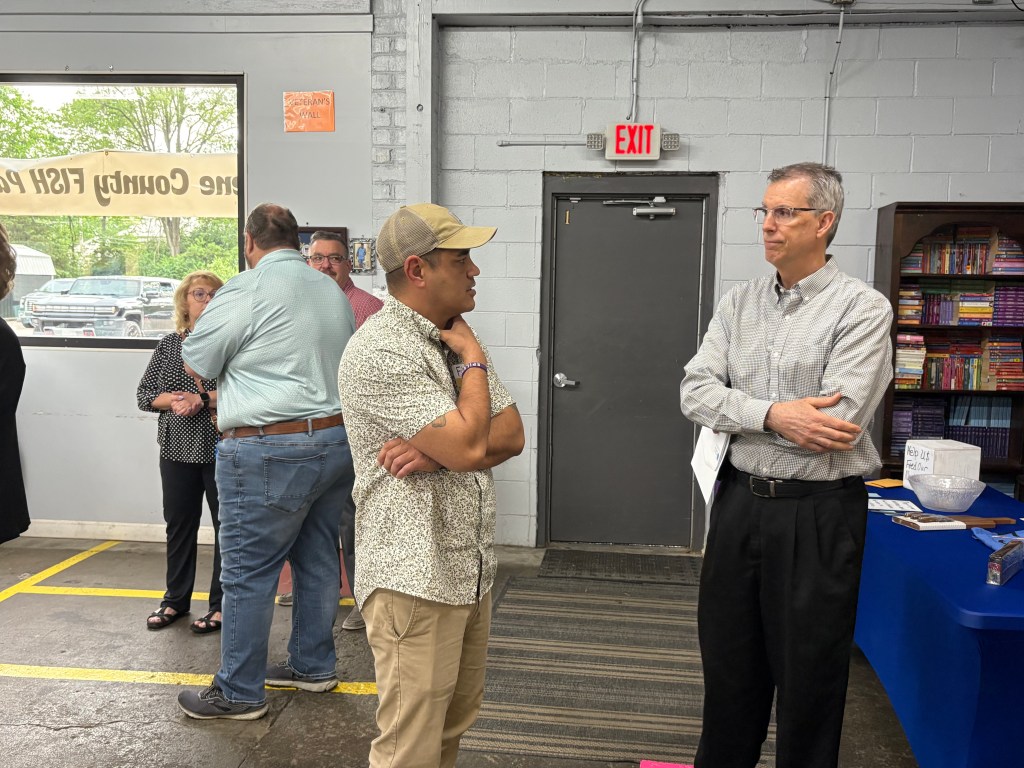
XENIA — The Greene County FISH Pantry hosted the Xenia Area Chamber of Commerce after-hours event Wednesday.

The monthly networking program offered participants an opportunity to learn more about the food pantry’s mission and meet Mike Reeves, the new executive Director and operations manager.

After-Hours visitors were given tours of the pantry facility and its newest addition, a food storage warehouse they call “the barn.”

Each month, the Xenia Area Chamber of Commerce presents the event at different member locations throughout the city. The after-hours event allows other chamber members, residents, and civic leaders to learn more about the host organization and their contributions to the region.

Xenia Area Chamber of Commerce President Donna Saraga opened the event by introducing Reeves and sharing why they chose to have the event at the pantry.

“We know many people have never been in the building or haven’t been for a long time, and we thought it was a great opportunity to learn more about the facility and meet Mike,” Saraga said.

Discussion topics included the continuing need for food security in Greene County through food and monetary contributions from residents and businesses. Members of the board of directors and the executive director provided guests with tours of the facility, including the newly constructed food storage warehouse, recently named in honor of the previous executive director of the pantry, Gail Matson.

Reeves provided some history about the pantry and the facility, then spoke of the people involved with the organization such as their clients and volunteers.

“It absolutely warms your heart to see these people, and the volunteers are what makes this place work,” Reeves said. “I really appreciate everyone coming to see the building and learn more about what we do, and thanks to Donna and the Xenia Chamber for having this here today.”

He also noted that the pantry serves more than 100 clients during each day’s distribution, up to 90 on those days reserved for veterans and active military service families. More information on the Greene County FISH Pantry is available online at http://www. gcfp.org.

The next Xenia Area Chamber of Commerce After Hours will be on June 11, hosted at Toward Independence in Xenia.

For more information about the chamber, visit its website at xacc.org, and for more information on the FISH pantry, visit its website at gcfp.org.

Library Fines

In Books, Children and Family, Education, Local News, Opinion, Politics, Uncategorized on May 2, 2025 at 10:24 am

Deer In Headlines II

By Gery Deer

(Editor’s note: This edition also appears in other publications under the title “Checked Out.”)

As a kid, the local branch of the public library was in the old opera house near the center of our small farm town. It was cramped and dimly lit, and the reference desk was under the boarded-up grand staircase, giving it a sort of cubby-hole feel. I spent a good bit of time there. After school, I’d do my homework and wait for my mom to get off work. In the decades before the Internet, our library was the window to the world. But now, that window may be closing.

Ohio public libraries are funded, in part, by the Public Library Fund (PLF), which provides 1.7% of the state’s General Revenue Fund (GRF) as of this writing. However, the Republican-sponsored Ohio House Bill 96, proposed in early April of this year, would cut library funding by more than $100 million across the state. Why?

Governments have historically manipulated populations by controlling education and the media. They ban books that don’t align with their values, use defunding threats to force public and school libraries to cultivate materials for their purposes, and limit access to information. That way, voters remain ignorant, subjugated, out of touch, and pliable.

And before anyone says, “you just hate republicans,” they’re not the only ones to try this. Ohio Governor Ted Strickland, a democrat, proposed the same budget cuts a dozen years ago, and the republicans cried foul. Remember, the liberal left still regularly tries to “rewrite” some books to remove language and ideas they find offensive. So, it has gone both ways. This time, however, the danger is more palpable.

Over the last decade, public libraries have become frequent targets for budget cuts, with some policymakers arguing that digital access negates their necessity. But here’s the truth: libraries remain vital to the well-being of communities, and continued funding by federal and state governments is not just important—it’s essential. Without it, we risk depriving countless individuals of educational opportunities, civic engagement, and economic mobility.

Public libraries provide free access to knowledge for everyone (so long as their contents are not censored), regardless of socioeconomic status. Whether it’s a student researching for school, a small business owner seeking resources, or a job seeker brushing up on interview skills, libraries level the playing field in ways no digital paywall ever could. Eliminate government funding, and these services vanish, disproportionately affecting low-income communities. Instead of fostering informed citizens, we create a deeper knowledge divide, where only those who can afford education can access it.

A democratic society thrives when its citizens are informed, and libraries serve as safe spaces where people can access unbiased, factual information. They offer literacy programs, historical archives, and meeting spaces for community discussions—all of which help create engaged and empowered citizens. Where do people go for credible information when libraries close because of defunding? Unfortunately, they turn to the Internet and social media – the global misinformation machines. That’s a terrifying thought.

Libraries don’t just provide books—many offer essential services that help individuals improve their financial stability. They provide free internet access for job searches, resume-building workshops, business mentorship programs, and resources to help entrepreneurs. Government officials profess at nauseum about supporting small businesses and the workforce. Then they gut library funding and undermine those initiatives directly. If libraries disappear, so do these essential services, making it much harder for people to improve their situations.

Defunding libraries erodes the foundation of an educated, informed, and economically mobile society, which is exactly what this administration hopes to achieve. Without them, misinformation flourishes, the digital divide widens, and people lose access to critical resources for success. Libraries are not relics of the past—they are the lifeblood of communities, supporting everything from literacy to local economies.

So, before cutting another dollar from public libraries, policymakers should ask themselves: Do they really want a future where only the privileged have access to knowledge? Without funding, that’s exactly where we’re headed.

Good people on both sides of the aisle must speak out against this kind of censorship and ignorance. In Ohio, you can contact your state representative or State Representative Matt Huffman, currently Speaker of the Ohio House of Representatives: email rep78@ohiohouse.gov or call 614-466-6344.

Pope Francis has died at age 88

In National News, Uncategorized on April 21, 2025 at 7:32 am

Updates Courtesy THE ASSOCIATED PRESSUpdated 7:18 AM EDT, April 21, 2025

(Editorial Note: The Jamestown Comet will post updates and news regarding the Pope’s passing on our Facebook Page – https://www.facebook.com/thejamestowncomet)

Pope Francis (born Jorge Mario Bergoglio; 17 December 1936 – 21 April 2025) was the head of the Catholic Church and sovereign of the Vatican City State from 13 March 2013 until his death on Easter Monday, 21 April 2025.

Pope Francis, the Catholic Church’s first Latin American pontiff who charmed the world with his humble style and concern for the poor, has died, as announced by Cardinal Kevin Farrell, the Vatican camerlengo. He was 88.

Live view from the Vatican after Pope Francis dies at age 88. He was the first pontiff from Latin America and brought a new tone to the papacy with his informality and humility.

Here’s what to know

  • Pope Francis has died. “At 7:35 this morning, the Bishop of Rome, Francis, returned to the home of the Father. His entire life was dedicated to the service of the Lord and of his Church,″ Cardinal Kevin Farrell said. Read the full announcement.
  • Francis became pope in 2013. The Argentinean-born Jorge Mario Bergoglio brought a breath of fresh air into a 2,000-year-old institution. He took over as the Catholic Church’s influence waned during the troubled papacy of Pope Benedict XVI, whose surprise resignation led to Francis’ election.
  • The next pope is still to be decided. Eligible cardinals vote for a papal successor in the Sistine Chapel ina centuries-old ritual. It comprises sacred oaths, Latin chants and white or black smoke emanating from the chimney from burned ballots.

Churches in the Philippines ring bells to mourn Francis

By JIM GOMEZShare

Churches in the Philippines, the largest Roman Catholic nation in Asia, rang their bells Monday to mourn Francis. He visited in 2015 to console survivors of Typhoon Haiyan and celebrate Mass before millions in Manila.

“Pope Francis showed us what it means to suffer with others and find hope in the midst of pain,” Manila Archbishop Jose Advincula said, citing the pope’s visit to a central region where Haiyan left more than 7,300 people dead or missing in November 2013.

“The Holy Father has reminded us that the church must be close to the poor, merciful to all and a welcoming home for the forgotten,” said Advincula.

Philippine President Ferdinand Marcos Jr. said Francis “taught us that to be a good Christian is to extend kindness and care to one another. His humility brought many back to the fold of the church.”

Flags across UK ordered to fly at half-staff

By DANICA KIRKAShare

British authorities ordered that government buildings fly flags at half-staff until Tuesday evening in light of the pope’s death.

Mother of a slain Israeli-American hostage praises Francis

By JOSEPH KRAUSSShare

The mother of a slain American-Israeli hostage praised Pope Francis’ advocacy for Hamas-held captives in the Gaza Strip.

Rachel Goldberg-Polin, who was among families of the hostages who met with the pope in November 2023, said he “felt our sorrow and suffering, and we so appreciated his advocacy on this topic, and on trying to find peace and reconciliation.”

Francis had repeatedly called for the release of the hostages abducted in Hamas’ Oct. 7, 2023, attack and for an end to the war it sparked.

Hersh Goldberg-Polin and five other hostages were killed by their captors last year as Israeli troops closed in on the tunnel where they were being held.

Booker: Truth to Power

In history, National News, News Media, Opinion, Politics, sociology, Uncategorized, World News on April 11, 2025 at 1:57 pm

Deer In Headlines II

By Gery Deer

Last week, we saw an incredible example of unmitigated patriotism to provide a voice for those who have none in the face of a president who runs roughshod over anyone who dares oppose him. Cory Anthony Booker, the senior senator from New Jersey, took and held the Senate floor for 25 hours and 5 minutes in a marathon speech in opposition to President Trump’s haphazard and potentially illegal actions during the first three months of his term.

Until now, congressional resistance toward the president has been lackluster, to say the least. This is understandable considering the GOP’s control in both houses and the way this administration has reacted to any opposition, as a petulant child would on a playground when denied an ice cream cone. It’s embarrassing and troubling. Congressional town hall meetings across the country have been disrupted by constituents demanding that Trump be held accountable for the repercussions of his actions.

Most disruptors are ushered out or jailed for the disturbances, but their point is well taken. This president has been actively, deliberately, and defiantly testing the limits of his office and the ability of the other branches of government to keep him in check as designed.

In 1787, the men governing the 13 original American colonies had been through a great deal. They’d declared independence from the most powerful country in the world, fought them in a bloody revolution, won, and finally managed to cobble together a set of laws to live by, unlike anything seen before. The newly minted Constitution was the single most important document ever drawn up to that point – and still is today. The Preamble and Bill of Rights (the first 10 amendments for those who slept through fourth grade) are the gold standard for governing a democratic republic.

It’s doubtful the Founding Fathers ever imagined their fledgling country, still in its infancy today by European standards, would end up being tested, not by a foreign enemy, but by a power-mad oligarch occupying the president’s office. And, until today, very few have had the courage or opportunity to openly stand up to him.

Monday, March 31st, Booker took to the Senate floor and stated he’d remain there as long as he was “physically able,” and that he did – and it was no small feat, even for a former football tight-end. To hold the floor, whoever is speaking must keep talking and can’t stop, sit, lean on anything, or leave the floor for any reason. Fellow Democrats helped out, though, per Senate rules, allowing them to interrupt and ask him questions.

Over a day later, the 55-year-old senator finished speaking and limped off the floor. But, during his time, he held nothing back, walloping Trump on everything from his sweeping cuts to social services to what he called the impending “constitutional crisis” created by the president’s authoritarian actions.

To be clear, several Republicans have taken the same long-winded action on various issues over the last few years, most unsuccessfully. Such a speech isn’t a liberal or conservative move but that of a legislator committed to being heard on behalf of their constituents or the country.

Booker’s record-breaking speech was patriotic because he spoke for more than just those in his voting district. He voiced the fears not just of New Jerseyans but Americans nationwide. His words begged for compassion, kindness, and common sense – from those on both sides of the aisle. After all, when Trump’s own party doesn’t stand up to him, knowing his actions are questionable at best, someone else must.

The real question is, will Booker’s speech fuel a more dauntless anti-Trump resistance? Possibly. For more than a day, the New Jersey senator knocked the president’s agenda off the front page of every news outlet website, here and abroad. Not to mention the 350 million “likes” during the live stream on TikTok.

One thing is sure. Democrat or Republican, people must realize that Trump’s actions prove his agenda is to serve himself and his billionaire friends, not the country. So, to quote Senator Booker, “These are not normal times in America,” he said. “And they should not be treated as such in the United States Senate” or anywhere else.

Absolute Power

In history, Opinion, Politics, psychology, Uncategorized, World News on March 26, 2025 at 1:58 pm

Deer In Headlines II

By Gery Deer

Power, like money, is nothing if you have enough, but everything if you don’t. But what is it? Who has it, and what are those without it supposed to do when faced off by those who do? I’m not sure I’m smart enough to answer any of those questions. If you’ll indulge me, however, I’ll make an attempt to do so and put it into a contemporary context. First, a little history – the kind we should learn from or be doomed to repeat.

It was 1887 England. In a series of letters to Bishop Creighton concerning the issue of writing history about the Inquisition, John Dalberg-Acton, the 1st Baron Acton, or better known as Lord Acton, wrote, “Power tends to corrupt, and absolute power corrupts absolutely.” Most people are familiar with the quote, but few know the preceding passage, which gives it perspective.

“I cannot accept your canon that we are to judge Pope and King unlike other men, with a favourable presumption that they did no wrong,” Acton wrote. “If there is any presumption it is the other way against holders of power, increasing as the power increases. Historic responsibility has to make up for the want of legal responsibility.”

That’s some pretty fancy, but important language. Put more simply, Lord Acton was saying that the same moral standards should apply to everyone, including political and religious leaders. Throughout history, kings and popes were permitted, essentially, to wield their authority unchecked.

America’s Founding Fathers shared the same concern. So much so that when they created a constitution for their new country, coincidentally ratified the same year as Acton’s historic correspondence, it established three separate but equal branches of government to prevent such authoritarian power.

Power is a dangerous thing, especially in the hands of two kinds of people – those who want it, and those who want to keep it from others. The first is driven by greed, the second by fear. Lord Acton was commenting on accountability, something the Constitution ensures by setting equal the Executive, Legislative, and Judicial branches of government. Should some power-hungry tyrant manage to occupy the White House, the other branches would be able to keep him or her in check.

If that individual managed to wield enough control over two of the three branches, the third would be able to mitigate some of the potential danger. But if all three branches were heavily influenced, even manipulated by one individual, then we have a problem. That lands our country in Lord Acton’s absolute power corrupting absolutely territory, and on a much larger scale.

Let’s not forget the second kind of power broker (to borrow a term from one of my favorite authors, Robert A. Caro), the kind who want power out of fear. This individual, or group, is afraid that someone else will gain the power to control them or do things they don’t like.

These people tend to be all-or-nothing types. In other words, if they can’t have it, they don’t want anyone else to because they fear it will weaken their position. Those who are afraid of minority advancement fit this category. 

But what if you’re on the receiving end of all this – the powerless. Powerless people are led to believe, by a government or other authoritative body, that they don’t deserve power. Classism, racism, ageism, and most other “isms” are examples of one group trying to maintain power over another. To quote a great role model of the late 1980s, Ferris Bueller, “Isms, in my opinion, are not good. A person should not believe in an -ism, he should believe in himself.”

When the people lose the power over government, when their elected representatives act in blind service to one policy or individual rather than the best interest of their constituents, when power begins to corrupt absolutely, freedom no longer exists. The trouble is, corrupted power often goes unrecognized until it’s too late.

Corruption dons the cloak of misdirection, intended to fool those who are unwilling to see the danger. Try to remember that power can also be a good thing that benefits all instead of one person or ideology. Unfortunately, that doesn’t make for very good reality television, now does it?

News Incredulity

In Economy, Local News, News Media, Opinion, Politics, Print Media, Technology, Uncategorized on March 15, 2025 at 3:38 pm

Deer In Headlines II

By Gery Deer

I’ve been a freelance journalist for most of my adult life, going back to my days as a staff writer on a college newspaper. Since then, I’ve been published hundreds of times in everything from weekly newspapers to regional trade magazines. Much of my work consists of feature stories, opinion columns, and a few hard news pieces.

I was trained by an old-school newspaper editor who demonstrated consistent ethics and integrity. I was taught never to take a story to press without three primary sources and on-the-record statements from those directly involved to back up the information.

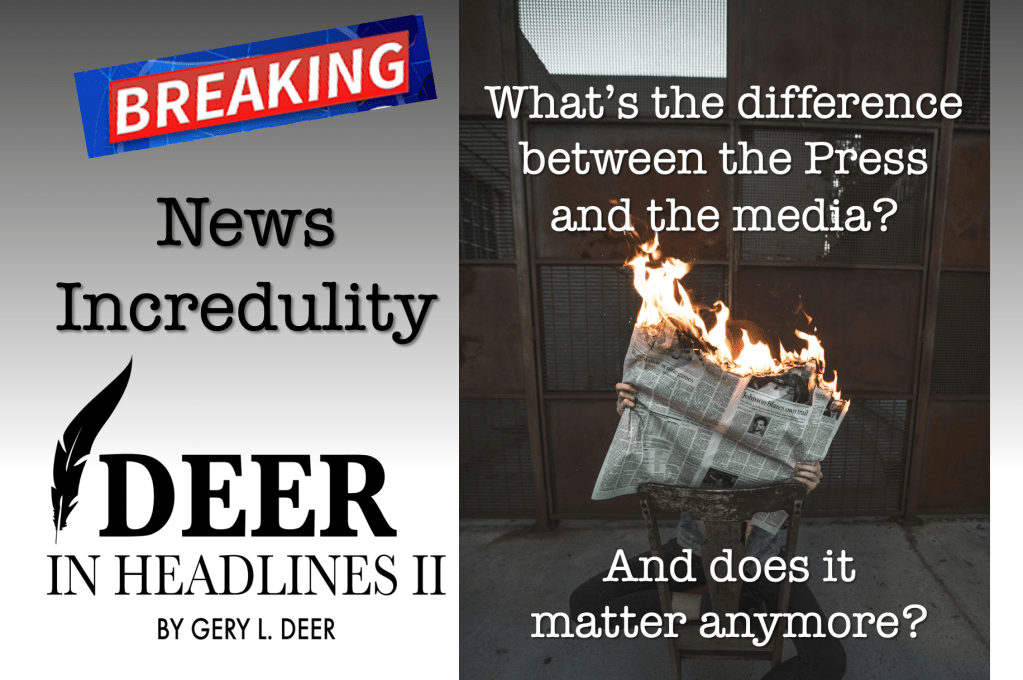
As the Internet became an easy way for the citizen journalist to publish news and information, credibility and fact gave way to sensationalism and uninformed opinion. Click bait replaced proper headlines. Soon, what was once referred to as “the press,” was suddenly renamed, “the media.” In this reporter’s humble opinion, they are not the same.

Webster’s Dictionary defines media (plural of the word medium) as a means of communication, such as radio, TV, newspapers, social, the internet, and so on. In other words, it refers to the delivery system rather than the content or its source.

For example, social media is a primary source of news for many Americans. Unless the information originates from a reputable news source, the content may have no oversight, no editorial integrity, no fact-checking, nothing.

You may have no idea where the information came from or how it may have changed. Think of it as a game of telephone. The more the word spreads, the less accurate it becomes. To reiterate, the social media platform (or app), such as Facebook, X, or Instagram, is just the vehicle – the medium. Reputable or not, the message originates elsewhere.

“The Press,” on the other hand, is guaranteed by the First Amendment of the U.S. Constitution. Like the three branches of government, it’s literally set up right there in black and white – which is why it’s called the Fourth Estate.

The Press should serve as a watchdog to help hold those in power accountable and provide the public with the information they need to make informed decisions. Trained Press journalists gather facts, verify information, and present it objectively across a variety of media.

A functional and qualified Press works within the realm of fact – not truth (that’s for philosophers). It should present information without bias or commentary (there’s a page for that and you’re looking at it now) and demonstrate integrity in the process.

Before I have people shouting at the screen or tearing up the paper, I agree the problem of misinformation spread by so-called news outlets is in epidemic proportions. Unfortunately, many news agencies have traded integrity for revenue, to say nothing about a complete disregard for journalistic expertise.

Cable news programs often fall into this category. They base their content on current news stories, targeting the biases and interests of a single segment of audience to grow advertising revenue. This is not news – it’s entertainment.

Even worse is when a news outlet censors content to favor the business or political interests of their owners. For example, once a paragon of investigative journalism, “The Washington Post is rapidly losing credibility because of interference with its newsroom by its owner, Amazon founder Jeff Bezos.

Between social media, so-called citizen journalists, bloggers, and whatever else is out there, unvetted, unqualified, and often false content is cranked at an alarming rate. Their goal is to spread as much click bait as possible and deliver customers to advertisers – it’s all about money. That makes it hard to sift through the noise for qualified, factual news.

In the end, the Press should be rooted in ethics and accuracy. Sadly, many news outlets now prioritize profit, sensationalizing content to stay competitive in digital media. That’s muddied the journalistic waters, making it harder for the public to distinguish between fact and opinion.

My only advice is to check the source and remember that perspective isn’t the same as bias. News should be factual and accurate, not “fair.” There is no such thing as “fair and balanced” news. Fairness suggests compromise, whereas facts stand alone. The standard should be: is it factual, or not?

War heroes and military firsts are among 26,000 images flagged for removal in Pentagon’s DEI purge

In National News, News Media, Uncategorized, World News on March 7, 2025 at 8:37 am
FROM THE ASSOCIATED PRESS – MARCH 7, 2025

By  TARA COPPLOLITA C. BALDOR and KEVIN VINEYS

Updated 7:21 PM EST, March 6, 2025

WASHINGTON (AP) — References to a World War II Medal of Honor recipient, the Enola Gay aircraft that dropped an atomic bomb on Japan and the first women to pass Marine infantry training are among the tens of thousands of photos and online posts marked for deletion as the Defense Department works to purge diversity, equity and inclusion content, according to a database obtained by The Associated Press.

The database, which was confirmed by U.S. officials and published by AP, includes more than 26,000 images that have been flagged for removal across every military branch. But the eventual total could be much higher.

In this image provided by the U.S. Marine Corps, Pfc. Christina Fuentes Montenegro prepares to hike to her platoon's defensive position during patrol week of Infantry Training Battalion near Camp Geiger, N.C. Oct. 31, 2013. (Sgt. Tyler Main/U.S. Marine Corps via AP)

1 of 5 |  

In this image provided by the U.S. Marine Corps, Pfc. Christina Fuentes Montenegro prepares to hike to her platoon’s defensive position during patrol week of Infantry Training Battalion near Camp Geiger, N.C. Oct. 31, 2013. (Sgt. Tyler Main/U.S. Marine Corps via AP)

In this image provided by the U.S. Air Force, the Boeing B-29 named the "Enola Gay" is seen on Tinian in the Marianas Islands. (U.S. Air Force via AP)

2 of 5 |  

In this image provided by the U.S. Air Force, the Boeing B-29 named the “Enola Gay” is seen on Tinian in the Marianas Islands. (U.S. Air Force via AP)

In this image provided by the U.S. Air Force, armorers and other ground personnel undergo training at Chanute Field, Ill., during World War II (U.S. Air Force via AP)

3 of 5 |  

In this image provided by the U.S. Air Force, armorers and other ground personnel undergo training at Chanute Field, Ill., during World War II (U.S. Air Force via AP)

In this image provided by the U.S. Air Force, Staff Sgt. Krysteena Scales, a 816th Expeditionary Airlift Squadron Flying Crew Chief, performs pre-flight checks before departing on a mission in a C-17 Globemaster III, March 19, 2009, at an undisclosed location in Southwest Asia. (Senior Airman Andrew Satran/U.S. Air Force via AP)

4 of 5 |  

In this image provided by the U.S. Air Force, Staff Sgt. Krysteena Scales, a 816th Expeditionary Airlift Squadron Flying Crew Chief, performs pre-flight checks before departing on a mission in a C-17 Globemaster III, March 19, 2009, at an undisclosed location in Southwest Asia. (Senior Airman Andrew Satran/U.S. Air Force via AP)Read More

This image provided by the U.S. Marine Corps shows World War II Medal of Honor recipient Pfc. Harold Gonsalves during World War II. (U.S. Marine Corps via AP)

5 of 5 |  

This image provided by the U.S. Marine Corps shows World War II Medal of Honor recipient Pfc. Harold Gonsalves during World War II. (U.S. Marine Corps via AP)

In this image provided by the U.S. Air Force, the Boeing B-29 named the "Enola Gay" is seen on Tinian in the Marianas Islands. (U.S. Air Force via AP)
In this image provided by the U.S. Air Force, the Boeing B-29 named the “Enola Gay” is seen on Tinian in the Marianas Islands. (U.S. Air Force via AP)

One official, who spoke on condition of anonymity to provide details that have not been made public, said the purge could delete as many as 100,000 images or posts in total, when considering social media pages and other websites that are also being culled for DEI content. The official said it’s not clear if the database has been finalized.

Defense Secretary Pete Hegseth had given the military until Wednesday to remove content that highlights diversity efforts in its ranks following President Donald Trump’s executive order ending those programs across the federal government.

The vast majority of the Pentagon purge targets women and minorities, including notable milestones made in the military. And it also removes a large number of posts that mention various commemorative months — such as those for Black and Hispanic people and women.

In this image provided by the U.S. Air Force, armorers and other ground personnel undergo training at Chanute Field, Ill., during World War II (U.S. Air Force via AP)

But a review of the database also underscores the confusion that has swirled among agencies about what to remove following Trump’s order.

Aircraft and fish projects are flagged

In some cases, photos seemed to be flagged for removal simply because their file included the word ”gay,” including service members with that last name and an image of the B-29 aircraft Enola Gay, which dropped the first atomic bomb on Hiroshima, Japan, during World War II.

In this image provided by the U.S. Air Force, Staff Sgt. Krysteena Scales, a 816th Expeditionary Airlift Squadron Flying Crew Chief, performs pre-flight checks before departing on a mission in a C-17 Globemaster III, March 19, 2009, at an undisclosed location in Southwest Asia. (Senior Airman Andrew Satran/U.S. Air Force via AP)

Several photos of an Army Corps of Engineers dredging project in California were marked for deletion, apparently because a local engineer in the photo had the last name Gay. And a photo of Army Corps biologists was on the list, seemingly because it mentioned they were recording data about fish — including their weight, size, hatchery and gender.

In addition, some photos of the Tuskegee Airmen, the nation’s first Black military pilots who served in a segregated WWII unit, were listed on the database, but those may likely be protected due to historical content.

The Air Force briefly removed new recruit training courses that included videos of the Tuskegee Airmen soon after Trump’s order. That drew the White House’s ire over “malicious compliance,” and the Air Force quickly reversed the removal.

Many of the images listed in the database already have been removed. Others were still visible Thursday, and it’s not clear if they will be taken down at some point or be allowed to stay, including images with historical significance such as those of the Tuskegee Airmen.

This image provided by the U.S. Marine Corps shows World War II Medal of Honor recipient Pfc. Harold Gonsalves during World War II. (U.S. Marine Corps via AP)

Asked about the database, Pentagon spokesman John Ullyot said in a statement, “We are pleased by the rapid compliance across the Department with the directive removing DEI content from all platforms. In the rare cases that content is removed that is out of the clearly outlined scope of the directive, we instruct components accordingly.”

He noted that Hegseth has declared that “DEI is dead” and that efforts to put one group ahead of another through DEI programs erodes camaraderie and threatens mission execution.

Some images aren’t gone

In some cases, the removal was partial. The main page in a post titled “Women’s History Month: All-female crew supports warfighters” was removed. But at least one of the photos in that collection about an all-female C-17 crew could still be accessed. A shot from the Army Corps of Engineers titled “Engineering pioneer remembered during Black History Month” was deleted.

Other photos flagged in the database but still visible Thursday included images of the World War II Women Air Service Pilots and one of U.S. Air Force Col. Jeannie Leavitt, the country’s first female fighter pilot.

Also still visible was an image of then-Pfc. Christina Fuentes Montenegro becoming one of the first three women to graduate from the Marine Corps’ Infantry Training Battalion and an image of Marine Corps World War II Medal of Honor recipient Pfc. Harold Gonsalves.

It was unclear why some other images were removed, such as a Marine Corps photo titled “Deadlift contenders raise the bar pound by pound” or a National Guard website image called “Minnesota brothers reunite in Kuwait.”

Why the database?

The database of the 26,000 images was created to conform with federal archival laws, so if the services are queried in the future, they can show how they are complying with the law, the U.S. official said. But it may be difficult to ensure the content was archived because the responsibility to ensure each image was preserved was the responsibility of each individual unit.

In many cases, workers are taking screenshots of the pages marked for removal, but it would be difficult to restore them if that decision was made, according to another official, who like the others spoke on the condition of anonymity to provide additional details that were not public.

A Marine Corps official said every one of its images in the database “either has been taken down or will be taken down.” The Marines are moving on the directive as fast as possible, but as with the rest of the military, very few civilian or contractor employees at the Pentagon can perform content removal, the official said.

In the Marine Corps, just one defense civilian is available to do the work. The Marine Corps estimates that person has identified at least 10,000 images for removal — and that does not count more than 1,600 social media sites that have not yet been addressed.

Many of those social media sites were military base or unit support groups created years ago and left idle. No one still has the administrative privileges to go in and change the content.

The Marine official said the service is going through each site and getting new administrative privileges so it can make the changes.

On Feb. 26, the Pentagon ordered all the military services to spend countless hours poring over years of website postings, photos, news articles and videos to remove any mentions that “promote diversity, equity and inclusion.”

If they couldn’t do that by Wednesday, they were told to “temporarily remove from public display” all content published during the Biden administration’s four years in office.

___

AP reporters Nicholas Riccardi in Denver, Christina Cassidy in Atlanta, Will Weissert and Ayanna Alexander in Washington and Christine Fernando in Chicago contributed to this report

(The Jamestown Comet.com claims no origin or ownership for this content and is providing it as a service to our readers. All sources and content verified. Please see the Associated Press main website for detailed stories.)

RC and Mr. Goodbar

In Children and Family, Local News, Opinion, psychology, Uncategorized on March 7, 2025 at 7:06 am

Deer In Headlines II

By Gery Deer

When I was 11, my uncle came to visit me during one of my many prolonged stays in the hospital. I had a reasonably significant surgical procedure and was confined to a wheelchair, so he sat in my room and regaled me with tales of life on the outside. He was my mother’s younger brother. His nickname was “Tuff,” though his real name was Gary – one of four in my immediate family. Since our families were close, nicknames were helpful, as you might imagine.

At one point during his visit, Uncle Tuff decided I’d been cooped up for too long and needed to escape for a bit. I wasn’t tethered to any wires or hoses at that point, so we made good our getaway. I’m not sure, but I don’t think I was supposed to leave the floor, and we were trying to be stealthy. I think he had given the nurses the heads-up and cleared it first, but I played along.

After a quick elevator ride, we arrived at a vending area, complete with snack tables and a microwave. He parked me at a table and dug into his pocket for change. A moment later, a Mr. Goodbar candy bar and a bottle of Royal Crown cola appeared in front of me.

Gary “Tuff” Sutton, Sr., his wife, my Aunt Phyllis, and their two kids, Pam and Gary, Jr. “Butch,” were fixtures in my home. My mother’s youngest sibling, he was the uncle I knew best. He taught me to play the piano, which, like the soda and chocolate, gave me a reprieve from the rigors of the hospital. I’ll forever be grateful.

In case you’re unfamiliar, the Mr. Goodbar is made by Hershey and is little more than your basic chocolate bar, but with peanuts. It’s not fancy, but after a week of hospital food, it was like someone had bestowed on me a feast fit for kings. For the next half hour, we knocked back our RCs and chocolate, and he did his best to take my mind off where I was – he was good at that.

Back in my room, he’d left me with an extra chocolate bar – plain Hershey’s this time – and gave the nurse another bottle of RC to keep cold for me. It was a good day, all things considered.

We lost my Uncle Tuff to lung cancer in 2005. Ironically, another memory associated with that day at the hospital was that he wasn’t allowed to smoke. It was one of the few times I remember seeing him without a smoldering Salem. He was around my life a great deal, and I miss him every day, especially when I sit at a piano – he taught me to play.

But of all the times we had later, playing music with our family band or just sitting around the kitchen table at the farm where I grew up listening to him and my dad tell stories, that one moment at the hospital will always stand out. That was when a little boy, uncertain of his future, forgot for a moment how badly he was feeling, all thanks to his uncle and a candy bar.

I guess the point of all this is that, as children, it’s incredible how things intertwine to create influential memories into adulthood. Then, when we’re grown, we often reflect on those moments, maybe to draw inspiration or clarity. Many events in our formative years leave an indelible imprint on our psyche to help shape our beliefs, behaviors, and aspirations.

Understanding the profound influence of these early experiences offers invaluable insights into how we relate to people and the world as adults. But I wouldn’t dig too deeply. As Sigmund Freud is fabled to have said, “Sometimes a cigar is just a cigar.” In this case, a chocolate bar and a bottle of soda are just a chocolate bar and a bottle of soda.

These moments, whether joyous or traumatic, become the defining chapters of our personal narratives. I don’t really know what long-term effect that single event had on my overall growth as an adult. I know it wasn’t the chocolate that made it special, but rather my uncle’s relationship with me. But, on the rare occasions that I might indulge in a Mr. Goodbar, I still smile and remember.

So, when life’s daily challenges become too much, maybe it would help to think back to one of those moments when a simple kindness, and perhaps a chocolate bar, could bring a smile to your face.