Local News & Commentary Since 1890.

Archive for the ‘Uncategorized’ Category

Back to school open house focuses on computer security

In Business, Children and Family, Dayton Ohio News, Education, Technology, Uncategorized on July 18, 2014 at 10:14 am

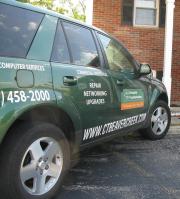
CT_BEAVERCREEK_TRUCKBEAVERCREEK, OH – On Saturday, July 26, Computer Troubleshooters of Beavercreek (CTB), located at 3792 Dayton-Xenia Rd. Beavercreek, Ohio 45432, will host a free open house from 10 a.m. until 3 p.m. to promote student computer security. The event is free, open to the public and will include refreshments, door prize drawings and special deals and information related to keeping student computers secure on campus this school year.

As part of an international network of independently owned franchises, Computer Troubleshooters provides complete information technology (IT) support for residential and commercial clients. Services range from basic, home computer repair and managed business services to cloud computing for advanced medical documentation.

Cliff Brust, president of Computer Troubleshooters in Beavercreek suggests that students are at some of the highest risk of technology theft and data loss. “We’ll be providing information and some free offers with purchase of new hardware,” Brust says. “But most importantly, we want to help parents and students understand how vulnerable their data is to loss and hardware to theft.” Brust offers a few tips in the meantime.

“First, lock up your laptops and smart phones, and don’t leave them unattended – anywhere.” he says. “Many laptops include a slot designed to accept a special cable lock. Wrap the cable around something big and hard to move, insert the lock into the laptop and turn the key or combination. A determined thief could still get the device loose but only by damaging the unit and diminishing its value. Remember, it’s generally the cash from resale of the unit that the thief is interested in, not the data.”

“Next, always use password protection,” Brust advises. “Yes, it is fast and convenient to turn on your computer and have it go right to the desktop, but it’s not safe. You have to password-protect your user account and disable the guest account. When you step away from your computer a quick press of the Windows Key and L will lock your user account. Be sure to manage your passwords also, and keep track of them. Don’t use the same one for everything.”

Brust also reminds students, “Protect your email, don’t share sensitive log-in information with anyone and always keep antivirus and anti-malware software up to date and running.” His final suggestion relates to the use of public wireless Internet hot spots.

“Whether you’re using the school’s network or a free Wi-Fi in a coffee shop your connection could be snooped. Using a VPN (Virtual Private Network) will protect your connection and let you surf anonymously. There are plenty of good free VPN clients to choose from so use one and protect yourself.”

Brust hopes the open house will give visitors the opportunity to learn more about keeping computers and smart phones safe and secure, on and off campus. “Planning and prevention are the keys to protecting your devices and your data,” he says. “Protection plans and keeping security software up to date can go a long way towards keeping important files from being lost. We can help people with the right solution for their needs.”

Computer Troubleshooters is located just west of N. Fairfield Rd., situated between Knollwood Garden Center and Capitol Dry Cleaners. For more information about computer security, call (937) 458-2000 or visit them online at http://www.ctbeavercreek.com.


Fire House Poker Run to benefit child victims of domestic violence

In Charities, Children and Family, Entertainment, Local News, State News, Uncategorized on July 15, 2014 at 7:23 pm

IMG_7297On Saturday, July 19, motorcyclists will have the opportunity to participate in the first annual Fire House Poker Run to benefit the “Shoe Barn Project,” a fundraising effort to provide new shoes for children who come through the Greene County Children Services or The Family Violence Prevention Center. Registration begins at 10:30 AM for $15 per bike at Buckminn’s D and D Harley Davidson at 1213 Cincinnati Avenue in Xenia.

With kickstands up at noon from Buckminn’s, participants will ride from one fire house to the next, enjoying the unique look and atmosphere of each and actually driving through several of them as if they were covered bridges.  After a long, scenic tour along the Greene County countryside, including Cedarville, New Jasper, Silvercreek, Jefferson, Xenia and Spring Valley Township fire departments, the ride will conclude at Willie’s Bar in the Xenia Towne Square with an after party featuring gift raffles and entertainment by the Just-N-Time band. Willie’s will be donating 10 percent of sales to the fundraiser.

The first annual Fire House Poker Run is an event organized by First Responders And Bikers Advocating Against Abuse (FRABAAA). According the FRABAAA’s mission statement, the group is, “committed to empowering, educating, advocating, as well as facilitating victims of abuse and violence to become survivor, one HERO at a time.”

IMG_7293Shella Baker is the organizer of FRABAAA. “After helping kids and families who lived in The Family Violence Prevention Center of Greene County (FVPC) what we noticed each year was that, even above toys, children were asking for shoes,” she says. “This really struck me as such a basic need; it was surprising that a lot of children would even think about asking for shoes at Christmas.”

“This past April, during child abuse awareness month, we had a shoe drive with local hospitals and fire departments as well as Samaritan Crisis center and Xenia Walmart,” she says. “We collected shoes to start what has become known as the Shoe Barn Project to benefit the kids housed at the center.”

Supporting the FVPC is a personal mission for Baker, a nurse and paramedic who sees, first hand, the devastating toll domestic violence can take on a family. But Baker’s actions are driven from a much more personal experience – as a survivor of domestic violence. Twenty-five years ago, she and her son took refuge at the FVPC to escape an abuser and now she wants to give back. Today, she has joined with fellow first responders to advocate for victims and promote awareness and prevention, the poker run will help support that cause.

The FVPC began in 1979 as a project of the Greene County Welfare Department known as the Greene County Domestic Violence Project. It started out as a simple, two-bedroom apartment in Yellow Springs but the agency has evolved to provide support and education through services such as a 24-hour crisis hotline and safe housing as well as prevention and outreach programs.

Today the agency is located at 380 Bellbrook Avenue in Xenia and is certified by the Council on Accreditation. It was also recently renamed, The Kathryn K. Hagler Family Violence Prevention Center, to honor the late Greene County leader’s service in advocacy of families and children.

“When FRABAAA started the Shoe Barn Project we wanted to reach out even further to help all kids in the system that have been victims of abuse,” Baker notes. “We hope to one day have a huge operation to help not only Greene County but counties across the state and Country. To make that happen, we need to get more communities on board.”

FIRE_HOUSE_POKER_RUN_1Riders in the poker run will get to actually drive through the fire stations at Cedarville, Xenia and Spring Valley, with a snack stop at the Jefferson Township station in Bowersville. Awards will be given for first, second and third place hands and a Fire House award for the worst hand. For more information about the poker run, visit the group website at http://www.frabaaa.com or call Shella Baker at (937) 789-7262. If you are in immediate need of help in a domestic violence situation, call the center’s crisis line at 937-372-4552 or 937-426-2334.

“When FRABAAA started the Shoe Barn Project we wanted out  reach out even further to help all kids in the system that have been victims of abuse,” Baker notes. “We hope to one day have a huge operation to help not only Greene County but counties across the state and Country. To make that happen, we need to get more communities on board.”

Riders in the poker run will get to actually drive through the fire stations at Cedarville, Xenia and Spring Valley, with a snack stop at the Jefferson Township station in Bowersville. Awards will be given for first, second and third place hands and a Fire House award for the worst hand. For more information about the poker run, visit the group website at www.frabaaa.com or call Shella Baker at (937) 789-7262. If you are in immediate need of help in a domestic violence situation, call the center’s crisis line at 937-372-4552 or 937-426-2334.

Watch the full video interview on WDTN-TV2’s Living Dayton.

IMG_7290


Long-arm quilting services now available at Crafters Lodge in Sugarcreek Plaza

In Business, crafts, Education, Entertainment, Senior Lifestyle, Technology, Uncategorized on July 15, 2014 at 9:05 am

By Gery L. Deer

IMG_7258 Sugarcreek Twp. – A homemade quilt can be a treasured and very personal family heirloom. From the earliest American settlers, the craft of quilting has been passed down from one generation to the next, each adding a new creative style to the process. Once the top of a quilt is completed, it must be stitched to the back with batting in between – a detailed and painstaking process if done by hand. Fortunately, Crafters Lodge in Sugarcreek Township now offers long-arm quilting services and certification classes for those who wish to learn to do the work personally.

A long arm quilting machine is an industrial sewing machine similar to those used in the mattress industry.  It moves along a track or rails and sews the three parts of a quilt together. “We have the American Professional Quilting Systems (APQS) Millennium or Millie as it’s also known,” says Crafters Lodge co-owner, JoBeth Bryant. “The Millennium is the top of the line long arm quilting machine.”

JoBeth Bryant of Crafters Lodge demonstrates the Long Arm Quilting Machine nicknamed, "Millie"

JoBeth Bryant of Crafters Lodge demonstrates the Long Arm Quilting Machine nicknamed, “Millie”

Bryant says the store currently has two certified long-arm operators on staff and walk-ins are welcome. “When you bring your quilt top to us it will be measured and checked for any issues that may affect the quilting process.  Then you can choose the type of quilting you want done and the thread color.”A fifty-percent deposit and signed contract are required at time of drop-off.  Customers can also choose any additional services they may want, such as binding, a hanging sleeve, or a label.

To make the process go as smoothly as possible, Bryant notes that customers should properly prepare the work. “Make sure the backing is square, backing must be at least six inches wider than the top,” she says.  “There are some materials, particularly generic brands from chain stores, which may not be suitable for batting, and they must be clean and odor-free. Check with us for details on acceptable batting and backing materials, both are available in our store.”

Certification classes are also available for those who wish to learn to use the long arm machine and handle the IMG_7254quilting job personally.  Students are given expert instruction on how to load a quilt, threading the machine, wind and load bobbins, access the various features, use of the pantograph, and how to create basic “meander” quilting pattern.

Crafters Lodge is located at 6056 Wilmington Pike, just behind Fazoli’s in the Sugarcreek Plaza in Sugarcreek Township. Regular store hours are Tuesday through Saturday 11:00 am to 8:00pm, Sunday noon to 6:00 pm and closed on Monday. For more information and a schedule of classes, visit the store’s website, http://www.crafterslodge.com or call (937) 470-2649.

Ignorance: A leading cause of illness in America

In Children and Family, Education, Health, Opinion, Science, Uncategorized on July 14, 2014 at 6:00 pm

DIH LOGOAhead of heart disease and cancer, could ignorance be one of the leading causes of serious illness in the United States? It seems as though, regardless of the facts related to disease prevention, there are literally millions of people who simply choose to take no notice.

First, a definition of the word, “ignorance” as it is used here, so as not to intentionally offend anyone. Ignorance refers mainly to a lack of understanding, education or information. Most of the time, the deficiency of knowledge is unintentional, resulting from inexperience or an educational history lacking in a specific area. However, ignorance can also result from a choice, a conscious decision to disregard certain information, in this case regarding health.

Excessive alcohol consumption, for example, is the fourth leading preventable cause of death in the United States, according to the Centers for Disease Control and Prevention (CDC).  From 2006-2010, the agency reports, excessive alcohol use resulted in, “approximately 88,000 deaths and 2.5 million years of potential life lost annually during that period, costing an estimated $223.5 billion.”

The CDC also reports that nearly 20 percent of Americans smoke, that’s around 43 million people. With nearly one in five deaths now caused by smoking-related illness, why would anyone consciously choose to continue such a disgusting and polluting habit? Denial of the necessity of childhood vaccines may also contribute to preventable disease contraction.

Parents who refuse to vaccinate their children expose them, and those around them, to potentially life-altering illness ranging from measles to polio (poliomyelitis). Because of polio’s recurrence in several African countries, in May of 2014 the World Health Organization declared the resurging polio threat an international emergency stating that it is, “one of the world’s most serious vaccine preventable diseases.” Many experts fear that, if unchecked, it could be brought to the United States and make a devastating comeback due to a fall in newborn vaccinations.

Food is another contributing problem to preventable illness in the United States. Well-educated, intelligent people commonly turn a blind eye to the facts related to diabetes, obesity and cholesterol-related heart disease. More often, Americans tend to choose potato chips and soda pop over a fresh apple or glass of unsweetened fruit juice.

poor choicesIt is one thing when people don’t know about these issues, but it’s quite another if they simply refuse to pay attention or take action. Billions of dollars is spent every year caring for those who may never have become so ill had they taken some basic, precautionary steps.

Of course, regular contradictions between those giving advice on better health and their own behavior also inhibit the effectiveness of patient education. Many healthcare workers are just as guilty as the general public; perhaps even more so because they should, by profession, know better. Why should a patient listen to the recommendations of their healthcare provider if he or she ignores the same information?

How many nurses, doctors and staff are readily seen smoking outside a hospital or other healthcare facility? Logically, it’s hard to grasp how people can work daily around people suffering from diseases that might have either been prevented or mitigated and not take that knowledge to heart for their own health.

In some cases, moderation can help reduce a person’s risks; eating less fat, cutting back on sugar, and limited indulgence in junk food will certainly make a difference. But there is no safe amount of smoking or recreational drug use. It’s all deadly, one cigarette or 50, the body just wasn’t meant to have to process that kind of toxic material day in and day out.

The bottom line is that any reduction in positive health will compromise the body’s ability to fight off disease. When people become ill, they can no longer work, contribute to society or provide for their families. Quality of life suffers for the individual and all of those around them. Ignorance of facts and undisputed medical advice can take a terrible toll on a person – and everyone around them.


Gery L. Deer is an independent columnist and business writer based in Jamestown, Ohio. More at http://www.gerydeer.com.

ATVs are not toys for young children

In Children and Family, Dayton Ohio News, Health, Local News, Opinion, Sports News, State News, Uncategorized on July 14, 2014 at 9:30 am

DIH LOGOSince 1982, there have been nearly 400 Ohio deaths related to the operation of ATVs, short for “all terrain vehicles.” Like any other power machine, the ATV is a safe, versatile vehicle when handled properly by responsible adults, yet their operation is far too often given over to small children.

According to statistics collected between 1982 and 2012 by the United States Consumer Products Safety Commission (CPSC), there have been, nationally, 2,944 ATV-related fatalities of children younger than 16 years of age and 43 percent of them were younger than 12. The CPSC also states that children 16 and under comprised 24 percent of the total number of ATV related deaths.

Unfortunately, these machines are not being treated like the dangerous power equipment they are but instead as if they are children’s toys. It’s not uncommon to see very small children riding these powerful four-wheelers (and there are still a few three-wheelers out there). Any responsibility for accidents must be laid firmly on the shoulders of the parents as well as those legislators who can’t be bothered with increasing safety regulations on these devices.

Currently, age restrictions on ATV operations in Ohio are, in this commentator’s opinion, far too lenient, and logically inconsistent. For example, as of 2014, the Ohio law states that, “to operate an ATV on public lands, one must have a driver’s license or motorcycle endorsement. The Department of Natural Resources may permit a person at least 12 (years of age) to operate on Department land if accompanied by a parent.”

In the next section the regulations state, “No one under 16 may operate an ATV unless on land owned by a parent or accompanied by an adult 18 or older.” It’s as if, in one regulation, the legislators acknowledge the dangers involved in operating these machines and that people should be qualified, licensed drivers. But in the other, just having a parent there qualifies the kid to be behind the handlebars.

When children operate these machines there are two issues to consider: Experience and size. A licensed driver will have had some training and experience behind the wheel and be at least somewhat more experienced than someone who has never operated a motor vehicle. Arguing also that a farm kid can handle it because of tractors and other equipment is ridiculous too. There is a big difference between disking a field and popping wheelies down a hillside on an ATV.

Additionally, as stable as they may seem, to keep all four wheels on the ground, an ATV requires a certain amount of bulk in the form of the rider. Shifting the weight from side to side, similar to riding a bike, is necessary and aids in steering and stability.

A small child of 6 or 7 years old, and maybe 60 pounds on the outside, simply does not have enough mass or strength to control the machine, regardless of its size. Even the smallest of these vehicles is powerful enough to cause a serious accident if not properly controlled and no safety switch or oversized helmet can outmatch the common sense of not letting a little kid ride it in the first place.

The overturned ATV in the Crooked River.Liability is another major consideration. Without getting into the legal issues, it goes without saying that America is a litigious society and special endorsements are required on insurance policies to cover liability issues related to ATV operation. Even if there is insurance, the parents of an injured child can still sue the owner of the ATV or the property where the accident took place.

In the end, the question must be asked, “Is a few minutes of joy riding on an ATV worth risking the safety or perhaps the very life of a child?” For more information, download a complete copy of Ohio’s current ATV laws: OhioATVLaw

Gery L. Deer is an independent columnist and business writer based in Jamestown, Ohio. More at www.gerydeer.com.

All In One from CMG Financial pays off mortage faster, builds equity

In Business, Economy, finances, Local News, Uncategorized on July 7, 2014 at 12:43 pm

By Gery L. Deer

Business Editor

With interest rates at historic lows, American homeowners are constantly on the lookout for the best way to pay off a mortgage loan at the lowest cost and in the shortest time. CMG Financial has a loan solution, just made available in Ohio, specifically designed to help borrowers put idle money to work reducing mortgage debt.

CMG Financial was established in 1993 as a privately held, mortgage-banking firm based in San Ramon, California. The company is widely known for responsible lending practices, industry and consumer advocacy, operational efficiency and market innovation.  Among those innovations is what the company refers to as the All in One mortgage.

Joseph P. Beach is the Ohio Operations manager at the firm’s Dayton area office, opened in 2011, and a thirteen-year veteran of the mortgage industry. “The All in One mortgage has been offered in California since 2005, but is now available in Ohio and seven other Midwest states exclusively from CMG,” Beach says. “It’s designed to benefit the disciplined borrower who is interested in paying off their mortgage and growing the equity funds available as fast as possible.

According to CMG Financial, this type of mortgage option has been available in England, Canada and Australia, where interest regulations are different. Essentially, the All in One mortgage, “Puts lazy money to work.” That is, money that would normally just sit in a checking account doing nothing is used to lower the balance of the mortgage loan until the cash is needed elsewhere.  The idea is to lower the total interest expense over the term of the loan by paying down the balance right from the beginning using the idle cash in checking, certificates of deposit and other low interest-earning accounts.

Beach notes that there are some specific advantages to the All in One mortgage, unavailable under other products. “A borrower can significantly cut the total interest expense over the life of the loan, pay off your mortgage in as little as seven years with no change to your spending habits, and still be able to access home equity 24 hours a day, seven days a week, without refinancing.

Stein_CMG-CapturePopular economist and author Ben Stein has personally endorsed the CMG loan stating in a promotional video now available on YouTube, “I think it’s the greatest invention in personal finance in my lifetime.”

Of course, the All in One is not for everyone and certainly not a product for those in an upside down or problematic financial situation. Beach’s description of a “disciplined borrower” is very accurate. To qualify, borrowers require a credit score exceeding 700, are active savers and use funds that would normally be sitting in a checking account earning minimal interest.

For more information, contact Joe Beach at CMG Financial’s Dayton office by calling, (937) 937-723-8095 or email jbeach@cmgfi.com. The All in One was patent protected in 2009 and is a trademarked mortgage product of CMG Financial. Catch Joe Beach on WDTN-TV2’s “Living Dayton” program, 12-Noon, Thursday July 10.

Remember this July 4th: Buzzed Driving is Drunk Driving

In Children and Family, Education, Health, Holiday, National News, Uncategorized on July 1, 2014 at 7:02 pm

bottlekeysXenia – The Fourth of July is a favorite American holiday filled with fun, food, fireworks, friends and family. But celebrating can quickly turn to tragedy when people choose to drive after drinking. The Greene County Safe Communities Coalition is urging everyone to plan ahead this Independence Day. Designate a sober driver ahead of time.

“The Fourth of July festivities can be so much fun,” said Laurie Fox, Safe Communities Coordinator. “People make plans for the partying, but too many drivers don’t plan ahead to get home safely.” In all 50 States and the District of Columbia, it is illegal to drive with a blood alcohol concentration (BAC) of .08 grams per deciliter (g/dL) or higher. Even if you’ve had a couple of drinks, you shouldn’t drive. “We’ve seen that too many drivers around Greene County think that it’s OK to drive ‘buzzed.’ The truth is you don’t have to be completely wasted to get arrested for drunk driving. Remember: Buzzed Driving is Drunk Driving.”

Statistics from the National Highway Traffic Safety Administration (NHTSA) paint a grim picture of the effect drunk driving has on America. NHTSA reports that there were 10,322 fatalities involving drunk driving in 2012, accounting for 31 percent of the total motor vehicle traffic deaths for that year. That equals about one alcohol-impaired-driving death every 51 minutes.

Drunk driving fatalities are high year-round, but they typically spike during holidays like the Fourth of July. During the Independence Day holiday in 2012 (which ran from 6 p.m. July 3 to 5:59 p.m. July 5), 179 people were killed in motor vehicle crashes, and of these, 78 (44%) died in crashes involving at least one driver or motorcycle operator with a BAC of .08 or higher. Unfortunately 2012 wasn’t a fluke; from 2008-2012, among all crash fatalities around the Fourth of July, 40 percent—on average—involved drunk
drivers.

Certain drivers are more likely than others to drive drunk. Younger drivers (ages 18 to 34) are consistently over represented in fatal alcohol-impaired-driving crashes. In 2012, almost half (46%) of the young drivers killed in crashes had a BAC of .08 or higher.

Compared to car and truck drivers, motorcycle operators are also over represented in the disturbing statistics from NHTSA: in 2012 fatal crashes, 27 percent of motorcycle operators were impaired.

Nighttime (6pm to 5:59am) driving is particularly dangerous because of drunk drivers—and the July 4th holiday is no exception. During the July 4th holiday period in 2012, the rate of alcohol impairment among drivers involved in fatal crashes was almost 2.5 times higher at night than during the day.

“Here’s what we want people to understand,” said Fox. “Alcohol not only impairs your ability to drive, it impairs your judgment about whether you can or should drive. Sure, you may think you’re ‘fine’, but you’re not. The best thing to keep in mind is simply: Buzzed Driving is Drunk Driving.” Prevent drunk driving by only driving completely sober.

Follow these simple tips for a safe Fourth of July:

• Plan a safe way home before the fun begins;
• Before drinking, designate a sober driver;
• If you’re impaired, use a taxi, call a sober friend or family member, or use public transportation so you are sure to get home safely;
• If you see a drunk driver on the road, don’t hesitate to contact local law enforcement; and
• Remember, Buzzed Driving is Drunk Driving. If you know people who are about to drive or ride while impaired, take their keys and help them make other arrangements to get to where they are going safely.

The Greene County Combined Health District is a Safe Communities grantee of the Ohio Department of Public Safety Ohio State Highway Patrol-Traffic Safety Division. To contact Greene County Safe Communities, please call 937-374-5669 or email lfox@gcchd.org. More information on avoiding impaired driving can be found at www.trafficsafetymarketing.gov.

Improving American language skills: Reading and writing are fundamental

In Books, Children and Family, Education, Literature, Local News, Opinion, Technology, Uncategorized on June 30, 2014 at 3:53 pm

dih-logo-SENext to the United States Constitution, the Declaration of Independence may be the single most important document ever created in the history of America. It established our country’s formal separation from England and set in motion more than two centuries of global influence and an example of how a free republic can succeed.

But what would have happened if the men who founded our country lacked the basic language skills to create that first, all-important document? How would these men have properly and so effectively communicated the displeasure and intent of an entire people without such a firm grasp on the English language, not merely to speak it but to put it down in a document to be revered for centuries to come? In short, they couldn’t have.

On this 238th anniversary of the signing of the Declaration of Independence, we need to remember that it’s author had but two years of formal, college education. In those days, a man wishing to become a lawyer apprenticed under other attorneys, reading the law and learning to interpret and apply it for the good of the people for whom it was put in place. Jefferson eventually became a lawyer but not by obtaining any degree we might understand today.

Likewise, Benjamin Franklin went to school briefly but, because of financial issues, he had to stop to help support his family by going to work with his father. He furthered his own education, however, through reading and self-study, a practice that is, sadly, frowned upon today. Both of these men demonstrated the vast important of language and writing, and how the written word can change history. Some people, though, struggle with language skills or never learn to read at all.

One of my favorite books from childhood was called, “The Little Old Man Who Could Not Read,” by Irma Black. The book chronicles the story of a little, old toy maker who, despite his amazing craftsmanship for pleasing children, never learned to read. One day, his wife went to visit a sick friend and left him alone for what must have been the first time. He was forced to do the grocery shopping on his own, which turned out to be a very frustrating endeavor. Upon arriving home, he sadly discovered that what he thought was a spaghetti box turned out to be wax paper and the can of sauce, coffee instead. It was very disheartening. But it motivated him to learn and he did. The book was written many years before the technology age, but imagine what he would have to deal with today if he couldn’t read at all? It would be nearly debilitating in modern American culture.

little_old_manI have always been a writer, even back into childhood, but most of my language skills came from audio books and those children’s books that came with a 33 rpm record. I found later that I had been dealing with a learning disability that hindered my ability to retain what I had read. Over the years, I adjusted and coped, but was not diagnosed until my mid-30s. Today, I have new ways of dealing with the problem and read as much as I can. I learned to defy my disability because I wanted to read.

There’s no question that Jefferson and Franklin were above-average men, but we all have the ability to move past our limitations, just as Franklin taught himself what he needed to know and just as I worked past my reading issues. For those who want to improve their language skills across the board, here are a few tips and they work for pretty much all ages.

First, try to write as much by hand as possible. Using paper and pen will slow you down a bit and force you to think before you write. People were better writers in the old days because it took time to get thought to page. Today, technology has us whizzing through sentences without a thought to grammar and word usage.

Next, although it’s fallen out of favor with the public school set, use cursive writing as much as you can. As with the first point, handwriting something makes you think and use the right language. It even gives you the chance to look up a word before you use it.

Try to learn a new word every day. Vocabulary is the key to better language skills. Take the time to look up words you hear throughout your normal day. But if you don’t hear any that grab your attention, pick up a hard-bound dictionary, open it up, close your eyes, and point to a word on the page.  That’s your word for the day. One of those “word of the day” desk calendars is a great resource too. Of course, you need to put the word into use whenever possible to make it stick.

Read, read, read, read. And, did I mention, read? Newspapers, well-written blogs, congressional briefs, comic books, it doesn’t matter what you read, just make sure you read a lot. If you’re trying to improve your language skills, however, the more advanced the reading the better. It’s ok if it takes time, look up words you don’t know and charge ahead.

Finally, don’t write like you text. In fact, don’t text how you text, either. The wave of “texting shorthand” is maddening to those of us with good grammar and language skills. Use full words and sentences – even in texts. It’ll make a big difference in how you communicate in email and in other written documents as well. Take your time and say it right.

So this Fourth of July weekend, go out and enjoy the picnics and fireworks.  But remember, when you hear the words to the national anthem or the preamble to the constitution, think about the meaning of each word and be grateful that those guys were diligent enough to get every one of them right. Our very freedom depended on it.

Hobby Lobby ruling sets religious freedom in business

In Business, Charities, history, Media, National News, Opinion, Politics, Religion, sociology, Uncategorized on June 30, 2014 at 11:59 am

DIH LOGOOn June 30th, the United States Supreme Court ruled in favor of Hobby Lobby’s suit to be exempted from the ObamaCare mandate forcing companies to provide contraceptive coverage to employees, including the controversial Plan B, or “morning after,” drugs. Many conservative business owners equate these drugs to abortion since they’re designed to terminate a pregnancy within hours of conception.

The primary argument to the court is whether the owners or management of a corporation has the same rights to freedom of religion as an individual. The Obama administration has already set exceptions for various religious non-profit organizations, which, other than their non-profit status, are structured similarly to their for-profit counterparts.

In March of this year, according to TheHill.com, the U.S. House of Representatives, “Approved the Equitable Access to Care and Health (EACH) Act, H.R. 1814. The bill allowed people avoid buying health insurance under ObamaCare if they could cite a religious reason. People seeking an exemption would have to include sworn statements in their tax returns explaining their objection to health insurance.” In effect, all they needed to get out of paying the federal healthcare mandate (tax) was a note from home.

A further question is whether there is a fundamental business difference between a non-profit corporation and a for-profit corporation? The practical answer is, no. Charity or not, a corporation is created to protect the individual operators from legal responsibility with regard to the business. Most non-profit filings are for tax and donation purposes, a process that seems outdated and inefficient with the advent of mega churches and multi-billion-dollar evangelical organizations.

uscourtIn America, there are countless religiously-focused, non-profit corporations worth millions more than some of the largest for-profit businesses. The Christian television network, Daystar, for example has been approved by the Internal Revenue Service as a “church,” according to NPR.com news. Celebrity, sometimes politician evangelist Pat Robertson and the late Billy Graham registered with the IRS as “religious organizations,” making them exempt from most taxes. All they had to do was file disclosure papers.

According to available records, NPR.com reports that the top three evangelical television broadcasters – Christian Broadcast Network, Trinity Broadcasting Network and Daystar Television — have a combined net worth of more than a quarter of a billion dollars. It is unknown whether the corporations that operate these broadcasters have filed for religious exemption under the healthcare reform laws.

The question persists, however, that if the only difference between a for-profit corporation and these mega non-profits is an earnings disclosure, why have the distinction at all? Certainly there are for-profit companies that give away millions of dollars in charitable funds each year but still have to comply with the law in every respect. Why then are religious non-profit organizations exempt from anything, much less a controversial healthcare mandate that has American small business struggling to comply or face bankrupting penalties?

The court’s latest decision with regard to religious exemption could have long-reaching implications, and not just in the healthcare arena. Giving a for-profit entity the same constitutional protections provided to non-profit religious groups could cause a flood of lawsuits ranging from tax law to equal employment regulations. Once again, major non-profits have million-dollar earners at the top, private jets, limousines and pretty much every other extravagance thought only to exist in for-profit American business.

If a church – any church – can make a case for religious freedom from legal mandates, why can’t a business owner cite his or her – or their – own religious beliefs for the same purposes? Is the constitution not written for everyone or does it exist specifically to meet the needs of religious groups so they can avoid taxes and dodge the law at their convenience?

This argument poses a great many questions and there will likely be countless more as ObamaCare reaches further corners of commerce. But, if that’s not enough to chew on, here’s another one. What happens if a Muslim, Jewish or non-Christian group requests exemption as well? Will the Christian right fight against their having the same protections?


Gery L. Deer is an independent columnist and business writer and contributor for WDTN-TV2’s LIVING DAYTON program. More at www.gerydeer.com.


Cause and effect of drug advertisements

In Business, Education, Health, National News, Opinion, television, Uncategorized on June 26, 2014 at 10:37 am

DIH LOGOAccording to a 2008 study by the peer-reviewed medical journal, PLOS Medicine, pharmaceutical companies spend nearly twice as much on marketing than research. In a review of the study, the consumer advocacy website, Consumerist.com, indicates, “Drug companies pour $57.5 billion into marketing, dwarfing the comparably paltry $31.5 billion devoted to research.”

Pharmaceutical manufacturers have rigid guidelines for promoting their products, but the question lingers: should non-over-the-counter drugs be promoted to the general public at all? The short answer is, probably not. The longer answer is more complex. Since, as a rule, Deer In Headlines deals with “fact,” not “truth,” here are some facts about drug advertising. Incidentally, if it is truth you’re interested in, check out a philosophy column (thanks Dr. Jones).

The official website of the United States Food and Drug Administration states, “Prescription drug advertisements can provide useful information for consumers to work with their health care providers to make wise decisions about treatment.” Leading the pack of heavily-marketed drugs are prescription sleep aids, blood thinners, anti-depressants and erectile dysfunction remedies. Most of the television ads for these medications appear during the day, carefully targeting certain markets.

What the general public fails to realize, however, is that these ads are intended to plant an idea in the head of the consumer who, in all their medical wisdom, will take the information to a doctor and insist on a prescription. Mission accomplished; more drugs are sold and the company’s stock goes up a quarter of a point, not to mention the fact there is one more person who simply can’t live without the latest pill. Perhaps a better understanding of how these ads are structured might help.

pillsThe FDA’s Office of Prescription Drug Promotion classifies medication advertisements into three categories: Product Claims, Reminders, and Help-Seeking ads.  The product claim ad names the drug, the treated condition and lists the benefits and risks. A reminder ad shows the name of the drug, but not its use. Finally, the help-seeking advertisement is directed at people with a particular condition for which they are trying to find a remedy. There is, however, no guideline for how much money a drug company can spend on advertising and some consumer advocates argue that it’s wrong for them to be able to spend more on marketing than research.

The fact is that it’s really hard to say exactly how much any one drug company spends on research vs. marketing because reported advertising expenditures are mixed in with the accounting category which also includes other figures, such as executive salaries. Research money is usually accounted for in a separate line item (R&D), even though it technically could be in the same classification with general operation costs.

Another fact is that everyone is a medical expert – yes that’s sarcasm. From the neighbor with every ailment more painful than the last or the relative who insists his doctor is an idiot but goes back every time his prescription runs out, self-diagnosis and treatment are a real epidemic in America.

There is also the concern that these advertisements actually plant the idea of a particular illness in the mind of the viewer who then heads to the doctor with a new problem, and a new prescription demand. Studies show that about 40-percent of all doctor visits are with the intention of getting a prescription. Since people keep going back, it’s safe to assume there are plenty of doctors obliging, and that needs to change as well.

Prescription medication should be marketed to the experts who will be prescribing it to the patient. Drug companies already spend billions on advertising and on-site sales representatives who offer samples and various other motivators to get the doctors to push their products for various ailments. The patient has no business self-prescribing and doctors need to be more responsible.


Gery L. Deer is an independent columnist and business writer based in Jamestown, Ohio. Side effects of reading Deer In Headlines include a more open mind, alternative points of view and a better understanding of the world around you. No prescription necessary.