Local News & Commentary Since 1890.

Archive for the ‘Education’ Category

Upstates, Downstates

In Children and Family, Economy, Education, Opinion, Uncategorized on December 22, 2025 at 3:30 pm

Deer In Headlines II

By Gery Deer

PART I

Modern Americans are fascinated with the complexities of British social classes. Television programs like “Upstairs, Downstairs” and, more recently, “Downton Abbey” give us colonials a glimpse into the inner workings of a world in which you are trapped in the station to which you were born, good or bad. We gaze through the looking glass at the uptight snobbery of the self-anointed lords and ladies who flutter around their castles, moaning about what they’ll wear to dinner after changing clothes for the tenth time that day.

All the while, we commoners across the pond suffer alongside the struggles of those who do the actual work – the maids, footmen, farmers, and shopkeepers. They’re all just trying to make ends meet, but are never permitted to step out of their place to be more than that. All this because their father’s, father’s father was a farmer or cook or butler – and so shall they be, as ordained by a class system that’s as ridiculous as it is antiquated.

We watch, we grimace, we sit in our superiority about having extricated ourselves from such nonsense 250 years ago – or did we? Americans love the idea that this country is a classless society. We’re taught that if we work hard enough and do our best, we can rise to whatever level we choose. It’s a comforting (and arrogant) notion that makes for great campaign speeches. Unfortunately, it’s completely false. Classism has been with us since the beginning, even though we try very hard not to admit it.

Never has America’s class system been more visible than since the 2024 presidential election. The “haves” took over in January, largely thanks to the ignorance of the “have-nots.” Sadly, those who got this administration elected – mainly the working poor – don’t seem to care that the people they sent to Washington want to keep them right where they are – broke and blaming everyone on the other side for their circumstances.

Why else would they gut our social services, eliminate job training and healthcare support, and destroy historic buildings in favor of grand, palatial eyesores to show off the wealth – and their class status – that you and I will never, ever experience. Remember, none of this is new. It’s always been this way, but most Americans pretend it’s not. I promise you, though, if you set one foot into that world and you don’t belong, you’ll know it – they’ll make sure of that.

In Europe, classism originates from a combination of wealth and notions of nobility passed down through generations. But here, it’s all about the cash. Or, more correctly, wealth in general. From the moment the first colonists set foot on this continent, social layers began to form. European class systems based on land and labor arrived right along with them. Those who owned property or controlled trade (the wealthy) quickly established themselves at the top. Those who labored — whether as indentured servants, tenant farmers, or enslaved people — occupied the lower rungs. Wealth dictated opportunity, status, and political power.

When the founders sat down to sketch out a nation based on Enlightenment ideals, they tried to break from those traditionally rigid hierarchies. The promise was that this new republic would be different: more equal, more flexible, more open to talent than lineage. But before the ink was even dry on the Constitution, participation in democracy was tied to property ownership. In other words, class.

The industrial periods of the late 19th and early 20th centuries produced titans of industry and staggering corporate wealth, alongside factory workers who lived ten to a room and rarely made ends meet. The labor unrest of that era was more than economic conflict. It was an open confrontation between classes that the country pretended didn’t exist. And yet, generation after generation, we’ve continued telling ourselves that class isn’t part of the American story.

But it is – and that distinction is growing daily, minute by minute, mainly due to our current political structure and power, as billionaires are given increasing influence over our government.

In part two, we will talk about who perpetuates the very real American class system and what, if anything, can be done to lessen its influence on the majority.

PART II

I’m painfully aware of class distinctions. I grew up in a farm family that also included teachers, mechanics, cattle workers, and waitresses. I’ve had every job you can imagine – and some you can’t – and in every situation there was always someone around to remind me of my “place.” I never became a “have,” but, like you, I work for my living – and I always have – something most blue bloods can rarely claim.

Excluding tech boom millionaires from the 1990s, there is significant generational wealth at the top of the American food chain. However, most wealthy individuals insist that their success stems solely from a work ethic. Those struggling, on the other hand, are told to pull harder on their bootstraps. It’s a neat trick: if class doesn’t exist, then anyone stuck at the bottom must simply not be trying hard enough. That’s why republicans in power (who tend to be the wealthier group) blame the poor for being poor – spouting off on how they must be lazy, working the system, etc. And democratic leaders (who are often less wealthy, but not without means), champion the working poor while still condescending to them, maintaining the class barriers. Has Chuck Schumer, a multi-millionaire, invited you to any parties lately? Yeah, me either. Both sides are to blame for all this.

The truth is that modern America has a very real class structure, even if we don’t officially name it. At the top is the wealth class — that small percentage of Americans whose fortunes come from investments, corporate ownership, or inherited wealth. Below them is the upper middle class, made up of highly educated professionals who enjoy stability, networks, and cultural influence. The middle class — if we can still call it that with a straight face — includes those with some savings, homeownership, and a degree or a skilled trade.

Further down are the working class and the working poor, whose lives are shaped by hourly wages, inconsistent schedules, limited benefits, and housing insecurity. The lower classes – where most of us fit – are increasingly squeezed by rising costs and stagnant wages. What separates these groups isn’t just income. It’s wealth, education, geography, access to healthcare, and those unwritten rules known as “cultural capital” — things like networking, confidence in professional settings, or simply knowing which doors to knock on.

So where did our grand experiment at classlessness go wrong? It failed in all the predictable places. Public education and other social services were intended to level the field, but are still funded by local taxes that mirror neighborhood wealth. Even the American Dream itself was built on the idea that anyone can rise — as long as they start from somewhere near the top in the first place.

Those who rise to power tend to be members of the upper class, with little or no desire to lose their position by pandering to social groups with no influence, financial or otherwise. Sure, we see extensive TV news footage of politicians and wealthy people who volunteer with social services, donate to charities, and give speeches on behalf of the poor and less fortunate. But at no time do you ever see one of those people – from any political side – do something that might benefit you and me while jeopardizing their own place.

We could effect change, however, if we improve access to education, support trade schooling, strengthen worker protections, and provide financial literacy programs. We could even create a healthcare system that doesn’t punish people for simply being alive. Unfortunately, none of this seems likely in the current social and political climates.

America must accept that class exists, but only those at the top are sure of it. For some reason, the poorest people support the politicians and policies that tend to harm them the most. It’s time to wake up and realize that, to maintain their positions and wealth, the upper class will always try to subjugate the middle and lower classes.

So, what can you do? Listen to what the politicians are saying and doing. How does it help you? How does it harm you? Dump the idiotic crowd mentality of party and vote for your own best interests, not theirs.

Dayton area PR firm named agency of record for controversial biotech author

In Books, Dayton Ohio News, Education, Health, Literature, National News, Print Media, Technology, Uncategorized on October 30, 2025 at 1:45 pm

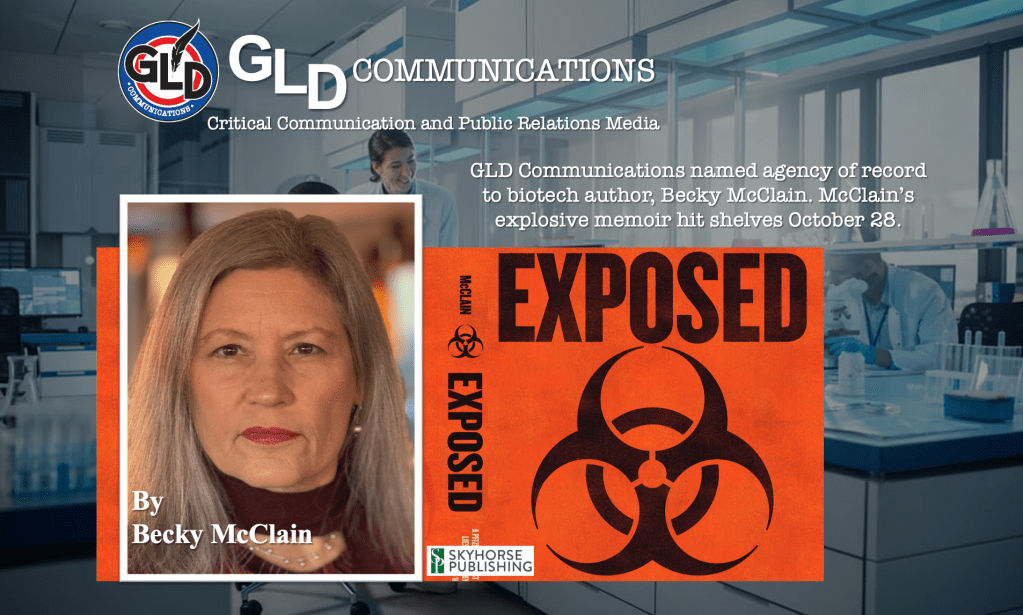
GLD Enterprises Communications, Ltd. Named Agency of Record for Biotech Whistleblower Becky McClain’s New Memoir, “Exposed”

Jamestown, OH — October 30, 2025 — GLD Enterprises Communications, Ltd. (GLD Communications), a strategic media marketing and public relations firm based in Jamestown, Ohio, has been named the agency of record for biotech whistleblower Becky McClain, author of the explosive new book, “Exposed,” which hits shelves October 28 from Skyhorse Publishing.

Led by founder and creative director Gery L. Deer, GLD Communications will oversee all media access management for McClain, whose story has already sparked widespread interest. The agency will also manage social media engagement and coordinate interviews and appearances related to the book’s release.

“This is a story that demands attention,” said Gery L. Deer. “Becky McClain’s courage in speaking out—despite enormous personal and professional risk—embodies the kind of integrity we strive to amplify. GLD Communications is honored to support her mission and ensure her voice reaches the audiences who need to hear it.”

“Exposed” chronicles McClain’s harrowing journey from molecular biologist to whistleblower, detailing her legal battle against a major biotech corporation over alleged safety violations and retaliation. The book dives deep into the ethical and regulatory failures she witnessed, offering a sobering look at the intersection of science, corporate power, and public health. The topic has proven highly controversial, drawing attention from journalists, activists, and policymakers alike.

Consumer advocate Ralph Nader, who was involved in the original case, penned the book’s powerful foreword, lending further weight to McClain’s revelations. Early media coverage has included interviews with national outlets and investigative podcasts, with more expected following the book’s release.

McClain’s voice resonates throughout the pages of her book. “I’ve written this book as a witness to a system gone bad — a system that breaks people bad — a system that threatens the public’s health, workers’ rights, and America’s right to freedom of speech,” she states, underscoring the urgency and personal cost of her journey.

“Exposed” is more than a memoir—it’s a call to action. Through meticulous documentation and emotional candor, McClain invites readers to examine the intersection of science, ethics, and power. The book also explores the broader implications for workers in high-risk industries and the mechanisms that protect—or fail to protect—them.

The book is poised to become a touchstone in discussions about whistleblower protections and corporate transparency. As the biotech industry continues to evolve, McClain’s story serves as a stark reminder of the human cost of scientific advancement––and the ongoing risks to worker safety as well as public health in a world still marked by the pain and uncertainty caused by the COVID-19 pandemic.

Effective immediately, all media inquiries, interview requests, and public engagement related to “Exposed” will be handled through GLD Communications. For more information or to request media access, contact the agency directly via email gdeer@gldenterprises.net. “Exposed” is available now on Amazon.com and in bookstores. Questions about the publisher or distribution should be directed to the offices of Skyhorse Publishing, New York, New York.

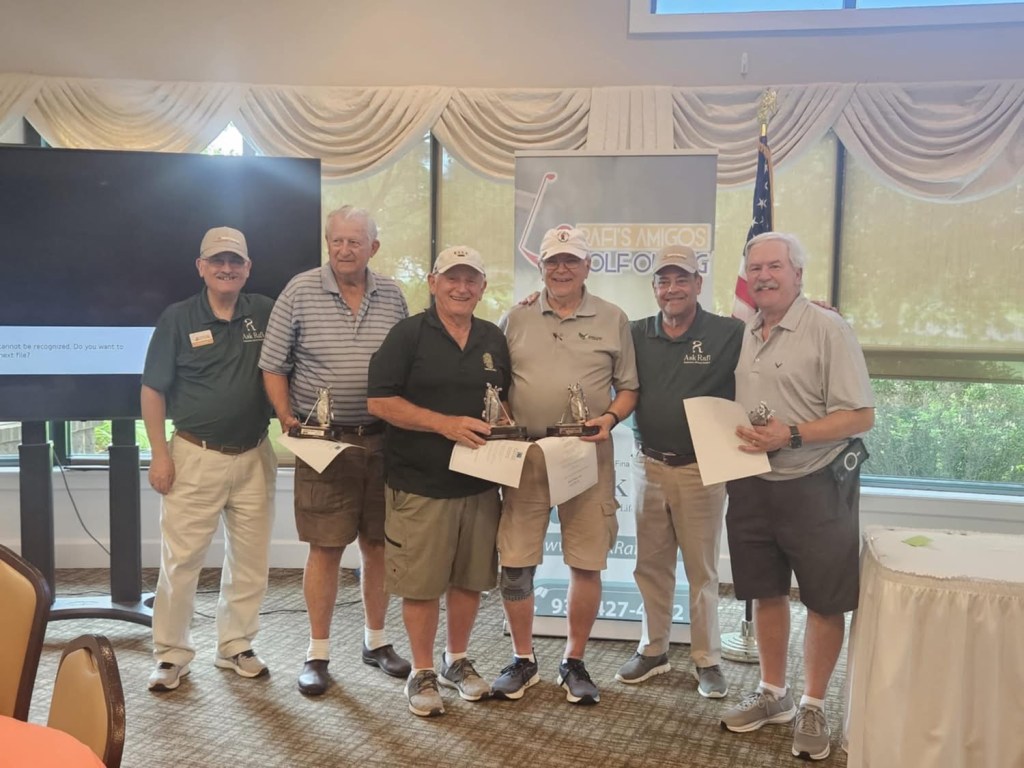
By the numbers: 8th Annual Rafi’s Amigos Golf Outing nets $28,000 for area JROTC

In Children and Family, Dayton Ohio News, Education, Local News, Technology, Uncategorized on September 27, 2025 at 12:00 pm

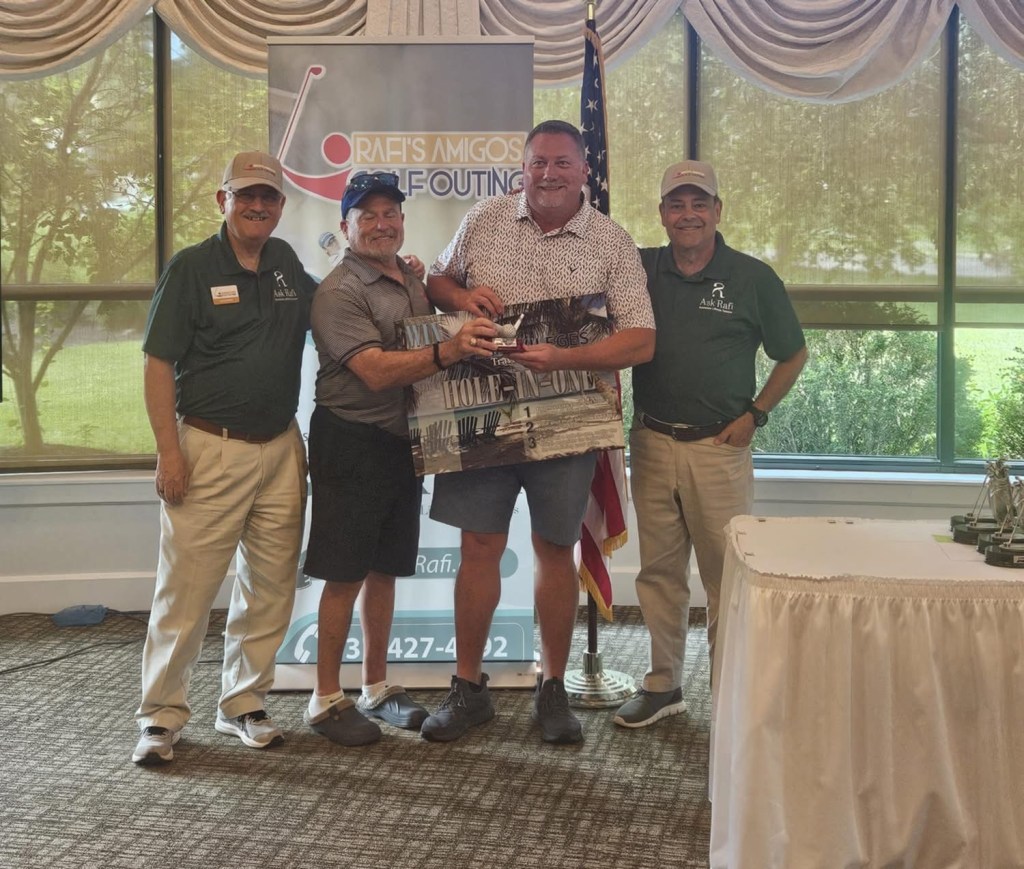
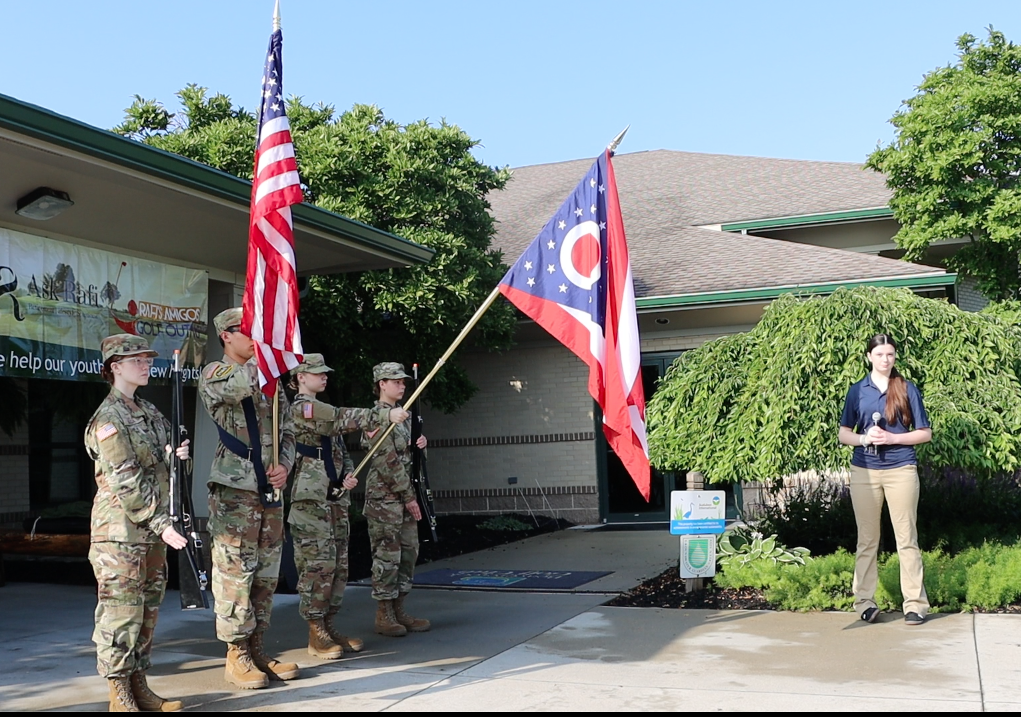
Beavercreek, OH – On Friday, June 6, 2025, the 8th Annual Rafi’s Amigos Golf Outing welcomed golfers, sponsors, and supporters for a day of purpose-driven play at Beavercreek Golf Club. Despite a rainy start in the morning, the skies soon cleared, making way for an event that ran seamlessly. With 116 players participating, this year’s outing proved to be a resounding success, according to founder, Col. Rafi Rodriguez, USAF (Ret.) and Dr. Jesse Steiner, director of Air Camp.

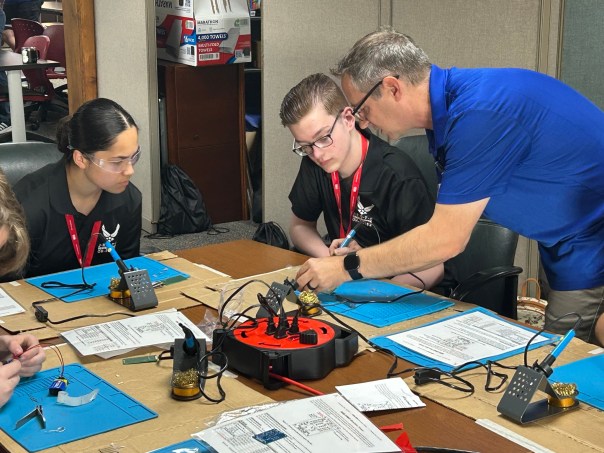
Rodriguez is the owner of Rodriguez Financial Strategies, LLC, in Beavercreek, Ohio and his annual event raises funds to send Junior U.S. Air Force Reserve Officer Training Corps (JROTC) cadets from the Greater Dayton area to an exclusive one-day AirCamp. The program is designed to introduce the cadets to aviation-focused STEM (Science, Technology, Engineering, and Math) through hands-on experiences—including a flight with an instructor pilot. Rodriguez has made it his mission to provide cadets with opportunities he wishes he had at that age.

USAF JROTC Cadets from Bellbrook, Beavercreek, and Fairborn attended the one-day AirCamp session on September 19 at the Lewis A Jackson Airport in Xenia.

“This outing is more than just a golf tournament—it’s about helping our JROTC cadets access experiences that can shape their futures,” Rodriguez explained. “Through AirCamp, these young men and women are introduced to the fascinating world of aviation, leadership, and teamwork. Seeing them leave inspired is the ultimate reward.”

AirCamp, co-founded by Lt. Gen. Dick Reynolds, USAF (Ret.), has earned a reputation for its unique approach to STEM education, leveraging the thrill of aviation to engage students in critical thinking and problem-solving. “Every time a cadet walks away excited about science and technology, we know we’ve made a lasting impact,” Reynolds said. “This program is about more than flying—it’s about opening doors to new opportunities.”

The outing is funded by presenting sponsor White-Allen Auto Group: Volkswagen, Chevrolet, and European—alongside Dixon Golf,  GLD Communications. Dr. Jesse Steiner is the executive director of AirCamp. “About $16K will go to send 40 Junior ROTC cadets comprised from the Bellbrook, Fairborn, and Beavercreek Hich Schools to attend the exclusive 1-Day Air Camp,” he said. “The event took place on September 19th, 2025, at the MacAir Aviation facilities at the Greene County Airport.”

“A total of $6K will be allocated ($1K each) for two Junior ROTC selected from each participating High School to attend the 1-week AirCamp. This is an increase from $3K last year,” Steiner reported. “A total of $5,000 will go to purchasing new equipment (drones, raft, etc.) for AirCamp training modules.”

Other reported figures from the event included $750 towards supporting the “Girls in STEM” 1-Day AirCamp on September 20th. Residual funds have been allocated for administrative and other supporting expenses.

Rodriguez expressed his gratitude to all who participated and contributed to this year’s success. “We had an amazing turnout and raised significant funds to send these young cadets to AirCamp,” he said. “This program is about investing in their future, and we couldn’t do it without our sponsors, golfers, and the support of our community.”

The 9th Annual Rafi’s Amigos Golf Outing is already scheduled for Friday, June 5, 2026, Beavercreek Golf Club. Registration details to be announced in January at www.askrafi.com/events.

Greene County cycling tour event proceeds presented to veterans’ suicide prevention subcommittee.

In Education, Health, Local News, psychology, Science, Senior Lifestyle, Uncategorized on August 15, 2025 at 9:08 am

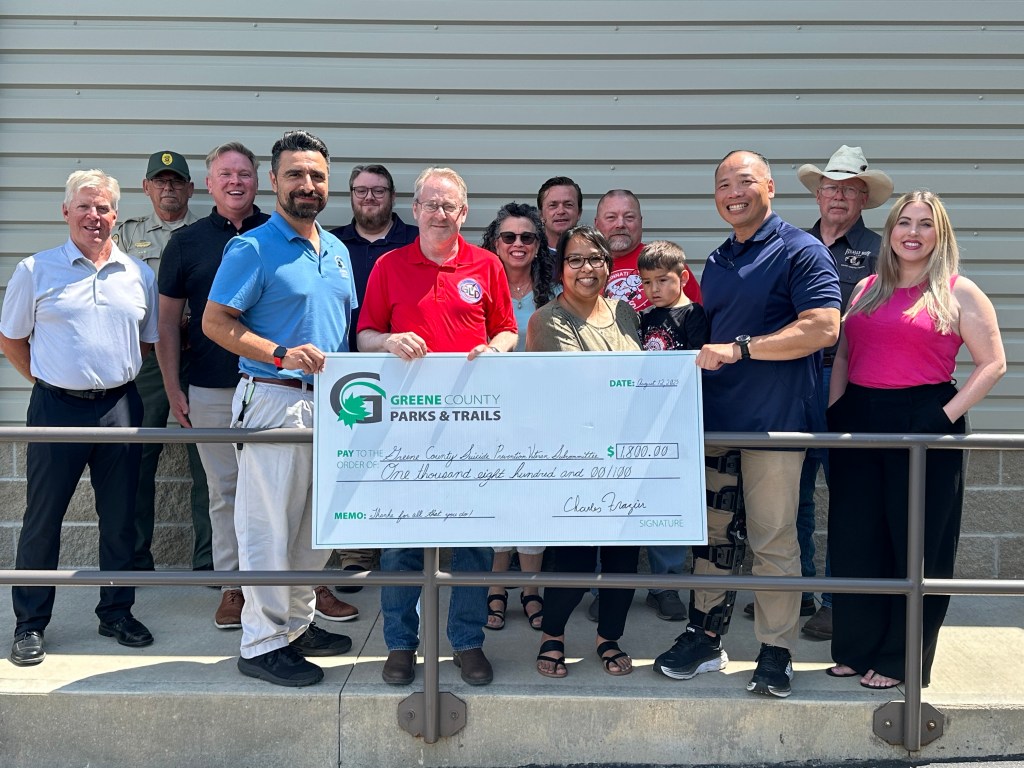
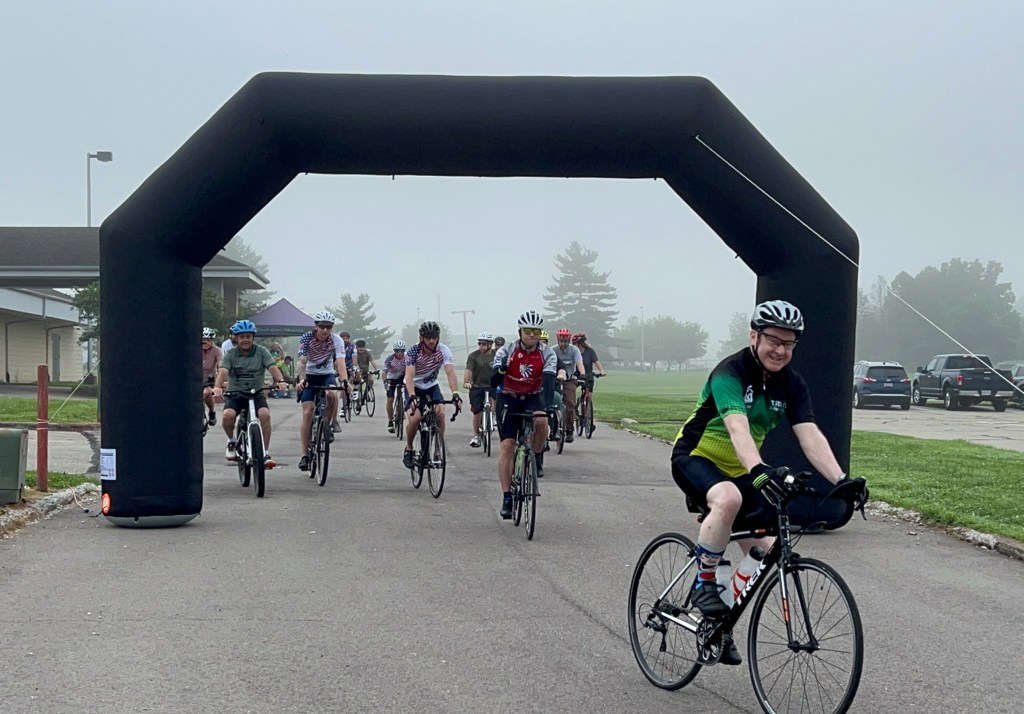
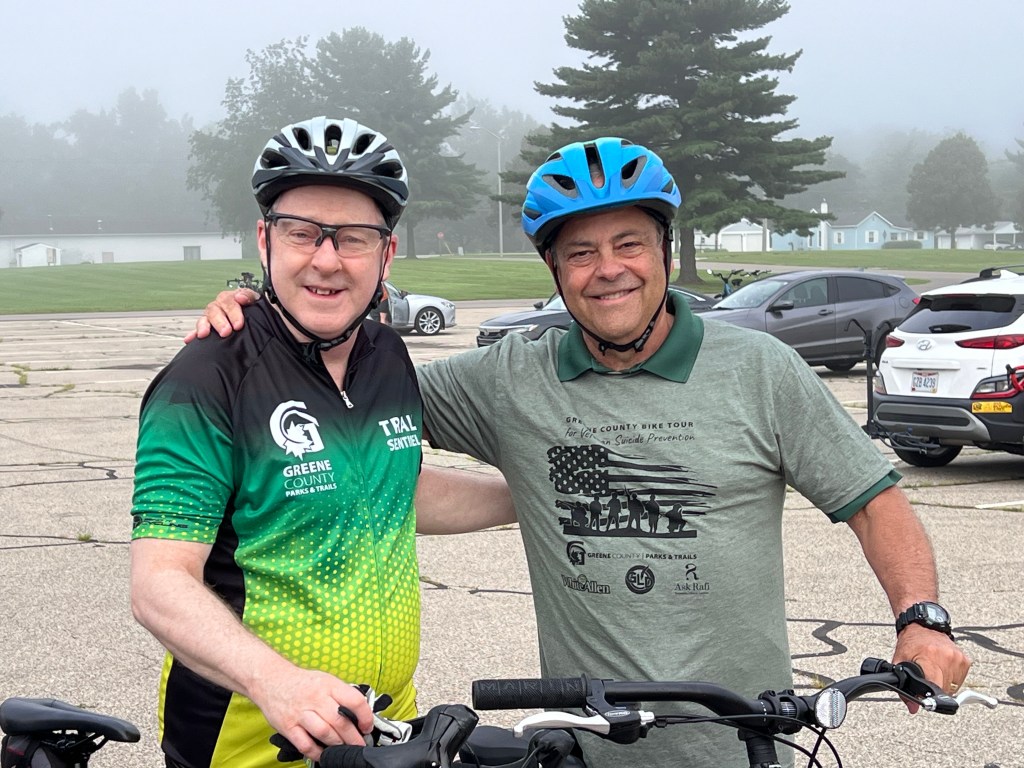
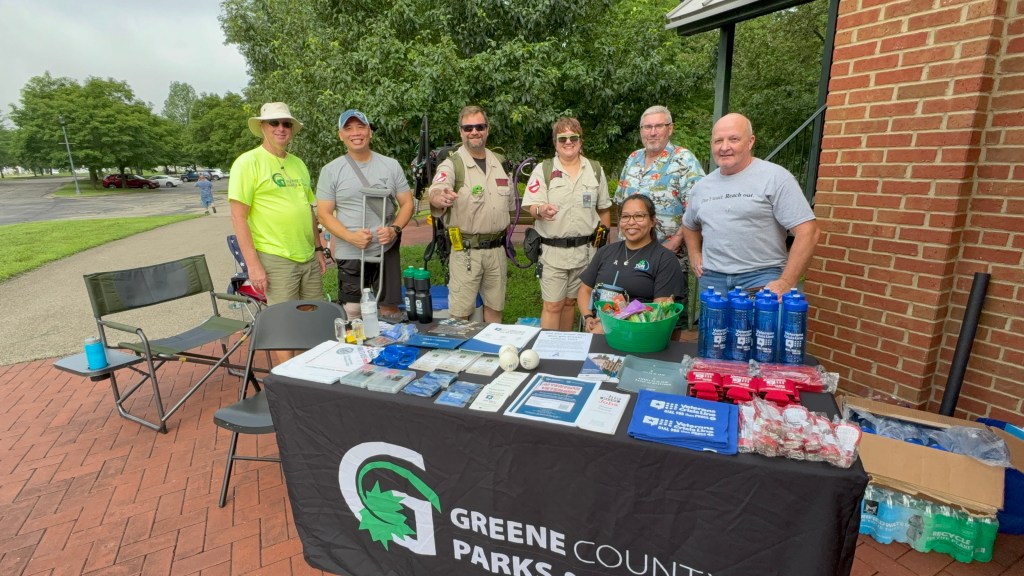
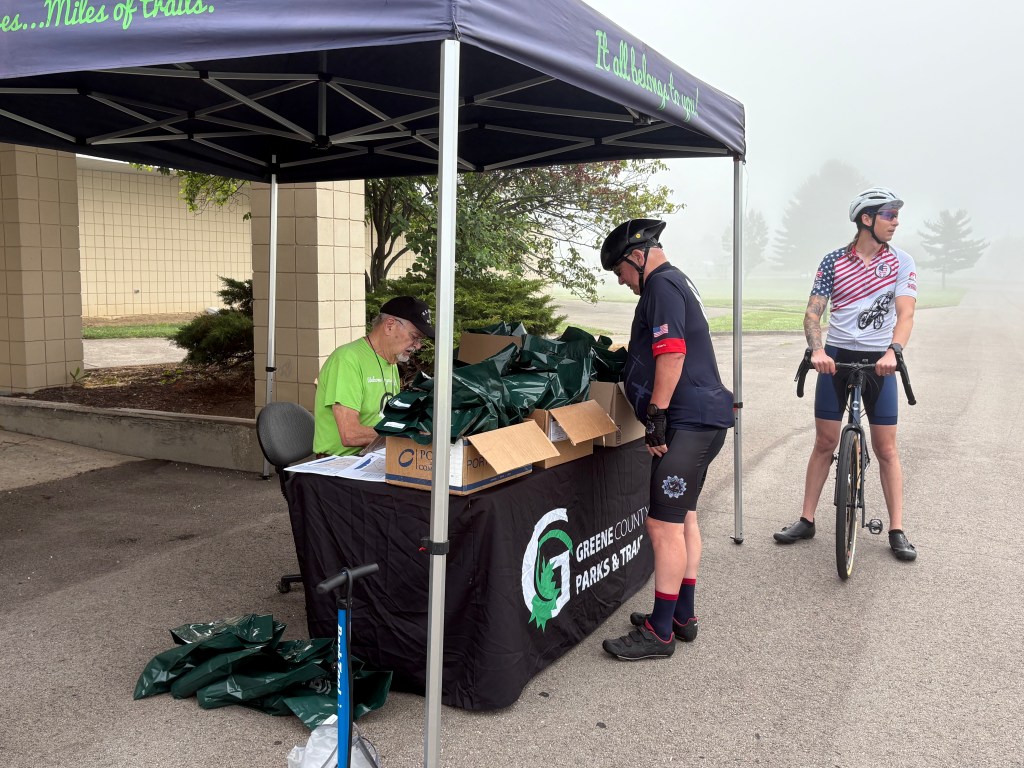
XENIA, OHIO — Representatives of the Greene County Parks and Trails, Trail Sentinels volunteer group, visited the Greene County Veterans Services office on Tuesday, August 12th, to present a donation check to the Greene County Suicide Prevention Coalition Veterans Subcommittee. The donation is the result of funds raised from the first annual Greene County Cycling Tour for Veteran Suicide Prevention, held July 19th.

The event raised $1,800.00 for the coalition, and it was made possible thanks to the hard work of the Greene County Parks & Trails staff, the Trail Sentinels, and through generous sponsorships from the following: Rodriguez Financial Strategies, LLC, White Allen European Auto Group of Dayton, and GLD Communications of Jamestown. Their support helped cover logistics and ensured that every dollar raised could go directly to the Veterans Subcommittee’s efforts.

From the Greene County Suicide Prevention Coalition Veteran’s Subcommittee: Captain Dennis Eng, Scott Page, Andrew Ullom, Bill Hoying, Wanda Ortiz Thayne, Teresa Innocent, Desiree Rollyson, Tim Spradlin. From the Greene County Parks and Trails: Assistant Director Richard Kharman, Chief Ranger/Army Veteran Darrell Hannah, and Trail Sentinels Rick Sedlotshek and Gery Deer.

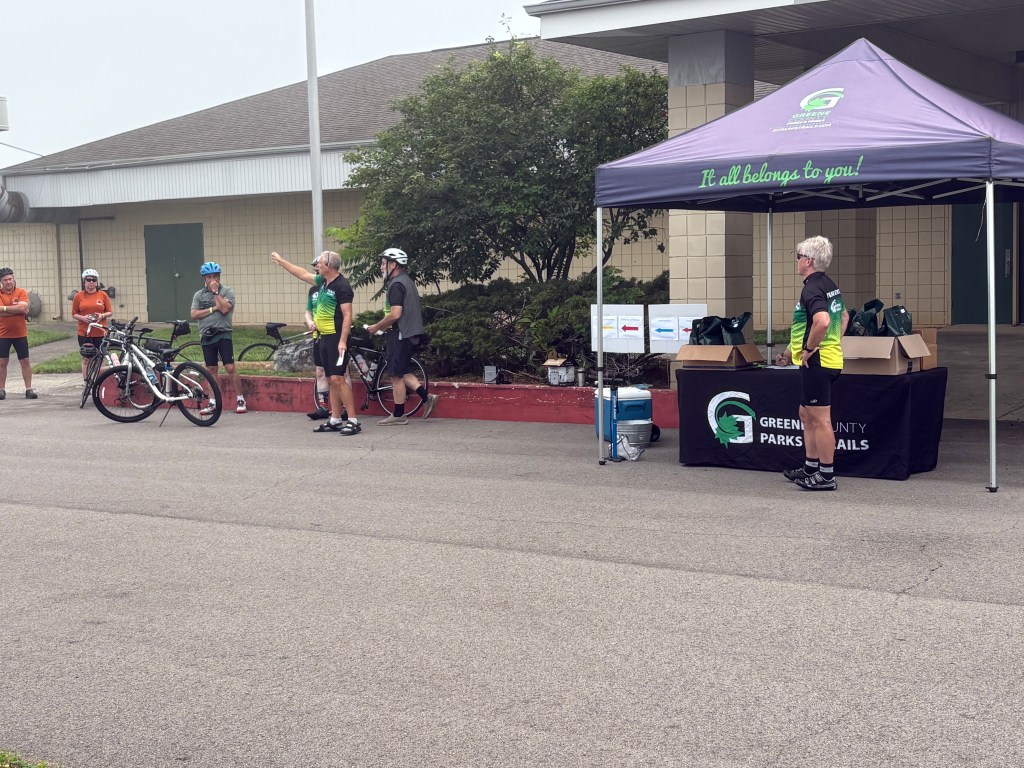
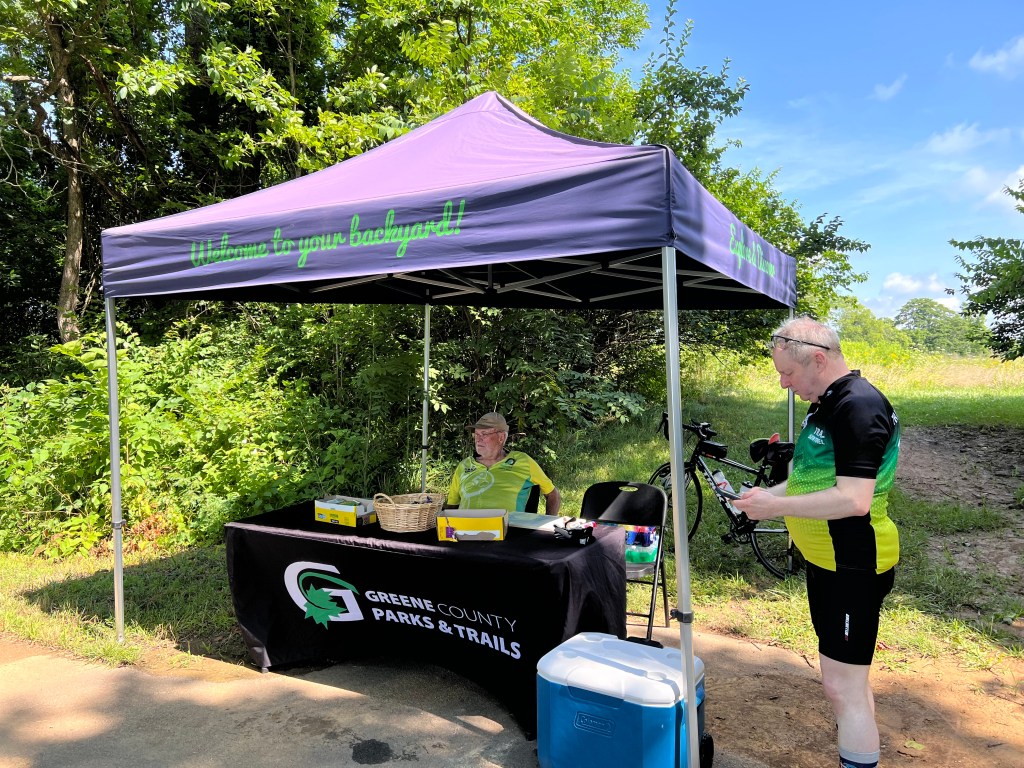
The Greene County Parks & Trails Trail Sentinels, a dedicated group of volunteer cyclists who patrol the trails and host seasonal workshops and group rides, played a pivotal role in the day’s success. They provided on-trail support and manned rest stops stocked with snacks and cold drinks, ensuring riders stayed hydrated and energized throughout their journey.

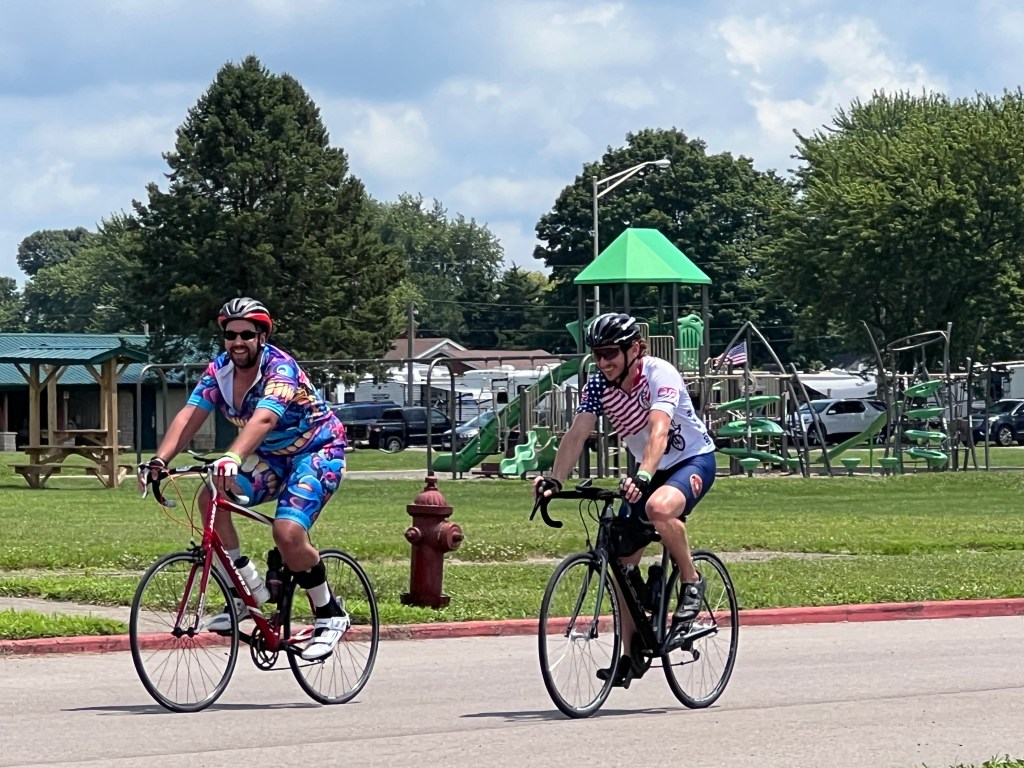
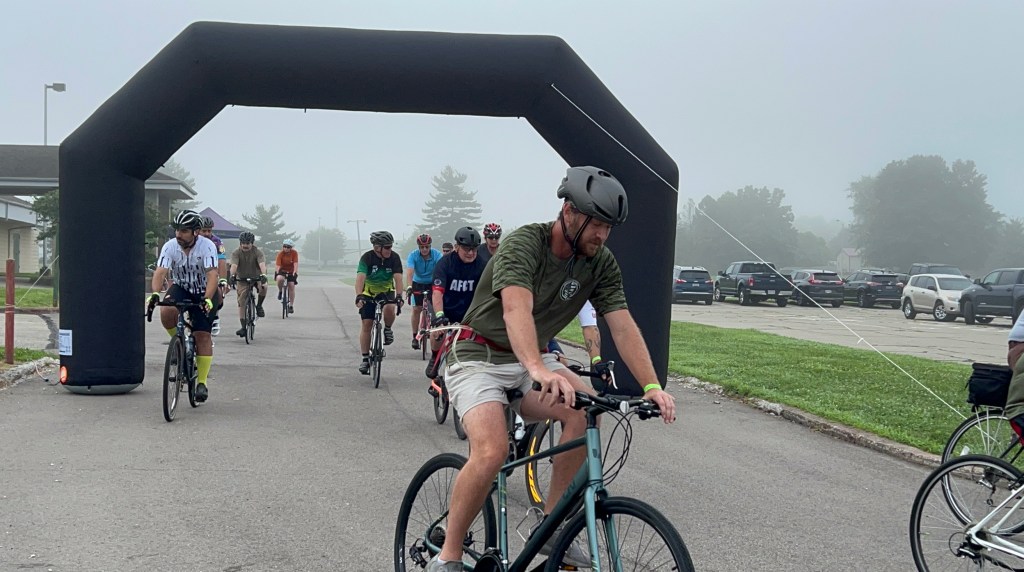
The event started early in the morning from the Fairground Recreation Center. The 38 registered riders had their choice of four scenic routes, each winding through the county’s lush trail system and quiet backroads.

“This ride was about more than miles—it was about mission,” said Gery Deer, a Trail Sentinel volunteer and event liaison to the veteran’s organization. “We’re proud to work on behalf of our veterans and help bring attention and financial support to the resources they need.”

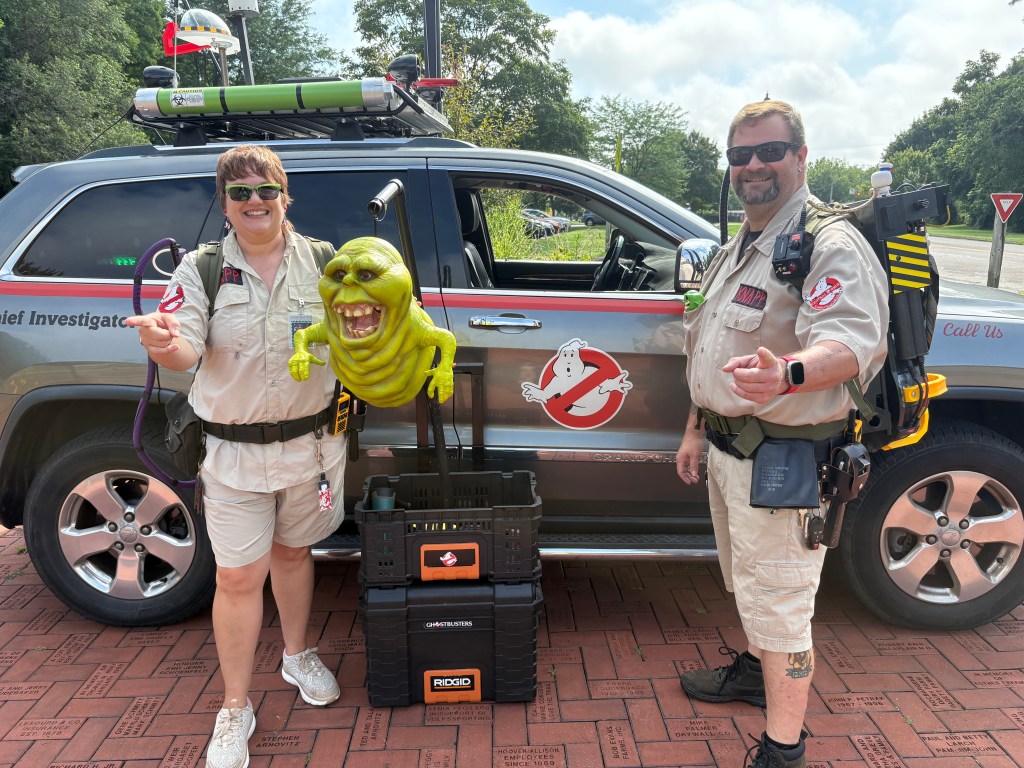
Adding a touch of whimsy and nostalgia to the event were members of the Central Ohio Ghostbusters club, a charity cosplay group known for their appearances at fundraisers, children’s events, and festivals. Dressed in full gear with their version of an “ectomobile” at Xenia Station, they brought smiles and photo ops to riders and spectators alike.

A large contingent of veterans participated in the ride as well. Retired Colonel Rafi Rodriguez, a 30-year Air Force veteran and a sponsor, took to the trails himself to support the cause. “The ride was a lot of fun,” he said. “It was great to learn more about what the coalition does to support veterans on Greene County.”

The donation check was formally presented this week to the Greene County Suicide Prevention Coalition Veterans Subcommittee, marking the culmination of a community-driven initiative that blended recreation, advocacy, and heartfelt generosity.

“This contribution will help us expand outreach and support for veterans in Greene County,” said a representative from the coalition. “We’re grateful to the cyclists, volunteers, sponsors, and everyone who came together to make this event possible.”

More than just a fun bike ride, this tour was a moving tribute to those who’ve served and a rallying cry for mental health awareness. Planning is already underway for next year’s ride, tentatively scheduled for the same weekend. Visit www.gcparkstrails.com to follow the events calendar throughout the year.

Pitch, Publish, and Perfect: Join Award-Winning Authors and Industry Experts at the Appalachian Writers Conference 2025

In Books, Business, Education, Entertainment, Local News, Uncategorized on August 15, 2025 at 8:42 am

Berea, KY – Writers from across the country will converge in Kentucky this fall for the 2025 Appalachian Writer’s Conference 2025 (AWC), an immersive, genre-inclusive gathering designed to sharpen craft and demystify the business of publishing. From agent pitch sessions to expert-led workshops on branding, contracts, and publicity, AWC equips aspiring and established authors alike with the tools to thrive. Founded by Martin Sisters Publishing President and CEO Melissa Newman, Ed.D., the conference has evolved into a nationally respected event featuring award-winning faculty dedicated to helping writers succeed, regardless of their path or project.

“I strongly believe that everyone has a story, and most people have more than one,” Newman explained. “What we offer at our conference is the opportunity for writers to learn from professionals and develop the skills they need for a successful career as an author.”

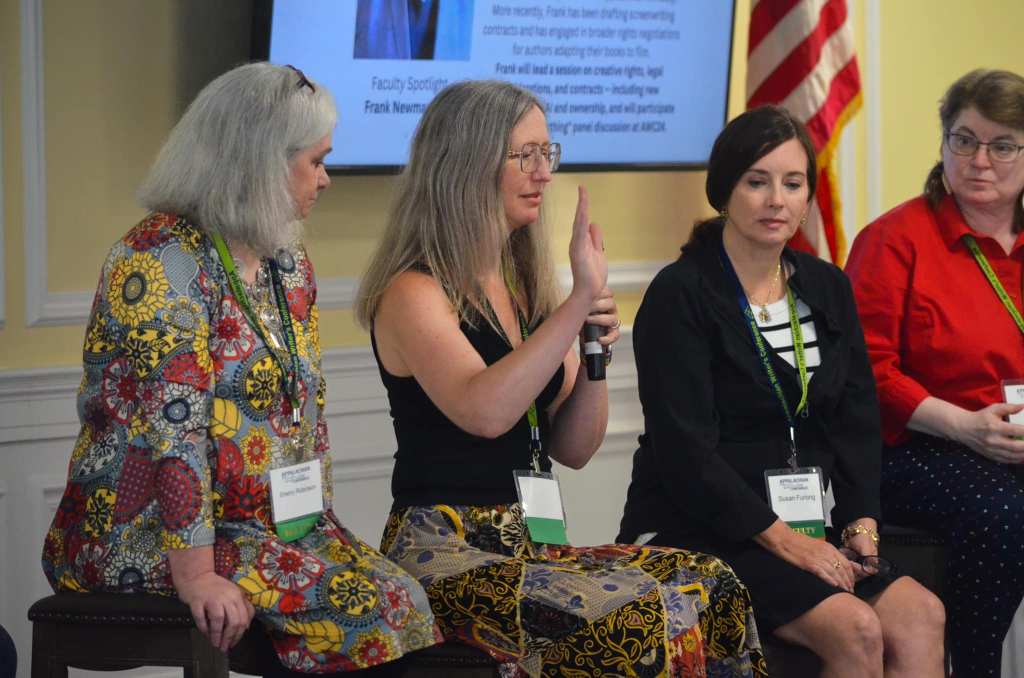
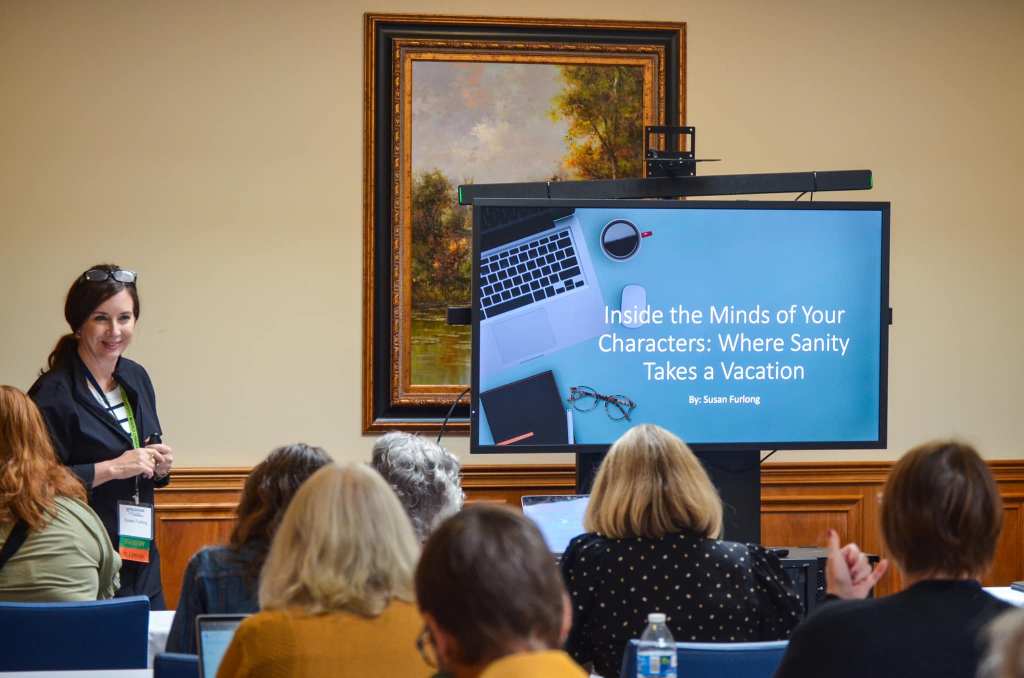
Returning to this year’s faculty are fantasy/romance author Summer Hanford, fiction novelist Sherry Robinson, crime thriller novelist Susan Furlong, and screenwriter Mark Daniels. Frank K. Newman, J.D., President and CEO of the law firm Cole, Cole, Anderson & Newman, PSC, will be back to share insights into publishing and media contracts. Gery Deer, GLD Communications‘s creative director and author of the Pulitzer-nominated op-ed series “Deer In Headlines,” also returns with a session on making a living writing professionally in between book projects.


Deer first attended in 2023 as a participant but transitioned into a faculty role and took on a support position last year. “This is a unique experience for writers, and the intimate setting is ideal, in my opinion, for a better learning experience,” he said. “Melissa has created an environment of support and education, and the faculty is part of the group, interacting and spending time with the participants as fellow artists.” Deer also noted that they continue efforts to improve the event based on participant feedback.

For example, a literary agent joins the faculty for the first time at AWC. Jackie Kruzie, author, literacy advocate, and associate literary agent at Focused Artists, will lead sessions on “Perfecting Your Pitch,” “The Dreaded Synopsis,” and a Lunch-and-Learn Session called “Should I Get an Agent?” She will also meet with authors for eight-minute pitch sessions. Another new addition is award-winning crime, thriller, and suspense novelist Trace Conger. In addition to class presentations, faculty will participate in the “Ask Me Anything” lunch panel to answer questions and discuss writing and publishing topics in a conversational setting.

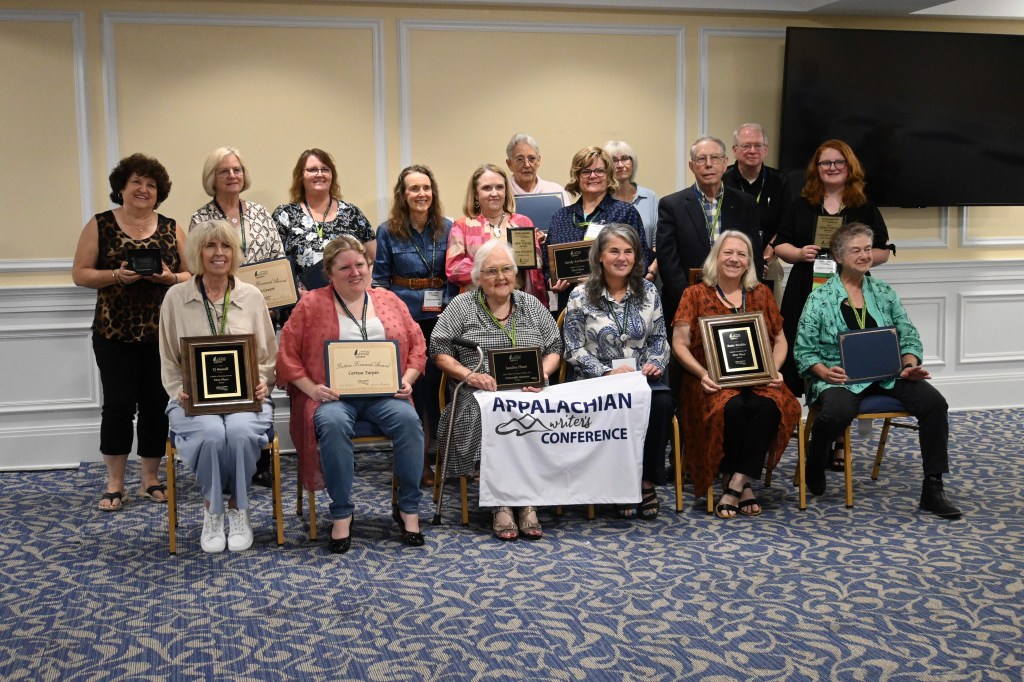
Martin Sisters Publishing and the Appalachian Writers Conference present the Appy Inkwell Awards for the second year. “We want to give writers a chance to have their work recognized,” said Appy Inkwell Awards Coordinator, writer, and English Literature instructor Mary Ryan Wineberg. “We may even discover some new literary talent.”

This award celebrates outstanding achievement in fiction writing and offers talented writers the opportunity to showcase their creativity and skill before a supportive community of peers. Participants can submit up to 2,500 words of unpublished fiction, in progress or complete, that demonstrates originality, craft, and storytelling prowess. Eligible submissions include: a complete short story, a short story collection, or a piece of flash fiction.

The Dr. Pam Parry Lifetime Learning Award also debuts this year. It was created in memory of Dr. Parry, an integral presence within the AWC faculty and a trusted conference advisor whose remarkable life touched many. This award will celebrate someone whose passion for lifelong learning and generosity in the writing community make a lasting impact.

For registration and event details, visit: www.appalachianwritersconference.com. (Click to watch a highlight reel from the 2024 event.)

****

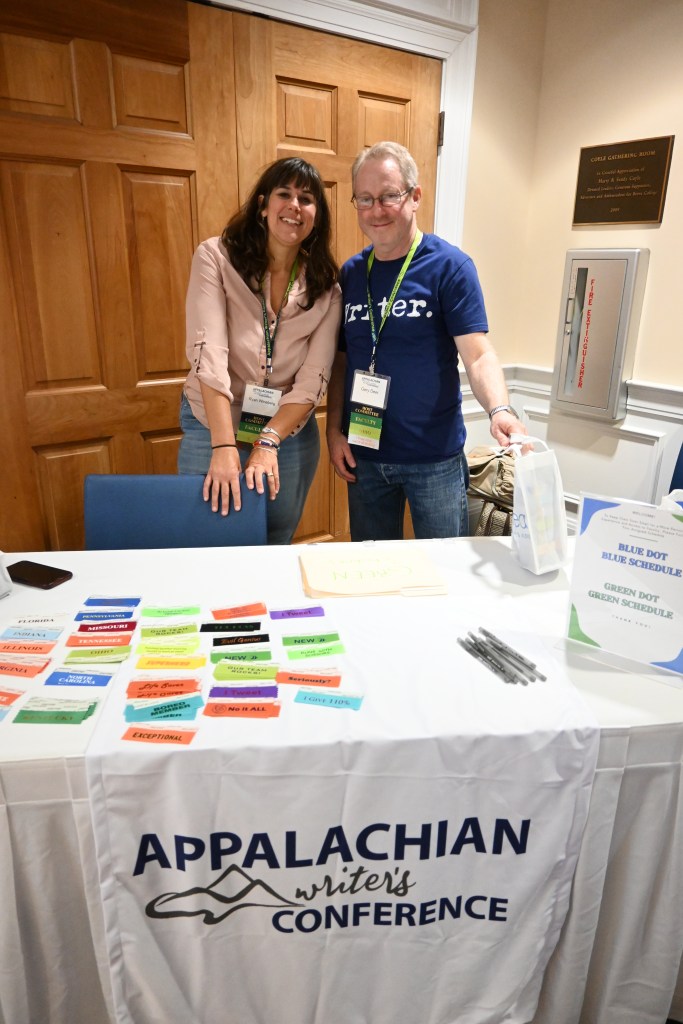
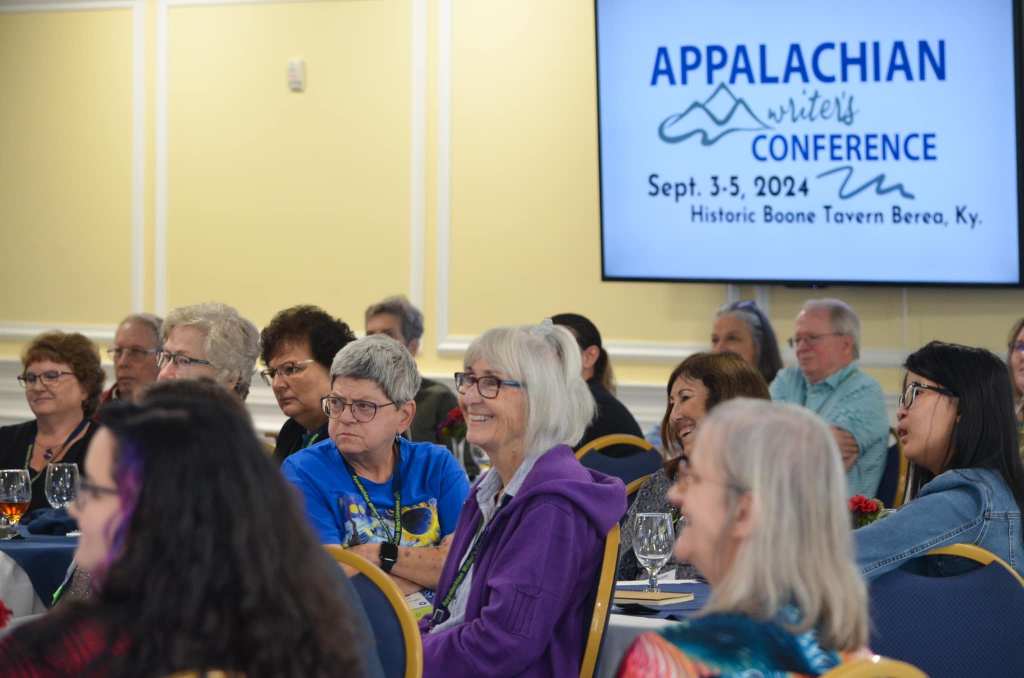
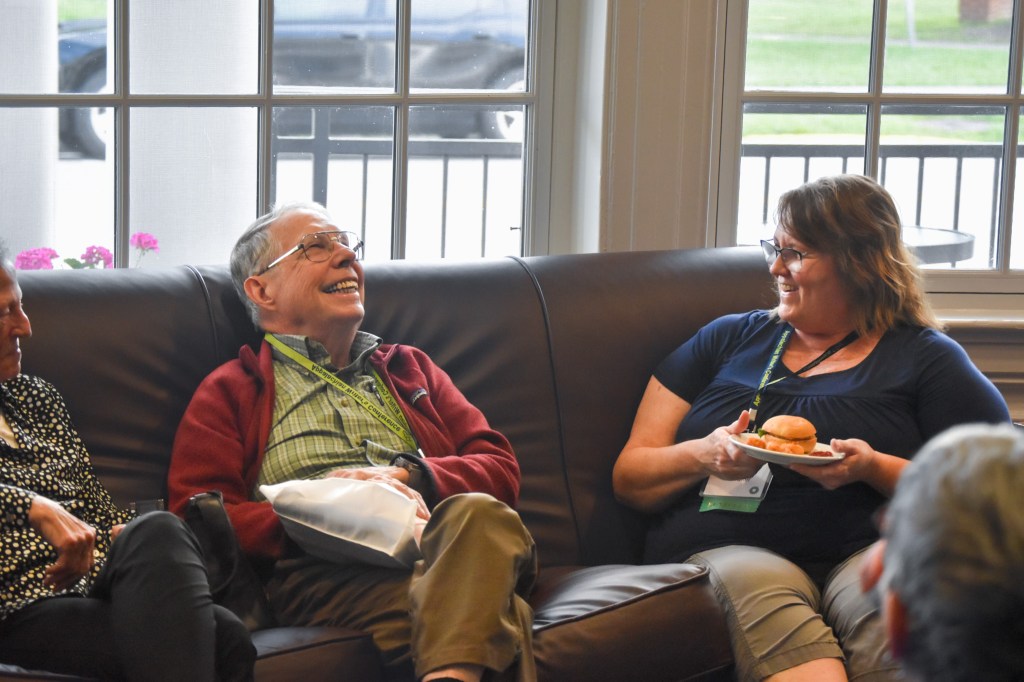
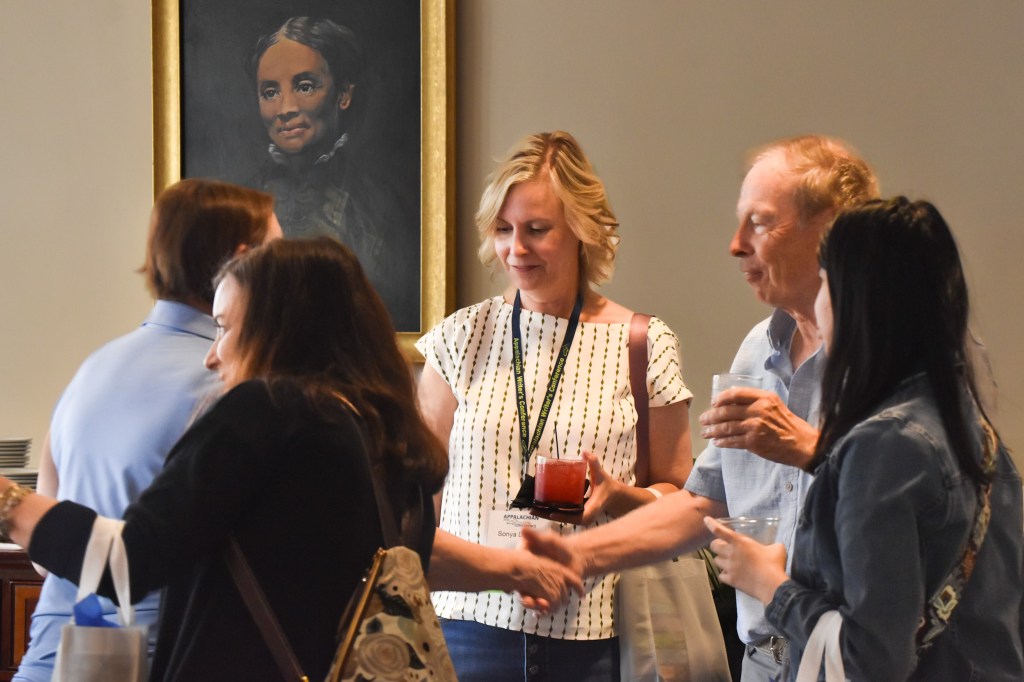
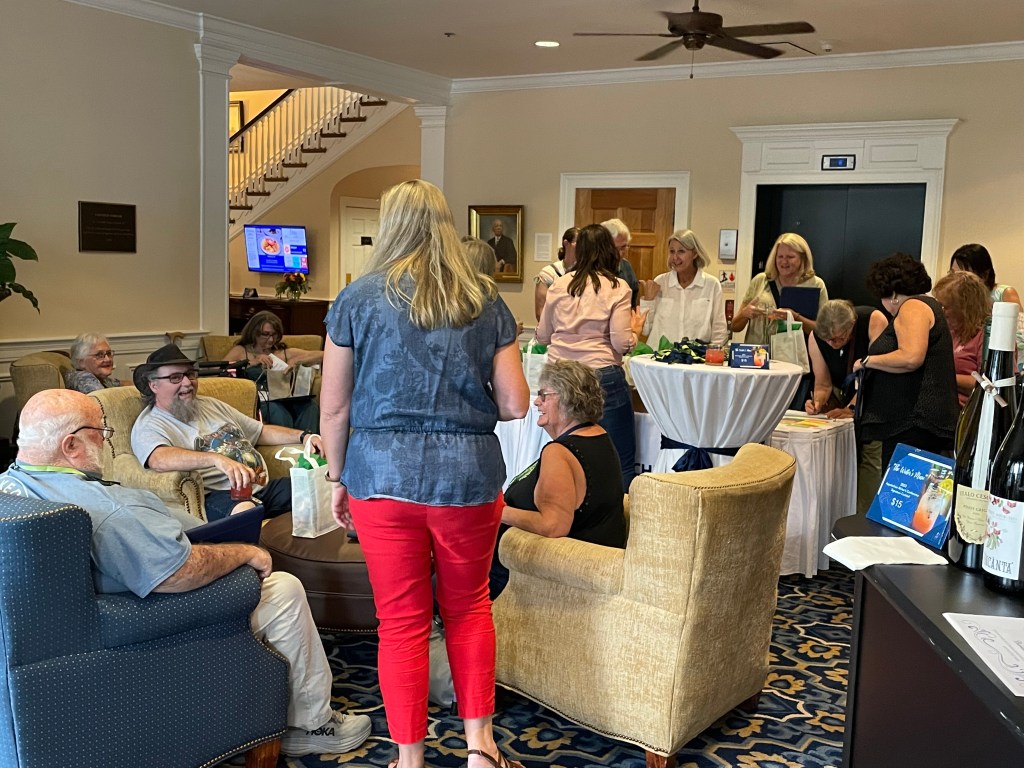
Photos from the 2024 Event:

Cycling for a Cause: Support Veterans and Explore Greene County Trails.

In Dayton Ohio News, Education, Health, Local News, psychology, sociology, Uncategorized on June 27, 2025 at 11:07 am

XENIA, Ohio — On any given day, the trails of Greene County provide a scenic escape for cyclists and nature lovers alike. But on Saturday, July 19th, they will play host to a much deeper purpose: supporting the Greene County Suicide Prevention Coalition (GCSPC) Veteran Subcommittee. Registration is $50 per rider and those registered before June 30 will receive a commemorative t-shirt.

The ride will begin at the Fairgrounds Recreation Center with flexible start times between 8 a.m. and 9 a.m., allowing cyclists to ease into the event at their own pace. The event is made possible by the Greene County Parks and Trails, the volunteer Trail Sentinels, and various sponsors including Rodriguez Financial Strategies, LLC of Beavercreek, and White Allen Auto Group.

According to the GCSPC Facebook page, the non-profit organization is, “A group of dedicated mental health, law enforcement, education and other professionals and volunteers, working to reduce suicide in our community.” The subcommittee focuses on mental health and suicide prevention for veterans, service members, and their families.

“This event is about more than just cycling; it’s about community,” said Gery Deer, a Greene County Trail Sentinel volunteer and event liaison. “Our trails offer connection—both with nature and with each other—and we’re channeling that spirit into something truly impactful for veterans in our area.” Deer’s company, GLD Communications, is also a sponsor of the event.

Those who register before June 30 will receive this commemorative t-shirt.

Three planned routes of 10, 30, and 60 miles are available, accommodating cyclists of all skill levels. Along the way, participants will traverse some of the county’s most iconic pathways, including the Creekside Trail, The Little Miami Scenic Trail, Xenia-Jamestown Connector, and the Ohio to Erie Trail. Rest stops stocked with refreshments will be strategically placed to ensure riders remain energized and hydrated, and the ever-dependable Greene County Trail Sentinel volunteers will be on hand throughout the day to assist participants.

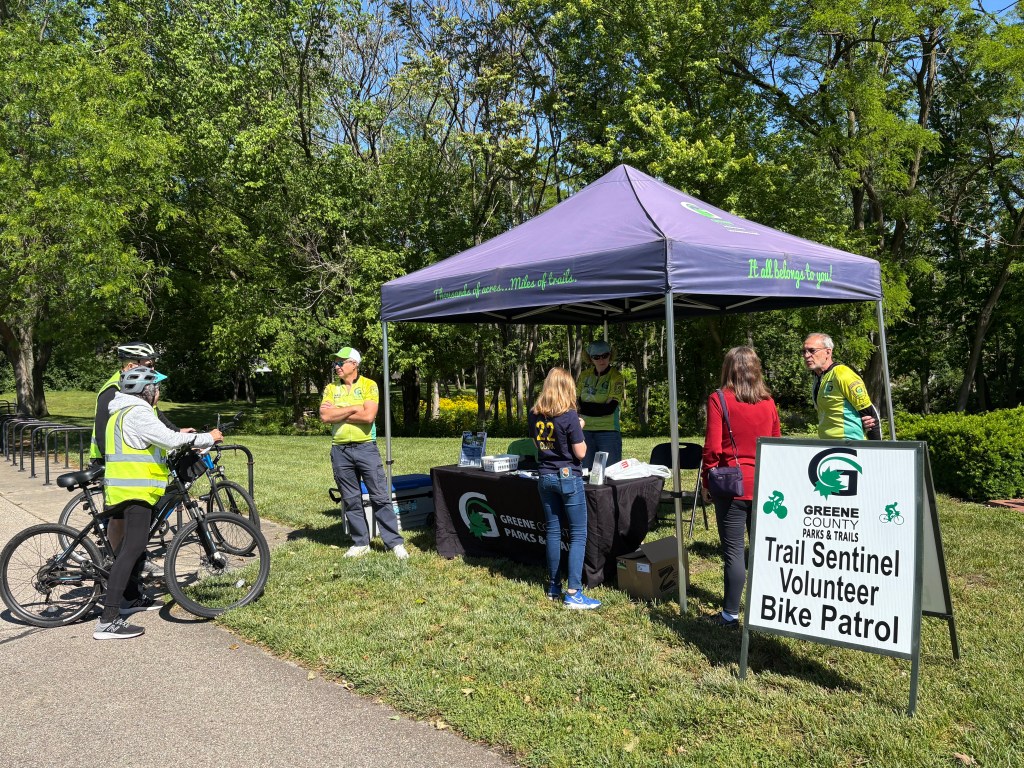
“Our role as Trail Sentinels isn’t just about ensuring safety,” said Deer. “We’re here to make the experience enjoyable and memorable for every rider. Whether someone’s doing the 10-mile route or tackling all 60 miles, we’re committed to helping them have a great day while supporting a critical cause.” In addition to riding the routes to assist riders, the Trail Sentinels will also have a support table under the shelter at Xenia Station, joined also by volunteers from the Greene County Suicide Prevention Coalition Veteran Subcommittee.

Participants and visitors to Xenia Station will have the opportunity to connect with like-minded individuals, share stories, and learn more about the impactful work of the Subcommittee. Funds raised from this event will go directly to supporting programs that provide essential resources for veterans, including mental health services and outreach initiatives.

“This is a chance for people to do something they love—riding bikes—while making a real difference in the lives of our veterans and their families,” Deer added. “At a time when critical services are underfunded and undermanned, this event is proof that even a simple activity like cycling can have a profound impact when it’s done for a cause.”

From seasoned cyclists to those who are simply looking for a meaningful way to spend a day outdoors, this one-day ride offers an unforgettable experience that combines the joy of exploration with the fulfillment of giving back. To register go to, https://www.gcparkstrails.com/event/greene-county-bike-tour-for-veteran-suicide-prevention/  

If you or someone you know is in crisis, please call the 988 suicide and crisis hotline, dial 1 for veteran support.

Library Fines

In Books, Children and Family, Education, Local News, Opinion, Politics, Uncategorized on May 2, 2025 at 10:24 am

Deer In Headlines II

By Gery Deer

(Editor’s note: This edition also appears in other publications under the title “Checked Out.”)

As a kid, the local branch of the public library was in the old opera house near the center of our small farm town. It was cramped and dimly lit, and the reference desk was under the boarded-up grand staircase, giving it a sort of cubby-hole feel. I spent a good bit of time there. After school, I’d do my homework and wait for my mom to get off work. In the decades before the Internet, our library was the window to the world. But now, that window may be closing.

Ohio public libraries are funded, in part, by the Public Library Fund (PLF), which provides 1.7% of the state’s General Revenue Fund (GRF) as of this writing. However, the Republican-sponsored Ohio House Bill 96, proposed in early April of this year, would cut library funding by more than $100 million across the state. Why?

Governments have historically manipulated populations by controlling education and the media. They ban books that don’t align with their values, use defunding threats to force public and school libraries to cultivate materials for their purposes, and limit access to information. That way, voters remain ignorant, subjugated, out of touch, and pliable.

And before anyone says, “you just hate republicans,” they’re not the only ones to try this. Ohio Governor Ted Strickland, a democrat, proposed the same budget cuts a dozen years ago, and the republicans cried foul. Remember, the liberal left still regularly tries to “rewrite” some books to remove language and ideas they find offensive. So, it has gone both ways. This time, however, the danger is more palpable.

Over the last decade, public libraries have become frequent targets for budget cuts, with some policymakers arguing that digital access negates their necessity. But here’s the truth: libraries remain vital to the well-being of communities, and continued funding by federal and state governments is not just important—it’s essential. Without it, we risk depriving countless individuals of educational opportunities, civic engagement, and economic mobility.

Public libraries provide free access to knowledge for everyone (so long as their contents are not censored), regardless of socioeconomic status. Whether it’s a student researching for school, a small business owner seeking resources, or a job seeker brushing up on interview skills, libraries level the playing field in ways no digital paywall ever could. Eliminate government funding, and these services vanish, disproportionately affecting low-income communities. Instead of fostering informed citizens, we create a deeper knowledge divide, where only those who can afford education can access it.

A democratic society thrives when its citizens are informed, and libraries serve as safe spaces where people can access unbiased, factual information. They offer literacy programs, historical archives, and meeting spaces for community discussions—all of which help create engaged and empowered citizens. Where do people go for credible information when libraries close because of defunding? Unfortunately, they turn to the Internet and social media – the global misinformation machines. That’s a terrifying thought.

Libraries don’t just provide books—many offer essential services that help individuals improve their financial stability. They provide free internet access for job searches, resume-building workshops, business mentorship programs, and resources to help entrepreneurs. Government officials profess at nauseum about supporting small businesses and the workforce. Then they gut library funding and undermine those initiatives directly. If libraries disappear, so do these essential services, making it much harder for people to improve their situations.

Defunding libraries erodes the foundation of an educated, informed, and economically mobile society, which is exactly what this administration hopes to achieve. Without them, misinformation flourishes, the digital divide widens, and people lose access to critical resources for success. Libraries are not relics of the past—they are the lifeblood of communities, supporting everything from literacy to local economies.

So, before cutting another dollar from public libraries, policymakers should ask themselves: Do they really want a future where only the privileged have access to knowledge? Without funding, that’s exactly where we’re headed.

Good people on both sides of the aisle must speak out against this kind of censorship and ignorance. In Ohio, you can contact your state representative or State Representative Matt Huffman, currently Speaker of the Ohio House of Representatives: email rep78@ohiohouse.gov or call 614-466-6344.

Literacy’s Silver Bullet

In Books, Children and Family, Economy, Education, National News, Opinion, Print Media, Technology, Uncategorized on October 19, 2024 at 10:35 am

Deer In Headlines II

By Gery Deer

I was a staff writer and later an editor for my college newspaper. During that time, I learned the single, most important lesson from all my years of education. Our administration-appointed supervisor once told me, “Whatever else you learn as you go through your college career,” she said, “learn to write and speak well. If you have that, you’ll be able to do anything.” She was right.

My mother also shared those views, though she had a head start by teaching me to read early. On the other hand, I would depend on my communication skills to pave my way to a multi-faceted career. She was determined to give me every possible advantage, mostly because she didn’t get them.

Literacy is one of the most critical indicators of a strong society. It reduces poverty, bigotry, ignorance, and social and professional inequality. It shouldn’t be limited to the academically gifted. Everyone should have the opportunity to learn effective communication.

Just because you don’t have an interest or aptitude for high academia, that doesn’t mean literacy is less important. I feel fortunate that I had the best of both worlds. I’ve always been an avid reader and writer and a lifelong student of all the sciences. But I also learned to rebuild a car engine, install a new water heater in my house, or change a faulty electrical outlet.

Every one of those tasks requires the ability to learn, understand, follow instructions, and cope with the unexpected. All of my “book learning” occurred while surrounded by some of the best tradespeople in the world. Even better, they were all teachers. One thing that has changed over the years is how literacy is emphasized in our public and private schools.

Do you remember when kids used to get in trouble for reading comic books at school? I will say “we” instead of “they” because I did this too. We put comic books inside large textbooks so we could read during class. From the teacher’s perspective, we seemed engrossed in our educational process. Instead, we were engaged in the exploits of Superman, Batman, or Spider-Man.

Some argued that even reading comic books was good for us because at least we were reading. But it was more than that. Comic books are a good literacy metaphor because they aren’t just about words, grammar, and sentence structure.

For our society to consider itself truly literate, we must understand language, not just the written word but communication. We also need to understand art, storytelling, and critical thinking. In an ironic twist, one way to do all that is by reading comic books. Many of the Batman stories from the 1930s and 40s are loaded with material you only find in today’s best crime novels by authors like Michael Connolly, James Patterson, and David Baldacci.

Unfortunately, some use the comic book analogy to justify spending hours on social media. That’s not the same thing. Reading is calming, focuses our minds, and relaxes our bodies. If anything, social media has dumbed us down and created an entire society nearly paralyzed by anxiety and inferiority. Scrolling doesn’t count as reading.

Still, literacy doesn’t require you to wade through “War and Peace,” “Catcher in the Rye,” or any other long-winded literary work. I supplemented my education by reading everything I could get my hands on. Whatever I had an interest in, I had books about it, encyclopedias, or topic-specific material – there was no internet back then. Now, resources are nearly endless, provided you learn the difference between credible and non-credible sources. 

Advanced education isn’t required either. Truth be told, much of what I do for a living was self-taught – thanks to my early introduction to books. Self-education is mainly frowned upon in today’s society. I find it ironic that Benjamin Franklin, Thomas Jefferson, and others who wrote some of the most important documents in history would be unemployable by today’s arbitrary and unfounded standards.

My point is that American culture currently reads at a U.S. 5th-grade level. That’s unfortunate, ridiculous, and easily corrected. We must eliminate the stigmas of functional illiteracy, focus more on reading and writing in our schools, and spend more time with books than cell phones.

Efficacious Electoral College

In Books, Children and Family, Economy, Education, history, Local News, Politics, sociology, Uncategorized on October 19, 2024 at 10:20 am

Deer In Headlines II

By Gery Deer

Without question, 2024 has been and will continue to be one of American history’s most charged and controversial election years. Among the points of contention is the continued argument regarding the necessity – and validity – of the Electoral College.

Political operatives and pundits alike have been outspoken on the subject from all political viewpoints. There seems to be no consensus because, quite frankly, even some government officials don’t understand its purpose. So, before I give you my thoughts, here’s some non-partisan history.

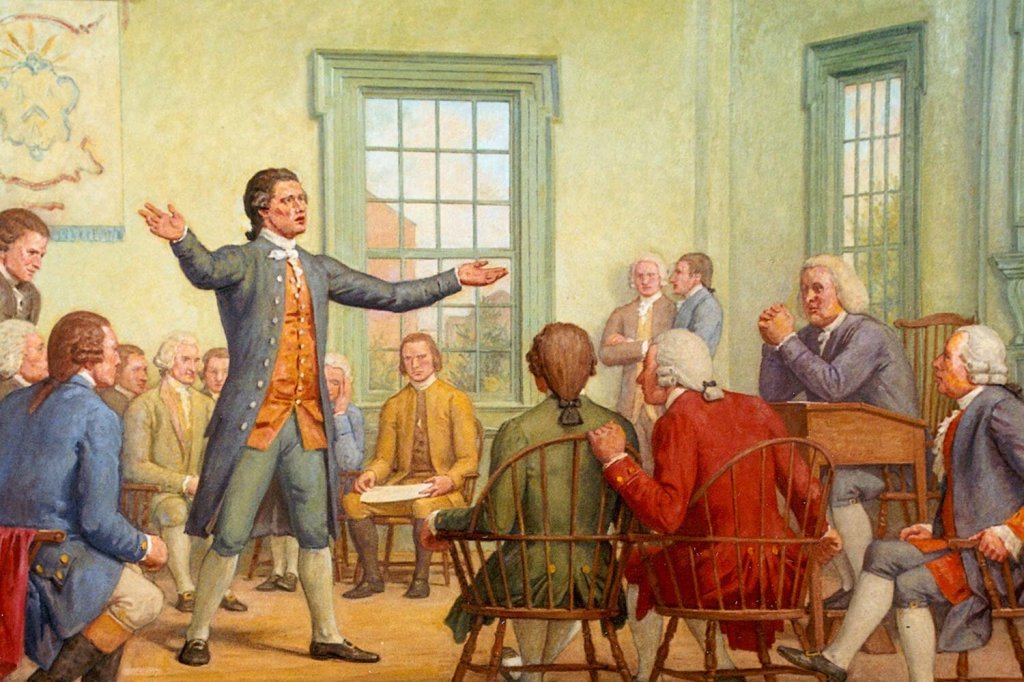
During the first Constitutional Convention of 1787, a significant debate unfolded about the method of electing a president to lead the executive branch of our newly established government. It was a pivotal moment in our history after the decision to have a single individual in the office rather than two or even a triumvirate. Just imagine the complexity of electing three people every four years.

The primary issue was whether a congressional vote should elect a president or do it by popular vote.  The latter eventually won out until the smaller states began to weigh in, concerned that those with a larger population would wield more control.

Another lesser-known concern was that the political elite of the time were worried about a mass of uneducated voters swaying the results. Discussions continued for several months until, one day, in a closed-door subcommittee, James Madison laid down the concept for what became known as the Electoral College.

Enacted as a compromise and safeguard, Article II of the U.S. Constitution (later the 12th and 23rd Amendments), as well as the Electoral Count Act (ECA) of 1887) formally established the Electoral College. These laws regulated the voting process and defined the events between Election Day and the Inauguration.

Now, to clear up some misconceptions. Regardless of rhetoric to the contrary, I assure you that the Electoral College is an entirely democratic process. It is not, however, easy to explain. But I’ll try anyway (insert a deep breath here).

In a presidential election year, the political parties hold conventions where they nominate “presidential electors.” That’s simple enough to understand, but hang on. Here’s where it can get… confusing.

When a party’s presidential and vice presidential candidates win the popular vote, that party’s electoral nominees become “Electors.” Each state has the same number of Electors as members of Congress, and each Elector votes for their party’s ticket on separate ballots – one for president and one for vice president. So, your individual vote is still vitally important because the candidates cannot earn Electors without it.

For example, if Richard Nixon and Barry Goldwater (president and vice president, respectively) won the popular vote in California, the Republican nominees from that state would become Electors and cast their votes to the Electoral College. Once all the electoral votes are cast, the candidate who reaches 270 out of a possible 538 wins – and this is only triggered if the candidates win that state’s popular vote in the first place.

In the news, the results sound something like this: Nixon has won California and its 54 electoral votes. Of course, those results still have to be certified. As you might recall, there was a slight hiccup during the 2020 election certification. However, new security measures have been taken to reduce any potential repeat of those terrible events.

Remember, this is just a glance at the process, but I hope it helps. If it’s still puzzling, a good analogy is Major League Baseball’s World Series. Every year, the winner is determined not by which team got the most runs per game but by which won the most games in the series. The Electoral College works the same way.

In my opinion, the Electoral College is the only practical, efficient, and fair way to ensure everyone’s voice is heard because we’re represented just as we are in Congress. The Founders realized that the popular election alone could and would eventually bring chaos.

If we want an election process that stays in constant contention, then eliminate the EC. But if we’re going to have all our citizens represented equally, let the system do what it was designed to do. If you want to make a real difference, make sure you vote.

Bully For You

In Children and Family, Education, Health, Local News, Uncategorized on August 25, 2024 at 12:15 pm

Deer In Headlines II

By Gery Deer

Some kids in school have a built-in homing device for bullies. I was one of those kids. I was ten when I started my fifth-grade year at a new school. It was great for the first couple of months. My teacher was nice. The homemade-style country food in the cafeteria was fantastic. I mean, biscuits and gravy for lunch. How amazing is that? My schoolwork was going well, and I even made a few friends. But things changed pretty quickly—for the worse.

Being new was the first thing that automatically marked me as target zero for the persecutor of the week. I was fresh meat. Unless they were influential athletes or just scary, the new kids always got subjugated first. There is nothing like a playground shakedown for milk money on the first day of school. Yikes. The worst part was that my oppressors didn’t even buy milk with it. Oh, come on.

Next, I was smart – too smart, it seemed. After all, nobody likes a kid who waltzes in from nowhere and changes the grading curve. Seriously? Couldn’t those losers have just cracked a book once in a while? Or maybe if they’d actually listened during class… bygones. Eventually, I just didn’t care anymore. From that time forward, my grades rose and fell like yo-yos.

Also, I was “sick” a lot. At least, that’s what everyone said (even the teachers). There are few things worse than a bully. However, one worse thing would be when faculty members went along with the abuse (and there were many of them). No joke. Sometimes, they made it worse by reinforcing kids’ ridiculous ideas about me.

I’ve written many times about the fact that I had a severe birth defect, which required a couple of major surgical procedures every year until I was about 13. I know, bummer, right?

However, my parents and the doctors did their best to give me as normal a life as possible, scheduling procedures around my academic calendar. Occasionally, surgeries were scheduled during the school year, which meant I’d sometimes miss a few days. Once kids got wind of this information, my tyrannization value skyrocketed.

I had no cane, prosthetic, wheelchair, or any other sort of apparatus to suggest that there was anything wrong with me. I think that confused students and faculty alike. Maybe they expected someone who’d been through so much to exhibit more visible signs of it? The truth is, I was never weak or infirmed. After surgery, they had me up and around almost immediately – not that they could keep me in bed much anyway. So, I recovered quickly.

Unfortunately, rumors and false statements made by teachers confused things further and left my classmates anxious about being around me. From there, the bully brain (that’s what I called it) distorted the facts even further. All I ever wanted was a supportive, positive school experience. But that just wasn’t in the cards for me. Even my bus rides to and from school were unbearable. Worse yet, thanks to the internet, today’s bullies can torment victims anywhere, anytime.

In theory, nobody likes a bully. The idea that it’s become politically correct, woke, or whatever the term, to be anti-bullying seems ridiculous. I guess I’ve never understood what kind of person would favor bullying in the first place, except maybe the bullies. I could write an entirely different piece on that question.

So, what’d I do about it? Almost nothing. “Did you tell the teacher?” My mother would ask. Exactly how much did my parents dislike me? Did they want me to get the crap beat out of me repeatedly? If you’re going to snitch, you might as well wear a big sign saying, “Hey, I’m over here. Come, beat me up!” But that’s what parents always want you to do.

Bullying isn’t funny. It’s neither a rite of passage nor acceptable behavior.  As for me, I hold no malice toward the kids who bullied me, but I still have nothing but contempt for the school officials who allowed it. No one should have to endure that kind of trauma, and the powers that be should better protect our kids, whether in school or online.

Is this your new site? Log in to activate admin features and dismiss this message
Log In