
Deer In Headlines
By Gery Deer
For decades, we have told ourselves a comforting story about education. If we standardize it, measure it, test it, rank it, and repeat it often enough, we will somehow produce better students and, by extension, better adults. It sounds reasonable. It feels orderly. It also happens to be deeply flawed.
If the system worked as advertised, we would be surrounded by confident graduates who understand their strengths, know how they learn, and are excited to apply their talents to the world. Instead, many students leave school disengaged, uncertain, and convinced they are “bad at learning,” when the real problem is that learning was never designed with them in mind.
Somewhere along the way, we stopped teaching the A, B, C’s and started teaching to a test. Those tests promise clarity and accountability, but their ability to predict a student’s future success is questionable at best. Believing a standardized exam can forecast a child’s career potential is like believing the tea leaves at the bottom of your cup can tell you who will win the next Super Bowl. The charts look official. The conclusions feel authoritative. The accuracy is another matter entirely.
What these measurements consistently ignore is the single most important factor in learning: individuality. Every student arrives with a unique mix of curiosity, aptitude, temperament, and interest. Some think spatially. Some think musically. Some learn best by doing, failing, and doing again. Others need time, reflection, and quiet focus. These differences are not inconveniences. They are early indicators of where a student might thrive.
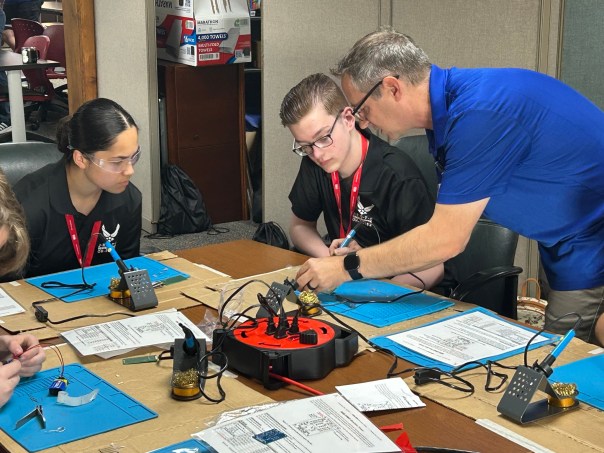
This is why education models that emphasize science, technology, engineering, arts, and math point in the right direction. When done well, they recognize that creativity and logic coexist, that problem-solving is rarely linear, and that imagination is not the enemy of rigor. Hands-on experimentation, design challenges, and interdisciplinary projects allow students to see relevance in what they are learning, not just requirements.
Still, even these programs can fall into the same trap if they are forced into rigid pacing guides and uniform assessments. When curiosity is scheduled and creativity is graded into submission, engagement disappears. Students become compliant rather than curious, efficient rather than inventive.
Traditional public school systems were not designed around individual learning styles. They were built for efficiency and uniform outcomes. That made sense in an industrial era that valued standardization. It makes far less sense in a world that rewards adaptability, specialization, and original thinking. We continue asking students to sit still, move together, and absorb information the same way, then wonder why so many tune out.
There are alternatives, and they are no longer fringe ideas. Some learning environments emphasize individualized study plans that allow students to move at their own pace, diving deeper into subjects that capture their interest. Others use project-based education, where students learn math, science, communication, and critical thinking by solving real problems and building tangible outcomes. In these settings, a student’s natural curiosity is not a distraction; it is the engine.
Non-traditional environments often replace rows of desks with collaborative spaces, mentorship with lectures, and progress portfolios with letter grades. Students learn how to manage time, pursue questions, and reflect on their work. They fail safely, revise often, and understand why their learning matters. These experiences mirror the real world far more closely than memorization ever could.
The goal is not to eliminate traditional schools or abandon standards. The goal is to expand the definition of what school can be. Public education should adapt by offering flexible pathways alongside conventional ones, giving families and students real options instead of one-size-fits-all solutions.
When we stop forcing square kids into round desks and start honoring natural gifts, education becomes preparation instead of endurance. That shift does not weaken schools. It strengthens students. And that is the outcome worth measuring.
Adapting these options requires courage, policy support, and a willingness to trust educators and students alike. It means valuing progress over uniformity and recognizing that success can look different without being lesser. When schools evolve to meet students where they are, learning stops being something done to them and becomes something they actively claim as their own. That shift benefits communities, employers, families, and democracy itself long term.






























 The Jamestown Comet