Jamestown, OH – In a move that will delight grammarians, confuse absolutely no one, and mildly disappoint fans of Roman numerals everywhere, writer Gery Deer’s long-running column, Deer In Headlines II is officially dropping the “II.”
As it was when it first hit newsprint in 2008, from this point forward, the column will simply be known as Deer In Headlines.
No sequel. No reboot. No director’s cut.
Just Gery Deer and his outlook on the world.
The change quietly debuted with the first edition of January 2026, though longtime readers may have noticed immediately—because readers always notice. Especially when something changes that didn’t really need changing, but made sense anyway.
The original column ran from 2008 – 2018 under the name, “Deer In Headlines.” When Deer restarted the series in 2023, the “II” was added as a nod to the way movie sequels were numbered in the 1980s. However, the designation was never meant to suggest a second act so much as a return engagement. When Deer In Headlines reappeared after a five-year hiatus, the numeral was added to signal both its comeback and a slightly evolved identity—new angles, broader themes, and a tone that reflected the times as much as the writer.
But time, as it often does, flattened the distinction. “My column resonates with readers of all backgrounds and interests,” Deer explained. “It might make you happy, or sad. It can anger you or motivate you. Whatever the response, I’ve done my job and it’s time to keep the brand more cohesive—one or two, it’s all Deer In Headlines.”
And that, in true Deer In Headlines fashion, is the point.
The column has never been about numbering systems. It’s been about observation—sometimes sharp, sometimes sentimental, often inconvenient, and occasionally uncomfortable. It’s a space where headlines become excuses to talk about people, priorities, contradictions, and the quiet moments between the noise.
Over the years, Deer In Headlines has grown into more than a weekly column. It is the lead feature of the online news outlet TheJamestownComet.com, and appears every Friday in the print and digital editions of the Xenia Daily Gazette and Fairborn Daily Herald, as well as the weekly Beavercreek News Current.
The name also anchors the Deer In Headlines podcast, where many of the column’s themes are expanded, unpacked, and occasionally challenged. The podcast often explores the origins of a column, the thinking behind it, and the conversations it sparks—available on most major streaming platforms, including iHeartMedia and Amazon Music.
Dropping the “II” isn’t an ending. It’s not even a beginning.
It’s simply a reminder that whether the headline makes you nod in agreement, shake your head in disbelief, or pause longer than you expected— it’s all still Deer In Headlines.
Modern Americans are fascinated with the complexities of British social classes. Television programs like “Upstairs, Downstairs” and, more recently, “Downton Abbey” give us colonials a glimpse into the inner workings of a world in which you are trapped in the station to which you were born, good or bad. We gaze through the looking glass at the uptight snobbery of the self-anointed lords and ladies who flutter around their castles, moaning about what they’ll wear to dinner after changing clothes for the tenth time that day.
All the while, we commoners across the pond suffer alongside the struggles of those who do the actual work – the maids, footmen, farmers, and shopkeepers. They’re all just trying to make ends meet, but are never permitted to step out of their place to be more than that. All this because their father’s, father’s father was a farmer or cook or butler – and so shall they be, as ordained by a class system that’s as ridiculous as it is antiquated.
We watch, we grimace, we sit in our superiority about having extricated ourselves from such nonsense 250 years ago – or did we? Americans love the idea that this country is a classless society. We’re taught that if we work hard enough and do our best, we can rise to whatever level we choose. It’s a comforting (and arrogant) notion that makes for great campaign speeches. Unfortunately, it’s completely false. Classism has been with us since the beginning, even though we try very hard not to admit it.
Never has America’s class system been more visible than since the 2024 presidential election. The “haves” took over in January, largely thanks to the ignorance of the “have-nots.” Sadly, those who got this administration elected – mainly the working poor – don’t seem to care that the people they sent to Washington want to keep them right where they are – broke and blaming everyone on the other side for their circumstances.
Why else would they gut our social services, eliminate job training and healthcare support, and destroy historic buildings in favor of grand, palatial eyesores to show off the wealth – and their class status – that you and I will never, ever experience. Remember, none of this is new. It’s always been this way, but most Americans pretend it’s not. I promise you, though, if you set one foot into that world and you don’t belong, you’ll know it – they’ll make sure of that.
In Europe, classism originates from a combination of wealth and notions of nobility passed down through generations. But here, it’s all about the cash. Or, more correctly, wealth in general. From the moment the first colonists set foot on this continent, social layers began to form. European class systems based on land and labor arrived right along with them. Those who owned property or controlled trade (the wealthy) quickly established themselves at the top. Those who labored — whether as indentured servants, tenant farmers, or enslaved people — occupied the lower rungs. Wealth dictated opportunity, status, and political power.
When the founders sat down to sketch out a nation based on Enlightenment ideals, they tried to break from those traditionally rigid hierarchies. The promise was that this new republic would be different: more equal, more flexible, more open to talent than lineage. But before the ink was even dry on the Constitution, participation in democracy was tied to property ownership. In other words, class.
The industrial periods of the late 19th and early 20th centuries produced titans of industry and staggering corporate wealth, alongside factory workers who lived ten to a room and rarely made ends meet. The labor unrest of that era was more than economic conflict. It was an open confrontation between classes that the country pretended didn’t exist. And yet, generation after generation, we’ve continued telling ourselves that class isn’t part of the American story.
But it is – and that distinction is growing daily, minute by minute, mainly due to our current political structure and power, as billionaires are given increasing influence over our government.
In part two, we will talk about who perpetuates the very real American class system and what, if anything, can be done to lessen its influence on the majority.
PART II
I’m painfully aware of class distinctions. I grew up in a farm family that also included teachers, mechanics, cattle workers, and waitresses. I’ve had every job you can imagine – and some you can’t – and in every situation there was always someone around to remind me of my “place.” I never became a “have,” but, like you, I work for my living – and I always have – something most blue bloods can rarely claim.
Excluding tech boom millionaires from the 1990s, there is significant generational wealth at the top of the American food chain. However, most wealthy individuals insist that their success stems solely from a work ethic. Those struggling, on the other hand, are told to pull harder on their bootstraps. It’s a neat trick: if class doesn’t exist, then anyone stuck at the bottom must simply not be trying hard enough. That’s why republicans in power (who tend to be the wealthier group) blame the poor for being poor – spouting off on how they must be lazy, working the system, etc. And democratic leaders (who are often less wealthy, but not without means), champion the working poor while still condescending to them, maintaining the class barriers. Has Chuck Schumer, a multi-millionaire, invited you to any parties lately? Yeah, me either. Both sides are to blame for all this.
The truth is that modern America has a very real class structure, even if we don’t officially name it. At the top is the wealth class — that small percentage of Americans whose fortunes come from investments, corporate ownership, or inherited wealth. Below them is the upper middle class, made up of highly educated professionals who enjoy stability, networks, and cultural influence. The middle class — if we can still call it that with a straight face — includes those with some savings, homeownership, and a degree or a skilled trade.
Further down are the working class and the working poor, whose lives are shaped by hourly wages, inconsistent schedules, limited benefits, and housing insecurity. The lower classes – where most of us fit – are increasingly squeezed by rising costs and stagnant wages. What separates these groups isn’t just income. It’s wealth, education, geography, access to healthcare, and those unwritten rules known as “cultural capital” — things like networking, confidence in professional settings, or simply knowing which doors to knock on.
So where did our grand experiment at classlessness go wrong? It failed in all the predictable places. Public education and other social services were intended to level the field, but are still funded by local taxes that mirror neighborhood wealth. Even the American Dream itself was built on the idea that anyone can rise — as long as they start from somewhere near the top in the first place.
Those who rise to power tend to be members of the upper class, with little or no desire to lose their position by pandering to social groups with no influence, financial or otherwise. Sure, we see extensive TV news footage of politicians and wealthy people who volunteer with social services, donate to charities, and give speeches on behalf of the poor and less fortunate. But at no time do you ever see one of those people – from any political side – do something that might benefit you and me while jeopardizing their own place.
We could effect change, however, if we improve access to education, support trade schooling, strengthen worker protections, and provide financial literacy programs. We could even create a healthcare system that doesn’t punish people for simply being alive. Unfortunately, none of this seems likely in the current social and political climates.
America must accept that class exists, but only those at the top are sure of it. For some reason, the poorest people support the politicians and policies that tend to harm them the most. It’s time to wake up and realize that, to maintain their positions and wealth, the upper class will always try to subjugate the middle and lower classes.
So, what can you do? Listen to what the politicians are saying and doing. How does it help you? How does it harm you? Dump the idiotic crowd mentality of party and vote for your own best interests, not theirs.
The Xenia Daily Gazette is inviting local writers and storytellers to take part in its first annual Holiday Short Story Contest, which is going on now. Sponsored by McIlvaine Realtors, the contest encourages community members to put their holiday reflections into words under this year’s theme: “What the holidays mean to me.”
The inaugural contest is open to anyone age 12 and older, and entries may be up to 800 words in length. Stories should be sent as attachments or pasted into the email body to editor@xeniagazette.com by December 15, 2025. All entries must include the writer’s name, address, phone number, and email address.
The winner will receive a $50 VISA gift card, courtesy of McIlvaine Realtors, and their work will be published in both the Xenia Daily Gazette and the Fairborn Daily Herald during Christmas week, giving the author a special spotlight during the holiday season.
To help select the winning story, the Gazette has brought in a familiar local voice: Gery Deer, longtime contributing journalist, columnist, and author of the Gazette’s “Deer In Headlines” series, who will serve as one of the judges. Deer is participating courtesy of GLD Communications in Jamestown, which has supported Reading Is Fundamental (RIF) for the last three years through its national literacy initiative.
Deer said the contest offers the community an exceptional opportunity to reflect on what makes the season meaningful. “This is the time of year when family means the most, memories become stories told to new generations, and sharing seems to be at the heart of the season,” he said. “We hope people will share their stories with us and maybe even inspire others to write something as well.”
The Gazette hopes the new contest will become a cherished annual tradition, welcoming writers of all skill levels—from students and first-time storytellers to seasoned creatives looking for a festive way to express themselves.
Entries will be judged on originality, clarity, and how well they capture the holiday theme. While participation is open beyond Greene County, organizers are especially hopeful for strong involvement from area schools, families, and aspiring writers eager to share what the holidays mean to them.
McIlvaine Realtors, known for their long-standing support of community programs, expressed enthusiasm about sponsoring the first-ever contest and encouraging a new generation of local storytellers.
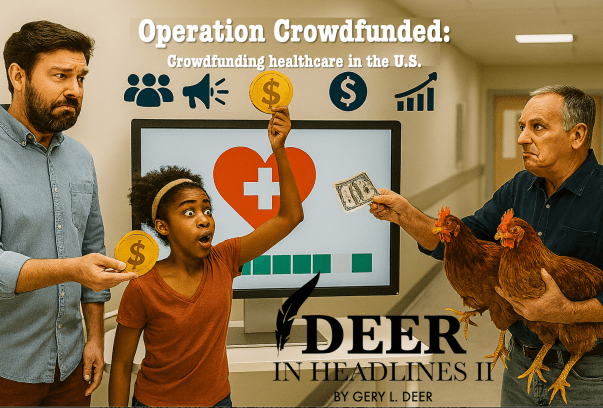
The United States of America: the land of innovation and opportunity, where billionaires launch rockets for sport and algorithms decide your mortgage rate. So, it shouldn’t surprise anyone that Americans now turn to crowdfunding to pay for basic healthcare. Not as a quirky side hustle, mind you, but as a legitimate strategy for survival.
This year, roughly 1.8 million Americans will be diagnosed with cancer. The average cost of treatment? A cool $183 billion. That’s not per person, of course—just the collective tab. But when you break it down, individual patients often face six-figure bills, even with insurance. Meanwhile, nearly 70% of seniors will require long-term care, either at home or in a facility. And with government assistance programs shrinking faster than a hospital gown in the dryer, many are left to fend for themselves. Each year, more and more are turning to crowdfunding.
According to statistics published by Astute Analytica, Americans raise more than $3 billion annually through platforms like GoFundMe, GiveSendGo, and others—most of it for medical expenses. While that might seem a heartwarming testament to community spirit, it’s simultaneously a tragic commentary on our national priorities.
When you live in the “richest” country on Earth and someone in a white coat says the words, “You have cancer,” but your best hope for affording chemotherapy is a well-written plea and a viral social media post, something’s gone horribly awry.
Let’s compare this to the more “official” solution: Health Savings Accounts (HSAs), tax-advantaged accounts tied to high-deductible insurance plans. In theory, they help you save for medical expenses. But their nature pretty much excludes the people who actually need the money.
HSAs require disposable income to fund. Plus, they’re capped at a few thousand dollars per year. That’s great if you’re buying allergy meds or paying for a routine checkup. But without some serious money tucked away, you could still be in trouble if you need something like an appendectomy, for example, which averages around $13,000.
Crowdfunding, on the other hand, offers flexibility. You don’t need to qualify for a high-deductible plan. You don’t need to navigate IRS rules. You just need a compelling story, a few sympathetic friends, and the ability to market your misfortune.
Imagine a future where every citizen maintains a personal healthcare fund online. You could even petition the IRS to classify seniors and disabled individuals as not-for-profit entities. That way, when a billionaire donates to your cancer treatment, they get a tax write-off. It’s a win-win. You get a shot at survival, and they get to feel philanthropic without disrupting their yacht schedule.
Of course, this would also stimulate the tech economy. Crowdfunding platforms would flourish, transaction fees would soar, and a new generation of entrepreneurs would emerge to optimize the monetization of the already bloated medical crises. But there are challenges – big ones.
If everyone’s running a campaign, how do you stand out? Do you offer donor perks? “Contribute $100 and receive a personalized thank-you video from my hospital bed.” Do you hire a public relations firm to promote your gallbladder surgery? “Compassion competition” can become fierce. Those without strong social networks or digital savvy would likely struggle to raise anything at all.
With so many medical coverage decisions being made in the board room rather than at the bedside, this model has its appeal. It’s more transparent than insurance billing, more immediate than government aid, and more democratic than corporate healthcare.
Some say healthcare should be a right, not a raffle – I tend to agree. It’s absurd that anyone should have to beg for insulin or auction off their belongings to afford a colonoscopy. But in a country where tax breaks for billionaires are considered sacred and universal healthcare is viewed as some kind of socialist takeover, absurdity might just be the most realistic and successful option.
So sure, let’s embrace the irony of a system where survival depends on storytelling and digital advertising prowess and crowdfund our medical care. We will just have to hope that, someday, we’ll look back on this era not as a failure of policy, but as a resourceful bureaucratic bypass—when Americans took their health into their own hands, one donation at a time.
Somewhere between the motivational posters in your work break room and the TED Talk rabbit hole you fell into online last Tuesday, someone probably told you that you need a “vision” for your life. A grand, sweeping, cinematic plan that guides your every move like you’re the protagonist in a Christopher Nolan film. Lights, camera, confusion.
Now, let’s be honest – most of us are just trying to remember where we left our coffee mug and whether we fed the dog this morning. But a life vision? That sounds exhausting, and at least partially unrealistic.
Don’t misunderstand. I’m not saying you should wander aimlessly through life like a robot vacuum cleaner with a dying battery, bumping your way from wall to wall, down this hallway and that. Any purposeful achievement generally starts with a dream and some kind of plan, even an informal one. To me, that’s just common sense.
But obsessing over the idea of a perfectly curated roadmap for your life might do more harm than good. That’s especially true when we project the obsession onto others—our kids, our coworkers, some unsuspecting barista. And you need to allow for some flexibility so you can recognize opportunity when it comes and act in your best interest – that’s more how I work, I would say.
When someone says you can’t make it without a vision board and a color-coded calendar that looks like NASA designed it, they are probably trying to sell you something. In case you haven’t figured this out on your own, life is messy, unpredictable, and occasionally throws a raccoon through your metaphorical window.
Some of the most successful people I know didn’t start with a vision. They began with a problem, a deep interest in something, or just plain boredom. They stumbled into opportunities, made a few mistakes (okay, a lot of mistakes), and figured things out along the way. Their “vision” was more like a foggy windshield they wiped clean with the sleeve of their hoodie – and that’s okay.
Here’s the thing: having a vision sounds noble, but it can also blind you. When you’re so focused on the end goal, you miss the weird little detours that could lead to something better. You ignore the people around you who might need help, or who might help you.
Instead of the kind of vision you read about in self-help books, maybe what we need is a clearer view—the ability to see what’s happening right now. That way, we notice the opportunities, the needs, the small wins, and then be present enough to pivot when life throws a curveball—or a raccoon.
If you’re in a position to guide others—whether you’re a parent, a manager, or just the guy who always gets asked for directions at the grocery—there’s a temptation to impose your vision on them. You want them to succeed, so you hand them your blueprint. “Here’s how I did it. Follow this, and you’ll be fine.”
Really? People don’t come with identical parts and a universal tool kit. What worked for you might be a disaster for someone else. Your vision might be their nightmare.
Instead of handing out visions like party favors, let’s ask questions. What excites you? What scares you? What do you want to try, even if you might fail? Influence isn’t about shaping someone’s path—it’s about helping them find their own flashlight.
So here’s my alternative vision pitch: wander with purpose. Be curious. Be open. Set goals, sure—but don’t carve them into stone. Scribble them on napkins and be willing to toss them when life hands you a better idea.
Life isn’t a straight line. It’s a squiggly mess of trial and error, happy accidents, and moments of clarity that usually arrive while you’re doing something mundane like folding laundry or eating cold pizza in the middle of the night. So what to do? Ignore all the nonsense out there and do what leads you to the life you want.
While a valuable foundation, vision isn’t an absolute. Flexibility, awareness, and a good sense of humor are you best tools along life’s path. Now – what did I do with that coffee mug?
In a unique blend of community engagement and historical appreciation, the Xenia Area Chamber of Commerce held its monthly Business After Hours event on Wednesday, September 10, at one of the city’s most storied landmarks—Woodland Cemetery.
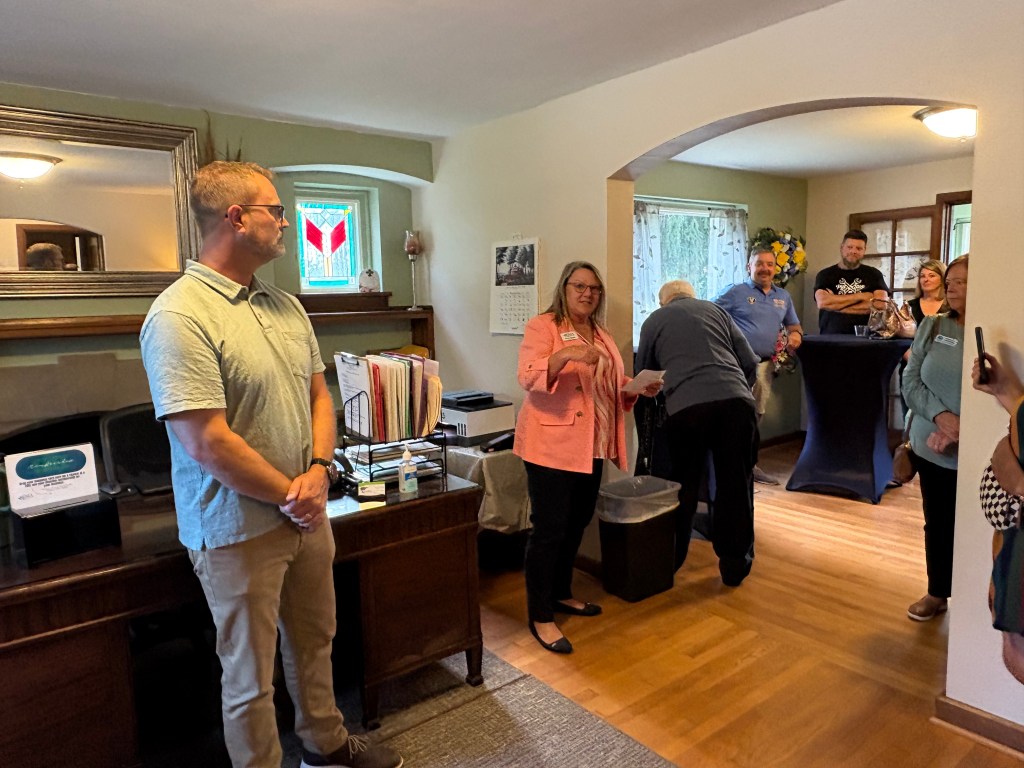
From 4:30 to 6:00 PM, around 30 local business leaders, entrepreneurs, and community members gathered at the caretaker’s cottage — now serving as the cemetery’s administrative office — to connect, collaborate, and commemorate. Executive Director Donna Saraga welcomed attendees with warmth and enthusiasm, setting the tone for an evening that was as reflective as it was productive.
Neil Fogarty (left) of Dodds Memorials and Donna Saraga, Xenia Area Chamber of Commerce executive director, welcome guests to the September Business After Hours at Woodland Cemetery. (Photo by Gery Deer)
The event was presented by the cemetery and Dodds Memorials, a cornerstone of the region’s heritage, now celebrating an impressive 180 years in business. Neil Fogarty, president of Dodds, and representing the Woodland Cemetery Board of Directors, offered a heartfelt introduction, highlighting their longstanding commitment to honoring lives and preserving memory.
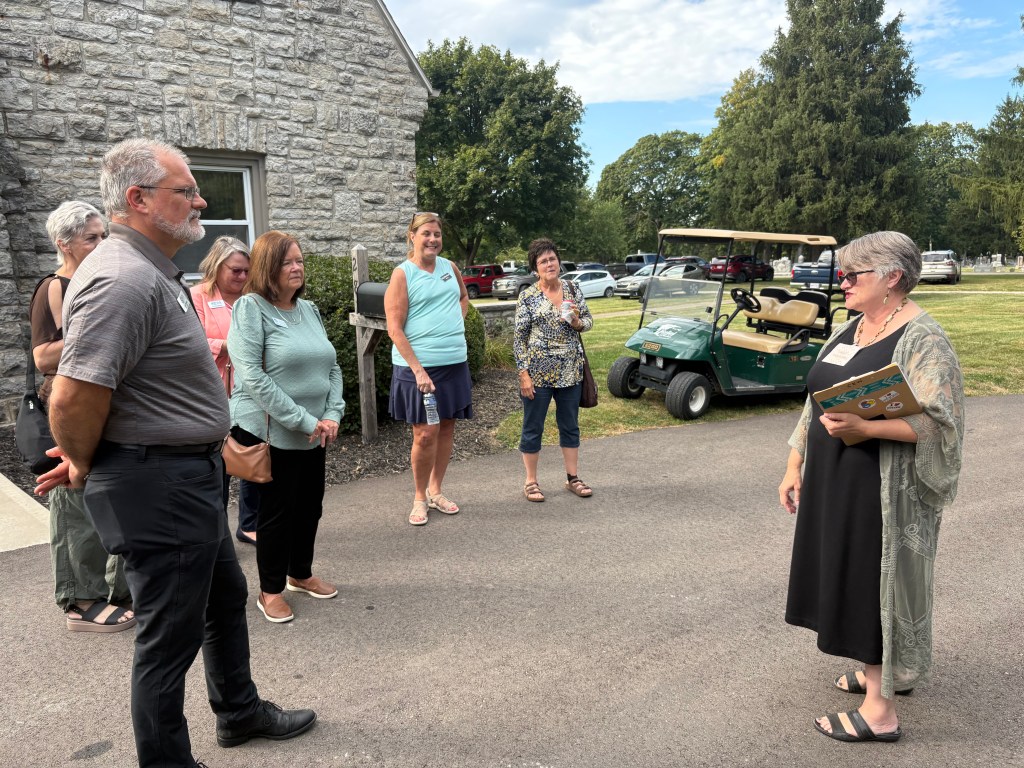
Shortly after, guests were treated to a guided walking tour led by Catherine Wilson, Executive Director of the Greene County Historical Society. Beginning at the caretaker’s cottage, the tour wound its way to the mausoleum and back, revealing stories etched not just in stone, but in the fabric of Xenia and Greene County’s past.
Wilson captivated the crowd with tales of Woodland Cemetery’s notable residents, architectural features, and the evolution of burial practices over the decades. Her narration brought to life the cemetery’s role as both a resting place and a dynamic archive of the county’s history.
First chartered in 1845, Woodland Cemetery is more than a final resting place—it’s a testament to Xenia’s resilience, artistry, and civic pride. With its serene landscape and historic monuments, it offers a contemplative space for remembrance and education. The cemetery is managed by a dedicated board and supported by a variety of community partners.
The Xenia Area Chamber of Commerce plays a vital role in fostering economic growth and community connection. Its Business After Hours series, held on the second Wednesday of each month, provides a relaxed setting for professionals to network, share ideas, and support local enterprises. Events are open to members and non-members alike, reflecting the Chamber’s inclusive mission.
Greene County Historical Society Executive Director, Catherine Wilsom, led a walking tour of the cemetery, which included the museum.
As the sun dipped behind the trees and conversations lingered in the old caretaker’s cottage, attendees left with more than just business cards—they carried a deeper appreciation for the legacy of Xenia, and the people and organizations working to preserve it. For details on upcoming events and membership opportunities, visit www.xacc.com.
Here’s video from the introduction for the event provided by Donna Saraga and Neil Fogarty.
Somewhere between the motivational posters in your work break room and the TED Talk rabbit hole you fell into online last Tuesday, someone probably told you that you need a “vision” for your life. A grand, sweeping, cinematic plan that guides your every move like you’re the protagonist in a Christopher Nolan film. Lights, camera, confusion.
Now, let’s be honest – most of us are just trying to remember where we left our coffee mug and whether we fed the dog this morning. But a life vision? That sounds exhausting, and at least partially unrealistic.
Don’t misunderstand. I’m not saying you should wander aimlessly through life like a robot vacuum cleaner with a dying battery, bumping your way from wall to wall, down this hallway and that. Any purposeful achievement generally starts with a dream and some kind of plan, even an informal one. To me, that’s just common sense.
But obsessing over the idea of a perfectly curated roadmap for your life might do more harm than good. That’s especially true when we project the obsession onto others—our kids, our coworkers, some unsuspecting barista. And you need to allow for some flexibility so you can recognize opportunity when it comes and act in your best interest – that’s more how I work, I would say. When someone says you can’t make it without a vision board and a color-coded calendar that looks like NASA designed it, they are probably trying to sell you something. In case you haven’t figured this out on your own, life is messy, unpredictable, and occasionally throws a raccoon through your metaphorical window.
Some of the most successful people I know didn’t start with a vision. They began with a problem, a deep interest in something, or just plain boredom. They stumbled into opportunities, made a few mistakes (okay, a lot of mistakes), and figured things out along the way. Their “vision” was more like a foggy windshield they wiped clean with the sleeve of their hoodie – and that’s okay.
Here’s the thing: having a vision sounds noble, but it can also blind you. When you’re so focused on the end goal, you miss the weird little detours that could lead to something better. You ignore the people around you who might need help, or who might help you.
Instead of the kind of vision you read about in self-help books, maybe what we need is a clearer view—the ability to see what’s happening right now. That way, we notice the opportunities, the needs, the small wins, and then be present enough to pivot when life throws a curveball—or a raccoon.
If you’re in a position to guide others—whether you’re a parent, a manager, or just the guy who always gets asked for directions at the grocery—there’s a temptation to impose your vision on them. You want them to succeed, so you hand them your blueprint. “Here’s how I did it. Follow this, and you’ll be fine.”
Really? People don’t come with identical parts and a universal tool kit. What worked for you might be a disaster for someone else. Your vision might be their nightmare. Instead of handing out visions like party favors, let’s ask questions. What excites you? What scares you? What do you want to try, even if you might fail? Influence isn’t about shaping someone’s path—it’s about helping them find their own flashlight.
So here’s my alternative vision pitch: wander with purpose. Be curious. Be open. Set goals, sure—but don’t carve them into stone. Scribble them on napkins and be willing to toss them when life hands you a better idea.
Life isn’t a straight line. It’s a squiggly mess of trial and error, happy accidents, and moments of clarity that usually arrive while you’re doing something mundane like folding laundry or eating cold pizza in the middle of the night. So what to do? Ignore all the nonsense out there and do what leads you to the life you want.
While a valuable foundation, vision isn’t an absolute. Flexibility, awareness, and a good sense of humor are your best tools along life’s path. Now – what did I do with that coffee mug?
XENIA — A disposal collection event for farm pesticides will occur on Wednesday. The event will take place from 9 a.m.-3 p.m. and be held at the OSU Extension Office located at the Greene County Fairgrounds.
This is a great opportunity to safely and properly dispose of old or unwanted farm chemicals at no cost. The collection is sponsored by the Ohio Department of Agriculture (ODA) in partnership with the U.S. Environmental Protection Agency.
Only farm chemicals will be accepted.
Any items such as paint, antifreeze, solvents, and household or non-farm pesticides will not be taken.
A long time ago, in a glowing box, far, far away, radio was the primary means by which most Americans received their news and entertainment. Frontline news from overseas wars, sketch comedy shows, and soap operas – all of it started on the radio. Growing up, I spent hours listening to the radio, everything from music and radio plays to late-night talk shows and Casey Kasem’s American Top 40 countdown.
Nearly all of these are gone now, but if you listen closely, you can still hear it—the crackle of an AM signal, the smooth transition of an FM dial, and the hair-raising tones of the emergency broadcast system. Well, OK, that one’s not so nostalgic. But is such a long-running, analog medium still relevant in a digital era of podcasts, streaming services, and algorithm-driven playlists?
Despite predictions of its demise, radio lives. According to Nielsen’s Q3 2023 Total Audience Report, radio remains the most popular media in America, reaching 84% of the population aged 18 and above. That’s right—more people tune in to traditional radio than watch television or scroll endlessly through social media.
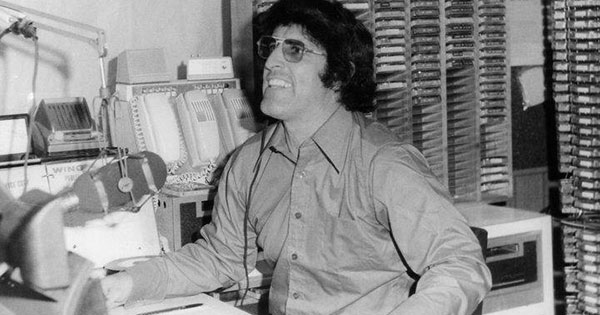
Dayton, Ohio, radio personality Steve Kirk ruled the Miami Valley airwaves for decades. Is there a need for this kind of talent in the 21st Century?
Radio is still around because, for the most part, stations and owners have adapted, shifting to digital platforms, streaming services, and podcasts. For example, this column’s podcast counterpart is featured on iHeartRadio, which operates more than 850 stations nationwide.
Additionally, over-the-air broadcasting remains a popular option, particularly in cars. Every week, approximately 92% of Americans listen to the radio—roughly 272 million people—proving that radio remains the dominant medium for commuting.
Local radio ad revenue, however, isn’t what it once was. In 2025, sales are expected to reach only around $2.4 billion—a sharp contrast to the nearly $22 billion radio generated just 20 years ago. Radio stations have had to rethink their business models due to stiff competition from digital platforms. Some have survived and prospered by embracing digital, while others struggle to keep the lights on.
Cumulus and Townsquare Media recently shut down twenty radio stations. Many of these were AM stations that had lost their audience decades ago, unable to compete with the convenience of streaming. While this thinning of the herd might seem like bad news, some argue it’s a necessary evolution—fewer stations mean less competition for ad dollars, potentially stabilizing the industry.
That said, AM remains profitable, thanks in part to FCC deregulation by Presidents Reagan and Clinton, and conservative talk programming has become its cash cow. Unlike the early 1980s, when call-in talk shows were relatively new, less restrictive laws eventually allowed companies to own and operate nearly unlimited radio stations.
Suddenly, extreme political hosts like Rush Limbaugh, who held the daytime ad money, reached millions over a network of AM stations. More entertainment-focused programs, such as Sally Jessy Raphael’s call-in show, also thrived, ruling the airwaves at night.
Then there’s traditional radio’s subscription-based cousin – satellite. Since its inception, satellite radio has been marketed as the premium alternative—no static, initially with no commercials, and a seemingly infinite selection of niche stations.
Satellite radio carved out a loyal audience, particularly among drivers who want uninterrupted entertainment on long commutes. SiriusXM, the dominant player in the satellite radio market, boasts over 34 million subscribers. While that’s a fraction of traditional radio’s reach, it’s still significant, proving that people are willing to pay for curated content.
Satellite radio offers exclusive content—think Howard Stern and live sports. However, it faces stiff competition from podcasts, which offer similar content for free. Streaming services like Spotify and Apple Music offer listeners more control over their audio experience, making it harder for satellite radio to justify its subscription fees.
Even with these checkmarks in radio’s “cons” column, in my opinion, there are still plenty of pros, so long as the medium continues to evolve. “Because that’s how we’ve always done it” isn’t a phrase anyone working in radio wants to hear from management these days.
Whether it’s delivering local news, playing your favorite tunes, or keeping you company on a long drive, radio is still a faithful companion for whatever you’re doing. If you don’t believe me, turn on your car stereo. Chances are, you’ll find something worth listening to.
An update from the Dayton Hamvention officials on May 28th reads as follows: The 2025 Hamvention set a new high attendance record with 36,814 attendees. The general chair, Brian Markland, said he felt fabulous about watching large crowds of amateur radio enthusiasts from all over the world enjoying exhibits, forums, and the flea market.
XENIA — Before cell phones or the internet, there was amateur, or “ham,” radio.
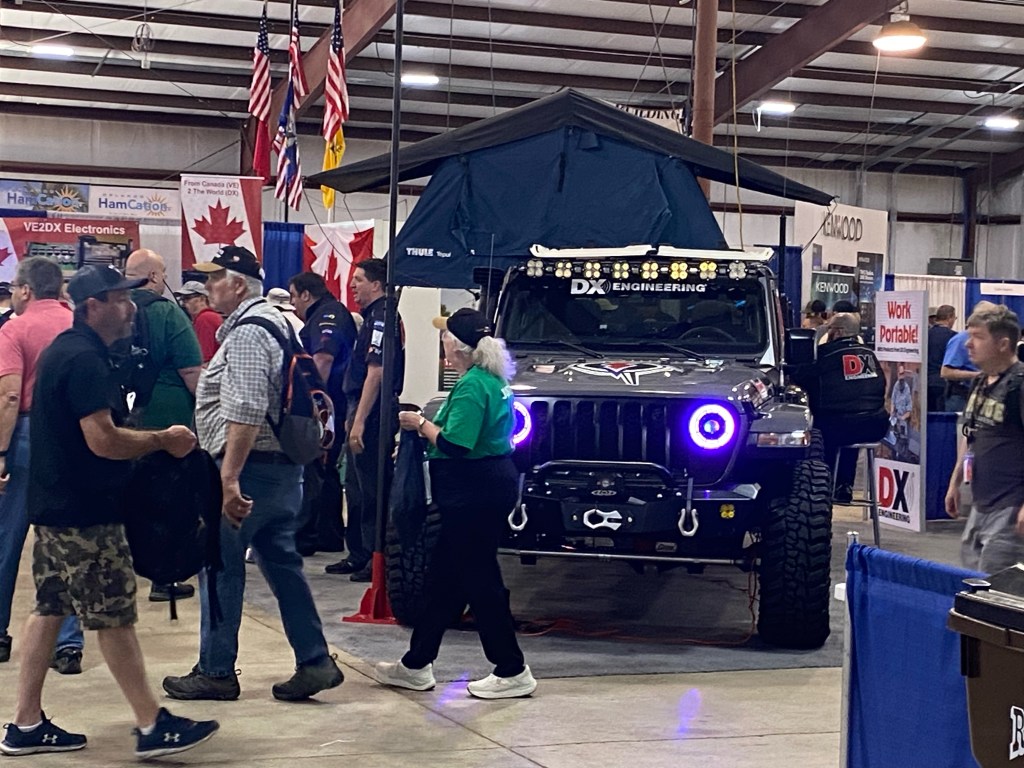
Once a year, thousands of enthusiasts descend on the Greene County Fairground and Expo Center in Xenia for the largest amateur radio convention in the world – Dayton Hamvention. Although final numbers will not be tallied for some time, organizers estimate that this year’s turnout exceeded the 35,000 attendees of 2024.
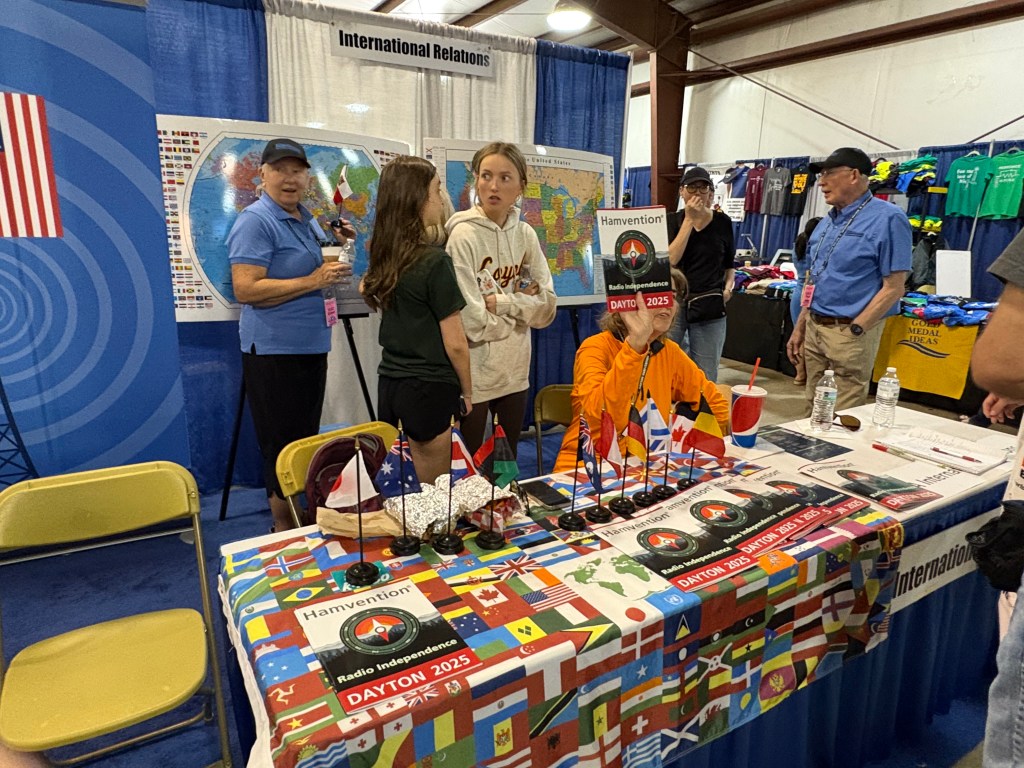
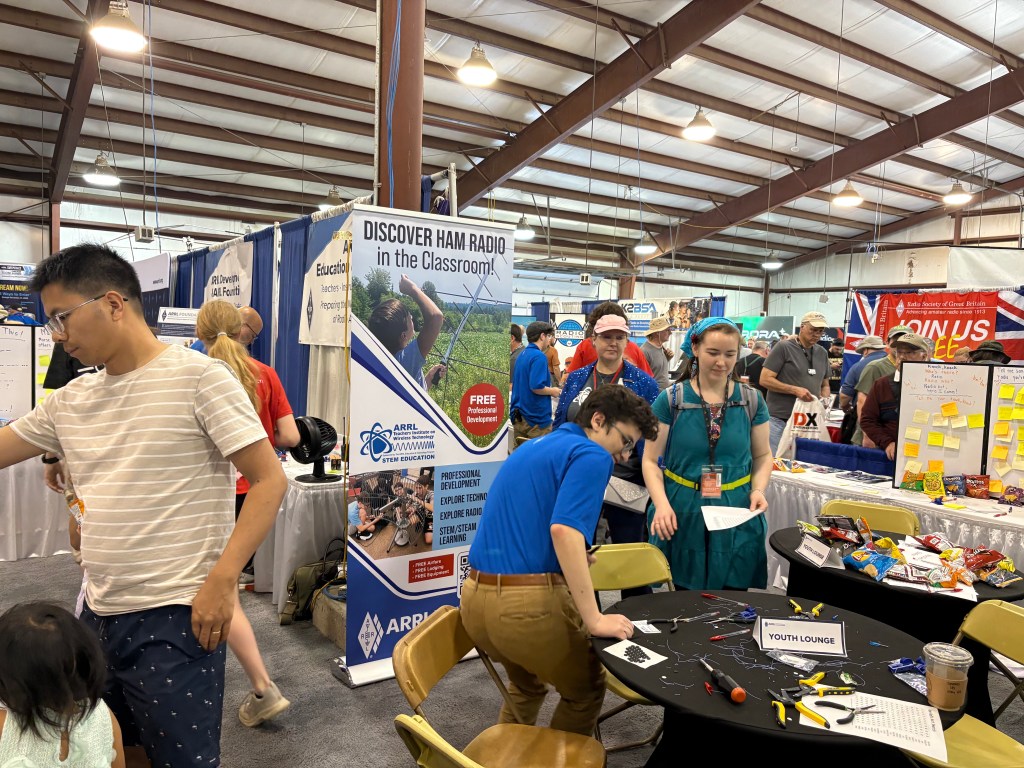
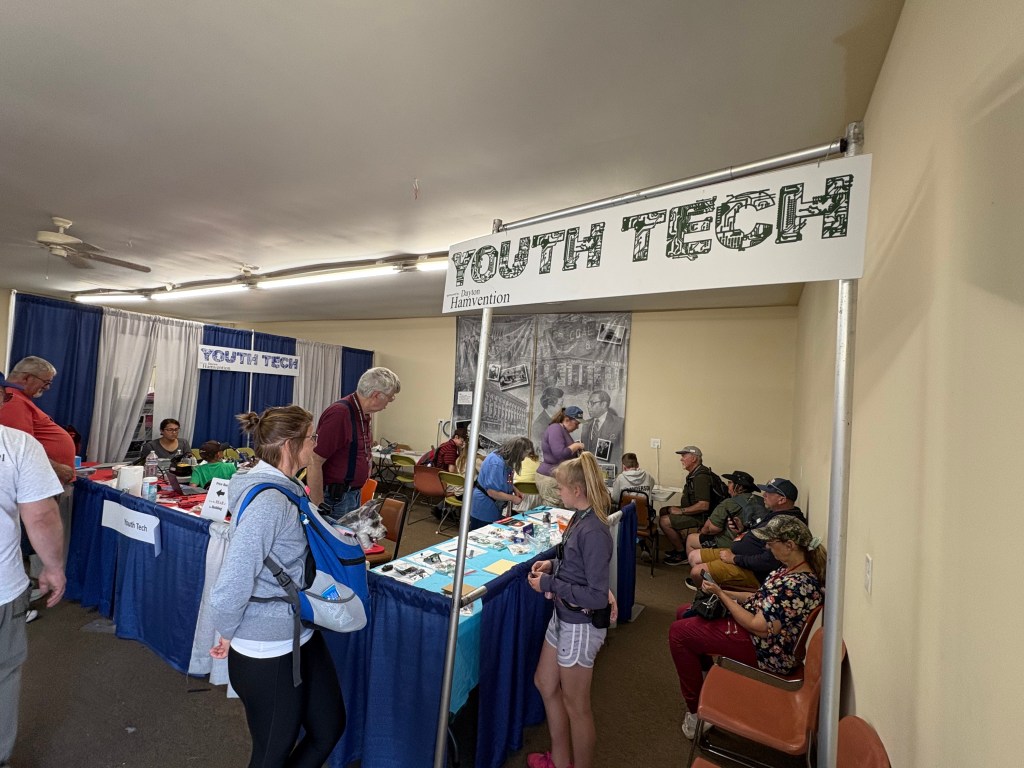
During Dayton Hamvention, participants from as many as 30 countries had the opportunity to see and buy the latest technology, attend educational and informational forums, sit for radio license exams, and take part in youth activities. This year’s event also included groups of young radio enthusiasts, organizations from all over the country made up of young people interested in both the analog and digital nature of amateur radio.
Jim Gifford, call sign N8KET, is the chairman of the media committee for Dayton Hamvention. He shared this year’s theme – Radio Independence – noting that what makes this event so important and impactful to the amateur radio community is the people. One of his favorite moments of this year’s event happened on Friday. “We had 73 students of the Community STEAM Academy (Science Technology Engineering Art and Math) in Xenia here,” he said. “They were really excited to learn how amateur radio relates to science and even space communication.”
With some 800,000 licensed ham radio operators in the United States alone, there is a remarkable sense of community among radio operators, regardless of geography. “It’s so nice for all of us in the local area to be able to come to Hamvention, but then you have to stop and think, this is a big ham fest,” said Glenn Rodgers, WI80, assistant chairman of the event’s media committee. “This is the biggest ham gathering in the world, and we’re so fortunate to be able to come to something like this in this area and it’s an honor to work here.”
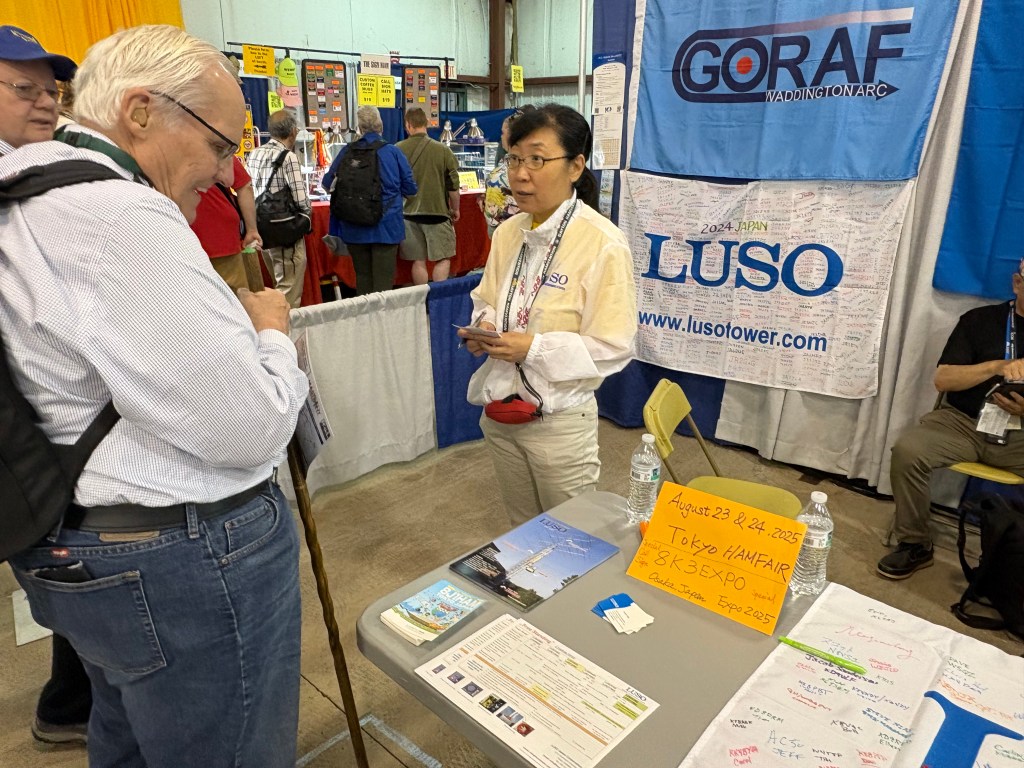
Amateur radio enthusiasts, vendors, and organizations from around the world converged at the Dayton Hamvention. Here’s a promotional booth for Tokyo Hamfair.
With such widespread interest, one might expect the world’s current geopolitical tension would hamper those relationships. According to Gifford, it does not. “We have a multitude of political views here,” he said. “But we’re ham operators, we take care of each other.”
“Because you meet people,” Gifford continued. “We talk to people all over the world. Just the other day, I spoke to somebody from Norway, and somebody from Italy, and it crosses barriers. It really does.”
Most amateur radio enthusiasts are known on the air, and to each other, only by their call sign, an alphanumeric identification given to each license holder by the Federal Communications Commission (FCC).
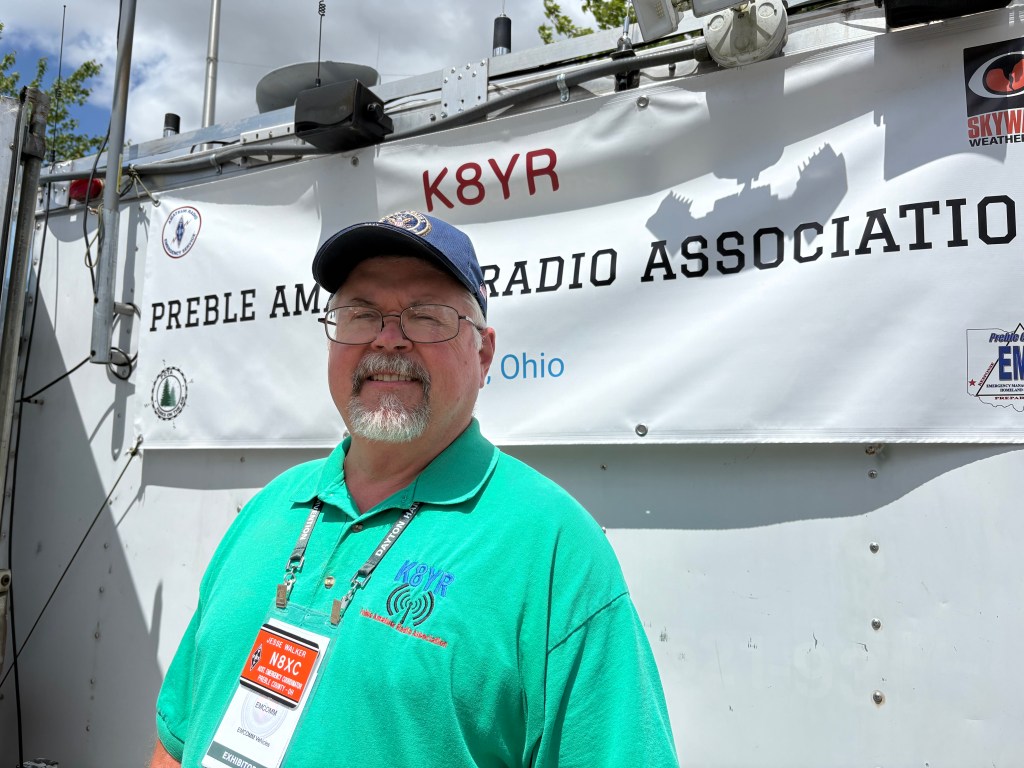
Jesse Walker, N8XC, is U.S. Navy Veteran, and business development manager with Aegis Protective Services in Eaton. He’s been involved in amateur radio since the age of 15. He explained that, although the call signs are assigned, they become part of your identity.
“Many of us only know each other by our call sign,” Walker explained, who is a member of the Preble Amateur Radio Association in Preble County. “Coming here, we get to meet face-to-face often for the first time.”
Both Rodgers and Gifford also noted that, apart from being a hobby for some, ham operators play an important role in the community during emergencies. “Amateur radio groups work as sky spotters during severe weather, they work with and support our area first responders, providing backup communications and volunteers during local emergencies,” Gifford said.
“Essentially, the Preble Amateur Radio Association is involved in public service,” said Jesse Walker. “We work with the Preble County emergency management agency. Our motto in amateur radio emergency service is, ‘when all else fails.’”
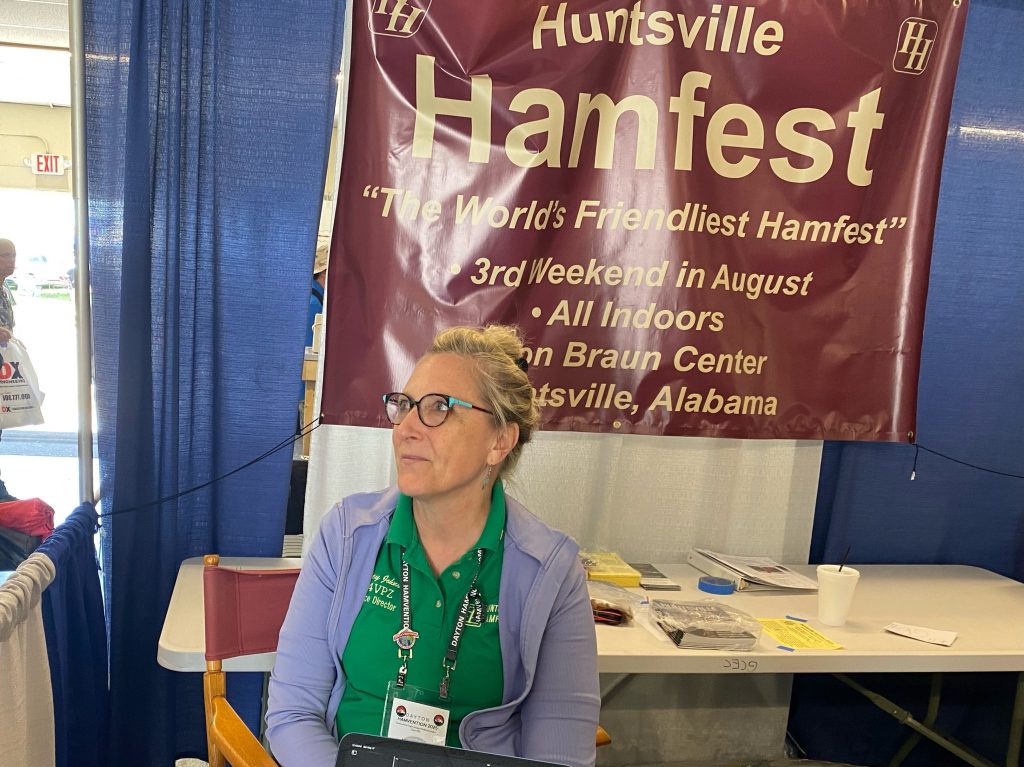
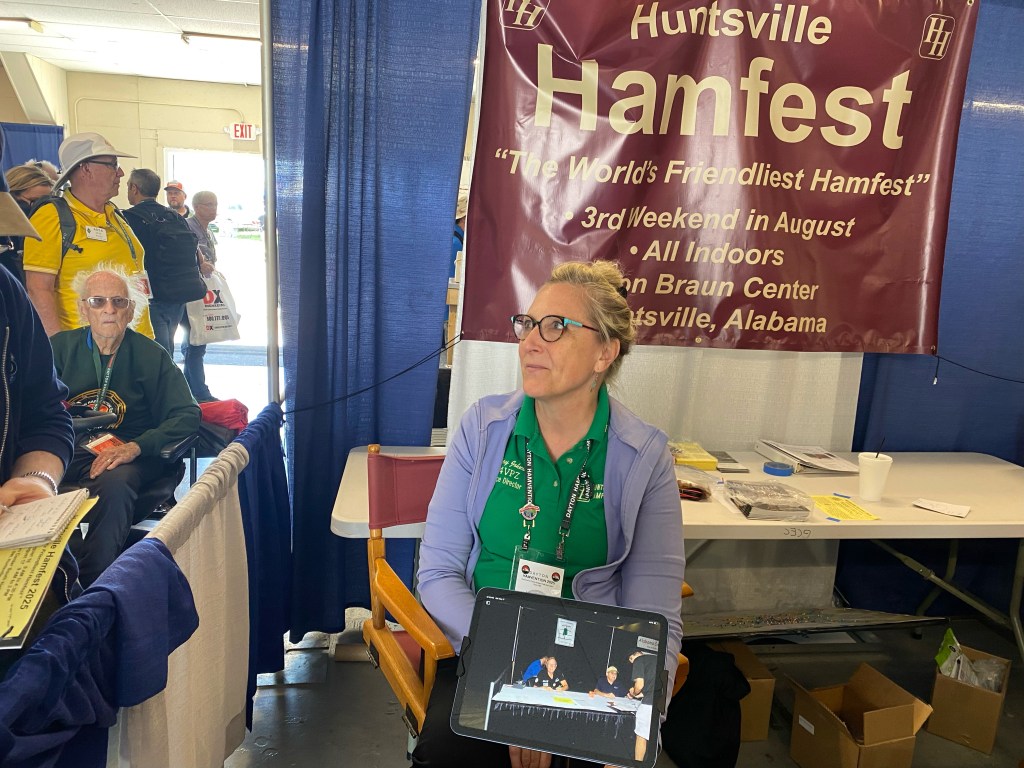
Other amateur radio convention organizers also attend to promote their own events. Huntsville Hamfest, held annually in Huntsville, Alabama, is one such organization. Mark Brown, N4BCD, is the chairperson for the Huntsville Hamfest Association. “Ours is the third largest Ham radio convention in the country, behind Dayton and Orlando, Florida,” Brown said. “We all cooperate and help support each other’s events.”
Mark Brown, N4BCD, and Kelley Johns, W4VPZ, (pictured) provided information about the Huntsville Hamfest in Alabama.
Brown suggested the consistent growth of these events and interest in amateur radio is due in part to younger people learning about its technical diversity. “I think to attract kids, we’ve got to show different aspects of the hobby, like the satellite communications, the youth on the air, and the parks on the air,” he said. “Get youth involved in it. That’s one thing these events do is bring all ages together.”
Planning for next year’s Dayton Hamvention is already underway. For more information visit hamvention.org.
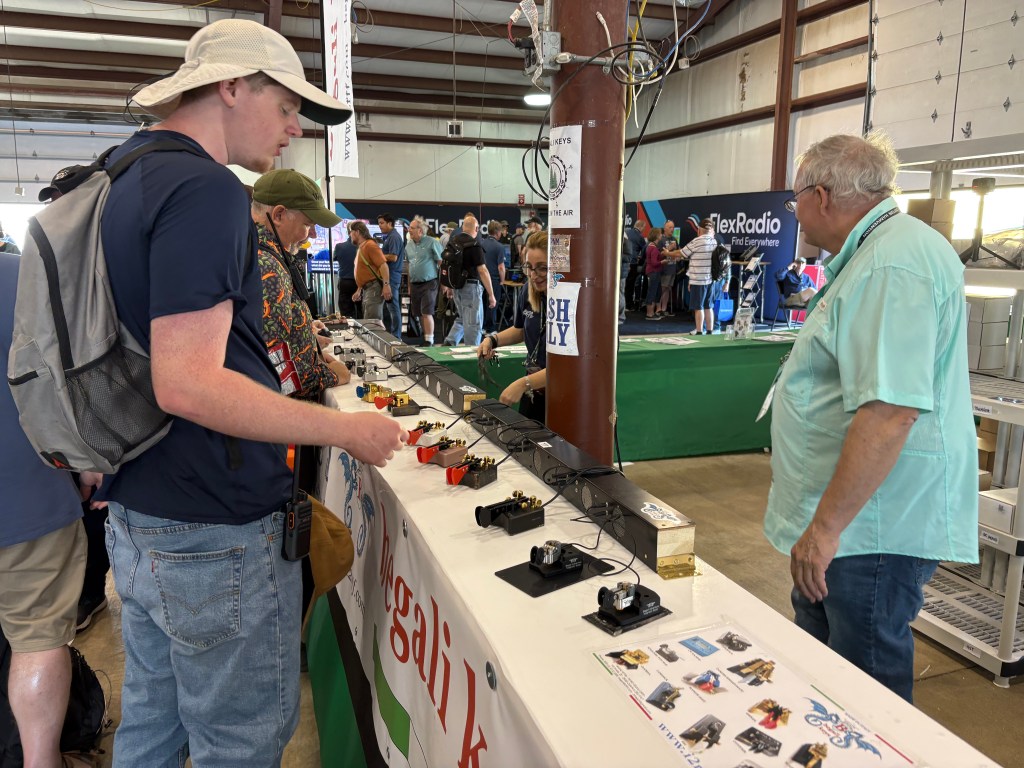
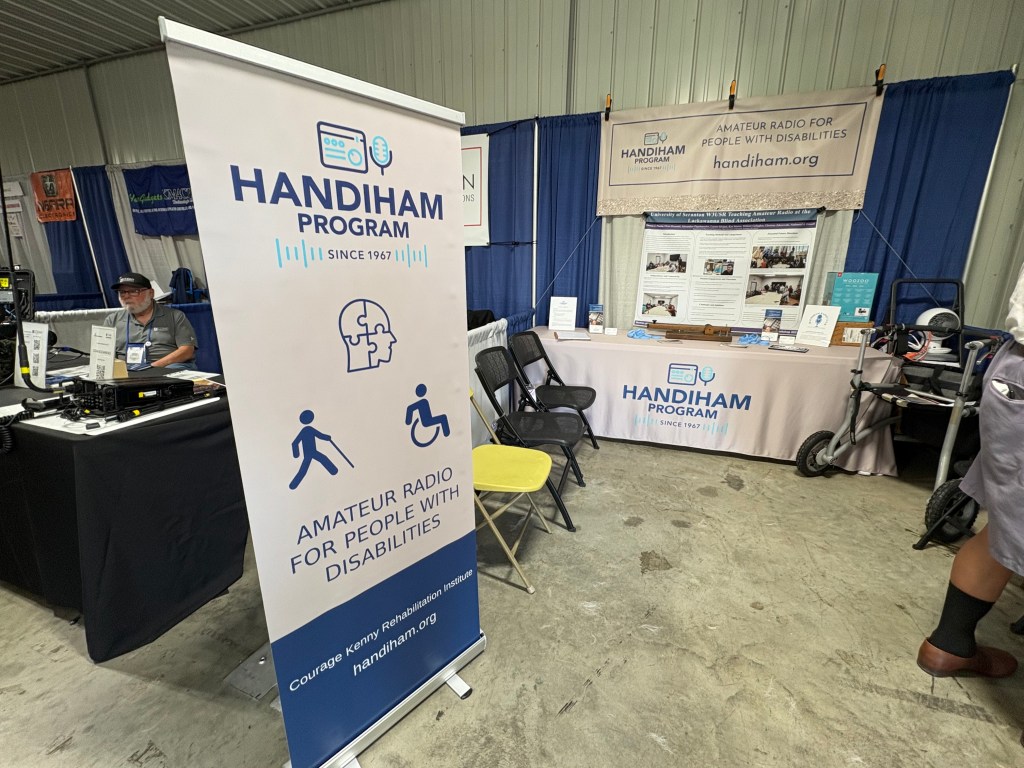
Glenn Rodgers and Jim Gifford, media committeeJesse Walker, N8XC, is U.S. Navy Veteran, and business development manager with Aegis Protective Services in Eaton.Flea market area had booth after booth of high tech and vintage technology.“Handiham” program provides connection for radio enthusiasts of limited physical ability.








 The Jamestown Comet