Support Local. Stay Informed. Strengthen Jamestown and the Greene County region. The Jamestown Comet.com was founded in 2009 and named after one of Jamestown, Ohio’s original newspapers. The publication is online only (for the moment) and exists for one simple reason: to serve our community with clear, accurate, and independent local journalism. No clickbait. No political agenda. By becoming a Patreon supporter, you’re helping ensure that Jamestown’s stories continue to be told—honestly, thoughtfully, and without outside influence. For $5 per month, you directly support reporting that focuses on the issues, people, and events that matter right here at home. (Click to Subscribe) Local journalism is often the first to notice changes, ask hard questions, celebrate successes, and hold institutions accountable. When local news disappears, communities lose more than headlines—they lose connection, context, and trust. Your support helps prevent that.
As a subscriber, you’ll benefit from:
Reliable local news you won’t find on national sites or social media feeds
Clear, locally focused weather coverage that helps you plan your day, not just scan a forecast
Insightful commentary grounded in personal experiences and reality—not clickbait or recycled talking points
A stronger, independent voice dedicated to covering our community, consistently and responsibly
Your membership helps fund reporting, writing, editing, and publishing—all done with the community’s best interests in mind. Our owner is our editor and publisher, and we don’t chase algorithms—just a commitment to honest local journalism. And when there’s a commentary, we say so – just like Cronkite and Murrow. Editor’s Note: Literacy and a Free Press are quintessential to a thriving democratic society. Our job is to resist and work against censorship, attempts to silence journalists, and intimidation tactics toward journalists and publications by any government agency. – Gery L. Deer, Founder, Editor, & Publisher The subscription is $5 per month, and you can cancel anytime. No long-term obligation—just meaningful support for a vital local resource. If you believe informed communities are stronger communities, we invite you to become part of The Jamestown Comet and help keep local journalism alive.
Modern Americans are fascinated with the complexities of British social classes. Television programs like “Upstairs, Downstairs” and, more recently, “Downton Abbey” give us colonials a glimpse into the inner workings of a world in which you are trapped in the station to which you were born, good or bad. We gaze through the looking glass at the uptight snobbery of the self-anointed lords and ladies who flutter around their castles, moaning about what they’ll wear to dinner after changing clothes for the tenth time that day.
All the while, we commoners across the pond suffer alongside the struggles of those who do the actual work – the maids, footmen, farmers, and shopkeepers. They’re all just trying to make ends meet, but are never permitted to step out of their place to be more than that. All this because their father’s, father’s father was a farmer or cook or butler – and so shall they be, as ordained by a class system that’s as ridiculous as it is antiquated.
We watch, we grimace, we sit in our superiority about having extricated ourselves from such nonsense 250 years ago – or did we? Americans love the idea that this country is a classless society. We’re taught that if we work hard enough and do our best, we can rise to whatever level we choose. It’s a comforting (and arrogant) notion that makes for great campaign speeches. Unfortunately, it’s completely false. Classism has been with us since the beginning, even though we try very hard not to admit it.
Never has America’s class system been more visible than since the 2024 presidential election. The “haves” took over in January, largely thanks to the ignorance of the “have-nots.” Sadly, those who got this administration elected – mainly the working poor – don’t seem to care that the people they sent to Washington want to keep them right where they are – broke and blaming everyone on the other side for their circumstances.
Why else would they gut our social services, eliminate job training and healthcare support, and destroy historic buildings in favor of grand, palatial eyesores to show off the wealth – and their class status – that you and I will never, ever experience. Remember, none of this is new. It’s always been this way, but most Americans pretend it’s not. I promise you, though, if you set one foot into that world and you don’t belong, you’ll know it – they’ll make sure of that.
In Europe, classism originates from a combination of wealth and notions of nobility passed down through generations. But here, it’s all about the cash. Or, more correctly, wealth in general. From the moment the first colonists set foot on this continent, social layers began to form. European class systems based on land and labor arrived right along with them. Those who owned property or controlled trade (the wealthy) quickly established themselves at the top. Those who labored — whether as indentured servants, tenant farmers, or enslaved people — occupied the lower rungs. Wealth dictated opportunity, status, and political power.
When the founders sat down to sketch out a nation based on Enlightenment ideals, they tried to break from those traditionally rigid hierarchies. The promise was that this new republic would be different: more equal, more flexible, more open to talent than lineage. But before the ink was even dry on the Constitution, participation in democracy was tied to property ownership. In other words, class.
The industrial periods of the late 19th and early 20th centuries produced titans of industry and staggering corporate wealth, alongside factory workers who lived ten to a room and rarely made ends meet. The labor unrest of that era was more than economic conflict. It was an open confrontation between classes that the country pretended didn’t exist. And yet, generation after generation, we’ve continued telling ourselves that class isn’t part of the American story.
But it is – and that distinction is growing daily, minute by minute, mainly due to our current political structure and power, as billionaires are given increasing influence over our government.
In part two, we will talk about who perpetuates the very real American class system and what, if anything, can be done to lessen its influence on the majority.
PART II
I’m painfully aware of class distinctions. I grew up in a farm family that also included teachers, mechanics, cattle workers, and waitresses. I’ve had every job you can imagine – and some you can’t – and in every situation there was always someone around to remind me of my “place.” I never became a “have,” but, like you, I work for my living – and I always have – something most blue bloods can rarely claim.
Excluding tech boom millionaires from the 1990s, there is significant generational wealth at the top of the American food chain. However, most wealthy individuals insist that their success stems solely from a work ethic. Those struggling, on the other hand, are told to pull harder on their bootstraps. It’s a neat trick: if class doesn’t exist, then anyone stuck at the bottom must simply not be trying hard enough. That’s why republicans in power (who tend to be the wealthier group) blame the poor for being poor – spouting off on how they must be lazy, working the system, etc. And democratic leaders (who are often less wealthy, but not without means), champion the working poor while still condescending to them, maintaining the class barriers. Has Chuck Schumer, a multi-millionaire, invited you to any parties lately? Yeah, me either. Both sides are to blame for all this.
The truth is that modern America has a very real class structure, even if we don’t officially name it. At the top is the wealth class — that small percentage of Americans whose fortunes come from investments, corporate ownership, or inherited wealth. Below them is the upper middle class, made up of highly educated professionals who enjoy stability, networks, and cultural influence. The middle class — if we can still call it that with a straight face — includes those with some savings, homeownership, and a degree or a skilled trade.
Further down are the working class and the working poor, whose lives are shaped by hourly wages, inconsistent schedules, limited benefits, and housing insecurity. The lower classes – where most of us fit – are increasingly squeezed by rising costs and stagnant wages. What separates these groups isn’t just income. It’s wealth, education, geography, access to healthcare, and those unwritten rules known as “cultural capital” — things like networking, confidence in professional settings, or simply knowing which doors to knock on.
So where did our grand experiment at classlessness go wrong? It failed in all the predictable places. Public education and other social services were intended to level the field, but are still funded by local taxes that mirror neighborhood wealth. Even the American Dream itself was built on the idea that anyone can rise — as long as they start from somewhere near the top in the first place.
Those who rise to power tend to be members of the upper class, with little or no desire to lose their position by pandering to social groups with no influence, financial or otherwise. Sure, we see extensive TV news footage of politicians and wealthy people who volunteer with social services, donate to charities, and give speeches on behalf of the poor and less fortunate. But at no time do you ever see one of those people – from any political side – do something that might benefit you and me while jeopardizing their own place.
We could effect change, however, if we improve access to education, support trade schooling, strengthen worker protections, and provide financial literacy programs. We could even create a healthcare system that doesn’t punish people for simply being alive. Unfortunately, none of this seems likely in the current social and political climates.
America must accept that class exists, but only those at the top are sure of it. For some reason, the poorest people support the politicians and policies that tend to harm them the most. It’s time to wake up and realize that, to maintain their positions and wealth, the upper class will always try to subjugate the middle and lower classes.
So, what can you do? Listen to what the politicians are saying and doing. How does it help you? How does it harm you? Dump the idiotic crowd mentality of party and vote for your own best interests, not theirs.
Bauder is the AP’s national media writer, covering the intersection of news, politics and entertainment. He is based in New York.
Members of the Pentagon press corp carry their belongings out of the Pentagon after turning in their press credentials, Wednesday, Oct. 15, 2025 in Washington. (AP Photo/Kevin Wolf)
Washington Post reporter Tara Copp saves the name plaques from various news organizations as she and members of the media pack up their belongings in the press area in the Pentagon, Wednesday, Oct. 15, 2025 in Washington. (AP Photo/Kevin Wolf)
A cleaning person throws a bag of trash in a dumpster as members of the media pack up their belongings in the press area of the Pentagon, Wednesday, Oct. 15, 2025 in Washington. (AP Photo/Kevin Wolf)
Members of the Pentagon press corps gather for a group photo after turning in their press credentials, Wednesday, Oct. 15, 2025, in Washington. (AP Photo/Kevin Wolf)
NEW YORK (AP) — Dozens of reporters turned in access badges and exited the Pentagon on Wednesday rather than agree to government-imposed restrictions on their work, pushing journalists who cover the American military further from the seat of its power. The nation’s leadership called the new rules “common sense” to help regulate a “very disruptive” press.
News outlets were nearly unanimous in rejecting new rules imposed by Defense Secretary Pete Hegseth that would leave journalists vulnerable to expulsion if they sought to report on information — classified or otherwise — that had not been approved by Hegseth for release.
Many of the reporters waited to leave together at a 4 p.m. deadline set by the Defense Department to get out of the building. As the hour approached, boxes of documents lined a Pentagon corridor and reporters carried chairs, a copying machine, books and old photos to the parking lot from suddenly abandoned workspaces. Shortly after 4, about 40 to 50 journalists left together after handing in badges.
“It’s sad, but I’m also really proud of the press corps that we stuck together,” said Nancy Youssef, a reporter for The Atlantic who has had a desk at the Pentagon since 2007. She took a map of the Middle East out to her car.
It is unclear what practical impact the new rules will have, though news organizations vowed they’d continue robust coverage of the military no matter the vantage point.
Images of reporters effectively demonstrating against barriers to their work are unlikely to move supporters of President Donald Trump, many of whom resent journalists and cheer his efforts to make their jobs harder. Trump has been involved in court fights against The New York Times, CBS News, ABC News, the Wall Street Journal and The Associated Press in the past year.
Trump supports the new rules
Speaking to reporters at the White House on Tuesday, Trump backed his defense secretary’s new rules. “I think he finds the press to be very disruptive in terms of world peace,” Trump said. “The press is very dishonest.”
Even before issuing his new press policy, Hegseth, a former Fox News Channel host, has systematically choked off the flow of information. He’s held only two formal press briefings, banned reporters from accessing many parts of the sprawling Pentagon without an escort and launched investigations into leaks to the media.
He has called his new rules “common sense” and said the requirement that journalists sign a document outlining the rules means they acknowledge the new rules, not necessarily agree to them. Journalists see that as a distinction without a difference.
“What they’re really doing, they want to spoon-feed information to the journalist, and that would be their story. That’s not journalism,” said Jack Keane, a retired U.S. Army general and Fox News analyst, said on Hegseth’s former network.
When he served, Keane said he required new brigadier generals to take a class on the role of the media in a democracy so they wouldn’t be intimidated and also see reporters as a conduit to the American public. “There were times when stories were done that made me flinch a little bit,” he said. “But that’s usually because we had done something that wasn’t as good as we should have done it.”
Youssef said it made no sense to sign on to rules that said reporters should not solicit military officials for information. “To agree to not solicit information is to agree to not be a journalist,” she said. “Our whole goal is soliciting information.”
Reporting on US military affairs will continue — from a greater distance
Several reporters posted on social media when they turned in their press badges.
“It’s such a tiny thing, but I was really proud to see my picture up on the wall of Pentagon correspondents,” wrote Heather Mongilio, a reporter for USNINews, which covers the Navy. “Today, I’ll hand in my badge. The reporting will continue.”
Washington Post reporter Tara Corp, center right, embraces NBC News correspondent Courtney Kube as they leave the Pentagon after turning in their press credentials, Wednesday, Oct. 15, 2025 in Washington. (AP Photo/Kevin Wolf)
Mongilio, Youssef and others emphasized that they’ll continue to do their jobs no matter where their desks are. Some sources will continue to speak with them, although they say some in the military have been chilled by threats from Pentagon leadership.
In an essay, NPR reporter Tom Bowman noted the many times he’d been tipped off by people he knew from the Pentagon and while embedded in the military about what was happening, even if it contradicted official lines put out by leadership. Many understand the media’s role.
“They knew the American public deserved to know what’s going on,” Bowman wrote. “With no reporters able to ask questions, it seems the Pentagon leadership will continue to rely on slick social media posts, carefully orchestrated short videos and interviews with partisan commentators and podcasters. No one should think that’s good enough.”
The Pentagon Press Association, whose 101 members represent 56 news outlets, has spoken out against the rules. Organizations from across the media spectrum, from legacy organizations like The Associated Press and The New York Times to outlets like Fox and the conservative Newsmax, told their reporters to leave instead of signing the new rules.
Only the conservative One America News Network signed on. Its management likely believes it will have greater access to Trump administration officials by showing its support, Gabrielle Cuccia, a former Pentagon reporter who was fired by OANN earlier this year for writing an online column criticizing Hegseth’s media policies, told the AP in an interview.
I have been a freelance journalist since 1988, and the level at which we are losing our right to speak fact to power is deeply concerning. I don’t care what side of politics you happen to be on, but if you can’t see that free speech is under attack in our country right now, you must be living under a rock or so brainwashed by the status quo that you don’t care. Well, you should care. Our founding fathers put our guarantee, free speech, a free press, and freedom of, and from, religion – all right there in the First Amendment of our Constitution.
The current political machine grinds out endless column inches, social media posts, and lawless proclamations to spew freedom at every possible moment. And yet, the first things they did when they took over was restrict the freedoms of anyone “he” didn’t like – and now it’s extending to those who speak out against their “cause.” Supposedly, that cause was freedom at all costs, with the caveat that you must go along with everything they say or do.
We’ve heard all of this before, in other countries, from communists, fascists, dictatorships, you name it. So here we are, in arguably the most powerful country on the planet, now controlled by people who have simply decided that free speech is fine, so long as it’s state-approved. Don’t get me wrong, our country is not perfect; we’ve got blemishes on our history all the way back to day one. However, I’d like to think we’ve improved some things since then.
Now I’m not so sure. The people in power want to eliminate any shred of evidence that the United States of America is not as star-spangled awesome as they’d like you to believe. They are all hard at work scrubbing books, museum exhibitions, and historical data of any references to the horrors of slavery, government corruption, and anything else that doesn’t serve their crazy idea of democracy. Let’s be clear, it’s not democracy they want, but totalitarianism.
Every move they make implies a state-sanctioned religion, a theocracy, and brainwashed ideology that is not only bigoted and corrupt, but downright criminal. This administration has violated the Constitution so many times that even the press has begun to normalize its behavior. Are you kidding me? That’s what we’re supposed to do now?
Why else would massive corporations like CBS Paramount, or ABC, which Disney owns, suddenly drop some of the most influential and award-winning television hosts? Sure, companies have regulations within their business, and they’re allowed to set the tone by which employees are expected to behave. However, when the government threatens a broadcaster with revocation of their broadcast license over a freedom of speech issue, rather than a regulation or violation of the airways, we’ve reached a point of ridiculousness and danger.
Can you imagine if the other side of the aisle had done any of this? The same people who are doing it now would have literally lost their minds. They would have been breaking their arms to wave flags and scream about trampling on the Constitution. But now, so long as you say what they like, you’re good to go.
Book bans, an attempt to force the “free press” to report only what the administration approves, and a laundry list of other incomprehensible and subjugating tactics are all part of their method of operation. The country’s second in command recently issued warnings to the public not to say anything against the recently assassinated vocalist of this right-wing banana factory – or else.
No government official in the United States of America has the right to restrict the free speech or opinions of any citizen – or any non-citizen, for that matter. If our laws don’t apply to everyone, if our freedoms and civil liberties don’t extend to all, then they’re complete nonsense. Americans on both sides of the aisle are feeling the strangle hold on their rights, but virtually no one on the right will speak out for fear of “his” wrath.
I say this again – free speech is under attack. But the more we all speak up, the less they will be able to suppress our voices.
As journalists, we ask questions for a living. And we strive to make sure our work addresses the pressing ones on readers’ minds, especially in this time of dizzying political news. That’s why we regularly invite the audience of The Morning to send us their questions, and have our expert beat reporters respond.
Today, we’re addressing your queries about immigration, military spending, Social Security, Medicaid and whether now is a good time to build a house. (Got a question for us? Submit them here.)
ICE raids
With the raids on undocumented immigrants going on, targeting the people who work in the fields and the slaughterhouses, how have these actions affected the supply and prices in our grocery stores? — Anna Halbrook, Otis, Ore.
We asked Julie Creswell, who covers the food industry, to field this one:
We haven’t seen any obvious fallout from immigration raids on grocery prices yet. As of the end of May, prices were up about 2.2 percent compared with a year earlier. Eggs, coffee and meats — ground beef in particular — drove that increase.
But beef prices were climbing even before the raids, because of droughts and high interest rates (ranchers take out loans to run their operations). The nation’s cattle inventory is at its lowest level since the 1950s. Prices of fruits and vegetables have stayed about flat over the past year; tomatoes and lettuce are actually much cheaper right now.
Defense spending
Trump has pushed NATO countries to spend 5 percent of their economic output on the military. How much of its economic output does the U.S. spend on the military? — Diann Ebersole, Copperopolis, Calif.
From German Lopez, who has written several Morning newsletters on this very topic:
The U.S. spends about 3.5 percent of its gross domestic product on the military. That used to put America at the top of NATO’s ranks, but Poland now spends a larger portion, 4.1 percent.
Critics say this makes President Trump a hypocrite: If the U.S. isn’t spending 5 percent, why should other countries? But Trump says that the U.S. doesn’t need to spend as much now because it’s invested a lot more historically. Europe, the argument goes, has let its militaries and defense industries languish through disinvestment. (Some experts agree.) The president contends that those countries need to rebuild in a way that the U.S. doesn’t, and rebuilding has a big upfront cost.
Trump also has a transactional view of the world and alliances. He sees Europe’s renewed spending as payback after the U.S. bore the brunt of NATO’s duties and expenditures for decades.
Retirement benefits
I’ve heard a lot of talk that Social Security will be running out of money. I plan on retiring in the next two to three years. Should I retire sooner to collect my full benefit? — Elizabeth Y.
Here’s Tara Siegel Bernard, who recently interviewed retirees on this:
Social Security has long faced financing challenges, but the issue becomes more pressing each year. The trust fund that pays retiree benefits is projected to be depleted in 2033, or when today’s 59-year-olds turn 67. At that point, the program will have enough incoming revenue to pay only 77 percent of benefits — in other words, a 23 percent cut. But that happens if Congress does nothing to address the problem, like raising payroll taxes or trimming benefits.
The decision of when an individual should take Social Security is highly personal. There can be a huge payoff for healthy people who can afford to wait: Starting at 67 instead of 62, for example, can mean monthly checks that are 43 percent higher. And for each year you delay retirement past 67, your monthly payment rises 8 percent.
Ask yourself: Would collecting a reduced benefit for a couple of extra years be preferable to locking in a higher benefit for the rest of your life? A conversation with a financial planner is often a solid investment; these are high-stakes decisions.
Who loses Medicaid?
Are there some specific examples of who will be affected by Medicaid cuts and requirements to work in the big policy bill passed last week? Will people with Parkinson’s who are in long-term care be cut off because they can’t work? — Amy, Glenview, Ill.
From Margot Sanger-Katz, who covers health care for The Upshot:
The bill’s work requirement is focused on a relatively specific group of Medicaid beneficiaries: childless adults without disabilities and parents of children older than 13. But it is certainly plausible that the bill’s policies could have spillover effects for other populations.
A person in long-term care with Parkinson’s would almost certainly still be covered. But someone with Parkinson’s who has not yet qualified for Social Security disability status may have to prove they are too sick to work. States will also have to build new enrollment systems to check who is eligible and who is compliant, and several current and former state officials are worried the magnitude of that effort could lead to errors and delays for everyone.
When to build
Is this a good time to build a house? — Janie Spataro, Ringgold, Ga.
Conor Dougherty, who covers the housing industry, offers this advice:
Can you afford to build it, and do you plan on living there for seven to 10 years? If the answer to both of those questions is yes, then it’s as good a time as any to build.
Housing is an unusual good in that it is both a consumable, like a car, and an investment, like a stock. Most of the worst home-buying decisions — overstretching on a mortgage, buying in an area you don’t really like — come from thinking of housing as an opportunity to make money instead of as a place to live. A house is only a good investment if you think of it as home.
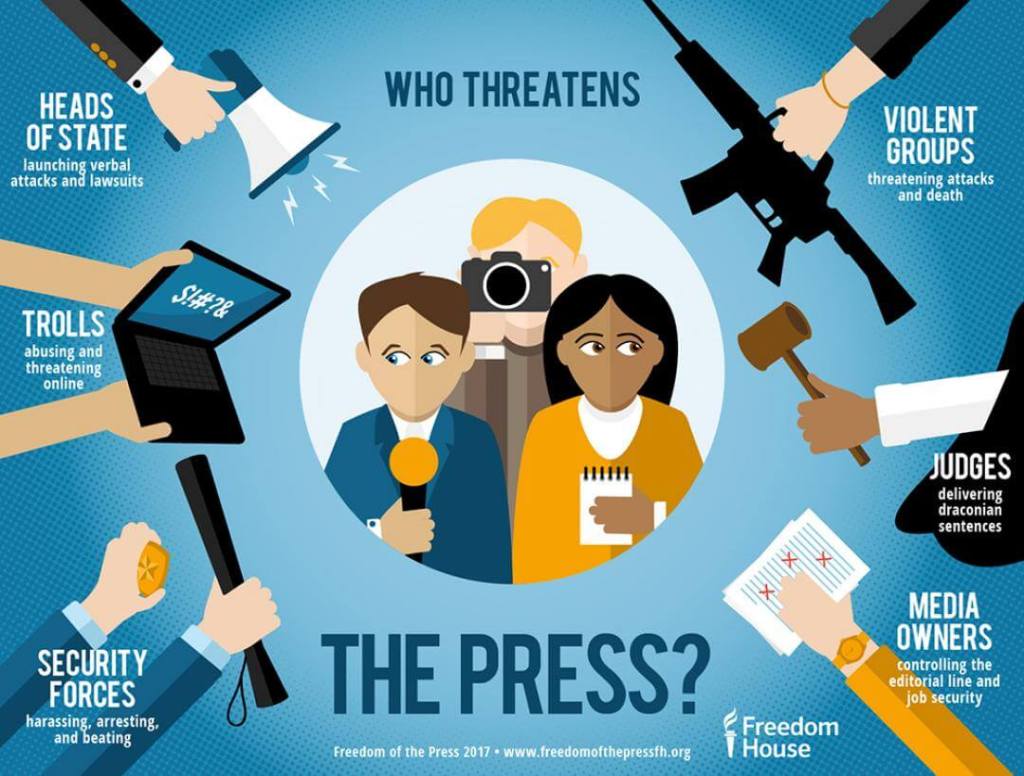
It’s one thing to feel your job is in danger—industries evolve, businesses close, and livelihoods shift. It’s another thing to fear that your work and profession could be criminalized. For those of us in the press, in my opinion, that moment has arrived.
Not long ago, journalists were considered the fourth estate, so-called because the press was seen as the fourth, unofficial, branch of government – the public’s eyes and ears, so to speak. A free press is a necessary check on power, the watchdogs of democracy. Today, Trump and company would rather call any of us who dare question them troublemakers, agitators—enemies of the people. And now, with the Supreme Court’s recent decision to uphold the White House’s ban on the Associated Press (AP), we stand on the edge of something far more dangerous than a bruised ego or a contentious press conference.
The justification? National security – as always. A vague, malleable excuse that’s nearly impossible to challenge or verify. Too convenient to ignore, too broad to oppose. It sets a precedent with sharp teeth. If AP can be barred, who’s next? The Washington Post, Reuters, or maybe any reporter who dares ask uncomfortable questions?
When a government moves to silence journalism, it isn’t just about limiting press access—it’s about controlling the public’s perception of facts. A free press must do more than inform; it should hold power accountable on behalf of the citizenry. That accountability is inconvenient, even infuriating, for those who prefer not to be held accountable for their actions.
We don’t have to delve deeply into history to see what happens when dissenting voices are silenced. Totalitarian regimes have long understood the value of controlling the narrative. In Nazi Germany, Joseph Goebbels, the minister of propaganda, ensured that only state-approved messaging reached the public. In Stalinist Russia, independent journalism became synonymous with treason. And now, in a supposed beacon of freedom, we find ourselves edging toward a similar state.
Perhaps some believe these measures are justified—that journalism has gone too far and biased reporting warrants a firm correction. Some might even argue that disinformation (a great deal of which originates with the White House) has muddied the waters so thoroughly that restricting the press helps protect the public from chaos. The question we must ask ourselves is not whether we like the press—it’s whether we need it. And if those in charge are willing to erase dissent under the guise of security, we may not have much time left to answer.
The implications go well beyond a single news outlet losing access or presidential attempts to discredit them. If a major institution like the Associated Press can be barred from the White House, and with Supreme Court approval, every journalist in America faces the same risk.
What happens when smaller, independent outlets push too hard? What happens when investigative reporters publicize facts surrounding corruption at the highest levels? This is how truth becomes dictated rather than discovered. This is how governments rewrite history while the present unfolds in silence.
The press has never been perfect—it has biases, it makes mistakes, and yes, sometimes it gets the story wrong. But journalism, at its core, is a profession based on the pursuit of facts. A reporter’s job is not to flatter or cater to power, but to question, to dig, to expose injustice and demand answers.
Our democracy was built on the idea that those in power answer to the people, not the other way around. That principle is maintained through open discourse, through transparency, through a press that is free to ask uncomfortable questions and uncover uncomfortable truths. Of course, that’s not how Trump sees it. He doesn’t answer to you or me – only to his donors.
Still, the president can boot them out of the West Wing, but he can’t stop them from reporting – yet. If we allow this moment to pass unchallenged, accepting that barring journalists is just another policy decision, we lose the foundation of informed democracy set in place under the First Amendment of the United States Constitution. Once the press is muzzled, once silence replaces scrutiny, and propaganda overshadows fact, there’s no telling what comes next.
The First Amendment to the U.S. Constitution protects what are commonly known as The Five Freedoms: freedom of religion, freedom of the press, freedom of speech, freedom of assembly, and freedom of petition. The amendment is one of the first ten amendments to the Constitution, known as the Bill of Rights, which was adopted in 1791.
The First Amendment Reads:
“Congress shall make no law respecting an establishment of religion, or prohibiting the free exercise thereof; or abridging the freedom of speech, or of the press; or the right of the people peaceably to assemble, and to petition the Government for a redress of grievances.” (Source: National Archives)
This amendment gives Americans the right to express themselves verbally and through publication without government interference. It also prevents the government from establishing a “state” religion and from favoring one religion over others. And finally, it protects Americans’ rights to gather in groups for social, economic, political, or religious purposes; sign petitions; and even file a lawsuit against the government. (Source: History.com)
Good morning, I’m Jayakumar Madala, filling in for Sarah Naffa.
In the news today: The Kilmar Abergo Garcia case pulls Democrats into the immigration debate Trump wants to have; a deep staff cut at the Consumer Financial Protection Bureau is the latest step in an extraordinary reshaping of the federal government; and survivors talk about the lessons of the 1995 Oklahoma City bombing. Also, scientists find possible chemical signs of life on a faraway planet. Maryland Sen. Chris Van Hollen, right, speaks with Kilmar Abrego Garcia in a hotel restaurant in San Salvador, El Salvador, on Thursday. (Press Office Senator Van Hollen, via AP)POLITICSThe Abrego Garcia case pulls Democrats into the immigration debate Trump wants to haveFor Democrats, the Kilmar Abrego Garcia case is about fundamental American ideals — due process, following court orders, preventing government overreach. For the Trump administration and Republicans, it’s about foreigners and gang threats and danger in American towns and cities. Read more.
Recent developments:This dichotomy is playing out as Democrats double down on their defense of Abrego Garcia, a Salvadoran man mistakenly deported and imprisoned without communication. On Thursday evening, Maryland Sen. Chris Van Hollen posted photos of himself meeting in El Salvador with Abrego Garcia. The lawmaker did not provide an update on the status of Abrego Garcia, whose attorneys are fighting to force the Trump administration to facilitate his return to the U.S.
In defending his administration’s position, Trump says he is doing what he was elected to do and justifying the need to deport millions. “I was elected to get rid of those criminals — get them out of our country or to put them away, but to get them out of our country. And I don’t see how judges can take that authority away from the president,” Trump said Thursday.
Last week, we saw an incredible example of unmitigated patriotism to provide a voice for those who have none in the face of a president who runs roughshod over anyone who dares oppose him. Cory Anthony Booker, the senior senator from New Jersey, took and held the Senate floor for 25 hours and 5 minutes in a marathon speech in opposition to President Trump’s haphazard and potentially illegal actions during the first three months of his term.
Until now, congressional resistance toward the president has been lackluster, to say the least. This is understandable considering the GOP’s control in both houses and the way this administration has reacted to any opposition, as a petulant child would on a playground when denied an ice cream cone. It’s embarrassing and troubling. Congressional town hall meetings across the country have been disrupted by constituents demanding that Trump be held accountable for the repercussions of his actions.
Most disruptors are ushered out or jailed for the disturbances, but their point is well taken. This president has been actively, deliberately, and defiantly testing the limits of his office and the ability of the other branches of government to keep him in check as designed.
In 1787, the men governing the 13 original American colonies had been through a great deal. They’d declared independence from the most powerful country in the world, fought them in a bloody revolution, won, and finally managed to cobble together a set of laws to live by, unlike anything seen before. The newly minted Constitution was the single most important document ever drawn up to that point – and still is today. The Preamble and Bill of Rights (the first 10 amendments for those who slept through fourth grade) are the gold standard for governing a democratic republic.
It’s doubtful the Founding Fathers ever imagined their fledgling country, still in its infancy today by European standards, would end up being tested, not by a foreign enemy, but by a power-mad oligarch occupying the president’s office. And, until today, very few have had the courage or opportunity to openly stand up to him.
Monday, March 31st, Booker took to the Senate floor and stated he’d remain there as long as he was “physically able,” and that he did – and it was no small feat, even for a former football tight-end. To hold the floor, whoever is speaking must keep talking and can’t stop, sit, lean on anything, or leave the floor for any reason. Fellow Democrats helped out, though, per Senate rules, allowing them to interrupt and ask him questions.
Over a day later, the 55-year-old senator finished speaking and limped off the floor. But, during his time, he held nothing back, walloping Trump on everything from his sweeping cuts to social services to what he called the impending “constitutional crisis” created by the president’s authoritarian actions.
To be clear, several Republicans have taken the same long-winded action on various issues over the last few years, most unsuccessfully. Such a speech isn’t a liberal or conservative move but that of a legislator committed to being heard on behalf of their constituents or the country.
Booker’s record-breaking speech was patriotic because he spoke for more than just those in his voting district. He voiced the fears not just of New Jerseyans but Americans nationwide. His words begged for compassion, kindness, and common sense – from those on both sides of the aisle. After all, when Trump’s own party doesn’t stand up to him, knowing his actions are questionable at best, someone else must.
The real question is, will Booker’s speech fuel a more dauntless anti-Trump resistance? Possibly. For more than a day, the New Jersey senator knocked the president’s agenda off the front page of every news outlet website, here and abroad. Not to mention the 350 million “likes” during the live stream on TikTok.
One thing is sure. Democrat or Republican, people must realize that Trump’s actions prove his agenda is to serve himself and his billionaire friends, not the country. So, to quote Senator Booker, “These are not normal times in America,” he said. “And they should not be treated as such in the United States Senate” or anywhere else.
Power, like money, is nothing if you have enough, but everything if you don’t. But what is it? Who has it, and what are those without it supposed to do when faced off by those who do? I’m not sure I’m smart enough to answer any of those questions. If you’ll indulge me, however, I’ll make an attempt to do so and put it into a contemporary context. First, a little history – the kind we should learn from or be doomed to repeat.
It was 1887 England. In a series of letters to Bishop Creighton concerning the issue of writing history about the Inquisition, John Dalberg-Acton, the 1st Baron Acton, or better known as Lord Acton, wrote, “Power tends to corrupt, and absolute power corrupts absolutely.” Most people are familiar with the quote, but few know the preceding passage, which gives it perspective.
“I cannot accept your canon that we are to judge Pope and King unlike other men, with a favourable presumption that they did no wrong,” Acton wrote. “If there is any presumption it is the other way against holders of power, increasing as the power increases. Historic responsibility has to make up for the want of legal responsibility.”
That’s some pretty fancy, but important language. Put more simply, Lord Acton was saying that the same moral standards should apply to everyone, including political and religious leaders. Throughout history, kings and popes were permitted, essentially, to wield their authority unchecked.
America’s Founding Fathers shared the same concern. So much so that when they created a constitution for their new country, coincidentally ratified the same year as Acton’s historic correspondence, it established three separate but equal branches of government to prevent such authoritarian power.
Power is a dangerous thing, especially in the hands of two kinds of people – those who want it, and those who want to keep it from others. The first is driven by greed, the second by fear. Lord Acton was commenting on accountability, something the Constitution ensures by setting equal the Executive, Legislative, and Judicial branches of government. Should some power-hungry tyrant manage to occupy the White House, the other branches would be able to keep him or her in check.
If that individual managed to wield enough control over two of the three branches, the third would be able to mitigate some of the potential danger. But if all three branches were heavily influenced, even manipulated by one individual, then we have a problem. That lands our country in Lord Acton’s absolute power corrupting absolutely territory, and on a much larger scale.
Let’s not forget the second kind of power broker (to borrow a term from one of my favorite authors, Robert A. Caro), the kind who want power out of fear. This individual, or group, is afraid that someone else will gain the power to control them or do things they don’t like.
These people tend to be all-or-nothing types. In other words, if they can’t have it, they don’t want anyone else to because they fear it will weaken their position. Those who are afraid of minority advancement fit this category.
But what if you’re on the receiving end of all this – the powerless. Powerless people are led to believe, by a government or other authoritative body, that they don’t deserve power. Classism, racism, ageism, and most other “isms” are examples of one group trying to maintain power over another. To quote a great role model of the late 1980s, Ferris Bueller, “Isms, in my opinion, are not good. A person should not believe in an -ism, he should believe in himself.”
When the people lose the power over government, when their elected representatives act in blind service to one policy or individual rather than the best interest of their constituents, when power begins to corrupt absolutely, freedom no longer exists. The trouble is, corrupted power often goes unrecognized until it’s too late.
Corruption dons the cloak of misdirection, intended to fool those who are unwilling to see the danger. Try to remember that power can also be a good thing that benefits all instead of one person or ideology. Unfortunately, that doesn’t make for very good reality television, now does it?
I’ve been a freelance journalist for most of my adult life, going back to my days as a staff writer on a college newspaper. Since then, I’ve been published hundreds of times in everything from weekly newspapers to regional trade magazines. Much of my work consists of feature stories, opinion columns, and a few hard news pieces.
I was trained by an old-school newspaper editor who demonstrated consistent ethics and integrity. I was taught never to take a story to press without three primary sources and on-the-record statements from those directly involved to back up the information.
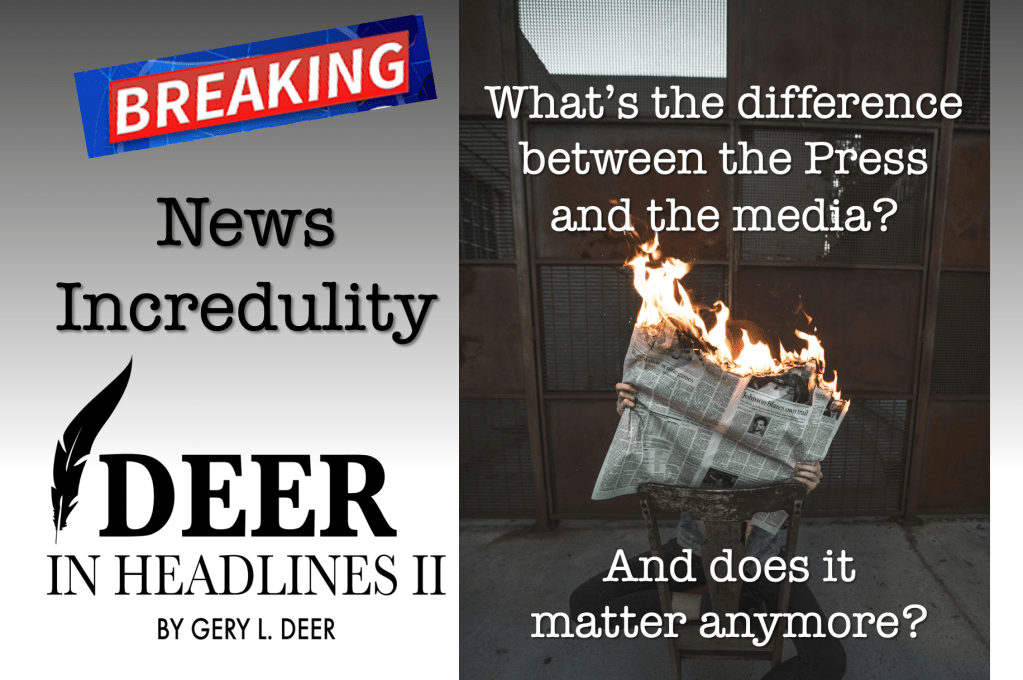
As the Internet became an easy way for the citizen journalist to publish news and information, credibility and fact gave way to sensationalism and uninformed opinion. Click bait replaced proper headlines. Soon, what was once referred to as “the press,” was suddenly renamed, “the media.” In this reporter’s humble opinion, they are not the same.
Webster’s Dictionary defines media (plural of the word medium) as a means of communication, such as radio, TV, newspapers, social, the internet, and so on. In other words, it refers to the delivery system rather than the content or its source.
For example, social media is a primary source of news for many Americans. Unless the information originates from a reputable news source, the content may have no oversight, no editorial integrity, no fact-checking, nothing.
You may have no idea where the information came from or how it may have changed. Think of it as a game of telephone. The more the word spreads, the less accurate it becomes. To reiterate, the social media platform (or app), such as Facebook, X, or Instagram, is just the vehicle – the medium. Reputable or not, the message originates elsewhere.
“The Press,” on the other hand, is guaranteed by the First Amendment of the U.S. Constitution. Like the three branches of government, it’s literally set up right there in black and white – which is why it’s called the Fourth Estate.
The Press should serve as a watchdog to help hold those in power accountable and provide the public with the information they need to make informed decisions. Trained Press journalists gather facts, verify information, and present it objectively across a variety of media.
A functional and qualified Press works within the realm of fact – not truth (that’s for philosophers). It should present information without bias or commentary (there’s a page for that and you’re looking at it now) and demonstrate integrity in the process.
Before I have people shouting at the screen or tearing up the paper, I agree the problem of misinformation spread by so-called news outlets is in epidemic proportions. Unfortunately, many news agencies have traded integrity for revenue, to say nothing about a complete disregard for journalistic expertise.
Cable news programs often fall into this category. They base their content on current news stories, targeting the biases and interests of a single segment of audience to grow advertising revenue. This is not news – it’s entertainment.
Even worse is when a news outlet censors content to favor the business or political interests of their owners. For example, once a paragon of investigative journalism, “The Washington Post” is rapidly losing credibility because of interference with its newsroom by its owner, Amazon founder Jeff Bezos.
Between social media, so-called citizen journalists, bloggers, and whatever else is out there, unvetted, unqualified, and often false content is cranked at an alarming rate. Their goal is to spread as much click bait as possible and deliver customers to advertisers – it’s all about money. That makes it hard to sift through the noise for qualified, factual news.
In the end, the Press should be rooted in ethics and accuracy. Sadly, many news outlets now prioritize profit, sensationalizing content to stay competitive in digital media. That’s muddied the journalistic waters, making it harder for the public to distinguish between fact and opinion.
My only advice is to check the source and remember that perspective isn’t the same as bias. News should be factual and accurate, not “fair.” There is no such thing as “fair and balanced” news. Fairness suggests compromise, whereas facts stand alone. The standard should be: is it factual, or not?








 Maryland Sen. Chris Van Hollen, right, speaks with Kilmar Abrego Garcia in a hotel restaurant in San Salvador, El Salvador, on Thursday. (Press Office Senator Van Hollen, via AP)POLITICSThe Abrego Garcia case pulls Democrats into the immigration debate Trump wants to haveFor Democrats, the Kilmar Abrego Garcia case is about fundamental American ideals — due process, following court orders, preventing government overreach. For the Trump administration and Republicans, it’s about foreigners and gang threats and danger in American towns and cities.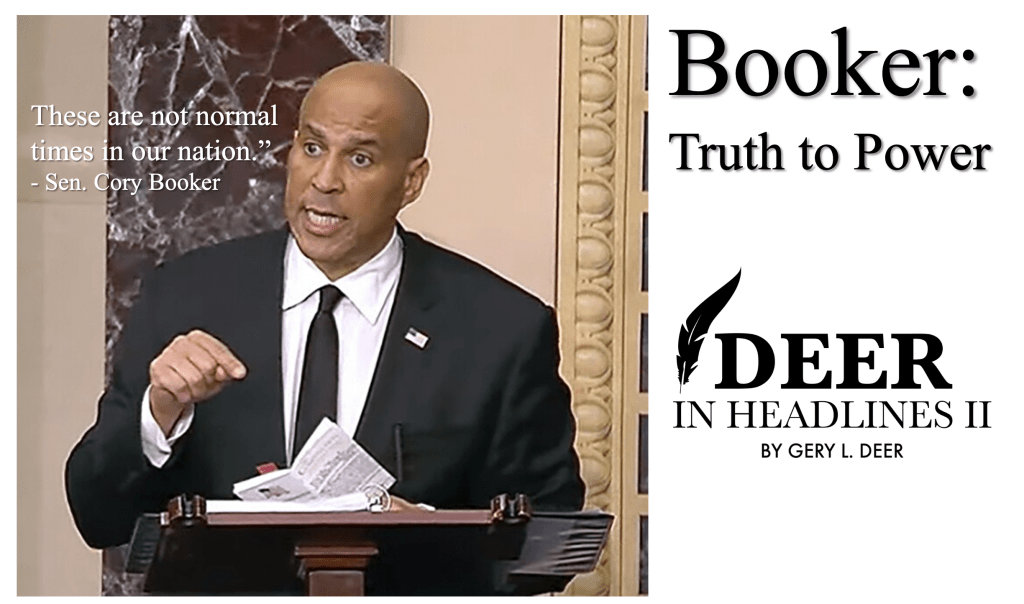

 The Jamestown Comet