Local News & Commentary Since 1890.

Posts Tagged ‘history’

Upstates, Downstates

In Children and Family, Economy, Education, Opinion, Uncategorized on December 22, 2025 at 3:30 pm

Deer In Headlines II

By Gery Deer

PART I

Modern Americans are fascinated with the complexities of British social classes. Television programs like “Upstairs, Downstairs” and, more recently, “Downton Abbey” give us colonials a glimpse into the inner workings of a world in which you are trapped in the station to which you were born, good or bad. We gaze through the looking glass at the uptight snobbery of the self-anointed lords and ladies who flutter around their castles, moaning about what they’ll wear to dinner after changing clothes for the tenth time that day.

All the while, we commoners across the pond suffer alongside the struggles of those who do the actual work – the maids, footmen, farmers, and shopkeepers. They’re all just trying to make ends meet, but are never permitted to step out of their place to be more than that. All this because their father’s, father’s father was a farmer or cook or butler – and so shall they be, as ordained by a class system that’s as ridiculous as it is antiquated.

We watch, we grimace, we sit in our superiority about having extricated ourselves from such nonsense 250 years ago – or did we? Americans love the idea that this country is a classless society. We’re taught that if we work hard enough and do our best, we can rise to whatever level we choose. It’s a comforting (and arrogant) notion that makes for great campaign speeches. Unfortunately, it’s completely false. Classism has been with us since the beginning, even though we try very hard not to admit it.

Never has America’s class system been more visible than since the 2024 presidential election. The “haves” took over in January, largely thanks to the ignorance of the “have-nots.” Sadly, those who got this administration elected – mainly the working poor – don’t seem to care that the people they sent to Washington want to keep them right where they are – broke and blaming everyone on the other side for their circumstances.

Why else would they gut our social services, eliminate job training and healthcare support, and destroy historic buildings in favor of grand, palatial eyesores to show off the wealth – and their class status – that you and I will never, ever experience. Remember, none of this is new. It’s always been this way, but most Americans pretend it’s not. I promise you, though, if you set one foot into that world and you don’t belong, you’ll know it – they’ll make sure of that.

In Europe, classism originates from a combination of wealth and notions of nobility passed down through generations. But here, it’s all about the cash. Or, more correctly, wealth in general. From the moment the first colonists set foot on this continent, social layers began to form. European class systems based on land and labor arrived right along with them. Those who owned property or controlled trade (the wealthy) quickly established themselves at the top. Those who labored — whether as indentured servants, tenant farmers, or enslaved people — occupied the lower rungs. Wealth dictated opportunity, status, and political power.

When the founders sat down to sketch out a nation based on Enlightenment ideals, they tried to break from those traditionally rigid hierarchies. The promise was that this new republic would be different: more equal, more flexible, more open to talent than lineage. But before the ink was even dry on the Constitution, participation in democracy was tied to property ownership. In other words, class.

The industrial periods of the late 19th and early 20th centuries produced titans of industry and staggering corporate wealth, alongside factory workers who lived ten to a room and rarely made ends meet. The labor unrest of that era was more than economic conflict. It was an open confrontation between classes that the country pretended didn’t exist. And yet, generation after generation, we’ve continued telling ourselves that class isn’t part of the American story.

But it is – and that distinction is growing daily, minute by minute, mainly due to our current political structure and power, as billionaires are given increasing influence over our government.

In part two, we will talk about who perpetuates the very real American class system and what, if anything, can be done to lessen its influence on the majority.

PART II

I’m painfully aware of class distinctions. I grew up in a farm family that also included teachers, mechanics, cattle workers, and waitresses. I’ve had every job you can imagine – and some you can’t – and in every situation there was always someone around to remind me of my “place.” I never became a “have,” but, like you, I work for my living – and I always have – something most blue bloods can rarely claim.

Excluding tech boom millionaires from the 1990s, there is significant generational wealth at the top of the American food chain. However, most wealthy individuals insist that their success stems solely from a work ethic. Those struggling, on the other hand, are told to pull harder on their bootstraps. It’s a neat trick: if class doesn’t exist, then anyone stuck at the bottom must simply not be trying hard enough. That’s why republicans in power (who tend to be the wealthier group) blame the poor for being poor – spouting off on how they must be lazy, working the system, etc. And democratic leaders (who are often less wealthy, but not without means), champion the working poor while still condescending to them, maintaining the class barriers. Has Chuck Schumer, a multi-millionaire, invited you to any parties lately? Yeah, me either. Both sides are to blame for all this.

The truth is that modern America has a very real class structure, even if we don’t officially name it. At the top is the wealth class — that small percentage of Americans whose fortunes come from investments, corporate ownership, or inherited wealth. Below them is the upper middle class, made up of highly educated professionals who enjoy stability, networks, and cultural influence. The middle class — if we can still call it that with a straight face — includes those with some savings, homeownership, and a degree or a skilled trade.

Further down are the working class and the working poor, whose lives are shaped by hourly wages, inconsistent schedules, limited benefits, and housing insecurity. The lower classes – where most of us fit – are increasingly squeezed by rising costs and stagnant wages. What separates these groups isn’t just income. It’s wealth, education, geography, access to healthcare, and those unwritten rules known as “cultural capital” — things like networking, confidence in professional settings, or simply knowing which doors to knock on.

So where did our grand experiment at classlessness go wrong? It failed in all the predictable places. Public education and other social services were intended to level the field, but are still funded by local taxes that mirror neighborhood wealth. Even the American Dream itself was built on the idea that anyone can rise — as long as they start from somewhere near the top in the first place.

Those who rise to power tend to be members of the upper class, with little or no desire to lose their position by pandering to social groups with no influence, financial or otherwise. Sure, we see extensive TV news footage of politicians and wealthy people who volunteer with social services, donate to charities, and give speeches on behalf of the poor and less fortunate. But at no time do you ever see one of those people – from any political side – do something that might benefit you and me while jeopardizing their own place.

We could effect change, however, if we improve access to education, support trade schooling, strengthen worker protections, and provide financial literacy programs. We could even create a healthcare system that doesn’t punish people for simply being alive. Unfortunately, none of this seems likely in the current social and political climates.

America must accept that class exists, but only those at the top are sure of it. For some reason, the poorest people support the politicians and policies that tend to harm them the most. It’s time to wake up and realize that, to maintain their positions and wealth, the upper class will always try to subjugate the middle and lower classes.

So, what can you do? Listen to what the politicians are saying and doing. How does it help you? How does it harm you? Dump the idiotic crowd mentality of party and vote for your own best interests, not theirs.

Speechless Freedom

In Local News, News Media, Opinion, Uncategorized on September 27, 2025 at 3:37 pm

Deer In Headlines II

By Gery Deer

(Listen to the accompanying Deer In Headlines Podcast episode.)

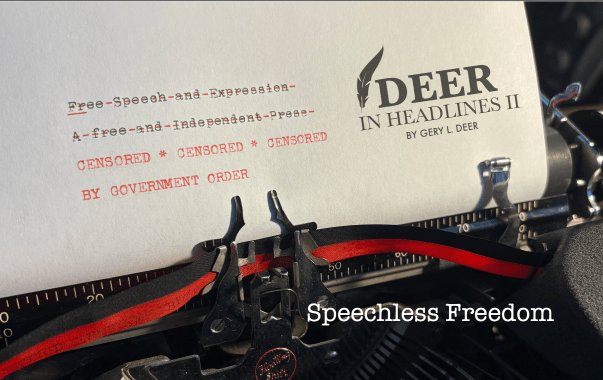
I have been a freelance journalist since 1988, and the level at which we are losing our right to speak fact to power is deeply concerning. I don’t care what side of politics you happen to be on, but if you can’t see that free speech is under attack in our country right now, you must be living under a rock or so brainwashed by the status quo that you don’t care. Well, you should care. Our founding fathers put our guarantee, free speech, a free press, and freedom of, and from, religion – all right there in the First Amendment of our Constitution.

The current political machine grinds out endless column inches, social media posts, and lawless proclamations to spew freedom at every possible moment. And yet, the first things they did when they took over was restrict the freedoms of anyone “he” didn’t like – and now it’s extending to those who speak out against their “cause.” Supposedly, that cause was freedom at all costs, with the caveat that you must go along with everything they say or do.

We’ve heard all of this before, in other countries, from communists, fascists, dictatorships, you name it. So here we are, in arguably the most powerful country on the planet, now controlled by people who have simply decided that free speech is fine, so long as it’s state-approved. Don’t get me wrong, our country is not perfect; we’ve got blemishes on our history all the way back to day one. However, I’d like to think we’ve improved some things since then.

Now I’m not so sure. The people in power want to eliminate any shred of evidence that the United States of America is not as star-spangled awesome as they’d like you to believe. They are all hard at work scrubbing books, museum exhibitions, and historical data of any references to the horrors of slavery, government corruption, and anything else that doesn’t serve their crazy idea of democracy. Let’s be clear, it’s not democracy they want, but totalitarianism.

Every move they make implies a state-sanctioned religion, a theocracy, and brainwashed ideology that is not only bigoted and corrupt, but downright criminal. This administration has violated the Constitution so many times that even the press has begun to normalize its behavior. Are you kidding me? That’s what we’re supposed to do now?

Why else would massive corporations like CBS Paramount, or ABC, which Disney owns, suddenly drop some of the most influential and award-winning television hosts? Sure, companies have regulations within their business, and they’re allowed to set the tone by which employees are expected to behave. However, when the government threatens a broadcaster with revocation of their broadcast license over a freedom of speech issue, rather than a regulation or violation of the airways, we’ve reached a point of ridiculousness and danger.

Can you imagine if the other side of the aisle had done any of this? The same people who are doing it now would have literally lost their minds. They would have been breaking their arms to wave flags and scream about trampling on the Constitution. But now, so long as you say what they like, you’re good to go.

Book bans, an attempt to force the “free press” to report only what the administration approves, and a laundry list of other incomprehensible and subjugating tactics are all part of their method of operation. The country’s second in command recently issued warnings to the public not to say anything against the recently assassinated vocalist of this right-wing banana factory – or else.

No government official in the United States of America has the right to restrict the free speech or opinions of any citizen – or any non-citizen, for that matter. If our laws don’t apply to everyone, if our freedoms and civil liberties don’t extend to all, then they’re complete nonsense. Americans on both sides of the aisle are feeling the strangle hold on their rights, but virtually no one on the right will speak out for fear of “his” wrath.

I say this again – free speech is under attack. But the more we all speak up, the less they will be able to suppress our voices.


Your questions, answered

In Media, National News, Uncategorized, World News on July 7, 2025 at 12:04 pm
By the Associated Press Staff of The Morning
Editor’s Note: Courtesy of the Associated Press.

As journalists, we ask questions for a living. And we strive to make sure our work addresses the pressing ones on readers’ minds, especially in this time of dizzying political news. That’s why we regularly invite the audience of The Morning to send us their questions, and have our expert beat reporters respond.

Today, we’re addressing your queries about immigration, military spending, Social Security, Medicaid and whether now is a good time to build a house. (Got a question for us? Submit them here.)

ICE raids

With the raids on undocumented immigrants going on, targeting the people who work in the fields and the slaughterhouses, how have these actions affected the supply and prices in our grocery stores? — Anna Halbrook, Otis, Ore.

We asked Julie Creswell, who covers the food industry, to field this one:

We haven’t seen any obvious fallout from immigration raids on grocery prices yet. As of the end of May, prices were up about 2.2 percent compared with a year earlier. Eggs, coffee and meats — ground beef in particular — drove that increase.

But beef prices were climbing even before the raids, because of droughts and high interest rates (ranchers take out loans to run their operations). The nation’s cattle inventory is at its lowest level since the 1950s. Prices of fruits and vegetables have stayed about flat over the past year; tomatoes and lettuce are actually much cheaper right now.

Defense spending

Trump has pushed NATO countries to spend 5 percent of their economic output on the military. How much of its economic output does the U.S. spend on the military? — Diann Ebersole, Copperopolis, Calif.

From German Lopez, who has written several Morning newsletters on this very topic:

The U.S. spends about 3.5 percent of its gross domestic product on the military. That used to put America at the top of NATO’s ranks, but Poland now spends a larger portion, 4.1 percent.

Critics say this makes President Trump a hypocrite: If the U.S. isn’t spending 5 percent, why should other countries? But Trump says that the U.S. doesn’t need to spend as much now because it’s invested a lot more historically. Europe, the argument goes, has let its militaries and defense industries languish through disinvestment. (Some experts agree.) The president contends that those countries need to rebuild in a way that the U.S. doesn’t, and rebuilding has a big upfront cost.

Trump also has a transactional view of the world and alliances. He sees Europe’s renewed spending as payback after the U.S. bore the brunt of NATO’s duties and expenditures for decades.

Retirement benefits

I’ve heard a lot of talk that Social Security will be running out of money. I plan on retiring in the next two to three years. Should I retire sooner to collect my full benefit? — Elizabeth Y.
Here’s Tara Siegel Bernard, who recently interviewed retirees on this:

Social Security has long faced financing challenges, but the issue becomes more pressing each year. The trust fund that pays retiree benefits is projected to be depleted in 2033, or when today’s 59-year-olds turn 67. At that point, the program will have enough incoming revenue to pay only 77 percent of benefits — in other words, a 23 percent cut. But that happens if Congress does nothing to address the problem, like raising payroll taxes or trimming benefits.

The decision of when an individual should take Social Security is highly personal. There can be a huge payoff for healthy people who can afford to wait: Starting at 67 instead of 62, for example, can mean monthly checks that are 43 percent higher. And for each year you delay retirement past 67, your monthly payment rises 8 percent.

Ask yourself: Would collecting a reduced benefit for a couple of extra years be preferable to locking in a higher benefit for the rest of your life? A conversation with a financial planner is often a solid investment; these are high-stakes decisions.

Who loses Medicaid?

Are there some specific examples of who will be affected by Medicaid cuts and requirements to work in the big policy bill passed last week? Will people with Parkinson’s who are in long-term care be cut off because they can’t work? — Amy, Glenview, Ill.

From Margot Sanger-Katz, who covers health care for The Upshot:

The bill’s work requirement is focused on a relatively specific group of Medicaid beneficiaries: childless adults without disabilities and parents of children older than 13. But it is certainly plausible that the bill’s policies could have spillover effects for other populations.

A person in long-term care with Parkinson’s would almost certainly still be covered. But someone with Parkinson’s who has not yet qualified for Social Security disability status may have to prove they are too sick to work. States will also have to build new enrollment systems to check who is eligible and who is compliant, and several current and former state officials are worried the magnitude of that effort could lead to errors and delays for everyone.

When to build

Is this a good time to build a house? — Janie Spataro, Ringgold, Ga.

Conor Dougherty, who covers the housing industry, offers this advice:

Can you afford to build it, and do you plan on living there for seven to 10 years? If the answer to both of those questions is yes, then it’s as good a time as any to build.

Housing is an unusual good in that it is both a consumable, like a car, and an investment, like a stock. Most of the worst home-buying decisions — overstretching on a mortgage, buying in an area you don’t really like — come from thinking of housing as an opportunity to make money instead of as a place to live. A house is only a good investment if you think of it as home.

Corruption fears the press

In history, National News, News Media, Opinion, Politics, Uncategorized on June 22, 2025 at 10:47 am

Deer In Headlines II

By Gery Deer

It’s one thing to feel your job is in danger—industries evolve, businesses close, and livelihoods shift. It’s another thing to fear that your work and profession could be criminalized. For those of us in the press, in my opinion, that moment has arrived.

Not long ago, journalists were considered the fourth estate, so-called because the press was seen as the fourth, unofficial, branch of government – the public’s eyes and ears, so to speak. A free press is a necessary check on power, the watchdogs of democracy. Today, Trump and company would rather call any of us who dare question them troublemakers, agitators—enemies of the people. And now, with the Supreme Court’s recent decision to uphold the White House’s ban on the Associated Press (AP), we stand on the edge of something far more dangerous than a bruised ego or a contentious press conference.

The justification? National security – as always. A vague, malleable excuse that’s nearly impossible to challenge or verify. Too convenient to ignore, too broad to oppose. It sets a precedent with sharp teeth. If AP can be barred, who’s next? The Washington PostReuters, or maybe any reporter who dares ask uncomfortable questions?

When a government moves to silence journalism, it isn’t just about limiting press access—it’s about controlling the public’s perception of facts. A free press must do more than inform; it should hold power accountable on behalf of the citizenry. That accountability is inconvenient, even infuriating, for those who prefer not to be held accountable for their actions.

We don’t have to delve deeply into history to see what happens when dissenting voices are silenced. Totalitarian regimes have long understood the value of controlling the narrative. In Nazi Germany, Joseph Goebbels, the minister of propaganda, ensured that only state-approved messaging reached the public. In Stalinist Russia, independent journalism became synonymous with treason. And now, in a supposed beacon of freedom, we find ourselves edging toward a similar state.

Perhaps some believe these measures are justified—that journalism has gone too far and biased reporting warrants a firm correction. Some might even argue that disinformation (a great deal of which originates with the White House) has muddied the waters so thoroughly that restricting the press helps protect the public from chaos. The question we must ask ourselves is not whether we like the press—it’s whether we need it. And if those in charge are willing to erase dissent under the guise of security, we may not have much time left to answer.

The implications go well beyond a single news outlet losing access or presidential attempts to discredit them. If a major institution like the Associated Press can be barred from the White House, and with Supreme Court approval, every journalist in America faces the same risk.

What happens when smaller, independent outlets push too hard? What happens when investigative reporters publicize facts surrounding corruption at the highest levels? This is how truth becomes dictated rather than discovered. This is how governments rewrite history while the present unfolds in silence.

The press has never been perfect—it has biases, it makes mistakes, and yes, sometimes it gets the story wrong. But journalism, at its core, is a profession based on the pursuit of facts. A reporter’s job is not to flatter or cater to power, but to question, to dig, to expose injustice and demand answers.

Our democracy was built on the idea that those in power answer to the people, not the other way around. That principle is maintained through open discourse, through transparency, through a press that is free to ask uncomfortable questions and uncover uncomfortable truths. Of course, that’s not how Trump sees it. He doesn’t answer to you or me – only to his donors.

Still, the president can boot them out of the West Wing, but he can’t stop them from reporting – yet. If we allow this moment to pass unchallenged, accepting that barring journalists is just another policy decision, we lose the foundation of informed democracy set in place under the First Amendment of the United States Constitution. Once the press is muzzled, once silence replaces scrutiny, and propaganda overshadows fact, there’s no telling what comes next.

Supplemental Information:

(Courtesy https://www.carnegielibrary.org/the-first-amendment-and-censorship/)

The First Amendment Defined

The First Amendment to the U.S. Constitution protects what are commonly known as The Five Freedoms: freedom of religion, freedom of the press, freedom of speech, freedom of assembly, and freedom of petition. The amendment is one of the first ten amendments to the Constitution, known as the Bill of Rights, which was adopted in 1791. 

The First Amendment Reads:

“Congress shall make no law respecting an establishment of religion, or prohibiting the free exercise thereof; or abridging the freedom of speech, or of the press; or the right of the people peaceably to assemble, and to petition the Government for a redress of grievances.” (Source: National Archives

This amendment gives Americans the right to express themselves verbally and through publication without government interference. It also prevents the government from establishing a “state” religion and from favoring one religion over others. And finally, it protects Americans’ rights to gather in groups for social, economic, political, or religious purposes; sign petitions; and even file a lawsuit against the government. (Source: History.com)

Exploring Radio Independence at Dayton Hamvention 2025

In Dayton Ohio News, Local News, National News, News Media, Technology, Uncategorized, World News on May 20, 2025 at 4:12 pm

By Gery Deer

Courtesy Xenia Daily Gazette

Editor’s Note:

An update from the Dayton Hamvention officials on May 28th reads as follows: The 2025 Hamvention set a new high attendance record with 36,814 attendees. The general chair, Brian Markland, said he felt fabulous about watching large crowds of amateur radio enthusiasts from all over the world enjoying exhibits, forums, and the flea market. 

XENIA — Before cell phones or the internet, there was amateur, or “ham,” radio.

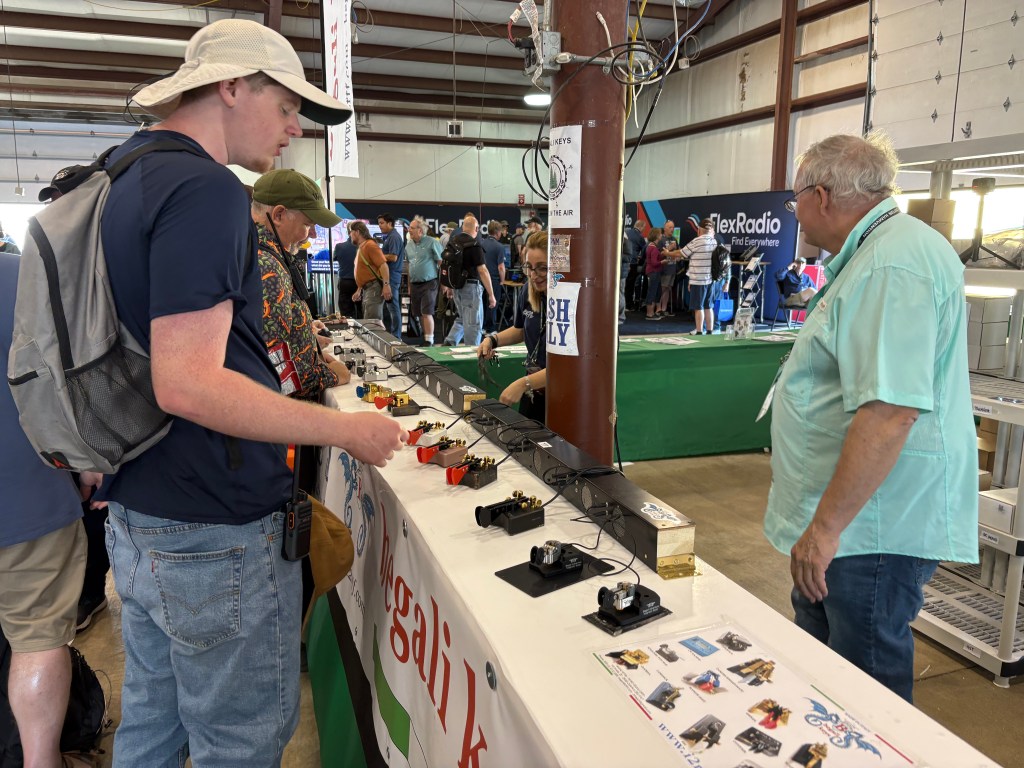
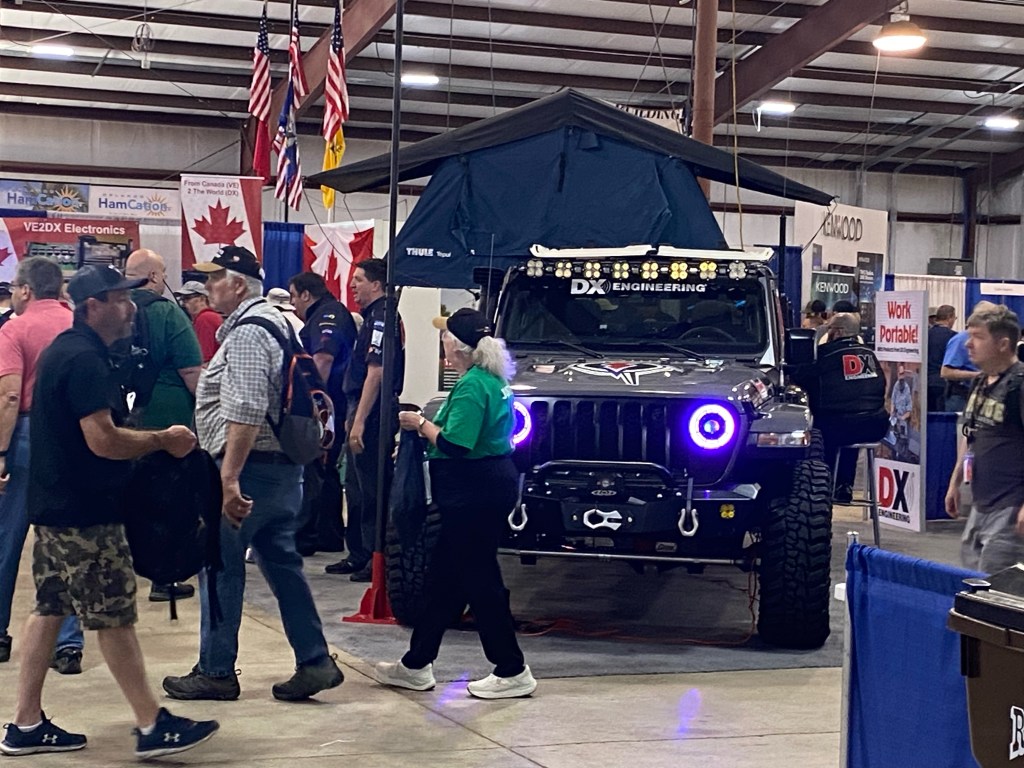
Once a year, thousands of enthusiasts descend on the Greene County Fairground and Expo Center in Xenia for the largest amateur radio convention in the world – Dayton Hamvention. Although final numbers will not be tallied for some time, organizers estimate that this year’s turnout exceeded the 35,000 attendees of 2024.

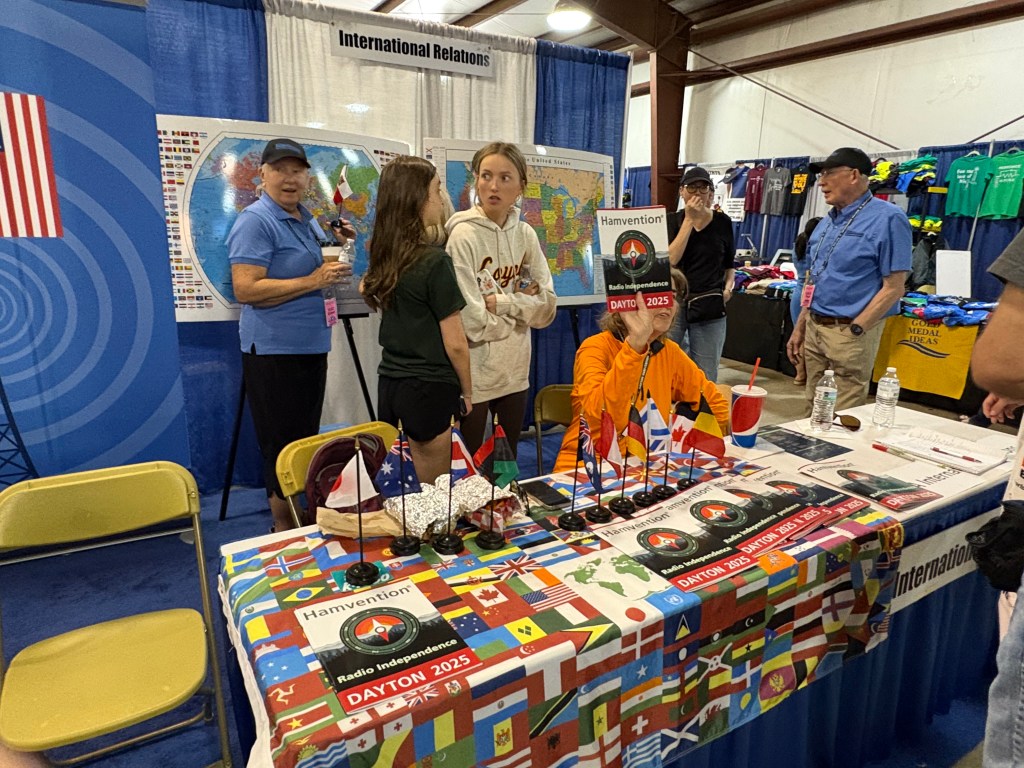
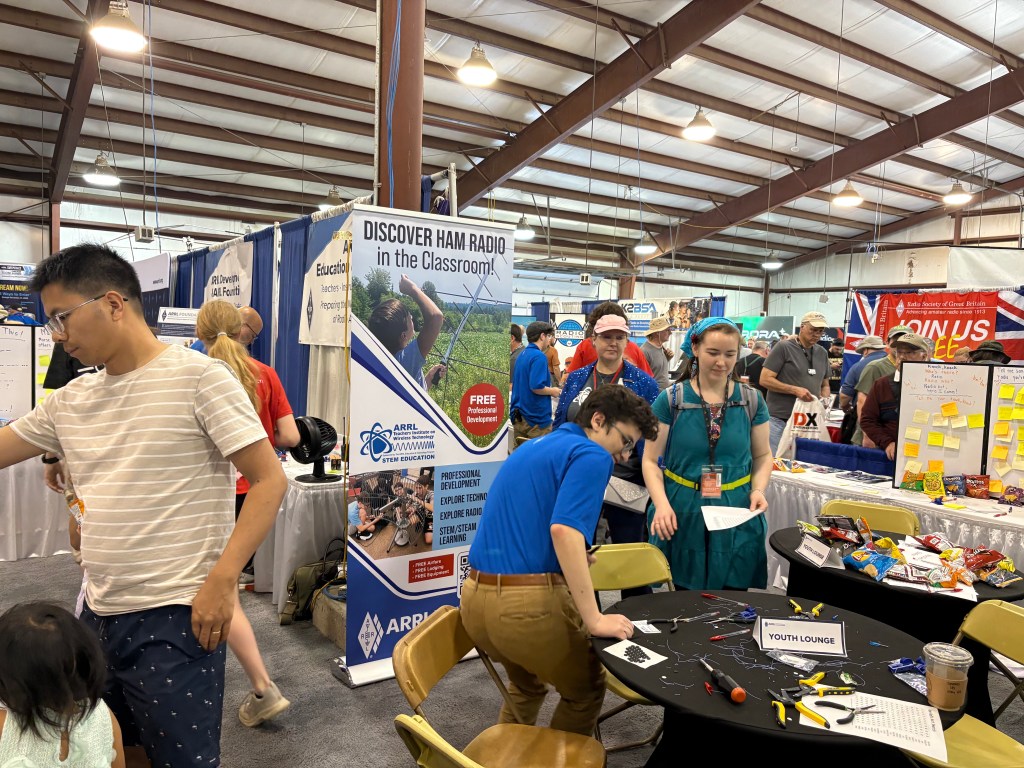
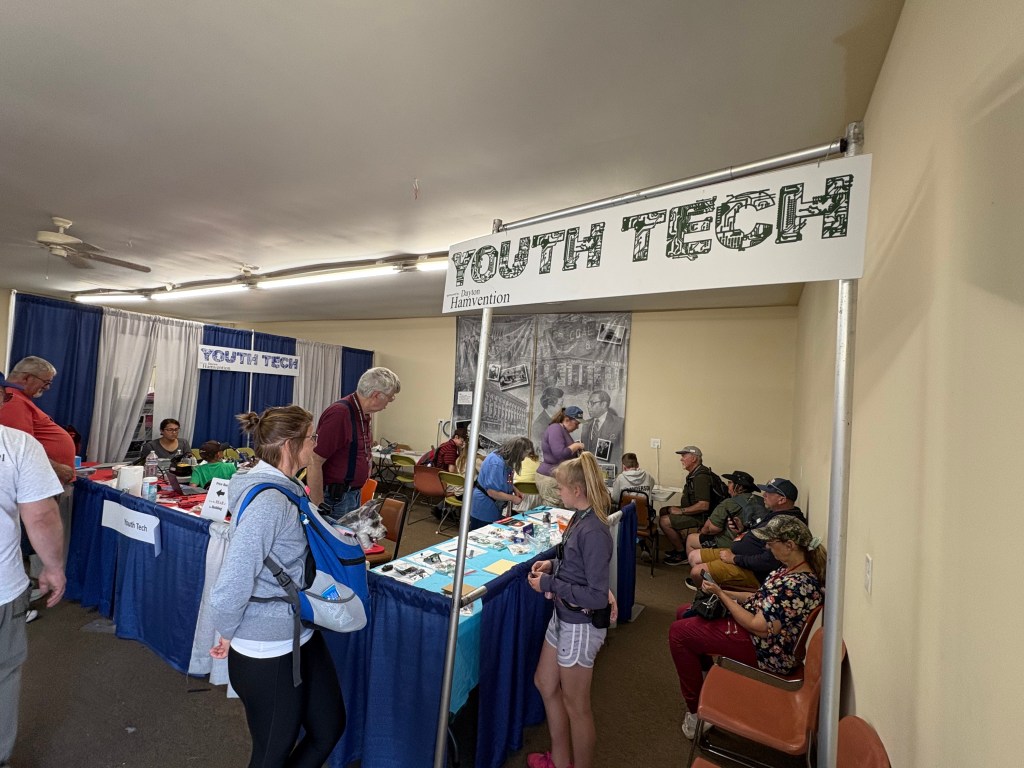
During Dayton Hamvention, participants from as many as 30 countries had the opportunity to see and buy the latest technology, attend educational and informational forums, sit for radio license exams, and take part in youth activities. This year’s event also included groups of young radio enthusiasts, organizations from all over the country made up of young people interested in both the analog and digital nature of amateur radio.

Jim Gifford, call sign N8KET, is the chairman of the media committee for Dayton Hamvention. He shared this year’s theme – Radio Independence – noting that what makes this event so important and impactful to the amateur radio community is the people. One of his favorite moments of this year’s event happened on Friday. “We had 73 students of the Community STEAM Academy (Science Technology Engineering Art and Math) in Xenia here,” he said. “They were really excited to learn how amateur radio relates to science and even space communication.”

With some 800,000 licensed ham radio operators in the United States alone, there is a remarkable sense of community among radio operators, regardless of geography. “It’s so nice for all of us in the local area to be able to come to Hamvention, but then you have to stop and think, this is a big ham fest,” said Glenn Rodgers, WI80, assistant chairman of the event’s media committee. “This is the biggest ham gathering in the world, and we’re so fortunate to be able to come to something like this in this area and it’s an honor to work here.”

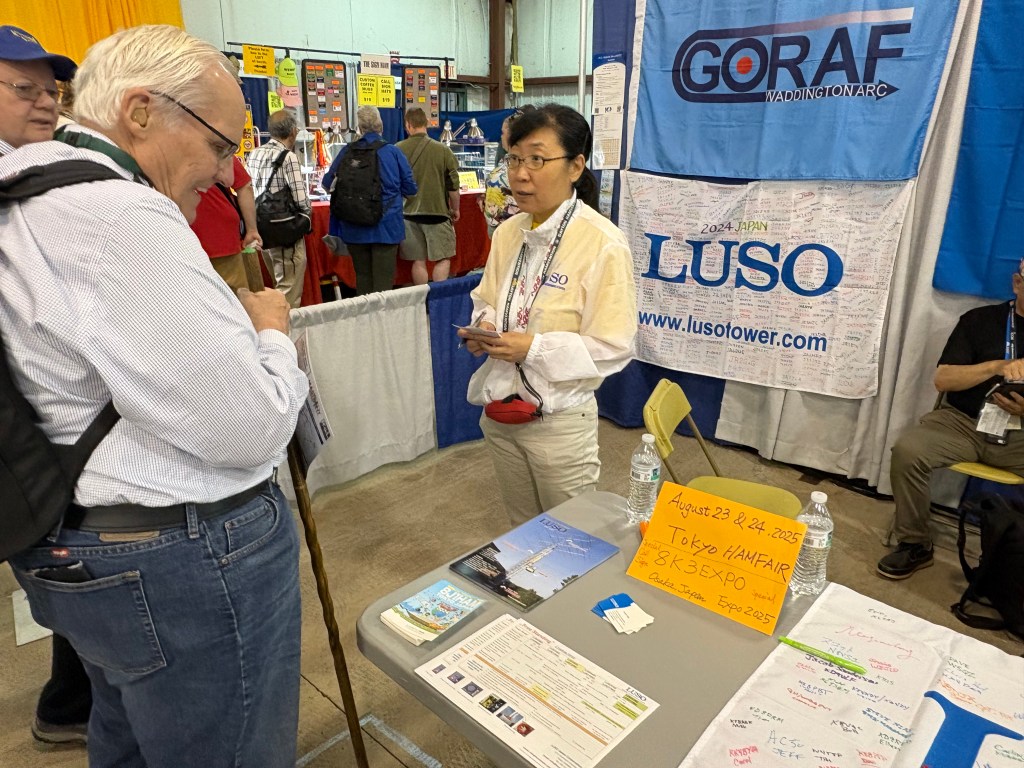
Amateur radio enthusiasts, vendors, and organizations from around the world converged at the Dayton Hamvention. Here’s a promotional booth for Tokyo Hamfair.

With such widespread interest, one might expect the world’s current geopolitical tension would hamper those relationships. According to Gifford, it does not. “We have a multitude of political views here,” he said. “But we’re ham operators, we take care of each other.”

“Because you meet people,” Gifford continued. “We talk to people all over the world. Just the other day, I spoke to somebody from Norway, and somebody from Italy, and it crosses barriers. It really does.”

Most amateur radio enthusiasts are known on the air, and to each other, only by their call sign, an alphanumeric identification given to each license holder by the Federal Communications Commission (FCC).

Jesse Walker, N8XC, is U.S. Navy Veteran, and business development manager with Aegis Protective Services in Eaton. He’s been involved in amateur radio since the age of 15. He explained that, although the call signs are assigned, they become part of your identity.

“Many of us only know each other by our call sign,” Walker explained, who is a member of the Preble Amateur Radio Association in Preble County. “Coming here, we get to meet face-to-face often for the first time.”

Both Rodgers and Gifford also noted that, apart from being a hobby for some, ham operators play an important role in the community during emergencies. “Amateur radio groups work as sky spotters during severe weather, they work with and support our area first responders, providing backup communications and volunteers during local emergencies,” Gifford said.

“Essentially, the Preble Amateur Radio Association is involved in public service,” said Jesse Walker. “We work with the Preble County emergency management agency. Our motto in amateur radio emergency service is, ‘when all else fails.’”

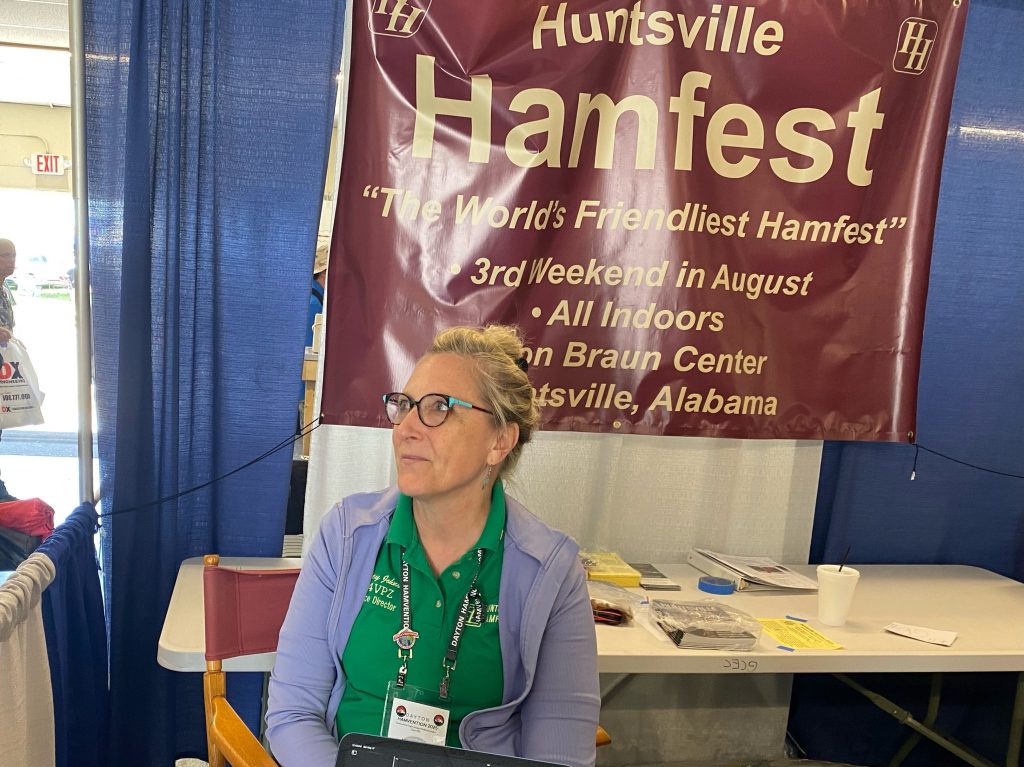
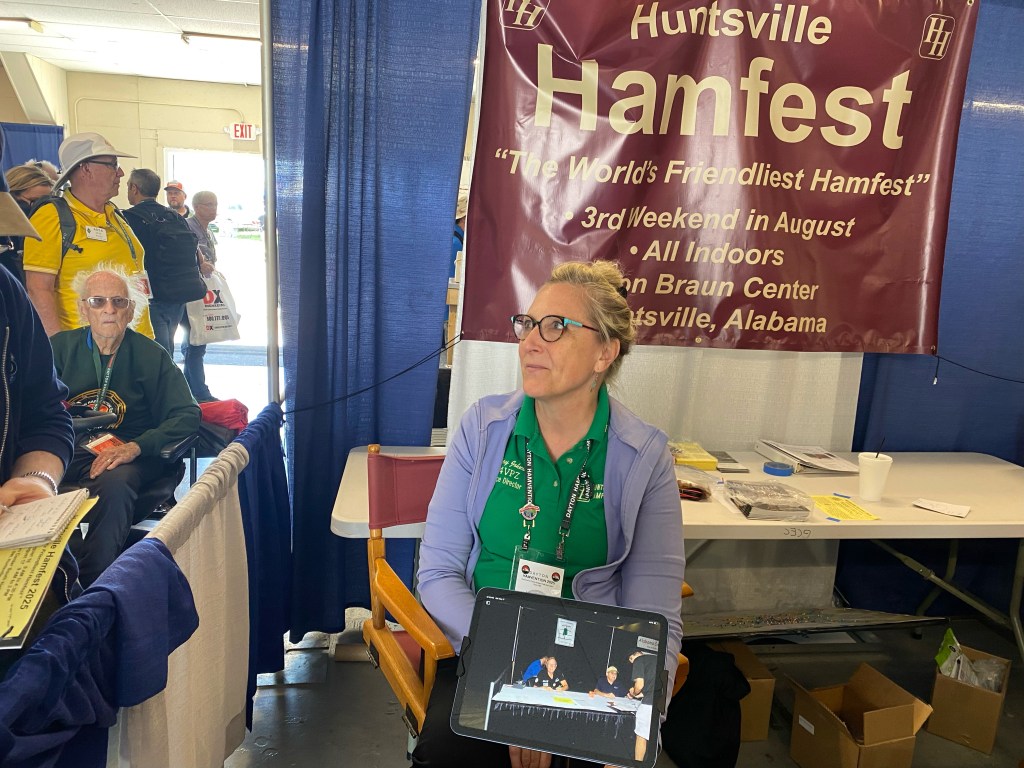
Other amateur radio convention organizers also attend to promote their own events. Huntsville Hamfest, held annually in Huntsville, Alabama, is one such organization. Mark Brown, N4BCD, is the chairperson for the Huntsville Hamfest Association. “Ours is the third largest Ham radio convention in the country, behind Dayton and Orlando, Florida,” Brown said. “We all cooperate and help support each other’s events.”

Mark Brown, N4BCD, and Kelley Johns, W4VPZ, (pictured) provided information about the Huntsville Hamfest in Alabama.

Brown suggested the consistent growth of these events and interest in amateur radio is due in part to younger people learning about its technical diversity. “I think to attract kids, we’ve got to show different aspects of the hobby, like the satellite communications, the youth on the air, and the parks on the air,” he said. “Get youth involved in it. That’s one thing these events do is bring all ages together.”

Planning for next year’s Dayton Hamvention is already underway. For more information visit hamvention.org.

Absolute Power

In history, Opinion, Politics, psychology, Uncategorized, World News on March 26, 2025 at 1:58 pm

Deer In Headlines II

By Gery Deer

Power, like money, is nothing if you have enough, but everything if you don’t. But what is it? Who has it, and what are those without it supposed to do when faced off by those who do? I’m not sure I’m smart enough to answer any of those questions. If you’ll indulge me, however, I’ll make an attempt to do so and put it into a contemporary context. First, a little history – the kind we should learn from or be doomed to repeat.

It was 1887 England. In a series of letters to Bishop Creighton concerning the issue of writing history about the Inquisition, John Dalberg-Acton, the 1st Baron Acton, or better known as Lord Acton, wrote, “Power tends to corrupt, and absolute power corrupts absolutely.” Most people are familiar with the quote, but few know the preceding passage, which gives it perspective.

“I cannot accept your canon that we are to judge Pope and King unlike other men, with a favourable presumption that they did no wrong,” Acton wrote. “If there is any presumption it is the other way against holders of power, increasing as the power increases. Historic responsibility has to make up for the want of legal responsibility.”

That’s some pretty fancy, but important language. Put more simply, Lord Acton was saying that the same moral standards should apply to everyone, including political and religious leaders. Throughout history, kings and popes were permitted, essentially, to wield their authority unchecked.

America’s Founding Fathers shared the same concern. So much so that when they created a constitution for their new country, coincidentally ratified the same year as Acton’s historic correspondence, it established three separate but equal branches of government to prevent such authoritarian power.

Power is a dangerous thing, especially in the hands of two kinds of people – those who want it, and those who want to keep it from others. The first is driven by greed, the second by fear. Lord Acton was commenting on accountability, something the Constitution ensures by setting equal the Executive, Legislative, and Judicial branches of government. Should some power-hungry tyrant manage to occupy the White House, the other branches would be able to keep him or her in check.

If that individual managed to wield enough control over two of the three branches, the third would be able to mitigate some of the potential danger. But if all three branches were heavily influenced, even manipulated by one individual, then we have a problem. That lands our country in Lord Acton’s absolute power corrupting absolutely territory, and on a much larger scale.

Let’s not forget the second kind of power broker (to borrow a term from one of my favorite authors, Robert A. Caro), the kind who want power out of fear. This individual, or group, is afraid that someone else will gain the power to control them or do things they don’t like.

These people tend to be all-or-nothing types. In other words, if they can’t have it, they don’t want anyone else to because they fear it will weaken their position. Those who are afraid of minority advancement fit this category. 

But what if you’re on the receiving end of all this – the powerless. Powerless people are led to believe, by a government or other authoritative body, that they don’t deserve power. Classism, racism, ageism, and most other “isms” are examples of one group trying to maintain power over another. To quote a great role model of the late 1980s, Ferris Bueller, “Isms, in my opinion, are not good. A person should not believe in an -ism, he should believe in himself.”

When the people lose the power over government, when their elected representatives act in blind service to one policy or individual rather than the best interest of their constituents, when power begins to corrupt absolutely, freedom no longer exists. The trouble is, corrupted power often goes unrecognized until it’s too late.

Corruption dons the cloak of misdirection, intended to fool those who are unwilling to see the danger. Try to remember that power can also be a good thing that benefits all instead of one person or ideology. Unfortunately, that doesn’t make for very good reality television, now does it?

War heroes and military firsts are among 26,000 images flagged for removal in Pentagon’s DEI purge

In National News, News Media, Uncategorized, World News on March 7, 2025 at 8:37 am
FROM THE ASSOCIATED PRESS – MARCH 7, 2025

By  TARA COPPLOLITA C. BALDOR and KEVIN VINEYS

Updated 7:21 PM EST, March 6, 2025

WASHINGTON (AP) — References to a World War II Medal of Honor recipient, the Enola Gay aircraft that dropped an atomic bomb on Japan and the first women to pass Marine infantry training are among the tens of thousands of photos and online posts marked for deletion as the Defense Department works to purge diversity, equity and inclusion content, according to a database obtained by The Associated Press.

The database, which was confirmed by U.S. officials and published by AP, includes more than 26,000 images that have been flagged for removal across every military branch. But the eventual total could be much higher.

In this image provided by the U.S. Marine Corps, Pfc. Christina Fuentes Montenegro prepares to hike to her platoon's defensive position during patrol week of Infantry Training Battalion near Camp Geiger, N.C. Oct. 31, 2013. (Sgt. Tyler Main/U.S. Marine Corps via AP)

1 of 5 |  

In this image provided by the U.S. Marine Corps, Pfc. Christina Fuentes Montenegro prepares to hike to her platoon’s defensive position during patrol week of Infantry Training Battalion near Camp Geiger, N.C. Oct. 31, 2013. (Sgt. Tyler Main/U.S. Marine Corps via AP)

In this image provided by the U.S. Air Force, the Boeing B-29 named the "Enola Gay" is seen on Tinian in the Marianas Islands. (U.S. Air Force via AP)

2 of 5 |  

In this image provided by the U.S. Air Force, the Boeing B-29 named the “Enola Gay” is seen on Tinian in the Marianas Islands. (U.S. Air Force via AP)

In this image provided by the U.S. Air Force, armorers and other ground personnel undergo training at Chanute Field, Ill., during World War II (U.S. Air Force via AP)

3 of 5 |  

In this image provided by the U.S. Air Force, armorers and other ground personnel undergo training at Chanute Field, Ill., during World War II (U.S. Air Force via AP)

In this image provided by the U.S. Air Force, Staff Sgt. Krysteena Scales, a 816th Expeditionary Airlift Squadron Flying Crew Chief, performs pre-flight checks before departing on a mission in a C-17 Globemaster III, March 19, 2009, at an undisclosed location in Southwest Asia. (Senior Airman Andrew Satran/U.S. Air Force via AP)

4 of 5 |  

In this image provided by the U.S. Air Force, Staff Sgt. Krysteena Scales, a 816th Expeditionary Airlift Squadron Flying Crew Chief, performs pre-flight checks before departing on a mission in a C-17 Globemaster III, March 19, 2009, at an undisclosed location in Southwest Asia. (Senior Airman Andrew Satran/U.S. Air Force via AP)Read More

This image provided by the U.S. Marine Corps shows World War II Medal of Honor recipient Pfc. Harold Gonsalves during World War II. (U.S. Marine Corps via AP)

5 of 5 |  

This image provided by the U.S. Marine Corps shows World War II Medal of Honor recipient Pfc. Harold Gonsalves during World War II. (U.S. Marine Corps via AP)

In this image provided by the U.S. Air Force, the Boeing B-29 named the "Enola Gay" is seen on Tinian in the Marianas Islands. (U.S. Air Force via AP)
In this image provided by the U.S. Air Force, the Boeing B-29 named the “Enola Gay” is seen on Tinian in the Marianas Islands. (U.S. Air Force via AP)

One official, who spoke on condition of anonymity to provide details that have not been made public, said the purge could delete as many as 100,000 images or posts in total, when considering social media pages and other websites that are also being culled for DEI content. The official said it’s not clear if the database has been finalized.

Defense Secretary Pete Hegseth had given the military until Wednesday to remove content that highlights diversity efforts in its ranks following President Donald Trump’s executive order ending those programs across the federal government.

The vast majority of the Pentagon purge targets women and minorities, including notable milestones made in the military. And it also removes a large number of posts that mention various commemorative months — such as those for Black and Hispanic people and women.

In this image provided by the U.S. Air Force, armorers and other ground personnel undergo training at Chanute Field, Ill., during World War II (U.S. Air Force via AP)

But a review of the database also underscores the confusion that has swirled among agencies about what to remove following Trump’s order.

Aircraft and fish projects are flagged

In some cases, photos seemed to be flagged for removal simply because their file included the word ”gay,” including service members with that last name and an image of the B-29 aircraft Enola Gay, which dropped the first atomic bomb on Hiroshima, Japan, during World War II.

In this image provided by the U.S. Air Force, Staff Sgt. Krysteena Scales, a 816th Expeditionary Airlift Squadron Flying Crew Chief, performs pre-flight checks before departing on a mission in a C-17 Globemaster III, March 19, 2009, at an undisclosed location in Southwest Asia. (Senior Airman Andrew Satran/U.S. Air Force via AP)

Several photos of an Army Corps of Engineers dredging project in California were marked for deletion, apparently because a local engineer in the photo had the last name Gay. And a photo of Army Corps biologists was on the list, seemingly because it mentioned they were recording data about fish — including their weight, size, hatchery and gender.

In addition, some photos of the Tuskegee Airmen, the nation’s first Black military pilots who served in a segregated WWII unit, were listed on the database, but those may likely be protected due to historical content.

The Air Force briefly removed new recruit training courses that included videos of the Tuskegee Airmen soon after Trump’s order. That drew the White House’s ire over “malicious compliance,” and the Air Force quickly reversed the removal.

Many of the images listed in the database already have been removed. Others were still visible Thursday, and it’s not clear if they will be taken down at some point or be allowed to stay, including images with historical significance such as those of the Tuskegee Airmen.

This image provided by the U.S. Marine Corps shows World War II Medal of Honor recipient Pfc. Harold Gonsalves during World War II. (U.S. Marine Corps via AP)

Asked about the database, Pentagon spokesman John Ullyot said in a statement, “We are pleased by the rapid compliance across the Department with the directive removing DEI content from all platforms. In the rare cases that content is removed that is out of the clearly outlined scope of the directive, we instruct components accordingly.”

He noted that Hegseth has declared that “DEI is dead” and that efforts to put one group ahead of another through DEI programs erodes camaraderie and threatens mission execution.

Some images aren’t gone

In some cases, the removal was partial. The main page in a post titled “Women’s History Month: All-female crew supports warfighters” was removed. But at least one of the photos in that collection about an all-female C-17 crew could still be accessed. A shot from the Army Corps of Engineers titled “Engineering pioneer remembered during Black History Month” was deleted.

Other photos flagged in the database but still visible Thursday included images of the World War II Women Air Service Pilots and one of U.S. Air Force Col. Jeannie Leavitt, the country’s first female fighter pilot.

Also still visible was an image of then-Pfc. Christina Fuentes Montenegro becoming one of the first three women to graduate from the Marine Corps’ Infantry Training Battalion and an image of Marine Corps World War II Medal of Honor recipient Pfc. Harold Gonsalves.

It was unclear why some other images were removed, such as a Marine Corps photo titled “Deadlift contenders raise the bar pound by pound” or a National Guard website image called “Minnesota brothers reunite in Kuwait.”

Why the database?

The database of the 26,000 images was created to conform with federal archival laws, so if the services are queried in the future, they can show how they are complying with the law, the U.S. official said. But it may be difficult to ensure the content was archived because the responsibility to ensure each image was preserved was the responsibility of each individual unit.

In many cases, workers are taking screenshots of the pages marked for removal, but it would be difficult to restore them if that decision was made, according to another official, who like the others spoke on the condition of anonymity to provide additional details that were not public.

A Marine Corps official said every one of its images in the database “either has been taken down or will be taken down.” The Marines are moving on the directive as fast as possible, but as with the rest of the military, very few civilian or contractor employees at the Pentagon can perform content removal, the official said.

In the Marine Corps, just one defense civilian is available to do the work. The Marine Corps estimates that person has identified at least 10,000 images for removal — and that does not count more than 1,600 social media sites that have not yet been addressed.

Many of those social media sites were military base or unit support groups created years ago and left idle. No one still has the administrative privileges to go in and change the content.

The Marine official said the service is going through each site and getting new administrative privileges so it can make the changes.

On Feb. 26, the Pentagon ordered all the military services to spend countless hours poring over years of website postings, photos, news articles and videos to remove any mentions that “promote diversity, equity and inclusion.”

If they couldn’t do that by Wednesday, they were told to “temporarily remove from public display” all content published during the Biden administration’s four years in office.

___

AP reporters Nicholas Riccardi in Denver, Christina Cassidy in Atlanta, Will Weissert and Ayanna Alexander in Washington and Christine Fernando in Chicago contributed to this report

(The Jamestown Comet.com claims no origin or ownership for this content and is providing it as a service to our readers. All sources and content verified. Please see the Associated Press main website for detailed stories.)

Heirloom Emotions

In history, Media, Opinion, Senior Lifestyle, Uncategorized on June 15, 2024 at 8:55 am

Deer In Headlines II

By Gery Deer

It’s truly remarkable how we can develop such deep emotional bonds with family heirlooms. Whether it’s an antique jewelry box, a wax candle mold, or even a small piece of roof tile from a 19th-century courthouse, these objects hold a special place in our hearts as cherished remnants of days gone by.

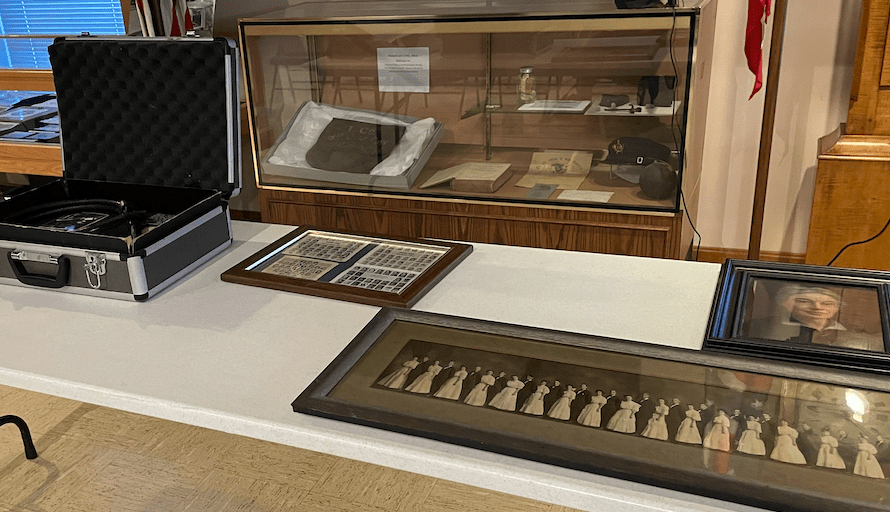
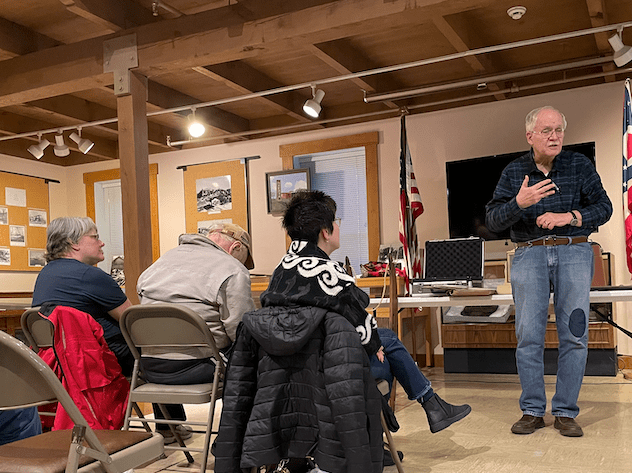
I recently attended an event promoted as a kind of show-and-tell at the local historical society. Visitors were encouraged to bring an item that had some significance to them, the history of the community, or their family, and share the story behind each piece.

Upon my arrival, I was greeted by a sight that stirred a sense of nostalgia. The organizers had proudly arranged the evening’s offerings on tables at the front of the room. Soon, a representative of the organization initiated the event, and one by one, each presenter stepped forward, their faces beaming with pride as they shared the personal significance of their cherished items.

It was like watching a live edition of The Antiques Roadshow minus the frequent condescension of the hosts. You know, “I’m sorry, but this frog statue lamp with a clock in its belly isn’t worth squat.” I always hated that. Anyway, I doubt any of the artifacts would have been for sale. You’d likely have to pry each one out of its owner’s cold, dead hands.

Even more impressive than the reverence with which each person spoke about their property was the variety of items they brought. One man brought a wooden dynamite crate, which was once used to carry explosives for stump removal at his grandparents’ farm. Another showed off his own grade school pictures, some 65 years old.

Others exhibited familial artifacts ranging from a military bayonet to a small jewelry box, which we learned was the owner’s only connection with her great-grandmother. Though very plain to the eye, it was priceless and beautiful to her, and perspective is everything.

When it originated with the speaker, like the school photos, the speaker relayed a personal account of the object’s significance. If, on the other hand, the possession once belonged to a loved one or close friend, the connection is very different. Things left behind by those before us can be deeply meaningful. Heirlooms strengthen our memory of someone and remind us of the relationship.

You’re unlikely to forget a departed parent, spouse, or sibling. But seeing and touching something that belonged to them reaffirms that connection tactilely and creates an emotional response, good and bad.

As I absorbed each story, a profound realization dawned on me. The pride, honor, or reverence—whatever you may call it—was not about the possessions. It was about the people in the stories, whether they were related or not to the speaker. After all, what is human society without stories? Stories shared between family and tribal members are how we preserve our history. And physical remnants of that history, like these family heirlooms, make the stories more tangible, more real.

And it doesn’t have to be about people who have passed on. For those in the room who had attended the same school, the antique class photos had a more profound, more personal association. Someone who’d been a student at the same school as several of the audience, but a half-century earlier, bound two generations, brought together because someone shared a story about a picture.

Finally, there’s something to be said for legacy. I think we all want to be remembered. I sincerely hope to leave behind more than a half-used pencil and a broken typewriter. But if so, I also hope someone will come up with a compelling and meaningful story about them. I think the ancestors of those who shared family items would be very proud of their legacy.

My parents left behind a treasure trove of memories, from books and dolls to trucks and tractors. Among these, I hold dear my father’s wristwatch. He personally handed it to me, sharing the story of its origin. When I gaze upon it, I am transported back to that moment. It’s not about the watch itself, but the emotional bond it represents, the moments he spent with me that hold the true value.

The Carriage Returns

In Business, Local News, News Media, Opinion, Technology on April 20, 2024 at 1:22 pm

Deer In Headlines II
By Gery Deer

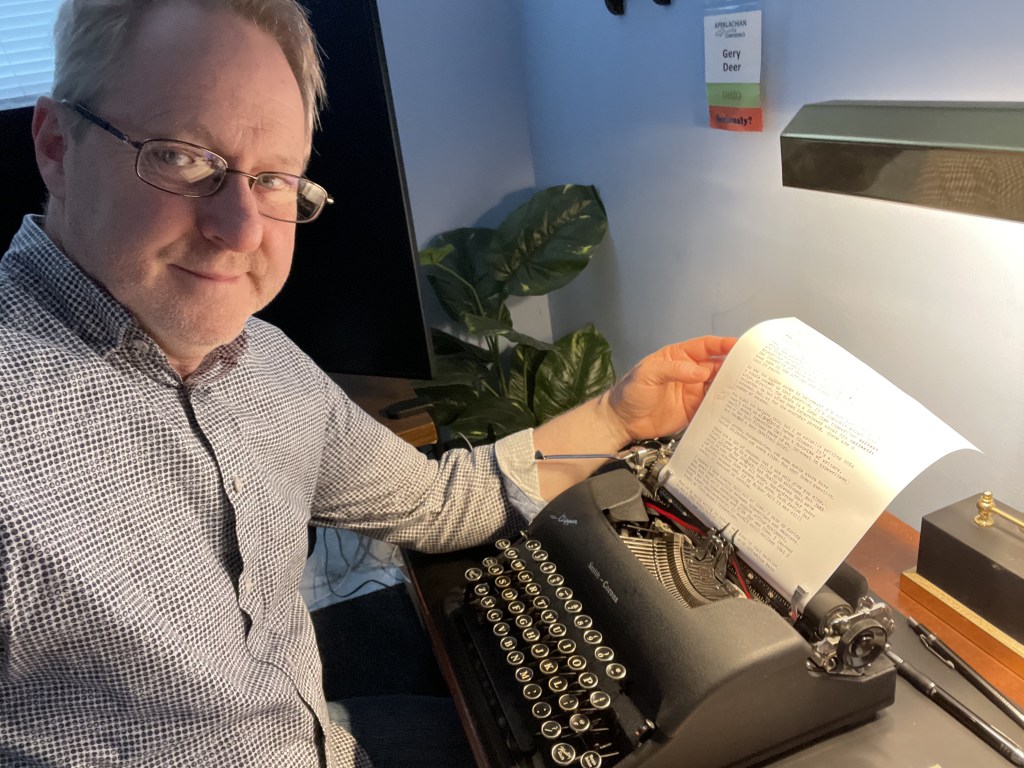
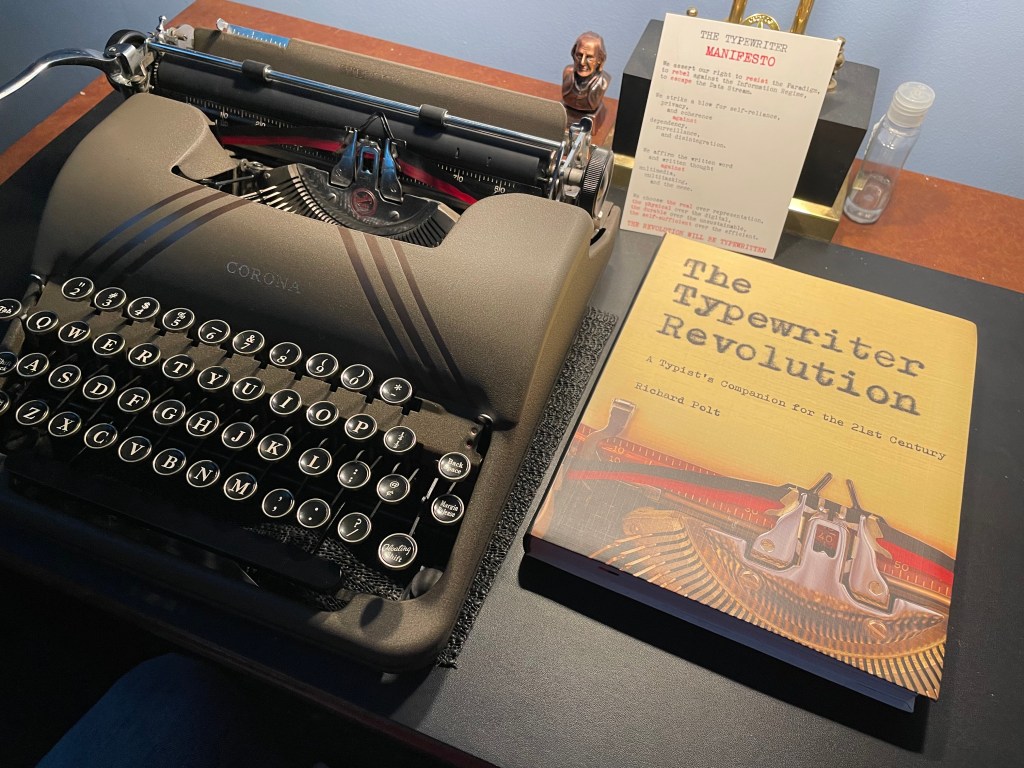
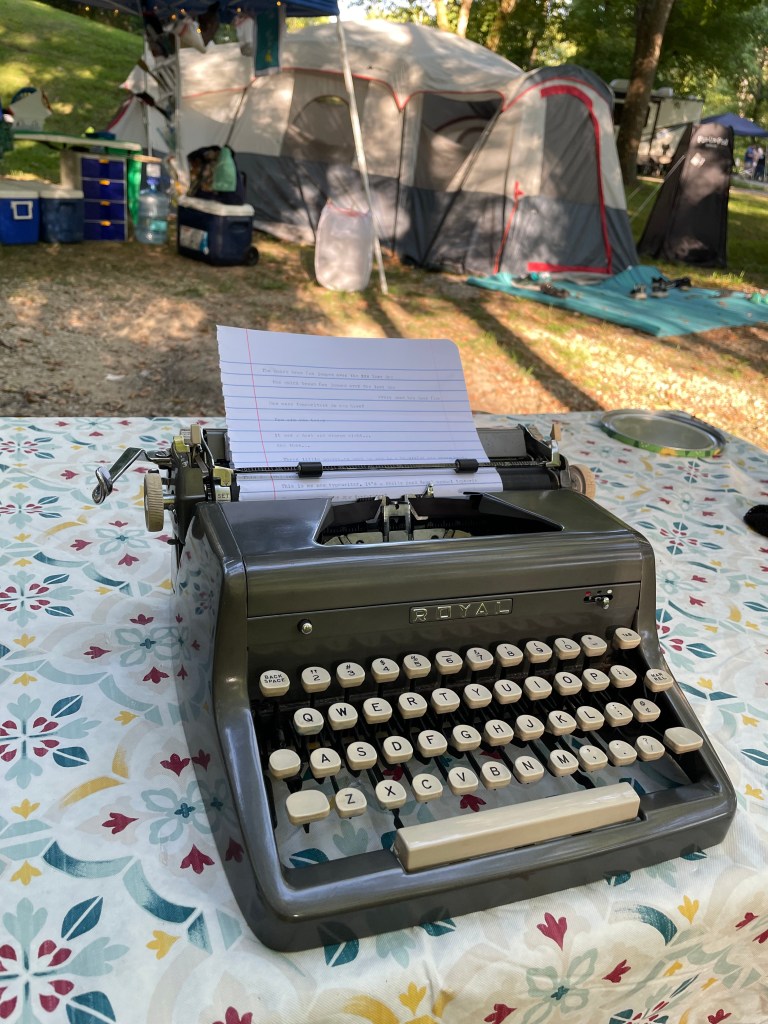
You may not believe it, but I’m writing this week’s edition of “Deer In Headlines” on an antique manual typewriter. Remember the typewriter? The truth is, I just bought this machine a few days ago at TB Writers Plus, a startup typewriter shop in Dayton, Ohio.

(Check out the Bonus Video and the Deer In Headlines Podcast episode that accompanies this piece!)

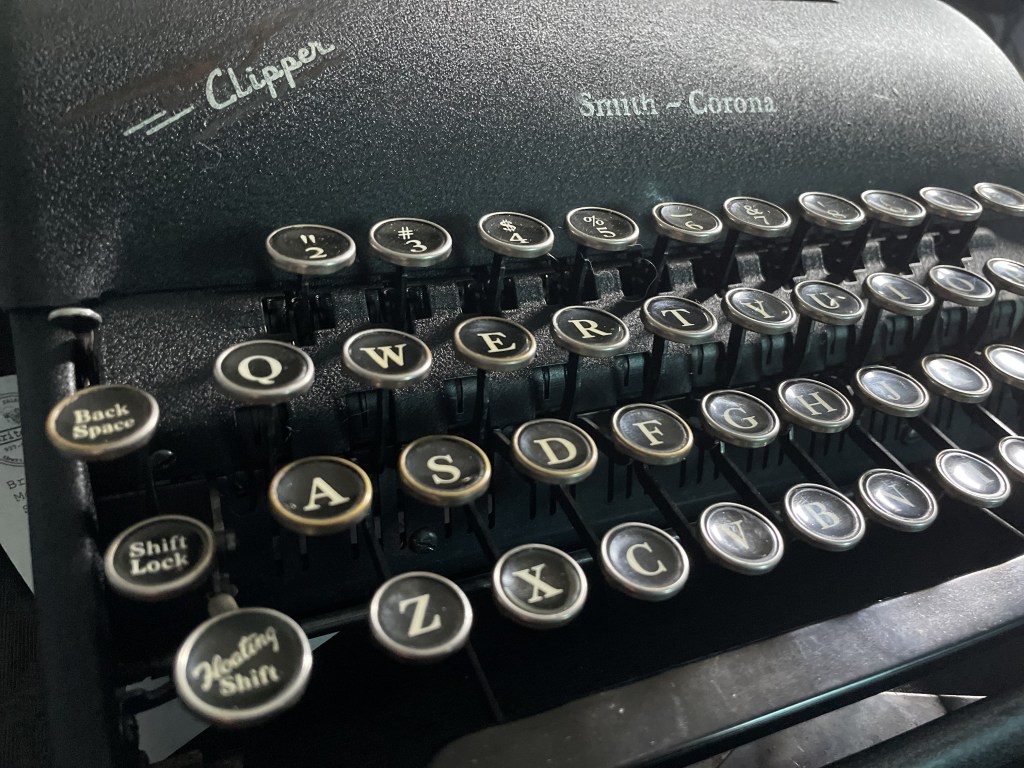
I have three manuals, but this is a sleek 1945 Smith-Corona Clipper, matte black, with a textured chassis and gold-lettered, enameled keys. It sounds like I’m describing a classic car, doesn’t it? That’s exactly how some people see it.

Your next question is obvious, and I’ve heard it a dozen times already – why? I’m a technically savvy person with a significant digital presence. So why would I sit down to write on an old typewriter? That’s a great question. I’ll try to answer as we go. Let me first say I’m not alone.

Over the last twenty years or so, interest in typewriters has been on the rise. That sharp, rhythmic clickety-clack has charmed a whole new generation of writers, collectors, and nostalgics. It’s commonly known that actor, author, and director Tom Hanks is a long-time typewriter collector. Whole communities of typewriter enthusiasts share photos and samples from their beloved machines online and in person.

Many attend type-ins, where people gather at typewriter shops, homes, libraries, or anywhere else to, well, type. I often refer to them as cruise-ins for typewriter enthusiasts. There’s even an activity called type-casting, where you create something on a typewriter, scan it as an image, and post it online. (Learn more about the so-called “Typewriter Insurgency” here.)

As a Gen Xer who hit high school during the 1980s, modern office tech was still coming of age. We barely had reliable copy machines. Most schools and businesses had a mix of PCs and typewriters (mostly electric), so I learned both almost simultaneously. I’m comfortable with either.

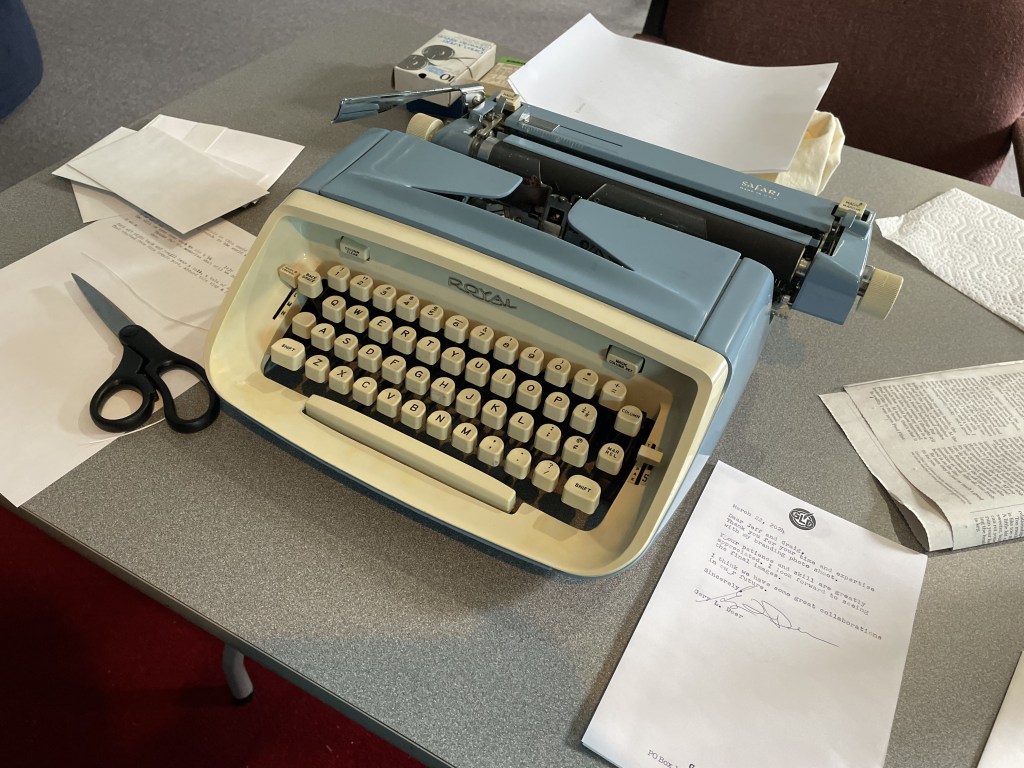
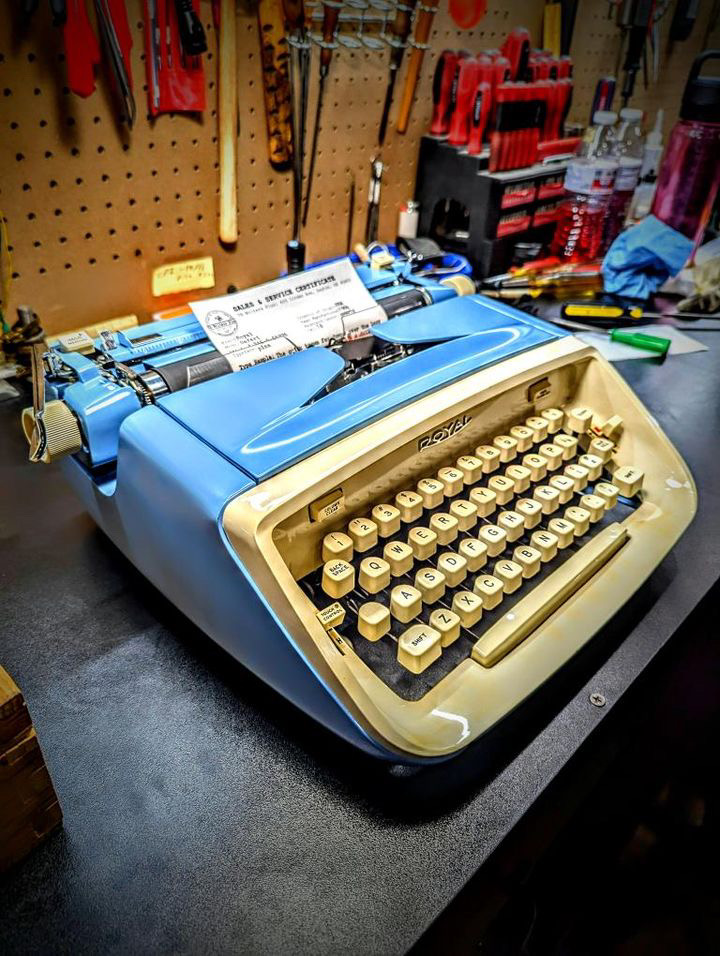
In the background, Gery’s 1964 Royal Safari. (Photo by Hue12 Studios, Dayton, OH)

I bought my first manual typewriter while I was in college, mostly for its portability. A good bit of my earliest writing was done on that machine. It was—or rather is—a 1964 Royal Safari, light blue with off-white keys and accents. It still sounds like I’m describing a ‘57 Chevy. And yes, I still have it.

Aside from nostalgia and mechanical admiration, I think digital overstimulation may have contributed to some people’s leaving the computer behind. I can relate. I’m so immersed in the continuous urgency of the digital environment that I just want—no, need—the quiet of the old ways.

I know the typewriter can be noisy, but I wasn’t referring to “quiet” in that sense. When those keys snap against the paper, I am fully engaged and undistracted from my writing. The slower pace allows me to choose my words more carefully, and there are no pop-ups, email messages, or social media nonsense. It’s kind of freeing.

I’ve also heard some people turn to the typewriter out of paranoia. Privacy has become a real concern in the digital world, and viruses can’t infiltrate typewriters, nor can your printed pages be hacked. You’re most definitely off-grid. But there’s a price to pay for that: time.

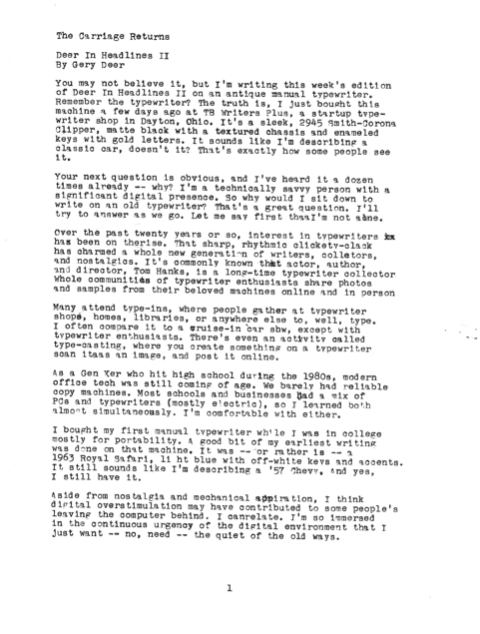
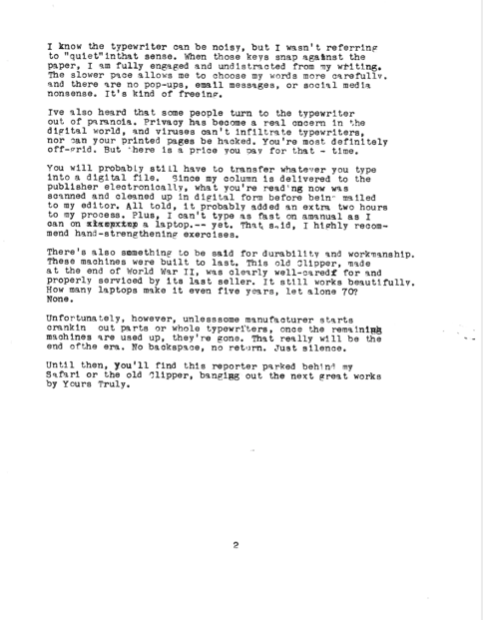
You will probably still have to transfer whatever you type into a digital file. Since my column is delivered to the publisher electronically, what you’re reading now was scanned and cleaned up in digital form before being emailed to my editor. All told, it probably added an extra two hours to my process. Plus, I can’t type as fast on a manual as I can on a laptop – yet. That said, I highly recommend hand-strengthening exercises.

There is also something to be said for durability and workmanship. These machines were built to last. This old Clipper, made at the end of World War II, was clearly well-cared for and properly serviced by its last seller. It still works beautifully. How many laptops make it even five years, let alone 80? None.

Unfortunately, however, unless some manufacturer starts cranking out new parts or whole typewriters, once the remaining machines are used up, they’re gone. That really will be the end of an era. No backspace, no return. Just silence.

Until then, you’ll find this reporter parked behind my Safari or the old Clipper, banging out the next great works by Yours Truly.

(See the gallery for photos of the typewriters mentioned in this piece and more.)

Uniquely Portable Magic

In Books, Education, Entertainment, Opinion, Print Media, Technology, Uncategorized on April 7, 2024 at 9:47 am

Deer In Headlines II

By Gery Deer

“Books are uniquely portable magic.”—Stephen King, On Writing: A Memoir of the Craft.

I’ve often quoted classic books in this column for several reasons. For one thing, those brilliant writers of old had wisdom that still eludes me, and I need to borrow it occasionally. 

I also enjoy the opportunity to share my love of books with those of you who are kind enough to give me your attention for a few minutes each week. My hope is that, in addition to my humble observations, I can share some words from those scribes who were (or are) far wiser and more eloquent than me. 

Of course, I don’t just cite the classics. I toss in something fun and modern here and there as well. You may not realize it, but I’ve shared some words from the likes of Douglas Adams, George R.R. Martin, J.K. Rowling, and more. 

I wasn’t a voracious reader when I was young, but that changed as I grew up. In high school, I became interested in Charles Dickens. Later, it was the stories of Mark Twain. From “The Little Red Lighthouse and the Great Gray Bridge” to “Lord of the Flies,” one book led to another. It’s interesting how that happens. Once you’re hooked…

That said, here are my questions of the day: Have books become obsolete in the shadow of the internet and social media? As some try to ban classics like Huckleberry Finn and To Kill A Mockingbird, what has become of literature’s social significance? What does the future hold for the classics and all the unwritten works yet to come? I don’t have the column inches to answer these questions, so here are my brief thoughts. 

In my humble opinion, Stephen King had it right. Books are magical. They transport us to faraway lands, introduce us to people around the globe, and inspire imagination and dreams. But books are far more than mere escapism from our daily grind into the worlds of Harry Potter and Captain Nemo. 

Books are the arks of our history. They help us learn from the past, hold a mirror to the present, and prepare for the future. Every published page offers a tiny glimpse into who we are as a species—warts and all. When you read a book, you have no choice but to learn something. Ignorance is replaced with knowledge and understanding, and then a funny thing happens—people get along better. Books provide the knowledge that breaks down all the barriers that separate us.

Booksellers are struggling, however. In many American communities, there might be a Starbucks or a parking lot where the neighborhood bookstore once stood. Instead of the pages of some great new novel, many people seem far more interested in scrolling through social media.

Although I prefer the printed page for most of my reading, my appreciation for books is more about content than construction. I typically read two or three books simultaneously, each in a different medium—audio, digital, or print. 

A book is a book. Unless you can convince me that words read aloud are less meaningful than those read by eye, listening to an audiobook still counts as reading. You should read however you feel comfortable.

Concerning book bans, I won’t get into the obviously paranoid politics involved. If you don’t like a book, don’t read it. But the concept of book banning should horrify us because it casts a long shadow backlit by terrors of the past. 

Some writers spend decades crafting the perfect book, hoping it will positively impact the reader. No matter your age, the genre, or the medium, reading a book will improve critical thinking and creativity and release dopamine, the brain’s “happy” chemical. 

If you haven’t done so for a while, it’s time to get some of that happiness for yourself or give it to someone else. A book is one of the most meaningful gifts you can give. Libraries and bookstores offer a fun, affordable family experience you will remember forever.

Thankfully, books, even printed ones, aren’t going away anytime soon. But if they were ever to disappear, so would our society, our humanity, and, eventually, the record of our very existence. 

*************

More Information:

Your local library is a great, free resource for the whole family to explore the unlimited world of books!

If you want to learn more about the book industry, the future of printed books and bookstores, check out these documentary films: The Booksellers. And Hello, Bookstore.

Is this your new site? Log in to activate admin features and dismiss this message
Log In