Local News & Commentary Since 1890.

Posts Tagged ‘health’

Mr. Deer Goes To Washington

In Health, Local News, National News, Opinion, Science, Technology, Uncategorized, World News on February 28, 2025 at 4:55 pm

Deer In Headlines II

By Gery Deer

According to the National Kidney Foundation, more than 20 million Americans are affected by renal (kidney) and urological conditions. It goes on to say that millions more, currently unaccounted for, are at risk. The causes range from congenital issues to diseases that affect the urological system.

I happen to be in the category of the former. In March, I’m joining a couple of hundred other patients, caregivers, and advocates to meet with congressional representatives about more support to care for, as I will explain in my case, adult patients with congenital urological conditions.

I was born with a rare condition known as bladder exstrophy. It affects about 40,000 people worldwide, and only a few specialty hospitals in the United States specialize in the predominantly pediatric component of treatment. As a child, I was treated in Dayton, Ohio, by some of the best pediatric surgeons in the country who were, it’s safe to say, figuring it out as they went. But they did a tremendous job, and here I am.

From just a few hours old, I was looked after by a contingent of physicians and specialists in what I’ve come to refer to as the “pediatric bubble.” My healthcare providers communicated with each other and consulted on various issues as they perfected this procedure or completed that surgery. As complex as it might seem, my parents were kept well-informed and had direct lines of communication with my general practitioner and my surgeons.

Unfortunately, once you hit about 21 or 22 years old, your pediatric bubble bursts and you are unceremoniously dumped into the world without proper adult urological care. Fortunately, my pediatric surgeon handed me off to someone he trained with, an adult urologist who looked after me for 25 years until his recent retirement. For the first time in my life, I was without a specialist, and my particular problem created a barrier to finding new care.

This situation is familiar to patients with many congenital conditions that carry over into adulthood. To maintain continuity of care, most continue to see their specialists for decades, long after the primary reconstructive surgeries are complete. Thankfully, I was left with few residuals as I grew up, but maintenance needs require somewhat more specialized attention. In addition, as patients age, their physicians must know something about the situation.

Bladder exstrophy, or BE, like many other congenital problems, requires a specific set of surgical skills, reconstructive knowledge, and urological and renal expertise. There is also a critical shortage of practicing urologists. All of this, combined with the potentially long-term commitment to the patient, leaves most urologists choosing not to treat BE patients, and therein hangs the problem.

Enter the Association for the Bladder Exstrophy Community, or A-BE-C, and its newly formed Adult Patient Advisory Council (APAC), of which I am an organizing member. While A-BE-C’s global mission began as primarily pediatric, the advisory council was established to provide resources for adult patients. The goal is to ease the transition from pediatric BE care into adulthood. That’s where me and my plane ticket to Washington, D.C. come into the story.

I’ll represent our organization at the American Urological Association’s annual patient advocacy summit. It’s an opportunity to share these concerns and potential solutions with congressional representatives.

I hope they’ll listen to some of my ideas, including a subsidy or tax credit funded to help encourage young doctors to specialize in urology and, even more so, help them to dedicate some of their practice to adult BE care. With all the tragically unsympathetic, uninformed budget cuts, I wish I was more optimistic. But I will still try, and you may be able to help.

Patient advocacy isn’t about awareness and support. It’s about action. Sadly, urological problems are generally the subject of lousy humor, ignorance, and ageism. But I assure you, there’s nothing funny about it for the patients and caregivers. For them, it’s a daily struggle to maintain proper care.

You can help by following A-BE-C on social media and sharing educational content. You can also contact your congressional representatives to remind them about this. These patients don’t need more research. They need qualified specialists and the peace of mind that their cause matters.

Health Insurance Hostility

In Crime, National News, Opinion on December 13, 2024 at 2:31 pm

Deer In Headlines II

By Gery Deer

The shocking murder of the UnitedHealthcare CEO, 50-year-old Brian Thompson, has had a ripple effect on public opinion towards health insurance companies. As information continues to unfold about the alleged killer, Luigi Mangione, it’s becoming clear that the man’s motivation was likely related to coverage disputes.

But what does this mean going forward? Has this man’s terrible action awakened scrutiny toward all health insurance companies, or was it the act of one disturbed individual who felt his only recourse was to take matters into his own murderous hands? We may never know the answer to the latter, which begs even more questions.

Is it likely there will be copycat crimes? Is the public’s temperature so high towards these companies that the shooter was merely the first to act on what countless others may have imagined? Many insurers seem to think so and have begun removing senior staff members’ names, bios, and photos from company websites to prevent another such incident.

Since the moment the tragic event was reported, social media buzzed with emotional speculation. Anger, frustration, and, strangely enough, sympathy towards the alleged killer have emerged from many who have felt the sting of corporate healthcare.

Some of the reactions to this man’s horrific death were downright grim. One example of such dark commentary went something like this, “Did he die quickly, or was he waiting to see if his insurance would cover treatment?” Most were worse. Many were unrepeatable.

I would caution anyone who sees this terrible act as some sort of statement against the status quo of health insurance in our country. Nor should you fit the assailant with a white hat or call him Robin Hood. Nothing could be further from the truth. Social banditry aimed at an unimaginable public slaying isn’t going to resolve the health insurance crisis any more than political pundits can.

It’s unlikely that this event will alter the operational procedures of health insurance companies in any way. There’s little argument against the idea that the American healthcare system is beyond disastrous. Sadly, there is simply too much money on the line at the top of these corporations for any real action that might benefit the consumer. If anything, premiums continue to rise while more and more claims are rejected.

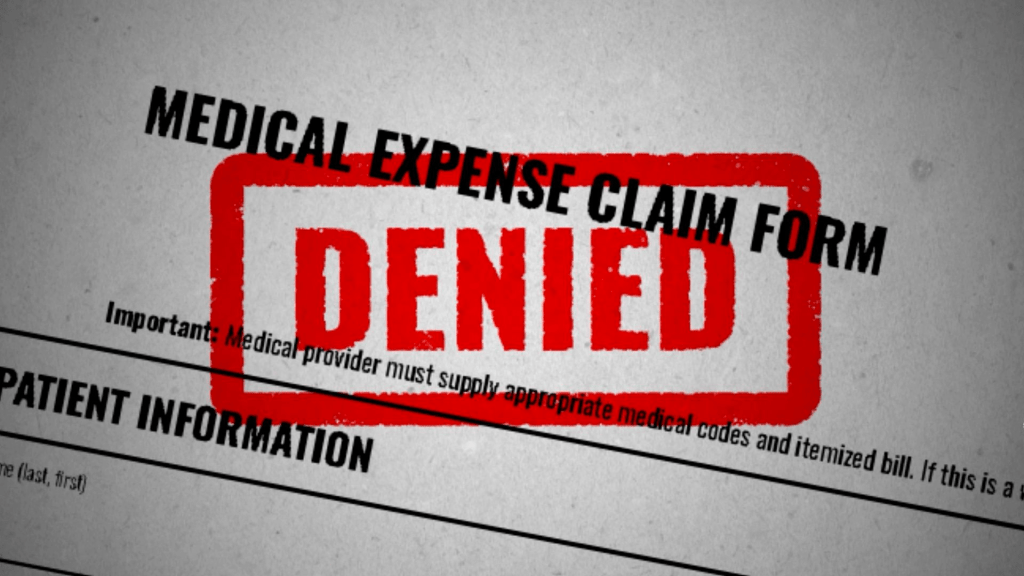
Since 2019, average family healthcare policy premiums have increased as much as 24%, with individual coverage not far behind. Even if you can afford coverage, there’s a good chance your claim – regardless of the necessity of treatment – will be denied. A Keiser Family Foundation study reported that health insurance companies denied an average of 17% of claims, with some reaching as high as 49%, even for in-network care. In short, it’s not getting any better, and there are no signs that this incident will move that needle in a positive direction.

There’s also the problem of sympathetic influencers and media whipping up a potentially dangerous movement akin to what we saw at the U.S. Capitol on January 6. This time, instead of political ideology to light the fire of unrest, it’s something more people can relate to. We’ve all had claims denied or medical bills shockingly higher than expected due to “out of network” notices or other corporate nonsense. Human suffering can be a highly motivating reason to take to arms, and now we’ve seen the alleged result of one disturbed individual’s response to it.

Our system is in bad shape, no question, yet this isn’t how to resolve it. In my opinion, we’re aiming at the wrong target (no pun intended). The biggest problem isn’t the insurance companies but the colossal and unregulated healthcare costs they’re meant to mitigate.

Billions of dollars pass through hospital doors daily, and the government allows it. They’ll break up Google or Microsoft over trivial anti-trust issues. But even suggesting that some behemoth healthcare system should have its revenue capped sends Congress into a frenzy.

Why? Money. Millions in donations, lobbying cash, and back-door deals on both sides of the aisle will forever prevent any reduction of the staggeringly high costs we pay for healthcare. Unless that changes, we’re perpetually at the mercy and living the network of the stockholders of these massive insurance conglomerates.

TCN Behavioral Health Announces Annual School Supply Distribution Events

In Dayton Ohio News, Health, Local News, News Media, psychology, Uncategorized on July 8, 2024 at 10:36 am

TCN Behavioral Health Services, Inc. announces their annual School Supply Drive Distribution Events. TCN annually collects school supplies and donations for the children in their service areas. In 2023 they provided supplies to over 300 children and hope to expand that reach in 2024. The five distribution events listed above will include free pizza and beverages as well as school supplies while supplies last.

“Every year, TCN provides supplies to more than 300 students within our local communities. This helps ensure a successful beginning to the school year for these students, alleviates some of the financial strain on parents and caregivers, and supports educators who frequently contribute their own resources to support classrooms,” says Tasha Jones, TCN’s Executive Administrative Assistant. “This wouldn’t be possible without the dedication of our donors and volunteers.” The five events will be held from 4-6 PM at the following TCN office locations:

Wednesday July 24 – 1825 Commerce Center Blvd, FAIRBORN

Friday July 26th – 1522 E. US Hwy 36, URBANA

Thursday July 25th – 1021 N. Market Street, TROY

Tuesday July 30 – 118 Maple Avenue, BELLEFONTAINE

Wednesday July 31 – 452 W. Market Street, XENIA

TCN accepts donations of school supplies at all locations, or donors can shop the School Supply Drive Amazon Wishlist at https://a.co/i3dO9iF to have supplies shipped directly to TCN for preparation and distribution. The organization also accepts monetary donations at tcn.org or https://tcn.jotform.com/202296368911965 by selecting “school supply drive” in the dropdown menu. Volunteers can sign up to help at their local events here: https://tcn.jotform.com/223056028945962.

Founded in 1990, TCN Behavioral Health Services, Inc. is a comprehensive behavioral health agency dedicated to improving lives by providing clinically excellent and accessible behavioral health services. TCN provides mental health, substance use and psychiatric services for adults and youth in Champaign, Greene, Logan, Miami, and Montgomery counties. For more information or to donate to TCN call (937)376-8700 or visit www.tcn.org.

Greene County is Unplugging on March 1, 2024. We Hope You Will Too!

In Children and Family, Dayton Ohio News, Health, Media, psychology, Technology, Uncategorized on February 22, 2024 at 11:35 am

GREENE COUNTY, OH —Do you spend a lot of time scrolling through social media, watching short videos, commenting on, or reacting to various posts? Do you have multiple cell phones? Are you documenting every move, event, and emotion on social media platforms and find it hard to get through a meaningful conversation without adding to your story? Are you mindlessly scrolling through YouTube videos, chatting on Discord or other apps? We miss out on the valuable and meaningful moments of our lives as we pass the hours with our faces buried in our smart phones, documenting every move through social media and shielding ourselves from the outside world, where real connections and memories are made.

If you notice these mannerisms in yourself – or your friends & family, the Disconnect to Connect Coalition would like to invite you to commit to the Global Day of Unplugging (GDU) right here in Greene County from sundown on March 1 through sundown on March 2.

We invite you to encourage those around you – your business colleagues, your students, your co-workers, your neighbors, your family, and your friends to take this day and carve out precious time to unplug, relax, reflect, be active, visit the outdoors, and connect with loved ones. We ask that you share a message about Global Day of Unplugging on your marquis sign if available, tell your friends and neighbors, share it in a newsletter, announce it on the radio, or any other way that you can think of to get the message out. Use the hashtag #GreeneCountyUnplugged and share our daily posts from our social media platforms.

We hope you will join us in this effort county-wide on March 1, 2024! Ideas to Unplug:

  • Join up with Greene County Parks and Trails and take a walk in the woods
  • Go on a scavenger hunt
  • Have lunch with a friend you haven’t seen in a long time
  • Ride a bike
  • Bake some cookies
  • Volunteer at the Food Pantry
  • Grab some sidewalk chalk and help your kids get creative
  • Blow and pop some bubbles
  • Create a joke jar
  • Plan an evening out with friends for dinner and/or a comedy club experience
  • Host a game night with cards or board games
  • Host a spa night

Disconnect to Connect (D2C) is a committee made up of professionals from several different county organizations, including Greene County Public Health, the Greene County Educational Service Center, Mental Health and Recovery Board of Clark, Greene and Madison Counties, Greene County Children Services, Greene County Family & Children First, and the Greene County Public Library. The group was developed to tackle the concerns of parents, educators, and community members about the effect of digital devices on the mental health and well-being of our youngest community members.

For more information or questions, please call 937-374-5669 or email lfox@gcph.info

New Year’s Convolutions

In Dayton Ohio News, Local News, News Media, Opinion, psychology, Uncategorized on January 14, 2024 at 5:44 pm

Deer In Headlines II

By Gery Deer

Well, it’s New Year’s Day, and you’ve partied like it was 1999, which, as it turned out, wasn’t all that much to party about. You’ve shaken your booty, danced the night away, and watched a sickeningly expensive party favor lowered in ritual celebration.

Then, after the plop, plop, fizz, fizz, you’re ready to face the world. You’ll step up to new challenges, take on the gym and the boardroom, boldly go where … okay, you know the rest of it. Wait a minute, though. Why now? Where’s all this motivation coming from? Why didn’t you have it last year, which was like, you know, yesterday?

Well, unfortunately, many people misguidedly see the new year as the promise of a clean slate, a fresh start, or a time to take on new challenges. In the first couple of months, gym memberships go up, cigarette sales drop, healthier food will fill grocery carts, and a great many engagement rings will need to be resized. Sadly, much of this activity is the result of a convoluted, all-powerful, and yet pointless New Year’s resolution.

According to one study I read, more than 35 percent of adults set New Year’s resolutions, with a surprising majority on the young side, between 18 and 34. As you might imagine, of the list of most common resolutions, health-related choices hold the top 3 spots, with increased exercise as number one.

In most of the research I found, saving more money was one of the lead resolutions. That struck me as contradictory because to achieve many of the others, you generally spend more than you would have in the first place. For instance, gym memberships, travel, starting a new business, healthier eating (the high cost of which makes no sense to me), and even quitting your job require more money.

If you’re interested in demographics, women mostly want to engage in health-related change for themselves. At the same time, men focus more on achieving career ambitions and laying off the booze. Good goals, for sure. Unfortunately, things tend to… dry out, if you’ll excuse the pun.

As it turns out, only about 9 percent of resolutioners stay with it beyond the second year. Nearly 25 percent quit after the first week. That number increases to almost 65 percent by the end of the first month. Oddly, most people quit on the second Friday of that month, and it even has a name. The makers of Strava, a popular activity-tracking app among runners and cyclists, discovered that its use plummets on that day, so they named it, “Quitters Day.”

Seems pretty hopeless, doesn’t it? I mean, why bother trying to improve yourself if you know the statistics are totally against you, right? Well, it wouldn’t be Deer In Headlines without some sage, if not potentially useless, advice from me. So, here goes.

First, forget the New Year’s resolution nonsense. It’s a recipe for failure. Start by identifying small, attainable, and measurable goals that build to the big one. For example, if you want to lose weight, set a realistic goal and, in my opinion, don’t put a clock on it. Create a plan that includes smaller food portions and steps down sweets and high-fat food. But don’t go cold turkey and build in regular exercise – slowly.

The same goes for career moves, financial success, or anything else. Remember, you’re trying to make life changes that will stick, and that takes time and commitment. Yes, it’s really hard sometimes, and we are our own worst enemies. It’s okay to be scared. But be kind to yourself, especially if your progress feels slow. Don’t give up and adjust where needed.

Incidentally, I know you want support from family and friends. But, trust me, share what you’re doing only with the closest few. For all the pats on the back, there are just as many slaps in the face – especially on social media. Personal accountability may be difficult, but it results in the longest-lasting success.

Finally, ignore the resolution hype, give yourself a chance, and do the work. I promise that the challenge and results are worth it. Focus, plan, commit, get plenty of sleep, and have a safe and happy new year.

TCN Behavioral Health Announces Opening of Second See U Now (“SUN”) Clinic

In Charities, Dayton Ohio News, Health, Local News, psychology, Uncategorized on January 11, 2024 at 9:07 am

TCN clients can now access SUN Clinics on Tuesdays from 1pm to 4pm and Fridays from 10am to 1pm.

Bellefontaine, Ohio – January 9, 2024TCN Behavioral Health Services, Inc. announces the opening of its second See U Now (or “SUN”) Clinic on Tuesday, January 9, 2024. The clinic, located physically in the Bellefontaine office at 118 Maple Avenue, will be open weekly on Tuesdays from 1pm to 4pm and can see clients both in person and via telehealth.

TCN’s first SUN Clinic opened on January 6, 2023 in TCN’s Xenia office, and in 2023 provided 434 services to 262 clients both in person and via telehealth. The SUN Clinic is intended to serve clients without a prior appointment as their need arises. A Clinic Coordinator works with the client to choose the services they wish to receive from a multi-disciplinary team of providers including nursing, psych, MAT, primary care, substance use and mental health counseling, case management and peer support. The Clinic accepts all payment options including Medicaid, Medicare, private insurance, and self-pay. As with all TCN services, local board funding is available for clients who qualify.

“TCN is always proud of our innovative practice to meet clients where they are, and the SUN Clinic is another example of this,” says TCN CEO Lori Strobl. “SUN’s motto is “nothing about you, without you” and its mission is to empower the client to be in control of their healthcare and truly partner with their clinical team.”

“We are very excited to welcome this new model of behavioral health care to our communities,” says Dr. Adam Sorensen, Executive Director of the Mental Health Drug & Alcohol Services Board of Logan & Champaign Counties. “TCN’s SUN Clinic approach has a proven track record, and it is a perfect example of TCN’s commitment to offering high-quality, person-centered care. We appreciate TCN’s ongoing partnership and willingness to be innovative with our shared goals of improving access and quality of care in our neighborhoods.” 

Founded in 1990, TCN Behavioral Health Services, Inc. is a comprehensive behavioral health agency dedicated to improving lives by providing clinically excellent and accessible behavioral health services.  TCN provides mental health, substance use and psychiatric services for adults and youth in Logan and Champaign counties.  For more information or to donate to TCN call (937)376-8700 or visit http://www.tcn.org.

Food allergies are no yolk!

In Children and Family, Food, Health, Opinion, sociology, Uncategorized on January 7, 2024 at 12:46 pm

Deer In Headlines II

By Gery Deer

“Then the Whos, young and old, would sit down to a feast. And they’d feast! And they’d feast! And they’d FEAST! FEAST! FEAST! FEAST! They would feast on Who-pudding, and rare Who-roast beast.” – Dr. Seuss’s “How the Grinch Stole Christmas”

Admit it. You just read that in Boris Karloff’s voice, didn’t you? But what if you’re the one Who, for whom a feast could be a culinary minefield? What if you’re the Who who’s allergic to the Who-pudding and rare Who-roast beast?

If you’re like me and the other 26 million Americans who suffer from food allergies, holiday buffets can be a dangerous foray into the unknown. Food allergies might be lampooned on your favorite sitcom, but there’s nothing funny about them. It’s true that most result in mild skin irritation or digestive discomfort, but many are life-threatening.

Within seconds, an exposed victim can experience severe swelling of the throat and larynx, constricting their airway, and even suffer anaphylactic shock. In these situations, quick medical attention is vital.

Whether you’re a member of the allergy club or not, it’s probably a good idea to learn about food allergy causes, symptoms, and first aid. Some of the most common foods people are allergic to include cow’s milk, eggs, fish, shellfish, tree nuts, peanuts, strawberries, wheat, soybeans, and sesame. These are certainly not the only ones, and you might not even know you’re allergic to anything until it hits you.

Just because you weren’t allergic to something as a kid doesn’t mean you won’t be as a grownup. For about half of food allergy sufferers, the affliction didn’t develop until adulthood. I only recently discovered my own allergy to kiwi fruit and cantaloupe. For years, I thought cantaloupe was supposed to burn the inside of your mouth. You know, like a spice or something? Idiot.

Processed food contains a plethora of dangerous ingredients, and most allergens are printed on pre-packaged food labels. Unfortunately, depending on the amount, some ingredients might not be listed. For example, it’s still common for some labels to omit sesame among potential allergens. A Google search might show detailed ingredient lists or allergy warnings for specific products. Otherwise, steer clear altogether.

If you or someone in your family suffers from food allergies, I can offer a few tips to help navigate the holidays, and the first one is a no-brainer. Since many holiday gatherings are potlucks, you can bring your own safe food and avoid everything else. Or you could host the event yourself for peace of mind. If you do host, label the dishes, and maybe, if you want to be an allergy-safe superhero, provide a full list of ingredients.

For children, carry safe food, or see to their plate for them. Kids also seem especially sensitive to nuts, and holiday goodies are full of them, so keep an eye out. To avoid cross-contamination, use disposable utensils to serve yourself or carry your own flatware. Trust me, it’s worth the trouble.

Incidentally, some people are quite sensitive about publicly outing their allergies. For instance, I am allergic to eggs. But I’d rather not discuss it because I feel like a freak. If it comes up, I get bombarded with questions like, “Can you have cookies? Bread? Pancakes? What do you eat for breakfast?” And on and on. People just can’t leave it alone.

I understand they’re curious and trying to be helpful. But the nature of the allergy can be difficult to explain (although I really shouldn’t have to), and it doesn’t affect anyone but me. I never ask hosts to alter their menu or anything they’ve planned. I simply avoid those foods that might be dangerous or questionable.

For the food-allergic out there or their caregivers, you might want to ask your primary care physician if you should carry a preloaded epinephrine injector (otherwise known as an “EpiPen”). If your allergic reaction were to cause respiratory distress, it might be a good idea to be prepared. A food sensitivity test might also help.

Food allergies don’t have to wreck the halls – or any other occasion. All you need is a little preplanning so that no one turns as green as the Grinch after a helping of your famous Who hash.

GCCOA Hosts Memory Loss Presentation

In Children and Family, Dayton Ohio News, Health, Local News, psychology, Science, Senior Lifestyle, Uncategorized on January 4, 2024 at 1:47 pm

The Greene Count Council on Aging is hosting a free memory loss information session titled, “Is It Dementia?” The event will be held at 2:30 PM, on Wednesday, January 10th, at the Xenia Community Center, 1265 W. Second St., in Xenia. Seating is limited, so please call 937-376-5486 or email YourFriends@gccoa.org to reserve yours.

From the GCCOA information:

We all experience memory loss at one time or another and many of us are fearful of what it might mean. Is it ‘normal’ memory loss or is it caused by dementia, such as Alzheimer’s disease?

Experts will answer your questions, address your concerns, discuss the types of dementia and explore things to consider as a caregiver or someone wanting to learn more about memory loss and dementia.

From the editor: For more on dementia, here is a study from Columbia University’s Irving Medical Center – https://www.cuimc.columbia.edu/news/one-10-older-americans-has-dementia

Coronavirus and caregiving. Tips for keeping healthy during the COVID-19 crisis.

In Children and Family, Health, history, National News, Politics, Science, Senior Lifestyle, Uncategorized on March 15, 2020 at 5:49 pm

(Reprinted by permission from the Old Nerd in the Gym Fitness blog)

As of the time of this writing, COVID-19, known as the Coronavirus, has become a pandemic and lives and countries affected are growing exponentially with no end in sight. As government and private medical resources scramble for a viable vaccine, Americans struggle with the idea of social distancing and isolation. Some of the most widely affected are those who care for others – medical professionals and, in our interest here, informal caregivers.

The isolation already felt by caregivers can be greatly exacerbated by further restrictions on respite time or visits from friends and family. It is difficult to know with whom people may have come into contact causes and the danger to your family member is unpredictable. Even in-home care providers create a higher risk for patients and their caregivers.

For those with family members in a nursing facility, there is now a greater feeling of separation. Nursing care guidelines have restricted visiting hours or cancelled them entirely for all but hospice patients. Whatever stress caregivers face on a day-to-day basis are now greatly multiplied.

During this difficult time it’s important that caregivers remember to practice additional self-care. Here are some tips that might help. 


Protecting Yourself and Your Charge

First and foremost is protecting yourself and your family member from potential infection. Nothing is failsafe, but there are things you can do to minimize the potential hazards and it all starts with factual information. (Here is information provided by the Washington State Department of Health)

How is the novel coronavirus that can cause COVID-19 spread?

Coronaviruses are primarily spread through respiratory droplets, which means to become infected, people generally have to be within six feet of someone who is contagious for an extended period of time, and have droplets land on them. This is very different from airborne diseases like measles, so the public health response is different.

To reduce your risk of getting any viral respiratory infection:

  • Wash your hands often with soap and water for at least 20 seconds.
  • Avoid touching your eyes, nose, or mouth with unwashed hands.
  • Avoid close contact with people who are sick.
  • Clean and disinfect objects and surfaces.
  • Stay at home away from others if you are sick.
  • Cover mouth and nose with a tissue when coughing or sneezing, then throw the tissue in the trash and wash your hands.

Dealing With Isolation & Monotony

It might be tough to battle the day-to-day monotony and isolation of caregiving but now it’s going to be even harder. Respite becomes all the more important but, with social safety restrictions and countless event and activity closings, it will be fleeting at best. Rest and diversion are vital to mental stability and calm. 

Exercise. Find exercises you can do at home. Most streaming services offer some type of free exercise videos you can follow. Yoga and meditation can help too, or just go outside and take a walk, even if it’s just around the house. If you can, take your charge with you. Avoid contact with others, but open air is good for everyone. Try to find something to get your heartrate up. 

Food. Be careful not to overeat. Ignoring the potential for supply shortages, if only to avoid the infection risk at the store, boredom will invite snacking and the potential to overeat. When you do shop, avoid buying chips or other unhealthy snacks and keep fresh fruit and veggies on hand. Citrus and other fruits will help to shore up your immune system. Provide the same to your family member if they’re able. 

Proper hydration is also a concern during these trying times. As has been mentioned many times in the Old Nerd articles and podcasts, staying hydrated is vital to health. Be sure to keep health drinks like low or no-sugar fruit juice and water.

Sleep. Proper rest is critical to mental and physical health alike. It’s difficult enough to rest when your mind is full of worry and fear as a caregiver. Now, adding the virus concerns sleep will be even more fleeting. Still, make every effort. Avoid screens within an hour or so before trying to sleep and don’t watch the news. Read a book you like or play a game with your charge or other household member. Do something to take your mind off of everything before you try to sleep. Build a routine around it and do your best to hold to it. 

KEY TIP: Avoid Social Media

It might seem, during such isolated times, that social media would be a great way to keep in contact with the outside world. But Facebook, Twitter and the like are far too full of false information, non-scientific nonsense and just flat-out negativity. None of this will be helpful to maintaining sharp mental focus and a calm emotional state. Turn it off. If you want to talk to family and friends pick up the phone or video chat so you can see and hear them. That will comfort you, not the ravings of crazy internet trolls. 

Hang In There.

Everyone must be in this for the long-haul. There is no vaccine for this disease yet in sight, but professionals are working hard. Follow the CDC guidelines and be careful. Proper hand-washing and advanced self-care will see it through. 

We will be releasing more advice and information as available. In the meantime, here are some resources that might help.

SOURCES & RESOURCES: 

CDC Definitions and Information on Quarantine and Isolation: https://www.cdc.gov/quarantine/index.html

World Map of COVID-19 Infections:  https://www.cdc.gov/coronavirus/2019-ncov/cases-updates/world-map.html

Women’s Health & Pregnancy Resources

Women’s Health Care Physicians Practice Advisory for COVID-19, ACOG

Inpatient Obstetric Healthcare Guidance, CDC

Coronavirus Disease and Pregnancy, CDC

Guidance on Breastfeeding for a Mother with COVID-19, CDC

Starve A Cold and Stay In Bed

In Business, Children and Family, Education, Health, Opinion, psychology, Senior Lifestyle, sociology, Uncategorized on November 20, 2012 at 9:28 am

DEER IN HEADLINES

By Gery L. Deer


When I was helping to care for my mother towards the end of her life, my cousin and I did everything we could to limit her exposure to even the slightest sneeze or sniffle. Everything from the bed rails to the wheelchairs was repeatedly and regularly wiped down with antibacterial solutions to prevent her from picking up a random bug that, in her weakened condition, could possibly be life-threatening.

Of course, we couldn’t protect her from everything. From time to time, we would have to take her out of the controlled environment of her home for doctor visits, family functions and sometimes just to give her some fresh air. But what I grew increasingly paranoid of was the amazing number of people who would go about their day suffering from severe colds or other illnesses, seemingly ignorant to the potential dangers they posed to others.

Despite other achievements, medical science is still remarkably ignorant of the common cold and its associated contagions. Doped up on symptom-hiding chemicals, people plod blearily through the day without a second thought to the fact that they could make others seriously ill just by being the last person to push a door open or use a shopping cart.

More mind-blowing are the numbers of healthcare workers and restaurant servers who go to work sick and are allowed to remain at their post. This is just ridiculous. I understand that it’s hard to take a day off when you’re working hour by hour but by staying home you may be losing a few bucks but you might be keeping someone else from becoming deathly ill, and getting yourself back to health a bit faster.

So how do you know when you should call in sick? On Tuesday, November 20, Dr. Holly Phillips, on CBS This Morning’s Health Watch, offered these suggestions for knowing when you should stay home. “It’s hard to know when you should call out sick,” she notes. “A fever, particularly in the 101 – 102 degree range, accompanied by aches and pains, might signal the flu, and you should definitely stay home.”

“A milder fever, sore throat white patches on tonsils indicates a strep infection and it’s probably time for some antibiotics, so a doctor visit is recommended,” she says. “A low grade fever coupled with a cough and sniffles mild signal a mild cold, so it’s your choice to stay home or not. But if you choose to go to work, be kind to your co-workers and wash your hands often and cover mouth and nose when coughing or sneezing and don’t handle food.”

Researchers say that the common cold costs American business more than $25 billion every year. More than $17 billion of that loss is attributed to people who go to work sick and are therefore less productive. In my opinion, wives tales and ignorance are also major contributors to that loss.

For years, people thought a cold or other infections illness came from being outside in the rain or by not wearing a coat outside on chilly days. These behaviors lower the immune system, but colds and other diseases come from other people through some kind of contact, either person-to-person, or person-to-object. We spread these things ourselves, no divine intervention is required. In the end, it’ll be our own ignorance that kills us.

I’m not a doctor, but I can tell you from my own experiences that the number one part of preventing colds and flu is in sanitation. Maintaining a clean sink and toilet, using liquid instead of bar soaps, paper towels or air dryers and, when you can’t wash, antibacterial wipes and gels.

An ounce of prevention really is worth a pound of cure. If you do have a cold or some other issue that has you sneezing and coughing all day, please consider those around you. Had we not been so proactive, my mother could have died much earlier from complications of what to some people are just minor respiratory issues.

If you work in food service, stay home. If you work in medical care or around kids and the elderly, stay home. And as they always say, get lots of rest and drink plenty of liquids.


Is this your new site? Log in to activate admin features and dismiss this message
Log In