Local News & Commentary Since 1890.

Posts Tagged ‘Beavercreek’

My “Piano Man” Days

In Dayton Ohio News, Entertainment, Music, Opinion, Uncategorized on June 7, 2024 at 8:10 am

Deer In Headlines II
By Gery Deer

“It’s nine o’clock on a Saturday. The regular crowd shuffles in.” Those are the first lines of Billy Joel’s “Piano Man,” a song that always transports me back to my college days. To help pay for school, I was the pianist at a small Italian restaurant. Even in the 80s, it was old-fashioned, with one large room outlined by raised booths along the walls and a few floor tables in the middle. The decor was, what’s the word, beige. Yep, a lot of beige. Or was it brown? It’s tough to be sure because the lighting was pretty low.

Every Friday and Saturday evening, for about three hours, I performed all instrumentals on a small studio upright. I was like a live Muzak machine without the lyrics. I. Did. Not. Sing. Period. No one would have wanted to hear that. You might as well go outside and toss an alley cat into an upright trash can for that cacophony.

I had a repertoire of about 250 pieces, mostly pop and oldies, but I tossed in the occasional classical number just to show off. A quiet tinkling of “Fur Elise” goes particularly well with linguini, and the leg of lamb begged delivery of Bach’s “Sheep May Safely Graze.” I can’t read music, so everything was by ear. I memorized each song pretty much the first time it fell from my ear to my hands. Regulars would often bring a tape of some song they wanted me to play, and I’d learn it before their next visit.
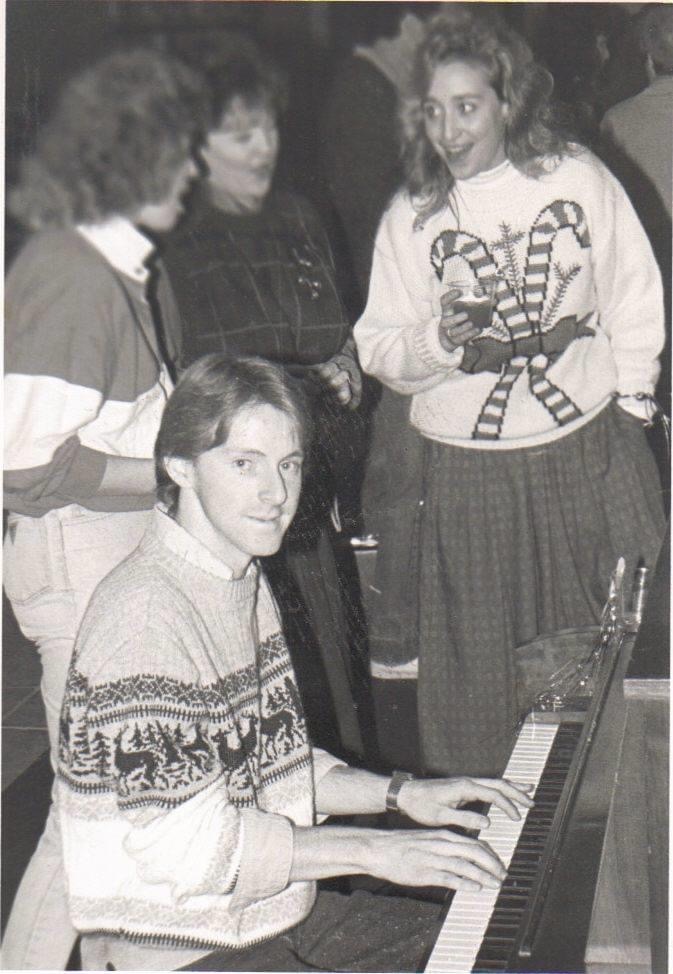
“Piano Man” Gery Deer, performing for a holiday event at Sinclair Community College in 1988.

Once in a while, I’d break out the occasional show tune. On slower nights, I’d rearrange some old TV show theme song into a long, drawn-out ballad. You should hear my dramatic rendition of “Gilligan’s Island” at half speed with Liberace-esque flourishes. People would ask if it was some rare piece by Rubinstein or Mozart. I’d reply, “Oh, no. It’s an original by Schwartz (Sherwood, that is – go look it up).

Playing in a restaurant isn’t all tickling the ivories and clever combinations of sets. It’s more about the people. Unlike a “piano bar” or dueling pianos show, restaurant performances are more atmosphere than anything else. Still, although I got paid for my hours on the bench, my livelihood really depended on tips.

Depending on the traffic, my available talent that evening, and the generosity of the customers, I could have a forty-dollar or four-hundred-dollar night. The latter required some people skills. I was unable to respond with more than a smile or nod when someone tipped me while I was playing. So, I’d take a break at my first opportunity and walk over to their table to thank them.

Here’s a secret about restaurant or bar piano players. We are always watching you. No, I didn’t care what you ordered. I never gave a thought to how stingy you were about tipping the waitstaff after spending a ridiculous amount on too many bottles of cheap wine. Nor did it matter to me that your date’s dress was so short your wife would certainly have disapproved.

No, I was studying my audience’s reaction. It was gratifying when people clearly enjoyed my work and that it added to their evening experience. If a table was paying particular attention to one kind of music, I’d adjust my set list accordingly. More often than not, a request or early tip came from one of those parties, generally the lady of the table. I think the guys were embarrassed to come up to me. I have no idea why.

During my three years there, I also learned a great deal about human behavior. Restaurants only provide a two-dimensional view of human interaction, but it’s alive with celebrations, sadness, gluttony, and togetherness.

I was very young then, so I also learned a lot about myself, particularly that I was more introverted than I’d ever realized. I’d like to think my music always improved someone’s day and that it still does. At least, I hope so.

If a street or restaurant musician ever makes your day just a little brighter, please take time to tell them so and drop a few bucks in their jar. You’ll make their day and yours, too.

CHECK OUT THE PODCAST FOR THIS EDITION.

Gossip Column

In Local News, Opinion, psychology, sociology, Uncategorized on May 18, 2024 at 9:02 am

Deer In Headlines II

By Gery Deer

Gossip. It’s an insidious phenomenon that always hurts people. Usually, gossip is inaccurate and degrades even more as it travels from person to person. Gossip is a destructive game of telephone that usually ends in the victim’s humiliation.

Gossip begins with someone sharing something confidential, saying, “Hey, just between you and me…” and so on. But it’s doubtful the information will remain a secret. The story inevitably spreads like air escaping a leaky tire.

Although there is debate about whether gossip is predominantly negative, nothing good comes from it. One study even suggests that gossipers tend to have a “darker” personality, uncaring about the social consequences of their behavior. Another offers the theory that we’re motivated by a need to bond with others in our social circles, keep ourselves entertained, vent emotions, and establish social status.

Low self-esteem seems to be a common theme among gossipers. They validate themselves by spreading news of others’ misfortunes and by sharing negative stories about people, reinforcing their imaginary superiority. 

All that sounds great academically. But, personally, I think people are just mean sometimes. They want to feel superior, so they start rumors and gossip to gain an upper hand—even if it’s all in imaginary. Ignorance probably plays a role, too. Those who spread gossip often believe the person at the story’s heart will never find out, so no harm done, right? Wrong. Trust me, they always find out.

In the past, gossip proliferated over the backyard fence or around the water cooler at work. However, with the advent of social media, gossip has taken on a new level, broadcasting misinformation to countless recipients at the speed of light. Clickbait is a perfect example of modern gossip-mongering, complete with a compelling story, video, and photos.

At this point, it’s probably important to clarify how I distinguish between gossip and rumor. Official definitions explain gossip as the spread of information that’s essentially true but likely unkind or hurtful. A rumor, on the other hand, is false information passed around without confirmation or conscience. However, I’m not convinced this distinction is always evident in practice. In my opinion, there’s very little difference between gossip and rumor, regardless of what old Mr. Webster says.

Regardless of your definition, one of the most important things to remember is how gossip affects the victim and how that affects the gossiper. In this context, the word “victim” refers to the person who is the subject or target of gossip. Since most of that information is false or intended to harm someone, that person is indisputably a victim. Although spreading gossip is not criminal, when those actions cause harm, there should be more severe consequences.

Victims of gossip can suffer devastating and long-lasting effects. I remember when I was in fifth grade, one of the bullies in my class made up a story about me that spread through our rural school like a bad case of Chicken Pox.

It was a painfully frustrating time for me. I already had to deal with being a 10-year-old adjusting to a strange new school. Simultaneously, however, I had to get good grades and spend every other waking minute defending myself against ridiculous lies.

Sometimes, gossip severely damages someone’s reputation or their livelihood. In such cases, it could be considered slander, and the harmed person may have a right to pursue legal action. The person who started the false information may be liable and must pay financial or other restitution.

We can’t control what others say about us, to whom, when, or how. At a time when misinformation and fake news are the norm, all we can do is abstain from its distribution. Think about it. Would you want someone gossiping about you, your business, coworkers, or your family?. Finally, remember that the best gossip is the kind you keep to yourself. And, if you hear gossip or the rumor mill is churning out something about someone close to you, do what you can to help put an end to it. I’ll close with a quote from the great Hee Haw Honeys song: “We’re not ones to go around repeating gossip. So, you’d better be sure to listen close the first time.”

Editorial series Deer In Headlines extended to a new podcast

In Local News, Media, News Media, Technology, Uncategorized on April 23, 2024 at 3:05 pm

The long-running Xenia Daily Gazette editorial series “Deer In Headlines” has expanded to meet the evolving needs of its audience and is now available as a podcast. Produced by GLD Communications, the weekly column made the leap to digital airways in early April. Listen free – https://deerinheadlines.podbean.com/

Gery Deer is a prolific freelance journalist, award-winning copywriter, editor, and the founder and creative director of GLD Communications, a public relations media agency based in Jamestown, Ohio.

Deer has written for dozens of publications and private clients, providing feature stories, business articles, and three long-running syndicated newspaper columns. The most prominent, “Deer In Headlines,” was a hard-hitting, award-nominated weekly op-ed series from 2008 to 2018.

After a five-year hiatus, Deer revived the series by popular demand, and it is currently published weekly, in print and online. Aptly titled “Deer In Headlines II,” the current series holds a mirror up to the world in a more personal, conversational approach. It has already gained three award nominations.

The podcast, an extension of the newspaper column, offers a unique experience. It not only covers similar topics but also provides a personal touch. Some episodes feature author readings, offering a glimpse into Deer’s process and the stories’ takeaways. This distinct approach sets the podcast apart, making it an attractive sponsorship opportunity.

Deer believes the audience will find value in the podcast’s intimate connection with the author. “Deer In Headlines was never supposed to last this long, but I’m always gratified to hear that people enjoy it and find something useful in my words,” said Deer. “On the podcast, I’ll be talking about the origin of some of the topics, and we’ll discuss writing and books, and, later on, even hear from some guests.” This value proposition makes the podcast an appealing platform for sponsors.

Each episode will run for 15 to 30 minutes. The series is free and available on most streaming platforms, including iHeart Radio, Apple Podcast, Podbean, Google Podcasts, and Amazon Music Podcasts, with more platforms coming soon. A video version of select episodes is also available on YouTube. Just search “Deer In Headlines,” and remember to subscribe for instant notification of new episodes and bonus material.
Deer values his readers’ support of his mission to promote literacy and quality journalism. Therefore, he is offering sponsorship opportunities for the podcast, with a portion of the proceeds going to promote literacy through Reading Is Fundamental.

The weekly print and online column is available by subscription to the Xenia Daily GazetteFairborn Daily Herald, and Beavercreek News Current. It is also available free online at www.deerinheadlines.com on a two-week delay.

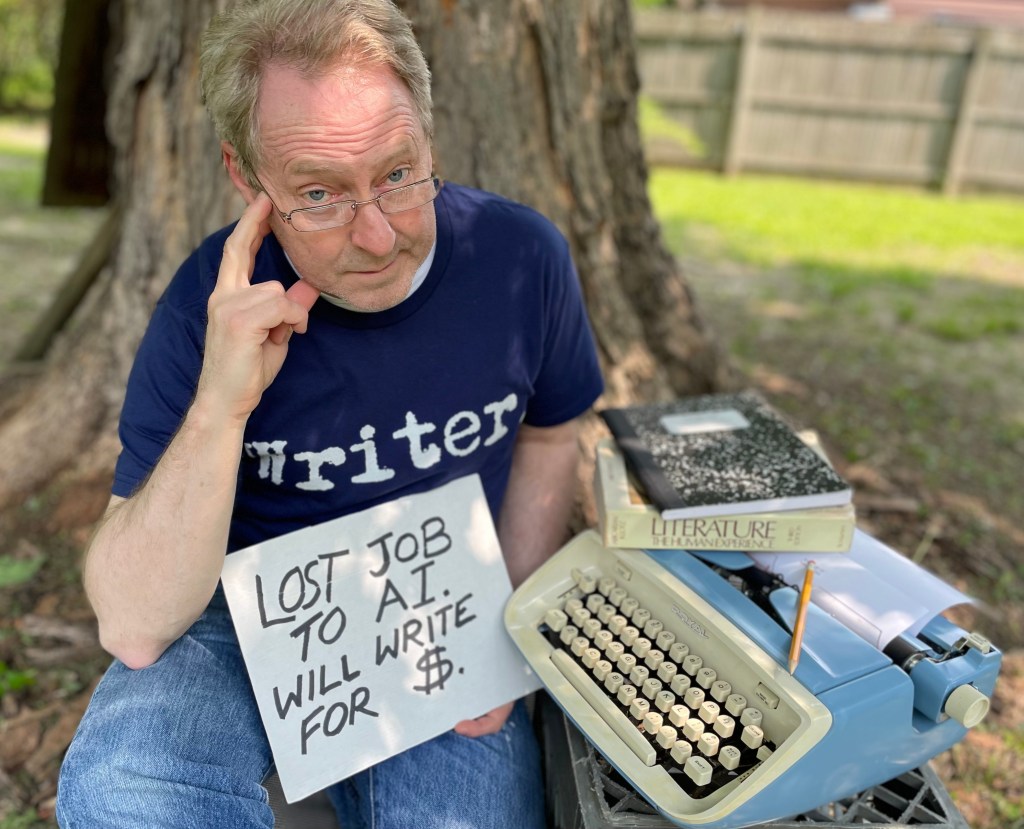
No job is bulletproof, not even mine.

In Economy, finances, Media, National News, Opinion, Technology, Uncategorized on April 20, 2024 at 12:02 pm


Deer In Headlines II

By Gery Deer

Have you ever been afraid for your job? I laugh when people think I can’t lose my job since I work for myself. As a writer, even working under my public relations agency, I’m often called “self-employed.” The immediate assumption is that no one can fire you.

There’s a lot of nonsense to unpack there. First, and possibly most important, there’s no such thing as self-employed. Unless you have a magical chest of gold or cash that continuously refills itself, you’re working for somebody who’s paying you. Being independently employed (my preferred terminology) means you’ve traded one boss for many (customers).

Second, working on your own means constantly beating the bushes, knocking on doors, and continuously selling yourself to generate a pipeline of work. My father and brother created multiple, simultaneous jobs for themselves because they never wanted to be out of work—and they never were.

My family seemed to always have multiple income streams—cattle, trucking, engine work, welding, anything that brought a buck. However small the amount of revenue, it added up. Mom and Dad ran the farm and our trucking business, and I always knew my family worked hard for what we had. No two days were alike. Dad might be out on one of our trucks or auctioning cattle one day. The next, he and my brother might be rebuilding a tractor engine and welding a broken hay rake—all before dinner.

Over the years, I adopted the same philosophy, but I wasn’t always independently employed. Once upon a time, I worked for “the man,” and the woman, and the corporate overlords, and whatever else they’re called. From engineering technician and mechanical designer to database developer and coder, I did the 8-to-5 grind for many years before going out on my own.

Writers in every industry are rapidly becoming an endangered species due to Artificial Intelligence.

Since much of what I did in the corporate arena was high-tech, the advanced skills required evolved rapidly. I constantly studied the latest technologies to avoid obsolescence. I’ve always been fascinated by computers, but keeping up with advances in computer technology during the 1990s was exhausting.

If that wasn’t enough to worry about, no matter my job, I always felt like something would ruin it. Someone would take it away from me or decide I wasn’t qualified, and that’d be that. I really did know what I was doing. But I suffered from terrible imposter syndrome. Then, one day, that was enough. I walked away.

Life as an independent professional can be tough, especially if you’re used to a steady paycheck and punching out at 5. At least no one ever gets fired, right? Wrong.

There’s a quote from the TV show “Mad Men” that goes, “The day you sign a client is the day you start losing them.” It means that every customer will eventually leave you—your fault, their fault, nobody’s fault. It’s just part of the process. So, when that happens, you are effectively fired. Depending on how many customers you have, that’s how many times you will be fired.

Despite the romanticization, self-employment is hard work and a bit like riding a bike. If you stop pedaling, you fall. You must exceed customer expectations the first time, or those firings I mentioned start sooner. Is that more secure than a corporate job? In many ways, yes. Let me explain.

If I am a “free agent,” I can play in whatever league I want. However, I only get to set some of the rules. I usually have to work within the guidelines of my profession or the client’s needs. One thing is sure, however. If I do my best, treat people with respect, and give them good value for their money, the work will continue.

That doesn’t mean I don’t worry about my job. I do, but for very different reasons. One is automation. Artificial intelligence, or AI, threatens the livelihood of writers in every industry, and what it generates is, at best, inadequate.

Another concern is that my skills will be devalued by a market flooded with amateurs and dabblers. These people produce inferior work, disparaging the profession and limiting potential business for the pros.

Ultimately, no one’s job is bulletproof—not even mine. Always demonstrate your best work. That will show your value, and you’ll stay employed – somewhere. In the meantime, try to remember that there’s always another job.

Uniquely Portable Magic

In Books, Education, Entertainment, Opinion, Print Media, Technology, Uncategorized on April 7, 2024 at 9:47 am

Deer In Headlines II

By Gery Deer

“Books are uniquely portable magic.”—Stephen King, On Writing: A Memoir of the Craft.

I’ve often quoted classic books in this column for several reasons. For one thing, those brilliant writers of old had wisdom that still eludes me, and I need to borrow it occasionally. 

I also enjoy the opportunity to share my love of books with those of you who are kind enough to give me your attention for a few minutes each week. My hope is that, in addition to my humble observations, I can share some words from those scribes who were (or are) far wiser and more eloquent than me. 

Of course, I don’t just cite the classics. I toss in something fun and modern here and there as well. You may not realize it, but I’ve shared some words from the likes of Douglas Adams, George R.R. Martin, J.K. Rowling, and more. 

I wasn’t a voracious reader when I was young, but that changed as I grew up. In high school, I became interested in Charles Dickens. Later, it was the stories of Mark Twain. From “The Little Red Lighthouse and the Great Gray Bridge” to “Lord of the Flies,” one book led to another. It’s interesting how that happens. Once you’re hooked…

That said, here are my questions of the day: Have books become obsolete in the shadow of the internet and social media? As some try to ban classics like Huckleberry Finn and To Kill A Mockingbird, what has become of literature’s social significance? What does the future hold for the classics and all the unwritten works yet to come? I don’t have the column inches to answer these questions, so here are my brief thoughts. 

In my humble opinion, Stephen King had it right. Books are magical. They transport us to faraway lands, introduce us to people around the globe, and inspire imagination and dreams. But books are far more than mere escapism from our daily grind into the worlds of Harry Potter and Captain Nemo. 

Books are the arks of our history. They help us learn from the past, hold a mirror to the present, and prepare for the future. Every published page offers a tiny glimpse into who we are as a species—warts and all. When you read a book, you have no choice but to learn something. Ignorance is replaced with knowledge and understanding, and then a funny thing happens—people get along better. Books provide the knowledge that breaks down all the barriers that separate us.

Booksellers are struggling, however. In many American communities, there might be a Starbucks or a parking lot where the neighborhood bookstore once stood. Instead of the pages of some great new novel, many people seem far more interested in scrolling through social media.

Although I prefer the printed page for most of my reading, my appreciation for books is more about content than construction. I typically read two or three books simultaneously, each in a different medium—audio, digital, or print. 

A book is a book. Unless you can convince me that words read aloud are less meaningful than those read by eye, listening to an audiobook still counts as reading. You should read however you feel comfortable.

Concerning book bans, I won’t get into the obviously paranoid politics involved. If you don’t like a book, don’t read it. But the concept of book banning should horrify us because it casts a long shadow backlit by terrors of the past. 

Some writers spend decades crafting the perfect book, hoping it will positively impact the reader. No matter your age, the genre, or the medium, reading a book will improve critical thinking and creativity and release dopamine, the brain’s “happy” chemical. 

If you haven’t done so for a while, it’s time to get some of that happiness for yourself or give it to someone else. A book is one of the most meaningful gifts you can give. Libraries and bookstores offer a fun, affordable family experience you will remember forever.

Thankfully, books, even printed ones, aren’t going away anytime soon. But if they were ever to disappear, so would our society, our humanity, and, eventually, the record of our very existence. 

*************

More Information:

Your local library is a great, free resource for the whole family to explore the unlimited world of books!

If you want to learn more about the book industry, the future of printed books and bookstores, check out these documentary films: The Booksellers. And Hello, Bookstore.

Drive-In Movie Memories

In Entertainment, Movies, Opinion, sociology, Theatre, Uncategorized on March 24, 2024 at 10:13 pm

Deer In Headlines II

By Gery Deer

One warm summer evening when I was about 20, I wheeled my 1971 Mustang through the neon-washed gates of the Belmont Auto Drive-In Theater just outside Beavercreek, Ohio. I found the ideal spot and parked. The massive screen filled my windshield.

A few minutes later, an announcement over the speakers says, “Fifteen minutes! Fifteen minutes to show time!” Perfect! I had just enough time to grab a hot dog – I counted what cash remained in my wallet. It didn’t matter, though. They had me at “fresh, hot, buttery popcorn!”

That night, the marquee read, “Double Feature” (Then again, it was always a double feature.) “Star Trek IV: The Voyage Home and Crocodile Dundee.” If memory serves, the price was $5 per car, and I was ready. Drive-ins had been converted to broadcast the movie sound over the radio. So, I outfitted my old Mustang with a stereo amplifier and mounted speakers so you could best hear them outside the car. I tuned in the frequency, adjusted the volume, hopped on the hood with my snacks, and settled in for a great evening’s entertainment under the stars.

I loved drive-ins and still do. There’s something about the atmosphere that is pure Americana. As I’m thinking about it now, I can almost hear the overdriven buzz of those heavy, window-hanging speakers, the dancing refreshments up on the screen at intermission. The drive-in was one of my first solo outings at 16 when I got my driver’s license.

My first memory of going to a drive-in was with my parents in 1974. I was about seven years old, and we went to the Skyborn Drive-In in Fairborn, Ohio, where the original “Benji” movie was showing. I was so enamored with them that, for a short time, I considered owning a drive-in theater, but not your usual run-of-the-mill version.

I had this wacky idea about a massive drive-in theatre and even made concept drawings of it. It featured an unusually large, high-resolution curved screen, Dolby stereo, wireless speakers, and a two-story concessions building with a restaurant on the second floor. It featured a video game arcade, a merchandise shop, supervised playrooms for the kids, a bar for the adults, and more. Plus, it was much larger and could hold more than 400 cars.

Of course, I never made it happen, but it was a cool dream. I’m afraid that in the summer of the late 80s, my concept was way ahead of the required technology. Besides that, even in those days, drive-ins started to disappear.

Most of the Dayton-area drive-in theaters I visited back then are long since gone. If you’re local, you might remember some of them. There was the North Xenia Drive-In, Southland 75, Valley Street Drive-In, Dayton West Drive-In, and many others.

In north Dayton, the Dixie Twin first lit its screens in the early 1950s, and its projectors are still running today. The Melody 49, just off I-70 near Trotwood, is alive and well and shows first-run flicks on two screens. You can find others with a quick Google search. Depending on the travel, you might need to make a night of it if you plan to go.

As many surviving drive-ins faced closer, a strange twist of fate intervened. The very disaster that shuttered businesses worldwide may have been the savior of the drive-ins, at least temporarily. The COVID-19 pandemic gave many drive-ins a surge in business. Families could watch a drive-in movie, maintain social distancing, and enjoy an evening out.

Sadly, box office numbers have slumped since the pandemic, and drive-ins are still trying to bring people back in the gates. People need to be reminded that nearly all drive-in theaters are privately owned small businesses. They’re not million-dollar multiplexes. Most are run as a labor of love with volunteer staff, and most take in barely enough revenue to keep the projector bulbs burning. 

For some, drive-ins are a long-held tradition. To others, they represent an era long past. But whatever the attraction, grab your lawn chairs, blankets, and portable radios (to keep from running down your car battery), and head to the closest drive-in. For now, I have to go. Tonight’s feature is about to start.

Recommended Documentaries about Drive-In Theatres:

Socially Unacceptable News

In Local News, National News, News Media, Opinion, Uncategorized on March 17, 2024 at 9:33 pm

Deer In Headlines II

By Gery Deer

According to recent surveys, nearly 80 percent of Americans have at least one social media account, and the total number of global users is nearly 5 billion worldwide. I happen to be one of the masses. I use it to promote my work and stay in touch with family, friends, and clients. But social media as a news source? I’m afraid not. Unfortunately, Pew Research reports that 6 of every 10 Americans rely on social media as their main resource for news. As a veteran freelance journalist, that’s an unsettling statistic.

I guess it wouldn’t be so bad if people followed qualified news sources, but that’s the exception rather than the rule. Most simply accept everything posted on social media as fact or truth (not the same things and more on that later). What’s worse, a great deal of that junk is created by “bots,” automated programs designed to post incendiary content and drive online traffic. 

Facebook, Instagram, TikTok, and Twitter, or “X,” or whatever it’s called now, are not, I repeat, not news outlets. The most accurate way to describe social media is to compare it to the bulletin board at your local grocery. Anyone can post anything, unmoderated and unvetted. You, the consumer, can choose whether to look and believe what you see.

I understand that nowadays there is a growing tendency for Americans to mistrust news media. It’s even more prevalent among those belonging to extremist groups. Unfortunately, both the far right and the far left are not interested in objective facts. Their sole purpose is to twist and manipulate information to achieve one goal – chaos. They have no interest in journalistic integrity anyway.

I intentionally use the word “facts” instead of “truth” since the concept of truth is entirely subjective, and you shouldn’t find it in the evening news. To paraphrase Indiana Jones, if you’re interested in truth, take a philosophy class. Our news media should present accurate and objective reports, with no subjective notions of truth. 

Speaking of facts, how about those headlines? Headlines shouldentice you with a piece of the story. After all, the whole idea is to get you to read. But extreme and fake news producers create misleading, AI-driven headlines. Algorithms determine what words are more likely to lead readers down an endless and manipulative rabbit hole of advertisements and more deceptive content.

Here’s a great example. Everyone loves Betty White. As so many of her contemporaries passed on, fans hoped she’d live to 100. Sadly, that wasn’t her fate. But a couple of years before she died, there was a headlined story going around social media that read, “Betty White dyes at home.” Do you see anything wrong with that headline? If you don’t, you need a vocabulary lesson, not a philosophy class.

The headline was written to trick gullible fans into clicking on the tragic tale of their beloved Betty’s passing. Eventually, they would realize it was a fake story about White “dying” her hair, at home. By then it was too late. Duped readers were bombarded with unstoppable pop-up ads and the website made a fortune from the pay-per-click fees they were charging advertisers. 

Once again, the story wasn’t posted by any legitimate news agency, but it was well camouflaged. Yes, people should know the difference between the words, “dyes” and “dies,” but even the best proofreader may have missed that if they happened to be Betty White’s biggest fan. Fake and misleading news only gets traction because people share it, and the next story might not be a harmless joke.

You don’t need to fear social media but remember the bulletin board analogy. These platforms can be effective marketing tools. They can help friends and families stay in touch or offer an outlet for creative expression. But every day, social media is also being used to manipulate more people, disseminate misinformation, and spread hate, aggression, ignorance, and fear.

My advice is simple. Get your news from legitimate outlets – like this publication. Ultimately, you have the choice of whetherto believe what you see. Although social media may offer you a road sign on the information superhighway, you are still the onestill steering the car.

Seventh Annual Rafi’s Amigos Golf Outing to Benefit Greene County JROTC

In Business, Children and Family, Dayton Ohio News, Education, Local News, Technology, Uncategorized on March 12, 2024 at 11:41 am

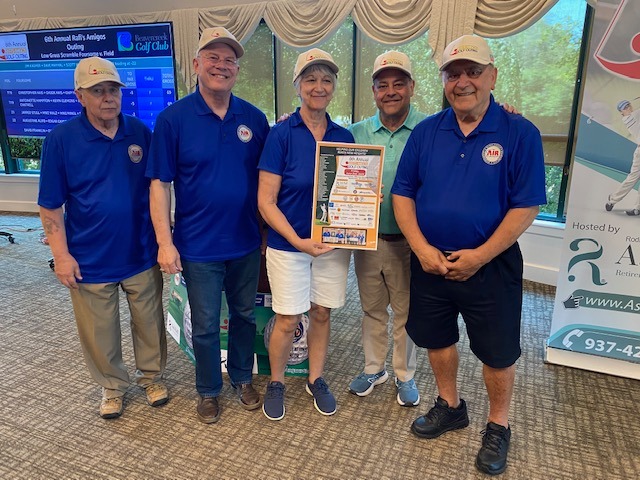
BEAVERCREEK, Ohio – March 12, 2024 – The seventh annual Rafi’s Amigos Golf Outing is scheduled for Friday, May 31st, 2024, beginning at 8:00 AM EDT, at Beavercreek Golf Club, 2800 New Germany Trebein Rd., Beavercreek, Ohio. For the second year, proceeds will fund a one-day, immersive experience at Air Camp for Junior Reserve Officer Training Corps (JROTC) students from three Greene County Schools. Full details are available at https://www.askrafi.com/events/7th-annual-rafis-amigos-golf-outing

José “Rafi” Rodriguez, Colonel (Retired) USAF, president of Rodriguez Financial Strategies, LLC, organizes and hosts the event. “I started Rafi’s Amigos Golf Outing to raise funds for causes dear to my heart, and I am grateful for the incredible community support,” Rodriguez said.

Jose “Rafi” Rodriguez (second from right) with representatives of Air Camp, who will host JROTC students benefiting from the golf outing.

Originally from Puerto Rico, Rodriguez joined the Air Force ROTC at the University of Puerto Rico in Mayaguez, where he was a distinguished graduate. After a 26-year career in the Air Force, Rodriguez retired as a senior officer while serving at Wright Patterson Air Force Base in Dayton.

Over the last six years, Rafi’s Amigos Golf Outing, which Rodriguez describes as a “scramble,” raised money for several regional organizations, such as United Way of Greater Dayton Area, and continues to grow. Last year’s event exceeded expectations by several thousand dollars, allowing 40 students and their instructors to attend Air Camp.

Air Camp again was a natural partnership given Rodriguez’s background, the region, and the goal—to support the youth of his community. Based in Dayton, Ohio, Air Camp, Inc. was founded in 2006 by Dr. Vince Russo and Dick Reynolds, Lieutenant General (Retired) USAF.

Russo currently serves as the organization’s President and Chairman. “Early on, we decided to use aviation as the learning medium because the real language of aviation is math,” he said. Our goal is to use aviation to help the students understand the importance of Science, Technology, Engineering, and Math (STEM) and inspire them to pursue careers related to those fields.” More information about Air Camp is available at aircampusa.org.

This year’s presenting sponsor is the White-Allen Auto Group / White-Allen Family of Companies in Dayton. Tim White is the president and grandson of the company’s founder. White explained why his company has supported the golf outing for the last several years. “When you’re dealing with the future of STEM education for the young members of society, that’s a wonderful mission to get behind.”

Rodriguez proudly chose “Rafi’s Amigos” because he wanted it to be where people could enjoy a community event for a great cause. “Amigos” is the Spanish word for ‘friends,’ I consider this an event where friends come together, old or new, to support a common cause in our community,” Rodriguez explained. “I hope people will come to support these future leaders of our country.”

For more information on registering, becoming a sponsor, or donating, visit https://www.askrafi.com/events/7th-annual-rafis-amigos-golf-outing. Please direct media inquiries to the event’s public relations sponsor, GLD Communications, in Jamestown, Ohio.

Our Parents, Ourselves

In Children and Family, Opinion, psychology, Uncategorized on March 1, 2024 at 12:53 pm

Deer In Headlines II
By Gery Deer

They came to the open houses and sat in the freezing cold at Friday night football, watching me high step across the field with the marching band. They scrounged the money for chemistry lab fees and ensured I had a ride to my 4-H meetings. Somehow, no matter how difficult things might have been for them, Mom and Dad were always there for us.

My mother was a force of nature, a five-foot-four powerhouse of the gentlest nature imaginable. She was creative, brilliant, strong, and vulnerable but never mean or judgmental, even if she was mad at you. And if she was mad, you didn’t have to guess.

Gery’s parents, Lois and Gary Sr., around 1996.

Dad was a whole different story. He was resourceful, smart, and could do anything with a truck or tractor. On the outside, he was confident and controlled. But inside, he was conflicted. They’d been together since high school, and he was thoroughly dependent on my mother for his sense of self and family. As Alzheimer’s took her from us, I watched him slip away, too.

Although we had a good relationship, growing up with my parents wasn’t always easy. Raising good parents never is (as my brother likes to say). Sometimes, it was their job to tell me I was wrong, and they never held back. The resistance they met was inborn, however. Generations of stubbornness wound through my genes like a snake through tree branches. We argued, I stomped off, grousing like a teenager does, and then it was forgotten – usually. The irritating part was that most of the time, they were right.

Gery with his brother, Gary Jr. (left) in 1997.

If you have siblings, each experiences the parent in a slightly different light. My brother, 15 years my senior, constantly reminds me of how tough he had it from our father. Dad was strict with him, almost to a suffocating level. Our dad’s mother died when he was just three, and our grandfather left. Since he was raised largely in poverty by an aunt and grandmother, his upbringing was remarkably different from how he raised us. My guess is that he maintained tight control over his firstborn out of fear and inexperience.

As for me, because of our age differences, Dad held more of a grandfatherly position, and my brother did most of the fatherly stuff. He taught me what I needed to be independent and helped ensure Dad didn’t overprotect me. I think it all worked out for the best, even if my brother is still a little bitter. Clearly, even a sibling can take a parental position when there is such a perceived generational difference.

But regardless of the relationship, I think most of us have a singular and somewhat distorted image of our parents. Whether our relationship with them was close, distant, tumultuous, or nonexistent, I believe we can forget that our parents are just people. Like you and me, they have flaws, failings, dreams, regrets, all of it. But we likely still see them only through one kind of lens. What’s worse is that the incomplete picture can become more distorted as they age.

My siblings and I were there as my parents aged became ill, and finally passed away. As I helped to care for them, I learned much more about who they were along the way. Growing up, I never imagined I’d have to take on all you do for your elderly parents. Showers, medical care, managing the finances; there can be so much you never expected. The experience was simultaneously rewarding and painful. We also grow more protective of them as they get older.

But we must keep in mind that, barring dementia or some other kind of mental illness, they’re still the kings and queens of their castles. If they’re dealing with health issues, mobility, whatever, we can and should help and let them be who they are, even if, as adults, we still don’t understand it.

Parents also need to realize that such a myopic view of the individual can go both ways. Our kids are more than we see, just as we are to them. In the end, we are all just trying to take care of each other as best we know how.

The Coffee Shop Roundtable

In Opinion, psychology, Senior Lifestyle, sociology, Uncategorized on February 24, 2024 at 8:19 am

Deer In Headlines II

By Gery Deer

The other day, I was sitting in a coffee shop when I overheard a conversation between four senior gentlemen at the nearby table. Based on their appearance, I guessed they were in their late 70s, active and clear-minded. The cold Ohio winter had them dressed appropriately in jeans, heavy walking shoes, sweaters, down jackets, and winter caps. These men obviously knew each other quite well and shared common interests.

It was not my intention to eavesdrop, but they were talking loudly enough you could pick up their voices from well across the shop. Anyone could see this meeting was a crucial part of their social life. One of them even mentioned how much he enjoyed getting together regularly and noted how much he learned from the others.

In fact, they all seemed to relish the conversation, which covered a wide range of topics from sports to live theater. I found a brief interaction they had about The Phantom of the Opera of particular interest. While some topics, like the state of American politics, sparked more spirited discussion, they remained respectful and considerate towards one another.

The Algonquin Roundtable

At one point, one of them told a detailed story about how he’d been working on the roof of his home. Suddenly, he found himself stranded up there because his ladder had fallen. He called out for his wife, but she apparently didn’t hear, which left him there for some time. Fortunately, all worked out for the best, and through the laughter, his comrades were giving him a good bit of grief about fooling around on a roof “at his age.” I imagined their adult children giving each of them the same speech in a more serious tone, only to be ignored later.

We occupied one corner of the shop for about an hour, though I believe my subjects had been there for a while before I arrived. They’ll never know it, but they gave me back a moment from my childhood.

When I was around 10, Dad occasionally took me for breakfast at the small diner where my mother waitressed (her word). Early each morning, a group of movers and shakers from our tiny farm town arrived, one at a time, and occupied the same corner booth. 

The pack was usually a mix. Among them, you might find some combination of the local banker, a town doctor, the police chief, the undertaker, the barber, or even the mayor. As they drained one pot of Joe after another, they discussed whatever came up, solved all the world’s problems, and, of course, kept those solutions to themselves. If only they’d just told someone how to do it. It was like the small-town equivalent of the Algonquin Roundtable.

That gathering was far more than social, and the booth’s occupants probably weren’t as ancient as they would have appeared to me when I was a boy. But this was a staple for all of them, a necessary gathering of the minds that continued until each of them was too elderly or infirm to attend.

These days, you might see a mix of people, men, and women, even varying ages, who do the same thing – a regular gathering with no other purpose but to share stories, discuss world affairs, or just complain about the weather. Whatever it is, it’s good for the psyche – and your overall health.

There are countless studies on the benefits of socialization as we get older. Strangely enough, many seniors, either due to depression, their living situation, or choice, often prefer isolation. My parents weren’t big socializers, though my mom enjoyed family parties and time with her siblings. Dad, not so much. Their “roundtable” consisted simply of family and a few close friends. I’d say I’m more like Dad, though I hope a little less self-isolating. I’ve never been particularly comfortable in social situations.

However, I have managed to learn how to deal with my own social anxiety. I think I’m better at socializing than I used to be. As a child, I wouldn’t have understood the importance and value of the coffee shop roundtable to those who were there. But as I rocket towards 60, I’m starting to understand and appreciate the importance and necessity of those connections.