Local News & Commentary Since 1890.

Archive for the ‘Opinion’ Category

Gone With The Wind

In Opinion, Technology, Uncategorized, weather on May 10, 2024 at 4:21 pm

Deer In Headlines II

By Gery Deer

I hate thunderstorms. Some people find them relaxing, even romantic. Not me. Storms like that wind me into a sort of controlled anxiety. Growing up in the shadow of the 1974 Xenia Tornado, a thunderstorm always set me on alert, scanning the skies like Chicken Little, certain something terrible would swoop down and obliterate my world.

When I was a little kid, I put together an emergency kit and hid it under the basement stairway. It had a thermos of water, dehydrated ice cream (that gross, Neapolitan NASA museum stuff), a flashlight, matches, candles, and cans of soup. I know it seems silly now, but give me a break. I was like ten, and I thought I was being prepared.

I was always taught that knowledge was my best defense against fear. Over time, I educated myself about the meteorology surrounding tornados and the storms that spawned them. As I got older, the fear dissipated, eventually replaced by scientific understanding and respect. I wasn’t scared anymore. I even went on a couple of storm chases. But one rainy spring day, that newly minted resolve would be tested up close.

It was the spring of 1988, and I was a commuting college student. One afternoon, I’d just arrived home after class, and my parents were making a bedding delivery in the truck. I popped in a video and settled in with some takeout before starting my homework.

The weather had been threatening since mid-morning, and the afternoon brought even darker skies. Our house sat in the center of 25 acres, back a long lane, so it was very quiet there. I was sitting next to the open window in my bedroom, engaged in my movie when a massive clap of thunder and lightning nearly knocked me out of my chair. The power went out.

I went downstairs and out the back door to look at the sky. An ominous wall of clouds was closing in from the southwest. I hurried around the house and behind our barn, where I could see the livestock. Usually, when a storm approached, the cattle meandered down the hillside into the valley behind our house. That’s just where they were. Smart creatures.

Back at the house, I paused on the front porch step as the wind kicked up. Another bone-rattling clap of thunder boomed, and brilliant lightning illuminated the dark sky. That’s when I saw it. Rainwater ran into my eyes as I stood there motionless in the downpour. A small tornado spun down out of the sky like a crooked finger reaching for the ground.

It touched down, moved along the edge of our hayfield, and whipped up dirt, grass, and other debris as it intensified. Moving parallel to my position, the funnel picked up speed, crashed into one of my dad’s grain trucks, and shattered its old wooden sideboards into kindling.

I probably should have run to the basement, but I couldn’t move. Unconsciously, I fought my basic instinct and didn’t move. I wanted to see it. I needed to see it. I never imagined I would be so close and never felt threatened. It was oddly quiet. There was no freight train sound, as most people usually report; it was probably too small.

My ears popped as it passed, however. The funnel continued another quarter-mile, still moving along the field. It was as if a hidden puppeteer controlled it. The thing slipped across the road, narrowly missed a house, and blew apart a small horse barn. As quickly as it had appeared, it was gone, dissolved into the air. All was quiet.

I’m not sure how smart it was to stand there. I knew the tornado, however small, was dangerously unpredictable and could have changed course and come right at me. But sometimes, we just must face our fears and meet them head-on. I was never again afraid.

Since that day back on the farm, I’ve been close to at least three other tornadoes. I still do my best to be prepared. When shopping for my first house, I had only one deal-breaking requirement—a basement. I also have a little more in my emergency kit these days than a can of Campbell’s.

Have A Nice Trip

In Local News, Opinion, Travel, Uncategorized on May 3, 2024 at 9:26 am

Deer In Headlines II

By Gery Deer

Spring has finally settled over the Ohio Valley, and summer will be here before you know it. I’ve already heard people talking about summer travel and vacation plans. I don’t really travel much anymore. When I was a kid, though, we always had a camping trailer or motor home, so early in my life, we took a road trip every summer. 

I remember visiting historic places like Gettysburg, Washington D.C., and Kitty Hawk, North Carolina. Once, when I was about four years old, we went to South Dakota and explored the Black Hills in a blue 1959 Cadillac, pulling a bulky travel trailer behind. I even met Fred Flintstone at the “Bedrock City” campground, where we stayed in Custer. I will always remember that. I guess they always wanted me to learn something about America wherever we went but keep it fun.

No matter how much you travel, even if the same destinations call you back again and again, there is always that one trip that holds the most significance in your memory. It could be because of a special occasion or the first time visiting a place that became a lifelong favorite. Whatever the reason, that one memorable trip can stick with you. The one that comes to my mind most often was in the summer of 1989. I had just graduated from college. I was 22, and though I didn’t know it then, it would be the last trip our entire family would take together.

Two campers and a motorhome carried the lot of us to Kentucky: my parents, my brother and sister, their spouses, and four grandkids. We were headed to the state park named after the song by Stephen Foster, “My Old Kentucky Home.” The park is nestled amongst the rolling hills of Bardstown, known as the “Bourbon Capital of the World” because of its many distilleries.

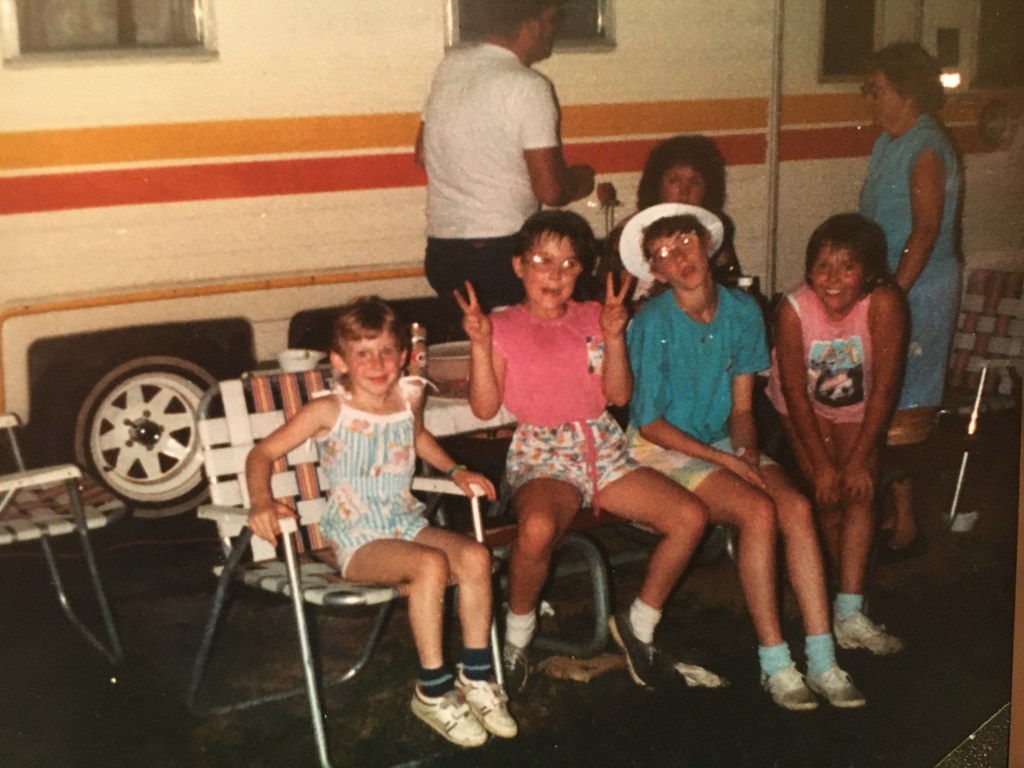
This is a photo from the Kentucky trip mentioned in this piece. In the foreground, GERY’s four nieces. In Back, his parents and sister-in-law.

Why Bardstown? Well, the history is remarkable, and the area is quite scenic, but that was only part of it. The truth is, Mom loved musicals. She took every opportunity to watch them on TV or go to a nearby dinner theatre to see live productions of shows like Oklahoma or Annie Get Your Gun. We would get all dressed up, pile everyone into one of Dad’s classic limousines (yep, you read that right), and immerse ourselves in musical dinner theatre. It wasn’t Broadway. In fact, sometimes it was terrible. Mom loved it, and I kind of did too. 

As it happened, my mother learned about a long-running outdoor musical that performed in Bardstown during the summer. “The Stephen Foster Story” showcased the songwriter’s life and work with an ensemble cast and set much of the action at his cousin’s Bardstown home, Federal Hill. That’s all it took. What seemed like moments later, the Deer crew was packed up and caravanning to Kentucky. However, at least one of us was, let’s just say, not as excited to go.

I’d just been unceremoniously dismissed from a long-term relationship and an emotional wreck. I spent most of my summer free time holed up in my bedroom, dumping my feelings into my old typewriter and blasting movie scores on my stereo.

Although I didn’t want to go, I will forever be grateful that Mom convinced me otherwise. I wrote, explored the historical sites of The Bluegrass State, healed, and got to know my family again after several years head-down in my schoolbooks. I may have grown up a little too.

It’s funny; the things I remember most about that trip are, in this order, my brother wearing Western boots on a skateboard, my nieces getting along nearly the whole time, and how happy my mother seemed to be because we were all in one place for a change.   We can never recreate experiences like that. They’re once in a lifetime. But at least I have that one precious experience safely tucked away in my memory. Whenever I need a reminder of what my family once was, I go back there with them in my mind. I close my eyes and I can hear the music and see Mom’s smile again. I guess, in a way, it was my Old Kentucky Home too.

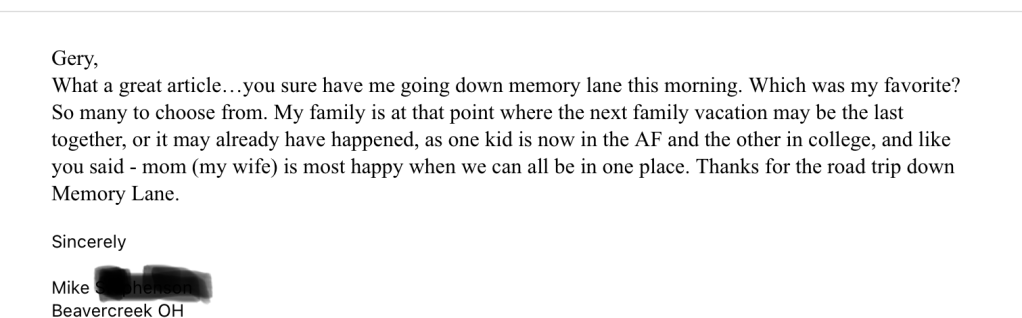
This was a lovely comment about this story sent after it was published in print. Thank you!

The Carriage Returns

In Business, Local News, News Media, Opinion, Technology on April 20, 2024 at 1:22 pm

Deer In Headlines II
By Gery Deer

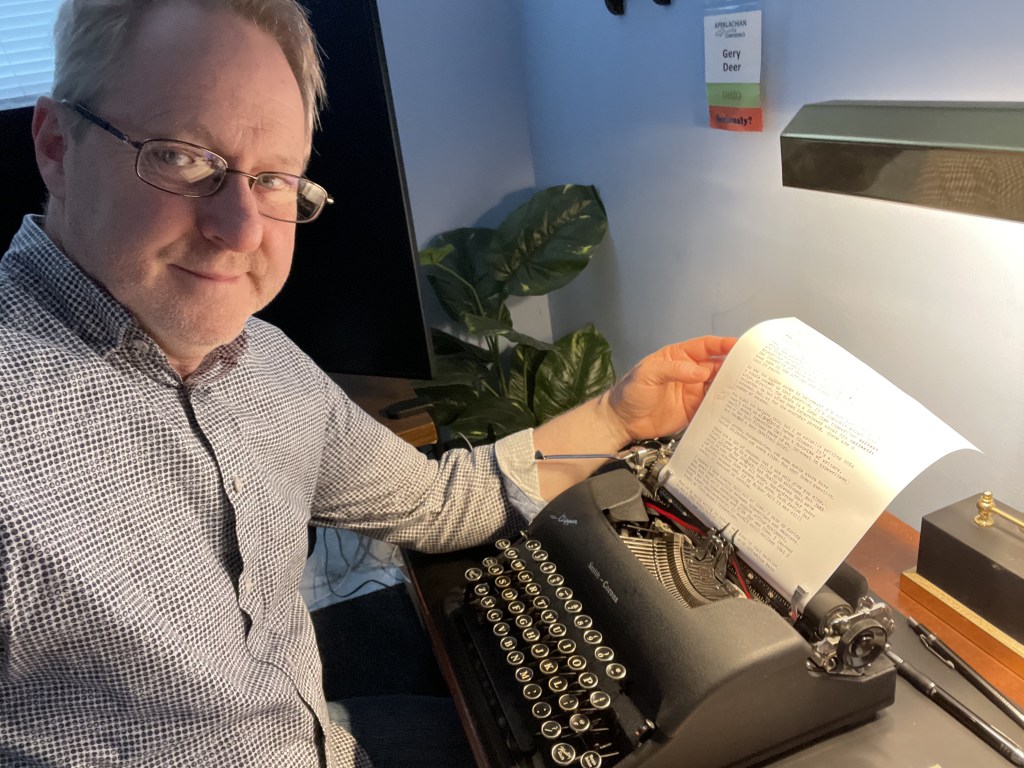
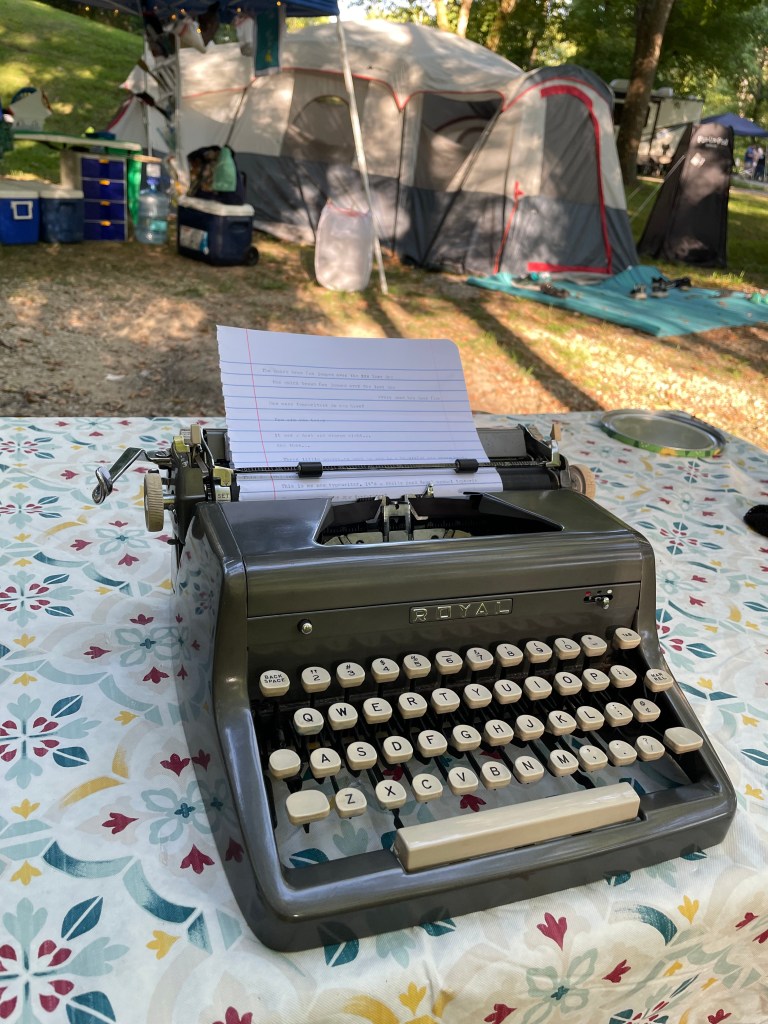
You may not believe it, but I’m writing this week’s edition of “Deer In Headlines” on an antique manual typewriter. Remember the typewriter? The truth is, I just bought this machine a few days ago at TB Writers Plus, a startup typewriter shop in Dayton, Ohio.

(Check out the Bonus Video and the Deer In Headlines Podcast episode that accompanies this piece!)

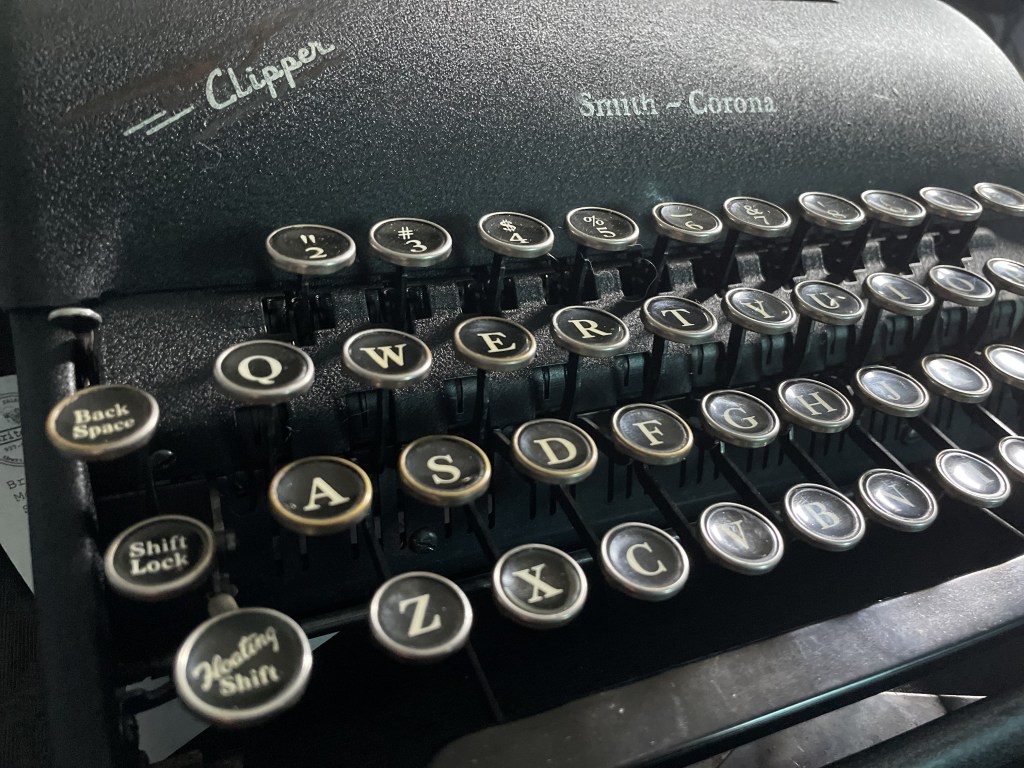
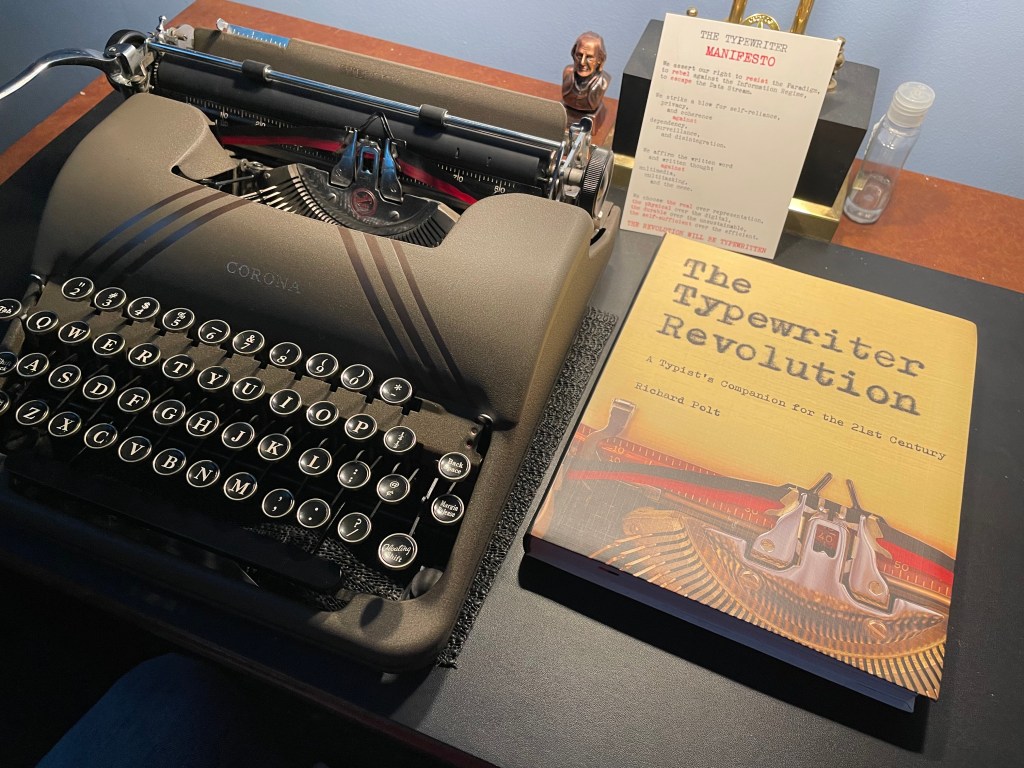
I have three manuals, but this is a sleek 1945 Smith-Corona Clipper, matte black, with a textured chassis and gold-lettered, enameled keys. It sounds like I’m describing a classic car, doesn’t it? That’s exactly how some people see it.

Your next question is obvious, and I’ve heard it a dozen times already – why? I’m a technically savvy person with a significant digital presence. So why would I sit down to write on an old typewriter? That’s a great question. I’ll try to answer as we go. Let me first say I’m not alone.

Over the last twenty years or so, interest in typewriters has been on the rise. That sharp, rhythmic clickety-clack has charmed a whole new generation of writers, collectors, and nostalgics. It’s commonly known that actor, author, and director Tom Hanks is a long-time typewriter collector. Whole communities of typewriter enthusiasts share photos and samples from their beloved machines online and in person.

Many attend type-ins, where people gather at typewriter shops, homes, libraries, or anywhere else to, well, type. I often refer to them as cruise-ins for typewriter enthusiasts. There’s even an activity called type-casting, where you create something on a typewriter, scan it as an image, and post it online. (Learn more about the so-called “Typewriter Insurgency” here.)

As a Gen Xer who hit high school during the 1980s, modern office tech was still coming of age. We barely had reliable copy machines. Most schools and businesses had a mix of PCs and typewriters (mostly electric), so I learned both almost simultaneously. I’m comfortable with either.

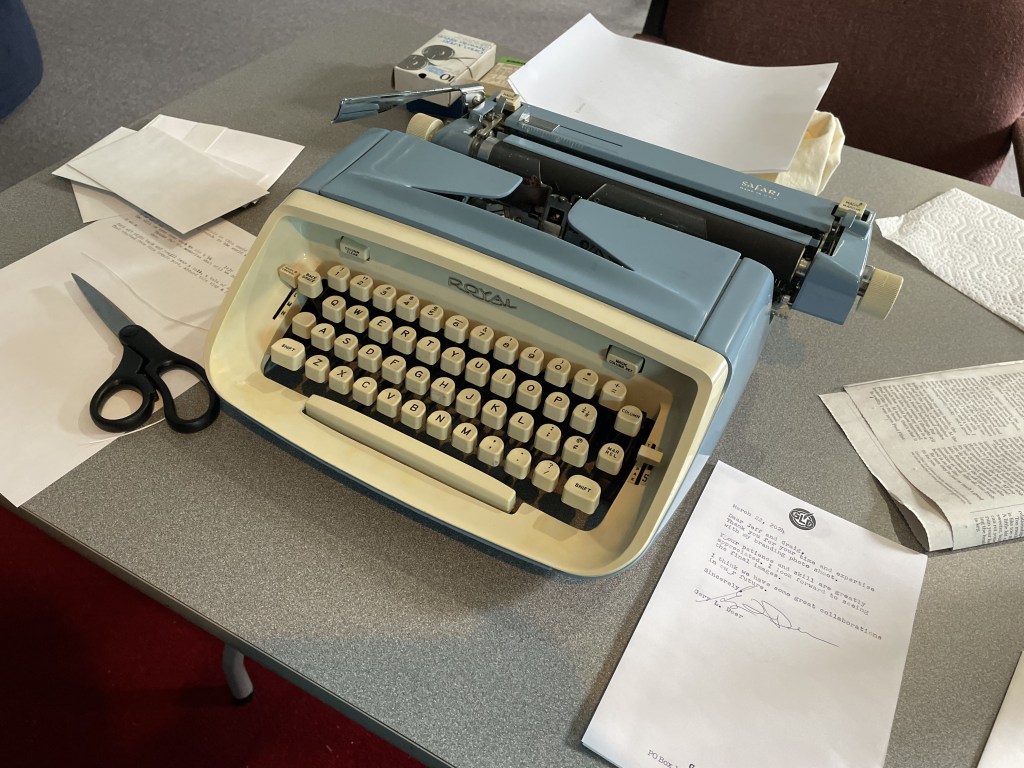
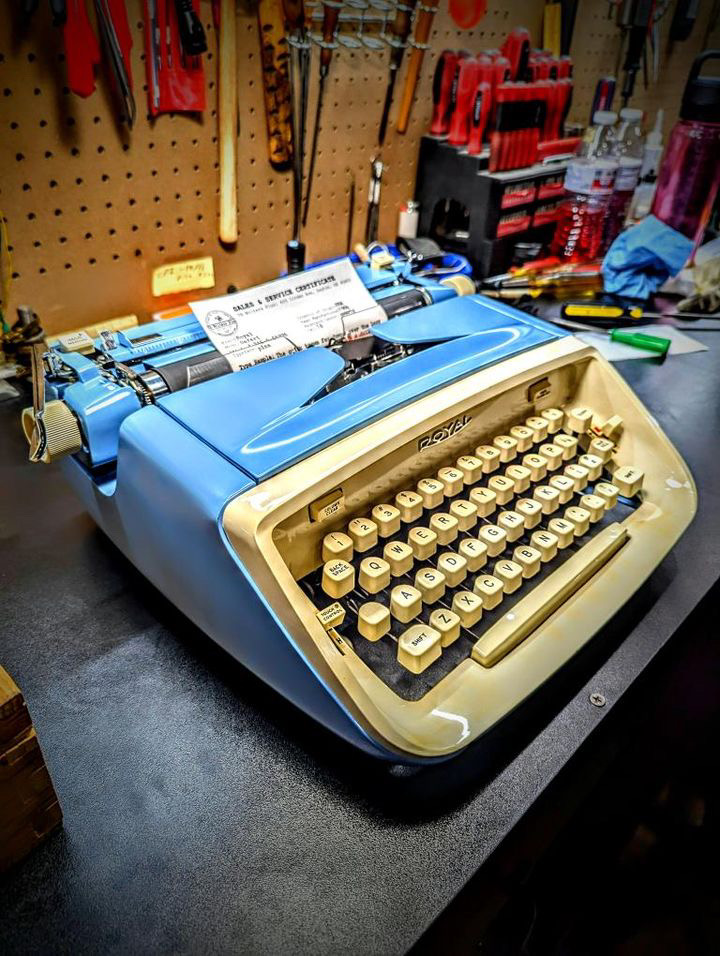
In the background, Gery’s 1964 Royal Safari. (Photo by Hue12 Studios, Dayton, OH)

I bought my first manual typewriter while I was in college, mostly for its portability. A good bit of my earliest writing was done on that machine. It was—or rather is—a 1964 Royal Safari, light blue with off-white keys and accents. It still sounds like I’m describing a ‘57 Chevy. And yes, I still have it.

Aside from nostalgia and mechanical admiration, I think digital overstimulation may have contributed to some people’s leaving the computer behind. I can relate. I’m so immersed in the continuous urgency of the digital environment that I just want—no, need—the quiet of the old ways.

I know the typewriter can be noisy, but I wasn’t referring to “quiet” in that sense. When those keys snap against the paper, I am fully engaged and undistracted from my writing. The slower pace allows me to choose my words more carefully, and there are no pop-ups, email messages, or social media nonsense. It’s kind of freeing.

I’ve also heard some people turn to the typewriter out of paranoia. Privacy has become a real concern in the digital world, and viruses can’t infiltrate typewriters, nor can your printed pages be hacked. You’re most definitely off-grid. But there’s a price to pay for that: time.

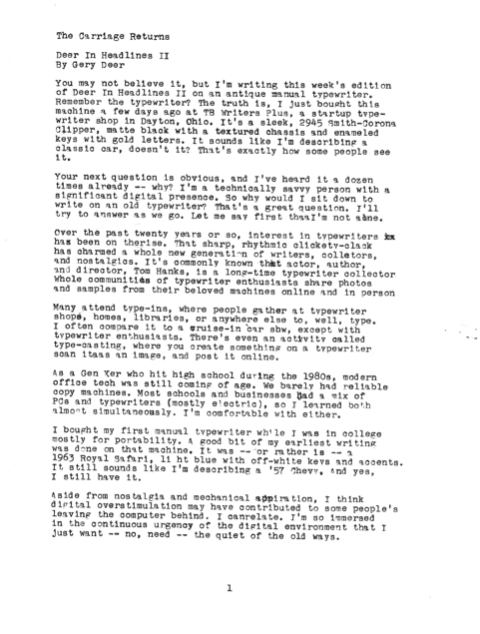
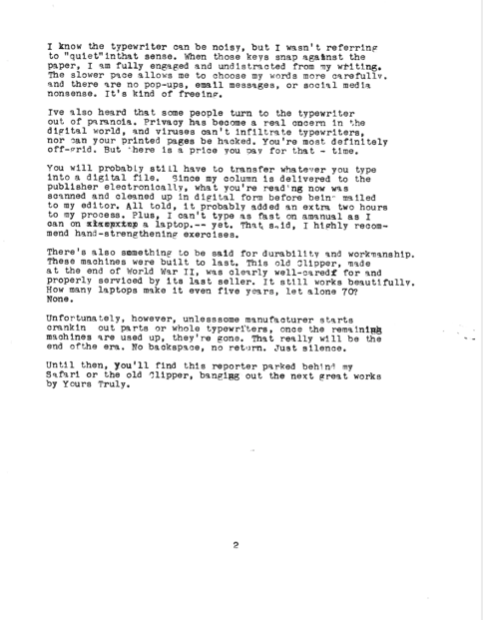
You will probably still have to transfer whatever you type into a digital file. Since my column is delivered to the publisher electronically, what you’re reading now was scanned and cleaned up in digital form before being emailed to my editor. All told, it probably added an extra two hours to my process. Plus, I can’t type as fast on a manual as I can on a laptop – yet. That said, I highly recommend hand-strengthening exercises.

There is also something to be said for durability and workmanship. These machines were built to last. This old Clipper, made at the end of World War II, was clearly well-cared for and properly serviced by its last seller. It still works beautifully. How many laptops make it even five years, let alone 80? None.

Unfortunately, however, unless some manufacturer starts cranking out new parts or whole typewriters, once the remaining machines are used up, they’re gone. That really will be the end of an era. No backspace, no return. Just silence.

Until then, you’ll find this reporter parked behind my Safari or the old Clipper, banging out the next great works by Yours Truly.

(See the gallery for photos of the typewriters mentioned in this piece and more.)

No job is bulletproof, not even mine.

In Economy, finances, Media, National News, Opinion, Technology, Uncategorized on April 20, 2024 at 12:02 pm


Deer In Headlines II

By Gery Deer

Have you ever been afraid for your job? I laugh when people think I can’t lose my job since I work for myself. As a writer, even working under my public relations agency, I’m often called “self-employed.” The immediate assumption is that no one can fire you.

There’s a lot of nonsense to unpack there. First, and possibly most important, there’s no such thing as self-employed. Unless you have a magical chest of gold or cash that continuously refills itself, you’re working for somebody who’s paying you. Being independently employed (my preferred terminology) means you’ve traded one boss for many (customers).

Second, working on your own means constantly beating the bushes, knocking on doors, and continuously selling yourself to generate a pipeline of work. My father and brother created multiple, simultaneous jobs for themselves because they never wanted to be out of work—and they never were.

My family seemed to always have multiple income streams—cattle, trucking, engine work, welding, anything that brought a buck. However small the amount of revenue, it added up. Mom and Dad ran the farm and our trucking business, and I always knew my family worked hard for what we had. No two days were alike. Dad might be out on one of our trucks or auctioning cattle one day. The next, he and my brother might be rebuilding a tractor engine and welding a broken hay rake—all before dinner.

Over the years, I adopted the same philosophy, but I wasn’t always independently employed. Once upon a time, I worked for “the man,” and the woman, and the corporate overlords, and whatever else they’re called. From engineering technician and mechanical designer to database developer and coder, I did the 8-to-5 grind for many years before going out on my own.

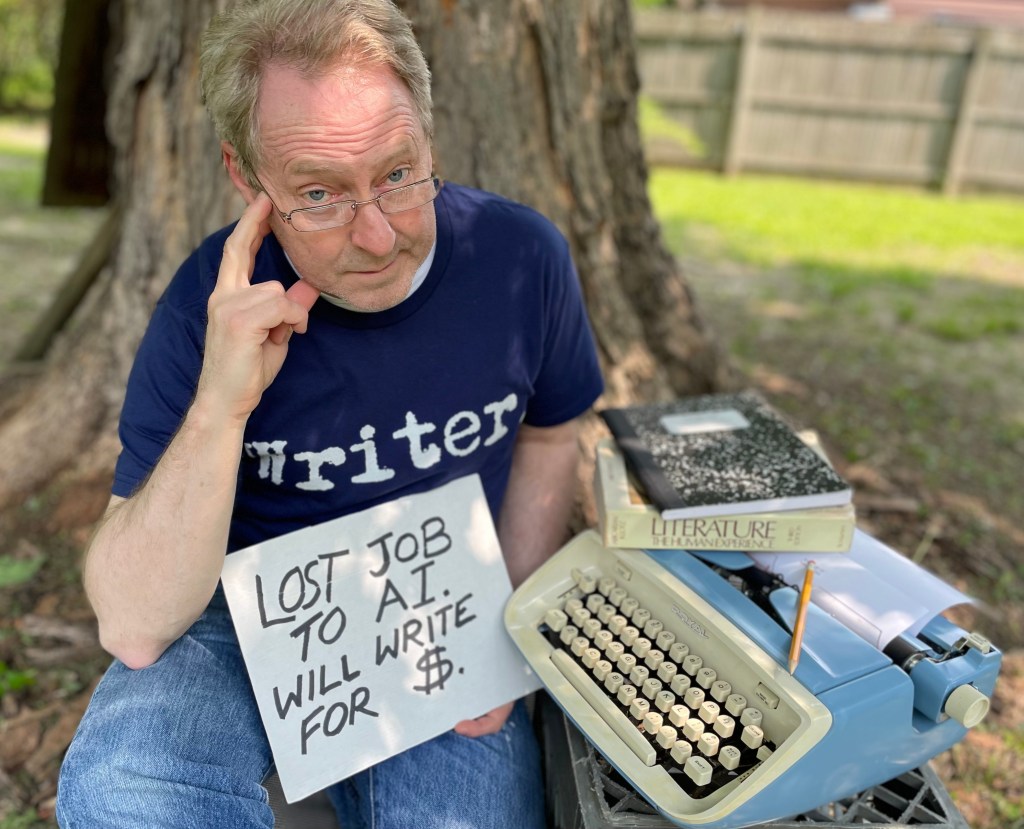
Writers in every industry are rapidly becoming an endangered species due to Artificial Intelligence.

Since much of what I did in the corporate arena was high-tech, the advanced skills required evolved rapidly. I constantly studied the latest technologies to avoid obsolescence. I’ve always been fascinated by computers, but keeping up with advances in computer technology during the 1990s was exhausting.

If that wasn’t enough to worry about, no matter my job, I always felt like something would ruin it. Someone would take it away from me or decide I wasn’t qualified, and that’d be that. I really did know what I was doing. But I suffered from terrible imposter syndrome. Then, one day, that was enough. I walked away.

Life as an independent professional can be tough, especially if you’re used to a steady paycheck and punching out at 5. At least no one ever gets fired, right? Wrong.

There’s a quote from the TV show “Mad Men” that goes, “The day you sign a client is the day you start losing them.” It means that every customer will eventually leave you—your fault, their fault, nobody’s fault. It’s just part of the process. So, when that happens, you are effectively fired. Depending on how many customers you have, that’s how many times you will be fired.

Despite the romanticization, self-employment is hard work and a bit like riding a bike. If you stop pedaling, you fall. You must exceed customer expectations the first time, or those firings I mentioned start sooner. Is that more secure than a corporate job? In many ways, yes. Let me explain.

If I am a “free agent,” I can play in whatever league I want. However, I only get to set some of the rules. I usually have to work within the guidelines of my profession or the client’s needs. One thing is sure, however. If I do my best, treat people with respect, and give them good value for their money, the work will continue.

That doesn’t mean I don’t worry about my job. I do, but for very different reasons. One is automation. Artificial intelligence, or AI, threatens the livelihood of writers in every industry, and what it generates is, at best, inadequate.

Another concern is that my skills will be devalued by a market flooded with amateurs and dabblers. These people produce inferior work, disparaging the profession and limiting potential business for the pros.

Ultimately, no one’s job is bulletproof—not even mine. Always demonstrate your best work. That will show your value, and you’ll stay employed – somewhere. In the meantime, try to remember that there’s always another job.

Not just a cat.

In Children and Family, Local News, Opinion, Uncategorized on April 12, 2024 at 7:22 am

Deer In Headlines II

By Gery Deer

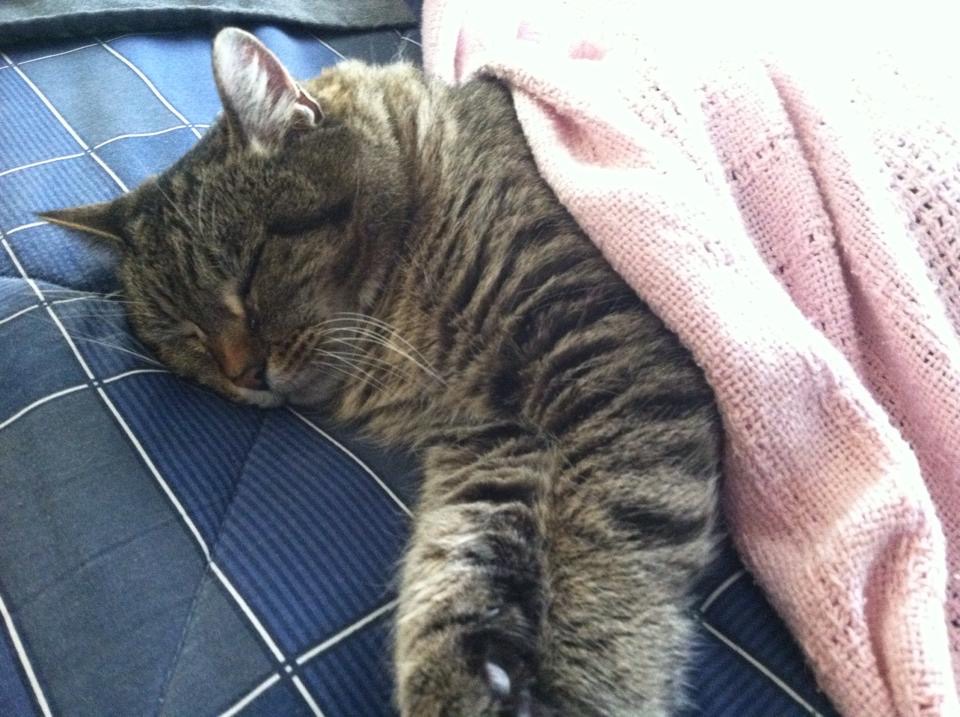
Nearly ten years ago, my chubby tabby cat named Bray was diagnosed with untreatable liver and kidney disease. He was 15 years old and had been in good health, but the level of pain and suffering he was going through was worsening. Knowing what was ahead, I was beside myself with grief.

On the farm, I learned not to get attached to animals because they weren’t there long. While we had livestock, we also had many barn cats, several different dogs throughout the years, and even a few ducks and peacocks. Of course, I had my favorites as I grew up, and some of the dogs and cats were friendlier and more social than others.

But this was different. Bray (a name cobbled together from the words “baby” and “gray”) was my buddy who saw me through some pretty rough times. He was my first indoor pet and had my attached garage as his condo – complete with climbing shelves and a loft.

Since I’ve worked at home for much of my career, Bray would be right there. He would wander in and settle on the recliner I used to keep in the converted bedroom I used as an office. Of course, he couldn’t be bothered with things like conference calls or answering the phone. After all, like other felines, he didn’t have an owner. He had staff – me. And that was fine.

Bray was always a little overweight. Born at my family’s farm, he was kind of a runt but quickly prospered once I brought him home. He no longer had to compete with six siblings. In fact, he just kept getting bigger. At his peak, he was about 18 pounds and, despite his size, all energy.

This is Bray doing one of his favorite things – 2008

He would chase me around the middle section of my house which circled through the hallways, living room, and kitchen. To this day, a strand of elastic string is tied to one of my closet doors with a plastic ball attached. It has a bell inside, and Bray spent what seemed like hours batting it around and holding onto it while gnawing on the elastic.

I used to laugh hard when he’d suddenly let go of the ball, and the elastic would snap back and knock the bell against the door. It was like someone went up behind him and said, “boo.” He’d take off running through the house, his claws struggling for traction as he ran across the slick kitchen floor.

But then Bray started losing weight. He wasn’t eating and was spending time hiding under the bed. For such a social animal, that was unusual behavior for him and sometimes a telltale sign that a cat is sick. We went to the vet, and sadly, his illness had come on pretty rapidly. Little could be done, and what was possible would be painful and expensive. Money was tight then, but regardless, at his age and stage of illness, a full recovery wasn’t likely.

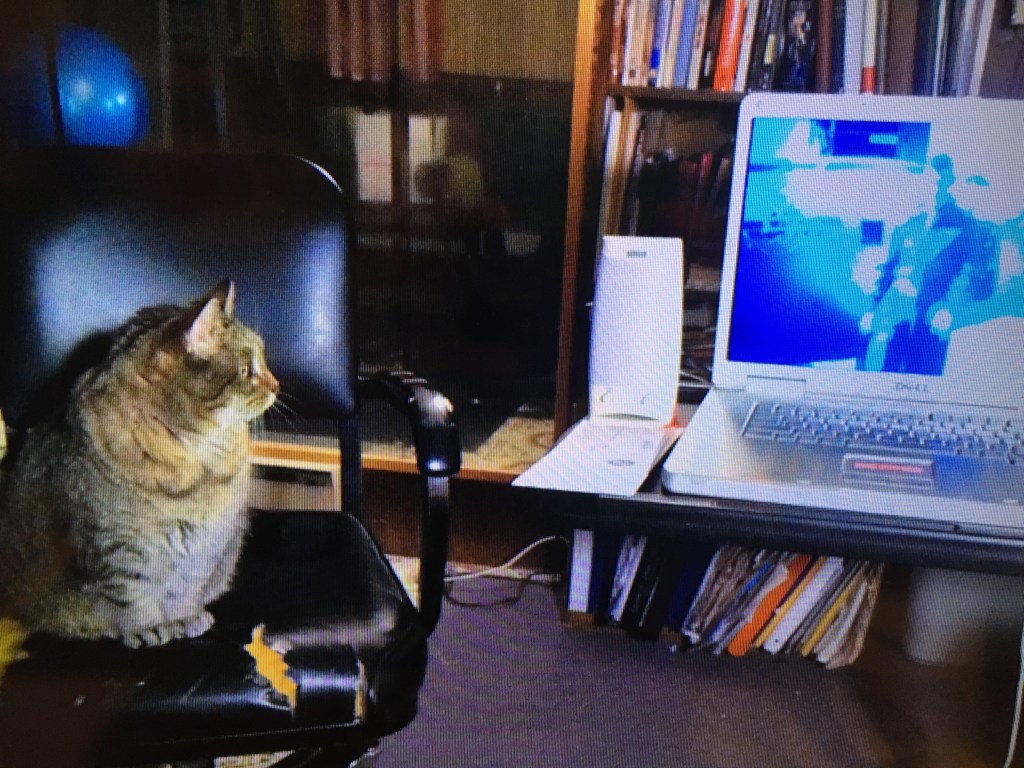
Sometimes, he liked watching movies on Gery’s computer. (2006)

As much as we anthropomorphize them, animals can’t reason as we do, so Bray would have just been in pain with no understanding of what was happening to him. That seemed cruel – to both of us. So, I had to let him go.

I was with both my parents as they left this life. I’ve had to put down cattle that were sick or injured. I even sat with my childhood pony’s head on my lap as he took his last breath after 25 years of companionship. But, with all of that, I’ve had nothing cut me so deeply as having to be the one to decide my little cat was going to die.

My reasoning tells me it was for the best. Even after a decade, I wonder if I did the right thing. Eventually, we have to accept that we chose compassion for the animals we cared for because they depended on us. They’re family and some of the choices we must make on their behalf are easy, others are devastating. As for Bray, I’ll never forget him, and I know there’s someone out there reading this and saying, “It was just a cat.” Maybe to you, but I know better.

Uniquely Portable Magic

In Books, Education, Entertainment, Opinion, Print Media, Technology, Uncategorized on April 7, 2024 at 9:47 am

Deer In Headlines II

By Gery Deer

“Books are uniquely portable magic.”—Stephen King, On Writing: A Memoir of the Craft.

I’ve often quoted classic books in this column for several reasons. For one thing, those brilliant writers of old had wisdom that still eludes me, and I need to borrow it occasionally. 

I also enjoy the opportunity to share my love of books with those of you who are kind enough to give me your attention for a few minutes each week. My hope is that, in addition to my humble observations, I can share some words from those scribes who were (or are) far wiser and more eloquent than me. 

Of course, I don’t just cite the classics. I toss in something fun and modern here and there as well. You may not realize it, but I’ve shared some words from the likes of Douglas Adams, George R.R. Martin, J.K. Rowling, and more. 

I wasn’t a voracious reader when I was young, but that changed as I grew up. In high school, I became interested in Charles Dickens. Later, it was the stories of Mark Twain. From “The Little Red Lighthouse and the Great Gray Bridge” to “Lord of the Flies,” one book led to another. It’s interesting how that happens. Once you’re hooked…

That said, here are my questions of the day: Have books become obsolete in the shadow of the internet and social media? As some try to ban classics like Huckleberry Finn and To Kill A Mockingbird, what has become of literature’s social significance? What does the future hold for the classics and all the unwritten works yet to come? I don’t have the column inches to answer these questions, so here are my brief thoughts. 

In my humble opinion, Stephen King had it right. Books are magical. They transport us to faraway lands, introduce us to people around the globe, and inspire imagination and dreams. But books are far more than mere escapism from our daily grind into the worlds of Harry Potter and Captain Nemo. 

Books are the arks of our history. They help us learn from the past, hold a mirror to the present, and prepare for the future. Every published page offers a tiny glimpse into who we are as a species—warts and all. When you read a book, you have no choice but to learn something. Ignorance is replaced with knowledge and understanding, and then a funny thing happens—people get along better. Books provide the knowledge that breaks down all the barriers that separate us.

Booksellers are struggling, however. In many American communities, there might be a Starbucks or a parking lot where the neighborhood bookstore once stood. Instead of the pages of some great new novel, many people seem far more interested in scrolling through social media.

Although I prefer the printed page for most of my reading, my appreciation for books is more about content than construction. I typically read two or three books simultaneously, each in a different medium—audio, digital, or print. 

A book is a book. Unless you can convince me that words read aloud are less meaningful than those read by eye, listening to an audiobook still counts as reading. You should read however you feel comfortable.

Concerning book bans, I won’t get into the obviously paranoid politics involved. If you don’t like a book, don’t read it. But the concept of book banning should horrify us because it casts a long shadow backlit by terrors of the past. 

Some writers spend decades crafting the perfect book, hoping it will positively impact the reader. No matter your age, the genre, or the medium, reading a book will improve critical thinking and creativity and release dopamine, the brain’s “happy” chemical. 

If you haven’t done so for a while, it’s time to get some of that happiness for yourself or give it to someone else. A book is one of the most meaningful gifts you can give. Libraries and bookstores offer a fun, affordable family experience you will remember forever.

Thankfully, books, even printed ones, aren’t going away anytime soon. But if they were ever to disappear, so would our society, our humanity, and, eventually, the record of our very existence. 

*************

More Information:

Your local library is a great, free resource for the whole family to explore the unlimited world of books!

If you want to learn more about the book industry, the future of printed books and bookstores, check out these documentary films: The Booksellers. And Hello, Bookstore.

Drive-In Movie Memories

In Entertainment, Movies, Opinion, sociology, Theatre, Uncategorized on March 24, 2024 at 10:13 pm

Deer In Headlines II

By Gery Deer

One warm summer evening when I was about 20, I wheeled my 1971 Mustang through the neon-washed gates of the Belmont Auto Drive-In Theater just outside Beavercreek, Ohio. I found the ideal spot and parked. The massive screen filled my windshield.

A few minutes later, an announcement over the speakers says, “Fifteen minutes! Fifteen minutes to show time!” Perfect! I had just enough time to grab a hot dog – I counted what cash remained in my wallet. It didn’t matter, though. They had me at “fresh, hot, buttery popcorn!”

That night, the marquee read, “Double Feature” (Then again, it was always a double feature.) “Star Trek IV: The Voyage Home and Crocodile Dundee.” If memory serves, the price was $5 per car, and I was ready. Drive-ins had been converted to broadcast the movie sound over the radio. So, I outfitted my old Mustang with a stereo amplifier and mounted speakers so you could best hear them outside the car. I tuned in the frequency, adjusted the volume, hopped on the hood with my snacks, and settled in for a great evening’s entertainment under the stars.

I loved drive-ins and still do. There’s something about the atmosphere that is pure Americana. As I’m thinking about it now, I can almost hear the overdriven buzz of those heavy, window-hanging speakers, the dancing refreshments up on the screen at intermission. The drive-in was one of my first solo outings at 16 when I got my driver’s license.

My first memory of going to a drive-in was with my parents in 1974. I was about seven years old, and we went to the Skyborn Drive-In in Fairborn, Ohio, where the original “Benji” movie was showing. I was so enamored with them that, for a short time, I considered owning a drive-in theater, but not your usual run-of-the-mill version.

I had this wacky idea about a massive drive-in theatre and even made concept drawings of it. It featured an unusually large, high-resolution curved screen, Dolby stereo, wireless speakers, and a two-story concessions building with a restaurant on the second floor. It featured a video game arcade, a merchandise shop, supervised playrooms for the kids, a bar for the adults, and more. Plus, it was much larger and could hold more than 400 cars.

Of course, I never made it happen, but it was a cool dream. I’m afraid that in the summer of the late 80s, my concept was way ahead of the required technology. Besides that, even in those days, drive-ins started to disappear.

Most of the Dayton-area drive-in theaters I visited back then are long since gone. If you’re local, you might remember some of them. There was the North Xenia Drive-In, Southland 75, Valley Street Drive-In, Dayton West Drive-In, and many others.

In north Dayton, the Dixie Twin first lit its screens in the early 1950s, and its projectors are still running today. The Melody 49, just off I-70 near Trotwood, is alive and well and shows first-run flicks on two screens. You can find others with a quick Google search. Depending on the travel, you might need to make a night of it if you plan to go.

As many surviving drive-ins faced closer, a strange twist of fate intervened. The very disaster that shuttered businesses worldwide may have been the savior of the drive-ins, at least temporarily. The COVID-19 pandemic gave many drive-ins a surge in business. Families could watch a drive-in movie, maintain social distancing, and enjoy an evening out.

Sadly, box office numbers have slumped since the pandemic, and drive-ins are still trying to bring people back in the gates. People need to be reminded that nearly all drive-in theaters are privately owned small businesses. They’re not million-dollar multiplexes. Most are run as a labor of love with volunteer staff, and most take in barely enough revenue to keep the projector bulbs burning. 

For some, drive-ins are a long-held tradition. To others, they represent an era long past. But whatever the attraction, grab your lawn chairs, blankets, and portable radios (to keep from running down your car battery), and head to the closest drive-in. For now, I have to go. Tonight’s feature is about to start.

Recommended Documentaries about Drive-In Theatres:

Socially Unacceptable News

In Local News, National News, News Media, Opinion, Uncategorized on March 17, 2024 at 9:33 pm

Deer In Headlines II

By Gery Deer

According to recent surveys, nearly 80 percent of Americans have at least one social media account, and the total number of global users is nearly 5 billion worldwide. I happen to be one of the masses. I use it to promote my work and stay in touch with family, friends, and clients. But social media as a news source? I’m afraid not. Unfortunately, Pew Research reports that 6 of every 10 Americans rely on social media as their main resource for news. As a veteran freelance journalist, that’s an unsettling statistic.

I guess it wouldn’t be so bad if people followed qualified news sources, but that’s the exception rather than the rule. Most simply accept everything posted on social media as fact or truth (not the same things and more on that later). What’s worse, a great deal of that junk is created by “bots,” automated programs designed to post incendiary content and drive online traffic. 

Facebook, Instagram, TikTok, and Twitter, or “X,” or whatever it’s called now, are not, I repeat, not news outlets. The most accurate way to describe social media is to compare it to the bulletin board at your local grocery. Anyone can post anything, unmoderated and unvetted. You, the consumer, can choose whether to look and believe what you see.

I understand that nowadays there is a growing tendency for Americans to mistrust news media. It’s even more prevalent among those belonging to extremist groups. Unfortunately, both the far right and the far left are not interested in objective facts. Their sole purpose is to twist and manipulate information to achieve one goal – chaos. They have no interest in journalistic integrity anyway.

I intentionally use the word “facts” instead of “truth” since the concept of truth is entirely subjective, and you shouldn’t find it in the evening news. To paraphrase Indiana Jones, if you’re interested in truth, take a philosophy class. Our news media should present accurate and objective reports, with no subjective notions of truth. 

Speaking of facts, how about those headlines? Headlines shouldentice you with a piece of the story. After all, the whole idea is to get you to read. But extreme and fake news producers create misleading, AI-driven headlines. Algorithms determine what words are more likely to lead readers down an endless and manipulative rabbit hole of advertisements and more deceptive content.

Here’s a great example. Everyone loves Betty White. As so many of her contemporaries passed on, fans hoped she’d live to 100. Sadly, that wasn’t her fate. But a couple of years before she died, there was a headlined story going around social media that read, “Betty White dyes at home.” Do you see anything wrong with that headline? If you don’t, you need a vocabulary lesson, not a philosophy class.

The headline was written to trick gullible fans into clicking on the tragic tale of their beloved Betty’s passing. Eventually, they would realize it was a fake story about White “dying” her hair, at home. By then it was too late. Duped readers were bombarded with unstoppable pop-up ads and the website made a fortune from the pay-per-click fees they were charging advertisers. 

Once again, the story wasn’t posted by any legitimate news agency, but it was well camouflaged. Yes, people should know the difference between the words, “dyes” and “dies,” but even the best proofreader may have missed that if they happened to be Betty White’s biggest fan. Fake and misleading news only gets traction because people share it, and the next story might not be a harmless joke.

You don’t need to fear social media but remember the bulletin board analogy. These platforms can be effective marketing tools. They can help friends and families stay in touch or offer an outlet for creative expression. But every day, social media is also being used to manipulate more people, disseminate misinformation, and spread hate, aggression, ignorance, and fear.

My advice is simple. Get your news from legitimate outlets – like this publication. Ultimately, you have the choice of whetherto believe what you see. Although social media may offer you a road sign on the information superhighway, you are still the onestill steering the car.

Our Parents, Ourselves

In Children and Family, Opinion, psychology, Uncategorized on March 1, 2024 at 12:53 pm

Deer In Headlines II
By Gery Deer

They came to the open houses and sat in the freezing cold at Friday night football, watching me high step across the field with the marching band. They scrounged the money for chemistry lab fees and ensured I had a ride to my 4-H meetings. Somehow, no matter how difficult things might have been for them, Mom and Dad were always there for us.

My mother was a force of nature, a five-foot-four powerhouse of the gentlest nature imaginable. She was creative, brilliant, strong, and vulnerable but never mean or judgmental, even if she was mad at you. And if she was mad, you didn’t have to guess.

Gery’s parents, Lois and Gary Sr., around 1996.

Dad was a whole different story. He was resourceful, smart, and could do anything with a truck or tractor. On the outside, he was confident and controlled. But inside, he was conflicted. They’d been together since high school, and he was thoroughly dependent on my mother for his sense of self and family. As Alzheimer’s took her from us, I watched him slip away, too.

Although we had a good relationship, growing up with my parents wasn’t always easy. Raising good parents never is (as my brother likes to say). Sometimes, it was their job to tell me I was wrong, and they never held back. The resistance they met was inborn, however. Generations of stubbornness wound through my genes like a snake through tree branches. We argued, I stomped off, grousing like a teenager does, and then it was forgotten – usually. The irritating part was that most of the time, they were right.

Gery with his brother, Gary Jr. (left) in 1997.

If you have siblings, each experiences the parent in a slightly different light. My brother, 15 years my senior, constantly reminds me of how tough he had it from our father. Dad was strict with him, almost to a suffocating level. Our dad’s mother died when he was just three, and our grandfather left. Since he was raised largely in poverty by an aunt and grandmother, his upbringing was remarkably different from how he raised us. My guess is that he maintained tight control over his firstborn out of fear and inexperience.

As for me, because of our age differences, Dad held more of a grandfatherly position, and my brother did most of the fatherly stuff. He taught me what I needed to be independent and helped ensure Dad didn’t overprotect me. I think it all worked out for the best, even if my brother is still a little bitter. Clearly, even a sibling can take a parental position when there is such a perceived generational difference.

But regardless of the relationship, I think most of us have a singular and somewhat distorted image of our parents. Whether our relationship with them was close, distant, tumultuous, or nonexistent, I believe we can forget that our parents are just people. Like you and me, they have flaws, failings, dreams, regrets, all of it. But we likely still see them only through one kind of lens. What’s worse is that the incomplete picture can become more distorted as they age.

My siblings and I were there as my parents aged became ill, and finally passed away. As I helped to care for them, I learned much more about who they were along the way. Growing up, I never imagined I’d have to take on all you do for your elderly parents. Showers, medical care, managing the finances; there can be so much you never expected. The experience was simultaneously rewarding and painful. We also grow more protective of them as they get older.

But we must keep in mind that, barring dementia or some other kind of mental illness, they’re still the kings and queens of their castles. If they’re dealing with health issues, mobility, whatever, we can and should help and let them be who they are, even if, as adults, we still don’t understand it.

Parents also need to realize that such a myopic view of the individual can go both ways. Our kids are more than we see, just as we are to them. In the end, we are all just trying to take care of each other as best we know how.

The Coffee Shop Roundtable

In Opinion, psychology, Senior Lifestyle, sociology, Uncategorized on February 24, 2024 at 8:19 am

Deer In Headlines II

By Gery Deer

The other day, I was sitting in a coffee shop when I overheard a conversation between four senior gentlemen at the nearby table. Based on their appearance, I guessed they were in their late 70s, active and clear-minded. The cold Ohio winter had them dressed appropriately in jeans, heavy walking shoes, sweaters, down jackets, and winter caps. These men obviously knew each other quite well and shared common interests.

It was not my intention to eavesdrop, but they were talking loudly enough you could pick up their voices from well across the shop. Anyone could see this meeting was a crucial part of their social life. One of them even mentioned how much he enjoyed getting together regularly and noted how much he learned from the others.

In fact, they all seemed to relish the conversation, which covered a wide range of topics from sports to live theater. I found a brief interaction they had about The Phantom of the Opera of particular interest. While some topics, like the state of American politics, sparked more spirited discussion, they remained respectful and considerate towards one another.

The Algonquin Roundtable

At one point, one of them told a detailed story about how he’d been working on the roof of his home. Suddenly, he found himself stranded up there because his ladder had fallen. He called out for his wife, but she apparently didn’t hear, which left him there for some time. Fortunately, all worked out for the best, and through the laughter, his comrades were giving him a good bit of grief about fooling around on a roof “at his age.” I imagined their adult children giving each of them the same speech in a more serious tone, only to be ignored later.

We occupied one corner of the shop for about an hour, though I believe my subjects had been there for a while before I arrived. They’ll never know it, but they gave me back a moment from my childhood.

When I was around 10, Dad occasionally took me for breakfast at the small diner where my mother waitressed (her word). Early each morning, a group of movers and shakers from our tiny farm town arrived, one at a time, and occupied the same corner booth. 

The pack was usually a mix. Among them, you might find some combination of the local banker, a town doctor, the police chief, the undertaker, the barber, or even the mayor. As they drained one pot of Joe after another, they discussed whatever came up, solved all the world’s problems, and, of course, kept those solutions to themselves. If only they’d just told someone how to do it. It was like the small-town equivalent of the Algonquin Roundtable.

That gathering was far more than social, and the booth’s occupants probably weren’t as ancient as they would have appeared to me when I was a boy. But this was a staple for all of them, a necessary gathering of the minds that continued until each of them was too elderly or infirm to attend.

These days, you might see a mix of people, men, and women, even varying ages, who do the same thing – a regular gathering with no other purpose but to share stories, discuss world affairs, or just complain about the weather. Whatever it is, it’s good for the psyche – and your overall health.

There are countless studies on the benefits of socialization as we get older. Strangely enough, many seniors, either due to depression, their living situation, or choice, often prefer isolation. My parents weren’t big socializers, though my mom enjoyed family parties and time with her siblings. Dad, not so much. Their “roundtable” consisted simply of family and a few close friends. I’d say I’m more like Dad, though I hope a little less self-isolating. I’ve never been particularly comfortable in social situations.

However, I have managed to learn how to deal with my own social anxiety. I think I’m better at socializing than I used to be. As a child, I wouldn’t have understood the importance and value of the coffee shop roundtable to those who were there. But as I rocket towards 60, I’m starting to understand and appreciate the importance and necessity of those connections.

Is this your new site? Log in to activate admin features and dismiss this message
Log In