TCN Behavioral Health Services, Inc. announces their annual School Supply Drive Distribution Events. TCN annually collects school supplies and donations for the children in their service areas. In 2023 they provided supplies to over 300 children and hope to expand that reach in 2024. The five distribution events listed above will include free pizza and beverages as well as school supplies while supplies last.
“Every year, TCN provides supplies to more than 300 students within our local communities. This helps ensure a successful beginning to the school year for these students, alleviates some of the financial strain on parents and caregivers, and supports educators who frequently contribute their own resources to support classrooms,” says Tasha Jones, TCN’s Executive Administrative Assistant. “This wouldn’t be possible without the dedication of our donors and volunteers.” The five events will be held from 4-6 PM at the following TCN office locations:
Wednesday July 24 – 1825 Commerce Center Blvd, FAIRBORN
Friday July 26th – 1522 E. US Hwy 36, URBANA
Thursday July 25th – 1021 N. Market Street, TROY
Tuesday July 30 – 118 Maple Avenue, BELLEFONTAINE
Wednesday July 31 – 452 W. Market Street, XENIA
TCN accepts donations of school supplies at all locations, or donors can shop the School Supply Drive Amazon Wishlist at https://a.co/i3dO9iF to have supplies shipped directly to TCN for preparation and distribution. The organization also accepts monetary donations at tcn.org or https://tcn.jotform.com/202296368911965 by selecting “school supply drive” in the dropdown menu. Volunteers can sign up to help at their local events here: https://tcn.jotform.com/223056028945962.
Founded in 1990, TCN Behavioral Health Services, Inc. is a comprehensive behavioral health agency dedicated to improving lives by providing clinically excellent and accessible behavioral health services. TCN provides mental health, substance use and psychiatric services for adults and youth in Champaign, Greene, Logan, Miami, and Montgomery counties. For more information or to donate to TCN call (937)376-8700 or visit www.tcn.org.
(Editor’s Note: This is an extended edition of the June 19, 2024 print edition of Deer In Headlines II. Throughout the piece you’ll find links to IMDB pages and YouTube videos which give you more information and even let you watch episodes of the shows mentioned. One link is a full documentary of the events surrounding a 1984 episode of the show, “Press Your Luck.” I hope you enjoy it.)
See if any of these titles spin your wheel: “To Tell the Truth,” “Truth or Consequences,” “Press Your Luck,” “Password,” “Card Sharks,” “The $64,000 Question,” “Who Wants to Be a Millionaire,” “$100,000 Pyramid,” “What’s My Line.” – the list goes on. Welcome to the world of television gameshows, a uniquely American invention that has endured long past the time any survey might have said it would.
Television game shows hit the air almost the moment picture tubes began to glow in households nationwide. The genre may change over the years, and some are downright ridiculous. But whatever you think of them, these programs continue to be a popular influencer of American culture.
According to broadcast historians, the first game show was a radio quiz show called “Brooklyn Eagle Quiz on Current Events.” It debuted in 1923 on WNYC, New York, but eventually achieved national broadcast status, setting the stage for all that would follow.
Game shows are categorized by how the contestants play. Quiz shows, like “Who Wants to Be A Millionaire,” rely on a question-and-answer trivia format. Panel shows, like “Match Game,” use groups of celebrities to move the game along. Activity-oriented programs, such as the more recent “Total Wipeout,” require contestants to do something physical. Reality game shows and talent contests, like “Survivor” and “American Idol,” are relatively new formats. However, it could be argued that shows like “The Gong Show” and possibly Ed McMahon’s “Star Search” were Simon Cowell’s inspiration for programs like “Britain’s Got Talent” and “Idol.”
From the 1960s through the 80s, producers of these programs were prolific and turned their hosts into stars. The list includes such performers as Gene Rayburn (Match Game), Monty Hall (Let’s Make A Deal), Allen Ludden (Password), Gary Moore (To Tell the Truth), Chuck Woolery (Wheel of Fortune/Love Connection),Tom Kennedy (Name That Tune), the late Alex Trebek of “Jeopardy!” fame, and many others. As “Wheel of Fortune” host Pat Sajak takes his final spin in June 2024, Ryan Seacrest joins the ranks with other more recent additions like Steve Harvey (Family Feud), Howie Mandell (Deal or No Deal), Keke Palmer (Password, 2022), and Jane Lynch (The Weakest Link, US).
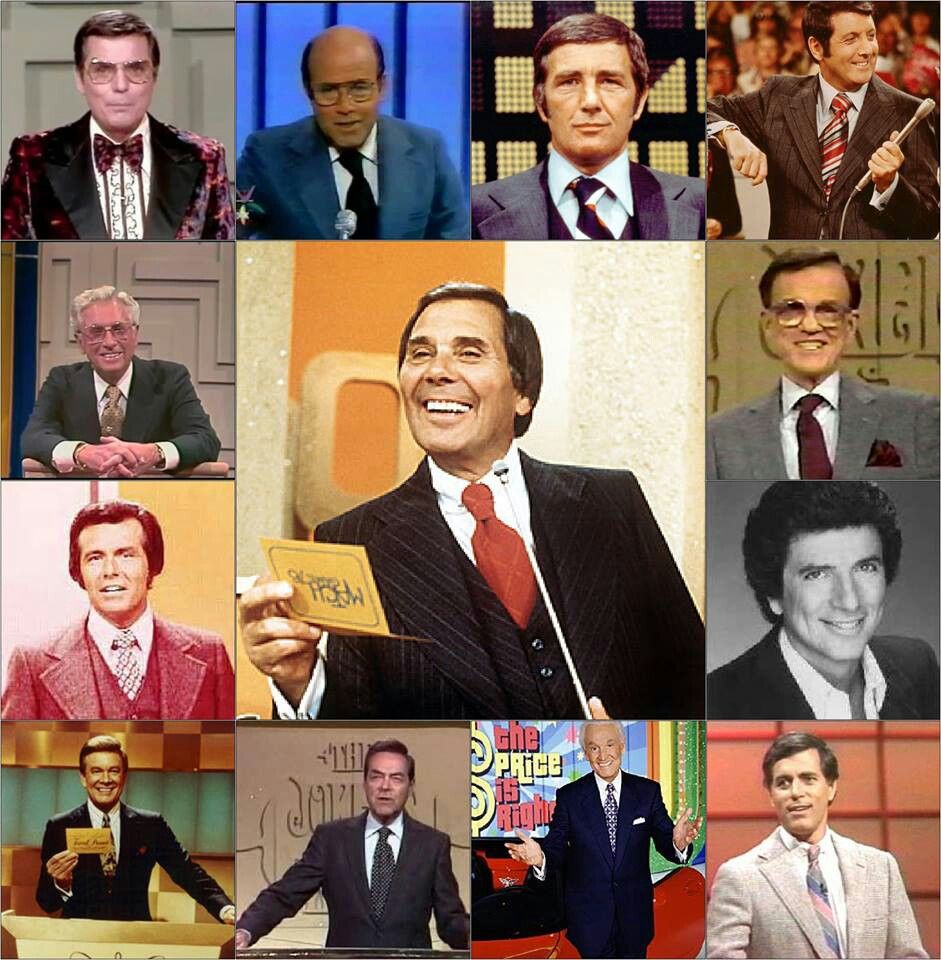
A “host” of hosts … Peter Marshall, Joe Garigiola, Richard Dawson, Monte Hall, Allen Ludden, Gene Rayburn, Bill Cullen, Bob Eubanks, Burt Convey, Wink Martindale, Jack Barry, Bob Barker, and Peter Tomarken.
Many shows started at local TV stations and grew in popularity until they became network products. Although most began at the network level, produced either in New York or Los Angeles, there were a few locals. Around 1975, the Dayton, Ohio edition of “Bowling for Dollars,” a sort of franchised show package that any station could license, was hosted weeknights by long-time radio personality, David G. McFarland. Most local stations chose the cheaper option, however, which was simply to air pre-produced programs like “Wheel of Fortune,” saving thousands on production costs.
At the network level, a staggering amount of money was generated by advertising, and show producers wielded a great deal of power over daytime television. Mark Goodson and Bill Todman produced such long-running shows as “The Price is Right” and “Match Game.” Their programs still generate ratings and money, even the reruns. Chuck Barris helmed “The Newlywed Game” and several others. Talk show host and producer Merv Griffin is responsible for two of the most popular shows still in production: “Jeopardy!” and “Wheel of Fortune.”
“Beat the Clock” started on the radio in 1948 and continued on television in various formats through 1980. Mark Goodson and Bill Todman produced the network TV versions.
Virtually every network scrambled to fill morning daytime slots with gameshows, from card games to shopping sprees. Every type of game or activity was being turned into a gameshow. Even PBS had a game show at one point called “Think Twice,” starring Monteria Ivey. Needless to say, it didn’t last very long.
Like other media, game shows have had their share of scandals over the years. The one with the farthest-reaching repercussions was the 1950s quiz show, “Twenty-One.” Advertisers and producers colluded to provide breakout contestants with quiz answers to keep them in the game longer and drive drama and viewership. Once discovered, convened hearings to determine how the scandal would affect future programs. Eventually, legislation was passed to limit advertisers’ influence over the outcome of these contests.
When he finally became a contestant on the show, Larsen focused on one particular pattern with every spin and timed his hit of the buzzer to stop the board at just the right moment. Through 40 spins, he avoided the prize-stealing “Whammy,” racked up his cash, and went home. The incident was not exactly scandalous, but it was certainly embarrassing for the network.
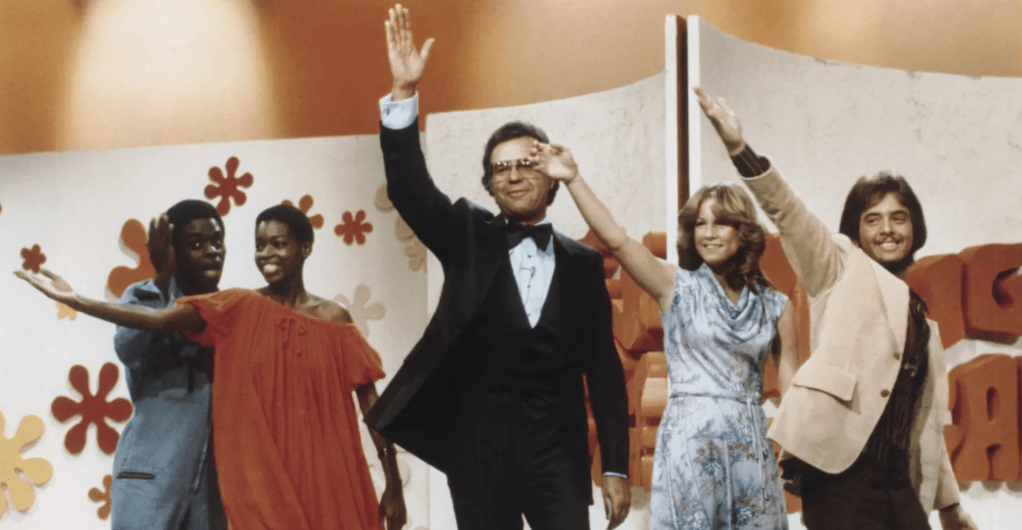
Photo: Jim Lange (center) on ‘The Dating Game’. EVERETT COLLECTION. The Dating Game (1965–1973, 1978–1980, 1986–1989, 1996–1999, 2021)
“Press Your Luck” has seen at least one reboot over the years, but after that incident, the gameboard’s electronics were greatly modified. As for Larsen, he lost a good bit of his money to a home robbery and bad financial decisions. Sadly, he died of cancer just 15 years later at the young age of 49.
Today, three long-running game shows still rule the airwaves: “Jeopardy!,” “The Price is Right,” and “Wheel of Fortune.” “Wheel” and “Jeopardy!” are syndicated programs airing at different times in local markets. However, “The Price is Right” remains a network behemoth that still anchors the CBS daytime lineup.
With its famous phrase, “Come on down,” inviting audience members to Contestants’ Row, “The Price is Right” is the longest-running game show on television. It debuted in 1956 but was revamped some years later. Prior to that, the program was hosted by the venerable “dean of game show hosts,” Bill Cullen. Don Pardo, later of “Jeopardy” and “Saturday Night Live” fame, was one of his announcers.
In 1972, CBS debuted a new, more modern version of the program. The network eventually broke convention by expanding from the typical 30-minute format to a full hour, capitalizing on the show’s wild popularity. They also tapped popular “Truth or Consequences” host Bob Barker to become master of ceremonies. The success of the new format led to a syndicated evening version hosted by Dennis James, also one of the earliest game show hosts.
Today, “Price” is the longest-running television game show at more than 9,000 episodes and Barker spent the last 35 years of his career holding the mic. Upon Barker’s retirement, comedian Drew Carey stepped in during the 2007 season, again giving it a fresh look and attracting a younger demographic.
As Ryan Seacrest assumes the role of spin-maestro on “Wheel of Fortune,” the rest of the show will stay pretty much the same. Vanna White will stay on, although her purpose seems superfluous at this point given the electronic nature of the puzzle board’s letters. She is apparently still needed to tap on a digital screen while someone in the control room pushes a button to reveal the letter.
Game shows generally offer a glimpse of ordinary people in an extraordinary, albeit artificial, situation. Behind door number three, each contestant can hope for a new car, and Monty Hall (and now Wayne Brady) always has a smile and a cash prize for finding that one random object in their pocket.
Those not lucky enough to appear on stage or failed to beat the clock, the buzzer, or whatever received the “home version” of the game they were on.
Some game shows, like Hall’s “Let’s Make A Deal,” are pure silliness, while others offer contestants the unrealistic promise of fulfilling their dreams (at least financially). But modern talent and reality gameshows, like “American Idol,” “Survivor,” and CBS’s “Big Brother,” dangle fame and fortune before their contestants, luring viewers in with contrived drama and fake infighting.
I know what I’m talking about, here. I was a compensated performer on NBC’s “America’s Got Talent” (AGT) in 2006. I met many of the contestants and witnessed their hope and agony as they struggled to meet sometimes impossible demands of producers. The show is crushing to those who compete, some of whom are seasoned, talented performers hoping for a break.
These programs never reveal to the audience the manipulation that goes on behind the scenes as producers subject the performers to the scrutiny of unqualified, B-list celebrity judges. Easy money? Hardly. Quiz shows can be fun and quick entertainment for contestant and viewer. But contests like AGT are arduous, dejecting, sometimes even humiliating for the contestants.
Sadly, it’s unlikely this particular form of gameshow is going away anytime soon. Talent and reality gameshows rake in millions of dollars in ad revenue for every episode, each artificially sweetened and chock full of “unscripted” flavor.
Fear not—the old-school gameshow format is making a resurgence. Thanks to connected TV, you can stream hundreds of these daytime diversions from nearly every decade since their inception. Amazon Prime even includes a channel called Buzzr, a gameshow buff’s paradise that runs them all day, all the time. (Buzzr is owned by Fremantle, the successor owner of the Mark Goodson-Bill Todman game show library.)
Like any other television programming, gameshows must be taken for what they are – mindless diversion. They were never meant to be Shakespeare or Ibsen. As children they often helped pass sick days home from school or gave our mothers something to do while ironing. However you experience them, they’re here to stay. So, until next time, this is Gery Deer saying, “Help control the pet population. Have your pet spayed or neutered. Goodbye, everybody.” (Special thanks to Bob Barker.)
June 24, 2024, DAYTON, OHIO – The Humane Society of Greater Dayton is hosting a free microchipping event, “Chippin’ in the USA,” to help keep pets safe and reunite them with their families in case they get lost. The event will be held on Thursday, June 27th, from 1:00 PM to 5:45 PM at the Humane Society of Greater Dayton located at 1661 Nicholas Road, Dayton, OH.
Free Microchips, No Appointment Needed
This free event is open to the public, and no appointments are necessary. Walk-ins are welcome! Microchips are a permanent form of identification that can significantly increase the chances of a lost pet being returned home safely.
What to Bring:
Cats: Please bring your cat in a carrier for their safety and comfort.
Dogs: All dogs must be on a leash or in a carrier.
Prepare for Fourth of July
The Fourth of July is a notorious time for pets to escape or get loose due to loud fireworks. By microchipping your pet before the holiday, you can ensure a quicker and more successful reunion if they become separated from you.
Event Details:
Date: Thursday, June 27th, 2024
Time: 1:00 PM – 5:45 PM
Location: Humane Society of Greater Dayton (1661 Nicholas Road, Dayton, OH)
Cost: Free
For more than 120 years, the Humane Society of Greater Dayton has been a dedicated champion for both people and pets. With a steadfast commitment to all types of animals, including cats, dogs, rabbits, horses, farm animals, exotics, small animals, and more, the organization takes pride in its role as a comprehensive animal organization.
As an independent 501(c)(3) nonprofit, the Humane Society of Greater Dayton operates without government funding and maintains no affiliations with regional, state, or national animal shelters or humane societies. Every dollar raised directly supports their vital programs and services, making a tangible difference in the lives of animals and pet owners.
To learn more about their remarkable work, please visit www.hsdayton.org.
It’s truly remarkable how we can develop such deep emotional bonds with family heirlooms. Whether it’s an antique jewelry box, a wax candle mold, or even a small piece of roof tile from a 19th-century courthouse, these objects hold a special place in our hearts as cherished remnants of days gone by.
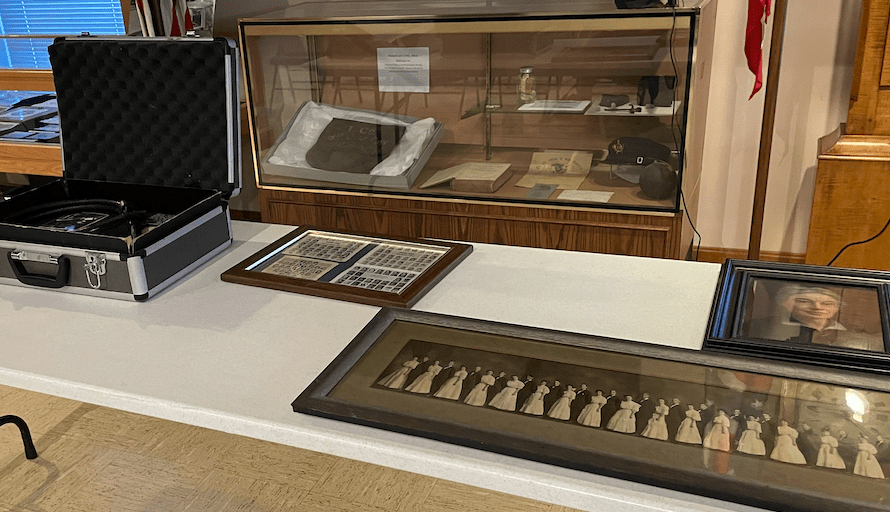
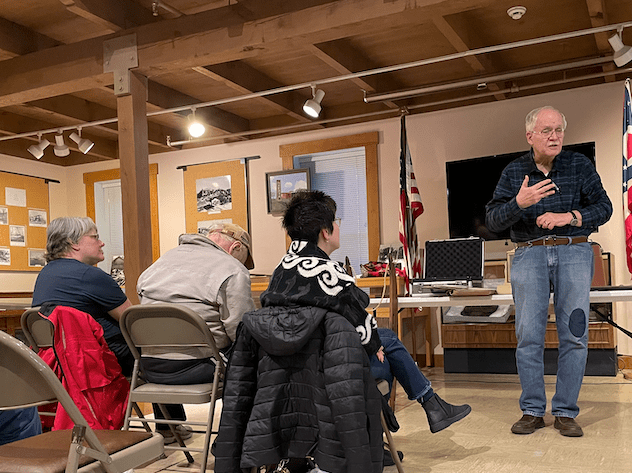
I recently attended an event promoted as a kind of show-and-tell at the local historical society. Visitors were encouraged to bring an item that had some significance to them, the history of the community, or their family, and share the story behind each piece.
Upon my arrival, I was greeted by a sight that stirred a sense of nostalgia. The organizers had proudly arranged the evening’s offerings on tables at the front of the room. Soon, a representative of the organization initiated the event, and one by one, each presenter stepped forward, their faces beaming with pride as they shared the personal significance of their cherished items.
It was like watching a live edition of The Antiques Roadshow minus the frequent condescension of the hosts. You know, “I’m sorry, but this frog statue lamp with a clock in its belly isn’t worth squat.” I always hated that. Anyway, I doubt any of the artifacts would have been for sale. You’d likely have to pry each one out of its owner’s cold, dead hands.
Even more impressive than the reverence with which each person spoke about their property was the variety of items they brought. One man brought a wooden dynamite crate, which was once used to carry explosives for stump removal at his grandparents’ farm. Another showed off his own grade school pictures, some 65 years old.
Others exhibited familial artifacts ranging from a military bayonet to a small jewelry box, which we learned was the owner’s only connection with her great-grandmother. Though very plain to the eye, it was priceless and beautiful to her, and perspective is everything.
When it originated with the speaker, like the school photos, the speaker relayed a personal account of the object’s significance. If, on the other hand, the possession once belonged to a loved one or close friend, the connection is very different. Things left behind by those before us can be deeply meaningful. Heirlooms strengthen our memory of someone and remind us of the relationship.
You’re unlikely to forget a departed parent, spouse, or sibling. But seeing and touching something that belonged to them reaffirms that connection tactilely and creates an emotional response, good and bad.
As I absorbed each story, a profound realization dawned on me. The pride, honor, or reverence—whatever you may call it—was not about the possessions. It was about the people in the stories, whether they were related or not to the speaker. After all, what is human society without stories? Stories shared between family and tribal members are how we preserve our history. And physical remnants of that history, like these family heirlooms, make the stories more tangible, more real.
And it doesn’t have to be about people who have passed on. For those in the room who had attended the same school, the antique class photos had a more profound, more personal association. Someone who’d been a student at the same school as several of the audience, but a half-century earlier, bound two generations, brought together because someone shared a story about a picture.
Finally, there’s something to be said for legacy. I think we all want to be remembered. I sincerely hope to leave behind more than a half-used pencil and a broken typewriter. But if so, I also hope someone will come up with a compelling and meaningful story about them. I think the ancestors of those who shared family items would be very proud of their legacy.
My parents left behind a treasure trove of memories, from books and dolls to trucks and tractors. Among these, I hold dear my father’s wristwatch. He personally handed it to me, sharing the story of its origin. When I gaze upon it, I am transported back to that moment. It’s not about the watch itself, but the emotional bond it represents, the moments he spent with me that hold the true value.
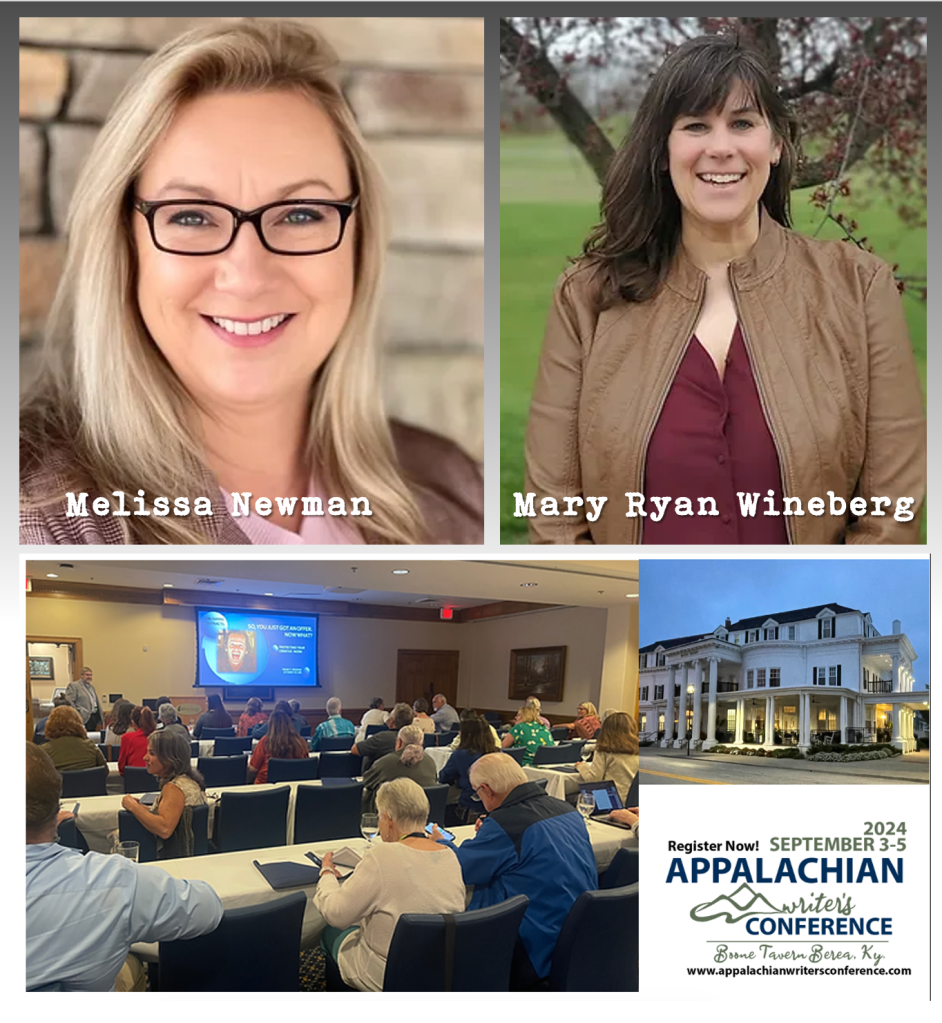
In this episode, Deer In Headlines Podcast host, Gery Deer, speaks with organizers of the Appalachian Writers Conference, slated for September 3rd through the 5th, 2024, in Berea, Kentucky. Set at the historic Boone Tavern, this year’s conference explores genre writing with programs by award-winning authors of mystery, crime, romance, dystopian, and fantasy novels.
Founded by Melissa Newman, Ed.D., President and CEO of Martin Sisters Publishing, the Appalachian Writers Conference (AWC) offers beginning and intermediate writers the opportunity to sharpen their skills and learn new techniques from a skill-diverse, experienced faculty. The conference also features professional business presentations on topics such as building the author brand, public relations, dissecting contracts, and libel protection.
“I strongly believe that everyone has a story, and most people have more than one,” Newman explained. “The tools and skills are waiting in the gap between these stories and becoming a published author. That’s what we offer at the AWC annual conference, getting writers what they need to step into building a successful career as an author.”
Many of last year’s award-winning faculty will return for the 2024 conference, including epic fantasy/romance author Summer Hanford, fiction novelist Sherry Robinson, and political history editor and journalist Dr. Pam Parry. Cannes Film Festival Finalist screenwriter Mark Daniels returns as well. Frank K. Newman, J.D., President and CEO of the law firm Cole, Cole, Anderson & Newman, PSC, will be back to share insights into publishing and media contracts.
New faces on the faculty team include Susan Furlong, who will present sessions on character development and choosing a crime genre. Among her many accomplishments is, “Shattered Justice,” the New York Times Best Crime Novel of the Year. Her new love-inspired thriller, “Lethal Wilderness Trap,” is set for a 2025 release is now available for pre-order from Harlequin.
Gery Deer, founder of the public relations media agency GLD Communications, is another new addition. Author of the Pulitzer-nominated op-ed series “Deer In Headlines,” Deer will lead sessions on author brand building, PR, and marketing.
In addition to class presentations, faculty will be on hand at lunch for the “Ask Me Anything” panels. The AWC experts will answer questions and discuss writing and publishing topics in a conversational setting.
New this year, Martin Sisters Publishing and the Appalachian Writers Conference present the Appy Inkwell Awards 2024. From now until July 1st, writers can submit the first 2,500 words of a full-length book manuscript in fiction, non-fiction, or memoir categories.
“We want to give writers a chance to have their work recognized,” said Appy Inkwell Awards Coordinator, writer, and English Literature instructor Mary Ryan Wineberg. “We may even discover some new literary talent.” The entry fee is $25, and prizes include:
First Prize: Publishing contract with Martin Sisters Publishing and free 2024 Appalachian Writers Conference registration.
Second Prize: Free Registration to the 2024 Appalachian Writers Conference and a $50 gift certificate to the Taleless Dog Bookstore in Berea.
Third Prize: Free Registration to the to the 2024 Appalachian Writers Conference
Gossip. It’s an insidious phenomenon that always hurts people. Usually, gossip is inaccurate and degrades even more as it travels from person to person. Gossip is a destructive game of telephone that usually ends in the victim’s humiliation.
Gossip begins with someone sharing something confidential, saying, “Hey, just between you and me…” and so on. But it’s doubtful the information will remain a secret. The story inevitably spreads like air escaping a leaky tire.
Although there is debate about whether gossip is predominantly negative, nothing good comes from it. One study even suggests that gossipers tend to have a “darker” personality, uncaring about the social consequences of their behavior. Another offers the theory that we’re motivated by a need to bond with others in our social circles, keep ourselves entertained, vent emotions, and establish social status.
Low self-esteem seems to be a common theme among gossipers. They validate themselves by spreading news of others’ misfortunes and by sharing negative stories about people, reinforcing their imaginary superiority.
All that sounds great academically. But, personally, I think people are just mean sometimes. They want to feel superior, so they start rumors and gossip to gain an upper hand—even if it’s all in imaginary. Ignorance probably plays a role, too. Those who spread gossip often believe the person at the story’s heart will never find out, so no harm done, right? Wrong. Trust me, they always find out.
In the past, gossip proliferated over the backyard fence or around the water cooler at work. However, with the advent of social media, gossip has taken on a new level, broadcasting misinformation to countless recipients at the speed of light. Clickbait is a perfect example of modern gossip-mongering, complete with a compelling story, video, and photos.
At this point, it’s probably important to clarify how I distinguish between gossip and rumor. Official definitions explain gossip as the spread of information that’s essentially true but likely unkind or hurtful. A rumor, on the other hand, is false information passed around without confirmation or conscience. However, I’m not convinced this distinction is always evident in practice. In my opinion, there’s very little difference between gossip and rumor, regardless of what old Mr. Webster says.
Regardless of your definition, one of the most important things to remember is how gossip affects the victim and how that affects the gossiper. In this context, the word “victim” refers to the person who is the subject or target of gossip. Since most of that information is false or intended to harm someone, that person is indisputably a victim. Although spreading gossip is not criminal, when those actions cause harm, there should be more severe consequences.
Victims of gossip can suffer devastating and long-lasting effects. I remember when I was in fifth grade, one of the bullies in my class made up a story about me that spread through our rural school like a bad case of Chicken Pox.
It was a painfully frustrating time for me. I already had to deal with being a 10-year-old adjusting to a strange new school. Simultaneously, however, I had to get good grades and spend every other waking minute defending myself against ridiculous lies.
Sometimes, gossip severely damages someone’s reputation or their livelihood. In such cases, it could be considered slander, and the harmed person may have a right to pursue legal action. The person who started the false information may be liable and must pay financial or other restitution.
We can’t control what others say about us, to whom, when, or how. At a time when misinformation and fake news are the norm, all we can do is abstain from its distribution. Think about it. Would you want someone gossiping about you, your business, coworkers, or your family?. Finally, remember that the best gossip is the kind you keep to yourself. And, if you hear gossip or the rumor mill is churning out something about someone close to you, do what you can to help put an end to it. I’ll close with a quote from the great Hee Haw Honeys song: “We’re not ones to go around repeating gossip. So, you’d better be sure to listen close the first time.”
Spring has finally settled over the Ohio Valley, and summer will be here before you know it. I’ve already heard people talking about summer travel and vacation plans. I don’t really travel much anymore. When I was a kid, though, we always had a camping trailer or motor home, so early in my life, we took a road trip every summer.
I remember visiting historic places like Gettysburg, Washington D.C., and Kitty Hawk, North Carolina. Once, when I was about four years old, we went to South Dakota and explored the Black Hills in a blue 1959 Cadillac, pulling a bulky travel trailer behind. I even met Fred Flintstone at the “Bedrock City” campground, where we stayed in Custer. I will always remember that. I guess they always wanted me to learn something about America wherever we went but keep it fun.
No matter how much you travel, even if the same destinations call you back again and again, there is always that one trip that holds the most significance in your memory. It could be because of a special occasion or the first time visiting a place that became a lifelong favorite. Whatever the reason, that one memorable trip can stick with you. The one that comes to my mind most often was in the summer of 1989. I had just graduated from college. I was 22, and though I didn’t know it then, it would be the last trip our entire family would take together.
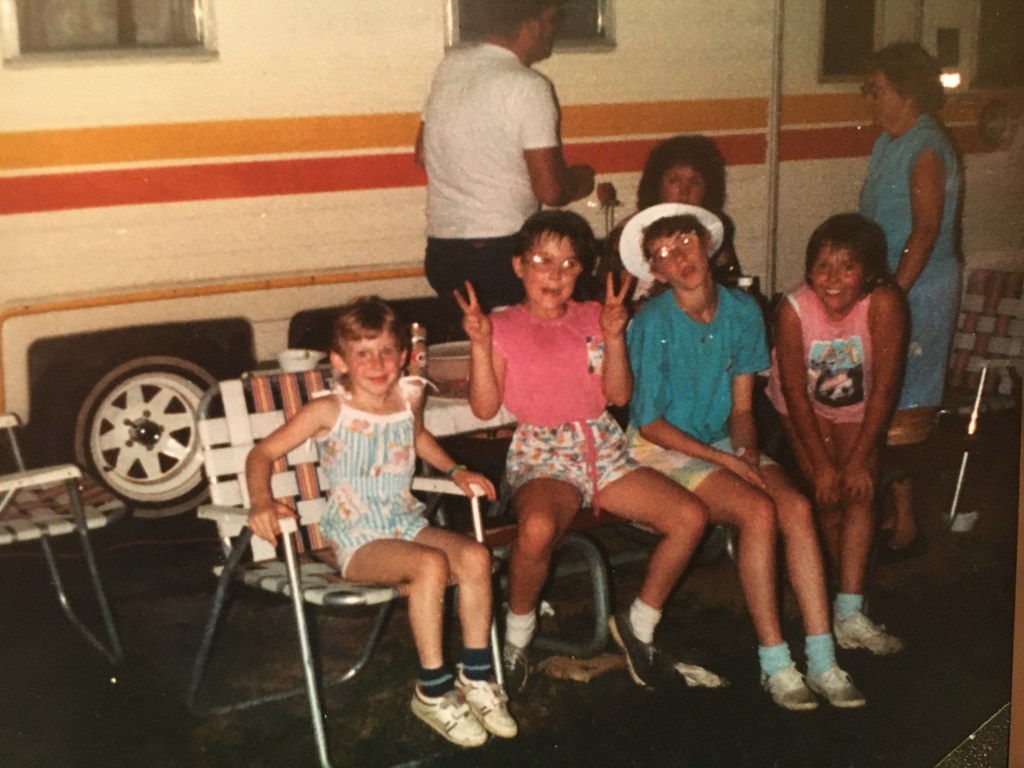
Two campers and a motorhome carried the lot of us to Kentucky: my parents, my brother and sister, their spouses, and four grandkids. We were headed to the state park named after the song by Stephen Foster, “My Old Kentucky Home.” The park is nestled amongst the rolling hills of Bardstown, known as the “Bourbon Capital of the World” because of its many distilleries.
This is a photo from the Kentucky trip mentioned in this piece. In the foreground, GERY’s four nieces. In Back, his parents and sister-in-law.
Why Bardstown? Well, the history is remarkable, and the area is quite scenic, but that was only part of it. The truth is, Mom loved musicals. She took every opportunity to watch them on TV or go to a nearby dinner theatre to see live productions of shows like Oklahoma or Annie Get Your Gun. We would get all dressed up, pile everyone into one of Dad’s classic limousines (yep, you read that right), and immerse ourselves in musical dinner theatre. It wasn’t Broadway. In fact, sometimes it was terrible. Mom loved it, and I kind of did too.
As it happened, my mother learned about a long-running outdoor musical that performed in Bardstown during the summer. “The Stephen Foster Story” showcased the songwriter’s life and work with an ensemble cast and set much of the action at his cousin’s Bardstown home, Federal Hill. That’s all it took. What seemed like moments later, the Deer crew was packed up and caravanning to Kentucky. However, at least one of us was, let’s just say, not as excited to go.
I’d just been unceremoniously dismissed from a long-term relationship and an emotional wreck. I spent most of my summer free time holed up in my bedroom, dumping my feelings into my old typewriter and blasting movie scores on my stereo.
Although I didn’t want to go, I will forever be grateful that Mom convinced me otherwise. I wrote, explored the historical sites of The Bluegrass State, healed, and got to know my family again after several years head-down in my schoolbooks. I may have grown up a little too.
It’s funny; the things I remember most about that trip are, in this order, my brother wearing Western boots on a skateboard, my nieces getting along nearly the whole time, and how happy my mother seemed to be because we were all in one place for a change. We can never recreate experiences like that. They’re once in a lifetime. But at least I have that one precious experience safely tucked away in my memory. Whenever I need a reminder of what my family once was, I go back there with them in my mind. I close my eyes and I can hear the music and see Mom’s smile again. I guess, in a way, it was my Old Kentucky Home too.
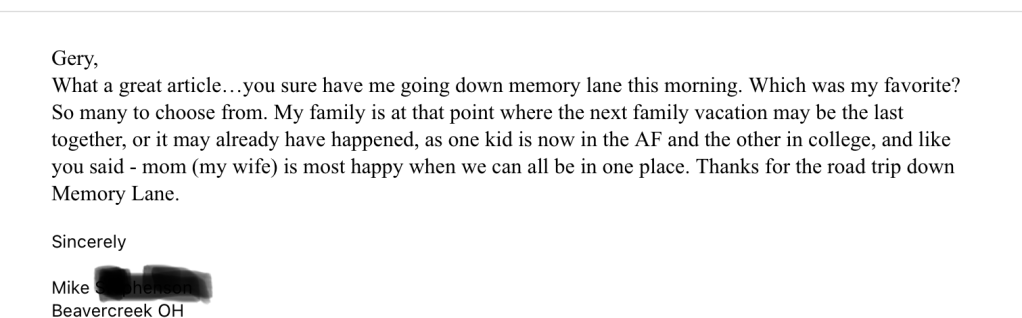
This was a lovely comment about this story sent after it was published in print. Thank you!
The long-running Xenia Daily Gazette editorial series “Deer In Headlines” has expanded to meet the evolving needs of its audience and is now available as a podcast. Produced by GLD Communications, the weekly column made the leap to digital airways in early April. Listen free – https://deerinheadlines.podbean.com/
Gery Deer is a prolific freelance journalist, award-winning copywriter, editor, and the founder and creative director of GLD Communications, a public relations media agency based in Jamestown, Ohio.
Deer has written for dozens of publications and private clients, providing feature stories, business articles, and three long-running syndicated newspaper columns. The most prominent, “Deer In Headlines,” was a hard-hitting, award-nominated weekly op-ed series from 2008 to 2018.
After a five-year hiatus, Deer revived the series by popular demand, and it is currently published weekly, in print and online. Aptly titled “Deer In Headlines II,” the current series holds a mirror up to the world in a more personal, conversational approach. It has already gained three award nominations.
The podcast, an extension of the newspaper column, offers a unique experience. It not only covers similar topics but also provides a personal touch. Some episodes feature author readings, offering a glimpse into Deer’s process and the stories’ takeaways. This distinct approach sets the podcast apart, making it an attractive sponsorship opportunity.
Deer believes the audience will find value in the podcast’s intimate connection with the author. “Deer In Headlines was never supposed to last this long, but I’m always gratified to hear that people enjoy it and find something useful in my words,” said Deer. “On the podcast, I’ll be talking about the origin of some of the topics, and we’ll discuss writing and books, and, later on, even hear from some guests.” This value proposition makes the podcast an appealing platform for sponsors.
Each episode will run for 15 to 30 minutes. The series is free and available on most streaming platforms, including iHeart Radio, Apple Podcast, Podbean, Google Podcasts, and Amazon Music Podcasts, with more platforms coming soon. A video version of select episodes is also available on YouTube. Just search “Deer In Headlines,” and remember to subscribe for instant notification of new episodes and bonus material. Deer values his readers’ support of his mission to promote literacy and quality journalism. Therefore, he is offering sponsorship opportunities for the podcast, with a portion of the proceeds going to promote literacy through Reading Is Fundamental.
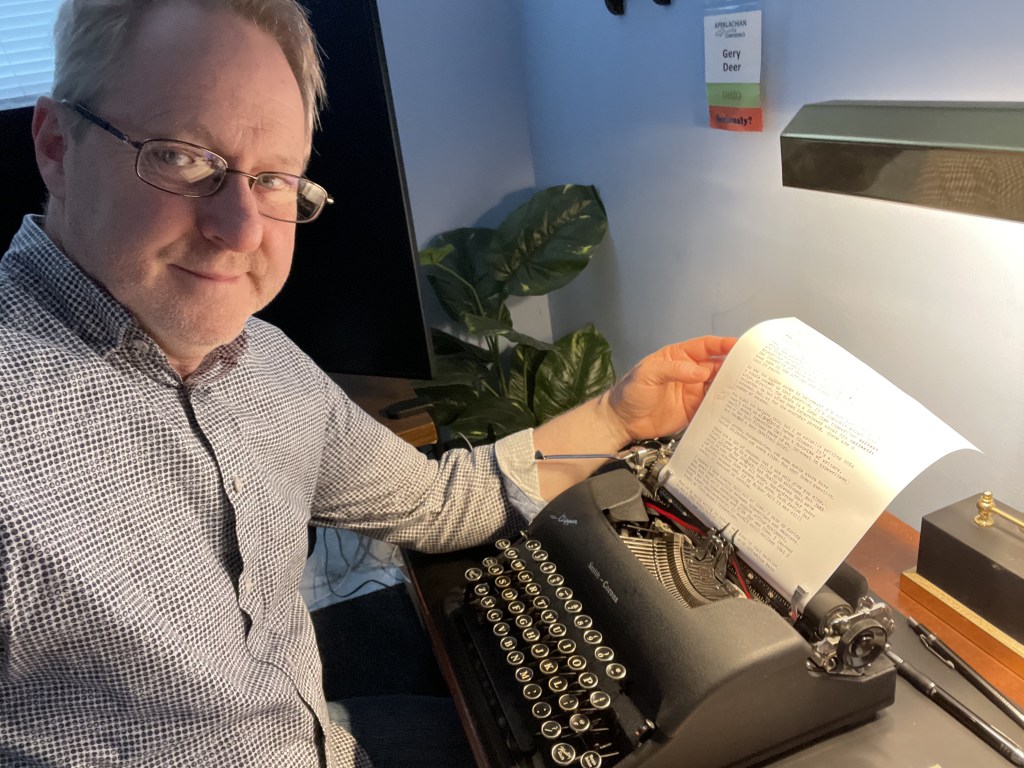
You may not believe it, but I’m writing this week’s edition of “Deer In Headlines” on an antique manual typewriter. Remember the typewriter? The truth is, I just bought this machine a few days ago at TB Writers Plus, a startup typewriter shop in Dayton, Ohio.
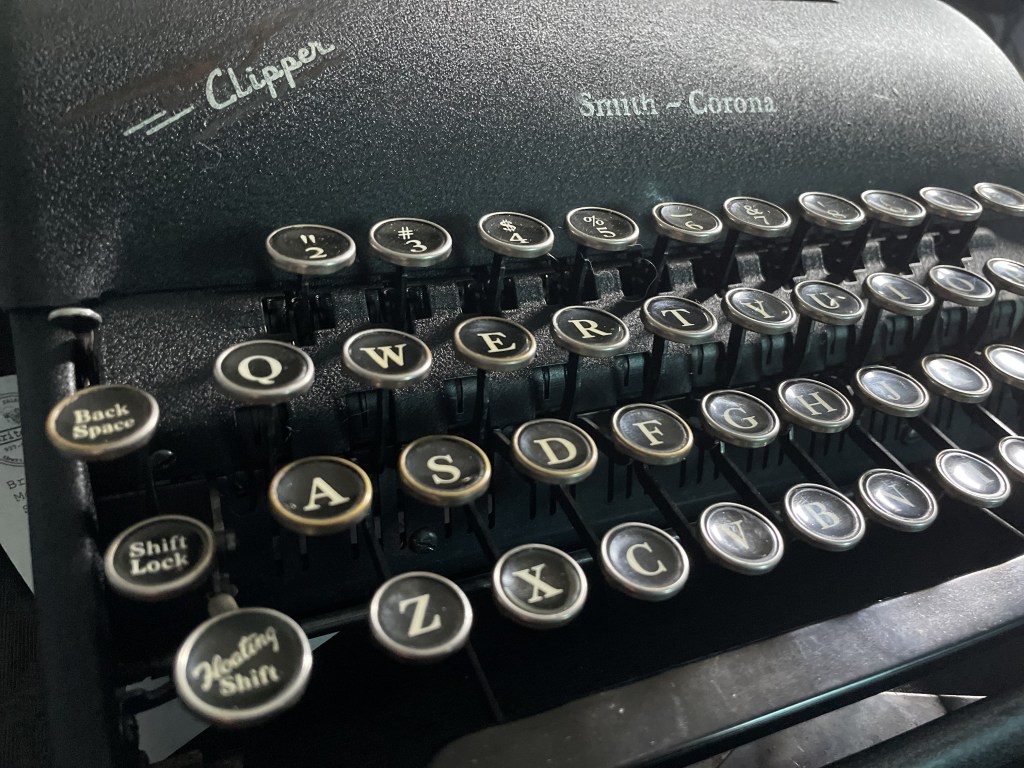
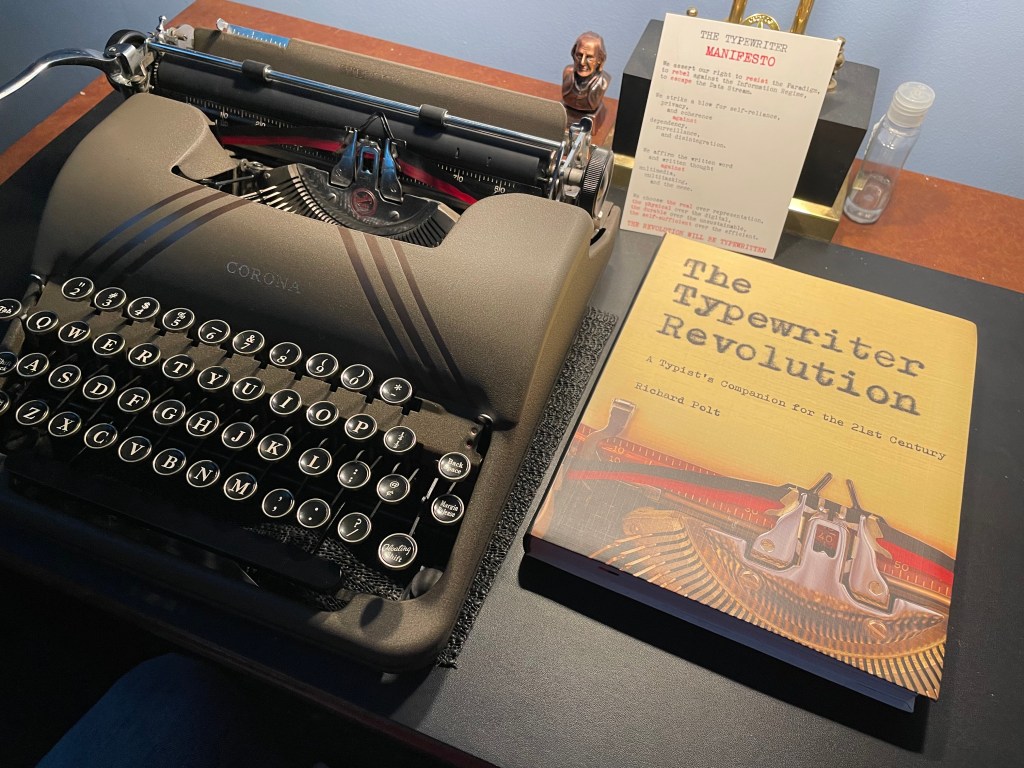
I have three manuals, but this is a sleek 1945 Smith-Corona Clipper, matte black, with a textured chassis and gold-lettered, enameled keys. It sounds like I’m describing a classic car, doesn’t it? That’s exactly how some people see it.
Your next question is obvious, and I’ve heard it a dozen times already – why? I’m a technically savvy person with a significant digital presence. So why would I sit down to write on an old typewriter? That’s a great question. I’ll try to answer as we go. Let me first say I’m not alone.
Over the last twenty years or so, interest in typewriters has been on the rise. That sharp, rhythmic clickety-clack has charmed a whole new generation of writers, collectors, and nostalgics. It’s commonly known that actor, author, and director Tom Hanks is a long-time typewriter collector. Whole communities of typewriter enthusiasts share photos and samples from their beloved machines online and in person.
Many attend type-ins, where people gather at typewriter shops, homes, libraries, or anywhere else to, well, type. I often refer to them as cruise-ins for typewriter enthusiasts. There’s even an activity called type-casting, where you create something on a typewriter, scan it as an image, and post it online. (Learn more about the so-called “Typewriter Insurgency” here.)
As a Gen Xer who hit high school during the 1980s, modern office tech was still coming of age. We barely had reliable copy machines. Most schools and businesses had a mix of PCs and typewriters (mostly electric), so I learned both almost simultaneously. I’m comfortable with either.
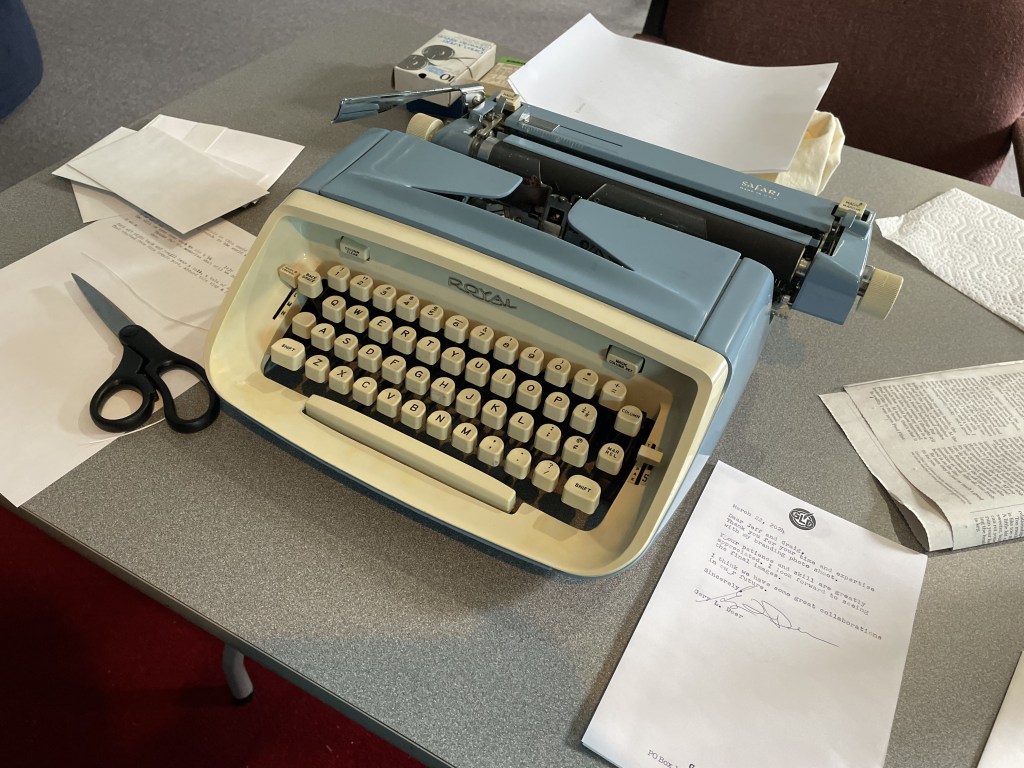
In the background, Gery’s 1964 Royal Safari. (Photo by Hue12 Studios, Dayton, OH)
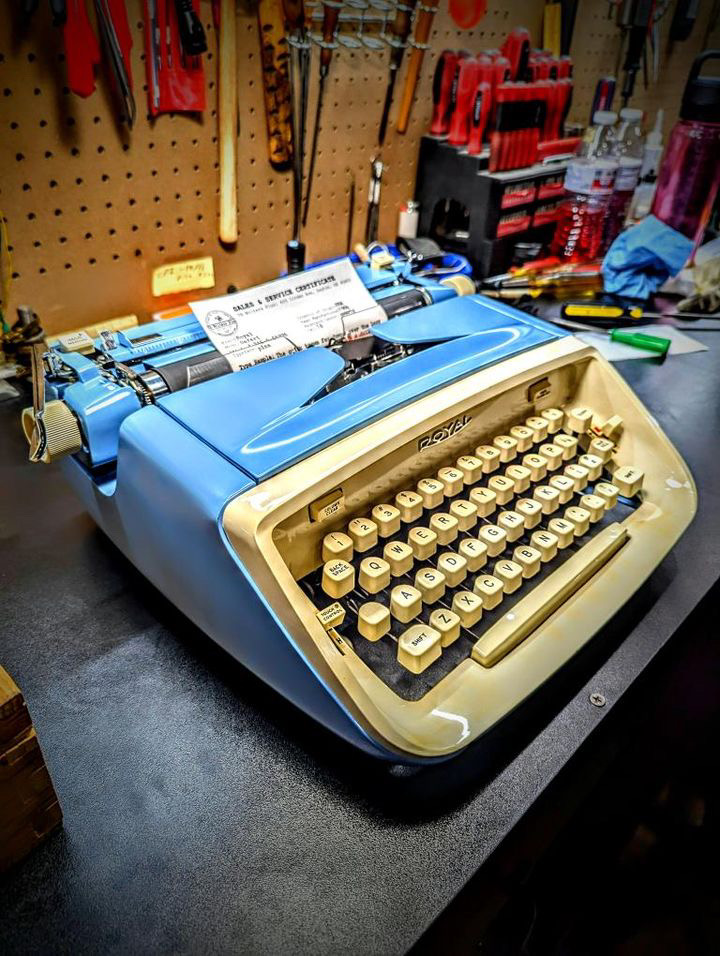
I bought my first manual typewriter while I was in college, mostly for its portability. A good bit of my earliest writing was done on that machine. It was—or rather is—a 1964 Royal Safari, light blue with off-white keys and accents. It still sounds like I’m describing a ‘57 Chevy. And yes, I still have it.
Aside from nostalgia and mechanical admiration, I think digital overstimulation may have contributed to some people’s leaving the computer behind. I can relate. I’m so immersed in the continuous urgency of the digital environment that I just want—no, need—the quiet of the old ways.
I know the typewriter can be noisy, but I wasn’t referring to “quiet” in that sense. When those keys snap against the paper, I am fully engaged and undistracted from my writing. The slower pace allows me to choose my words more carefully, and there are no pop-ups, email messages, or social media nonsense. It’s kind of freeing.
I’ve also heard some people turn to the typewriter out of paranoia. Privacy has become a real concern in the digital world, and viruses can’t infiltrate typewriters, nor can your printed pages be hacked. You’re most definitely off-grid. But there’s a price to pay for that: time.
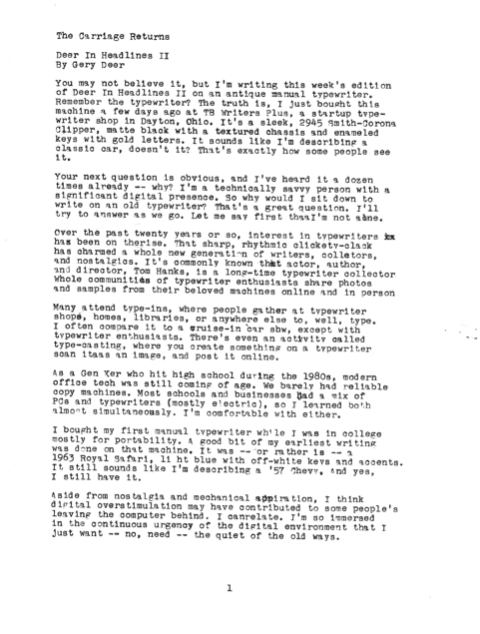
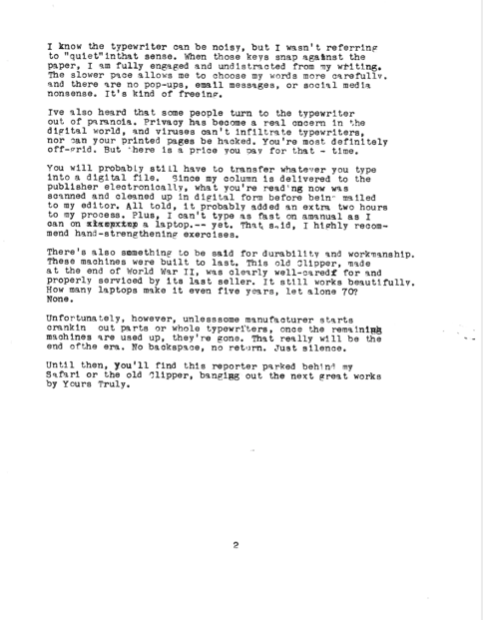
You will probably still have to transfer whatever you type into a digital file. Since my column is delivered to the publisher electronically, what you’re reading now was scanned and cleaned up in digital form before being emailed to my editor. All told, it probably added an extra two hours to my process. Plus, I can’t type as fast on a manual as I can on a laptop – yet. That said, I highly recommend hand-strengthening exercises.
There is also something to be said for durability and workmanship. These machines were built to last. This old Clipper, made at the end of World War II, was clearly well-cared for and properly serviced by its last seller. It still works beautifully. How many laptops make it even five years, let alone 80? None.
Unfortunately, however, unless some manufacturer starts cranking out new parts or whole typewriters, once the remaining machines are used up, they’re gone. That really will be the end of an era. No backspace, no return. Just silence.
Until then, you’ll find this reporter parked behind my Safari or the old Clipper, banging out the next great works by Yours Truly.
(See the gallery for photos of the typewriters mentioned in this piece and more.)
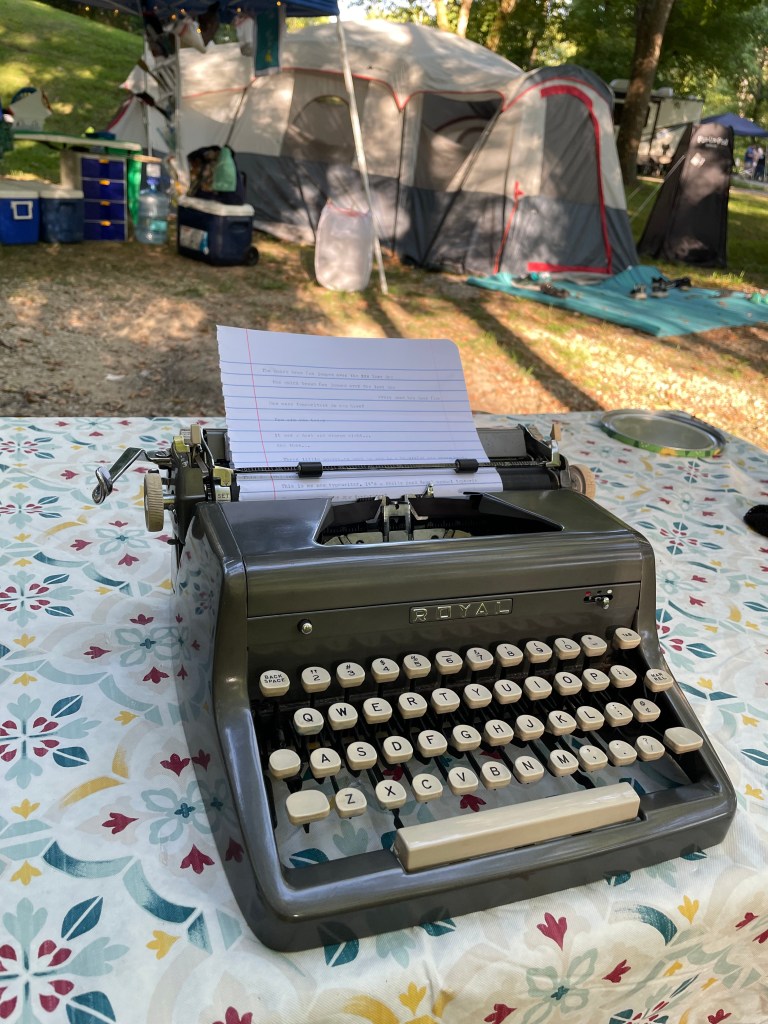
Gery Deer’s 1964 Royal SafariPhoto (c)2024 GLD CommunicationsGery’s 1945 Smith-Corona Clipper Photo (c)2024 GLD CommunicationsPhoto (c)2024 GLD CommunicationsGery at his desk, typing Deer In Headlines “The Carriage Returns.”The actual typed pages of this column.Gery’s 1938 Smith-Corona Sterling. A copy of Richard Polt’s “The Typewriter Revolution” and a card featuring his Typewriter Manifesto are on the desk!August 2024 – Gery’s most recent find, a 1955 Royal De Luxe purchased from an antique mall in Logan, OH. Another “beauty” shot of the Safari on the bench at TB Writers Plus after her refit.
Have you ever been afraid for your job? I laugh when people think I can’t lose my job since I work for myself. As a writer, even working under my public relations agency, I’m often called “self-employed.” The immediate assumption is that no one can fire you.
There’s a lot of nonsense to unpack there. First, and possibly most important, there’s no such thing as self-employed. Unless you have a magical chest of gold or cash that continuously refills itself, you’re working for somebody who’s paying you. Being independently employed (my preferred terminology) means you’ve traded one boss for many (customers).
Second, working on your own means constantly beating the bushes, knocking on doors, and continuously selling yourself to generate a pipeline of work. My father and brother created multiple, simultaneous jobs for themselves because they never wanted to be out of work—and they never were.
My family seemed to always have multiple income streams—cattle, trucking, engine work, welding, anything that brought a buck. However small the amount of revenue, it added up. Mom and Dad ran the farm and our trucking business, and I always knew my family worked hard for what we had. No two days were alike. Dad might be out on one of our trucks or auctioning cattle one day. The next, he and my brother might be rebuilding a tractor engine and welding a broken hay rake—all before dinner.
Over the years, I adopted the same philosophy, but I wasn’t always independently employed. Once upon a time, I worked for “the man,” and the woman, and the corporate overlords, and whatever else they’re called. From engineering technician and mechanical designer to database developer and coder, I did the 8-to-5 grind for many years before going out on my own.
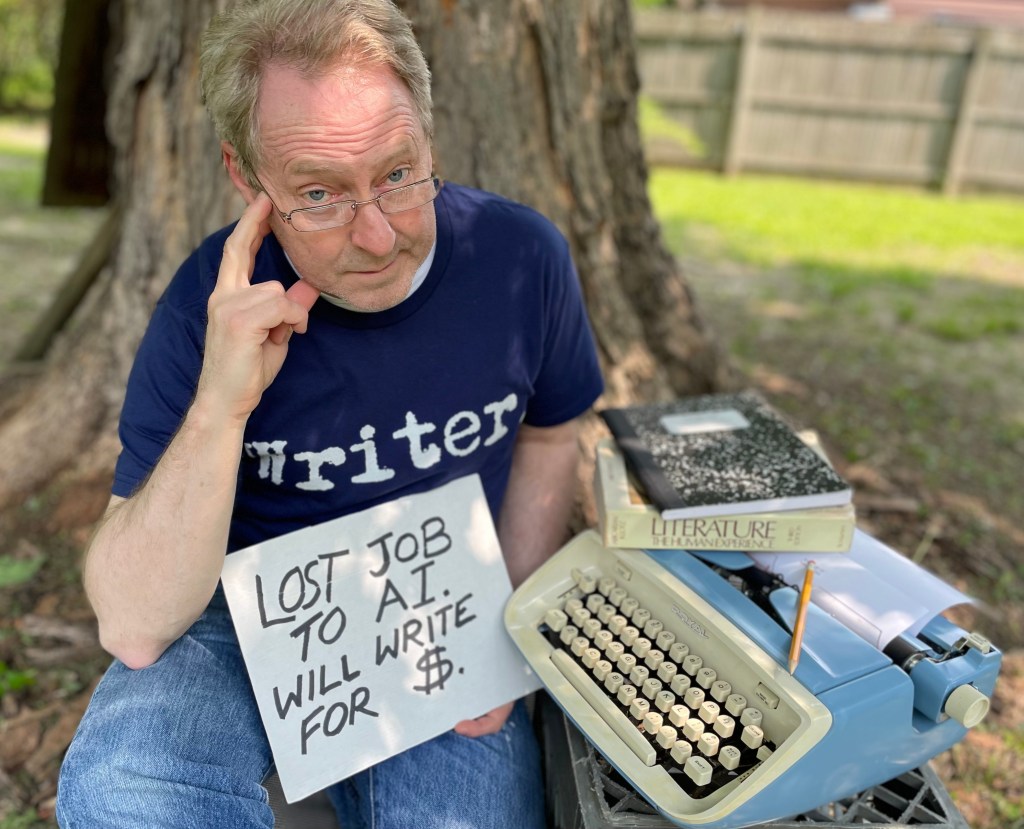
Writers in every industry are rapidly becoming an endangered species due to Artificial Intelligence.
Since much of what I did in the corporate arena was high-tech, the advanced skills required evolved rapidly. I constantly studied the latest technologies to avoid obsolescence. I’ve always been fascinated by computers, but keeping up with advances in computer technology during the 1990s was exhausting.
If that wasn’t enough to worry about, no matter my job, I always felt like something would ruin it. Someone would take it away from me or decide I wasn’t qualified, and that’d be that. I really did know what I was doing. But I suffered from terrible imposter syndrome. Then, one day, that was enough. I walked away.
Life as an independent professional can be tough, especially if you’re used to a steady paycheck and punching out at 5. At least no one ever gets fired, right? Wrong.
There’s a quote from the TV show “Mad Men” that goes, “The day you sign a client is the day you start losing them.” It means that every customer will eventually leave you—your fault, their fault, nobody’s fault. It’s just part of the process. So, when that happens, you are effectively fired. Depending on how many customers you have, that’s how many times you will be fired.
Despite the romanticization, self-employment is hard work and a bit like riding a bike. If you stop pedaling, you fall. You must exceed customer expectations the first time, or those firings I mentioned start sooner. Is that more secure than a corporate job? In many ways, yes. Let me explain.
If I am a “free agent,” I can play in whatever league I want. However, I only get to set some of the rules. I usually have to work within the guidelines of my profession or the client’s needs. One thing is sure, however. If I do my best, treat people with respect, and give them good value for their money, the work will continue.
That doesn’t mean I don’t worry about my job. I do, but for very different reasons. One is automation. Artificial intelligence, or AI, threatens the livelihood of writers in every industry, and what it generates is, at best, inadequate.
Another concern is that my skills will be devalued by a market flooded with amateurs and dabblers. These people produce inferior work, disparaging the profession and limiting potential business for the pros.
Ultimately, no one’s job is bulletproof—not even mine. Always demonstrate your best work. That will show your value, and you’ll stay employed – somewhere. In the meantime, try to remember that there’s always another job.









 The Jamestown Comet