Local News & Commentary Since 1890.

Archive for the ‘Books’ Category

Dayton area PR firm named agency of record for controversial biotech author

In Books, Dayton Ohio News, Education, Health, Literature, National News, Print Media, Technology, Uncategorized on October 30, 2025 at 1:45 pm

GLD Enterprises Communications, Ltd. Named Agency of Record for Biotech Whistleblower Becky McClain’s New Memoir, “Exposed”

Jamestown, OH — October 30, 2025 — GLD Enterprises Communications, Ltd. (GLD Communications), a strategic media marketing and public relations firm based in Jamestown, Ohio, has been named the agency of record for biotech whistleblower Becky McClain, author of the explosive new book, “Exposed,” which hits shelves October 28 from Skyhorse Publishing.

Led by founder and creative director Gery L. Deer, GLD Communications will oversee all media access management for McClain, whose story has already sparked widespread interest. The agency will also manage social media engagement and coordinate interviews and appearances related to the book’s release.

“This is a story that demands attention,” said Gery L. Deer. “Becky McClain’s courage in speaking out—despite enormous personal and professional risk—embodies the kind of integrity we strive to amplify. GLD Communications is honored to support her mission and ensure her voice reaches the audiences who need to hear it.”

“Exposed” chronicles McClain’s harrowing journey from molecular biologist to whistleblower, detailing her legal battle against a major biotech corporation over alleged safety violations and retaliation. The book dives deep into the ethical and regulatory failures she witnessed, offering a sobering look at the intersection of science, corporate power, and public health. The topic has proven highly controversial, drawing attention from journalists, activists, and policymakers alike.

Consumer advocate Ralph Nader, who was involved in the original case, penned the book’s powerful foreword, lending further weight to McClain’s revelations. Early media coverage has included interviews with national outlets and investigative podcasts, with more expected following the book’s release.
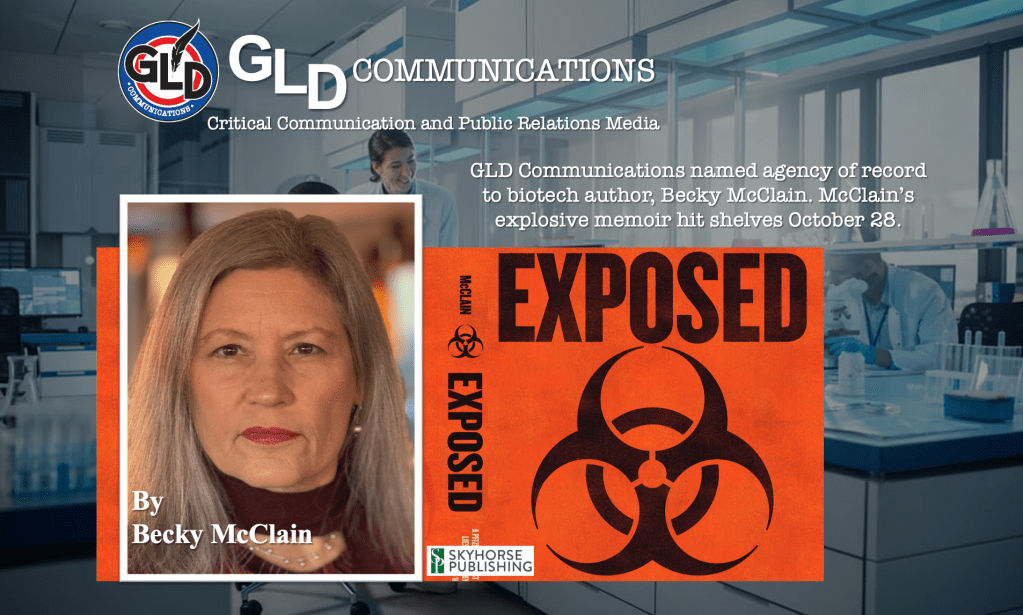
McClain’s voice resonates throughout the pages of her book. “I’ve written this book as a witness to a system gone bad — a system that breaks people bad — a system that threatens the public’s health, workers’ rights, and America’s right to freedom of speech,” she states, underscoring the urgency and personal cost of her journey.

“Exposed” is more than a memoir—it’s a call to action. Through meticulous documentation and emotional candor, McClain invites readers to examine the intersection of science, ethics, and power. The book also explores the broader implications for workers in high-risk industries and the mechanisms that protect—or fail to protect—them.

The book is poised to become a touchstone in discussions about whistleblower protections and corporate transparency. As the biotech industry continues to evolve, McClain’s story serves as a stark reminder of the human cost of scientific advancement––and the ongoing risks to worker safety as well as public health in a world still marked by the pain and uncertainty caused by the COVID-19 pandemic.

Effective immediately, all media inquiries, interview requests, and public engagement related to “Exposed” will be handled through GLD Communications. For more information or to request media access, contact the agency directly via email gdeer@gldenterprises.net. “Exposed” is available now on Amazon.com and in bookstores. Questions about the publisher or distribution should be directed to the offices of Skyhorse Publishing, New York, New York.

Pitch, Publish, and Perfect: Join Award-Winning Authors and Industry Experts at the Appalachian Writers Conference 2025

In Books, Business, Education, Entertainment, Local News, Uncategorized on August 15, 2025 at 8:42 am

Berea, KY – Writers from across the country will converge in Kentucky this fall for the 2025 Appalachian Writer’s Conference 2025 (AWC), an immersive, genre-inclusive gathering designed to sharpen craft and demystify the business of publishing. From agent pitch sessions to expert-led workshops on branding, contracts, and publicity, AWC equips aspiring and established authors alike with the tools to thrive. Founded by Martin Sisters Publishing President and CEO Melissa Newman, Ed.D., the conference has evolved into a nationally respected event featuring award-winning faculty dedicated to helping writers succeed, regardless of their path or project.

“I strongly believe that everyone has a story, and most people have more than one,” Newman explained. “What we offer at our conference is the opportunity for writers to learn from professionals and develop the skills they need for a successful career as an author.”

Returning to this year’s faculty are fantasy/romance author Summer Hanford, fiction novelist Sherry Robinson, crime thriller novelist Susan Furlong, and screenwriter Mark Daniels. Frank K. Newman, J.D., President and CEO of the law firm Cole, Cole, Anderson & Newman, PSC, will be back to share insights into publishing and media contracts. Gery Deer, GLD Communications‘s creative director and author of the Pulitzer-nominated op-ed series “Deer In Headlines,” also returns with a session on making a living writing professionally in between book projects.


Deer first attended in 2023 as a participant but transitioned into a faculty role and took on a support position last year. “This is a unique experience for writers, and the intimate setting is ideal, in my opinion, for a better learning experience,” he said. “Melissa has created an environment of support and education, and the faculty is part of the group, interacting and spending time with the participants as fellow artists.” Deer also noted that they continue efforts to improve the event based on participant feedback.

For example, a literary agent joins the faculty for the first time at AWC. Jackie Kruzie, author, literacy advocate, and associate literary agent at Focused Artists, will lead sessions on “Perfecting Your Pitch,” “The Dreaded Synopsis,” and a Lunch-and-Learn Session called “Should I Get an Agent?” She will also meet with authors for eight-minute pitch sessions. Another new addition is award-winning crime, thriller, and suspense novelist Trace Conger. In addition to class presentations, faculty will participate in the “Ask Me Anything” lunch panel to answer questions and discuss writing and publishing topics in a conversational setting.

Martin Sisters Publishing and the Appalachian Writers Conference present the Appy Inkwell Awards for the second year. “We want to give writers a chance to have their work recognized,” said Appy Inkwell Awards Coordinator, writer, and English Literature instructor Mary Ryan Wineberg. “We may even discover some new literary talent.”

This award celebrates outstanding achievement in fiction writing and offers talented writers the opportunity to showcase their creativity and skill before a supportive community of peers. Participants can submit up to 2,500 words of unpublished fiction, in progress or complete, that demonstrates originality, craft, and storytelling prowess. Eligible submissions include: a complete short story, a short story collection, or a piece of flash fiction.

The Dr. Pam Parry Lifetime Learning Award also debuts this year. It was created in memory of Dr. Parry, an integral presence within the AWC faculty and a trusted conference advisor whose remarkable life touched many. This award will celebrate someone whose passion for lifelong learning and generosity in the writing community make a lasting impact.

For registration and event details, visit: www.appalachianwritersconference.com. (Click to watch a highlight reel from the 2024 event.)

****

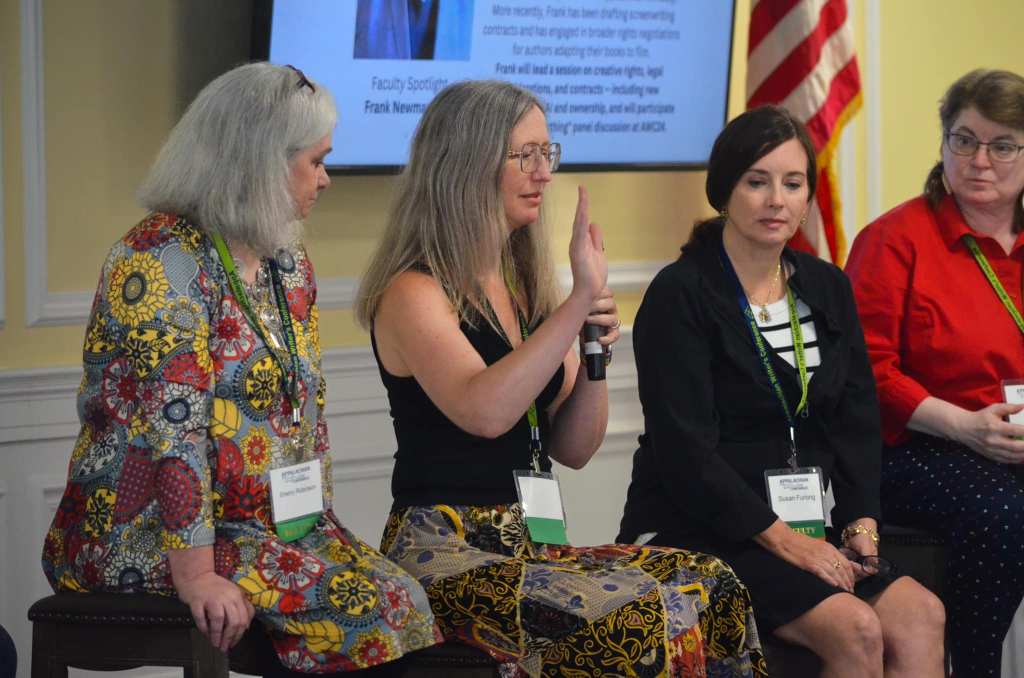
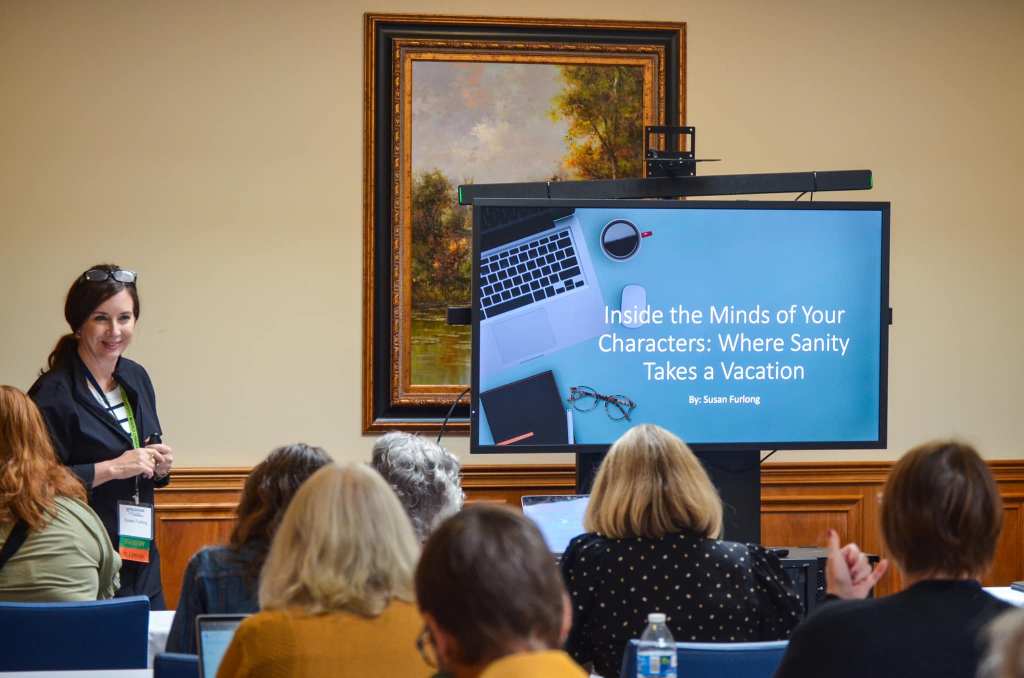
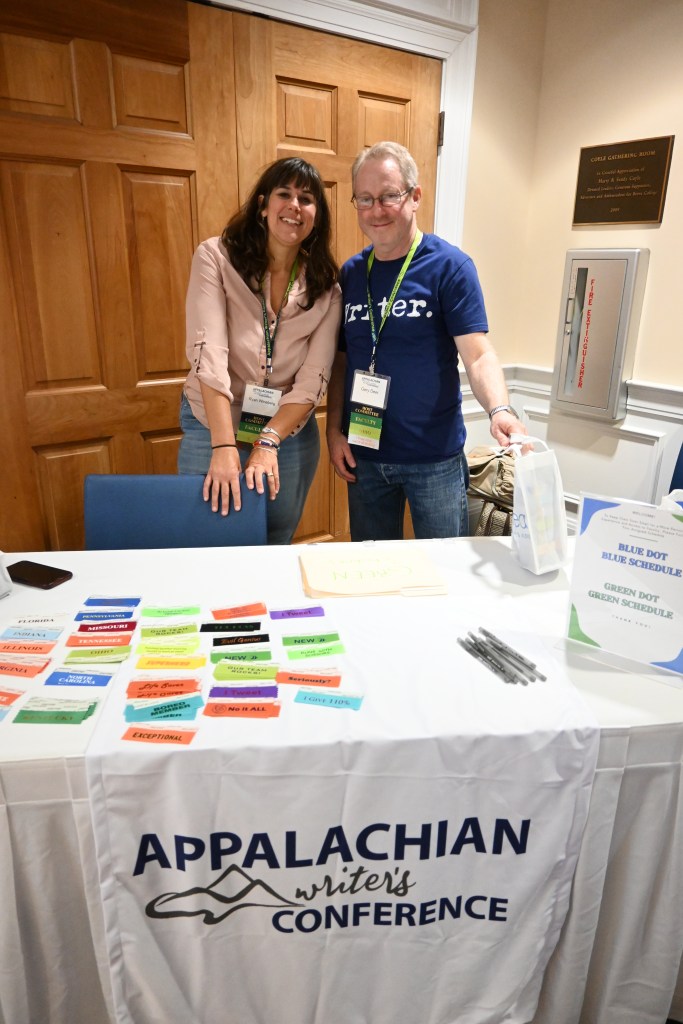
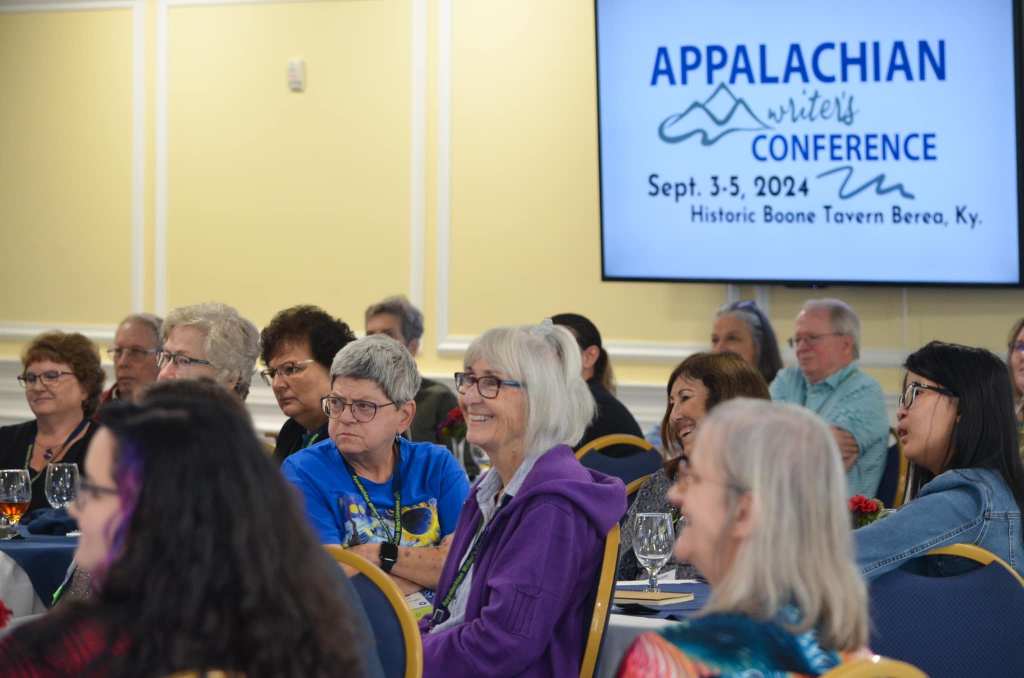
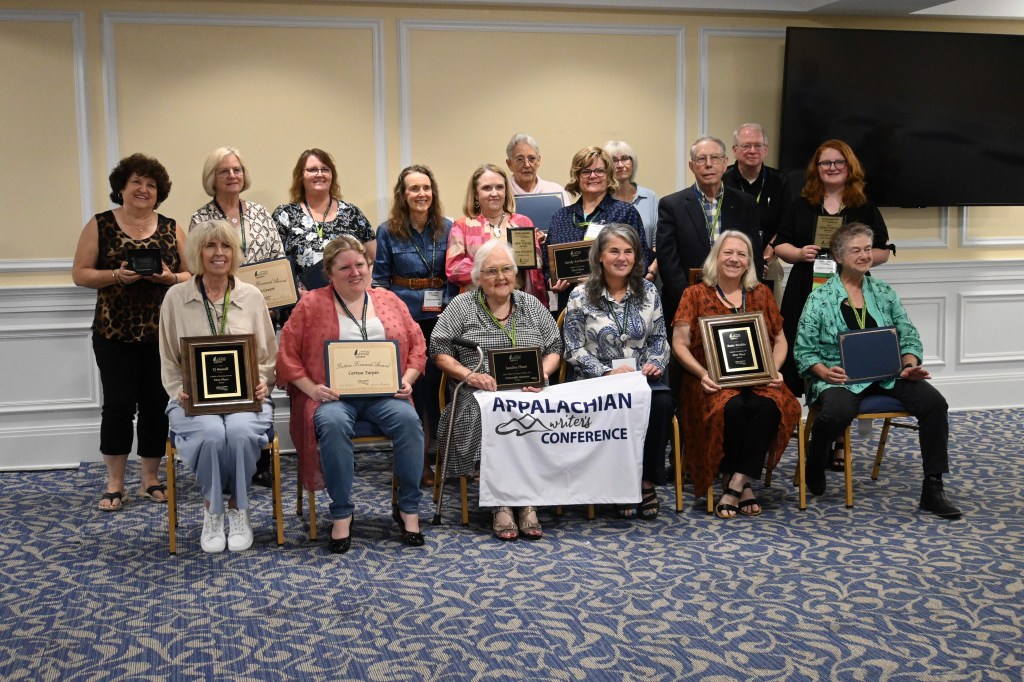
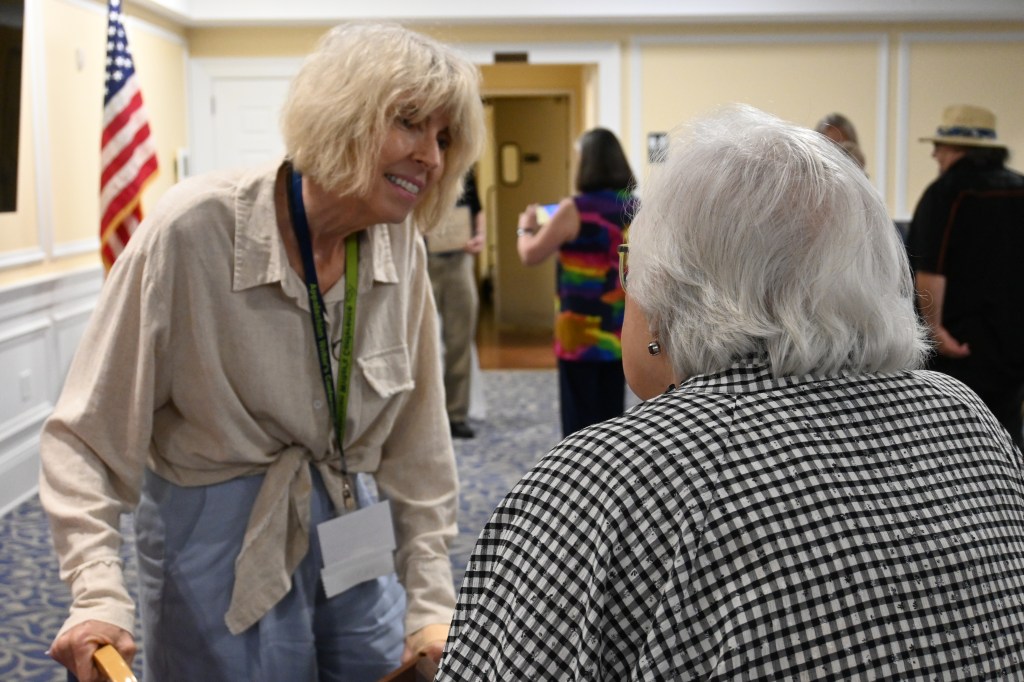
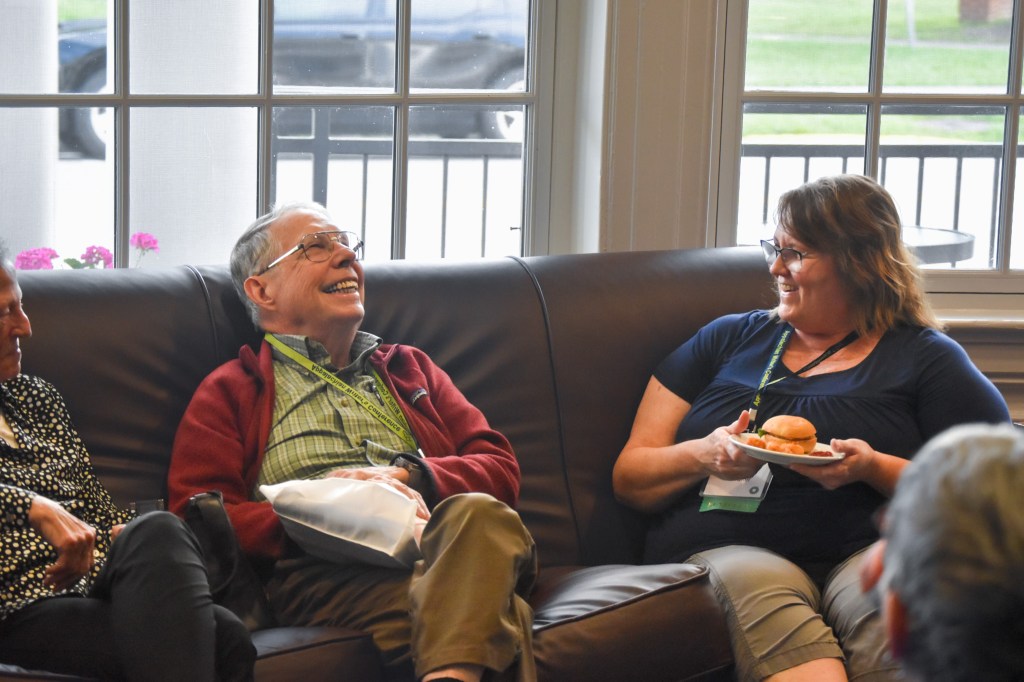
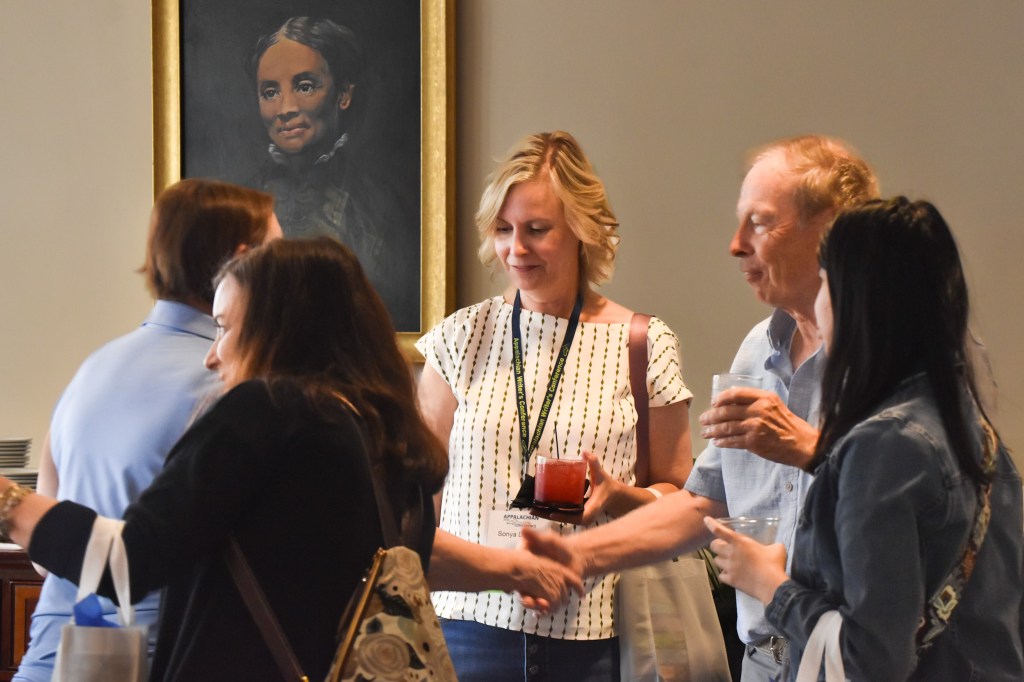
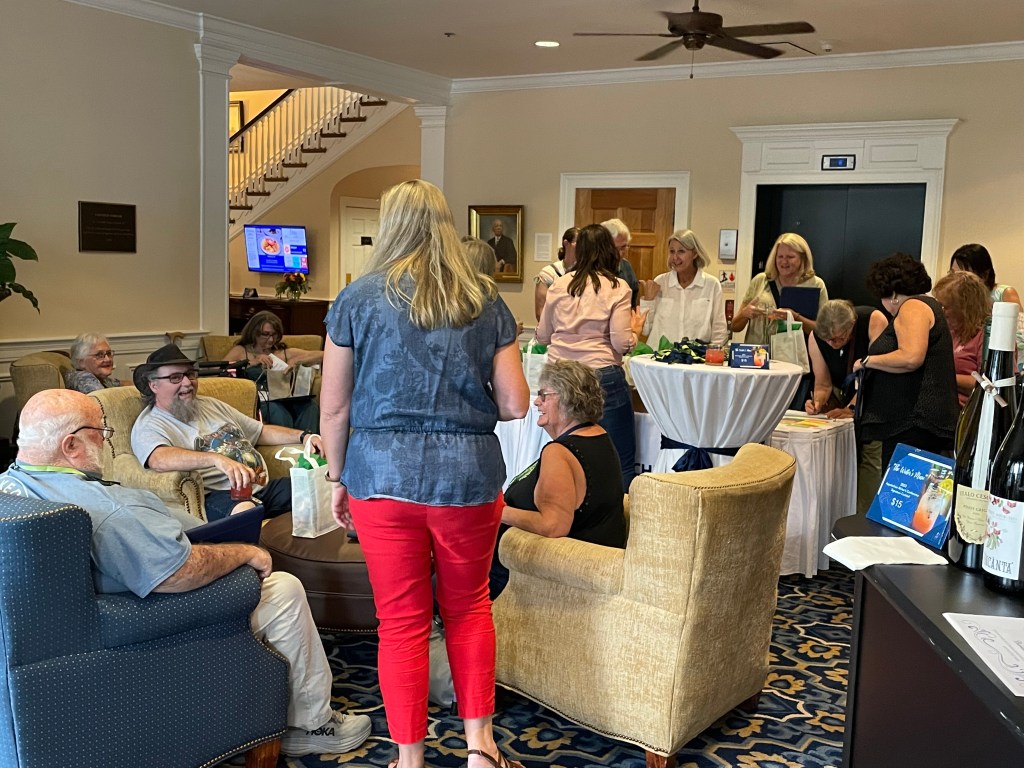
Photos from the 2024 Event:

Library Fines

In Books, Children and Family, Education, Local News, Opinion, Politics, Uncategorized on May 2, 2025 at 10:24 am

Deer In Headlines II

By Gery Deer

(Editor’s note: This edition also appears in other publications under the title “Checked Out.”)

As a kid, the local branch of the public library was in the old opera house near the center of our small farm town. It was cramped and dimly lit, and the reference desk was under the boarded-up grand staircase, giving it a sort of cubby-hole feel. I spent a good bit of time there. After school, I’d do my homework and wait for my mom to get off work. In the decades before the Internet, our library was the window to the world. But now, that window may be closing.

Ohio public libraries are funded, in part, by the Public Library Fund (PLF), which provides 1.7% of the state’s General Revenue Fund (GRF) as of this writing. However, the Republican-sponsored Ohio House Bill 96, proposed in early April of this year, would cut library funding by more than $100 million across the state. Why?

Governments have historically manipulated populations by controlling education and the media. They ban books that don’t align with their values, use defunding threats to force public and school libraries to cultivate materials for their purposes, and limit access to information. That way, voters remain ignorant, subjugated, out of touch, and pliable.

And before anyone says, “you just hate republicans,” they’re not the only ones to try this. Ohio Governor Ted Strickland, a democrat, proposed the same budget cuts a dozen years ago, and the republicans cried foul. Remember, the liberal left still regularly tries to “rewrite” some books to remove language and ideas they find offensive. So, it has gone both ways. This time, however, the danger is more palpable.

Over the last decade, public libraries have become frequent targets for budget cuts, with some policymakers arguing that digital access negates their necessity. But here’s the truth: libraries remain vital to the well-being of communities, and continued funding by federal and state governments is not just important—it’s essential. Without it, we risk depriving countless individuals of educational opportunities, civic engagement, and economic mobility.

Public libraries provide free access to knowledge for everyone (so long as their contents are not censored), regardless of socioeconomic status. Whether it’s a student researching for school, a small business owner seeking resources, or a job seeker brushing up on interview skills, libraries level the playing field in ways no digital paywall ever could. Eliminate government funding, and these services vanish, disproportionately affecting low-income communities. Instead of fostering informed citizens, we create a deeper knowledge divide, where only those who can afford education can access it.

A democratic society thrives when its citizens are informed, and libraries serve as safe spaces where people can access unbiased, factual information. They offer literacy programs, historical archives, and meeting spaces for community discussions—all of which help create engaged and empowered citizens. Where do people go for credible information when libraries close because of defunding? Unfortunately, they turn to the Internet and social media – the global misinformation machines. That’s a terrifying thought.

Libraries don’t just provide books—many offer essential services that help individuals improve their financial stability. They provide free internet access for job searches, resume-building workshops, business mentorship programs, and resources to help entrepreneurs. Government officials profess at nauseum about supporting small businesses and the workforce. Then they gut library funding and undermine those initiatives directly. If libraries disappear, so do these essential services, making it much harder for people to improve their situations.

Defunding libraries erodes the foundation of an educated, informed, and economically mobile society, which is exactly what this administration hopes to achieve. Without them, misinformation flourishes, the digital divide widens, and people lose access to critical resources for success. Libraries are not relics of the past—they are the lifeblood of communities, supporting everything from literacy to local economies.

So, before cutting another dollar from public libraries, policymakers should ask themselves: Do they really want a future where only the privileged have access to knowledge? Without funding, that’s exactly where we’re headed.

Good people on both sides of the aisle must speak out against this kind of censorship and ignorance. In Ohio, you can contact your state representative or State Representative Matt Huffman, currently Speaker of the Ohio House of Representatives: email rep78@ohiohouse.gov or call 614-466-6344.

Literacy’s Silver Bullet

In Books, Children and Family, Economy, Education, National News, Opinion, Print Media, Technology, Uncategorized on October 19, 2024 at 10:35 am

Deer In Headlines II

By Gery Deer

I was a staff writer and later an editor for my college newspaper. During that time, I learned the single, most important lesson from all my years of education. Our administration-appointed supervisor once told me, “Whatever else you learn as you go through your college career,” she said, “learn to write and speak well. If you have that, you’ll be able to do anything.” She was right.

My mother also shared those views, though she had a head start by teaching me to read early. On the other hand, I would depend on my communication skills to pave my way to a multi-faceted career. She was determined to give me every possible advantage, mostly because she didn’t get them.

Literacy is one of the most critical indicators of a strong society. It reduces poverty, bigotry, ignorance, and social and professional inequality. It shouldn’t be limited to the academically gifted. Everyone should have the opportunity to learn effective communication.

Just because you don’t have an interest or aptitude for high academia, that doesn’t mean literacy is less important. I feel fortunate that I had the best of both worlds. I’ve always been an avid reader and writer and a lifelong student of all the sciences. But I also learned to rebuild a car engine, install a new water heater in my house, or change a faulty electrical outlet.

Every one of those tasks requires the ability to learn, understand, follow instructions, and cope with the unexpected. All of my “book learning” occurred while surrounded by some of the best tradespeople in the world. Even better, they were all teachers. One thing that has changed over the years is how literacy is emphasized in our public and private schools.

Do you remember when kids used to get in trouble for reading comic books at school? I will say “we” instead of “they” because I did this too. We put comic books inside large textbooks so we could read during class. From the teacher’s perspective, we seemed engrossed in our educational process. Instead, we were engaged in the exploits of Superman, Batman, or Spider-Man.

Some argued that even reading comic books was good for us because at least we were reading. But it was more than that. Comic books are a good literacy metaphor because they aren’t just about words, grammar, and sentence structure.

For our society to consider itself truly literate, we must understand language, not just the written word but communication. We also need to understand art, storytelling, and critical thinking. In an ironic twist, one way to do all that is by reading comic books. Many of the Batman stories from the 1930s and 40s are loaded with material you only find in today’s best crime novels by authors like Michael Connolly, James Patterson, and David Baldacci.

Unfortunately, some use the comic book analogy to justify spending hours on social media. That’s not the same thing. Reading is calming, focuses our minds, and relaxes our bodies. If anything, social media has dumbed us down and created an entire society nearly paralyzed by anxiety and inferiority. Scrolling doesn’t count as reading.

Still, literacy doesn’t require you to wade through “War and Peace,” “Catcher in the Rye,” or any other long-winded literary work. I supplemented my education by reading everything I could get my hands on. Whatever I had an interest in, I had books about it, encyclopedias, or topic-specific material – there was no internet back then. Now, resources are nearly endless, provided you learn the difference between credible and non-credible sources. 

Advanced education isn’t required either. Truth be told, much of what I do for a living was self-taught – thanks to my early introduction to books. Self-education is mainly frowned upon in today’s society. I find it ironic that Benjamin Franklin, Thomas Jefferson, and others who wrote some of the most important documents in history would be unemployable by today’s arbitrary and unfounded standards.

My point is that American culture currently reads at a U.S. 5th-grade level. That’s unfortunate, ridiculous, and easily corrected. We must eliminate the stigmas of functional illiteracy, focus more on reading and writing in our schools, and spend more time with books than cell phones.

Efficacious Electoral College

In Books, Children and Family, Economy, Education, history, Local News, Politics, sociology, Uncategorized on October 19, 2024 at 10:20 am

Deer In Headlines II

By Gery Deer

Without question, 2024 has been and will continue to be one of American history’s most charged and controversial election years. Among the points of contention is the continued argument regarding the necessity – and validity – of the Electoral College.

Political operatives and pundits alike have been outspoken on the subject from all political viewpoints. There seems to be no consensus because, quite frankly, even some government officials don’t understand its purpose. So, before I give you my thoughts, here’s some non-partisan history.

During the first Constitutional Convention of 1787, a significant debate unfolded about the method of electing a president to lead the executive branch of our newly established government. It was a pivotal moment in our history after the decision to have a single individual in the office rather than two or even a triumvirate. Just imagine the complexity of electing three people every four years.

The primary issue was whether a congressional vote should elect a president or do it by popular vote.  The latter eventually won out until the smaller states began to weigh in, concerned that those with a larger population would wield more control.

Another lesser-known concern was that the political elite of the time were worried about a mass of uneducated voters swaying the results. Discussions continued for several months until, one day, in a closed-door subcommittee, James Madison laid down the concept for what became known as the Electoral College.

Enacted as a compromise and safeguard, Article II of the U.S. Constitution (later the 12th and 23rd Amendments), as well as the Electoral Count Act (ECA) of 1887) formally established the Electoral College. These laws regulated the voting process and defined the events between Election Day and the Inauguration.

Now, to clear up some misconceptions. Regardless of rhetoric to the contrary, I assure you that the Electoral College is an entirely democratic process. It is not, however, easy to explain. But I’ll try anyway (insert a deep breath here).

In a presidential election year, the political parties hold conventions where they nominate “presidential electors.” That’s simple enough to understand, but hang on. Here’s where it can get… confusing.

When a party’s presidential and vice presidential candidates win the popular vote, that party’s electoral nominees become “Electors.” Each state has the same number of Electors as members of Congress, and each Elector votes for their party’s ticket on separate ballots – one for president and one for vice president. So, your individual vote is still vitally important because the candidates cannot earn Electors without it.

For example, if Richard Nixon and Barry Goldwater (president and vice president, respectively) won the popular vote in California, the Republican nominees from that state would become Electors and cast their votes to the Electoral College. Once all the electoral votes are cast, the candidate who reaches 270 out of a possible 538 wins – and this is only triggered if the candidates win that state’s popular vote in the first place.

In the news, the results sound something like this: Nixon has won California and its 54 electoral votes. Of course, those results still have to be certified. As you might recall, there was a slight hiccup during the 2020 election certification. However, new security measures have been taken to reduce any potential repeat of those terrible events.

Remember, this is just a glance at the process, but I hope it helps. If it’s still puzzling, a good analogy is Major League Baseball’s World Series. Every year, the winner is determined not by which team got the most runs per game but by which won the most games in the series. The Electoral College works the same way.

In my opinion, the Electoral College is the only practical, efficient, and fair way to ensure everyone’s voice is heard because we’re represented just as we are in Congress. The Founders realized that the popular election alone could and would eventually bring chaos.

If we want an election process that stays in constant contention, then eliminate the EC. But if we’re going to have all our citizens represented equally, let the system do what it was designed to do. If you want to make a real difference, make sure you vote.

Uniquely Portable Magic

In Books, Education, Entertainment, Opinion, Print Media, Technology, Uncategorized on April 7, 2024 at 9:47 am

Deer In Headlines II

By Gery Deer

“Books are uniquely portable magic.”—Stephen King, On Writing: A Memoir of the Craft.

I’ve often quoted classic books in this column for several reasons. For one thing, those brilliant writers of old had wisdom that still eludes me, and I need to borrow it occasionally. 

I also enjoy the opportunity to share my love of books with those of you who are kind enough to give me your attention for a few minutes each week. My hope is that, in addition to my humble observations, I can share some words from those scribes who were (or are) far wiser and more eloquent than me. 

Of course, I don’t just cite the classics. I toss in something fun and modern here and there as well. You may not realize it, but I’ve shared some words from the likes of Douglas Adams, George R.R. Martin, J.K. Rowling, and more. 

I wasn’t a voracious reader when I was young, but that changed as I grew up. In high school, I became interested in Charles Dickens. Later, it was the stories of Mark Twain. From “The Little Red Lighthouse and the Great Gray Bridge” to “Lord of the Flies,” one book led to another. It’s interesting how that happens. Once you’re hooked…

That said, here are my questions of the day: Have books become obsolete in the shadow of the internet and social media? As some try to ban classics like Huckleberry Finn and To Kill A Mockingbird, what has become of literature’s social significance? What does the future hold for the classics and all the unwritten works yet to come? I don’t have the column inches to answer these questions, so here are my brief thoughts. 

In my humble opinion, Stephen King had it right. Books are magical. They transport us to faraway lands, introduce us to people around the globe, and inspire imagination and dreams. But books are far more than mere escapism from our daily grind into the worlds of Harry Potter and Captain Nemo. 

Books are the arks of our history. They help us learn from the past, hold a mirror to the present, and prepare for the future. Every published page offers a tiny glimpse into who we are as a species—warts and all. When you read a book, you have no choice but to learn something. Ignorance is replaced with knowledge and understanding, and then a funny thing happens—people get along better. Books provide the knowledge that breaks down all the barriers that separate us.

Booksellers are struggling, however. In many American communities, there might be a Starbucks or a parking lot where the neighborhood bookstore once stood. Instead of the pages of some great new novel, many people seem far more interested in scrolling through social media.

Although I prefer the printed page for most of my reading, my appreciation for books is more about content than construction. I typically read two or three books simultaneously, each in a different medium—audio, digital, or print. 

A book is a book. Unless you can convince me that words read aloud are less meaningful than those read by eye, listening to an audiobook still counts as reading. You should read however you feel comfortable.

Concerning book bans, I won’t get into the obviously paranoid politics involved. If you don’t like a book, don’t read it. But the concept of book banning should horrify us because it casts a long shadow backlit by terrors of the past. 

Some writers spend decades crafting the perfect book, hoping it will positively impact the reader. No matter your age, the genre, or the medium, reading a book will improve critical thinking and creativity and release dopamine, the brain’s “happy” chemical. 

If you haven’t done so for a while, it’s time to get some of that happiness for yourself or give it to someone else. A book is one of the most meaningful gifts you can give. Libraries and bookstores offer a fun, affordable family experience you will remember forever.

Thankfully, books, even printed ones, aren’t going away anytime soon. But if they were ever to disappear, so would our society, our humanity, and, eventually, the record of our very existence. 

*************

More Information:

Your local library is a great, free resource for the whole family to explore the unlimited world of books!

If you want to learn more about the book industry, the future of printed books and bookstores, check out these documentary films: The Booksellers. And Hello, Bookstore.

Don’t Panic!

In Books, Education, Entertainment, Health, Opinion, psychology, Uncategorized on October 17, 2023 at 7:50 am

Deer In Headlines II

By Gery Deer

Don’t panic! That’s rarely what you want to hear at those crazy moments when, odds are panicking is exactly the thing you should be doing. The dictionary defines “panic” as a sudden, uncontrollable fear or anxiety, often causing wildly unthinking behavior. Reactions vary widely, from a little nervousness to a full-on panic attack, complete with hyperventilation, rapid pulse, excessive perspiration, and much more.

Fortunately, I’ve never really been someone who panics. I’m generally calm in high-stress situations. Adrenaline probably creates a false sense of clarity and focus. I would say I’ve experienced anxiety, tension, and worry, but nothing I would call panic. It made me wonder, what makes you panic? It’s likely that you’re not alone in your apprehension. So, here are some things that commonly make people panic.

Number one on the list, meeting the potential in-laws for the first time. This is a great one. Symptoms include sweaty palms, a terrible sense of inadequacy, and the feeling that you just swallowed a lizard – and it desperately wants to come back up.

Next up is the dreaded job interview. You spend the days and hours ahead of the big moment researching, reading self-help blogs about how to prepare for interviews, and generally freak out. And talk about sweaty palms, you nearly break into a human sprinkler system just sitting in the lobby waiting for your turn. That bouncing knee, what even causes that?

What about being stuck in an elevator? Do you panic then? It might be comforting to know that fewer than 50 people die in elevator-related accidents every year in the United States. Fatalities range from falling cars to being caught in the doors between floors. Gruesome! But, what are the odds of you being one of those people? You have a better chance of being hit by lightning or winning the lottery, now that should bring on some panic.

You’re lazily riding your bicycle down the street and suddenly realize the neighbor’s Jack Russel is out and has slipped his tether. There is nothing more panic-inducing than a small dog chasing you on a bike. I never worry about the big dogs; they give up at the end of the driveway. But the little ones, oh dear! Just pedal faster and don’t turn around!

A first date. More sweaty palms, overthinking your clothes, and whether your car is cool enough to impress your date. Will you say the wrong thing, talk too much, or manage to seem interesting enough to get a second date? So much at stake and yet nothing at all.

Something I never thought of before – automatic flushers in public bathrooms. My niece shared with me that some people are afraid that the toilet will flush while they’re sitting on it. It’s the anticipation of when the flush happens that apparently induces the anxiety.

Oh, and remember the panic you felt back in grade school that accompanied report card day? (Yes, I’m old. Grade reports were once on paper.) Brow-soaking worry would set in about the grades the comments be, and, above all, will Mom or Dad sign it.

Vacation is supposed to be a relaxing, fun time with family and friends, a break from stress and worry. So, imagine you’re out on the open road and you just passed the first exit you’ve seen for hours and, suddenly, your car’s “low fuel” light comes on. The gas gage is bouncing on “E” and now you start to worry. Will you make it to the next exit? Your car isn’t fancy enough to have the estimated fuel and mileage indicator so you’re in the dark. How much gas do you have left? Can you make it to the next exit?

What else can induce panic? How do you combat those feelings? Sometimes you can avoid things, but often, you just have to face whatever it is, head on, and move forward. Panic is caused by feelings spun up by thoughts. When I feel anxious or worried, I do my best to try to alter my thoughts, which, hopefully, will change my feelings and I can remain calm. Maybe you can find some practice that will help you do the same.

Ignore the Green Light

In Books, Opinion, psychology, sociology, Uncategorized on July 22, 2023 at 7:38 am

Deer In Headlines II

By Gery Deer

If it wasn’t for the mist, we could see your home across the bay. You always have a green light that burns all night at the end of your dock.” – A quote by Jay Gatsby, from “The Great Gatsby,” by F. Scott Fitzgerald.

You may not think of it in those terms, but we all have a “green light,” some undying yet seemingly unattainable desire for something. If you’re unfamiliar with the reference, let me point you toward the classic novel.

The book was written and set in the 1920s during New York’s Jazz Age, a time of prohibition, excess, and the American “consumer culture.” For Fitzgerald’s title character, a green light set at the end of a boat dock represented all that Gatsby desired or deemed of value in life. For across the water were his dreams – a woman named Daisy and her whirlwind, ritzy, lifestyle. 

To be worthy of Daisy’s attention, though, Gatsby thought he had to attain a lifestyle that, in those days, was unreachable unless you were born into it. Growing up impoverished in rural North Dakota, he saw money and prestige as the means to fit into Daisy’s world, and true happiness. In reality, however, Daisy, though from a wealthy and estimable family, wasn’t happy at all. Instead, she saw her place in that society as a stranglehold, a prison sentence.

Gatsby eventually got what he wanted, or did he? I won’t spoil the end for you – go read it. You don’t get the right feel of this from movies. Either way, the moral here is that chasing the green light may not be all it’s cracked up to be after all. I suppose, however, it really depends on what your green light represents, doesn’t it? That begs the question, what is your “green light?”

Is there anything you want so badly that you would change who you are as a person or alter your values just to get it? I’m pretty sure I don’t have anything like that. I’ve never been someone who cared anything about social position, prestige, or money, other than to support myself and my family without too much struggle.

Likewise, I never cared much about how people saw me or where I fit in so-called, “social circles.” If you don’t like me, you know where the door is, I’m not changing to suit your sensibilities. No one should have to do that.

To me, the green light represents something out of our reach, not so much because of socioeconomic status, but who we are as individuals. But, if I have to be something artificial in order for people to accept me into some popular collective, then I don’t want to be around them in the first place. I have never understood those who pretend to be something they’re not just to fit in with a group or climb some social ladder. I guess my ambitions just lay elsewhere.

In the novel, I think the problem with Gatsby’s vision of happiness, as with so many people, is how narrow, artificial, and ill-informed it was from the start. He wanted the money and social success so badly, he was willing to be something other than himself just to be with someone who didn’t even want to live in that world. It could be said that Daisy wanted out as badly as he wanted into it.

I’m not saying we should all simply accept our station, especially not if you’re really unhappy. But the life you want and the people you share it with should reflect who you really are, not who others think you should be. Don’t change just to assimilate to some idealistic world that probably isn’t what you think it is anyway.

Where does that leave us – and Gatsby? He saw Daisy’s green light as a beacon, lighting his way to financial and social salvation, but things rarely work out that way. My advice, for whatever it’s worth, is to ignore the green light and concentrate on what really drives you, the “you” that you are now. If you want to change for the good, to grow, that’s amazing! But do it for yourself, not someone else.

Artificial Unintelligence

In Books, Dayton Ohio News, Economy, Education, Entertainment, finances, Jobs, Literature, Local News, Media, National News, News Media, Opinion, Science, sociology, State News, Technology, Uncategorized, World News on May 22, 2023 at 7:29 am

A Deer In Headlines II SPECIAL EDITION

By Gery Deer  

This work appeared in print and online, May 19, 2023 – Xenia Daily Gazette, Xenia, Ohio, and affiliated publications.

EDITORIAL NOTE:

The Jamestown Comet.com and Deer In Headlines II are publication products of GLD Enterprises Communications, Ltd. (GLD Communications), a company founded in 1998 on providing Information Technology AND Freelance Journalism, Copywriting, and Public Relations services. The column author, Gery L. Deer, is the company owner and CEO. Gery has been quoted in the media multiple times regarding his position on AI content creation. Here are the Dayton Daily News pieces noting his statements regarding Public Relations and Copywriting.

Our official statement on AI is as follows: We do not use AI programs to create our products, nor will we in the future. We are in full support of the WGAW strike, both in regard to streaming and other platform pay issues and the use of AI-generated material to replace them. We will not work with agencies who produce AI content, nor will we support their products or services. Please contact our office for more information at 937-675-6169 or email gdeer@gldenterprises.net.

Artificial Unintelligence

From congressional hearings to the picket lines of striking screenwriters, Artificial Intelligence, or “AI,” is a growing concern. This technology now affects nearly every industry and is advancing in sophistication. Of major concern to educators, professional writers, and content developers, are AI writing programs like ChatGPT. By the way, the program’s full name is “Chat Generative Pre-Trained Transformer” – I know, right? 

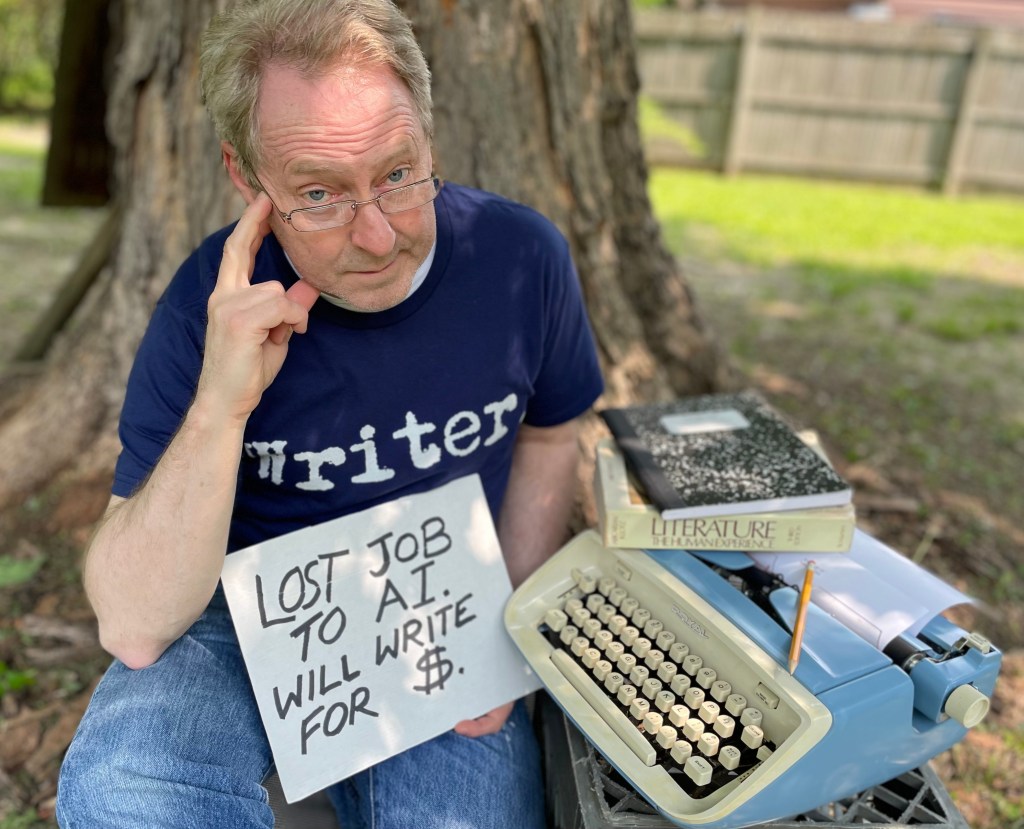
As you might guess, I’ve been asked repeatedly if I ever use AI to write this column. With obstinate conviction, I say now and for always, I do not now, nor will I ever use AI to write anything for this column, for my publishers, for my communications clients, nothing – ever. 

Now the Gen Zs and Millennials are probably saying, “he’s just a crotchety old white guy who hates technology.” Nonsense! As a matter of fact, my educational background is in engineering and computer science. I started programming computers in high school and worked in the tech industry for many years. I have a few AI devices in my office and a lot of advanced equipment for creating and editing audio and video productions. Suffice to say, I’m no Luddite. 

My concern with AI writing generators isn’t the technology. In fact, I can see where it could really be helpful in some industries, with human guidance. But the idea that it should be used to replace professional writers to save money is just ridiculous. 

A professional writer doesn’t just chuck out any old bunch of words that fit a set of parameters. Writers must craft their message based on the intent, the audience, the purpose, and the desired outcome. Not to mention that AI programs don’t have to worry about paying the mortgage, feeding a family, or having a purpose in life. 

In 1967, the original Star Trek TV series aired an episode called, “The Ultimate Computer” wherein the Starship Enterprise had been fitted with a highly sophisticated AI computer that would take over the ship’s operation, rendering the crew unnecessary. In one pivotal scene, the computer informs Captain Kirk that he is “non-essential personnel,” causing him to question his position and future relevance. 

Always the conscience of the show, Dr. McCoy, in an effort to console the Captain, reminds us, “We’re all sorry for the other guy when he loses his job to a machine. But when it comes to your job, that’s different.” It might be a science fiction show, but McCoy was spot on.

Predictably, the computer malfunctioned, killing hundreds of people and Kirk outmaneuvered the computer’s logic to save the day. The moral of the story was that computers make efficient servants, but lack the intent, humanity, conscience, understanding, or compassion needed to really replace us.

 Today, many professional creative jobs may be facing the kind of fate factory workers did some 30 or 40 years ago when they were replaced by robots and computer-controlled manufacturing systems. The main difference this time is that creative professions like writers, artists, graphic designers, and filmmakers are harder to automate. Yes, they can generate similar work, but there’s no human inspiration behind it. 

One day, AI may advance to the point where it achieves consciousness, allowing for creative inspiration. But for now, despite what the developers say, I think spontaneous creativity is well beyond its grasp. Without human inspiration and personal experience, the words are empty, the art expressionless, and the designs meaningless. 

I don’t know where AI is going, but I know I won’t be helping it get there. Unlike some digital marketers and other agencies out there, I can’t, in good conscience, use AI generators to produce my work, then charge a client for it. That’s like letting someone else do your homework but still accepting a good grade. It’s fraud, plain and simple – even if you tell them you’re doing it.

We have no idea how AI will affect future jobs or industries, the legal or ethical issues, or which advances will forever change them. Maybe AI will make us all obsolete someday and terminate all of us. Till then, I’ll keep writing so look for me next week because to quote another AI, “I’ll be back.”

Disclaimer: This work is copyright 2023 by GLD Enterprises Communications, Ltd. All Rights Reserved. The Deer In Headlines II and its Special Edition series is a production of The Jamestown Comet, Gery L. Deer, and GLD Communications and does not necessarily reflect the views of our advertisers, publishers, clients, or media partners.

Professor, Humanitarian Joe Weston’s New Book, “Fierce Civility,” Offers Resolution Through Hope

In Books, Business, Education, Health, Literature, Print Media, psychology, sociology, Uncategorized, World News on May 19, 2023 at 7:13 am

WASHINGTON, May 16, 2023 /PRNewswire/ — Joe Weston is an author, lecturer, facilitator, and most importantly a humanitarian, someone whose deep belief in the potential of society led him on a lifelong journey to improve it. In his latest book, “Fierce Civility – Transforming Our Global Culture From Polarization To Lasting Peace,” Weston shares with readers a clear pathway into a dynamic new human story, with hope at its foundation.

An Amazon #1 bestseller, “Fierce Civility – Transforming Our Global Culture From Polarization To Lasting Peace,” draws upon the author’s more than 30 years of experience in the areas of conflict resolution and prevention, leadership, stress management and communication to provide a pathway to peace and, what Weston calls, “courageous self-reflection.”

Weston believes, “We live in a disproportionate society, technologically over-fed and spiritually malnourished. A human family whose global heart is unwell, the result of a system out-of-balance.”

Raised in Queens, New York, Weston grew up in an environment where conflict was resolved by argument. As an adult, he moved to the Netherlands for nearly two decades and studied a level of human solidarity that transcends borders, nationality, race, religion, political ideology, and economic status. This led him to create a series of stress-mitigating programs in the United States, Europe, and some of the most divergence-ridden regions of the world.

“New resilient solutions must have “coding” from diverse voices. Because everyone feels these solutions have a signature of their voice,” Weston said. “Then all involved will work together to make those solutions flourish.” 

With a focus on empowerment and leadership, Weston’s methods have been utilized by organizations worldwide including NASA, The World Bank, PBS, Booz/Allen/Hamilton, and Oxfam. But some of his most valued accomplishments have been helping severely wounded U.S. combat veterans deal with PTSD. He teaches them to regulate their nervous systems, communicate, and sometimes helps pull them back from the brink of suicide.

He has also worked with various social and justice groups in the United States and as a volunteer facilitator for the Liberation Prison Project, teaching meditation and leadership to inmates. Internationally, he has served as an educator and advocate to help Middle Eastern men shift the viewpoints of other men regarding women’s rights.

“After spending billions on research projects to intellectually and technologically solve our world problems, as long as we’re in this high state of dis-regulation, none of these great solutions will take root,” he said.

Regarding the book Weston noted, “I would like people to read this and say, ‘Wait, I see there might be a pathway to hope. I would like people to find their own sense of resilience and their authentic voice.” “Fierce Civility – Transforming Our Global Culture From Polarization To Lasting Peace,” is published by Heartwalker Press, Washington D.C. The book and more information about Joe Weston’s lectures and peace projects are available at the author’s website, www.joeweston.com.

Is this your new site? Log in to activate admin features and dismiss this message
Log In