Local News & Commentary Since 1890.

Posts Tagged ‘reading’

Library Fines

In Books, Children and Family, Education, Local News, Opinion, Politics, Uncategorized on May 2, 2025 at 10:24 am

Deer In Headlines II

By Gery Deer

(Editor’s note: This edition also appears in other publications under the title “Checked Out.”)

As a kid, the local branch of the public library was in the old opera house near the center of our small farm town. It was cramped and dimly lit, and the reference desk was under the boarded-up grand staircase, giving it a sort of cubby-hole feel. I spent a good bit of time there. After school, I’d do my homework and wait for my mom to get off work. In the decades before the Internet, our library was the window to the world. But now, that window may be closing.

Ohio public libraries are funded, in part, by the Public Library Fund (PLF), which provides 1.7% of the state’s General Revenue Fund (GRF) as of this writing. However, the Republican-sponsored Ohio House Bill 96, proposed in early April of this year, would cut library funding by more than $100 million across the state. Why?

Governments have historically manipulated populations by controlling education and the media. They ban books that don’t align with their values, use defunding threats to force public and school libraries to cultivate materials for their purposes, and limit access to information. That way, voters remain ignorant, subjugated, out of touch, and pliable.
And before anyone says, “you just hate republicans,” they’re not the only ones to try this. Ohio Governor Ted Strickland, a democrat, proposed the same budget cuts a dozen years ago, and the republicans cried foul. Remember, the liberal left still regularly tries to “rewrite” some books to remove language and ideas they find offensive. So, it has gone both ways. This time, however, the danger is more palpable.

Over the last decade, public libraries have become frequent targets for budget cuts, with some policymakers arguing that digital access negates their necessity. But here’s the truth: libraries remain vital to the well-being of communities, and continued funding by federal and state governments is not just important—it’s essential. Without it, we risk depriving countless individuals of educational opportunities, civic engagement, and economic mobility.

Public libraries provide free access to knowledge for everyone (so long as their contents are not censored), regardless of socioeconomic status. Whether it’s a student researching for school, a small business owner seeking resources, or a job seeker brushing up on interview skills, libraries level the playing field in ways no digital paywall ever could. Eliminate government funding, and these services vanish, disproportionately affecting low-income communities. Instead of fostering informed citizens, we create a deeper knowledge divide, where only those who can afford education can access it.

A democratic society thrives when its citizens are informed, and libraries serve as safe spaces where people can access unbiased, factual information. They offer literacy programs, historical archives, and meeting spaces for community discussions—all of which help create engaged and empowered citizens. Where do people go for credible information when libraries close because of defunding? Unfortunately, they turn to the Internet and social media – the global misinformation machines. That’s a terrifying thought.

Libraries don’t just provide books—many offer essential services that help individuals improve their financial stability. They provide free internet access for job searches, resume-building workshops, business mentorship programs, and resources to help entrepreneurs. Government officials profess at nauseum about supporting small businesses and the workforce. Then they gut library funding and undermine those initiatives directly. If libraries disappear, so do these essential services, making it much harder for people to improve their situations.

Defunding libraries erodes the foundation of an educated, informed, and economically mobile society, which is exactly what this administration hopes to achieve. Without them, misinformation flourishes, the digital divide widens, and people lose access to critical resources for success. Libraries are not relics of the past—they are the lifeblood of communities, supporting everything from literacy to local economies.

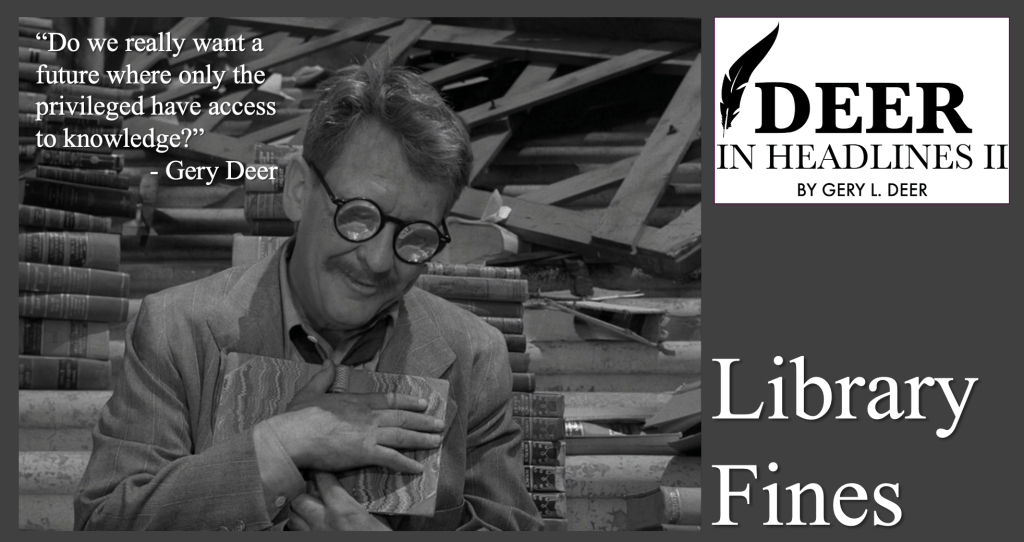
So, before cutting another dollar from public libraries, policymakers should ask themselves: Do they really want a future where only the privileged have access to knowledge? Without funding, that’s exactly where we’re headed.

Good people on both sides of the aisle must speak out against this kind of censorship and ignorance. In Ohio, you can contact your state representative or State Representative Matt Huffman, currently Speaker of the Ohio House of Representatives: email rep78@ohiohouse.gov or call 614-466-6344.

From the New York Times : Say, Old Sport

In Entertainment, Media, Opinion on April 19, 2025 at 6:14 pm

A Fresh Look At “Gatsby.”

Author Headshot

By A.O. Scott

I’m a critic at the Book Review.

“The Great Gatsby,” F. Scott Fitzgerald’s tale of a tragic Long Island millionaire, was published 100 years ago to tepid reviews and disappointing sales. Since then, especially in the decades since World War II, it has become a staple of English classes and a fixture in popular culture. The novel has been memed, mocked, tweaked and reimagined countless times, a multifarious afterlife that I wrote about recently in The Times.

In my article, I explored some of the reasons for this longevity. But I didn’t focus on the most obvious one. In spite of what many critics of the 1920s thought, it’s a good book!

Let me be clear: I don’t mean a Great Book, though “Gatsby” may also be that. We tend to approach literary masterpieces in a spirit of deference and duty. They’re assigned in school or placed on authoritative lists of what we have to read before we die, which can be more off-putting than enticing. “The Great Gatsby” is profound and important, but it’s also all kinds of fun. Here are some of the kinds.

It’s a short, quick read.

At under 200 pages, “Gatsby” can be finished in the course of a rainy afternoon or a long plane ride. There’s a bit of wheel-spinning at the beginning, as our narrator, Nick Carraway, indulges in some philosophizing, but as soon as he mentions Jay Gatsby, whose name arrives in a cloud of mystery, glamour and foreboding, our interest is piqued. And Fitzgerald teases that interest, keeping the title character shrouded in an enigmatic aura until the very end of the book, revealing him — through Nick’s eyes — by means of a series of riddles, glimmerings and sideways glances.

It’s romantic.

Or at least Gatsby himself is. Nick describes him in the opening pages as possessing “some heightened sensitivity to the promises of life.” But modern life — crass, dishonest and materialistic — betrays those promises and destroys Gatsby’s life. Even though he’s a rich man with underworld connections, his motives remain pure. Above all, he’s driven by his love for Daisy, his former sweetheart, now married to the repellent Tom Buchanan. The tension between Gatsby’s noble spirit and the tawdry decadence of his surroundings brings the book to life. If Fitzgerald’s social criticism were less astute, the love story might seem corny; if the romance didn’t sing, the satire would collapse into cynicism.

It’s funny.

The Jazz Age reviewers who liked the book admired it as an acid-etched portrait of the times. Fitzgerald’s eye for hypocrisy and buffoonery and his ear for puffed-up speech remain sharp. Tom Buchanan, whose awfulness has a serious, violent side, is at the same time a brutally comic takedown of a certain kind of know-it-all blowhard, still familiar a century later:

“I read somewhere that the sun’s getting hotter every year,” Tom said genially. “It seems that pretty soon the earth’s going to fall into the sun — or wait a minute — it’s just the opposite — the sun’s getting cooler every year.”

F. Scott Fitzgerald could write.

Almost too well! “Gatsby” often shifts from brisk comedy to swooning lyricism to philosophical rumination within the space of a single page, somehow keeping a steady, conversational, modern tone. Fitzgerald knows when to accelerate the narrative with clipped, telegraphic sentences and when to draw it out in flights of elaborate description. The last sentence (“And so we beat on, boats against the current, borne ceaselessly back into the past”) is justly famous, but it follows a score of others that are at least as evocative, or even more so.

It has so many great characters …

Meyer Wolfsheim, the gangster who fixed the 1919 World Series. Jordan Baker, Nick’s feline sort-of girlfriend. Old Mr. Gatz, who shows up at the end to clear up the mystery of Gatsby (but really to deepen it). And of course the central triangle of Daisy, Tom and Jay.

… and so much to talk about.

There’s a reason English teachers love this book. But even if you only read it in school — or never did — there is endless fodder for discussion and debate, much of it still remarkably current. The state of the American dream, the bedazzling and corrupting power of money, the green light at the end of the dock.

Literacy’s Silver Bullet

In Books, Children and Family, Economy, Education, National News, Opinion, Print Media, Technology, Uncategorized on October 19, 2024 at 10:35 am

Deer In Headlines II

By Gery Deer

I was a staff writer and later an editor for my college newspaper. During that time, I learned the single, most important lesson from all my years of education. Our administration-appointed supervisor once told me, “Whatever else you learn as you go through your college career,” she said, “learn to write and speak well. If you have that, you’ll be able to do anything.” She was right.

My mother also shared those views, though she had a head start by teaching me to read early. On the other hand, I would depend on my communication skills to pave my way to a multi-faceted career. She was determined to give me every possible advantage, mostly because she didn’t get them.

Literacy is one of the most critical indicators of a strong society. It reduces poverty, bigotry, ignorance, and social and professional inequality. It shouldn’t be limited to the academically gifted. Everyone should have the opportunity to learn effective communication.

Just because you don’t have an interest or aptitude for high academia, that doesn’t mean literacy is less important. I feel fortunate that I had the best of both worlds. I’ve always been an avid reader and writer and a lifelong student of all the sciences. But I also learned to rebuild a car engine, install a new water heater in my house, or change a faulty electrical outlet.

Every one of those tasks requires the ability to learn, understand, follow instructions, and cope with the unexpected. All of my “book learning” occurred while surrounded by some of the best tradespeople in the world. Even better, they were all teachers. One thing that has changed over the years is how literacy is emphasized in our public and private schools.

Do you remember when kids used to get in trouble for reading comic books at school? I will say “we” instead of “they” because I did this too. We put comic books inside large textbooks so we could read during class. From the teacher’s perspective, we seemed engrossed in our educational process. Instead, we were engaged in the exploits of Superman, Batman, or Spider-Man.

Some argued that even reading comic books was good for us because at least we were reading. But it was more than that. Comic books are a good literacy metaphor because they aren’t just about words, grammar, and sentence structure.

For our society to consider itself truly literate, we must understand language, not just the written word but communication. We also need to understand art, storytelling, and critical thinking. In an ironic twist, one way to do all that is by reading comic books. Many of the Batman stories from the 1930s and 40s are loaded with material you only find in today’s best crime novels by authors like Michael Connolly, James Patterson, and David Baldacci.

Unfortunately, some use the comic book analogy to justify spending hours on social media. That’s not the same thing. Reading is calming, focuses our minds, and relaxes our bodies. If anything, social media has dumbed us down and created an entire society nearly paralyzed by anxiety and inferiority. Scrolling doesn’t count as reading.

Still, literacy doesn’t require you to wade through “War and Peace,” “Catcher in the Rye,” or any other long-winded literary work. I supplemented my education by reading everything I could get my hands on. Whatever I had an interest in, I had books about it, encyclopedias, or topic-specific material – there was no internet back then. Now, resources are nearly endless, provided you learn the difference between credible and non-credible sources. 

Advanced education isn’t required either. Truth be told, much of what I do for a living was self-taught – thanks to my early introduction to books. Self-education is mainly frowned upon in today’s society. I find it ironic that Benjamin Franklin, Thomas Jefferson, and others who wrote some of the most important documents in history would be unemployable by today’s arbitrary and unfounded standards.

My point is that American culture currently reads at a U.S. 5th-grade level. That’s unfortunate, ridiculous, and easily corrected. We must eliminate the stigmas of functional illiteracy, focus more on reading and writing in our schools, and spend more time with books than cell phones.

Uniquely Portable Magic

In Books, Education, Entertainment, Opinion, Print Media, Technology, Uncategorized on April 7, 2024 at 9:47 am

Deer In Headlines II

By Gery Deer

“Books are uniquely portable magic.”—Stephen King, On Writing: A Memoir of the Craft.

I’ve often quoted classic books in this column for several reasons. For one thing, those brilliant writers of old had wisdom that still eludes me, and I need to borrow it occasionally. 

I also enjoy the opportunity to share my love of books with those of you who are kind enough to give me your attention for a few minutes each week. My hope is that, in addition to my humble observations, I can share some words from those scribes who were (or are) far wiser and more eloquent than me. 

Of course, I don’t just cite the classics. I toss in something fun and modern here and there as well. You may not realize it, but I’ve shared some words from the likes of Douglas Adams, George R.R. Martin, J.K. Rowling, and more. 

I wasn’t a voracious reader when I was young, but that changed as I grew up. In high school, I became interested in Charles Dickens. Later, it was the stories of Mark Twain. From “The Little Red Lighthouse and the Great Gray Bridge” to “Lord of the Flies,” one book led to another. It’s interesting how that happens. Once you’re hooked…

That said, here are my questions of the day: Have books become obsolete in the shadow of the internet and social media? As some try to ban classics like Huckleberry Finn and To Kill A Mockingbird, what has become of literature’s social significance? What does the future hold for the classics and all the unwritten works yet to come? I don’t have the column inches to answer these questions, so here are my brief thoughts. 

In my humble opinion, Stephen King had it right. Books are magical. They transport us to faraway lands, introduce us to people around the globe, and inspire imagination and dreams. But books are far more than mere escapism from our daily grind into the worlds of Harry Potter and Captain Nemo. 

Books are the arks of our history. They help us learn from the past, hold a mirror to the present, and prepare for the future. Every published page offers a tiny glimpse into who we are as a species—warts and all. When you read a book, you have no choice but to learn something. Ignorance is replaced with knowledge and understanding, and then a funny thing happens—people get along better. Books provide the knowledge that breaks down all the barriers that separate us.

Booksellers are struggling, however. In many American communities, there might be a Starbucks or a parking lot where the neighborhood bookstore once stood. Instead of the pages of some great new novel, many people seem far more interested in scrolling through social media.

Although I prefer the printed page for most of my reading, my appreciation for books is more about content than construction. I typically read two or three books simultaneously, each in a different medium—audio, digital, or print. 

A book is a book. Unless you can convince me that words read aloud are less meaningful than those read by eye, listening to an audiobook still counts as reading. You should read however you feel comfortable.

Concerning book bans, I won’t get into the obviously paranoid politics involved. If you don’t like a book, don’t read it. But the concept of book banning should horrify us because it casts a long shadow backlit by terrors of the past. 

Some writers spend decades crafting the perfect book, hoping it will positively impact the reader. No matter your age, the genre, or the medium, reading a book will improve critical thinking and creativity and release dopamine, the brain’s “happy” chemical. 

If you haven’t done so for a while, it’s time to get some of that happiness for yourself or give it to someone else. A book is one of the most meaningful gifts you can give. Libraries and bookstores offer a fun, affordable family experience you will remember forever.

Thankfully, books, even printed ones, aren’t going away anytime soon. But if they were ever to disappear, so would our society, our humanity, and, eventually, the record of our very existence. 

*************

More Information:

Your local library is a great, free resource for the whole family to explore the unlimited world of books!

If you want to learn more about the book industry, the future of printed books and bookstores, check out these documentary films: The Booksellers. And Hello, Bookstore.

Stories, the tapestry of our lives

In Dayton Ohio News, Health, Literature, Opinion, Uncategorized on November 9, 2016 at 9:35 am

By Gery L. Deer

Deer In Headlines
DIH LOGOLong before man learned to put pen to paper, stories kept the history of human kind. Passed down from generation to generation, our stories weave the tapestry of who we are as a people, the perils and the promise, the struggles and successes.

One might think in this modern age of nonstop information, digital data and wearable technology, that we would have abandoned the need for sharing stories verbally. Thankfully, I’ve learned not only that the practice is alive and well, but also takes place often in the most unlikely places.

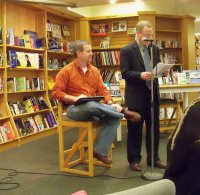
Recently I was privileged to attend a storytelling event hosted by my friend Michael. For more than two decades, he and some of his closest friends have gathered each year to share stories of all kinds.

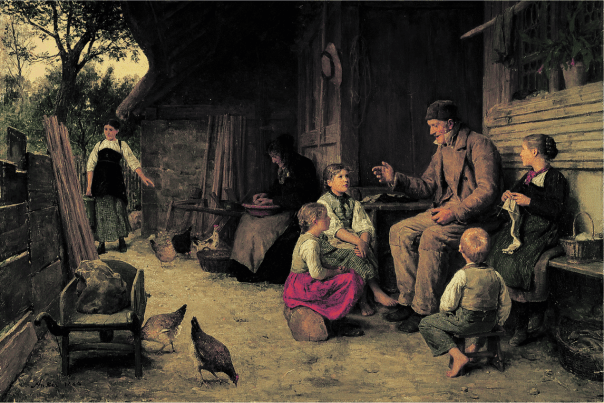
Painting by Albert Anker

Painting by Albert Anker

Everyone brings a snack or beverage to share and gather, goodies in hand, to lose themselves in the tales spun by each reader.  Those chosen to read take, in turn, the “reader’s chair” to share aloud an original story or a piece by a favorite author.

I’ve both hosted and attended author readings before. But I’ve never been to something like this. But there is no formal group or organization involved here. There is no religious or political agenda – something I found beyond refreshing.

The entire evening is focused, not the quality of the writing or the impact of the stories, but the fellowship and common interest of long time friends and new acquaintances. It was the modern day equivalent of a tribe sitting around a campfire.

What I was most impressed by was everyone’s level of attention, respect and admiration for the person in the reader’s chair. This was not something people were compelled to attend. There was no work obligation or social requirement.

And, while some of us who were there are writers, most were not. Add to that such a variety of people who really had only one thing in common – our host. One person whose circle of friends combined for this single purpose, a couple of hours of distance between us and the chaos of the world outside.

The stories chosen were also captivating, not as much because of the tales being told but the teller. Each reader had his or her own, individual style, some more animated, others more calm and quiet. To say it was entertaining would be an understatement.

I guess the point I’m trying to make is that in our “immediate” society, it was really nice to calm down, relax and just be there, in the moment, among friends and new acquaintances.

You know what else? No one was looking at their smart phone or any other kind of screen for a couple of hours! Sure people checked for texts once in a while from the sitter or verified the ringer was off. But, for just a little while, no one was nose-down into a glowing box.

It might sound corny to some people but there’s something great about the disconnection from the outside to connect with the in. That’s saying something since socializing is not my strong suit. I’ve never been that comfortable at social gatherings, always feeling awkward and out of place, but not this time.

Everyone was engaged and welcoming in this setting, with no hidden agendas, no ulterior motives, no business maneuvering. This was just some great people getting together to enjoy an evening of calm, thoughtful writing.

Yes, it’s probably a bit nerdy and may sound pretentious to some people. But, I can assure you it wasn’t. If anything, it gave me a break from the hustle bustle of the week and I got to see my friend Michael in a different environment, something we should all try to do from time to time.

Sharing stories creates our history and weaves our society together and we need to remember that it started with two people communicating with each other – directly, person to person. Try it sometime. You might just find you have more in common with those around you than you may have thought. And thanks again to Michael and his storytellers.


Gery L. Deer is an independent columnist and business writer. Catch the Deer In Headlines podcast at MyGreeneRadio.com.


WOWA’s Beatnik Cafe, “Here Be Dragons,” Jan 16 at Books & Co.

In Books, Children and Family, crafts, Dayton Ohio News, Entertainment, Literature, Local News, Media, State News, Theatre, Uncategorized on January 5, 2015 at 9:50 am

Graphic design by Michael Martin.

Graphic design by Michael Martin.

Beavercreek, OH – Once upon a time, sailors threatened to hang their captains from the yard arm if they ventured beyond a certain point in the sea. Venturing out into the unknown is something about which writers are far too familiar. At 7PM on Friday January 16, authors from the Western Ohio Writers Association will perform their own original tales of uncharted territory at their Winter 2015 Beatnik Cafe event at Books & Co. at The Greene. This quarter’s theme is, “Here be dragons, stories of adventure, exploration and uncharted territory.”

The WOWA Beatnik Cafe reading is a quarterly presentation that pays homage to the hole-in-the-wall poetry clubs of the 1960’s, but with a more modern style. Performing original work, each writer will take the mic to dazzle audiences with short stories, poetry or who knows what. The event is free and open to the public.

Jamestown writer, Barbara Deer, is the co-founder of the organization. “WOWA was intended to provide a regular resource for peer critique, educational programs and networking opportunities to local writers of all genres, both amateur and professional,” she says. “The Beatnik Café offers the public a chance for a glimpse at some of the most talented writers in the region as they showcase their work, in person, to entertain and enlighten.”

“Our group consists of professional and hobbyist writers, all of whom check their egos at the door,” Deer continues. “All are willing to offer help, a fresh eye and, sometimes more importantly, an honest opinion about the quality of the work – good or bad.”

600_376854182Writers come from all around the region – southwest central Ohio, eastern Indiana and northern Kentucky – to attend monthly workshops, critique sessions, educational lectures and write-in events. Meetings are held on the first Thursday of the month at the Event Connections, 4140 Linden Ave. in Dayton, near the intersection of US 35 and Woodman Drive.

About to embark on its seventh year, WOWA members definitely have plenty to celebrate. In addition to the many individual members who have been published on their own, in May of this year eleven of them were featured in an anthology titled, “Flights of Fiction,” produced by GLD Enterprises Commercial Writing and published by Loconeal Publishing (ISBN: 978-0-9885289-4-9). The book features stories set in and around the southwest Ohio region and is available in print and electronic formats from the WOWA website as well as Amazon and BN.com.

The Beatnik Café is a family-friendly presentation of WOWA and GLD Enterprises Communications. Books & Co. is located at 4453 Walnut St. at The Greene in Beavercreek. For more information, go online to http://www.westernohiowriters.org or call (937) 902-4857.

Watch the Video Interview from October’s Beatnik with co-founder Barbara Deer on WDTN-TV2’s Living Dayton

WOWA-LD_MASKS_SCREENSHOT


Improving American language skills: Reading and writing are fundamental

In Books, Children and Family, Education, Literature, Local News, Opinion, Technology, Uncategorized on June 30, 2014 at 3:53 pm

dih-logo-SENext to the United States Constitution, the Declaration of Independence may be the single most important document ever created in the history of America. It established our country’s formal separation from England and set in motion more than two centuries of global influence and an example of how a free republic can succeed.

But what would have happened if the men who founded our country lacked the basic language skills to create that first, all-important document? How would these men have properly and so effectively communicated the displeasure and intent of an entire people without such a firm grasp on the English language, not merely to speak it but to put it down in a document to be revered for centuries to come? In short, they couldn’t have.

On this 238th anniversary of the signing of the Declaration of Independence, we need to remember that it’s author had but two years of formal, college education. In those days, a man wishing to become a lawyer apprenticed under other attorneys, reading the law and learning to interpret and apply it for the good of the people for whom it was put in place. Jefferson eventually became a lawyer but not by obtaining any degree we might understand today.

Likewise, Benjamin Franklin went to school briefly but, because of financial issues, he had to stop to help support his family by going to work with his father. He furthered his own education, however, through reading and self-study, a practice that is, sadly, frowned upon today. Both of these men demonstrated the vast important of language and writing, and how the written word can change history. Some people, though, struggle with language skills or never learn to read at all.

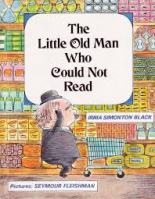
One of my favorite books from childhood was called, “The Little Old Man Who Could Not Read,” by Irma Black. The book chronicles the story of a little, old toy maker who, despite his amazing craftsmanship for pleasing children, never learned to read. One day, his wife went to visit a sick friend and left him alone for what must have been the first time. He was forced to do the grocery shopping on his own, which turned out to be a very frustrating endeavor. Upon arriving home, he sadly discovered that what he thought was a spaghetti box turned out to be wax paper and the can of sauce, coffee instead. It was very disheartening. But it motivated him to learn and he did. The book was written many years before the technology age, but imagine what he would have to deal with today if he couldn’t read at all? It would be nearly debilitating in modern American culture.

little_old_manI have always been a writer, even back into childhood, but most of my language skills came from audio books and those children’s books that came with a 33 rpm record. I found later that I had been dealing with a learning disability that hindered my ability to retain what I had read. Over the years, I adjusted and coped, but was not diagnosed until my mid-30s. Today, I have new ways of dealing with the problem and read as much as I can. I learned to defy my disability because I wanted to read.

There’s no question that Jefferson and Franklin were above-average men, but we all have the ability to move past our limitations, just as Franklin taught himself what he needed to know and just as I worked past my reading issues. For those who want to improve their language skills across the board, here are a few tips and they work for pretty much all ages.

First, try to write as much by hand as possible. Using paper and pen will slow you down a bit and force you to think before you write. People were better writers in the old days because it took time to get thought to page. Today, technology has us whizzing through sentences without a thought to grammar and word usage.

Next, although it’s fallen out of favor with the public school set, use cursive writing as much as you can. As with the first point, handwriting something makes you think and use the right language. It even gives you the chance to look up a word before you use it.

Try to learn a new word every day. Vocabulary is the key to better language skills. Take the time to look up words you hear throughout your normal day. But if you don’t hear any that grab your attention, pick up a hard-bound dictionary, open it up, close your eyes, and point to a word on the page.  That’s your word for the day. One of those “word of the day” desk calendars is a great resource too. Of course, you need to put the word into use whenever possible to make it stick.

Read, read, read, read. And, did I mention, read? Newspapers, well-written blogs, congressional briefs, comic books, it doesn’t matter what you read, just make sure you read a lot. If you’re trying to improve your language skills, however, the more advanced the reading the better. It’s ok if it takes time, look up words you don’t know and charge ahead.

Finally, don’t write like you text. In fact, don’t text how you text, either. The wave of “texting shorthand” is maddening to those of us with good grammar and language skills. Use full words and sentences – even in texts. It’ll make a big difference in how you communicate in email and in other written documents as well. Take your time and say it right.

So this Fourth of July weekend, go out and enjoy the picnics and fireworks.  But remember, when you hear the words to the national anthem or the preamble to the constitution, think about the meaning of each word and be grateful that those guys were diligent enough to get every one of them right. Our very freedom depended on it.

Blue Jacket Books Hosts WOWA Beatnik Café Author Reading

In Business, Children and Family, Education, Entertainment, Local News, Media, psychology, Uncategorized on August 3, 2012 at 5:25 am

WOWA writers Michael Martin (left) and Gery Deer at the 2010 Beatnik Cafe. Both will be reading at the upcoming event.

XENIA, OH – On Friday, August 3rd, local authors of the Western Ohio Writers Association (WOWA) will present a live reading of short stories and poetry at Blue Jacket Books, 60 S. Detroit St. in Xenia. Known as Beatnik Café, the relaxed, informal format of the evening pays homage to the hole-in-the-wall poetry cafes of the 1960’s in a more contemporary style. An author reception will begin at 6 pm and the live readings will run from 7 pm until 9 pm. The event is free and open to the public and coincides with Xenia’s First Friday activities.

The Beatnik Café is presented three times a year by members of the Western Ohio Writers Association, a resource group that provides support, education and professional assistance for writers in southwest central Ohio, eastern Indiana and northern Kentucky.

Writers in a variety of genres attend monthly WOWA critique and educational meetings where they can hone their skills and have their work reviewed by fellow scribes. Gery L. Deer of Jamestown is the founder and coordinator of the organization.

“Outside of a college class or expensive writers’ conferences, there was no consistent support available in our area,” Deer said. “We started the WOWA to provide critique and networking opportunities to local writers of all genres, both amateur and professional.”

Deer is a professional freelance commercial writer and editorial columnist. While making a move from periodical content to longer, creative manuscripts he found that networking with other writers might help him with the change in writing styles but opportunities were limited.

“The public readings give people the opportunity to hear from some of the most talented writers in the Midwest,” Deer continued. “We invite everyone to come out and meet our writers and enjoy the atmosphere provided at Blue Jacket Books.  It’s an ideal place to hang out, read and enjoy the work of our writers.”

The Western Ohio Writers Association events are sponsored by GLD Enterprises Commercial Writing concierge business writing services. For more information, go online to http://www.theconciergecopywriter.com and click on the WOWA logo in the upper right corner, or email gdeer@gldenterprises.net. The Beatnik Café and the WOWA are trademarks of GLD Enterprises Commercial Writing.