Local News & Commentary Since 1890.

Posts Tagged ‘Deer In Headlines’

Uniquely Portable Magic

In Books, Education, Entertainment, Opinion, Print Media, Technology, Uncategorized on April 7, 2024 at 9:47 am

Deer In Headlines II

By Gery Deer

“Books are uniquely portable magic.”—Stephen King, On Writing: A Memoir of the Craft.

I’ve often quoted classic books in this column for several reasons. For one thing, those brilliant writers of old had wisdom that still eludes me, and I need to borrow it occasionally. 

I also enjoy the opportunity to share my love of books with those of you who are kind enough to give me your attention for a few minutes each week. My hope is that, in addition to my humble observations, I can share some words from those scribes who were (or are) far wiser and more eloquent than me. 

Of course, I don’t just cite the classics. I toss in something fun and modern here and there as well. You may not realize it, but I’ve shared some words from the likes of Douglas Adams, George R.R. Martin, J.K. Rowling, and more. 

I wasn’t a voracious reader when I was young, but that changed as I grew up. In high school, I became interested in Charles Dickens. Later, it was the stories of Mark Twain. From “The Little Red Lighthouse and the Great Gray Bridge” to “Lord of the Flies,” one book led to another. It’s interesting how that happens. Once you’re hooked…

That said, here are my questions of the day: Have books become obsolete in the shadow of the internet and social media? As some try to ban classics like Huckleberry Finn and To Kill A Mockingbird, what has become of literature’s social significance? What does the future hold for the classics and all the unwritten works yet to come? I don’t have the column inches to answer these questions, so here are my brief thoughts. 

In my humble opinion, Stephen King had it right. Books are magical. They transport us to faraway lands, introduce us to people around the globe, and inspire imagination and dreams. But books are far more than mere escapism from our daily grind into the worlds of Harry Potter and Captain Nemo. 

Books are the arks of our history. They help us learn from the past, hold a mirror to the present, and prepare for the future. Every published page offers a tiny glimpse into who we are as a species—warts and all. When you read a book, you have no choice but to learn something. Ignorance is replaced with knowledge and understanding, and then a funny thing happens—people get along better. Books provide the knowledge that breaks down all the barriers that separate us.

Booksellers are struggling, however. In many American communities, there might be a Starbucks or a parking lot where the neighborhood bookstore once stood. Instead of the pages of some great new novel, many people seem far more interested in scrolling through social media.

Although I prefer the printed page for most of my reading, my appreciation for books is more about content than construction. I typically read two or three books simultaneously, each in a different medium—audio, digital, or print. 

A book is a book. Unless you can convince me that words read aloud are less meaningful than those read by eye, listening to an audiobook still counts as reading. You should read however you feel comfortable.

Concerning book bans, I won’t get into the obviously paranoid politics involved. If you don’t like a book, don’t read it. But the concept of book banning should horrify us because it casts a long shadow backlit by terrors of the past. 

Some writers spend decades crafting the perfect book, hoping it will positively impact the reader. No matter your age, the genre, or the medium, reading a book will improve critical thinking and creativity and release dopamine, the brain’s “happy” chemical. 

If you haven’t done so for a while, it’s time to get some of that happiness for yourself or give it to someone else. A book is one of the most meaningful gifts you can give. Libraries and bookstores offer a fun, affordable family experience you will remember forever.

Thankfully, books, even printed ones, aren’t going away anytime soon. But if they were ever to disappear, so would our society, our humanity, and, eventually, the record of our very existence. 

*************

More Information:

Your local library is a great, free resource for the whole family to explore the unlimited world of books!

If you want to learn more about the book industry, the future of printed books and bookstores, check out these documentary films: The Booksellers. And Hello, Bookstore.

Drive-In Movie Memories

In Entertainment, Movies, Opinion, sociology, Theatre, Uncategorized on March 24, 2024 at 10:13 pm

Deer In Headlines II

By Gery Deer

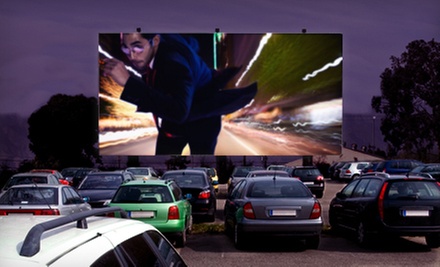
One warm summer evening when I was about 20, I wheeled my 1971 Mustang through the neon-washed gates of the Belmont Auto Drive-In Theater just outside Beavercreek, Ohio. I found the ideal spot and parked. The massive screen filled my windshield.

A few minutes later, an announcement over the speakers says, “Fifteen minutes! Fifteen minutes to show time!” Perfect! I had just enough time to grab a hot dog – I counted what cash remained in my wallet. It didn’t matter, though. They had me at “fresh, hot, buttery popcorn!”

That night, the marquee read, “Double Feature” (Then again, it was always a double feature.) “Star Trek IV: The Voyage Home and Crocodile Dundee.” If memory serves, the price was $5 per car, and I was ready. Drive-ins had been converted to broadcast the movie sound over the radio. So, I outfitted my old Mustang with a stereo amplifier and mounted speakers so you could best hear them outside the car. I tuned in the frequency, adjusted the volume, hopped on the hood with my snacks, and settled in for a great evening’s entertainment under the stars.

I loved drive-ins and still do. There’s something about the atmosphere that is pure Americana. As I’m thinking about it now, I can almost hear the overdriven buzz of those heavy, window-hanging speakers, the dancing refreshments up on the screen at intermission. The drive-in was one of my first solo outings at 16 when I got my driver’s license.

My first memory of going to a drive-in was with my parents in 1974. I was about seven years old, and we went to the Skyborn Drive-In in Fairborn, Ohio, where the original “Benji” movie was showing. I was so enamored with them that, for a short time, I considered owning a drive-in theater, but not your usual run-of-the-mill version.

I had this wacky idea about a massive drive-in theatre and even made concept drawings of it. It featured an unusually large, high-resolution curved screen, Dolby stereo, wireless speakers, and a two-story concessions building with a restaurant on the second floor. It featured a video game arcade, a merchandise shop, supervised playrooms for the kids, a bar for the adults, and more. Plus, it was much larger and could hold more than 400 cars.

Of course, I never made it happen, but it was a cool dream. I’m afraid that in the summer of the late 80s, my concept was way ahead of the required technology. Besides that, even in those days, drive-ins started to disappear.

Most of the Dayton-area drive-in theaters I visited back then are long since gone. If you’re local, you might remember some of them. There was the North Xenia Drive-In, Southland 75, Valley Street Drive-In, Dayton West Drive-In, and many others.

In north Dayton, the Dixie Twin first lit its screens in the early 1950s, and its projectors are still running today. The Melody 49, just off I-70 near Trotwood, is alive and well and shows first-run flicks on two screens. You can find others with a quick Google search. Depending on the travel, you might need to make a night of it if you plan to go.

As many surviving drive-ins faced closer, a strange twist of fate intervened. The very disaster that shuttered businesses worldwide may have been the savior of the drive-ins, at least temporarily. The COVID-19 pandemic gave many drive-ins a surge in business. Families could watch a drive-in movie, maintain social distancing, and enjoy an evening out.

Sadly, box office numbers have slumped since the pandemic, and drive-ins are still trying to bring people back in the gates. People need to be reminded that nearly all drive-in theaters are privately owned small businesses. They’re not million-dollar multiplexes. Most are run as a labor of love with volunteer staff, and most take in barely enough revenue to keep the projector bulbs burning. 

For some, drive-ins are a long-held tradition. To others, they represent an era long past. But whatever the attraction, grab your lawn chairs, blankets, and portable radios (to keep from running down your car battery), and head to the closest drive-in. For now, I have to go. Tonight’s feature is about to start.

Recommended Documentaries about Drive-In Theatres:

Socially Unacceptable News

In Local News, National News, News Media, Opinion, Uncategorized on March 17, 2024 at 9:33 pm

Deer In Headlines II

By Gery Deer

According to recent surveys, nearly 80 percent of Americans have at least one social media account, and the total number of global users is nearly 5 billion worldwide. I happen to be one of the masses. I use it to promote my work and stay in touch with family, friends, and clients. But social media as a news source? I’m afraid not. Unfortunately, Pew Research reports that 6 of every 10 Americans rely on social media as their main resource for news. As a veteran freelance journalist, that’s an unsettling statistic.

I guess it wouldn’t be so bad if people followed qualified news sources, but that’s the exception rather than the rule. Most simply accept everything posted on social media as fact or truth (not the same things and more on that later). What’s worse, a great deal of that junk is created by “bots,” automated programs designed to post incendiary content and drive online traffic. 

Facebook, Instagram, TikTok, and Twitter, or “X,” or whatever it’s called now, are not, I repeat, not news outlets. The most accurate way to describe social media is to compare it to the bulletin board at your local grocery. Anyone can post anything, unmoderated and unvetted. You, the consumer, can choose whether to look and believe what you see.

I understand that nowadays there is a growing tendency for Americans to mistrust news media. It’s even more prevalent among those belonging to extremist groups. Unfortunately, both the far right and the far left are not interested in objective facts. Their sole purpose is to twist and manipulate information to achieve one goal – chaos. They have no interest in journalistic integrity anyway.

I intentionally use the word “facts” instead of “truth” since the concept of truth is entirely subjective, and you shouldn’t find it in the evening news. To paraphrase Indiana Jones, if you’re interested in truth, take a philosophy class. Our news media should present accurate and objective reports, with no subjective notions of truth. 

Speaking of facts, how about those headlines? Headlines shouldentice you with a piece of the story. After all, the whole idea is to get you to read. But extreme and fake news producers create misleading, AI-driven headlines. Algorithms determine what words are more likely to lead readers down an endless and manipulative rabbit hole of advertisements and more deceptive content.

Here’s a great example. Everyone loves Betty White. As so many of her contemporaries passed on, fans hoped she’d live to 100. Sadly, that wasn’t her fate. But a couple of years before she died, there was a headlined story going around social media that read, “Betty White dyes at home.” Do you see anything wrong with that headline? If you don’t, you need a vocabulary lesson, not a philosophy class.

The headline was written to trick gullible fans into clicking on the tragic tale of their beloved Betty’s passing. Eventually, they would realize it was a fake story about White “dying” her hair, at home. By then it was too late. Duped readers were bombarded with unstoppable pop-up ads and the website made a fortune from the pay-per-click fees they were charging advertisers. 

Once again, the story wasn’t posted by any legitimate news agency, but it was well camouflaged. Yes, people should know the difference between the words, “dyes” and “dies,” but even the best proofreader may have missed that if they happened to be Betty White’s biggest fan. Fake and misleading news only gets traction because people share it, and the next story might not be a harmless joke.

You don’t need to fear social media but remember the bulletin board analogy. These platforms can be effective marketing tools. They can help friends and families stay in touch or offer an outlet for creative expression. But every day, social media is also being used to manipulate more people, disseminate misinformation, and spread hate, aggression, ignorance, and fear.

My advice is simple. Get your news from legitimate outlets – like this publication. Ultimately, you have the choice of whetherto believe what you see. Although social media may offer you a road sign on the information superhighway, you are still the onestill steering the car.

Our Parents, Ourselves

In Children and Family, Opinion, psychology, Uncategorized on March 1, 2024 at 12:53 pm

Deer In Headlines II
By Gery Deer

They came to the open houses and sat in the freezing cold at Friday night football, watching me high step across the field with the marching band. They scrounged the money for chemistry lab fees and ensured I had a ride to my 4-H meetings. Somehow, no matter how difficult things might have been for them, Mom and Dad were always there for us.

My mother was a force of nature, a five-foot-four powerhouse of the gentlest nature imaginable. She was creative, brilliant, strong, and vulnerable but never mean or judgmental, even if she was mad at you. And if she was mad, you didn’t have to guess.

Gery’s parents, Lois and Gary Sr., around 1996.

Dad was a whole different story. He was resourceful, smart, and could do anything with a truck or tractor. On the outside, he was confident and controlled. But inside, he was conflicted. They’d been together since high school, and he was thoroughly dependent on my mother for his sense of self and family. As Alzheimer’s took her from us, I watched him slip away, too.

Although we had a good relationship, growing up with my parents wasn’t always easy. Raising good parents never is (as my brother likes to say). Sometimes, it was their job to tell me I was wrong, and they never held back. The resistance they met was inborn, however. Generations of stubbornness wound through my genes like a snake through tree branches. We argued, I stomped off, grousing like a teenager does, and then it was forgotten – usually. The irritating part was that most of the time, they were right.

Gery with his brother, Gary Jr. (left) in 1997.

If you have siblings, each experiences the parent in a slightly different light. My brother, 15 years my senior, constantly reminds me of how tough he had it from our father. Dad was strict with him, almost to a suffocating level. Our dad’s mother died when he was just three, and our grandfather left. Since he was raised largely in poverty by an aunt and grandmother, his upbringing was remarkably different from how he raised us. My guess is that he maintained tight control over his firstborn out of fear and inexperience.

As for me, because of our age differences, Dad held more of a grandfatherly position, and my brother did most of the fatherly stuff. He taught me what I needed to be independent and helped ensure Dad didn’t overprotect me. I think it all worked out for the best, even if my brother is still a little bitter. Clearly, even a sibling can take a parental position when there is such a perceived generational difference.

But regardless of the relationship, I think most of us have a singular and somewhat distorted image of our parents. Whether our relationship with them was close, distant, tumultuous, or nonexistent, I believe we can forget that our parents are just people. Like you and me, they have flaws, failings, dreams, regrets, all of it. But we likely still see them only through one kind of lens. What’s worse is that the incomplete picture can become more distorted as they age.

My siblings and I were there as my parents aged became ill, and finally passed away. As I helped to care for them, I learned much more about who they were along the way. Growing up, I never imagined I’d have to take on all you do for your elderly parents. Showers, medical care, managing the finances; there can be so much you never expected. The experience was simultaneously rewarding and painful. We also grow more protective of them as they get older.

But we must keep in mind that, barring dementia or some other kind of mental illness, they’re still the kings and queens of their castles. If they’re dealing with health issues, mobility, whatever, we can and should help and let them be who they are, even if, as adults, we still don’t understand it.

Parents also need to realize that such a myopic view of the individual can go both ways. Our kids are more than we see, just as we are to them. In the end, we are all just trying to take care of each other as best we know how.

The Coffee Shop Roundtable

In Opinion, psychology, Senior Lifestyle, sociology, Uncategorized on February 24, 2024 at 8:19 am

Deer In Headlines II

By Gery Deer

The other day, I was sitting in a coffee shop when I overheard a conversation between four senior gentlemen at the nearby table. Based on their appearance, I guessed they were in their late 70s, active and clear-minded. The cold Ohio winter had them dressed appropriately in jeans, heavy walking shoes, sweaters, down jackets, and winter caps. These men obviously knew each other quite well and shared common interests.

It was not my intention to eavesdrop, but they were talking loudly enough you could pick up their voices from well across the shop. Anyone could see this meeting was a crucial part of their social life. One of them even mentioned how much he enjoyed getting together regularly and noted how much he learned from the others.

In fact, they all seemed to relish the conversation, which covered a wide range of topics from sports to live theater. I found a brief interaction they had about The Phantom of the Opera of particular interest. While some topics, like the state of American politics, sparked more spirited discussion, they remained respectful and considerate towards one another.

The Algonquin Roundtable

At one point, one of them told a detailed story about how he’d been working on the roof of his home. Suddenly, he found himself stranded up there because his ladder had fallen. He called out for his wife, but she apparently didn’t hear, which left him there for some time. Fortunately, all worked out for the best, and through the laughter, his comrades were giving him a good bit of grief about fooling around on a roof “at his age.” I imagined their adult children giving each of them the same speech in a more serious tone, only to be ignored later.

We occupied one corner of the shop for about an hour, though I believe my subjects had been there for a while before I arrived. They’ll never know it, but they gave me back a moment from my childhood.

When I was around 10, Dad occasionally took me for breakfast at the small diner where my mother waitressed (her word). Early each morning, a group of movers and shakers from our tiny farm town arrived, one at a time, and occupied the same corner booth. 

The pack was usually a mix. Among them, you might find some combination of the local banker, a town doctor, the police chief, the undertaker, the barber, or even the mayor. As they drained one pot of Joe after another, they discussed whatever came up, solved all the world’s problems, and, of course, kept those solutions to themselves. If only they’d just told someone how to do it. It was like the small-town equivalent of the Algonquin Roundtable.

That gathering was far more than social, and the booth’s occupants probably weren’t as ancient as they would have appeared to me when I was a boy. But this was a staple for all of them, a necessary gathering of the minds that continued until each of them was too elderly or infirm to attend.

These days, you might see a mix of people, men, and women, even varying ages, who do the same thing – a regular gathering with no other purpose but to share stories, discuss world affairs, or just complain about the weather. Whatever it is, it’s good for the psyche – and your overall health.

There are countless studies on the benefits of socialization as we get older. Strangely enough, many seniors, either due to depression, their living situation, or choice, often prefer isolation. My parents weren’t big socializers, though my mom enjoyed family parties and time with her siblings. Dad, not so much. Their “roundtable” consisted simply of family and a few close friends. I’d say I’m more like Dad, though I hope a little less self-isolating. I’ve never been particularly comfortable in social situations.

However, I have managed to learn how to deal with my own social anxiety. I think I’m better at socializing than I used to be. As a child, I wouldn’t have understood the importance and value of the coffee shop roundtable to those who were there. But as I rocket towards 60, I’m starting to understand and appreciate the importance and necessity of those connections.

Remember, it’s just a game.

In Children and Family, Opinion, sociology, Sports News, Uncategorized on February 24, 2024 at 7:52 am

Deer In Headlines II

By Gery Deer

I’m not much of a sports fan, nor was I ever a competitive athlete in school. I did, however, spend two horrific summers in Little League baseball. I’m still trying to figure out whose bright idea that was because it certainly wasn’t mine. I was, instead, a band nerd. I weathered four years in the freezing cold at Friday night football, cursing every touchdown as I peeled my frozen saxophone reed from my lip before honking out the school fight song.

That said, there is no irony lost in that I ended up a hockey parent. My stepson played from a young age through college and into the minor league pros. In hockey, I always expect a good knock-down-drag-out. What’s the old saying? “I went to a fight, and a hockey game broke out.” Usually, the uproar was confined to the ice.

But when some of the parents got nasty, wow, look out. They can get pretty fired up regardless of the sport. They shout at the kids, the other parents, the officials, everyone. Sometimes, things come to fisticuffs, and that usually involves the cops. Although some of the altercations are between parents and other bystanders, most of that very public anger and frustration is directed at the coaches and officials – and it’s worsening. 

A recent story by USA Today reported the results of a survey by the National Association of Sports Officials (NASO). It showed that 69 percent of men and women from every level of sports said the issue of poor sportsmanship is getting worse. More than 50 percent of them said they have often felt unsafe just doing the job.

As if it’s not hard enough to get people to volunteer for things, I’m told that recruiting officiators for youth sports has become more difficult for this very reason. One man even shared that he was once followed to his car by a parent after a night game and threatened in the parking lot.

In the last decade, confrontations between spectators and officials have become increasingly threatening and violent. In October of 2023, Shaquille Latimore of St. Louis, a coach of 9 and 10-year-olds in youth football, was shot four times by a parent who was angry about his son’s playing time.

As it turns out, some parents see coaches and officials as obstacles to their kids’ athletic careers. Often, parents will make every effort to remove them from that path of high achievement, even if that means violence. Fortunately, Coach Latimore survived. But, seriously, people?

Some of you probably think your kid will be the next superstar, and you don’t want anything to get in their way. But we shouldn’t need police as additional referees on the sidelines, so what gives?

Even if the parents aren’t overtly violent or threatening the safety of the officials, they often still feel the need (or entitlement) to inject themselves into the game. We’ve all had to contend with that obnoxious parent constantly shouting at the players, coaches, and referees. It’s unnerving, and don’t get me started about the poor example it is to the kids.

Most of us want the best for our children regardless of their chosen path. But some parents are just over the top. Fortunately, my stepson finished college, played for the pros for several years, and recently retired from hockey. He does some coaching now, so he must deal with all kinds of parents – the good, the bad, and the ugly.

I can’t imagine how things have deteriorated since I was up there watching his games, so I’m glad to be out of that environment. But, if you’re still hip-deep, here’s what I suggest to improve the experience for yourself and the kids.

Listen (or rather, read) very closely. This is the best advice I can give you. Sit down and shut up. You read that right. Ignore the angry loudmouth across the bleachers, mind your business, and focus on your child’s game. And please, for the love of Mike, let the officials do their jobs, stop swearing at them, and stay out of it. After all (and I realize some of you won’t like hearing this, but) … it’s just a game.

New Year’s Convolutions

In Dayton Ohio News, Local News, News Media, Opinion, psychology, Uncategorized on January 14, 2024 at 5:44 pm

Deer In Headlines II

By Gery Deer

Well, it’s New Year’s Day, and you’ve partied like it was 1999, which, as it turned out, wasn’t all that much to party about. You’ve shaken your booty, danced the night away, and watched a sickeningly expensive party favor lowered in ritual celebration.

Then, after the plop, plop, fizz, fizz, you’re ready to face the world. You’ll step up to new challenges, take on the gym and the boardroom, boldly go where … okay, you know the rest of it. Wait a minute, though. Why now? Where’s all this motivation coming from? Why didn’t you have it last year, which was like, you know, yesterday?

Well, unfortunately, many people misguidedly see the new year as the promise of a clean slate, a fresh start, or a time to take on new challenges. In the first couple of months, gym memberships go up, cigarette sales drop, healthier food will fill grocery carts, and a great many engagement rings will need to be resized. Sadly, much of this activity is the result of a convoluted, all-powerful, and yet pointless New Year’s resolution.

According to one study I read, more than 35 percent of adults set New Year’s resolutions, with a surprising majority on the young side, between 18 and 34. As you might imagine, of the list of most common resolutions, health-related choices hold the top 3 spots, with increased exercise as number one.

In most of the research I found, saving more money was one of the lead resolutions. That struck me as contradictory because to achieve many of the others, you generally spend more than you would have in the first place. For instance, gym memberships, travel, starting a new business, healthier eating (the high cost of which makes no sense to me), and even quitting your job require more money.

If you’re interested in demographics, women mostly want to engage in health-related change for themselves. At the same time, men focus more on achieving career ambitions and laying off the booze. Good goals, for sure. Unfortunately, things tend to… dry out, if you’ll excuse the pun.

As it turns out, only about 9 percent of resolutioners stay with it beyond the second year. Nearly 25 percent quit after the first week. That number increases to almost 65 percent by the end of the first month. Oddly, most people quit on the second Friday of that month, and it even has a name. The makers of Strava, a popular activity-tracking app among runners and cyclists, discovered that its use plummets on that day, so they named it, “Quitters Day.”

Seems pretty hopeless, doesn’t it? I mean, why bother trying to improve yourself if you know the statistics are totally against you, right? Well, it wouldn’t be Deer In Headlines without some sage, if not potentially useless, advice from me. So, here goes.

First, forget the New Year’s resolution nonsense. It’s a recipe for failure. Start by identifying small, attainable, and measurable goals that build to the big one. For example, if you want to lose weight, set a realistic goal and, in my opinion, don’t put a clock on it. Create a plan that includes smaller food portions and steps down sweets and high-fat food. But don’t go cold turkey and build in regular exercise – slowly.

The same goes for career moves, financial success, or anything else. Remember, you’re trying to make life changes that will stick, and that takes time and commitment. Yes, it’s really hard sometimes, and we are our own worst enemies. It’s okay to be scared. But be kind to yourself, especially if your progress feels slow. Don’t give up and adjust where needed.

Incidentally, I know you want support from family and friends. But, trust me, share what you’re doing only with the closest few. For all the pats on the back, there are just as many slaps in the face – especially on social media. Personal accountability may be difficult, but it results in the longest-lasting success.

Finally, ignore the resolution hype, give yourself a chance, and do the work. I promise that the challenge and results are worth it. Focus, plan, commit, get plenty of sleep, and have a safe and happy new year.

Food allergies are no yolk!

In Children and Family, Food, Health, Opinion, sociology, Uncategorized on January 7, 2024 at 12:46 pm

Deer In Headlines II

By Gery Deer

“Then the Whos, young and old, would sit down to a feast. And they’d feast! And they’d feast! And they’d FEAST! FEAST! FEAST! FEAST! They would feast on Who-pudding, and rare Who-roast beast.” – Dr. Seuss’s “How the Grinch Stole Christmas”

Admit it. You just read that in Boris Karloff’s voice, didn’t you? But what if you’re the one Who, for whom a feast could be a culinary minefield? What if you’re the Who who’s allergic to the Who-pudding and rare Who-roast beast?

If you’re like me and the other 26 million Americans who suffer from food allergies, holiday buffets can be a dangerous foray into the unknown. Food allergies might be lampooned on your favorite sitcom, but there’s nothing funny about them. It’s true that most result in mild skin irritation or digestive discomfort, but many are life-threatening.

Within seconds, an exposed victim can experience severe swelling of the throat and larynx, constricting their airway, and even suffer anaphylactic shock. In these situations, quick medical attention is vital.

Whether you’re a member of the allergy club or not, it’s probably a good idea to learn about food allergy causes, symptoms, and first aid. Some of the most common foods people are allergic to include cow’s milk, eggs, fish, shellfish, tree nuts, peanuts, strawberries, wheat, soybeans, and sesame. These are certainly not the only ones, and you might not even know you’re allergic to anything until it hits you.

Just because you weren’t allergic to something as a kid doesn’t mean you won’t be as a grownup. For about half of food allergy sufferers, the affliction didn’t develop until adulthood. I only recently discovered my own allergy to kiwi fruit and cantaloupe. For years, I thought cantaloupe was supposed to burn the inside of your mouth. You know, like a spice or something? Idiot.

Processed food contains a plethora of dangerous ingredients, and most allergens are printed on pre-packaged food labels. Unfortunately, depending on the amount, some ingredients might not be listed. For example, it’s still common for some labels to omit sesame among potential allergens. A Google search might show detailed ingredient lists or allergy warnings for specific products. Otherwise, steer clear altogether.

If you or someone in your family suffers from food allergies, I can offer a few tips to help navigate the holidays, and the first one is a no-brainer. Since many holiday gatherings are potlucks, you can bring your own safe food and avoid everything else. Or you could host the event yourself for peace of mind. If you do host, label the dishes, and maybe, if you want to be an allergy-safe superhero, provide a full list of ingredients.

For children, carry safe food, or see to their plate for them. Kids also seem especially sensitive to nuts, and holiday goodies are full of them, so keep an eye out. To avoid cross-contamination, use disposable utensils to serve yourself or carry your own flatware. Trust me, it’s worth the trouble.

Incidentally, some people are quite sensitive about publicly outing their allergies. For instance, I am allergic to eggs. But I’d rather not discuss it because I feel like a freak. If it comes up, I get bombarded with questions like, “Can you have cookies? Bread? Pancakes? What do you eat for breakfast?” And on and on. People just can’t leave it alone.

I understand they’re curious and trying to be helpful. But the nature of the allergy can be difficult to explain (although I really shouldn’t have to), and it doesn’t affect anyone but me. I never ask hosts to alter their menu or anything they’ve planned. I simply avoid those foods that might be dangerous or questionable.

For the food-allergic out there or their caregivers, you might want to ask your primary care physician if you should carry a preloaded epinephrine injector (otherwise known as an “EpiPen”). If your allergic reaction were to cause respiratory distress, it might be a good idea to be prepared. A food sensitivity test might also help.

Food allergies don’t have to wreck the halls – or any other occasion. All you need is a little preplanning so that no one turns as green as the Grinch after a helping of your famous Who hash.

Deer in … headlights.

In Business, Health, Local News, Opinion, State News, Uncategorized on December 29, 2023 at 9:10 am

Deer In Headlines II

By Gery Deer

A few weeks ago, I was driving along minding my own business when a deer decided it would be a great time to remodel the front end of my pickup truck. It was dark but I was neither sleepy nor distracted yet saw nothing in advance of the collision. The animal seemed to come from out of nowhere. There was a loud, metallic bang, a hard shudder, and the hood of my truck popped straight up in front of the windshield.

Fortunately, I could see well enough around the hood to get the vehicle to the side of the road. Once I stopped and the dust had settled, the first words that entered my mind were, “So that happened.”

I called 911 to report the accident, and no irony was lost on either me or the dispatcher about a guy named Deer hitting a deer. Not to worry, she was great and sent an officer right away. If you have followed my column, you know this was certainly not my first traffic accident, nor was it the most serious. It was, however, my second deer strike in about four years. Enough, already. I’ve met my quota now, right?

Here’s a photo of Gery’s Ford F-150 truck from this article. It was totaled.

I think I was most upset because I had recently paid off the loan on the truck and, just that morning, even ordered new tires. Ever the optimist, I remember I laughed out loud and said to nobody, “Well, at least I don’t have to buy the tires now.” Like they say, onward and upward, right?

Hitting a deer on an Ohio roadway is almost a rite of passage. I’m surprised our driver’s education classes don’t include a section detailing what to do after a deer strike. I can hear it now, in the best 1970s filmstrip narrator’s voice. “After you have hit the animal, get out to see if it’s still alive. Oh, it’s a six-pointer! Be careful. Those antlers are sharp!” Then, it would go on to tell you to call the police and decide what to do with the carcass.

Here in the Buckeye state, if you hit a deer with your car, you’re entitled to keep it. What you do with it after that is entirely up to you. The first time it happened to me, the responding police officer asked if I wanted the carcass, and I said no. Then she said, “Well, you’ll need to decide which of the guys arguing over it gets to take it home.” Seriously? I told her to flip a coin. In hindsight, I should have sold it to one of them. After all, I was out a truck, and they got free venison.

Between hunters flushing them out of the woods into the road and people feeding them on the back porch, deer strikes are becoming more problematic every year. I read an Ohio highway statistic that vehicles had hit more than 13,000 deer in 2022. I can believe that. The day the body shop picked up my truck, the flatbed driver told me he’d hauled four other deer-damaged vehicles just that afternoon. With an overall deer population in the state just under 800,000, I’m surprised the accident tally is so low.

What can you do to avoid hitting a deer? Unfortunately, there’s no easy answer. The problem with deer is that they’re jittery, indecisive, and never travel alone. Trying to outguess them will get you hurt or worse.

The best things you can do are buckle up, drive with your bright beams on in rural or wooded areas, and always remember when you see one, there are always others. By the way, those deer whistles that you stick to the grill don’t work — a siren, maybe, but not those.

Above all, avoid distractions while driving, especially at night. No text, call, or cigarette is that important. Put that stuff down and pay attention to the road. Trust me, it takes only an instant for everything to change.

Although my truck was totaled, it was at least large enough to protect me. I have seen deer go up the hood and crash through the windshield, seriously injuring the driver and passengers. So, please watch out for those… deer in headlights.

Publication Notices: Deer In Headlines and Deer In Headlines II are media properties of Gery L. Deer and GLD Enterprises Communications, Ltd., who is also the copyright holder. The product is distributed via The Jamestown Comet.com (A property of GLD Communications), and by Green County Newspapers / The Xenia Daily Gazette by special permission.

It’s OK not to drink

In Education, Health, Holiday, Media, Opinion, Uncategorized on December 22, 2023 at 6:30 am


dih-logo-SE

DEER IN HEADLINES

Special Extended Edition

BY GERY L. DEER

(Author’s Note: The following is an edited repost of an article originally published December 30, 2013)

I have never hidden the fact that I don’t drink alcohol. When I say that, I mean that I really don’t. When some people say it, what they are implying is that they don’t drink hard liquor, or they only have a beer at a baseball game or something. But trust me when I say, I don’t drink. Period. I just wanted to make that absolutely clear so what follows carries the proper weight.

An alumnus of one of the oldest national college fraternities – Sigma Phi Epsilon – I’ve never had an alcoholic beverage of any kind – nothing. I didn’t steer clear of the bubbly because of some religious or deep, philosophical reason. It just wasn’t part of my experience growing up and, fortunately, I never developed the interest.

To be quite honest, at this stage in my life, the very smell of the stuff, particularly beer, makes me kind of sick. That said, drinking is a big part of adult social and business functions and thus, alcohol-focused events are hard to avoid. I am well know how hard it can be to resist pressure from others. But, for those who are trying to steer clear of the juice, please try to remember that it’s OK NOT to drink. Really, it is.

Some people might think peer pressure is limited to the adolescent or collegiate years. Untrue Even as an adult, people are often pushed to drink alcohol at social and business events. Otherwise they feel ostracized or singled out.

Despite opinions to the contrary, it really is OK not to drink. Here are some ideas for anyone trying to abstain but who still wants to feel included in the fun of the party.

First, and this is really important, you must be comfortable with yourself and your decision not to indulge. If not, then you’ll probably make others feel uncomfortable too. Ambivalence with your own choices will result complacency and resignation. At that point, giving in will be your own decision and not because of peer pressure.

Next, always remember – and young people reading this please, please try to hang on to this concept –  if anyone takes issue with you’re not drinking, or pressures you in some way, the problem is with them, not you!

As I said earlier, I have no interest in drinking and nothing will change my mind. I am very comfortable with my choice and feel no need to explain it. But, people can be relentless, particularly as they grow more inebriated. There is nothing wrong with your choices and if others object, in my opinion, they’re people of questionable character.

So how do you decline? If offered, politely decline, but don’t make excuses. After all, unless you’ve been on some soapbox about abstinence, and I recommend you don’t do that, the offer was not made to offend you.

Just say something like, “No thanks. I’d really like a cup of tea (coffee, soda, whatever), though, if you have it?” It’s polite and expresses your appreciation for the offer.

It’s not a good idea to launch into some long-winded explanation, however, or rattle off a list of excuses about why you’re abstaining.

Screen Shot 2015-12-30 at 9.10.33 AM

I don’t have many close friends, who drink regularly, if at all, and those who do rarely do so in my presence. And, I’m rarely in a position where alcohol is any sort of focus of the event.

Oddly, the most baffling experiences I have had to deal with with in my non-alcoholic life is the expectation to defend my choice. It’s really kind of backwards to my own sense of logic.

Early on, I realized that many people who find out I don’t drink immediately think I’m some kind of religious nut or recovering alcoholic. I’m not. Hard to get hooked… no, let me rephrase that. It’s impossible to get hooked if you never start.

Still the question remains. Truth be told, I think it’s ridiculous that the sober guy in the room has to explain himself while all around him people are dropping, face first, into the toilet bowl. I just don’t get it.

So, my next piece of advice is to never defend yourself. Walk away or just change the subject and divert attentions elsewhere. Or you can simply be appreciative of their interest and just say, “Thanks, I just don’t want anything.”

Regardless of your reasons, I guarantee you’re not going to change anyone’s mind or alter their opinion of your choices, and you shouldn’t try. Plus, I’ve learned when someone takes so strong an issue with my not drinking, it’s generally because they carry some sense of guilt or other feelings about their own alcohol use and suddenly feel extremely self-conscious.

If you’re at a social or business gathering, carrying a decoy drink can help avoid questions from people – since most people are standing around with some sort of cup or glass in their hand. But, don’t pretend it is alcohol. In other words, avoid the mock-tail. There is no need to call attention to the drink in your hand.

Some people will advise you to accept an alcoholic drink and just hold it all night. No. That is not only pointless and dishonest, but could actually make you feel even more self-conscious. People will expect you to sip from your drink now and again during long conversations, so just have something else in your glass.

Participating and socializing, without any sort of focus on the refreshments, will also help you be more involved in the event. If, however, there is still a particularly high level of pressure on you to drink or otherwise be left out or ridiculed, you should extricate yourself from the situation. I would also recommend you rethink attending activities with the same group of people.

Regardless of other steps you might take to distract from your abstinence, never, ever try to change the behavior of others. A social or business function is not the proper setting for a personal mission or intervention. If you live alcohol-free because of some personal crusade, leave your soap box at home. No one will hear you and it’ll just serve to further ostracize you from others.

Once again, you have to be comfortable with yourself, but you need to accept that others have not chosen your way and booze is a way of life out there in the world. Deal with it. You, alone, have made the conscious decision to attend an event where alcohol is being served and to be included you must live and let live. Needless to say, if you see someone about to drink and drive, act accordingly as your circumstances permit.

Finally, always remember that there is no “down side” to abstaining from alcohol. None. Only good can come of it – that’s not something drinkers can say with any measure of confidence. When you don’t drink, you’re probably less likely to do things that have negative consequences. So, provided you don’t have some kind of a deviant propensity toward misbehavior anyway, you should make it through the event unscathed. Your social position may suffer, especially if you typically surround yourself with partiers. I say, it’s their loss. And to you I’d recommend finding a better group of friends – those who accept you for who you are, not what you drink.

Negative people have a negative effect on us. I have lost relationships of every kind because of my choice not to drink. “I don’t trust a man who doesn’t drink,” is a backwards way of thinking and a bit on the ignorant side, I might add. I’d say, logically, it should go the other way around, but I’d end up having to mistrust pretty much everyone outside my immediate family. Maybe a proper way to say it is, “It’d be hard for me to trust anyone who thinks the bottle in their hand is more important than a friend or family member.”

Consider what kind of a “friend” abandons you because you don’t want to use alcohol? If you were always a non-drinker, it’s probably easier for others to accept because they know from the start. But going on the wagon, for whatever reason, can be challenging. Once again, just remember that it’s OK not to drink. Just be yourself. It’s you that should matter to your friends and colleagues, not what’s in your glass.

Deer In Headlines and Gery Deer are brought to you courtesy of GLD Communications.


Is this your new site? Log in to activate admin features and dismiss this message
Log In