After years of contraction and store closures, Barnes & Noble in is writing a new chapter in its history. The nation’s largest bookseller has announced plans to open more than 60 new stores in 2026, a striking vote of confidence in brick-and-mortar retail and a clear sign that printed materials are enjoying a cultural comeback.
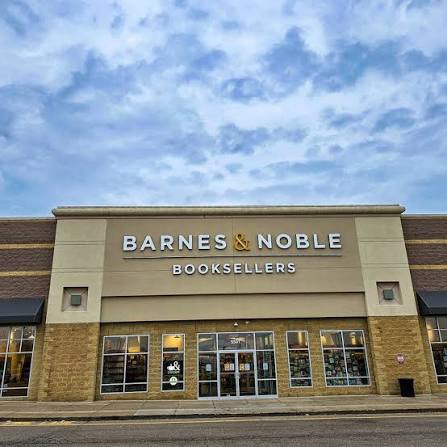
Barnes & Noble has announced it will open more than 60 new stores around the country. One of the most recent open in November in Hamilton, Ohio.
Once viewed as a casualty of e-commerce and e-readers, Barnes & Noble has steadily regained its footing under CEO James Daunt, who has emphasized locally curated stores, knowledgeable booksellers and community engagement. The company now operates roughly 600 locations nationwide and reports strong performance at recently opened stores.
“We’ve seen a real resurgence in interest in physical bookstores,” Daunt has said in recent interviews. “Readers want places that feel human again — where they can browse, discover and spend time. A bookstore should be a cultural space, not just a transaction.”
Industry analysts say the expansion reflects a broader shift in consumer behavior. After years of constant connectivity, many Americans are experiencing digital fatigue — exhaustion from endless screen time, notifications and scrolling. Printed books offer an antidote: no alerts, no blue light and a more immersive reading experience.
“People are deliberately stepping away from screens,” said Dr. Laura Mitchell, a media and consumer-behavior analyst. “Books provide focus and calm in a way digital content doesn’t. There’s something grounding about holding a physical object and engaging with it on your own terms.”
Younger readers are also fueling the trend. Social media platforms, particularly TikTok’s influential #BookTok community, have driven bestseller lists and encouraged a new generation to buy — and collect — physical books. Rather than replacing print, digital platforms are now helping revive it.
The expansion is expected to have a noticeable impact in Ohio, where Barnes & Noble has already opened new locations in recent years and is widely expected to continue growing its footprint. Ohio’s mix of suburban growth, college towns and strong library and reading culture makes it fertile ground for bookstores that double as community gathering places.
While independent bookstores remain cautious about competition, many observers note that Barnes & Noble’s new model relies less on uniformity and more on regional identity, allowing stores to tailor selections and events to local tastes.
For an industry once declared obsolete, the message is clear: the printed page still matters. As Barnes & Noble prepares to open dozens of new stores, it is betting that readers are ready to turn down the screen — and turn the page instead.
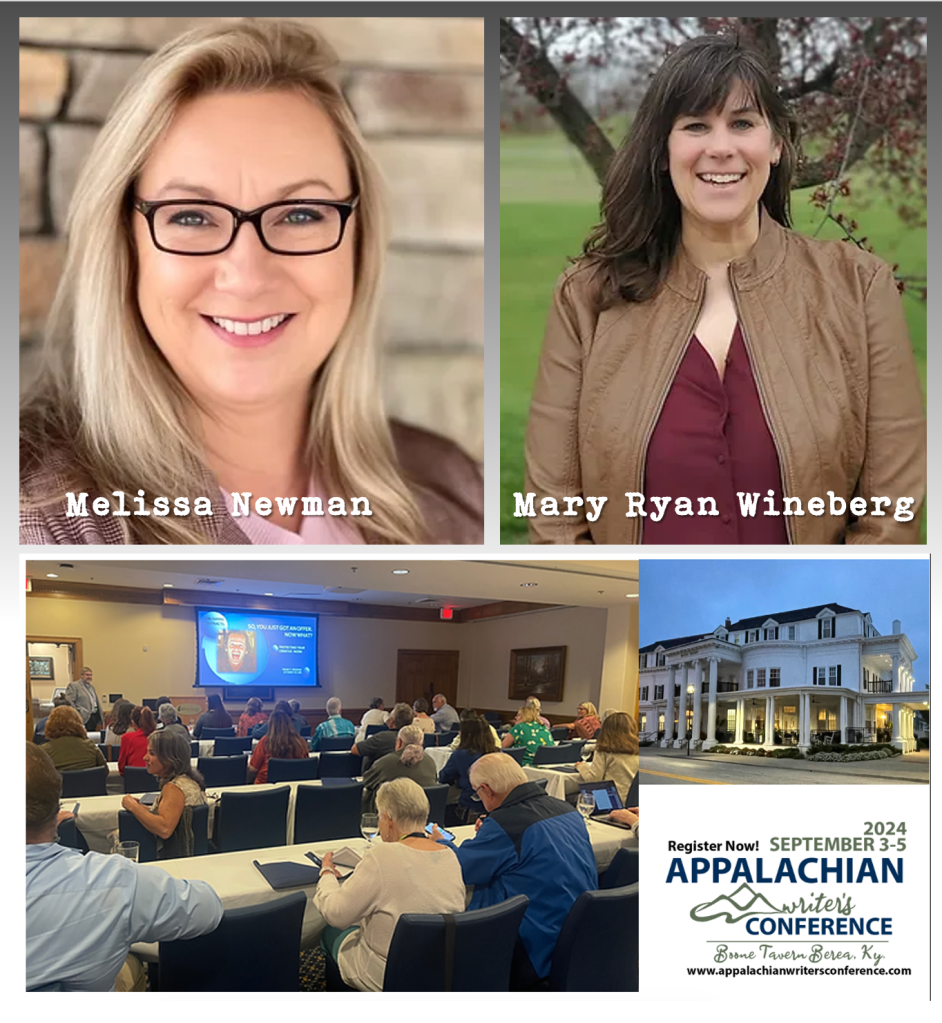
Berea, KY – Writers from across the country will converge in Kentucky this fall for the 2025 Appalachian Writer’s Conference 2025 (AWC), an immersive, genre-inclusive gathering designed to sharpen craft and demystify the business of publishing. From agent pitch sessions to expert-led workshops on branding, contracts, and publicity, AWC equips aspiring and established authors alike with the tools to thrive. Founded by Martin Sisters Publishing President and CEO Melissa Newman, Ed.D., the conference has evolved into a nationally respected event featuring award-winning faculty dedicated to helping writers succeed, regardless of their path or project.
“I strongly believe that everyone has a story, and most people have more than one,” Newman explained. “What we offer at our conference is the opportunity for writers to learn from professionals and develop the skills they need for a successful career as an author.”
Returning to this year’s faculty are fantasy/romance author Summer Hanford, fiction novelist Sherry Robinson, crime thriller novelist Susan Furlong, and screenwriter Mark Daniels. Frank K. Newman, J.D., President and CEO of the law firm Cole, Cole, Anderson & Newman, PSC, will be back to share insights into publishing and media contracts. Gery Deer, GLD Communications‘s creative director and author of the Pulitzer-nominated op-ed series “Deer In Headlines,” also returns with a session on making a living writing professionally in between book projects.
Deer first attended in 2023 as a participant but transitioned into a faculty role and took on a support position last year. “This is a unique experience for writers, and the intimate setting is ideal, in my opinion, for a better learning experience,” he said. “Melissa has created an environment of support and education, and the faculty is part of the group, interacting and spending time with the participants as fellow artists.” Deer also noted that they continue efforts to improve the event based on participant feedback.
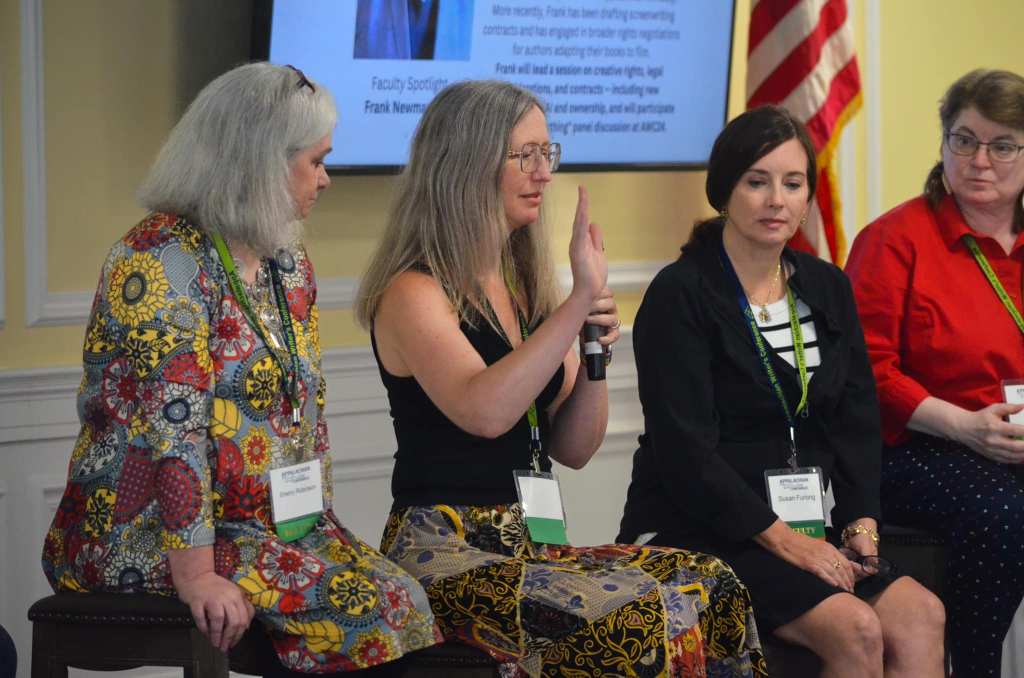
For example, a literary agent joins the faculty for the first time at AWC. Jackie Kruzie, author, literacy advocate, and associate literary agent at Focused Artists, will lead sessions on “Perfecting Your Pitch,” “The Dreaded Synopsis,” and a Lunch-and-Learn Session called “Should I Get an Agent?” She will also meet with authors for eight-minute pitch sessions. Another new addition is award-winning crime, thriller, and suspense novelist Trace Conger. In addition to class presentations, faculty will participate in the “Ask Me Anything” lunch panel to answer questions and discuss writing and publishing topics in a conversational setting.
Martin Sisters Publishing and the Appalachian Writers Conference present the Appy Inkwell Awards for the second year. “We want to give writers a chance to have their work recognized,” said Appy Inkwell Awards Coordinator, writer, and English Literature instructor Mary Ryan Wineberg. “We may even discover some new literary talent.”
This award celebrates outstanding achievement in fiction writing and offers talented writers the opportunity to showcase their creativity and skill before a supportive community of peers. Participants can submit up to 2,500 words of unpublished fiction, in progress or complete, that demonstrates originality, craft, and storytelling prowess. Eligible submissions include: a complete short story, a short story collection, or a piece of flash fiction.
The Dr. Pam Parry Lifetime Learning Award also debuts this year. It was created in memory of Dr. Parry, an integral presence within the AWC faculty and a trusted conference advisor whose remarkable life touched many. This award will celebrate someone whose passion for lifelong learning and generosity in the writing community make a lasting impact.
An update from the Dayton Hamvention officials on May 28th reads as follows: The 2025 Hamvention set a new high attendance record with 36,814 attendees. The general chair, Brian Markland, said he felt fabulous about watching large crowds of amateur radio enthusiasts from all over the world enjoying exhibits, forums, and the flea market.
XENIA — Before cell phones or the internet, there was amateur, or “ham,” radio.
Once a year, thousands of enthusiasts descend on the Greene County Fairground and Expo Center in Xenia for the largest amateur radio convention in the world – Dayton Hamvention. Although final numbers will not be tallied for some time, organizers estimate that this year’s turnout exceeded the 35,000 attendees of 2024.
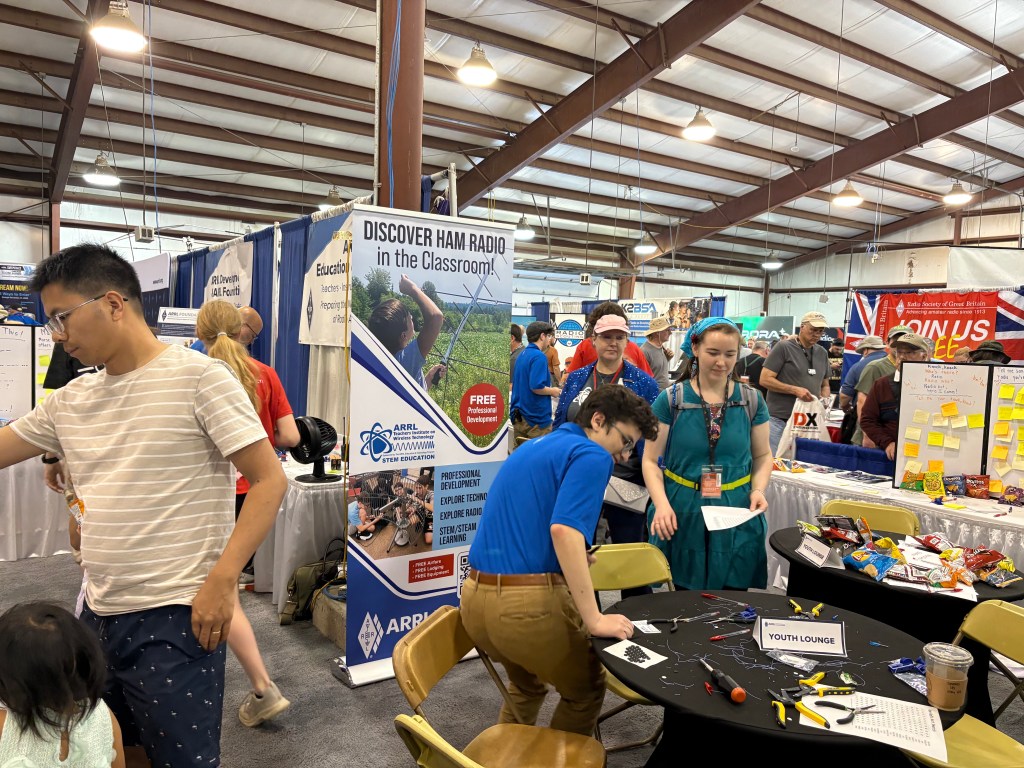
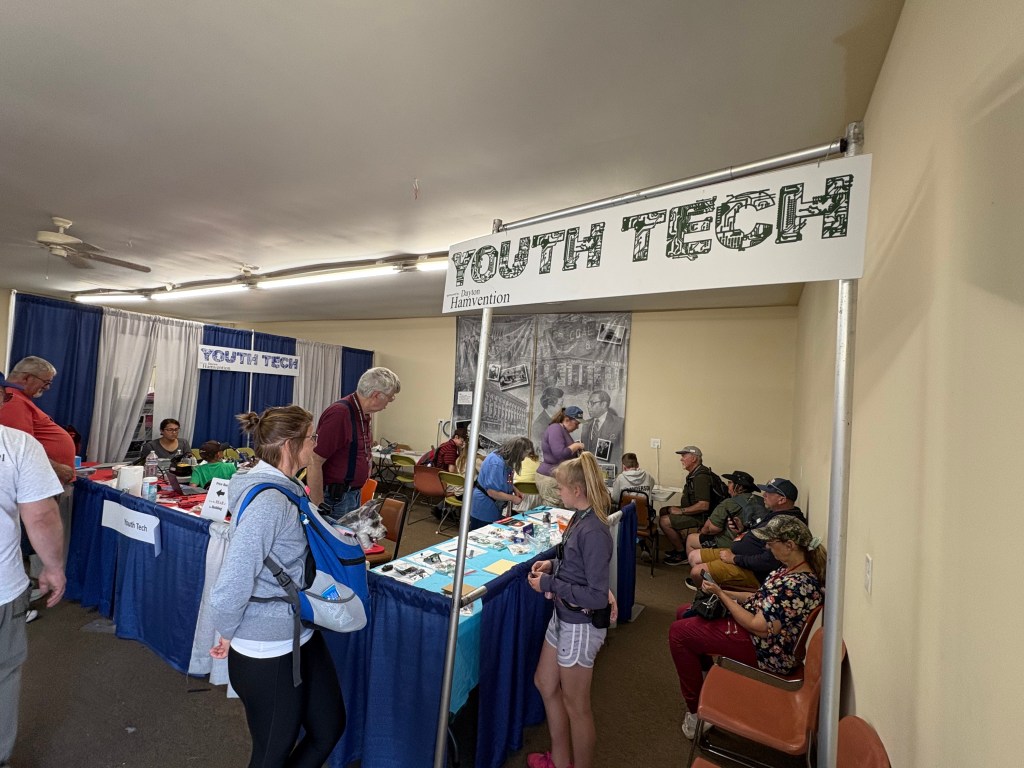
During Dayton Hamvention, participants from as many as 30 countries had the opportunity to see and buy the latest technology, attend educational and informational forums, sit for radio license exams, and take part in youth activities. This year’s event also included groups of young radio enthusiasts, organizations from all over the country made up of young people interested in both the analog and digital nature of amateur radio.
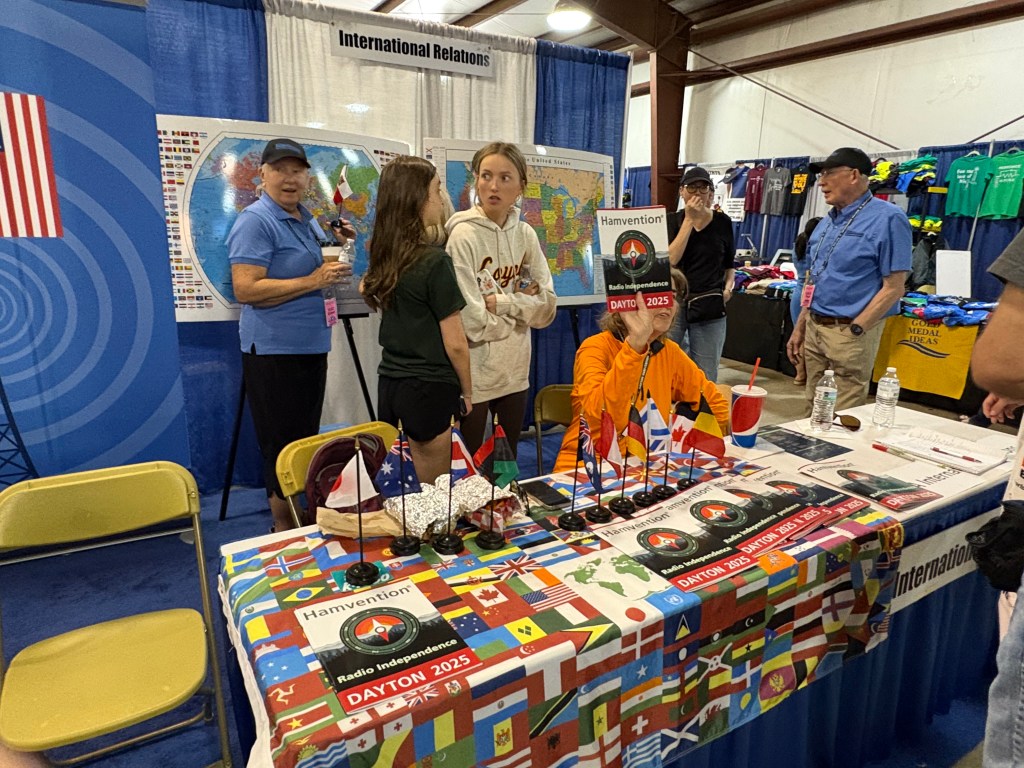
Jim Gifford, call sign N8KET, is the chairman of the media committee for Dayton Hamvention. He shared this year’s theme – Radio Independence – noting that what makes this event so important and impactful to the amateur radio community is the people. One of his favorite moments of this year’s event happened on Friday. “We had 73 students of the Community STEAM Academy (Science Technology Engineering Art and Math) in Xenia here,” he said. “They were really excited to learn how amateur radio relates to science and even space communication.”
With some 800,000 licensed ham radio operators in the United States alone, there is a remarkable sense of community among radio operators, regardless of geography. “It’s so nice for all of us in the local area to be able to come to Hamvention, but then you have to stop and think, this is a big ham fest,” said Glenn Rodgers, WI80, assistant chairman of the event’s media committee. “This is the biggest ham gathering in the world, and we’re so fortunate to be able to come to something like this in this area and it’s an honor to work here.”
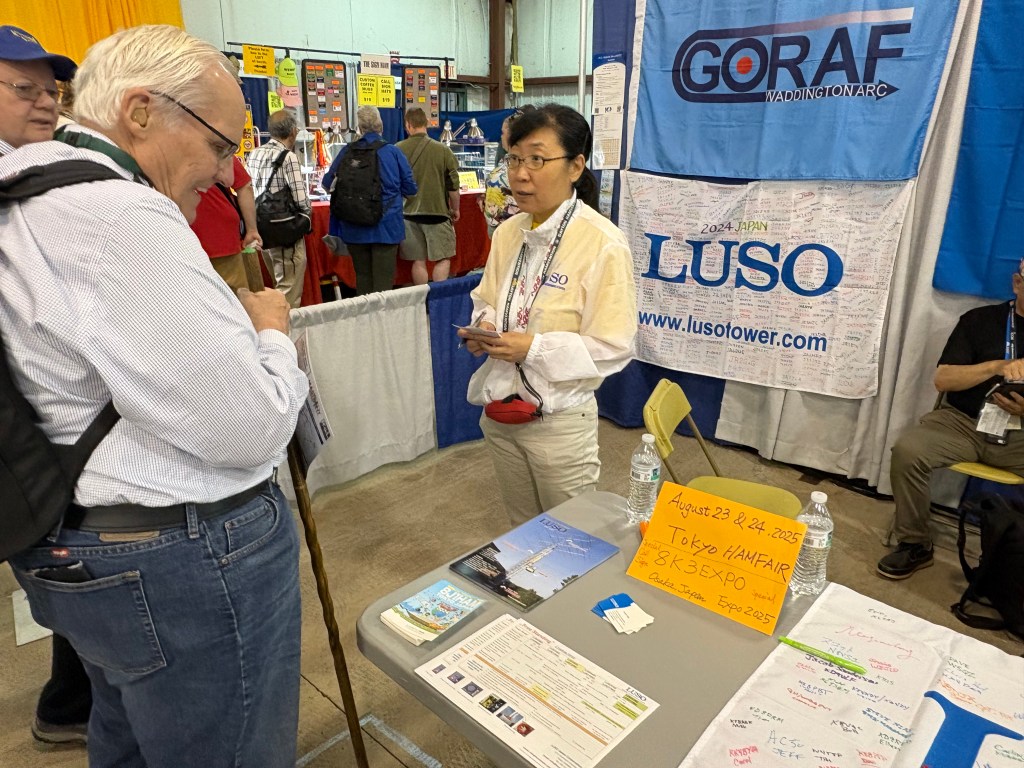
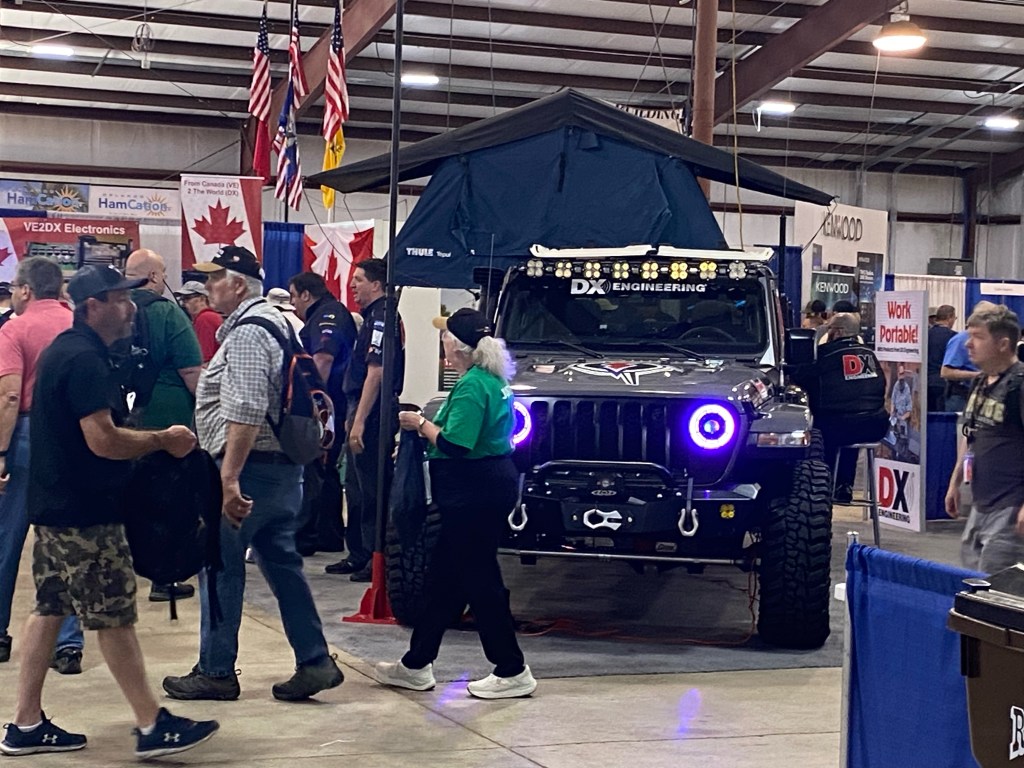
Amateur radio enthusiasts, vendors, and organizations from around the world converged at the Dayton Hamvention. Here’s a promotional booth for Tokyo Hamfair.
With such widespread interest, one might expect the world’s current geopolitical tension would hamper those relationships. According to Gifford, it does not. “We have a multitude of political views here,” he said. “But we’re ham operators, we take care of each other.”
“Because you meet people,” Gifford continued. “We talk to people all over the world. Just the other day, I spoke to somebody from Norway, and somebody from Italy, and it crosses barriers. It really does.”
Most amateur radio enthusiasts are known on the air, and to each other, only by their call sign, an alphanumeric identification given to each license holder by the Federal Communications Commission (FCC).
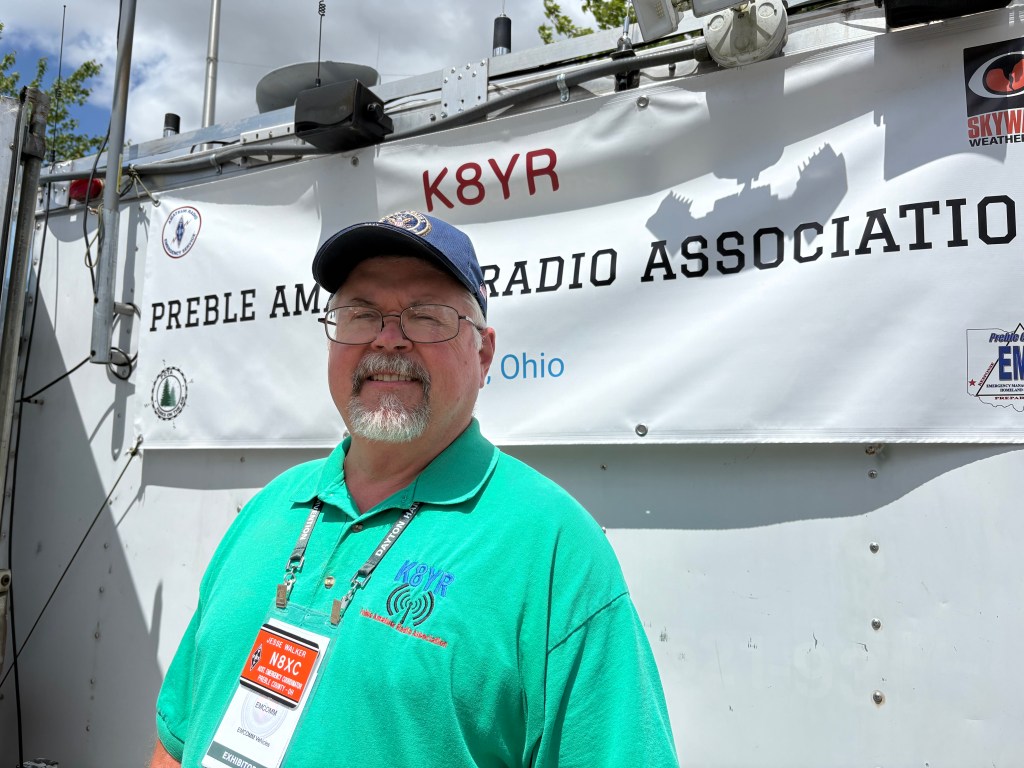
Jesse Walker, N8XC, is U.S. Navy Veteran, and business development manager with Aegis Protective Services in Eaton. He’s been involved in amateur radio since the age of 15. He explained that, although the call signs are assigned, they become part of your identity.
“Many of us only know each other by our call sign,” Walker explained, who is a member of the Preble Amateur Radio Association in Preble County. “Coming here, we get to meet face-to-face often for the first time.”
Both Rodgers and Gifford also noted that, apart from being a hobby for some, ham operators play an important role in the community during emergencies. “Amateur radio groups work as sky spotters during severe weather, they work with and support our area first responders, providing backup communications and volunteers during local emergencies,” Gifford said.
“Essentially, the Preble Amateur Radio Association is involved in public service,” said Jesse Walker. “We work with the Preble County emergency management agency. Our motto in amateur radio emergency service is, ‘when all else fails.’”
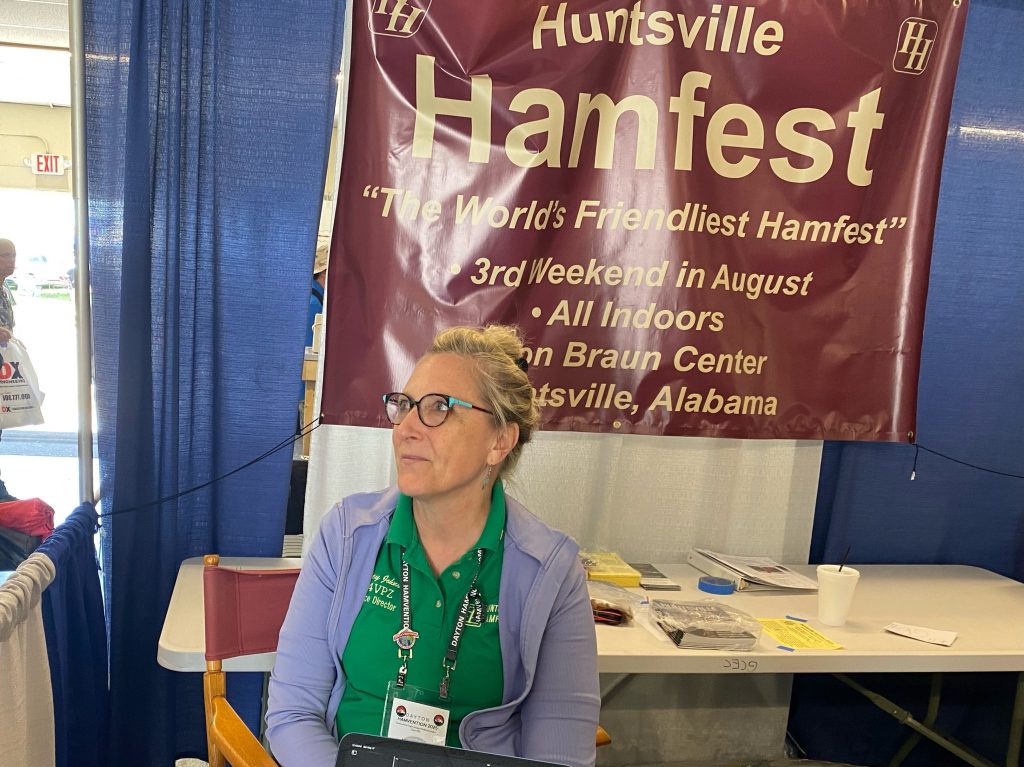
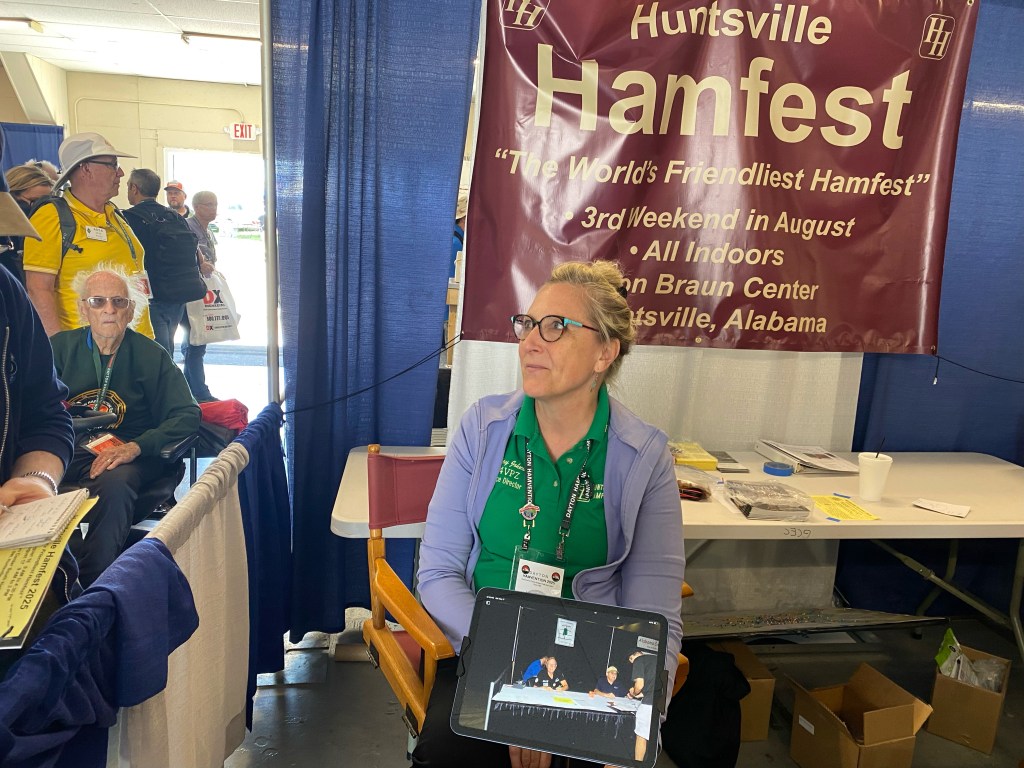
Other amateur radio convention organizers also attend to promote their own events. Huntsville Hamfest, held annually in Huntsville, Alabama, is one such organization. Mark Brown, N4BCD, is the chairperson for the Huntsville Hamfest Association. “Ours is the third largest Ham radio convention in the country, behind Dayton and Orlando, Florida,” Brown said. “We all cooperate and help support each other’s events.”
Mark Brown, N4BCD, and Kelley Johns, W4VPZ, (pictured) provided information about the Huntsville Hamfest in Alabama.
Brown suggested the consistent growth of these events and interest in amateur radio is due in part to younger people learning about its technical diversity. “I think to attract kids, we’ve got to show different aspects of the hobby, like the satellite communications, the youth on the air, and the parks on the air,” he said. “Get youth involved in it. That’s one thing these events do is bring all ages together.”
Planning for next year’s Dayton Hamvention is already underway. For more information visit hamvention.org.
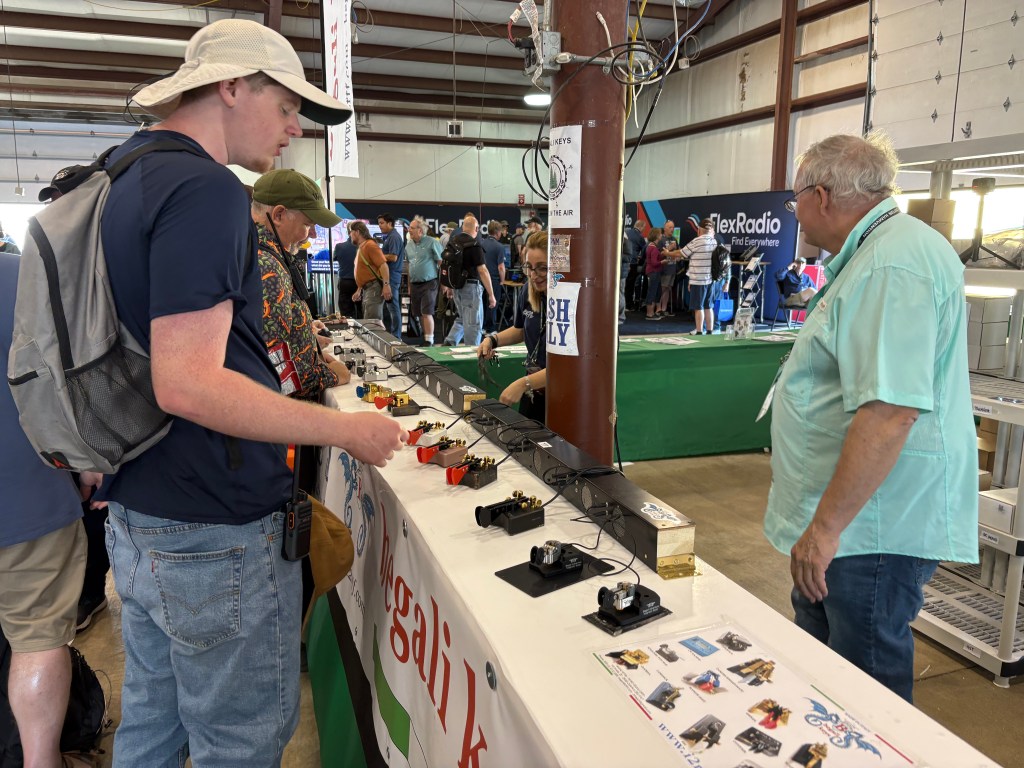
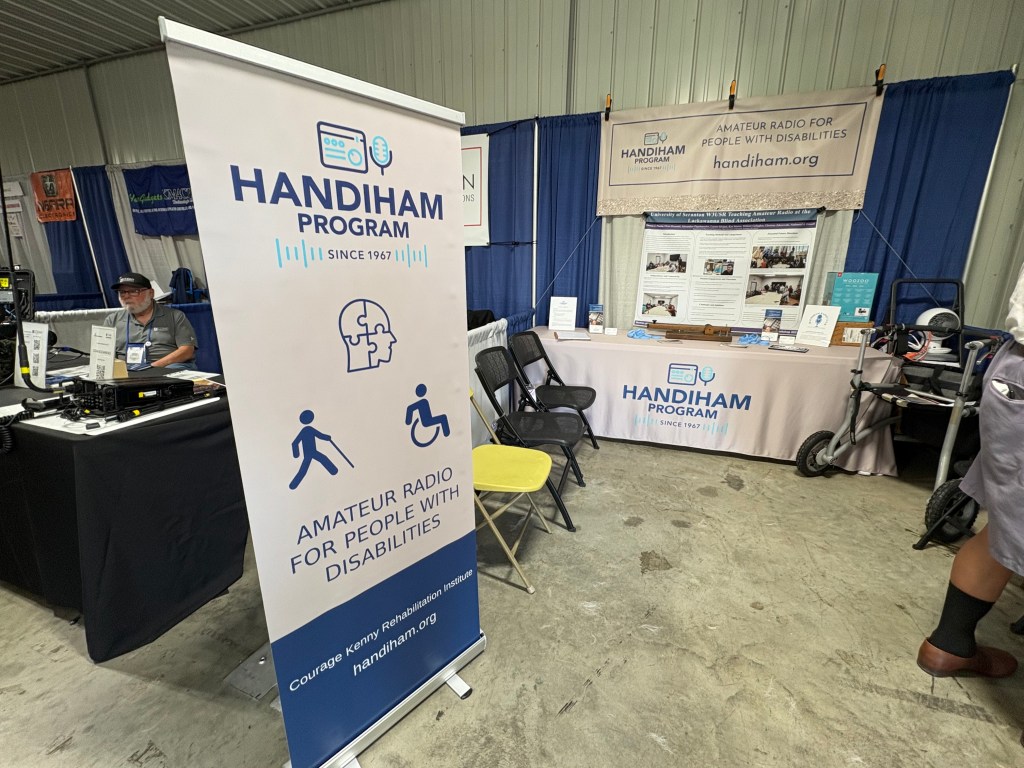
Glenn Rodgers and Jim Gifford, media committeeJesse Walker, N8XC, is U.S. Navy Veteran, and business development manager with Aegis Protective Services in Eaton.Flea market area had booth after booth of high tech and vintage technology.“Handiham” program provides connection for radio enthusiasts of limited physical ability.
(Editor’s note: This edition also appears in other publications under the title “Checked Out.”)
As a kid, the local branch of the public library was in the old opera house near the center of our small farm town. It was cramped and dimly lit, and the reference desk was under the boarded-up grand staircase, giving it a sort of cubby-hole feel. I spent a good bit of time there. After school, I’d do my homework and wait for my mom to get off work. In the decades before the Internet, our library was the window to the world. But now, that window may be closing.
Ohio public libraries are funded, in part, by the Public Library Fund (PLF), which provides 1.7% of the state’s General Revenue Fund (GRF) as of this writing. However, the Republican-sponsored Ohio House Bill 96, proposed in early April of this year, would cut library funding by more than $100 million across the state. Why?
Governments have historically manipulated populations by controlling education and the media. They ban books that don’t align with their values, use defunding threats to force public and school libraries to cultivate materials for their purposes, and limit access to information. That way, voters remain ignorant, subjugated, out of touch, and pliable.
And before anyone says, “you just hate republicans,” they’re not the only ones to try this. Ohio Governor Ted Strickland, a democrat, proposed the same budget cuts a dozen years ago, and the republicans cried foul. Remember, the liberal left still regularly tries to “rewrite” some books to remove language and ideas they find offensive. So, it has gone both ways. This time, however, the danger is more palpable.
Over the last decade, public libraries have become frequent targets for budget cuts, with some policymakers arguing that digital access negates their necessity. But here’s the truth: libraries remain vital to the well-being of communities, and continued funding by federal and state governments is not just important—it’s essential. Without it, we risk depriving countless individuals of educational opportunities, civic engagement, and economic mobility.
Public libraries provide free access to knowledge for everyone (so long as their contents are not censored), regardless of socioeconomic status. Whether it’s a student researching for school, a small business owner seeking resources, or a job seeker brushing up on interview skills, libraries level the playing field in ways no digital paywall ever could. Eliminate government funding, and these services vanish, disproportionately affecting low-income communities. Instead of fostering informed citizens, we create a deeper knowledge divide, where only those who can afford education can access it.
A democratic society thrives when its citizens are informed, and libraries serve as safe spaces where people can access unbiased, factual information. They offer literacy programs, historical archives, and meeting spaces for community discussions—all of which help create engaged and empowered citizens. Where do people go for credible information when libraries close because of defunding? Unfortunately, they turn to the Internet and social media – the global misinformation machines. That’s a terrifying thought.
Libraries don’t just provide books—many offer essential services that help individuals improve their financial stability. They provide free internet access for job searches, resume-building workshops, business mentorship programs, and resources to help entrepreneurs. Government officials profess at nauseum about supporting small businesses and the workforce. Then they gut library funding and undermine those initiatives directly. If libraries disappear, so do these essential services, making it much harder for people to improve their situations.
Defunding libraries erodes the foundation of an educated, informed, and economically mobile society, which is exactly what this administration hopes to achieve. Without them, misinformation flourishes, the digital divide widens, and people lose access to critical resources for success. Libraries are not relics of the past—they are the lifeblood of communities, supporting everything from literacy to local economies.
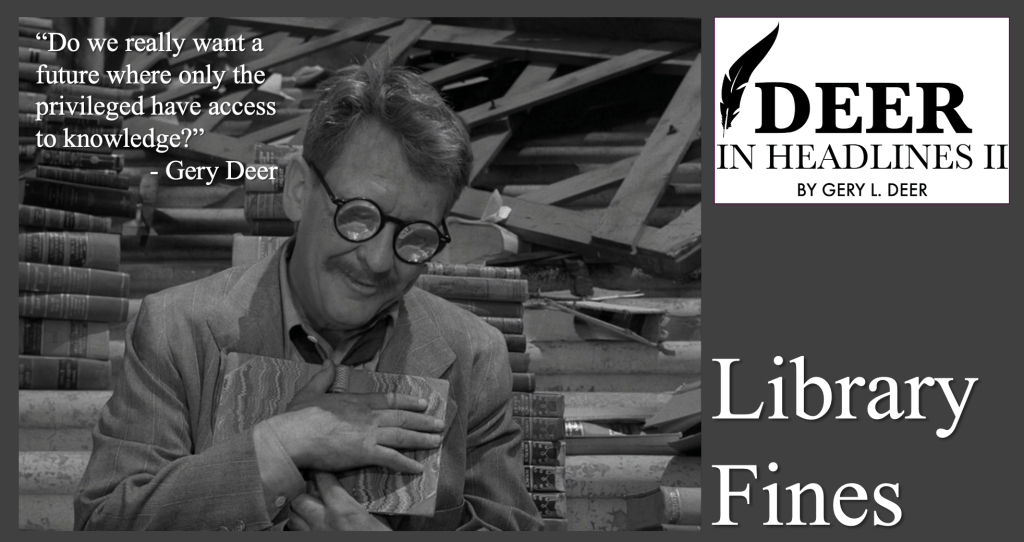
So, before cutting another dollar from public libraries, policymakers should ask themselves: Do they really want a future where only the privileged have access to knowledge? Without funding, that’s exactly where we’re headed.
Good people on both sides of the aisle must speak out against this kind of censorship and ignorance. In Ohio, you can contact your state representative or State Representative Matt Huffman, currently Speaker of the Ohio House of Representatives: email rep78@ohiohouse.gov or call 614-466-6344.
“The Great Gatsby,” F. Scott Fitzgerald’s tale of a tragic Long Island millionaire, was published 100 years ago to tepid reviews and disappointing sales. Since then, especially in the decades since World War II, it has become a staple of English classes and a fixture in popular culture. The novel has been memed, mocked, tweaked and reimagined countless times, a multifarious afterlife that I wrote about recently in The Times.
In my article, I explored some of the reasons for this longevity. But I didn’t focus on the most obvious one. In spite of what many critics of the 1920s thought, it’s a good book!
Let me be clear: I don’t mean a Great Book, though “Gatsby” may also be that. We tend to approach literary masterpieces in a spirit of deference and duty. They’re assigned in school or placed on authoritative lists of what we have to read before we die, which can be more off-putting than enticing. “The Great Gatsby” is profound and important, but it’s also all kinds of fun. Here are some of the kinds.
It’s a short, quick read.
At under 200 pages, “Gatsby” can be finished in the course of a rainy afternoon or a long plane ride. There’s a bit of wheel-spinning at the beginning, as our narrator, Nick Carraway, indulges in some philosophizing, but as soon as he mentions Jay Gatsby, whose name arrives in a cloud of mystery, glamour and foreboding, our interest is piqued. And Fitzgerald teases that interest, keeping the title character shrouded in an enigmatic aura until the very end of the book, revealing him — through Nick’s eyes — by means of a series of riddles, glimmerings and sideways glances.
It’s romantic.
Or at least Gatsby himself is. Nick describes him in the opening pages as possessing “some heightened sensitivity to the promises of life.” But modern life — crass, dishonest and materialistic — betrays those promises and destroys Gatsby’s life. Even though he’s a rich man with underworld connections, his motives remain pure. Above all, he’s driven by his love for Daisy, his former sweetheart, now married to the repellent Tom Buchanan. The tension between Gatsby’s noble spirit and the tawdry decadence of his surroundings brings the book to life. If Fitzgerald’s social criticism were less astute, the love story might seem corny; if the romance didn’t sing, the satire would collapse into cynicism.
It’s funny.
The Jazz Age reviewers who liked the book admired it as an acid-etched portrait of the times. Fitzgerald’s eye for hypocrisy and buffoonery and his ear for puffed-up speech remain sharp. Tom Buchanan, whose awfulness has a serious, violent side, is at the same time a brutally comic takedown of a certain kind of know-it-all blowhard, still familiar a century later:
“I read somewhere that the sun’s getting hotter every year,” Tom said genially. “It seems that pretty soon the earth’s going to fall into the sun — or wait a minute — it’s just the opposite — the sun’s getting cooler every year.”
F. Scott Fitzgerald could write.
Almost too well! “Gatsby” often shifts from brisk comedy to swooning lyricism to philosophical rumination within the space of a single page, somehow keeping a steady, conversational, modern tone. Fitzgerald knows when to accelerate the narrative with clipped, telegraphic sentences and when to draw it out in flights of elaborate description. The last sentence (“And so we beat on, boats against the current, borne ceaselessly back into the past”) is justly famous, but it follows a score of others that are at least as evocative, or even more so.
It has so many great characters …
Meyer Wolfsheim, the gangster who fixed the 1919 World Series. Jordan Baker, Nick’s feline sort-of girlfriend. Old Mr. Gatz, who shows up at the end to clear up the mystery of Gatsby (but really to deepen it). And of course the central triangle of Daisy, Tom and Jay.
… and so much to talk about.
There’s a reason English teachers love this book. But even if you only read it in school — or never did — there is endless fodder for discussion and debate, much of it still remarkably current. The state of the American dream, the bedazzling and corrupting power of money, the green light at the end of the dock.
I was a staff writer and later an editor for my college newspaper. During that time, I learned the single, most important lesson from all my years of education. Our administration-appointed supervisor once told me, “Whatever else you learn as you go through your college career,” she said, “learn to write and speak well. If you have that, you’ll be able to do anything.” She was right.
My mother also shared those views, though she had a head start by teaching me to read early. On the other hand, I would depend on my communication skills to pave my way to a multi-faceted career. She was determined to give me every possible advantage, mostly because she didn’t get them.
Literacy is one of the most critical indicators of a strong society. It reduces poverty, bigotry, ignorance, and social and professional inequality. It shouldn’t be limited to the academically gifted. Everyone should have the opportunity to learn effective communication.
Just because you don’t have an interest or aptitude for high academia, that doesn’t mean literacy is less important. I feel fortunate that I had the best of both worlds. I’ve always been an avid reader and writer and a lifelong student of all the sciences. But I also learned to rebuild a car engine, install a new water heater in my house, or change a faulty electrical outlet.
Every one of those tasks requires the ability to learn, understand, follow instructions, and cope with the unexpected. All of my “book learning” occurred while surrounded by some of the best tradespeople in the world. Even better, they were all teachers. One thing that has changed over the years is how literacy is emphasized in our public and private schools.
Do you remember when kids used to get in trouble for reading comic books at school? I will say “we” instead of “they” because I did this too. We put comic books inside large textbooks so we could read during class. From the teacher’s perspective, we seemed engrossed in our educational process. Instead, we were engaged in the exploits of Superman, Batman, or Spider-Man.
Some argued that even reading comic books was good for us because at least we were reading. But it was more than that. Comic books are a good literacy metaphor because they aren’t just about words, grammar, and sentence structure.
For our society to consider itself truly literate, we must understand language, not just the written word but communication. We also need to understand art, storytelling, and critical thinking. In an ironic twist, one way to do all that is by reading comic books. Many of the Batman stories from the 1930s and 40s are loaded with material you only find in today’s best crime novels by authors like Michael Connolly, James Patterson, and David Baldacci.
Unfortunately, some use the comic book analogy to justify spending hours on social media. That’s not the same thing. Reading is calming, focuses our minds, and relaxes our bodies. If anything, social media has dumbed us down and created an entire society nearly paralyzed by anxiety and inferiority. Scrolling doesn’t count as reading.
Still, literacy doesn’t require you to wade through “War and Peace,” “Catcher in the Rye,” or any other long-winded literary work. I supplemented my education by reading everything I could get my hands on. Whatever I had an interest in, I had books about it, encyclopedias, or topic-specific material – there was no internet back then. Now, resources are nearly endless, provided you learn the difference between credible and non-credible sources.
Advanced education isn’t required either. Truth be told, much of what I do for a living was self-taught – thanks to my early introduction to books. Self-education is mainly frowned upon in today’s society. I find it ironic that Benjamin Franklin, Thomas Jefferson, and others who wrote some of the most important documents in history would be unemployable by today’s arbitrary and unfounded standards.
My point is that American culture currently reads at a U.S. 5th-grade level. That’s unfortunate, ridiculous, and easily corrected. We must eliminate the stigmas of functional illiteracy, focus more on reading and writing in our schools, and spend more time with books than cell phones.
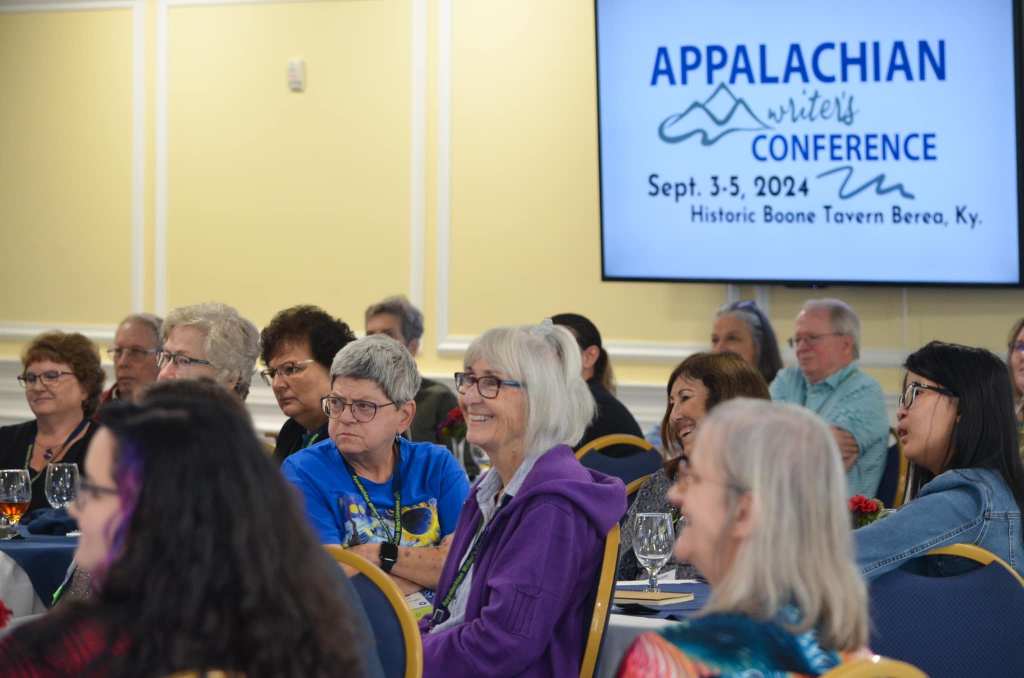
In this episode, Deer In Headlines Podcast host, Gery Deer, speaks with organizers of the Appalachian Writers Conference, slated for September 3rd through the 5th, 2024, in Berea, Kentucky. Set at the historic Boone Tavern, this year’s conference explores genre writing with programs by award-winning authors of mystery, crime, romance, dystopian, and fantasy novels.
Founded by Melissa Newman, Ed.D., President and CEO of Martin Sisters Publishing, the Appalachian Writers Conference (AWC) offers beginning and intermediate writers the opportunity to sharpen their skills and learn new techniques from a skill-diverse, experienced faculty. The conference also features professional business presentations on topics such as building the author brand, public relations, dissecting contracts, and libel protection.
“I strongly believe that everyone has a story, and most people have more than one,” Newman explained. “The tools and skills are waiting in the gap between these stories and becoming a published author. That’s what we offer at the AWC annual conference, getting writers what they need to step into building a successful career as an author.”
Many of last year’s award-winning faculty will return for the 2024 conference, including epic fantasy/romance author Summer Hanford, fiction novelist Sherry Robinson, and political history editor and journalist Dr. Pam Parry. Cannes Film Festival Finalist screenwriter Mark Daniels returns as well. Frank K. Newman, J.D., President and CEO of the law firm Cole, Cole, Anderson & Newman, PSC, will be back to share insights into publishing and media contracts.
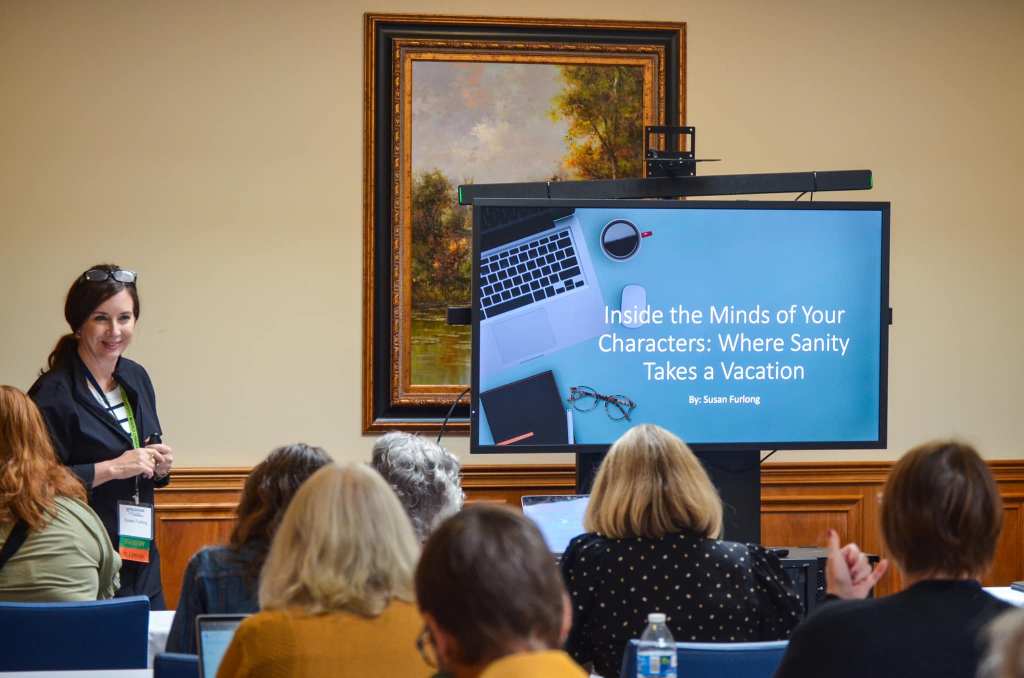
New faces on the faculty team include Susan Furlong, who will present sessions on character development and choosing a crime genre. Among her many accomplishments is, “Shattered Justice,” the New York Times Best Crime Novel of the Year. Her new love-inspired thriller, “Lethal Wilderness Trap,” is set for a 2025 release is now available for pre-order from Harlequin.
Gery Deer, founder of the public relations media agency GLD Communications, is another new addition. Author of the Pulitzer-nominated op-ed series “Deer In Headlines,” Deer will lead sessions on author brand building, PR, and marketing.
In addition to class presentations, faculty will be on hand at lunch for the “Ask Me Anything” panels. The AWC experts will answer questions and discuss writing and publishing topics in a conversational setting.
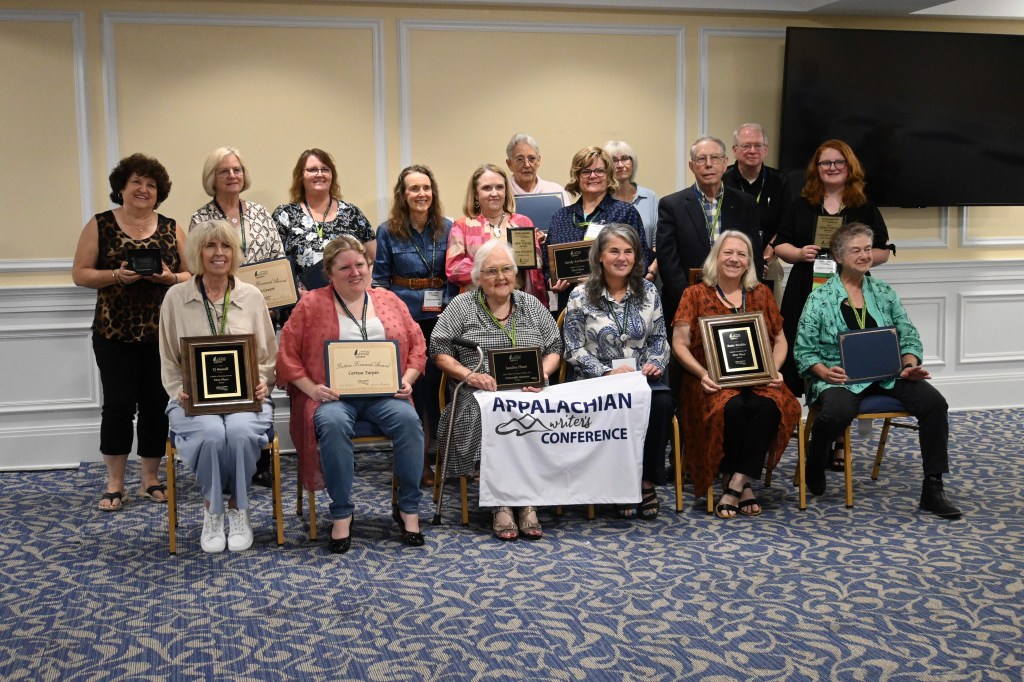
New this year, Martin Sisters Publishing and the Appalachian Writers Conference present the Appy Inkwell Awards 2024. From now until July 1st, writers can submit the first 2,500 words of a full-length book manuscript in fiction, non-fiction, or memoir categories.
“We want to give writers a chance to have their work recognized,” said Appy Inkwell Awards Coordinator, writer, and English Literature instructor Mary Ryan Wineberg. “We may even discover some new literary talent.” The entry fee is $25, and prizes include:
First Prize: Publishing contract with Martin Sisters Publishing and free 2024 Appalachian Writers Conference registration.
Second Prize: Free Registration to the 2024 Appalachian Writers Conference and a $50 gift certificate to the Taleless Dog Bookstore in Berea.
Third Prize: Free Registration to the to the 2024 Appalachian Writers Conference
“Books are uniquely portable magic.”—Stephen King, On Writing: A Memoir of the Craft.
I’ve often quoted classic books in this column for several reasons. For one thing, those brilliant writers of old had wisdom that still eludes me, and I need to borrow it occasionally.
I also enjoy the opportunity to share my love of books with those of you who are kind enough to give me your attention for a few minutes each week. My hope is that, in addition to my humble observations, I can share some words from those scribes who were (or are) far wiser and more eloquent than me.
Of course, I don’t just cite the classics. I toss in something fun and modern here and there as well. You may not realize it, but I’ve shared some words from the likes of Douglas Adams, George R.R. Martin, J.K. Rowling, and more.
I wasn’t a voracious reader when I was young, but that changed as I grew up. In high school, I became interested in Charles Dickens. Later, it was the stories of Mark Twain. From “The Little Red Lighthouse and the Great Gray Bridge” to “Lord of the Flies,” one book led to another. It’s interesting how that happens. Once you’re hooked…
That said, here are my questions of the day: Have books become obsolete in the shadow of the internet and social media? As some try to ban classics like Huckleberry Finn and To Kill A Mockingbird, what has become of literature’s social significance? What does the future hold for the classics and all the unwritten works yet to come? I don’t have the column inches to answer these questions, so here are my brief thoughts.
In my humble opinion, Stephen King had it right. Books are magical. They transport us to faraway lands, introduce us to people around the globe, and inspire imagination and dreams. But books are far more than mere escapism from our daily grind into the worlds of Harry Potter and Captain Nemo.
Books are the arks of our history. They help us learn from the past, hold a mirror to the present, and prepare for the future. Every published page offers a tiny glimpse into who we are as a species—warts and all. When you read a book, you have no choice but to learn something. Ignorance is replaced with knowledge and understanding, and then a funny thing happens—people get along better. Books provide the knowledge that breaks down all the barriers that separate us.
Booksellers are struggling, however. In many American communities, there might be a Starbucks or a parking lot where the neighborhood bookstore once stood. Instead of the pages of some great new novel, many people seem far more interested in scrolling through social media.
Although I prefer the printed page for most of my reading, my appreciation for books is more about content than construction. I typically read two or three books simultaneously, each in a different medium—audio, digital, or print.
A book is a book. Unless you can convince me that words read aloud are less meaningful than those read by eye, listening to an audiobook still counts as reading. You should read however you feel comfortable.
Concerning book bans, I won’t get into the obviously paranoid politics involved. If you don’t like a book, don’t read it. But the concept of book banning should horrify us because it casts a long shadow backlit by terrors of the past.
Some writers spend decades crafting the perfect book, hoping it will positively impact the reader. No matter your age, the genre, or the medium, reading a book will improve critical thinking and creativity and release dopamine, the brain’s “happy” chemical.
If you haven’t done so for a while, it’s time to get some of that happiness for yourself or give it to someone else. A book is one of the most meaningful gifts you can give. Libraries and bookstores offer a fun, affordable family experience you will remember forever.
Thankfully, books, even printed ones, aren’t going away anytime soon. But if they were ever to disappear, so would our society, our humanity, and, eventually, the record of our very existence.
*************
More Information:
Your local library is a great, free resource for the whole family to explore the unlimited world of books!
If you want to learn more about the book industry, the future of printed books and bookstores, check out these documentary films: The Booksellers. And Hello, Bookstore.
“Flights of Fiction” is an anthology by local authors will hit shelves in mid-April 2013.
Books are incredible things. They can make you laugh and cry. They can whisk you off to faraway places with strange sounding names and introduce you to characters and worlds that only exist in the mind’s eye.
This month, Disney released the film version of Oz, The Great and Powerful, a prequel story to the more familiar tale of Dorothy Gale’s trip down the Yellow Brick Road. Author L. Frank Baum wrote his 14 originally published Oz books between 1900 and 1920 and each one carried us over the rainbow to a world of magic and adventure.
Of course, it was movie magic that brought the Land of Oz to life on more than one occasion. Even with all of the high-tech special effects and brilliant colors, nothing can replace the written versions of these timeless classics.
Books have a way of exciting the mind and launching the imagination of children and adults alike. Sadly, instead of giving us amazing tales of adventure, modern publishing has turned its attention more towards anything that fits a hot-selling genre rather than keeping an eye out for the next Sherlock Holmes.
When Baum and his contemporaries like Sir Arthur Conan Doyle were writing their books, publishers were looking for great writing and engaging stories. Of course they wanted to make money, but they were less likely to sacrifice quality in favor of selling solely for the lowest common denominator. They knew that the best way to grow revenue was to publish a great book.
It seems that today’s publishers are looking, not so much for good literature, but sole marketability. Publishing companies are focusing on the bottom line with through a bit of astigmatism.
People often forget that the business of publishing fiction is part of the entertainment industry and is driven by the buying public. As major publishers shrink in size and revenue, they continue to blame the Internet and self-publishing authors rather than looking in a mirror to realize they’ve done this to themselves.
Occasionally, a publisher will take a chance on a unique story which then turns into a runaway success. The best examples are more recent series books like Harry Potter, Twilight and 50 Shades of Grey. But once those titles charge up the audience, the publishers start releasing knock-offs or genre-trapped titles based on similar characters and situations to pacify the desire for more of the same.
The problem comes when that’s all they put out, rather than trying to take advantage of a good book-buying market and release something different. All they’re publishing for is cash flow at that point, landing much better manuscripts in the trash bin.
Sadly, there’s really no way to change this trend as long as the public continues to follow hype instead of looking for quality. Until consumers demand better material to read, the status quo will remain low cost, high volume, all buildup and no substance.
So if readers don’t find what they want at the big-box bookstores, they should turn their attention to local authors. After all, everyone talks about buying local and here’s just another way to do that. Thanks to high-quality electronic and self-publishing options, some great local authors are making their work available on a regular basis.
A few minutes in a neighborhood bookstore, even used book shops like Xenia’s, “Blue Jacket Books,” on S. Detroit St., can turn up a treasure trove of locally produced work. From memoires to science fiction local authors have some great work out there to satisfy the hunger of the voracious reader.
Like with larger outlets, local authors can spin some stinkers too, but they often cost less and, even if the book isn’t that great, you’ve helped support the community. Local authors work and live in your community and often hold signings and attend area writing groups. Keep your eyes open. There might just be another L. Frank Baum out there somewhere, yet undiscovered by the big guys. So go hit the local bookstore and remember reading is fundamental.
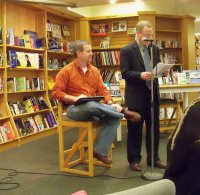
WOWA writers Michael Martin (left) and Gery Deer at the 2010 Beatnik Cafe. Both will be reading at the upcoming event.
XENIA, OH – On Friday, August 3rd, local authors of the Western Ohio Writers Association (WOWA) will present a live reading of short stories and poetry at Blue Jacket Books, 60 S. Detroit St. in Xenia. Known as Beatnik Café, the relaxed, informal format of the evening pays homage to the hole-in-the-wall poetry cafes of the 1960’s in a more contemporary style. An author reception will begin at 6 pm and the live readings will run from 7 pm until 9 pm. The event is free and open to the public and coincides with Xenia’s First Friday activities.
The Beatnik Café is presented three times a year by members of the Western Ohio Writers Association, a resource group that provides support, education and professional assistance for writers in southwest central Ohio, eastern Indiana and northern Kentucky.
Writers in a variety of genres attend monthly WOWA critique and educational meetings where they can hone their skills and have their work reviewed by fellow scribes. Gery L. Deer of Jamestown is the founder and coordinator of the organization.
“Outside of a college class or expensive writers’ conferences, there was no consistent support available in our area,” Deer said. “We started the WOWA to provide critique and networking opportunities to local writers of all genres, both amateur and professional.”
Deer is a professional freelance commercial writer and editorial columnist. While making a move from periodical content to longer, creative manuscripts he found that networking with other writers might help him with the change in writing styles but opportunities were limited.
“The public readings give people the opportunity to hear from some of the most talented writers in the Midwest,” Deer continued. “We invite everyone to come out and meet our writers and enjoy the atmosphere provided at Blue Jacket Books. It’s an ideal place to hang out, read and enjoy the work of our writers.”
The Western Ohio Writers Association events are sponsored by GLD Enterprises Commercial Writing concierge business writing services. For more information, go online to http://www.theconciergecopywriter.com and click on the WOWA logo in the upper right corner, or email gdeer@gldenterprises.net. The Beatnik Café and the WOWA are trademarks of GLD Enterprises Commercial Writing.


















 The Jamestown Comet