Local News & Commentary Since 1890.

Archive for the ‘history’ Category

Corruption fears the press

In history, National News, News Media, Opinion, Politics, Uncategorized on June 22, 2025 at 10:47 am

Deer In Headlines II

By Gery Deer

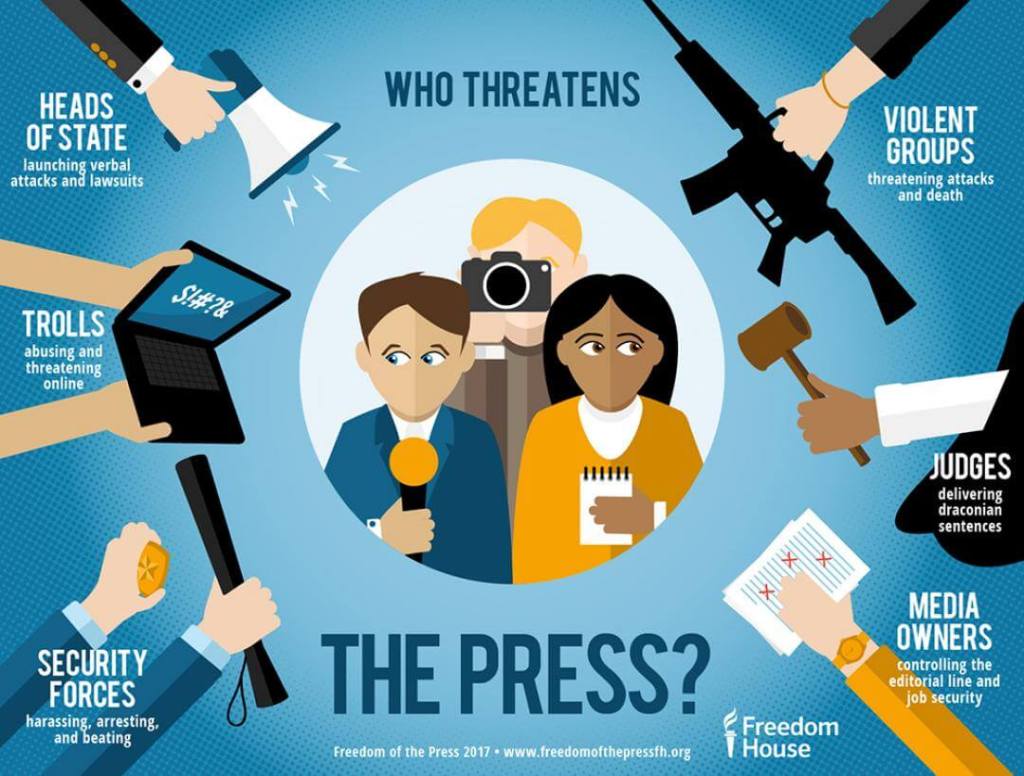
It’s one thing to feel your job is in danger—industries evolve, businesses close, and livelihoods shift. It’s another thing to fear that your work and profession could be criminalized. For those of us in the press, in my opinion, that moment has arrived.

Not long ago, journalists were considered the fourth estate, so-called because the press was seen as the fourth, unofficial, branch of government – the public’s eyes and ears, so to speak. A free press is a necessary check on power, the watchdogs of democracy. Today, Trump and company would rather call any of us who dare question them troublemakers, agitators—enemies of the people. And now, with the Supreme Court’s recent decision to uphold the White House’s ban on the Associated Press (AP), we stand on the edge of something far more dangerous than a bruised ego or a contentious press conference.

The justification? National security – as always. A vague, malleable excuse that’s nearly impossible to challenge or verify. Too convenient to ignore, too broad to oppose. It sets a precedent with sharp teeth. If AP can be barred, who’s next? The Washington PostReuters, or maybe any reporter who dares ask uncomfortable questions?

When a government moves to silence journalism, it isn’t just about limiting press access—it’s about controlling the public’s perception of facts. A free press must do more than inform; it should hold power accountable on behalf of the citizenry. That accountability is inconvenient, even infuriating, for those who prefer not to be held accountable for their actions.
We don’t have to delve deeply into history to see what happens when dissenting voices are silenced. Totalitarian regimes have long understood the value of controlling the narrative. In Nazi Germany, Joseph Goebbels, the minister of propaganda, ensured that only state-approved messaging reached the public. In Stalinist Russia, independent journalism became synonymous with treason. And now, in a supposed beacon of freedom, we find ourselves edging toward a similar state.

Perhaps some believe these measures are justified—that journalism has gone too far and biased reporting warrants a firm correction. Some might even argue that disinformation (a great deal of which originates with the White House) has muddied the waters so thoroughly that restricting the press helps protect the public from chaos. The question we must ask ourselves is not whether we like the press—it’s whether we need it. And if those in charge are willing to erase dissent under the guise of security, we may not have much time left to answer.

The implications go well beyond a single news outlet losing access or presidential attempts to discredit them. If a major institution like the Associated Press can be barred from the White House, and with Supreme Court approval, every journalist in America faces the same risk.

What happens when smaller, independent outlets push too hard? What happens when investigative reporters publicize facts surrounding corruption at the highest levels? This is how truth becomes dictated rather than discovered. This is how governments rewrite history while the present unfolds in silence.

The press has never been perfect—it has biases, it makes mistakes, and yes, sometimes it gets the story wrong. But journalism, at its core, is a profession based on the pursuit of facts. A reporter’s job is not to flatter or cater to power, but to question, to dig, to expose injustice and demand answers.

Our democracy was built on the idea that those in power answer to the people, not the other way around. That principle is maintained through open discourse, through transparency, through a press that is free to ask uncomfortable questions and uncover uncomfortable truths. Of course, that’s not how Trump sees it. He doesn’t answer to you or me – only to his donors.

Still, the president can boot them out of the West Wing, but he can’t stop them from reporting – yet. If we allow this moment to pass unchallenged, accepting that barring journalists is just another policy decision, we lose the foundation of informed democracy set in place under the First Amendment of the United States Constitution. Once the press is muzzled, once silence replaces scrutiny, and propaganda overshadows fact, there’s no telling what comes next.

Supplemental Information:

(Courtesy https://www.carnegielibrary.org/the-first-amendment-and-censorship/)

The First Amendment Defined

The First Amendment to the U.S. Constitution protects what are commonly known as The Five Freedoms: freedom of religion, freedom of the press, freedom of speech, freedom of assembly, and freedom of petition. The amendment is one of the first ten amendments to the Constitution, known as the Bill of Rights, which was adopted in 1791. 

The First Amendment Reads:

“Congress shall make no law respecting an establishment of religion, or prohibiting the free exercise thereof; or abridging the freedom of speech, or of the press; or the right of the people peaceably to assemble, and to petition the Government for a redress of grievances.” (Source: National Archives

This amendment gives Americans the right to express themselves verbally and through publication without government interference. It also prevents the government from establishing a “state” religion and from favoring one religion over others. And finally, it protects Americans’ rights to gather in groups for social, economic, political, or religious purposes; sign petitions; and even file a lawsuit against the government. (Source: History.com)
Radio Waves

In Dayton Ohio News, history, Opinion, Technology, Uncategorized on June 16, 2025 at 8:29 am

Deer In Headlines II

By Gery Deer

A long time ago, in a glowing box, far, far away, radio was the primary means by which most Americans received their news and entertainment. Frontline news from overseas wars, sketch comedy shows, and soap operas – all of it started on the radio. Growing up, I spent hours listening to the radio, everything from music and radio plays to late-night talk shows and Casey Kasem’s American Top 40 countdown.

Nearly all of these are gone now, but if you listen closely, you can still hear it—the crackle of an AM signal, the smooth transition of an FM dial, and the hair-raising tones of the emergency broadcast system. Well, OK, that one’s not so nostalgic. But is such a long-running, analog medium still relevant in a digital era of podcasts, streaming services, and algorithm-driven playlists?

Despite predictions of its demise, radio lives. According to Nielsen’s Q3 2023 Total Audience Report, radio remains the most popular media in America, reaching 84% of the population aged 18 and above. That’s right—more people tune in to traditional radio than watch television or scroll endlessly through social media.

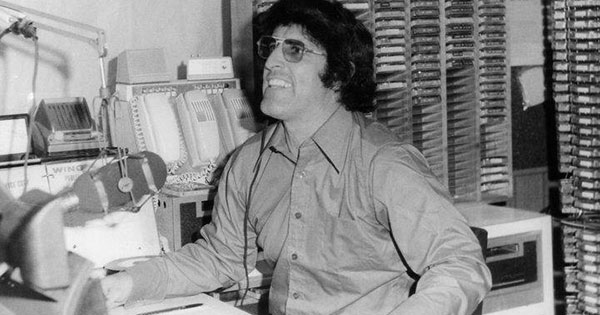
Dayton, Ohio, radio personality Steve Kirk ruled the Miami Valley airwaves for decades. Is there a need for this kind of talent in the 21st Century?

Radio is still around because, for the most part, stations and owners have adapted, shifting to digital platforms, streaming services, and podcasts. For example, this column’s podcast counterpart is featured on iHeartRadio, which operates more than 850 stations nationwide.

Additionally, over-the-air broadcasting remains a popular option, particularly in cars. Every week, approximately 92% of Americans listen to the radio—roughly 272 million people—proving that radio remains the dominant medium for commuting.

Local radio ad revenue, however, isn’t what it once was. In 2025, sales are expected to reach only around $2.4 billion—a sharp contrast to the nearly $22 billion radio generated just 20 years ago. Radio stations have had to rethink their business models due to stiff competition from digital platforms. Some have survived and prospered by embracing digital, while others struggle to keep the lights on.

Cumulus and Townsquare Media recently shut down twenty radio stations. Many of these were AM stations that had lost their audience decades ago, unable to compete with the convenience of streaming. While this thinning of the herd might seem like bad news, some argue it’s a necessary evolution—fewer stations mean less competition for ad dollars, potentially stabilizing the industry.

That said, AM remains profitable, thanks in part to FCC deregulation by Presidents Reagan and Clinton, and conservative talk programming has become its cash cow. Unlike the early 1980s, when call-in talk shows were relatively new, less restrictive laws eventually allowed companies to own and operate nearly unlimited radio stations.

Suddenly, extreme political hosts like Rush Limbaugh, who held the daytime ad money, reached millions over a network of AM stations. More entertainment-focused programs, such as Sally Jessy Raphael’s call-in show, also thrived, ruling the airwaves at night.

Then there’s traditional radio’s subscription-based cousin – satellite. Since its inception, satellite radio has been marketed as the premium alternative—no static, initially with no commercials, and a seemingly infinite selection of niche stations.

Satellite radio carved out a loyal audience, particularly among drivers who want uninterrupted entertainment on long commutes. SiriusXM, the dominant player in the satellite radio market, boasts over 34 million subscribers. While that’s a fraction of traditional radio’s reach, it’s still significant, proving that people are willing to pay for curated content.

Satellite radio offers exclusive content—think Howard Stern and live sports. However, it faces stiff competition from podcasts, which offer similar content for free. Streaming services like Spotify and Apple Music offer listeners more control over their audio experience, making it harder for satellite radio to justify its subscription fees.

Even with these checkmarks in radio’s “cons” column, in my opinion, there are still plenty of pros, so long as the medium continues to evolve. “Because that’s how we’ve always done it” isn’t a phrase anyone working in radio wants to hear from management these days.

Whether it’s delivering local news, playing your favorite tunes, or keeping you company on a long drive, radio is still a faithful companion for whatever you’re doing. If you don’t believe me, turn on your car stereo. Chances are, you’ll find something worth listening to.

Booker: Truth to Power

In history, National News, News Media, Opinion, Politics, sociology, Uncategorized, World News on April 11, 2025 at 1:57 pm

Deer In Headlines II

By Gery Deer

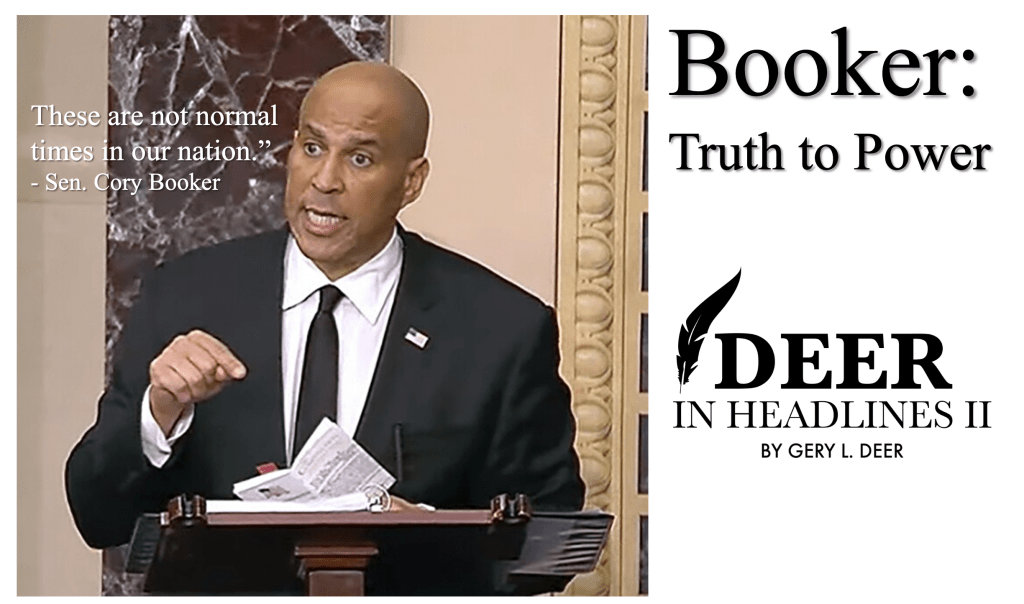
Last week, we saw an incredible example of unmitigated patriotism to provide a voice for those who have none in the face of a president who runs roughshod over anyone who dares oppose him. Cory Anthony Booker, the senior senator from New Jersey, took and held the Senate floor for 25 hours and 5 minutes in a marathon speech in opposition to President Trump’s haphazard and potentially illegal actions during the first three months of his term.

Until now, congressional resistance toward the president has been lackluster, to say the least. This is understandable considering the GOP’s control in both houses and the way this administration has reacted to any opposition, as a petulant child would on a playground when denied an ice cream cone. It’s embarrassing and troubling. Congressional town hall meetings across the country have been disrupted by constituents demanding that Trump be held accountable for the repercussions of his actions.

Most disruptors are ushered out or jailed for the disturbances, but their point is well taken. This president has been actively, deliberately, and defiantly testing the limits of his office and the ability of the other branches of government to keep him in check as designed.

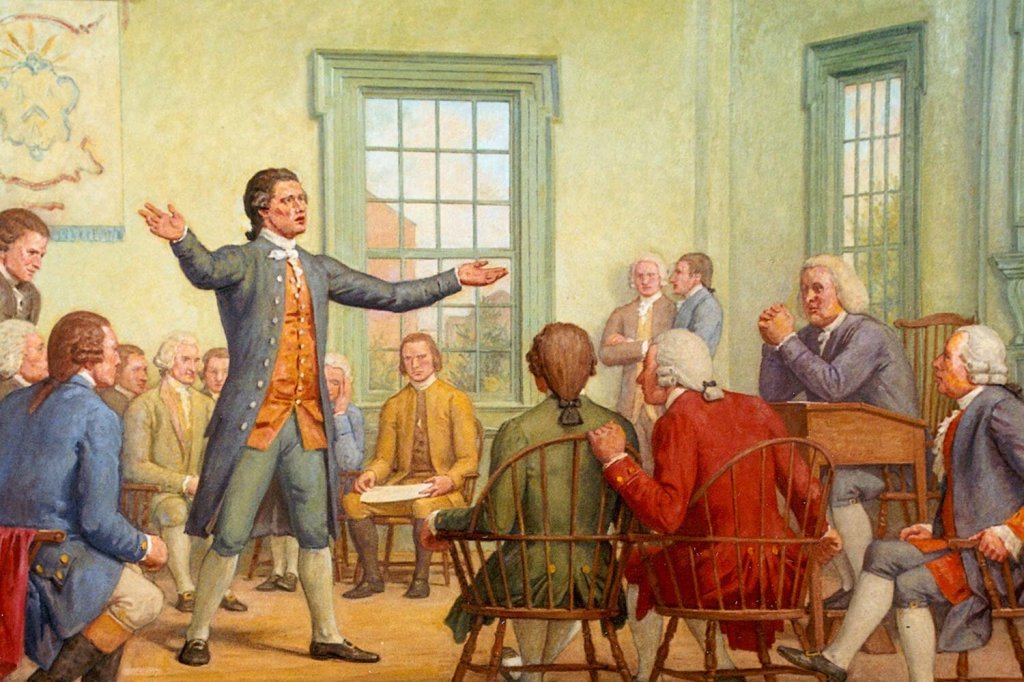
In 1787, the men governing the 13 original American colonies had been through a great deal. They’d declared independence from the most powerful country in the world, fought them in a bloody revolution, won, and finally managed to cobble together a set of laws to live by, unlike anything seen before. The newly minted Constitution was the single most important document ever drawn up to that point – and still is today. The Preamble and Bill of Rights (the first 10 amendments for those who slept through fourth grade) are the gold standard for governing a democratic republic.

It’s doubtful the Founding Fathers ever imagined their fledgling country, still in its infancy today by European standards, would end up being tested, not by a foreign enemy, but by a power-mad oligarch occupying the president’s office. And, until today, very few have had the courage or opportunity to openly stand up to him.

Monday, March 31st, Booker took to the Senate floor and stated he’d remain there as long as he was “physically able,” and that he did – and it was no small feat, even for a former football tight-end. To hold the floor, whoever is speaking must keep talking and can’t stop, sit, lean on anything, or leave the floor for any reason. Fellow Democrats helped out, though, per Senate rules, allowing them to interrupt and ask him questions.

Over a day later, the 55-year-old senator finished speaking and limped off the floor. But, during his time, he held nothing back, walloping Trump on everything from his sweeping cuts to social services to what he called the impending “constitutional crisis” created by the president’s authoritarian actions.

To be clear, several Republicans have taken the same long-winded action on various issues over the last few years, most unsuccessfully. Such a speech isn’t a liberal or conservative move but that of a legislator committed to being heard on behalf of their constituents or the country.

Booker’s record-breaking speech was patriotic because he spoke for more than just those in his voting district. He voiced the fears not just of New Jerseyans but Americans nationwide. His words begged for compassion, kindness, and common sense – from those on both sides of the aisle. After all, when Trump’s own party doesn’t stand up to him, knowing his actions are questionable at best, someone else must.

The real question is, will Booker’s speech fuel a more dauntless anti-Trump resistance? Possibly. For more than a day, the New Jersey senator knocked the president’s agenda off the front page of every news outlet website, here and abroad. Not to mention the 350 million “likes” during the live stream on TikTok.

One thing is sure. Democrat or Republican, people must realize that Trump’s actions prove his agenda is to serve himself and his billionaire friends, not the country. So, to quote Senator Booker, “These are not normal times in America,” he said. “And they should not be treated as such in the United States Senate” or anywhere else.

Absolute Power

In history, Opinion, Politics, psychology, Uncategorized, World News on March 26, 2025 at 1:58 pm

Deer In Headlines II

By Gery Deer

Power, like money, is nothing if you have enough, but everything if you don’t. But what is it? Who has it, and what are those without it supposed to do when faced off by those who do? I’m not sure I’m smart enough to answer any of those questions. If you’ll indulge me, however, I’ll make an attempt to do so and put it into a contemporary context. First, a little history – the kind we should learn from or be doomed to repeat.

It was 1887 England. In a series of letters to Bishop Creighton concerning the issue of writing history about the Inquisition, John Dalberg-Acton, the 1st Baron Acton, or better known as Lord Acton, wrote, “Power tends to corrupt, and absolute power corrupts absolutely.” Most people are familiar with the quote, but few know the preceding passage, which gives it perspective.

“I cannot accept your canon that we are to judge Pope and King unlike other men, with a favourable presumption that they did no wrong,” Acton wrote. “If there is any presumption it is the other way against holders of power, increasing as the power increases. Historic responsibility has to make up for the want of legal responsibility.”

That’s some pretty fancy, but important language. Put more simply, Lord Acton was saying that the same moral standards should apply to everyone, including political and religious leaders. Throughout history, kings and popes were permitted, essentially, to wield their authority unchecked.

America’s Founding Fathers shared the same concern. So much so that when they created a constitution for their new country, coincidentally ratified the same year as Acton’s historic correspondence, it established three separate but equal branches of government to prevent such authoritarian power.

Power is a dangerous thing, especially in the hands of two kinds of people – those who want it, and those who want to keep it from others. The first is driven by greed, the second by fear. Lord Acton was commenting on accountability, something the Constitution ensures by setting equal the Executive, Legislative, and Judicial branches of government. Should some power-hungry tyrant manage to occupy the White House, the other branches would be able to keep him or her in check.

If that individual managed to wield enough control over two of the three branches, the third would be able to mitigate some of the potential danger. But if all three branches were heavily influenced, even manipulated by one individual, then we have a problem. That lands our country in Lord Acton’s absolute power corrupting absolutely territory, and on a much larger scale.

Let’s not forget the second kind of power broker (to borrow a term from one of my favorite authors, Robert A. Caro), the kind who want power out of fear. This individual, or group, is afraid that someone else will gain the power to control them or do things they don’t like.

These people tend to be all-or-nothing types. In other words, if they can’t have it, they don’t want anyone else to because they fear it will weaken their position. Those who are afraid of minority advancement fit this category. 

But what if you’re on the receiving end of all this – the powerless. Powerless people are led to believe, by a government or other authoritative body, that they don’t deserve power. Classism, racism, ageism, and most other “isms” are examples of one group trying to maintain power over another. To quote a great role model of the late 1980s, Ferris Bueller, “Isms, in my opinion, are not good. A person should not believe in an -ism, he should believe in himself.”

When the people lose the power over government, when their elected representatives act in blind service to one policy or individual rather than the best interest of their constituents, when power begins to corrupt absolutely, freedom no longer exists. The trouble is, corrupted power often goes unrecognized until it’s too late.

Corruption dons the cloak of misdirection, intended to fool those who are unwilling to see the danger. Try to remember that power can also be a good thing that benefits all instead of one person or ideology. Unfortunately, that doesn’t make for very good reality television, now does it?

Efficacious Electoral College

In Books, Children and Family, Economy, Education, history, Local News, Politics, sociology, Uncategorized on October 19, 2024 at 10:20 am

Deer In Headlines II

By Gery Deer

Without question, 2024 has been and will continue to be one of American history’s most charged and controversial election years. Among the points of contention is the continued argument regarding the necessity – and validity – of the Electoral College.

Political operatives and pundits alike have been outspoken on the subject from all political viewpoints. There seems to be no consensus because, quite frankly, even some government officials don’t understand its purpose. So, before I give you my thoughts, here’s some non-partisan history.

During the first Constitutional Convention of 1787, a significant debate unfolded about the method of electing a president to lead the executive branch of our newly established government. It was a pivotal moment in our history after the decision to have a single individual in the office rather than two or even a triumvirate. Just imagine the complexity of electing three people every four years.

The primary issue was whether a congressional vote should elect a president or do it by popular vote.  The latter eventually won out until the smaller states began to weigh in, concerned that those with a larger population would wield more control.

Another lesser-known concern was that the political elite of the time were worried about a mass of uneducated voters swaying the results. Discussions continued for several months until, one day, in a closed-door subcommittee, James Madison laid down the concept for what became known as the Electoral College.

Enacted as a compromise and safeguard, Article II of the U.S. Constitution (later the 12th and 23rd Amendments), as well as the Electoral Count Act (ECA) of 1887) formally established the Electoral College. These laws regulated the voting process and defined the events between Election Day and the Inauguration.

Now, to clear up some misconceptions. Regardless of rhetoric to the contrary, I assure you that the Electoral College is an entirely democratic process. It is not, however, easy to explain. But I’ll try anyway (insert a deep breath here).

In a presidential election year, the political parties hold conventions where they nominate “presidential electors.” That’s simple enough to understand, but hang on. Here’s where it can get… confusing.

When a party’s presidential and vice presidential candidates win the popular vote, that party’s electoral nominees become “Electors.” Each state has the same number of Electors as members of Congress, and each Elector votes for their party’s ticket on separate ballots – one for president and one for vice president. So, your individual vote is still vitally important because the candidates cannot earn Electors without it.

For example, if Richard Nixon and Barry Goldwater (president and vice president, respectively) won the popular vote in California, the Republican nominees from that state would become Electors and cast their votes to the Electoral College. Once all the electoral votes are cast, the candidate who reaches 270 out of a possible 538 wins – and this is only triggered if the candidates win that state’s popular vote in the first place.

In the news, the results sound something like this: Nixon has won California and its 54 electoral votes. Of course, those results still have to be certified. As you might recall, there was a slight hiccup during the 2020 election certification. However, new security measures have been taken to reduce any potential repeat of those terrible events.

Remember, this is just a glance at the process, but I hope it helps. If it’s still puzzling, a good analogy is Major League Baseball’s World Series. Every year, the winner is determined not by which team got the most runs per game but by which won the most games in the series. The Electoral College works the same way.

In my opinion, the Electoral College is the only practical, efficient, and fair way to ensure everyone’s voice is heard because we’re represented just as we are in Congress. The Founders realized that the popular election alone could and would eventually bring chaos.

If we want an election process that stays in constant contention, then eliminate the EC. But if we’re going to have all our citizens represented equally, let the system do what it was designed to do. If you want to make a real difference, make sure you vote.

The Little Band That Could

In history, Local News, Opinion, Uncategorized on October 12, 2024 at 12:07 pm

By Gery Deer

Deer In Headlines Special Edition October 14, 1993

It had been a long day for the freshman saxophone player and his high school marching band friends. By now, it was 4:30 in the afternoon, and the day had begun for them nearly eleven hours ago.  They’d earned the opportunity to compete in a tri-state marching band competition in Huntington, West Virginia, some 200 miles from home.

The mid-October afternoon had become hot and muggy. Even the seats in the stadium were perspiring. The adventure had begun early that morning with all the spirit of the world’s most excellent universities. The performances were over, and they sat impatiently awaiting the judging results.

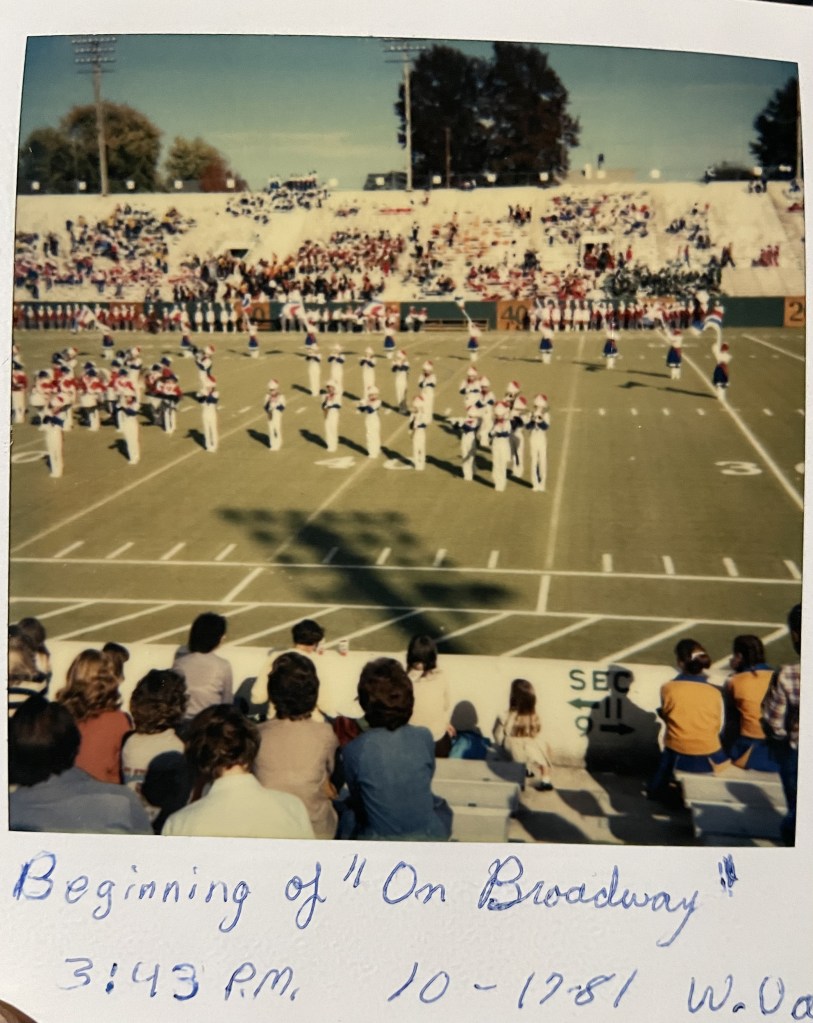
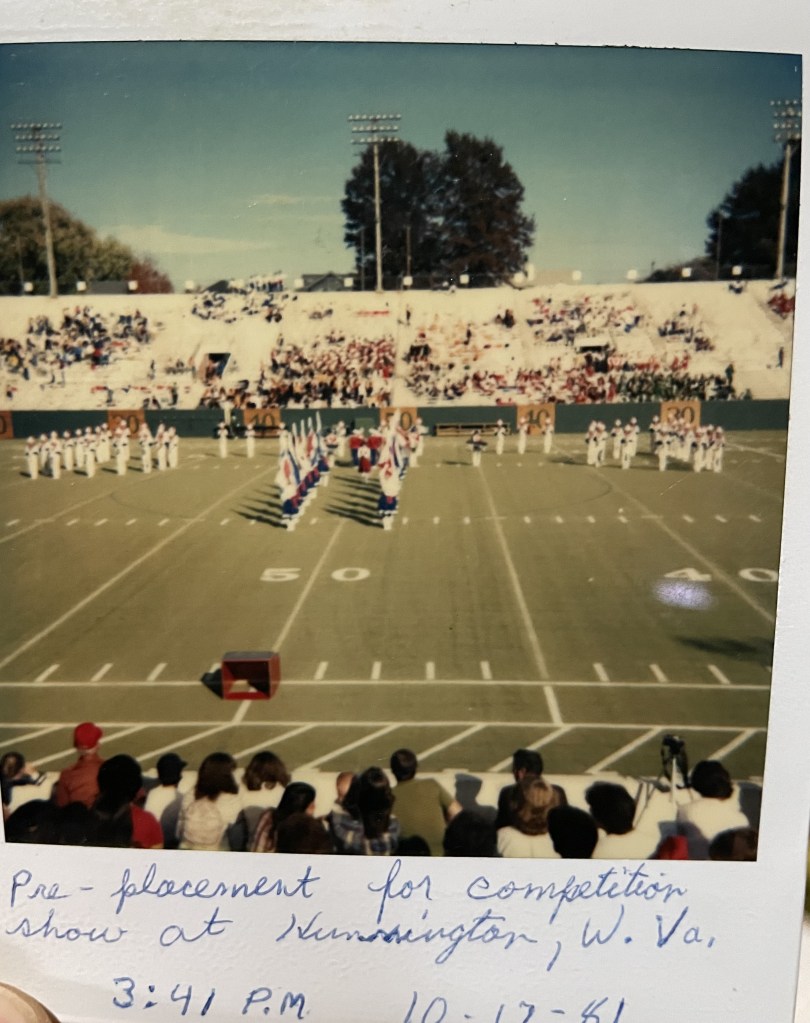
This is the view of the real Greeneview High School marching band during their first song of the contest—from the families’ perspective. (Photo by Lois Deer, 10-17-1981)

The bands were divided into three classes based on the size of their home schools. This group’s small, rural high school was in the last division, called class B, at this show. That meant it would be a long, hot wait by the time they went through each division, of each class, of each award. It was nerve-wracking, it was hot, and it was discouraging, but they waited. Patiently – well, sort of.

The university stadium buzzed with nervousness and emotion as the first awards were called. “Fifth place, class AA, goes to…,” A loud cheer bellowed from 100 yards down the bleachers, drowning out the anxious and irritated sigh from the young saxophonist and his group. The noise subsided. The announcer spoke again. “The fourth-place award goes to…” Another excited cheer came from the stands. The little band had worked hard all summer for this. It was one of the best shows they’d ever done, but this performance got off to a shaky start.

Their arrival at the host stadium was almost the exact time they were supposed to go on the field for their practice run, and things were rough. Heat exhaustion cost them one of the flag corps at the start of their competition show. The Astroturf-covered football field, new to most of the marchers, created its own set of problems. These kids were used to trotting through mud and grass. Now, wearing the slick-souled dress shoes, they had to contend with spongy ground and slippery artificial grass.

If that wasn’t enough, one of the trombone players nearly decapitated a field judge with his slide. During his morning pep talk, the director said, “Judges were fair game…” Meaning, if they got in the way, just keep doing what you’re supposed to do. Unfortunately, the aggravated trombonist took the recommendation literally. Somehow, they got through it all, and there they were. Hot. Sticky. Impatient. Every ingredient was added to create a group with a bad attitude, who, by this time, faintly resembled people sitting in a traffic jam.

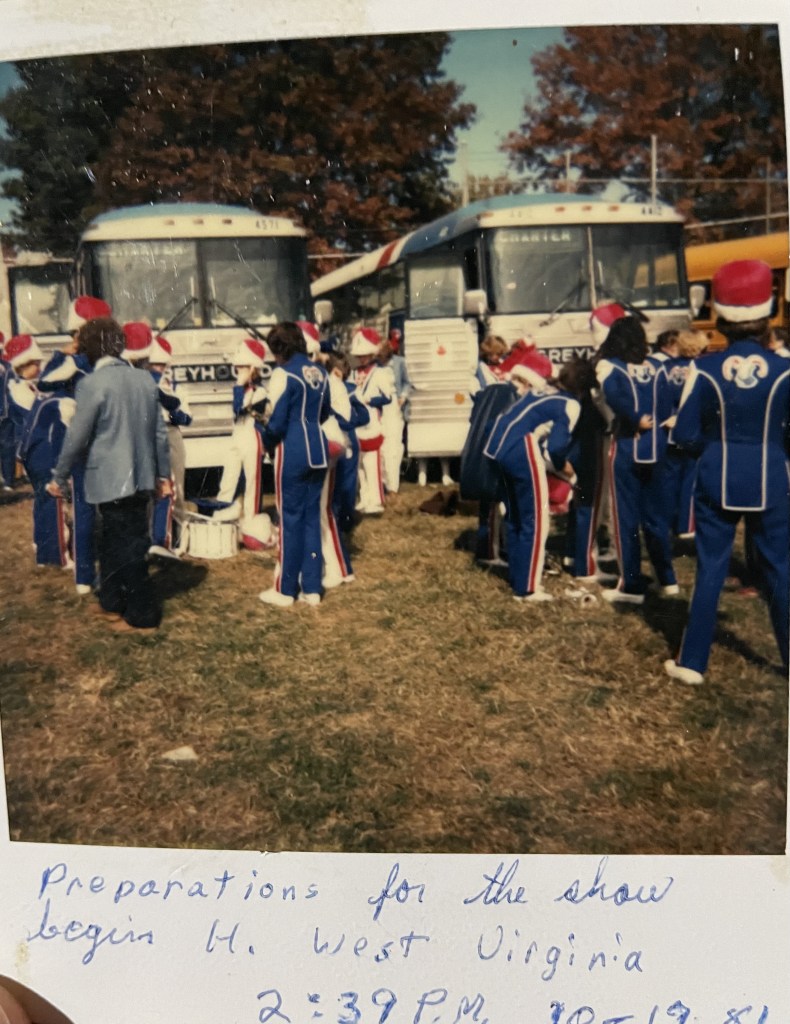
A lot was riding on this, though. Everyone was here. Parents and family friends had accompanied the band on the four-hour Greyhound bus ride that morning. The busses pulled out of the school lot at 6 a.m., scored by the groans of how you’d expect average high school kids to at that time on a Saturday morning.

Most slept on the ride down. Many brought weekend homework. Others reviewed their music to ensure they remembered that one bad note at the football game the night before. Whatever the case, they made it, and everyone was pumped. And a little scared. Friday night football games were never like this. The tension grew and hovered in the air over the little group just the way that bricks don’t.

The young saxophonist eyed the band’s director. He was down on the track on the opposite side of the field, pacing back and forth in front of the reviewing stand like an expectant father. Another announcement blared from the public address speakers. The director’s curly afro hair and kinky beard glistened in the fall sun with impatient perspiration, giving him more the appearance of a heavy metal rock singer than a high school band director.

Then again, everyone was starting to look like that. The group grew increasingly discouraged with each passing award. The announcer was up to their class now, and the fourth-place award was called. Rats! The saxophonist slumped back against the bleachers with an irritated gasp. So did everyone else.

“There’s no way, ” he thought. “All these huge bands from three states? We can’t possibly have a chance at anything higher than fourth.” That seemed to be the general opinion of the others as well.

Another award. More cheering. None of it from them. Now, the announcer was up to second place, and the morale-broken musicians began standing, a few at once. Each gathered their things to return to the busses and the quiet little farm town. Some had already left the stadium.

“Well, so much for that,” someone said. “This is embarrassing, ” said another, like a line plucked from a Peanuts cartoon. Even their band director dejectedly headed towards his disappointed students. The announcer began to speak again, but no one in the group was listening. It was over. They tried, but the odds were against them, and the game was rigged.

“Second place, class B goes to…” A long pause.

This seemed to be the announcer’s annoying trademark, meant to instill drama. It didn’t work. It was just irritating. When their band took the field for the show, he sounded like he’d been mugged midway through his address. “You may take the field for comp…” Everyone held their breath. “…etition.” Whew!

Suddenly… the words no one expected to hear. No, more than that. They were impossible, improbable, incomprehensible words.

“Second place, class B goes to… Greeneview High School Marching Band from Jamestown, Ohio!”

For a solid breath, someone blinking would have rung like a gong. No one moved. No one spoke. Those shambling out stopped and turned around. There was an oxygen-steeling collective gasp.

A slow, quiet calm settled over the group as their brains processed the words they’d just heard. Suddenly, explosive screams of joy shattered the silence. They cheered, cried, and hugged. In the stadium section where their families were, everyone was on their feet, jumping, crying, and yelling. Even the other schools called cheers of congratulations, and they were equally shocked by the news.

The little band’s director stood in silent shock for a moment, and then it hit him. His eyes were as big as saucers when he turned to face the band from across the field, raising one arm in victory to them as if this little band’s second-place win were Olympic gold. It might just as well have been, but that wouldn’t have meant as much to them.

At the reviewing stand far below, their field commander and flag corps captain proudly marched to the awards table and saluted the presenters. Their vibrant red, white, and Colombian blue uniforms were almost as brilliant as the sun itself as they spun around in a military-like snap to salute the ecstatic audience. The pair accepted the two-and-a-half-foot trophy and rejoined the line of representatives standing at attention in front of them – both in tears.

Back in the stands, the young saxophonist and his friends watched and beamed. This was truly their most honored time together. The young man shaded his eyes as he took a moment to look at these people and tried desperately to soak it all in before it was over. They had no idea what they meant to him. So much of their lives lay before them. But this day… this was a day they’d never forget. “Someday, this is going to make a great story,” he thought.

The bright sunlight brought a tear to his eye. Then again, maybe it wasn’t the sunlight at all. He wiped it away. The thundering applause, congratulations, and excitement continued for what, in reality, was only about a minute or two. But it wrang out for what seemed like a lifetime to… The Little Band That Could.

———

Epilogue

My name’s Gery Deer, and that’s a true story from October 17, 1981. I was the “young saxophonist,” and I was right. I never forget that day, and it did make a great story. The band, Greeneview High School Marching Band of Jamestown, was under the direction of Richard Turner.

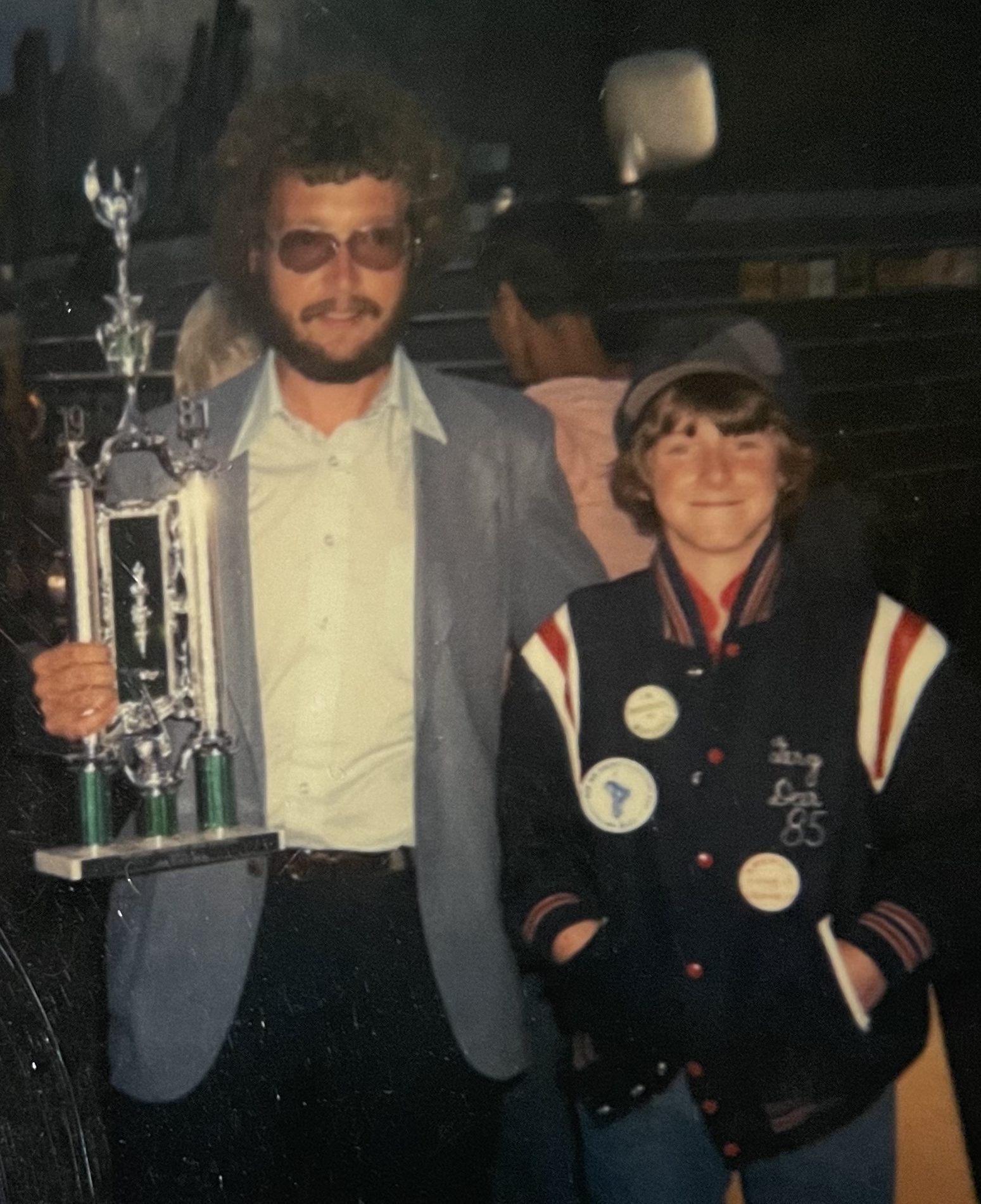
Band Director Richard Turner, the contest trophy, and me – Gery Deer in my newly-minted Greeneview school jacket.

I wrote this story after visiting Cooper Stadium in Columbus, Ohio, to see Greeneview perform in another competition show many years later. They competed in the Ohio Music Education Association’s state finals, and it was fascinating how little things changed from one era to the next. It was like reliving that day all over again.

Two of my four nieces were in the band in those days—now three decades ago. The oldest was the band’s field commander, a senior at the time, and a saxophone player like her uncle. The next oldest was a clarinetist and a freshman. They didn’t win their contest but took an honorable mention. Either way, I think they will still reflect on their day, as I do mine, and remember the feeling.

No one could have been prouder of my family and my school except maybe my parents, who were there again to watch their grandchildren as they did their own. And they, too, will remember. They say we can never be kids again. Well, no one could have gotten closer to it than I did that day. But to the “next generation,” I say, “When it seems like us old folks don’t understand, try to remember, we were there too.”

Here are some pictures of that day in 1981…

Heirloom Emotions

In history, Media, Opinion, Senior Lifestyle, Uncategorized on June 15, 2024 at 8:55 am

Deer In Headlines II

By Gery Deer

It’s truly remarkable how we can develop such deep emotional bonds with family heirlooms. Whether it’s an antique jewelry box, a wax candle mold, or even a small piece of roof tile from a 19th-century courthouse, these objects hold a special place in our hearts as cherished remnants of days gone by.

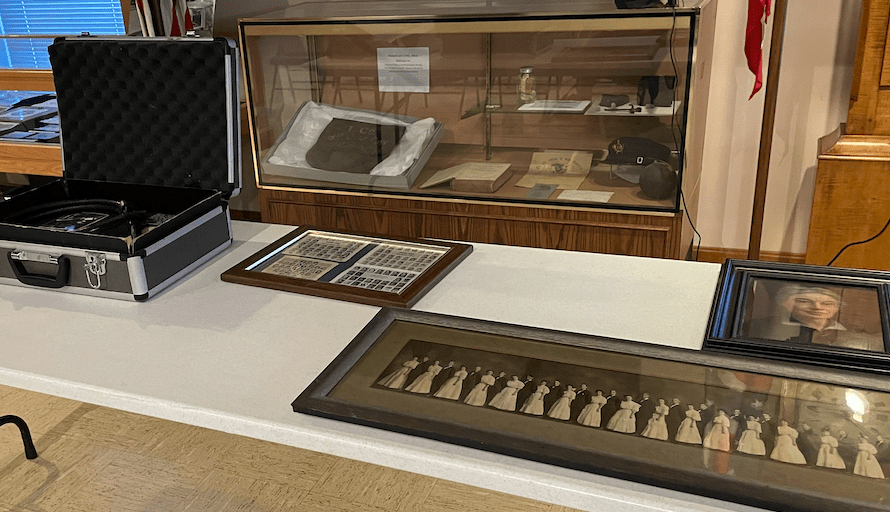
I recently attended an event promoted as a kind of show-and-tell at the local historical society. Visitors were encouraged to bring an item that had some significance to them, the history of the community, or their family, and share the story behind each piece.

Upon my arrival, I was greeted by a sight that stirred a sense of nostalgia. The organizers had proudly arranged the evening’s offerings on tables at the front of the room. Soon, a representative of the organization initiated the event, and one by one, each presenter stepped forward, their faces beaming with pride as they shared the personal significance of their cherished items.

It was like watching a live edition of The Antiques Roadshow minus the frequent condescension of the hosts. You know, “I’m sorry, but this frog statue lamp with a clock in its belly isn’t worth squat.” I always hated that. Anyway, I doubt any of the artifacts would have been for sale. You’d likely have to pry each one out of its owner’s cold, dead hands.

Even more impressive than the reverence with which each person spoke about their property was the variety of items they brought. One man brought a wooden dynamite crate, which was once used to carry explosives for stump removal at his grandparents’ farm. Another showed off his own grade school pictures, some 65 years old.

Others exhibited familial artifacts ranging from a military bayonet to a small jewelry box, which we learned was the owner’s only connection with her great-grandmother. Though very plain to the eye, it was priceless and beautiful to her, and perspective is everything.

When it originated with the speaker, like the school photos, the speaker relayed a personal account of the object’s significance. If, on the other hand, the possession once belonged to a loved one or close friend, the connection is very different. Things left behind by those before us can be deeply meaningful. Heirlooms strengthen our memory of someone and remind us of the relationship.

You’re unlikely to forget a departed parent, spouse, or sibling. But seeing and touching something that belonged to them reaffirms that connection tactilely and creates an emotional response, good and bad.

As I absorbed each story, a profound realization dawned on me. The pride, honor, or reverence—whatever you may call it—was not about the possessions. It was about the people in the stories, whether they were related or not to the speaker. After all, what is human society without stories? Stories shared between family and tribal members are how we preserve our history. And physical remnants of that history, like these family heirlooms, make the stories more tangible, more real.

And it doesn’t have to be about people who have passed on. For those in the room who had attended the same school, the antique class photos had a more profound, more personal association. Someone who’d been a student at the same school as several of the audience, but a half-century earlier, bound two generations, brought together because someone shared a story about a picture.

Finally, there’s something to be said for legacy. I think we all want to be remembered. I sincerely hope to leave behind more than a half-used pencil and a broken typewriter. But if so, I also hope someone will come up with a compelling and meaningful story about them. I think the ancestors of those who shared family items would be very proud of their legacy.

My parents left behind a treasure trove of memories, from books and dolls to trucks and tractors. Among these, I hold dear my father’s wristwatch. He personally handed it to me, sharing the story of its origin. When I gaze upon it, I am transported back to that moment. It’s not about the watch itself, but the emotional bond it represents, the moments he spent with me that hold the true value.

A House Divided

In Dayton Ohio News, Education, finances, Food, Health, history, Local News, News Media, Opinion, Politics, psychology, Senior Lifestyle, Uncategorized on September 2, 2023 at 2:47 pm

Deer In Headlines II

By Gery Deer

When I restarted this series after a 5-year hiatus, I decided to steer away from politics, religion, and other hot-button topics in favor of more personal subjects. That said, I’ll dip a toe into that pool only enough to express my concern at the level of divisiveness now facing our country and who actually pays the price for it.

The political climate in America today is toxic, with no end in sight. Everything is viewed only from one side by an ill-informed, angry citizenry and uncompromising elected, uncivilized government officials. Over the long haul, we simply can’t function that way. Our legislators must work together in order to govern, even to manage the most basic issues. Unfortunately, that seems unlikely to change when the only people getting attention are the radical extremists.

Regardless of your ethnic background, or whether you’re conservative, liberal, or whatever, surely there are things we can all agree on, right? For instance, instead of spending hours on cable TV news bickering about who caused inflation, wouldn’t our collective energy be better spent on ways to help people get through it? Meanwhile, our dedicated elected officials spend taxpayer money riding around in limousines, secure in their healthcare, paychecks, and benefits, all guaranteed long after they’ve left office.

More absurd is that, in the most powerful and wealthiest country on Earth, there are still people who can’t get enough food, shelter, or other necessities – particularly the elderly, veterans, and children. No, it’s beyond absurd, it’s criminal. This problem affects everyone. The number of working poor continues to grow, most of my family included. Most people are only a paycheck or two from ruin. All it takes is one major catastrophe and boom, we’re on the street. Regardless, people from every side are too busy waving flags and hating each other’s politics to care or do anything about it.

Recently, I did some work at a food pantry and had the opportunity to learn more about the mission of these organizations. I am shocked about how necessary they are in so many communities. In just one year, the number of families served might double, so they must continually find new ways to meet the constantly growing demand.

You might be surprised to know that the people who most need services like this are not homeless or indigent. They are instead the working poor, single-parent families, and, sadly, veterans. No one should feel ashamed of taking help from those who offer it. But I can’t imagine how hard must be for someone who proudly served our country and then is forced to go to a food pantry just to have enough to eat.

The number of military families and veterans who need various types of assistance is also surprising. They include elderly or disabled veterans, military wives and husbands with young children trying to make ends meet while their spouses are deployed, families of all ages and backgrounds, and the kids, wow. Watching a child’s eyes light up over a book or something as simple as a Twinkie or a fresh piece of fruit can be simultaneously enlightening and heartbreaking.

Again, while the politicians ride around in limousines and kowtow to mindless followers during ridiculous cult-like rallies, the people they claim to be fighting for wait in lines at food pantries. They have no money, little healthcare, and a veteran affairs system that’s so broken it needs to be razed and rebuilt from the ground up.

These issues aren’t conservative or liberal, Muslim, Jewish, or Christian. We are so blinded by ridiculous ideologies and political divisiveness that we can’t see the real responsibilities facing our country – poverty, homelessness, substance abuse, an ever-changing job market, and so much more. Certainly, we could all get together on some of these things. Nope, it’s just not going to happen.

The people I meet in these situations don’t want handouts. They want to be understood and for their elected legislature to work for not against them. But until we put down the flags, turn off the news, and choose to be better human beings, nothing will change. So, all I have left to say is to quote my favorite president. “A house divided cannot stand.”

Fair Play

In Entertainment, history, Local News, Opinion, Uncategorized on August 5, 2023 at 7:27 am

Deer In Headlines II 

By Gery Deer

The onset of fall means fair season here in Ohio, and my visit to our county fair this year was simultaneously familiar and foreign. When I was a kid, the county fair was the grand finale of my summer. At the time, I was probably annoyed with how much work it was. But what I wouldn’t give to walk through the fair of my youth. I didn’t appreciate it then, but those were some of the best days of my childhood.

As a young 4-H’er, I always had multiple projects to exhibit each year. If you had livestock (I showed cattle) you generally camped on the grounds to tend to your animals and get show practice in the arena more easily. My Dad always brought our small motorhome for me, so I had a nice place to sleep and some privacy. But sometimes, just to be closer to it all, I tossed my sleeping bag on the bales of hay next to my calf’s stall in the cattle barn. At night, the summer heat gave way to a cool breeze that flowed through the open sides of the barn, and I’d fall asleep to the sounds of the fair all around me, and some occasional mooing.

In the morning, I’d feed and water my calf (I only ever showed one at a time). Then breakfast at my favorite food tent where a youth group sold Bob Evans sausage, biscuits, pancakes, and all the trimmings. A kid’s gotta eat, right? We didn’t have money for it every day, but it was really great on the days I was really busy. 

Later, it was exercise time, for me and the cattle. I walked a 900-pound steer as if I were strolling through a park with a poodle. Showing an animal at the fair meant a great deal of training – for them and me. So, my calves behaved more like someone’s pet than a half-ton farm animal.

I showed in the dairy beef class and on show days, I had to wear white. I know, right, white clothes in all that muck and dirt? But we weren’t allowed to be dirty and neither were the animals. After a bath came a good brushing and a polish of the hooves. Finally, I had to “bob” their tails. It was a weird practice of teasing the hair at the end of the calf’s tail until it fluffed out like a ball, then folding the ends under and rubber-banding it, upside down, to the tail. Believe me, even if there was a picture, it wouldn’t make sense. 

Along with all the work, there was plenty of play. Many of the kids stayed on the grounds without their parents and no one ever seemed to worry about us. In between chores, we were normal kids, playing games, eating cotton candy, and riding on those rickety carnival rides. Once there was even a woman in a cage who turned into a gorilla! How did we survive all that? For one week every summer, I was in my element, one place I didn’t feel like a misfit.

Amidst all the fun, however, I had responsibilities. So, every kid had to keep one ear tuned to the dreaded public address system because, in the middle of a ride on the Scrambler, a garbled announcement would echo across the entire fairground sounding something like this. “Gery Deer, meet your mother at the FFA tent, immediately. Gery Deer, go to the FFA tent.” You see, before mobile phones, if parents needed the kids to somewhere during the fair, we got paged – very publicly. Talk about embarrassing, I can still hear the other kids. “Ha ha, Gery, your mommy wants you!” Oh, the humiliation.

I still miss those days and even then, I had some appreciation for the role the experience played in my young life. One night, just as the fair was closing, I shut my eyes and just listened for a moment as if storing the sounds for later, maybe when I couldn’t go back there again. I remember every moment of my time there. It’ll always be a part who i am, and I will always be grateful.

Jamestown Wild West performer and teacher, Gery Deer, honored.

In Dayton Ohio News, Entertainment, history, Local News, Sports News, Technology, Uncategorized on July 31, 2023 at 2:04 pm

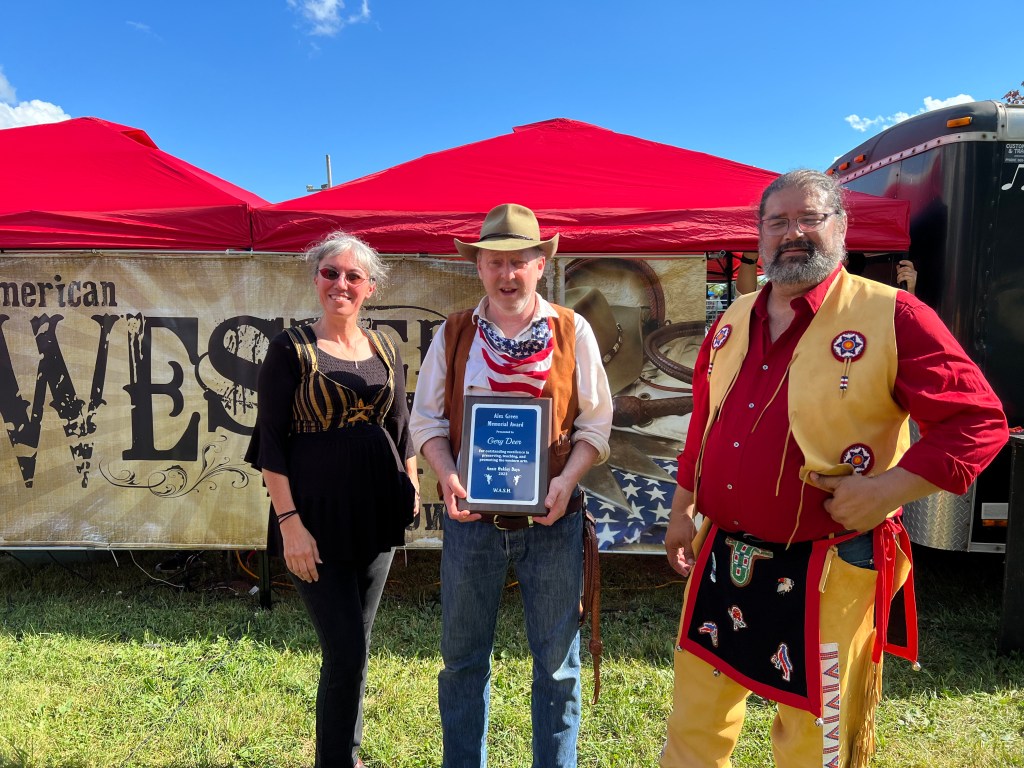
Jamestown, Ohio – August 1, 2023 – Jamestown resident, writer, speaker, and performer, Gery L. Deer, was honored on July 29th during the 20th Annual American Western Arts Showcase at the Annie Oakley Festival in Greenville, Ohio. Deer received the Alex Green Memorial Award for excellence in promoting, perpetuating, and teaching the Western arts over the last two decades. The award was presented by the co-producer of the show, Kirk Bass, of Xenia, supported by the rest of the cast and crew of the long-running Wild West show.

Gery Deer is presented with the Alex Green Memorial Award by American Western Arts Showcase co-producers Melodee and Kirk Bass.

Deer’s primary Western arts work has been teaching the whip as a sport and performance art. He’s instructed hundreds of actors, stunt performers, and hobbyists over 30 years and founded The Whip Artistry Studio, the only permanent facility in the U.S. dedicated to the non-combative study of the whip.

His award was named for the late Australian stuntman, Alex Green, who was a 40-year veteran of television and film stunt work, particularly with the whip. Green was one of the founders of the Wild West Arts Club (WWAC), where Deer earned early recognition as a national bullwhip speed and accuracy champion. The two became good friends and Deer has tried to continue the spirit of those early events by showing the whip in a positive light of sport and performing art.

“My goal has always been to teach and expose young people to these uniquely American skills,” Deer said. “I’m beyond humbled by the award my friends, no, my family have presented to me. It means more than I have words to convey and I’m forever grateful.” In addition to the honorarium, earlier the same day, Deer also won first place in the two-handed bullwhip speed and accuracy competition, called the “Speed Switch.”

Deer started the American Western Arts Showcase started in 2002 with a whip-cracking workshop and exhibition presentations and has produced the event ever since. In 2003, the program moved to the Annie Oakley Festival in Greenville, Ohio, and was retooled to become the Ohio Regional Convention of the Wild West Arts Club and offered whip, knife throwing, and trick roping contests, stunt demonstrations, stage performances, and more.

When the WWAC closed in 2007, Deer and company continued the showcase portion and kept the whip contests, which were even more popular with crowds than the performances. After 20 years, and hundreds of performances, the 2023 season marks the final production of the show at the Annie Oakley Festival.

For more information about Western arts performances and training, visit www.thewhipartistrystudio.com.

Is this your new site? Log in to activate admin features and dismiss this message
Log In