Local News & Commentary Since 1890.

Archive for the ‘Education’ Category

Greater Dayton Professionals BNI hosts visitors day April 18

In Business, Economy, Education, Jobs, Local News, sociology, Uncategorized on April 1, 2013 at 1:47 pm

RIVERSIDE, OH – Members of the Greater Dayton Professionals Chapter of Business Network International (BNI) are hosting a Visitors Day meeting beginning at 7:30 a.m. until 9:30 a.m., Thursday April 18th at The Event Connection, 4140 Linden Ave. in Dayton. Reservations are requested but not required.

BNI is a professional networking organization whose primary purpose is to establish mutually beneficial business relationships resulting in the active exchange of qualified referrals. At more than 6,000 chapters in 51 countries, BNI is the largest organization of its kind. Last year, BNI members generated more than $3.3 billion dollars in closed business.

The Greater Dayton Professionals Chapter of BNI is currently looking for applicants to fill a variety of positions including attorneys, home healthcare providers and electricians, to name a few. In addition to this no cost, no obligation networking opportunity, visitors will be provided a special presentation about the advantages of word-of-mouth, referral marketing presented by BNI Executive Director Jim Weghorst and Assistant Director Sheryl Wagner.

“Last year, members in our chapter exchanged more than a half-million dollars in sales resulting from their participation,” says long-time BNI member Gery L. Deer, the chapter’s secretary treasurer, public relations coordinator and creative director of GLD Enterprises Commercial Writing. “The BNI structure helps members develop or expand a network of professional connections which can grow well beyond the core group to unrealized potential customers.”

“BNI allows only one person per professional category to join each chapter,” Deer says. “The exclusivity of the member’s position eliminates the problem of internal competition so common within other types of networking groups.”

Seating is first come, first served, but reservations are available by calling chapter president Justine Kangas at (937) 898-3167. Visitors are encouraged to bring plenty of business cards and be prepared to stay after the meeting for a short follow-up session. For more information visit the chapter website, www.greaterdaytonpros.com.

Great books are hard to find on today’s shelves

In Business, Children and Family, Economy, Education, Entertainment, Literature, Local News, Opinion, Senior Lifestyle, sociology, Technology on March 20, 2013 at 2:47 am

Deer In Headlines

By Gery L. Deer

"Flights of Fiction" is an anthology of stories set in southwest Ohio by local authors from the Western Ohio Writers Association. It will hit shelves in mid-April 2013 and features local talent and production.

“Flights of Fiction” is an anthology by local authors will hit shelves in mid-April 2013.

Books are incredible things. They can make you laugh and cry. They can whisk you off to faraway places with strange sounding names and introduce you to characters and worlds that only exist in the mind’s eye.

This month, Disney released the film version of Oz, The Great and Powerful, a prequel story to the more familiar tale of Dorothy Gale’s trip down the Yellow Brick Road. Author L. Frank Baum wrote his 14 originally published Oz books between 1900 and 1920 and each one carried us over the rainbow to a world of magic and adventure.

Of course, it was movie magic that brought the Land of Oz to life on more than one occasion. Even with all of the high-tech special effects and brilliant colors, nothing can replace the written versions of these timeless classics.

Books have a way of exciting the mind and launching the imagination of children and adults alike. Sadly, instead of giving us amazing tales of adventure, modern publishing has turned its attention more towards anything that fits a hot-selling genre rather than keeping an eye out for the next Sherlock Holmes.

When Baum and his contemporaries like Sir Arthur Conan Doyle were writing their books, publishers were looking for great writing and engaging stories. Of course they wanted to make money, but they were less likely to sacrifice quality in favor of selling solely for the lowest common denominator. They knew that the best way to grow revenue was to publish a great book.

It seems that today’s publishers are looking, not so much for good literature, but sole marketability. Publishing companies are focusing on the bottom line with through a bit of astigmatism.

People often forget that the business of publishing fiction is part of the entertainment industry and is driven by the buying public. As major publishers shrink in size and revenue, they continue to blame the Internet and self-publishing authors rather than looking in a mirror to realize they’ve done this to themselves.

Occasionally, a publisher will take a chance on a unique story which then turns into a runaway success. The best examples are more recent series books like Harry Potter, Twilight and 50 Shades of Grey. But once those titles charge up the audience, the publishers start releasing knock-offs or genre-trapped titles based on similar characters and situations to pacify the desire for more of the same.

The problem comes when that’s all they put out, rather than trying to take advantage of a good book-buying market and release something different. All they’re publishing for is cash flow at that point, landing much better manuscripts in the trash bin.

Sadly, there’s really no way to change this trend as long as the public continues to follow hype instead of looking for quality. Until consumers demand better material to read, the status quo will remain low cost, high volume, all buildup and no substance.

So if readers don’t find what they want at the big-box bookstores, they should turn their attention to local authors. After all, everyone talks about buying local and here’s just another way to do that. Thanks to high-quality electronic and self-publishing options, some great local authors are making their work available on a regular basis.

A few minutes in a neighborhood bookstore, even used book shops like Xenia’s, “Blue Jacket Books,” on S. Detroit St., can turn up a treasure trove of locally produced work. From memoires to science fiction local authors have some great work out there to satisfy the hunger of the voracious reader.

Like with larger outlets, local authors can spin some stinkers too, but they often cost less and, even if the book isn’t that great, you’ve helped support the community. Local authors work and live in your community and often hold signings and attend area writing groups. Keep your eyes open. There might just be another L. Frank Baum out there somewhere, yet undiscovered by the big guys. So go hit the local bookstore and remember reading is fundamental.

LOOKING FOR A GREAT BOOK? HERE ARE OUR RECOMMENDATIONS! 

Has Kasich set his sights on the Oval Office?

In Business, Economy, Education, Jobs, Local News, Media, National News, Opinion, Politics, Senior Lifestyle, State News, Uncategorized on February 19, 2013 at 11:45 pm

Deer In Headlines

By Gery L. Deer

(AP Photo/Charlie Neibergall, File)

(AP Photo/Charlie Neibergall, File)

I am by no means one of the top political minds in the State of Ohio – far from it, in fact – nor do I hold any connections that would give me insight into what might be going on in the governor’s office right now. But, it seems to me (nod to fellow columnist Bill Taylor) that John Kasich has his eye on another chief executive office – the one with the oval-shaped room.

While most commentators are crediting the activity to Kasich’s bid for re-election, given the level of his high-handed agenda over the last two months, it is my belief that the governor is planning a run for the 2016 Republican presidential nomination, or at least the vice-president’s spot on the ticket. A quick review of the governor’s public agenda clearly shows a noted increase in the number of high-profile policy and legislative initiatives, particularly in recent months.

It certainly seems as if he is doing just what a politician should do when he wants to win over both sides for a broader appeal. He’s riding the fence, trying to appease liberals as well as conservatives with nationally controversial legislative changes such as an increase in the minimum wage passed in December, but largely unpopular with republicans. Dangerous, since he is still vulnerable even in a re-bid for his job, but it’s a give and take.

According to political columnist, Chris Cillizz, a September Washington Post poll showed that the republican governor held a 50-percent approval rating. In December, a Quinnipiac University poll gave him a 42 percent overall job approval, with 35 percent disapproving, his highest marks in that poll since inauguration.

He is more popular than ever, possibly more so than his democratic predecessor, Ted Strickland. But, in the last half of his term, he is upping the ante to prove he can lead in tough times and get things done to improve Ohio’s economy even as Washington remains stymied.

Kasich still has a long way to go with a great many negatives on his desk, among them lackluster job numbers, which are currently below the national average. He also has some outspoken opposition to his “rough” demeanor.

In a recent Dayton Daily News report, Montgomery County Republican Party Chairman Rob Scott, a Kasich supporter, admitted that the governor sometimes has a harsh approach.

“I think what Gov. Kasich has brought to Ohio is that he’s up front and honest: this is what we need to do and this is how we get there,” Scott said. “And he may run over a couple people, but sometimes to get things done, and to do what’s right, you’ve got to do that.”

If there is a possibility that Kasich is looking towards 1600 Pennsylvania Avenue, then the question is, does he have what it takes first to get the attention of a splintered GOP and second, to win over the disheartened voters from both sides of the aisle? At the moment the only conservative frontrunner for the presidential nomination is former vice-presidential candidate Paul Ryan. Once an unknown, Ryan had the national stage, often upstaging his running mate with his more down-to-earth demeanor and likeability among the younger voters.

Kasich is getting national attention for his aggressive policies and growing poll numbers, but he’s still not well known outside Ohio and far too conservative even for moderate democrats. But, he might at least get credit for adding some new Ohio jobs in the near future, beginning with Ford’s pending announcement about a new engine plant to be located near Cleveland. The $200 million upgrade will add about 450 jobs to a plant which currently employs approximately 1,300 hourly and salaried workers.

This announcement comes on the heels of Kasich’s State of the State address in which he outlined even bolder plans to achieve his vision for the state. It remains to be seen if he can get legislators to go along with radical changes in taxes and school funding. If he manages to do half of what he’s set out to, he might just have a shot at the big chair in the Oval Office sooner than later.

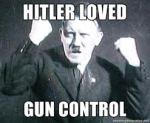
Hitler didn’t disarm the German people, the Allies did

In Business, Education, Local News, Media, National News, Opinion, Politics, Religion, sociology, State News, Uncategorized on February 5, 2013 at 12:45 pm

Deer In Headlines

By Gery L. Deer

This picture couldn't be more inaccurate. Hitler was a strong advocate of gun deregulation.

This picture couldn’t be more inaccurate. Hitler was a strong advocate of gun deregulation.

It’s an unfortunate fact that many high-profile politicians only speak out about issues like gun control when devastating events like mass shootings hit the headlines. Suddenly, people shift to one side of the debate or the other; with conservative Republicans typically taking the defensive, pro-gun position.

Unfortunately, most of this issue is argued, not from factual evidence or statistics, but from the standpoint of emotion, religious dogma and political position. If that isn’t enough, conservative extremists hoping to insight fear seem to always cite Hitler’s Nazi Germany as an example of what could happen to America if guns are taken away. Sadly, people rarely do any research before they start spewing nonsense like this; again, why let facts get in the way of a good scare tactic?

In fact, Adolf  Hitler did have a gun control policy, one that many on both sides of the debate say looked a lot like that proposed by California Senator Dianne Feinstein. But Hitler’s policy was an addition to gun control acts set up by the Allied powers after World War I to prevent Germany from regaining a military presence.

Quoting Cris Miles, editor of PolyMic.com, “The German (gun control) regulation was in response to the Treaty of Versailles and the Weimar government passed the legislation (not the Nazis).” Article 169 of the Treaty of Versailles stated, “Within two months from the coming into force of the present Treaty, German arms, munitions, and war material, including anti-aircraft material, existing in Germany in excess of the quantities allowed, must be surrendered to the Governments of the Principal Allied and Associated Powers to be destroyed or rendered useless.

As Mr. Miles points out in his own article on the subject, the wording of this policy must sound like the nightmare of every pro-gun activist in the country. So far, there is no national legislation being proposed promoting confiscation of personal firearms. Keep in mind that the German regulations were put into effect nearly a decade and a half before Hitler’s Fascist party took control of the country in 1933. In a strange twist of irony, pro-gun advocates might be surprised to learn that they had something in common with the vile German dictator.

As it turns out, Hitler was a strong supporter of gun deregulation. In 1928, German citizens were granted the right to carry a firearm (applying only to handguns at that point) with a permit but where ownership was restricted to, “Persons whose trustworthiness is not in question and who can show a need for a (gun) permit.” (That had to be interesting to enforce before the days of the Internet).

The 1938 German Weapons Act effectively removed most other barriers to gun ownership, deregulating the acquisition of rifles, shotguns and ammunition. It also lowered the gun ownership age to 18 and forbid Jews from manufacturing or selling firearms. It wasn’t until the Nazi surrender after World War II in 1945 that the country was once again disarmed.

So, in effect, it was the United States and the Allies that disarmed Germany each time, not the Nazis. In 1956, German citizens were once again allowed to own firearms, but gun laws in that country are far more restrictive than those in America. The point is that America’s leaders are not trying to circumvent the Constitution but are desperately faced with the seemingly insurmountable problem of rampant gun violence against innocents.

Comparing President Obama, or any other U.S. leader, to one of the most notorious mass murderers in the history of the world is, to put it mildly, disrespectful and unpatriotic. Such statements only further demonstrate the ignorance of a few gun-obsessed people trying to make a point from an uneducated, feeble position.

Any fruitful debate on gun control must originate from facts and effective solutions will have to include some better method to keep deadly weapons from the hands of career criminals and the mentally ill. The idea that weak arguments can be made stronger simply by citing events from Nazi Germany is foolish, to say the least, and just weakens the position of the debater, particularly when the history being quoted is so inaccurate.

Harry S. Truman, the Accidental President

In Education, Media, National News, Opinion, Politics, Uncategorized on January 29, 2013 at 10:03 am

Deer In Headlines

By Gery L. Deer

Probably the most famous photo of Truman. (Photo by W. Eugene Smith//Time Life Pictures/Getty Images)

Probably the most famous photo of Truman. (Photo by W. Eugene Smith//Time Life Pictures/Getty Images)

I’ve always been interested in politics and, given how public I am in some ways it’s not unexpected to have people come up to me and ask why I don’t run for some public office. Given my work and family commitments, I don’t really see that as a viable option. If I did run, though, I know where my inspiration would come from.

While everyone else is quoting Lincoln and idolizing Thomas Jefferson, I would probably try my hardest to emulate Harry Truman. My generation probably doesn’t know much about our 33rd president. I know I didn’t until I watched a documentary about him recently. Then I did some research of my own.

Truman is featured in many pages of America’s history book but is most noted as the man who made the final decision to drop the atomic bombs on Japan, forcing their surrender to end World War II. Upon the death of President Franklin Roosevelt, Truman was sworn in on April 12, 1945, but the presidency was a job he never had any ambition to hold.

Harry was a man of short stature (5-foot, 8-inches in height) but big accomplishments. He didn’t even enter politics until he was 33 years old and, by that time, he had, in his own words, “failed at everything he tried.” As a young boy, he dreamed of becoming a concert pianist, practicing for hours on end. His mother was a college graduate, a music teacher who, to some, probably seemed a bit over protective of her small, bespectacled son.

Socially awkward, young Harry rarely roughhoused or played sports like the other boys his age and he was thoroughly terrified of girls. That is, until he summoned up the courage to talk to Elizabeth “Bess” Wallace, a girl he’d virtually grown up with and finally married many years later after numerous rejections to his courting.

His father held many jobs, finally tending his mother-in-law’s farm before being severely injured and incapacitated. Harry was forced to leave his job as a bank clerk and forget his dream of college to work the farm and help pay off the family’s mounting debt. Later, he joined the army during World War I, where he became an officer. After the war, he and an army buddy opened a haberdashery which later went bankrupt. But, as usual, Truman didn’t give up.

Shortly afterwards, Truman ran for the office of district judge, essentially a county commissioner, in Jackson County, Missouri. Though he weathered his share of scandal in the corrupt, good-old-boy system of Kansas City, his straight-forward honesty and no-nonsense demeanor seemed to resonate and he eventually won a seat for the Democratic Party in the U.S. Senate in 1934. His rise to the second-highest seat in the government came almost by accident and with great trepidation by many in the party.

When Roosevelt died, it was immediately apparent that Truman’s White House would be run quite differently. His “regular guy” persona was in stark contrast and a welcome change from FDR’s upper-class style. His impoverished upbringing probably had something to do with his detest of wasteful spending and Truman became known as the chief of all budget hawks. At one point, he even had the entire White House gutted and refurbished to protect it from further deterioration while also saving public money on excessive repair.

In the end, however, the simple clerk from Independence, Missouri proved to be much more than the accidental president. He had managed to create foreign policies that are still the basis of modern diplomacy, he was one of the first presidents to work towards equality in the workplace for African Americans and he helped restructure the country’s economy after World War II.

I could go on and on about this man, but you should look him up on your own. Harry S. Truman’s is a story of great struggle, fortitude and achievement from a man who many considered a lifetime failure with no focus or ambition. With today’s staggering level of corruption and waste in government, America certainly could use another, “Give ‘Em Hell Harry.”


Equal citizenry under the 14th Amendment

In Economy, Education, Opinion, Politics, psychology, Religion, sociology, Uncategorized on January 22, 2013 at 7:04 pm

14thAmDeer In Headlines

By Gery L. Deer

With a single sentence early in the text of the Declaration of Independence, Thomas Jefferson established the concept of human equality in a fledgling country. “We hold these truths to be self-evident,” Jefferson famously penned, “that all men are created equal, that they are endowed by their Creator with certain unalienable Rights, that among these are Life, Liberty and the pursuit of Happiness.”

Ironically, many of the men who signed the final version of the document were slave owners, with no acknowledgement of the hypocrisy they were about to go to war to protect. It took more than a century after John Hancock applied his prominent penmanship to the parchment to bring about a law that would provide the basis for the ultimate guarantee of a free and equal society.  But it didn’t exactly work out that way.

Passed on July 9, 1868, the 14th Amendment of the U.S. Constitution, in theory, sets equal status for each citizen. The wording clearly recognizes “citizens” as having either been born within the country or naturalized and goes on to grant equal privileges to each with no specifically stated restrictions based on gender, ethnicity, economic status, sexual preference or anything else.

At the time it was written, America was still experiencing shell shock following the Civil War, and it would be some time before full enforcement of the 14th would be widespread. Early on, even the government seemed to be choosing to ignore its own laws wherever it pleased to do so. A large part of the virtual annihilation of the Native American populations within the United States took place after the 14th was passed.

This legislation should have immediately equalized anyone born in the country, regardless of gender or race. But this was rarely the case. Some whites, particularly in the south, rejected the concept of overall equality. Racism and general prejudice ran high throughout the region, becoming violent on far too many occasions.

For those situations not expressly dealt with under the 14th, supplemental legislation has had to be passed to address those issues. But some people are offended that any subsequent legislation is required to enforce those “unalienable rights” already granted by the Constitution.  In their eyes, doing so only serves to solidify the idea that anyone other than the able-bodied, white male was somehow inferior and now needed ‘special’ legal considerations.

Sublime in their fortitude and thirst for liberty, America’s Founding Fathers are quoted by academics, politicians, world figureheads and even religious leaders. But in many ways that honorarium is less deserved because of staggering moral shortsightedness by not extending basic civil rights to everyone. Such a simple act in the beginning may have upended the economy of the new country, but it might also have helped preempt two hundred years of prejudice, war and bloodshed.

In the end, all rights are ‘civil,’ established and enforced by duly elected representatives of the people. Even with the country so divided over these issues, the government still has a chance to enforce the original purpose of the 14th Amendment.

People are always going to be frightened of change. But the opportunity remains to squelch old prejudice and make sure that all men, all citizens, are equal under the law no matter the color of their skin, to which god they pray, or whom they choose to marry.

It may be that no more laws need to be created. Each citizen is already endowed with the rights of life, liberty and the pursuit of happiness; not as much by their creator, as the 14th Amendment of the Constitution of the United States of America. If it really is the Supreme Law of the Land, it needs to be applied that way. If it doesn’t happen soon, Jefferson’s goal of an equal citizenry will never be much more than a pipe dream.

Hooper’s Les Miserables film may set a theatrical precedent

In Business, Children and Family, Economy, Education, Entertainment, Media, National News, Opinion, psychology, sociology, Technology, Theatre on January 2, 2013 at 11:20 am

lesmisDeer In Headlines

By Gery L. Deer

Over the holidays, I was compelled to see the new movie, Les Miserables, based on the musical theatre version of the 1862 novel by Victor Hugo. In this big-budget film, director Tom Hooper’s version of Les Mis, as it is known colloquially, has set a precedent for helping to expose the masses to quality musical theatre without having to know that the word “gallery” is just rich people theatre speak for “nosebleed seats.”

In case you haven’t seen the show or read the novel, here’s the Reader’s Digest version. The story follows the plight of petty thief Jean Valjean the 1800’s when France was on the brink of revolution.

After breaking his parole, Valjean struggles to rebuild his life under assumed names as he is relentlessly pursued by police inspector Javert. He eventually winds up raising the daughter of a woman for whose death he felt ultimately responsible and finds himself tangled in the beginnings of the French Revolution.

Hugo’s novel was adapted into musical theatre in Paris in 1980 using music written by Claude-Michel Schönberg and original French lyrics by Alain Boublil and Jean-Marc Natel, as well as an English-language libretto by Herbert Kretzmer. Over the last 30-odd years, it’s been one of the most successful musicals of all time and the producers of this new film have made every effort to bring the sights and sounds of the stage show to the silver screen and to a wider audience.

Instead of having the actors lip-sync to a recorded track and overlay the vocals later, director Tom Hooper attempted something that hasn’t been done since the infancy of the industry. All of the singing parts were recorded as they were shot, right along with the video, just as if the audience was watching it happen live on stage.

The result was a wonderful mixture of visual and audio effects that brought the audience closer to the actors and the emotion of the story than could have ever been achieved before. But technical innovation was not the only potentially ground-breaking achievement demonstrated by this movie.

There is a direct correlation between the progress of a society and advancement in the arts. Unfortunately, in most countries including the United States, high quality theatre productions are often inaccessible but to the elite wealthiest few because of the staggeringly high ticket prices.

Occasionally, there will be lower-priced seating on lesser-known shows or locally produced events, but Broadway-quality performances are still usually out of reach of the average middle class, particularly once you factor in parking and other associated expenses.

Of course, organizers constantly tout that theatre should be available to everyone but the prices remain astronomical. However, Hooper’s Les Mis film may change that. For the price of one mezzanine seat at the theater, a family of four can go to a matinee movie or, later on, buy or rent the video of the production at a substantially lesser cost.

The challenge for filmmakers will be to create quality productions that mirror the stage show. In the case of Les Miserables, Hooper has captured the intent of the production and combined it with the grandeur available on the big screen and, in doing so, has the potential to reach millions more audience members than his stage-bound counterparts.

As so many people complain about the quality of today’s movies and television, Hooper’s version of Les Miserables provides a welcome respite from the violence and repetition in today’s mass entertainment industry.

As for my experience, it was fascinating. At the end of the movie when the final note was sung, there wasn’t a dry eye in the house and the audience broke into applause, just as if all of the actors were there to hear them. It was really something to see.

Nothing will ever replace the experience of seeing a live production on stage. But, at that moment I realized that films like this could change the face of theatre in the digital age and bring high quality shows more accessible to everyone.

Acclaimed commercial writing guru Peter Bowerman presents Beavercreek workshop

In Business, Economy, Education, Entertainment, Uncategorized on December 11, 2012 at 4:56 pm
"Well-Fed Writer" - Peter Bowerman

“Well-Fed Writer” – Peter Bowerman

Beavercreek, OH – On Thursday, December 27th, aspiring professional writers in the Miami Valley have the opportunity to meet and learn from commercial freelancing guru Peter Bowerman, author of The Well-Fed Writer series of books.

From 5-9 PM at 4 Starters Coffee Café, 2495 Commons Blvd., in Beavercreek, Bowerman will present a two-part workshop titled, Building a Well-Fed Mini-Empire: An Evening Exploration of Lucrative Self-Publishing & “Commercial” Freelancing. Admission is $5 per person, cash only at the door and open to the public. The event is sponsored by the Western Ohio Writers Association and GLD Enterprises Commercial Writing.

In 1993, after a 15-year career in sales and marketing, Peter Bowerman turned his sights to freelance commercial writing. With no industry experience, no previous paid writing experience and no writing background, he built a commercial freelancing business in Atlanta, Georgia from fantasy to full-time in less than four months.

He has published more than 250 articles and editorials, leads seminars on writing and is a professional coach for both commercial freelancing business start-up and self-publishing endeavors. He has been continuously publishing his critically acclaimed monthly ezine for the commercial freelancing industry, The Well-Fed E-PUB, since May 2002. In 2008, he launched The Well-Fed Writer Blog, named in 2010 as a Top 50 Freelance Blog.

Beginning with the self-publishing portion of the evening, Bowerman will give an overview of the self-publishing industry, including his personal strategies for production, promotion and publicity that have yielded 70,000 copies in print of his four books.

At 7 PM, the topic will turn to the world of professional commercial freelancing. Bowerman will explain what commercial writing is, why the field makes sense now, how to build a portfolio, where the work is, what to charge, and more.

The Western Ohio Writers Association is based in Greene County and provides networking and educational opportunities to writers in southwest-central Ohio. Participants attend monthly critique sessions to hone their writing skills through peer feedback, networking opportunities and educational presentations.

“This is the second year for Mr. Bowerman’s workshop so he graciously offered to expand it to include the self-publishing session,” says Gery L. Deer, professional freelance writer, owner of GLD Enterprises Commercial Writing and director of the Western Ohio Writers Association. “Our organization is about education and enhancing the skills and opportunities available to writers in our area. Professional career support, like Mr. Bowerman’s workshop, is an important part of that mission.”

In the spirit of the holiday season, Bowerman will be offering books and other products at the event for a 25-percent discount. Those interested in attending are asked to RSVP online at www.westernohiowriters.org or by emailing gdeer@gldenterprises.net.

Christmas trees represent peace and goodwill

In Education, Entertainment, Health, Media, National News, Opinion, Politics, psychology, Religion, sociology on December 3, 2012 at 11:55 pm

Deer In Headlines

By Gery L. Deer

1836 sketch of a Christmas tree in America

1836 sketch of a Christmas tree in America

Are you offended by the term, “Christmas” tree? Or, on the other hand, maybe you get upset when someone refers to a “holiday” tree? Whatever your viewpoint, you might be surprised to learn that until the 1840’s, the Christmas tree was virtually nonexistent in America and largely considered a pagan symbol. Like many other Christian images and traditions, the tree was borrowed from earlier beliefs.

In fact, leaders of early New England Puritan societies preached against what they considered to be “heathen traditions,” such as caroling, decorating and so on. Around 1659, the General Court of Massachusetts declared any observance of the “sacred” December 25th holiday a penal offense.

Only church services were permitted and anything else, even the simplest ornaments or decorations, earned the offender punishment by fine or imprisonment. That mentality continued, for the most part, until the 19th Century when the first recorded display of a Christmas tree in America was by German settlers of Pennsylvania in 1830. So what happened? History.com offers this explanation.

“In 1846, the popular royals, Queen Victoria and her German Prince, Albert, were sketched in the Illustrated London News standing with their children around a Christmas tree. Unlike the previous royal family, Victoria was very popular with her subjects, and what was done at court immediately became fashionable—not only in Britain, but with fashion-conscious East Coast American Society.”

And with that, the Christmas tree was finally accepted in the New World. But why is the evergreen used? As it turns out, that story has ancient beginnings. During the winter solstice, ancient people collected evergreen boughs and placed them over entrances and windows. It was believed in many countries that the evergreen helped to keep away evil spirits, witches, demons and other supernatural bad guys.

The mysterious Druids, the Vikings and even the ancient Egyptians and the Romans had similar tree-related practices. Today, 16th Century Deutschland is credited with the origins of the modern Christmas tree, or tannenbaum, a German word meaning “fir tree.”  Devout Germans borrowed the ancient practice and added decorations to the trees, brought them into their homes and eventually added candles and gifts to the tradition.

In the 21st Century, the tree has finally become the centerpiece of Christmas holiday decor. Some of the largest trees are placed on the grounds of The White House in Washington D.C., and New York City’s, Rockerfeller Center. But as America grows increasingly secular regarding Christmas, people are starting to refer to “holiday” trees, effectively removing the Christian association from the emblem.

As odd as it might sound, given the varied history of the institution, it may be more accurate to share the image outside the Christian connotation. Since the tradition stems from such ancient beginnings, thousands of years before Christ, tree decorating is not uniquely Christian. Hard line Christians may be offended by this idea, but hopefully they can see the promise over the offense. Sharing the practice may open the hearts of those less cordial, regardless of their faith.

Whether to you it is truth or myth, the story of the birth of Christ is one of hope. Christmas is not about the decorations, songs or presents associated with the holiday. It’s about a spirit of good will to celebrate the hope that mankind can be better than he is the other 364 days of the year.

For the truly devout, deeply held faith cannot be rocked by the change in reference to one holiday image. But remember, respect for beliefs other than your own should be paramount if Christmas is to have any meaning at all. Only through respect, understanding and kindness can there truly be peace on earth and goodwill to… everyone. Have a Merry Christmas, a joyful Hanukkah and a happy and safe New Year.


Greene County Safe Communities Traffic Fatalities Update

In Children and Family, Education, Health, State News, Travel, Uncategorized on November 27, 2012 at 3:55 pm

The Greene County Safe Communities program reports that as of November 27, 2012, there have been a total of sixteen (16) traffic fatalities in Greene County.  This compares with a total of eleven (11) traffic deaths for the entire year of 2011.  Five of the sixteen fatalities were teenagers.  Car crashes continue to be the number one cause of injury and death for U.S. teens 15-20 years of age, accounting for more than one in three fatalities for this age group (CDC, 2010).

The top five (5) causes for the majority of these crashes that have resulted in death and/or injury in Greene County are unsafe speeds, improper lane change/passing/off road, failure to control, following too closely, and distractions (i.e. cell phone use/texting).  The Coalition reminds everyone to put down the phone, avoid all distractions, drive sober and obey all traffic signs and signals.  Members of the Safe Communities coalition will continue to work with schools, businesses and the general public to provide educational materials and information to keep Greene County citizens safe on the roadways.  The coalition also reminds parents to talk openly with their new teen drivers about rules for safe driving including the number of passengers allowed in the vehicle, the dangers of speeding and distractions.  For every teenage passenger in a vehicle driven by a 16 – 17 year old, the chances for a teen driver fatality increase (AAATeen Driver Risk in Relation to Age and Number of Passengers).

The safety of our Greene County residents while they are traveling on the roads is our biggest concern. As we are now heading into the winter months, Safe Communities would like to remind all drivers – new and seasoned – to buckle up, park the phone and drive responsibly or secure a designated driver.    

The Safe Communities program was developed to help communities decrease traffic injuries and deaths, increase safety awareness, decrease the amount of money spent on traffic-related injuries, and increase the number of people involved in keeping communities safe. 

 The next meeting of the Greene County Safe Communities Coalition is Wednesday, January 23rd, 2013 at 9 a.m. at the Greene County Combined Health District in Xenia.  The public is welcome to attend.  For more information, contact Laurie Fox at 937-374-5669 or email lfox@gcchd.org. 


Notice: The Jamestown Comet.com posts local health and safety information as a public service to our readers.