Xenia, OH – Writers at every stage of their journey are invited to take a candid look at what it truly means to earn a living through writing during The Living Writer with Gery Deer, scheduled for Saturday, January 10, 2026, from 12 noon to 1:30 p.m. at the Xenia Community Library, 76 East Market Street.
Presented by Gery Deer, founder of GLD Communications and an award-winning journalist, copywriter and creative director, the workshop is designed to pull back the curtain on the often-misunderstood world of professional writing. Deer, who has presented versions of this workshop at writing conferences and retreats throughout the Midwest, brings decades of real-world experience to the discussion — including a career that spans journalism, marketing, ghostwriting and creative services.
“This is not a romanticized version of the writing life,” Deer said. “It’s honest, practical and, I hope, encouraging. I’ve heard some of my fellow writers say that being a writer for a living is like having homework every day for the rest of your life. I like to add — unless you love it — to that statement.”
The Living Writer offers participants a guided tour through the many paths available to today’s writers, from traditional journalism and freelance features to technical writing, corporate communications and even game storytelling. Deer emphasizes that there is no single “correct” path, but rather an opportunity for writers to identify their niche and align it with their skills, interests and background.
A key focus of the workshop is helping writers understand why businesses need writers — and how those writers can position themselves as valuable problem-solvers rather than commodity word producers. Attendees will learn how to market themselves effectively, build a professional portfolio and avoid the trap of low-paying gigs that can derail a sustainable career.
The realities of freelance life are also addressed head-on. Deer discusses project workflows, client expectations, payment timelines and how writers can set rates that reflect both their experience and the value they bring to a project. In addition, the workshop explores the growing role of artificial intelligence in writing, examining how AI can be used as a supportive tool while underscoring the importance of human creativity, judgment and voice.
Participants will leave with actionable exercises designed to strengthen their marketing writing, along with trusted resources to help launch or elevate a writing career. Deer, who authors the long-running op-ed series, “Deer In Headlines,” also shares personal insights from decades in the field, including lessons learned along the way and the perspective gained from a Pulitzer Prize nomination.
The January workshop is a condensed version of a comprehensive four-hour program that Deer offers independently each spring, making it an accessible introduction for those curious about professional writing or looking to refine their approach. Seating is limited.
Whether attendees dream of seeing their byline in print or prefer working behind the scenes helping organizations tell their stories, The Living Writer aims to provide both inspiration and strategy — and a clearer picture of how writing can move from passion to profession. Seating for this session is limited. For more information or to register, visit www.gldworkshops.com or contact Lauren at the Xenia Library at 937-352-4000 or by email at lsmallwood@gcpl.lib.oh.us.
Nigeria says “joint operation” with US targeted “terrorists”
Trump says “deadly strike against ISIS”
Trump has warned of threat to Christians in West African country
Nigeria does not rule out further joint-strikes
PALM BEACH, Florida, Dec 25 (Reuters) – The United States carried out a strike against Islamic State militants in northwest Nigeria at the request of Nigeria’s government, President Donald Trump and the U.S. military said on Thursday, claiming the group had been targeting Christians in the region.
“Tonight, at my direction as Commander in Chief, the United States launched a powerful and deadly strike against ISIS Terrorist Scum in Northwest Nigeria, who have been targeting and viciously killing, primarily, innocent Christians, at levels not seen for many years, and even Centuries!,” Trump said in a post on Truth Social.
The U.S. military’s Africa Command said the strike was carried out in Sokoto state in coordination with Nigerian authorities and killed multiple ISIS militants.
Nigerian Foreign Minister Yusuf Maitama Tuggar told the British Broadcasting Corp the strike was a “joint operation” targeting “terrorists”, and it “has nothing to do with a particular religion”.
Without naming ISIS specifically, Tuggar said the operation had been planned “for quite some time” and had used intelligence information provided by the Nigerian side. He did not rule out further strikes, adding that this depended on “decisions to be taken by the leadership of the two countries”.
The strike comes after Trump, in late October, began warning that Christianity faces an “existential threat” in Nigeria and threatened to militarily intervene in the West African country over what he says is its failure to stop violence targeting Christian communities.
Reuters reported on Monday the U.S. had been conducting intelligence-gathering flights over large parts of Nigeria since late November.
‘MORE TO COME’
Nigeria’s foreign ministry said the strike was carried out as part of ongoing security cooperation with the United States, involving intelligence sharing and strategic coordination to target militant groups.
“This has led to precision hits on terrorist targets in Nigeria by air strikes in the North West,” the ministry said in a post on X.
A video posted by the Pentagon showed at least one projectile launched from a warship. A U.S. defense official said the strike targeted multiple militants at known ISIS camps.
U.S. Defense Secretary Pete Hegseth thanked the Nigerian government on X for its support and cooperation and added: “More to come…”
Nigeria’s government has said armed groups target both Muslims and Christians, and U.S. claims that Christians face persecution do not represent the complex security situation and ignore efforts to safeguard religious freedom. But it has agreed to work with the U.S. to bolster its forces against militant groups.
The country’s population is split between Muslims living primarily in the north and Christians in the south.
Police said earlier on Thursday a suspected suicide bomber killed at least five people and injured 35 others at a mosque in Nigeria’s northeast, another region troubled by Islamist insurgents.
In a Christmas message posted on X earlier, Nigerian President Bola Tinubu called for peace in his country, “especially between individuals of differing religious beliefs.”
He also said: “I stand committed to doing everything within my power to enshrine religious freedom in Nigeria and to protect Christians, Muslims, and all Nigerians from violence.”
Trump issued his statement on the strike on Christmas Day while he was at his Palm Beach, Florida, Mar-a-Lago Club, where he has been spending the holiday. He had no public events during the day and was last seen by the reporters traveling with him on Wednesday night.
Reporting by Trevor Hunnicutt, Idrees Ali, Surbhi Misra and Simon Lewis; additional reporting by Donna Bryson and Maria Tsvetkova; Editing by Chris Reese and Michael Perry
(This feature appears courtesy of Reuters news service. Full story here.)
With 2026 just around the corner, I was all set to write about the usual New Year inspiration. You know the list. Get in shape. Find the perfect job. Move someplace warm where shoveling snow is only a rumor. Usually, this is the time of year when we convince ourselves that a calendar flip magically turns us into a better version of ourselves.
But after the year we just had, simply making it to the finish line of 2025 feels like a minor miracle. For a lot of people, survival deserves its own parade. So no, I’m not here to rain on your celebration. I’m also not here to sell you on New Year’s resolutions, because we all know how that story usually ends. Somewhere around mid-February, the gym bag becomes a storage container, and the resolution quietly slips out the back door.
What I do believe in is change that actually sticks. Not because it’s trendy, or because someone on social media told you it would make your life perfect, but because it genuinely makes your life better. Let me explain how I stumbled into that lesson.
Not long before the pandemic, I was approaching my forty-ninth birthday while also caring for my father. One evening, I set his dinner plate in front of him and, without missing a beat, he looked up and said, “You’re gettin’ fat, ya know it?” There is nothing quite like blunt parental honesty to take the edge off a long day. He wasn’t trying to be cruel. He was being accurate.
I had gained weight. I was stiff, sore, and tired more often than not. This wasn’t about fitting into smaller jeans or impressing anyone. It was about the slow realization that my body was filing formal complaints. Something needed to change, and the holidays were closing in fast. I had no interest in starvation diets or workout plans that required yelling at a mirror. Whatever I did had to be sustainable.
The first step was figuring out the real problem. I’m not a foodie, so overeating wasn’t the issue. The issue was movement, or the lack of it. I needed to move more, on purpose. So, I started where I felt comfortable. I went to the pool. Swimming has been part of my life since before I could walk, and it felt familiar instead of intimidating.
From there, I added small pieces. Basic core work. Flexibility. A yoga class where I learned that balance is mostly an act of optimism. Eventually, I got back on a bike. None of this happened overnight. It was slow, awkward, and humbling. But I showed up and did something every day.
A few months later, I was swimming two or three times a week, riding a hundred miles on the bike, and doing daily core exercises. It was hard. I mean, really hard. I still don’t love gym culture, but I found my way around it. Over time, the effort paid off. The weight came off, the aches eased, and I even collected a couple of cycling medals.
The real lesson wasn’t about fitness. It was about intention. If you want change, you need a plan, even a simple one. Write it down. Make it realistic. My goal was never “lose twenty pounds.” My goal was “have more energy, less pain, and better sleep.” Not flashy, not measurable, but deeply meaningful.
That approach works for more than health. It applies to careers, relationships, and even how we treat ourselves when things don’t go perfectly. Big change usually comes from small, consistent steps, taken for the right reasons. It doesn’t require January first, fancy equipment, or public announcements. It just requires deciding that you’re worth the effort.
If you’re thinking about making a change, skip the resolution. Choose something that serves your health, your peace, or your happiness. Start small, stay honest, and give yourself credit for showing up. Progress counts, even when no one else notices, and you are capable of more than you think. Keep going, be patient with yourself, and remember that every positive step forward, no matter how small, truly matters more than ever. Happy New Year.
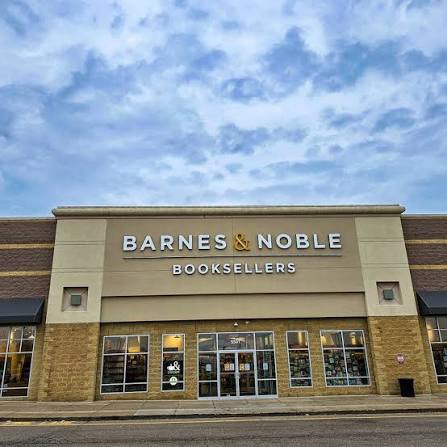
After years of contraction and store closures, Barnes & Noble in is writing a new chapter in its history. The nation’s largest bookseller has announced plans to open more than 60 new stores in 2026, a striking vote of confidence in brick-and-mortar retail and a clear sign that printed materials are enjoying a cultural comeback.
Barnes & Noble has announced it will open more than 60 new stores around the country. One of the most recent open in November in Hamilton, Ohio.
Once viewed as a casualty of e-commerce and e-readers, Barnes & Noble has steadily regained its footing under CEO James Daunt, who has emphasized locally curated stores, knowledgeable booksellers and community engagement. The company now operates roughly 600 locations nationwide and reports strong performance at recently opened stores.
“We’ve seen a real resurgence in interest in physical bookstores,” Daunt has said in recent interviews. “Readers want places that feel human again — where they can browse, discover and spend time. A bookstore should be a cultural space, not just a transaction.”
Industry analysts say the expansion reflects a broader shift in consumer behavior. After years of constant connectivity, many Americans are experiencing digital fatigue — exhaustion from endless screen time, notifications and scrolling. Printed books offer an antidote: no alerts, no blue light and a more immersive reading experience.
“People are deliberately stepping away from screens,” said Dr. Laura Mitchell, a media and consumer-behavior analyst. “Books provide focus and calm in a way digital content doesn’t. There’s something grounding about holding a physical object and engaging with it on your own terms.”
Younger readers are also fueling the trend. Social media platforms, particularly TikTok’s influential #BookTok community, have driven bestseller lists and encouraged a new generation to buy — and collect — physical books. Rather than replacing print, digital platforms are now helping revive it.
The expansion is expected to have a noticeable impact in Ohio, where Barnes & Noble has already opened new locations in recent years and is widely expected to continue growing its footprint. Ohio’s mix of suburban growth, college towns and strong library and reading culture makes it fertile ground for bookstores that double as community gathering places.
While independent bookstores remain cautious about competition, many observers note that Barnes & Noble’s new model relies less on uniformity and more on regional identity, allowing stores to tailor selections and events to local tastes.
For an industry once declared obsolete, the message is clear: the printed page still matters. As Barnes & Noble prepares to open dozens of new stores, it is betting that readers are ready to turn down the screen — and turn the page instead.
Modern Americans are fascinated with the complexities of British social classes. Television programs like “Upstairs, Downstairs” and, more recently, “Downton Abbey” give us colonials a glimpse into the inner workings of a world in which you are trapped in the station to which you were born, good or bad. We gaze through the looking glass at the uptight snobbery of the self-anointed lords and ladies who flutter around their castles, moaning about what they’ll wear to dinner after changing clothes for the tenth time that day.
All the while, we commoners across the pond suffer alongside the struggles of those who do the actual work – the maids, footmen, farmers, and shopkeepers. They’re all just trying to make ends meet, but are never permitted to step out of their place to be more than that. All this because their father’s, father’s father was a farmer or cook or butler – and so shall they be, as ordained by a class system that’s as ridiculous as it is antiquated.
We watch, we grimace, we sit in our superiority about having extricated ourselves from such nonsense 250 years ago – or did we? Americans love the idea that this country is a classless society. We’re taught that if we work hard enough and do our best, we can rise to whatever level we choose. It’s a comforting (and arrogant) notion that makes for great campaign speeches. Unfortunately, it’s completely false. Classism has been with us since the beginning, even though we try very hard not to admit it.
Never has America’s class system been more visible than since the 2024 presidential election. The “haves” took over in January, largely thanks to the ignorance of the “have-nots.” Sadly, those who got this administration elected – mainly the working poor – don’t seem to care that the people they sent to Washington want to keep them right where they are – broke and blaming everyone on the other side for their circumstances.
Why else would they gut our social services, eliminate job training and healthcare support, and destroy historic buildings in favor of grand, palatial eyesores to show off the wealth – and their class status – that you and I will never, ever experience. Remember, none of this is new. It’s always been this way, but most Americans pretend it’s not. I promise you, though, if you set one foot into that world and you don’t belong, you’ll know it – they’ll make sure of that.
In Europe, classism originates from a combination of wealth and notions of nobility passed down through generations. But here, it’s all about the cash. Or, more correctly, wealth in general. From the moment the first colonists set foot on this continent, social layers began to form. European class systems based on land and labor arrived right along with them. Those who owned property or controlled trade (the wealthy) quickly established themselves at the top. Those who labored — whether as indentured servants, tenant farmers, or enslaved people — occupied the lower rungs. Wealth dictated opportunity, status, and political power.
When the founders sat down to sketch out a nation based on Enlightenment ideals, they tried to break from those traditionally rigid hierarchies. The promise was that this new republic would be different: more equal, more flexible, more open to talent than lineage. But before the ink was even dry on the Constitution, participation in democracy was tied to property ownership. In other words, class.
The industrial periods of the late 19th and early 20th centuries produced titans of industry and staggering corporate wealth, alongside factory workers who lived ten to a room and rarely made ends meet. The labor unrest of that era was more than economic conflict. It was an open confrontation between classes that the country pretended didn’t exist. And yet, generation after generation, we’ve continued telling ourselves that class isn’t part of the American story.
But it is – and that distinction is growing daily, minute by minute, mainly due to our current political structure and power, as billionaires are given increasing influence over our government.
In part two, we will talk about who perpetuates the very real American class system and what, if anything, can be done to lessen its influence on the majority.
PART II
I’m painfully aware of class distinctions. I grew up in a farm family that also included teachers, mechanics, cattle workers, and waitresses. I’ve had every job you can imagine – and some you can’t – and in every situation there was always someone around to remind me of my “place.” I never became a “have,” but, like you, I work for my living – and I always have – something most blue bloods can rarely claim.
Excluding tech boom millionaires from the 1990s, there is significant generational wealth at the top of the American food chain. However, most wealthy individuals insist that their success stems solely from a work ethic. Those struggling, on the other hand, are told to pull harder on their bootstraps. It’s a neat trick: if class doesn’t exist, then anyone stuck at the bottom must simply not be trying hard enough. That’s why republicans in power (who tend to be the wealthier group) blame the poor for being poor – spouting off on how they must be lazy, working the system, etc. And democratic leaders (who are often less wealthy, but not without means), champion the working poor while still condescending to them, maintaining the class barriers. Has Chuck Schumer, a multi-millionaire, invited you to any parties lately? Yeah, me either. Both sides are to blame for all this.
The truth is that modern America has a very real class structure, even if we don’t officially name it. At the top is the wealth class — that small percentage of Americans whose fortunes come from investments, corporate ownership, or inherited wealth. Below them is the upper middle class, made up of highly educated professionals who enjoy stability, networks, and cultural influence. The middle class — if we can still call it that with a straight face — includes those with some savings, homeownership, and a degree or a skilled trade.
Further down are the working class and the working poor, whose lives are shaped by hourly wages, inconsistent schedules, limited benefits, and housing insecurity. The lower classes – where most of us fit – are increasingly squeezed by rising costs and stagnant wages. What separates these groups isn’t just income. It’s wealth, education, geography, access to healthcare, and those unwritten rules known as “cultural capital” — things like networking, confidence in professional settings, or simply knowing which doors to knock on.
So where did our grand experiment at classlessness go wrong? It failed in all the predictable places. Public education and other social services were intended to level the field, but are still funded by local taxes that mirror neighborhood wealth. Even the American Dream itself was built on the idea that anyone can rise — as long as they start from somewhere near the top in the first place.
Those who rise to power tend to be members of the upper class, with little or no desire to lose their position by pandering to social groups with no influence, financial or otherwise. Sure, we see extensive TV news footage of politicians and wealthy people who volunteer with social services, donate to charities, and give speeches on behalf of the poor and less fortunate. But at no time do you ever see one of those people – from any political side – do something that might benefit you and me while jeopardizing their own place.
We could effect change, however, if we improve access to education, support trade schooling, strengthen worker protections, and provide financial literacy programs. We could even create a healthcare system that doesn’t punish people for simply being alive. Unfortunately, none of this seems likely in the current social and political climates.
America must accept that class exists, but only those at the top are sure of it. For some reason, the poorest people support the politicians and policies that tend to harm them the most. It’s time to wake up and realize that, to maintain their positions and wealth, the upper class will always try to subjugate the middle and lower classes.
So, what can you do? Listen to what the politicians are saying and doing. How does it help you? How does it harm you? Dump the idiotic crowd mentality of party and vote for your own best interests, not theirs.
(Courtesy of our partners at the Xenia Daily Gazette.)
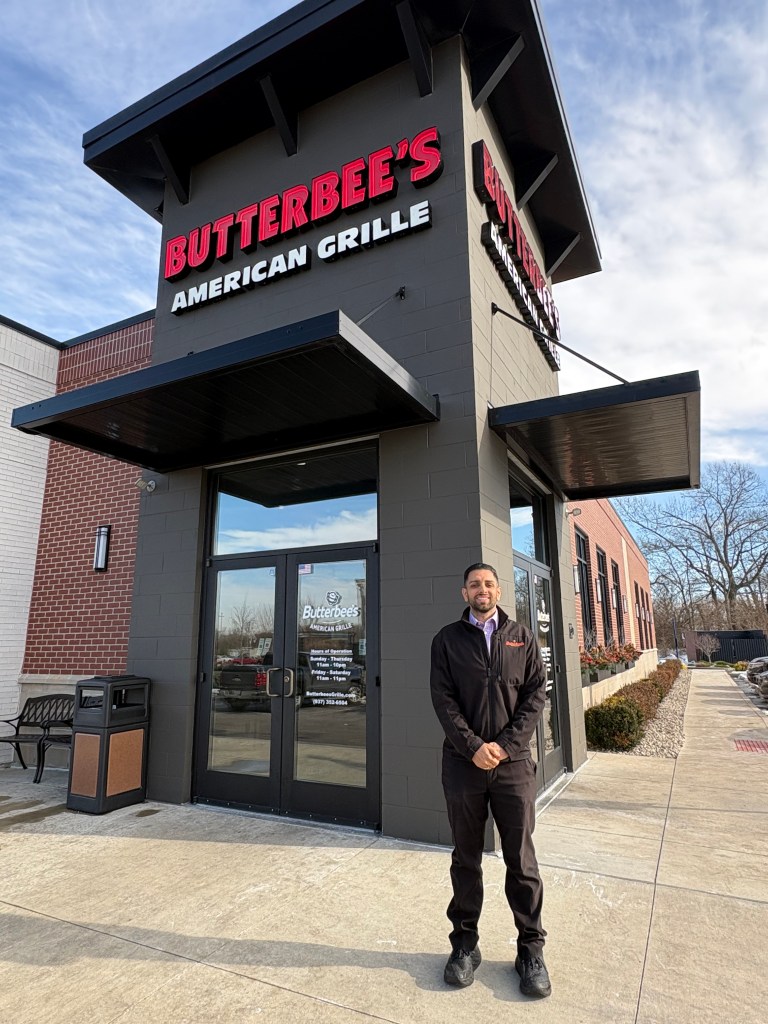
A notable and relative newcomer to Xenia’s dining scene is Butterbee’s American Grille, located at 217 Progress Drive, directly across from the Hampton Inn. The restaurant opened in August 2024, and while it may be new to the area, its management is anything but inexperienced.
Nabih David brings decades of family-owned restaurant expertise as CEO of the David Restaurant Group, which operates 13 locations throughout the Cincinnati and Mount Orab areas — including the Skyline Chili right next door.
Nabih David, general manager of Xenia’s “Butterbee’s American Grille” restaurant on Progress Dr.
Butterbee’s American Grille officially opened its Xenia doors in August 2024. Often referred to simply as Butterbee’s, the location is one of just four under the brand. Designed as a family-friendly restaurant, it also serves double duty as a sports bar and gathering place for parties and celebrations.
The David Restaurant Group was founded in 1986 by Nabih’s father, Nader David, and today employs roughly 600 full- and part-time workers. Seventy of those employees work at the Xenia Butterbee’s alone. David said the decision to open in Xenia was intentional, noting strong similarities to Mount Orab — a community known for its family-oriented values.
“We saw a lot of potential in Xenia, and we felt the area was underserved by our brands,” David said. “When we purchased the property, the original vision was always to have two restaurants here — Skyline and, eventually, Butterbee’s.”
From the atmosphere to the menu, David said the restaurant was designed with purpose. “We have a hand-scratch kitchen, and everything is made right here in the building,” he said. While quality is consistent across the menu, two items stand out as guest favorites.
“Our signature dishes are our hand-breaded chicken tenders and our fall-off-the-bone baby back ribs,” David said.
For those who may assume the restaurant is too crowded or difficult to access based on its front-facing appearance, David offered some reassurance. “Our building can seat more than 240 people,” he said. “We’re very party-friendly and cater to the masses, whether you’re coming in for a quick lunch, watching a game, or hosting a birthday celebration.”
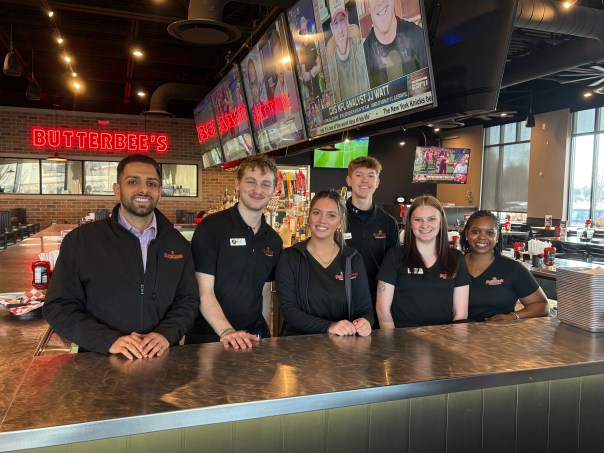
David Restaurant Group CEO, David Nabih, with the crew at Xenia Butterbee’s American Grille.
He added that additional parking is available behind the building, and guests can always call ahead or order online at http://www.butterbeesgrille.com.
Looking ahead, the Xenia location is expected to play a key role in the future growth of the Butterbee’s brand throughout Greene County. Increasing awareness and foot traffic is a major part of that strategy, and the restaurant is currently offering a holiday gift card promotion to help drive that momentum.
“Right now, when you purchase $50 in gift cards, you receive $20 in bonus gift cards,” David said.
More than promotions or menu items, David emphasized what he hopes the community takes away most from Butterbee’s.
“From ownership to staff to the overall guest experience,” he said, “we put family first.”
(Shared with our partners at the Xenia Daily Gazette)
At Jamestown Café, customers are greeted by a welcoming smile, the smell of fresh coffee, baked treats, and comfort food, and an atmosphere that feels more like a home kitchen than a café. Behind the counter, the staff moves easily from customer to customer, greeting familiar faces and making newcomers feel just as welcome.
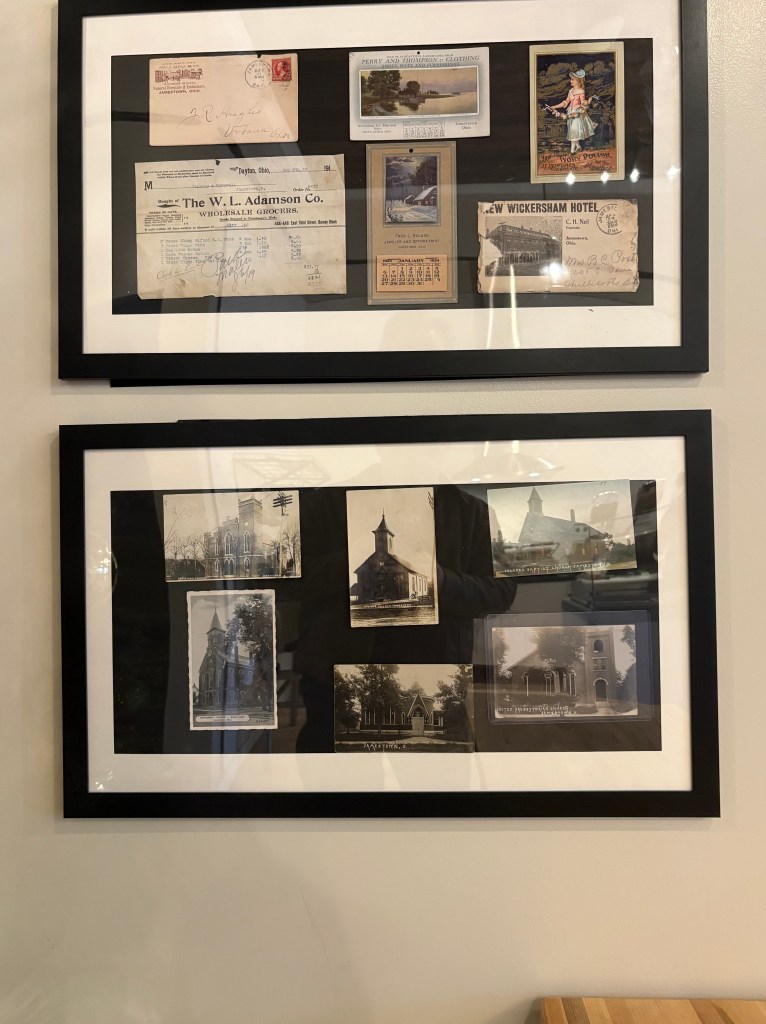
Along the wall, people linger over sandwiches, bakery items, ice cream, and specialty drinks, with photos and relics from more than two centuries of Jamestown’s history hanging just above their heads. The café opened in September, and the space feels new, but familiar — warm, relaxed and comfortable, like a place you’ve been invited to stay a while.
This is no ordinary coffee shop, and that feeling didn’t come from a design book or a business plan. It came from the heart, and figuring things out the hard way. Ashley Mannier is not what you’d expect when you picture a café owner — and neither is the path that led her to opening Jamestown Café. But the place, the people, and the story all seem like they were ripped from the script of a Hallmark movie.
When she bought the building, at 9 W. Washington St., Mannier didn’t know how to run a coffee shop. Years earlier, she hadn’t known how to remodel a house either. She was a single mom putting herself through college and barely scraping by financially. “I wasn’t living paycheck to paycheck,” she says. “It was more like paycheck to Wednesday.”
Mannier took advantage of an Obama-era first-time homebuyer tax credit and was approved for a mortgage to buy a foreclosure, despite having little construction or remodeling experience, and with much of her family living overseas. So, she did what a lot of people do when they don’t know where to start: she went to YouTube. “I always joke that I graduated from YouTube University,” Mannier said.
That self-taught education—watching videos, learning by trial and error, and not being afraid to make mistakes—would later prove essential when she decided to turn an aging, long-vacant building on Washington Street into a place where the community could gather. Because for Mannier, the Jamestown Café was never just about coffee. It was about building something real, one lesson at a time, and it started with her family.
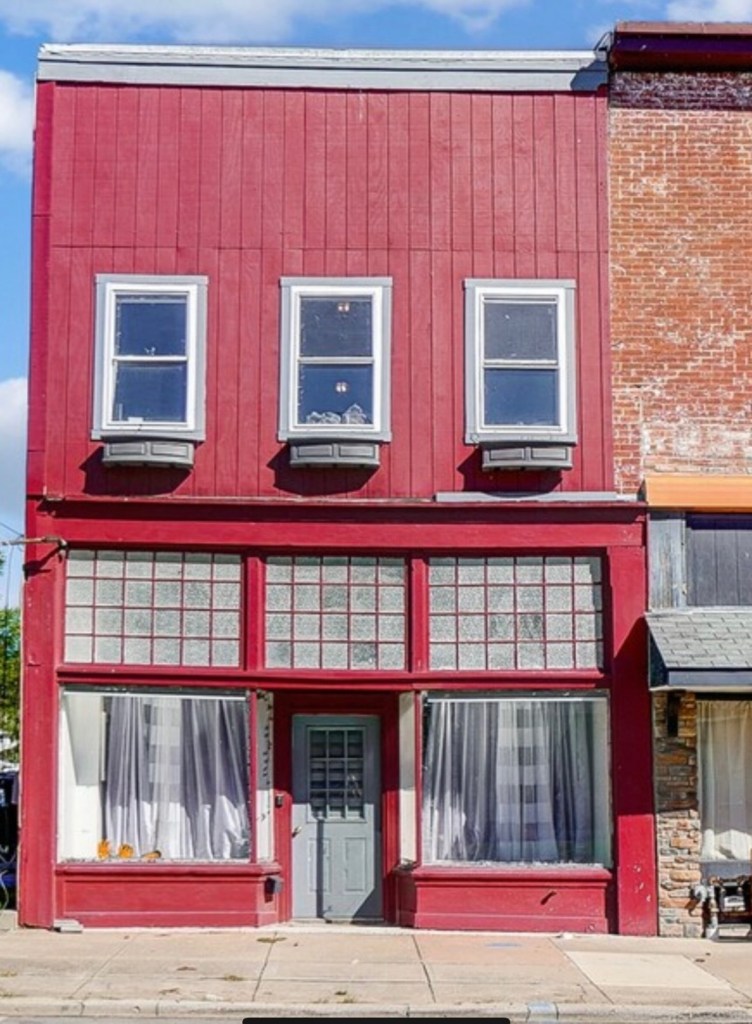
Built around 1900, the structure had lived several lives over the years — a shoe store, a tanning and nail salon, and other businesses — before sitting empty and neglected for far too long.
Relics and photos from Jamestown’s history, donated by local residents, hang in frames along the wall.
Inside, nearly everything needed attention. There was leaky, corroded plumbing, outdated electrical wiring, and damage from water and mold. It was the kind of project that can quickly overwhelm even experienced renovators. Mannier, however, wasn’t doing it on her own.
“It’s very expensive to do this kind of work,” she said. “I’m the oldest of ten kids, so I recruited my family to help out, and everyone had their role.” One brother helped with the architectural planning, while her brother-in-law and father built the café counter. “We did it all together.”
With help from village officials, neighboring business owners, her family, and the community, Mannier worked her way through the maze of permits, demolition, construction, and final occupancy. Even with that support, there were moments when the project felt overwhelming.
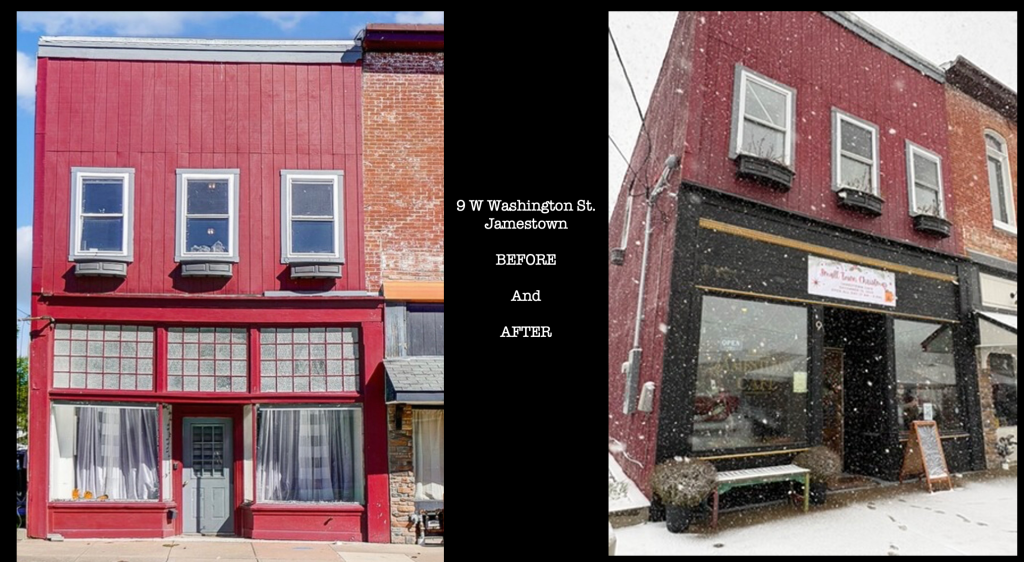
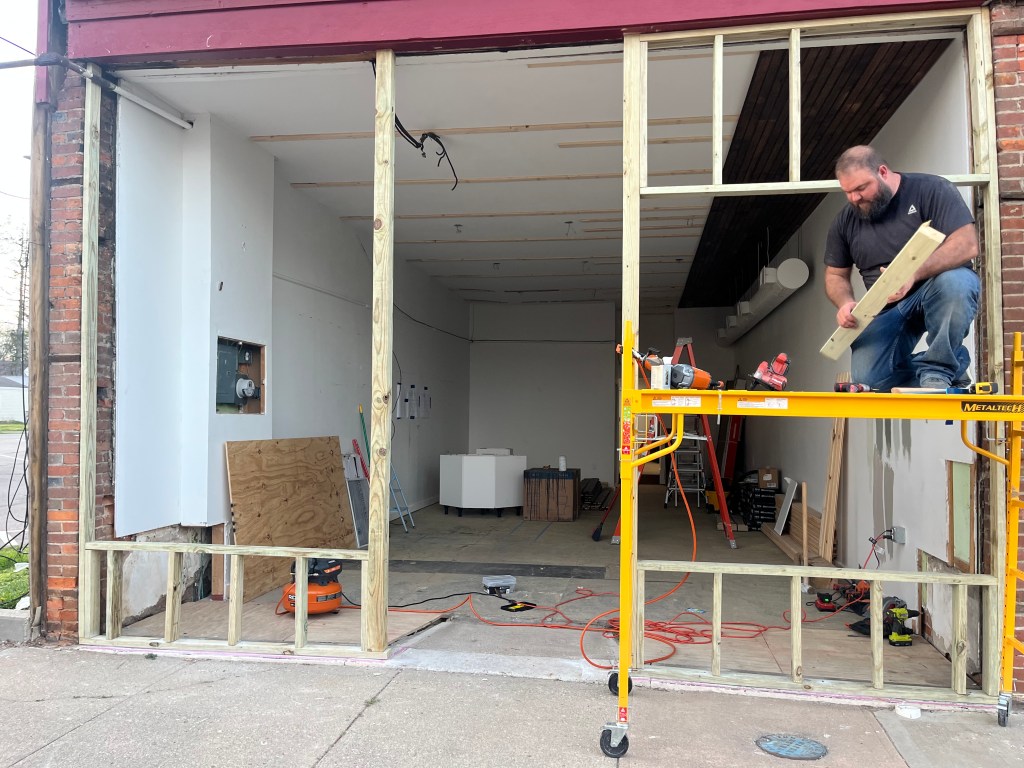
The challenges extended outside as well. “We rebuilt the entire front of the building,” Mannier said. “We jacked up the main beam and ripped everything out to put in new joists.”
Many of the café’s furnishings came from materials Mannier had collected over the years, often without knowing exactly how or where they would be used. Over time, those pieces found their place. “I’d had this front door for a while and didn’t know what to do with it,” she said. “But here, it’s perfect.”
Before and after renovation photos of the cafe’s building at 9 W. Washington St.
Today, the brickwork and large front windows give the building a classic small-town look. The updates bring it squarely into the present while still honoring its past, much like the café itself. For longtime residents who remember the building in its earlier lives, the transformation is almost hard to believe. Their first reactions tend to be wide-eyed, followed by a slow smile.
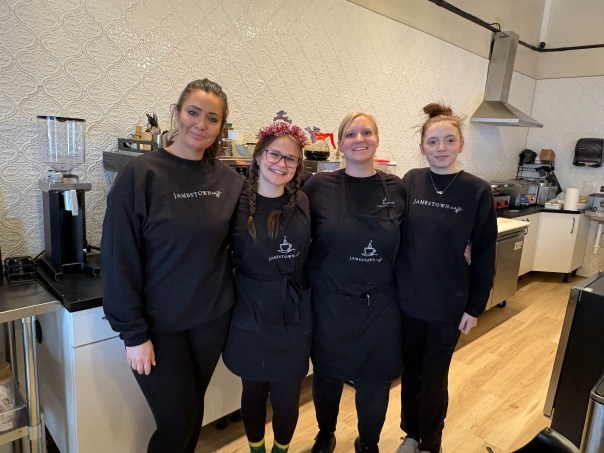
Jamestown Café’s warmth isn’t just from a hot cup of coffee; it radiates from the crew behind the counter – including Kearra, Sarah, and Abbey – a group of employees who clearly enjoy being there. Their energy fills the space, turning a renovated building into something more than a café: a place that feels alive.
Jamestown Café Staff (L to R) Owner, Ashley Mannier, Kearra Anthony, Sarah Davidson, and Abbey Yates.
Nineteen-year-old Kearra Anthony was somewhat surprised when her parents decided to move from Jeffersonville to Jamestown, but she came with them.
“One of my friends got a job here first, and I’ve always wanted to work at a coffee shop,” Anthony said. “Ashley was up on a ladder tiling and gave me an interview.” She said the job is a perfect fit for her because, “I like people and I like being around people.”
Sarah Davidson, 31, is a stay-at-home parent who was looking for a flexible, part-time work option. The café was ideal: a woman-owned small business with a flexible schedule and a real sense of family.
Mannier told Davidson she was hiring some younger women and needed a “mom figure.” Davidson was sold. “I bring the mother energy, and I love it,” Davidson said, who is also the master blender behind all the café’s tea selections.
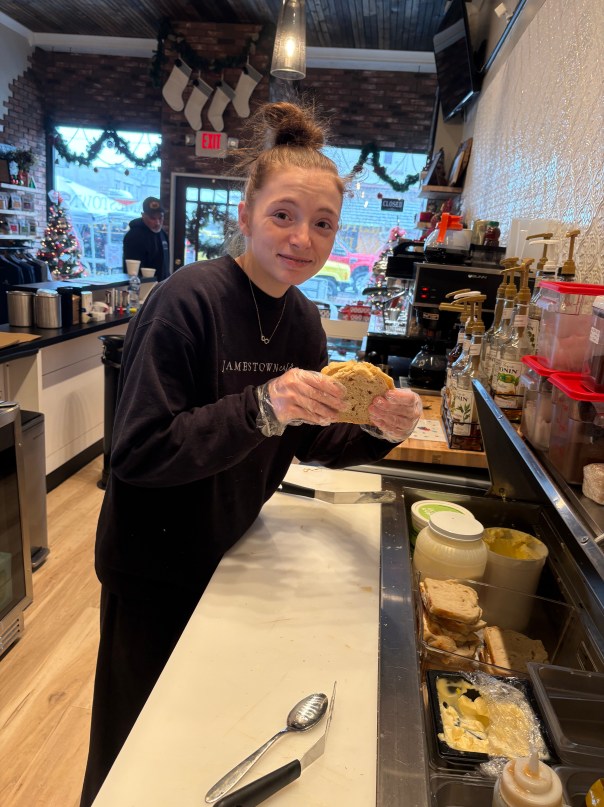
Abbey Yates is 19 and lives in Jamestown. “In May, I emancipated from foster care and moved into an apartment, and I was looking for employment,” Yates said. “I was walking downtown and noticed someone working inside and asked if they were hiring.” But it took a little more than that before she was brought aboard. “Abbey asked me for a job three different times,” Mannier said, smiling. “I’m so glad I hired her; she’s one of our best workers.”
Each of the women lights up when they talk about their work and Mannier. They exude such excitement and pride that it is apparent they have found a sense of purpose and family with Mannier and the café.
Speaking of family, it wasn’t just the men in Mannier’s family who contributed to the business. Her mother, Jackie, plays a significant role in this endeavor too – she’s the café’s official baker. “A mother of ten, my mom was a little nervous to start this,” Mannier said. “But she’d been cooking for the masses for years, and her best skill is being a giving person.”
Abbey Yates has become known as the “Panini Slinger” at Jamestown Café.
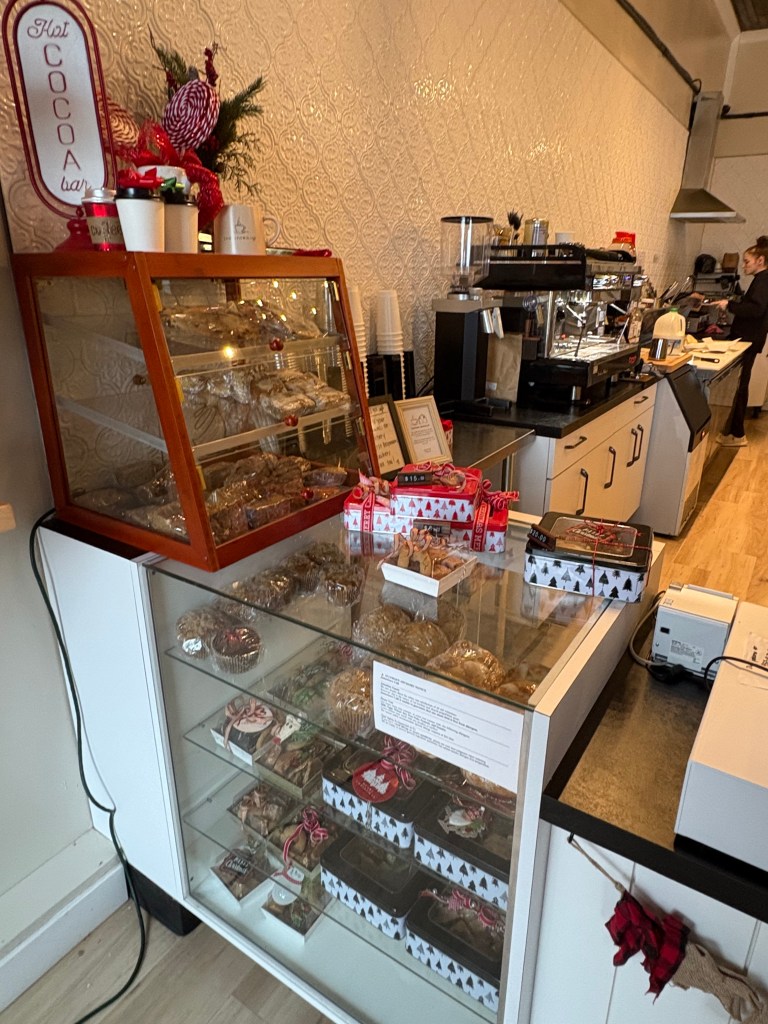
Mannier said her mom came to her and offered to help, and is now an invaluable part of the team. “She does all of the baked goods, and she’s always trying to come up with something new every week,” she said. “Fudge, cookies, muffins, cinnamon rolls – she does all of it and spends a lot of time researching all of it. And she loves being part of something bigger than herself. This place is glued together by what she’s doing, and it wouldn’t exist if she weren’t willing to be a part of it. I couldn’t do it without her.”
And the rest of the menu? That didn’t happen until a couple of weeks before they opened. From the outset, the concept was to keep it simple: café fare with homemade flair. At first, Mannier and her staff were learning the ropes together, how to use the equipment, which drinks to offer, and the best way to make them. But they’ve hit the old standards too – recently introducing a morning biscuits and gravy recipe that regularly sells out.
Public reaction has been overwhelmingly positive. First fueled by curiosity, the café is gaining a regular following and great reviews. “When we first opened, people were really excited,” Yates said. “There weren’t really like good sitting places, and now there are people who are coming in every day, we get to know them.”
What’s next for Jamestown Café? According to Mannier, more of the same, keeping with her original vision. “We have space in the back, and we’re going to put a patio area back there,” she explained. “And I want to continue to work more with other downtown building owners and local businesses to keep doing more to bring people down here.”
Right from the beginning, Mannier envisioned Jamestown Café to be all about offering her community a routine, a third place. It has become exactly that, and it’s run by Jamestown residents who believe their customers are much more than just a coffee order. They’re family.
For more information visit the shop. Check out their Facebook page for regular posts on hours and specials.
Gallery – Photos by Gery Deer (unless otherwise noted)
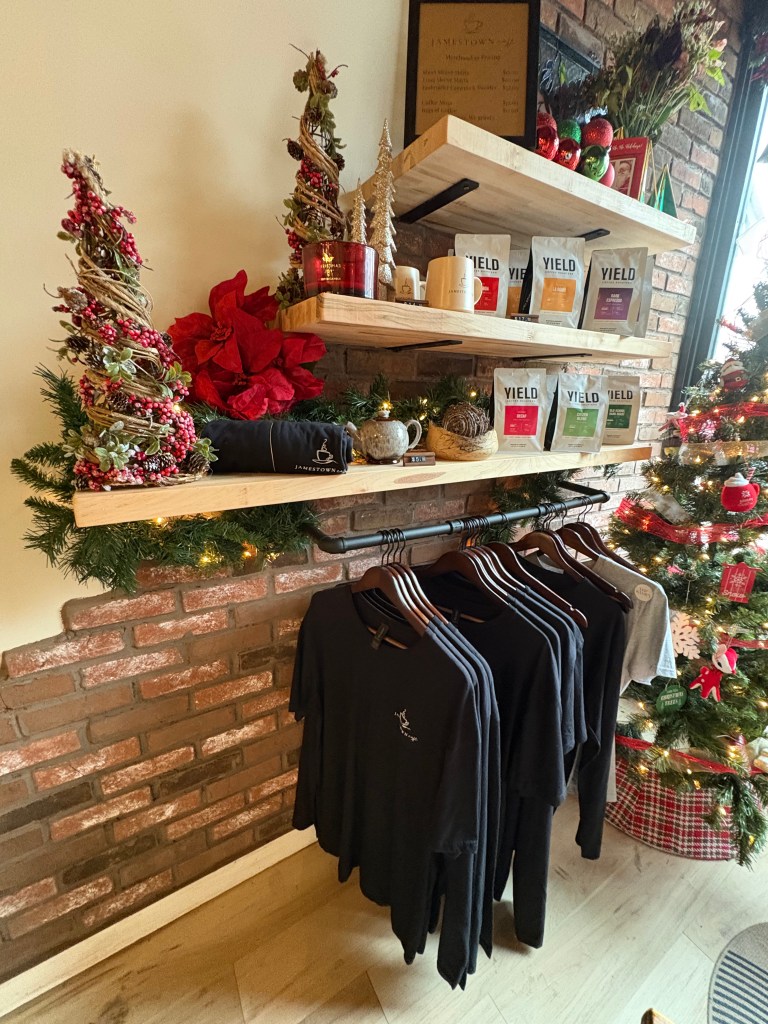
Front facade framing after demolition. (photo provided by A. Mannier)Interior of the cafe building looking forward to W. Washington St. – Before renovation. (Photo provided by A. Mannier)Before renovations. (Photo provided by A Mannier)Merchandise. Photo by Gery DeerCoffees, teas, mugs. Photo by Gery DeerSpecialty items. Photo by Gery Deer Mugs Photo by Gery DeerBakery and fudge counter. Photo by Gery Deer
To protect yourself in extreme cold, layer clothing, cover extremities (hats, mittens, warm boots), and stay dry; for your home, seal drafts with weatherstripping and caulk, insulate pipes, keep thermostats around 65°F (or higher), close curtains at night, and gather emergency supplies like blankets, flashlights, and food for potential power outages.
Personal Protection
Layer Up: Wear multiple layers of loose, lightweight, warm clothing, including a wind-resistant outer layer, to trap heat.
Protect Extremities: Mittens (warmer than gloves), hats, scarves, and waterproof, insulated boots are crucial.
Cover Your Mouth: Protect your lungs from the extreme cold by covering your mouth.
Stay Dry: Change out of wet clothes immediately to prevent chilling.
Stay Aware: Recognize signs of hypothermia (shivering, confusion) and frostbite; seek warmth immediately if symptoms appear.
Home Protection (Preventing Damage & Heat Loss)
Seal Drafts: Caulk cracks, use weatherstripping on doors/windows, and add foam seals to exterior outlets.
Insulate: Add insulation to attics, walls, and especially around exposed pipes in unheated areas like garages.
Protect Pipes: Disconnect hoses, drain outdoor faucets, and wrap indoor pipes in unheated spots.
Windows & Doors: Keep blinds/curtains closed at night to trap heat; use plastic window kits for extra insulation.
Manage Heat: Keep your thermostat at least at 65°F, use space heaters safely, and consider closing off unneeded rooms.
Check on Seniors
As always, check on seniors and disabled family and neighbors.
Watch your local news and the National Weather Service for the latest on the cold and snow.
Xenia, Ohio – The holiday season is getting a cheerful kickstart at the Community STE[A]M Academy, where families are invited to a “Very Merry Open House” on Wednesday, Dec. 18, from 5 to 7 p.m. at 855 Lower Bellbrook Rd. in Xenia.
The school promises a relaxed, family-friendly evening—complete with holiday fun and a special appearance from the big guy himself. Santa will be on hand to hear Christmas wishes and spread plenty of festive spirit.
But the event isn’t just about holiday magic. It’s also a chance for prospective families to get a closer look at what makes the Community STE[A]M Academy unique. Visitors can tour the building, chat with teachers and staff, and learn more about the school’s hands-on, project-based approach.
If you’re wondering about that extra “A” in STE[A]M, the academy is happy to explain. While STEM focuses on Science, Technology, Engineering, and Math, STEAM adds the Arts into the mix—recognizing creativity, design thinking, and expression as essential parts of problem-solving. At the Community STE[A]M Academy, students use both technical skills and artistic thinking to explore and innovate, whether they’re studying robotics, environmental science, or digital design.
That blend of creativity and science will be on display during the open house, as middle and high school students present their latest sustainability projects. Guests can also roll up their sleeves for some hands-on holiday fun, including cookie decorating and watercolor card making—starting with making the paint from scratch.
School leaders say the evening is meant to be fun, festive, and informative. Whether you’re exploring enrollment or just want to enjoy a little holiday cheer, everyone is welcome.
“It’s a night you won’t want to miss,” organizers said. “Bring the family, join the fun, and see what makes our STE[A]M community so special.” For more information, contact Kim Haines, Communications Coordinator at 937-800-2720.
It’s a snow day! When the Miami Valley wakes up under a fresh layer of snow, it’s easy to marvel at the postcard scene outside the window. But once the beauty wears off and the day begins, reality sets in: snow doesn’t just fall — it complicates everything. From the moment flakes start sticking, people begin weighing a thousand tiny decisions, most of them involving whether they really need to leave the house. And on an actual snow-emergency day, the smartest thing you can do may be to simply sit still.
Local travel is usually the first thing to rethink. Emergency management agencies classify conditions in stages for a reason. When your county hits a Level 2 or 3, that’s the universe gently suggesting you reevaluate how urgent that trip to Kroger really is. Roads glazed with snow or hidden sheets of ice aren’t just inconvenient; they eliminate any sense of control a driver might think they have. Unless you’re a first responder or someone who must physically be at work to function, staying off the roads isn’t just a personal safety decision — it’s a public service, giving plows and salt trucks the room they need.
Parents know the drill better than anyone: snow means checking school websites and social media with an intensity usually reserved for playoff scores. A delay may buy more time to clear buses and parking lots, while a closing often indicates conditions that simply won’t improve quickly enough. The schools aren’t being dramatic; they’re thinking about children waiting at bus stops in the dark, buses navigating untreated roads, and teen drivers who, despite their confidence, don’t yet have the experience to predict how a car behaves on ice. In these moments, the safest classroom is often the living room.
Adults face their own version of this decision when it comes to work. Many employers have embraced remote options, but not everyone has that luxury. The rule of thumb is simple: if your local authorities have issued a travel warning, it’s time to have a candid conversation with your boss. No paycheck is worth sliding through an intersection sideways. Responsible employers understand that a late arrival beats no arrival at all, and an employee calling in safe beats one calling in from a ditch.
Even those staying home aren’t entirely off the hook. Snow doesn’t shovel itself, and for many people, the driveway becomes the day’s primary battleground. But shoveling is more than clearing a path — it’s a legitimate physical workout, the kind that has sent more than a few otherwise healthy people to the emergency room. Pushing heavy, wet snow raises blood pressure and heart rate faster than most people expect. Taking smaller loads, working slowly, and stopping the moment you feel winded or lightheaded can make the difference between a cleared driveway and a medical emergency. If you own a snowblower, remember that the machine can clog, and attempting to clear it while it’s running has ended more than a few fingers. Turn it off. Always.
The truth is, snow days are a peculiar mix of joy and jeopardy. Kids see sleds and cocoa. Adults see commutes, delays, and strained shoulders. Yet buried in all that hassle is a small opportunity: permission to pause. Maybe the safest way to handle a snow emergency is to treat it as a reminder that not everything must happen right now. Roads will clear. Schools will reopen. Work will wait. And if you approach the day with a little common sense — the kind your grandparents preached long before weather apps existed — you’ll be around to enjoy the next snow day too, instead of spending it in a tow truck or an ER waiting room.
Winter storms demand respect, not fear. And if we keep our priorities straight — safety over schedules, caution over convenience — we can get through them with little more than cold toes and a warm story to tell once the sun comes back out. *
Note: You can stay up to date by watching The Jamestown Comet.com Facebook page. We post regular updates, share news and weather information from all of the major local outlets, and national news that affects you here at home.












 The Jamestown Comet