Deer In Headlines II
By Gery Deer

Have you ever been afraid for your job? I laugh when people think I can’t lose my job since I work for myself. As a writer, even working under my public relations agency, I’m often called “self-employed.” The immediate assumption is that no one can fire you.
There’s a lot of nonsense to unpack there. First, and possibly most important, there’s no such thing as self-employed. Unless you have a magical chest of gold or cash that continuously refills itself, you’re working for somebody who’s paying you. Being independently employed (my preferred terminology) means you’ve traded one boss for many (customers).
Second, working on your own means constantly beating the bushes, knocking on doors, and continuously selling yourself to generate a pipeline of work. My father and brother created multiple, simultaneous jobs for themselves because they never wanted to be out of work—and they never were.
My family seemed to always have multiple income streams—cattle, trucking, engine work, welding, anything that brought a buck. However small the amount of revenue, it added up. Mom and Dad ran the farm and our trucking business, and I always knew my family worked hard for what we had. No two days were alike. Dad might be out on one of our trucks or auctioning cattle one day. The next, he and my brother might be rebuilding a tractor engine and welding a broken hay rake—all before dinner.
Over the years, I adopted the same philosophy, but I wasn’t always independently employed. Once upon a time, I worked for “the man,” and the woman, and the corporate overlords, and whatever else they’re called. From engineering technician and mechanical designer to database developer and coder, I did the 8-to-5 grind for many years before going out on my own.
Since much of what I did in the corporate arena was high-tech, the advanced skills required evolved rapidly. I constantly studied the latest technologies to avoid obsolescence. I’ve always been fascinated by computers, but keeping up with advances in computer technology during the 1990s was exhausting.
If that wasn’t enough to worry about, no matter my job, I always felt like something would ruin it. Someone would take it away from me or decide I wasn’t qualified, and that’d be that. I really did know what I was doing. But I suffered from terrible imposter syndrome. Then, one day, that was enough. I walked away.
Life as an independent professional can be tough, especially if you’re used to a steady paycheck and punching out at 5. At least no one ever gets fired, right? Wrong.
There’s a quote from the TV show “Mad Men” that goes, “The day you sign a client is the day you start losing them.” It means that every customer will eventually leave you—your fault, their fault, nobody’s fault. It’s just part of the process. So, when that happens, you are effectively fired. Depending on how many customers you have, that’s how many times you will be fired.
Despite the romanticization, self-employment is hard work and a bit like riding a bike. If you stop pedaling, you fall. You must exceed customer expectations the first time, or those firings I mentioned start sooner. Is that more secure than a corporate job? In many ways, yes. Let me explain.
If I am a “free agent,” I can play in whatever league I want. However, I only get to set some of the rules. I usually have to work within the guidelines of my profession or the client’s needs. One thing is sure, however. If I do my best, treat people with respect, and give them good value for their money, the work will continue.
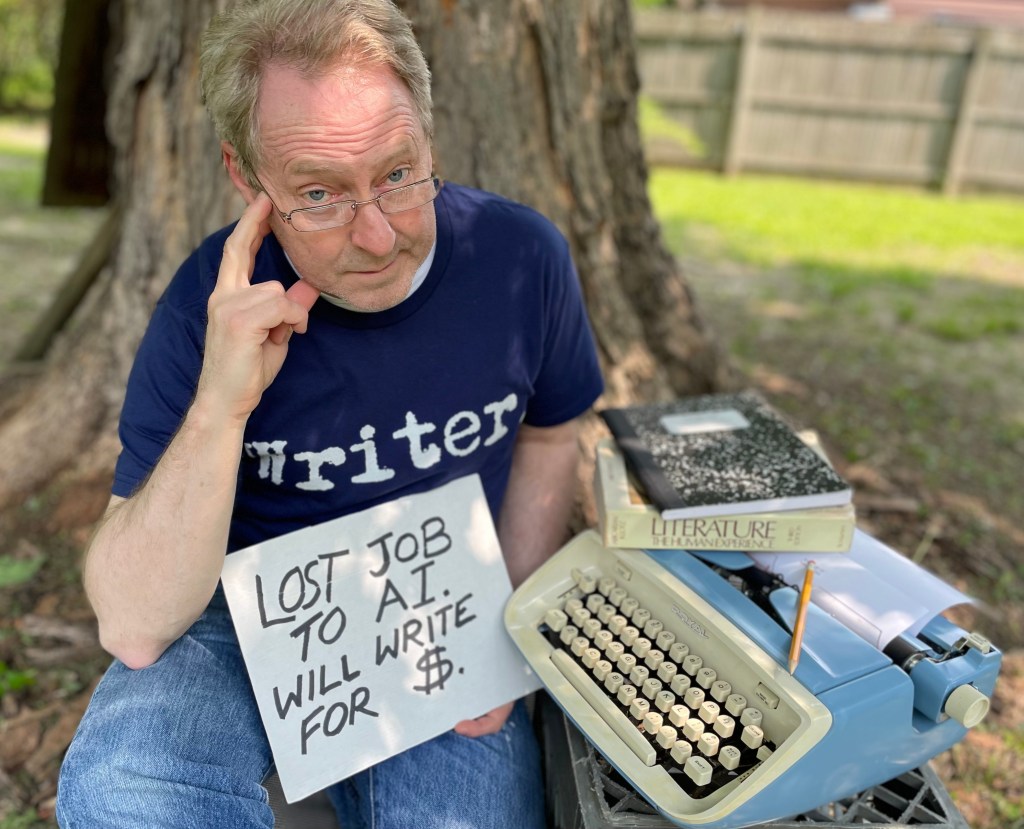
That doesn’t mean I don’t worry about my job. I do, but for very different reasons. One is automation. Artificial intelligence, or AI, threatens the livelihood of writers in every industry, and what it generates is, at best, inadequate.
Another concern is that my skills will be devalued by a market flooded with amateurs and dabblers. These people produce inferior work, disparaging the profession and limiting potential business for the pros.
Ultimately, no one’s job is bulletproof—not even mine. Always demonstrate your best work. That will show your value, and you’ll stay employed – somewhere. In the meantime, try to remember that there’s always another job.
 The Jamestown Comet