Local News & Commentary Since 1890.

Posts Tagged ‘Ohio’

And just like that …

In Children and Family, Health, Opinion, sociology, Sports News, Travel, Uncategorized on September 26, 2023 at 9:53 am

Deer In Headlines II

By Gery Deer
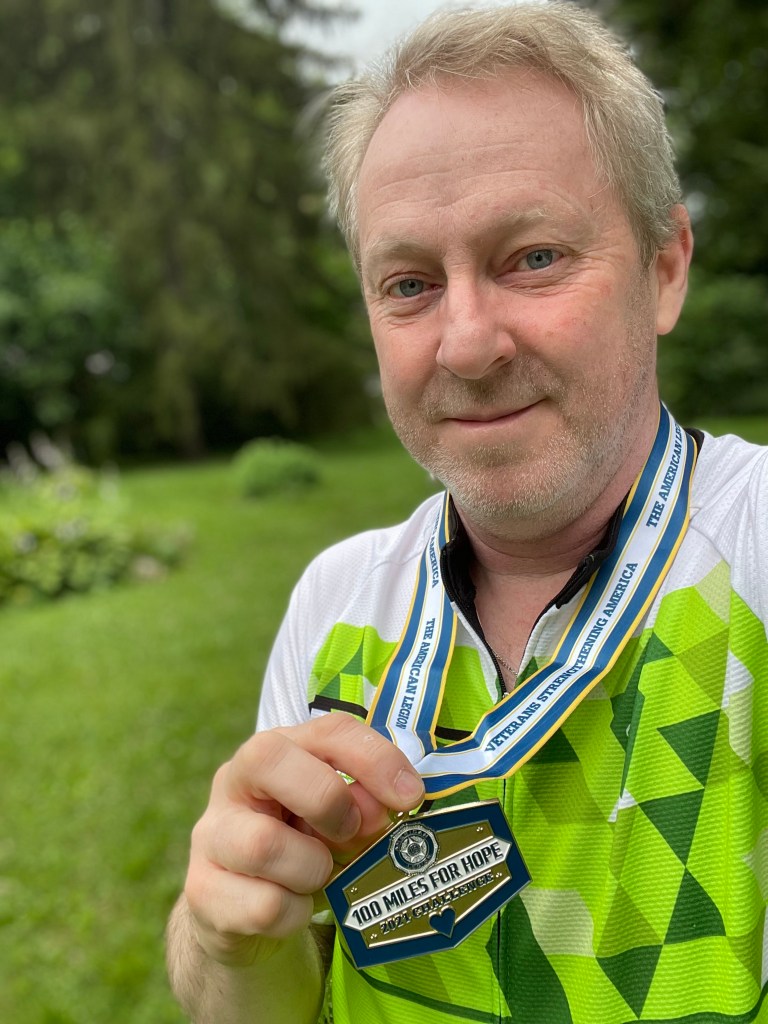
I don’t manage downtime very well, and I’ve never been too keen on vacations. But occasionally, my family convinces me to close my laptop for a few days and park myself in front of a campfire. We pitch a tent, make s’mores, and spend some time canoeing or kayaking down some lazy river. So, after months of work with little to no breaks, it was time to hit the campground again.

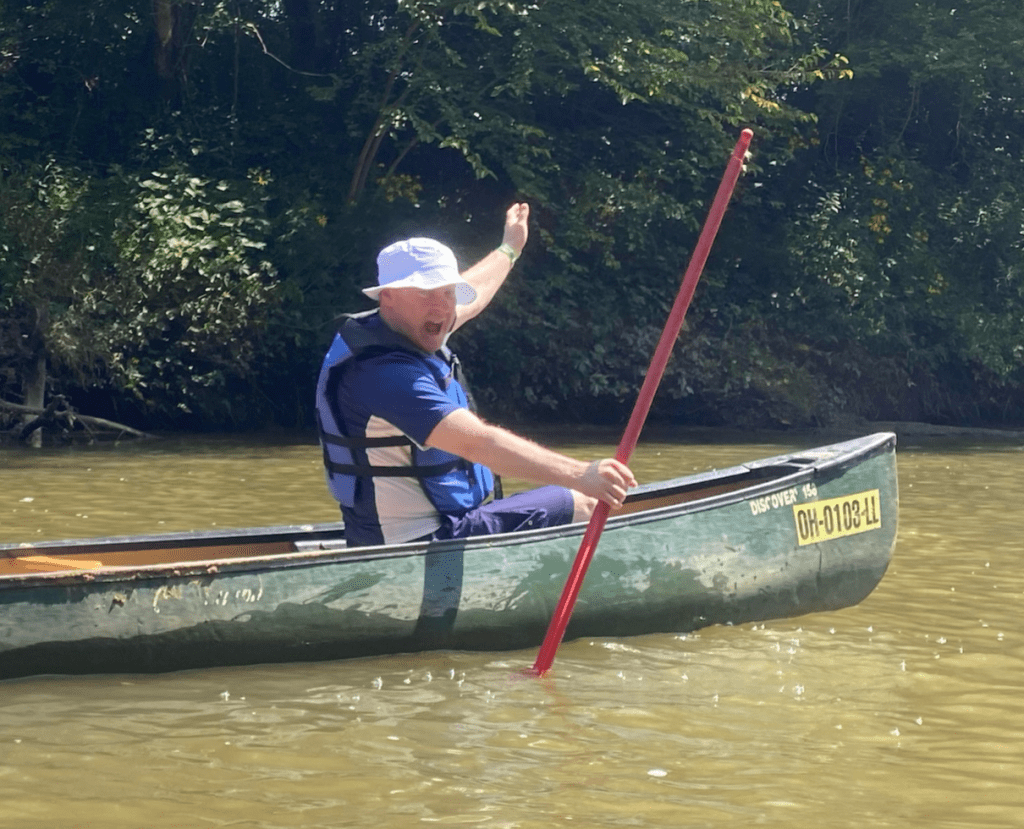
We had a beautiful day for the kayaking trip this year, bright, sunny, and warm. I was in the front seat of a canoe and a friend had the rear orr, while all around various kayaks and tubers drifted downstream alongside. That area of southern Ohio’s Hocking River isn’t particularly deep, but some parts can be treacherous, and deceptively quiet on the surface with many large rocks and a heavy undertow.

Down the river, we could see what’s best described as a traffic jam opposite a sandbar we were closing in on. A clump of tubers had stopped, and many were out of their boats on the sand yelling at approaching kayakers to avoid a fast-moving section of the river.

A moment later, I could hear why they were so insistent. About 20 yards away, there was someone in the water pleading for help. A woman’s kayak capsized, and she was up to her neck in the heavy current, unable to move. Broadsided by the current, we paddled hard to get as close as we could to her and safely beached the canoe on a sandy bank nearby.

A moment later I was out of the canoe and up to my waist in the turbulent undercurrent as it slammed into my legs, nearly dragging me under as well (thank goodness for all the cycling). When the woman’s kayak overturned, her shorts caught on one of the rocks, where she fought to keep her face clear to breathe.

People get badly injured and even die on these trips because, on the surface, the water looks serene and calm, like a gently flowing stream. Beneath it’s a swirl of eddies and violent undertow. When I finally reached the woman, were both dangerously close to being swept toward yet more dangerous rocks just ahead.

Luckily, my first impulse was to grab her life jacket – yes, you really need to wear one! I caught the loop on the back then linked one arm through the arm across and under the back, which gave me leverage to keep her head above water and prevent her from being taken by the current.

I kept her head up, reassuring her that she would be alright. Just then, a woman from the tubing group waded towards us from the opposite side. Lifting from each side, she helped me drag the victim backward against the current to where the water was only a few inches deep. Several other boaters came up to help and we lifted her to her feet, shaky but alright. Someone had secured her kayak as well.

Before we went our separate ways, the woman hugged us all and thanked us for our help before getting back in her kayak to finish her trip. We all breathed a collective sigh of relief. Her determination to keep going is a testament to her calm demeanor during the event. Without everyone working together, though, her life might have been changed forever.

This wasn’t the first time I’d been in a crisis like this. I never hesitated to step into the dangerous current because I never even considered anything else. Someone was in trouble, and I could help. It was a relief to see how many others did too.

That day was a vivid reminder there are still good people in the world. What could have been a deadly tragedy instead had a happy ending for all. People risked their own safety to save someone else. It makes me believe that there is hope for humanity after all.

There is no way to know how our day will turn out when we get up in the morning. After all, it was supposed to be a relaxing canoe trip, but, just like that, it became a life-and-death moment.

A House Divided

In Dayton Ohio News, Education, finances, Food, Health, history, Local News, News Media, Opinion, Politics, psychology, Senior Lifestyle, Uncategorized on September 2, 2023 at 2:47 pm

Deer In Headlines II

By Gery Deer

When I restarted this series after a 5-year hiatus, I decided to steer away from politics, religion, and other hot-button topics in favor of more personal subjects. That said, I’ll dip a toe into that pool only enough to express my concern at the level of divisiveness now facing our country and who actually pays the price for it.

The political climate in America today is toxic, with no end in sight. Everything is viewed only from one side by an ill-informed, angry citizenry and uncompromising elected, uncivilized government officials. Over the long haul, we simply can’t function that way. Our legislators must work together in order to govern, even to manage the most basic issues. Unfortunately, that seems unlikely to change when the only people getting attention are the radical extremists.

Regardless of your ethnic background, or whether you’re conservative, liberal, or whatever, surely there are things we can all agree on, right? For instance, instead of spending hours on cable TV news bickering about who caused inflation, wouldn’t our collective energy be better spent on ways to help people get through it? Meanwhile, our dedicated elected officials spend taxpayer money riding around in limousines, secure in their healthcare, paychecks, and benefits, all guaranteed long after they’ve left office.

More absurd is that, in the most powerful and wealthiest country on Earth, there are still people who can’t get enough food, shelter, or other necessities – particularly the elderly, veterans, and children. No, it’s beyond absurd, it’s criminal. This problem affects everyone. The number of working poor continues to grow, most of my family included. Most people are only a paycheck or two from ruin. All it takes is one major catastrophe and boom, we’re on the street. Regardless, people from every side are too busy waving flags and hating each other’s politics to care or do anything about it.

Recently, I did some work at a food pantry and had the opportunity to learn more about the mission of these organizations. I am shocked about how necessary they are in so many communities. In just one year, the number of families served might double, so they must continually find new ways to meet the constantly growing demand.

You might be surprised to know that the people who most need services like this are not homeless or indigent. They are instead the working poor, single-parent families, and, sadly, veterans. No one should feel ashamed of taking help from those who offer it. But I can’t imagine how hard must be for someone who proudly served our country and then is forced to go to a food pantry just to have enough to eat.

The number of military families and veterans who need various types of assistance is also surprising. They include elderly or disabled veterans, military wives and husbands with young children trying to make ends meet while their spouses are deployed, families of all ages and backgrounds, and the kids, wow. Watching a child’s eyes light up over a book or something as simple as a Twinkie or a fresh piece of fruit can be simultaneously enlightening and heartbreaking.

Again, while the politicians ride around in limousines and kowtow to mindless followers during ridiculous cult-like rallies, the people they claim to be fighting for wait in lines at food pantries. They have no money, little healthcare, and a veteran affairs system that’s so broken it needs to be razed and rebuilt from the ground up.

These issues aren’t conservative or liberal, Muslim, Jewish, or Christian. We are so blinded by ridiculous ideologies and political divisiveness that we can’t see the real responsibilities facing our country – poverty, homelessness, substance abuse, an ever-changing job market, and so much more. Certainly, we could all get together on some of these things. Nope, it’s just not going to happen.

The people I meet in these situations don’t want handouts. They want to be understood and for their elected legislature to work for not against them. But until we put down the flags, turn off the news, and choose to be better human beings, nothing will change. So, all I have left to say is to quote my favorite president. “A house divided cannot stand.”

You’ve got this.

In Children and Family, Opinion, psychology, Uncategorized on August 28, 2023 at 10:25 pm

Deer In Headlines II

By Gery Deer

If you have followed my series for a while, you know that I dealt with a lot of health problems growing up. From birth, until I was about 21, I had around 200 different procedures and surgeries. Some were experiments, with unknown outcomes, and others were common procedures as some type of intermittent step from point A to point B. Some went perfectly, others did not. Something that I learned through all of that was a fierce sense of what I’m going to call determination.

That determination came from a confidence, not in myself, but in the physicians, my parents, and my family. Not for one second did I ever doubt I would make it through something, even with talk like, “This procedure may limit his ability to walk,“ or, “Recovery could take up to a year,” or my favorite, “This one’s pretty involved“ – like the others weren’t? Yeah, sometimes it didn’t sound too good, but everyone kept reassuring me and, to my kid brain and blind faith in those looking after me, I knew everything would be alright.

As a child, the only dependable sources for accurate information and support are the adults around you. It’s not like your playground friends could be much help. Most of mine didn’t even understand what was going on with me – and didn’t care. Such ignorance generated the incredible amount of bullying that I endured (kids are awful). The irony was, none of the hurtful things they said about me had any basis in fact. Actually, most were downright science fiction. But, through all that, I still believed all would eventually be OK. No, it was more than that. The truth is no other outcome ever crossed my mind. This was my world and I would get through it.

Today, I carry that same fortitude, grit, or determination; call it what you will. I’ve experienced my share of depression as an adult, mostly related to the deaths of my parents. But, for the most part, I am just not wired to perseverate on negatives. I realize the good in a problem may be pretty hard to find, but it’s there. It’s not about being a “glass half-full” kind of person, but rather I prefer to be a realist. I look at all the negatives and I’m firmly aware of everything that can go wrong (or already has). Dwelling on all of that will not change the outcome one bit, but it will keep me from having the energy to fight through it.

I’m afraid I don’t have your answers and positive thinking is simply not enough. We all have to try to find proof within ourselves that life is worth living. Even the bright spots are buried deep down you have to try to recognize them. I always say that some part of me fought to survive to this point, so I would just be letting myself down if I give up now.

The bad news is, I don’t know how to tell you to do any of that. And I have more bad news for you – neither do any of the self-help gurus. They’re all throwing out a bunch of dimestore psychobabble. They wrap it in rainbows and sunshine, drop it between the covers of a badly-written book, and advertise it to you on Amazon for $23.95. But, for all of that, they really have no answers. Here’s a secret, though – you may already have the answers you need. Yes, you will have to make the effort and take the time to find them.

That may be really, really hard, and anyone who says otherwise is full of crap. We all face things that we think we can’t get through, and some of them we don’t – the residuals of those events stay with us. Life is hard but it is not impossible. If you leave the gate thinking the race is lost, then what hope is there? So, for what it’s worth from me, whatever’s going on, I know you can handle it – and so do you. Hang in there. Find your bright spot, hold onto it, and don’t let anybody deter you. You’ve got this.

Fair Play

In Entertainment, history, Local News, Opinion, Uncategorized on August 5, 2023 at 7:27 am

Deer In Headlines II 

By Gery Deer

The onset of fall means fair season here in Ohio, and my visit to our county fair this year was simultaneously familiar and foreign. When I was a kid, the county fair was the grand finale of my summer. At the time, I was probably annoyed with how much work it was. But what I wouldn’t give to walk through the fair of my youth. I didn’t appreciate it then, but those were some of the best days of my childhood.

As a young 4-H’er, I always had multiple projects to exhibit each year. If you had livestock (I showed cattle) you generally camped on the grounds to tend to your animals and get show practice in the arena more easily. My Dad always brought our small motorhome for me, so I had a nice place to sleep and some privacy. But sometimes, just to be closer to it all, I tossed my sleeping bag on the bales of hay next to my calf’s stall in the cattle barn. At night, the summer heat gave way to a cool breeze that flowed through the open sides of the barn, and I’d fall asleep to the sounds of the fair all around me, and some occasional mooing.

In the morning, I’d feed and water my calf (I only ever showed one at a time). Then breakfast at my favorite food tent where a youth group sold Bob Evans sausage, biscuits, pancakes, and all the trimmings. A kid’s gotta eat, right? We didn’t have money for it every day, but it was really great on the days I was really busy. 

Later, it was exercise time, for me and the cattle. I walked a 900-pound steer as if I were strolling through a park with a poodle. Showing an animal at the fair meant a great deal of training – for them and me. So, my calves behaved more like someone’s pet than a half-ton farm animal.

I showed in the dairy beef class and on show days, I had to wear white. I know, right, white clothes in all that muck and dirt? But we weren’t allowed to be dirty and neither were the animals. After a bath came a good brushing and a polish of the hooves. Finally, I had to “bob” their tails. It was a weird practice of teasing the hair at the end of the calf’s tail until it fluffed out like a ball, then folding the ends under and rubber-banding it, upside down, to the tail. Believe me, even if there was a picture, it wouldn’t make sense. 

Along with all the work, there was plenty of play. Many of the kids stayed on the grounds without their parents and no one ever seemed to worry about us. In between chores, we were normal kids, playing games, eating cotton candy, and riding on those rickety carnival rides. Once there was even a woman in a cage who turned into a gorilla! How did we survive all that? For one week every summer, I was in my element, one place I didn’t feel like a misfit.

Amidst all the fun, however, I had responsibilities. So, every kid had to keep one ear tuned to the dreaded public address system because, in the middle of a ride on the Scrambler, a garbled announcement would echo across the entire fairground sounding something like this. “Gery Deer, meet your mother at the FFA tent, immediately. Gery Deer, go to the FFA tent.” You see, before mobile phones, if parents needed the kids to somewhere during the fair, we got paged – very publicly. Talk about embarrassing, I can still hear the other kids. “Ha ha, Gery, your mommy wants you!” Oh, the humiliation.

I still miss those days and even then, I had some appreciation for the role the experience played in my young life. One night, just as the fair was closing, I shut my eyes and just listened for a moment as if storing the sounds for later, maybe when I couldn’t go back there again. I remember every moment of my time there. It’ll always be a part who i am, and I will always be grateful.

Aim for a high mark.

In Children and Family, Dayton Ohio News, Education, Entertainment, history, National News, News Media, Opinion, Uncategorized on July 28, 2023 at 12:00 pm

Deer In Headlines II

By Gery Deer

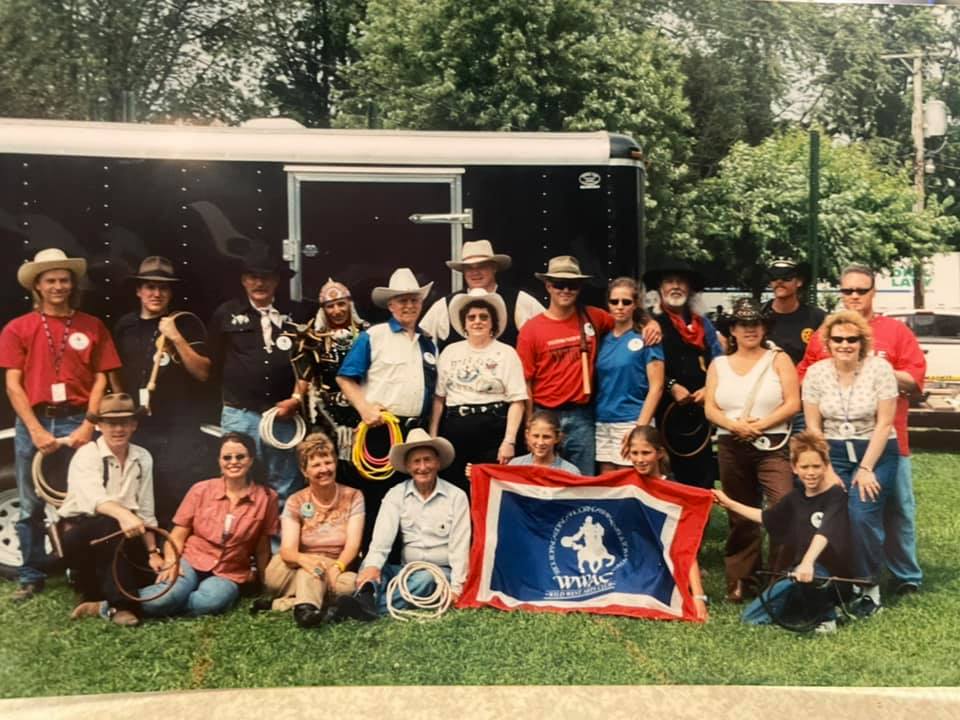
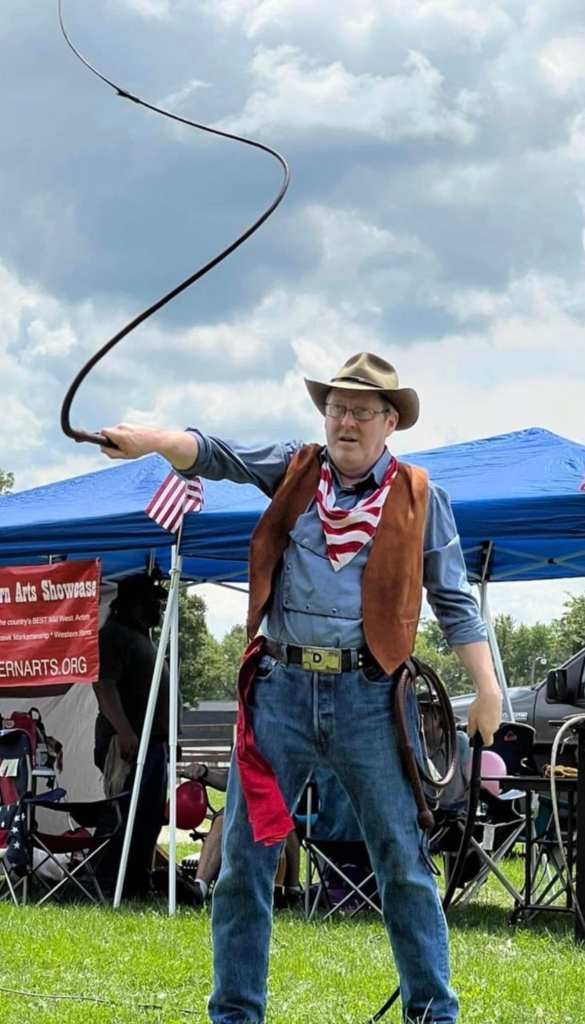
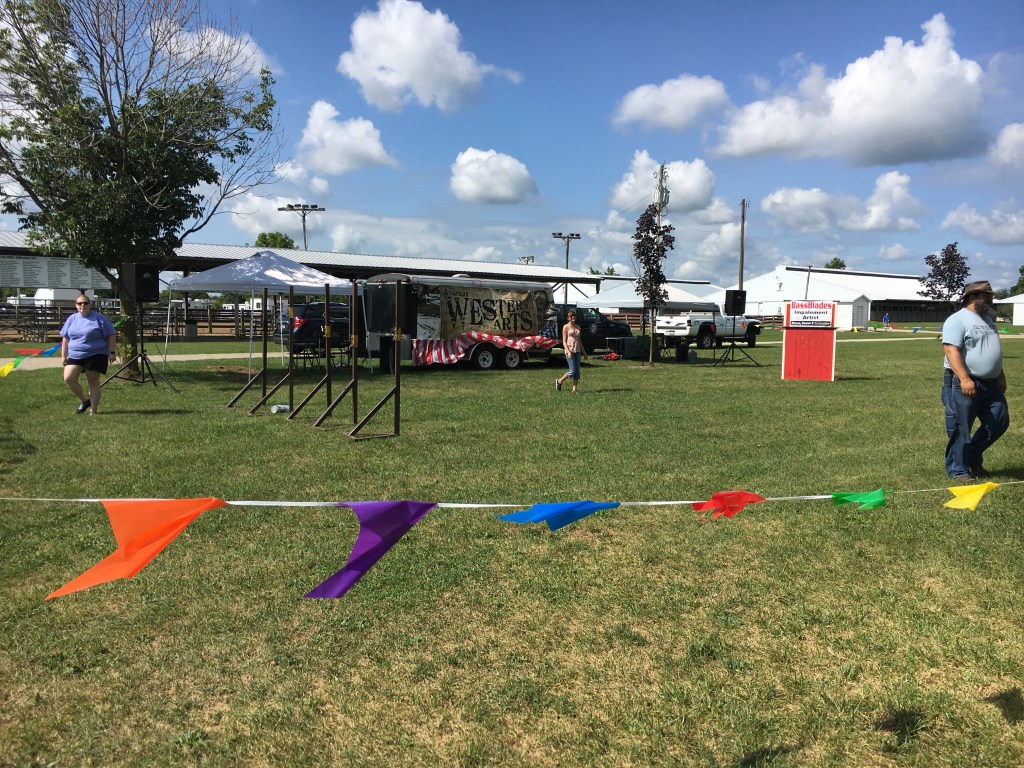
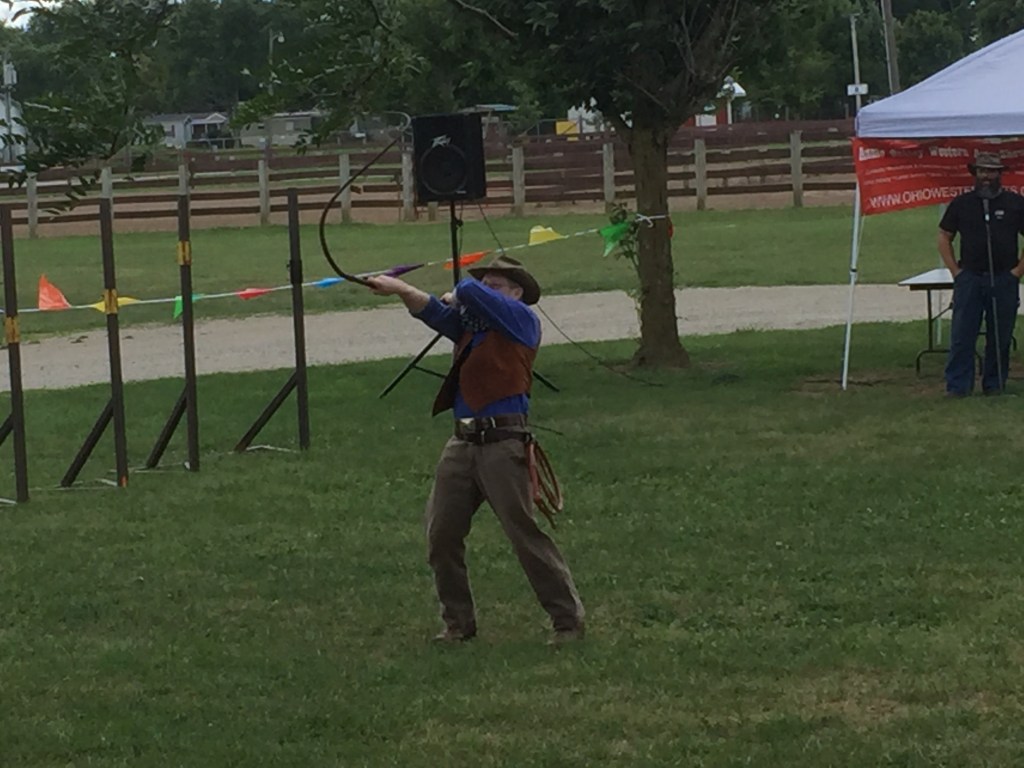
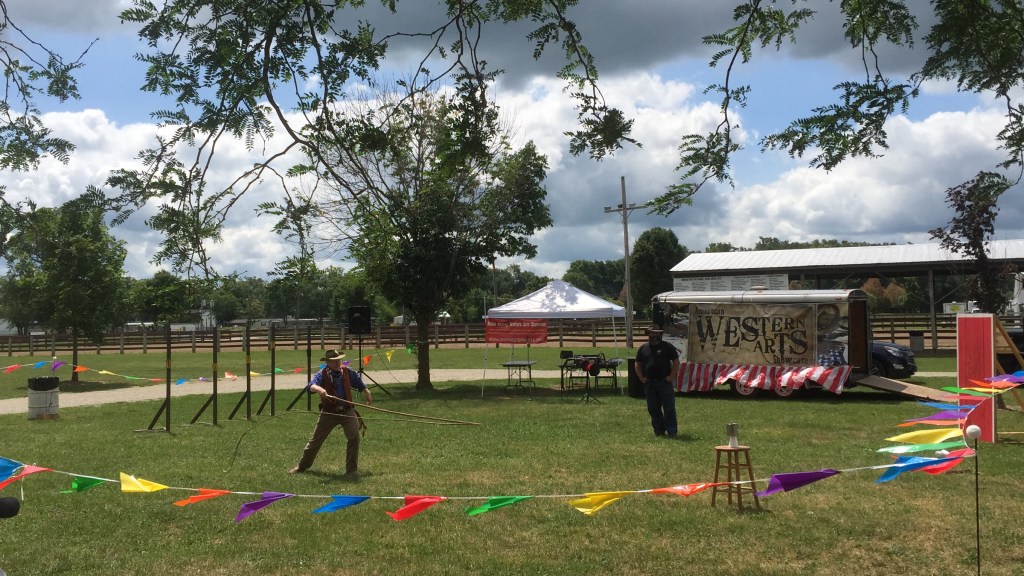
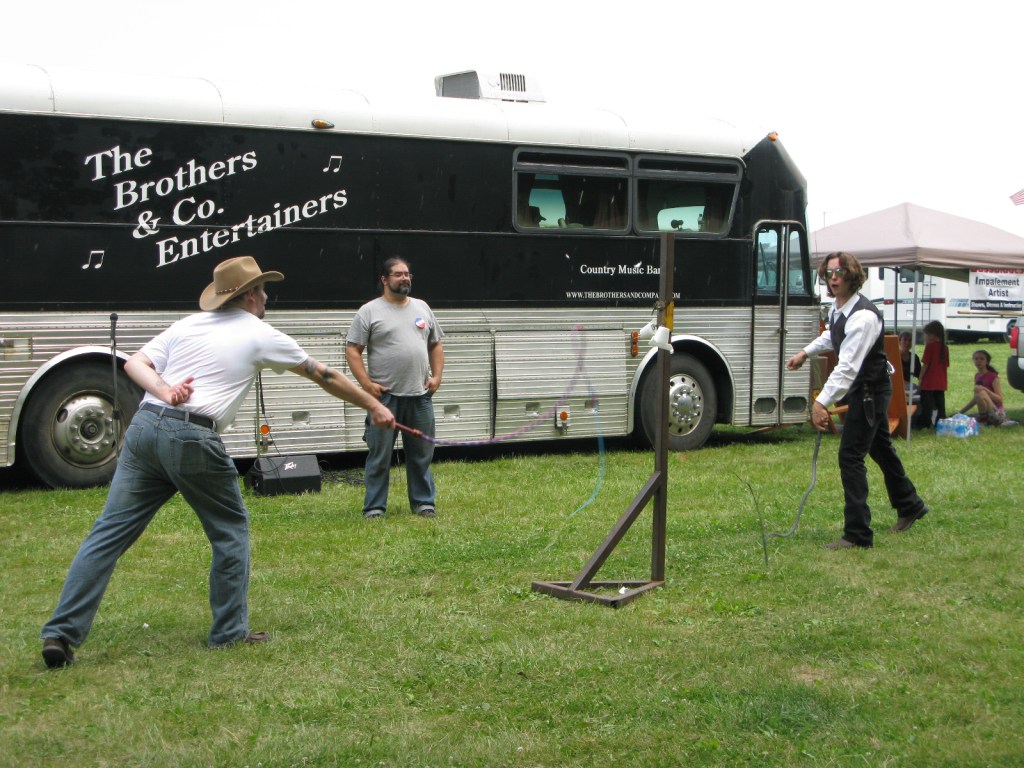
For the last 20 years, I have had the honor of leading a performing troupe of authentic Wild West arts practitioners in the American Western Arts Showcase during the Annie Oakley Festival in Greenville, Ohio.

Every year, whip handlers, knife throwers, trick ropers, and even shooters have gathered to compete, perform, and share our skills to the delight of crowds from all over the country. Of all the things I’ve learned from my time producing this event, my favorite part has been getting to know Annie Oakley, one of the most famous female performers in American history.

Anyone who studies women’s rights should really learn everything they can about Annie Oakley. In short, she was ahead of her time. Most people know Annie was a skilled markswoman with a rifle, a Wild West show performer, and a savvy businesswoman. But she was also the first American woman to brand herself and protect and defend her public image. To truly appreciate how special she was, it’s important to understand the difficult life she led before.

Annie Oakley was born Phoebe Ann Moses on August 13, 1860, just a few miles north of the city of Greenville, in Darke County, Ohio. At age 6, her father died, leaving the family impoverished. Her mother was forced to move the family to a rented farm. Later, when a sister died of tuberculosis, she and her siblings were separated, and Annie was moved to the county infirmary. Annie eventually ended up with a terribly abusive family where she struggled through her early teenage years in what she likened to slavery.

Annie learned to shoot at the age of eight, a skill she later used to earn money and goods by trading with local merchants. Discovered at a Cincinnati shooting contest by her future husband, Frank Butler, Annie experienced unprecedented global fame as a performing markswoman. She joined Buffalo Bill’s Wild West Show in 1885 and traveled the world with them until her retirement following a train accident in 1901.

Annie spent her later years at the New Jersey shore with her husband. She occasionally attended public shooting events for charity and was also a vocal and active advocate for women’s rights to hold paid work, equal pay, play sports, and practice self-defense.

In 1908, her public image was devastated by an article published by William Randolph Hearst in the Chicago Tribune claiming she had been imprisoned for stealing to support a cocaine habit. Dozens of newspapers nationwide carried the story which was, it goes without saying, a complete lie.

With Hearst refusing to retract the story, Annie would not stand for such defamation and sued all 55 newspapers that printed it for libel in the largest suit of its kind in U.S. history.

She won all but one case because that defendant cited the newswire as the “trusted resource,” indemnifying the paper. Her victory still resonates through libel law today.

After traveling the globe and performing for the crowned heads of Europe, Annie Oakley died in 1926 in a small house in Greenville, only a few miles from where she was born. Her husband of 50 years, Frank Butler passed just eight days later. She was inducted into the
National Women’s Hall of Fame in 1993 for her charitable support of women’s causes. She was, and is, an inspiration to people all around the world.

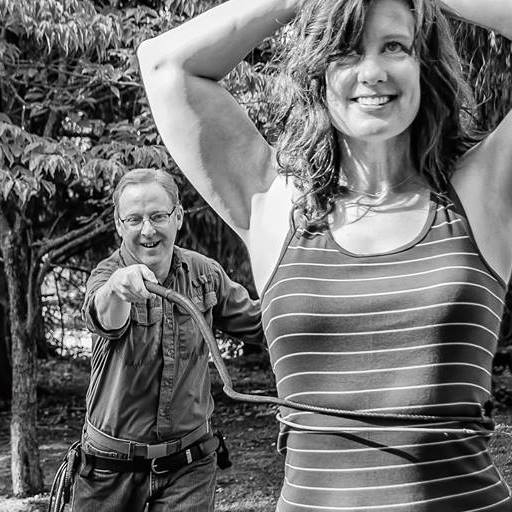
I am fortunate to have met members of Annie’s family, studied her professionalism and showmanship, and performed in modern Wild West shows, albeit with a bullwhip instead of a rifle. No matter how tough things get, her most famous quote inspires me to keep trying. “Aim at a high mark and you will hit it. No, not the first time, nor the second, and maybe not the third. But keep on aiming and keep on shooting for only practice will make you perfect. Finally, you’ll hit the bullseye of success.”

As for myself, after two decades 2023 will mark the final season for our showcase performance at the festival that has honored Annie Oakley for 60 years. It’s been an honor and I will greatly miss it. But, no matter what I do, Annie’s wisdom and fortitude will always be with me.

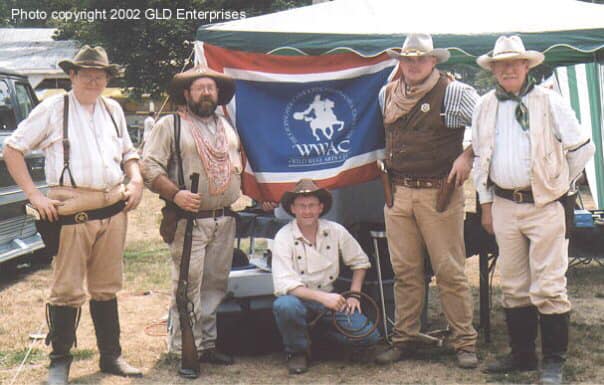
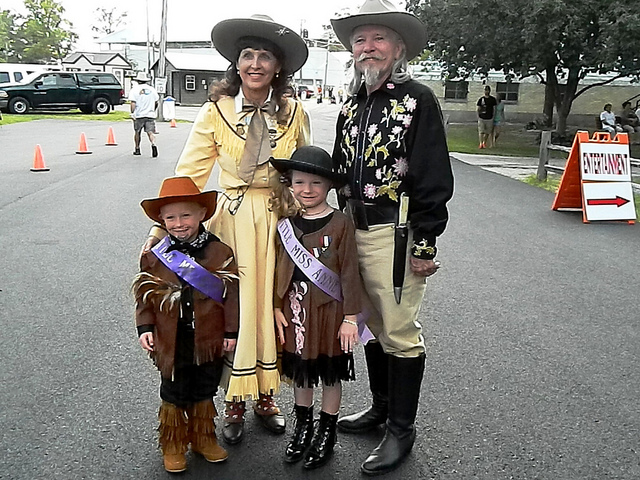
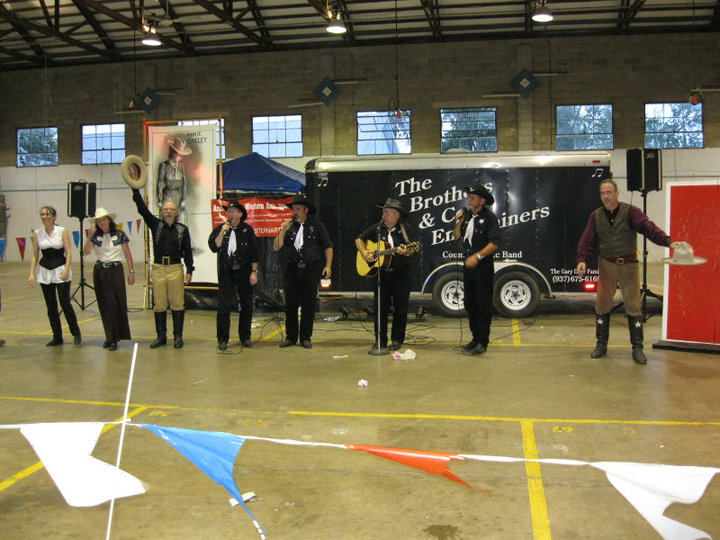
(The gallery shows some photos from the American Western Arts Showcase – originally named the Ohio Regional Wild West Arts Club Convention).

Award-winning local Wild West performers headline the 20th Annual American Western Arts Showcase at Annie Oakley Festival July 28-29.

In Local News on July 24, 2023 at 6:56 pm

Greenville, OH – The 20th Annual American Western Arts Showcase is slated for July 28-29, 2023, during the Annie Oakley Festival at the Darke County Fairground, 800 Sweitzer St., in Greenville, Ohio. Each of the stage-style Wild West shows features whip marksmanship and knife-throwing performances as well as some trick roping, stunt demos, comedy routines, and audience participation. The showcase event is free and open to the public.

Presented in the spirit of the stage-style Wild West shows of the late 19th Century, each production will include some detailed history of how these arts came to be and who still practices them today. Award-winning bullwhip performer and coach, Gery Deer, of Jamestown, Ohio, is the show’s founder, emcee, and producer.

“This is a one-of-a-kind show in this region,” Deer said. “We have some of the best Wild West arts entertainment anywhere in the Midwest with real practitioners of each skill.”

Deer started the event in Jamestown, Ohio, in 2002 but has been a regular presence at the Annie Oakley Festival every year since. “Our goal has always been to educate as well as entertain, ours is a dying art form,” Deer said. “These are talented performers with genuine ability, no fakery, no tricks. Everything you see in our show is real – and all of our shows are in 3-D and high definition!”

Champion knife thrower Kirk Bass, of Xenia, Ohio, is the co-producer of the event. He and his daring wife Melodee are known as “Bass Blades,” a long-running impalement act.  They are among the performers to take the open-air stage for the competition and matinee show beginning at Noon. on Saturday, July 29, following the festival parade. Contests begin with the National Whip Speed and Accuracy Exhibition Competition, the world’s original Bullwhip Fast Draw contest. Plus, there is a contest taken straight from the big screen.

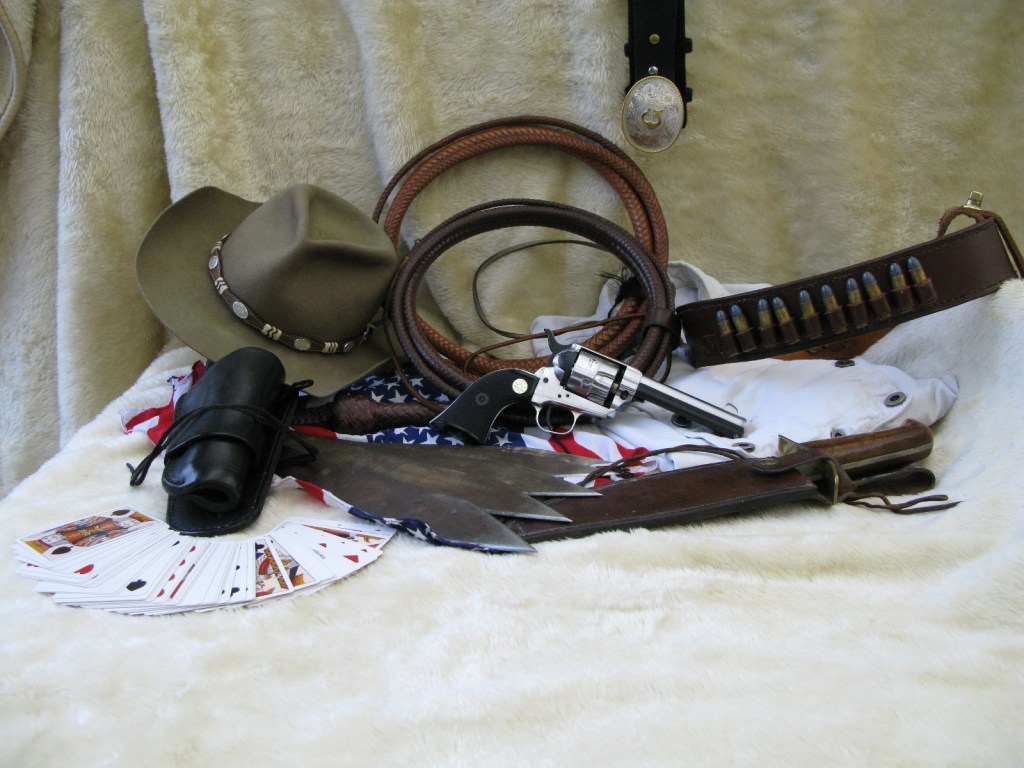
In 1981, a fedora-wearing, leather-clad archaeologist threw the crack heard around the world when he “whipped” a pistol from the hand of a jungle guide. At the beginning of “Raiders of the Lost Ark,” Indiana Jones demonstrated his skills with the holstered fast-draw of a 10-foot bullwhip, all while having to spin around to take aim first.

In the spirit of Dr. Jones’ proficiency, the competition includes a special, “blind bullwhip fast draw.” Contestants must mimic the move used in the film to turn, draw their holstered whip, and crack at a target with speed and accuracy.

“With the popularity of Indiana Jones among western performers, particularly whip artists, it’s odd this hasn’t been done before,” explained Deer, who holds multiple, national whip speed and accuracy titles and is the director of The Whip Artistry Studio, the only permanent whip training facility in America.

The final showcase performance for the weekend will be at 4:00 p.m. on Saturday and features Deer’s family musical group, “The Brothers & Co.,” who were a staple at the event until 2019. They’re returning for this one performance during the weekend. However, Deer will also appear at the festival as a solo performer beginning at 12 Noon on Sunday, July 31, for a series of Indiana Jones-style whip performances, complete with costuming.

The event is sponsored by GLD Enterprises Communications, Ltd., The Whip Artistry Studio, Bass Blades, Sage & Oak Handmade, and the Annie Oakley Festival Committee. For links to the festival and sneak previews of the performers plus updated show times, visit ohiowesternarts.org.

Ignore the Green Light

In Books, Opinion, psychology, sociology, Uncategorized on July 22, 2023 at 7:38 am

Deer In Headlines II

By Gery Deer

If it wasn’t for the mist, we could see your home across the bay. You always have a green light that burns all night at the end of your dock.” – A quote by Jay Gatsby, from “The Great Gatsby,” by F. Scott Fitzgerald.

You may not think of it in those terms, but we all have a “green light,” some undying yet seemingly unattainable desire for something. If you’re unfamiliar with the reference, let me point you toward the classic novel.

The book was written and set in the 1920s during New York’s Jazz Age, a time of prohibition, excess, and the American “consumer culture.” For Fitzgerald’s title character, a green light set at the end of a boat dock represented all that Gatsby desired or deemed of value in life. For across the water were his dreams – a woman named Daisy and her whirlwind, ritzy, lifestyle. 

To be worthy of Daisy’s attention, though, Gatsby thought he had to attain a lifestyle that, in those days, was unreachable unless you were born into it. Growing up impoverished in rural North Dakota, he saw money and prestige as the means to fit into Daisy’s world, and true happiness. In reality, however, Daisy, though from a wealthy and estimable family, wasn’t happy at all. Instead, she saw her place in that society as a stranglehold, a prison sentence.

Gatsby eventually got what he wanted, or did he? I won’t spoil the end for you – go read it. You don’t get the right feel of this from movies. Either way, the moral here is that chasing the green light may not be all it’s cracked up to be after all. I suppose, however, it really depends on what your green light represents, doesn’t it? That begs the question, what is your “green light?”

Is there anything you want so badly that you would change who you are as a person or alter your values just to get it? I’m pretty sure I don’t have anything like that. I’ve never been someone who cared anything about social position, prestige, or money, other than to support myself and my family without too much struggle.

Likewise, I never cared much about how people saw me or where I fit in so-called, “social circles.” If you don’t like me, you know where the door is, I’m not changing to suit your sensibilities. No one should have to do that.

To me, the green light represents something out of our reach, not so much because of socioeconomic status, but who we are as individuals. But, if I have to be something artificial in order for people to accept me into some popular collective, then I don’t want to be around them in the first place. I have never understood those who pretend to be something they’re not just to fit in with a group or climb some social ladder. I guess my ambitions just lay elsewhere.

In the novel, I think the problem with Gatsby’s vision of happiness, as with so many people, is how narrow, artificial, and ill-informed it was from the start. He wanted the money and social success so badly, he was willing to be something other than himself just to be with someone who didn’t even want to live in that world. It could be said that Daisy wanted out as badly as he wanted into it.

I’m not saying we should all simply accept our station, especially not if you’re really unhappy. But the life you want and the people you share it with should reflect who you really are, not who others think you should be. Don’t change just to assimilate to some idealistic world that probably isn’t what you think it is anyway.

Where does that leave us – and Gatsby? He saw Daisy’s green light as a beacon, lighting his way to financial and social salvation, but things rarely work out that way. My advice, for whatever it’s worth, is to ignore the green light and concentrate on what really drives you, the “you” that you are now. If you want to change for the good, to grow, that’s amazing! But do it for yourself, not someone else.

We weren’t always old.

In Local News, Opinion, psychology, Senior Lifestyle, Uncategorized on July 14, 2023 at 6:08 pm

Deer In Headlines II

By Gery Deer

An elderly gentleman sat quietly in a wheelchair, hunched and feeble, and his tired eyes peered through thick, smudged glasses. What remained of probably a head full of dark, wavy locks now lay in thin, white whisps. A young woman in a healthcare uniform sat next to him, smiling as she helped him eat some pudding from a small plastic cup. He looked longingly at the family sitting across the room entertaining what he assumed was a grandparent. His thoughts wandered back, 30, 40, and 50 years, to the days of his youth, as a young husband and father.

He remembered the excitement of family vacations, the birth of his first child, his first job and promotion, and buying their first home. So many things had happened, so much time, so much life, so many had gone on before him, so many yet to come. To him, just a moment ago, he was a young man, but now… He glanced again at the family, and around the room at the other residents of the nursing home.

“We weren’t always old,” he whispered under his breath, a single tear sliding from beneath his heavy glasses. The woman continued to give him the snack until the cup was empty. A moment later, he’d dozed off and she was pushing his chair back to his room.

I saw countless scenes like this while I cared for my parents. Life has a way of teaching us things, whether we are willing students or not. As we age, begin to understand pearls of wisdom shared by our parents, grandparents, and teachers. Somehow, the man’s lament of “we weren’t always old,” stuck a chord with me. I wasn’t either.

For some reason, the young seem to ignore the person behind the white hair, walkers, and wrinkles. Somewhere in there is the person they once were, young, vibrant, active, and productive. They were actors, writers, salespeople, teachers, police officers, musicians, mothers, lawyers, doctors, and so much more. They were somebody, and we should never forget it!

Everyone’s got that grandparent, aunt, or uncle, who sits in the corner at holiday dinners telling stories of the old days, but almost no one listens. They’ve heard the stories over and over as if the person’s mind is locked into that point in their life history. I learned a lot about my dad while I was caring for him. He would sit and tell me stories as we worked a puzzle or watched an old western on TV. I tried hard to understand who he was beyond the man I knew as my father. I’m not sure many people ever do that with their senior family.

As we age, we are still people, still individuals. We can still dream, imagine, love, care, create, understand, learn, and grow, but the system doesn’t always let us. Eventually, we will outlive our societal usefulness. We’re parked in Hell’s waiting room as our relatives wait to argue about who gets the junk we leave behind. It’s no wonder our minds retreat to better days. It’s ridiculous, and it’s pretty sad. There is so much to learn from our seniors, so much history, life lessons, and experience, all of which would benefit us to learn and absorb.

It’s strange how we treat the elderly in this country. In government, we routinely elect and re-elect people who stay in power for decades, until they finally age out to illness or die in office. Most are still holding political office many years after corporate America would have shown them the door. But most of the rest of us are “put out to pasture” at what is arguably a very young age. Illness notwithstanding, senior citizens still have a great deal to offer. They should be the schoolteachers, counselors, and mentors.

 Our society might be in better shape if our youth paid more attention to the mistakes and successes of past generations instead of constantly trying to reinvent the wheel. So, my advice to the younger folks out there is simple – spend more time with the older folks in your lives. Pay attention to their stories – listen and learn. You never know, you both may learn something!

My Closest Calls

In Health, Local News, Opinion, psychology, Technology, Uncategorized on July 9, 2023 at 10:27 pm

Deer In Headlines II

By Gery Deer

One bright, sunny summer day almost 30 years ago, I was driving my brother’s grain truck along a quiet country road near Spring Valley, Ohio. About a quarter mile ahead, my Dad drove his own truck, leading the way to where we would be collecting a load of hay. Our trucks were big, 6-wheeled, lift-bed grain boxes, about 10 tons each, and Dad was always leery about moving too fast on those old back roads, so we were just taking our time.

Just a few miles from our destination, a cement truck whizzed past him in the oncoming lane. It was the big kind with a small, metal cage for a cab, a long barrel with the engine trailing behind, and large balloon-like tires. I heard his voice over the CB radio warning me to beware as it approached. Barely a moment later, I was eye to eye with the driver as suddenly an explosion of glass, tearing metal, and a cloud of dust engulfed me. Our two massive steel machines had collided, left front fender to left front fender, and the sound was like nothing I can adequately describe.

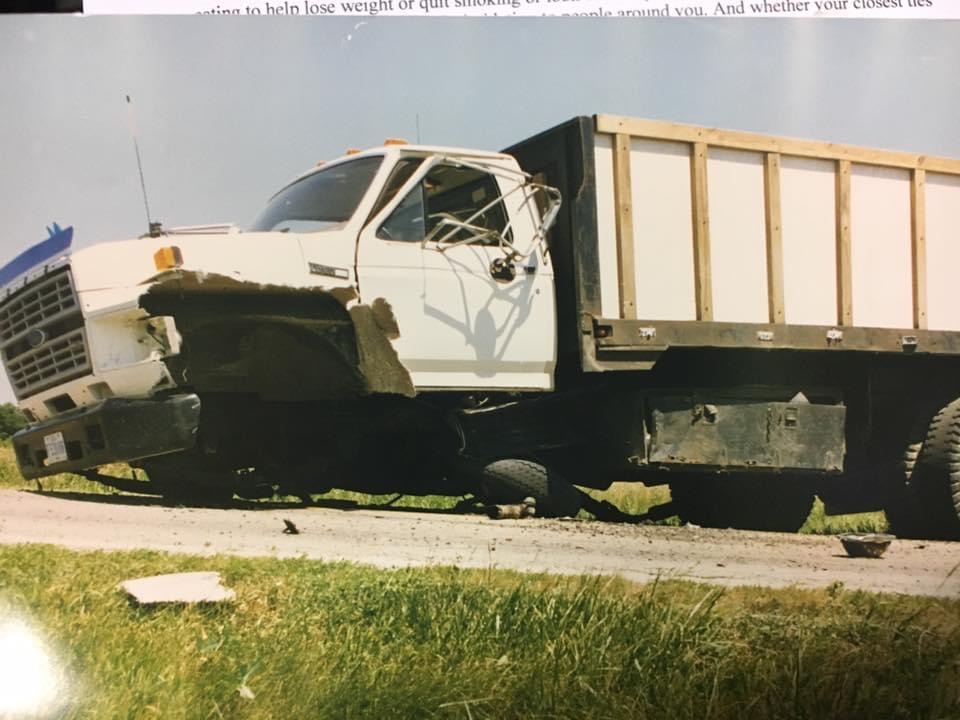
It was over as instantly as it had happened. What only seconds before had been a clean, powerful machine, and the center of my brother’s livelihood, was now little more than a pile of scrap. I had done what I could at the instant of impact to stop the vehicle. But, it was no use, the pedals were no longer connected to anything – neither was the steering wheel. As it came to rest, the truck’s lower frame plowed into the asphalt, like the Titanic’s bow crashing into the ocean floor. The cab and running board were severely damaged, the mirror shattered, and the door was caved in. The front axle and wheels were gone and the steering shaft snapped off. Moreover, there was no sign of my assailant. The cement truck was gone!

Behind the motionless, dead hulk of my truck, in a hay field, nearly a quarter of a mile away lay the twisted wreckage of the cement truck. It had telegraphed off of my truck, slamming into my frame multiple times, rolled behind me at full speed, and snapped off a power pole at its base – leaving a transformer suspended in mid-air by its cable. Then it spun out of control, careened down a long hill, and came to rest, upside down and backward. By some bizarre miracle, the driver, wearing no seatbelt and, according to the police investigation, moving twice my speed, had managed to survive relatively unhurt, as did I.

This is the truck … after.

Oddly, the casualties were limited to the two trucks and my Dad’s wits – as in frightened out of. He had to watch it all happen to me in his rearview mirror. By the time my truck had come to a stop, he’d bailed out of his and was running toward me yelling my name to see if I was OK. I was far more worried about him, though. 

I’d never seen him that shaken, out of breath, pale. When he saw I was unhurt he seemed to calm down. I was busy tossing my belongings out of the open, or rather, shattered, window, and trying to figure out how to get the door open. Once I was sure both Dad and I were OK, I told him to go check on the other driver while I used my cell to call for help. A few minutes later, I heard sirens coming up the road, and within moments the county sheriff’s deputies arrived. All would be OK – at least until my brother got there. Yikes! But that’s a story for another time. 

I will forever appreciate how fortunate I was that day. I can’t imagine what would have happened had either truck been a few inches one way or another. Life’s a gamble, every day. I think we always need to recognize how quickly things can change direction – through no fault or action of our own. Appreciate the positives, stay strong through the negatives. And remember, to live your best life. You never know what turns it might take one day.

The First 10 Miles

In Children and Family, Education, Health, Opinion, psychology, Senior Lifestyle, sociology, Uncategorized on July 1, 2023 at 1:40 pm

Deer In Headlines II

By Gery Deer

I took up long-distance tour cycling in 2017 to give some direction to my fitness routine. I am definitely no gym rat, but I needed to improve my health, and exercise for its own sake was, at least to me, mind-numbing. Preparing for long bicycle tours provided a tangible goal and kept me more engaged.

Growing up in the middle of nowhere, a bike was the only way I could get around, especially when the nearest neighbor kid was a couple of miles away. But this was a different challenge. With higher speeds, longer distances, and greater safety risks, I had a great deal to learn. 

I took the time to learn everything I could about endurance cycling, from choosing the right equipment to managing my food. The first year, I rode about 5 days a week, covering anywhere between six and 12 miles per day, while also maintaining my core and strength exercises.  

With practice, study, and the right workout regimen, my speed, distance, and endurance all improved. That first summer, I completed two, 100-mile, or “century,” rides. Since then, I’ve done six more, averaging two per year. 

I’d never been so driven to accomplish something that physical. I basically became an athlete, and that was never on my radar. Plus, it was as much mental as physical, maybe more. My friends and family probably thought I’d lost it. At 49 years old, I was in the best health of my life and broke physical barriers put in place from the day I was born. It required careful planning, long hours in the saddle, conditioning, and determination.

Any challenging goal always has prerequisites. Maybe you call them milestones or baby steps, whatever. The point is that these smaller goals help measure your progress and keep your eye on the prize. There are no “hacks” to anything worth doing and, if you find one, it’s probably going to rob you of valuable lessons and potentially derail the whole effort. 

The problem with most long-term goals is that people sometimes try to jump to the end, skipping vital steps. People who quit smoking cold turkey, for example, often fail because there are no step-downs to help eliminate, not just the addiction, but the habits that feed it. With cycling, you have to learn to ride 5 miles before you tackle 10, which leads to 20, and so on. More importantly, it might take time and practice to recognize each stage of achievement and what it means to your overall success.

For instance, my average training ride is around 20 miles, but even now, I struggle a bit in the first 6-8. I feel awkward, uncomfortable, and unfocused. It can be discouraging, sometimes even painful. But, as I push ahead, everything starts to smooth out around the 10-mile mark. My body settles into the bike, my cadence has a rhythm, my speed and efficiency improvements, and I become more mentally focused. 

My typical goal is generally far more than 10 miles, but I’ve learned to value that milestone because of its significance to my final goal. When you understand which smaller steps have the greatest impact on your final goal, each subsequent step becomes easier and more valuable. 

Recently I participated in the shortest organized cycling event I’ve ever ridden – 21 miles. There is no fanfare for a ride like this, just people who want to ride in a supported event with fellow cyclists. As expected, the first half of the ride was a little slow and clunky. 

I didn’t have the speed or rhythm I wanted, and the distance didn’t give me much time to “get into it.” But I pressed on, and, just like always, around the 10-mile mark, everything shook out and I even managed to set a speed record for myself. But I learned something different from the experience.

My “first 10 miles” could also be a metaphor for recognizing our strengths or shortcomings as we work toward any goal. Manageable, short-term accomplishments make the overall effort more rewarding. Hopefully, moving forward we learn and adjust, keeping a clear vision of the finish line. Before too long you’ve met your goal and your obstacles are in the rear-view mirror.

Is this your new site? Log in to activate admin features and dismiss this message
Log In