Local News & Commentary Since 1890.

Posts Tagged ‘Movie’

Drive-In Movie Memories

In Entertainment, Movies, Opinion, sociology, Theatre, Uncategorized on March 24, 2024 at 10:13 pm

Deer In Headlines II

By Gery Deer

One warm summer evening when I was about 20, I wheeled my 1971 Mustang through the neon-washed gates of the Belmont Auto Drive-In Theater just outside Beavercreek, Ohio. I found the ideal spot and parked. The massive screen filled my windshield.

A few minutes later, an announcement over the speakers says, “Fifteen minutes! Fifteen minutes to show time!” Perfect! I had just enough time to grab a hot dog – I counted what cash remained in my wallet. It didn’t matter, though. They had me at “fresh, hot, buttery popcorn!”
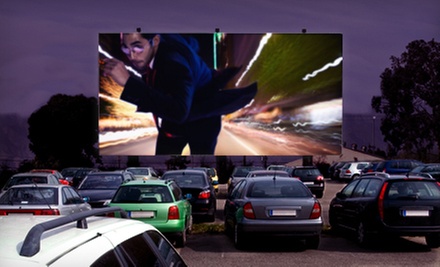
That night, the marquee read, “Double Feature” (Then again, it was always a double feature.) “Star Trek IV: The Voyage Home and Crocodile Dundee.” If memory serves, the price was $5 per car, and I was ready. Drive-ins had been converted to broadcast the movie sound over the radio. So, I outfitted my old Mustang with a stereo amplifier and mounted speakers so you could best hear them outside the car. I tuned in the frequency, adjusted the volume, hopped on the hood with my snacks, and settled in for a great evening’s entertainment under the stars.

I loved drive-ins and still do. There’s something about the atmosphere that is pure Americana. As I’m thinking about it now, I can almost hear the overdriven buzz of those heavy, window-hanging speakers, the dancing refreshments up on the screen at intermission. The drive-in was one of my first solo outings at 16 when I got my driver’s license.

My first memory of going to a drive-in was with my parents in 1974. I was about seven years old, and we went to the Skyborn Drive-In in Fairborn, Ohio, where the original “Benji” movie was showing. I was so enamored with them that, for a short time, I considered owning a drive-in theater, but not your usual run-of-the-mill version.

I had this wacky idea about a massive drive-in theatre and even made concept drawings of it. It featured an unusually large, high-resolution curved screen, Dolby stereo, wireless speakers, and a two-story concessions building with a restaurant on the second floor. It featured a video game arcade, a merchandise shop, supervised playrooms for the kids, a bar for the adults, and more. Plus, it was much larger and could hold more than 400 cars.

Of course, I never made it happen, but it was a cool dream. I’m afraid that in the summer of the late 80s, my concept was way ahead of the required technology. Besides that, even in those days, drive-ins started to disappear.

Most of the Dayton-area drive-in theaters I visited back then are long since gone. If you’re local, you might remember some of them. There was the North Xenia Drive-In, Southland 75, Valley Street Drive-In, Dayton West Drive-In, and many others.

In north Dayton, the Dixie Twin first lit its screens in the early 1950s, and its projectors are still running today. The Melody 49, just off I-70 near Trotwood, is alive and well and shows first-run flicks on two screens. You can find others with a quick Google search. Depending on the travel, you might need to make a night of it if you plan to go.

As many surviving drive-ins faced closer, a strange twist of fate intervened. The very disaster that shuttered businesses worldwide may have been the savior of the drive-ins, at least temporarily. The COVID-19 pandemic gave many drive-ins a surge in business. Families could watch a drive-in movie, maintain social distancing, and enjoy an evening out.

Sadly, box office numbers have slumped since the pandemic, and drive-ins are still trying to bring people back in the gates. People need to be reminded that nearly all drive-in theaters are privately owned small businesses. They’re not million-dollar multiplexes. Most are run as a labor of love with volunteer staff, and most take in barely enough revenue to keep the projector bulbs burning. 

For some, drive-ins are a long-held tradition. To others, they represent an era long past. But whatever the attraction, grab your lawn chairs, blankets, and portable radios (to keep from running down your car battery), and head to the closest drive-in. For now, I have to go. Tonight’s feature is about to start.

Recommended Documentaries about Drive-In Theatres:

Hooper’s Les Miserables film may set a theatrical precedent

In Business, Children and Family, Economy, Education, Entertainment, Media, National News, Opinion, psychology, sociology, Technology, Theatre on January 2, 2013 at 11:20 am

lesmisDeer In Headlines

By Gery L. Deer

Over the holidays, I was compelled to see the new movie, Les Miserables, based on the musical theatre version of the 1862 novel by Victor Hugo. In this big-budget film, director Tom Hooper’s version of Les Mis, as it is known colloquially, has set a precedent for helping to expose the masses to quality musical theatre without having to know that the word “gallery” is just rich people theatre speak for “nosebleed seats.”

In case you haven’t seen the show or read the novel, here’s the Reader’s Digest version. The story follows the plight of petty thief Jean Valjean the 1800’s when France was on the brink of revolution.

After breaking his parole, Valjean struggles to rebuild his life under assumed names as he is relentlessly pursued by police inspector Javert. He eventually winds up raising the daughter of a woman for whose death he felt ultimately responsible and finds himself tangled in the beginnings of the French Revolution.

Hugo’s novel was adapted into musical theatre in Paris in 1980 using music written by Claude-Michel Schönberg and original French lyrics by Alain Boublil and Jean-Marc Natel, as well as an English-language libretto by Herbert Kretzmer. Over the last 30-odd years, it’s been one of the most successful musicals of all time and the producers of this new film have made every effort to bring the sights and sounds of the stage show to the silver screen and to a wider audience.

Instead of having the actors lip-sync to a recorded track and overlay the vocals later, director Tom Hooper attempted something that hasn’t been done since the infancy of the industry. All of the singing parts were recorded as they were shot, right along with the video, just as if the audience was watching it happen live on stage.

The result was a wonderful mixture of visual and audio effects that brought the audience closer to the actors and the emotion of the story than could have ever been achieved before. But technical innovation was not the only potentially ground-breaking achievement demonstrated by this movie.

There is a direct correlation between the progress of a society and advancement in the arts. Unfortunately, in most countries including the United States, high quality theatre productions are often inaccessible but to the elite wealthiest few because of the staggeringly high ticket prices.

Occasionally, there will be lower-priced seating on lesser-known shows or locally produced events, but Broadway-quality performances are still usually out of reach of the average middle class, particularly once you factor in parking and other associated expenses.

Of course, organizers constantly tout that theatre should be available to everyone but the prices remain astronomical. However, Hooper’s Les Mis film may change that. For the price of one mezzanine seat at the theater, a family of four can go to a matinee movie or, later on, buy or rent the video of the production at a substantially lesser cost.

The challenge for filmmakers will be to create quality productions that mirror the stage show. In the case of Les Miserables, Hooper has captured the intent of the production and combined it with the grandeur available on the big screen and, in doing so, has the potential to reach millions more audience members than his stage-bound counterparts.

As so many people complain about the quality of today’s movies and television, Hooper’s version of Les Miserables provides a welcome respite from the violence and repetition in today’s mass entertainment industry.

As for my experience, it was fascinating. At the end of the movie when the final note was sung, there wasn’t a dry eye in the house and the audience broke into applause, just as if all of the actors were there to hear them. It was really something to see.

Nothing will ever replace the experience of seeing a live production on stage. But, at that moment I realized that films like this could change the face of theatre in the digital age and bring high quality shows more accessible to everyone.

Live Bullwhip Show To Open Indy Jones Film at Murphy Theatre

In Entertainment, Local News, Senior Lifestyle, Sports News, Uncategorized on April 28, 2012 at 10:09 am

Raiders of the Lost Ark was the first of 4 Indiana Jones movies. It will play at 7PM on May 12 at The Murphy Theatre in Wilmington, Ohio.

WILMINGTON, OH – Award-winning bullwhip artist and writer, Gery L. Deer of Jamestown, will perform at the Murphy Theatre in Wilmington on Saturday evening, May 12th in conjunction with the showing of the blockbuster film, Indiana Jones and the Raiders of the Lost Ark. Working in the traditional “Indy” costume, Deer will entertain for a short time outside the theater beginning around 6:30 p.m., and then move to the Murphy’s historic stage for full performance before the movie begins at 7 o’clock. Tickets are just $5, sold at the door.

A successful entrepreneur and columnist, Deer, 44, is internationally recognized as an expert whip artist and instructor. He is the founder of the Society of American Whip Artistry and holds multiple titles in whip speed and accuracy. In 2007, he was selected Wild West Performer of the Year by the International Knife Throwers Hall of Fame.

In addition to working on stage from Ohioto Las Vegasover the last two decades, Deer develops custom whip holstering equipment for feature films, including the 2003 movie, The Rundown. He appears regularly on national television programs like NBC’s “America’s Got Talent,” and local broadcasts including WRGT-TV’s Fox 45 in the Morning and WDTN-TV/Channel 2’s Living Dayton.

“The Indiana Jones movies gave rise to a worldwide interest in the whip and the momentum has kept up over the years,” said Deer, who is also a professional freelance writer and marketing consultant. “It’s always better with a live audience and I’m looking forward to giving movie goers at the Murphy something they will always remember.”

In early 2010, Deer’s work was featured in a segment of the ThinkTV/CH16 program, Our Ohio, in a feature story about The Whip Artistry Studio, his whip performance and educational facility based inJamestown. The exclusive whip school is the only one of its kind in theUnited States and provides certified, professional instruction in the use of the bullwhip as a sport and performance art.

The Murphy Theatre is located at50 West Main Streetin downtownWilmington,Ohio. For directions or more information go online to http://www.themurphytheatre.org and click on the Events link, or call, toll-free, (877) 274-3848. To learn about The Whip Artistry Studio visit http://www.thewhipstudio.com.

Is this your new site? Log in to activate admin features and dismiss this message
Log In