Local News & Commentary Since 1890.

Posts Tagged ‘elderly’

A House Divided

In Dayton Ohio News, Education, finances, Food, Health, history, Local News, News Media, Opinion, Politics, psychology, Senior Lifestyle, Uncategorized on September 2, 2023 at 2:47 pm

Deer In Headlines II

By Gery Deer
When I restarted this series after a 5-year hiatus, I decided to steer away from politics, religion, and other hot-button topics in favor of more personal subjects. That said, I’ll dip a toe into that pool only enough to express my concern at the level of divisiveness now facing our country and who actually pays the price for it.

The political climate in America today is toxic, with no end in sight. Everything is viewed only from one side by an ill-informed, angry citizenry and uncompromising elected, uncivilized government officials. Over the long haul, we simply can’t function that way. Our legislators must work together in order to govern, even to manage the most basic issues. Unfortunately, that seems unlikely to change when the only people getting attention are the radical extremists.

Regardless of your ethnic background, or whether you’re conservative, liberal, or whatever, surely there are things we can all agree on, right? For instance, instead of spending hours on cable TV news bickering about who caused inflation, wouldn’t our collective energy be better spent on ways to help people get through it? Meanwhile, our dedicated elected officials spend taxpayer money riding around in limousines, secure in their healthcare, paychecks, and benefits, all guaranteed long after they’ve left office.

More absurd is that, in the most powerful and wealthiest country on Earth, there are still people who can’t get enough food, shelter, or other necessities – particularly the elderly, veterans, and children. No, it’s beyond absurd, it’s criminal. This problem affects everyone. The number of working poor continues to grow, most of my family included. Most people are only a paycheck or two from ruin. All it takes is one major catastrophe and boom, we’re on the street. Regardless, people from every side are too busy waving flags and hating each other’s politics to care or do anything about it.

Recently, I did some work at a food pantry and had the opportunity to learn more about the mission of these organizations. I am shocked about how necessary they are in so many communities. In just one year, the number of families served might double, so they must continually find new ways to meet the constantly growing demand.

You might be surprised to know that the people who most need services like this are not homeless or indigent. They are instead the working poor, single-parent families, and, sadly, veterans. No one should feel ashamed of taking help from those who offer it. But I can’t imagine how hard must be for someone who proudly served our country and then is forced to go to a food pantry just to have enough to eat.

The number of military families and veterans who need various types of assistance is also surprising. They include elderly or disabled veterans, military wives and husbands with young children trying to make ends meet while their spouses are deployed, families of all ages and backgrounds, and the kids, wow. Watching a child’s eyes light up over a book or something as simple as a Twinkie or a fresh piece of fruit can be simultaneously enlightening and heartbreaking.

Again, while the politicians ride around in limousines and kowtow to mindless followers during ridiculous cult-like rallies, the people they claim to be fighting for wait in lines at food pantries. They have no money, little healthcare, and a veteran affairs system that’s so broken it needs to be razed and rebuilt from the ground up.

These issues aren’t conservative or liberal, Muslim, Jewish, or Christian. We are so blinded by ridiculous ideologies and political divisiveness that we can’t see the real responsibilities facing our country – poverty, homelessness, substance abuse, an ever-changing job market, and so much more. Certainly, we could all get together on some of these things. Nope, it’s just not going to happen.

The people I meet in these situations don’t want handouts. They want to be understood and for their elected legislature to work for not against them. But until we put down the flags, turn off the news, and choose to be better human beings, nothing will change. So, all I have left to say is to quote my favorite president. “A house divided cannot stand.”

We weren’t always old.

In Local News, Opinion, psychology, Senior Lifestyle, Uncategorized on July 14, 2023 at 6:08 pm

Deer In Headlines II

By Gery Deer

An elderly gentleman sat quietly in a wheelchair, hunched and feeble, and his tired eyes peered through thick, smudged glasses. What remained of probably a head full of dark, wavy locks now lay in thin, white whisps. A young woman in a healthcare uniform sat next to him, smiling as she helped him eat some pudding from a small plastic cup. He looked longingly at the family sitting across the room entertaining what he assumed was a grandparent. His thoughts wandered back, 30, 40, and 50 years, to the days of his youth, as a young husband and father.

He remembered the excitement of family vacations, the birth of his first child, his first job and promotion, and buying their first home. So many things had happened, so much time, so much life, so many had gone on before him, so many yet to come. To him, just a moment ago, he was a young man, but now… He glanced again at the family, and around the room at the other residents of the nursing home.

“We weren’t always old,” he whispered under his breath, a single tear sliding from beneath his heavy glasses. The woman continued to give him the snack until the cup was empty. A moment later, he’d dozed off and she was pushing his chair back to his room.

I saw countless scenes like this while I cared for my parents. Life has a way of teaching us things, whether we are willing students or not. As we age, begin to understand pearls of wisdom shared by our parents, grandparents, and teachers. Somehow, the man’s lament of “we weren’t always old,” stuck a chord with me. I wasn’t either.

For some reason, the young seem to ignore the person behind the white hair, walkers, and wrinkles. Somewhere in there is the person they once were, young, vibrant, active, and productive. They were actors, writers, salespeople, teachers, police officers, musicians, mothers, lawyers, doctors, and so much more. They were somebody, and we should never forget it!

Everyone’s got that grandparent, aunt, or uncle, who sits in the corner at holiday dinners telling stories of the old days, but almost no one listens. They’ve heard the stories over and over as if the person’s mind is locked into that point in their life history. I learned a lot about my dad while I was caring for him. He would sit and tell me stories as we worked a puzzle or watched an old western on TV. I tried hard to understand who he was beyond the man I knew as my father. I’m not sure many people ever do that with their senior family.

As we age, we are still people, still individuals. We can still dream, imagine, love, care, create, understand, learn, and grow, but the system doesn’t always let us. Eventually, we will outlive our societal usefulness. We’re parked in Hell’s waiting room as our relatives wait to argue about who gets the junk we leave behind. It’s no wonder our minds retreat to better days. It’s ridiculous, and it’s pretty sad. There is so much to learn from our seniors, so much history, life lessons, and experience, all of which would benefit us to learn and absorb.

It’s strange how we treat the elderly in this country. In government, we routinely elect and re-elect people who stay in power for decades, until they finally age out to illness or die in office. Most are still holding political office many years after corporate America would have shown them the door. But most of the rest of us are “put out to pasture” at what is arguably a very young age. Illness notwithstanding, senior citizens still have a great deal to offer. They should be the schoolteachers, counselors, and mentors.

 Our society might be in better shape if our youth paid more attention to the mistakes and successes of past generations instead of constantly trying to reinvent the wheel. So, my advice to the younger folks out there is simple – spend more time with the older folks in your lives. Pay attention to their stories – listen and learn. You never know, you both may learn something!

The invisible side of caregiving.

In Children and Family, finances, Health, Jobs, Local News, National News, Opinion, psychology, Senior Lifestyle, sociology, Uncategorized on January 10, 2017 at 9:32 pm

Deer In Headlines
By Gery L. Deer

12191385_10153464406329342_2088873762632508759_oWhen you think of the term “caregiver,” you might have the image in your head of the dutiful family member looking out for an elderly parent or disabled child. What you see in public or on the surface is someone helping a senior citizen do her shopping or teaching a child with limited mobility to use an iPad. But, it’s the stuff you never see that is really the hard part of the job.

Caring for a family member is not something that comes with many benefits. Actually, there is only one benefit – looking after your loved one. Yes, there are some people who get paid to take care of a family member, but that’s rare and extremely difficult to

15992247_10154565059144342_1021060654_o

Shower prep for caregivers can be like gearing up for battle. Helping a senior parent with every day personal care can be hard to get used to – for both – but extremely necessary.

16009843_10154565059109342_821121491_o

Medicines must be cataloged, dosed, and set into daily dispense containers. Tracking of administration is also necessary to ensure proper care, safety and financial maintenance.

Personal care is one of the hardest parts of caring for a senior parent. Different than helping a child with these issues, an elderly adult has a different perception of self-sufficiency and personal dignity. I can’t even imagine how hard it is for my father that he now needs help just to do something as simple as shaving or taking a shower.

As a Parkinson’s sufferer, Dad can’t hold his hands still enough to shave with a safety razor and we’ve had to go to an electric model. He does his best to try to do it on his own, but his hands can’t apply any pressure to the razor on his face so it misses, well, pretty much everything. So once a week, we do a complete, clean shave starting with a trimmer.

Showers also require some consideration to personal dignity while trying to ensure complete cleanliness. When I help Dad with a shower, it’s like gearing up for battle. It’s tough to get used to, for both of us. But we do our best. I just try to make sure he gets in and out without injury, get him clean and get him dressed. How would you feel if, suddenly, your children had to help you with trimming nails, combing hair, or washing? You have to be aware of your charge’s discomfort while still meeting the needs.

Managing medications is also a challenge for caregivers. I’m actually pretty lucky in our situation because Dad’s meds – for now at least – can be divided into two daily packets. Every Sunday, I refill a daily box dispenser and we have a record book to record every dose administered and by whom.

14192078_10154177027939342_4999691246789055042_nMoney is probably the biggest sore spot for many caregivers as well because we end up having to handle our own homes as well as the finances of our charge. It wasn’t long after my mother became ill that I learned who the money manager of the house was as I grew up.

As is common with many elderly folks, Dad was letting bills go unpaid, utilities were being cut off, debt was mounting and statements lay unopened, piling up on the kitchen table – Never again. My siblings and I took over managing his money and paid off all his major debt so we only have living expenses, medicines and doctor bills to worry about.

The problem is that things won’t stay that way. People don’t understand how little Medicare and its supplements really cover and the expenses continue to mount as a senior’s care grows more complicated because things like Parkinson’s continue to progress.

170812_481608509341_4854293_o

Adjusting work to caregiver life is rarely easy, sometimes it is impossible. Many caregivers have to choose one over the other.

Naturally, The U.S. Congress is far too busy voting itself another ridiculous raise and cutting Social Security to bother considering how to better spend money to care for its citizens. After all, it’s “our” money. And there is no outside financial support for caregivers.

So, the bills continue to roll in – co-pays, lift chairs, vaccinations, home care (yes, it’s mostly self-pay), unforeseen changes in the health of the patient and the understanding that with Parkinson’s, diabetes and glaucoma, my father will get worse, even with the best possible care.

Tons of other things come into play too. When you’re a caregiver, you’re often the housekeeper, accountant, chef, chauffeur, nurse, clothes and dishwasher, and much more. The rest of the world doesn’t see the countless hours spent making sure the things like cracker packets and juice bottles are stored in a way he can easily open them with limited mobility.

Over the years, I’ve written many times about my experiences in helping to care for my parents. But people I meet always seem to be shocked how much we have to do that no one ever sees. So, when you see someone out in public dealing with something like this, just remember how hard it is and open a door for them or be patient when they’re sorting groceries for two households at the checkout. We appreciate it.


Gery L. Deer is an independent columnist and business writer. Deer In Headlines is available as a podcast at MyGreeneRadio.com.

Music shines light through darkness of dementia

In Health, Local News, Opinion, Senior Lifestyle, Technology, Uncategorized on August 18, 2014 at 12:20 pm

DIH LOGOAccording to statistics, one in three senior Americans now suffers from some type of dementia. My mother, Lois Deer, was one of those unfortunate millions who had an advanced type of Alzheimer’s disease. As it progressed, she lost the ability to communicate on anything more than a passive level, responding to very little, short of a head nod or facial response here and there. When she spoke, it was in whispers and then only gibberish.

One thing that did seem to register, however, was music. Each Saturday night we would move her wheelchair to the band room at my parents’ farm where our family band, “The Brothers & Co.,” would rehearse. We would feed her dinner – a manual task since she couldn’t do it on her own – and she’d spend most of the rest of the evening listening to us play and sing, surrounded by family in a room she created for us.

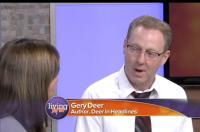
Gery Deer discusses Music and Dementia on WDTN-TV2's Living Dayton during a "Deer In Headlines" segment. Click to watch the video clip ...

Gery Deer discusses Music and Dementia on WDTN-TV2’s Living Dayton during a “Deer In Headlines” segment. Click to watch the video clip …

Music was an important part of my mother’s family growing up, with virtually ever member playing some kind of instrument, many of them without the aide of formal lessons. She even sang in an “Andrews Sisters” type quartet with her own sisters in the late 1950s.

By this time, however, Usually, she had a kind of empty, blank expression on her face, a typical Alzheimer’s manifestation. But one evening during our practice, she was sitting near my piano and I caught sight of a slight smile in her eyes and looked down to see her toe tapping on the footrest of her chair.

Since Mom needed 24-hour care, and because we had no intention of leaving her to rot in a nursing home, we cared for her at home and she came along with us to every performance. She had a specially-outfitted seat on our tour bus, complete with an oxygen tank and all of our portable medical supplies. My cousin sat with her in the audience and she would sing, “You are my sunshine,” with us at some point in every show. Music got through, when nothing else would, and I’m relieved to know that I’m not the only one who noticed.

Lois Deer (center) with The Brothers & Co. members Gary Deer Jr., Gery Deer, and husband Gary Deer Sr. at the Jamestown Opera House in 2010

Lois Deer (center) with The Brothers & Co. members Gary Deer Jr., Gery Deer, and husband Gary Deer Sr. at the Jamestown Opera House in 2010

A friend recently told me about a National Public Radio news story related to this phenomenon. The piece focused on a documentary featuring social worker Dan Cohen and his creation of custom music playlists on iPods for elderly dementia patients. Titled, “Alive Inside,” the film explores Cohen’s exploration of the connection between music and long term memory.

“Even though Alzheimer’s and various forms of dementia will ravage many parts of the brain, long-term memory of music from when one was young remains very often,” Cohen told NPR’s Melissa Block. “So if you tap that, you really get that kind of awakening response. It’s pretty exciting to see.”

That all makes a lot of sense when you think about the kinds of music my family band plays and the relationship my mother had to it. There’s no question we were reaching an area of her mind that the Alzheimer’s hadn’t yet shorted out.

After I noticed my mother’s reactions, I paid more attention whenever we performed at nursing facilities where a great number of the residents were suffering from similar illnesses. I can’t tell you what a heart-wrenching experience it always is to see these poor people in such a state; doubled over in wheelchairs, closed off, withdrawn into the isolated torment of their own disease-ravaged minds. And then …

And then we start playing and something would happen, a toe would begin to tap here and there, or a silent face would begin to mouth words to a song. Although it might seem like there’s nothing left of the people they once were, here was a sign that they were still in there – somewhere – and we were reaching into that one place the disease couldn’t penetrate.

All I can imagine is that the music we were playing took my mother somewhere else within a mind that’s organization had long since scattered, as if someone rearranged all the drawers in a wardrobe chest.  She was in another place and another time, a better time.

Christina Corallo, North Shore LIJ Orzach Center for Rehabilitation, Valley Stream, N.Y., tells MusicandMemory.org, “Patients with anxiety and depression are less agitated and appear calmer. The music transports them to a happier place in their minds.”

"The Sutton Sisters" singing family, Lois Deer (far right) and her sisters, (from left) Ruth Rowe, Isabel Jones, and Regina Marshall, ca. 1958

“The Sutton Sisters” singing family, Lois Deer (far right) and her sisters, (from left) Ruth Rowe, Isabel Jones, and Regina Marshall, ca. 1958

Cohen’s idea of customized iPod playlists for each patient is still plagued by one major hurtle – money. Nursing care, particularly long-term dementia care, is incredibly expensive and iPods aren’t cheap. It’s the same financial roadblock encountered by virtually every other progressive therapy for dementia ever proposed.

With that, I am challenging one member of the family of every dementia patient to buy an iPod for their loved one and load it with music from their life. Give them a moment to feel who they once were in the most personal, powerful way possible – through music.

 Learn More About Music and Memory…

Click here for a link to the full NPR story,”For elders with dementia, musical awakenings,” by Melissa Block.

Click here to watch the trailer, “Alive Inside: A Story of Music & Memory” featuring Dan Cohen.

Donate to Music & Memory: Monetary or iPods