The 5 events will take place as shown below: Monday July 31, 4-6 pm TCN Troy 1021 N. Market Street Tuesday August 1, 4-6 pm TCN Fairborn 1825 Commerce Center Blvd. Wednesday August 2, 4-6 pm TCN Bellefontaine 118 Maple Avenue Thursday, August 3, 4-6 pm TCN Xenia 452 W. Market Street Friday, August 4, 4-6pm TCN Urbana 1522 E. US Hwy 36
TCN annually collects school supplies and donations for the children in their service areas. In 2022 they provided supplies to more than 300 children and hope to expand that reach in 2023. The 5 distribution events listed above will include free pizza and beverages as well as school supplies while supplies last.
“New school supplies are essential to help prepare students for a successful year and support teachers in the classrooms,” says Tom Otto, TCN’s Associate CEO. “We hope that people will help TCN get more school supplies into the hands of more kids by donating and volunteering at the distribution events.”
TCN accepts donations of school supplies at all locations, or donors can shop the School Supply Drive Amazon Wishlist to have supplies shipped directly to TCN for preparation and distribution. The organization also accepts monetary donations at https://tcn.jotform.com/202296368911965 by selecting “school supply drive” in the dropdown menu. Volunteers can get sign up to help at their local events here: https://tcn.jotform.com/223056028945962.
Founded in 1990, TCN Behavioral Health Services, Inc. is a comprehensive behavioral health agency dedicated to improving lives by providing clinically excellent and accessible behavioral health services. TCN provides mental health, substance use, and psychiatric services for adults and youth in Miami, Greene, Montgomery, Logan, and Champaign counties. For more information or to donate to TCN call (937)376-8700 or visit www.tcn.org.
An elderly gentleman sat quietly in a wheelchair, hunched and feeble, and his tired eyes peered through thick, smudged glasses. What remained of probably a head full of dark, wavy locks now lay in thin, white whisps. A young woman in a healthcare uniform sat next to him, smiling as she helped him eat some pudding from a small plastic cup. He looked longingly at the family sitting across the room entertaining what he assumed was a grandparent. His thoughts wandered back, 30, 40, and 50 years, to the days of his youth, as a young husband and father.
He remembered the excitement of family vacations, the birth of his first child, his first job and promotion, and buying their first home. So many things had happened, so much time, so much life, so many had gone on before him, so many yet to come. To him, just a moment ago, he was a young man, but now… He glanced again at the family, and around the room at the other residents of the nursing home.
“We weren’t always old,” he whispered under his breath, a single tear sliding from beneath his heavy glasses. The woman continued to give him the snack until the cup was empty. A moment later, he’d dozed off and she was pushing his chair back to his room.
I saw countless scenes like this while I cared for my parents. Life has a way of teaching us things, whether we are willing students or not. As we age, begin to understand pearls of wisdom shared by our parents, grandparents, and teachers. Somehow, the man’s lament of “we weren’t always old,” stuck a chord with me. I wasn’t either.
For some reason, the young seem to ignore the person behind the white hair, walkers, and wrinkles. Somewhere in there is the person they once were, young, vibrant, active, and productive. They were actors, writers, salespeople, teachers, police officers, musicians, mothers, lawyers, doctors, and so much more. They were somebody, and we should never forget it!
Everyone’s got that grandparent, aunt, or uncle, who sits in the corner at holiday dinners telling stories of the old days, but almost no one listens. They’ve heard the stories over and over as if the person’s mind is locked into that point in their life history. I learned a lot about my dad while I was caring for him. He would sit and tell me stories as we worked a puzzle or watched an old western on TV. I tried hard to understand who he was beyond the man I knew as my father. I’m not sure many people ever do that with their senior family.
As we age, we are still people, still individuals. We can still dream, imagine, love, care, create, understand, learn, and grow, but the system doesn’t always let us. Eventually, we will outlive our societal usefulness. We’re parked in Hell’s waiting room as our relatives wait to argue about who gets the junk we leave behind. It’s no wonder our minds retreat to better days. It’s ridiculous, and it’s pretty sad. There is so much to learn from our seniors, so much history, life lessons, and experience, all of which would benefit us to learn and absorb.
It’s strange how we treat the elderly in this country. In government, we routinely elect and re-elect people who stay in power for decades, until they finally age out to illness or die in office. Most are still holding political office many years after corporate America would have shown them the door. But most of the rest of us are “put out to pasture” at what is arguably a very young age. Illness notwithstanding, senior citizens still have a great deal to offer. They should be the schoolteachers, counselors, and mentors.
Our society might be in better shape if our youth paid more attention to the mistakes and successes of past generations instead of constantly trying to reinvent the wheel. So, my advice to the younger folks out there is simple – spend more time with the older folks in your lives. Pay attention to their stories – listen and learn. You never know, you both may learn something!
One bright, sunny summer day almost 30 years ago, I was driving my brother’s grain truck along a quiet country road near Spring Valley, Ohio. About a quarter mile ahead, my Dad drove his own truck, leading the way to where we would be collecting a load of hay. Our trucks were big, 6-wheeled, lift-bed grain boxes, about 10 tons each, and Dad was always leery about moving too fast on those old back roads, so we were just taking our time.
Just a few miles from our destination, a cement truck whizzed past him in the oncoming lane. It was the big kind with a small, metal cage for a cab, a long barrel with the engine trailing behind, and large balloon-like tires. I heard his voice over the CB radio warning me to beware as it approached. Barely a moment later, I was eye to eye with the driver as suddenly an explosion of glass, tearing metal, and a cloud of dust engulfed me. Our two massive steel machines had collided, left front fender to left front fender, and the sound was like nothing I can adequately describe.
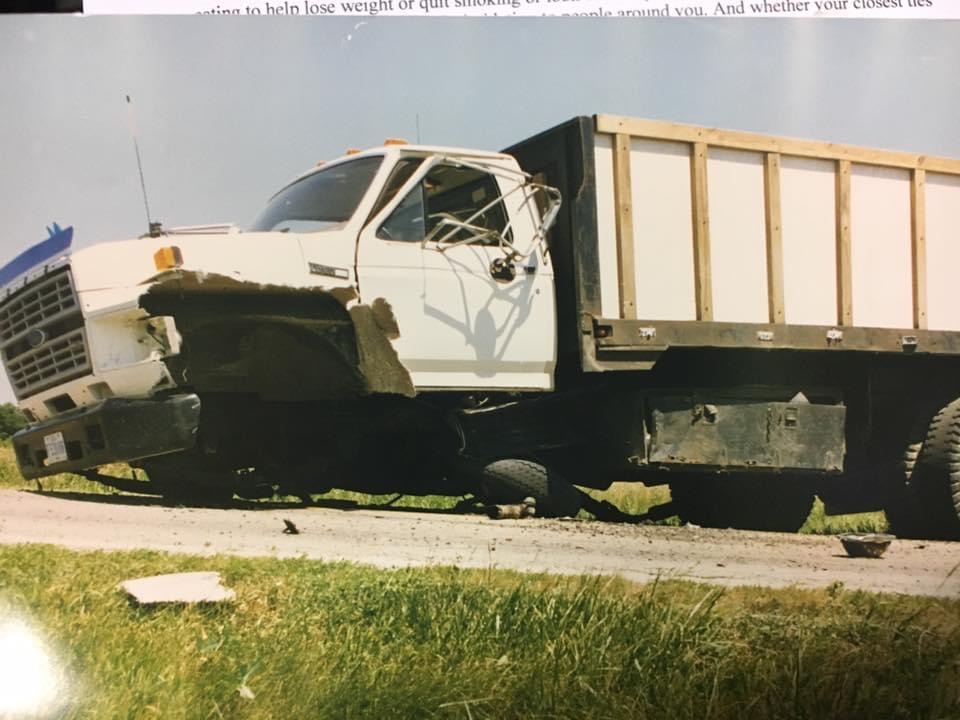
It was over as instantly as it had happened. What only seconds before had been a clean, powerful machine, and the center of my brother’s livelihood, was now little more than a pile of scrap. I had done what I could at the instant of impact to stop the vehicle. But, it was no use, the pedals were no longer connected to anything – neither was the steering wheel. As it came to rest, the truck’s lower frame plowed into the asphalt, like the Titanic’s bow crashing into the ocean floor. The cab and running board were severely damaged, the mirror shattered, and the door was caved in. The front axle and wheels were gone and the steering shaft snapped off. Moreover, there was no sign of my assailant. The cement truck was gone!
Behind the motionless, dead hulk of my truck, in a hay field, nearly a quarter of a mile away lay the twisted wreckage of the cement truck. It had telegraphed off of my truck, slamming into my frame multiple times, rolled behind me at full speed, and snapped off a power pole at its base – leaving a transformer suspended in mid-air by its cable. Then it spun out of control, careened down a long hill, and came to rest, upside down and backward. By some bizarre miracle, the driver, wearing no seatbelt and, according to the police investigation, moving twice my speed, had managed to survive relatively unhurt, as did I.
This is the truck … after.
Oddly, the casualties were limited to the two trucks and my Dad’s wits – as in frightened out of. He had to watch it all happen to me in his rearview mirror. By the time my truck had come to a stop, he’d bailed out of his and was running toward me yelling my name to see if I was OK. I was far more worried about him, though.
I’d never seen him that shaken, out of breath, pale. When he saw I was unhurt he seemed to calm down. I was busy tossing my belongings out of the open, or rather, shattered, window, and trying to figure out how to get the door open. Once I was sure both Dad and I were OK, I told him to go check on the other driver while I used my cell to call for help. A few minutes later, I heard sirens coming up the road, and within moments the county sheriff’s deputies arrived. All would be OK – at least until my brother got there. Yikes! But that’s a story for another time.
I will forever appreciate how fortunate I was that day. I can’t imagine what would have happened had either truck been a few inches one way or another. Life’s a gamble, every day. I think we always need to recognize how quickly things can change direction – through no fault or action of our own. Appreciate the positives, stay strong through the negatives. And remember, to live your best life. You never know what turns it might take one day.
I took up long-distance tour cycling in 2017 to give some direction to my fitness routine. I am definitely no gym rat, but I needed to improve my health, and exercise for its own sake was, at least to me, mind-numbing. Preparing for long bicycle tours provided a tangible goal and kept me more engaged.
Growing up in the middle of nowhere, a bike was the only way I could get around, especially when the nearest neighbor kid was a couple of miles away. But this was a different challenge. With higher speeds, longer distances, and greater safety risks, I had a great deal to learn.
I took the time to learn everything I could about endurance cycling, from choosing the right equipment to managing my food. The first year, I rode about 5 days a week, covering anywhere between six and 12 miles per day, while also maintaining my core and strength exercises.
With practice, study, and the right workout regimen, my speed, distance, and endurance all improved. That first summer, I completed two, 100-mile, or “century,” rides. Since then, I’ve done six more, averaging two per year.
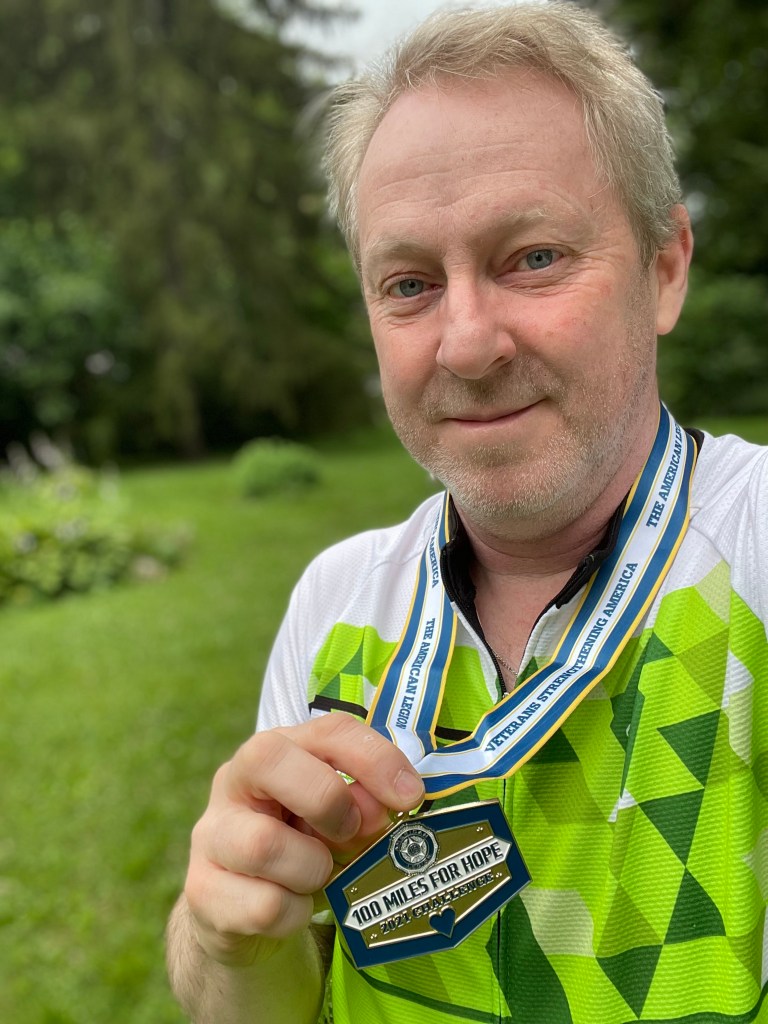
I’d never been so driven to accomplish something that physical. I basically became an athlete, and that was never on my radar. Plus, it was as much mental as physical, maybe more. My friends and family probably thought I’d lost it. At 49 years old, I was in the best health of my life and broke physical barriers put in place from the day I was born. It required careful planning, long hours in the saddle, conditioning, and determination.
Any challenging goal always has prerequisites. Maybe you call them milestones or baby steps, whatever. The point is that these smaller goals help measure your progress and keep your eye on the prize. There are no “hacks” to anything worth doing and, if you find one, it’s probably going to rob you of valuable lessons and potentially derail the whole effort.
The problem with most long-term goals is that people sometimes try to jump to the end, skipping vital steps. People who quit smoking cold turkey, for example, often fail because there are no step-downs to help eliminate, not just the addiction, but the habits that feed it. With cycling, you have to learn to ride 5 miles before you tackle 10, which leads to 20, and so on. More importantly, it might take time and practice to recognize each stage of achievement and what it means to your overall success.
For instance, my average training ride is around 20 miles, but even now, I struggle a bit in the first 6-8. I feel awkward, uncomfortable, and unfocused. It can be discouraging, sometimes even painful. But, as I push ahead, everything starts to smooth out around the 10-mile mark. My body settles into the bike, my cadence has a rhythm, my speed and efficiency improvements, and I become more mentally focused.
My typical goal is generally far more than 10 miles, but I’ve learned to value that milestone because of its significance to my final goal. When you understand which smaller steps have the greatest impact on your final goal, each subsequent step becomes easier and more valuable.
Recently I participated in the shortest organized cycling event I’ve ever ridden – 21 miles. There is no fanfare for a ride like this, just people who want to ride in a supported event with fellow cyclists. As expected, the first half of the ride was a little slow and clunky.
I didn’t have the speed or rhythm I wanted, and the distance didn’t give me much time to “get into it.” But I pressed on, and, just like always, around the 10-mile mark, everything shook out and I even managed to set a speed record for myself. But I learned something different from the experience.
My “first 10 miles” could also be a metaphor for recognizing our strengths or shortcomings as we work toward any goal. Manageable, short-term accomplishments make the overall effort more rewarding. Hopefully, moving forward we learn and adjust, keeping a clear vision of the finish line. Before too long you’ve met your goal and your obstacles are in the rear-view mirror.
When we meet someone, we form mental and emotional impressions of them based on personal behavior, past experiences, and other characteristics. That collection of impressions, what I call their “image,” becomes who we know them to be and there’s a lot riding on it. It defines how we relate to them for the duration. But when there is a serious conflict, that perception can be radically altered, forever.
Unfortunately, the perceptions we have of people are incredibly fragile. It takes very little to destroy how others see you, transforming you instantly from a cherished friend or family member to persona non grata.
A mean-spirited word, a slammed door, or even a disconnected telephone can escalate things, and then we start to fight back. Whether or not we are in the right, it’s pretty natural to become defensive when words are weaponized, our character is put into question, or our feelings get hurt. Of course, that just makes it worse.
Amidst such a vehement exchange, personalities may seem to alter as you each posture for a fight. All at once, a person with whom you have had a long, trusting connection no longer recognizes you, nor you them. Their understanding of who you are is suddenly and forever changed and any safety within the relationship is seemingly lost forever in the heat of the moment.
So how would they see you then? What happens to the relationship? Can it be salvaged, or, some psychologists might ask, should it be salvaged? That depends on how often such things occur, the depth of the emotional injury, and the circumstances.
When these conflicts occur between the same people, it becomes harder for them to see each other in the same light as before. The previous state of the relationship may never be recovered. The only hope may be that both people are willing to work together to prevent it from happening again.
It should go without saying that everybody needs to be on the same page, they must know what they want out of the resolution. Are they trying to rebuild the relationship and see each other the way they did before? Or are they merely patching it, hoping the problem doesn’t resurface, but without any real strategy to prevent it?
When perceptions change significantly, it may not be possible to see each other as before, reducing any desire to resolve the problem in the first place. It might not seem worth it at that point. The question is, can you accept the other person for how you see them now and start over?
More importantly, were you seeing them accurately in the first place? How much of who they are in your eyes is based on who you wanted them to be? An argument might simply have revealed a side of them previously unseen. Then again, that could be your incomplete perception.
Reading back through these paragraphs, I realize I’ve given you a lot of questions and very few answers. That’s because each situation is different and the outcome depends on personal dynamics, emotions, and circumstances, there is no cookie-cutter solution. That said, as with so many things in life, communication is key.
Effective communication must be a two-way street with dialogue, understanding, and, most importantly, patients. Each person must be willing to do their best to understand the other’s point of view and work toward a positive resolution. A word of warning also, avoid dredging up old arguments because it will kill any hope of saving your relationship – let it go! And never underestimate the power of a sincere apology.
If you do manage to work things out, understand first that any relationship is an ongoing process requiring practice and patience, and it will be different than before, changed for the better. You’ll be moving forward from a more solid foundation.
I’m the first one to say this sounds like a bunch of self-help chicken soup. It certainly does, but sometimes that’s necessary. Still, I know that I’ve ruined my share of relationships because I was so worried about defending myself or being right that I forgot how much the other person meant to me. You can avoid that same stupid mistake.
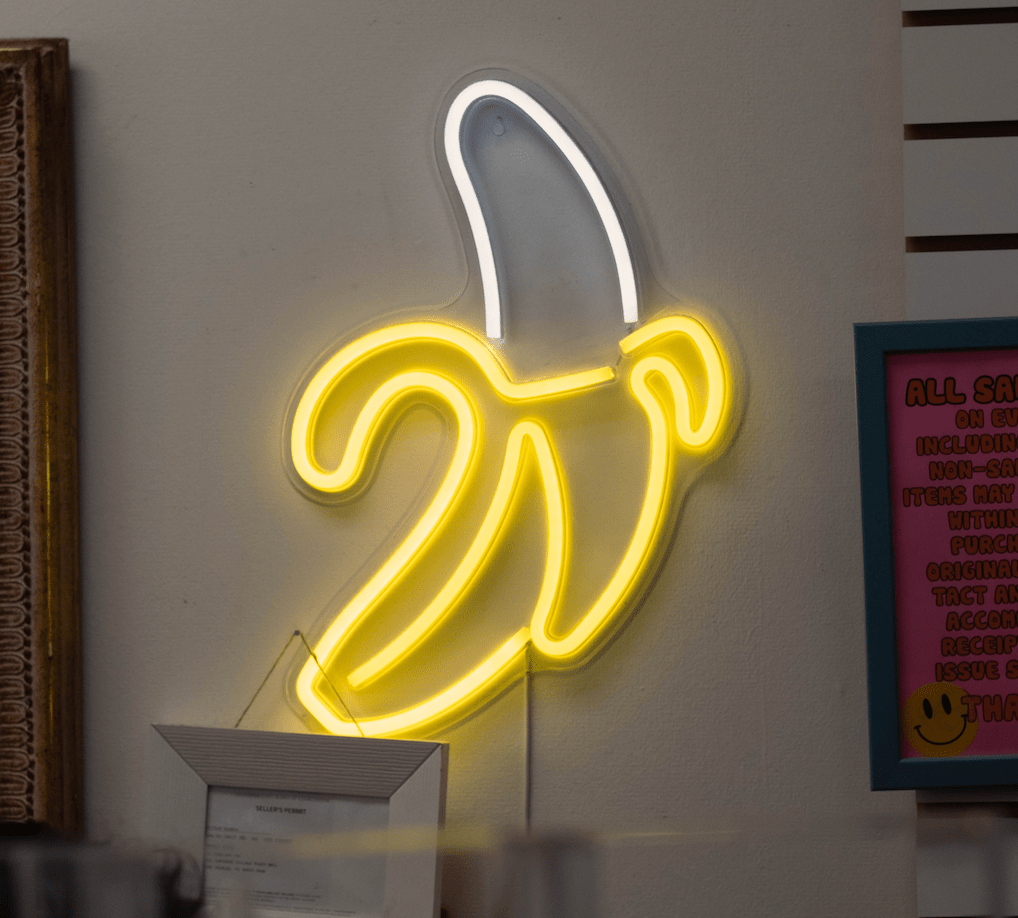
Did the headline of a news story ever leave you scratching your head, at least until you read the whole thing? Well, this is probably one of those stories and it begins, however odd it may seem, with a banana.
Once a week, I play basketball at the local YMCA, not with a team or anything, but just for exercise. On one of those days, a particularly nice, spring day, I was approached at the front door by a woman with a crate of bananas. “Would you like a banana?” she asked, cheerfully presenting the open box as if it were something from a jewelry counter display.
I honestly didn’t have an answer right off. It really wasn’t the kind of question I was expecting on the way into the gym. The more poignant question that immediately consumed me was, why is there a woman with a crate of bananas at the entrance to the YMCA?
A bit thrown by the random offer of fruit, I finally realized there were a half-dozen other people with her, all in athletic attire, and carrying signs and tables into a truck. As it turned out, I arrived just as a running event was closing, a 5K or the like. The box of fruit was what remained of the bananas provided to the runners at the support stations. So, never one to look a gift plantain in the peel, I gratefully accepted.
To most, a free banana might not, at first glance, seem like a life-changing incident. But, to me, it was at least thought-provoking; not because of the banana, but the spontaneous gift it represented. It’s not like I was having a particularly bad day in the first place, but that one, small action changed it, lightened my thoughts, and gave me a feeling I couldn’t quite express at the time.
As I settled into my basketball routine, I dropped the banana into my gym bag and set it aside. But I kept thinking about the randomness of having received such a thing, in such a random way, at such a random time. So, after a few minutes, I went back to it.
Strangely enough, I opened the banana and proceeded to eat it, while simultaneously dribbling and shooting a basket here and there. I would imagine I was a pretty strange sight, but what did I care? I had a banana – an unexpected banana.
I have to say, I never considered a piece of fruit as what might generally be considered “comfort food,” but that’s how it felt at the moment. There was something about this curious food, botanically categorized as a berry (I know! Weird, right?) that generated a strange and calm feeling of gratitude. What I felt was a level of contentment as I wandered around the court, shooting the ball, and munching away, oblivious to pretty much anything else – at least until the banana was gone.
I’m fairly certain the lady who gave it to me had no idea what an impact she made on one person’s day. I mean, it was just a banana, and she was trying to unload a box full of them so they wouldn’t be wasted. Still, there I was, my day lifted, my jump shot better – don’t be too impressed, it’s a low bar – and I was just happy. I had a banana.
So why should my banana story, umm… appeal to you? Come on, you knew I had to, right? Because something ordinary can be special if you let it. Because in the chaos of daily life, all the noise, distractions, and stresses, unanticipated treasures are all around us. We each have the power to let them move us, even if only for a few moments.
When you think about it, people are always searching for some kind of inner peace, a tranquility that seems more elusive and empty every day. Usually, we scratch our way through life, searching for even a hint of such thoughtful enlightenment by artificial means. But sometimes a quiet moment of unexpected joy and calm can emanate from the most unusual but ubiquitous source. Sometimes all we really need is for someone to give us a banana.
(Author’s Note: I am publishing this ahead of the normal print schedule because the events took place exactly 3 years ago on the date of this posting. I hope it will comfort people and help them recognize and appreciate that time when it comes – because, sadly, it will.)
While caring for my father, I did some journaling as his Parkinson’s disease advanced. The following is an excerpt from the painful day we both accepted the inevitable and how lonely a feeling it was for both of us.
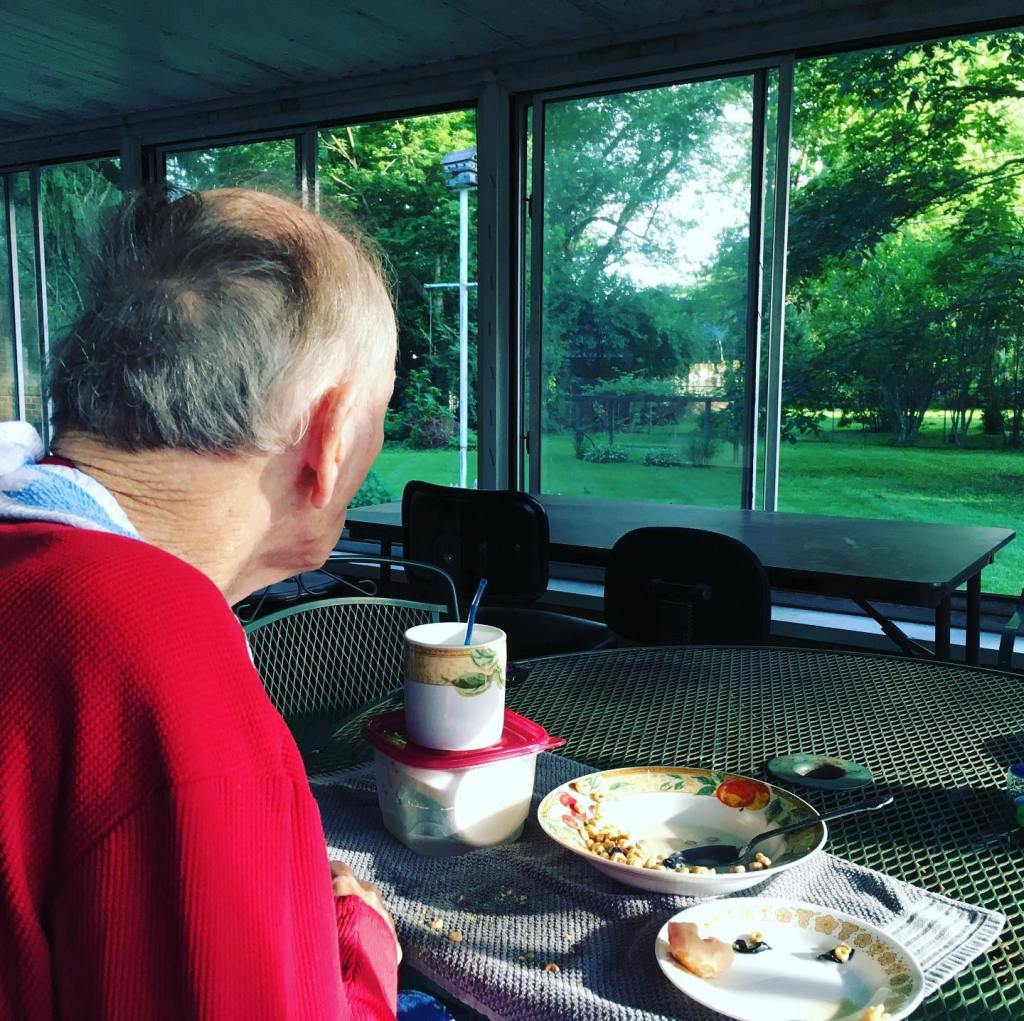
Friday, June 12, 2020.Dad and I were sitting down to breakfast on the screen porch of my house. He’d been living with me for about eight months and, although he preferred spending his day in his recliner, I did my best to make sure he had as much fresh air and sunshine as possible.
By then, he needed help feeding himself, so I always took my meals at the same time. Sometimes he was talkative in the morning, commenting on a TV news story or counting rabbits in the backyard. But today he was quiet and struggling.
We had a really bad night, which had become the norm over the last several weeks. The insomnia caused by his illness was relentless and he grew increasingly restless and anxious by the day. Neither of us had slept more than a full hour that night. By morning, we were both more exhausted than the night before.
Most people are familiar with the tremors and involuntary movements associated with Parkinson’s. But it can also produce dementia, dramatic personality shifts, and even violent behavior – occasionally, all three. Fortunately, my father’s issues weren’t that severe. Instead, he suffered a kind of subconscious agitation, like a whirring mind that wouldn’t let him rest. As his neurological system decayed, it robbed him of the ability to sleep, often until exhaustion set in. It was as if his body’s electrical system was shorting out from some long, slow cascade failure.
This picture wasn’t the same day as the story recounted here, but it was a couple of days prior. Same spot, same circumstances.
All along, Dad had outwardly rejected his diagnosis, repeatedly asking the doctors, nurses, and therapists questions like, “They tell me I have this Parkinson’s disease. What is it?” He never accepted their answers. I think he was just hoping if he asked enough people someone would say everyone else was wrong and he’d be OK.
By this time, though, Dad was far worse than any of us realized. Although it didn’t register consciously, he was in fact in a great deal of pain which worsened at night. It left him painfully restless, and he couldn’t even tell us why. He had fought hard but was losing the battle – and he was becoming aware of it. So was I.
At breakfast that morning, I noticed he was very quiet and barely eating. When he became aware of my interest, he turned and said, in a raspy, enervated voice, “What’s happenin’ to me, Ger?” His eyes were tired, afraid, his expression pained and desperate. I didn’t know how to comfort him. “I don’t know, Dad,” I said. “But we’re not going anywhere, you won’t be alone.” I rubbed his back a bit, as he’d done for me so many times when I lay in a hospital bed as a child, and I realized how helpless and frightened he and Mom must have been.
We sat in silence for a long moment, both powerless, tired, and desperate to cast this burden on anyone who happened by, just to be rid of it. I helped him finish his breakfast and we stared out at the backyard for a long time as the morning sun poured over us through the windows. I didn’t say anything. He didn’t say anything.
After a few minutes, I took our breakfast dishes to the kitchen. When I came back I paused just out of his sight. He was motionless, silent, his head bowed as if in prayer. I didn’t move. I just watched him for a while. My Dad, once a strong, proud man, now reduced to a shell of himself – so alone, tired, helpless, and very sad. And I couldn’t save him. Tears rolled down my cheeks.
He finally raised his head and looked over at me. I sat down with him again and did my best to hide my expression, but I think he knew. We both knew. “Ready to go to your chair?” I said, choking back more tears. “Yeah. I’ll go to my chair.” Just 18 days later, he was gone.
During college, I played piano at a restaurant on the weekends to help pay for school, entertaining people as they dined. In the summer, patrons tended to linger and, fortunately for me, the tip jar reflected their approval of my work. But on those nights, I didn’t start the long drive home until after 2 in the morning.
When I’d finally arrive at our farm, I’d steer my old Mustang down the tunnel of pines that lined the long driveway, cut the headlights, slip it into neutral, kill the engine, and coast to a stop just short of the house. It was hard to gear down after that kind of evening – the people, my music, the energy – all of it. To try to unwind I would hop onto the hood of my car, roll up my jacket and tuck it under my head, lean back on the windshield, and just lay there staring up at the sky for a while.
Pre-dawn summer at the farm was like a different world. The smell of fresh-cut hay drying in the field, the sound of the corn stalks crackling in the night breeze, and the calmness of the cattle grazing lazily in the dark, relaxed me. Overhead, the night sky was speckled with pinpoints of light on dark canvas as if someone had been dabbling in abstract art.
When there were no clouds or moon, I could see the dusty path of the Milky Way overhead flecked with white and blue and yellow and red. It was like a gigantic bottle of multicolored glitter had been spread over black felt. Sometimes, I would catch a glimpse of a shooting star or two. It was so spectacular; no Hollywood movie effect could come close.
Enamored with the stars, everything around me seemed still, silent. But what some people might call ‘silence’ was actually pretty noisy, and musical.
The car hood was like the perfect concert seat, and like something out of a planetarium show, nature had her own musical score to go with the spectacular view I had. There was a natural orchestra tuning up and it soon began the overture as if someone raised a curtain at just the right moment. I was surrounded by the ratcheting sound of crickets filling the air from all directions. Like bass clarinets in a philharmonic, the deep, throaty call of frogs courting their mates echoed from the pond all through the valley around our house.
The percussion section punctuated the frog song as the century-old oak tree nearby rang out like tympani when an owl landed with a hard thud on one of the upper branches. In the bowels of the old tree, the owl’s white, downy chick was rousted from her sleep and began to screech her impatient hunger.
Off in the distance, one of the cattle groaned long and low as she watched over her sleeping calf. Not to be outdone, the pre-dawn breeze created a wind section that played the treetops in harmony with this early morning melody. I lay there, immersed in the sounds, sights, and feelings, soaking it all in and trying to capture every moment of it for later recall.
Sadly, the orchestra was coming to the last measure now as the sun was about to enter, center stage. I saw the slight orange glow on the eastern horizon and the stars had already begun to disappear. My private, drive-in concert show was about to end, and a long yawn escaped me. I looked at my watch. “Geez,” I thought, “it’s four in the morning already.” But now, I was calm. Now I could sleep, and I generally did.
That was more than 30 years ago, and my life has certainly changed a lot since those days. Back then, the excitement of the future lay before me and wouldn’t let me sleep for fear of missing something. I’d like to think I didn’t miss anything along the way. But, for all that’s been good in my life, what I wouldn’t give to lay out there on the hood of that car again watching the best show Hollywood never made, listening once more to the greatest orchestra ever assembled.
XENIA, OH – With Memorial Day looming, graduations underway, and the summer season officially kicking off, Greene County Public Health officials want to remind everyone about safe food handling during picnic and grilling season. It is important to prepare and transport food safely to prevent foodborne illnesses, such as Salmonella, Norovirus, E. coli, etc. With a little bit of planning, summer parties and family gatherings can be fun and safe for all.
Please keep the following four points in mind:
Cooking Temperatures: It is very important to thoroughly cook raw animal foods to the proper temperatures to kill bacteria and prevent foodborne illnesses. Raw fish and whole muscle meats (steak, ribs, roasts) must be cooked to a minimum temperature of 145 degrees Fahrenheit. According to the Ohio Food Code, raw hamburgers (ground meats) must be cooked to a minimum of 155 degrees, and raw chicken must be cooked to a minimum of 165 degrees Fahrenheit.
Holding Temperatures: Bacteria begin to multiply between 41 degrees Fahrenheit and 135 degrees Fahrenheit, so it is important to keep hot foods HOT and cold foods COLD right up to the moment of cooking and/or serving. Cold food must be kept cold at 41 degrees Fahrenheit or below. Only place small portions of food out at a time and replenish as needed. Hot foods must be maintained at 135 degrees Fahrenheit to prevent bacterial growth. Once any type of melon or tomato is sliced, it must be cooled down and held at 41 degrees Fahrenheit and never held at room temperature for more than 4 hours. Any food held out of temperature for more than 4 hours must be discarded to prevent a potential foodborne illness. It is important to use a clean and calibrated food thermometer to check the internal temperatures of the food you are cooking, holding, and serving.
Clean: According to the Partnership for Food Safety Education, 65% of consumers don’t wash their hands before starting meal preparation. Don’t be a statistic this season. Keep hands clean by using soap and warm water, scrubbing them for a minimum of 20 seconds. Rinse well and dry with a disposable towel. Use soapy water and a clean paper towel for tables and counters. Be sure to rinse and scrub fruits and vegetables under running water prior to cutting, slicing, or other preparation.
Separate: Use separate cutting boards…one for each raw protein (fish, ground meat, chicken) and a different one for fresh, washed produce. Keep utensils separate to keep germs that are naturally occurring on raw proteins from getting onto the fresh, washed produce. Always place cooked meat onto a clean plate. Make sure cooked meat does not come into contact with raw meat juices.
To download a flyer about grilling your foods safely, please visit: https://www.fightbac.org/grill-master/ For more information, please call Environmental Health Services at Greene County Public Health at 937-374-5600.
This work appeared in print and online, May 19, 2023 – Xenia Daily Gazette, Xenia, Ohio, and affiliated publications.
EDITORIAL NOTE:
The Jamestown Comet.com and Deer In Headlines II are publication products of GLD Enterprises Communications, Ltd. (GLD Communications), a company founded in 1998 on providing Information Technology AND Freelance Journalism, Copywriting, and Public Relations services. The column author, Gery L. Deer, is the company owner and CEO. Gery has been quoted in the media multiple times regarding his position on AI content creation. Here are the Dayton Daily News pieces noting his statements regarding Public Relations and Copywriting.
Our official statement on AI is as follows: We do not use AI programs to create our products, nor will we in the future. We are in full support of the WGAW strike, both in regard to streaming and other platform pay issues and the use of AI-generated material to replace them. We will not work with agencies who produce AI content, nor will we support their products or services. Please contact our office for more information at 937-675-6169 or email gdeer@gldenterprises.net.
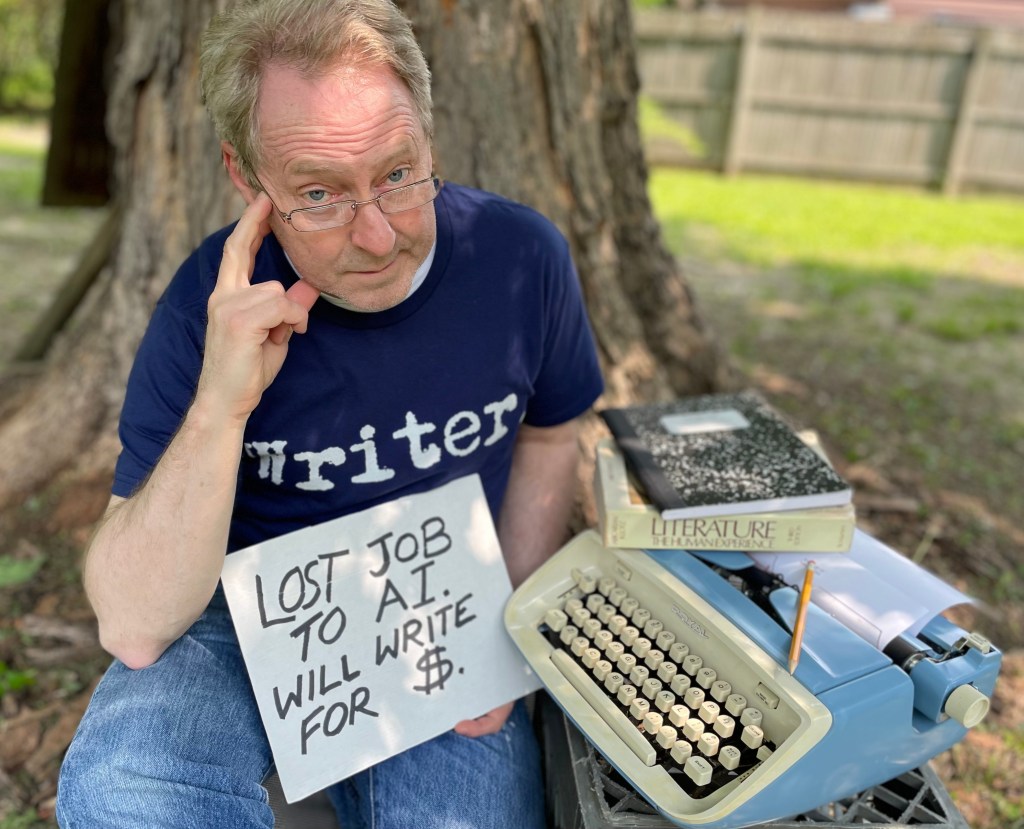
Artificial Unintelligence
From congressional hearings to the picket lines of striking screenwriters, Artificial Intelligence, or “AI,” is a growing concern. This technology now affects nearly every industry and is advancing in sophistication. Of major concern to educators, professional writers, and content developers, are AI writing programs like ChatGPT. By the way, the program’s full name is “Chat Generative Pre-Trained Transformer” – I know, right?
As you might guess, I’ve been asked repeatedly if I ever use AI to write this column. With obstinate conviction, I say now and for always, I do not now, nor will I ever use AI to write anything for this column, for my publishers, for my communications clients, nothing – ever.
Now the Gen Zs and Millennials are probably saying, “he’s just a crotchety old white guy who hates technology.” Nonsense! As a matter of fact, my educational background is in engineering and computer science. I started programming computers in high school and worked in the tech industry for many years. I have a few AI devices in my office and a lot of advanced equipment for creating and editing audio and video productions. Suffice to say, I’m no Luddite.
My concern with AI writing generators isn’t the technology. In fact, I can see where it could really be helpful in some industries, with human guidance. But the idea that it should be used to replace professional writers to save money is just ridiculous.
A professional writer doesn’t just chuck out any old bunch of words that fit a set of parameters. Writers must craft their message based on the intent, the audience, the purpose, and the desired outcome. Not to mention that AI programs don’t have to worry about paying the mortgage, feeding a family, or having a purpose in life.
In 1967, the original Star Trek TV series aired an episode called, “The Ultimate Computer” wherein the Starship Enterprise had been fitted with a highly sophisticated AI computer that would take over the ship’s operation, rendering the crew unnecessary. In one pivotal scene, the computer informs Captain Kirk that he is “non-essential personnel,” causing him to question his position and future relevance.
Always the conscience of the show, Dr. McCoy, in an effort to console the Captain, reminds us, “We’re all sorry for the other guy when he loses his job to a machine. But when it comes to your job, that’s different.” It might be a science fiction show, but McCoy was spot on.
Predictably, the computer malfunctioned, killing hundreds of people and Kirk outmaneuvered the computer’s logic to save the day. The moral of the story was that computers make efficient servants, but lack the intent, humanity, conscience, understanding, or compassion needed to really replace us.
Today, many professional creative jobs may be facing the kind of fate factory workers did some 30 or 40 years ago when they were replaced by robots and computer-controlled manufacturing systems. The main difference this time is that creative professions like writers, artists, graphic designers, and filmmakers are harder to automate. Yes, they can generate similar work, but there’s no human inspiration behind it.
One day, AI may advance to the point where it achieves consciousness, allowing for creative inspiration. But for now, despite what the developers say, I think spontaneous creativity is well beyond its grasp. Without human inspiration and personal experience, the words are empty, the art expressionless, and the designs meaningless.
I don’t know where AI is going, but I know I won’t be helping it get there. Unlike some digital marketers and other agencies out there, I can’t, in good conscience, use AI generators to produce my work, then charge a client for it. That’s like letting someone else do your homework but still accepting a good grade. It’s fraud, plain and simple – even if you tell them you’re doing it.
We have no idea how AI will affect future jobs or industries, the legal or ethical issues, or which advances will forever change them. Maybe AI will make us all obsolete someday and terminate all of us. Till then, I’ll keep writing so look for me next week because to quote another AI, “I’ll be back.”
Disclaimer: This work is copyright 2023 by GLD Enterprises Communications, Ltd. All Rights Reserved. The Deer In Headlines II and its Special Edition series is a production of The Jamestown Comet, Gery L. Deer, and GLD Communications and does not necessarily reflect the views of our advertisers, publishers, clients, or media partners.






 The Jamestown Comet