Local News & Commentary Since 1890.

Archive for the ‘Senior Lifestyle’ Category

Greene County cycling tour event proceeds presented to veterans’ suicide prevention subcommittee.

In Education, Health, Local News, psychology, Science, Senior Lifestyle, Uncategorized on August 15, 2025 at 9:08 am

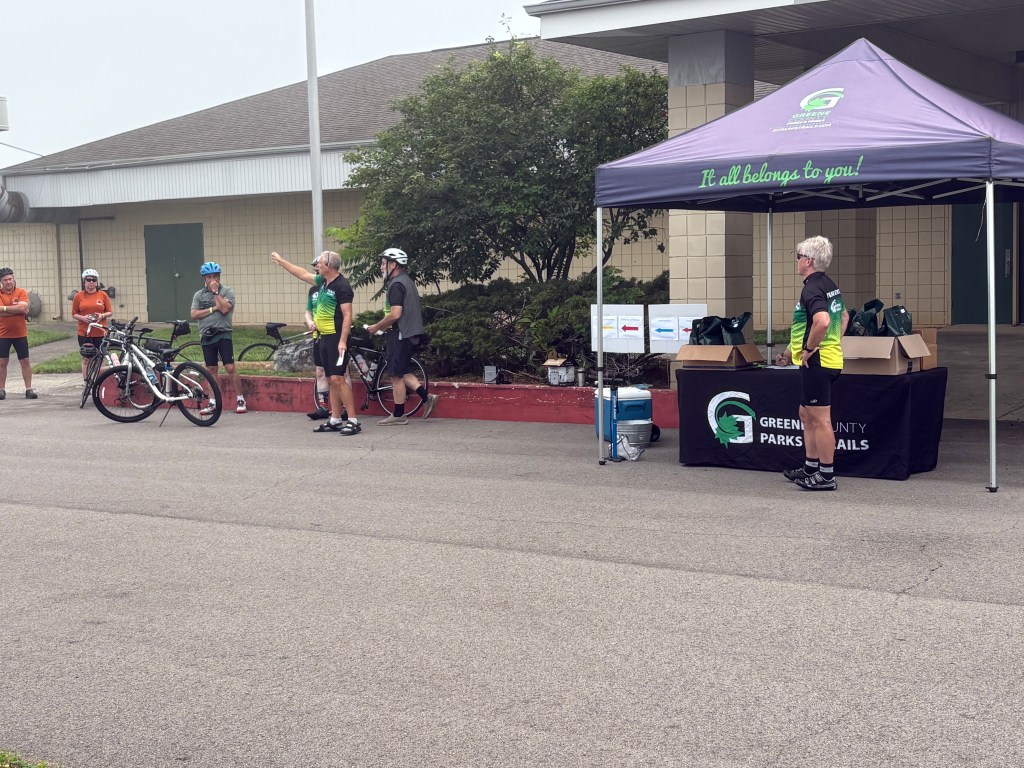
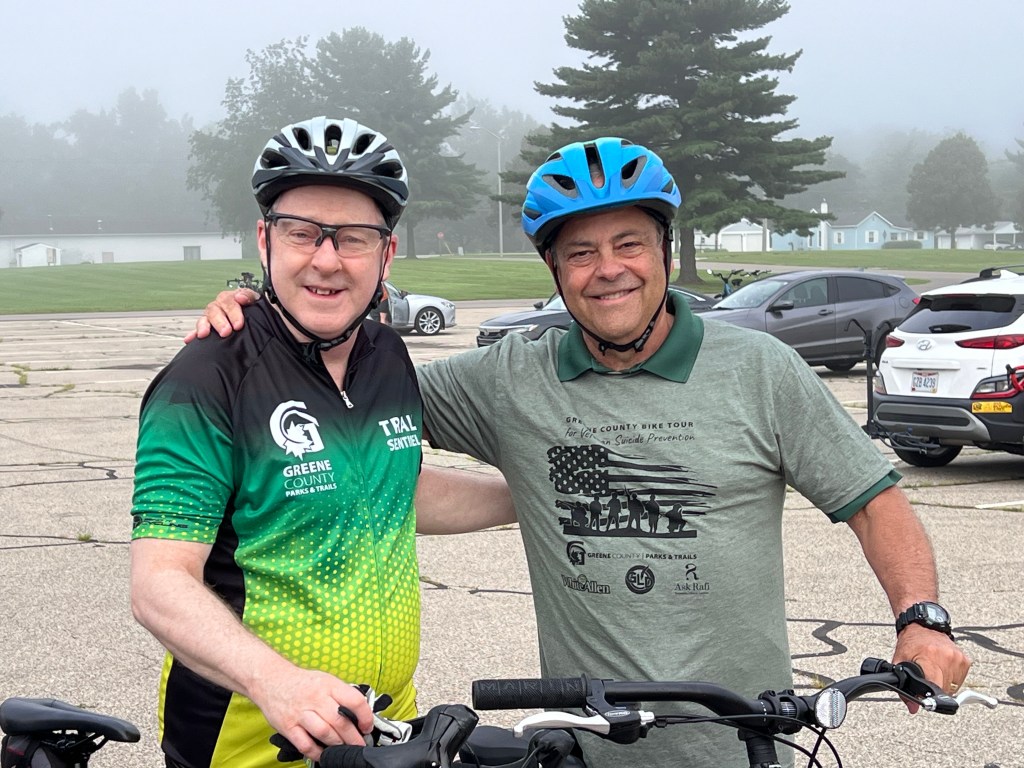
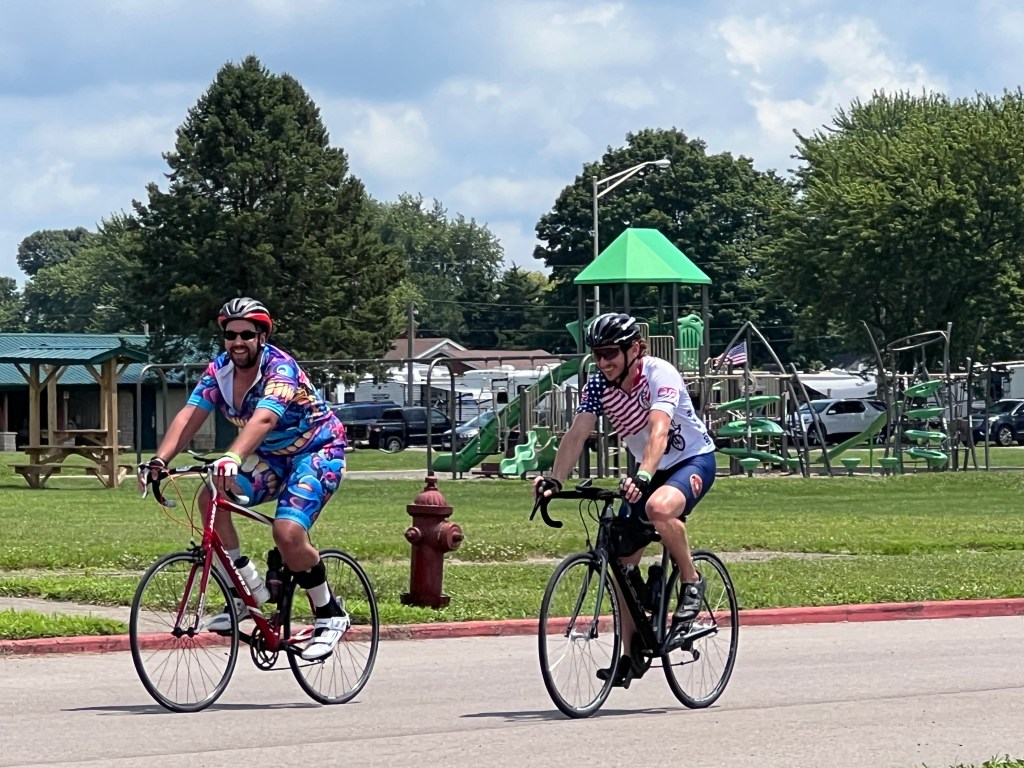
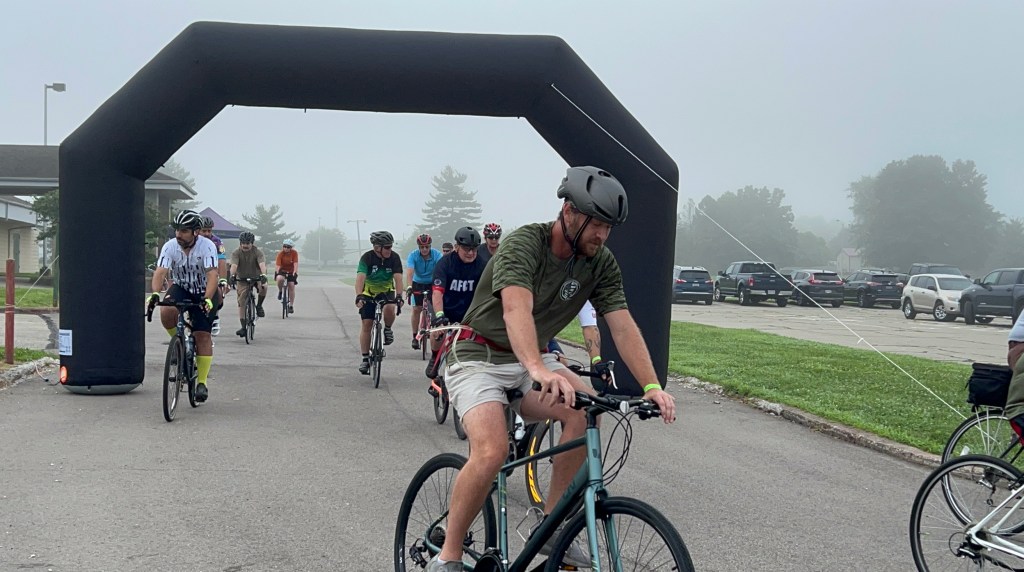
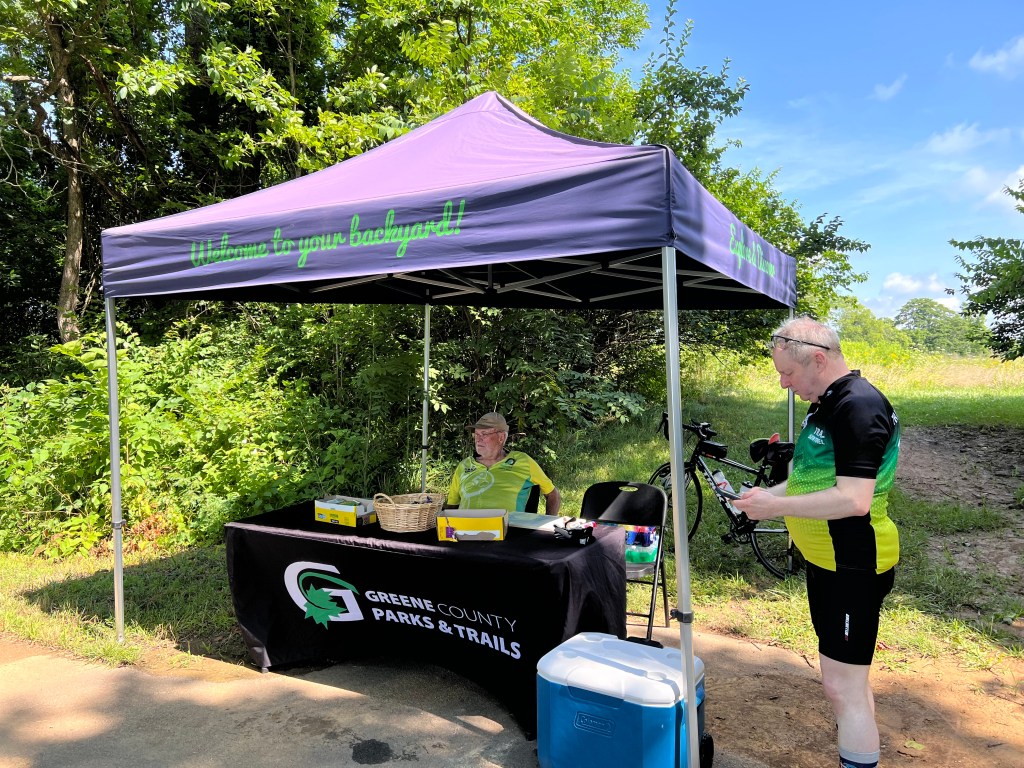
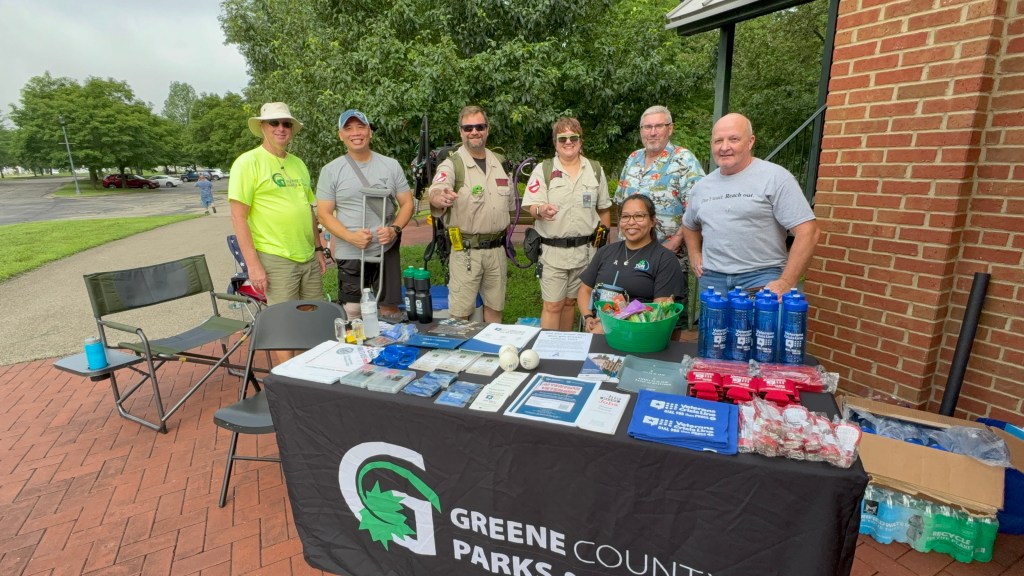
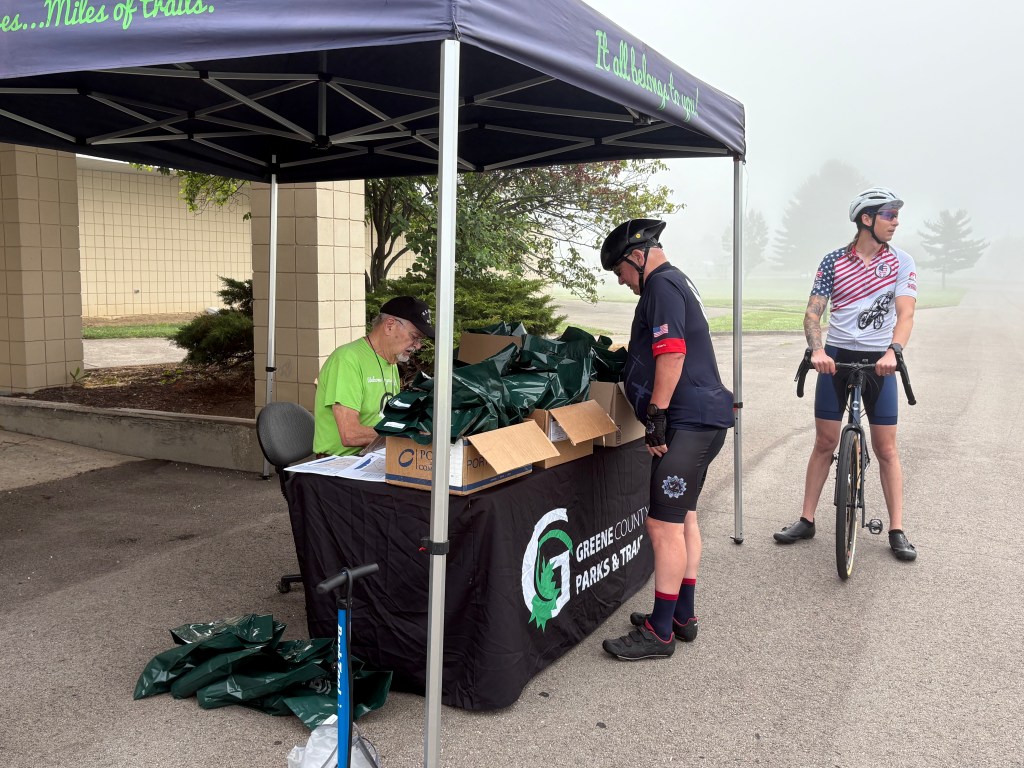
XENIA, OHIO — Representatives of the Greene County Parks and Trails, Trail Sentinels volunteer group, visited the Greene County Veterans Services office on Tuesday, August 12th, to present a donation check to the Greene County Suicide Prevention Coalition Veterans Subcommittee. The donation is the result of funds raised from the first annual Greene County Cycling Tour for Veteran Suicide Prevention, held July 19th.

The event raised $1,800.00 for the coalition, and it was made possible thanks to the hard work of the Greene County Parks & Trails staff, the Trail Sentinels, and through generous sponsorships from the following: Rodriguez Financial Strategies, LLC, White Allen European Auto Group of Dayton, and GLD Communications of Jamestown. Their support helped cover logistics and ensured that every dollar raised could go directly to the Veterans Subcommittee’s efforts.
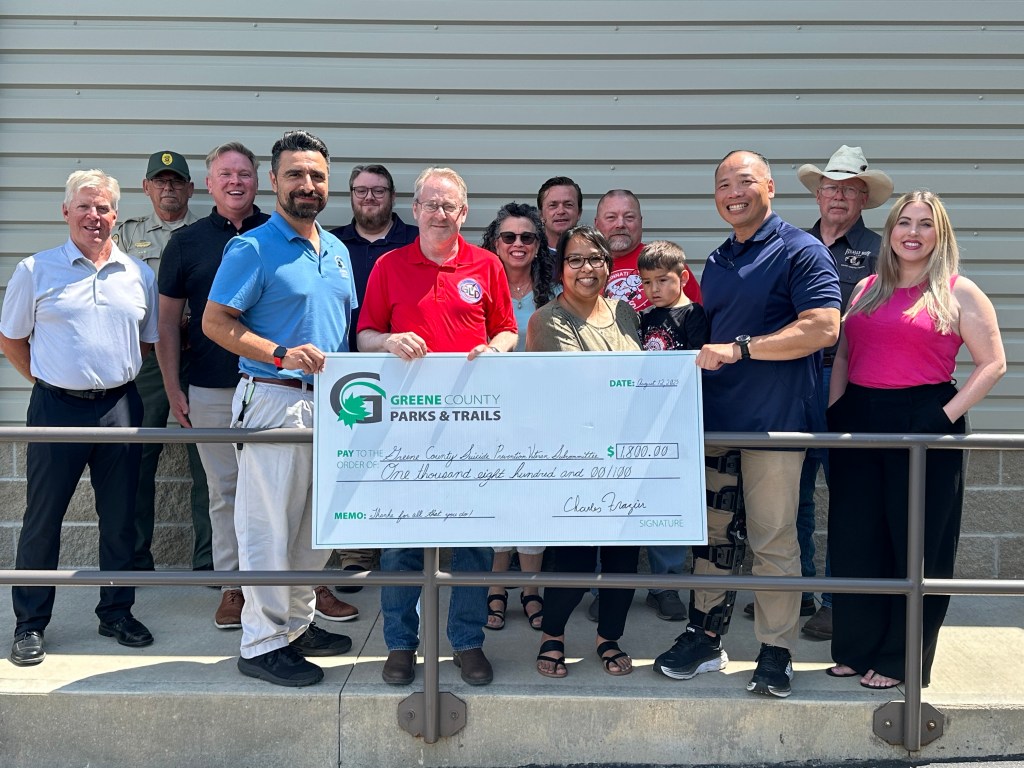
From the Greene County Suicide Prevention Coalition Veteran’s Subcommittee: Captain Dennis Eng, Scott Page, Andrew Ullom, Bill Hoying, Wanda Ortiz Thayne, Teresa Innocent, Desiree Rollyson, Tim Spradlin. From the Greene County Parks and Trails: Assistant Director Richard Kharman, Chief Ranger/Army Veteran Darrell Hannah, and Trail Sentinels Rick Sedlotshek and Gery Deer.

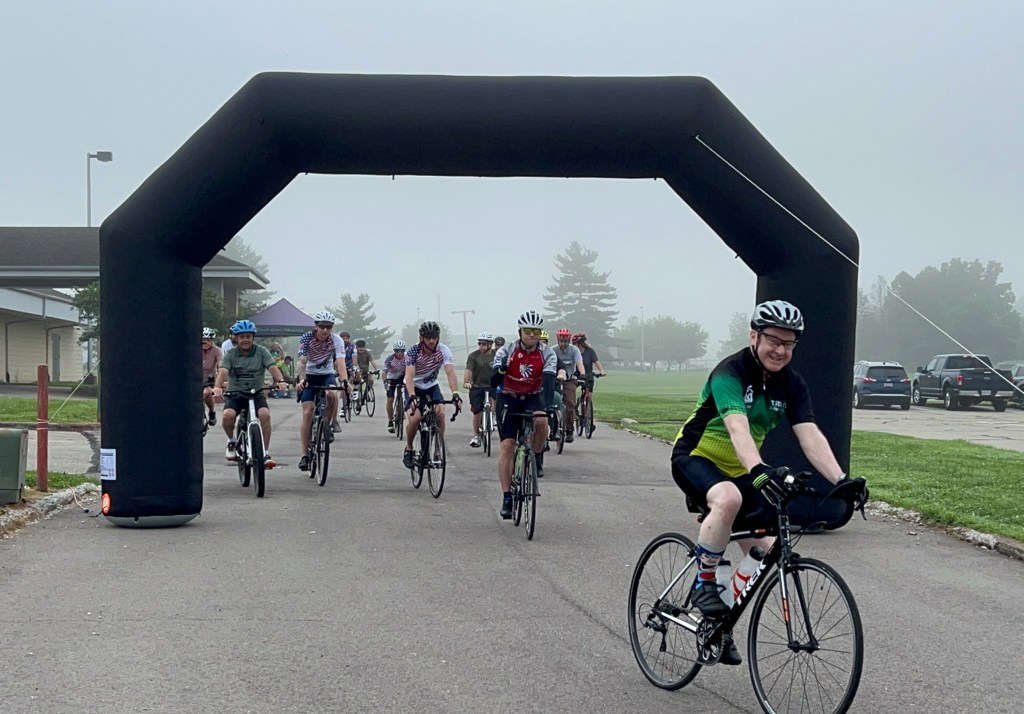
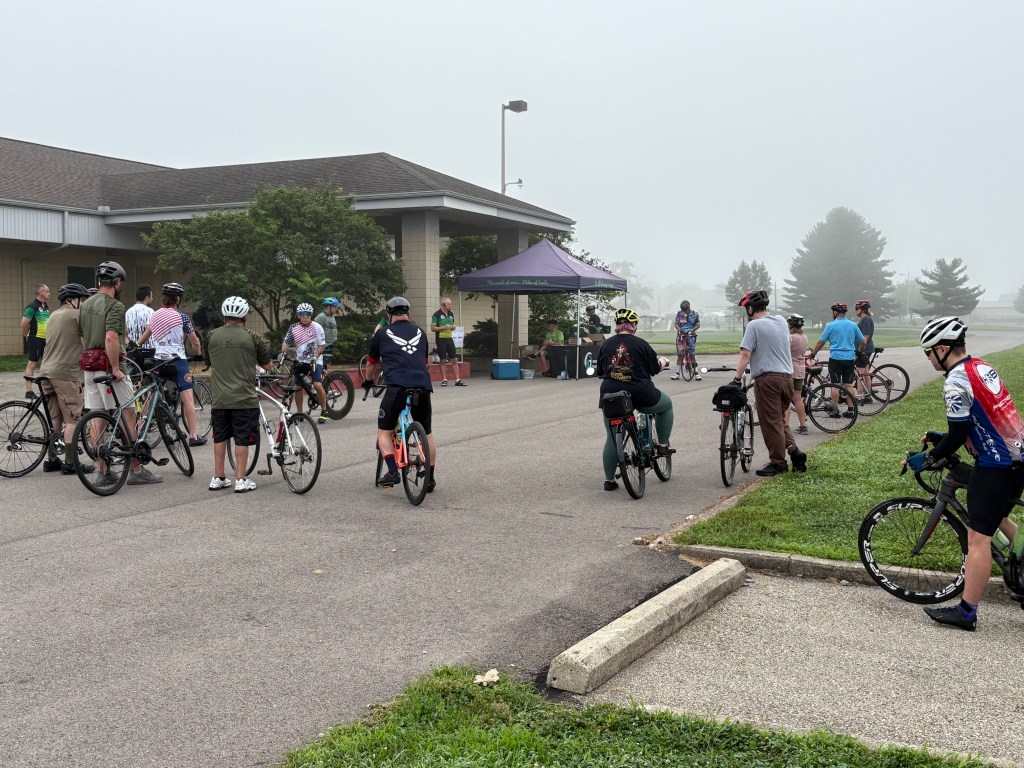
The Greene County Parks & Trails Trail Sentinels, a dedicated group of volunteer cyclists who patrol the trails and host seasonal workshops and group rides, played a pivotal role in the day’s success. They provided on-trail support and manned rest stops stocked with snacks and cold drinks, ensuring riders stayed hydrated and energized throughout their journey.

The event started early in the morning from the Fairground Recreation Center. The 38 registered riders had their choice of four scenic routes, each winding through the county’s lush trail system and quiet backroads.

“This ride was about more than miles—it was about mission,” said Gery Deer, a Trail Sentinel volunteer and event liaison to the veteran’s organization. “We’re proud to work on behalf of our veterans and help bring attention and financial support to the resources they need.”

Adding a touch of whimsy and nostalgia to the event were members of the Central Ohio Ghostbusters club, a charity cosplay group known for their appearances at fundraisers, children’s events, and festivals. Dressed in full gear with their version of an “ectomobile” at Xenia Station, they brought smiles and photo ops to riders and spectators alike.

A large contingent of veterans participated in the ride as well. Retired Colonel Rafi Rodriguez, a 30-year Air Force veteran and a sponsor, took to the trails himself to support the cause. “The ride was a lot of fun,” he said. “It was great to learn more about what the coalition does to support veterans on Greene County.”

The donation check was formally presented this week to the Greene County Suicide Prevention Coalition Veterans Subcommittee, marking the culmination of a community-driven initiative that blended recreation, advocacy, and heartfelt generosity.

“This contribution will help us expand outreach and support for veterans in Greene County,” said a representative from the coalition. “We’re grateful to the cyclists, volunteers, sponsors, and everyone who came together to make this event possible.”

More than just a fun bike ride, this tour was a moving tribute to those who’ve served and a rallying cry for mental health awareness. Planning is already underway for next year’s ride, tentatively scheduled for the same weekend. Visit www.gcparkstrails.com to follow the events calendar throughout the year.
2024 Kettering Holiday At Home Festival Celebrates Hometown Celebrities

In Dayton Ohio News, Entertainment, Music, Senior Lifestyle, Uncategorized on August 1, 2024 at 4:50 pm

The theme for this year’s Kettering, Ohio Holiday At Home Festival is “Hometown Celebrities.” Everything kicks off on Saturday, August 31st, with the Annual Holiday at Home Gala and runs through Labor Day, Monday, September 2nd. This year’s honorary parade Grand Marshal is Kettering native, actor Gary Sandy, best known for his role as Andy Travis on TV’s “WKRP in Cincinnati.”

Originally known as the Coronation Ball, the Holiday at Home Gala started in 1969 as a tribute to the festival queen and her court. Although the event no longer crowns a queen, that tradition has been replaced by presenting a series of scholarships for young people in the community. Scholarship winners, along with this year’s grand marshal, city officials, and event sponsors, are recognized at the Gala. The semi-formal event includes dinner, music, and dancing.

On Sunday and Monday, the Children’s Zone offers free games and activities for children of all ages, free live music throughout the weekend, and various shopping and food options. The festival features arts and crafts vendors from all over the region and a wide variety of food vendors. This year’s sponsors include Alta Fiber, City of Kettering, DryTech Exteriors, Kettering Health Network, and Marion’s Piazza.

Car buffs will enjoy two shows during the festival. Sunday features a Volkswagen show, and Monday is the Invitational Car Show, which showcases a variety of classic vehicles specially chosen to exhibit at the event. 

Lisa Rusak is the president of this year’s Holiday at Home Festival planning committee. “We appreciate all of our volunteers, committee members, and sponsors, and the City of Kettering for helping to make Holiday at Home the highlight of the community’s year,” she said. “We invite visitors from all over the region to come and enjoy everything Holiday at Home and the City of Kettering have to offer.”

This year’s festival musical entertainment includes Flashback Band, The Fries Band, 5 Band, Noah Kihn, Until Rust, Cory Breth, and Noah Back. 

Scheduled events are as follows:

Annual Gala: August 31, 2024

Arts & Crafts: September 1 & 2, 2024

Auto Show (& Invitational): September 1 & 2, 2024

Children’s Zone: September 1 & 2, 2024

5K Race: September 2, 2024

Parade: September 2, 2024

The highlight of the event, the Holiday at Home Labor Day Parade, kicks off at 10 a.m. Monday. This year’s Grand Marshal is Bruce Duke, a long-time resident and former Kettering City Council Member. 

Duke came to Kettering in 1974 when he started working at the University of Dayton (U.D.) as a staff psychologist in the Counseling Center. He continued until his retirement as Assistant Director of the Counseling Center in 2001. During his time at U.D., he earned his PhD in Counseling from The Ohio State University in 1981.

Duke has been an active community member throughout his time in Kettering. Over the years, he’s served on the Board of Community Relations and the Board of Directors of the Kettering Children’s Choir, coached youth soccer, and, with his wife Jan, served on the Van Buren Parent Teacher Association. He’s been a member of the Dor-Wood Optimist Club for nearly two decades and served on the Kettering City Council, representing District 4, for 37 years. 

As a wonderful addition to the parade festivities, actor Gary Sandy is this year’s Honorary Celebrity Grand Marshal. A hometown native and graduate of Wilmington College, Sandy is best known for his role as Andy Travis on TV’s “WKRP in Cincinnati.” Visit www.holidayathome.org for more details about this year’s Grand Marshal and a complete event schedule, including entry instructions for the car show and 5K.

Heirloom Emotions

In history, Media, Opinion, Senior Lifestyle, Uncategorized on June 15, 2024 at 8:55 am

Deer In Headlines II

By Gery Deer

It’s truly remarkable how we can develop such deep emotional bonds with family heirlooms. Whether it’s an antique jewelry box, a wax candle mold, or even a small piece of roof tile from a 19th-century courthouse, these objects hold a special place in our hearts as cherished remnants of days gone by.

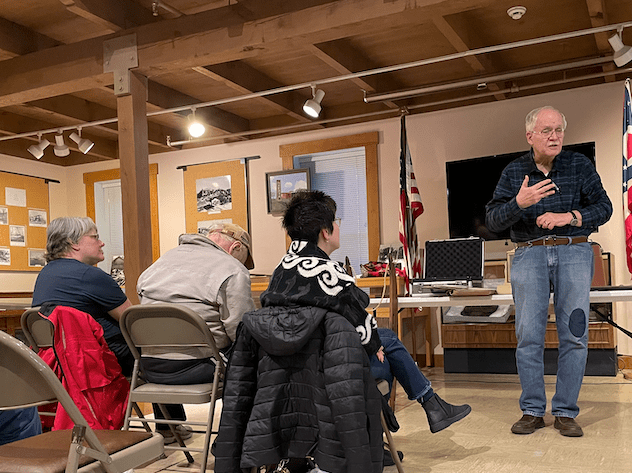
I recently attended an event promoted as a kind of show-and-tell at the local historical society. Visitors were encouraged to bring an item that had some significance to them, the history of the community, or their family, and share the story behind each piece.

Upon my arrival, I was greeted by a sight that stirred a sense of nostalgia. The organizers had proudly arranged the evening’s offerings on tables at the front of the room. Soon, a representative of the organization initiated the event, and one by one, each presenter stepped forward, their faces beaming with pride as they shared the personal significance of their cherished items.

It was like watching a live edition of The Antiques Roadshow minus the frequent condescension of the hosts. You know, “I’m sorry, but this frog statue lamp with a clock in its belly isn’t worth squat.” I always hated that. Anyway, I doubt any of the artifacts would have been for sale. You’d likely have to pry each one out of its owner’s cold, dead hands.

Even more impressive than the reverence with which each person spoke about their property was the variety of items they brought. One man brought a wooden dynamite crate, which was once used to carry explosives for stump removal at his grandparents’ farm. Another showed off his own grade school pictures, some 65 years old.

Others exhibited familial artifacts ranging from a military bayonet to a small jewelry box, which we learned was the owner’s only connection with her great-grandmother. Though very plain to the eye, it was priceless and beautiful to her, and perspective is everything.

When it originated with the speaker, like the school photos, the speaker relayed a personal account of the object’s significance. If, on the other hand, the possession once belonged to a loved one or close friend, the connection is very different. Things left behind by those before us can be deeply meaningful. Heirlooms strengthen our memory of someone and remind us of the relationship.

You’re unlikely to forget a departed parent, spouse, or sibling. But seeing and touching something that belonged to them reaffirms that connection tactilely and creates an emotional response, good and bad.

As I absorbed each story, a profound realization dawned on me. The pride, honor, or reverence—whatever you may call it—was not about the possessions. It was about the people in the stories, whether they were related or not to the speaker. After all, what is human society without stories? Stories shared between family and tribal members are how we preserve our history. And physical remnants of that history, like these family heirlooms, make the stories more tangible, more real.

And it doesn’t have to be about people who have passed on. For those in the room who had attended the same school, the antique class photos had a more profound, more personal association. Someone who’d been a student at the same school as several of the audience, but a half-century earlier, bound two generations, brought together because someone shared a story about a picture.

Finally, there’s something to be said for legacy. I think we all want to be remembered. I sincerely hope to leave behind more than a half-used pencil and a broken typewriter. But if so, I also hope someone will come up with a compelling and meaningful story about them. I think the ancestors of those who shared family items would be very proud of their legacy.

My parents left behind a treasure trove of memories, from books and dolls to trucks and tractors. Among these, I hold dear my father’s wristwatch. He personally handed it to me, sharing the story of its origin. When I gaze upon it, I am transported back to that moment. It’s not about the watch itself, but the emotional bond it represents, the moments he spent with me that hold the true value.

The Coffee Shop Roundtable

In Opinion, psychology, Senior Lifestyle, sociology, Uncategorized on February 24, 2024 at 8:19 am

Deer In Headlines II

By Gery Deer

The other day, I was sitting in a coffee shop when I overheard a conversation between four senior gentlemen at the nearby table. Based on their appearance, I guessed they were in their late 70s, active and clear-minded. The cold Ohio winter had them dressed appropriately in jeans, heavy walking shoes, sweaters, down jackets, and winter caps. These men obviously knew each other quite well and shared common interests.

It was not my intention to eavesdrop, but they were talking loudly enough you could pick up their voices from well across the shop. Anyone could see this meeting was a crucial part of their social life. One of them even mentioned how much he enjoyed getting together regularly and noted how much he learned from the others.

In fact, they all seemed to relish the conversation, which covered a wide range of topics from sports to live theater. I found a brief interaction they had about The Phantom of the Opera of particular interest. While some topics, like the state of American politics, sparked more spirited discussion, they remained respectful and considerate towards one another.

The Algonquin Roundtable

At one point, one of them told a detailed story about how he’d been working on the roof of his home. Suddenly, he found himself stranded up there because his ladder had fallen. He called out for his wife, but she apparently didn’t hear, which left him there for some time. Fortunately, all worked out for the best, and through the laughter, his comrades were giving him a good bit of grief about fooling around on a roof “at his age.” I imagined their adult children giving each of them the same speech in a more serious tone, only to be ignored later.

We occupied one corner of the shop for about an hour, though I believe my subjects had been there for a while before I arrived. They’ll never know it, but they gave me back a moment from my childhood.

When I was around 10, Dad occasionally took me for breakfast at the small diner where my mother waitressed (her word). Early each morning, a group of movers and shakers from our tiny farm town arrived, one at a time, and occupied the same corner booth. 

The pack was usually a mix. Among them, you might find some combination of the local banker, a town doctor, the police chief, the undertaker, the barber, or even the mayor. As they drained one pot of Joe after another, they discussed whatever came up, solved all the world’s problems, and, of course, kept those solutions to themselves. If only they’d just told someone how to do it. It was like the small-town equivalent of the Algonquin Roundtable.

That gathering was far more than social, and the booth’s occupants probably weren’t as ancient as they would have appeared to me when I was a boy. But this was a staple for all of them, a necessary gathering of the minds that continued until each of them was too elderly or infirm to attend.

These days, you might see a mix of people, men, and women, even varying ages, who do the same thing – a regular gathering with no other purpose but to share stories, discuss world affairs, or just complain about the weather. Whatever it is, it’s good for the psyche – and your overall health.

There are countless studies on the benefits of socialization as we get older. Strangely enough, many seniors, either due to depression, their living situation, or choice, often prefer isolation. My parents weren’t big socializers, though my mom enjoyed family parties and time with her siblings. Dad, not so much. Their “roundtable” consisted simply of family and a few close friends. I’d say I’m more like Dad, though I hope a little less self-isolating. I’ve never been particularly comfortable in social situations.

However, I have managed to learn how to deal with my own social anxiety. I think I’m better at socializing than I used to be. As a child, I wouldn’t have understood the importance and value of the coffee shop roundtable to those who were there. But as I rocket towards 60, I’m starting to understand and appreciate the importance and necessity of those connections.

GCCOA Hosts Memory Loss Presentation

In Children and Family, Dayton Ohio News, Health, Local News, psychology, Science, Senior Lifestyle, Uncategorized on January 4, 2024 at 1:47 pm

The Greene Count Council on Aging is hosting a free memory loss information session titled, “Is It Dementia?” The event will be held at 2:30 PM, on Wednesday, January 10th, at the Xenia Community Center, 1265 W. Second St., in Xenia. Seating is limited, so please call 937-376-5486 or email YourFriends@gccoa.org to reserve yours.

From the GCCOA information:

We all experience memory loss at one time or another and many of us are fearful of what it might mean. Is it ‘normal’ memory loss or is it caused by dementia, such as Alzheimer’s disease?

Experts will answer your questions, address your concerns, discuss the types of dementia and explore things to consider as a caregiver or someone wanting to learn more about memory loss and dementia.

From the editor: For more on dementia, here is a study from Columbia University’s Irving Medical Center – https://www.cuimc.columbia.edu/news/one-10-older-americans-has-dementia

A House Divided

In Dayton Ohio News, Education, finances, Food, Health, history, Local News, News Media, Opinion, Politics, psychology, Senior Lifestyle, Uncategorized on September 2, 2023 at 2:47 pm

Deer In Headlines II

By Gery Deer

When I restarted this series after a 5-year hiatus, I decided to steer away from politics, religion, and other hot-button topics in favor of more personal subjects. That said, I’ll dip a toe into that pool only enough to express my concern at the level of divisiveness now facing our country and who actually pays the price for it.

The political climate in America today is toxic, with no end in sight. Everything is viewed only from one side by an ill-informed, angry citizenry and uncompromising elected, uncivilized government officials. Over the long haul, we simply can’t function that way. Our legislators must work together in order to govern, even to manage the most basic issues. Unfortunately, that seems unlikely to change when the only people getting attention are the radical extremists.

Regardless of your ethnic background, or whether you’re conservative, liberal, or whatever, surely there are things we can all agree on, right? For instance, instead of spending hours on cable TV news bickering about who caused inflation, wouldn’t our collective energy be better spent on ways to help people get through it? Meanwhile, our dedicated elected officials spend taxpayer money riding around in limousines, secure in their healthcare, paychecks, and benefits, all guaranteed long after they’ve left office.

More absurd is that, in the most powerful and wealthiest country on Earth, there are still people who can’t get enough food, shelter, or other necessities – particularly the elderly, veterans, and children. No, it’s beyond absurd, it’s criminal. This problem affects everyone. The number of working poor continues to grow, most of my family included. Most people are only a paycheck or two from ruin. All it takes is one major catastrophe and boom, we’re on the street. Regardless, people from every side are too busy waving flags and hating each other’s politics to care or do anything about it.

Recently, I did some work at a food pantry and had the opportunity to learn more about the mission of these organizations. I am shocked about how necessary they are in so many communities. In just one year, the number of families served might double, so they must continually find new ways to meet the constantly growing demand.

You might be surprised to know that the people who most need services like this are not homeless or indigent. They are instead the working poor, single-parent families, and, sadly, veterans. No one should feel ashamed of taking help from those who offer it. But I can’t imagine how hard must be for someone who proudly served our country and then is forced to go to a food pantry just to have enough to eat.

The number of military families and veterans who need various types of assistance is also surprising. They include elderly or disabled veterans, military wives and husbands with young children trying to make ends meet while their spouses are deployed, families of all ages and backgrounds, and the kids, wow. Watching a child’s eyes light up over a book or something as simple as a Twinkie or a fresh piece of fruit can be simultaneously enlightening and heartbreaking.

Again, while the politicians ride around in limousines and kowtow to mindless followers during ridiculous cult-like rallies, the people they claim to be fighting for wait in lines at food pantries. They have no money, little healthcare, and a veteran affairs system that’s so broken it needs to be razed and rebuilt from the ground up.

These issues aren’t conservative or liberal, Muslim, Jewish, or Christian. We are so blinded by ridiculous ideologies and political divisiveness that we can’t see the real responsibilities facing our country – poverty, homelessness, substance abuse, an ever-changing job market, and so much more. Certainly, we could all get together on some of these things. Nope, it’s just not going to happen.

The people I meet in these situations don’t want handouts. They want to be understood and for their elected legislature to work for not against them. But until we put down the flags, turn off the news, and choose to be better human beings, nothing will change. So, all I have left to say is to quote my favorite president. “A house divided cannot stand.”

We weren’t always old.

In Local News, Opinion, psychology, Senior Lifestyle, Uncategorized on July 14, 2023 at 6:08 pm

Deer In Headlines II

By Gery Deer

An elderly gentleman sat quietly in a wheelchair, hunched and feeble, and his tired eyes peered through thick, smudged glasses. What remained of probably a head full of dark, wavy locks now lay in thin, white whisps. A young woman in a healthcare uniform sat next to him, smiling as she helped him eat some pudding from a small plastic cup. He looked longingly at the family sitting across the room entertaining what he assumed was a grandparent. His thoughts wandered back, 30, 40, and 50 years, to the days of his youth, as a young husband and father.

He remembered the excitement of family vacations, the birth of his first child, his first job and promotion, and buying their first home. So many things had happened, so much time, so much life, so many had gone on before him, so many yet to come. To him, just a moment ago, he was a young man, but now… He glanced again at the family, and around the room at the other residents of the nursing home.

“We weren’t always old,” he whispered under his breath, a single tear sliding from beneath his heavy glasses. The woman continued to give him the snack until the cup was empty. A moment later, he’d dozed off and she was pushing his chair back to his room.

I saw countless scenes like this while I cared for my parents. Life has a way of teaching us things, whether we are willing students or not. As we age, begin to understand pearls of wisdom shared by our parents, grandparents, and teachers. Somehow, the man’s lament of “we weren’t always old,” stuck a chord with me. I wasn’t either.

For some reason, the young seem to ignore the person behind the white hair, walkers, and wrinkles. Somewhere in there is the person they once were, young, vibrant, active, and productive. They were actors, writers, salespeople, teachers, police officers, musicians, mothers, lawyers, doctors, and so much more. They were somebody, and we should never forget it!

Everyone’s got that grandparent, aunt, or uncle, who sits in the corner at holiday dinners telling stories of the old days, but almost no one listens. They’ve heard the stories over and over as if the person’s mind is locked into that point in their life history. I learned a lot about my dad while I was caring for him. He would sit and tell me stories as we worked a puzzle or watched an old western on TV. I tried hard to understand who he was beyond the man I knew as my father. I’m not sure many people ever do that with their senior family.

As we age, we are still people, still individuals. We can still dream, imagine, love, care, create, understand, learn, and grow, but the system doesn’t always let us. Eventually, we will outlive our societal usefulness. We’re parked in Hell’s waiting room as our relatives wait to argue about who gets the junk we leave behind. It’s no wonder our minds retreat to better days. It’s ridiculous, and it’s pretty sad. There is so much to learn from our seniors, so much history, life lessons, and experience, all of which would benefit us to learn and absorb.

It’s strange how we treat the elderly in this country. In government, we routinely elect and re-elect people who stay in power for decades, until they finally age out to illness or die in office. Most are still holding political office many years after corporate America would have shown them the door. But most of the rest of us are “put out to pasture” at what is arguably a very young age. Illness notwithstanding, senior citizens still have a great deal to offer. They should be the schoolteachers, counselors, and mentors.

 Our society might be in better shape if our youth paid more attention to the mistakes and successes of past generations instead of constantly trying to reinvent the wheel. So, my advice to the younger folks out there is simple – spend more time with the older folks in your lives. Pay attention to their stories – listen and learn. You never know, you both may learn something!

The First 10 Miles

In Children and Family, Education, Health, Opinion, psychology, Senior Lifestyle, sociology, Uncategorized on July 1, 2023 at 1:40 pm

Deer In Headlines II

By Gery Deer

I took up long-distance tour cycling in 2017 to give some direction to my fitness routine. I am definitely no gym rat, but I needed to improve my health, and exercise for its own sake was, at least to me, mind-numbing. Preparing for long bicycle tours provided a tangible goal and kept me more engaged.

Growing up in the middle of nowhere, a bike was the only way I could get around, especially when the nearest neighbor kid was a couple of miles away. But this was a different challenge. With higher speeds, longer distances, and greater safety risks, I had a great deal to learn. 

I took the time to learn everything I could about endurance cycling, from choosing the right equipment to managing my food. The first year, I rode about 5 days a week, covering anywhere between six and 12 miles per day, while also maintaining my core and strength exercises.  

With practice, study, and the right workout regimen, my speed, distance, and endurance all improved. That first summer, I completed two, 100-mile, or “century,” rides. Since then, I’ve done six more, averaging two per year. 

I’d never been so driven to accomplish something that physical. I basically became an athlete, and that was never on my radar. Plus, it was as much mental as physical, maybe more. My friends and family probably thought I’d lost it. At 49 years old, I was in the best health of my life and broke physical barriers put in place from the day I was born. It required careful planning, long hours in the saddle, conditioning, and determination.

Any challenging goal always has prerequisites. Maybe you call them milestones or baby steps, whatever. The point is that these smaller goals help measure your progress and keep your eye on the prize. There are no “hacks” to anything worth doing and, if you find one, it’s probably going to rob you of valuable lessons and potentially derail the whole effort. 

The problem with most long-term goals is that people sometimes try to jump to the end, skipping vital steps. People who quit smoking cold turkey, for example, often fail because there are no step-downs to help eliminate, not just the addiction, but the habits that feed it. With cycling, you have to learn to ride 5 miles before you tackle 10, which leads to 20, and so on. More importantly, it might take time and practice to recognize each stage of achievement and what it means to your overall success.

For instance, my average training ride is around 20 miles, but even now, I struggle a bit in the first 6-8. I feel awkward, uncomfortable, and unfocused. It can be discouraging, sometimes even painful. But, as I push ahead, everything starts to smooth out around the 10-mile mark. My body settles into the bike, my cadence has a rhythm, my speed and efficiency improvements, and I become more mentally focused. 

My typical goal is generally far more than 10 miles, but I’ve learned to value that milestone because of its significance to my final goal. When you understand which smaller steps have the greatest impact on your final goal, each subsequent step becomes easier and more valuable. 

Recently I participated in the shortest organized cycling event I’ve ever ridden – 21 miles. There is no fanfare for a ride like this, just people who want to ride in a supported event with fellow cyclists. As expected, the first half of the ride was a little slow and clunky. 

I didn’t have the speed or rhythm I wanted, and the distance didn’t give me much time to “get into it.” But I pressed on, and, just like always, around the 10-mile mark, everything shook out and I even managed to set a speed record for myself. But I learned something different from the experience.

My “first 10 miles” could also be a metaphor for recognizing our strengths or shortcomings as we work toward any goal. Manageable, short-term accomplishments make the overall effort more rewarding. Hopefully, moving forward we learn and adjust, keeping a clear vision of the finish line. Before too long you’ve met your goal and your obstacles are in the rear-view mirror.

What we both knew…

In Children and Family, Dayton Ohio News, Education, Health, Local News, Opinion, psychology, Senior Lifestyle, Uncategorized on June 12, 2023 at 9:57 am

Deer In Headlines II – SPECIAL EDITION

By Gery Deer

(Author’s Note: I am publishing this ahead of the normal print schedule because the events took place exactly 3 years ago on the date of this posting. I hope it will comfort people and help them recognize and appreciate that time when it comes – because, sadly, it will.)

While caring for my father, I did some journaling as his Parkinson’s disease advanced. The following is an excerpt from the painful day we both accepted the inevitable and how lonely a feeling it was for both of us.

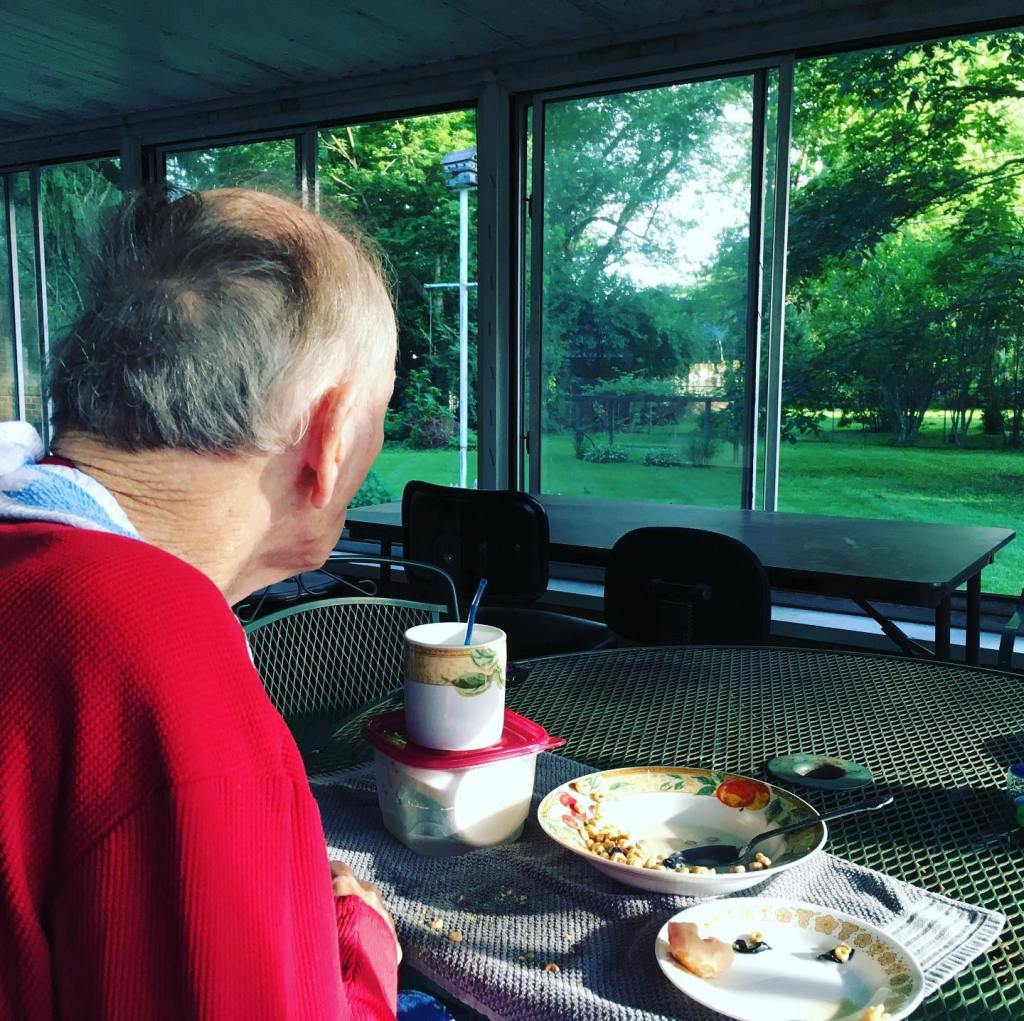
Friday, June 12, 2020. Dad and I were sitting down to breakfast on the screen porch of my house. He’d been living with me for about eight months and, although he preferred spending his day in his recliner, I did my best to make sure he had as much fresh air and sunshine as possible.

By then, he needed help feeding himself, so I always took my meals at the same time. Sometimes he was talkative in the morning, commenting on a TV news story or counting rabbits in the backyard. But today he was quiet and struggling.

We had a really bad night, which had become the norm over the last several weeks. The insomnia caused by his illness was relentless and he grew increasingly restless and anxious by the day. Neither of us had slept more than a full hour that night. By morning, we were both more exhausted than the night before.

Most people are familiar with the tremors and involuntary movements associated with Parkinson’s. But it can also produce dementia, dramatic personality shifts, and even violent behavior – occasionally, all three. Fortunately, my father’s issues weren’t that severe. Instead, he suffered a kind of subconscious agitation, like a whirring mind that wouldn’t let him rest. As his neurological system decayed, it robbed him of the ability to sleep, often until exhaustion set in. It was as if his body’s electrical system was shorting out from some long, slow cascade failure.

This picture wasn’t the same day as the story recounted here, but it was a couple of days prior. Same spot, same circumstances.

All along, Dad had outwardly rejected his diagnosis, repeatedly asking the doctors, nurses, and therapists questions like, “They tell me I have this Parkinson’s disease. What is it?” He never accepted their answers. I think he was just hoping if he asked enough people someone would say everyone else was wrong and he’d be OK.

By this time, though, Dad was far worse than any of us realized. Although it didn’t register consciously, he was in fact in a great deal of pain which worsened at night. It left him painfully restless, and he couldn’t even tell us why. He had fought hard but was losing the battle – and he was becoming aware of it. So was I.

At breakfast that morning, I noticed he was very quiet and barely eating. When he became aware of my interest, he turned and said, in a raspy, enervated voice, “What’s happenin’ to me, Ger?” His eyes were tired, afraid, his expression pained and desperate. I didn’t know how to comfort him. “I don’t know, Dad,” I said. “But we’re not going anywhere, you won’t be alone.” I rubbed his back a bit, as he’d done for me so many times when I lay in a hospital bed as a child, and I realized how helpless and frightened he and Mom must have been.

We sat in silence for a long moment, both powerless, tired, and desperate to cast this burden on anyone who happened by, just to be rid of it. I helped him finish his breakfast and we stared out at the backyard for a long time as the morning sun poured over us through the windows. I didn’t say anything. He didn’t say anything.

After a few minutes, I took our breakfast dishes to the kitchen. When I came back I paused just out of his sight. He was motionless, silent, his head bowed as if in prayer. I didn’t move. I just watched him for a while. My Dad, once a strong, proud man, now reduced to a shell of himself – so alone, tired, helpless, and very sad. And I couldn’t save him. Tears rolled down my cheeks.

He finally raised his head and looked over at me. I sat down with him again and did my best to hide my expression, but I think he knew. We both knew. “Ready to go to your chair?” I said, choking back more tears. “Yeah. I’ll go to my chair.” Just 18 days later, he was gone.

Life and Grief

In Health, Local News, psychology, Senior Lifestyle, Uncategorized on March 24, 2023 at 9:10 pm

Deer In Headlines II

By Gery Deer

Most people don’t have to grieve the loss of a loved one until after that person has passed away. But family caregivers who look after someone with a degenerative disease like Alzheimer’s, ALS, or Parkinson’s, may face grief in a very different, and sometimes far more painful way.

A psychologist will tell you under normal conditions, people dealing with grief will progress through a number of stages: Denial, Anger, Bargaining, Depression, and finally Acceptance. We generally get hung up on one or more along the way until we can emotionally work through them, either on our own or with professional help.

I first learned the science behind grief in high school and college psychology classes, but not like I would understand it later in life. Up to that point, I had experienced grief like most people – by dealing with the death of a family member, the loss of a job, or whatever life tossed my way. But later, while caring for my mother as she declined from the ravages of Alzheimer’s disease, I was struck with how differently grief manifests itself for someone whose loved one is slowly being ripped away.

In my experience what makes grief different for a caregiver is how the grieving process seems to reset as a disease like Parkinson’s progresses through various stages. As your loved one suffers physical and cognitive decline, your understanding of their status has to be adjusted accordingly.

For example, early on, my father could no longer bathe himself and, not long after, even taking a drink from a cup was a major challenge. You say to yourself, “OK, this is how it’s going to be now,” once you’ve accepted some level of decline. You grieve the loss of the previous status, knowing things are getting worse.

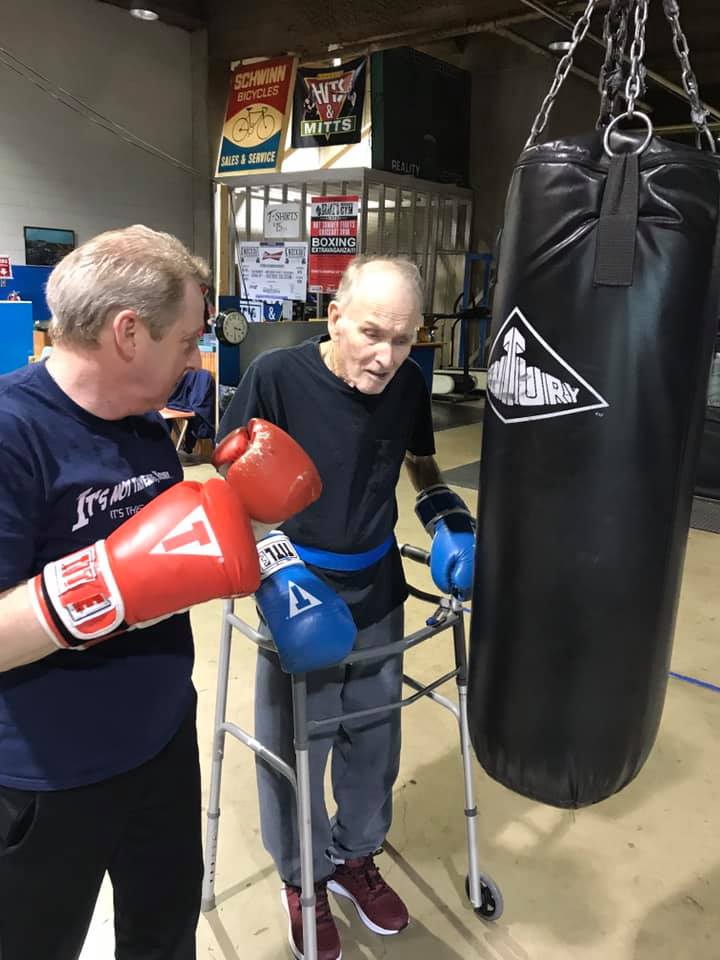
Gary Deer Sr. attends a Parkinson’s boxing class with Gery at Drake’s Gym in Dayton, OH in 2019.

Five minutes later, you notice something else that’s gone downhill or altered in some way. There is no set rate for when to expect these changes in your loved one’s health and they can come on rapidly. That means you barely get the chance to wrap your head and emotions around each state of change before you’re dealing with three more simultaneously.

Knowing there is no happy ending at the end of this story, you face constant adjustment and acceptance which are exhausting both mentally and emotionally. All this turmoil adds up to something called, “anticipatory grief,” which is exactly what it sounds like; you’re mourning the person as the disease progresses, anticipating their eventual death.

None of this is generally a conscious thought process. After my mother’s passing, I understood it better, and that, at least, helped me cope with my father’s decline several years later. But until I realized all of this, I was just angry all the time. I was frustrated at why dad couldn’t remember how to sit down in the a properly, or just use a spoon, but 10 minutes earlier it hadn’t been a problem. Things literally changed on the fly.

In my case, the difference between caring for Mom vs. Dad is that my mother’s Alzheimer’s disease removed any expectation in my mind of her being cognitively aware enough to help herself. She had no clue what was going on around her, so it was slightly easier to adjust because she didn’t push back. Dad’s mental state was usually pretty good, so he pushed back – a lot. And I kind of got it; it’s tough to spend your life being the one taking care of everyone else and suddenly you feel like a helpless burden.

It really bothered my dad to need help with anything, like standing up from a chair, or that we had to restrict things like coffee because the caffeine aggravated his symptoms. As his condition changed, we tried to counter each new phase with alternative ways to keep him comfortable and safe while dealing with altered symptoms.

I don’t know how to tell you to deal with anticipatory grief. Everyone copes differently. Being aware of it can help a bit. If you’re caring for someone who is slipping away, spend what time you can with them. Be there with them, be present, and be kind to them and especially to yourself.

PUBLISHER NOTE: If you or someone you know is a caregiver, visit http://www.theoldnerdinthegym.com for resources, a podcast, and other information that might help.

Is this your new site? Log in to activate admin features and dismiss this message
Log In