Local News & Commentary Since 1890.

Archive for the ‘Opinion’ Category

Here On Gilligan’s Island: TV’s Sociological Snapshot

In Entertainment, Opinion, Politics, psychology, Religion, Science, sociology, television, Uncategorized on March 27, 2012 at 9:02 am

Gilligan's Island served as a humorous microcosm of American society.

By Gery L. Deer

Deer In Headlines

In 1963 television writer, producer Sherwood Schwartz created a short-lived situation comedy that, unbeknownst to audiences, provided a peak through a unique magnifying glass into the human condition. Panned by critics and adored by viewers, Gilligan’s Island became one of the most re-run shows of all time and earned a unique place in the annals of American pop culture.

Between 1964 and 1967, 98 original episodes of the show aired when it was suddenly cancelled before a fourth season could be filmed. Surprisingly, the show ran aground, not because of faltering ratings (it was always in the top 20) but instead because the president of CBS wanted to revive his wife’s favorite program, Gunsmoke, which had already drifted into the sunset.

Often taken too seriously by critics and sometimes misunderstood even by its fans, the premise of Gilligan’s was simple. Seven people set out on a scenic, three-hour cruise around theHawaiian Islands aboard the S.S. Minnow when an unexpected storm tossed their tiny ship and left it wrecked on the shore of an uncharted island.

Marooned more than 300 miles from their original course and left with only a transistor radio, a tool chest, four blankets and the clothes on their backs (which never seemed to wear out) the castaways had little hope of rescue. As if that wasn’t enough, each opportunity for escape from their tropical island nest was agonizingly thwarted – usually thanks to the ineptitude of the boat’s lovable, yet bungling first mate, (Willie) Gilligan.

Regardless of what people thought of the show, however, even today, the durability of Gilligan’s Island still leaves entertainment experts scratching their heads. It’s possible, though, that most people simply missed the point.

Gilligan’s offered us more than just 23 minutes of slapstick escapism. Along with campy, cartoon-like comedy, the program granted viewers a humorous and remarkably detailed glimpse of themselves.

Seven people, each of whom represented different social positions, were required to work together in order to survive in their shared predicament. The Skipper and Gilligan, for example, represented average, working class guys; a small business owner and his employee, if you will.

The Professor was a school teacher; the pragmatic scientist focused on getting everyone safely off the island. He also found ways to help make them all more comfortable while maintaining a discrete distance from the obvious distractions – Mary Ann and Ginger.

Sweet, kind, Mary Ann was a wholesome farm girl fromMiddle America. Television psychologists (yes, there are such people) often refer to her as the ‘linchpin’ of the story. Noticeably absent for a good part of an episode, Mary Ann would walk in at just the right moment bringing with her at least part of the solution to an impending problem, though sometimes inadvertently.

Movie starlet, Ginger, was Mary Ann’s voluptuous, big city opposite. Her Marilyn Monroe-esque sensuality was continually implied but never fully executed. Even though she was a film star, on the island she was relegated to a traditional ‘female’ role of the 1960’s, cooking and doing laundry.

Lastly, the millionaire Thurston Howell III and his socialite wife, aptly named, Lovey are obvious stand-ins for the high-brow elite. Carrying enough cash to support a small nation, the lazy yet likable couple solved problems back home with money – something that has no value on the island. Still, Howell’s business savvy and ruthless determination to return to civilization offers both foil and ally to the others.

And there you have it, seven snapshots of modern society dropped into a difficult situation where they are forced to get along for the common good. Of course a sitcom isn’t real life, but it shows us that we all have the same basic needs no matter where we are in the pecking order of society. In the end, we all require food, clothing, shelter, some level of happiness and a margin of personal satisfaction.

No one ever really finds everything they’re looking for in life, but peel away our political, religious and social trappings and we’re all the same. Just people trying to get along, regardless of whether we live on the streets of anywhere U.S.A., or here on Gilligan’s Island.

Future of Jamestown Depends on Creativity and Business Savvy

In Business, Economy, Local News, Opinion, Politics, Uncategorized on March 20, 2012 at 9:25 am

Is the sun setting on the historic past of Jamestown, Ohio? (Photo by Gery L. Deer)

By Gery L. Deer

Deer In Headlines

As the last shovel full of bricks was removed from the site of the old Powers Marine building after its demolition, residents have been staring at yet another vacant lot in the downtown and wondering about Jamestown’s future. Founded on the southeastern edge of Greene Countyin 1816, the tiny village has seen its share of catastrophe.

In the late 1890’s, a devastating tornado leveled the entire town while a century later a fire destroyed most of the southwest side of W. Washington Street. But today, Jamestown may face a greater challenge than natural disasters – short shortsightedness.

What would have happened at the turn of the 20th Century if no one had decided to rebuild after the tornado? Within a few moments, homes and businesses lay in splintered wreckage; a town once poised to compete with Xenia for the county seat lay in ruins. Imagine if it had been left that way. That’s essentially what has been happening in Jamestown for the last couple of decades, with a few exceptions, particularly one structure that was snatched from in front of the bulldozers nearly in the nick of time.

Once again alive with the sounds of ongoing renovation efforts and music and laughter filling its auditorium, in the mid 1990’s the Jamestown Opera House was considered an eyesore and there were those who believed it should be torn down. Fortunately, thanks to the determination of a small number of residents who formed the Jamestown Area Historical Society, the historic theatre is without question a shining gemstone in the village’s tarnished crown.

Then again, if things keep going like they are it might be the only downtown building still standing and occupied ten years from now. How’s that for irony? But it’s not just lost history that is costing Jamestown, but the perception that it’s decaying – rapidly.

An informal survey posted on Facebook revealed some opinions as to why Jamestown has declined. Some people suggested that the village and township officials make it too difficult to establish new business, often rejecting proposals for new business and creating so many roadblocks that there would be no reward for the effort.

One comment said that rents of office and store front space in Jamestown cost between $1,500 and $2,000 per month. If true, one of the problems is obvious. With such outrageous expense just to keep the space, limited street side parking, nothing to draw people to town and an ever expanding sprawl away from the downtown area, there is no practical reason to set up shop there.

Another line of discussion from the survey suggested that Shawnee Hills should be annexed for tax revenue because there are higher property values and income levels than those found in the village proper. The extra money could be used to provide incentives for businesses to settle in town, thus drawing more visitors. Needless to say that drew angry responses from lake dwellers, some of whom commented that they don’t consider themselves as Jamestown residents, but merely living within the same postal district.

Of Course, real estate and financial issues are only part of the problem. People still create the biggest roadblock to regenerating a town’s vitality, regardless of its size. Those who hold the power in small towns still seem to believe that they are all-important.

Good old boy politics thrives and for those who have never been exposed to any other way of doing things, their ability to make forward-thinking decisions may be sharply limited. In addition, pointless and continual bickering between township and village officials over petty control issues only serves to drive the coffin nails deeper.

Trying to return Jamestown to the way it was is hopeless. Those days are gone and though this opinion probably won’t sit well with the powers that be, a new era for Jamestown means more creative thinking, some genuine business savvy and a fresh start. Jamestown may not be able to compete with larger communities, but more open minds must soon prevail or it will just end up a dot on a map and a footnote in the history of Greene County.

If Illiteracy Is the Disease, Then Literacy Is the Cure

In Economy, Education, Health, Media, Opinion, Politics on March 13, 2012 at 10:32 pm

Michael Martin and Gery L. Deer give a public reading of their writing during a Western Ohio Writers Association event, promoting literacy through creative prose.

By Gery L. Deer

Deer In Headlines 

Most Americans probably take for granted the ability to read and understand the words on this page. As a writer, I depend on the ability of the media-consuming public for my livelihood. But according to the National Adult Literacy Survey more than 42 million of my fellow Americans will never be able to enjoy (or detest) what I write because they can’t read.

Back in college, I took a job with the school newspaper as a staff writer where I learned a great deal about journalism and the power of the written word. One of the best lessons came from our staff advisor who once said, “No matter what your career or life path, your communications skills, reading and writing, will be your most valuable asset.” She couldn’t have been more correct.

I spent several years in the engineering fields for which I earned my degree, but ultimately I found my place as a full-time business writer, editor and columnist. Unfortunately, I found my calling far later in life than I’d have liked to due to an undiagnosed learning disability that seriously impacted my reading speed and comprehension.

Thousands of Ohio school children with learning disorders that affect their reading and writing skills continue to slip through the proverbial cracks every year, for a multitude of reasons I’ll reserve comment on for another time.

Suffice to say, it’s our own fault, and by “our” I mean the taxpaying public that does far more to insist on a fancier football stadium than to demand instructional accountability and better support for these kids.

Yes, there are laws in place and special education professionals to help identify and establish individualized educational plans for them, but, somehow, that never seems enough. Far too many still grow up unable to interpret the instructions on a can of soup.

Growing up, a person with illiteracy will adopt various coping skills needed to get by, but are never able to fully realize their potential. Illiterate adults have more difficulty finding jobs, developing business relationships or even doing household chores like paying bills.

Many politicians believe that illiteracy is one of those liberal issues, best left to bleeding hearts. In fact, such a staggeringly high number of illiterate citizens can be phenomenally detrimental to productive nation with a stable economy.

As the economy crawls to recovery, illiteracy will continue to keep some people on the unemployment lines, thus, adding one more contributing factor to suffocating fiscal growth. Adults struggling with illiteracy earn, on average, less than $250 per week, work less than 20 weeks per year and are at least ten times more likely to live below the poverty line.

How do we solve the problem? That’s a good question, with no easy solution. It often boils down to manpower and, dare I say it, money. If we think of illiteracy as the disease, then, surely, literacy should be the cure. So the best first step is to seek out help. Whether a child or an adult with a reading problem, there is help available, but sometimes you may have to get things started.

If you believe your child is struggling, meet with his or her teacher as soon as you believe there might be a problem. With tighter budgets, class sizes are increasing and sometimes being pro-active is the best way to get individualized help from an overwhelmed, underpaid faculty. You can also find tutors at local colleges and civic centers.

The same goes for adults as well. Community and career centers, local libraries and even senior citizen organizations are now offering adult literacy classes, either free or at a minimal cost.

And schools can help too by reinforcing the importance in the curriculum of the Three R’s –Reading, Writing and Arithmetic – with sharp emphasis on the first R, which will make the other two far easier to learn.

And, while technological education is important, particularly in today’s world, it might be time to cut back on the advanced computing classes and focus more thoroughly on reading skills. After all, knowing how to click a mouse is pointless if you can’t read what’s on the computer screen.


Independent columnist Gery L. Deer is the founder and director of the Western Ohio Writers Association. More at http://www.westernohiowriters.org.

Iran: Obama’s Potential Holy War

In Economy, National News, Opinion, Politics, Religion on March 6, 2012 at 1:08 am

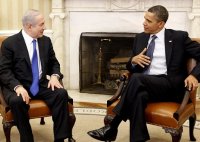
Israel's Prime Minister Netanyahu and President Obama at The White House.(Pablo Martinez Monsivais/AP)

By Gery L. Deer

Deer In Headlines


How difficult it is to imagine that in the modern world, entire civilizations are still willing to bomb each other out of existence over religious rhetoric and what they believe to be holy territories. Human civilization may simply be doomed to destroy itself once and for all because of ancient tribal god images and a twisted belief in a kind of manifest destiny.

Apparently Man has learned nothing from his past, a millennium of history soaked in the blood of countless millions all in the name of “god.” The Crusades, for example, consisted of seven separate Christian campaigns, lasting from 1095 until 1291 and costing the lives of hundreds of thousands.

Hitler’s mass extermination of Jews, a quintessential catalyst for World War II, was religiously motivated, albeit orchestrated nearly single-handed by a madman. Even the American Revolution had its roots in religious freedoms.

Muslims, Jews, Christians, it doesn’t matter who it is, they are all the same; it’s their God or no ones. If you don’t believe their way, they’ll start a war, take the land and force the survivors to capitulate or be exterminated.

That kind of extremism might seem foreign to Americans, but it has happened in the “land of the free” as well, perpetrated by our own citizens, all in the name of a higher power. If you don’t think so, just mention the idea to the next Native American you meet and see what he or she has to say about the subject. Their people, culture and religions were all but wiped out, mostly by people claiming to be Christians; an ugly black eye on the history ofAmericaand Christianity.

Today, as theUnited Statesstands poised once again in a stand-off with yet another militant nation (Iran) steeped in religious fanaticism, the stakes are higher than ever. President Obama has already toldIsraelthat theU.S.is committed to denyingIrana nuclear weapon, which is like a triple-dog dare to the likes ofIran’s President Mahmoud Ahmadinejad.

Ahmadinejad has already said thatIranwould not hesitate to execute a pre-emptive attack against any enemy. A nuclear arsenal would not only give them the power to keep even theU.S.at bay, but neighboring countries would likely surrender just to avoid the possibility of starting a war no one could win.

IfIrandoes have nuclear weapons capability and provides that technology to operatives sympathetic to Al Qaeda, the next terrorist attack onU.S.soil could see casualties in the millions. Of course, these same arguments were made by President George W. Bush to gain support for invadingIraq, which, as it turns out had no weapons of mass destruction.

Iranis different however, in that there is solid evidence of advanced uranium enrichment and testing of missiles to carry the nuclear warheads, in fact the Iranians revel in boasting about what they’ve accomplished.

Some sayIran’s threats are merely saber rattling in an attempt to loosen more than a decade of embargos against the country. That could be, but it could also be a definite threat byIranto the rest of the region, particularlyIsrael, and a warning to theUnited Statesto stay out of their way.

The president is threatening military intervention to protectIsraelas well as other interests in the region. But should he? What has to happen for the president to commit resources and manpower to endingIran’s nuclear development programs?

Unfortunately, just as it was during each of the previous Mid-East conflicts, the situation is just as much about oil as it is religion. We need it, and they have it. Oil rich and power poor,Iranmust sell its oil to have money to at once feed itself and buy more weapons.

One thing is certain, Americans are tired of war. The president and members of congress will most likely need to weigh the politics against the benefits of a military move againstIran, pre-emptive or otherwise. Whatever happens, it is clear that peaceful coexistence is simply not an option when dealing with religious extremism.


Rising Oil Prices Choke Economic Recovery

In Business, Economy, Opinion, Uncategorized on February 28, 2012 at 8:42 am

Gery L. Deer, Deer In Headlines

In July of 2008, gas prices hit an average all time high in theUnited Statesof $4.11 per gallon. By November of that year, however, the price of regular unleaded fuel fell to $1.79 per gallon. According to the auto club AAA, as of Tuesday, February 28, the average price of gas inAmericahit $3.71 and is still rising.

According to government officials, including statements made by President Obama, there is no one reason why fuel prices take us on this sickening roller coaster ride. And, though political candidates promise to change things, there is no clear way to lower fuel costs or prevent their upswing because there are too many variables causing the problem.

Some blame speculation in the market, when certain investors make a profit from the rise in prices of various commodities, like oil and grain. Politicians will lay the responsibility on their opponents or some middle-eastern government bent on crippling the Western World. Still others will blame the oil companies for the sticker shock.

Often an accident or shut down in a refinery is blamed for a price jump at your local gas station, but it ends up being more of an easy excuse for price gauging. Oil companies have so much fuel already produced and either in transport or storage it would actually take months for any change in their revenue to be felt so sharply as to require a price change at the consumer level. Oil companies will use any excuse to raise prices and enhance profits.

People have repeatedly asked the government to step in but not much is happening to that effect. Congressional power players, worried about donations to their next campaign, are unlikely to create any legislation that would anger the oil companies.

Oil and gas executives spend millions of dollars every year donating to the campaigns of friendly congressional candidates on both sides of the aisle – yes, Democrats take oil money too. Add to that the idea that members of congress get reimbursed for fuel and travel costs – by us – so it’s unlikely that any fluctuation at the gas pumps would even be on their radar.

Whatever the reason and however unwilling our government officials to act, we still have to get where we are going. And for most, ditching the minivan in favor of some over-priced, underpowered hybrid or electric car is simply not an option. So what do you do?

My best advice is to take some personal responsibility and try to drive smarter. Basic fuel conservation tips still apply today: don’t let the car idle any more than necessary, drive at the speed limit, try to consolidate your driving into round trips rather than short hops and keep an eye out for the best possible gas prices. In short, a little common sense can go a long way to stretching your gas-buying dollar. Also, if you have the option, leave the SUV or other large vehicle at home.

At a time when Americans are struggling to get a leg up after years of recession and record-breaking unemployment, the pain at the pumps is going to be felt in many more places than the gas tank. Gasoline, jet fuel and diesel are required in the production and shipping of every consumer product from toilet paper to a gallon of milk, so when oil prices rise, so does everything else.

Unfortunately, household incomes are not adjusted to this type of inflation. Families already struggling to make ends meet are pinched even harder and those out of work will have a tougher time getting to job interviews, all because of rising fuel costs. So, the economy remains depressed and any growth touted by the government is even more unrealistic than ever. What happened to that hope and change we were promised?


America’s Political Landscape Stalled by Public Apathy

In Business, Economy, Jobs, Local News, National News, Opinion, Politics, State News, Uncategorized on February 21, 2012 at 10:42 am

By Gery L. Deer

Deer In Headlines


When considering the country’s currents political and economic state a great deal hinges on some pretty ignorant, uninformed and out of touch people – the American voters. People sit and blame the president, congress and their neighbor’s dog for just about everything that’s wrong with our country, but the best place to start looking for problems is in the mirror. After all, it’s the public who voted them in and only the voters can change the political landscape.

There is an unfortunate tendency in our country (and it’s growing) to want someone else to solve our problems for us. I’ve written countless times on the subject of self-accountability but people still want bailouts and tea parties to make the world right. And if you’re unhappy with what’s going on, but refuse to vote or choose to ignore the facts about candidates and issues, your problems are your own making.

When considering election issues or choosing a candidate, we tend to go with our heart, not our head. I realize that touchy and deeply personal issues like abortion, religious freedom and marital regulation are important to some people but I don’t believe they should be the leading factor that determines which lever to pull on Election Day.

Moral issues, while significant, affect a smaller percentage of the population at any given time than would the economy, civil rights or tax concerns. And, despite White House reports to the contrary, we’re still in the midst of continuing economic troubles and we would be better to first focus on potential solutions for those tribulations.

For example, Indiana Gov. Mitch Daniels recently signed the first right-to-work law enacted in the area known as the Rust Belt, a stronghold for union-represented work forces. The new law makes it illegal to force employees to join a union or pay union dues. Twenty-two other states have similar laws already on the books – andOhiomay be next.

The concept is an effort to make it easier to get a job and for companies to be able to afford to pay workers instead of being strong-armed by over-reaching unions. Some see it as an attack on unions and an attempt to diminish wages and benefits.

Whatever your point of view on the subject, right-to-work legislation is one of those issues that can affect a great number of people and in more ways than people realize at first. The trickle-down, economic and political repercussions from laws like this can impact entire communities, even the whole state.

At the water cooler, discussions about these issues tend to segue into confrontational debates over ineffectual politicians. Ironically, with all that debate, most people never learn one thing more than they’ve already decided about a candidate right up to the time they walk into the polling place.

Many people are voting for the lesser of, “who cares,” but in fact, we need to be more choosey about who we are sending toWashington. While Democrats are stuck with President Obama in the fall, Republicans should have stood up to demand better options than mud-slinging hairdos like Romney and Santorum. In my amateur opinion, none of the Republican frontrunners carries a strong challenge to the president in November.

Each of us needs to make the effort to separate our feelings from the facts and do our best to approve issues and candidates that will best serve the greater good, not just those that pander to the Left or Right to get votes.

In the end, the fate of the country depends on the voters; those diligent, savvy individuals who, more times than not, make the choice in the voting booth based solely on a commercial they saw on television the night before. Could it really be that apathetic a decision for some people? I think it is and that’s why we can only blame ourselves.

50 Years Later, Oh, That View Is Still Tremendous

In Local News, National News, Opinion, Politics, Science, State News on February 21, 2012 at 6:36 am

Col. John Glenn on his first orbit aboard Friendship 7 in 1962

By Gery L. Deer

Deer In Headlines


In 1958 the National Aeronautics and Space Administration (NASA) was commissioned to getAmericainto the space race and beat the Russians to the moon. President Kennedy had set a public deadline of landing a man on the moon by the end of the 1960’s but no one even knew if it could be done. To make it happen, NASA had to invent new technology and learn new skills previously conceived of only in the pages of comic books.

To get things started, NASA established Project Mercury and seven test pilots were chosen from various branches of the armed services to be the first American astronauts. Sitting in tiny capsules atop converted ballistic missiles, these brave men learned how to break the bonds of gravity, achieve orbit, navigate and then return safely back to earth.

On February 20, 1962, Colonel John H. Glenn, Jr., a Marine Corps fighter pilot fromCambridge,Ohio, blasted off fromCape Canaveralto become the first American to orbit the earth. Only the second Mercury flight, Glenn’s Friendship 7 capsule and splashed down safely in the ocean after completing three orbits. The mission lasted only 4 hours, 53 minutes and 23 seconds but it was long enough to allow the United States to catch up to the Soviets.

Glenn’s mission was considered a great success especially considering it happed less than a year after Mercury astronaut Alan Shepard flew the firstU.S.space shot aboard his Mercury capsule, Freedom 7. Shepard and Glenn had paved the way for the future of theU.S.space program, and within a few years, Project Mercury had achieved all its objectives.

The next series of missions, Project Gemini, allowed the astronauts to leave the relative safety of the capsule and the new two-person spacecraft that was more maneuverable than the Mercury craft. The Gemini vehicles were also used to develop docking and rendezvous technology, vital to the lunar landings.

By 1967, however, NASA had hit yet another growth spurt. Project Apollo replaced Gemini and, along with a few of the original Mercury 7 astronauts, nine new pilots were selected. Things were moving at a feverish pace and NASA was making good time to fulfill Kennedy’s promise but that achievement did not come without a price.

Each and every mission had multiple objectives ranging from simple tests of new equipment to advanced flight evaluations. Whatever the purpose, procedures were established in order to minimize danger. Ultimately, however, space flight was dangerous and these men were test pilots and sometimes things didn’t go as planned.

In January of 1967, Apollo 1 Command Pilot Virgil “Gus” Grissom, Senior Pilot Edward H. White and Pilot Roger B. Chaffee died in a fire during a ground test of the command module capsule atCape Canaveral. The accident forced several design and safety procedure changes and delayed manned Apollo flights for nearly two years.

When the first manned Apollo mission launched in October of 1968, many in Washington felt the Apollo 1 accident was caused by haste and carelessness and pushed for the program to be shut down before more money and lives were lost. Work continued, however and today Neil Armstrong’s immortal words from the Sea of Tranquilitystill resonate across the generations.

Between 1969 and 1972, there were six successful moon landings. In 1973, NASA launched America’s first space station, “Skylab,” and by 1977, the first space shuttle, Enterprise, was ready for flight control and landing tests. The space shuttles were retired in 2011 after three decades of service.


None of these later accomplishments would have been possible without the bravery and fortitude of those first 7 space pioneers. Ironically, John Glenn was one of the first astronauts to leave the space program (to pursue a career in politics) but he is also the only Mercury astronaut to return to space after retiring.

In 1998, Glenn flew as a payload specialist aboard the Space Shuttle Discovery at the age of 76 – the oldest human ever to fly in space. Here’s to John Glenn on the 50th Anniversary of America’s first orbital flight.


Local Elections are More Important and Less Visible

In Business, Economy, Local News, Media, National News, Opinion, Politics, State News, Uncategorized on January 24, 2012 at 1:03 pm

By Gery L. Deer

Deer In Headlines

Over the next ten months, the American people will be bombarded with campaign propaganda from all sides. From local races to the push for the White House, billions will be spent in 2012 to persuade voters to flip the lever in favor of one over the others.

Meanwhile, down onMain Street, local campaigns are underway relatively unnoticed almost until the day of the election. Voters often report on exit polls that they know little or nothing about local candidates and make selections based on name recognition alone, with no real basis for the choice.

So why don’t people take as much of an interest in local politics as they do in the national elections? In my opinion, there are several reasons for this, the first being flat out laziness.

Most people are exposed to the daily media barrage of national campaign information, although its accuracy is always in question. But there is almost no coverage of local candidates and virtually no direct resource for voters to learn about them.

Ask someone on the street about local council members or county commissioners and it’s unlikely they can name even one of them. Most people can’t name their state representative.

Some say they simply don’t care about the local races citing relevance to their lives. But, regardless of someone’s view of politics it will still affect them – especially on the local level.

Unfortunately, information about local and state candidates can be a challenge. Voters can usually find a variety of information about state or national elections on the Internet, but, without knowing the names of local candidates that option may be unrevealing.

It may be necessary to do a little legwork in order to obtain details about open government seats and candidates for those jobs. A good place to start is the local board of elections.

The boards of elections offer resources for local races and are positioned based on the region. It may be named by county, city or district, depending on the area and most can provide the most current and complete information about the various races on the November ballot. It may take some time to figure out exactly who to speak to for the right information, but most have a chairperson or board president to begin with, and then work down the list of committee members from there.

Another resource is the local League of Women Voters office. Not only will they have information on each and every race, they usually publish a voter’s guide available to anyone. In addition, most league offices offer a representative who can come out to speak to other concerned organizations such as service clubs or business groups. Information about all possible sides of issues campaigns is provided.

For those who tend to lean on party lines, the local precinct office can provide ballot information, but for their side only. Any issue information will likely be written towards the party line as well. So if balanced, neutral information is important this may not be the best option.

As antique an option as it might seem to the younger crowd, the local library can also be an invaluable source of information about local candidates and issues. Newspaper archives, free Internet access and the reference personnel can offer great benefits unavailable to someone doing the research alone on the home computer.

Business owners concerned about how candidates and issues affect their future in today’s economy might want to contact the area chambers of commerce. Sometimes the chamber will have already assembled any information that may have an affect on their members, including the repercussions of certain candidates being elected. Be aware, again, that there may be a politically-motivated slant to the information but it’s generally in favor of small business development.

These are only a few of the potential resources available to voters where they can learn more about the candidates and issues affecting them on the local level, where the real work is done. Clearly, the point to take away here is that it is up to the individual to educate themselves on those elections that most affect their lives.

Gery L. Deer is an independent business writer and columnist based in Jamestown, Ohio. More at http://www.deerinheadlines.com.

Prayer Is Meaningless Without Action

In Local News, Media, National News, Opinion, Politics, Religion, Uncategorized on January 17, 2012 at 9:30 am

Gery L. Deer

Deer In Headlines


I have known people in my life who are very religious, counting on and crediting God for every positive thing in their lives. I’ve also known those who have no god at all – relying entirely on practical indecision to produce the same unpredictable outcome to a situation. While polar opposites in belief, these people are actually different sides of the same coin.

Anyone who depends on prayer or supernatural intervention to solve every problem is doomed to a lifetime of disappointment. The same can be said about someone who continues to make bad choices on their own, letting an indecisive nature create self-doubt and shadow individual common sense.

While it appears nowhere in the Bible, there is an old saying. God helps those who help themselves. The saying is attributed to Benjamin Franklin but probably originated much earlier in Ancient Greece.

Even though some Christians have criticized the expression as being contrary to the Bible’s message of God’s grace, but I disagree. Indeed, for the faithful, I think it may be the quintessential stepping stone to that enlightenment.

Some argue that this statement nullifies charity and faith. Instead, it implies a common sense approach to helping others and ourselves. After all, before we can help anyone else, we must stand on solid ground. Every structure needs a foundation.

The phrase also illustrates that each of us must take action to be successful in our endeavors or improve our situation. We can’t depend on others – God or otherwise – to solve our problems.

Of course there are times when we must make decisions for which we need guidance.  In those instances, a prayer, a talk with a friend or family member, or just quiet meditation can help. But, in the end, we must still act on our own accord to bring about the desired outcome. Dependence solely on prayer may do far more harm than good.

There is an anecdotal story about a very religious man who was seriously ill. Friends and neighbors begged him to seek medial help, but he just insisted he would pray and God would save him. After a few weeks the man finally died, never having seen a doctor. He is said to have had a simple case of pneumonia that could have been easily treated with antibiotics.

One interpretation of this story is that the man didn’t recognize God was, indeed, sending him help – in the form of friends and neighbors who were trying to get him to a doctor. So how do we know when and how to act? Good question, to which we all have to look inside ourselves for the answer.

Regardless of the denomination, to the devout, understanding what their god wants of them is rarely clear but all important. Even when the opportunities are placed in front of us, sometimes our own interpretations can get in the way of taking the action necessary to solve the problem for ourselves.

Even more confusing, however, is the realization that there are times when inaction is the best action to take. And, for some people, one of the hardest things to do is nothing. I’m one of those people.

As my mother’s Alzheimer’s disease exhibited more symptoms and complications, sometimes there was nothing to do but wait and watch. Nothing could have been more frustrating. Still, we all made the decision to wait and see what happened. But even in our day-to-day lives, sometimes we have to decide what to do, take whatever actions we can and then wait.

Whatever we are faced with, we each have decisions to make every day that determine the outcome of our lives. Should you have turned left instead of right, zigged instead of zagged.

There is no way to know for sure what to do. Whether we are guided by prayer, an inner voice or a Magic 8 Ball, how we act on those decisions is what really counts.


Gery L. Deer is an independent columnist based in Jamestown. More at http://www.deerinheadlines.com.

Employers within Rights to Reject Smokers

In Business, Economy, Health, Jobs, Local News, National News, Opinion, Uncategorized on January 10, 2012 at 10:52 am

By Gery L. Deer

Deer In Headlines

Recently, USA Today reported that an increasing number of employers, primarily hospitals, are imposing bans on smoking – even on personal time. More employers are rejecting applicants who test positive for any traces of nicotine in pre-employment drug screenings.

Tobacco smoke contains more than 7,000 chemical compounds. More than 250 of these chemicals are known to be harmful, and more than 60 are known to cause cancer. Regardless of the proven health risks involved however, there are an estimated 46 million smokers in the United States.

Employers of all stripes are tightening their belts just to keep the lights on. Productivity and healthcare costs can both have a major impact on the bottom line in any business. Smoking is considered an addiction caused by the nicotine contained in the tobacco – though some also attribute the problem to artificial additives. Either way, many smokers see it as their right to disrupt productivity and force non-smokers to make more expensive contributions to employer-sponsored health insurance.

Contrary to what some would like to believe smoking is not (yet) protected under the Americans with Disabilities Act or equal opportunities laws. Smoking is a choice, unlike being a paraplegic or having some other kind of legitimate disability. Smokers do not deserve special treatment any more than someone hooked on alcohol or even caffeine.

Since the anti-smoking campaigns of the 1990’s, many companies have instituted a ‘no smoke break’ rule. That doesn’t mean that people cannot smoke on their breaks. It means they have to wait and take the same number of breaks as everyone else, and rightfully so.

If a company hires someone to work, they expect the employee to honor his or her agreement to do so. In exchange they receive a paycheck, possibly health or retirement benefits, and valuable experience which may provide future opportunities.

When a worker is spending more time for smoke breaks than doing the job, however, they are costing the employer far more than they are producing, in more ways than one. Studies suggest that smokers cause a substantial increase in employer healthcare premiums and reduce earnings and productivity.

One of the earliest investigations into this issue, a 2007 study of more than 14,000 Swedish workers, was performed by Petter Lundborg, Ph.D., an economist at the Free University of Amsterdam in theNetherlands. Lundborg’s research found smokers took an average of 11 more sick days than non-smokers.

In the current state of unemployment, any individuals who would rather spend more time smoking than working should quit the job and let someone who wants to work have the position. Outside of work, however, is another matter entirely and therein lays the controversy.

Except for those working certain government or military positions, or short of criminal behavior, an employer really has very little say in what a worker does outside the office. However, smoking, alcoholism or drug abuse, have a significant effect on the overall performance of an employee and sometimes affects the public’s perception of the employer.

First is the aforementioned hike in the insurance expense caused by having smokers on the group plan. Smoking drives up the cost. No explanations required here –though many smokers see this policy as discriminatory as well, ignoring the science and economics behind it.

As for image, perception is everything. It is difficult to take seriously the advice of a healthcare professional, for example, who reeks of tobacco. It’s like a convicted felon offering legal defense strategies, “Don’t do as I do, do as I say.”

In short, Nicotine is a controlled substance. Employers have the right to refuse a job to anyone who fails their drug testing criteria. Who knows, perhaps this kind of regulations will give some die-hard smokers the motivation to finally kick the habit. There is never a down side to quitting.

Gery L. Deer is an independent columnist and business writer based in Jamestown. More at http://www.deerinheadlines.com