Local News & Commentary Since 1890.

Archive for the ‘Health’ Category

Is PBS television for rich people? Ask Mitt.

In Children and Family, Education, Entertainment, Health, Media, National News, Opinion, television on October 16, 2012 at 9:22 pm

DEER IN HEADLINES

By Gery L. Deer

Poor Big Bird; he was just walking around Sesame Street minding his own business, collecting a government paycheck – just like Mitt Romney – and the next thing he knew he was the topic of national political debate. The former Massachusetts governor has made it clear he intends to end funding to the Public Broadcasting Service. If he were old enough to vote – and human – he would go to the polls and help re-elect President Obama, if for no other reason than just to keep his job.

Sadness has gripped Hooper’s Store. No one’s buying sodas. Oscar the Grouch is even more cross than ever, and Cookie Monster is so distraught he turned down a plate full of chocolate chip raisin. If that isn’t bad enough, Charlie Rose might have to get a personality and stay on morning news television, evicted forever from his blackened studio.

If Mitt Romney has his way, hard line left wingers will have to find somewhere else to distribute their propaganda besides public television. But, aren’t the republicans the ones who are always saying that PBS is television for rich people? So, if that’s true, shouldn’t Romney be trying to preserve this refuge for every 20-year-old British television show ever produced? Nope. In Romney’s eyes, PBS is a complete and total waste of taxpayer dollars.

Seriously though, make a list of all the wasteful spending Congress will pass in a single year and the resulting torrential flood of pointless programs and pet projects funded in the billions by tax dollars would stagger the imagination. There’s nothing wasteful about PBS and it costs more to fill the presidential limousine once than public television costs the individual taxpayer for a year.

Fact: PBS accounts for only 0.00012 percent of the country’s budget. That’s about $1.35 per person, per year. That’s it. That’s what Romney is saying should be cut from the budget to reduce the deficit. He needs a calculator and some fact checking – something that’s not happening much in the current campaign.

In a country where we underfund schools and undervalue teachers, the American educational system needs all the help it can get and PBS offers that support.

Perhaps a more practical way to ensure the public is getting its money’s worth on PBS is to check over their spending. Paula Kerger, the PBS CEO earns just over $623.000. Is there a need for such a high, six-figure salaries at the Corporation for Public Broadcasting? What about the the political side?

Is the overall message coming from PBS programming too liberally biased? If the tax payers are funding the programs, they should be neutral – fair and unbiased. But that’s not the generally sense.

Most conservatives believe that PBS is harshly liberal, anti-American and catering to the rich, democratic elite. Most liberals think that people who don’t watch Upstairs Downstairs, or PBS Newshour, just for example, are uninformed, unsophisticated and brain dead. Well, there’s probably some truth to both of those statements. But the value of PBS is not in the news or bad English sitcoms.

The majority of those who benefit from public television are underprivileged children. In defense of PBS, commentators and pundits are saying that PBS is one of the most valuable video resources for school teachers and students, providing a type of professionally-made educational programming that is free to the public.

No, Mr. Romney, Big Bird isn’t the problem with the deficit. Your overpaid, over privileged friends in Congress are responsible for the out of control spending. Never do they have to watch a true budget, forever dipping into the bottomless pocket of the suffering tax payer.

Additionally, with all of the economic difficulty befalling the country right now, should the focus of the candidates really be on Big Bird and PBS? It just offers more proof how out of touch both of these candidates are with the problems faced by the regular people of America.

Greene County Combined Health District receives $41,999.99 in Traffic Safety Grants

In Children and Family, Education, Health, Local News, Media, State News, Uncategorized on October 12, 2012 at 7:37 am

Federal Funds from Office of Criminal Justice Services Help Save Lives in Greene County


XENIA, OH – Laurie Fox, Greene County’s Safe Communities Coordinator, announced today that the Ohio Department of Public Safety’s (ODPS) Office of Criminal Justice Services (OCJS) awarded $41,999.99 in federal traffic safety funding to the Greene County Combined Health District’s Safe Communities program for federal
fiscal year 2013.

“Partnerships are critical to the success of any safety effort and we are committed to working with law enforcement and other safety partners to address traffic safety concerns in Greene County,” said Fox.

The Greene County Safe Communities Coalition has identified that lack of seat belt use, motorcycle safety and distracted/impaired driving is impacting the safety and welfare of the citizens of Greene County. To save lives and improve the quality of life for our citizens, the Safe Communities Coalition will use the grant funds to increase awareness about distracted and impaired driving in the local high schools, motorcycle safety, and continue to educate the public on the importance of seat belt use through participation in local festivals, school presentations and other programming.

The funds are passed through OCJS from the National Highway Traffic Safety Administration to support the efforts of safety partners statewide and focus on traffic safety priority areas such as restraint use, impaired driving, motorcycle safety and youthful drivers.

Competitive grant proposals are accepted and reviewed by OCJS. The FFY 2013 competitive grant process solicited grant proposals from state agencies, non-profit organizations, colleges, universities, hospitals, political subdivisions and other interested groups within selected Ohio counties and jurisdictions (based upon the number of fatal crashes).

For more information about the Office of Criminal Justice Services and statewide efforts to improve safety on Ohio’s roadways, log on to http://www.ocjs.ohio.gov.

Buy Local, Should Be More Than A Slogan

In Business, Economy, Education, Health, Jobs, Local News, Opinion, Senior Lifestyle, sociology, Uncategorized on September 26, 2012 at 8:01 am

DEER IN HEADLINES

By Gery L. Deer

We hear the phrase constantly – buy local. But regardless of how much encouragement comes from public service announcements, most people still buy what they need from large, corporate chain stores. From toilet paper to breakfast cereal, local markets have always had a difficult time competing with companies like Walmart, Target and Meijer.

Since the start of the recession, local chambers of commerce and other civic groups have tried to get people to switch from big box buying to shopping at the locally-owned retailer. As money belts tightened, those messages were falling on more deaf ears than ever before.

Money in a particular community is a bit like blood in a body, it has to circulate to do any good. Money moves around a region from business to consumer and back, over and over again. That’s how the economic system works. Buying from out-of-town based companies moves the money out of the area. Buying local keeps more (not all) of the money in the community.

Many argue that they simply can’t afford to shop locally because of significantly higher prices. Others complain that local companies lack the product selection or expertise of larger merchants. A family struggling to make ends meet and feed a couple of kids can’t pay $4 for a box of breakfast cereal at a local vendor, when Walmart has it for $2. For them, every dollar counts and the extra five minutes they drive is worth the time and gas if it means there is significant savings at the bottom of the sales receipt.

Prices are lower at chain stores because of mass buying and selling. For example, for every bottle of ketchup a small grocery store sells, companies like Walmart sell hundreds of thousands more. It’s a simple matter of volume. A small business lacks the massive reach and bulk buying power afforded to big companies and therefore has to pay more for products, passing that higher price along to customers at the cash register.

Some small shops lower prices on one aisle, like on every-day necessities such as bread, cereal, soap, and so on, while keeping prices higher on extravagancies to counter the difference. Many already offer a generic alternative to most products or a store brand, the quality of which is often superior to the national offerings.

In the end, it’s up to the consumer to pay attention and do a little homework to see what’s out there and comparison shop. Most large, chain stores will price match nowadays. But nothing is more infuriating than to see someone in Walmart trying for a price match with a coupon from a local store offering a cheaper alternative. Why not just shop at the local retailer and get the deal they’re offering while keeping the money in the community?

Of course, it could be easily argued that big-box stores should be welcomed rather than refuted since they employ more people and pay more taxes to small communities. Valid points of course, but what happens when corporate decides to move the store or shut it down? The collateral damage can be economically devastating.

It should be emphasized also that this problem is not limited to groceries and sundries. Service companies like law offices, insurance providers, carpet layers and even accountants struggle to retain clients, even after years of service. These kinds of businesses are based on trust, relationships and personal referrals, concepts that may have escaped the younger generations who opt, instead, for the online approach or more “progressive” options.

Buying local needs to be more than just a slogan offered up by politicians in tough economic times. Government can’t and won’t save the local economy. It requires a joint effort between consumers and businesses. Consumers need to tell local retailers what they want; Retailers, listen to customers and take action to keep them.

Buying local strengthens a community’s economy against downturn and protects jobs. So, take your next shopping trip to the local grocer and phone your nearest insurance agent for a competitive quote. You might be surprised at what you learn.

Gery L. Deer is an independent columnist and WDTN-TV2, Living Dayton business contributor. More at http://www.gerydeer.com


Sponsored By: 

Guerrilla Marketing, 4th edition: Easy and Inexpensive Strategies for Making Big Profits from Your Small Business

Has Anybody Seen My Youth?

In Children and Family, Education, Health, Opinion, psychology, Senior Lifestyle, Uncategorized on August 28, 2012 at 9:34 am

By Gery L. Deer

Deer In Headlines

One morning I woke up, looked in the mirror and realized there was an old, wrinkly guy with graying hair staring back at me where, just yesterday it seemed, stood a young, freckle-faced kid. I could have sworn I had my youth here somewhere. Did I put it in a drawer someplace and forget? Did it get sent to the dry cleaners? Maybe it vanished in the clothes dryer, vanquished forever to whatever dimension socks disappear to.

Whatever happened to my youth, I’m pretty sure it wasn’t my fault. I did everything you’re supposed to do. I lived life, abstaining from things like alcohol, drugs, partying, and excesses of all kinds. I worked out, rode a bike, ate the best food I could, maintained a clean, healthy lifestyle and yet one day, poof – it was gone.

But where did it go? Is it like your lap, which, once you stand up, disappears to wherever laps go when they’re not needed? Is youth something you have to manage or tend, like a garden, constantly cultivating it to maintain its productivity? It’s as though someone just snuck in one night while I was sleeping and made off with it like having your newspaper stolen from the front porch.

Preparing to shave I realize that there seems to be more hair than before – but all in the wrong places. At what point does some gene activate that forces the follicles to move from the scalp and infiltrate the ears and nose without mercy? White, wiry, and rampaging like an army of dandelions in the yard, there seems to be no stopping them. Horribly painful but thoroughly useless, yanking them out only seems to quadruple their numbers within moments. Has anybody seen my youth?

I rub my eyes and splash water in my face, hoping the fog will clear. Nope, still blurry. On the counter lay a pair of bifocals with large, metallic rims. Unfolding them, I perch them on my hair-encroached nose and the image clears but makes no move toward beautification. Seriously. Has anybody seen my youth?

Toweling off my face, I return to sit on the edge of the bed, switching on the television news. The perky young anchorwoman is clearly mouthing something but there’s no sound. Hmm, must be a technical difficulty. I click the channel changer and every station seems to have the same issue. People’s lips are moving, but they aren’t saying anything. Even the commercials seem mute. Mute – that was it. Maybe I hit the mute button.

Thumbing the volume I ratchet up the sound, watching the green bar on the display creep ever higher. Fifty, sixty, seventy, at last! Sound! I decide that there must be something wrong with the speaker. The scale only goes to 100. Can it be that loud? Or … what if the new crop of weeds in my ears is deafening me? Breakfast. That’ll help.

In the kitchen, I reach for the cereal box and pour some into a bowl. Opening the refrigerator, I pull out what looks like a milk carton and splash some over the dry, twig-like contents of the bowl. What is this? I stir the spoon around in what could only be described as hay, doused in murky-white water. Yuck. When did I start eating this? Where are the red hearts, yellow moons and green clovers? Where are the marshmallows, the secret prize inside and the colorful cartoon characters smiling from the box label shilling their sugary goodness? All gone. It seems now the only things that snap crackle or pop in the morning are my joints. Has anybody seen my youth?

I know it was here before. I was full of energy, new ideas and visions of the future. I remember just yesterday feeling like I had the world at my feet. Now, I watch as it whizzes past me, like I’m walking backwards on a crowded sidewalk. Has anybody seen my youth?

Ok, they always say when you lose something you will always find it in the last place you look. And sure enough, there it was tucked quietly away in my heart. I guess I had it all the time.

DEER IN HEADLINES is sponsored by:

The Legendary Tales of Sharktooth & Hammer –  The Awakening

By C.C. Christian

Are Men and Women Really From Two Different Planets?

In Children and Family, Health, Opinion, psychology, sociology on August 28, 2012 at 7:03 am

By Gery L. Deer

Deer In Headlines

“Honey, does this dress make me look fat?” Even typing out the words made me shiver a little at the thought of having to answer this mousetrap of a question. The inquiry is usually fired across the bow just before leaving for an evening out. Once the wrong answer is uttered by the man, the woman proceeds to make his life miserable for the remainder of the night – or longer.

Back in 1992, author John Gray decided to put an end to the ambiguity surrounding the behavior of men and women by declaring we were from different planets, at least figuratively. “Men Are from Mars, Women Are from Venus” was a runaway best seller, inspiring sequel, a board game, and television programs for years to follow.

In his book, Gray adopted the planet metaphor as the central theme, likening men and women to the classical Greek god Mars and goddess Venus as ideal types. I take issue with this since it tends to lump men and women into categories that we don’t always fit, but for our purposes here, let’s say he is correct.

In that case, what’s the right answer to the, “Do I look fat” question? Your guess is as good as mine. Most guys chicken out and go for the safe response. “Oh honey,” they squeak from behind a locked bathroom door. “You look great in anything.”

If you hide, you don’t see “the look” you’re getting from her. Guys, you all know the one I mean. Every woman has one, fire from the eyes glare reserved especially for us whenever we’ve said something unacceptable. If we hide, we’re going on the assumption that if we can’t see you, you can’t see us and therefore the reign of terror resulting from our unbelievably patronizing answer will never actually strike us.

Cowards! Why don’t you come out and say it. “Yes, it does make you look fat. You shouldn’t be wearing that skirt it looks like it was sprayed on. And don’t even get me started on that animal print blouse, could you even show more skin?”

Now, would I say that? No way. I wouldn’t say anything even close to that. At the same time, I don’t cower behind a door either. My comeback is generally something like, “How does it make you feel?”

This kind of answer is honest with the intention of getting her to admit their insecurities to herself instead of beating me up because they feel unattractive for whatever reason. After all, they don’t really want you to answer the question.

What they’re really doing is fishing for an unsolicited compliment. Don’t fall into that trap guys, if you do, you are doomed … doomed I tell you! Once the question’s out there, it’s not unsolicited anymore.  In fact, there is no right answer and even if there were, it wouldn’t be appropriate to every woman or every situation.

Ok, so now that the women in the audience are fuming, let’s turn it back on the guys for a moment. Ladies, what would you say if your husband or boyfriend came strutting from behind the bedroom door and said, “Honey, how do I look?”

You gasp when you see your balding, somewhat paunchy, 40-something husband wearing an outfit that a teenager shouldn’t even have on. What do you say to him?

That’s easy. You’d say, “Are you crazy? Take that off this minute you look ridiculous.” You don’t care that you crushed his ego, ripped the dignity from his body, threw it on the floor and stomped on it. You just don’t want to be embarrassed, and rightfully so.

The difference is that guys don’t tell women what we really think for fear of reprisal. Men rarely have anything to leverage that a woman can’t live without. Like it or not fellows, we guys might like to believe we are the superior gender but we couldn’t be more wrong about anything.

The truth is that generally women save us guys from making utter fools of ourselves in more ways than I have space to list in this column. I don’t know what planet they’re originally from, but I’m glad they landed on this one. So when she asks, tell her how beautiful she is and give her a big hug. That’s really all it takes.

DEER IN HEADLINES is sponsored by:

The Cleansing

A new paranormal thriller by R. G. Huxley

Now available for immediate Kindle Download at Amazon!

A Little Girl’s Fight To Survive Reminds Us How Fragile Life Can Be

In Children and Family, Health, Local News, National News, Opinion, psychology, Religion, Science, Technology, Uncategorized on July 17, 2012 at 10:36 pm

Aubrey Jones

By Gery L. Deer

Deer In Headlines


My three-year-old cousin Aubrey is a bright, inquisitive and sensitive little girl who loves to play and laugh and be a kid. Every time I see her she is full of energy and doing all the things that little girls do.

Aubrey’s mother, Lindsey, is a cheerleading coach with four different teams ages 3 to 18, including teams in Fairborn and TippCity. Over the weekend of July 14, Lindsey, her husband Jon, Aubrey, and her baby sister, 4-month-old Kennedy, left their home in Fairborn, Ohio to attend a cheerleading tournament in Indianapolis, Indiana. But soon after they arrived, cheerleading was the last thing on their minds.

On Saturday, Aubrey began to spike a fever and was soon taken to the emergency room at a hospital near the IndianapolisConvention Center. What was originally thought to be a simple viral bug turned out to be a very serious bacterial infection. With almost no warning, little Aubrey was suddenly very ill, and her family was frightened.

Soon she was moved to RileyHospital for Children at IndianaUniversity where she was quickly placed in intensive care. Her tiny body was succumbing to what doctors called a super strain – a severe and aggressive strep-related bacterial infection that is resistant to most individual antibiotic treatment measures.

Since she was admitted, her body has shut down twice, being overcome by infection and high fever. After the first incident, doctors performed surgery to remove some of the infected fluid from her lungs and chest. Early Tuesday morning her condition worsened yet again as destroyed bacteria began to release dangerous toxins into her bloodstream and she crashed once more.

Battling septic shock her organs keep trying to shut down, but little Aubrey clings to life. We nearly lost her a couple of times since this ordeal began, but she is hanging on, swollen and with machines maintaining her functions to give her body a chance to rest.

Aubrey cannot be stabilized enough at this point to be moved to a hospital closer to home so her family is taking turns at her bedside. The stress, exhaustion and expenses are all increasing with each passing day.

I spent Tuesday afternoon and early evening at RonaHillsPark in Fairborn to help Lindsey’s cheerleading students and their parents mobilize door-to-door to collect donations. Aubrey’s seven-year-old sister, Kaydynce is staying with relatives nearby and was on hand to help along with her grandmother and great grandmother.

As I write this, little Aubrey is still in intensive care, kept sedated and in a coma-like state. Her family still waits hopes and prays for all to turn out well. Stranded two-hundred miles from home, they are fighting fatigue, fear and the worry of mounting expenses.

Family and friends, like the cheerleading squads, have pulled together to raise money and there are bank accounts and websites. The incredible outpouring of support is overwhelming and wonderful to see in an age of cynicism and self-absorption.

It’s hard to comprehend how a microscopic creature can swarm and multiply in the blood of a tiny, innocent child, altering the life path of everyone who is close to her. Her world, and that of her family and friends, has been irrevocably altered. Little Aubrey’s plight has brought people together for a common good. Hopefully we never forget and are forever mindful of the fragility of life because in a moment, everything can change.

If you would like to help little Aubrey’s family, donations are being accepted online at http://www.indiegogo.com/aubreyssick and at area Fifth-Third Bank branches. Just make a donation deposit in the name of Aubrey’s mother, Lindsey Warner (Jones).


Has America Become A Babysitting State?

In Children and Family, Economy, Education, Entertainment, Health, Local News, Opinion, Politics, psychology, Religion, sociology, State News, television, Uncategorized on June 12, 2012 at 8:17 am

By Gery L. Deer

Deer In Headlines


Did you ever wonder (thanks Andy Rooney) why we have so many laws designed to, “protect us from ourselves?” You know what I am referring to. Think about the laws requiring us to wear seat belts, no public drinking or smoking, fines for public profanity, mandatory motorcycle helmets, and so on.

With obvious exceptions, like distracted or drunken driving, very little of what we do affects anyone else. If I choose to risk my own death by not wearing a helmet while riding a motorcycle on the highway, who does that affect other than me? It may be incredibly inconsiderate to my family or the poor guy who has to clean my brains off the pavement after an accident, but other than that, who does it really injure?

Of course, I’m exaggerating here. You’d have to be a complete idiot to ride without a helmet – sorry bikers, it’s just plain stupid – but it’s still your own choice and it shouldn’t be up to the government to decide. It can be argued that it costs the taxpayers more money to cover the medical charges of a rider who’s had a head injury without a helmet, but that point of view can be hard to quantify. Applying the same logic, however, tobacco should be made illegal for the same reasons.

Some laws don’t protect us from ourselves but are actually in place to pacify the moral majority. For example, no alcohol sales on Sunday, no cursing in public, television censors and so on. Decency laws require that every television network maintain a department of standards and practices whose sole duty is to ensure that no one says or does anything over broadcast TV or radio prior to 10 PM that might offend the religious right.

Many anti-drug laws, like those against the use of marijuana, are in place, not because of health risks but to satisfy the moral right. Tobacco use has immediate and long-term detrimental effects but is a regulated, taxable commodity. Marijuana, on the other hand, is said by experts to be no more dangerous than tobacco but is still classified as an illegal, Schedule I hallucinogen. Why? There are at least two possible explanations.

First, the obvious reason – hallucinogenic drugs are just bad. There’s no other way to say it. Long-term use of any substance like this is going to eventually be a health hazard. But the other reason is more sinister. The tobacco industry is huge, powerful, and wants complete control over your toxic addiction without competition from Mary Jane.

A great deal of money goes into congress from the tobacco big-wigs. They will always argue against legalized marijuana because it would eat into their profits, and therefore less cash would be available with which to line the pockets of public officials fighting their battle on Capitol Hill.

Understand clearly that I am in no way endorsing or advocating drug use. I think it’s idiotic and makes one stupid and unemployable. I’m simply pointing out that we are living amidst a realm of hopeless double-standards, of which alcohol and drug use is only a small example.

I don’t know whether these pointless and expensive regulations come from genuinely well-meaning people trying to help keep others from making dangerous mistakes or if they are the result of controlling, politically-motivated individuals. Either way, it really seems like we’re moving further into a babysitting state where the government controls everything down to what size soft drink I can buy at 7 Eleven.

There’s nothing wrong with regulating public issues – second-hand smoke is a health hazard to those around the smoker and the dangers of drunken driving are a no-brainer, but what these individuals do in their own home should be their own business – as with the pot smoker, the junk food junkie, or the watcher of reality television.

Personally, I think Americans spend far too much time worrying about what our neighbors doing and not enough time minding our own business. If they really want to regulate something to benefit the public, they should start by outlawing and reality television. Clearly the Kardashians are detrimental to society as a whole.


Greene County Safe Communities Promotion Emphasizes Motorcycle Safety

In Children and Family, Education, Health, Local News, Media, National News, Sports News, State News, Uncategorized on May 23, 2012 at 7:45 am

Motorcyclist Fatalities Have Increased After Decline in 2009

XENIA Motorcyclist fatalities increased slightly in 2010 to 4,502, accounting for 14% of total fatalities for the year. This increase in motorcycle fatalities for the year resumes the unfortunate overall increasing trend over the last 13 years, an upward trend that saw only a single one-year decline in 2009, when 4,462 motorcyclists were killed. However, the greatest decrease in the estimated number of injured people is among motorcyclists, with an 8.9% decrease.

In response to this increase, Greene County Safe Communities announced today that it is joining with other federal, state and local highway safety, law enforcement, and motorcycle organizations in proclaiming May as “Motorcycle Safety Awareness Month.”  During this time – and during the rest of the year – motorists and other road users are reminded to safely “share the road” with motorcycles, and to be extra alert to help keep motorcyclists safe.  Changing the driving habits of motorists and motorcyclists alike will help decrease the numbers of motorcyclist killed and injured in crashes.  Motorcyclists are reminded to make sure that they are visible to motorists, and that they follow the rules of the road.  All road users are reminded to never drive, ride, walk or bicycle while distracted.

“As the weather improves, more and more motorcyclists are hitting the roads,” said Laurie Fox, Safe Communities Coordinator.  “And with that in mind, pedestrians, bicyclists and drivers of all vehicles, including SUVs, passenger cars and trucks, need to be extra attentive and make sure they ‘share the road.’  A motorcycle is one of the smallest vehicles on our roads, often hidden in a car or truck’s blind spot.  Every driver needs to aggressively look for them before changing lanes or merging with traffic.”

Motorists and bicyclists should perform visual checks for motorcyclists by checking mirrors and blind spots before they enter or exit a lane of traffic, and at intersections.  Pedestrians should also get into the habit of scanning for motorcyclists who might be hidden by other traffic.

Ms. Fox reminds all road users that, “Motorcyclists have responsibilities, too.  They should obey traffic rules, be alert to other drivers, never ride while impaired or distracted, and always wear a Department of Transportation-compliant helmet and other protective gear.”

Ms. Fox said that a motorcyclist is much more vulnerable than a passenger vehicle occupant in the event of a crash.  She said that research from DOT’s National Highway Traffic Safety Administration shows that per vehicle mile traveled, motorcyclists are about 39 times more likely than passenger car occupants to die in traffic crashes.

Ms. Fox offered tips for drivers to help keep motorcyclists safe on our roadways.

  • ·         Remember, a motorcycle is a vehicle with all of the rights and privileges of any other motor vehicle.
  • ·         Always allow a motorcyclist the full lane width—never try to share a lane.
  • ·         Perform a visual check for motorcycles by checking mirrors and blind spots before entering or exiting a lane of traffic, and at intersections.
  • ·         Always signal your intentions before changing lanes or merging with traffic.
  • ·         Don’t be fooled by a flashing turn signal on a mo­torcycle – motorcycle signals are often not self-canceling and riders sometimes forget to turn them off. Wait to be sure the motorcycle is going to turn before you proceed.
  • ·         Allow more following distance – three or four sec­onds – when behind a motorcycle so the motorcyclist has enough time to maneuver or stop in an emer­gency.
  • ·         Never tailgate. In dry conditions, motorcycles can stop more quickly than cars.
  • ·         Never drive while distracted. 

Ms. Fox also said motorcyclists can increase their safety by:

  • ·         Avoiding riding in poor weather conditions;
  • ·         Wearing brightly colored protective gear and a DOT-compliant helmet;
  • ·         Using turn signals for every turn or lane change, even if the rider thinks no one will see it;
  • ·         Combining hand signals and turn signals to draw more attention to themselves;
  • ·         Using reflective tape and stickers to increase conspicuity;
  • ·         Positioning themselves in the lane where they will be most visible to other drivers; and
  • ·         Never driving while impaired. 

Our message to all drivers and motorcyclists is: Help to share in the responsibility of keeping all road users safe, and do your part by safely “sharing the road.”

For more information on motorcycle safety, please visit http://www.nhtsa.gov/Safety/Motorcycles.  For information on Greene County Safe Communities, please call 937-374-5669 or email lfox@gcchd.org.

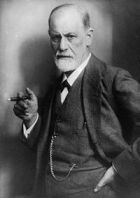
Does Everyone Suffer From Freud’s Alleged Death Wish?

In Entertainment, Health, Media, Opinion, psychology, Science, television, Uncategorized on April 30, 2012 at 10:52 pm

Sigmund Freud, by Max Halberstadt, 1921

By Gery L. Deer

Deer In Headlines

Sigmund Freud said that most people have a death wish, a desire, often deeply repressed, for self-destruction, often accompanied by feelings of depression, hopelessness, and self-reproach. Arguably, Freud’s theories have been the subject of considerable controversy and debate over the years but his impact on psychology, therapy, and culture is undeniable.

Debunked or not, psychology’s most famous figure may have hit this proverbial nail right on the head. At least that’s how it seems taking into account how many things people do while fully aware of potentially lethal consequences; for example, smoking, alcohol, recreational drug use, skydiving, auto racing, base jumping and other high-risk behavior.

It could be argued that some of these activities are no more dangerous than getting in the car in the morning and driving to work. Considering the safety measures involved in the case of something like skydiving, a quick spin in a Chevy would most likely be far more dangerous.

Of course, once someone starts taking drugs or abusing alcohol, a chemical addiction takes over and impedes their ability to stop. But they’re not the only ones.

Some experts suggest that so-called adrenaline junkies are not all that different from their AA-going counterparts. Similar addictive reactions occur in the bloodstreams of extreme athletes and even serial criminals, not for drugs but adrenaline. The high brought on by the endorphin rush can be overwhelming and highly addictive.

If the experts are right, treatment may be in order to help quell the desire for such extreme behavior. But, that doesn’t answer the main question – how do they start in the first place?

Could there actually be an inborn drive that blinds some people to the relative, even inescapable dangers, associated with risky behavior? Is it possible that some people are genuinely motivated by an involuntary drive akin to Freud’s death wish?

Blaming television and other entertainment media for romanticizing risky behavior is always an option, but only to a point. While these influences do affect modern society, they can hardly be blamed for anything prior to about 75 years ago.

Before the mass media evolved into what it is today, habitually addictive activities like smoking and alcohol use were predominantly passed on through families or influenced by social circles. Plus, the detrimental effects of these substances was not yet widely known or accepted.

It could be that people are just examining these issues far too closely. Maybe, to use another Freudian colloquialism, a cigar is just a cigar. Isn’t it at least possible that people simply do dumb things sometimes without deep, psychological forces at work? Of course it’s possible.

Psychoanalyzing risky behavior may rack up tons of cash for shrinks, but it’s entirely possible that some people just enjoy these activities for their own sake. Unfortunately, some of them become addicted to the rush, the drug, the adrenaline, or whatever it is that hooks them, and some even die as a result.

Life is dangerous – even if it’s unintentional. No matter the lifestyle, no one escapes Freud’s alleged death wish. Whether it’s a compulsion for that first cup of morning coffee or an obsession with shoe shopping, extreme behavior hits everyone in one way or another.

Sometimes the things a person appears to enjoy in life the most are exactly what may be killing them, or may eventually. Lifestyle changes or even therapy may be necessary, but the individual is the only one who can change the behavior.


Winners Announced in DNT TXT ‘N DRV PSA Video Contest

In Education, Health, Local News, Uncategorized on April 18, 2012 at 7:41 am

Students from 46 High Schools in 6 Counties Competed for Prizes

Featured (from left) John Zeller of Farmers Insurance, Anna Knippling, David Butcher and Olivia Ramage, all of Yellow Springs High School, and Laurie Fox, Greene County Safe Communities Coordinator. Students from Yellow Springs High School were awarded prizes for entries submitted in the DNT TXT N DRV PSA video contest.

Xenia  – The Greene County Safe Communities Coalition and the Drug-Free Healthy Communities Coalition in Greene County recently teamed up to tackle the issue of Texting While Driving with a 30-second video contest aimed at high school students.

The contest was developed to encourage teens to create a thirty-second public service announcement that could be used by the local media to show the dangers of texting while driving and encourage drivers to refrain from this very dangerous behavior.  Forty-six high schools in six counties – Champaign, Clark, Fayette, Greene, Madison and Miami – were invited to participate.  There were two divisions: 9th/10th grade and 11th/12th grade.  Prizes for 1st – 3rd place in each division were secured through the generosity of Farmers Insurance and Walmart that included a Kindle Fire for 1st place, a Kindle and a $25 Amazon gift card for 2nd place and a $100 Visa gift card for 3rd place.  Judges for the contest included members from both coalitions, students from Xenia High School and staff from WDTN TV.  Winners were announced at Ohio SADD’s Prevention Convention in Sharonville on March 8th.

In the 9th/10th grade division, 1st place was awarded to Olivia Ramage, a 10th grader at Yellow Springs High School, 2nd place was awarded to Anna Knippling, a 9th grader at Yellow Springs High School, and 3rd place was awarded to Benjamin Lusk, a 10th grader at Xenia Christian High School.  In the 11th/12th grade division, 1st place was awarded to Cody Walborn, an 11th grader at Springfield High School, 2nd place was awarded to Holly Black, a 12th grader at Piqua High School and 3rd place was awarded to Kendrick Link, also a 12th grader at Piqua High School.

The coalitions are working with WDTN TV in hopes of having the 1st place videos aired this fall when the station runs their WAIT2TXT campaign.  Both coalitions are planning to work together again in 2013 to hold a similar contest focusing on teen driver safety.

For more information about the contest or the coalitions and how you can get involved, please contact Laurie Fox, Safe Communities Coordinator, at 937-374-5669 or by email at lfox@gcchd.org.  For more information on texting and driving, visit http://www.distraction.gov.