Local News & Commentary Since 1890.

Archive for the ‘Health’ Category

Vent maintenance key to dryer fire prevention

In Children and Family, Education, Health, Home Improvement, Local News, Science, Technology, Uncategorized on April 15, 2015 at 5:07 pm

dryer_vent_3_ductzDayton, OH – According to the United States Fire Administration nearly 3,000 clothes dryer fires are reported each year, causing an estimated 5 deaths, 100 injuries and more than $35 million in property damage. Statistics show that the most common cause of those fires (some 34-percent) was failure to keep the traps and dryer vents clean and free of lint.

Many people proceed from the incorrect impression that the dryer’s removable lint trap will protect prevent major lint build up. Dryer lint can blow right past the trap and end up packed around the machine’s internal components and clog the entire length of a vent pipe.

Click to watch the TV interview with Larry Phillips on WDTN-TV2

Click to watch the TV interview with Larry Phillips on WDTN-TV2

Larry Phillips is the owner of DUCTZ of Southeast Miami Valley, a professional duct and vent cleaning service. “The most important reason to have the dryer vent cleaned is safety,” Phillips says. “There are some things you can do to help reduce your risk of a dryer vent fire.”

dryer_vent_2_ductzFirst, Phillips suggests paying close attention to the dryer’s operation. “If you notice that your clothes are taking longer to dry, especially if it’s more than 50 minutes, you should probably have your dryer vent cleaned, or even replaced,” Phillips says.

“Your dryer vent should be made of flexible aluminum and never a PVC pipe or plastic material. Plastic vent pipe materials may add to the fire hazard. Your dryer vent should also vent to the outdoors – never indoors, especially natural gas units. Gases vented during the dryer’s operation can be harmful to people and pets.”

Critters can be cause problems for dryer vents as well. “Outside dryer vents should be free of debris and any louvered cover must be able to open easily. Also, be sure to check the outside vent often, as small animals and birds often see the vent as an ideal place to make a home.”

dryer_vent_1_ductzFinally, Phillips advises to never use duct tape on a dryer vent, but metal foil tape. Most building codes restrict the length of dryer vent pipes to no more than 25 feet. Longer pipes with sharp turns or raised and lowered sections can be of particular concern because lint gets trapped in the elbows and is difficult to detect and remove.

For those who rent a home, Phillips offers this advice. “Ask your landlord what their dryer vent cleaning schedule is. Most landlords are required to have the dryer vent cleaned each year by their local government.”

For more information on dryer vent safety, contact Larry Phillips at DUCTZ of Southeast Miami Valley, (937) 399-8500. Online at http://www.ductz.com/contact-us/location-map/ohio/ductz-of-se-miami-valley/.

Duct cleaning reduces indoor air pollution

In Economy, Education, Health, Home Improvement, Science, Technology, Uncategorized on February 25, 2015 at 12:51 pm

According to estimates by the U.S. Environmental Protection Agency, indoor air may be as much as 70-percent more polluted than outside. Much of that contamination can be attributed to bacteria and mold growing inside residential and commercial air handling systems.

Allergies, asthma, and other illnesses may be aggravated by microbe-laden air circulated through a building’s duct system. Larry Phillips, owner of Ductz of Southwest Miami Valley, is a professional residential and commercial duct cleaning specialist. A 30-year veteran of the health care industry, Phillips chose a second career that offered the opportunity to continue improving the well being of the community.

Air duct before cleaning.

Air duct before cleaning.

“A thorough cleaning and disinfecting of the air ducts can minimize pollution-causing agents lurking in the air system,” Phillips said. “Cleaning the air system at a seasonal change, such as when switching over from heat to air conditioning, is ideal.”

Phillips also cautions consumers to make sure the duct cleaning service they hire is well qualified. “Duct cleaning technicians should be well trained and follow the guidelines of the National Air Duct Cleaning Association (NADCA), the professional organization that sets the standard for air system cleaning,” he said.

“It should take 4 to 5 hours to clean an average size home’s duct system,” said Phillips. “If done properly, the cleaning should not have to be done annually, but instead only every few years.” Phillips suggests that, in addition to a high efficiency filtration system, air duct sanitization and ultraviolet germicidal disinfection equipment can maintain the air quality after cleaning.

Besides older, existing structures, it’s also a good idea to clean the air systems of new construction before the space is occupied. In new buildings, duct work, filters and vents can be layered with dirt, sawdust, and drywall dust from the construction process.

Air duct after cleaning.

Air duct after cleaning.

Home owners and operators of commercial laundry facilities should also pay close attention to the condition of clothes dryer vents. Lint that escapes the trap inside the dryer accumulates inside the vent tube creating a fire hazard. According to statistics provided by Ductz, an estimated 15,500 fires, 10 deaths and 310 injuries are associated with the lint in clothes dryers annually.

“Cleaning the ducts and dryer vents is also good for the environment,” Phillips noted. “Regular maintenance of the air circulation system improves the efficiency of heating and air equipment which helps to save energy, and reduce operating costs.” For more information contact Larry Phillips at Ductz of Southwest Miami Valley by calling (937) 399-8500.

Still unregulated, e-cigarettes may prove as toxic as tobacco

In Children and Family, Education, Health, Local News, Media, National News, News Media, Opinion, Technology, Uncategorized on February 24, 2015 at 12:22 pm

dih-logo-SE


DEER IN HEADLINES : SPECIAL EDITION – By Gery L. Deer

As smoking bans continue to expand across the United States, more smokers are taking to electronic cigarettes as a way to skirt around the law while still getting their fix. While proponents of the gadgets contend they are a safer, healthier alternative that may actually help smokers quit, new research is showing they are likely to be just as dangerous as tobacco cigarettes.

The concept that people want to inhale poisonous gas is for the non-smoker, and for lack of a better word, baffling. If it makes a person cough, wheeze, choke, and gasp, it probably means the body is trying to reject it. To those trying to breathe clean air (well, as clean as is possible), smoking is just plain disgusting. It makes clothing and people smell bad, it pollutes the air around the smoker and is responsible for more than 440,000 premature deaths in the United States annually. Now that researchers are finally studying the alternatives, they may be proving the electronic options just as dangerous.

“It’s plausible that e-cigarettes have their own particular dangers,” stated Japan’s health ministry following the release of a recent study on the effects of using electronic nicotine delivery inhaler, more commonly known as, e-cigarettes. “That can be true even while e-cigarettes are, in general, less dangerous than traditional tobacco smoking.”

According to the UK’s Daily Mail, the Japanese research found high levels of formaldehyde and acetaldehyde in the vapors of several different e-cigarette brands. The Daily Mail later issued a correction to their original story regarding the amount of carcinogens discovered, however the basic findings of the report are still relevant.

Although e-cigarette proponents (mostly those who earn revenue from the sale of these products) vehemently condemn the Daily Mail’s report and the Japanese findings, a spring 2014 study by the American College of Allergy, Asthma and Immunology (ACAAI) essentially supports the conclusions.

CBS News reported the following excerpt from the study, “Because e-cigarettes are fairly new, there could be other long-term health complications that have yet to be discovered,” the report stated. “Results of long-term exposure to such substances are unknown. Due to the lack of production oversight, most consumers don’t know what’s in the e-cigarettes they buy.”

The report indicated that e-cigarettes operated at high voltages produce vapor with large amounts of formaldehyde-containing chemical compounds. Manufacturers provided a response to the CBS report, suggesting that it would be unusual for users to alter the voltage on the delivery device. READ THE ENTIRE CBS STORY – January CBS News Report indicating formaldehyde in the vapor – click to read.

vaping

All of this study and debate is just a dance around the overlying point that smokers should not have the right to pollute the air of those around them, regardless of the delivery system. Smokers would do best to stifle the tired old argument about the addictive nature of smoking and stop blaming the tobacco companies for their suffering.

In the end, the detrimental nature of smoking is the sole responsibility of the smoker. No one forced the smoker to light up that first time, or the second, or the third. Smoking is a choice that becomes an addiction. If they hadn’t started, they wouldn’t be hooked.

Creating a socially acceptable “cheat” method for taking in nicotine is a little like making alcoholics drink from a cup instead of the bottle. The final effect is the same – the person is still addicted. On the subject of addiction, the idea that e-cigarettes help smokers kick the habit is also unsubstantiated.

Dr. Pamela Ling, an associate professor at the Center for Tobacco Control Research and Education at University of California, San Francisco, was lead researcher on a study published last March in the Journal of the American Medical Association. She concluded, “When used by a broad sample of smokers under ‘real world’ conditions, e-cigarette use did not significantly increase the chances of successfully quitting cigarette smoking.”

An electronic drug delivery system resembling some kind of refugee prop from Star Wars is still just another way of enabling addiction and polluting the air. If the recent studies are accurate, what is released into the air could be just as toxic as the vapor inhaled by the user, possibly even more so. Without further study and government regulation on these chemicals, no one really knows.

“Vaping” is still not widely controlled as actual smoking, so people still light up indoors where smoking is prohibited and that needs to end. Smoking bans should exist for all forms, whether achieved by burning dried leaves or electronically heated vapor.

One person’s right to smoke shouldn’t be more important than the health and safety of those around them. Imagine the result of an asthmatic child falling deathly ill from an attack triggered by the second hand vapors coming out of one of these things (or a tobacco cigarette for that matter), and all because someone couldn’t wait to light up?

Once upon a time, not so long ago, doctors ridiculously gave their seal of health to tobacco products. They even took money to provide testimonials as to the health benefits of smoking. Sadly, a lot of people had to die before health professionals faced the truth. Face the facts – if human beings were meant to breathe toxic gasses, we would be living on Venus.

 

Greene County Amateur Radio Emergency Service offers licensing class

In Entertainment, Health, Local News, Science, Technology, Uncategorized on February 16, 2015 at 3:41 pm

The Greene County Amateur Radio Emergency Service (GCARES) is offering classes to help in obtaining an FCC amateur radio license. radiosStarting February 8, GCARES offers classes for all three levels of amateur radio licenses. The classes will meet from 7 to 9 p.m. each Sunday except Easter through April 12. A test for all classes of licenses will be given April 19 at 6 p.m. in the Training Room at Beavercreek Township Fire Station 61.

There is no charge for the classes and Morse Code is no longer required to obtain any amateur radio license. The classes are supported by the Bellbrook Amateur Radio Club (BARC), the Upper Valley Amateur Radio Club (UVARC) and the Xenia Weather Amateur Radio Network (XWARN) in addition to GCARES.

The entry level Technician Class course will be held in the Training Center at the Bellbrook Amateur Radio Club Clubhouse, Room 1 Sugarcreek Elementary School, 51 South East Street in Bellbrook. No experience is required and there is no minimum age required to earn a Technician Class license.

The General Class course and the Test Session will be held in the Training Room at Beavercreek Township Fire Station 61 located at 1298 Dayton-Xenia Road just west of Orchard Lane.

The Extra Class course will be held in the Training Room at Fairborn Fire Station 2 located at 2200 Commerce Center Blvd. just south of Dayton-Yellow Springs Road.

To register for a course or for more information, please contact Bill Watson K8WEW by email at wwatson4@att.net or by phone between 10 a.m. and 9 p.m. at (937) 426-2166.

Water: Here’s to your health.

In Education, Health, Opinion, psychology, Religion, Science, Senior Lifestyle, Uncategorized on February 9, 2015 at 1:37 pm

DIH LOGOHi, I’m Gery and I’m a recovering soda-holic (or “pop”-aholic if you prefer). There was a time when I would drink a 12-pack of soda (generally Cherry Coke) within a couple of days. I was an addict – sugar and caffeine were my drugs of choice.

Since I come from a family with a propensity for diabetes, I’d have to guess that drinking that much soda would only push me closer to the Insulin fan club. But all of that changed for me when I was helping to care for my mother and discovered, first hand, the health-promoting properties of water.

My mother, Lois, had already been diagnosed with Alzheimer’s dementia when she broke her hip and entered a local nursing home for physical therapy. During her stay, her dementia symptoms seemed to worsen more quickly than anticipated.

Soon she more anxious and unresponsive and always seemed to be suffering from some kind of urinary infection. Most of these issues were waved away by the staff as “normal” for a medicated, bed and wheelchair-bound senior with Alzheimer’s disease. Not in my book it wasn’t.

I paid closer attention to her daily care and noticed that she rarely drank anything. Once in a while a staffer would fill a plastic hospital-style pitcher with water and place it on the night table. But that was all; they just sat it down and left.

By this time dementia had diminished Mom’s awareness of hunger or thirst and even if she had wanted a drink she wouldn’t have been able to get it herself. Unless I, or another family member, poured it for her, the water usually sat there, untouched.

Gery and his family used the green tumbler in the photo to measure the amount of water Lois Deer received. It was filled twice per day - apx 0.5 gallons total.

Gery and his family used the green tumbler in the photo to measure the amount of water Lois Deer received. It was filled twice per day – apx 0.5 gallons total. (Photo Copyright 2015 GLD Enterprises Communications.)

She seemed to get worse so we decided to take her home and care for her ourselves. First on the agenda was to increase her water intake to around a half-gallon a day. That may not sound like much but, since water makes up approximately 60-percent of a person’s body weight, at 78 pounds the volume was significant.

Mom was given water regularly throughout the day and at meal time. With proper hydration and more consistent, personalized care, her physical and mental health improved more than I can adequately express.

Alzheimer’s disease continued its rampage, but we cared for her full time until her death in 2011. Still, I am convinced that better hydration increased her quality of life over those last two years in ways no medication could have achieved.

I’ve also since learned we had been right about the relationship between her behavioral deterioration and dehydration. In seniors, dehydration can lead to serious health problems, such as constant urinary tract infections, skin deterioration, and even present symptoms such as confusion and behavioral changes, much like classic dementia.

Many seniors resist drinking water, but I couldn’t tell you why except there may be a generational component perhaps related to quality. My parents, for example, grew up in the Appalachian foothills of southern Ohio where most of the drinking water came from creeks and shallow wells where the water probably wasn’t too palatable.

While I was caring for Mom I nearly eliminated soda from my diet and quadrupled the amount of water. It was an acquired taste, to be sure, but now my glucose levels are much lower and I genuinely “feel” better. It may not seem like much but I consider this achievement significant, particularly since it was pretty much the only major change I’ve made.

I still have a Coke a couple of times a week (which I rarely seem to finish) but I’m convinced that more water has made all the difference in improving my overall health. Hopefully by starting now, I won’t be so hard to convince at age 70 when any level of dehydration could cause more serious problems.

As for how much you should drink, the typical recommendation for adults is 8 glasses of “fluid” each day. But there really is no precise amount. You’ll have to judge for yourself based on the needs of your own body. Either way, you’ll feel better.

Gery L. Deer is an independent columnist and business writer. Deer In Headlines is provided by GLD Enterprises Communications. More at gerydeer.com.

Free radon test kits available

In Education, Health, Home Improvement, Local News, Technology, Uncategorized on February 2, 2015 at 2:35 pm

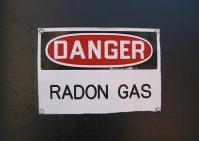
radon signXENIA, OH—As part of National Radon Action Month, the Regional Air Pollution Control Agency (RAPCA), in partnership with Greene County Combined Health District, is offering 1,000 free radon test kits for Miami Valley homeowners to check their homes for elevated radon levels.

Radon is a colorless, odorless soil gas that can build up in homes and may increase the risk of lung cancer for occupants. The Ohio Department of Health estimates about half of Ohio families live in homes with elevated radon levels. Last year, over 600 Miami Valley residents tested their homes for radon with free test kits provided by a grant from Ohio Department of Health.

Testing is the only way to know if elevated levels exist in a home, so Ohio Department of Health recommends all homes be tested, regardless of age, location, or construction type. Elevated indoor radon levels can be corrected with the installation of a ventilation system to direct the gas outdoors.

Homeowners interested in reducing their family’s lung cancer risk can visit http://www.rapca.org or call RAPCA at 937-225-4898 to request a kit. More radon information is available by visiting http://www.rapca.org, http://www.epa.gov/radon, or http://radon.utoledo.edu.

Emotions must yield to fact in vaccination debate.

In Children and Family, Education, Health, Local News, National News, Opinion, Politics, Science, Uncategorized on February 2, 2015 at 1:25 pm

DIH LOGOFar more than scientific fact, emotion seems to drive the debate surrounding the relationship between autism and the Measles, Mumps and Rubella (M.M.R.) vaccination. In 1998, a British doctor released a study which tied M.M.R. to instances of Autism in vaccinated children. Although that particular report was discredited shortly thereafter, it continues to affect parental decisions regarding vaccination here in America.

Before being debunked, however, the British study went viral (pardon the pun) and many parents became convinced that, for children diagnosed with autism shortly after receiving M.M.R., the vaccine must be the cause. Once the power of suggestion took over and the British findings accepted as gospel, the damage was done and more people than ever began to insist that vaccines, the M.M.R. in particular, were causing higher instances of autism.

In most states, the M.M.R. vaccine is required before children can be enrolled in school. With so many students now enrolled who were never vaccinated, measles is starting a forceful comeback, to be followed, one could only expect, by rubella and mumps.

Fear of the spread of these illnesses has officials warning that unvaccinated students would not be allowed to attend school. But while the vaccination debate goes on, autism numbers are still climbing unabated. So what exactly is Autism and what really causes it?

Centers for Disease Control photo of a child with measles.

Centers for Disease Control photo of a child with measles.

According to the National Autism Association, “Autism is a neurodevelopmental disorder characterized by social and cognitive impairments, communication difficulties and repetitive behaviors. It can range from very mild to very severe and occur in all ethnic, socioeconomic and age groups.”

As for what causes it, well, therein hangs a controversy all its own. The short version is that no one, absolutely no one, really knows for sure.

A long list of factors related to the development of autism includes a combination or individual instances connected to … environment, genetics, chemical exposure, parental age, food preservatives, freeway proximity, pharmaceuticals, and prenatal vitamin deficiencies, just to name a few.

Although autism is treatable, it is a difficult condition that now affects 1 in every 68 children. People with autism often suffer from a host of other medical conditions including allergies, asthma, epilepsy, digestive disorders and increased susceptibility to viral infection. It is clear that research must continue in order to isolate the exact cause(s) of the disorder. But allowing potentially crippling or deadly viruses to regain a foothold is not the answer.

Vaccinations have been acquitted of being the cause of this awful condition and people should listen to the experts who are trying to help them understand that.  While definitive evidence for the cause of autism is still elusive, one fact is difficult to dispute. Without proper vaccination, more of the population will fall victim to serious, communicable illnesses that are known to be preventable.

Is it right then to put entire populations at risk of dangerous disease on the mere possibility that vaccinations might be one of the dozens of potential causes of autism? Most experts say no, but that doesn’t seem to slow the argument.

Once the British study was discredited, it seems in the best interest that children continue to be vaccinated as recommended. Keeping children safe is never an “us” or “them” concept and no one should have to take sides to preserve the health of any population when there are methods proven effective to do so.

As with any emotionally charged issue where facts and anecdotal information are confused or interchanged, the M.M.R. and autism debate will likely continue for some time. In the meantime, more people are contracting measles which means it is spreading beyond the “tragic kingdom,” as one New York Times writer referred to it.

If a solution is to be found on either side of this debate, emotions and “crunchy granola” thinking need to give way to real science. Until that time, these diseases will continue to spread and autism will be no closer to eradication.

For more detailed information on the relationships between vaccinations and Autism, please visit AutismScienceFoundation.org and nationalautismassociation.org.

Gery L. Deer is an independent columnist and business writer. Deer In Headlines is provided by GLD Enterprises Communications. More at gerydeer.com

New laws won’t stop bullying.

In Children and Family, Crime, Education, Health, Local News, National News, Opinion, Politics, psychology, sociology, State News, Uncategorized on January 26, 2015 at 11:25 am

DIH LOGOOn January 1st of 2015, a new state law took effect in Illinois giving school district officials broader power to investigate accusations of bullying – including cyberbullying – even if the activity took place outside administrative jurisdiction. After word spread of the bill’s passing, some media outlets reported, somewhat mistakenly, that school officials now had the right to order students to surrender social media passwords.

According to a report by The Huffington Post, however, the wording actually says, “that if cyberbullying is reported to the school, school administrators can investigate the claim even if the cyberbullying occurred outside of school hours and buildings.”

The report goes on to explain that a bill which took effect in January of 2014 made it unlawful for school officials to force parents or students to hand over online passwords. Brian Schwartz, general counsel for the Illinois Principals Association, told The Huffington Post, “I think there’s some misinformation about [the new bill], because that’s been on the books for over a year.”

bullying2There is no question that schools need to do more to curtail bullying. But, while all the attention has focused these new laws and free speech infringement, the media, and pretty much everyone else, missed the more important issue. Where are the parents in all of this?

School administrators have always been charged with maintaining discipline within the confines of their educational responsibility. However, it was never intended for educators to police kids after school hours or away from district property. They have neither the manpower nor the training to do so.

Worse still, civil liberties organizations have managed to tie the hands of educators to the point that, eventually, even detention will be a violation of a student’s civil rights. Regardless, the big question remains, when did parents abdicate the responsibility of actually “parenting” to school administrators?

Without question, this is a complicated issue, but the long and short of it is this: maintaining discipline after hours should be up to parents. If people are going to have children, they should be prepared to educate them in ways of civilized behavior and establish consequences if those rules are violated.

If a child is threatening or causing harm to others outside of school, it should be dealt with by parents and local police or other authorities – not the district administration. To repeat, they have neither the manpower nor the training for this kind of work.

Expanded powers like those granted in Illinois might seem like a good idea, but granting investigative overreach to teachers and administrative bureaucrats just seems, on every level, like a lawsuit waiting to happen. Imagine if a dangerous bully skipped through some loophole in the legal system simply because the investigation was handled by amateurs?

Such legislation is a knee-jerk reaction during midterm election season which will result in skyrocketing education costs and, in all likelihood, increased legal expenses for school districts. There is no reason school administrators should have such broad-reaching power outside of their areas of responsibility. Once again, it begs the question, where are the parents?

Instead of focusing on it after the fact, it might be a good idea for more parents to take a look at the problem and take responsibility for the behavior of their children before such events occur. Many parents overlook bullying as normal, growing pains. But that couldn’t be farther from the truth.

According to the National Crime Prevention Council, bullying consists of any and all of the following: fighting, threatening, name-calling, teasing, or excluding someone repeatedly and over time, an imbalance of power (such as size or popularity), physical, social, and emotional harm, or hurting another person to get something.  Cyberbullying includes similar issues, but inflicted over social media.

Some parents might ignore some of this behavior as “just kids being kids,” but it’s not. Kids who bully won’t come out and say so and neither will their victims. Bullying is a form of assault and it’s already illegal. New laws and stricter schools are not the solution. It’s up to parents to be more involved and help prevent this terrible problem.


Gery L. Deer is an independent columnist and business writer and distributed by GLD Enterprises Communications. More at gerydeer.com.

Creative people are not predisposed to mental illness.

In Entertainment, Health, National News, Opinion, Senior Lifestyle, sociology, State News, Uncategorized on December 12, 2014 at 2:12 pm

When it happened, I did not want to be one of the millions of journalists writing about the tragic death of comedian Robin Williams. I wanted no part of the relentless armchair quarterbacking of commentators who so easily claimed to have the man, “figured out.” No one knew what was in his head or heart and pretending to in order to secure 15 seconds of publicity on the morning talk shows is disrespectful on countless levels.

As a kid, “Mork & Mindy” was a favorite television show of mine. Naturally, I was too young to understand that Williams’ extra-terrestrial comic genius may have originated from a man with deep, emotional fragility in a constant struggle with personal demons. However, Williams’ death led to interesting dialogue about whether brilliantly creative people have a higher tendency toward mental illness.

Psychologists have long debated the relationship between the creative mind and various mental illnesses, particularly bipolar disorder.  Personally, I reject the psychobabble that suggests creative people innately suffer from a myriad of mental and emotional disorders.

I’m not a psychiatrist or a physician but I am one of those creative people, albeit that I walk the line to the other side of the brain as well. I can rebuild an engine, write this article, and produce a television segment, all in the same day. But am I, by nature, mentally ill?

Benjamin Franklin was one of the most creative and inventive people in American history. He was a statesman, a writer and an inventor, and there is no evidence to suggest he had any sort of mental illness.

But in today’s era of mass publicity, there are other pressures that can affect the creative mind’s health besides that to produce new work. Anyone who becomes successful or is thrust into the public eye at any level has an entirely different set of stresses to deal with.

From my own, small experience, I can tell you first-hand that, as a public figure, you are expected to be “on” all the time. Because of your public work, people believe they know “you,” and anticipate you to behave a certain way to meet their expectation.

When you don’t, they are disappointed and react negatively. The pressure of not being able to meet those expectations can take a toll on someone who already suffers from self-doubt, depression and other areas where a negative personal image is already prevalent.

Most creative people are in the business they love in order to do a good job at work then go about their lives as normally as possible. Often, however, the public won’t allow it.

Williams’ death serves as a reminder that every creative person is just that, an individual, whether working from their garage or signing million-dollar movie deals. Every day they struggle with the same concerns as you and I, it’s just that the scope of view might be a bit larger or different.

Has anyone considered the possibility that people who already have mental illnesses choose to go into a more creative line of work because it fits their “disability?” It’s no secret that actors and writers tend to be introverted, keep to themselves and often reject the idea of the 9 to 5 job and even general social conformity. Since mental illness isn’t something a person just contracts, like the flu; it’s logical to conclude that it’s got to be in the genetics somewhere waiting for a trigger. Depression and other illnesses can also be affected by the lifestyle of the individual through alcohol and drug use, exacerbating the problem.

Therefore, it is entirely likely that those with mental issues actually choose the more fluid existence of the creative lifestyle early on.  The common absence of structure and responsibility probably plays well into their ever fluctuating mental state.

In other words, it’s a chicken or the egg problem. Are creative people mentally ill (as a generalization), or do the mentally ill choose the more creative path? A great talent was lost in Robin Williams and he was by no means the first. Sadly, regardless of how it comes about, it is unlikely he will be the last.

Gery L. Deer is an independent columnist and contributor to WDTN-TV2’s Living Dayton program


For some, depression darkens the holiday season

In Children and Family, Health, Holiday, Opinion, Senior Lifestyle, sociology, Uncategorized on November 24, 2014 at 1:54 pm

DIH LOGOIt’s never great to lead off with a cliché, but there may really be a silver lining behind every dark cloud. The hard part is that it’s up to the individual to recognize and interpret it. During the holiday season, however, for some the darkness may become overwhelming and everyone else should be sensitive to those around them suffering from seasonal depression.

As the Thanksgiving Day holiday heralds in the Christmas season, it’s important to try to remember that not everyone is happy and cheerful during this time. Many people suffer from various types of clinical depression, exacerbated by the holidays.

Seasonal Affect Disorder, or SAD, is a seasonal pattern associated with a recurring depressive disorder. It’s a fact that people experience mood changes along with the seasons but some may actually experience an even more sever bout during the stressful holiday season.

According to Healthline.com, “Depression may occur at any time of the year, but the stress and anxiety of the holiday season—especially during the months of November and December (and, to a lesser extent, just before Valentine’s Day)—may cause even those who are usually content to experience loneliness and a lack of fulfillment.”

baileygeorgeNot surprisingly, depression during this time can result from loneliness. Healthline.com reports that a 1999 Canadian study of patients treated by emergency psychiatric services during the Christmas season, states the most common stressors were feelings of loneliness and “being without a family.”

Experts also suggest that part of the problem is a level of media bombardment, mostly advertising, that depicts cheerful holiday festivities, smiling families, and so on. The joyful, light-heartedness of the season might to a depressed person seem much more a requirement and painful nuisance than a genuine, heart-felt emotion.

The elderly often suffer from depression caused by any number of contributors including, serious medical problems, poor diet, loss of a spouse, chronic pain and more. Depression may worsen in the elderly, not expressly because of the holiday, but that it brings memories of happier, more fulfilling times, and it might be hard to spot.

Helpguide.org suggests that elderly patients suffering from depression might display rapid mental decline but memory of time and date, as well as awareness of the environment, remain. They may also exhibit more outward concern than usual about slipping memory and their motor skills may be normal but noticeably slower.

Regardless of age, depression is a painful illness to endure at a time of year when the sufferer is surrounded by the usual excitement of the season.  There are many ways to help combat depression.

Social isolation can be a major contributor to depression, particularly during the holidays.  Start by getting involved and being among friends and family wherever possible. Of course, sometimes, family can be the cause of stress. In those instances, it might be better to spend time with close friends or attend some kind of social activity, go to bingo at the local community center, or anything else to avoid being alone. But remember to feel free to leave an event if you feel uncomfortable. Adding stress to depression would be seriously detrimental to the purpose of the interaction.

Other ways to ward off “holiday blues” include, beginning a new tradition, volunteering at local charity centers, or get outside and take a walk or go on a bike ride.  Self-care is an important step to fighting depression. Even with decreased appetite, it’s important to remember to try to eat well, exercise and maintain a regular sleep schedule.

Seek medical treatment as well. General practice doctors can help determine what sort of specialized treatment may be beneficial. Depression is an illness with treatments available to help people live active, involved lives but nothing can happen without taking that first step. Proper treatment may help people have a happier, more meaningful holiday season.

On a final note, although it is a myth that more suicides occur between Thanksgiving and Christmas, those suffering severe depression might still be dealing with suicidal thoughts. Contact one of the local crisis lines, 24/7: Greene County Crisis Services: (513) 376-8702 or Dayton Suicide Prevention Center, Inc.: (937) 297-4777.


Gery L. Deer is an independent columnist and business writer based in Jamestown, Ohio. More at gerydeer.com