Local News & Commentary Since 1890.

Archive for the ‘Education’ Category

Drone use regulation has a long way to go

In Dayton Ohio News, Education, history, National News, Opinion, Technology, Uncategorized on December 1, 2014 at 2:24 pm

DIH LOGOFor the last several years unmanned aircraft systems (UAS) have become a popular tool for everything from wildlife tracking to disaster response. But the wide application of these devices has become a hot button issue for many state lawmakers and in some cases legislation has already been put in place to regulate their use. But there’s still a long way to go.

Also known as unmanned aerial systems, or by the more colloquial term, “drones,” UAS devices are becoming more widely used around the United States by government and law enforcement agencies, commercial business and also private citizens. As the technology becomes more affordable, these devices are turning up everywhere; over residential areas, aerial photography of sporting events, even delivering packages. All of these activities raise questions of privacy invasion and how much is too much.

At the time of this article, Ohio still has no specific laws governing the use of drones but, according to the National Conference of State Legislatures, “Ohio enacted HB 292 creating the aerospace and aviation technology committee. One of the committee’s duties is to research and develop aviation technology including unmanned aerial vehicles.” So, there’s a committee; great.

At present, police departments can use drones in most states to snoop pretty much anywhere they want, and in many regions without the pesky bother of obtaining a warrant first. Drones can also be used by the federal government for the purposes of gathering domestic intelligence. Up to now, there are few “official” limitations on U.S. Government (and military) use of UAS devices to spy on its own citizens, without cause or due process of any kind.

dronesSo until there are clear areas of regulatory legislation, what rights do individual citizens have to protect themselves from the prying robotic eyes of a drone? The answer to that is murky at best, and property law is extremely complicated so it’s tough to know who actually owns the airspace above.

A Slate.com article from October 2014 reports that man-on-drone violence is actually on the rise; that means people are actually shooting the machines right out of the air, sometimes just for the sport of it.

The article shared one story about a New Jersey man who was brought up on unlawful weapons charges for shooting down a drone over his property. The article was unclear about whether the area where the incident took place was rural, commercial or residential. There was also no mention of charges related to what he shot down.

As some states enact technology-related laws and regulations, others have done nothing. Many of the laws that have been enacted are also confusing as to personal responsibility or liability.

In Tennessee for example, SB 1777 makes it a class C misdemeanor for any private entity to use a drone to conduct video surveillance of a person who is hunting or fishing without their consent. So to illustrate how ridiculous this is: if Bob is hunting on Bill’s property without permission and Bill uses a drone to monitor Bob’s activity, Bill is guilty of a crime, but Bob is not?  How’s that for pointless?

Drones and other UAS devices bring about yet one more issue where the technology has advanced faster than the wisdom of the people and the legislators. But what about personal rights until laws are enacted? Do private citizens have the right to take matters in to their own hands? Is it OK to shoot down a drone in an area where firearm use is legal? What if it’s brought down with a slingshot, a boomerang, a whip (sorry, had to include that one) – or even another drone?

It seems likely that if someone destroyed a drone its owner would have some kind of civil litigation options to recover damages. However, UAS operators should keep in mind that, for the most part, firearms are still legal to use in rural areas and an intrusive drone might just go the way of Amelia Earhart.

Gery L. Deer is an independent columnist and business writer and CNN.com iReports contributor. More at deerinheadlines.com.


Medication adherence vital to senior health

In Business, Dayton Ohio News, Education, Health, Local News, National News, Senior Lifestyle, Uncategorized on November 19, 2014 at 7:16 pm

PrsnlCareSrvcs-300x300Dayton, OH – According to studies published in the New England Journal of Medicine, approximately one-half of senior adults who take at least one medication per day find keeping to the regimen difficult to maintain. Elderly patients can often become confused about dosage and scheduling and sometimes do not even understand the purpose for each prescription.

Because medication is metabolized differently as people age, timing is important. To be most effective, many medications have to be taken exactly as prescribed for the full benefit to be achieved. Unfortunately, many seniors may be taking prescriptions at the wrong time or missing doses entirely.

Medications can also get mixed up when there is more than one elderly resident in the home, creating an additional danger to the individuals. Without daily monitoring, it may also be difficult to identify older adults who may be at risk for medication nonadherence. In the absence of daily oversight by close friends or family members, one helpful alternative is a professional senior care provider.

Becky Kearney is the Senior Director of Operations for Golden Heart Senior Care in Centerville, Ohio. She notes that, along with other tasks, one of the jobs asked of Golden Heart caregivers is to help seniors maintain their medication adherence.

“Our caregivers frequently deal with the effects of over or under medicating,” Kearney says. “Improper medication administration can create havoc for both the individual and his or her family members.”

Daily home care providers can help to ensure that medication is properly taken, in the accurate dosage and by the correct method (oral, topical, etc.), and at the right time. “Mishandling of prescriptions can cause long term, if not permanent damage to the physical and mental health of the individual.  All of which could be prevented with medication monitoring by a caregiver,” adds Kearney.

As a senior’s health and independence decline, constant prescription changes can also become more confusing and difficult to manage alone. For those with elderly friends or family, inquire how he or she is managing medications and if no one is monitoring the situation, suggest a call to an in-home senior care agency or contact the local council on aging for a referral.

To learn more about getting help for senior medication adherence in the Miami Valley area, contact Golden Heart Senior Care by calling, 937-506-0190.

Support religious freedom by defending rights of atheists

In Education, history, Local News, Media, National News, Opinion, Politics, psychology, Religion, sociology, Uncategorized on September 3, 2014 at 11:24 pm

dih-logo-SEFor what is apparently the first time ever, an openly atheist candidate is running for United States Congress this fall. James Woods, an atheist Democrat, is seeking election in the Arizona 5th Congressional District, a region well known as strictly Republican. According to a CNN op-ed piece by columnist Carlos S. Moreno, Woods will be the only congressional candidate to ever run after outing himself as a non-believer.

As it turns out, under the constitutions of eight American states, atheists are banned from holding public office: Arkansas, Maryland, Mississippi, North Carolina, Pennsylvania, South Carolina, Tennessee, and Texas (Source: The Washington Post). More accurately, the restriction applies to those who deny the existence of, “a Supreme Being,” or “Almighty God,” the wording varies.

Regardless of whether people agree with it, such bans would seem to violate Article VI of the U.S. Constitution, which states, “no religious test shall ever be required as a qualification to any office or public trust under the United States.” It’s probable that any related civil suit would eventually land at the feet of the United States Supreme Court which would undoubtedly have to rule these laws unconstitutional.

Even so, most atheists stay, “in the closet,” so to speak, to avoid social repercussions and public scrutiny and rarely do they attempt to run for political positions. It might be assumed that the anti-atheist rules were originally established to ensure that public servants would have a predictable moral fiber.

But, the very idea that the religious are inherently “moral,” is, in a word, ridiculous. History is full of religiously-sanctioned violations of God’s moral commandments, from centuries of open warfare to decades of child abuse. As usual, many of the devout try to pretend none of it ever happened. So, in a completely predictable act of contradiction, violations of God’s laws are fine so long as they serve a “higher purpose.”

Likewise, the moral character of a politician is supposed to be part of the reason why people choose to elect him or her to office. Sadly, a disturbing lack of morality is evident in many high-ranking politicians, who spend much of their time lying, cheating and stealing. These are the same men and women who, at some point, stood up in front of their God and everyone else and swore to their personal integrity and commitment.

Easy examples come to mind like John F. Kennedy and Bill Clinton, who were known to be serial adulterers, and it could be argued that the very definition of politician should include, “liar.” In any case, one needn’t be a Christian, nor a member of any other religion, to have a well-aligned moral compass.

Put simply, being frightened into morality by the threat of fire and brimstone only goes so far in keeping people on the straight and narrow, particularly those who crave power and believe themselves at some point to be above retribution. It seems like it would be better to have a public servant who has found his or her own moral direction rather than having it lorded over them by fear of suffering in the hereafter.

Regardless of how the devout are behaving when no one is looking, however, what Americans need to understand from all of this is that freedom from religion must be protected in order to preserve its uninhibited practice. The fine balance between freedom “from” and “of” religion is necessary to ensure every citizen can practice his or her faith openly, all while any other may enjoy none at all. It goes both ways.

Put another way, no one likes to have religious groups going door to door pedaling their ideology. So why is it alright for anyone else to do the same thing simply using more socially acceptable methods, such as being coerced into declaring a religion before qualifying for political office?

Up until now a great many public servants who have affirmed a religious affiliation and filled speeches with thanks to God for their success have managed to shame both their religion and their office with shaky morality. In the end, the most devout Christian can take the same oath as their atheist counterpart and guarantee no greater a moral platform. If history is any indicator, it might even be less.

 
Gery L. Deer is the editor and publisher of The Jamestown Comet.com and a syndicated independent columnist.


Amateur radio classes offered September 7

In Dayton Ohio News, Education, Entertainment, Media, News Media, Science, Technology, Uncategorized on September 2, 2014 at 8:43 am

The number of amateur radio operators continues to grow as more people realize the role that ham radio can play in providing emergency communication during natural disasters. To help those interested in obtaining a ham radio license, the Greene County Amateur Radio Emergency Service (GCARES) is offering three free Amateur Radio license courses. In addition to GCARES, the courses are supported by the Bellbrook  Amateur Radio Club (BARC), the Upper Valley Amateur Radio Club (UVARC) and the Xenia Weather Amateur Radio Network (XWARN).

radios     The nine week courses will prepare students to take the FCC test for the entry-level technician, the intermediate level general, or the top level extra class licenses. Classes will meet from 7–9 p.m. Sundays beginning Sept. 7.  The exams for all three licenses will be given at 6 p.m. Sunday, Nov. 9. There is no charge for the courses or the test.

   The entry level technician class course will be held in the TrainingCenter at the Bellbrook Amateur Radio Club Clubhouse, Room 1 Sugarcreek Elementary School, 51 South East Street in Bellbrook.  No experience is required and there is no minimum age required to earn a technician class license.  Morse code no longer is required for any amateur radio license.

    The general class course and the test session will be held in the training room at Beavercreek Township Fire Station 61 located at 1298 Dayton-Xenia Road just west of Orchard Lane.

     The extra class course will be held in the training room at Fairborn Fire Station 2 located at 2200 Commerce Center Blvd just south of Dayton-Yellow Springs Road.

      Students are encouraged to have a copy of the respective ARRL License Manual. For more information about obtaining a manual go to gcares.febo.com.

     To register for one of the courses or for more information, please contact Bill Watson, K8WEW,  by email at wwatson4@att.net or by phone between 10 a.m. and 9 p.m. at (937) 426-2166.

When did being nerdy become cool?

In Children and Family, Economy, Education, Opinion, sociology, Technology, Uncategorized on August 25, 2014 at 12:14 pm

DIH LOGOAm I to understand that, largely because of a television situation comedy, it is now cool to be awkward, socially inept, and very smart, all while being considered – dare I use the word – “nerdy?” When did this happen? In my day, we nerds were cast out from all the best tables in the school lunchroom or forced to get bad grades to avoid being picked on because we were smart  – that never worked, by the way. It’s just not fair that today’s geeks get a pass! But, it’s about time!

Yes, I was a nerd, of the ultimate type, though I never made much of an effort to show my smarts on my report card; the dreaded “permanent record.” Best part is, I’m still pretty nerdy, if not more so, except now, people think it’s much cooler. Ok, maybe not so much when you’re nearly 50 years old, but still, it’s better than the reverse.

It is highly unlikely, however, that the power struggle of lunchroom hierarchy has changed too much. Although I have learned that there are now “smart kid cliques,” like a “herd of nerd.” These gaggles of bespectacled hackers, techies, science geeks and math whizzes won’t let the cool kids – jocks, cheerleaders, etc. – sit at their tables. Oh my, how the lunch tables have turned! So what, exactly happened to cause this mirror universe effect (there’s a Star Trek reference for anyone who’s paying attention)?

GLD Enterprises Commercial Writing managing copywriter Gery L. Deer at his Jamestown office.

GLD Enterprises Commercial Writing managing copywriter Gery L. Deer at his Jamestown office. Nerd is in!

Were our Heisenberg compensators out of calibration? Was there a paradoxical overlap in the delicate fabric of space and time? Perhaps J.J. Abrams decided to re-imagine nerddom in his own image? However interesting these explanations may sound, the popularity shift albeit a smaller one than you might think has more to do with money than anything else, on several levels.

In the 1990s, the nerds of the 80s were rolling in the cash as the tech boom swept across the nation and rapidly spread worldwide. Billions of dollars were going into research and development as the Internet expanded and commerce took notice.

Suddenly, everyone was a hacker or web developer. Countless tech startups swamped Silicon Valley and the rest of the country as everybody with a modem tried to cash in on the boom.  In short, the nerds of yesterday are the successful business tycoons of today, at least some of the time.

Next, it would be hard to talk about this subject without at least a hat-tip to the TV nerds of CBS’s hit comedy, “The Big Bang Theory.” The quirky, discomfited antics of Sheldon, Leonard, Raj and Howard have become a sensation. The show seems to be broadcast every hour of the evening, primetime or in syndication. Watching people who seem far more awkward and unsure than ourselves has always been a pastime, but this is somehow even more engaging.

Most of us who have worked in the engineering or technical fields knew or knows someone like each of these guys, but with nowhere near the personality or likability of the four fictional personas. Speaking of real life, I’m fortunate that I don’t carry a grudge for all the harassment I endured growing up.

If anything, it’s been a source of great resolve and I’ve have written many times on the subjects of bullying, mean-spirited teasing and the like. Unfortunately, there are some of my nerd kin out there who just can’t let it go or, if they’re still in school, carry a sharp chip on their shoulders because they aren’t part even of the herd of nerd that as claimed a spot at one of the cool tables.

There is every possibility that the reason someone doesn’t socially advance has as much to do with the person than the environment. A bad attitude goes both ways. No one will be popular if he or she is always pointing out the mistakes of others, belittling someone’s intelligence or carries that chip on the shoulder that keeps others at bay.

I learned to embrace my inner (and outer) geek and like whom I’ve become. In the end, it’s far better to be smart and socially functional, than sit alone in the cafeteria.


Gery L. Deer is an independent columnist and contributor to WDTN-TV2’s program, Living Dayton. More at gerydeer.com.

Back to school open house focuses on computer security

In Business, Children and Family, Dayton Ohio News, Education, Technology, Uncategorized on July 18, 2014 at 10:14 am

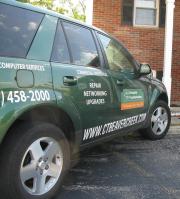
CT_BEAVERCREEK_TRUCKBEAVERCREEK, OH – On Saturday, July 26, Computer Troubleshooters of Beavercreek (CTB), located at 3792 Dayton-Xenia Rd. Beavercreek, Ohio 45432, will host a free open house from 10 a.m. until 3 p.m. to promote student computer security. The event is free, open to the public and will include refreshments, door prize drawings and special deals and information related to keeping student computers secure on campus this school year.

As part of an international network of independently owned franchises, Computer Troubleshooters provides complete information technology (IT) support for residential and commercial clients. Services range from basic, home computer repair and managed business services to cloud computing for advanced medical documentation.

Cliff Brust, president of Computer Troubleshooters in Beavercreek suggests that students are at some of the highest risk of technology theft and data loss. “We’ll be providing information and some free offers with purchase of new hardware,” Brust says. “But most importantly, we want to help parents and students understand how vulnerable their data is to loss and hardware to theft.” Brust offers a few tips in the meantime.

“First, lock up your laptops and smart phones, and don’t leave them unattended – anywhere.” he says. “Many laptops include a slot designed to accept a special cable lock. Wrap the cable around something big and hard to move, insert the lock into the laptop and turn the key or combination. A determined thief could still get the device loose but only by damaging the unit and diminishing its value. Remember, it’s generally the cash from resale of the unit that the thief is interested in, not the data.”

“Next, always use password protection,” Brust advises. “Yes, it is fast and convenient to turn on your computer and have it go right to the desktop, but it’s not safe. You have to password-protect your user account and disable the guest account. When you step away from your computer a quick press of the Windows Key and L will lock your user account. Be sure to manage your passwords also, and keep track of them. Don’t use the same one for everything.”

Brust also reminds students, “Protect your email, don’t share sensitive log-in information with anyone and always keep antivirus and anti-malware software up to date and running.” His final suggestion relates to the use of public wireless Internet hot spots.

“Whether you’re using the school’s network or a free Wi-Fi in a coffee shop your connection could be snooped. Using a VPN (Virtual Private Network) will protect your connection and let you surf anonymously. There are plenty of good free VPN clients to choose from so use one and protect yourself.”

Brust hopes the open house will give visitors the opportunity to learn more about keeping computers and smart phones safe and secure, on and off campus. “Planning and prevention are the keys to protecting your devices and your data,” he says. “Protection plans and keeping security software up to date can go a long way towards keeping important files from being lost. We can help people with the right solution for their needs.”

Computer Troubleshooters is located just west of N. Fairfield Rd., situated between Knollwood Garden Center and Capitol Dry Cleaners. For more information about computer security, call (937) 458-2000 or visit them online at http://www.ctbeavercreek.com.


Long-arm quilting services now available at Crafters Lodge in Sugarcreek Plaza

In Business, crafts, Education, Entertainment, Senior Lifestyle, Technology, Uncategorized on July 15, 2014 at 9:05 am

By Gery L. Deer

IMG_7258 Sugarcreek Twp. – A homemade quilt can be a treasured and very personal family heirloom. From the earliest American settlers, the craft of quilting has been passed down from one generation to the next, each adding a new creative style to the process. Once the top of a quilt is completed, it must be stitched to the back with batting in between – a detailed and painstaking process if done by hand. Fortunately, Crafters Lodge in Sugarcreek Township now offers long-arm quilting services and certification classes for those who wish to learn to do the work personally.

A long arm quilting machine is an industrial sewing machine similar to those used in the mattress industry.  It moves along a track or rails and sews the three parts of a quilt together. “We have the American Professional Quilting Systems (APQS) Millennium or Millie as it’s also known,” says Crafters Lodge co-owner, JoBeth Bryant. “The Millennium is the top of the line long arm quilting machine.”

JoBeth Bryant of Crafters Lodge demonstrates the Long Arm Quilting Machine nicknamed, "Millie"

JoBeth Bryant of Crafters Lodge demonstrates the Long Arm Quilting Machine nicknamed, “Millie”

Bryant says the store currently has two certified long-arm operators on staff and walk-ins are welcome. “When you bring your quilt top to us it will be measured and checked for any issues that may affect the quilting process.  Then you can choose the type of quilting you want done and the thread color.”A fifty-percent deposit and signed contract are required at time of drop-off.  Customers can also choose any additional services they may want, such as binding, a hanging sleeve, or a label.

To make the process go as smoothly as possible, Bryant notes that customers should properly prepare the work. “Make sure the backing is square, backing must be at least six inches wider than the top,” she says.  “There are some materials, particularly generic brands from chain stores, which may not be suitable for batting, and they must be clean and odor-free. Check with us for details on acceptable batting and backing materials, both are available in our store.”

Certification classes are also available for those who wish to learn to use the long arm machine and handle the IMG_7254quilting job personally.  Students are given expert instruction on how to load a quilt, threading the machine, wind and load bobbins, access the various features, use of the pantograph, and how to create basic “meander” quilting pattern.

Crafters Lodge is located at 6056 Wilmington Pike, just behind Fazoli’s in the Sugarcreek Plaza in Sugarcreek Township. Regular store hours are Tuesday through Saturday 11:00 am to 8:00pm, Sunday noon to 6:00 pm and closed on Monday. For more information and a schedule of classes, visit the store’s website, http://www.crafterslodge.com or call (937) 470-2649.

Ignorance: A leading cause of illness in America

In Children and Family, Education, Health, Opinion, Science, Uncategorized on July 14, 2014 at 6:00 pm

DIH LOGOAhead of heart disease and cancer, could ignorance be one of the leading causes of serious illness in the United States? It seems as though, regardless of the facts related to disease prevention, there are literally millions of people who simply choose to take no notice.

First, a definition of the word, “ignorance” as it is used here, so as not to intentionally offend anyone. Ignorance refers mainly to a lack of understanding, education or information. Most of the time, the deficiency of knowledge is unintentional, resulting from inexperience or an educational history lacking in a specific area. However, ignorance can also result from a choice, a conscious decision to disregard certain information, in this case regarding health.

Excessive alcohol consumption, for example, is the fourth leading preventable cause of death in the United States, according to the Centers for Disease Control and Prevention (CDC).  From 2006-2010, the agency reports, excessive alcohol use resulted in, “approximately 88,000 deaths and 2.5 million years of potential life lost annually during that period, costing an estimated $223.5 billion.”

The CDC also reports that nearly 20 percent of Americans smoke, that’s around 43 million people. With nearly one in five deaths now caused by smoking-related illness, why would anyone consciously choose to continue such a disgusting and polluting habit? Denial of the necessity of childhood vaccines may also contribute to preventable disease contraction.

Parents who refuse to vaccinate their children expose them, and those around them, to potentially life-altering illness ranging from measles to polio (poliomyelitis). Because of polio’s recurrence in several African countries, in May of 2014 the World Health Organization declared the resurging polio threat an international emergency stating that it is, “one of the world’s most serious vaccine preventable diseases.” Many experts fear that, if unchecked, it could be brought to the United States and make a devastating comeback due to a fall in newborn vaccinations.

Food is another contributing problem to preventable illness in the United States. Well-educated, intelligent people commonly turn a blind eye to the facts related to diabetes, obesity and cholesterol-related heart disease. More often, Americans tend to choose potato chips and soda pop over a fresh apple or glass of unsweetened fruit juice.

poor choicesIt is one thing when people don’t know about these issues, but it’s quite another if they simply refuse to pay attention or take action. Billions of dollars is spent every year caring for those who may never have become so ill had they taken some basic, precautionary steps.

Of course, regular contradictions between those giving advice on better health and their own behavior also inhibit the effectiveness of patient education. Many healthcare workers are just as guilty as the general public; perhaps even more so because they should, by profession, know better. Why should a patient listen to the recommendations of their healthcare provider if he or she ignores the same information?

How many nurses, doctors and staff are readily seen smoking outside a hospital or other healthcare facility? Logically, it’s hard to grasp how people can work daily around people suffering from diseases that might have either been prevented or mitigated and not take that knowledge to heart for their own health.

In some cases, moderation can help reduce a person’s risks; eating less fat, cutting back on sugar, and limited indulgence in junk food will certainly make a difference. But there is no safe amount of smoking or recreational drug use. It’s all deadly, one cigarette or 50, the body just wasn’t meant to have to process that kind of toxic material day in and day out.

The bottom line is that any reduction in positive health will compromise the body’s ability to fight off disease. When people become ill, they can no longer work, contribute to society or provide for their families. Quality of life suffers for the individual and all of those around them. Ignorance of facts and undisputed medical advice can take a terrible toll on a person – and everyone around them.


Gery L. Deer is an independent columnist and business writer based in Jamestown, Ohio. More at http://www.gerydeer.com.

Remember this July 4th: Buzzed Driving is Drunk Driving

In Children and Family, Education, Health, Holiday, National News, Uncategorized on July 1, 2014 at 7:02 pm

bottlekeysXenia – The Fourth of July is a favorite American holiday filled with fun, food, fireworks, friends and family. But celebrating can quickly turn to tragedy when people choose to drive after drinking. The Greene County Safe Communities Coalition is urging everyone to plan ahead this Independence Day. Designate a sober driver ahead of time.

“The Fourth of July festivities can be so much fun,” said Laurie Fox, Safe Communities Coordinator. “People make plans for the partying, but too many drivers don’t plan ahead to get home safely.” In all 50 States and the District of Columbia, it is illegal to drive with a blood alcohol concentration (BAC) of .08 grams per deciliter (g/dL) or higher. Even if you’ve had a couple of drinks, you shouldn’t drive. “We’ve seen that too many drivers around Greene County think that it’s OK to drive ‘buzzed.’ The truth is you don’t have to be completely wasted to get arrested for drunk driving. Remember: Buzzed Driving is Drunk Driving.”

Statistics from the National Highway Traffic Safety Administration (NHTSA) paint a grim picture of the effect drunk driving has on America. NHTSA reports that there were 10,322 fatalities involving drunk driving in 2012, accounting for 31 percent of the total motor vehicle traffic deaths for that year. That equals about one alcohol-impaired-driving death every 51 minutes.

Drunk driving fatalities are high year-round, but they typically spike during holidays like the Fourth of July. During the Independence Day holiday in 2012 (which ran from 6 p.m. July 3 to 5:59 p.m. July 5), 179 people were killed in motor vehicle crashes, and of these, 78 (44%) died in crashes involving at least one driver or motorcycle operator with a BAC of .08 or higher. Unfortunately 2012 wasn’t a fluke; from 2008-2012, among all crash fatalities around the Fourth of July, 40 percent—on average—involved drunk
drivers.

Certain drivers are more likely than others to drive drunk. Younger drivers (ages 18 to 34) are consistently over represented in fatal alcohol-impaired-driving crashes. In 2012, almost half (46%) of the young drivers killed in crashes had a BAC of .08 or higher.

Compared to car and truck drivers, motorcycle operators are also over represented in the disturbing statistics from NHTSA: in 2012 fatal crashes, 27 percent of motorcycle operators were impaired.

Nighttime (6pm to 5:59am) driving is particularly dangerous because of drunk drivers—and the July 4th holiday is no exception. During the July 4th holiday period in 2012, the rate of alcohol impairment among drivers involved in fatal crashes was almost 2.5 times higher at night than during the day.

“Here’s what we want people to understand,” said Fox. “Alcohol not only impairs your ability to drive, it impairs your judgment about whether you can or should drive. Sure, you may think you’re ‘fine’, but you’re not. The best thing to keep in mind is simply: Buzzed Driving is Drunk Driving.” Prevent drunk driving by only driving completely sober.

Follow these simple tips for a safe Fourth of July:

• Plan a safe way home before the fun begins;
• Before drinking, designate a sober driver;
• If you’re impaired, use a taxi, call a sober friend or family member, or use public transportation so you are sure to get home safely;
• If you see a drunk driver on the road, don’t hesitate to contact local law enforcement; and
• Remember, Buzzed Driving is Drunk Driving. If you know people who are about to drive or ride while impaired, take their keys and help them make other arrangements to get to where they are going safely.

The Greene County Combined Health District is a Safe Communities grantee of the Ohio Department of Public Safety Ohio State Highway Patrol-Traffic Safety Division. To contact Greene County Safe Communities, please call 937-374-5669 or email lfox@gcchd.org. More information on avoiding impaired driving can be found at www.trafficsafetymarketing.gov.

Improving American language skills: Reading and writing are fundamental

In Books, Children and Family, Education, Literature, Local News, Opinion, Technology, Uncategorized on June 30, 2014 at 3:53 pm

dih-logo-SENext to the United States Constitution, the Declaration of Independence may be the single most important document ever created in the history of America. It established our country’s formal separation from England and set in motion more than two centuries of global influence and an example of how a free republic can succeed.

But what would have happened if the men who founded our country lacked the basic language skills to create that first, all-important document? How would these men have properly and so effectively communicated the displeasure and intent of an entire people without such a firm grasp on the English language, not merely to speak it but to put it down in a document to be revered for centuries to come? In short, they couldn’t have.

On this 238th anniversary of the signing of the Declaration of Independence, we need to remember that it’s author had but two years of formal, college education. In those days, a man wishing to become a lawyer apprenticed under other attorneys, reading the law and learning to interpret and apply it for the good of the people for whom it was put in place. Jefferson eventually became a lawyer but not by obtaining any degree we might understand today.

Likewise, Benjamin Franklin went to school briefly but, because of financial issues, he had to stop to help support his family by going to work with his father. He furthered his own education, however, through reading and self-study, a practice that is, sadly, frowned upon today. Both of these men demonstrated the vast important of language and writing, and how the written word can change history. Some people, though, struggle with language skills or never learn to read at all.

One of my favorite books from childhood was called, “The Little Old Man Who Could Not Read,” by Irma Black. The book chronicles the story of a little, old toy maker who, despite his amazing craftsmanship for pleasing children, never learned to read. One day, his wife went to visit a sick friend and left him alone for what must have been the first time. He was forced to do the grocery shopping on his own, which turned out to be a very frustrating endeavor. Upon arriving home, he sadly discovered that what he thought was a spaghetti box turned out to be wax paper and the can of sauce, coffee instead. It was very disheartening. But it motivated him to learn and he did. The book was written many years before the technology age, but imagine what he would have to deal with today if he couldn’t read at all? It would be nearly debilitating in modern American culture.

little_old_manI have always been a writer, even back into childhood, but most of my language skills came from audio books and those children’s books that came with a 33 rpm record. I found later that I had been dealing with a learning disability that hindered my ability to retain what I had read. Over the years, I adjusted and coped, but was not diagnosed until my mid-30s. Today, I have new ways of dealing with the problem and read as much as I can. I learned to defy my disability because I wanted to read.

There’s no question that Jefferson and Franklin were above-average men, but we all have the ability to move past our limitations, just as Franklin taught himself what he needed to know and just as I worked past my reading issues. For those who want to improve their language skills across the board, here are a few tips and they work for pretty much all ages.

First, try to write as much by hand as possible. Using paper and pen will slow you down a bit and force you to think before you write. People were better writers in the old days because it took time to get thought to page. Today, technology has us whizzing through sentences without a thought to grammar and word usage.

Next, although it’s fallen out of favor with the public school set, use cursive writing as much as you can. As with the first point, handwriting something makes you think and use the right language. It even gives you the chance to look up a word before you use it.

Try to learn a new word every day. Vocabulary is the key to better language skills. Take the time to look up words you hear throughout your normal day. But if you don’t hear any that grab your attention, pick up a hard-bound dictionary, open it up, close your eyes, and point to a word on the page.  That’s your word for the day. One of those “word of the day” desk calendars is a great resource too. Of course, you need to put the word into use whenever possible to make it stick.

Read, read, read, read. And, did I mention, read? Newspapers, well-written blogs, congressional briefs, comic books, it doesn’t matter what you read, just make sure you read a lot. If you’re trying to improve your language skills, however, the more advanced the reading the better. It’s ok if it takes time, look up words you don’t know and charge ahead.

Finally, don’t write like you text. In fact, don’t text how you text, either. The wave of “texting shorthand” is maddening to those of us with good grammar and language skills. Use full words and sentences – even in texts. It’ll make a big difference in how you communicate in email and in other written documents as well. Take your time and say it right.

So this Fourth of July weekend, go out and enjoy the picnics and fireworks.  But remember, when you hear the words to the national anthem or the preamble to the constitution, think about the meaning of each word and be grateful that those guys were diligent enough to get every one of them right. Our very freedom depended on it.