Local News & Commentary Since 1890.

Archive for the ‘Economy’ Category

Voting With Conscience, Not So Easy

In Economy, Education, Home Improvement, Local News, Media, National News, Opinion, Politics, psychology, Religion, Science, sociology, State News, Uncategorized on October 30, 2012 at 8:34 am


DEER IN HEADLINES

By Gery L. Deer

In just a few days, Americans will go to the polls to elect a new president or retain the old one for another term. It’s been a heated race almost from the start but now that we’re down to the wire, the candidates are running in a dead heat.

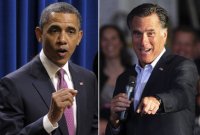
Governor Mitt Romney and President Barack Obama are neck-in-neck in the polls and pounding the pavement in battleground states like Ohio and Virginia, Hurricane Sandy notwithstanding. But with so much negativity – some say far more than in elections past – how will the non-partisan and undecided voter make a choice come November 6? It’s probably going to end up, for most, to be a vote of conscience.

Voting your conscience may not be easy, but it’s often the only way to feel as if you made a difference and chose the candidate that best serves your values and interests. Sometimes, you have to say, “What’s in it for me?”

Unfortunately, it’s hard to say how any individual might benefit from this election especially since most of the campaigning has been about one candidate saying why the other is bad, rather than telling us what he or she is going to do to once in office. Individual benefit will be based on a kind of trickle-down effect depending on which way the national election goes and how much change there is likely to be at the congressional level.

Once again, as noted previously in this column, it’s the local elections to which people should be giving more attention. It’s at the ground level that things actually get done in a way that directly affects the voter, regardless of how much we’d like to believe otherwise.

When weighing the issues of economic distress and job scarcity, the average person only has his or her experiences to call upon for reference. Discussing these problems on a national scale is almost pointless since the changes needed to affect these issues have to occur at the local level. That leaves the voter even more stymied.

Once more, we’re back to voting with our conscience. If you’re undecided, look at the following characteristics of the candidates – whether local or national.

First, is he or she right for the job? Do they give of the ‘air’ of a president or whatever position they intend to hold? Take the time to surf the internet and review video and read speeches they’ve given before and after becoming a candidate for office. Try to see around the fluff and the ‘marketing’ done to promote the candidate and look for threads of the person underneath. Do they seem genuine? Do you think they believe what they’re telling the people?

Do they share your personal values? I’ve long said that it’s simply a bad idea to choose a presidential candidate based on their religious beliefs or because of their take on subjects like abortion. But, when left with a tied score on the business issues, moral issues have to be taken into consideration, so you have little options at that point.

Does the candidate seem to flip-flop, only saying what his people are telling him to say or what he thinks the voters want to hear? Or, do you believe he holds to a set of ideals? This is probably the most important part of choosing a candidate in any election. Most politicians say what they expect the constituents want to hear. If he or she is a republican, conservative ideology comes across more prominently, and the same with being a democrat; the liberal voice will be louder.

But in order to capture a broader audience, the candidates will “pad” their ideology with sprinklings of the other side, or implied agreement with the opposition in small, virtually insignificant ways. This makes them seem more bi-partisan in an attempt to interest the other side.

Voting your conscience is much harder than voting based in facts and issue stance. Try to do your homework before you go to the polls. Choose the candidate you can feel good about supporting throughout their term and remember, no matter who you vote for, get out and vote.

Voters can’t handle the truth

In Business, Economy, Education, Local News, Media, National News, Opinion, Politics, State News, Uncategorized on October 9, 2012 at 9:03 am

Deer In Headlines

By Gery L. Deer

Politicians distort the truth and exaggerate facts to elicit effect from an audience. All of them do it. The idea of any candidate being open and honest is not only unbelievable, but would likely bring the American political system to a dead stop.

No one is going to be completely honest and the determination of whether a politician is lying is in the eye of the beholder. Unfortunately die-hard fans of a particular candidate will insist that it’s only the opponent who lies. The hard, cold truth is, they all “lie.”

In the Star Wars film series, mentor Obi Wan Kenobi warns Luke Skywalker that many of the truths we cling to in life depend greatly on our point of view. Nowhere is that a more appropriate statement than in the political ring.

Often, distortion of the facts is an effort to cover uncertainty or a lack of knowledge. No one could possibly provide an answer to every problem and, rather than appear weak or uninformed, a candidate has prepared a neutral response to counter his or her lack of a solution. Voters should learn to read between the lines and determine whether this behavior is a character flaw or the nature of the job.

Sometimes a candidate, in a moment of either clarity or misstep, will betray his or her thoughts. Mitt Romney’s off-the-cuff remarks about the 47-percent of people who will vote for Obama because of the president’s predilection for endorsing entitlement programs is a perfect example of what can happen when a candidate’s true thoughts come to light.

Political candidates are under intense, constant scrutiny. Every word, every step, every mispronounced name can affect their overall image and subsequent performance in polling. Even misspeaking can be inferred as a lie and bring a campaign crashing down at any moment.

No matter how carefully words and phrases are chosen, however, they can still be used out of context to paint a candidate with a single brush stroke. Generally referred to as “sound bites,” the act of hacking up entire speeches into 30-second snippets has become far too common and can lead the listening public to the wrong conclusions.

Along the same concept, political advertising should be focused on informing the public about the intentions of the candidate. Instead, the point of these messages is to tear down the other guy, discrediting the opposition to the point of exclusion. Millions of dollars are poured into these ads just so each campaign can go back and forth on television, radio and on the Internet, just trying to counter the latest round of jabs from the other side.

Print or broadcast, generally the ads follow a simple pattern. One candidate takes a stab at the opponent’s position on something which is then answered from the other side with an accusation of lying about it, followed by some kind of weak rebuttal. But who is actually lying? Once again, that may depend on a point of view.

Developing and keeping on track a strong platform is tough for a political operative in today’s 2-minute news cycle. Since the American voter tends to go on hearsay and emotional preference rather than fact, it’s nearly impossible to maintain a consistent message. Much of the time is spent on damage control, like the president is doing now after his lackluster performance in the first debate.

Still, whether or not a politician lies is almost irrelevant to the modern voter. Americans seem to be more interested in trivial issues than the larger picture, proven by how easily they are distracted from more important problems by garbage issues. One man’s garbage, however, is another man’s treasure; so once again, it’s back to the pesky point of view.

One thing is for certain – all politicians lie. Voters just need to come to terms with how much of that really matters and learn how to separate the facts from the rhetoric.


Buy Local, Should Be More Than A Slogan

In Business, Economy, Education, Health, Jobs, Local News, Opinion, Senior Lifestyle, sociology, Uncategorized on September 26, 2012 at 8:01 am

DEER IN HEADLINES

By Gery L. Deer

We hear the phrase constantly – buy local. But regardless of how much encouragement comes from public service announcements, most people still buy what they need from large, corporate chain stores. From toilet paper to breakfast cereal, local markets have always had a difficult time competing with companies like Walmart, Target and Meijer.

Since the start of the recession, local chambers of commerce and other civic groups have tried to get people to switch from big box buying to shopping at the locally-owned retailer. As money belts tightened, those messages were falling on more deaf ears than ever before.

Money in a particular community is a bit like blood in a body, it has to circulate to do any good. Money moves around a region from business to consumer and back, over and over again. That’s how the economic system works. Buying from out-of-town based companies moves the money out of the area. Buying local keeps more (not all) of the money in the community.

Many argue that they simply can’t afford to shop locally because of significantly higher prices. Others complain that local companies lack the product selection or expertise of larger merchants. A family struggling to make ends meet and feed a couple of kids can’t pay $4 for a box of breakfast cereal at a local vendor, when Walmart has it for $2. For them, every dollar counts and the extra five minutes they drive is worth the time and gas if it means there is significant savings at the bottom of the sales receipt.

Prices are lower at chain stores because of mass buying and selling. For example, for every bottle of ketchup a small grocery store sells, companies like Walmart sell hundreds of thousands more. It’s a simple matter of volume. A small business lacks the massive reach and bulk buying power afforded to big companies and therefore has to pay more for products, passing that higher price along to customers at the cash register.

Some small shops lower prices on one aisle, like on every-day necessities such as bread, cereal, soap, and so on, while keeping prices higher on extravagancies to counter the difference. Many already offer a generic alternative to most products or a store brand, the quality of which is often superior to the national offerings.

In the end, it’s up to the consumer to pay attention and do a little homework to see what’s out there and comparison shop. Most large, chain stores will price match nowadays. But nothing is more infuriating than to see someone in Walmart trying for a price match with a coupon from a local store offering a cheaper alternative. Why not just shop at the local retailer and get the deal they’re offering while keeping the money in the community?

Of course, it could be easily argued that big-box stores should be welcomed rather than refuted since they employ more people and pay more taxes to small communities. Valid points of course, but what happens when corporate decides to move the store or shut it down? The collateral damage can be economically devastating.

It should be emphasized also that this problem is not limited to groceries and sundries. Service companies like law offices, insurance providers, carpet layers and even accountants struggle to retain clients, even after years of service. These kinds of businesses are based on trust, relationships and personal referrals, concepts that may have escaped the younger generations who opt, instead, for the online approach or more “progressive” options.

Buying local needs to be more than just a slogan offered up by politicians in tough economic times. Government can’t and won’t save the local economy. It requires a joint effort between consumers and businesses. Consumers need to tell local retailers what they want; Retailers, listen to customers and take action to keep them.

Buying local strengthens a community’s economy against downturn and protects jobs. So, take your next shopping trip to the local grocer and phone your nearest insurance agent for a competitive quote. You might be surprised at what you learn.

Gery L. Deer is an independent columnist and WDTN-TV2, Living Dayton business contributor. More at http://www.gerydeer.com


Sponsored By: 

Guerrilla Marketing, 4th edition: Easy and Inexpensive Strategies for Making Big Profits from Your Small Business

TWilly’s FrozenYogurt Café Offers An Adventure

In Business, Children and Family, Economy, Entertainment, Food, National News, Senior Lifestyle, State News, Uncategorized on September 21, 2012 at 7:00 am

T-Willy’s Yogurt Emporium owner, Wendy Preiser

WASHINGTON TWP. / CENTERVILLE – If you think you know what a Velvet Elvis might be, you could be wrong. Instead of a framed piece of retro artwork, imagine swirls of chocolate, soft-serve yogurt, add two slices of flamed bananas, a squirt of peanut butter topping and a generous sprinkling of maple sugar potato chips. How’s that for something “the King” might have had on his table?

That’s just a taste of what is available at T-Willy’s Yogurt Emporium, the newest tenant of Washington Square Shopping Center in Centerville. On Saturday, September 29, T-Willy’s invites everyone to join them in celebrating a brand-new way of enjoying frozen soft-served yogurt during a special, grand opening event.

Beginning with the official ribbon cutting for invited guests at 10 a.m., T-Willy’s will open from 11 a.m. until 10 p.m. for an exciting day of door prizes, samplers and much more. According to shop owner, Wendy Preiser, T-Willy’s Yogurt Emporium is not just another soft serve yogurt café. It’s also about exploring your creative, adventurous side.

“Our store is about trying something new,” Preiser says. “There will always be something to intrigue and inspire our customers.”

Inspiration can certainly be found everywhere in the shop, from the adventurous mural on the wall to the gigantic, tree-trunk toppings table. There’s even an antique, manual typewriter, complete with post cards, all set to take down your special story. If the atmosphere isn’t enough, the myriad of yogurt and sorbet flavors is sure to turn a head or two.

T-Willy’s offers a rotating menu of specially blended frozen yogurt flavors including Blueberry Burst, New York Cheesecake, White Chocolate Macadamia and Tart Cranberry Hibiscus. Of course chocolate and vanilla are available for those who want an old favorite. All of the yogurt and toppings are sold by the ounce, in cups.   Mixing and matching is highly encouraged. There are always options that have no sugar added and most are gluten free.

Originally from Chicago, Preiser completed her undergraduate education at Northwestern University and received a Master of Business Administration from the Kellogg School of Management. After years working in new product development with food companies like Sara Lee Bakery, Nestle Chocolate and Birds Eye Foods, Preiser set out in her new business venture with the knowledge that today’s families are always on the lookout for great-tasting, healthier choices.

T-Willy’s frozen soft serve offers one of the highest counts of live and active yogurt cultures. The average 4-ounce serving contains less than 0.5 grams of dairy butter fat. “Yogurt is such a great basis because it is healthy, tasty and fun,” Preiser says. “My philosophy on food is that we should pay more attention to what we put in our bodies and less about what we leave out.  If we eat consciously, the occasional treat can be good for us physically and especially emotionally.”

T-Willy’s Frozen Yogurt Emporium is located at 6085 Far Hills Ave., near Boston Stoker and just across the parking lot from Dorothy Lane Market. To learn more about T-Willy’s Yogurt Emporium, including the incredible tale of T-Willy, go online to www.twillysyogurt.com or call 937-567-7818. T-Willy’s is open daily during the summer from 11 a.m. until 10 p.m. and until 8 p.m. from October through April.

Fifty Years and Still Trucking

In Business, Economy, Education, Jobs, Local News, National News, Opinion, psychology, Senior Lifestyle, State News, Uncategorized on September 19, 2012 at 7:07 am

Deer In Headlines

By Gery L. Deer

Over the last few years many small businesses fell apart as a result of the recession. But one family business in Jamestown is celebrating a half-century of service with no signs of slowing down anytime soon.

In the summer of 1962 my father, Gary Deer, Sr., was working the machine shops at the great NCR, laying concrete on his off hours and helping my mother, Lois, raise my brother Gary, Jr., and sister Cathy (I wasn’t quite on anyone’s radar just yet). Money was always tight, but a toolbox full of skills always seemed to provide him with ways to pay the bills, however unconventional his blend of work.

It was around that time, armed only a truck and a scoop shovel, he was hired to haul a load of sawdust from Indiana to a greenhouse in Fairborn. Sawdust was used for landscaping and mixed with potting soil and mulch for bagging trees and other plants. Never one to turn down work, he agreed and that first load of wood shavings and dust led to a job that would support his family for many years to come.

Gary Deer and Son was the name he first gave his business, which included the cement work at the time. Fifty years later, there’s an “s” on the end, but it’s still very much in business and keeping my father and brother busy.

I grew up in the seat of an International Harvester grain truck. It was a beast of a vehicle, nicknamed the “binder” because of its lack power steering, a hand-actuated dump bed with the lever positioned outside and behind the cab and shaky, wooden sideboards. The truck held somewhere around 7,500 pounds of sawdust and always seemed to be in demand by dairies, horse stables and livestock farms.

One of dad’s earliest customers was Young’s Dairy in Yellow Springs. Even today, the popular tourist spot uses the clean, dry sawdust Dad supplies in the barns and around the livestock areas.

Over the last half-century, it’s been a common sight along US 35 to see one of Dad’s signature red (and for a time blue) trucks tarped down in red, white and blue rumbling down the highway. But you can’t imagine what it was like growing up and trying to explain your family’s business to teachers and other kids (particularly those from the city).

While taking a business class at Greeneview High School during my freshman year, we were asked to write a report about a chosen occupation we might pursue. Having no clue yet as to what I wanted to be when I grew up, I decided to write about Dad’s business – assuming I’d eventually be part of the business.

In the essay, I explained that sawdust was a major commodity within the agricultural, livestock and lumber industries. It’s a by-product of the wood finishing process in pallet shops and lumber yards, essentially vacuumed from beneath the saw tables and piped into a pile or building for storage. The mill can then sell off the sawdust at a premium, making money from what was basically waste material.

I went on to explain how grain trucks, semi trailers and wagons are used to then transport the material to dairies and stables to be resold as bedding. People make money by reselling the material, something my father and brother have now been doing for decades. The irony here was that the teacher gave me a “D,” not for my writing ability, but instead citing that sawdust hauling was, “not a viable career.”

Having effectively insulted my family business and our livelihood, the teacher was strongly encouraged by a higher power to change my grade and I wonder what he’d say today? That was more than a quarter-century ago and, though many businesses have dried up and blown away, Dad’s is still going, there’s even a website, garydeerandsons.com.

But I can’t help thinking sometimes about how things worked out, how random that first call was back in 1962 and where it led for my parents. It taught me that sometimes the simplest of circumstances hold opportunities you can’t even yet imagine. Mom and Dad created and managed the business on their own, with no help from anyone, and we are all forever grateful.

People Treat You Like The Clothes You Wear

In Business, Economy, Entertainment, Media, National News, Opinion, Politics, psychology, sociology, television, Uncategorized on September 11, 2012 at 9:59 am

DEER IN HEADLINES

By Gery L. Deer

How do you think people see You?

From the earliest of ages most people are taught not to judge the proverbial book by its cover. But, contrary to that advice, we all tend to treat people like the clothes they wear, even though we only see what they show us.

Each of us is judged every day by our friends, employers, customers, even those on the street who we don’t know. We are judged because of height, weight, hair color, skin color, clothes, shoes, the car we drive, what kind of dog we have and, especially during this election season, our political views.

Sometimes these assessments are socially motivated. If you are active in a particular political, social or economic circle, your sociopolitical survival may dependent solely on the perceptions of others. Your clothing, how you walk, how you speak and even the color of your eyes can affect whether people accept you into their clique.

Still, while most of us avoid calling such critical attention to ourselves, some people crave it or are naturally argumentative, choosing instead to invite a challenge to their choices. When you put a bumper sticker on your car or dye your hair blue, for example, the purpose for doing so couldn’t be clearer – you are trying to get a reaction from people.

Naturally, someone is reading this saying, “No, that’s wrong! I’m exercising my freedom of expression.” A valid point; but we express things so that people will hear us, otherwise why bother? So again, whatever the motivation, you’re seeking the attention and someone will be judging you for it.

Now, in an era of high-tech surveillance, even more people are watching and judging us. For those who actually thrive on such attention, reality television has set an unprecedented tone of exposing the worst in people.

Exposure seems to be the operative word here, with TV shows that exploit virtually anyone all in the name of ratings. Cable television, once dedicated to entertainment and news, now specializes in parading before us a sideshow that would have embarrassed even the likes of P.T. Barnum.

From little people and hyper-religious families with dozens of children to hog-hunting hill folk and spray-tanned uber-rich housewives, producers jockey for best train wreck for prime time. Why? Networks are raking in the advertising cash by feeding on the voyeuristic, excessively judgmental nature of the American public.

People think it’s fun to watch and criticize those who have willingly thrown themselves out there to be fed upon by the vultures in the viewing audience. All of this comes from our inherent tendency towards prejudice and the underlying critical nature of humanity.

Something worth mentioning is that as I was writing this, I realized I had used the word “judgment” or “judge” more than I normally would in one essay. Reviewing several online thesauruses, I discovered there were no direct synonyms for the word “judgment” when it applies to forming an opinion or condemning someone based on personal opinion. It was the only word that fit. How’s that for a narrow-minded reality?

In the end we’re all judged and we all do the same to others. We might not act on those opinions, but we certainly have them. It’s a fact of society, and always has been. A person in a business suit will likely be treated differently than someone in dirty, torn jeans and a t-shirt. As inaccurate as it might be sometimes, people treat you like the clothes you wear.

Remember also, that all of this depends on your point of view, like the car missing two hubcaps on one side. If the observer is looking at the side of the car where the wheels are still covered, what difference does it make?


Of Stuffed Shirts and Empty Chairs

In Business, Economy, Education, Jobs, Local News, National News, Opinion, Politics, sociology, State News, Uncategorized on September 8, 2012 at 8:49 am

DEER IN HEADLINES

By Gery L. Deer

Americans have a tough decision to make in November: re-elect a president with failed policies and lackluster performance or replace him with an arrogant, out-of-touch businessman who seems to hate the poor and elderly (at least that’s how Democrats portray him).

President Obama has forced the country further into debt and is still nursing an unemployment rate of more than 8-percent. His first election campaign was built on the concept of “hope and change,” but his time in office has resulted in neither.

Mudslinging ad campaigns have done nothing to inform the public of what either of these men intend to do about the economy, jobs, healthcare or any other issue. And, for all the glitz, glitter and even Hollywood infiltration at the Republican National Convention, it would be hard to argue that it was anything above unremarkable.

Mitt Romney’s predictable – no, make that inevitable – nomination by the GOP delegates held all the drama of getting part way through a mediocre novel and having someone spoil the ending. Nearly a week later, the only thing still being talked about from the event is the nearly unintelligible ramblings of actor Clint Eastwood to an empty chair.

Ridiculously long and pointless, this scene made no one’s day and served only to confuse viewers and insult senior Americans. Former Secretary of State Condoleezza Rice helped to reverse the “Eastwood” effect, attracting both the African American and female viewer and adding class and intelligence to the stage,

Unless the Republicans can really show how he intends to change things for the better, Mitt Romney is going to have a difficult time showing Obama the door come January.  People simply aren’t responding to the lack of an obvious platform coupled with his image as a stuffed shirt corporate type who registers a big fat zero on the personality scale. Add to that the silver spoon he’s had in his mouth his entire life and it’s a combination that leaves a bad impression on struggling, middle-class voters.

Even though the Obama administration has failed to deliver most of what was promised in 2008, Conservatives seem to lack inspiration on any level and just can’t seem to get out of their own way. Republican Kevin Yoder’s skinny dipping adventure into the Sea of Galilee then trumped by Republican senate candidate Todd Akin’s offensively ignorant statements regarding rape certainly stole Mitt Romney’s spotlight for a few weeks this summer.

Unfortunately for the RNC, perception is everything in a race like this – especially since no one seems to be paying any attention to the facts. Mitt Romney comes across as the personification of the “Jones” that everyone living in a snooty, upscale neighborhood is trying to keep up with. He’s completely unaware that the people down the street are losing their home to foreclosure or that the guy next door just lost his job because his company shipped the work to China. Romney just wants to have his two Cadillacs in the garage and make sure his boat is ready for a long weekend in the Hamptons.

The main difference between the candidates is, not surprisingly, ideological. Obama is the guy who wants to care about everyone but keep his job. He still wants to hold on to his own wealth of millions – yes, he’s a millionaire just like Romney, but he wants to appear like he’s not. People think he’s a nice guy and respect his efforts while still admonishing his failures. But swing voters seem to be uncertain as to whether he should get four more years to keep trying.

As the Democratic National Convention gets underway, it will be interesting to see how the President counters one resonating quote from Mitt Romney during the RNC: “You know something’s wrong with the job [Obama’s] doing as president when the best feeling you had was the day you voted for him.” The President is still polling better that Romney in many regions, including Ohio, but poll numbers are not election returns and, right now, it’s anybody’s race.

Greene County Wild West Artists Host 10th Annual Event in Greenville

In Children and Family, Economy, Entertainment, Local News, National News, Senior Lifestyle, television, Uncategorized on July 9, 2012 at 8:16 pm

GREENVILLE, OH – Wild West performers headlining the 10th Annual Annie Oakley Western Arts Showcase are gearing up for five live performances during Annie Oakley Days in the upper level of the Darke County Fairground Coliseum. Whip artists, trick ropers and other Wild West art experts who have appeared shows like America’s Got Talent and The Bonnie Hunt Show will be on hand to perform at 7 p.m. on Friday July 27 at 7 p.m. on Saturday the 28th 1 p.m. and 6 p.m. with two more shows at Noon and 2 p.m. on Sunday the 29th. Each show is free with regular admission.

The event started out as a gathering of whip crackers in May of 2002 at the family farm of the founder and producer of the event, nationally known writer, entertainer Gery L. Deer. Deer expanded the event a year later to include trick roping, knife throwing and much more and moved it to the grounds of Annie Oakley Days Festival. Participants have the opportunity to learn from some of the best names in the business while sharing their skills to entertain the public.

Deer is an award-winning whip artist who has spent a quarter century performing, competing and teaching whip artistry. “We’re happy to be back at Annie Oakley Days for our tenth year of precision whip artistry, knife throwing and fancy trick roping,” says Deer, who is also the managing director of The Whip Artistry Studio, bullwhip training center inJamestown,Ohio. “I’m grateful that we have the opportunity to show the public genuine Wild West arts that require talent and skill, not to mention years of practice.”

Each showcase will also feature champion knife thrower Kirk Bass, of Xenia, who teams up with wife Melodee in the suspenseful Bass Blades impalement show. Bass is a certified thrown weapons instructor with the International Knife Throwers Hall of Fame and the assistant director for the Western Arts Showcase events.

According to Deer, the best show to see will be on Saturday evening. “We pull out all the stops on Saturday, with Wild West arts exhibitions during the afternoon performance and a longer, variety show in the evening.” For the 9th year at the festival, Saturday night’s extended program will be hosted by The Brothers & Co. Entertainers music and variety group fromJamestown,Ohio. Often compared to The Statler Brothers or Oak Ridge Boys, the group offers audiences a brilliant combination of four-part vocals and Vaudeville-style comedy and variety routines.

All performances are family friendly. For more information go online to http://www.ohiowesternarts.org or call (937) 902-4857.

Computer Troubleshooters To Hold Public Grand Opening July 14

In Business, Economy, Jobs, Local News, Media, National News, Science, Senior Lifestyle, Technology, Uncategorized on July 2, 2012 at 10:32 pm

BEAVERCREEK, OH – Computer Troubleshooters of Beavercreek (CTB) is celebrating one year of business with a public grand opening of its new office at 1255 N. Fairfield Rd., Suite 103. From 11 AM until 3 PM on Saturday, July 14, the public is invited to visit the new facility and register to win a desktop printer.

Part of an international network of independently owned franchises, Computer Troubleshooters provides complete information technology (IT) support for residential and commercial clients. In addition to the new location, the company is celebrating one year in business.

CTB President Cliff Brust is excited about the growth of his company. “We’ve been fortunate to find success in the Beavercreek area and we appreciate the support of the business community to allow us to continue to serve them,” he says.

“We have also focused on our managed services and cloud computing for business and medical documentation to provide our clients with the most advanced technology and highest quality support available to them.”

Brust will appear on WRGT TV’s, Fox 45 in the Morning, Monday, July 9th at 8:15AM to talk about common mistakes made by both commercial and personal computer users. For more information contact Cliff or Genevieve Brust by calling (937) 458-2000 or go online to www.ctbeavercreek.com.

A Half-Century of Walmart. Economic Savior or Evil Empire?

In Business, Economy, Entertainment, Jobs, Local News, National News, Opinion, Politics, Senior Lifestyle, sociology, Uncategorized on July 2, 2012 at 10:25 pm

Singer, songwriter Jessica Frech’s satirical music video, “People of Walmart” has attracted more than 6 million viewers, and probably offended just as many. (Jessica is in the upper left square of this screen shot from her video.)

By Gery L. Deer

Deer In Headlines

Most people don’t realize that Walmart is the world’s largest private employer. According to a recent article in Time magazine’s business section, only the U.S. Department of Defense andChina’s People’s Liberation Army employ more people than Sam Walton’s massive dynasty of discount. On July 2, Walmart turned the half-century mark of rolling back prices and shaking up the competition.

On that date in 1962, Sam opened the very first Walmart store inRogers,Arkansas. Fifty years and four-thousand, three-hundred-ninety-nine stores later, the chain employs more than 2.1 million people and sets the standard by which other budget retailers are measured.

Along with those who appreciate Walmart’s contributions toAmerica’s economy, there are equally as many who regard it as an evil, impersonal, corporate monster. And they may be correct, after all, it would have been impossible to become the discount retail leader without doing some damage to the competition and holding fast to as much of its own money as possible along the way to get there.

Impenetrable by unions and continually slammed by the liberal left, the bargain behemoth continues to rake in the cash, bringing in a whopping $443 billion last year. Revenue like that must please the company’s shareholders, who, ironically, are probably the last people to set foot in one of its stores (at least while someone’s looking).

But what is Walmart, really? Is it evil? Or, is this just the price that has to be paid for corporate efficiency and unprecedented business growth? Do small towns really dry up and blow away when Walmart moves in?

The pros and cons of Walmart are probably more a matter of perspective than fact. Walmart shoppers are hard to categorize, but the common image is the middle to lower class, interested in getting the lowest price possible on toilet paper while caring nothing about the environment in which it is sold to them.

Well if you believe singer, songwriter Jessica Frech’s point of view in her satirical YouTube music video, People of Walmart, shoppers simply cannot be categorized. They come in every shape, size, color and creed, from every socioeconomic background and lifestyle. They come at every hour of the day and night in search of, well, a great deal on whatever it is they need.

It’s worth mentioning also that many Wallyworlders found Jessica’s music video terrifically offensive because it uses actual photos of Walmart shoppers in their native habitat. Even so, People of Walmart has been watched by more than 6.1 million viewers. People of Walmart 2, released last November, already has more than 1.6 million views. Apparently people weren’t that offended.

The economic effects by Walmart on local communities are as mixed as its clientele, probably more so than people generally know. According to a 2009 study, most negatively affected by the big box giant are those mom-and-pop retailers selling products in direct competition, such as small, higher-priced grocery, clothing and dry-goods stores.

The research also indicated that retailers offering products and services not available from Walmart tend to do better if in close proximity because people are already prepared to spend the money.

As for Walmart’s overall effect on and property values, new research released by the National Bureau of Economic Research startled the company’s critics. A 2001-2006 study of 159 new Walmart stores found that homes within a half-mile of each actually increased in value as much as 3-percent. Local tax revenue also increases substantially.

Like it or not, Walmart is here to stay. Anytime a business or an individual is successful, they will always have critics and even enemies. Fifty years ago, it’s doubtful that Sam Walton could have imagined what his small shop would eventually become.

Today his company provides jobs, affordable food and clothing, and the most unusually diverse array of patrons any retailer could imagine. So, happy birthday Walmart! Keep the rollbacks coming and, please, could someone fix the wheel on that one shopping cart that just won’t roll when you’re in a hurry?