Local News & Commentary Since 1890.

Posts Tagged ‘president’

Park National Bank names Pat Rastatter Market President

In Business, Local News, Uncategorized on January 22, 2026 at 2:30 pm

NEWARK, Ohio – January 21, 2026. Park National Bank (Park) announced today that Pat Rastatter has been named Market President of the bank’s West Region. He steps into the role previously held by John Brown, who was recently named Chief Retail Banking Officer and Market President of the bank’s Central Region.

“Pat has served our West Region since 2005 and provides exceptional expertise and strong, reliable leadership,” said Park CEO and President Matt Miller. “His dedication to serving customers and communities embodies the values that define Park. I’m confident he will continue to deliver exceptional service and further strengthen our impact.”
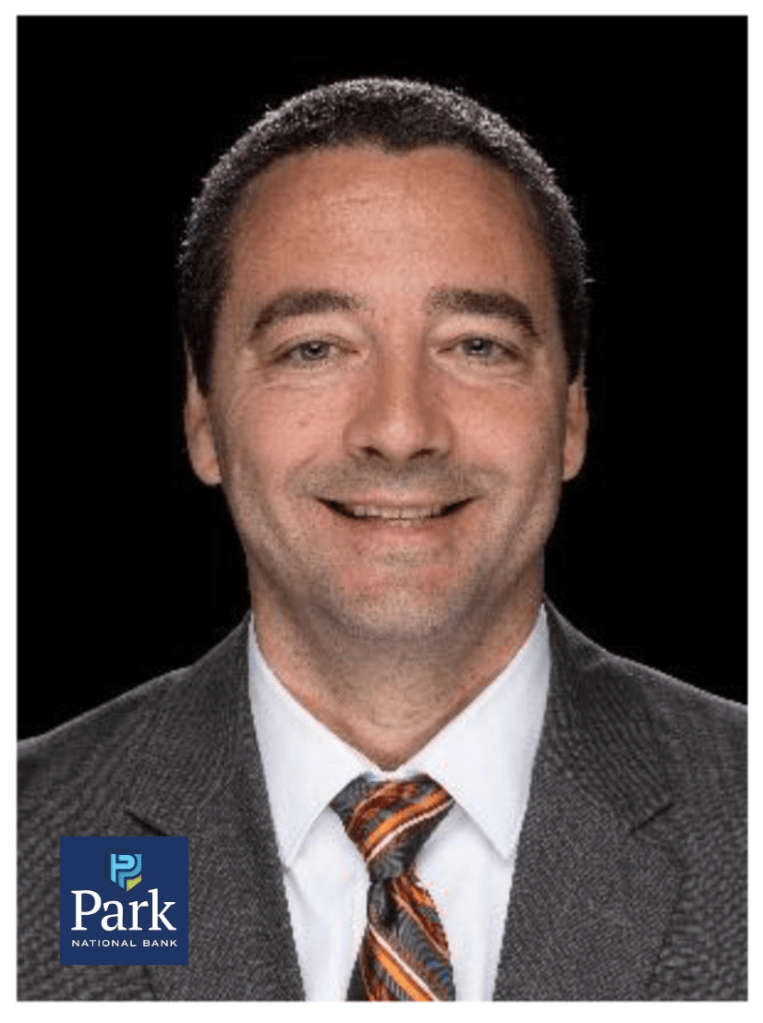
Pat Rastatter has been named Market President of Park National Bank’s West Region

Rastatter joined Park in 2005 and has held key roles on the bank’s commercial lending teams, including serving as senior lender for the West Region. In addition to his new responsibilities, he will continue to lead the West Region’s commercial lending team.

“I’m honored to step into the market president role,” Rastatter said. “At Park, our strength comes from the relationships we build with our customers, communities and each other. My focus is on empowering our teams to provide personalized solutions and exceptional care, so we remain the trusted financial partner our neighbors count on.”

Rastatter is actively engaged in Clark County, serving as an elder at Fellowship Christian Church and on the boards of the Friends of the Rocking Horse and the Greater Springfield Partnership. He also previously served on the boards of the Small Business Development Center, Clark State College Foundation and Children’s Rescue Center.

Rastatter earned a bachelor’s degree in finance from Wright State University. He’s also a graduate of the Graduate School of Banking in Madison, WI, and received a Certificate of Executive Leadership from the University of Wisconsin-Madison.

Headquartered in Newark, Ohio, Park National Bank has $9.9 billion in total assets (as of September 30, 2025). Founded in 1908, Park has offices and ATMs in Ohio, Kentucky, and the Carolinas. The bank consistently earns high marks and awards for its service, community leadership, and financial performance. For further information, contact Michelle Hamilton, 740-349-6014, media@parknationalbank.com

Submitted Content

Absolute Power

In history, Opinion, Politics, psychology, Uncategorized, World News on March 26, 2025 at 1:58 pm

Deer In Headlines II

By Gery Deer

Power, like money, is nothing if you have enough, but everything if you don’t. But what is it? Who has it, and what are those without it supposed to do when faced off by those who do? I’m not sure I’m smart enough to answer any of those questions. If you’ll indulge me, however, I’ll make an attempt to do so and put it into a contemporary context. First, a little history – the kind we should learn from or be doomed to repeat.

It was 1887 England. In a series of letters to Bishop Creighton concerning the issue of writing history about the Inquisition, John Dalberg-Acton, the 1st Baron Acton, or better known as Lord Acton, wrote, “Power tends to corrupt, and absolute power corrupts absolutely.” Most people are familiar with the quote, but few know the preceding passage, which gives it perspective.

“I cannot accept your canon that we are to judge Pope and King unlike other men, with a favourable presumption that they did no wrong,” Acton wrote. “If there is any presumption it is the other way against holders of power, increasing as the power increases. Historic responsibility has to make up for the want of legal responsibility.”

That’s some pretty fancy, but important language. Put more simply, Lord Acton was saying that the same moral standards should apply to everyone, including political and religious leaders. Throughout history, kings and popes were permitted, essentially, to wield their authority unchecked.

America’s Founding Fathers shared the same concern. So much so that when they created a constitution for their new country, coincidentally ratified the same year as Acton’s historic correspondence, it established three separate but equal branches of government to prevent such authoritarian power.

Power is a dangerous thing, especially in the hands of two kinds of people – those who want it, and those who want to keep it from others. The first is driven by greed, the second by fear. Lord Acton was commenting on accountability, something the Constitution ensures by setting equal the Executive, Legislative, and Judicial branches of government. Should some power-hungry tyrant manage to occupy the White House, the other branches would be able to keep him or her in check.

If that individual managed to wield enough control over two of the three branches, the third would be able to mitigate some of the potential danger. But if all three branches were heavily influenced, even manipulated by one individual, then we have a problem. That lands our country in Lord Acton’s absolute power corrupting absolutely territory, and on a much larger scale.

Let’s not forget the second kind of power broker (to borrow a term from one of my favorite authors, Robert A. Caro), the kind who want power out of fear. This individual, or group, is afraid that someone else will gain the power to control them or do things they don’t like.

These people tend to be all-or-nothing types. In other words, if they can’t have it, they don’t want anyone else to because they fear it will weaken their position. Those who are afraid of minority advancement fit this category. 

But what if you’re on the receiving end of all this – the powerless. Powerless people are led to believe, by a government or other authoritative body, that they don’t deserve power. Classism, racism, ageism, and most other “isms” are examples of one group trying to maintain power over another. To quote a great role model of the late 1980s, Ferris Bueller, “Isms, in my opinion, are not good. A person should not believe in an -ism, he should believe in himself.”

When the people lose the power over government, when their elected representatives act in blind service to one policy or individual rather than the best interest of their constituents, when power begins to corrupt absolutely, freedom no longer exists. The trouble is, corrupted power often goes unrecognized until it’s too late.

Corruption dons the cloak of misdirection, intended to fool those who are unwilling to see the danger. Try to remember that power can also be a good thing that benefits all instead of one person or ideology. Unfortunately, that doesn’t make for very good reality television, now does it?

Harry S. Truman, the Accidental President

In Education, Media, National News, Opinion, Politics, Uncategorized on January 29, 2013 at 10:03 am

Deer In Headlines

By Gery L. Deer

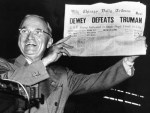
Probably the most famous photo of Truman. (Photo by W. Eugene Smith//Time Life Pictures/Getty Images)

Probably the most famous photo of Truman. (Photo by W. Eugene Smith//Time Life Pictures/Getty Images)

I’ve always been interested in politics and, given how public I am in some ways it’s not unexpected to have people come up to me and ask why I don’t run for some public office. Given my work and family commitments, I don’t really see that as a viable option. If I did run, though, I know where my inspiration would come from.

While everyone else is quoting Lincoln and idolizing Thomas Jefferson, I would probably try my hardest to emulate Harry Truman. My generation probably doesn’t know much about our 33rd president. I know I didn’t until I watched a documentary about him recently. Then I did some research of my own.

Truman is featured in many pages of America’s history book but is most noted as the man who made the final decision to drop the atomic bombs on Japan, forcing their surrender to end World War II. Upon the death of President Franklin Roosevelt, Truman was sworn in on April 12, 1945, but the presidency was a job he never had any ambition to hold.

Harry was a man of short stature (5-foot, 8-inches in height) but big accomplishments. He didn’t even enter politics until he was 33 years old and, by that time, he had, in his own words, “failed at everything he tried.” As a young boy, he dreamed of becoming a concert pianist, practicing for hours on end. His mother was a college graduate, a music teacher who, to some, probably seemed a bit over protective of her small, bespectacled son.

Socially awkward, young Harry rarely roughhoused or played sports like the other boys his age and he was thoroughly terrified of girls. That is, until he summoned up the courage to talk to Elizabeth “Bess” Wallace, a girl he’d virtually grown up with and finally married many years later after numerous rejections to his courting.

His father held many jobs, finally tending his mother-in-law’s farm before being severely injured and incapacitated. Harry was forced to leave his job as a bank clerk and forget his dream of college to work the farm and help pay off the family’s mounting debt. Later, he joined the army during World War I, where he became an officer. After the war, he and an army buddy opened a haberdashery which later went bankrupt. But, as usual, Truman didn’t give up.

Shortly afterwards, Truman ran for the office of district judge, essentially a county commissioner, in Jackson County, Missouri. Though he weathered his share of scandal in the corrupt, good-old-boy system of Kansas City, his straight-forward honesty and no-nonsense demeanor seemed to resonate and he eventually won a seat for the Democratic Party in the U.S. Senate in 1934. His rise to the second-highest seat in the government came almost by accident and with great trepidation by many in the party.

When Roosevelt died, it was immediately apparent that Truman’s White House would be run quite differently. His “regular guy” persona was in stark contrast and a welcome change from FDR’s upper-class style. His impoverished upbringing probably had something to do with his detest of wasteful spending and Truman became known as the chief of all budget hawks. At one point, he even had the entire White House gutted and refurbished to protect it from further deterioration while also saving public money on excessive repair.

In the end, however, the simple clerk from Independence, Missouri proved to be much more than the accidental president. He had managed to create foreign policies that are still the basis of modern diplomacy, he was one of the first presidents to work towards equality in the workplace for African Americans and he helped restructure the country’s economy after World War II.

I could go on and on about this man, but you should look him up on your own. Harry S. Truman’s is a story of great struggle, fortitude and achievement from a man who many considered a lifetime failure with no focus or ambition. With today’s staggering level of corruption and waste in government, America certainly could use another, “Give ‘Em Hell Harry.”