Local News & Commentary Since 1890.

Posts Tagged ‘Obama’

Imagination and Experience are the Best Teachers

In Business, Children and Family, Education, Jobs, Opinion, psychology, Science, sociology on August 17, 2012 at 9:33 am

By Gery L. Deer

DEER IN HEADLINES

Albert Einstein is said to have commented, “Imagination is more important than knowledge.” As much as I admire the scientist and his great intellect and insight, I’d have to alter his statement, from my own experience, to read, “Imagination is equally important to knowledge.”

During most of my educational experience, imagination was frowned upon. Teachers wanted me to use the knowledge I gained from my books and their instruction and not vary from those works. At home, I had the opposite approach.

My parents, particularly my mother, not only encouraged my imagination, but did everything they could to enhance it. I was given the opportunity to create and experiment with everything from paper sculpture and music to electronics and heavy equipment operation; a unique combination of experiences, to say the least.

The drive to achieve is not limited to those in academia. Applying a vivid imagination using knowledge and experience to solve problems has been a driving force behind American ingenuity.

A great number of history-making people had virtually no formal education; Abraham Lincoln and the Wright Brothers, just to name a few. Some academics would have you believe that these people were anomalies but I believe they are far more common than is generally known.

Often, rising to greatness has more to do with luck and circumstance than anything else. There is something to be said for being in the right place at the right time, regardless of how intensive your labor.

Academics are fine, and necessary, and everyone should take advantage of as much education as they like. But I think our teachers should spend as much time encouraging creative thought and diversified study of the individual. What makes that student thrive? What makes her yearn to know more?

If advanced education is the goal, such as a master’s or post-graduate degree, more hands-on experience should be required before the diploma is awarded. There are far too many MBA’s and PhD’s out there with little to no practical experience behind them.

My educational background is in engineering, computer programming and the sciences, but most of my real-world experience is in communications, writing and the media. My education allows me to have a better understanding of the world as a whole and my experience helps me to apply it to a practical, wage-earning end.

If not for the creativity and drive I was taught by my family, some of which must be inherent, it’s likely I would be punching a clock at some technology lab somewhere, miserable and confined.  I have found, on my own, a blend of these vital components, but that’s hard to teach someone.

Not all educators are as rigid in their teachings as I am generalizing here. I had a few over the years who encouraged self-expression of imagination, even in the sciences. But in the end, each person has to find his or her own path but it should be as balanced as possible between imagination and knowledge.

Humanities greatest achievements have been made by some of the least-educated, most imaginative people who ever lived. There is still room for enlightenment, regardless of how many letters are after your name.

If you are not an academic over-achiever, never be intimidated by knowledge. Knowledge is free for all and in today’s high-tech world it is more accessible than ever. Take advantage of that!

For those with advanced education but no experience, don’t be so cocky about that piece of paper you’re carrying around. Be aware enough of your own shortcomings to ask more experienced people for assistance.

If you value the experience of others, no matter what their educational background, you will go much further and gain respect for your efforts.

 

Empty Promises Headline 2012 Presidential Campaign

In Business, Economy, Education, Jobs, Local News, Media, National News, Opinion, Politics, Senior Lifestyle, Uncategorized on June 4, 2012 at 10:28 pm

By Gery L. Deer

Deer In Headlines
 

Remember when good oratory skills and talk of “change” at least seemed like a good start? The concept might have made a great slogan for candidate Obama’s election run, but there’s very little about it that would apply to his presidency. But would Mitt Romney have been able to achieve any greater success given the same circumstances? Probably not.

The president’s dismal job performance numbers and Romney’s complete lack of connection with those bringing home anything less than a seven-figure salary leave both of them a mediocre choice in November. So far, even the media can’t figure out what to say about these two.

In recent weeks, some of the biggest campaign headlines focus on relatively pointless issues like how much Obama is outspending Romney in advertising or the former governor sending hecklers to an event where the president was campaigning. It’s all fluff and no substance – again.

If something doesn’t happen to really define these candidates, the country may see a repeat of the 2008 election when many Americans were just tired of “W” and hisWashingtoninsiders. Most were happy see him gone but neither did they want a left-wing, America-downing liberal or even another Republican crony. So, who better to put in the White House but an untested, junior senator from Illinois?

As they say at Wrigley Field, “Swing and a miss.” Instead of the hopeful changes promised by the Obama camp, the country slipped deeper into recession and near depression-level unemployment which, incidentally, has yet to return to pre-Obama numbers.

But wait, there’s more. Challenging the president this fall is another millionaire – yes President Obama is a millionaire several times over – the Massachusetts Mormon, former Governor Willard Mitt Romney. Here’s a man so rich and out of touch he seemed in one speech to actually believe that every housewife has two Cadillacs and a summer home inCalifornia.

Why is Romney so out of touch? It might have something to do with that silver spoon sticking he always seems to be gagging on. Despite his profession of “humble beginnings” and being a “self-made man,” he attended Stanford, Brigham Young University in Provo, UT, and finally Harvard.

Given that kind of background, it’s highly unlikely he has any idea what it would be like to have to stand in an unemployment office or apply for some kind of welfare assistance after a layoff. But financial extremism is a problem for both parties in this election.

While the liberal left whines about conservative campaign funding from big business, the president is filling his war chest with least as much from the millionaire actors and studio execs inHollywood. Well, at least both parties are getting their cash from people who make a living off the public while pretending to be what they’re not.

 It’s likely that the 2012 election will come down to two things – the economy and jobs – something neither candidate has much to crow about. However, no one can really be congratulated for that. Many experts suggest that the economy would have eventually recovered in a natural progression without sinking billions of tax dollars into the problem.

However it plays out, in order to reach the voters, Obama and Romney will each need to stop the mud-slinging campaigns and tell the public how they will make things better. So far, all they’ve done is rail against each other. Without some real substance and a plan to get behind, the undecided voter will be stepping into the polls simply to choose the lesser of “who cares.”

Does Everyone Suffer From Freud’s Alleged Death Wish?

In Entertainment, Health, Media, Opinion, psychology, Science, television, Uncategorized on April 30, 2012 at 10:52 pm

Sigmund Freud, by Max Halberstadt, 1921

By Gery L. Deer

Deer In Headlines

Sigmund Freud said that most people have a death wish, a desire, often deeply repressed, for self-destruction, often accompanied by feelings of depression, hopelessness, and self-reproach. Arguably, Freud’s theories have been the subject of considerable controversy and debate over the years but his impact on psychology, therapy, and culture is undeniable.

Debunked or not, psychology’s most famous figure may have hit this proverbial nail right on the head. At least that’s how it seems taking into account how many things people do while fully aware of potentially lethal consequences; for example, smoking, alcohol, recreational drug use, skydiving, auto racing, base jumping and other high-risk behavior.

It could be argued that some of these activities are no more dangerous than getting in the car in the morning and driving to work. Considering the safety measures involved in the case of something like skydiving, a quick spin in a Chevy would most likely be far more dangerous.

Of course, once someone starts taking drugs or abusing alcohol, a chemical addiction takes over and impedes their ability to stop. But they’re not the only ones.

Some experts suggest that so-called adrenaline junkies are not all that different from their AA-going counterparts. Similar addictive reactions occur in the bloodstreams of extreme athletes and even serial criminals, not for drugs but adrenaline. The high brought on by the endorphin rush can be overwhelming and highly addictive.

If the experts are right, treatment may be in order to help quell the desire for such extreme behavior. But, that doesn’t answer the main question – how do they start in the first place?

Could there actually be an inborn drive that blinds some people to the relative, even inescapable dangers, associated with risky behavior? Is it possible that some people are genuinely motivated by an involuntary drive akin to Freud’s death wish?

Blaming television and other entertainment media for romanticizing risky behavior is always an option, but only to a point. While these influences do affect modern society, they can hardly be blamed for anything prior to about 75 years ago.

Before the mass media evolved into what it is today, habitually addictive activities like smoking and alcohol use were predominantly passed on through families or influenced by social circles. Plus, the detrimental effects of these substances was not yet widely known or accepted.

It could be that people are just examining these issues far too closely. Maybe, to use another Freudian colloquialism, a cigar is just a cigar. Isn’t it at least possible that people simply do dumb things sometimes without deep, psychological forces at work? Of course it’s possible.

Psychoanalyzing risky behavior may rack up tons of cash for shrinks, but it’s entirely possible that some people just enjoy these activities for their own sake. Unfortunately, some of them become addicted to the rush, the drug, the adrenaline, or whatever it is that hooks them, and some even die as a result.

Life is dangerous – even if it’s unintentional. No matter the lifestyle, no one escapes Freud’s alleged death wish. Whether it’s a compulsion for that first cup of morning coffee or an obsession with shoe shopping, extreme behavior hits everyone in one way or another.

Sometimes the things a person appears to enjoy in life the most are exactly what may be killing them, or may eventually. Lifestyle changes or even therapy may be necessary, but the individual is the only one who can change the behavior.


If Illiteracy Is the Disease, Then Literacy Is the Cure

In Economy, Education, Health, Media, Opinion, Politics on March 13, 2012 at 10:32 pm

Michael Martin and Gery L. Deer give a public reading of their writing during a Western Ohio Writers Association event, promoting literacy through creative prose.

By Gery L. Deer

Deer In Headlines 

Most Americans probably take for granted the ability to read and understand the words on this page. As a writer, I depend on the ability of the media-consuming public for my livelihood. But according to the National Adult Literacy Survey more than 42 million of my fellow Americans will never be able to enjoy (or detest) what I write because they can’t read.

Back in college, I took a job with the school newspaper as a staff writer where I learned a great deal about journalism and the power of the written word. One of the best lessons came from our staff advisor who once said, “No matter what your career or life path, your communications skills, reading and writing, will be your most valuable asset.” She couldn’t have been more correct.

I spent several years in the engineering fields for which I earned my degree, but ultimately I found my place as a full-time business writer, editor and columnist. Unfortunately, I found my calling far later in life than I’d have liked to due to an undiagnosed learning disability that seriously impacted my reading speed and comprehension.

Thousands of Ohio school children with learning disorders that affect their reading and writing skills continue to slip through the proverbial cracks every year, for a multitude of reasons I’ll reserve comment on for another time.

Suffice to say, it’s our own fault, and by “our” I mean the taxpaying public that does far more to insist on a fancier football stadium than to demand instructional accountability and better support for these kids.

Yes, there are laws in place and special education professionals to help identify and establish individualized educational plans for them, but, somehow, that never seems enough. Far too many still grow up unable to interpret the instructions on a can of soup.

Growing up, a person with illiteracy will adopt various coping skills needed to get by, but are never able to fully realize their potential. Illiterate adults have more difficulty finding jobs, developing business relationships or even doing household chores like paying bills.

Many politicians believe that illiteracy is one of those liberal issues, best left to bleeding hearts. In fact, such a staggeringly high number of illiterate citizens can be phenomenally detrimental to productive nation with a stable economy.

As the economy crawls to recovery, illiteracy will continue to keep some people on the unemployment lines, thus, adding one more contributing factor to suffocating fiscal growth. Adults struggling with illiteracy earn, on average, less than $250 per week, work less than 20 weeks per year and are at least ten times more likely to live below the poverty line.

How do we solve the problem? That’s a good question, with no easy solution. It often boils down to manpower and, dare I say it, money. If we think of illiteracy as the disease, then, surely, literacy should be the cure. So the best first step is to seek out help. Whether a child or an adult with a reading problem, there is help available, but sometimes you may have to get things started.

If you believe your child is struggling, meet with his or her teacher as soon as you believe there might be a problem. With tighter budgets, class sizes are increasing and sometimes being pro-active is the best way to get individualized help from an overwhelmed, underpaid faculty. You can also find tutors at local colleges and civic centers.

The same goes for adults as well. Community and career centers, local libraries and even senior citizen organizations are now offering adult literacy classes, either free or at a minimal cost.

And schools can help too by reinforcing the importance in the curriculum of the Three R’s –Reading, Writing and Arithmetic – with sharp emphasis on the first R, which will make the other two far easier to learn.

And, while technological education is important, particularly in today’s world, it might be time to cut back on the advanced computing classes and focus more thoroughly on reading skills. After all, knowing how to click a mouse is pointless if you can’t read what’s on the computer screen.


Independent columnist Gery L. Deer is the founder and director of the Western Ohio Writers Association. More at http://www.westernohiowriters.org.

Rising Oil Prices Choke Economic Recovery

In Business, Economy, Opinion, Uncategorized on February 28, 2012 at 8:42 am

Gery L. Deer, Deer In Headlines

In July of 2008, gas prices hit an average all time high in theUnited Statesof $4.11 per gallon. By November of that year, however, the price of regular unleaded fuel fell to $1.79 per gallon. According to the auto club AAA, as of Tuesday, February 28, the average price of gas inAmericahit $3.71 and is still rising.

According to government officials, including statements made by President Obama, there is no one reason why fuel prices take us on this sickening roller coaster ride. And, though political candidates promise to change things, there is no clear way to lower fuel costs or prevent their upswing because there are too many variables causing the problem.

Some blame speculation in the market, when certain investors make a profit from the rise in prices of various commodities, like oil and grain. Politicians will lay the responsibility on their opponents or some middle-eastern government bent on crippling the Western World. Still others will blame the oil companies for the sticker shock.

Often an accident or shut down in a refinery is blamed for a price jump at your local gas station, but it ends up being more of an easy excuse for price gauging. Oil companies have so much fuel already produced and either in transport or storage it would actually take months for any change in their revenue to be felt so sharply as to require a price change at the consumer level. Oil companies will use any excuse to raise prices and enhance profits.

People have repeatedly asked the government to step in but not much is happening to that effect. Congressional power players, worried about donations to their next campaign, are unlikely to create any legislation that would anger the oil companies.

Oil and gas executives spend millions of dollars every year donating to the campaigns of friendly congressional candidates on both sides of the aisle – yes, Democrats take oil money too. Add to that the idea that members of congress get reimbursed for fuel and travel costs – by us – so it’s unlikely that any fluctuation at the gas pumps would even be on their radar.

Whatever the reason and however unwilling our government officials to act, we still have to get where we are going. And for most, ditching the minivan in favor of some over-priced, underpowered hybrid or electric car is simply not an option. So what do you do?

My best advice is to take some personal responsibility and try to drive smarter. Basic fuel conservation tips still apply today: don’t let the car idle any more than necessary, drive at the speed limit, try to consolidate your driving into round trips rather than short hops and keep an eye out for the best possible gas prices. In short, a little common sense can go a long way to stretching your gas-buying dollar. Also, if you have the option, leave the SUV or other large vehicle at home.

At a time when Americans are struggling to get a leg up after years of recession and record-breaking unemployment, the pain at the pumps is going to be felt in many more places than the gas tank. Gasoline, jet fuel and diesel are required in the production and shipping of every consumer product from toilet paper to a gallon of milk, so when oil prices rise, so does everything else.

Unfortunately, household incomes are not adjusted to this type of inflation. Families already struggling to make ends meet are pinched even harder and those out of work will have a tougher time getting to job interviews, all because of rising fuel costs. So, the economy remains depressed and any growth touted by the government is even more unrealistic than ever. What happened to that hope and change we were promised?


Super Committee Failure Not Surprising

In Business, Economy, Jobs, National News, Opinion, Politics, Uncategorized on November 22, 2011 at 12:42 am

By Gery L. Deer

Deer In Headlines

President Obama announced this week the abject failure of the so-called congressional Super Committee, which had originally supposed to hammer out a bi-partisan deal to cut the deficit by a whopping $1.2 trillion. Following the announcement, the president told reporters, “Despite the broad agreement that exists for such an approach, there are still too many Republicans in Congress that have refused to listen to the voices of reason and compromise that are coming from outside of Washington.”

Another typical Obama move; when in doubt, blame the other side. It seems the president has forgotten the definition of the word, “compromise,” wherein both sides need to give and take. They must not teach that concept at Harvard Law.

By definition, a committee is a group of people with differing ideas who are charged to work together towards a common goal. Whether it is made up of government officials or members of the local parent-teacher organization, committees generally produce more problems than they solve. Super-size the typical ineffectiveness of any committee, particularly one made up of bickering, self-aggrandizing members of congress, and the result is at minimum counterproductive and at most disastrous.

Given the poor history of compromise between the Democrats and Republicans in recent years, any attempt at a cooperative group was doomed to failure before it was commissioned. Unfortunately, congressional representatives are far more concerned with gaining political points and winning the day than solvingAmerica’s debt problems.

With the next election barely 11 months away, Republicans are firmly against pretty much anything the Democrats have proposed in the way of budget cuts, primarily because most plans involve tax increases. Conservative committee members insist that higher taxes will increase the burden on the average citizen and cause the country’s economy to backslide.

So what will happen next? Since the committee was unable to meet the deadline for the deficit reduction plan, programs like Medicare will experience automatic cuts in funding. Payments to Medicare providers, for example, will be cut by 2 percent across the board by 2013. Government sources state, however, that expenditures to beneficiaries of the program will be unaffected.

Additionally, the affect on general economic growth is, at this point, incalculable. As the country’s debt rises, it’s overall fiscal worth declines. As an example, as news of the super committee’s ineffectiveness spread over the last several days, Wall Street experienced general overall losses, with the Dow, down, 248 points on Monday.

Inaction on the part of the committee only serves to reinforce the idea that neither Congress nor the West Wing is up to current economic challenges. So far nothing has been done to even encourage long-term business and financial growth and spur job creation. Temporary fixes are not going to carry the country through a recession that is constantly on the verge of resurgence.

And, while the White House is responsible for pushing bad programs onto the Democrats in Congress and leveraging future cooperation to get them approved, it’s up to the legislature to determine the benefits, or the lack thereof, to their constituents. Apparently, common sense is not part of the job descriptions inWashington. Only those capable of double-dealing, back-room politics and cold-heartedness need apply.

Considering all of that, at the end of the day, each and every bad decision made by government officials are actually the final responsibility and fault of the American people because they were elected by the short-sighted, easily coerced voter. Winston Churchill said, “Democracy is the worst form of government; except for all the rest.”

He couldn’t have been more correct. A government by the people has a pitfall for every promise. As long as Americans keep sending the same kinds of self-serving, greedy, power-hungry people toWashington, positive change is highly unlikely.

Gery L. Deer is an independent business writer and columnist based in Jamestown, Ohio. Read more at http://www.deerinheadlines.com

Local Company Laser-Engraves 1,400 Apples for U.C.

In Business, Economy, Local News, State News, Uncategorized on October 12, 2011 at 10:37 pm

Laser Wolf Engraving cut 1,400 apples for the University of Cincinnati College of Education.

West Carrollton, OH – With Halloween approaching, people are preparing to decorate Jack O’ Lanterns and bob for apples. For Will Stansfield, owner of Laser Wolf Engraving in West Carrollton, pumpkin carving is something done at the speed of light.

Since opening his doors in March of 2008, Stansfield has engraved hundreds of different types of products from champagne flutes and memorial stones to photo frames and etched glass. “Everything’s engravable,” Stansfield jokes. “We’ve done wood, plastic, ceramic even blue jeans and a toilet seat.” In September, the University of Cincinnati consigned Laser Wolf to engrave 1,400 laser-engraved apples boasting the college of education logo.

As part of a promotion for the college, the apples were included in gift baskets that were delivered to about 70 different local schools. Nothing touches the apples but light so they are clean and still edible after the cutting process.

Stansfield creates the graphics for each engraving on the computer and a carbon dioxide laser precision-cuts the design into whatever object he chooses. “Each apple takes about 30 seconds to engrave, and you can put just about anything you want on it.” he says.

In addition to apples, pumpkin engraving is another popular choice for the fall season. Laser Wolf can create pumpkins with logos, text or even photo portraits carved right into the skin. The engraved pumpkins can last for several months and the graphics become clearer and brighter after a couple of days.

Stansfield says engraved pumpkins are the ideal way to raise money for non-profit organizations and schools. On October 11th, the City of West Carrollton unveiled a laser-engraved Wright Brothers mural created by Laser Wolf.

Pumpkin engravings can cost as little as $12 for a graphic with an additional charge for a photo carving. Laser Wolf Engraving is located at 424 E. Dixie Drive in West Carrollton. For more information call (937) 609-3812 or visit http://www.laserwolfengraving.com.

Address Unknown: Saving the Postal Service

In Business, Economy, Jobs, Local News, National News, Opinion on September 20, 2011 at 7:03 am

By Gery L. Deer

Deer In Headlines


Cell phones, text messages, email, Facebook; the list of personal contact options is virtually endless and growing daily. Is it any wonder then that it seems like the only things mail carriers leave in the mailbox are bills and junk mail? And now the United States Postal Service is on the verge of shutdown.

In July, faced with a $5.5 billion health care bill owed to the federal government, Postal Service officials announced plans to stop Saturday deliveries, shut down some 3,600 service locations and lay off more than 200,000 employees. If the debt is not paid by September 30, 2011, the agency will be in default and forced to shut down.

On Monday, President Obama announced a plan to save the Postal Service and its employees from insolvency. In addition to other stipulations, the plan includes the previous idea of discontinuing Saturday mail delivery and also allows the U.S. Postal Service to use $7 billion from an overfunded pension account to avoid financial collapse.

Unnamed officials in the Obama administration have admitted that the president’s relief package, at best, would provide only short-term solutions.  So the question now is whether the Postal Service, as it exists today, should be saved at all?

Constant rate increases and regular customer service complaints add to the already tarnished reputation of the USPS. Sometime in the 1990’s, postal mail became known as, “snail mail,” for the agonizingly slow rate at which a letter travels compared to electronic correspondence. Sending letters or parcels overseas or through priority service can often require complicated and confusing forms and fees, any of which can change without notice.

However, while the Internet has caused the decline in overall postal traffic, it has also helped the Postal Service – and the consumer. Priority and Express mail, as well as flat-rate shipping, are far less expensive than competitive services through UPS or FedEx making it easier for online stores and auction sellers to deliver their products to customers.

Unfortunately, low cost shipping services have done little to shore up declining sales of first class stamps. As with most other government services that are hopelessly mismanaged and over budget, the Postal Service has continued to operate outside its means, and now the mortgage, so to speak, is in foreclosure.

As much as they politicize the idea and protest against it, each blaming the other for badly spent tax revenue, Congress and the White House continue to pour cash into failing programs and badly managed agencies filled with waste and redundancy. The Postal Service is no different. But what can be done?

It seems as though it would be impractical to completely eliminate a federal postal service, but perhaps the time has come to scale it back and adjust to the times. But even if a trimming of the fat occurs in time, it will still mean more unemployed workers and perhaps an increase in the cost of postage.

Besides USPS employees, millions of other workers would be affected if the Postal Service were to be shut down. Mail room employees, print shop and direct mail workers, delivery drivers and mechanics would all be out of work.

Losing mail service would also have a harsh effect on the elderly and the poor inAmericabecause of limited internet access and education. Many of senior citizens still pay all of their bills by mail and send hand-written correspondence to family and friends. Plus, alternate methods would need to be found for inviting guests to weddings and other formal events and paper greeting cards would eventually become a thing of the past.

Rather than looking for a complete solution to the Postal Service budget issue, government officials are too busy running for office. Politicians – including President Obama – desperate to keep their government jobs in 2012 have done little to directly address deficit problems at the post office. Instead, it has been thrown into tax reduction plans and budget talks as what can only be referred to as an afterthought.

The time to make a decision about the fate of the Postal Service is now. If congress does nothing, the agency will go bankrupt. In the meantime, the clock is ticking and Americans really don’t want to have to pay for another bail out.


Gery L. Deer is an independent columnist based in Jamestown. Read more at http://www.deerinheadlines.com


Political Autobiographies: Style Lacking Substance

In Entertainment, Local News, Media, National News, Opinion, Politics, State News on August 29, 2011 at 10:24 pm

By Gery L. Deer

Deer In Headlines


Between Joe Biden’s spray-on tan and Michele Bachmann’s fashion faux pas, the political stage has never been graced by such a ridiculous cast of insubstantial people. It’s amazing how many people of lackluster quality can gain the attention of so many Americans.

As the kings and queens of shameless self-promotion, each one spends most of his or her time in front of a camera criticizing the other guys for doing the same thing. Of course, that’s part of their job, but running for the highest office in the land should depend more on substance than style. Sadly, however, that’s just not how it works on modern politics. Today it’s all about marketing.

Getting the word out to the mush-brained masses requires use of every media trick in the book, old and new. All those 2012 Republican nomination hopefuls are jetting around the country doing television interviews and giving stump speeches in the hopes that they will be the next tenant at1600 Pennsylvania Avenue.

Seemingly in three places at once, these people maintain an almost inconceivable campaign schedule. One way to disseminate as much information as possible is by writing an autobiography.

Books are a great way to control what information is given out about a candidate, but they’re almost never written by the politician. When political heavyweights want to write a newspaper column or a book, they often use a ghost writer.

Ghost writers are authors who write material that is officially credited to someone else. The ghost writer does the research and develops the manuscript, sometimes with little or no  intervention on the part of the person whose name eventually ends up in the byline.

Some publishers will print only a limited run of political autobiographies to generate as much revenue as possible while the subjects are in the media headlights. With the help of reasonably good writers, political biographies can be interesting and informative, even though they’re just a 300-page brochure for the candidate. Unfortunately, there are times when the political figure has too much influence over a manuscript.

Here’s an example from Sarah Palin’s book, Going Rogue: An American Life. “I was sitting next to the stove, patching up little Gopher’s North Face jacket, when I got the call (to be John McCain’s running mate), and I figured, gosh-a-mighty, why not? Well, they scoot me down toDayton — and let me tell you, that place could use a new coat of paint…” And she goes on to say that theDayton reporters will, “Twist and turn my words so I look like an idjit.”

It gets worse from there. Did she actually use the word, idjit? Unless she was trying to get a part in a movie opposite Yosemite Sam, the reporters wouldn’t have needed to do much to make twist her words. In fact, it would take more effort to untwist them enough to understand exactly what it was she had said in the first place. Clearly, there are times when a ghost writer is not only an option, but a necessity.

Once released, political autobiographies have a short shelf life and quickly end up in the bargain rack.  Publishers do their best to cash in on these projects while there is still widespread demand for information.

Without question, there is a broad audience for this material and, at least initially, most of these books sell very well – some better than others. Barack Obama’s two books for example, Audacity of Hope (2006) and Dreams From My Father (1995), both of which he wrote before ascending to the presidency, have sold nearly a half-million copies.

In the past, a politician could only get a book published if he or she had made some significant contribution. Today, however, the trend seems to be in writing the book before ever doing anything and cashing in on 15 minutes of fame.


Gery L. Deer is an independent columnist based inJamestown. Read more at http://www.deerinheadlines.com.


How Does A Federal Shutdown Affect You?

In Business, Economy, Local News, National News, Opinion, Uncategorized on July 26, 2011 at 8:01 am

By Gery L. Deer

Deer In Headlines


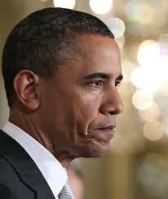
In a live address July 25th, President Obama urged Americans to pressure congressional leaders to move toward a compromise. (AP Photo)

On Monday, July 25, in his seventh prime time televised address to the nation, President Obama pleaded with Americans to pressure their congressional representatives to make a deal on the debt ceiling. While Mr. Obama argues against the GOP plans or any sort of a short term solution, Speaker of the House John Boehner is resolute against handing the president, what he called, “Another blank check.”

Both parties are using fear to motivate the public to demand action. But Americans who rely on federal funds to survive watch helplessly as Washington continues to bicker with itself and worry about how they will eat and pay the bills if there is a government shutdown amidst an already sluggish economy.

According to a CBS poll taken earlier this week, 79 percent of Americans are angry about the way the debt problem is being handled. There is also a great deal of speculation and misinformation about exactly what will happen should an agreement fail to be reached by the August 2nd deadline.

During the Clinton administration, three different government shut downs occurred, the longest lasting 21 days. Each resulted in the forced furlough of more than 800,000 federal employees. For information about how a federal closure would affect specific programs, contact the individual department directly. In the meantime, here are some examples of how a shutdown might affect the average citizen.

Many agencies like the CDC and National Institute of Health will scale back operations during the shutdown, with only essential personnel staying on the job. Law enforcement, public safety and national security employees would remain working, including the FBI, Department of Homeland Security and the national military. Some other agencies, not thoroughly funded by the government, like the postal service, would continue to operate as well.

Many employees of those departments may not be paid during that time, however. No factual information was available on which agencies will continue to issue paychecks, but one congressional aid told The Washington Post that military personnel would likely receive a paycheck during the first week of any shutdown, but possibly nothing after that.

For employees of government contractors the situation is even more ambiguous. Whether contractors work or get paid will depend on the employer, the specific area of the government being serviced and the projects involved. Workers in these situations should contact their company’s human resourced department for information.

Planning a summer vacation to a national park over the next few weeks? It might be a good idea to look into alternatives. If federal dollars are cut off, any national park that requires a Forest Service employee to be on site would be closed. Locally, that would include the Wright Brothers sites throughout theMiamiValleywhich are part of the Dayton Aviation Heritage National Historical Park.

Officials are being tight-lipped about the full impact of the shutdown. Those who are talking agree that many civilian employees will be forced to take an unpaid vacation and it is unlikely that pay will be made retroactively once things start up again.

In 2010, an unprecedented number of people voted for a divided government – and sometimes it has merit. But usually such a total split of ideology just brings out the worst in politicians and leaves important issues mired in partisan rhetoric.

Possibly more maddening is the idea that the Washington egos in charge of this mess are mostly people of wealth who do not have to worry about where their next paycheck will come from. Given their childlike behavior and inability to compromise for the good of the people, come November of 2012, the most sensible actions that Americans can take is to show them the door.


Gery L. Deer is an independent columnist based in Jamestown, Ohio. Read more at http://www.deerinheadlines.com.

Is this your new site? Log in to activate admin features and dismiss this message
Log In