Local News & Commentary Since 1890.

Posts Tagged ‘elections’

Efficacious Electoral College

In Books, Children and Family, Economy, Education, history, Local News, Politics, sociology, Uncategorized on October 19, 2024 at 10:20 am

Deer In Headlines II

By Gery Deer

Without question, 2024 has been and will continue to be one of American history’s most charged and controversial election years. Among the points of contention is the continued argument regarding the necessity – and validity – of the Electoral College.

Political operatives and pundits alike have been outspoken on the subject from all political viewpoints. There seems to be no consensus because, quite frankly, even some government officials don’t understand its purpose. So, before I give you my thoughts, here’s some non-partisan history.

During the first Constitutional Convention of 1787, a significant debate unfolded about the method of electing a president to lead the executive branch of our newly established government. It was a pivotal moment in our history after the decision to have a single individual in the office rather than two or even a triumvirate. Just imagine the complexity of electing three people every four years.

The primary issue was whether a congressional vote should elect a president or do it by popular vote.  The latter eventually won out until the smaller states began to weigh in, concerned that those with a larger population would wield more control.

Another lesser-known concern was that the political elite of the time were worried about a mass of uneducated voters swaying the results. Discussions continued for several months until, one day, in a closed-door subcommittee, James Madison laid down the concept for what became known as the Electoral College.
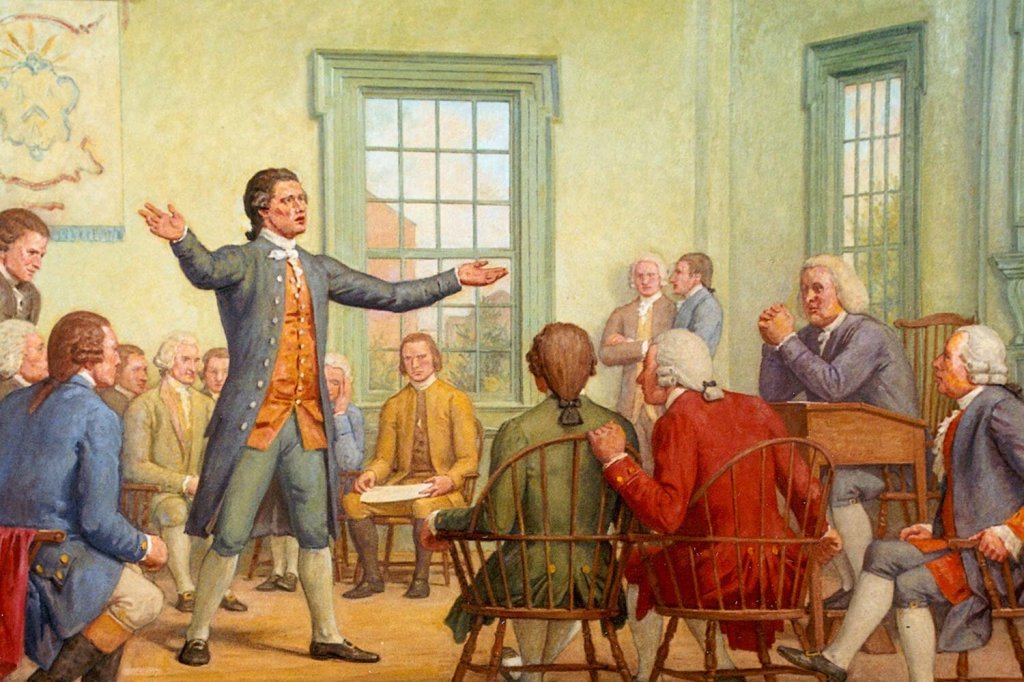
Enacted as a compromise and safeguard, Article II of the U.S. Constitution (later the 12th and 23rd Amendments), as well as the Electoral Count Act (ECA) of 1887) formally established the Electoral College. These laws regulated the voting process and defined the events between Election Day and the Inauguration.

Now, to clear up some misconceptions. Regardless of rhetoric to the contrary, I assure you that the Electoral College is an entirely democratic process. It is not, however, easy to explain. But I’ll try anyway (insert a deep breath here).

In a presidential election year, the political parties hold conventions where they nominate “presidential electors.” That’s simple enough to understand, but hang on. Here’s where it can get… confusing.

When a party’s presidential and vice presidential candidates win the popular vote, that party’s electoral nominees become “Electors.” Each state has the same number of Electors as members of Congress, and each Elector votes for their party’s ticket on separate ballots – one for president and one for vice president. So, your individual vote is still vitally important because the candidates cannot earn Electors without it.

For example, if Richard Nixon and Barry Goldwater (president and vice president, respectively) won the popular vote in California, the Republican nominees from that state would become Electors and cast their votes to the Electoral College. Once all the electoral votes are cast, the candidate who reaches 270 out of a possible 538 wins – and this is only triggered if the candidates win that state’s popular vote in the first place.

In the news, the results sound something like this: Nixon has won California and its 54 electoral votes. Of course, those results still have to be certified. As you might recall, there was a slight hiccup during the 2020 election certification. However, new security measures have been taken to reduce any potential repeat of those terrible events.

Remember, this is just a glance at the process, but I hope it helps. If it’s still puzzling, a good analogy is Major League Baseball’s World Series. Every year, the winner is determined not by which team got the most runs per game but by which won the most games in the series. The Electoral College works the same way.

In my opinion, the Electoral College is the only practical, efficient, and fair way to ensure everyone’s voice is heard because we’re represented just as we are in Congress. The Founders realized that the popular election alone could and would eventually bring chaos.

If we want an election process that stays in constant contention, then eliminate the EC. But if we’re going to have all our citizens represented equally, let the system do what it was designed to do. If you want to make a real difference, make sure you vote.

Avoid Election Misdirection

In Education, history, Local News, Media, National News, Opinion, Politics, psychology, sociology, State News, Uncategorized on October 19, 2017 at 6:08 am

Deer In Headlines
By Gery L. Deer

With an election coming up, it’s important to keep focused on what’s going on here at home rather than be distracted by the childish circus that has become Washington. Do you know what local governmental seats are up for grabs or the effect the next school levy might have on you if it fails?

Most of the time, we focus our attention on big stories from national news sources and lose sight of the things that really matter. Sometimes, that’s exactly what the politicians, pundits, and issue-pushers want to happen. Politics might seem, on the surface, about an open debate between candidates or issues, but it’s mostly about misdirection.

In the 2016 presidential election, the Trump camp used misdirection and the divided state of the Democratic base to push their message. While people who could greatly alter the outcome of the election were busy with the chaos on the left, Trump’s people had more opportunity to manipulate the right and win over some middle-of-the-road and undecided voters. The same thing happens on a much smaller scale right in your own backyard.

Most local candidates, regardless of whether they are incumbent, hope that simple name recognition will do the trick. Buying a few local newspaper ads and planting hundreds of signs everywhere can give them just that, not so much recognition but a hope that people can’t remember the names of the others.

Think about it. When you step into a voting booth and there’s a seat open for township trustee (and you barely know what a trustee is, much less any of their names), you’re going to pick the name you remember. In the back of your mind, you’ve seen the signs and ads everywhere of the guy who spent the most at the print shop so you touch the screen on his name and that’s that.

Then there’s some human services levy up for a vote and you have no idea what the fine print says, but it’s for the hospital, or children’s services issue right? What kind of person would you be if you say no to that, so what if you have no idea that it’s going to double your property tax for the next five years? This might seem exaggerated but the point is clear – learn about these candidates and issues before that Tuesday in November.

In this year’s election, the state issue that stands out as most confusing to people seems to be Ohio Issue 2, the drug price standards initiative. Both sides have spent a fortune in print, digital, direct mail, and broadcast advertising trying to sway your vote one way or the other, and it’s only going to increase.

We won’t spend any time on the issue here, but suffice to say that it’s controversial because it involves Medicare drug pricing agreements between the state government and pharma companies. Talk about an unholy alliance. Can you think of any two organizations that have proven to care less about the plight of the average citizen? That’s why it’s so confusing to people.

But, you’re going to have to go look up the exact wording, but take your lawyer with you. Actually, that may not help, because the language of these proposals is made overly complicated for a reason – so you can’t understand them. That’s no accident. The more complex the wording, the more confusing it is to the voter. Mission accomplished.

Remember that the local elections mean far more than the national ones in the grand scheme of things. Pay as close attention as possible to these smaller ballots because the outcomes have a far more immediate effect on your day-to-day life.

Most of these candidates have little or no money to spend on advertising so you may not even see their names until you get to your polling place. You’ll have to do some digging. Your county elections board has all the information you need to get started understanding these issues before it comes time to punch a chad, pull a lever, or tap a screen.

Take the time to know for whom and what you’re voting. It’s up to you to make the best choice for yourself and your community.

Gery L. Deer is an independent columnist and business writer. More at deerinheadlines.com

Local Elections are More Important and Less Visible

In Business, Economy, Local News, Media, National News, Opinion, Politics, State News, Uncategorized on January 24, 2012 at 1:03 pm

By Gery L. Deer

Deer In Headlines

Over the next ten months, the American people will be bombarded with campaign propaganda from all sides. From local races to the push for the White House, billions will be spent in 2012 to persuade voters to flip the lever in favor of one over the others.

Meanwhile, down onMain Street, local campaigns are underway relatively unnoticed almost until the day of the election. Voters often report on exit polls that they know little or nothing about local candidates and make selections based on name recognition alone, with no real basis for the choice.

So why don’t people take as much of an interest in local politics as they do in the national elections? In my opinion, there are several reasons for this, the first being flat out laziness.

Most people are exposed to the daily media barrage of national campaign information, although its accuracy is always in question. But there is almost no coverage of local candidates and virtually no direct resource for voters to learn about them.

Ask someone on the street about local council members or county commissioners and it’s unlikely they can name even one of them. Most people can’t name their state representative.

Some say they simply don’t care about the local races citing relevance to their lives. But, regardless of someone’s view of politics it will still affect them – especially on the local level.

Unfortunately, information about local and state candidates can be a challenge. Voters can usually find a variety of information about state or national elections on the Internet, but, without knowing the names of local candidates that option may be unrevealing.

It may be necessary to do a little legwork in order to obtain details about open government seats and candidates for those jobs. A good place to start is the local board of elections.

The boards of elections offer resources for local races and are positioned based on the region. It may be named by county, city or district, depending on the area and most can provide the most current and complete information about the various races on the November ballot. It may take some time to figure out exactly who to speak to for the right information, but most have a chairperson or board president to begin with, and then work down the list of committee members from there.

Another resource is the local League of Women Voters office. Not only will they have information on each and every race, they usually publish a voter’s guide available to anyone. In addition, most league offices offer a representative who can come out to speak to other concerned organizations such as service clubs or business groups. Information about all possible sides of issues campaigns is provided.

For those who tend to lean on party lines, the local precinct office can provide ballot information, but for their side only. Any issue information will likely be written towards the party line as well. So if balanced, neutral information is important this may not be the best option.

As antique an option as it might seem to the younger crowd, the local library can also be an invaluable source of information about local candidates and issues. Newspaper archives, free Internet access and the reference personnel can offer great benefits unavailable to someone doing the research alone on the home computer.

Business owners concerned about how candidates and issues affect their future in today’s economy might want to contact the area chambers of commerce. Sometimes the chamber will have already assembled any information that may have an affect on their members, including the repercussions of certain candidates being elected. Be aware, again, that there may be a politically-motivated slant to the information but it’s generally in favor of small business development.

These are only a few of the potential resources available to voters where they can learn more about the candidates and issues affecting them on the local level, where the real work is done. Clearly, the point to take away here is that it is up to the individual to educate themselves on those elections that most affect their lives.

Gery L. Deer is an independent business writer and columnist based in Jamestown, Ohio. More at http://www.deerinheadlines.com.

Is this your new site? Log in to activate admin features and dismiss this message
Log In